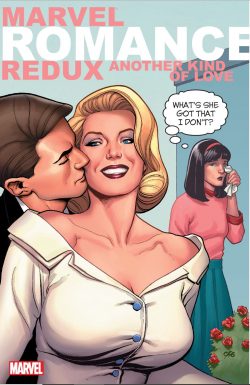
Marvel Romance Redux: Another Kind of Love


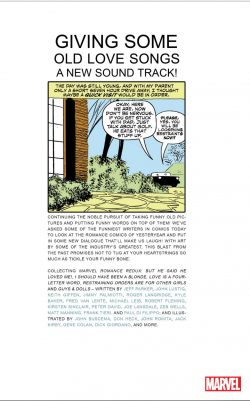
By Jeff Parker, Roger Langridge, John Lustig, Jimmy Palmiotti, Keith Giffen, Zeb Wells, Frank Tieri, Michael Lieb, Joe R. Lansdale, Paul Di Fillipo, Peter David, Robert Loren Fleming, Fred Van Lente, Kyle Baker & Kirsten Sinclair, Matthew K. Manning illustrated by Jack Kirby, John Romita, John Buscema, Don Heck, Dick Giordano, Vince Colletta, Gene Colan, Jim Mooney, Bill Everett, Jim Starlin, Jack Abel, Frank Giacoia, Al Hartley, Sol Brodsky various (Marvel)
ISBN: 978-0-7851-2090-2 (TPB/Digital edition)

Trust me: when – if! – you get to my age, Love is Funny.

For years romance comics were a comfortably profitable, solid staple of Marvel – and almost every other publishing house. It’s also a truism that girls are pickier than boys – just look at your own track record with the opposite sex or gender of your predisposition (and yes, I know that’s a cheap shot, but it’s also hard to contest!) – so most of those titles, whilst extremely limited in the stories they offered, were generally graced with some of the best artwork the industry could offer.

Those love-starved chicks might be content to absorb the same old perpetually regurgitated characters and plot pablum but they definitely, defiantly wanted it all to look the best it possibly could…

Having accepted that the art for comics aimed at females has always been of a higher standard and observed that many of Marvel’s greatest illustrators have secretly toiled in the tear-sodden Hearts and Flowers mines, the wisely cynical Editorial heads at The House of Ideas released an archival edition of the best of the bunch in 2006 – just in time for St. Valentine’s day! – as Marvel Romance.

Thanks, I’m sure, to prodding from younger, and disreputable quarters, they then re-released some of that select compilation and other material, realising that even though the tales might appear dull, dated, sexist and largely objectionable to Modern Misses; with a hefty dose of irreverence, a touch of tongue-in-cheek and a heaping helping of digital Tippex, much of that fallow folderol could be profitably retuned and recycled for modern-day shallow crowd of callow youths.

Moreover, if you tap some of the funniest and most imaginatively warped scribes working in the industry you might even make that mushy stuff accessible to jaded, worldly-wise, nihilistic, existentialist, and oh-so-lonely post-Generation X voidoids who think love is for cissies…

Thus in 2006, Marvel Romance Redux was to blame for five issues of raucous and occasionally ribald mockery that took the hallowed love comic book (often via the selfsame selections seen in Marvel Romance) to new depths, resulting in this deliciously offbeat confection a year later. Behind new covers by Keith Giffen, Pond Scum & Christina Strain, Amanda Conner & Jimmy Palmiotti, Greg Land, Kyle Baker and Frank Cho, 21st century sentiment met timeless 1950s, 1960s and 1970s artwork in a bizarre but highly successful marriage…

The first issue was subtitled But I Thought He Loved Me and opened with ‘President Stripper’ (rescripted by Jeff Parker from ‘I Do My Thing… No Matter Whom it Hurts’) by Johns Buscema & Romita Sr.: revealing how a daring Go-Go dancer heartbreakingly fails to find happiness using her daring moves and raunchy routines to run America.

Roger Langridge then twists the words of ‘I Mustn’t Love You, My Darling!’ (illustrated by Dick Giordano & Vince Colletta) into a tragic cautionary tale of a tattooed temptress who must cover up the fact that ‘I Was Inked by Sparky Hackworth!’

‘The Summer Must End’ originally by Stan Lee, Jack Kirby & Colletta becomes – courtesy of John Lustig – the sordid saga of a savage sexy relationship-wrecker in ‘I Was a Beach Blanket Barbarian!’ whilst Jimmy Palmiotti retains the title of Kirby’s ‘If Your Heart I Break…’ but shifts the cause for the end of the affair to the unpalatable fact that hunky beddable Matt is a hopeless comic book geek…

The first issue then closed with ‘Hit or Miss’ as Giffen massages Lee, Gene Colan & Jim Mooney’s bittersweet yarn ‘The Boy Who Got Away’ into a war of words and weapons between rival – but so hot! – assassins…

Guys & Dolls opens with ‘The Dinner Demon’ as Parker repurposes diner love story ‘One Day a Week’ (Jim Starlin & Jack Abel) into a creepy tale of greed and Satanism, before Lustig pushes the already outrageous ‘Please Don’t Let Me Be …a Spinster!’ (Don Heck & Colletta) into a modern parable of a girl who knows money makes the world go around in ‘Love Ain’t Cheap… Especially at these Prices!’

Sixties college affair ‘Formula for Love!’ by Jean Thomas, Colan & Bill Everett seamlessly evolved into a yarn of faux feminism and dangerous psychobabble thanks to Zeb Wells, whilst Palmiotti also kept the original title of Lee, Buscema & Romita Sr.’s ‘I Love Him… But He’s Hers!’ but happily messed with our heads in an account of petty jealousy and government conspiracies…

‘Love Isn’t in the Cards for Me’ from Lee, Buscema & Frank Giacoia became, under Frank Tieri, ‘A (Former Child) Star is Born!’ and showed just what a poor ambitious girl would endure to secure a man with money…

Love is a Four-Letter Word started with the magically surreal ‘Hot Alien Love’ (Jeff Parker making over Lee & Buscema & Colletta’s ‘Another Kind of Love’) as Gail – a dedicated agent of Homeworld Security – falls for the kinky tricks of an extraterrestrial Casanova, before Michael Lieb & Giffen introduced ‘Buffy Willow, Agent of A.D.D.’ (formerly ‘He Never Said a Word’ by Colan) as possibly Freedom and Democracy’s most inept honey-trap, and Joe R. Lansdale refitted Kirby & Colletta’s ‘By Love Betrayed’ into ‘Mice and Money’ wherein a hunky guy finally broke up gal-pals with the strangest tastes imaginable…

‘Love Me, Love my Clones!’ was originally ‘Jilted!’ by Jean Thomas, Heck & Romita) until Paul Di Fillipo added his own ideas on buying the ideal bespoke companion, whilst Peter David converted ‘Someday He’ll Come Along’ by Heck & Colletta into the death-affirming ‘They Said I was… Insane! … and “They” were right.

Robert Loren Fleming opened Restraining Orders are for Other Girls with the utterly hilarious ‘Too Smart to Date!’ (originally ‘The Dream World of Doris Wilson’ by Kirby & Al Hartley), after which ‘Callie Crandall: Co-Ed Campus Undercover Cutie’ laid out her Federally-mandated lures for radicals and subversives as Lieb overhauled Giordano & Colletta’s ‘50s filler ‘No Dates for the Dance’.

The art team was one of the most prolific of the period and Fred Van Lente turned their ‘The Only Man for Me’ into ‘Psycho for You’ which showed the upside of stalking and celebrity religious cults, whilst Kyle Baker performed similar duties on their ‘A Teenager Can also Love’, turning simple romance into psychedelic horror in ‘My Magical Centaur!’

Kirsten Sinclair then wrapped it all up by upgrading Kirby & Colletta’s ‘Give Me Back My Heart!’ into a fable of crime and obsession in ‘Give Me Back My Heart! (Dame Mi Carozan)’

I Should Have Been a Blonde devoted much of its content to adapting a full length tale of Marvel’s secret star Patsy Walker (of Patsy & Hedy and numerous spin-off titles most Marvel Zombies refuse to acknowledge the existence of). Under the sinister influence of Peter David, ‘Patsy’s Secret Boyfriend’ by Lee & Sol Brodsky became the uproariously self-censorious and rudely self-referential ‘Patsy Loves Satan’, sublimely supplemented by ‘Hedy’s Uncomfortable Fanmail’ and ‘Patsy Walker’s Battlesuits!’

Also included to balance the passionate madness was ‘The Language of Love’, wherein Matthew K. Manning converted Giordano & Colletta’s ‘The Last Good-By’ into a good old-fashioned laugh at immigrants’ expense, before Lustig wraps it all up by turning Gary Friedrich, Colan & Giordano’s ‘As Time Goes By’ into a bizarro tale of superstar possession as a pretty film fan became ‘The Girl With Bogart’s Brain!’

Yes, it’s pretty much a one-trick pony but it is an endlessly amusing one and the tendency towards wry comics-insider gags is far outweighed by the plethora of absurd, surreal, sly outlandish and wickedly risqué spoofs and devastating one-liners.

Moreover, the wickedly recycled art is still stunning…

Daft, pretty and compellingly witty, this is a lovely antidote to the wave of mawkish sentiment doled out in motion picture RomComs and a welcome rare chance to see some of the industry’s greatest graphic talents’ most sidelined artistic triumphs.
© 2020 MARVEL.
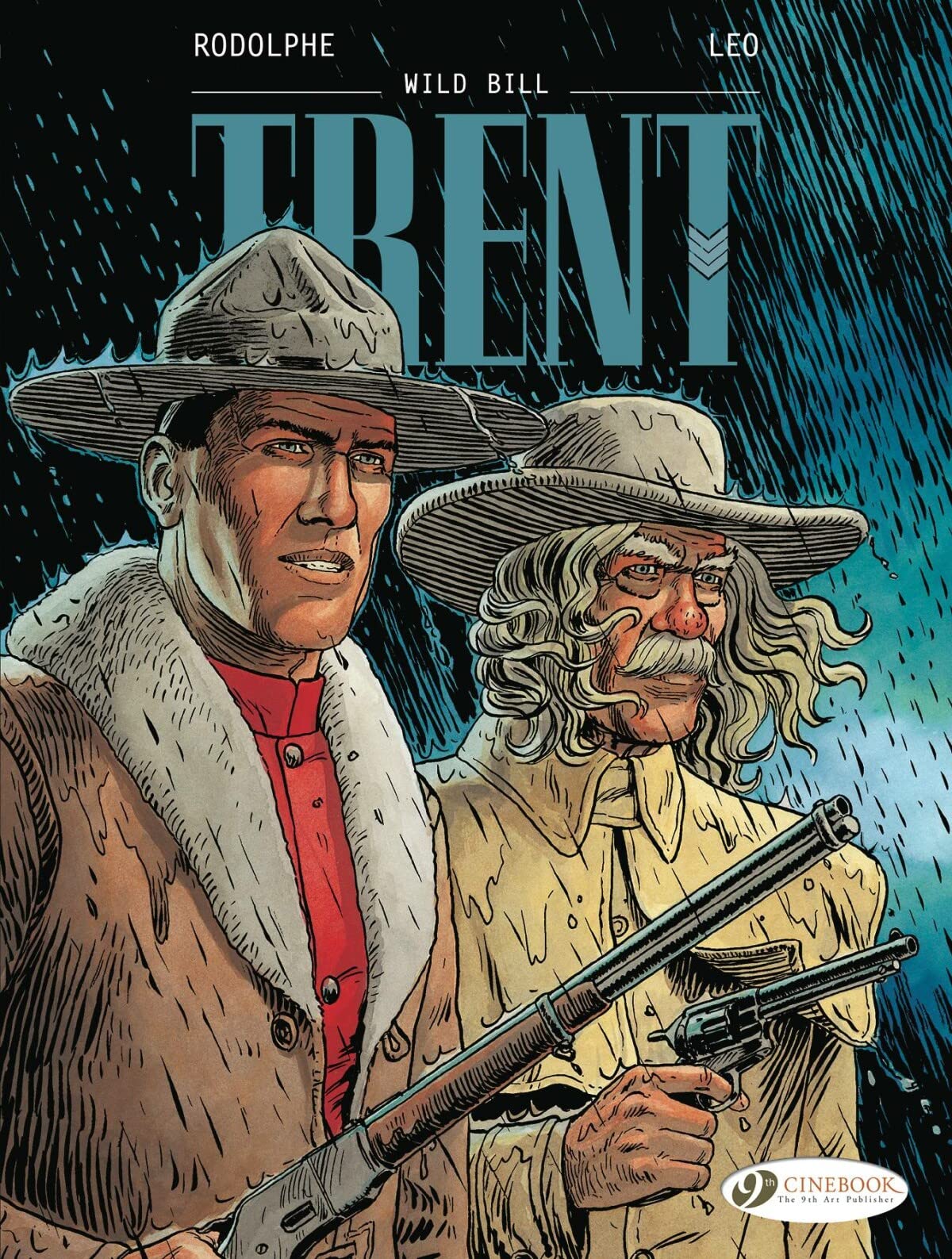
Trent volume 5: Wild Bill


By Rodolphe & Léo, coloured by Marie-Paule Alluard, translated by Jerome Saincantin (Cinebook)
ISBN: 978-1-84918-395-6 (Album PB/Digital edition)

Continental audiences adore the mythologised American experience, whether in Big Sky Wild Westerns or later eras of crime-riddled, gangster-fuelled dramas. They also have a vested historical interest in the northernmost parts of the New World, and it has resulted in some pretty cool graphic extravaganzas if comics are your entertainment drug of choice…

Born in Rio de Janeiro on December 13th 1944, “Léo” is Brazilian artist and storyteller Luiz Eduardo de Oliveira Filho. After attaining a degree in mechanical engineering from Puerto Alegre in 1968, he was a government employee for three years, until forced to flee the country because of his political views.

While a military dictatorship ran Brazil, he lived in Chile and Argentina before illegally returning to his homeland in 1974. He worked as a designer and graphic artist in Sao Paulo whilst creating his first comics art for O Bicho magazine, and in 1981 migrated to Paris to pursue a career in Bande Dessinée. He found work with Pilote and L’Echo des Savanes as well as more advertising and graphics fare, until a big break came when Jean-Claude Forest invited him to draw stories for Okapi.

This led to regular illustration work for Bayard Presse, and in 1988 Léo began his association with scripter/scenarist Rodolphe D. Jacquette – AKA Rodolphe. The prolific, celebrated writing partner had been a giant of comics since the 1970s: a Literature graduate who left teaching and running libraries to create poetry, criticism, novels, biographies, children’s stories and music journalism.

After meeting Jacques Lob in 1975, Jacquette expanded his portfolio: writing for many strip artists in magazines ranging from Pilote and Circus to à Suivre and Métal Hurlant. Amongst his most successful endeavours are Raffini (with author Ferrandez) and L’Autre Monde (with Florence Magnin), but his triumphs in all genres and age ranges are too numerous to list here.

In 1991 “Rodolph” began working with Léo on a period adventure of the “far north”. Taciturn, introspective, bleakly philosophical and pitilessly driven, Royal Canadian Mounted Police sergeant Philip Trent premiered in L’Homme Mort, forging a lonely path through the 19th century Dominion. He starred in eight tempestuous, hard-bitten, love-benighted albums between then and 2000 and the creative collaboration sparked later fantasy classic Kenya and its spin-offs Centaurus and Porte de Brazenac.

Cast very much in the classic mould perfected by Jack London and John Buchan, Trent is a man of few words, deep thoughts and unyielding principles who gets the job done whilst stifling the emotional turmoil boiling deep within him: the very embodiment of the phrase “still waters run deep”…

As Wild Bill, this fifth saga comes from 1996, offering a much lighter and more playful yarn that also sees genuine progress in the extended, diffident path to love of the stoic Mountie and his always unobtainable objet d’amour

Years previously, during an arduous criminal pursuit, he had met and saved Agnes St. Yves – but tragically not her beloved brother – and was given a clear invitation from her: one that he never acted upon. Eventually, he made a heartfelt decision and travelled all the way to Providence with marriage in mind, only to learn that Agnes had stopped waiting and wed someone else.

More time elapsed and they met again when her husband was killed during an horrific murder spree at isolated railway outpost White Pass. The ball was again in Trent’s court and once more he fumbled it through timidity, indecision and inaction: retreating into duty and using work as an excuse to evade commitment and the risk of rejection…

That situation changes in this cheeky cheery episode which begins with the recurrent dream of aging but still deadly gunfighter Wild Bill Turkey – a ridiculous soubriquet the legendary shootist adopted as part of his self-manufactured but well-earned reputation as a gunslinger par excellence.

In his sunset years, Bill is feted and celebrated everywhere but cannot escape recurring visions of a glory-hungry man in black gunning him down…

The oldster is boisterously enjoying his fame in Kildare, Alberta when Sergeant Trent rides in, escorting a prisoner to Winnipeg. The local police chief, a slack and dissolute man who’d rather carouse than work, suggests Trent himself lock up his charge in the town cells, rather than interrupt hard-earned drinking time.

Despite the obvious benefits of celebrity, Bill is preparing to retire: loudly proclaiming to all and sundry in the saloon that he’s engaged to be imminently married and standing free drinks for all. When Trent frustratedly heads for the police station, his duties are further disrupted by a stranger who offers him a truly phenomenal amount of money to let the young armed robber go free…

After kicking the tempter out, Trent spends an uncomfortable night pondering why someone prisoner Arthur Caldwell claims not to know has so boldly attempted to circumvent justice and the law, and departs at first light. It’s not just duty that drives him, though: Trent recently received a letter from Agnes who wants to see him. It came from Winnipeg…

Their dreary trek is interrupted by bad weather and as the heavens open, Mountie and miscreant take shelter in a dilapidated building in the middle of nowhere. That’s when the stranger and a half dozen hired guns besiege them.

Happily, Wild Bill’s fiancée Clementine is also waiting in Winnipeg and the gunman is riding the same trail there. He swiftly drives off the assailants and shares the bushwacked travellers’ refuge until the rains end…

With the same destination before them, all three travel together and gunslinger and lawman discover they have much in common. The old man is in utter earnest about hanging up his guns and settling down, but cannot shed the premonition that he will perish at the hands of the Man in Black before his new life can begin…

Meanwhile, far away in the lap of luxury, a powerful man takes further steps to ensure a huge embarrassment and potential threat to his plans never reaches civilisation…

All schemes and plans converge on and culminate in the township of Tootney, where a hired assassin (dressed in black) awaits someone he’s longed to duel for years. Fate seems to have marked the aging legend’s cards, and all his pep talks to Trent about love and second chances seem hollow when Wild Bill lies dying in the dust, but there’s a major surprise in store for the outraged and bereft Mountie and redemption of sorts for young Caldwell after the survivors get to their destination…

Most importantly, however, Trent meets Agnes and their stumbling, fumbling relationship enjoys a major step forward…

Another beguilingly introspective voyage of internal discovery, where environment and locales are as much lead characters as hero and villain, Wild Bill delivers action, conspiracy, suspense and poignant romantic drama in a compelling, light-hearted concoction which will delight any fan of widescreen cinematic crime fiction or charming western romance.
Original edition © Dargaud Editeur Paris 1996 by Rodolphe & Leo. All rights reserved. English translation © 2017 Cinebook Ltd.

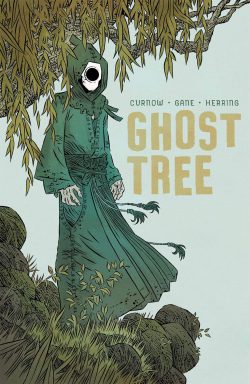
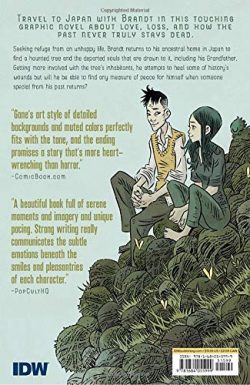
Ghost Tree


By Bobby Curnow & Simon Gane; coloured by Ian Herring & Becka Kinzie and lettered by Chris Mowry (IDW)
ISBN: 978-1684055999 (TPB) eISBN: 978-68406-810-4

The innate sadness and intense incompleteness of the spiritual world is something we tend to sideline in modern fiction, but once upon a time the melancholia of both the quick and the dead was far more important than scaring the pants off a thrill-seeking audience.

That old world approach is wonderfully revived in Ghost Tree, where author Bobby Curnow (Night of 1000 Wolves; My Little Pony; Battle Beasts; Teenage Mutant Ninja Turtles), illustrator Simon Gane (They’re Not Like Us; Godzilla; Northlanders; Unfollow; Paris) and primary colour artist Ian Herring (Minor Threats; Ms Marvel; Nova: Resurrection; Junior Citizens) examine loss, legacy and duty. It’s all deftly done through a slowly unfolding search for self in its protagonist, and meaning or closure in the myriad spirits he is unwillingly connected to…

Despite growing up in the USA, Brandt was always close to his Japanese grandfather. However, the gentle old man also had other concerns and seemed to split his time. One day when the boy was visiting the old country, his beloved Ojii-chan wandered deep into the forests around the old ancestral home.

Curiously following, the boy stopped at a strangely twisted willow tree where the old man asked him to make a promise. A dutiful, diligent, loving – but uncomprehending – grandson, Brandt swore to return to this spot ten years after Ojii-chan died…

Decades later, the man Brandt is heading back to Japan. Grown up and married, he’d all but forgotten that day. Now with his world disintegrating and Alice leaving, he’s flying to the ancestral homestead where his widowed grandmother still lives. Cousin Mariko and her new baby meet him at the airport. She’s worried stubborn, headstrong Obaa-chan is not doing well…

Grandmother is as blunt and feisty as ever, hectoring the new generation on how they should live. It’s a little too much and Brandt has to step outside. Reminiscing about those carefree childhood days, he thinks he sees something at the edge of the woods…

Restless and jetlagged, his sleep is also disrupted as he thinks of what might have been if he had stayed here with Arami rather than living in America…

Unaware that he’s under keen scrutiny, Brandt tries to make peace with grandma, and learns that the happy family was anything but. Shocked by revelations of his forebears’ lives lived at odds, he wanders off into the woods. He might have forgotten that Ojii-chan has now been dead for a decade, but everything comes flooding back when he finds the old man waiting for him by that certain willow…

As they chat under the ghost tree, the dead man explains that for generations some family members have been able to see kami and talk to spirits. Moreover, certain places are attractors, and lost souls are drawn to them. They are usually, angry, confused and despairing, haunted by things left unsaid or not done…

Whilst they sit, dozens of dead people and stranger things draw closer. Grandfather explains they expect Brandt to intercede for them and help deal with their unfinished business…

The old man wants him to avoid the family’s burden and nor repeat his own mistakes: to live a life among the living. His advice is wasted and worthless as Brandt has seen his first love Arami is one of the clamorous phantoms…

Soon the mortal is counselling revenants and carrying out minor missions on their behalf, but the renewed activity around the tree has drawn some of the worst horrors of Japanese mythology, and Brandt learns that the Zero – a traditional guardian defender – is slowly fading.

With Grandfather urging him to forsake the dead and spend time with his family, and Arami looking for reasons to stay or pass on, the conflicted man of two worlds is clearly avoiding making decisions, when the choice is taken from him.

With the safety of the living also threatened by encroaching demons, Brandt must confront uncomfortable home truths before devising a solution to satisfy all parties and safeguard both worlds. Then it’s time to tackle the hard job: fixing his marital situation and getting on with life…

Powerful, sensitive, heartwarming and uncompromising, this very human drama offers echoes of classic movie fantasies such as A Matter of Life and Death (1948) and The Ghost and Mrs Muir (1947), suggesting that the dead are always with us and that – unlike families – it’s nothing to be scared of…
Ghost Tree. November 2019. © 2019 Curnow. Gane. Herring. © 2019 Idea and Design Works, LLC.

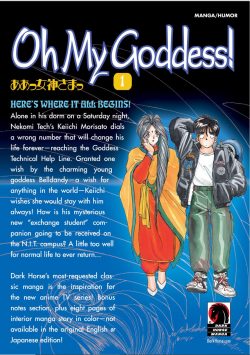
Oh My Goddess! volume 1


By K?suke Fujishima, original translation by Dana Lewis, Alan Gleason & Toren Smith (Dark Horse Manga)
ISBN: 978-1-59307-387-9 (tank?bon TPB) eISBN: 978-1-62115-755-7

Talking of school – as we were the other day – college days also offer plenty of opportunities for comics creativity and, as is usually the case, manga has been there first and explored avenues you never even realised existed.

Fujishima K?suke was born in Chiba, Japan on July 7th 1964, and after completing High School, got a job as an editor. His plans to be a draughtsman had foundered after failing to secure a requisite apprenticeship, and he instead joined Puff magazine in that backroom role. Life began looking up after he became assistant to manga artist Tatsuya Egawa (Be Free, Golden Boy, Magical Taluluto)

Fujishima graduated to his first solo feature in 1986: writing and illustrating police series You’re Under Arrest until 1992. In 1988, he began a consecutive second series: a fantasy comedy that would reshape his life forever. Although he would work on other manga like Paradise Residence and Toppu GP over the decades, Aa! Megami-sama – alternatively translated as Ah! My Goddess and Oh My Goddess! became his signature work and one that has made him a household name in Japan.

The series began in the September 1988 issue of Kodansha’s seinen (“young males”) manga periodical Monthly Afternoon. The strip ran until April 2014, generating enough stories for 48 tank?bon volumes, a spin-off series and spawning anime, special editions, numerous TV series, musical albums, games and all the attendant spin-offs and merchandise such popular success brings.

In 2020 there were 25 million physical copies of the editions in circulation and an unguessable number of digital sales. OMG! has won awards, been translated across the globe in print and on screens and has a confirmed place in comics history…

Oh My Goddess! is a particularly fine example of a peculiarly Japanese genre of storytelling combining fantasy with loss of conformity and embarrassment. In this case, and as seen in opening chapter ‘The Number You Have Dialled is Incorrect’ nerdy engineering sophomore Keiichi Morisato dials a wrong number one night and inadvertently connects to the Goddess Technical Help Line.

When the captivatingly beautiful and cosmically powerful minor deity Belldandy materialises in his room offering him one wish, he mockingly asks that she never leave him. This rash response effectively traps her on Earth, unable even to move very far beyond his physical proximity. Her powers are mighty but also come with a bucketload of provisos and restrictions. The most immediate and terrible repercussion manifests quickly as he is ejected from his student residence for having a girl in his room…

Belldandy’s profligate use of her divine powers, utter naivety and tendency to attract chaos and calamity make their search for a new home a fraught exercise, but finally second chapter ‘Lair of the Anime Mania’ finds Keiichi trying the apartment of old friend Sada. He was not a preferred choice because he is addicted to anime: a living zombie of fannishness who welcomes the refugees in without even noticing them …or letting go of the TV and video remotes…

All too soon however, and again thanks to the Goddess’ gifts, Sada notices Belldandy’s similarities to his cartoon fantasies and they have to move again…

After a night on the freezing streets, providence smiles on them when a Buddhist priest welcomes them into his dwelling. An individual prone to conclusion-jumping, the holy man’s eventual deduction of her true nature prompts him to undertake a pilgrimage of rediscovery, bequeathing them custody of his earthy abode in ‘A Man’s Home is His… Temple?’

With accommodation secured, the hapless student needs to get back to his education, and in a structured society like Japan there’s plenty of scope for comedy when a powerful and beautiful female seemingly dotes on a barely average male, especially as Keiichi’s new girlfriend seems unwilling to even leave his side…

The solution is to use her powers to “enrol” at his school – the Nekomi Institute of Technology. However, when the clearly “European” newcomer becomes a ‘College Exchange Goddess’ she can’t help but draw unwelcome attention, particularly from Keiichi’s macho, petrolhead fellow students and creepy lecturer Dr. Ozawa. The lifelong rival of Morisato’s favourite teacher “Doc” Kakuta has his suspicions aroused when all his students switch to the classes Belldandy audits and he begins a covert campaign to get rid of her…

More trouble materialises in ‘Those Whom Goddess Hath Joined Together, Let No Woman Put Asunder’ as thoroughly unlikeable campus queen and predatory Mean Girl Sayoko Mishima realises the new kid is a threat to her social supremacy and sets her destructive sights and wealth on Belldandy’s hapless chump. The goddess is more aware of the interlopers inadvertent mystical bad mojo and takes kind, gentle but firm retaliatory action…

College is a series of crucial interconnections and – other than Belldandy – Morisato is closest to his colleagues in the Nekomi Institute of Technology Motor Club: a gang of overbearing, bullying gear-head maniacs, always spending his money, eating his food and getting him into trouble…

However, the earthbound divinity’s role is to aid those in need and when she detects chief brute Otaki is enduring unrequited love she plays matchmaker in ‘Single Lens Psychic: The Prayer Answered’ and sets off a chain of domestic shock and awe…

This mainly monochrome compendium is peppered with brief full colour sections and one such opens ‘Lullaby of Love’ as Morisato finally summons the nerve to move beyond the painfully platonic life sentence he’s been locked into. Sadly, books like Going Steady for Dummies can get him no closer to even kissing his goddess and their first stab at an intimate dinner date turns into a disaster further compounded in ‘The Blossom in Bloom’ as financial shortfalls presage the introduction of Morisato’s little sister Megumi: a gossip spreader and imaginative tale teller. What family furore she will make of him living with a gorgeous exotic foreigner cannot be allowed…

She causes chaos from the start: bearing enough cash to tide them over but only if Keiichi boards her for a week while she takes some important entrance exams. There’s no way the kid won’t expose Belldandy’s supernatural nature to the world…

What big brother should have fretted over was the actual tests, as Megumi aces he exams and is admitted to Nekomi Tech. Now Morisato is plagued with ‘Apartment Hunting Blues’ as he hunts for a decent place to house her. It’s a good thing that Belldandy accompanies the siblings as – once they find the perfect place – the goddess has to exorcise and transform the evil spirit haunting it …the true reason it was so cheap in the first place…

Following the comics comes a text feature by editor Carl Gustav Horn. ‘Letters to the Enchantress’ details the strip’s history and evolution to an English language series, and is supplemented by ‘Editor’s Commentary on Vol. 1’: an expansive collection of footnotes clarifying everything from explaining untranslated background kanji and graphics to detailing significant cultural clues that might bypass most readers.

Oh My Goddess! is a beguiling, engaging and eminently re-readable confection, at once frothy fun and entrancing drama. Think of it as a Eastern take on Bewitched or I Dream of Genie, especially as the romance develops: one that both mortal and immortal protagonists are incapable of admitting to. Throw in the required supporting cast of friends, rivals, insane teachers and interfering entities and there’s plenty of light-hearted fun to be found in this bright and breezy manga classic.
© 2005 by Kosuke Fujishima. All Rights Reserved. This English language edition © 2005 Dark Horse Comics.

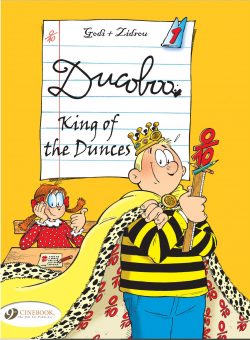
Ducoboo volume 1 – King of the Dunces


By Godi & Zidrou, coloured by Véronique Grobet & translated by Luke Spear (Cinebook)
ISBN: 978-1-905460-15-1 (Album PB/Digital edition)

School stories and strips of every tone about juvenile fools, devils and rebels are a lynchpin of modern western entertainment and an even larger staple of Japanese comics – where the scenario has spawned its own wild and vibrant subgenres. However, would Dennis the Menace (ours and theirs), Komi Can’t Communicate, Winker Watson, Don’t Toy with Me, Miss Nagatoro, Power Pack, Cédric or any of the rest be improved or just different if they were created by former teachers rather than ex-kids or current parents?

It’s no surprise the form is so evergreen: school life takes up a huge amount of children’s attention no matter how impoverished or privileged they are, and their fictions will naturally address their issues and interests. It’s fascinating to see just how much school stories revolve around humour, but always with huge helpings of drama, terror romance and an occasional dash of action…

One of the most popular European strips employing the eternal basic themes and methodology began in the last fraction of the 20th century, courtesy of scripter Zidrou (Benoît Drousie) and illustrator Godi.

Drousie is Belgian, born in 1962 and for six years a school teacher prior to changing careers in 1990 to write comics like those he probably used to confiscate in class. Other mainstream successes in a range of genres include Petit Dagobert, Scott Zombi, La Ribambelle, Le Montreur d’histoires, African Trilogy, Shi, Léonardo, a revival of Ric Hochet, and many more. However, his most celebrated and beloved stories are the Les Beaux Étés sequence (digitally available in English as Glorious Summers) and 2010’s Lydie, both illustrated by Spanish artist Jordi Lafebre.

Zidrou began his comics career with what he knew best: stories about and for kids, including Crannibales, Tamara, Margot et Oscar Pluche and, most significantly, a feature about a (and please forgive the charged term) school dunce: L’Elève Ducobu

Godi is a Belgian National Treasure, born Bernard Godisiabois in Etterbeek in December 1951. After studying Plastic Arts at the Institut Saint-Luc in Brussels he became an assistant to comics legend Eddy Paape in 1970, working on the strip Tommy Banco for Le Journal de Tintin whilst freelancing as an illustrator for numerous comics and magazines. He became a Tintin regular three years later, primarily limning C. Blareau’s Comte Lombardi, but also working on gag strip Red Rétro by Vicq, with whom he also produced Cap’tain Anblus McManus and Le Triangle des Bermudes for Le Journal de Spirou in the early 1980s. He soloed on Diogène Terrier (1981-1983) for Casterman.

He then moved into advertising cartoons and television, cocreating with Nic Broca the animated TV series Ovide. He only returned to comics in 1991, collaborating with newcomer Zidrou on L’Elève Ducobu for magazine Tremplin. The strip launched in September 1992 before transferring to Le Journal de Mickey, and collected albums began in 1997 – 25 so far in French and Dutch, 8 for Turkish readers, and 6 for Indonesia.

When not immortalising modern school days for future generations, Godi latterly diversified, co-creating (1995 with Zidrou) comedy feature Suivez le Guide and game page Démon du Jeu with scripter Janssens.

The series has spawned a live action movie franchise, a dozen pocket books plus all the usual attendant merchandise paraphernalia. and we English-speakers’ introduction to the series (5 volumes thus far) came courtesy of Cinebook with 2006’s initial release King of the Dunces which was in fact the 5th European collection L’élève Ducobu – Le roi des cancres.

The format is loads of short – most often single page – gag strips starring a revolving cast who are all well established by this point, but also fairly one-sided and easy to get a handle on.

Our star is a well-meaning, good natured young oaf who doesn’t get on with school. He’s sharp, inventive, imaginative, inquisitive, personable and just not academical at all. We might today put him on a spectrum or diagnose a disorder like ADHD, but at heart he’s just not interested and has better things to do…

Dad is a civil servant and Mum left home when Ducoboo was a baby, but then there’s a lot of that about. Leonie Gratin – from whom he constantly copies answers – only has a mum.

The boy and his class colleagues attend Saint Potache School and are mostly taught by draconian Mr Latouche who’s something of humourless martinet. Thanks to him, Ducoboo has spent so much time in the corner with a dunce cap on his head that he’s struck up a friendship with the biology skeleton. He calls himself Neness and is always ready with a theory or suggestion for fun and frolics…

In this volume, after being caught cheating again, Latouche applies what he calls “truth serum” to the squabbling kids. The wild kid fakes taking it, but Leonie is an obedient child and soon can’t help blurting out her hidden feelings for the class outlaw – thereby ensuring he voluntarily tries keeping his distance for some time after …or at least until the next test or exercise…

On view are fresh riffs on being late and missing class; roll calls and registers; new and old class furniture; novel ways to copy answers; writing lines and how to hack the system; the power of art; collecting educational stickers; yawning in class; grammar and grandmas, punctuation, warring student radio stations; the restorative blessings of short naps whilst working; the ultimate futility of bad boys actually working and still being called a cheat and always, always cheating, copying and guessing answers…

Also encountered are jaunts to a circus, educational psychologists, Teachers’ changing pay and conditions, new ways to learn, the origins of his skeletal comrade, Nativity plays and mistletoe mischief, classical poetry – like ‘The Nitwit and the Trickster’ by bony scribe Nessy de la Fontanelle, dress codes for kids from other cultures (especially fascinating new girl Fatima and her lovely chador), new romantic fancies and classroom exoticism, outrageous example test papers and – as a main event – the educational crucible of April Fool’s Day and its cumulative effect on Latouche…

Wry, witty and whimsical whilst rehashing evergreen childhood themes, Ducuboo is an up-tempo, upbeat addition to the genre that any parent or pupil can appreciate and enjoy. If your kids aren’t back at school quite yet, why not keep them occupied a little longer with the King of the Dunces – whilst thanking your lucky stars that he’s not yours?
© Les Editions du Lombard (Dargaud- Lombard) 2000 by Godi & Zidrou. English translation © 2006 Cinebook Ltd.

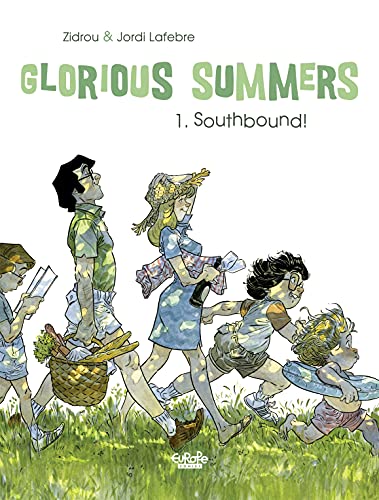
Glorious Summers volume 1: Southbound! (1973)


By Zidrou & Jordi Lafebre, with additional colour by Mado Peña translated by Lara Vergnaud (Europe Comics)
No ISBN: Digital edition only

Until comparatively recently, comics in the English-speaking world mostly comprised comedic or various adventure sub-genres (crime, superhero, horror, sci fi), with only a small but vital niche of “mundane world” ventures, usually depicted via graphic biographies and autobiographies such as They Called Us Enemy, Coma, Death Threat, Love on the Isle of Dogs, Wage Slaves or Sour Pickles offering a different feel and flavour. Even historical sagas were treated as extraordinary moments with larger-than-life characters whenever possible.

What we have never had – and still largely don’t enjoy – is a comics equivalent to general fiction, drama and melodrama. That’s not so in Japan and Europe, where a literal “anything goes” attitude has always accommodated human-scaled, slice of life stories depicting ordinary people in quiet as well as extraordinary moments.

Surely it can’t be that hard to tell engaging stories in pedestrian, recognisably ordinary settings? Medical traumas, love stories, school tales and family tragedies about common folk seem to play well on various-sized screens around the world, so why not in English-“speaking” comics? The closest we seem to get are comedy series like John Allison’s brilliantly superb Giant Days (which I really must review soon)…

People being people is more than enough for our European neighbours. They apparently have an insatiable appetite for everyday events aimed at properly “mature readers”, all joyfully sans vampires, aliens or men in tights. These even have sub-genres of their own. For example, there’s a wealth of superb material just about going on holiday…

So, since our own Government-in-Absentia have ensured that it’s now all-but-impossible for any UK-based citizens to pop across and have une petite vacances in Europe, let’s at least stare covetously at them having a good time. After all, over there holidays are an inalienable right, and they have some simply fabulous tales about a simple break. This is probably the best you’ll ever read…

One of the absolute best examples of fantasy vacations made real, Glorious Summers: Southbound! (1973) is a nostalgia-drenched confection by Zidrou and frequent collaborator Jordi Lafebre: a sublime example of idyllic group memory transformed into graphic sorcery and an everyday account utterly unafraid to temper humorous sweetness and light with some real-world tragedy and suspense…

Perhaps a little context is in order. Summer holidays – “Midi” – are a big deal in France and Belgium. The French even divide into two tribes over the annual rest period, which generally lasts an entire month.

Juilletistes only vacation in July and wield dogma and facts like rapiers to prove why it’s the only way to take a break. They are eternally opposed, heart, soul, and suntan lotion, by majority faction the Aoûtiens, who recharge their batteries in August whilst fully reciprocating the suspicion, disdain and baffled scorn of the early-leavers.

Many European sociologists claim the greatest social division today is not race, religion, gender, political affiliation or whether to open boiled eggs from the top or the bottom, but when summer holidays begin and end…

Les Beaux Étés 1: Cap au Sud! is the first of a string of family visits that began in 2015 courtesy of scripter Zidrou (Benoît Drousie) and illustrator Jordi Lafebre. Drousie is Belgian, born in Brussels in 1962 and a school teacher prior to quitting marking books in 1990 to begin making them. His main successes are school dunce series L’Elève Ducobu, Petit Dagobert, Scott Zombi, La Ribambelle, Le Montreur d’histoires, African Trilogy, Léonardo, the revival of Ric Hochet, Shi and many more. His most celebrated and beloved stories are this sequence and 2010’s Lydie, both illustrated by Spanish artist Jordi Lafebre.

The sublimely gifted, empathically sensitive illustrator and art teacher was born in Barcelona in 1979 and has created comics professionally since 2001, first for magazines like Mister K, where he limned Toni Font’s El Mundo de Judy. He soon found regular work at Le Journal de Spirou, creating the romance Always Never and collaborating with Zidrou on La vieille dame qui n’avait jamais joué au tennis et autres nouvelles qui font du bien, Lydie, and La Mondaine.

A combination of feel-good fable and powerful comedy drama, Southbound! begins “now”, as an aging couple sit on deftly-assembled camping seats in their beloved regular holiday spot. Gazing outwards and back, they remember how all their shared yesterdays almost died unborn during that difficult time in 1973…

It’s August then and Maddie Faldérault tries to amuse her four impatiently waiting kids as their father Pierre frantically puts the finishing touches to his latest comic strip. He has to: the publisher has stationed a gofer at his side to deliver the pages directly to the printer the moment the drawing stops.

The pages were due last Wednesday – as was the start of the annual Faldérault escape from gloomy Brussels for a month in sun-drenched France. That sun has long set, but such is the life of a minor star of the Belgian comics industry. Once the job is despatched, dad and long-suffering Maddie bundle the fractious kids into the car that’s been packed for days, heading for the border and some long anticipated R & R.

The kids are immune to bedtimes and wrapped up in time-honoured holiday rituals like shouting, fighting and singing odd songs. Shy lad Louis reads Lucky Luke to his invisible friend “Beekoo”, self-conscious oldest girl Jolly-Julie spars constantly with Nicole – cruelly picking on her weight – and hyperactive toddler Paulette (Peaches to you and her) bounces everywhere seeking attention and “fench fries an’ maynaze”…

They have no idea that it will be the last family holiday. The parents are planning to separate after the break and  have fooled themselves into thinking the odd atmosphere and strained behaviour will be put down to Aunt Liliane being sick with the cancer…

However, as they make their way south, clocking up priceless, inconsequential memories and acting like fools and bandits in overnight camps and rest stops, the strain starts to hit the beleaguered family in ways none will forget…

This tale is a beautifully rendered and realised series of memories stitched seamlessly together. It’s funny and charming and delivers painful blows you never see coming. There aren’t any spectacular events and shocking crises and that’s the point: awful events can happen to any of us… sudden death, job insecurity, funerals, demands for divorce, an abrupt change of mind…

If you’re British – and old enough – this series (six translated albums thus far, plus a French omnibus edition) will stir deep-seated memories of family sitcoms like Bless This House or Butterflies and generational ads starring the “Oxo Family”. If that description doesn’t fit you, I pity your browsing history if you look up any of that…

The rest of you in need of an opening (but unfair comparator) could break out the Calvin and Hobbes collections and re-examine the bits with his embattled parents when the kid’s out of the picture…

Lyrical, laconic, engagingly demure, and debilitatingly nostalgic, this holiday romance is sheer visual perfection wrapped in sharp dialogue and a superbly anarchic sense of mischief.

Vacations are built of moments and might-have-beens, channelled here in compelling clips that make the mundane. This is an irresistible tale of woe, wonder and second starts; all the more perfect because of it.
© 2018 -DARGAUD BENELUX (Dargaud-Lombard s.a.) – ZIDROU & LEFEBRE, LLC.

Grafity’s Wall


By Ram V, Anand Radhakrishnan, Aditya Bidikar & various (Unbound)
ISBN: 978-1-78352-684-0 (HB) eISBN: 978-1-78352-686-4

Ram V (AKA Ram Venkatesan) began professionally writing comics while still resident in Mumbai. His acclaimed 2012 series Aghori preceded a move to Britain for a Creative Writing MA at the City of London University. Since then he’s become a prolific creator with series like Black Mumba; The Many Deaths of Laila Starr; Ruin of Thieves; Paradiso; Blue in Green; Radio Apocalypse and Brigands, backed up with US superhero mainstream forays such as Marvel’s Venom and DC’s Justice League Dark; Catwoman, a new Swamp Thing and Batman: Gotham Nocturne.

In 2018 he returned to his roots for a richly compelling coming-of-age story with a dash of whimsy and a splash of heart, brimming with dangerous optimism and soaked in the dark passions of life lived on the line between subsistence and glory. It’s a timeless and familiar tale of winning and losing encompassing self-expression, rebellion, ambition and acceptance.

It probably has a Bhangra or desi hip hop soundtrack, but if you play early rock ‘n’ roll hits while reading it, you could believe you’re watching a Bollywood remake of American Graffiti

Huge, thriving, bustling cities like Mumbai have a life all their own: a miasma of need, urgency and desperation underpinning every moment and aspect of existence. Everyone is trying to get by and get on. And amidst those masses there will always be some who stand out and stand apart…

Mumbai is special: a modern metropolis with no respect for its past, cramming together rich and poor alike whilst continually mixing the best and worst of everywhere else into an ever-evolving social soup A cultural vampire, the place finds room for every foreign fad and fashion, but always merges and remakes it with what has gone before…

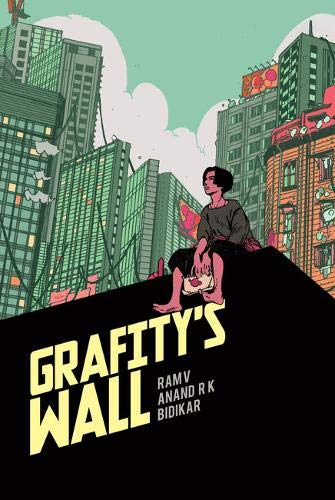
The story opens in ‘What Goes Up’ as, in the heart of that constant churn, street artist Grafity paints walls with spray cans. Little Suresh Naik just can’t help himself, despite countless costly and painful confrontations with policemen: blank walls just call to him and demand he makes magic on them.

He’s lucky he has Jayesh looking out for him. Even fiercely pragmatic “Jay” has dreams – he wants to be a major American style rapper – but he also understands exactly how the world works and who needs paying at every level. That’s why he’s trapped acting as fixer and drug mule for minor gangster Mario

The dreamers – and vanishingly quiet, ever-observing student Chasma – are closer than the family who cannot understand them and, when it’s not trying to crush them, the city belongs to them. For all its allure, though, they can’t imagine anything better than leaving it behind forever…

Their lives all change when the ramshackle Kundan Nagar slums are razed for a new development. In the aftermath, Grafity finds a lone pristine, wall defiantly standing proud and knows it must carry his mark…

In ‘What Goes Up’, he’s laying the groundwork for a masterpiece, with Jay and Chasma idly watching, Grafity realises Mario has found them. The hood and his new arm candy Saira are figures of terror, especially since Jay used the gangster’s money to buy the tagger’s freedom from the cops. In calculated retaliation, Mario throws his weight around and gives Jay a delivery designed to prevent him from playing at his first major gig…

The wall becomes Grafity’s testament, changing daily to record the events that inevitably engulf those around him. The worst is seeing Jay slowly sucked down into the morass of petty crime and expedient compromises, becoming colder and harder inside…

Chasma is fat, slow-seeming and looks a bit Chinese. It’s how he got his job waiting tables at the Dragon Wok restaurant, where the closet intellectual talks to interesting people while taking their orders.

Exploring the concept of ‘American Chop Suey’ – as carefully explained by the diner’s well-seasoned chef – Chasma applies it to his creative efforts:  making time to work on his writing and model own grand dreams. Many of them centre around Mario’s “girlfriend” Saira, and he assuages his frustrations by writing letters to anonymous passers-by. He’s become used to being ridiculed, bullied and beaten up by strangers, which is why it’s so hard when Jay starts doing it…

Graphity’s masterpiece grows more magnificent and revelatory by the moment in ‘Bambai Talkies’, and watching him work utterly captivates his friends. When Saira joins the vigil and strikes up a conversation with Chasma, the writer is carried away in her vivacious wake. She wants to be an actress and soon the boys join her in regular afternoon movie matinees.

When she says she’s quitting the rat race and leaving Mumbai, Chasma agrees to go with her, even after discovering she’s funding the getaway with a case full of the gangster’s money…

When Mario finds them, Chasma makes a supreme sacrifice worthy of a storybook hero, provoking Jay and Grafity to do the same in their own manner…

Illustrated with warmth, edgy versatility and a profound appreciation of street art and hip hop style by Anand Radhakrishnan and benefitting from imaginative colouring by Jason Wordie, Irma Kniivila and letters from Aditya Bidikar, this paean to the Places We Came From, the danger of aspiration and the power of hopes and dreams is an exotic and memorable delight: the kind of Eastern promise you can depend on.
© 2018 Ram Venkatesan, Anand Radhakrishnan. All rights reserved.

Letters to Margaret


By Hayley Gold, with Andy Kravis, Mike Selinker & various (Lone Shark Games)
ISBN: 978-1-7356380-2-7 (TPB/Digital edition)

If you read a lot of comics, you’re probably quite used to being puzzled, but probably not in the deliberate, cunningly conceived way cartoonist Hayley Gold (Across and Down) would like you to be…

Once upon a distant time, crossword puzzles were a scandalous obsession, then a passionate compulsion before ultimately becoming part of everyday life – far more so for some than for others. There are many variations, but we’re all big boys, girls and other here, so please assume that henceforward I’m talking about brain-busting cryptic crosswords, unless I say otherwise…

In the USA and other, lesser dominions, a whole subset/tribe of locution-loving smart people – call them “cruciverbalists” and “etymologists” if you like labels – are positively compelled to solve periodical conundra of varying vigour and varieties, with many skilled wordsmiths (amateur or otherwise) making The New York Times legendary crossword their paragon of play.

Every self-identifying tribe – be they comics addicts, cosplayers, petrol heads, film freaks, crossword fans or whatever, are subject to polarising issues specific to their particular passion, and such localised critical controversies underpin the hijinks here as our cast address issues crucial to those billions as they enact the narrative that will change their lives…

All of that is mere background context but is supremely, subtly interwoven into an extremely engaging, handily hands-on interactive rom-com graphic novel devised by Gold: delivered as a digital and/or paper-printed split-book in the manner of the 1960s publishing trend for dual-release paperbacks.

Those bad boys offered a double-bill of individual tales in one package, but here and now that pattern’s evolved into a twin-pronged delivery of a single story, presented back-to-back, drenched in fourth-wall ruptures and augmented by seditious puns, crafty jibes and actual crosswords for each chapter.

These lexicon-busting brain-benders are devised by pro quiz compilers Andy Kravis (The New Yorker) and Mike Selinker (Game theory in the Age of Chaos), and “others” such as Phil Zoffle, John Dough, Beau Kaye, Margie Rynn, Annie Boddy & Hugh Wynne. By solving them, readers can glean upcoming story-hints of the pages that follow.

You never really needed that physics degree to enjoy Star Trek, so please don’t fret if you won’t or can’t complete the grids here: the artwork and story are delightfully sufficient unto themselves, thanks especially to a wickedly judgemental hilarious running commentary. This comes via a contemporary Greek Chorus of graphic symbolism: arrow symbols Ebony and Irony are omnipresent, sassy, smart-assed, pun-obsessed ambulatory footnotes who take no prisoners when exposing the secret subtext of our protagonists and their associates.

The actual narrative consists of a love story wrapped in a mystery, developing between two young people of unflinching ideals and expanded vocabularies but both direly in need of a good shaking…

Our tale primarily offers two widely differing perspectives on the same story and events, as experienced by crossword aficionado/blogger/student Margaret A. “Maggie” Cross and her Teaching Assistant Derry Down: a rival cruciverbalist/scholarly hipster/raconteur and unlikely romantic lead. In pursuit of the perfect puzzle (difficult, innovative, ethically pure, free from bias and not just catering to old white men) they cross swords as much as words over one verbally eventful semester at Columbia University School of Journalism…

Their journey is mirrored, marred and misunderstood by friends, colleagues, and mentors; most crucially Derry’s boss – journalism professor Lewis Dodgson – and Maggie’s force-of-human-nature, investigative junk-food blogging pal Amanda Zucker, both of whom secretly steer the eventual lovers’ courses whilst enhancing their intellectual and ethical advancement and rapprochement…

I won’t say too much more about the relationship as that tale is best savoured by enjoying it first hand, but I will add one last tantalising teaser titbit. A social media war erupts after harsh words in assorted anonymous blog spats, but although feisty, uncompromising Maggie verbally gives as good as she gets, her dream is to turn her coursework into successful submissions to the NYT crossword department.

Happily, her efforts are rewarded with a string of suggestions and comments from the editor. Incredibly, however, that editor is Margaret Petherbridge Farrar, the woman credited with formalising and eventually popularising the crossword during WWII, and who has been dead since 1987…

How that time-bending confusion is ultimately cleared up makes for compelling and deliriously compulsive reading and the whimsical enigmas and pointed wars of words are supported on both sides of the book by a wealth of extras including How it came A. Cross: The Crossword, How it all went Down A. Cross: The Crossword, Solutions, Puzzles, People, Jargon and Resources.

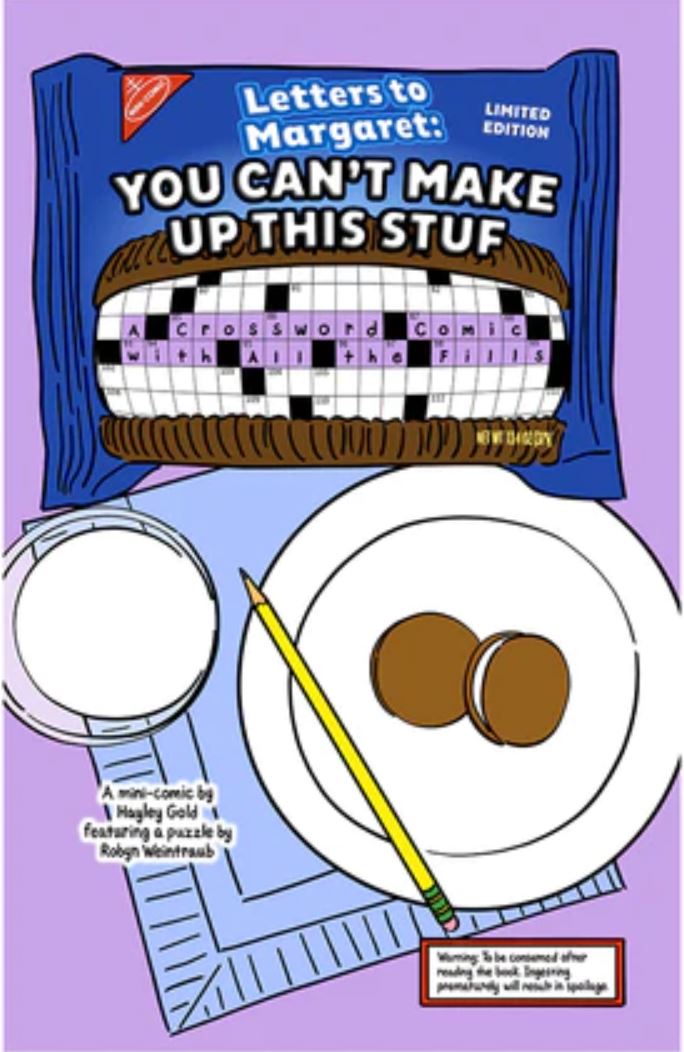
Affiliated Add-ons available include an 8-page minicomic by Gold and crossword legend Robyn Weintraub and even a code-busting Solver’s Bundle pencil set to supplement the tale as you fill in the clues. For those unwilling to mar their pages or leave marks on a screen, copies come with PDF in .puz format for printing off the puzzles…

If you love words, puckish wordplay, playful romance, and especially words skilfully wedded to engaging picture to tell unforgettable stories and are tempted by an interactive comic you can solve, Letters to Margaret should be on your “must-do” list…
© 2021 Hayley Gold, Andrew Kravis and Mike Selinker on behalf of Lone Shark Games, Inc..

Letters to Margaret can be purchased in digital or physical editions direct from Lone Shark Games, at Letters to Margaret – Lone Shark Games

Stay


By Lewis Trondheim & Hubert Chevillard, translated & edited by Mike Kennedy (Magnetic Press)

ISBN: 978-1-54930-771-3 (HB/Digital edition)

Until so very recently, comics in the English-speaking world were largely comedy or genre adventure, with a small but vital niche of breakthrough biography and autobiography such as Maus, Persepolis and The End of the F**king World.

What we have never had, and still largely don’t have, is an equivalent to general fiction and drama/melodrama. That’s not so in Europe, where a literal “anything goes” attitude has always accommodated human-scaled slice of life stories that depict ordinary people in the quiet as well as extraordinary moments.

Think of such comics as the sequential narrative equivalent of watching mainstream broadcast TV (in the UK that would be BBC 1, 2, 4, ITV1 and Channel 4) and it isn’t hard to find almost impossible genres. For example, there’s a wealth of superb material just about going on holiday…

That’s not really a fair comparison for Americans, but quite frankly, your TV networks are a hellhole of your own devising. It’s a miracle that you have generated so many great shows and programmes over the decades and it’s also why I keep banging on about comics. In them, there are always infinite worlds and possibilities…

So, now our own Powers-That-Be (Hopeless) might have arranged it so that it’s now all-but impossible for any UK-based folk to pop across and have une petite vacances in Europe, but over there it’s an inescapable right, and they have some fabulous tales about a simple break. This is probably one of the best you’ll ever read.

A sublime example of what I’m talking about is Lewis Trondheim & Hubert Chevillard’s Je vais rester. Translated by Magnetic Comics as Stay, it challenges the commercial pressures I’ve alluded to above: an intriguing, engaging drama in both print and byte-sized versions for me to recommend and you to fall in love with. It also means that if you’re stuck in road, rail or airport queues you can download it after getting bored with me…

With north of 100 books bearing his pen-name (his secret identity is actually Laurent Chabosy), writer/artist/editor/animator and educator Lewis Trondheim is one of Europe’s most prolific comics creators: illustrating his own work, overseeing cartoons adaptations of previous successes such as La Mouche (The Fly) and Kaput and Zösky or editing young-readers book series Shampooing for Dargaud.

His most famous tales are such global hits as Les Formidables Aventures de Lapinot (seen in English as The Spiffy Adventures of McConey); the Donjon series of nested fantasy epics (co-created with Joann Sfar and translated as conjoined sagas Dungeon: Parade, Dungeon: Monstres and Dungeon: the Early Years); comedy fable Ralph Azham and an utterly beguiling cartoon diaries sequence entitled Little Nothings.

In his spare time – and when not girdling the globe from convention to symposium to festival – the dourly shy and neurotically introspective savant wrote for satirical magazine Psikopat and provided scripts for many of the continent’s most popular artists such as Fabrice Parme (Le Roi Catastrophe, Vénézia), Manu Larcenet (Les Cosmonautes du futur), José Parrondo (Allez Raconte and Papa Raconte) and Thierry Robin (Petit Père Noël).

Ostensibly retired but still going strong, Trondheim is a cartoonist of uncanny wit, outrageous imagination, piercing perspicacity, comforting affability and self-deprecating empathy who prefers to scrupulously control what is known and said about him…

I must admit that, at this moment, from all his vast canon, STAY is probably my absolute favourite…

Born in Angers in 1962, Hubert Chevillard (Le Pont dans la Vase, Corcal, Terra Incognita, Le Facteur, Pavillon Rouge, Donald’s Happiest Adventures) is a French cartoonist now working from Grenoble who studied animation at the Gobelins School and the School of Fine Arts in Angoulême. He worked at Walt Disney Animation France’s Montreuil Studious for almost a decade before switching to comics as illustrator of Didier Crisse’s Luuna. He thereafter branched out and carried on, scripting his own stuff whilst remaining an in-demand artist for others…

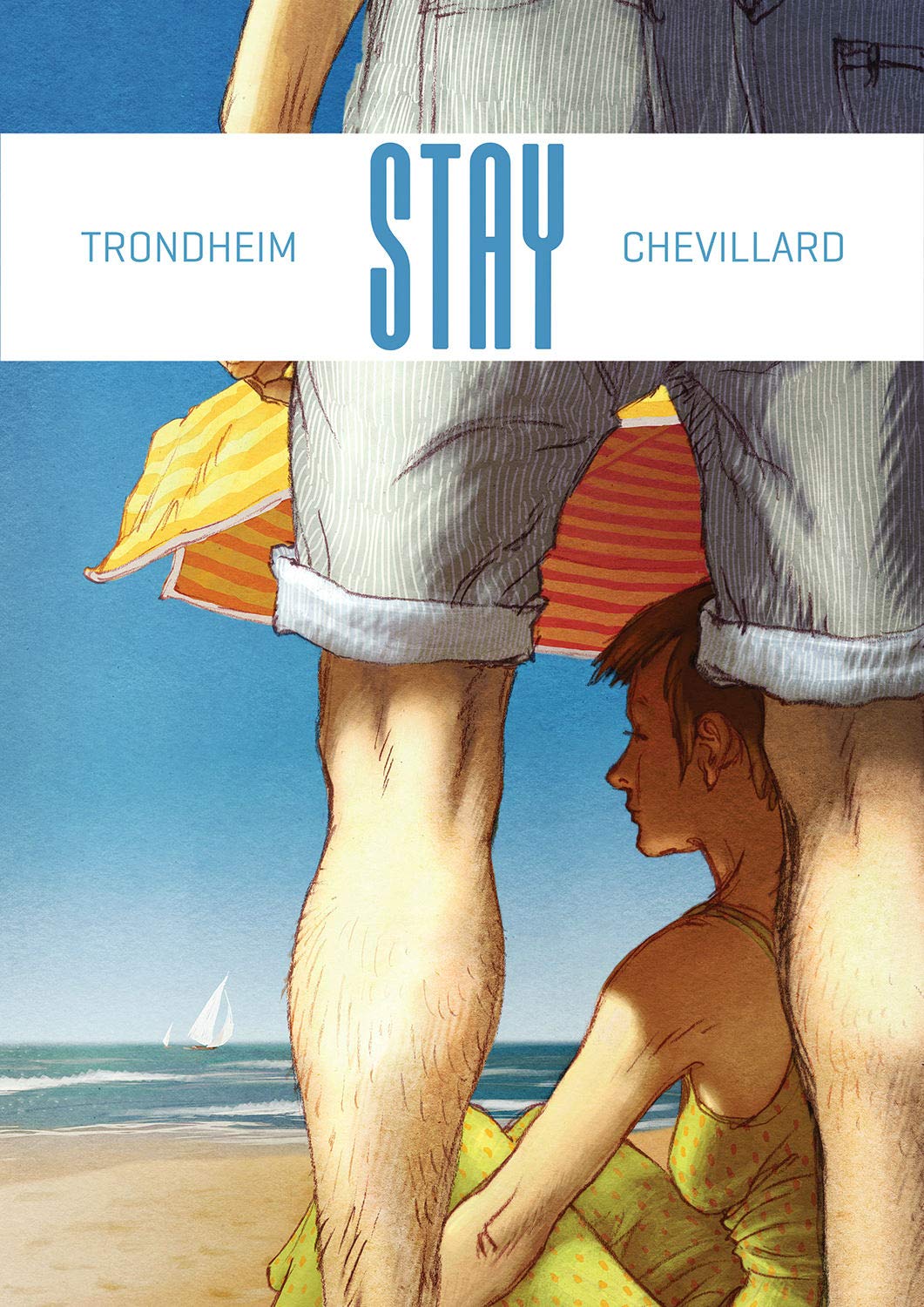
Here his softly endearing images paint us a picture of idyllic summer holidays at the seaside for affianced couple Roland Matturet and Fabienne Guillardin. For their trip to the South of France, he has meticulously (it’s his way) planned everything and paid for it all in advance as a build-up to asking her a certain question.

Sadly, the entire sunny escapade is cut short – as is Roland himself – when a bizarre accident leaves Fabienne instantly alone in a strange but welcoming resort of happy strangers…

Shocked and stunned, but still posthumously guided by Roland’s notebook itinerary, she seems to pause inside. Not even informing the families of the change in circumstance, she roams like a ghost, sampling all the prepaid amenities, diligently attending to Roland’s checklist of events and gradually reinventing herself.

Avoiding all past connections and her current situation, Fabienne savours being unknown, alone, and not yet bereaved: pondering the ramifications in her pensive way, as she grudgingly befriends eccentric, exotic and quixotic local Paco… a man unlike any she has ever met before.

With no idea how she feels about anything, Fabienne allows herself to be intrigued as Roland’s hold on her diminishes and fades away…

What’s next…?

Lyrical, laconic, blackly comic and engagingly demure, this gleefully morbid, platonic holiday non-romance unfolds with a minimum of verbiage and powerfully understated silent visuals: exploring life and death, addressing denial, avoidance and coping mechanisms through a soft-focussed lens of friendships in adversity and those ever-present, never-acted upon holiday impulses…

Vacations are built of never-seized moments of seductive might-have-beens and affable strangers, channelled here in astonishingly compelling episodes that make the mundane magical and encapsulating those brief spells of transient opportunity that comprise such “holidays of a lifetime”. This is tale of woe and wonder writ small, and all the more perfect because of it.
Stay published 2019 by The Lion Forge, LLC. © 2019 The Lion Forge, LLC. Originally published in France as Je vais rester, scenario by Lewis Trondheim, illustrations by Hubert Chevillard © Rue de Sevres, Paris 2018. All rights reserved.

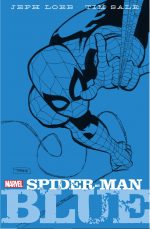
Spider-Man: Blue


By Jeph Loeb & Tim Sale with lettering by Richard Starkings & Comicraft’s Wes Abbot and colours by Steve Buccellato & various (MARVEL)
ISBN: 978-0785134466 (HB/Digital edition)

The creative team of Jeph Loeb & Tim Sale have tackled many iconic characters in a number of landmark expansions/reworkings. In Spider-Man: Blue Loeb & Sale set their nostalgia-soaked sights on the beginnings of Peter Parker’s tragically brief romance with Gwen Stacy and ever-maturing relationship with eventual wife Mary Jane Watson. It encompasses that transitional period when Steve Ditko’s creepy, plucky outsider grew into a wholesome, straight-shooting, hard-luck hero as re-designed by John Romita Senior – who also provides the Introduction (first seen in the 2004 release) for this 2019 remastered collected edition. Also included are a full cover gallery by Sale and many of his preparatory sketches, plus a sketchbook section at the book’s end, featuring commentary from writer and artist revealing their process, in crafting ‘Cover Concepts’, ‘The Girls’, ‘French Posters’ (focussing on European editions) and a prodigious ‘Sketch Gallery’.

Part of a colour-themed project based on Marvel Super-hero beginnings, Spider-Man: Blue gathers the 6-issue miniseries from 2002: a slight but extremely readable tale reconstituted from and built upon pertinent snippets from Amazing Spider-Man #39-49 – plus a smidgeon of #63.

It opens on one gloomy February 14th, as happily married but momentarily melancholy Peter records a message to a former girlfriend he hasn’t really gotten over…

Successive tapes to murdered Gwen follow issue by issue, taking the form of a reminiscence of the days when he first emerged from his solitary shell. Parker recalls how he found – and lost – a few friends while inadvertently growing closer to MJ, all whilst pursuing a pure, innocent and unlikely love for a seemingly unattainable dream girl.

‘My Funny Valentine’ begins in modern days of muted blue, before memories of Parker’s first showdown with Green Goblin Norman Osborn erupt in vibrant full colour, with the epochal moments concluding as – whilst visiting the now amnesiac villain in hospital – “Gorgeous Gwen” first notices something special about staid, standoffish Peter…

‘Let’s Fall in Love’ sees that relationship grow whilst adding a major complication with the long-anticipated, oft-delayed first meeting with flirtatious Mary Jane, before ‘Anything Goes’ sees her “wild-child” vivacity steering our shy boy’s social life, making him almost popular with fellow students and even more intriguing to Gwen even as MJ (innocently?) aids and abets his secret life and career…

‘Autumn in New York’ follows Parker leaving Aunt May’s home to share an apartment with Harry Osborn (troubled son of the Goblin, and his eventual successor) with MJ inviting herself along as Harry’s official girlfriend, after which ‘If I Had You’ sees Parker’s youthful associates growing up a bit before concluding reverie ‘All of Me’ shows how a climactic clash with a lurking stalker on another St. Valentine’s night led to the birth of a love for the ages…

Along the way – and as formerly depicted in the Lee & Romita classics – Spider-Man fights a formidable array of super-foes, including The Rhino, Lizard, two separate Vultures and ultimately Kraven the Hunter (rather uncomfortably and implausibly re-imagined here as the kind of sinisterly patient, brooding mastermind that he simply could never have been). Loeb & Sale in-fill, expand and often radically rework those battles with the advantage of revelations culled from stories by others over the intervening decades.

Regrettably but crucially, the end result is clever and pretty but offers no real sense of tension, because even the newest readers already know the inevitable romantic outcomes whilst the attempt to weave a number of isolated super-baddie clashes into a vast master-plan over and above what Lee & Romita envisioned feels clumsy and ill-considered. Don’t take my word for it: the original tales are readily available for your perusal and delectation in numerous collections as assorted Marvel Masterworks and Epic Collections, should you feel the need to contrast and compare…

Loeb & Sale rightly enjoy a prodigious track record for retrofitting, rationalising and restating pivotal moments of comic book icons: especially distilling turning points of iconic characters and careers into material palatable to modern readers, but here it’s simply a waste of their time and talents. The originals are simply still better than the rehashing here. This is not one of their better efforts, and often comes perilously close to being maudlin far too often for comfort.

Although Sale’s art is always a joy to behold, and Loeb’s gift for dialogue is undiminished, Spider-Man: Blue falls short of their best. A solid, casual affair but, sadly, not a patch on the real thing …
© 2019 MARVEL.