The Marvel Comics Covers of Jack Kirby volume 1: 1961-1964


By Jack Kirby, with Steve Ditko, Don Heck, Dick Ayers, Paul Reinman, Bill Everett, George Roussos, Joe Sinnott, Chic Stone, Vince Colletta, George Klein, Sol Brodsky, Al Hartley, Stan Goldberg, Art Simek, Sam Rosen & various, Introduction by Patrick McDonnell (Dark Horse Comics)
ISBN: 978-1-50673-246-6 (HB) eISBN: 978-1-50673-247-3

Today in 1917 on New York’s Lower East Side, Jacob Kurtzberg was born to Jewish-Austrian parents. He grew up to be one of the most influential and recognised artists in world history. The reason why can be read here.

The Marvel Comics Covers of Jack Kirby chronologically collects The King’s superhero cover art in a spectacular hardcover coffee table book which simultaneously preserves the wonderment in a digital edition, thus allowing instant enlargements of any and all bits you might have glossed over or missed before…

Preceding the massive and momentous art attack comes heartfelt appreciation from Patrick McDonnell (Mutts) in his Introduction and via collector memory ‘Echoes of the King’ by Vincent Iadevaia. At the far end of the collection there’s a succinct biography and appreciation of Jack for those of you who don’t know him as well as we declining comics stalwarts do.

In between those points reside a torrent of those visual highpoints that served to introduce new and revolutionary ways of seeing and enjoying comic books. These collectively span cover-dates November 1961 to December 1964 as seen on The Avengers #1-11; Fantastic Four #1-33; Incredible Hulk #1-5; Journey into Mystery #83-111; Strange Tales #90, 101-127; Tales to Astonish #25, 27, 35-62; Tales of Suspense #39-56, 58-60; X-Men #1-8; Amazing Fantasy #15; Amazing Spider-Man #1; Sgt. Fury and His Howling Commandos #1-13; Daredevil # 1-4 plus Strange Tales Annual #2, Marvel Tales Annual #1, Fantastic Four Annuals #1-2, a few (far too few!) pre-Marvel genre covers including combat classic Battle #65, and a selection of monster book covers…

Inkers, colourists and letterers are not credited here, but that oversight is hopefully covered by us in the great big shopping list under the title…

Despite the too-tight brief – where are all the war, romance and particularly western and sci fi covers!? – this is a magnificent meander around the things that literally drew most of us into comics… that eye-grabbing first image. Jack Kirby was a master of electric storytelling, but he was also the god of the perfect moment and single pictures worth a thousand words. Look here and learn how and why…

© 2025 MARVEL.

Win’s First Christmas Gift Recommendation of the year!: Utter Acme of Visual Iconography… 9/10

Superman’s Pal Jimmy Olsen by Jack Kirby


By Jack Kirby, Vince Colletta & Mike Royer, with Murphy Anderson, Neal Adams, Al Plastino & various (DC Comics)
ISBN: 978-1-84576-746-4 (TPB/Digital edition)

This book includes Discriminatory Content produced in less enlightened times.

For nearly nine decades, Superman has provided excitement, imagination and fun in more or less equal amounts. Although unnamed, since Action Comics #6 (November 1938), a red-headed, be-freckled plucky kid worked alongside Clark Kent & Lois Lane and enjoyed a unique and special relationship with the Metropolis Marvel.

We saw him called by his first name in Superman #13 (November/ December 1941). Jimmy Olsen became a major player on The Adventures of Superman radio show from its debut on April 15th 1940: someone for the hero to explain stuff to for the listener’s benefit and the closest thing to a sidekick the Man of Tomorrow ever needed. That partnership transferred to the comics. Following a string of hit movie chapter plays, when the similarly titled television show launched in the autumn of 1952, it was a monolithic hit and co-star Jimmy was in constant attendance. Thus, National Periodicals began cautiously expanding their precious franchise with new characters and titles. First up was the gloriously charming, light-hearted escapades of an impetuous, naïve but capable Daily Planet cub reporter/photographer forever onward saddled with the cognomen Superman’s Pal. Jimmy Olsen, which launched in 1954 carrying a September/October cover date. For 20 years the comic blended action, adventure, wacky comedy, fantasy and science fiction in the gentle, wry, exceedingly popular manner scripter Otto Binder had perfected in the 1940s at Fawcett Comics on the magnificent Captain Marvel.

Over those years, one of its most popular plot-themes (and most fondly revered and referenced today by Baby-Boomer fans) was the unlucky lad’s appalling talent for being warped, mutated and physically manipulated by fate, aliens and even his supposed friends. Latterly, however, Leo Dorfman had begun the process of remaking Jimmy as a more competent action hero and serious investigative journalist in tune with the rebellious era when the worlds of DC forever altered on the pages of what was then considered one of their least appreciated and poorest-selling titles.

According to fan myth & legend, none of it apparently mattered when Jack Kirby – hot from making Marvel the top company in the business – took over. By all popular accounts, he had asked for DC’s worst performing title to prove what he could do, and used it to spearhead a wave of changes whilst adapting grand schemes his old employers were too timid to countenance on their pages…

Jack’s first issue was #133, cover-dated October and on sale from August 25, 1970.

Jack Kirby (28th August 1917 – 6th February 1994) was – and, more than three decades after his death, remains – the most important single influence in the history of American comics. There are innumerable accounts of and testaments to what the man has done and meant, and you should read all of those if you are at all interested in the bones and breath of our medium. Kirby was a man of vast imagination who translated big concepts into astoundingly potent, instantly accessible symbols, thereby creating an iconography for generations of fantasy fans. If you were exposed to Kirby as an impressionable child, you were his for life. To be honest, that probably applies at whatever age you jump aboard the “Kirby Express”…

Synonymous with larger-than-life characters and vast cosmic imaginings, he was an astute, spiritual man who lived through poverty, prejudice, gangsterism, The Great Depression and World War II. He experienced Pre-War privation, Post-War optimism, Cold War paranoia, political cynicism and the birth and death of peace-seeking counter-cultures, but always looked to the future while understanding human nature intimately. Beginning his career in the late 1930s, it took a remarkably short time for Jack and creative collaborator Joe Simon to become the wonder-kid dream-team of the newborn comic book industry. Together they produced a year’s worth of influential monthly magazine Blue Bolt, dashed off Captain Marvel Adventures #1 for overstretched Fawcett, and – after Martin Goodman appointed Simon editor at Timely Comics – launched a host of pivotal characters including Red Raven, Marvel Boy, Mercury/Hurricane, The Vision, Young Allies and million-selling mega-hit Captain America. When Goodman failed to honour his financial obligations, Simon & Kirby were snapped up by National/DC, who welcomed them with open arms and a fat chequebook.

Bursting with ideas these staid industry leaders were never really comfortable with, the pair were initially an uneasy fit. Awarded two moribund strips to play with until they found their creative feet, they turned around both Sandman and Manhunter virtually overnight and, once safely established and left to their own devices, switched to the “Kid Gang” genre they had pioneered at Timely. Joe & Jack created wartime sales sensation Boy Commandos and Homefront iteration The Newsboy Legion before being called up to serve in the war they had been fighting on comic pages since 1940. Once demobbed, they returned to a very different funnybook business, and soon after left National to create their own empire…

S&K ushered in the first age of mature American comics – not just by inventing the Romance genre, but with all manner of challenging modern material about real people in extraordinary situations, only to see it all disappear again in less than eight years. Simon & Kirby had established their own publishing house, creating comics for far more sophisticated readerships, but found themselves in a sales downturn and awash in public hysteria generated by an anti-comic book pogrom. Their small stable of magazines – generated for an association of companies known as Prize, Crestwood, Pines, Essenkay and Mainline Comics – blossomed and as quickly wilted when the industry contracted throughout the 1950s, but had left future generations fascinating ventures such as Boys’ Ranch, Bullseye, Crime Does Not Pay, Black Magic, Boy Explorers, Fighting American and the entire genre of Romance Comics…

Hysterical censorship fever spearheaded by US Senator Estes Kefauver and opportunistic pop psychologist Dr. Frederic Wertham led to witch-hunt Senate hearings. Most publishers caved, adopting a castrating self-regulatory straitjacket of draconian rules and guidelines. Crime & Horror titles produced under the aegis and emblem of the Comics Code Authority were sanitised, anodyne affairs in terms of mature themes, political commentary, shock and gore even though the market’s appetite for suspense and the uncanny was still high. Crime comics vanished as adult sensibilities challenging an increasingly stratified and oppressive society were suppressed. Salaciousness, suspense and horror were dialled back to the level of technological fairy tales and whimsical parables…

Simon left the business for advertising, but Jack soldiered on, taking his skills and ideas to safer, more conventional, less experimental companies. As the panic abated, he returned to DC Comics, working on bread-&-butter anthological mystery tales and revamping Green Arrow (at that time a back-up feature in Adventure Comics and World’s Finest Comics) whilst concentrating on a passion project: newspaper strip Sky Masters of the Space Force.

During this period Kirby also re-packaged a superteam concept that had kicked around in his head since he and Joe closed their innovative, ill-timed ventures. At the end of 1956, Showcase #6 premiered Challengers of the Unknown and following three further test issues they won their own title with Kirby crafting the first eight. Then a dispute with Editor Jack Schiff exploded and the King was gone…

He found fresh fields and an equally hungry new partner in Stan Lee at the ailing Atlas Comics outfit (AKA once mighty Timely Comics), launching and spearheading a revolution in comics storytelling. However, after just over a decade of a continual innovation and wonderment, Kirby felt increasingly stifled. His efforts had transformed a dying publisher into industry-leader Marvel, but success had left him trapped in a profitable rut. Thus, he moved back to DC to generate another tidal wave of sheer imagination and pure invention. The result was experimental adult magazines Spirit World & In the Days of the Mob followed by a stunning reworking of Superman’s Pal Jimmy Olsen – and by the time he had finished, all DC continuity. The latter was a prelude to his landmark Fourth World Saga comprising interlinked and contemporaneous titles Forever People, New Gods & Mister Miracle: the very definition of something game-changing and too far ahead of its time…

Incidentally, on many levels Jimmy was an ideal match for the King and not an incongruous display of breast-beating or do-or-die audition. Olsen was an idealistic, heroic young man in the thick of the incredible at all times, and Kirby had a long history with such boy heroes. He and Joe Simon had invented the comic book “kid gang” subgenre and for the next two years Kirby revived it with a new take on The Newsboy Legion… albeit interlaced with a future-embracing backstory, and aspirational wonder, rather than the poverty, privation and ongoing war of survival embodied by the Forties iteration…

In last non-Jack issue, Jimmy had been abducted by gangsters convinced he knew Superman’s secret identity, before battling a soviet champion for sovereignty of a floating island (as you do…) but everything abruptly changed with Superman’s Pal Jimmy Olsen #133. Suddenly readers were thrown into a bravely strange new world where, out of nowhere, extremely shady incoming Daily Planet owner Morgan Edge gifts Jimmy with a fantastic supercar – the “Whiz Wagon” – and demands that he and his previously unseen pals ‘The Newsboy Legion!’ (actually the “New Newsboy Legion” comprising the sons of Tommy, Big-Words, Gabby & Scrapper, with the addition of African-American, scuba diving addict Flipper Dipper) deliver an exclusive scoop on a strange counterculture movement living in the wilds outside Metropolis. The mysterious subjects are all weird hippie-types and don’t trust anyone over age 25, so he needs youth and experience…

However, the one who can’t be trusted is Edge himself. He has undisclosed connections to crime combine Intergang and a chilling stone-faced alien called Darkseid

After very publicly surviving an assassination attempt, Clark Kent goes into hiding allowing Superman to take off after Jimmy and the boys as they probe a fantastic unsuspected region dubbed the Wild Area. Here Olsen survives trial by combat to become leader of futuristic biker gang The Outsiders, and is sucked into their quest for meaning by hunting a moving mountain inhabited by techno-pacifists “The Hairies”

Linking up with the Man of Steel as tremors rock the organically grown refuge city of Habitat, Jimmy and the Newsboys chase the ultimate test of existence alongside all the other motor nomads, unaware that pal Superman already knows the secret they’re all seeking. What Jimmy isn’t aware of is that Edge has boobytrapped the Whiz Wagon to satisfy his master’s desire to destroy what might the next step in human evolution and a threat to his own schemes…

Although Kirby and Inker Vince Colletta put their hearts and souls into the job, and despite Publisher Carmine Infantino’s promise of strict non-intervention, meddling with the concept began early with regular Superman art staff redrawing Superman and Jimmy’s faces. We’ll never know what they tried to do to the overall story arc…

Without pause for breath, exposition or recap Superman’s Pal Jimmy Olsen #134 saw Jimmy and his biker wild bunch catch up to monstrous mechanised white whale ‘The Mountain of Judgement!’ after astoundingly taking out Superman with weapons casually discarded by inveterate tinkerers the Hairies. Thankfully, Edge’s bomb is easily defused by the techno-hippies who all share an incredible secret – one Superman is fully aware of. In short order Jim and the lads are briefed on “The Project”: the US government’s cracking of the human genome and extensive duplication and experimentation of life forms. This has already resulted in cloning the deceased, mass-producing soldiers and staff and, most incredibly, meddling with/reconfiguring chromosomal structure to create new life forms: “D.N.A.liens” like the pacifist techno-wizards called Hairies…

Moreover, the Project is run by none other than slum-kids made good the original Newsboy Legion!

Although commonplace now, the notion of cloning was practically unknown in 1970 and Kirby took the idea and ran with it: blending eternal questions about Life itself with Spy Fi tropes, gansterism and Bond movie settings, all packed with freaks and monsters and underpinned by a constant threat posed by a mysterious mastermind and his own experimental devils. The inspired auteur was also pulling out all the stops visually and his experimental concepts were backed up by equally innovative art and photo collages.

In SPJO #135 we meet Simyan & Mokkari, whose raid on the Project’s genetic storehouse provides raw material to constantly reproduce wilder and wilder versions of our heroes in their own hidden ‘Evil Factory!’ Being utterly without restraint or ethical scruple, their goal of destroying the Project for Darkseid is well-advanced, and – as previously stated – Jimmy’s genes are a particularly promising medium for random transformations…

Their control of what they make is less impressive however, and a superstrong, giant Jimmy infused with Kryptonite is teleported without a plan into the Project simply to save Simyan & Mokkari being killed by their own experiment. Although it almost kills Superman and his pal, the day is saved by the Senior Newsboys’ passion project – a new iteration of their murdered WWII superhero patron Jim Harperthe (Golden) Guardian – in concluding, action-packed background-filling expository chapter ‘The Saga of the D.N.A.liens!’ (cover-dated March 1971 and leading into the launch of Kirby’s opening Fourth World titles Forever People and New Gods #1. We’ll be covering those and final plank Mister Miracle later in the year).

With the scene set, Jimmy’s further exploits are generally Fourth World adjacent: a forge and funnel for concepts linking Superman to the ongoing narrative of Gods and Armageddons whilst exploring Mankind’s dangerous tendencies and corruptible natures. In Superman’s Pal Jimmy Olsen #137, as the Newsboys and Jimmy learn more about their own (utterly non-consensual) contributions to the Project (without their knowledge Scrapper has been mass-produced as soldiers and guards in different sizes from six feet to six inches, and innumerable Gabbys man switchboards and communications consoles!) the Evil Factory strike again.

As Jimmy meets The Project’s emergent telepath/resident D.N.A.lien Dubbilex, elsewhere Darkseid demands results and Simyan & Mokkari unleash another Olsen variant on the hidden science citadel. Gifted with astounding strength and uncanny energy powers ‘The Four-Armed Terror!’ has been bred to feed on nuclear radiation and carves a wave of destruction that extends into the Wild Area on its path to the Project’s atomic power plant. Superman and the boys are easily disposed of and discarded, with the crisis escalating even further after Simyan & Mokkari lose control of all the other quadra-killers and beam the entire rampaging herd into the subterranean Project’s tunnels, forcing Superman to pull out all the stops to get free and save everything in cataclysmic closing chapter ‘The Big Boom!’

Despite those promises of non-interference, DC editors and promotional staff perpetually sought to “goose up” the Kirby flagship title. Always a team player, the King acquiesced to a guest-appearance by currently-hot comedian Don Rickles and oddly – in the manner of Marmite – it either worked uproariously or appalled readers. I thought it was a genuine hilarious hoot. Further undercutting the narrative, the saga was bifurcated by a reprint 80-Page Giant of pre-Kirby Olsen escapades in SPJO #140 and not included here.

Nevertheless #139 and 141 ( July’s ‘The Guardian Fights Again!!!’ and September’s ‘Will the Real Don Rickles Panic?’) is a compelling tale of Edge’s unfolding evil, Intergang’s growing influence and the creeping menace of Darkseid, who allows his tech to be used to send Clark Kent into hyperspace destined for Apokolips whilst Jimmy and the Golden Guardian are poisoned by slow-acting incendiary poison Pyro-Granulate: a slow death that will turn them into human torches unless they find an antidote. Slowing them down is equally doomed Galaxy Broadcasting staffer Goody Rickles whom Edge wants gone because he looks like the star Edge wants to sign up… and is really, really annoying…

With Kent saved from a modern hell by New God Lightray, Kirby next addressed the rise in horror and supernatural tales via another two-parter that began in #142 with ‘The Man from Transilvane!’ Here, apparent vampire Count Dragorin and his wolfman assistant Lupek target and “turn” Edge’s PA Laura Conway in their desperate hunt for long-missing mad scientist Dabney Donovan: a planetologist who apparently built worlds in his laboratory and shaped civilisations by screening movies in their skies. Like all sensible scientists, Donovan planned to end his research project on a certain day and set up programmed measures involving his ‘Genocide Spray!’ with no consideration of the beings he had made and discarded… but Jimmy and Superman certainly did…

Elsewhere, the Newsboy Legion had their own case, one that again led to Intergang but also the thug who murdered the original Jim Harper/Guardian…

In SPJO #142, Kirby began adding short background-enhancing vignettes and here 2-pager ‘Strange Stories of the D.N.A. Project!! “Hairie” Secrets Revealed!!!’ offered a glimpse of the techno-hippies and their Mountain of Judgment, whilst the next issue added drama to fact-finding as ‘Strange Stories of the D.N.A. Project!! The Alien Thing!!!’ details the terrifying results of creating the first non-human clone…

More much-needed laughs underpin a return to and imminent ending of Olsen’s involvement with the Evil Factory and Apokolips after Edge sends the lads to Britain on a snipe hunt to find and film ‘A Big Thing in a Deep Scottish Lake!’ in Superman’s Pal Jimmy Olsen #144 (cover-dated December 1971). Sadly, it’s just another baroque attempt to kill the pesky, interfering kids, but Edge’s delightfully outré assassins are not up to the task and actually facilitate the Whiz Wagon wonders finally finding the long-sought Evil Factory…

Back in Metropolis, as Superman, the Guardian and Dubbilex visit a discotheque and accidentally uncover a connection to the Project and the New Gods, the back of the book discloses ‘Strange Stories of the D.N.A. Project! – The Torn Photograph!’, hinting that not all the mysteries of the top secret base were created by modern scientists…

Jimmy at last gets transformed himself as the Newsboys encounter a menagerie of uncanny creatures in ‘Brigadoom!’ (#145, January 1972) before falling victim to Simyan & Mokkari’s tender ministrations. Unfortunately for them, reverting Olsen to primal revenant ‘Homo Disastrous!’ opens the door to chaos and their own destruction, even if it does add a (semi-) friendly monster to the team in affable escapee “Angry Charlie”

Issue #146 also added a little lore to Superman’s personal canon after ‘Tales of the DNA Project! Arin the Armored Man!!!’ reveals how the geneticists found a way to safeguard the man of Steel’s precious and potential deadly cell cultures and decoded genetic structure from potential abuse…

An issue later, heavily-edited down from his original idea, and inked by Mike Royer rather than Colletta, SPJO #147 saw ‘A Superman in Supertown!’, completing a plot thread begun in Forever People #1, wherein the one-&-only Man of Tomorrow accidentally ends up amongst his “own kind” on paradise planet New Genesis, only to realise he cannot rest until his work is done. An example of that carries over into Kirby’s final issue as Jim, the Newsboys and Angry Charlie head across the Atlantic for a confrontation with Morgan Edge and are abducted in mid-air by purely earthborn menace Professor Victor Volcanum.

Incongruously backed up by one last revelatory episode of ‘Tales of the DNA Project – Genetic Criminal’ with cloned killer Floyd “Bullets” Barstow apparently answering the question of whether evil is an inherited trait, the tale of a Victorian-era supergenius who made himself immortal by distilling the essence of volcanoes wrapped up Jimmy’s Kirby-Era. Volcanum had ended a lengthy period of solitude and isolation by attacking the modern world with robots, death-rays and an advanced flying gondola in his efforts to become ‘Monarch of All He Subdues!’ (SPJO #148, April 1972). His first mistake was capturing the Whiz Wagon riders, but when Highfather of New Genesis graciously dropped Superman into his ongoing campaign, the writing was on the wall.

Of course it had been for Jack for some while. Happy to be deprived of the poison chalice of the committee-mindset governing every aspect of all Superman titles, the King soldiered on with his original intention of creating a timeless saga of celestial drama, passion and mind-bending scope – but there too he would be ultimately thwarted and frustrated. Basically and as was always the case, management wanted New and Different, but didn’t like or understand it when they got it…

Almost overnight and in one broad flourish, Kirby had created one of the most powerful concepts in comic book history. His Fourth World inserted a whole new mythology into the existing DC Universe and blew the developing minds of a generation of readers and especially those who would become the next generation of creators. Who know what could have happened if the publishers had had a little more courage, patience and vision?

Kirby instinctively grasped the fundamentals of pleasing his audience and always diligently struggled against the appalling prejudice regarding the comics medium – especially from industry insiders and professionals who despised the “kiddies world” they felt trapped in. After his grandiose, controversial editorially unappreciated Fourth World was cancelled immediately prior to his long-planned grand finale, Kirby explored other projects that would stimulate his own vast creativity yet still appeal to a market growing ever more fickle. These included supernatural stalwart The Demon, traditional war stories starring established DC team The Losers, OMAC: One Man Army Corps and even a new metaphysically mighty Sandman – co-created with old pal Joe Simon and his biggest hit since science fictional survival saga Kamandi. However, although ideas kept coming (Atlas, Kobra, a new Manhunter and Dingbats of Danger Street), once again editorial disputes took up too much of his time. Reluctantly, he left again, choosing to believe in promises of more creative freedom elsewhere…

As early as 1974, worn down by a lack of editorial support and with his newest creations inexplicably tanking, Kirby considered returning to Marvel, but – ever the consummate professional – scrupulously rode out his contract and carried out every detail of an increasingly onerous, emotionally unrewarding DC contract. The Demon was cancelled after 16 issues and he needed another title to maintain his Herculean commitments (legally obliged to deliver 15 completed pages of art and story per week!): Kamandi – The Last Boy on Earth had found a solid and faithful audience. It also provided further scope to explore big concepts as seen in thematic companion OMAC. Both series granted Kirby’s darkest assumptions and prognostications free rein, and his “World That’s Coming” has proved far too close to the World we’re frantically trying to fix or escape from today…

It’s hard to see these stories – supplemented in this edition by ‘Mother Box Files’ culled from 1986’s Who’s Who: The Definitive Directory of the DC Universe #16 and glorious pages of pencils featuring ‘The Art of Jack Kirby’ – isolated from the original Fourth World titles, and to be honest Jimmy plays a back seat role in most of the tales here. When not driving, being chased by or turned into assorted monsters, he’s Superman’s sounding board and supervising adult for the new Newsboy Legion, but at least he’s treated as a clever and competent active player rather than charming directionless idiot…

Once Kirby left the book things changed slowly. The Newsboys and Angry Charlie stuck around for a while and characters like The Guardian, Morgan Edge and the Project became fundamentals of the Superman universe and continuity. The ongoing continuity repercussions of Kirby’s passing were mostly addressed in, of all places, Superman’s Girlfriend Lois Lane, so much as I’d like otherwise, there’s little chance of seeing collected curated editions of those…

Here though is Kirby at his finest and most iconoclastic, doing what he always did: telling stories of wonder, verve and unparalleled imagination. What more could you possibly want?
© 1970, 1971, 1972, 1986, 2019 DC Comics. All Rights Reserved.

Carl Barks died today in 2000. If you want to learn about him, our most recent review of his magic can be found here.

Walt Disney’s Mickey Mouse Color Sundays “Robin Hood Rides Again” (volume 2)


By Floyd Gottfredson, Ted Osborne, Ted Thwaites, Manual Gonzales, Al Taliaferro, Julius Svensden, Merrill De Maris, Bill Walsh, Roy Williams, Del Connell, Tony Strobl, Bill Wright & Chuck Fuson, Bob Grant & various: edited by David Gerstein & Gary Groth (Fantagraphics Books)
ISBN: 978-1-60699-686-7 (HB/Digital edition)

This book includes some Discriminatory Content produced during less enlightened times.

As collaboratively co-created by Walt Disney & Ub Iwerks, Mickey Mouse was first seen – if not heard – in silent cartoon Plane Crazy. The animated short fared poorly in a May 1928 test screening and was promptly shelved. That’s why most people who care cite Steamboat Willie – the fourth Mickey feature to be completed – as the debut of both the mascot mouse and co-star/paramour Minnie Mouse, since it was the first to be nationally distributed, as well as the first animated feature with synchronised sound. The astounding success of the short led to a subsequent and rapid release of fully completed predecessors Plane Crazy, The Gallopin’ Gaucho and The Barn Dance, once they too had been given soundtracks. From those timid beginnings grew an immense fantasy empire, but film was not the only way Disney conquered hearts and minds. With Mickey a certified solid gold sensation, the mighty mouse was considered a hot property and was soon inducted into America’s most powerful and pervasive entertainment medium – comic strips…

Floyd Gottfredson was a cartooning pathfinder who started out as just another warm body in the Disney Studio animation factory. Happily, he slipped sideways into graphic narrative and evolved into a pioneer of pictorial narratives as influential as George Herriman, Winsor McCay and Elzie Segar. Gottfredson’s Mickey Mouse entertained millions – if not billions – of eagerly enthralled readers and helped shape the very way comics worked. Via some of the earliest adventure continuities in comics history he took a wildly anarchic animated rodent from slap-stick beginnings and transformed a feisty everyman underdog into a crimebuster, detective, explorer, lover, aviator and cowboy. Mickey was the quintessential two-fisted hero as necessity and locale demanded. In later years, as tastes – and syndicate policy – changed, Gottfredson steered that self-same wandering warrior towards a sedate, gently suburbanised lifestyle, employing crafty and clever sitcom gags suited to a newly middle-class and financially comfortable America: comprising a 50-year career generating some of the most engrossing continuities the comics industry has ever enjoyed.

Arthur Floyd Gottfredson was born in 1905 in Kaysville, Utah, one of eight siblings in a Mormon family of Danish extraction. Injured in a youthful hunting accident, Floyd whiled away a long recuperation drawing and studying cartoon correspondence courses. By the 1920s he had turned professional, selling cartoons and commercial art to local trade magazines and Big City newspaper the Salt Lake City Telegram. In 1928, he and wife Mattie moved to California where, after a shaky start, the compulsive doodler found work as an in-betweener with the burgeoning Walt Disney Studios. That was in April 1929, just before the Great Depression hit. Not long after that Gottfredson was personally asked by Walt to take over the newborn but already ailing Mickey Mouse newspaper strip. He would plot, draw and frequently script the strip across the next five decades: an incredible accomplishment by of one of comics’ most gifted exponents.

Veteran animator Ub Iwerks had initiated the print feature with Disney himself contributing, before artist Win Smith was brought in. The nascent strip was plagued with problems and young Gottfredson was only supposed to pitch in until a qualified regular creator could be found. His first effort saw print on May 5th 1930 (his 25th birthday) and Floyd just kept going for 50 years. On January 17th 1932, Gottfredson crafted the first colour Sunday page, which he also oversaw and often produced until retirement. At first he did everything, but in 1934 Gottfredson relinquished scripting, preferring plotting and illustrating the adventures to playing about with dialogue. Thereafter, collaborating wordsmiths included Ted Osborne, Merrill De Maris, Dick Shaw, Bill Walsh, Roy Williams & Del Connell. At the start and in the manner of a filmic studio system, Floyd briefly used inkers such as Ted Thwaites, Earl Duvall & Al Taliaferro, but by 1943 had taken on full art chores.

This superb archival compendium – part of a magnificently ambitious series collecting the creator’s entire canon – continues with his efforts from his thirties heyday to retirement in 1976. Initially – just like the daily feature – the Sunday strip was treated like an animated feature (and frequently promoted screen stories by adapting or continuing movies on the page) with diverse hands working under a “director” and each episode seen as a full gag with set-up, delivery and a punchline, usually all in service to an umbrella story or theme. Such was the format Gottfredson inherited from Walt Disney, and by the time of the material re-presented here it had evolved into a highly efficient system for delivering fun and adventure thanks to the tireless efforts of master storyteller, who knew how to spin out and embellish a yarn…

Following David Gerstein’s Introduction and a truly massive table of Contents, the show opens with preliminary features Setting the Stage. Unbridled fun and incisive revelations begin with J.B. Kaufman’s model-sheet stuffed Foreword ‘Mickey’s Sunday Best: Moving On’ introducing us to the pressures of this unique graphic world before Tom Neely’s equally image-packed Appreciation Of Blots and Stressed-Out Bodies’ tells us more about Gottfredson himself, prior to the glories of the spoken picture as the comics delights begin with The Sundays: Mickey’s Rival and Helpless Helpers and Gag Strips: subdivided into ‘The Sundays, (Floyd Gottfredson’s Mickey Mouse Stories)’ and each proudly preceded by Joe Torcivia’s Introductory Notes, starting with ‘Balancing Acts – And When Helpfulness Lacks’.

Then, spanning January 5th – 26th 1936, ‘Mickey’s Rival’ introduces our hero’s dark mirror antithesis in a sequence written by Ted Osborne, pencilled by Gottfredson and inked Ted Thwaites. Here a most manly, not to say thuggish and vulgar, fellow rodent named Mortimer makes major inroads courting Minnie and a month of escalating escapades – and even stern advice from Goofy – are ineffective. Ultimately, low cunning and unsportsmanlike tricks clear the path of true love and Mortimer is sent packing…

Done-in-one Gag Strips’ run from February 2nd to 23rd with Al Taliaferro joining the creative trio mid-month: with Mickey and faithful hound Pluto dodging dog catchers, failing to open cans and bottles, falling foul of ice and snow and even street racing old cars with Donald Duck. Mickey then helps Goofy & Donald catastrophically “fix-up” Minnie’s house in themed sequence ‘Helpless Helpers’ (March 1st to 22nd) in advance of more ‘Gag Strips’ spanning March 29th to April 19th with the Mouse meeting burglars, bandits and floods whilst avoiding the dentist he really needs to see…

Stefano Priarone’s introductory text ‘Postmodern Times’ then ushers readers into compelling extended fantasy romp ‘The Robin Hood Adventure’ (April 19th to October 4th, with plot & pencils by Gottfredson, an Osborne script and Taliaferro inking): a story-within-a-story as ardent gardener Mickey is transported via beanstalk and magic book back to Sherwood Forest to for dashing derring-do, comical capers, swashbuckling swipes and satirical jibes.

Essay ‘Growing Up, Growing Down’ leads to a sequence demonstrating Mickey’s gifts as ‘The Ventriloquist’ (11th October – 8th November) with Gottfredson & Taliaferro limning another Osborne extended script with the rascally rodent exhibiting his voice throwing gifts – and puckish sense of prankery – to Pluto, Goofy, Horace Horsecollar and Clarabelle Cow before inevitably suffering a major reversal of fortune…

Many, many more Gag Strips’ follow (November 15th 1936 to May 9th 1937) as Osborne, Gottfredson, Thwaites & Taliaferro carry readers into a new year and beyond with slapstick hijinks about injury, infirmity, house, garden and motorcar maintenance, domestic spats, pets, circuses, playing practical jokes, and inescapable retaliation, pickpockets, panhandling, and snow. Bad weather, hunting and jail figure heavily too, as does love, with charmed simpleton Goofy’s unique point of view increasingly making Mickey the straight man in an enduring new relationship.

Halting momentarily to enjoy a Gottfredson private commission of the Mouse in cowboy mode from the 1980s, this compilation then heads west, only pausing to absorb more background and context via Francisco Stajano & Leonardo Gori’s essay ‘The Good, the Bad, and the Sunday’ Then Osborne scripts another gem for sagebrush devotee Gottfredson and inker Taliaferro in ‘Sheriff of Nugget Gulch’, running from May 16th to October27th. Here over-enthusiastic tenderfeet (tenderfoots?) Mickey & Goofy take a holiday of sorts after Minnie informs them of a gold strike near her uncle’s ranch. Sadly en route to Nugget Gulch, their rowdy excitement convinces everyone that they are deadly gunslingers: the toughest desperadoes since the Dalton Gang and both faster on the trigger than Bill Hickock…

The comedy of errors fully unfolds as the utterly unproven reputations of “Big Poison” & “Little Poison” continues to mount, with bandits pre-emptively heading for the hills and a terrified populace making them the new lawmen. Sadly that doesn’t count for much with genuine bad seed Pauncho Malarky, but eventually justice, goodness and blind luck carry the day and the railroad carries our heroes home…

Palate cleansing Gag Strips’ from Osborne, Gottfredson, Thwaites & Taliaferro sustained readers between October 31st 1937 and 27th February 1938, with favoured themes like car trouble, house repairs, fancy dress, fashion, crop harvesting, bug infestation, family illness (Minnie’s nephew Manfred), construction crises and plain old surreal slapstick situations. Thanks to time of year, snow ice and inclement weather proved to timeless and reliable standbys, as were street crime, obnoxious cops and neighbours and household chores, with Minnie’s other rapscallion nephews (Mortimer and Ferdinand – AKA Morty & FerdieFieldmouse) increasingly becoming the voice and faces of wayward youth in sneaky revolt…

Preceded by Gori & Stajano’s lecture ‘With Friends Like These’ continued sequence ‘Service with a Smile’ spans March 6th to April 10th with Merrill De Maris scripting for Gottfredson, Taliaferro, Manuel Gonzales & Thwaites. Her Mickey briefly manages his uncle’s gas service station, and between dealing with the public decides to go after delinquent clients and outstanding bills – with disastrous consequences. That chaos neatly transits to another tranche of stand-alone Gag Strips’ (April 17th – August 21st 1938) by De Maris, Gottfredson, Taliaferro, Gonzales & Thwaites encompassing, bed-making, house cleaning, museum visits with Morty & Ferdie, fence-building with Goofy, hat-hunting with Minnie, more neighbour nonsense, car buying, chore-dodging, aviation antics, pet shenanigans and picnicking. As always many of these result in jail time – especially for Goofy and Mickey…

Another momentary diversion offers a Gottfredson inspired Goofy pinup/poem by Bob Grant from Mickey Mouse Magazine #59 (1940) comes in advance of movie inspired madness and mayhem again preceded by an essay. Thad Komorowski’s ‘Tailoring a Better Mouse’ explores Mickey’s declining film fanbase in lieu of rising stars Donald, Pluto & Goofy and how the Disney Studio remedied that with a new movie epic, suitably tied in and promoted to Gottfredson’s still hale and hearty newspaper strip. Albeit now a feature primarily supervised by Floyd and handled by Manual Gonzales, the strip actually saw print before the cinematic release of Brave Little Tailor.
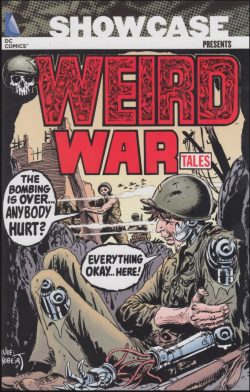
Running from August 28th to November 27th 1938, ‘The Brave Little Tailor’ began and ended with original framing episodes written by De Maris, who also adapted the film’s script which was realised by Gottfredson & Gonzales & inked by Thwaites. Here actor Mickey Mouse joins an epic in production and the fairy tales immediately becomes utterly real, as out unassuming hero is swept along in a rush to kill a giant, marry a princess and save an embattled kingdom…

De Maris, Gottfredson, Gonzales & Thwaites stuck around to produce more Gag Strips’ spanning December 4th to 25th 1938, involving the film’s premier and Goofy’s growing prominence after which Gottfredson’s involvement was curtailed by his promotion to manager of the prodigious Comic Strip Department, addressed here in Later Years: Gottfredson Fill-Ins (June 17th 1956- September 19th 1976), through essay ‘Mouse Soup’. From the end of 1938, Gottfredson oversaw Gonzales on the Sunday feature until the mid-1940s when he gifted Frank Reilly with his managerial duties and took on “Special Projects”.

The period lasted until his retirement in 1976 and is represented here with a selection of delightful oddments beginning with more Gag Strips’ starring a far more sedate and suburban Mouse and traversing June 17th 1956 to September 19th 1976, with stories by Bill Walsh, Roy Williams, & Del Connell, and pencilled and/or inked by Floyd with Tony Strobl. The content is lovely but no longer in any way subversive: detailing swimming pool and gardening woes, ice cream parlor perils, entertaining bored kids, sports, decorating, fashion, camping, pets… and snow…

The remainder of the comics content concerns other Disney stalwarts graced by the master storyteller’s touch. ‘Gottfredson Guest Stars: Donald Duck and Treasury of Classic Tales’ shows stories of other Disney strip features and comes with its own briefing in context confirming ‘Calling All Characters!’ From there it’s a small hop to ‘Donald Duck Gag Strips’ by Osborne, Taliaferro & Gottfredson as seen in the Silly Symphonies feature for October 3rd & 10th 1937. Here the mad as heck mallard goes hunting with Pluto as his gun dog and deeply regrets pranking Goofy with a peashooter…

Walt Disney’s Treasury of Classic Tales extended and adapted other studio screen gems and Gottfredson lustrated many of them, beginning here with Frank Reilly’s interpretation of ‘Lambert the Sheepish Lion’ which ran from August 5th to September 30th 1956. It’s followed by ‘The Seven Dwarfs and the Witch Queen’ (March 2nd – April 27th, 1958) with Gottfredson writing and lettering a saga illustrated by Julius Svensden. The team reunited for the film adaptation of ‘Sleeping Beauty’ from August 3rd to December 28th 1958, and Gottfredson’s last hurrah here was laying out Reilly’s adaptation of ‘101 Dalmatians’ (January 1st to March 26th 1961) for pencillers Bill Wright & Chuck Fuson. The eclectic but buzzy result was inked by Wright & Gonzales.

The joyous cartoon fun is complimented by another mini-moment: this one discussing the rarely seen pre-US Mickey Mouse Sunday strips published in Britain’s Sunday Pictorial from July 13th 1930, and how they never should have been released at all…

Although the comics conclude here there’s still plenty to see and learn as The Gottfredson Archives: Essays and Special Features section follows with a plethora of picture packed articles. Kicking off is ‘Gallery Feature – Gottfredson’s World: Mickey’s Rival and Helpless Helpers’ with overseas edition depicting ratty rogue Mortimer as seen in Italy’s Topolino and Germany’s Mickey Maus Mini-Comic Klassiker, with ‘The Cast: Mortimer’ by Gerstein giving a full assessment of the love-rat before segueing into the expert’s review of Otto Englander’s film storyboards of a most influential unfinished epic in ‘Behind the Scenes: Interior Decorators (Again!)’.

A Gottfredson painting offers visual refreshment in ‘Mickey Mouse Adventures with Robin Hood Adventure’ prior to ‘Gallery Feature – Gottfredson’s World: The Robin Hood Adventure’ sharing international interpretations of the tale from Yugoslavia, Italy and Brazil. Then Gerstein appraises recycled Earl Hurd storyboards in ‘Behind the Scenes: Mickey’s Garden’, whilst ‘Gallery Feature – Gottfredson’s World: Gags of 1936-1938’ depicts international collections of the auteur’s single page strips published in the US and Italy, before Gerstein deconstructs ‘The Inventive Goof’ and Alberto Becattini & Gerstein share the story of a late arriving collaborator in ‘Sharing the Spotlight: Julius Svensden’.

Fully focused on cowboy fun ‘Gallery Feature – Gottfredson’s World: Sheriff of Nugget Gulch’ depicts some of the numerous compilations of the western classic from America and France, whilst six versions from Italy, the US and Yugoslavia illuminate a follow up ‘Gallery Feature – Gottfredson’s World: ‘The Brave Little Tailor’. Then Timo Ronkainen & Gerstein again highlight a Mickey mainstay in ‘The Heirs of Gottfredson: Manuel Gonzales’ before a last dose of strip silliness comes via Gag Strips (A Mickey Supplement): selections from August 25th 1940 to 18th February 1951 by De Maris, Walsh, Gonzales, and Wright.

The glee finally stops with a lovely sketch from Floyd entitled ‘Al [Taliaferro] came into the studio…’, a pertinent cover from California Magazine and biographies of the hard-working editors involved on this splendid tome…

Floyd Gottfredson’s influence on not just Disney’s canon but sequential graphic narrative itself is inestimable: he was among the very first to produce long continuities and “straight” adventures, pioneered team-ups and invented some of the art form’s first “super-villains”.

When Disney killed their continuities in 1955, dictating henceforth strips would only contain one-off gags, Floyd adapted seamlessly, working until retirement in 1975. His last daily appeared on November 15th with the final Sunday included here published on September 19th 1976.

Like all Disney’s creators, Gottfredson worked in utter anonymity, until, in the 1960s, his identity was revealed and the roaring appreciation of previously unsuspected hordes of devotees led to interviews, overviews and public appearances, leading to subsequent his reprinting in books, comics and albums which now all carried a credit for the quiet, reserved master. Floyd Gottfredson died in July 1986.

Thankfully we have these Archives to enjoy, inspiring us and hopefully a whole new generation of inveterate tale-tellers.…

Still, isn’t there more we could find for a third book?
Walt Disney’s Mickey Mouse Color Sundays volume 2 “Robin Hood Rides Again” © 2013 Disney Enterprises, Inc. Text of “Mickey’s Sunday Best: Moving On” by J.B. Kaufman is © 2013 by J.B. Kaufman. Text of “Of Blots and Stressed-Out Bodies” by Tom Neely is © 2013 by Tom Neely. All contents © 2013 Disney Enterprises unless otherwise noted. All rights reserved.
The Amazing Spider-Man Marvel Masterworks volume 19


By Marv Wolfman, Bill Mantlo, Keith Pollard, Al Milgrom, Sal Buscema, John Byrne, Rich Buckler, Jim Mooney, Frank Giacoia, Marie Severin, Mike Esposito, Terry Austin, & various (MARVEL)
ISBN: 978-1-3029-0339-8 (HB/Digital edition)

This book includes Discriminatory Content produced in less enlightened times.

Peter Parker was a smart yet alienated kid when he was bitten by a radioactive spider during a school science trip. Developing astonishing arachnid abilities – which he augmented with his own natural chemistry, physics and engineering genius – the boy did what any lonely, geeky nerd would do with such newfound prowess: he tried to cash in for girls, fame and money.

Making a costume to hide his identity in case he made a fool of himself, Parker became a minor media celebrity – and a criminally self-important one. To his eternal regret, when a thief fled past him one night, the cocky teen didn’t lift a finger to stop him. When Parker returned home he learned that his beloved guardian uncle Ben Parker had been murdered.

Crazed with a need for vengeance, Peter hunted the assailant who had made his beloved Aunt May a widow and killed the only father he had ever known, finding, to his horror, that it was the self-same felon he had neglected to stop. His irresponsibility had resulted in the death of the man who raised him, and the traumatised boy swore to forevermore use his powers to help others…

Since that night he has tirelessly battled miscreants, monsters and madmen, with a fickle, ungrateful public usually baying for his blood even as he perpetually saves them…

A newly-minted star of live action television, Spider-Man’s adventures generally still downplayed traditional fantasy elements at the time of the yarns packing this 19th fabulous collection of web-spinning wonderment. The wondrous wallcrawler was a global figure and prime contender for the title of the World’s Most Misunderstood Hero and here, covering June 1979 to March 1980, are the chronologically re-presented contents of Amazing Spider-Man #193-202, and a combined story that spanned Amazing Spider-Man Annual #13 and The Spectacular Spider-Man Annual #1. The transformative tales are preceded by an appreciative appraisal and reminiscence from writer/editor Marv Wolfman in his Introduction.

The graphic action kicks off with #193’s ‘The Wings of the Fearsome Fly!’ with Wolfman, penciller Keith Pollard and inker Jim Mooney recapping how would-be Spider-Slayer Spencer Smythe had handcuffed J. Jonah Jameson and his despised Bête noir Spider-Man together in an explosive deathtrap that drew old enemy the Fly and resulted in the death of Jonah’s son John, albeit in his monster form as the ferociously feral Man-Wolf

In that clash Jonah might have peeked under the arachnid’s mask whilst the wallcrawler was unconscious, and the not knowing is driving Parker crazy. The loss of his son has absolutely unhinged the publisher, however, and after firing Peter, he swears to destroy Spider-Man, even as Peter dutifully hunts down the Fly and finally finds him robbing the Metropolitan Museum of Art. It’s an opportunity to release his pent-up anger but ends badly…

In the aftermath, another plot strand resurfaces as Ned Leeds returns and punches Parker out. The reporter thinks its justifiable as his (recently estranged) wife – the former Betty Brant –has been nostalgically and aggressively pursuing old flame Peter, making Parker’s social life even more deeply complicated and exhausting…

Meanwhile at May Parker’s empty house, a strangely familiar figure is tearing the walls down hunting for something. After eventually giving up he then moves on to the Restwell Nursing Home where the widow Parker currently resides… and finds a situation he can readily exploit…

With life in turmoil Peter is poorly prepared for the major change that begins in #194 as he painfully learns ‘Never Let the Black Cat Cross Your Path!’ after encountering a svelte femme fatale costumed jewel thief with luck always on her side. Sadly, she seems to have forsaken profit for a new darker agenda. Inked by Frank Giacoia, the tale sees her recruit a crew to break someone out of jail, and – despite an obvious and mutual attraction – she will let nothing, not even sexy Spidey – stop her…

Now working as a photographer for rival paper the Daily Globe and immediately sparking the curiosity of reporter April Maye, Peter continues to pursue the feline felon in a chase to disaster, but soon realises ‘Nine Lives Has the Black Cat!’ (collectively inked by “M. Hands” Mooney, Mike Esposito & Al Milgrom) thereby affording an origin for the curvaceous crook and culminating in shocking news for Peter…

I’d normally give lip service here to “spoilers” and indeed back then, the death of Aunt May was a big deal for a brief moment, but it wasn’t real and didn’t last long. In-world however, Peter is crushed by the death of his last relative and only family, with ‘Requiem!’ – limned by Milgrom, Mooney & Frank Giacoia – finding him shattered by her “peaceful passing” whilst he was elsewhere, and blithely unaware of a plot by unctuous home director Dr. Rinehart. Many older fans had already clocked who he really was…

Dazed and reeling, the hero is just starting to suspect something isn’t right as he’s ambushed by thugs and dragged to ‘The Kingpin’s Midnight Massacre!’ in ASM #197. Here Wolfman, Pollard & Mooney show the soon-to-be-retired crime lord packing to leave and up against an immovable deadline. To please his beloved wife Vanessa, the villain will cease all his illegal activities at the witching hour. All that’s left on his to-do list is to kill Spider-Man, but the clock’s ticking and the wallcrawler just won’t die…

Building up to the anniversary spectacular and illustrated by Sal Buscema & Mooney, most dangling plot threads begin cleaving together as Peter realises who Rinehart actually is and bursts into the Restwell Home in ‘Mysterio is Deadlier by the Dozen!’ to find the master of illusion preying on sundowning oldsters and teamed up with the burglar who shot Uncle Ben. Out of jail and desperate to retrieve something long hidden in the Parker house, the long-discarded thug has hijacked Mysterio’s comfortable scam and attracted the wrath of a really, really angry Spider-Man…

Despite fighting back fiercely in ‘Now You See Me! Now You Die!’ the writing is truly on the wall for the now-at-odds bad guys who meet their fates in The Amazing Spider-Man #200’s extra-length conclusion ‘The Spider and the Burglar… A Sequel!’ cover dated January 1980 and courtesy of Wolfman, Pollard & Mooney.

With the truth out and May restored, Peter Parker is ready for whatever the future holds as we segue into The Amazing Spider-Man Annual #13 where Wolfman, John Byrne & Terry Austin occupy ‘The Arms of Doctor Octopus’ with a murderous scheme to regain his underworld reputation and dominance. The plot is brought to Spider-Man’s attention by murdered federal agent Kent Blake, who blackmails the hero into going undercover in the gang to recover stolen plans and ends with a catastrophic clash that sees the villain maimed…

Although momentarily defeated, Ock isn’t finished with New York or Spiderman, and the saga continues and concludes in the first annual of the companion Spider-title.

Before that though, the Annual traditions are upheld by additions to the ongoing feature ‘A Gallery of Spider-Man’s Most Famous Foes’. Rendered by Pollard, the roster adds here The Molten Man, The Looter, The Rhino, The Shocker, The Kingpin, Silverman and Man-Mountain Marko, The Prowler and The Kangaroo before ending on ‘A Mighty Marvel Bonus’ offering updated locations and floorplans for ‘Peter Parker’s Pad!’, The Daily Bugle & Daily Globe offices and Empire State University Campus – and Peter’s colleagues.

The Spectacular Spider-Man Annual #1 details the denouement in ‘And Men Shall Call Him… Octopus!’ with Bill Mantlo, Rich Buckler & Mooney following the furious and confused webslinger who uses a severed metal tentacle to lure the near-insane-with-pain-&-shock Doc Ock into a cataclysmic showdown aboard a ship’s graveyard in the East River and apparently final clash in an undersea base…

Dried out and back to business basics, the hero’s journey resumes in ASM 201’s ‘Man-Hunt!’ as Wolfman, Pollard & Mooney reunite the wallcrawler with The Punisher whose hunt for a gang boss turns up a suspicious connection between photo seller Parker and his star subject Spider-Man…

Further muddying the waters is the latest woe to befall Jonah, whose nervous collapse now devolves into pure mania, prompting his escape into delusion and the streets of the city. Guilt-ridden Parker can’t do much for his favourite gadfly, but at least he can send Frank Castle on an identity-saving wild goose chase. And help deal with his latest target in concluding chapter ‘One For Those Long Gone!’

To Be Continued…

With covers by Milgrom, Pollard, John Romita Sr., Buckler, Bob McLeod & Josef Rubinstein, this tome also offers a selection of original art by Pollard with Mooney, Frank Giacoia and Byrne & Austin; Carmine Infantino & Steve Leialoha’s unused cover to Spider-Woman #9 where Wolfman originally intended Black Cat to debut, and Dave Cockrum’s revamped design for her as well as an unused Pollard & McLeod cover for ASM #194 and Cockrum’s rough for the cover they finally used. Completing the extras are House ads for forthcoming landmark ASM #200.

These yarns confirmed Spider-Man’s growth into a global multi-media brand. Blending cultural veracity with superb art, and making a dramatic virtue of the awkwardness, confusion and imputed powerlessness most of the readership experienced daily resulted in an irresistibly intoxicating read, especially when delivered in addictive soap-styled instalments, but none of that would be relevant if Spider-Man’s stories weren’t so utterly entertaining. This action-packed collection relives many momentous and crucial periods in the wallcrawler’s astounding life and is one all Fights ‘n’ Tights fanatics must see…
© 2017 Marvel Characters, Inc. All rights reserved.

22nd George Herriman was born today in 1880. If you also want to learn about him, our most recent review of his magic can be found here.

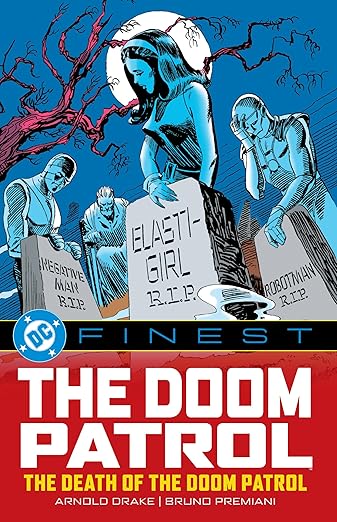
DC Finest: Hawkman volume 1 – Wings Across Time


By Gardner F. Fox, Bob Haney, Joe Kubert, Gil Kane, Murphy Anderson, Howard Purcell, Carmine Infantino & various (DC Comics)
ISBN: 978-1-79950-250-0 (TPB)

This book includes Discriminatory Content produced in less enlightened times.

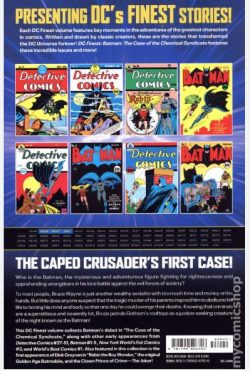
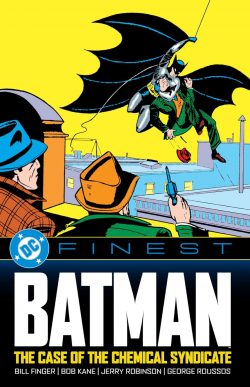
Here’s another stunning compilation from the DC Finest line: full colour chronolgically curated collections delivering “affordably priced, large-size (generally around 600 pages) paperback collections” of past glories. Whilst concentrating on the superhero pantheon, there are and will also be assorted genre selections like horror and war books, and themed compendia.  

Sadly, none of these comics classics are available digitally, as were the last decade’s Bronze, Silver and Golden Age collections, but we live in hope and keep on whining…

Not all passions are romantic: mine is to finally have all old comics forever available in curated editions. These astoundingly engaging Silver Age tales are another joyous moment of past glories revisited highlighting one of the most effective and enduring romantic crime-busting, world-saving partnerships in comics…

With a superhero revival in full swing by 1961, Editorial mastermind Julius Schwartz turned to resurrecting one of DC’s most visually arresting and iconic Golden Age characters. Once again eschewing mysticism for science fiction (the original Hawkman was a reincarnated Egyptian prince murdered by a villainous priest who just kept coming back…), Schwartz picked scripter Gardner F. Fox who had created the Golden Age great and matched him with artist Joe Kubert to construct a new and contemporary hero for the Jet/Space Age.

This titanic tome at last gathers in full colour the works and deeds of the Winged Wonders as first seen in The Brave and the Bold #34-36 & 42-44 & 51; The Atom #7; Mystery in Space #87-90 and Hawkman #1-11: cumulatively spanning February/March 1961 to December 1965/January 1966.

Katar Hol and Shayera Thal are police officers on their own planet of Thanagar. The married couple have travelled to Earth from the star system Polaris in pursuit of a spree-thief named Byth who assaulted a scientist and stole a drug bestowing the ability to change into anything. Thus the scene was set in ‘Creature of a Thousand Shapes!’ which graced The Brave and the Bold #34 (cover-dated February/March 1961) back when the title was a try-out vehicle like Showcase. Disappointments aside, the origin yarn is a spectacular work of graphic magic, with the otherworldly nature of the premise rendered captivatingly human by the passionately emphatic, moody expressiveness of Kubert’s art. It is a minor masterpiece of comic storytelling, and still a darned good read.

The high-flying heroes returned in the next issue, now “temporarily” stationed on Earth to study Terran police methods. In ‘Menace of the Matter Master’ they defeat a plundering scientist who has discovered a means to control elements and indulge in super-larceny, before ‘Valley of Vanishing Men’ takes our fully-integrated visitors from another world to the Himalayas to unlock the astounding and ironic secret of the Abominable Snowmen. Last shot in the try-out session, B&B #36 sees them defeat modern day wizard Konrad Kazlak in ‘Strange Spells of the Sorcerer!’ and, soon after, save Earth from another Ice Age whilst outwitting ‘The Shadow Thief of Midway City!’

With the 3-issue audition over, the publishers sat back and waited for the fan letters and sales figures… and something odd happened: fans were vocal and enthusiastic, but the huge sales figures that previously accompanied such reactions just weren’t there. It was inexplicable. The quality of the work was plain to see on every page, but somehow not enough people had plunked down their dimes to justify an ongoing Hawkman series.

A year later DC tried again. The Brave and the Bold #42 (June/July 1962) featured ‘The Menace of the Dragonfly Raiders’ which found Katar & Shayera returning to Thanagar just in time to encounter a bizarre band of alien thieves and the sinister hand of their oldest foe. Here was superhero action in a fabulous alien locale and the next issue maintained the exoticism – at least initially – before Hawkman and Hawkgirl returned to Midway City to defeat a threat to both worlds – ‘The Masked Marauders of Earth!’.

One last B&B issue followed (#44, October/November 1962) with two splendid and delightful short tales. ‘Earth’s Impossible Day!’ focused on Shayera’s desire to celebrate a holiday tradition of Thanagar before eerie doomsday thriller ‘The Men who Moved the World’ unearthed a lost civilisation and the return of Earth’s original occupiers seeking to move back again…

And then the Hawks vanished again. It certainly looked like this time the Schwartz magic had stumbled if not faltered. It was not, however, the end of the saga. Convinced he was right, Schwartz retrenched. Enjoying some success with his latest revival and mindful of the response when he had teamed Flash with Green Lantern in the summer of 1962, the editor had writer Fox include the Winged Wonder in The Atom #7 (cover-dated June/July 1963). An interplanetary thriller illustrated by Gil Kane & Murphy Anderson, ‘The Case of the Cosmic Camera!’ is a rocket-paced invasion rollercoaster ranging from the depths of space to Earth’s most distant past, where this new, clean-limbed version of the Avian Avenger clearly found fan-favour. In 1963 Hawkman returned! Again!

Mere months later, and dated November, Mystery in Space #87 had the Pinioned Paladin in action on the cover. The anthologogical sci fi standard had been the home of interstellar adventurer Adam Strange since #53, so now Schwartz moved his Winged Wonders into a plausible back-up slot and even bestowed occasional cover-privileges. Still beguilingly written by Fox, Kubert’s dark gritty art was superseded by the clean, graceful illustration of Anderson. Crime caper ‘The Amazing Thefts of the I.Q. Gang!’ dealt with a unexpected repercussion of an Adam Strange thriller and was followed a month later by ‘Topsy-Turvy Day in Midway City!’… a whimsical flourish as the cosmic couple’s devotion and Thangarian wedding customs lead to the capture of Terran bank bandits…

With the management now on board, guest appearances to maximise profile were easier to find. Hawkman returned to The Brave and the Bold with #51 (December 1963/January 1964) to team with Aquaman and face the ‘Fury of the Exiled Creature’ in a quirky tale of monsters, magic and mayhem in sunken Atlantis written by Bob Haney and illustrated by the criminally neglected Howard Purcell. Back in Mystery in Space #89 the ‘Super-Motorized Menace!’ proved the highest tech motor cycle is still no match for ancient weapons and alien  advantages…

These brief, engaging action pieces paled before the majesty and ambition of MiS #90 which delivered a full length epic uniting teaming the Hawks and Adam Strange in a legendary End-of the-World(s) epic. Illustrated by Carmine Infantino & Anderson, ‘Planets in Peril!’ was the last Hawkman back-up. From the next month, and after three years of trying, Hawkman soared into his own title.

Cover-dated April/May 1964, Hawkman #1 is a gem by Fox & Anderson. Two of the most visually arresting chracters in comics, the Hawks also boasted one of the most subtle and sophisticated relationships in the business. Like Sue & Ralph Dibney (Elongated Man and wife) Katar & Shayera are equal partners, and both couples were influenced by the Nick & Nora Charles characters of the Thin Man movies. Like those progenitors, the interplay of the Hols at home or at work is always rich in humour and warmth. In ‘Rivalry of the Winged Wonders’ – and whilst accommodatingly recapping their origins for newcomers, the couple decide to turn their latest case into a contest – Hawkgirl (eventually more appropriately called Hawkwoman) will use Thanagarian super-science to track and catch a band of thieves, whilst Hawkman limits himself to Earth techniques and tools to solving the crime.

This charmingly witty yarn is balanced by action thriller ‘Master of the Sky Weapons’ as recentlt resurrected ancient Mayan warrior Chac threatens Earth with disinterred alien super weapons. The the second issue stuck with star-stuff as the ‘Secret of the Sizzling Sparklers!’ offered an action-packed thriller of transdimensional invasion before closing with ‘Wings across Time!’: a mystery revolving around the discovery of the flying harness of legendary figure Icarus.

With “Carter & Shiera Hall” established as archeologists at Midway City Museum and Earth’s crypto-history & -zoology offering constant story-inspiration, another criminal brain-teaser opened the third issue. However, scientific bandits proved less of a menace than ‘The Fear that Haunted Hawkman’ with inexplicable panic attacks, before ordinary thugs and an extraordinary alien owl converged to make our heroes ‘Birds in a Gilded Cage’. Hawkman #4 then opened with a tale destined to revolutionise DC comics. ‘The Girl who Split in Two!’ introduced legacy hero Zatanna, daughter of a magician who fought crime in the 1940s only to “mysteriously disappear”…

From the very first issue, and for over a decade, Zatarra was a hero in the Mandrake mould who fought evil in the pages of Action Comics. During the Silver Age, Gardner Fox had Zatarra’s young, equally gifted daughter search for the missing mage, systematcally teaming up with superheroes he was currently scripting (if you’re counting, those tales appeared in Hawkman #4, The Atom #19, Green Lantern #42, and the Elongated Man strip from Detective Comics #355). A very slick piece of backwriting latterly included the high-profile Caped Crusader via Detective #336 – ‘Batman’s Bewitched Nightmare!’. The saga concluded in Justice League of America #51’s ‘Z… As in Zatanna… and Zero Hour!’). The collected saga Zatanna’s Search is currently out of print but you can go here for our take on it…

This wide, long-running experiment in continuity proved there was a dedicated fanbase with a voracious appetite for experimentation and relatively deep pockets. Most importantly, it finally signalled an end of the period where DC heroes largely lived and battled in self-imposed worlds of their own.

Hawkman #4 back-up ‘The Machine that Magnetized Men!’ is another enthalling howdunnit  tale as the Pinioned Paladins use reason and deduction to defeat thieves who are impossible to touch. For the next issue ‘Steal, Shadow… Steal!’ was the first full-length thriller, wherein ruthless Shadow Thief Carl Sands returns seeking revenge, believing causing Earth’s next Ice Age to be an acceptable consequence of his schemes, whilst in #6, publishing fashion caught up with the Hawks…

Another epic, and one that turned DC’s peculiar obsession with gorillas into a classic adventure, ‘World Where Evolution Ran Wild!’ lures our heroes to fabled Illoral, where a scientist’s explorations and interventions have stretched Natural Selection to un-natural limits. Bold, brash and daft in equal amounts, this is a fabulous romp and seeing again the cover where Hawkman struggles for his life against a winged gorilla makes the adult me realise those DC chaps might have known what they were doing with all those anthropoid covers!

By issue #7 (April/May 1965) the world was gripped in secret agent fever as the likes of James Bond, The Man from U.N.C.L.E., and a host of others snuck and sashayed across our screens. Comics were not immune,  even though spies had been a staple threat there for decades. Before Hawkman joined the gang, however, he had to deal with the rather mediocre threat posed by solar ray inspired criminal genius Ira Quimby and ‘The Amazing Return of the I.Q. Gang!’ As they were quickly returned to prison the Hawks faced the ‘Attack of the Crocodile-Men!’: a high-octane super-science thriller introducing C.A.W. – the Criminal Alliance of the World…

Another supremely captivating cover adorned #8, as the Hawks fought an ancient Roman Artificial Intelligence, built by not-so-mythical metalsmith Vulcan in ‘Giant in the Golden Mask!’, before defeating an alien Harpy who’d been buried for half a million years and promptly triggered a ‘Battle of the Bird-Man Bandits!’ as soon as she woke up…

Hawkman #9 saw The Atom as guest star when an old villain returned with a seemingly perfect revenge plan. Full-length super-thriller ‘Master Trap of the Matter Master!’ offered sheer superhero hi-jinks, after which #10 saw a playful Fox at his best in both ‘Hawkman Clips the Claws of C.A.W!’ This was another espionage drama with a delicious subplot as the Winged Wonder aids a sexy CIA agent with a big secret of her own – before solving ‘The Magic Mirror Mystery!’: a fair-play brainteaser with lots of high-flying action to balance the smart stuff.

This glorious volume closes with another superb full-length epic. Clearly designed as a so-fashionable “player on the other side”, ‘The Shrike Strikes at Midnight!’ leaving our heroes trailing a super-powered, winged bandit all over the world and on to the star system Mizar, in a gripping tale of crime, super-villainy, aliens, revolutions and even dinosaurs…

Although never the major player of his 1940s ancestor, Hawkman grew to be one of the most iconic characters of the second superhero boom, not just for the superb art but also because of a brilliantly sly, whimsically subtle writer with a huge imagination. These tales are comfortably familiar but also grippingly timeless. Thankfully, comics are a funny business; circumstances, tastes and fashions often mean that wonderful works are missed and unappreciated, but it aso means revivals are never too late. Don’t make the same mistake readers did in the 1960s. Whatever your age, read these astounding adventures and become a fan. It’s never too late.
© 1961, 1962, 1963, 1964, 1965, 1966, 2025 DC Comics. All Rights Reserved.

Eagle Classics: Harris Tweed – Extra Special Agent


By John Ryan (Hawk Books -1990)
ISBN: 978-0-94824-822-1 (album TPB)

This book includes Discriminatory Content produced in less enlightened times.

Happy anniversary Eagle!

The son of a diplomat and irrefutably a died-in-wool True Gent, John Ryan was born in 1921, served in Burma and India during WWII and – after attending the Regent Street Polytechnic (1946-48) – took up a teaching post as assistant Art Master at Harrow School from 1948 to 1955. It was during this time that he began contributing strips to comics such as Girl and a newfangled but soon to be legendary weekly comic…

On April 14th 1950, Britain’s grey, post-war gloom was partially lifted with the first issue of a glossy new comic that literally shone with light and colour. Mesmerised children were soon understandably enraptured with the gloss and dazzle of Dan Dare, Pilot of the Future, a charismatic star-turn venerated to this day, as well as a plethora of strips illustrating some of their favourite radio shows.

Eagle was a tabloid sized paper with full photogravure colour inserts alternating with text and a range of other comic features. Tabloid is a big page and you can get a lot of material onto each one. Deep within, on the bottom third of a monochrome folio was an 8-panel strip entitled Captain Pugwash, the story of a Bad Buccaneer and the many sticky ends which nearly befell him. Ryan’s quirky, spiky style also lent itself to the numerous spot illustrations required every week. Pugwash, his harridan of a wife and the useless, lazy crew of the Black Pig ran until issue #19 when the feature disappeared. This was no real hardship as Ryan had already begun writing and illustrating new feature Harris Tweed – Extra Special Agent which began as a full page (tabloid, remember – an average of 20 panels a page, per week) since #16 (cover-dated July 28th 1950).

Tweed ran for three years as a full page. Then in 1953 it dropped to a half-page strip and deftly repositioned as a purely comedic venture. For our purposes and those of the book under review, it’s those first three years we’re thinking of even if the only decent illustration I could find comes from the 1959 Eagle Annual

Harris Tweed was a bluff and blundering caricature of the military “Big Brass” Ryan had encountered during The War. In gentler times, the bumbler with a young, never-to-be-named assistant known only as “Boy” solved mysteries and captured villains to general popular acclaim. Thrilling – and often eerily macabre – adventure blended seamlessly with sly yet cheerful schoolboy low comedy in these strips, since Tweed was in fact that most British of archetypes: a bit of a twit and a bit of a sham stumbling through a world of Thud & Blunder…

His totally undeserved reputation as detective and crime fighter par excellence, and his good-hearted yet smug arrogance – as demonstrated elsewhere by the likes of Bulldog Drummond, Dick Barton – Special Agent, or Sexton Blake – somehow endeared the arrogant, posturing buffoon to a young and impressionable public which would in later years take to its heart Captain Mainwaring in Dad’s Army and, more pointedly perhaps, Peter Sellers’ numerous film outings as Inspector Clouseau. Maybe most of those enthralled kids had an uncle or dad who buffaloed on about the war in just the same way…

Ryan’s art here is particularly noteworthy. Deep moody blacks and intense, sharp, edgy inking creates a constant mood of fever-dream intensity. There are anachronistic echoes and nuances of underground cartoons of more than a decade later, and much of the inevitable ‘brooding, lurking horror’ atmosphere found in the best works of Basil Wolverton. Ryan knew what kids liked and he delivered it by the cartload.

This too-slim, oversized (324 x 234mm x) paperback compilation is all that’s readily available these days, but surely in the era of electronic publishing, some enterprising fan with a complete Eagle collection can link up with a perspicacious publisher someway, somehow and produce a comprehensive compilation of the nation’s most self-lauded sleuth? I simply KNOW today’s TV crowd and dwindling but still-potent ancient 10-year-olds and their grandchildren would just lap him up….
Harris Tweed © 1990 Fleetway Publications. Compilation © 1990 Hawk Books.

Cannon


By Wally Wood & various, introduction by Howard Chaykin (Fantagraphics Books)
ISBN: 978-1-60699-702-4 (HB/Digital edition)

This book includes Discriminatory Content produced in less enlightened times.

As with any historical perspective addressing popular mass-entertainments and evolving societies, a look back often finds uncomfortable material that can jar some modern sensitivities and set today’s collective hackles rising. That’s especially true of this lovely but confounding collection compiling seldom seen material by one of the industry’s greatest stars…

This is quite frankly a lovely book of beautiful work that I now find hard to recommend to a general audience. That’s more to do with how society has evolved rather than its admittedly always deeply flawed and often unsavoury content…

We all carry within us the seeds of our own destruction and probably none more so than troubled comics genius Wallace Allan Wood (June 17th 1927 – November 2nd 1981): one of the greatest draughtsmen and graphic imagineers our art form has ever produced. Woody was a master of every aspect of the business. He began his career lettering Will Eisner’s Spirit newspaper strip, readily moving into pencilling and inking as the 1940s ended and, ultimately into publishing. After years working all over the comic book and syndicated strip markets, as well as in book illustration, package-design and other areas of commercial art, he devised the legendary T.H.U.N.D.E.R. Agents franchise and even predated and anticipated the counter-culture’s Underground Commix phenomenon by launching in 1965s one of the first adult-oriented, independent comics: Witzend.

The troubled genius was frequently his own worst enemy. Woody’s life was one of addiction (guns, booze & cigarettes); traumatic relationships; tantalisingly close yet always inevitably frustrated financial security; illness and eventually, suicide. It was as if all the joy and beauty in his existence stayed on the pages and there was none left for real life.

Although during his time with EC Wood became the acknowledged, undisputed Master of Science Fiction art in America, he was equally adept, driven and accomplished in the production of all genres. He was a lusty man and was a pioneer of sexually explicit, ultra-violent (but always beautiful) and titillating comics where sex played a major role. Remember, even if everybody loves comics, it’s not always about superheroes and cosmic quests. Men like sexy comics and cartoons. I’m not saying that it’s right or proper to ogle women, but it is a sad fact of life and has made many publishers rich for centuries. This customer base especially likes looking at beautiful naked women and amongst so very many cartoonists over the decades, Wood was arguably the paramount exponent of the subgenre…

Remarkably and without in any way seeking to apologise for it, I can confirm that this gritty strip was made to entertain REAL-MEN!! It abounds with naked, nude, undraped and forcibly undressed women (and men, but not as many or as often as the women). Somehow less controversially it also heavily features mega violence, and both physical and psychological torture because that’s what the audience wanted. If you don’t believe me go and rewatch Goldfinger (1964) but this time watch and listen closely…

Cannon’s inbuilt misogyny is a feature not a bug with levels of abusive behaviour and conduct that seldom exceed those of any 1960-1970s Bond or Man from U.N.C.L.E. movie. There’s practically no gadgets either, but loads of fast flashy cars, planes and boats… and much sublimely rendered, awesomely accurate ordnance because that’s one thing your average GI or swabbie will spot instantly if fudged…

This cartoon series captures a moment in history that was deeply, deeply unfair to women, even if – for its time – the feature was uncharacteristically racially & socially diverse and most equitable in its treatment of African-American, Hispanic, Arabic and Asian guys. This was probably as much about the target readership – the desegrated but still mostly male US Military Service personnel – as Woody’s views on the Civil Rights movement. Wally was always utterly professional and diligent in all his work commitments and liberated from all editorial constraints, but his own experience gave the audience exactly what they wanted…

Following Howard Chaykin’s ‘Intro’ confirming the best and worst of the legends, the strip unfolds in one unbroken stream of non-stop blockbuster action heavily seasoned with geopolitical themes and contemporary headline fodder. It’s fitting to note here that Woody utilised and mentored dozens of guys who went on to their own notoriety. If you’re a fanatic, you’ll spot many of them – Pearson, Reese, Wenzel, Hama et al – as characters in the strip, but in-jokes aside, this one’s all about satisfying manly urges.

Guaranteeing sex, death and horror and NAKED WOMEN in almost every episode, Cannon by Wood and his ever-shifting studio ran from 1970-1973 in three separate editions of The Overseas Weekly: a tabloid specifically created and disseminated to US military personnel stationed overseas. He & Steve Ditko later recycled the character in an abortive indie publishing venture Heroes, Inc., which we’ll cover at the end.

John Cannon was a U2 pilot captured and tortured by the Red Chinese. Broken and turned into their assassin, he threw off the ministrations of their top brainwasher Madame Toy but suffered a psychological collapse that left him a relentless, emotionless living weapon pointed by the CIA at any target that needed killing.

His successes didn’t affect him at all but did make him a permanent target of the Chinese and Soviet governments. The latter tasked beautiful lethal killer Sue Smith to remove him by any means and at all costs, but her attempts were as frequent and futile as Toy’s, who doggedly and repeatedly seeks to recapture or kill him. Both curvaceous killers spent as much time shagging Cannon as shooting, stabbing, electrocuting, drowning, poisoning, bombing and running over the implacable agent.

Encountering and exterminating hundreds of spies Cold War spies and assassins, Cannon saves US-friendly middle-Eastern Ismiria from infiltration and insurrection; defends US ally Israel from subversion; shatters the schemes (and sleeper agent army) of Comrade Gorsk and saves Latin American San Sierra from both Red-backed rebels and the incumbent US-friendly fascist dictatorship. He even gets to save a few lives along the way, like his own Uncle Fred back in Iowa and charming conman/serial bigamist/accidental hitman Charles M. Fogarty

At home, Cannon eradicates gangsters and spies as his conditioning begins to fade. No longer a reliable asset, he tries to retire to his old family home but trouble follows and the CIA soon re-recruit him. With Toy & Sue Smith perpetually hunting him and “cat-fighting” each other, Cannon even clashes with killer hippies in a murder commune and an ultra-conservative millionaire with his own private militia seeking to set the nation back on the Right path. John even has a couple of shots at true love and a Happy Ever After, but inevitably learns over and again that “women are just no damn good”…

Along the way he experiences every kind of action from scuba combat to aerial dogfights, and even battles a killer cyborg, He’s particularly adept at ferreting out leftover Nazis and dodges more than his fair share of atomic detonations. This is a strip very much of its time and for adults if not grown-ups, so like many of his audience, our hero even has to face up to the consequences of his actions when one paramour falls pregnant. The wedding is an utter disaster…

As much a document of art history as an expertly-targeted wank-book, Cannon comes with fascinating bonus features for comics fans, beginning a voluminous Appendix section with a brace of long lost cover paintings.

These augment the Roger Hill’s essay ‘The Overseas Weekly Discovery’ detailing the bizarre circumstance that led to the retrieval of the material forming this book, and compliments a

‘Letter by Wallace Wood’ exhorting how the industry must change. These are followed by the tamed down, general audience full-colour Cannon story by Wood & Ditko as seen by almost nobody in 1969’s Heroes, Inc. Presents Cannon, and another similar but monochrome lost Wood & Ditko treat from Heroes, Inc. No. 2 (1976) once again kicking the stuffing out of stubborn Nazis by Wood & Ditko. The experience ends as it should with a fulsome and fair “Bio” of Wally Wood by J. David Spurlock.

Fast, furious and ferociously unreconstructed and sexist, this can be a hard read: one packed with pitfalls, but undeniably honest in its intent and delivery. If you like this kind of thing you’ll love it, and if you find it offensive, you’re still free enough for the moment to reject and not buy it. However, if you do feel the urge to condemn, do us all the courtesy of reading it first…
“Intro” © 2014 Howard Chaykin. “The Overseas Weekly Discovery” © 2014 Roger Hill. “Bio” © 2014 J. David Spurlock. Photos © Bhob Stewart & Paul Kirchner. All other contents © 2014 Wallace Wood Properties LLC. All rights reserved.

Mighty Thor Epic Collection volume 9: Even an Immortal Can Die (1977-1979)


By Len Wein, Roy Thomas, Roger Stern, Bill Mantlo, Don Glut, Don Thompson, Maggie Thompson, Walter Simonson, John Buscema, Sal Buscema, Alan Kupperberg, Wayne Boring, Val Mayerik, Jim Starlin, Virgilio Redondo, Rudy Nebres, Tony DeZuñiga, Tom Palmer, Ernie Chan, Joe Sinnott, Klaus Janson, Chic Stone, Pablo Marcos & various (Marvel)
ISBN: 978-1-3029-4868-9 (TPB/Digital edition)

This book includes Discriminatory Content produced in less enlightened times.

Once upon a time, disabled physician Donald Blake took a vacation in Norway, only to stumble into an alien invasion. Trapped in a cave, he found an ancient walking stick which, when struck against the ground, turned him into the Norse God of Thunder! Within moments, he was defending the weak and smiting the wicked. Months swiftly passed, with the Lord of Storms tackling rapacious extraterrestrials, Commie dictators, costumed crazies and cheap thugs, but these soon gave way to a vast kaleidoscope of fantastic worlds of incredible, mythic menaces, tackled by an ever-changing cast of stalwart immortal warriors at his side…

Whilst the ever-expanding Marvel Universe had grown ever-more interconnected as it matured through its first decade, with characters literally tripping over each other in New York City, the Asgardian heritage of Thor and the soaring imagination of Jack Kirby had most often drawn the Thunder God away from mortal realms into stunning, unique landscapes and scenarios.

However, by the time of this power-packed compendium, the King was long gone – or more accurately enacting his Second Coming – technically Third, and definitely Second Return to the House of (mostly his) Ideas – and only echoes of his groundbreaking presence remained. John Buscema had visually made the Thunder God his own over interceding years, whilst a succession of scripters had struggled with varying success to recapture the epic scope of Kirby’s vision and Stan Lee’s off-kilter but comfortingly compelling faux-Shakespearean verbiage…

Spanning June 1977 to February 1979, this power-packed compilation re-presents The Mighty Thor #260-280, Annuals #6 & 7 and Marvel Preview #10 in a panoply of unceasing stellar adventure spanning time and space and well-explored regions.

Previously, embattled Asgardians had survived another invasion only to learn their divine Liege Lord Odin had gone missing. Having exhausted every avenue of location available, son-&-heir Thor – prompted by vague hints from all-knowing but hostile spirit Mimir – departed to search distant galaxies for a “Doomsday Star” …

Aboard starfaring dragonship Starjammer, the Thunderer, Lady Sif and Warriors Three Fandral, Hogun and Volstagg (solar) sail off, leaving the beleaguered Eternal Realm under Balder the Brave’s stewardship, albeit ably assisted by his dark inamorata Karnilla the Norn Queen. Now in the wake of travail, torment and cruel misunderstanding, and accompanied by the Recorder (a Rigellian AI robot guide), ‘The Vicious and the Valiant’ sees the interstellar questors finally locate the Doomsday Star.

Scripted by writer/editor Len Wein with Walter Simonson (inked by Tony DeZuñiga) making his first major artistic contributions to the mythology, the interstellar quest’s end coincides with an attack on far-distant Asgard where Balder and Karnilla resist an invasion helmed by arch-traitors Enchantress and Executioner. As the voyagers strive to reach a hostile planet with a strict and extreme no-visitors policy, #261 expands the scope and intensifies the action as the questers falter before ‘The Wall Around the World!’ (inked by Ernie Chan): a terrifying global-scaled construct comprised of the power-drained husks of dead gods.

Resolute and determined the seekers push on, learning Odin has been captured and gradually diminished and consumed by energy-leeching “Soul-Survivors” whose civilisation subsists on stolen divine lifeforce. As they valiantly strive to save their sovereign, the roving Asgardians learn to their cost that ‘Even an Immortal Can Die!’ (#262, limned by Simonson & DeZuñiga).

Thankfully, ‘Holocaust and Homecoming!’ proves Odin both wily and still potent as the heroes’ ferocious clash and hard-won victory results in a weary, wounded pantheon returning to Asgard, only to find it taken over by Loki and his cohort of treacherous allies. With Odin in a coma – and ultimately abducted again – covert civil war erupts between the newly restored champions and the city citizens Loki has subverted. ‘Thou Shalt Have No Other Gods Before Me!’ sees the sinister scheme exposed, but not before Loki unleashes ultimate weapon The Destroyer against his adoptive brother…

Inked by Joe Sinnott, #265’s ‘When Falls the God of Thunder…!’ sees Loki losing control of his ultimate sanction, and once again, everyone survival hinges on the determination of Thor and his valiant resistance to chaos, until #266’s ‘…So Falls the Realm Eternal!’, where Wein, Simonson & DeZuñiga show the Thunderer at his indomitable best, holding Loki at bay and off balance until the Warriors Three rescue and revive an extremely unhappy All-Father…

This saga presaged a change of narrative focus but before that Roger Stern, Sal Buscema & Klaus Janson craft ‘Thunder in the 31st Century!’ (as first seen in Thor Annual #6 December 1977). A riot of time-busting mayhem commences with Thor plucked from contemporary Manhattan: accidentally summoned to the time period of the original/future (time travel tenses suck!) Guardians of the Galaxy by a cyborg maniac named Korvac. The immortal god-warrior briefly joins Vance Astro, Charlie 27, Yondu, Nikki, Martinex and Starhawk in bombastic battle against super-powered aliens to thwart the sinister cyborg’s scheme to become master of the universe. At the conclusion, Thor returns to his own place and time, unaware how Korvac would reshape the destiny of reality itself in coming months…

The collaborations of Wein and Simonson had already shaken the title out of its conceptual doldrums; as the big change approached they went into overdrive and an seemingly backward direction. After All-Father Odin was kidnapped, drained like a battery and died, he was rescued, resurrected and restored to an Asgard riven with conspiracies. Conquered by old enemies, Thor faced ultimate weapon The Destroyer before triumphantly saving everything. In #267 (January 1978, Wein, Simonson & DeZuñiga) we see the hero bound ‘Once More, To Midgard!’, following a rare moment of filial fondness rather than the usual arguments with Dad. Thor has been missing for quite some time and his absence has left Don Blake’s life in tatters until old colleague Dr. Jacob Wallaby arranges a job with Stark International’s Free Clinic. That good deed leads to more chaos as deranged super-criminal Damocles ruthlessly raids the hospital’s radiation lab in search of synthetic cobalt to power his new super-gun. Before Blake can react, the smash-&-grab attack is done, leaving furious Thor to pursue the murderous madman, aided by Damocles’ guilt-fuelled sibling Bennett Barlow. He pays a heavy price for his civic service in concluding clash ‘Death, Thy Name is Brother!’

The concentration on Earthly scale and situations continues in #269 as ‘A Walk on the Wild Side!’ sees a mysterious mastermind contract mechanistic mercenary Stilt-Man to secure a certain high-tech package. A raft of deadly upgrades prove pointless after the Thunderer stumbles upon the heist in the skies over Manhattan, but Thor has far more trouble facing the plotter’s power-packed partner Blastaar in middle chapter ‘Minute of Madness… Dark Day of Doom!’

The triptych of terror terminates in Thor #271 as, with the aid of Tony Stark, Nick Fury (I), S.H.I.E.L.D. and The Avengers, the Storm Lord meets the true architect of destruction and imminent global domination in orbit ‘…Like a Diamond in the Sky!’ This epic includes cameos from Shang-Chi, Spider-Man, The Hulk, Human Torch, Nova, Daredevil and many more Marvel stalwarts; serving as a big celebratory send-off for Wein & Simonson, whilst signalling a major change of direction.

Mighty Thor #272 saw the return of Roy Thomas, John Buscema & Tom Palmer depicting ‘The Day the Thunder Failed!’ as the hero shares moments of humiliating childhood defeat with a crowd of fannish kids. The incidents were all adapted from classical mythology and served as an appetiser to a mega-saga in the making, with TV reporter Harris Hobbs (who visited Asgard way back in Journey into Mystery #123) making Thor an offer he cannot help but refuse…

Still channelling tales from the Eddas – specifically about how Ragnarok would end the reign of the Aesir/Asgardians – #273 is set ‘Somewhere… Over the Rainbow Bridge!’ Although the journalist’s pleas to film a TV special in the Home of the Gods is sternly rebuked and rejected, wicked Loki has his own plans and smuggles in Harris and his film crew, triggering the beginning of the long-prophesied end…

If you haven’t actually read the original myths, go do that. It will make you appreciate these clever riffs on the theme so much more as the secret history of Asgard and Odin’s plots are exposed in #274. With Loki on the loose, the story of how the All-Father sacrificed his eye to fiery seer Mimir for knowledge of the future is revealed, as are the dirty bargains Odin made to forestall inevitable, inescapable doom. As Sif leads home the long-missing goddesses of Asgard, mortal cameraman Roger “Red” Norvell beholds the Thunder God’s raven-haired beloved and is gripped by uncontrollable desire. Another prerequisite of The End then occurs as Loki orchestrates Balder’s death in ‘The Eye… and the Arrow!’

In #275 ‘A Balance is Struck!’ when Odin uses all his power to suspend the dying God of Light in a timeless state, pausing the Ragnarok countdown. Loki, meanwhile, uses ancient spells and his adoptive brother’s Belt of Strength and Iron Gloves (created when the Prince was a child to help control and wield mighty Mjolnir) to become a new, very different Thor. The newcomer even seizes the mystic hammer from its enraged rightful owner as he beats the thunder god and abducts Sif, declaring in #276 ‘Mine… This Hammer!’

Red is barely aware he has killed his best friend for power. Loki and Death Goddess Hela rouse all Asgard’s enemies to march on their hated foes as ‘Time of the Trolls!’ seems to indicate doomsday has finally fallen. However, the forces of evil are not the only devious schemers with an endgame in view, and a monstrous plan is exposed whereby the All-Father seems to cheat the powers of prophecy and trick Ragnarok by creating a false Thor to die in place of Asgard’s true saviour. All it required was timing, boldness and a few necessary sacrifices…

With veteran Thor inker Chic Stone applying his stylish lines, #278 heralds ‘At Long Last… Ragnarok?!’ as all plots and perils converge with reality – the Nine Realms portion of it at least – battling fate to a draw as the apocalypse is deferred a while longer… but only after another tragic, valiant and ultimately futile demise. In the aftermath, the trueborn Odinson cannot abide what has been done in his name and sunders all contact with his scheming sire.

The split is genesis to an even more momentous and spectacular saga postponed here for a crucial sidebar seen in Thor Annual #7 (1978) wherein Thomas, Simonson & Ernie Chan here detail a forgotten “first contact” moment triggered by the reactions to Balder’s “death” due to Loki’s machinations to trigger Ragnarok. When Thor reluctantly consults hostile prophet Mimir, the flaming seer of the Well of Wisdom instead emphasises how untrustworthy Odin is and illustrates his point by sharing of an event the Thunderer cannot remember even though it was one of his most significant exploits…

Tale within a tale ‘And Ever… The Eternals!’ reviews the creation of and war between Asgardian and Greek pantheons – which Thor readily recalled – before going on to disclose how the proud prince had continued seeking new mortal worshippers. Roaming Midgard doing heroic deeds, he had encountered and barely defeated a monstrous mind-controlling horror dubbed Dromedan. Moving on, in what would be later called Central America, he meets another – unsuspected – god-like race: Polar Eternals Ajak, Druig, Valkin and Virako.

Thor then reexperiences how he was informed that Midgard was a laboratory preserve of incredible super-gods from space: “Celestials” who had genetically modified proto-hominids to create humanity, Eternals and horrific predatory Deviants. These subspecies had battled for ownership of Earth in wars spanning the length of human existence…

Confronted by such sheer heresy and baffled by obvious nonsense, Thor learns now that his new friends were as treacherous as any god or mortal, with all knowledge of Celestials excised after he and the Eternals defeated a resurgent Dromedan and horde of Deviants and Mutates. Mindwiped, he returned to Asgard, oblivious to the fact that Space Gods would periodically return to judge the progress of their three-pronged project… as indeed they were doing at that very moment under a colossal gleaming dome in Earth’s Andes mountains…

When Kirby’s series debuted in 1976, we met anthropologist Professor Daniel Damien and daughter Margo, whose explorations revealed giant aliens had visited Earth in ages past: sculpting hominid beasts into distinct sentient species: Human Beings; genetically unstable Deviants and god-like superbeings who called themselves Eternals. Moreover, those Space Gods had occasionally returned to check up on their experiment.

Over 19 issues and an Annual, the series avoided true contact with Marvel continuity as modern mankind’s military and moneyed movers-&-shakers dealt with the politics and panic of a world-shattering event. Ikaris (son of Valkin and Virako), Margo, Ajak, Sersi, Makkari, Zuras, Thena, Sprite and Druig fought and foiled Deviants Kro, Brother Tode, Dromedan, Ransak & Karkas, with humanity terrified in the background and under the microscope as The Fourth Host of Celestials hovered above the world in a city-sized ship, pondering final judgement: a process that would take 50 years.

Never a comfortable fit with the rest of the Marvel Universe – only S.H.I.E.L.D. ever really got involved – The Eternals further embodied Kirby’s fascination with Deities, the immensity of Space and potential of Supernature through the lens of very human observers. Once the series ended, Kirby moved on and other creators eagerly co-opted his concepts (with mixed success) into the company’s mainstream continuity…

In Mighty Thor #279 (cover-dated January 1978) the new quest is briefly diverted as Don Glut, Alan Kupperberg & Pablo Marcos detail how the Thunderer’s latest exile to Earth prompts more reminiscing and “untold tale” ‘A Hammer in Hades!’ Long ago, a chance encounter with pre-goddess first love Jane Foster led to her imprisonment in the underworld and Thor flew right into an ambush organised by Loki, Grecian death god Pluto and super-troll Ulik, but still proved more than even that trio of terror could handle…

Still preparing to confront the relatively undiscovered Fourth Host, Thor is again forestalled in #280 where Thomas, Wayne Boring & Tom Palmer pastiche DC’s Annual JLA/JSA summer team-ups with ‘Crisis on Twin Earths!’ after Superman-analogue Mark Milton/ Hyperion of the Squadron Supreme requests Thor’s assistance on his own alternate Earth. Sadly, the evil Hyperion of the Squadron Sinister manages to replace his goody-goody doppelganger and a shattering battle erupts before order and dimensional stability is restored…

This titanic tome ends on a rare treat stemming from the period’s growing love-affair with fighting fantasy. Cover-dated Winter 1977, Marvel Preview #10 was a monochrome magazine in Marvel’s mature-oriented line: free of Comics Code scrutiny and (ostensibly) the strictures of shared continuity. Although MP was an anthology/showcase title, other periodicals in the Marvel Magazine Group included off-kilter features like Howard the Duck, Rampaging Hulk and Tomb of Dracula.

Thor the Mighty almost joined that elite roster in 1975, and nearly three full issues were prepared for a barbarian Thunder God vehicle before the plug was pulled. As a result, much material was sitting in drawers when the decision came to use one lead tale and a thematic back-up in the try-out title. Another story had already been modified and published as Thor Annual #5 (for which see Marvel Masterworks Thor #15)…

Behind a painted Ken Barr cover, frontispiece by Jim Starlin and illustration plates from Virgilio Redondo and Rudy Nebres, ‘Thor the Mighty!’ was scripted by Wein, and rendered by Starlin & DeZuñiga, telling of a time long past when Odin sent his rowdy sons Thor and Loki on a quest to secure a mystic Crystal of Blood threatening to erase all existence. The mission pitted his sons against seductive sorceresses, trolls ogres, giants, dragons and – as ever – each other…

The lusty yarn was backed up by an exploit of Hercules The Prince of Power when he was still half-human and sailing with Jason as an Argonaut. Here, courtesy of Bill Mantlo & Val Mayerik, the shipmates faced constant, mythologically-tinged peril on ‘The Isle of Fear!’ – but nothing like the political intrigue engineered by corrupt sponsor King Kreon of Pylos

Following a Nebres pinup and never attained next issue ad, a bonus section offers the letters page editorial from Thor #272, Thomas’ editorial from Thor Annual #7, the cover to Marvel Index #5 by Tom Conrad, the Franc Reyes Contents page and contemporary house ads.

The tales gathered here may lack the sheer punch and verve of the early years but certainly prove that after too long calcified, the Thunder God was again moving to the forefront of Big Idea Comics Storytelling. Fans of ferocious Fights ‘n’ Tights fantasy will find this tome stuffed with intrigue and action, magnificently rendered by artists dedicated to making new legends. This a definite must-read for all fans of the character and the genre.
© 2023 MARVEL.

Star Cat – Unicorns in Space


By James Turner & Yasmin Sheikh (David Fickling Books)
ISBN: 978-1-78845-356-1 (TPB)

Never forget: all the best cats are ginger, and especially so if space is their back yard and litter box…

Way back in January 2012, Oxford-based David Fickling Books made a rather radical move by launching a traditional anthology comics weekly aimed at under-12s. It revelled in reviving the good old days of picture-story entertainment intent whilst embracing the full force of modernity in style and content.

Each issue still features humour, adventure, quizzes, puzzles and educational material in a joyous parade of cartoon fun and fantasy. Since then The Phoenix has established itself a potent source of children’s entertainment as, like The Beano and The Dandy, it is equally at home to boys and girls, and has mastered the magical trick of mixing amazingly action-packed adventure series with hilarious humour strip serials such as this one.

One of the wildest rides of the early days was Space Cat by James Turner (Super Animal Adventure Squad, Mameshiba, The Unfeasible Adventures of Beaver and Steve). His yarns entertained us for ages before, eventually Yasmin Sheikh (Luna the Vampire) joined in – a hopefully unendingly collaboration to amuse us all for years to come…

Like an animalistic Red Dwarf, the premise is timeless and instantly engaging, detailing far-out endeavours of spacefaring nincompoops in classic mock-heroic manner. There’s so very far-from-dauntless and possibly neurotic Captain Spaceington; extremely dim and utterly unschooled amoeboid Science Officer Plixx; inarticulate, barely housebroken feral beastie The Pilot and disdainfully arrogant Robot One, who quite erroneously believes itself at the forefront of the cosmos’ smartest thinkers. The colossal, void-busting vessel the Captain and his substandard crew traverse the universe in looks like a gigantic ginger tom, and that’s because that’s what it is: half cat, half spaceship. What more do you need to know?

After briefly reconnecting with the interstellar imbeciles via info spread ‘Welcome Aboard’, the ramshackle roving resumes in ‘Chapter 1: Deity Dishes’ as our stellar sentinels are tasked with testing a breakthrough in cosmic power production and storage. Omega Toroids are so potent and jam-packed with energy that they can’t be used in series or left together, but as the Captain and Plixx install a single unit in the Star Cat’s engine, overconfident know-it-all Robot One’s craving for donuts creates a mix-up of potentially devastating proportions after mistakenly stuffing his metal maw with all the remaining toroids and getting an inadvertent upgrade to all-conquering star-god status. Sadly, despite the boost, he’s still intrinsically him and becomes the cause of his own downfall while ravaging the Pixie planet…

Supervising chicken-on-a-mission The Space Mayor then despatches his top team (no, Spaceington & Co…) on an urgent mission to end a rubber chicken shortage on Clowntopia-8. So desperate is the crisis that, against all advice and common sense, they consider a short cut through the notorious Spooky Quadrant… and literally live to regret it after encountering all the horrors of the damned at sinister Space Castle Spaceferatu in ‘Chapter 2: Nothing to Fear Except Fear Itself’.

Just purely coincidentally, the creepy citadel in space that is reputed to hold the most unimaginably priceless treasure in the universe has no impact on the team making that diversion short cut. However, even with Robot-One’s “Moral Dilemma Mode” activated, they make the wrong decision and it proves as useless as all the rest of R-1’s upgrades in dealing with the terrifying and sneaky Space Vampyr

Deplorably deranged, terrifying two-dimensional tyrant/archenemy Dark Rectangle reappears in ‘Chapter 3: Flat Out’, when his trusty hench-being Murky Hexagon begs Spaceington’s aid in curing his master’s dose of 3-D Flu. That noble deed demands the idiots invade the 2-D “Flati-verse” Dark Rectangle came from, and leads to odd adjustments, bizarre doings and a very nasty clash with the villain’s ghastly family…

After crashing on an unknown world, the Star Cat crew are accused of cultural sabotage and sundry misdemeanours in ‘Chapter 4: Rhyme Crime’ but soon get the hang of talking for better or verse… all except Robot-One of course…

That mini-armageddon is as nothing when measured against the chaos generated by the Massivitis germs that transform and utterly embiggen the boss of space in ‘Chapter 5: Mega Mayor’. Thankfully, self-identified chicken-biologist (and closet proctologist) Robot-One has a plan, but it does require golden wigs, giant automatons in drag, extremely invasive incursions by medically untrained volunteers and biscuits, Many, many biscuits…

That fantastic voyage successfully concluded, ‘Chapter 6: Crab to the Future’ details how all but The Pilot are flash frozen on the coldest planet in the galaxy and eventually defrosted in the far future. Ten thousand years of progress – and the occasionally case of time-meddling – have created an odd yet ideal utopia, but the Captain, Plixx and especially the annoying Robot soon fix that, prior to returning to their own lethally enthralling era…

Eventually, even the dimmest crewmember realizes the robot is getting more arrogant, nasty and dangerous, but that doesn’t stop the Space Mayor sending him and his comrades to the Lovely Sector to fetch a crystal flower from the most pure and good planet in the galaxy. ‘Chapter 7: Unicorns in Space!’ reveals how Unicornia initially takes the wild rovers to its collective hearts and bosoms, but it’s not long before the abhorrent android taints even this rainbow hued paradise…

As a result of the tragedy he triggered, Robot-One earnestly seeks to change and ‘Chapter 8: A Light Year in Your Shoes’ has the crew indulge in a spot of body-switching and mind transference that only causes more chaos. The Space Mayor gets accidentally involved in ‘Chapter 9: Change of Mind’ when the Chook in Charge pays a visit to the ginger starship just as Robot-One starts editing aspects of his digital personality and memory…

Closing – for now – on an even-more lowered tone, acronym layered ‘Chapter 10: Fair-Weather Friends’ finds the crew supervising the mayor’s new project – a Binary Universal Manipulator constructed for the Federation of Allied Republics and Territories. Uncannily, the freshly modulated, good-as-gold & nice-as-pie Robot-One is no help at all when Dark Rectangle sabotages the test and causes climactic calamities so all that good work must be undone to unleash the old personality if the obnoxious oblong is to be defeated…

Wrapping up the sidereal silliness are a bunch of pages of related activities: a swathe of features offered under the aegis of the Phoenix Comics Club. Bring paper, pencils and you to a compact online course in all aspects of comic strip creation supervised by James Turner & Yasmin Shiekh, expounding on how to draw the crew, absorb the basics of page-craft and learn professional terms. With features on lettering, layouts and composition, colouring, example panels/pages and even some page blanks to go wild in, plus an extensive plug for the Phoenix Comics Club website complete with instant access via a QR code. What are we all waiting for?

Text and illustrations © The Phoenix Comic 2025. All rights reserved.
Star Cat – Unicorns in Space will be published on August 14th 2025 and is available for pre-order now.

Guardians of the Galaxy Epic Collection volume 2: Quest for the Shield (1978 – 1990)


By Jim Shooter, David Michelinie, Chris Claremont, Mark Gruenwald, Jim Valentino, Roger Stern, George Pérez, Bill Mantlo, Allyn Brodsky, Ralph Macchio, Sal Buscema, Dave Wenzel, John Byrne, Mike Vosburg, Bob McLeod, Jerry Bingham, Ron Wilson, Pablo Marcos, Klaus Janson, Gene Day, Bruce Patterson, Steve Montano, Win Mortimer, Josef Rubinstein, Dan Green, Rick Bryant, Ricardo Villamonte & various (MARVEL)
ISBN: 978-1-3029-5641-7 (TPB/Digital edition)

This book includes Discriminatory Content produced in less enlightened times.

There are two distinct and separate iterations of the Guardians of the Galaxy. The films concentrated on the second, but with inescapable connections between them and the stellar stalwarts here so pay close attention. The original comic book team were freedom fighters united to defeat a reptilian invasion by aggressive aliens The Badoon a thousand years from the present. The other were a later conception: springing out of contemporary crises seen in The Annihilation publishing event.

This treasury of torrid tales gathers landmark moments of the 31st century centurions, as seen in Avengers #167-168,170-177 & 181; Ms. Marvel #23; Marvel Team-Up #86; Marvel Two-In-One #61-63 & 69 plus an almost modern half dozen issues of 1990s sensation Guardians of the Galaxy, collaboratively and episodically spanning January 1978 through November 1990.

It features a radically different set-up than that of the silver screen stars, but is grand comic book sci fi fare all the same. One thing to recall at all times, though, is that there are two teams. Never the twain shall meet…until they one day did but not here…

The resistance unit comprised Charlie-27 – a heavy-gravity miner/militia-man from Jupiter and crystalline scientist Martinex from Pluto. Both are examples of radical human genetic engineering: subspecies designed to populate and colonise Sol system’s outer planets but now possibly the last of their kinds. They were joined in the struggle by 1000-year-old Earthman Major Vance Astro and Alpha Centauri aborigine Yondu. Astro had been humanity’s first intersolar astronaut; flying alone in cold sleep to Centauri at a plodding fraction of the speed of light. When he got there 10 centuries later, humanity was waiting for him, having cracked transluminal speeds only two centuries after he blasted off…

A legion of contemporary heroes eventually helped banish the Badoon and save 31st century humanity, but peace was unsettling for the Guardians, so they flew off in search of adventure. Along the way they picked up last Mercurian Nikki and a weird space-god calling him/herself Starhawk. The radically different roster are astoundingly out of their depth as we open with an extended tour of duty beside their 20th century inspirations, courtesy of Jim Shooter, George Pérez & Pablo Marcos: embroiling the World’s Mightiest Heroes of two eras in a sprawling tale of universal conquest opening in Avengers #167-168 (April & May 1978) before – after a brief pause – resuming for #170 through 177…

Previously, a difference of opinion between Captain America and Iron Man over leadership styles had begun polarising the team. Tensions started to show in ‘Tomorrow Dies Today!’ with a reminder that in the Gods-&-Monsters-filled Marvel Universe there are entrenched and jealous Hierarchies of Power. Thus, when a new player mysteriously and clandestinely materialises in the 20th century the very Fabric of Reality is threatened. The plot begins to unravel when the Guardians of the Galaxy materialise in Earth orbit, having hotly pursued cyborg despot Korvac through time. Inadvertently setting off planetary incursion alarms, their moon-sized vessel Drydock is swiftly boarded by Avengers, where, after the customary introductory squabble, the future heroes wearily explain the purpose of their mission. Captain America had fought beside the chronal champions to liberate their home era and Thor had faced fugitive Korvac before, so peace rapidly breaks out, but even with the home team’s full resources the time travellers are unable to locate their quarry. Meanwhile on Earth, mysterious being Michael is lurking in the background. At a fashion show staged by The Wasp he compels a psychic communion with model Carina Walters and they both vanish…

Avengers #168 sees ‘First Blood’ drawn, stirring up more trouble as Federal liaison/hidebound martinet Henry Peter Gyrich starts making life bureaucratically hot for the USA’s uncooperative heroes. In Colorado, Hawkeye gets a shock as his travelling partner Two-Gun Kid vanishes before his eyes and in suburban Forest Hills, Starhawk – as Aleta (the female iteration of their shared form Aleta) – approaches a sedate residence. Michael/Korvac’s scheme consists of subtly altering events whilst secretly gathering strength in preparation for a sneak attack on the 20th century’s Cosmic Hierarchies and all revolves around not being noticed until he is too powerful to stop. However, when Starhawk confronts the future fugitive, Michael kills the intruder and instantly resurrects him/them, but without the ability to perceive the assailant or any of his works…

After a 2-issue break forced by deadline problems, Shooter, Pérez & Marcos pick up the drama in #170 with ‘…Though Hell Should Bar the Way!’ As Sentinel of Liberty & Golden Avenger finally settle their differences, in Inhuman city Attilan, former Avenger Quicksilver suddenly disappears even as dormant mechanoid Jocasta (created by malign AI Ultron to be his bride) goes on a rampage and escapes into New York City. In stealthy pursuit and hoping her trail will lead to Ultron, the Avengers stride into a fiendish trap ‘…Where Angels Fear to Tread’, but triumph anyway thanks to the hex powers of the Scarlet Witch, the assistance of pushy, no-nonsense new hero Ms. Marvel and Jocasta’s own rebellion against the metal monster who made her. However, at their moment of triumph the team are stunned to witness Cap & Jocasta wink out of existence…

Problems pile on in #172 as watchdog-come-gadfly Gyrich is roughly manhandled and captured by out-of-the-loop returnee Hawkeye and responds by rescinding the team’s Federal clearances. Thus handicapped, the Avengers are unable to warn other inactive members of the rapidly increasing disappearances as a squad of heavy-hitters rush off to tackle marauding Atlantean maverick Tyrak the Treacherous, bloodily instigating a ‘Holocaust in New York Harbor!’ (Shooter, Sal Buscema & Klaus Janson)…

Answers to the growing mystery are finally forthcoming in ‘Threshold of Oblivion!’ – plotted by Shooter, with David Michelinie scripting for Sal Buscema & D(iverse) Hands to illustrate. As vanishings escalate, the remaining Avengers (Thor, The Wasp, Hawkeye & Iron Man), with the assistance of Vance Astro, track their hidden foe and beam into a cloaked starship to liberate the ‘Captives of the Collector!’ (Shooter, Bill Mantlo, Dave Wenzel & Marcos).

After a staggering struggle, the heroes triumph and their old arch-nemesis reveals a shocking truth: he is in fact an Elder of the Universe who foresaw cosmic doom eons previously and sought to preserve special artefacts and creatures – such as the Avengers – from the inexorable but slowly approaching apocalypse. As he reveals that long-anticipated Armageddon is imminent and that he has sent his own daughter Carina to infiltrate The Enemy’s stronghold, the cosmic Noah is obliterated in a devastating blast of energy. The damage, however, is done, and the entrenched Hierarchies of Creation may have been alerted to the threat of an interloper…

Avengers #175 triggers the final countdown as ‘The End… and Beginning!’ (Shooter, Michelinie, Wenzel & Marcos) has the amassed ranks of Avengers & Guardians following clues to Michael even as the new god shares the incredible secret of his apotheosis with Carina. ‘The Destiny Hunt!’ and ‘The Hope… and the Slaughter!’ (Shooter, Wenzel, Marcos & Ricardo Villamonte) depicts the legion of champions destroyed and resurrected as Michael casually overpowers all opposition before faltering at the crucial moment for lack of one fundamental failing…

Despite being somewhat let down by the illustration after the magnificent Pérez gave way to less inspired hands like Buscema, Wenzel & Tom Morgan, and cursed by the inability to keep a regular inker (Marcos, Janson, Villamonte & Morgan all pitched in), the sheer scope of the epic nevertheless carries this tale through to its cataclysmic and fulfilling conclusion. Even Shooter’s reluctant replacement by scripters Michelinie & Mantlo as his editorial career advanced couldn’t derail this juggernaut of adventure. If you want to see what makes Superhero fiction work, and can keep track of nearly two dozen flamboyant characters, this is a fine example of how to make such an unwieldy proposition easily accessible to the new and returning reader.

Some months later Avengers #181 introduced new creative team Michelinie & John Byrne, augmented by inker Gene Day, as ‘On the Matter of Heroes!’ sees Agent Gyrich lay down the law and winnow the costumed army down to a manageable, federally-acceptable seven heroes. With the Guardians of the Galaxy soon headed back to the future, Iron Man, Vision, Captain America, Scarlet Witch, Beast & The Wasp must placate Hawkeye after he is rejected in favour of new member The Falcon – parachuted in to satisfy government affirmative action quotas…

However, before the Guardians finally depart they interact with a few more 20th century stars beginning with Ms. Marvel in ‘The Woman Who Fell to Earth’ (#23, April 1979 by Chris Claremont, Mike Vosburg & Bruce D. Patterson). When alien conqueror The Faceless One seizes control of Drydock, crusader-in-crisis Carol Danvers teams up with Vance Astro to expel the invader, after which Marvel Team-Up #86 (October 1979), shows undercover Guardians Starhawk, Nikki & Martinex stumbling over Spider-Man whilst attempting to eradicate evidence of their existence. The main threat as delineated by Claremont & Bob McLeod comes from a nefarious armaments company Deterrence Research Corporation who want to steal Drydock but the hardest part of the mission is preventing an ambitious reporter exposing the mission of the future heroes and publishing the ‘Story of the Year!’

Slightly out of chronology – but that’s time travel all over, right? – the remainder of this collection is given over to team-ups with old Guardians ally Ben Grimm, the Fantastic Four’s titanic Thing. An extended interstellar epic opens in Marvel Two-In-One #61 with ‘The Coming of Her!’ (Mark Gruenwald, Jerry Bingham & Day) as time-travelling space god Starhawk becomes involved in the birth of a female counterpart to man-made man-god Adam Warlock. The distaff genetic paragon awakes fully empowered and instantly starts searching for her predecessor, dragging Ben’s girlfriend Alicia Masters & mind goddess Moondragon (a future member of the 21st century Guardians of the Galaxy) across the solar system, arriving where issue #62 observes ‘The Taking of Counter-Earth!’ Hot on their heels, Thing & Starhawk catch Her just as the runaway women encounter a severely wounded High Evolutionary and discover the facsimile Earth built by that self-made god has been stolen…

United in mystery, the odd grouping trail the planet out of the galaxy and expose the incredible perpetrators, but Her’s desperate quest to secure her predestined, purpose-grown mate ultimately ends in tragedy as she learns ‘Suffer Not a Warlock to Live!’

Marvel Two-In-One #69 (November 1980, by Gruenwald, Ralph Macchio, Ron Wilson & Day), then finds Ben clashing with the still time-displaced Guardians of the Galaxy whilst striving to prevent the end of everything. ‘Homecoming!’ finds millennial man Vance Astro ready to endanger all of existence by trying to stop his younger self ever going into space, and making his/their life the epitome of pointless misery. With nature running wild and all New York’s heroes battling the chaos, and with Ben adding his hard-earned experience to the debate, Vance does and does not succeed…

The journey home clearly took a little while. This much reprinted saga here concludes with the first mission of the returned time-travellers in their origin era. It comes from Guardians of the Galaxy volume 1, #1-6 by rising star Jim Valentino and inker Steve Montano which were originally released almost a decade later with cover-dates/June-November 1990. Heartily embracing the notion of a full and fully-connected Marvel Universe continuity one thousand years later, the restored warriors Starhawk/Aleta, Major Vance, Charlie-27, Nikki and new leader Martinex, emerge in full fight mode in 3017 AD, battling to save the defenceless superstitious and xenophobic citizens of Courg from resource plunderers. The war is going well until the cyborg invaders unleash a super-warrior who seems familiar to the chrononauts…

‘… But Are They Ready for… Taserface!’ sees extended clashes lead to defeat and separation, at the hands of The Stark: a race who lucked into Iron Man technology in their distant past and developed it into an interstellar cult of conquest. As the Guardians resist the Stark, Yondu – long believing himself the last of his species – succumbs to despondency on learning that there is another: a female, but one who has abandoned the Spirtuality of Anthos as described in the Book of Antag…

That holy tome had inspired the team’s latest quest, and propelled them into the vast trackless void in search of a legendary artefact promising invincibility for its holder which Vance had reasoned could only be the lost shield of Captain America. Sadly, the myths around the disk had also inspired other, less nostalgic or altruistic searchers…

The saga takes a violent downturn in second chapter ‘The Stark Truth!’ as Taserface is reinforced by a cadre of super-cyborgs resulting in increased warfare and the catastrophic sundering of Aleta and Starhawk (AKA Stakar) into separates bodies. The worsening situation is soon exacerbated far, far away by the momentous meeting of Firelord – current Protector of the Universe (and extremely mellow former herald of Galactus) with another shield-seeking crew…

Force are also a disparate squad of super-powered beings from various worlds, but are ruthless bloody mercenaries, led by scheming elemental transmuter Interface who intends to use the shield to become an even bloodier, more unstoppable marauder. His team are a match for any martial power in space, consisting of old Guardians’ foe Brahl the Intangible; enigmatic Tachyon; “pink Kree” Eighty Five; mutant Zn’rx/Snark tracker Scanner; gravity-warping Broadside and outcast mutant Centauran Photon, who had rejected all of her expired race’s ideals just as they had rejected her…

On Courg, ‘Split Decision’ left both halves of Starhawk relatively unharmed, but as Aleta pitched in against the Stark, the cosmic “One Who Knows” suddenly flees the planet and as abruptly returns with a crucial ally (and future teammate) in ‘…And Then Came the Firelord!’ Soon, with Taserface maimed and the Stark reprimanded and ignominiously repelled, the reunited Guardians are following in new spaceship The Captain America II, solving ancient clues to their final destination. That is Mainframe, a sentient world inextricably linked to Earth in the long-ended Age of Heroes. Sadly Interface and Photon have deduced the same location and ‘A Force to Reckon With!’ finds the heroes and villains competing in bizarre gladiatorial combats with unguessable rules and scoring systems for the mystic prize…

The contest ends with plenty of revelations but as no one could have predicted even though ‘… And to the Victor… The Shield!’ ultimately sees Vance Astro in possession of the only other known relic of the 20th century.

The Beginning…

Supplementing these much-reprinted yarns is Valentino’s serialised text partwork The History of the Guardians of the Galaxy from #1-4, preceded by a variety of collection covers that graced earlier collections: Perez’s 1991 Avengers: The Korvac Saga accompanied by that book’s new framing sequence from Mark Gruenwald & Tom Morgan. Also here is the GotG’s only other 80’s appearance – one panel on one page of John Byrne & Al Gordon’s Sensational She-Hulk #6 (1989).

Enhancing the info levels are a burst of pages from Official Handbook of the Marvel Universe (1983) briefing us on Charlie-27, Martinex, Nikki, Starhawk, Vance & Yondu; their ship Freedom’s Lady; The Collector and Korvac, followed by their entries from OHMU (Deluxe Edition) illustrated by Al Milgrom, Elliot R. Brown, Dennis Jensen & Josef Rubinstein. Behind the scenes data comes via interviews culled from Marvel Age #86 & 88 before Valentino & Montano’s cover for Guardians of the Galaxy: Quest for the Shield original TPB and Overstreet’s Price Update by Valentino & Jeff Albrecht prior to a gallery of original art by Byrne, Day, Valentino & Montano’s and more Korvac collected covers by Pérez, John Romita, Jr., Joe Rosas, Terry Austin, Thomas Mason, John Kalisz, Tom Chu, Dave Kemp, Valentino & Matt Milla.

A bombastic, drama-drenched, star-roving romp, this is a non-stop feast of tense suspense and blockbuster action: a well-tailored, on-target tool to turn curious movie-goers into fans of the comic incarnation and another solid sampling to entice newcomers and charm even the most jaded interstellar Fights ‘n’ Tights fanatic…
© 2025 MARVEL.