The Steel Claw: The Vanishing Man

,”

By Ken Bulmer & Jesús Blasco (Titan Books)

ISBN: 978-1-84576-156-1 (HB)

So, I’ve just pulled an all-nighter to finish my latest book by deadline—an obsessive point of pride with me that will kill me someday soon—and I’m buzzing like a bucket of angry bees. So, too tired to sleep yet, I reach for one of my favourite books to mellow out and wonder again why the hell hasn’t this been rereleased or made available digitally. And why no follow-up releases? Surely, sheer quality must count for something?

One of the most fondlyremembered British strips of all time is the startlingly beautiful Steel Claw. From 1962 to 1973 the stunningly gifted Jesús Blasco and his small studio of family members thrilled the nation’s children, illustrating the breakneck adventures of scientist, adventurer, secret agent and even costumed superhero Louis Crandell.

Initially written by science fiction novelist Ken Bulmer, the majority of the character’s career was scripted by comic veteran Tom Tully.

Our eventual hero began as the assistant to the venerable Professor Barringer, working to create a germdestroying ray. Crandell is an embittered man, probably due to having lost his right hand, which has been replaced with a steel prosthetic. When the prof’s device explodes, Crandell receives a monumental electric shock which, rather than killing him, renders him invisible. Although he doesn’t stay unseen forever, this bodily transformation is permanent. Electric shocks cause all but his steel hand to disappear.

Kids, don’t try this at home!

Whether venal or simply deranged, Crandell goes on a rampage of terror against society,culminating in an attempt to blow up New York City before finally coming to his senses. The second adventure in this astounding oversized hardback volume pits the Claw against his therapist, who in an attempt to treat him is also exposed to Barringer’s ray, becoming a bestial ape-man who frames Crandell for a series of spectacular crimes.

Bulmer’s final tale begins our star‘s shift from outlaw to hero as the recuperating Crandell becomes involved in a modernday pirate’s scheme to hijack an undersea weapons system…

More than any other, the Steel Claw was a barometer for reading fashions. Starting out as a Quatermass style science fiction cautionary tale, the strip mimicked the trends of the greater world, becoming a James Bond-like super-spy strip with Crandall tricked out with outrageous gadgets, and latterly a masked and costumed super-doer when Batmania gripped the nation. When that bubble burst, he resorted to becoming a freelance adventurer,combating eerie menaces and vicious criminals.

The thrills of the writing are engrossing enough, but the real star of this feature is the artwork. Blasco’s classicist drawing, his moody staging and the sheer beauty of his subjects make this an absolute pleasure to look at. Buy it for the kids and read it too; this is a glorious book.

So, track it down and agitate for more of the same…

© 2005 IPC Media Ltd. All Rights Reserved.

Valerian – The Complete Collection volume 4


By J.-C. Méziéres & P. Christin with colours by E. Tranlé: translated by Jerome Saincantin (Cinebook)
ISBN: 978-1-84918-391-8

Valérian: Spatio-Temporal Agent first took to the skies and timestream in 1967 in the November 9th edition of Pilote (#420): in an introductory tale which ran until February 15th 1968. Although a huge hit, graphic album compilations only began with second tale – The City of Shifting Waters – as the creators concerned considered the first yarn more a work-in-progress and not quite up to their preferred standard.

You can judge for yourself by getting hold of the first hardcover compilation volume in this cinematic tie-in sequence. Or you can consider yourself suitably forward-looking and acquire one of the eBook editions…

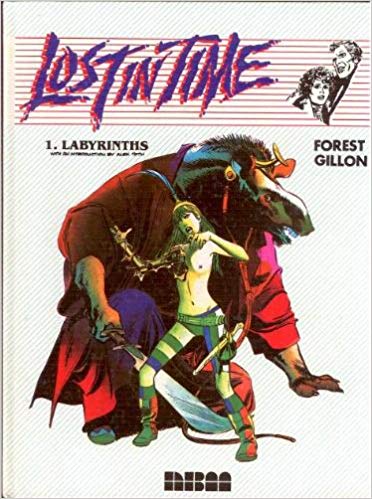
The groundbreaking series followed a Franco-Belgian mini-boom in science fiction comics triggered by Jean-Claude Forest’s 1962 creation Barbarella. Other notable hits of the era include Greg & Eddy Paape’s Luc Orient and the cosmic excursions of Philippe Druillet’s Lone Sloane, which all with Valérian in the vanguard – boosted public reception of the genre and led, in 1977, to the creation of dedicated fantasy periodical Métal Hurlant.

Valérian and Laureline (as the series became) was a light-hearted, wildly imaginative time-travel adventure-romp (a bit like Doctor Who, but not really so much), drenched in wry, satirical, humanist and political social commentary. The star – at least initially – was an affable, capably unimaginative by-the-book cop tasked with protecting universal timelines and counteracting paradoxes caused by casual, incautious or criminally minded chrononauts…

In the course of that debut escapade, Valerian picked up impetuous, sharp-witted peasant lass Laureline, who originated in the 11th century before becoming our hero’s assistant and deputy. In gratitude for truly invaluable assistance, he brought her back to the 28th century super-citadel and administrative capital, Galaxity, where the feisty firebrand took a crash course in spatiotemporal ops before accompanying him on his cases…. luckily for him.

This fabulous fourth oversized hardback compendium – also available digitally – once again boasts a wealth of text features, beginning with Stan Barets’ deconstructive assessment ‘Whimsical Stories with Strong Themes…’ More follows with further discourse, all supplemented with photos sketches, designs and reference material in ‘Towards the End of History?’, ‘Constantly Renewed Questions’ and retrospective overview ‘Châtelet Station: A Great Spatial and Temporal Shift’. Glittering prizes are assessed in ‘The Consecration of Angoulême’ and are followed by ‘Space Grunts’: a short complete war story from Metal Hurlant, highlighting the creative highpoints and methodology of author/illustrator Méziéres before the main event kicks off…

The opening shot in the series’ first truly extended saga, Châtelet Station Destination Cassiopeia, was originally serialised in the monthly Pilote (#M47 to M50: 21st March to June 27th 1978) before being collected later that year as 8th album Métro Châtelet Direction Cassiopée. The story concluded in follow-up album Brooklyn Line Terminus Cosmos which happily follows…

It all begins with the partners far apart in time and space. Laureline pensively journeys to the fabulous Cassiopeia system, just for once enjoying the many wonders of space as she travels at sub-light speed through the phenomenally populous yet cosmically fragile region.

Her trip to Solum is broken up by many stopovers as she cautiously gathers snippets of gossip which cohere to reveal an unsettling trend: subtly voiced concerns that some merchants are pushing strange and dangerous technologies on buyers extremely unsuited to possess them…

Although separated by centuries and light-years, Laureline and Valerian are enjoying impossibly intimate contact. Thanks to Terran ingenuity – and recent neurosurgeries – the partners are telepathically linked and sharing information on the mission.

His mission is playing out in Paris of 1980, where Valerian idly observes the variety of human types frequenting the café he impatiently haunts; constantly reminded how little he knows or understands the people and history of his birthworld.

Things aren’t helped by the volubly affable, infuriatingly unrushed and always tardy Mr. Albert. Galaxity’s man-in-the-moment is a sort of human X-Files: investigating, sifting and collating incalculable amounts of data on everything Fringe, Strange or Whacky which occurs in the 20th century he has adopted as a home-away-from-home.

Breaking contact with Laureline, Valerian learns from the verbose nerd that appalling, monstrous manifestations have been terrorising the world and now this city’s subway system. Sensing action at last, the impulsive hero rushes to the site of the latest occurrence, abandoning Albert to follow up on something which has piqued the elder’s scholarly curiosity. Both are blithely unaware that a suspect band of not-so-ordinary Parisians with similar interests are mere metres ahead of them…

What Valerian confronts is a horrific thing out of the inferno, but even it is not immune to the futuristic weaponry he’s carrying in kit form. All he has to do is assemble it before being eaten…

In the aftermath, Albert acts quickly to extract the wounded hero from hospital before doctors and cops start asking too many of the right questions. Later, over a luxurious dinner, the epicurean investigator shares a sheaf of files and clippings of monster and UFO sightings which only hint at why Valerian is stuck in a temporal backwater whilst his partner is covering colossal Cassiopeia alone…

Synching up again later despite constant headaches, Valerian hears Laureline tell of the incredible inhabitants of Solum and her candid interview with the living memory of the race, as well as sundry other wonders before contact is explosively ended by a phone call from Albert warning him that he is being watched…

After deftly dodging his tail, Valerian receives a most distressing communication from Laureline. Her pleasant chat with the memory of Solum has uncovered news of a planet which long ago endured a similar plague of mysterious manifestations. It doesn’t exist anymore…

Therefore, she’s off to incomprehensibly vile universal garbage dump Zomuk in pursuit of another promising lead, but before Val can warn her to stay away from the junk world, mind-contact is lost…

At that 20th century moment, Val and Mr. Albert are embarking on a bus ride to rural wetland idyll Doëre-la Rivière in search of marsh-monsters and dragons, only to surprisingly discover no accommodation available in the usually dead-in-the-off-season resort.

All rooms have been taken by scientists working for W.A.A.M (World American Advanced Machines): a mega-corporation in contention with the ubiquitous multinational Bellson & Gambler.

Both companies keep cropping up in Albert’s files of the weird and unexplained…

Soon the mismatched spatio-temporal operatives are trudging through acres of misty mire, encountering young Jean-René who offers to lead them to the infamous monster everybody is searching for.

When they find the Brobdingnagian beast, only Valerian’s disintegrator saves their lives. They quickly return to Albert’s paper-&-scrap-packed Paris flat, where the quirky researcher decides its time his impatient young colleague meets the secret source: a bizarre modern mystic and seer named Chatelard who cannily points out affinities between the manifestations met so far and the classical ancient concept of The Four Elements…

He also points out that one could call highly ranked corporate businessmen the “hidden high priests of today’s world”, whilst mentioning that a pretty blonde woman from abroad recently offered him a lot of money for the same insights…

Later, as Albert sifts through the precious papers, reviewing all he has on Bellson & Gambler, frantic Valerian finally re-establishes contact with Laureline, just as she concludes an epic struggle against ghastly odds and enters a hidden shrine to gaze upon fantastic representations of Four Elemental Forces which underpin the universe…

Once again contact is broken and in a petulant rage the astral adventurer storms out into the Parisian night. Utterly oblivious to the fact that he is being followed by enigmatic figures in an expensive automobile, he accepts a lift from a pretty girl in a sports car…

To Be Concluded…

Bold, mind-boggling and moodily mysterious, this splendid change of pace accentuates the deadly dangers which underscore this astonishingly imaginative series; eschewing the usual concentration on witty japery and politico-philosophical trendiness in favour of mounting suspense, bubbling paranoia and stark suspense with mesmerising effect…

Brooklyn Line Terminus Cosmos was the tenth Cinebook translation: originally serialised in Pilote #M70 – M73 (March to June 1980) before being released as an album.

After a full recap the story resumes some relative hours later as Laureline finally wakes her slumbering, cosmically distant partner. She is psychically aware of the woman sleeping beside him and takes great pleasure in razzing him on his conquest “in the line of duty”…

Fun over, Laureline imparts crucial information: the puissant yet debased ancients of Zomuk now seemingly worship two strange new godlike beings and are sharing with them the awesome power of Elemental artefacts they have preserved for centuries. Sadly, she suspects the lordly strangers are far from divine and have extremely venal – if not outright criminal – motives for their attentiveness.

Moreover, when the deities started squabbling over the potent offerings, the native Zoms start smelling rats too…

As Laureline tracks the impostors deep into a region dominated by astral pirates and fugitives, Valerian returns to his new companion, suspicious that she also is not what she seems…

He’s not wrong. The highly competent Miss Cynthia Westerly is highly placed in one of the corporations pursuing the uncanny phenomena plaguing Paris, but is oblivious to the fact that the big oaf she thought safely seduced and abandoned is actually following when she heads for the Pompidou Centre to attempt capture of the next Elemental manifestation.

As he trails her, Valerian becomes aware that her rivals are in pursuit and plays a very deft trick to throw them all off guard…

Rendezvousing with Albert, the Spatio-Temporal Agent gets his hands on the surprisingly compact “Creature of Air and Dreams” before anybody else, but the brief contact leaves him changed and damaged…

As Albert hustles him away, Valerian slips into tenuous contact with Laureline but the communication is oddly garbled, since his consciousness is simultaneously wandering the timelines: glimpsing events from his past and many which have yet to occur…

His bewildering loss of temporal continuity continues even as Albert drags the dazed hero onto a jet, heading for a final confrontation with the warring corporate cliques. The entire journey is punctuated with bizarre visions which Laureline is forced to share, and on arrival in New York Albert takes the debilitated agent to see an old friend: aged Kabbalah scholar Schlomo Meilsheim who has some ideas on a remedy for the increasingly escalating condition…

The situation has not gone unnoticed by the voracious corporations either. With their grand schemes of profitable new proprietary energy sources threatened, they have instigated a mass convocation of every fringe scientist, modern mystic, seer, religious nut and new age quack in the country: a last-ditch attempt to regain control of those elemental forces currently tormenting Valerian…

Naturally Schlomo is invited too and brings his friends along to the desolate, snow-swept reaches of Brooklyn. When Val wanders off, terse communication with Laureline reveals the truth about his latest visions and the dangers she’s been battling single-handed in pursuit of the faux gods.

Now as Elementals catastrophically manifest amongst the massed mystics, she enacts a bold plan to cut off the problem at source; severing the uncanny connection between devastating forces devised by the Zoms and its unfortunate link to unwary, unhappy 20th century Earth…

Sly, subtle, brilliantly mind-boggling and moodily mysterious, this sharp saga is a trans-time tale of subtle power, dripping with devilish wit, but no matter how trenchant, barbed, culturally aware or ethically crusading, Valerian and Laureline yarns never allow message to overshadow excitement or entertainment. This is one of the most memorable romps you could ever imagine and there’s even better to come…

Les Spectres d’Inverloch originally appeared in Pilote #M110-117, (spanning July 1983 to February 1984) and opens here as Laureline enjoys the comforts of a palatial manor in Scotland, somewhere at the tail end of the 20th century. Unflappable dowager Lady Charlotte is a most gracious host and happily shares every benefit of life in Clan McCullough, even though her young charge can’t help but wonder why she has to cool her heels with the old biddy in this odd time and place…

Once again, the Spatio-Temporal partners-in-peril are separated by eons and light years. Valerian is at the other end of everything: impatiently stuck on water-world Glapum’t, trying to capture a hulking aquatic beast who easily defies his every stratagem. Finally, once brute force, commando tactics and super-science have all proved ineffectual, the frustrated agent tries bribery. Naturally, the tasty morsels he offers are heavily drugged…

However, as he carries the second phase of his orders, a real problem crops up. Valerian can’t establish contact with Galaxity…

Far ago and elsewhere, London is enduring a paralysing wave of industrial actions. The strikes are particularly galling to volubly affable, infuriatingly unrushed and always tardy Mr. Albert. Galaxity’s 20th century information gatherer/sleeper operative is trying to get to Scotland, but wonders if he’s ever going to get out of the English capital…

On far-flung Rubanis, dictatorial secret police chief Colonel Tlocq is having a duel of wits with the engagingly ruthless data-brokers known as the Shingouz. Naturally, the spymaster is utterly outmanoeuvred by the devious little reptiles who gleefully take off with the secret they required. All-in-all, they are rather enjoying working for Earth…

Way back in West Virginia, Lady Charlotte’s husband Lord Seal is consulting with the CIA. The dapper Briton is a past master of “tradecraft” and remains unperturbed even after reviewing the terrifying situation facing both Communist Bloc and Free World. Something is making all persons in charge of nuclear weapons – politicians and military alike – go mad. There have been numerous near-misses and even a couple of swiftly hushed-up actual disasters on both sides of the Iron Curtain. Moreover, the Americans have got hold of strange little devices used to cause the insanity. Somebody is deliberately trying to spark atomic Armageddon…

Only the veteran spy’s swift actions prevent the entire assembly going the same way, when a concealed insanity-gadget goes off during their top-secret meeting…

As Seal jets off home, the scene switches to Galaxity. The super-city, impregnable bastion of human dominance, is deserted. Only its supreme master remains, and as the fortress and Terran empire start dissolving into nothingness, he makes a desperate jump into time…

On a clear autumn afternoon, Lady Charlotte and Laureline are enjoying the view from Castle Inverloch’s rear windows when the immaculate, lovingly-manicured-for-centuries lawns are wrecked by the crash-landing of a Shingouz shuttle. Naturally, the visitors are granted every gracious vestige of hospitality, even after Lord Seal arrives in flamboyantly bombastic fashion and sees what’s become of his beloved grass…

Aplomb and grace under pressure alone cannot account for the elderly couple’s acceptance, and when Albert pops in and Valerian shows up – much to the detriment of what remains of the lawns – it becomes clear that the elderly gentry know much more about the workings of the universe than everybody else in this century…

Even the previously-captive Glapumtian – who likes to be called “Ralph” – has a part to play in the baffling, pre-ordained proceedings.

What exactly that means starts to become clear after Lord and Lady Seal introduce their outré guests to the legendary ghost of Inverloch. Valerian usually just calls him “boss”…

Soon the Spatio-Temporal Agents are being made painfully aware of a monumental threat to the universe which has already unmade the events leading to the birth of Galaxity and the Terran Empire and which now poses a threat to all that is…

To Be Concluded…

Smart, subtle, complex and frequently hilarious, this sharp trans-time tale beguilingly lays the groundwork for an epic escapade. This is one of the most memorable romps Méziéres & Christin ever concocted, and heralded the start of a whole new way to enjoy the future…

The Wrath of Hypsis concludes a landmark tale and marks a turning point in the ongoing epic. Initially every Valérian adventure began as a serial in Pilote before being collected in album editions, but after this adventure from 1985, the publishing world shifted gears. From the next tale and every one thereafter, the mind-bending sagas were released as all-new complete graphic novels. The switch in dissemination affected all popular characters in French comics and almost spelled the end of periodical publication on the continent…

One clarification: canonically, “Hypsis” is counted as the twelfth tale, due to the collected albums being numbered from The City of Shifting Waters: the second actual story but the first to be compiled in book form. When Bad Dreams was finally released as a European album in 1983, it was given the number #0.

Les Foudres d’Hypsis originally appeared in Pilote #M128-135, (January to September 1985): an action-packed yet trenchant romp resetting a growing paradox that had been slowing building since The City of Shifting Waters…

In previous volume The Ghosts of Inverloch, Galaxity was eradicated from reality by agents unknown, leaving only the Chief of the Spatio-Temporal Service to plunge back in time to 1986: the chronal crisis-point which triggered the disaster.

Spatio-Temporal partners-in-peril Valerian and Laureline joined him by extremely convoluted paths after gathering a trio of Shingouz traders and affable, aquatic super-mathematician Ralph from different eras and galactic backwaters.

They all met up at Inverloch Castle, far from escalating petty crises and a mounting unrest afflicting Earth that would soon peak with the melting of the polar ice-caps, destruction of modern human civilisation and consequent birth-pangs of Galaxity.

The Scottish citadel was home to British intelligence supremo Lord Seal, his brilliant wife Lady Charlotte and guest Mr. Albert. This distinguished, exceptional band had gathered to prevent Earth’s devastation but Galaxity’s sudden disappearance added even greater urgency to the mission…

The tale continues here as the strange crew review the worsening situation. Nuclear powers across Earth are experiencing inexplicable, potentially fatal malfunctions. Alien objects keep appearing in random locations and – thanks to the extraterrestrial input of Seals visitor’s – they can now lay blame upon the machinations of Hypsis: an enigmatic planet constantly perambulating from system to system, quadrant to quadrant…

Seal’s contacts have narrowed down the potential crisis point to one of a number of ships in the Arctic. Soon the odd allies are covertly heading north in British weather ship HMS Crosswinds…

Thanks to Ralph’s talents and growing friendship with a pod of Orcas, the maritime search is gradually narrowed down and before long Crosswinds closes in on a quaint schooner named Hvexdet… and none too soon.

The time-displaced Chief has locked himself in his cabin, Valerian is wracked by nightmares of vanished Galaxity and numerous doomed Earths whilst the gambling-addicted Shingouz have almost won or traded everything aboard ship not bolted down or welded on…

Cornering the Hvexdet in a field of pack ice, dauntless Captain Merryweather gives orders to ram, spooking the schooner into blasting off into space and instituting devastating retaliation. It’s what the Chief has been waiting for. With Crosswinds sinking and the crew heading for the lifeboats, he orders Valerian, Laureline, Seal, Albert, the Shingouz and Ralph to join him in the astroship: following the invaders’ flight to find nomadic Hypsis…

Pursuit is erratic and convoluted until Valerian has the idea of linking Ralph to the ship’s systems to predict Hvexdet’s final destination. It works perfectly and before long the astroship touches down on a strange, rocky world with immense towers dotting the landscape.

And that’s where things get really strange as Valerian learns why Earth was scheduled for nuclear meltdown, meets the incredible true owners of the troubled birthplace of humanity and watches in astonishment as Albert, Laureline and the Shingouz negotiate an unbelievable deal which saves Earth, but not (necessarily) his beloved and much-missed home Galaxity…

Astute fans will realise that this ripping yarn was writer Pierre Christin and artist Jean-Claude Méziéres’ way of rationalising the drowned Earth of 1986 (as seen in 1968 adventure The City of Shifting Waters) with the contemporary period that they were now working in. It also gave them an opportunity to send Valerian and Laureline in a new direction and uncharted creative waters…

To Be Continued…

Smart, subtle, complex and frequently hilarious, these sharp trans-time tales beguilingly blend outrageous satire with blistering action, and deft humour with cosmic apostasy: utterly reenergising what was already one of the most thrilling sci fi strips in comics. The Wrath of Hypsis and its successors are the most memorable romps Méziéres & Christin ever concocted, heralding the start of a whole new way to go back to the future…

These stories are some of the most influential comics in the world, timeless, thrilling, funny and just too good to be ignored. The time is now and there’s no space large enough to contain the sheer joy of Valerian and Laureline, so go see what all the fuss is about right now…
© Dargaud Paris, 2017 Christin, Méziéres & Tran-Lệ. All rights reserved. English translation © 2018 Cinebook Ltd.

The Adventures of Blake and Mortimer: The Secret of the Swordfish


By Edgar P. Jacobs, coloured by Philippe Biermé & Luce Daniels, translated by Jerome Saincantin (Cinebook)
ISBNs: 978-1-84918-148-8, 978-1-84918-161-7 and 978-1-84918-174-7

Belgian Edgard Félix Pierre Jacobs (1904-1987) is rightly considered one of the founding fathers of the Continental comics industry. Although his output is relatively meagre when compared to some of his contemporaries, the iconic series he worked on formed the basis and backbone of the art-form in Europe, and his splendidly adroit, roguish and impeccably British adventurers Blake and Mortimer, created for the first issue of Le Journal de Tintin in 1946, swiftly became a staple of post-war European kids’ life the way Dan Dare would in Britain in the 1950s.

Edgar P. Jacobs was born in Brussels, a precocious child who began feverishly drawing from an early age but was even more obsessed with music and the performing arts – especially opera. He attended a commercial school but – determined never to work in an office – pursued art and drama following his graduation in 1919.

A succession of odd jobs at opera-houses – scene-painting, set decoration, acting and singing as an Extra – supplemented his private performance studies, and in 1929 Jacobs won a Government award for classical singing. His proposed career as an opera singer was thwarted by the Great Depression, however, as the arts took a nosedive following the stock market crash.

Picking up whatever stage work was going – including singing and performing – Jacobs switched to commercial illustration in 1940. Regular employment came from the magazine Bravo. While illustrating short stories and novels, he famously took over the syndicated Flash Gordon strip, after the occupying German authorities banned Alex Raymond’s quintessentially All-American Hero and left the publishers desperately seeking someone to satisfactorily complete the saga.

Jacob’s Stormer Gordon lasted less than a month before being similarly sanctioned by the Nazis, after which Jacobs created his own epic science-fantasy feature in the legendary Le Rayon U: a milestone in both Belgian comics and science fiction adventure.

The U Ray was a huge hit in 1943 and scored big all over again a generation later when Jacobs reformatted the original “text-block and picture” material to incorporate speech balloons and re-ran the series in Le Journal de Tintin with subsequent releases as a trio of graphic albums in 1974.

I’ve read differing accounts of how Jacobs and Tintin creator Hergé got together – and why they parted ways professionally, if not socially – but as to the whys and wherefores of the split, I frankly don’t care. What is known is this: whilst creating the weekly U Ray, one of Jacob’s other jobs was scene-painting, and during the staging of a theatrical version of Tintin and the Cigars of the Pharaoh Hergé and Jacobs met and became friends. If the comics maestro was unaware of Jacob’s comics output before then, he was certainly made aware of it soon after.

Jacobs began working on Tintin, colouring the original monochrome strips of The Shooting Star from newspaper Le Soir for a forthcoming album collection. By 1944, Jacobs was performing similar service for Tintin in the Congo, Tintin in America, King Ottokar’s Sceptre and The Blue Lotus. By now, he was also contributing to the illustration as well, on extended epic The Seven Crystal Balls/Prisoners of the Sun.

Jacob’s love of opera made it into the feature as Hergé (who loathed the stuff) teasingly created bombastic Bianca Castafiore as a comedy foil and based a number of bit players (such as Jacobini in The Calculus Affair) on his long-suffering assistant.

After the war and liberation, publisher Raymond Leblanc convinced Hergé, Jacobs and a number of other creatives to work for his new venture. Launching publishing house Le Lombard, he also started Le Journal de Tintin, an anthology comic edited by Hergé, with editions in Belgium, France and Holland starring the intrepid boy reporter and a host of newer heroes.

Beside Hergé, Jacobs and writer Jacques van Melkebeke, the comic featured Paul Cuvelier’s Corentin and Jacques Laudy’s ‘The Legend of the Four Aymon Brothers’. Laudy had been a friend of Jacobs’ since they worked together on Bravo, and the first instalment of epic thriller serial ‘Le secret de l’Espadon’ starred a bluff, gruff British scientist as well as an English Military Intelligence officer closely modelled on Laudy: Professor Philip Mortimer and Captain Francis Blake…

The story ran from issue #1 (26th September 1946 to 8th September 1949): cementing Jacobs’ status as a star in his own right. In 1950, with the first 18 pages slightly redrawn, Le secret de l’espladon V1 (The Secret of the Swordfish) became Le Lombard’s first album release; with the concluding part published three years later. The volumes were reprinted nine more times between 1955 and 1982, with an additional single complete deluxe edition released in 1964.

In 1984 the story was reformatted and repackaged in English translation as three volumes with additional material (mostly covers from the weekly Tintin added to the story as splash pages) as part of a European push to win some of Britain’s lucrative Tintin and Asterix market, but failed to find an audience and ended after seven volumes.

Happily, Cinebook have successfully introduced us to the dashing duo – albeit after publishing the later adventures first – and you can revel in the wonderment in either paperback album or eBook formats…

Hergé and Jacobs purportedly suffered a split in 1947 when the former refused to grant the latter a by-line on new Tintin material, but since they remained friends for life and Jacob’s continued to produce Blake and Mortimer for the Belgian weekly, I think it’s fair to say that if such was the case it was a pretty minor spat.

I rather suspect that The Secret of the Swordfish was simply taking up more and more of the brilliant, diligent artist’s time and attention…

The U Ray also provided early visual inspiration for Blake, Mortimer and implacable nemesis Colonel Olrik, who bear a more than passing resemblance to heroic Lord Calder, Norlandian boffin Marduk and viperous villain Dagon from that still lauded masterwork – one that is also well overdue for translation…

One minor word of warning: by having the overarching enemies of mankind be a secret Asiatic “Yellow Peril” empire of evil, there’s some potential for offence – unless one actually reads the text and finds that the assumed racism is countered throughout by plenty of “good” ethnic characters and “evil” white folk…


The Secret of the Swordfish Part 1 – Ruthless Pursuit

The incredible journey begins with ‘The Incredible Chase’ as a secret army in the Himalayas prepares to launch a global Blitzkrieg on a world slowly recovering from its second planetary war. The wicked Basam Damdu, Emperor of Tibet, has assembled an arsenal of technological super-weapons and the world’s worst rogues such as insidious Colonel Olrik in a bid to seize control of Earth.

However, a bold British-Asian spy has infiltrated the hidden fortress and surrenders his life to get off a warning message…

In England, physicist and engineer Philip Mortimer and MI5 Captain Francis Blake discuss the worsening situation at an industrial installation where the boffin’s radical new aircraft engine is being constructed. When the warning comes that the war begins that night, the old friends swing into immediate action…

As the super-bombers rain destruction down on all the world’s cities, Mortimer’s dedicated team prepares his own prototype, the Golden Rocket, for immediate launch, taking off just as Olrik’s bombers appear over the desolate complex. Despite heavy fire, the Rocket easily outdistances the rapacious Imperial forces, leaving ruined homes in its wake as the fleeing Britons fly into a hostile world now brutally controlled by Basam Damdu…

Whilst seeking to join British Middle East resistance forces who have another prototype super-plane, teething troubles and combat damage create tense moments in the fugitives’ flight. When the Rocket is attacked by a flight of jets, the test ship’s superior firepower enables it to fight free, but only at the cost of more structural deterioration.

Failing now, the Rocket goes down in the rocky wilds between Iran and Afghanistan. Parachuting free of the doomed Rocket, Blake, Mortimer and the crew are machine-gunned by pursuing Empire jets and only three men make it to the ground safely…

After days of struggle Blake, Mortimer and the indomitable Jim are cornered by Iranian troops who have joined Olrik’s forces. Sensing disaster, the Britons hide the plans to Mortimer’s super-plane but one of the Iranians sees the furtive act. When no one is looking – especially his superiors – Lieutenant Ismail hurriedly scoops up the documents, but misses one…

Under lock and key and awaiting Olrik’s arrival, the prisoners are accosted by Ismail, who sees an opportunity for personal advancement which the Englishmen turn to their own advantage. Denouncing him to his superiors, Blake instigates a savage fight between Ismail and his captain. During the brief struggle Jim sacrifices himself, allowing Blake and Mortimer to escape with the recovered plans. Stealing a lorry, the desperate duo drive out into the dark desert night…

Followed by tanks into the mountain passes, the ingenious pair trap their pursuers in a ravine just as hill partisans attack. The Imperial collaborators are wiped out and, after exchanging information with the freedom fighters, the Englishmen take one of the captured vehicles to a distant rendezvous with the second Rocket. Lack of fuel forces them to stop at a supply dump where they are quickly discovered.

By setting the dump ablaze the heroes escape again, but in the desert Olrik has arrived and finds the sheet of notes left behind by Ismail. The cunning villain is instantly aware of what it means…

Fighting off aerial assaults from Empire jets and streaking for the mountains, Blake and Mortimer abandon their tank. Forced to travel on foot, they at last reach the meeting point where British-trained Sergeant Ahmed Nasir awaits them. The loyal Indian served with Blake during the last war and is delighted to see him again, but as the trio make their way to the target site, they become aware that Olrik has already captured their last hope…

Only temporarily disheartened, the trio use commando tactics to infiltrate Olrik’s camp, stealing not the heavily-guarded prototype but the villainous Colonel’s own Red-Wing super-jet. Back on course to the British resistance forces, the seemingly-cursed trio are promptly shot down by friendly fire: rebels perceiving the stolen plane as another enemy target…

Surviving this crash too, the trio are ferried in relative safety by the apologetic tribesmen to enemy-occupied town Turbat, but whilst there a spy of the Empire-appointed Wazir recognises the fugitive Englishmen. When Nasir realises they are in trouble, he dashes to the rescue but is too late to prevent Mortimer from being drugged.

Sending the loyal Sergeant on ahead, Blake tries frantically to revive his comrade, even as Imperial troopers rapidly mount the stairs to their exposed upper room…

To Be Continued…

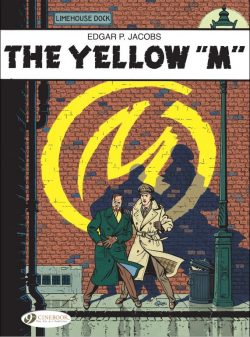
This Cinebook edition includes a tantalising preview of the next volume as well as stand-alone adventure The Yellow “M”, plus biographical features and chronological publication charts.


Volume 16: The Secret of the Swordfish Part 2 – Mortimer’s Escape

This second instalment carries the tale to the next epic level, as the frantic action resumes with soldiers bursting into an empty chamber before being themselves attacked by the Khan. After a bloody firefight the Englishmen emerge from their cunning hiding place and flee Turbat, which has been seized by a furious spur-of-the-moment rebellion.

Unknown to the fugitives, devious spy Bezendjas is hard on their heels and soon finds an opportunity to inform Olrik. With the city in flames and fighting in every street, the callous colonel abandons his own troops to pursue Nasir, Blake and Mortimer into the wastes beyond the walls…

On stolen horses the heroes endure all the ferocious hardships of the desert, but cannot outdistance Olrik’s staff-car. After days of relentless pursuit, they reach the rocky coastline and almost stumble into another Empire patrol. Whilst ducking them, Blake nearly falls to his doom…

Narrowly escaping death, the trio continue to climb steep escarpments and it is dusk before the Intelligence Officer realises that he has lost the precious plans and documents they have been carrying since fleeing England…

Realising that somebody must reach the British resistance at their hidden Eastern base, the valiant comrades split up. Blake and Nasir continue onwards whilst Mortimer returns to the accident site. Finding the plans is a stroke of sheer good fortune, immediately countered by an ambush from Olrik’s troops. Despite a Herculean last stand, the scientist is at last taken prisoner but only after successfully hiding the lost plans…

Three months later, Olrik is called to account in the exotic city-fortress of Lhasa. Basam-Damdu’s ruling council are unhappy with the Colonel’s lack of progress in breaking the captive British scientist, and even more infuriated by a tidal-wave of sabotage and armed rebellion throughout their newly-conquered territories. Even Olrik’s own spies are warning him that his days as an agent of the Yellow Empire are numbered…

Given two days to make Mortimer talk, the Colonel returns to his base in Karachi just as another rebel raid allows Nasir to infiltrate the Empire’s HQ. Blake is also abroad in the city, having joined British forces in the area…

With less than a day to act, the MI5 officer rendezvous with a British submarine and travels to a vast atomic-powered secret installation under the Straits of Hormuz. Here, the Royal Navy are stoically preparing for a massive counter-attack on the Empire. With raids liberating interned soldiers all the time, the ranks of scientists, technicians and soldiers are swelling daily…

Meanwhile, Nasir has his own desperate plan to free Mortimer, who is still adamantly refusing to talk of the mysterious “Swordfish” Olrik’s agents continually hear rumours of…

Aware of his danger and the Sergeant’s efforts, Mortimer instead cunningly informs Nasir of the lost plans’ location, even as the impatient Emperor’s personal torturer arrives from Lhasa…

Always concerned with the greater good, Blake and a commando team secure the concealed plans and are met by Nasir who has been forced from Karachi after realising Bezendjas has recognised him. It appears that time has run out for their scholarly comrade…

Mortimer, however, has taken fate into his own hands. When the devious doctor Sun Fo begins his interrogation, the Professor breaks free and escapes into the fortress grounds during an earth-shattering storm.

Trapped in a tower with only a handgun, he is determined to sell his life dearly, but is rescued by Blake and Nasir in a Navy Helicopter. Using the storm for cover, the heroes evade jet pursuit and an enemy naval sweep to link up with a British sub and escape into the night…

To Be Concluded…

This edition includes a preview of the next volume and excerpts from stand-alone saga S.O.S. Meteors, plus the usual biography features.


Volume 17: The Secret of the Swordfish Part 3 – SX1 Strikes Back!

After three years of stunning intrigue, mystery and action, E.P. Jacobs’ groundbreaking saga of a battle for world peace and universal liberty concluded in a spectacular duel below the Earth and in the skies of the embattled world. SX1 Strikes Back! is a tension-drenched race against time as Blake, Mortimer and the shattered dregs of Great Britain’s military forces prepare for a last-ditch strike using the Professor’s greatest inventions to win freedom for the oppressed peoples of Earth…

The final chapter opens with a stunning reprise of past events – cunningly compiled from a succession of six full-page illustrations (presumably original covers from weekly Le Journal de Tintin) – after which a daring commando raid liberates a trainload of British prisoners.

Brought to a fabulous subterranean fortress, the assorted scientists and engineers discover an underground railway, factory, armaments-facilities and even an atomic pile, all furiously toiling to complete the mysterious super-weapon dubbed “Swordfish”.

The former prisoners readily join the volunteers, blithely unaware that supremely capable scoundrel Olrik is amongst them in devilish disguise…

Days pass and as preparations for the Big Push produce satisfactory results, a series of disastrous accidents lead to one inescapable conclusion: there is a saboteur in the citadel…

Eventually Olrik becomes overconfident and Mortimer exposes the infiltrator in a crafty trap, but after a fraught confrontation the Colonel escapes after almost causing a nuclear catastrophe. Fleeing across the seabed, the harried spy narrowly avoids capture by diver teams and a hungry giant octopus…

The flight takes its toll upon Olrik and he barely reaches land alive. Luckily for him, Bezendjas has been checking out the region of coastline and finds the exhausted villain trapped in his stolen deep-sea suit. After a lengthy period, the dazed desperado recovers and delivers his hard-won information. Soon, Imperial forces are converging on the British bastion…

As air and sea forces bombard the rocky island and sea-floor citadel, Olrik dispatches crack troops to break in via a concealed land entrance, resulting in a staggering battle in the depths of the Earth.

They were almost in time…

After months of desperate struggle, Mortimer and his liberated scientists have rushed to complete the incredible Swordfish: a hypersonic attack jet with uncanny manoeuvrability and appallingly destructive armament.

Astoundingly launched from beneath the sea, the sleekly sinister plane single-handedly shoots the Empire jets out of the skies before sinking dozens of attacking ships. Ruthlessly piloting SX1 is Francis Blake; and even as he wreaks havoc upon the invading force, he is joined by SX2 -a second, equally unstoppable super-jet…

Soon the Yellow Empire is in full retreat and a squadron of Swordfish is completed. With the once-occupied planet in full revolt, it’s not long before Lhasa gets a taste of the flaming death it callously inflicted upon a peaceful, unsuspecting and now extremely vengeful world…

They are only just in time: the insane and malignant Emperor is mere moments away from launching a doomsday flight of atomic missiles to every corner of the planet he so briefly owned…

This Cinebook edition also includes fascinating illustrated essay ‘Jacobs: 1946, The Swordfish, starting point of a masterful work’, first seen in The World of Edgar P. Jacobs, a tantalising preview of later epic The Oath of the Five Lords (by Yves Sente & André Juillard) plus a biographical feature and chronological publication chart of Jacobs’ and his successors’ efforts.

Gripping and fantastic in the truest tradition of pulp sci-fi and Boy’s Own Adventures, Blake and Mortimer are the very epitome of dogged, heroic determination; always delivering grand, old-fashioned Blood-&-Thunder thrills and spills in timeless fashion and with astonishing visual punch.

Despite an epic body count and dated milieu, any kid able to suspend modern mores and cultural disbelief (call it alternate Earth history or bakelite-punk if you want) will experience the adventure of their lives… and so will their children.
Original editions © Editions Blake & Mortimer/Studio Jacobs (Dargaud – Lombard S.A.) 1984, 1985, 1986 by E.P. Jacobs. All rights reserved. English translation © 2012, 2013 Cinebook Ltd.

Tales of an Imperfect Future


By Alfonso Font (Dark Horse Books)
ISBN: 978-1-61655-494-1

As the end of March turgidly approaches and I confront the prospect of having my European citizenship stripped from me I’m feeling a mite confused, upset and just a bit passive aggressive (surprisingly that’s a term the Germans don’t have a word for…). Thus, I’m reliving a few of the best comics our Continental comrades have crafted and shared with the ungrateful Anglo-Saxon world…

Barcelona-born creator Alfonso Font Carrera was born on August 28th 1946. He studied Fine Arts and worked as an illustrator before slipping into comics in the 1960s with western tales in Hazañas del Oeste and Sioux for Ediciones Toray.

He quickly graduated to horror stories and historical crime dramas about infamous criminals for the Selecciones Illustradas Agency and, in 1970, began contributing material to British publisher Fleetway on strips such as Black Max in Thunder and Lion. Soon he gravitated to America with work for mature magazine publishers Warren and Skywald.

With writer Carlos Echevarría, he created ‘Géminis’ (AKA Phil Jackson) before moving to Paris in 1975 to work for major comics magazine Pif Gadget, devising ‘Sandberg, Père et Fils’ with Patrick Cothias and ‘Les Dossiers Mystère’ (written by Solet, and sharing art chores with Carlos Giménez and Adolfo Usero) as well as the Roger Lécureux-scripted ‘Les Robinsons de la Terre’.

From 1976-1982 he also freelanced for Scoop, Tousse Bourin and Super-As. Incensed by publishers reprinting his work without permission or payment, he became active in Creators Rights issues and worked with Giménez, Victor Mora and Usero as the “Workshop Premia” seeking to create a union for comics professionals.

In the mid-1980s, Font returned to Spain, contributing to new, home-grown publications like Cimoc, À Tope, and Circus whilst creating (with Mora) ‘Sylvestre’ and ‘Tequila Bang’.

For the Spanish iteration of 1984 he created signature sci fi gadabouts Clarke & Kubrick – who subsequently appeared in Cimoc and Rambla – and began a series of self-scripted, mordantly cynical, sardonic science fiction tales under the umbrella title ‘Cuentos de un futuro imperfecto’ which we see here as Tales of an Imperfect Future…

Seemingly never sleeping, Font went on to create parody-laced aviation hero ‘Frederico Mendelssohn Bartholdy’, ‘El Prisionero de las Estrellas’, and classical adventure serial ‘Jann Polynésia’ – which evolved into the iconic ‘John Rohner’ for Cimoc and ‘Carmen Bond’ for À Tope.

In 1987 he started a fruitful association with French publications Pilote and Charlie Mensuel with his series ‘Taxi’ and, after a brace of independent albums for Planeta publishers, revived John Rohner at Norma publishers.

Always occupied, he went on to create ‘Privado’ and medieval warrior ‘Bri D’Alban’ for Cimoc, whilst collaborating on cop series ‘Negras tormentas’ (‘Black Storms’) with writer Juan Antonio De Blas. Font even began occasionally illustrating Italy’s venerable western superstar Tex for Bonelli. In 1996, he returned to American pages with his erotic series ‘Dra, Dare’ for Penthouse Comix.

A major force in European graphic storytelling, Font has won numerous awards including The Grand Prize at Comic Barcelona and a Haxtur prize.

His artwork is loose, fluid, intricate and utterly electrifying: and Dark Horse’s translation of original European collection of Tales of an Imperfect Future into this stunning oversized (287x224mm) monochrome hardback edition is a sheer delight for fans of grittily fantastic fiction.

Any Brit who grew up reading the short complete sagas exemplified and perfected in 2000AD‘s Tharg’s Future Shocks, Pulp Sci-Fi or Tales from Beyond Science will be right at home – unless casual (human and robot) nudity is a problem…

Written and illustrated by Font throughout, the anthological nature of the tales is linked by the simple bridging device of a grotesque alien directly telling us that humanity is simultaneously a threat and embarrassment to the universe. No argument here, mate…

However, rather than go to the time and expense of eliminating us, the Great Powers are offering us one last chance to change our ways and, by way of inducement, have provided some stories taken from our most probable futures to illustrate just why we’re so much of a problem…

The hard science hagiography commences with ‘Tanatos-1 Comes Home’ as the smug hierarchal rulers of Earth gloat over the news that the AI super-weapon they created to destroy the alien fleets of Kloron has spectacularly succeeded.

As boffin Commander Grenh describes to the xenophobic top Bankers, Clerics and Military leaders how his programming compels the indestructible Tanatos-1 to unceasingly and implacably seek out all life in the universe and eradicate it, veteran General Alto Kervis asks himself why it has turned around and now nears Earth…

‘Rain’ introduces hard-working, long suffering blue-collar spacers Stanley Kubrick and Arthur C. Clarke, stuck on a sodden world, going slowly mad…

When the incessant deluge apparently causes a malfunction, hated computer Hal 2001 insists they go outside to fix the problem, but Stanley is convinced the useless metal martinet is trying to kill its human masters…

Barbed satirical humour gives way to barbarian fantasy in ‘Day of Glory’ as valiant John Smith battles devils and monsters to save his princess and his people. Tragically, the wonder warrior is in for disappointment and shock once he impossibly defeats the sinister Overlord of Klaarn…

Cracks appear in the foundations of the Military-Industrial complex when a vile capitalist proves to the government why the war they’re fighting must never end in ‘Stocks’, whilst

‘The Hunt’ prophetically takes the Hunger Games trope and ongoing war between “One-Percenters” and the rest of us to its logical conclusion…

Originally crafted in the mid-1980s, it follows two super-rich brats who stalk each other with lethal weapons through the dystopian wastelands inhabited by the poor. Of course, even when they’re killing each other for sport on a reality show, the oligarchs still find a way to bloodily exploit the despised discarded millions…

‘“Like a Plague”’ then offers an excoriating morality tale about our suicidal ecological irresponsibility before Stanley and Arthur return in ‘Cyberratic’.

Having finally escaped the rain-drenched hellhole and creepily disturbing electronic taskmaster, our unlikely heroes hit the Welcome Satellite for some R&R but stumble into a major mechanical malfunction on the totally-automated resort.

Luckily a small droid keeps pulling their fat out of the robotic fire, but you’d think such passionate machine-haters would stop for a moment to ask why and how their little saviour escaped the malfunction plague…

‘The Final Enemy’ affords a bleak glimpse at the thinking behind the soldiers who will fight in the final atomic Armageddon, whilst black humour informs a tale of Earth explorers who land on paradise and destroy it forever with ‘The Kiss’…

Similar silliness informs the trash-inundated post-apocalyptic world of ‘The Cleaner’ when humanity’s last survivors activate a miraculous device to get rid of the cause and effects of the pollution which destroyed the world…

Although meant as a comedic interlude, the next vignette sadly comes across as dated and just a touch homophobic by today’s elevated standards, detailing the shock and peril a solitary explorer endures when he discovers his government-mandated and supplied robotic sexual companion is not a “Betty” but an over-zealous ‘Valentino’…

Far more safe and salutary territory finds ‘Earth Control at Your Service, Sir’ addressing a version of the The Cold Equations quandary as two astronauts bringing an end to global famine realise that they won’t reach Earth if both men keep breathing the rapidly diminishing oxygen supply.

As they struggle to make an impossible decision, they have no inkling that the authorities on a starving world have their own ideas…

‘The Siege’ bloodily traces the rampage of a merciless murderous maniac as a fractured city endures police martial law and the ceaseless hunt for society’s greatest menace before the tormented tomorrows tumble to a close with a bleak sad tale of a doomed and dying spacer’s escape into fantasy and one last passionate rendezvous with beloved ‘Green Eyes’…

Scary, topically pointed, suspenseful and superbly intoxicating, Tales of an Imperfect Future offers a potent panoply of graphic pleasures for every lover of comics adventure and science fiction wonders from a master of art long overdue for fame in the English-speaking world.
Tales of an Imperfect Future © 2014 SAF Comics, www.safcomics.com. All rights reserved.

Showcase Presents Strange Adventures volume 2


By John Broome, Otto Binder, Gardner Fox, Edmond Hamilton, France E. Herron, Dave Wood, Ed Jurist, Joe Millard, Carmine Infantino, Gil Kane, Sid Greene, Jerry Grandenetti, Howard Sherman, Frank Giacoia, Manny Stallman & various (DC Comics)
ISBN: 978-1-4012-3846-9

Do you know what I miss? Compilations of classics anthological genre adventures.

Marvel finally wised up and recently began releasing gloriously evocative collections of their pre-superhero horror, sci fi and even war yarns but since DC stopped producing their cheap and cheerful compendia of similar material, something fabulous has been missing from our lives. Now with so many kinds of eBooks editions, it’s a crying shame that these whimsical, moody early fantasy romps are unavailable to readers of all ages and vintage. Let’s see why with this splendid and still enticing monochrome paperback tome

As the 1940s closed, masked mystery-men dwindled in popularity and the American comicbook industry found new heroes. Classic pulp fiction genre titles flourished; anthologies dedicated to crime, war, westerns, humour and horror were augmented by newer fads like funny animal, romance and most especially science fiction. In 1950, National Periodicals/DC finally escaped that last genre’s glorious thud-&-blunder/ray guns/bikini babes in giant fishbowl helmets magazine roots (as perfectly epitomised in the uniquely wonderful Golden Age icon Planet Comics) with Julius Schwartz’s introduction of Strange Adventures.

Packed with short adventures from jobbing SF writers and a plethora of new heroes such as Chris KL99, Captain Comet, Atomic Knights and others, the magnificent monthly compendium (supplemented a year later with sister-title Mystery in Space) introduced wide-eyed youngsters to a fantastical yet intrinsically rationalist universe and all its possible/probable wonders …

On a thematic note: a general but by no means concrete rule of thumb was that Strange Adventures generally took place on Earth or were at least Earth-adjacent whilst as the name suggests Mystery in Space offered readers the run of the rest of the universe…

Reprinting Strange Adventures #74-93 (November 1956 to June 1958), this second compelling collection features stories from the dawn of the Silver Age, offering fantastic fantasy plots and spectacular scenarios as an industry-wide resurgence of confidence and creativity gathered momentum and superheroes began to successfully reappear.

These stellar sagas would continually inform and shape DC’s slowly growing heroic adventure revival, whilst proving over and again that Weird Science and cosmic disaster were no match for the infallibility of human intellect and ingenuity. During this period many of the plots, gimmicks, MacGuffins, cover designs and even interior art were recycled for the more technologically-based, emergent costumed champions creeping back into public favour…

This mind-blowing, physics-challenging monochrome colossus opens with four classic vignettes, beginning with a terse thriller by John Broome & Carmine Infantino wherein a writer gains the power to see beyond the normal range and is the only human who can combat ‘The Invisible Invader from Dimension X!’, after which ‘The Metal Spy from Space!’ (Gardner Fox, Sid Greene & John Giunta) is similarly exposed and defeated by fictive pulp fictioneer “Edmond Hamilford”…

Fox, Greene & Bernard Sachs then reveal the vested interest of an investigator who obsessively seeks out ‘Earth’s Secret Visitors!’ before Edmond Hamilton, Gil Kane & Joe Giella detail how a notoriously hapless DIY dabbler finds himself in possession of the ‘Build-it-Yourself Spaceship!’

During this period editors were baffled by but still exploited a bizarre truism: every issue of any title which featured gorillas on the cover always showed increased sales. Little wonder then that so many DC comics had hairy headliners…

Strange Adventures #75 led with ‘Secret of the Man-Ape!’ by Otto Binder, Infantino & Giella, wherein a scientist intent on evolving apes into men accidentally acquires a test subject who just happens to be the vanguard of an invading alien anthropoid army, whilst ‘The 2nd Deluge of Earth!’ (Ed Jurist, Greene & Giella) sees a blind scientist save the world from Martians intent on taking over our water-rich world…

A meddlesome technologist happily makes amends and saves an imperilled alien civilisation after curiously poking his nose into the ‘Mystery of the Box from Space!’ (Binder, Kane & Sachs) before ‘This is Timearama!’ (Hamilton, Greene & Sachs) wittily and scathingly relates what happens when an honest researcher trusts businessmen with the secrets of his televisual time probe…

In issue #76 Broome, Infantino & Sachs explored the mission of a galactic saviour handicapped by fate as he strives to save humanity in ‘The Tallest Man on Earth!’, after which ‘The Flying Saucers that Saved the World!’ (Binder, Greene & Giella) reveals how a professional UFO debunker uses all he’s learned about hoaxes to counter an actual invasion by sinister subterraneans.

Although a short story anthology title, over the run of years Strange Adventures featured a number of memorable returning characters and concepts such as Star Hawkins or Space Museum. Darwin Jones of the Department of Scientific Investigation debuted in the very first issue, solving fringe or outright weird science dilemmas for the Federal Government.

A genius-level scientific detective, he made thirteen appearances over as many years and here resurfaces to foil the insidious schemes of ‘The Robot from Atlantis!’ (Binder, Kane & Giella), which feigns benevolent friendship whilst actually trying to eradicate mankind. The issue then concludes with the struggle of a geologist to get rid of ‘The Hungry Meteorite!’ (Dave Wood, Greene & Sachs) which threatens to absorb all the metal on Earth…

Another Darwin Jones thriller – by Broome, Infantino & Sachs – opened issue #77 when a Death Row convict is given superhuman intellectual abilities by desperate trans-dimension beings facing extinction. However, “Lobo” Torrence is prepared to let two worlds die to save himself, forcing the Science Detective to gamble everything on a last-ditch plan…

Hamilton, Greene & Giella then detail how ‘The Incredible Eyes of Arthur Gail!’ – damaged by a chemical accident and unable to detect non-organic materials – uncover a cruel criminal plot; Binder, Kane & Sachs expose the tragic secret of ‘The Paul Revere of Time!’ whose anonymous warnings prevent colossal loss of life and ‘The Mental Star-Rover!’ (Binder, Greene & Giella) reveals an uncanny connection between an Earth author and a piratical alien marauder…

Broome, Greene & Sachs opened Strange Adventures #78 with a spirited mash-up of Arthurian legend and The Prisoner of Zenda as mechanic Bruce Walker pinch-hits for an alien emperor in ‘The Secret of the Tom-Thumb Spacemen!’ after which Fox, Kane & Giella chillingly explore how existence depends on meteors when aliens attempt to steal ‘The Life Battery!’ which sustains our bio-sphere…

Binder & Infantino pose a classic quandary of ingenuity and survival after a prospector is stranded on a primitive island with a dead alien and a matter-transmuting device he believes is ‘The Magic Horn of Space!’ Immediately following, a test pilot is abducted into another dimension to become a guinea pig for inhuman predators as ‘The Prisoner of Space X!’ (France E. Herron, Greene & Sachs).

Issue #79 offered chilly seasonal fare with ‘Invaders from the Ice World!’ by Fox, Infantino & Sachs. When energy beings from Pluto possess snowmen in advance of an invasion it takes all of Darwin Jones’ deductive abilities to fathom their only weakness, after which ‘Around the Universe in 1 Billion Years!’ (Herron, Greene & Giella) follows a band of explorers who return to Terra after an eternity in space to discover a new race has supplanted them.

‘A Switch in Time!’ (Fox, Kane & Giella) then examines the fate of a conman who thinks himself the lucky recipient of the greatest deal in history before Hamilton, Jerry Grandenetti & Giella expose the incredible secret of ‘The Living Automobile!’ which kidnaps its driver…

Binder handled most of the writing in #80, beginning with a smart take on intellectual property as the Kane & Giella illustrated ‘Mind Robbers of Venus!’ depicts alien crooks stashing their loot in the brain of electronics engineer Ian Caldwell before Greene & Giella take over for ‘The Worlds That Switched Places!’ wherein an astronaut makes a terrible mistake that almost dooms two different dimensions.

Fox & Infantino demonstrated the duplicitous saga of Plutonian Jul Van and ‘The Anti-Invasion Machine!’ which almost destroyed Earth before Binder returns with artist Howard Sherman to seal the fate of an avaricious inventor who believes himself ‘The Man who Cheated Time!’

Strange Adventures #81 featured a subatomic would-be tyrant kidnapping convict brothers to be his tools in an ambitious plot, but the deranged alien has no idea of the ‘Secret of the Shrinking Twins!’ (Broome, Infantino & Sachs) and consequently pays a heavy price, after which Binder, Greene & Giella pit an Earth naturalist against a potential world conqueror in ‘The Spaceman of 1,000 Disguises!’

‘The Friendly Enemies of Space!’ (Herron, Kane & Sachs) details a series of natural disasters which ruin Earth’s first contact with benevolent extra-solar life before Fox, Grandenetti & Frank Giacoia examined the fallout of a lost artefact from a higher dimension when ‘The Magic Box from Nowhere!’ drops into the hands of ordinary, greedy humans…

In #82, Herron, Infantino & Sachs’s bellicose and awesome ‘Giants of the Cosmic Ray!’ meet their match in a humble earth scientist, whilst a gobsmacked youth is astounded to discover his adoptive parents were aliens when he becomes ‘The Man Who Inherited Mars!’ (Binder, Greene & Giella)…

A lack of communication would have led to disaster had science fiction writer Owen Bently not deduced the incredible ‘Secret of the Silent Spaceman!’ (Binder, Giacoia & Giella) after which a researcher saves Earth from invaders by turning their technology against them on ‘The Day Science Went Wild!’ (Binder, Greene & Giella).

Strange Adventures #83 sees a simple college Professor revealed as an amnesiac chrononaut who has to rediscover and complete his ‘Assignment in Eternity!’ before time runs out (Binder, Greene & Giella again), whilst actor Mark Gordon finds himself hunting fans-turned-spree criminals as the ‘Private Eye of Venus!’ (Fox & Infantino) when his hit TV show inadvertently becomes the sensation of the telepathic inhabitants of our sister planet…

Herron, Greene & Giella detail a misunderstanding which reduces gigantic Good Samaritan ‘The Volcanic Man!’ to the status of an invading monster after which an accident leads to brain injury for an ordinary mortal. As crafted by Herron, Kane & Sachs, his wounds are repaired by passing aliens, but the victim develops uncanny precognitive abilities in ‘The Future Mind of Roger Davis!’

Ray Jenkins is a wealthy man who brings unearned fame and prestige in SA #84, but the glory-hound meets his fate when he encounters the ‘Prisoners of the Atom Universe!’ (Broome, Infantino & Sachs) whilst a harried scientist prevents ‘The Radioactive Invasion of Earth!’ (Fox, Greene & Sachs) when he realises Martians also can’t abide his kids’ Rock ‘n’ Roll music…

Darwin Jones returns to solve the ‘Riddle of the Walking Robots!’ (Herron, Infantino & Giella) which ceaselessly roam Earth sowing alien seeds, after which schoolboy Tommy Ward‘s “Electronic Brain” kit becomes ‘The Toy that Saved the World!’ (Binder, Greene & Giella)… once he stops scrupulously following the instructions…

John Broome scripted the first half of issue #85, leading with artists Greene & Sachs’ ‘The Amazing Human Race!’, wherein a scientist uncovers a plot by Praying Mantises to conquer humanity before a colour-blind student finds affirmation when his disability saves an alien civilisation from destruction in ‘The Colorless World of Peter Brandt!’ (Infantino & Giella).

Binder closed the issue with a brace of tales: ‘The Riddle of Spaceman X!’ (Greene & Giella) with human scientists trying to deduce the form of an alien from examining his “abandoned” ship whilst ‘Thieves of Thought!’ (Infantino & Sy Barry) follows a speleologist who unearths a city of robots telepathically appropriating human inventions for the purposes of conquest…

In SA #86, ‘The Dog That Saved the Earth!’ (Broome, Infantino & Sachs) discloses how alien energy transforms an ordinary mutt into a telepathic genius in time to prevent a cosmic catastrophe after which Binder, Infantino & Giella reveal how an ordinary chemist ends an ‘Interplanetary Space-Feud!’ threatening to devastate the world.

Gardner Fox then finished off the issue with two intriguing enigmas. Spelunker Bill Jackson stumbles onto an alien ship and discovers only he can stop ‘The One-Hour Invasion of Earth!’ (art by Giacoia), whilst Greene & Giella reveal how schoolboy John Haldane is saved by a mysterious stranger in payment for a similar service performed two decades hence during ‘The Weather War of 1977!’

Strange Adventures #87 begins with Herron, Infantino & Giella’s ingenious ‘New Faces for Old!’, wherein the ultimate plastic surgery craze is nothing but a crafty scheme by aliens to ferret out freedom fighters hiding amidst teeming humanity whilst ‘Mystery Language from Space!’ (Fox, Greene & Sachs) shows how a warning of planetary doom is nearly wasted as nobody can read the messages…

Fox, Infantino & Giella then detail how a freshly graduated Air Force pilot is abruptly seconded to the red planet to combat the ‘Meteor Menace of Mars!’ before Binder, Greene & Giella describe how an ingenious writer is tapped by aliens in dire distress to be ‘The Interplanetary Problem-Solver!’

Simian allure informed issue #88 as Herron, Infantino & Giella depicted Darwin Jones thwarting ‘The Gorilla War against Earth!’ and uncovering another alien invasion scheme whilst ‘The Warning Out of Time!’ (Binder, Greene & Sachs) reveals how a lost Da Vinci masterpiece conceals prophetic warnings of future disasters.

A mysterious and diligent ‘Bodyguard from Space!’ (Fox, Infantino & Sachs) attaches himself to cameraman Jim Carson because the human’s brain contains knowledge to save a dying civilisation, after which Binder, Greene & Giella pose a classic survival conundrum as Earth scientists struggled to discern ‘The Secret of the Sleeping Spaceman!’

When Saturnians raided our world in issue #89, one scientist advises neither capitulation nor resistance but instead suggests offering ‘Earth for Sale’ (Herron, Infantino & Sachs) to save humanity, after which a professor vanishes from view to find himself a ‘Prisoner of the Rainbow!’ (Binder, Greene & Giella).

A pilot on a mercy mission takes an accidental ‘Detour in Time!’ and saves future humanity in a chiller by Fox, Grandenetti & Giella before Binder, Greene & Giella’s ‘Mystery of the Unknown Invention!’ sees a nosy neighbour’s prying accidentally saving a world… but not his own…

Issue #90 opens with ‘The Day I Became a Martian!’ (Binder, Infantino & Sachs), revealing how prospective invaders periodically transform a sci fi writer to see if Earth can sustain them after which Fox, Greene & Giunta recount how a bookshop owner endures regular clandestine visits from an extraterrestrial seeking ‘The 100,000 Year Old Weapon!’

Binder also scripted the final brace of astounding yarns as an ‘Amazing Gift from Space!’ (illustrated by Infantino & Sachs) sees human suspicion nearly spurn an incredible opportunity and doom two civilisations, whilst the Greene & Giella limned ‘Mystery of Meteor Crater!’ offers a thrilling battle between Jovian invaders and ordinary Earthmen for the most powerful element in creation…

In #91 ‘The Midget Earthman of Jupiter!’ (Broome, Greene & Sachs) portrays how an Olympic decathlete assists Brobdingnagian aliens in a struggle for democratic freedom whilst Binder, Greene & Giunta’s ‘Warning to Earth!’ features an oceanographer afflicted with a mental block attempting to circumvent his psychic gag and alert the surface-world to impending undersea invasion…

Fox, Manny Stallman & Giella then detail a shipwrecked extraterrestrial swindler’s scheme to trick Earth into building his ride home after discovering ‘The Amazing Tree of Knowledge!’, before ‘Prisoner of the Space Satellite!’ (Binder, Infantino & Sachs) reveals how an isolated astronomer solves a mathematical mystery and saves the last survivor of Atlantis from death in space…

SA #92 offered a more literal tale from Joe Millard, Infantino & Sachs as ‘The Amazing Ray of Knowledge!’ boosts the intellect of children just as a sidereal phenomenon threatens to destroy the solar system. Sadly, the effect was only temporary and when the kids revert to normal their solution is beyond the ken of their parents…

When an alien impostor dies in an accident the authorities uncover a plot to end humanity. ‘Earth – Planetary Bomb!’ by Fox & Giunta sees Jeff Morgan impersonate his own doppelganger to infiltrate the doom-ring and save the world, after which Fox, Stallman & Giella reveal how a magazine artist encounters ‘Models from Saturn’ and becomes embroiled in an interplanetary revolution.

‘The Ice-Age Message!’ by Binder & Greene then sees a TV weatherman deliver a forecast of meteorological Armageddon after clashing with aliens seeking to steal Earth’s carbon dioxide…

Strange Adventures #93 wraps up the nostalgic future-watching, beginning with extra-length thriller ‘Heart of the Solar System!’ (Millard, Infantino & Giella) wherein a space-traffic patrolman strives to protect the artificial organ which regulates the laws of physics in our sector of space from stellar marauders, after which Fox, Stallman & Sachs expose temporal meddlers whose experiments drop the first volume of a cosmic dictionary in the lap of a contemporary quiz show contestant.

Sadly as ‘The Wizard of A!’, Joe Bentley‘s brief moment of fame almost eradicates the time continuum…

The final tale in this titanic tome is one last Darwin Jones romp as Fox & Giunta’s ‘Space Rescue by Proxy!’ describes the Science Sleuth’s dealings with a telepathic alien sent to warn Earth of impending doom. Tragically, the saviour himself falls into deadly danger and has to be rescued by Jones’ ingenuity…

Couched in the grand tradition of legendary pulp sci-fi editor John Campbell, with human ingenuity and decency generally solving the assorted crises of cosmic interaction, these yarns and sagas are a timeless highpoint of all-ages comics entertainment.

If you dream in steel and plastic and are still wondering why you don’t yet own a personal jet-pack or live on food-pills, this volume might go some way to assuaging that unquenchable fire for the stars…
© 1956, 1957, 1958, 2013 DC Comics. All Rights Reserved.…

Trish Trash Rollergirl of Mars: The Collected Edition


By Jessica Abel, with Lydia Roberts & Walter various (Super Genius/Papercutz)
ISBN: 978-1-5458-0167-3 (TPB)               978-1-5458-0166-6 (HB)

Our fascination with Mars has never faltered and now that we seem within touching distance, the Red Planet’s allure and presence in our fiction has never been more broad-based and healthily imaginative. Amidst all the recent TV, movie and literary product, one of the most engaging treatments has been a comics serial detailing the life of an extraordinary young woman in exceedingly trying times.

After Earth collapsed in an ecological and economic meltdown, the recently arrived first settlers on Mars became trapped under an increasingly burdensome fixed economic structure and oppressive corporate plutocracy. Two hundred years later, an entire class of indentured servants eke out a fraught existence, harvesting water and food with machines rented from Arex (“we’re the air that you breathe”). The air they don’t breathe is meagre, toxic, dust-filled and slightly radioactive…

On Mars, everything belongs to the company, and people usually go from cradle to grave in crippling debt. There is, ostensibly, a chance to escape: mandatory offworld mining missions to the asteroid belt. These Temporary Labor Assignments, however, are looked on as a quick ticket to certain death…

All tyrannies need bread and circuses though. On Mars that’s Hoverderby.

Based on the ancient Earth entertainment, teams of women race around a hover track in flying boots, scoring points by beating each other up. It’s the planet’s most popular spectator sport and Arex own that too…

Trish Nupindu is seven-and-a-half (on Mars: in Earth terms that’s 15), a smart, recently-orphaned kid who’s really good with engines and mechanical systems. Stuck on her aunt’s water farm, she dreams of becoming a Hoverderby star and is utterly discontented with the state of her existence…

All “Martys” reel from the force of crushing, inescapable poverty and Trish believes her only chance of getting out from under a system stacked from the get-go against ordinary people is to become a media star of the great sport.

Bold and impatient, she sneaks off to join the local team and is suckered into a binding intern’s contract, even though she’s under-age…

Trish doesn’t even get to play: the team manager wants her because she’s good at repairing the hoverboots continually malfunctioning due to the all-pervasive dust…

The world turns upside down after she and her avowed-revolutionary pal Marq discover a native Martian. Recalled from near-death, the mythical creature opens their eyes to a whole new world and “her” secrets will change forever not just the way Hoverderby is played but the very economic balance of power on the Red Planet… if the ruthless upper echelons of Arex don’t stop them first…

The inspirational drama is backed up by extensive supplemental features delivered in the manner of wiki pages such as the rules of Hoverderby; Derby Gear: Then and Now; illustrated specifications for Radsuits; fact-features on The Homestead Debate, Native Martians, Ares Collective Statement of Debt (ACSOD), TLAs, Asteroid Mining and legendary water miner Ismail Khan, faux kids’ comics “True Tales of the Early Colonists” and a complete Timeline of Mars Colonization.

Jessica Abel has been wowing readers and winning prizes since 1997 when she took both the Harvey and Lulu awards for Best New Talent. Her previous graphic delights include the fabulous Artbabe, Growing Gills, Life Sucks, Drawing Words & Writing Pictures, collections Soundtrack and Mirror, Window plus the Harvey-winning La Perdida.

Trish Trash has been gradually unfolding since 2016: a sublime blend of subversive human drama and hard science fiction thriller with a supremely human and believable lead taking charge and changing the world. After three previous album releases, the entire saga is now available in oversized (218 x 284 mm) hardback, paperback and eBook editions, at least one of which you really must see ASAP.
© Jessica Abel and Dargaud. All rights reserved. All other editorial material © 2018 by Super Genius.

Trish Trash Rollergirl of Mars: The Collected Edition will be released January 22nd 2019 and is available for pre-order now.

Flash Gordon Volume 1


By Alex Raymond with Don Moore (Checker BPG)
ISBN: 978-0-97416-643-8 (HB)

By many lights Flash Gordon is the most influential comic strip in the world. When the hero debuted on Sunday January 7th 1934 (with the superb Jungle Jim running as a supplementary “topper” strip) as an answer to the revolutionary, inspirational, but clunky Buck Rogers of Philip Nolan & Dick Calkins (which also began on January 7th but in 1929), a new element was added to the wonderment: Classical Lyricism.

Where Rogers had traditional adventures and high science concepts, the new feature reinterpreted Fairy Tale, Heroic Epics and Mythology, spectacularly draping them in the trappings of the contemporary future, with varying ‘Rays’, ‘Engines’ and ‘Motors’ substituting for trusty swords and lances – although there were also plenty of those – and exotic craft and contraptions standing in for Galleons, Chariots and Magic Carpets.

Most important of all, the sheer artistic talent of Raymond, his compositional skills, fine line-work, eye for concise, elegant detail and just plain genius for drawing beautiful people and things, swiftly made this the strip that all young artists swiped from.

When all-original comic books began a few years later, literally dozens of talented kids used the clean lined Romanticism of Gordon as their model and ticket to future success in the field of adventure strips. Most of the others went with Milton Caniff’s expressionistic masterpiece Terry and the Pirates (which also began in 1934 – and he’ll get his go another day).

Thankfully there are a few collections knocking about, but I’m plumping here for the 2003 Checker hardcover which combines quality reproduction with affordability…

The very first tale begins with a rogue planet about to smash into the Earth. As panic grips the planet, polo player Flash and fellow passenger Dale Arden narrowly escape disaster when a meteor fragment downs the airplane they are on. They land on the estate of tormented genius Dr. Hans Zarkov, who imprisons them on the rocket-ship he has built. His plan? To fly the ship directly at the astral invader and deflect it from Earth by crashing into it!

And that’s just in the first, 13-panel episode. ‘On the Planet Mongo’ ran every Sunday until April 15th 1934, when, according to this wonderful full-colour book, second adventure ‘Monsters of Mongo’ began, promptly followed by ‘Tournaments…’ and ‘Caverns of Mongo’.

To the readers back then, of course, there were no such artificial divisions. There was just one continuous, unmissable Sunday appointment with sheer wonderment.

The machinations of the utterly evil but magnetic Ming, emperor of the fantastic wandering planet; Flash’s battles and alliances with all the myriad exotic races subject to the Emperor’s will and the gradual victory over oppression captivated America, and the World, in tales that seemed a direct contrast to the increasingly darker reality in the days before World War II.

In short order the Earthlings become firm friends – and in the case of Flash and Dale, much more – as they encounter beautiful, cruel Princess Aura, the Red Monkey Men, Lion Men, Shark Men, Dwarf Men, King Vultan and the Hawkmen.

The rebellion against Ming begins with the awesome ‘Tournaments of Mongo’, a sequence spanning November 25th to February 24th 1935 – and where Raymond seemed to simply explode with confidence.

It was here that the true magic began, with every episode more spectacular than the last. Without breaking step Raymond moved on, and the next tale, which leaves this book on something of a cliffhanger, sees our hero enter ‘The Caverns of Mongo’.

Don Moore “assisted” Raymond with the writing, beginning soon after the strip first gained popularity, and Moore remained after Raymond departed. The artist joined the Marines in February 1944, and the last page he worked on was published on April 30th of that year. Mercifully, that still leaves a decade’s worth of spectacular, majestic adventure for us to enjoy. Why don’t you join me?
© 2003 King Features Syndicate Inc. ™ Hearst Holdings, Inc.

Merry Christmas, Boys and Girls!

In keeping with my self-imposed Holiday tradition here’s another pick of British Annuals selected not just for nostalgia’s sake but because it’s my house and my rules…

After decades when only American comics and memorabilia were considered collectable or worthy, the resurgence of interest in home-grown material means there’s lots more of this stuff available and if you’re lucky enough to stumble across a vintage volume or modern facsimile, I hope my words convince you to expand your comfort zone and try something old yet new…

Still topping my Xmas wish-list is further collections from fans and publishers who have begun to rescue this magical material from print limbo in (affordable) new collections…

Great writing and art is rotting in boxes and attics or the archives of publishing houses, when it needs to be back in the hands of readers once again. As the tastes of the reading public have never been broader and since a selective sampling of our popular heritage will always appeal to some part of the mass consumer base, let’s all continue rewarding publishers for their efforts and prove that there’s money to be made from these glorious examples of our communal childhood.

The Dandy Monster Comic (Dandy Annual 1939 Special Facsimile Edition)

By Many and various (DC Thomson & Co/Aurum Press)
ISBN: 978-1- 84513-217-0

This one’s actually older than me – at least in its original incarnation…

Until it folded and was reborn as a digital publication on 4th December 2012, The Dandy was the third longest running comic in the world (behind Italy’s Il Giornalino – launched in 1924 – and America’s Detective Comics in March 1937).

Premiering on December 4th 1937, The Dandy broke the mould of traditional British predecessors by using word balloons and captions rather than narrative blocks of text under the sequential picture frames.

A colossal success, it was followed eight months later (on July 30th 1938) by The Beano and together they completely revolutionised the way children’s publications looked and, most importantly, how they were read.

Over the decades the “terrible twins” spawned a bevy of unforgettable and beloved household names who delighted generations of avid and devoted readers, and the end of year celebrations were graced with bumper bonanzas of the comics’ weekly stars in extended stories in magnificent bumper hardback annuals.

As WWII progressed, rationing of paper and ink forced the “children’s papers” into an alternating fortnightly schedule: on September 6th 1941 only The Dandy was published. A week later just The Beano appeared. They only returned to normal weekly editions on 30th July 1949…

As of this grand festive feast however that’s all in the future. Here, masterfully restored, is a treasure trove of joyous pranks and all-ages adventure to delight and enthral. It should be noted however, that all this buffoonery and jolly japery was crafted at a time socially far-removed from our own, and there are some terms and racial depictions that wouldn’t be given houseroom in today’s world. That was then, this is now, and that’s another thing you can be grateful for…

It all opens in classis DCT manner with the entire cast chowing down to a monumental feast – a staple reward of those leaner, impoverished times – before James Crichton’s ‘Korky the Cat’ kicks things off with spot of calamitous dockside fishing after which ‘Jimmy and his Grockle’ – a kind of Doberman dragon – foils a dognapping ring. Illustrated by James Clark, the strip was recycled from prose “Boys Paper” The Rover (where it was “Jimmy Johnson’s Grockle” in 1932).

Most pages come with riddles, jokes or single panel gags and many of the strips are delivered in the signature two colour process that typifies British Annuals and as usual none of the writers are named and precious few of the artists are credited. As always, I’ve offered a best guess as to whom we should thank, and of course I would be so very happy if anybody could confirm or deny my suppositions…

The prolific Allan Morley then details how ‘Keyhole Kate’ falls foul of a burglar and cowboy superman ‘Desperate Dan’ – by indisputable key man Dudley D. Watkins – braves harsh winter clime, before Morley’s ‘Freddy the Fearless Fly’ thwarts a human bully and thrashes a predatory spider.

These colossal tomes were all about variety and value for money and next up is a heavily-illustrated prose story enthrallingly detailing the feudal adventure of young shepherd-boy Gingan‘s dragon-slaying quest with magical weapon ‘The Sword of Crad’ after which wandering tramp ‘Barney Boko’ comes a-cropper after defacing public property in a wordless strip from John R. Mason.

As depicted by the superb Eric Roberts, ‘Podge’s Frame-Up’ sees the junior entrepreneur confusing art galleries with glaziers whilst nattily-dressed ‘Archie the Ape’ deals with a hungry lion and ‘Smarty Grandpa’ (by Watkins and a double for strip veteran Pa Broon) has a racially-charged moment at a minstrel show before anthropomorphic tortoise ‘Dan the Night-watchman’ confronts a gang of thieving rats…

‘The Boy that Beat the Band’ is another prose drama (illustrated by Fred Sturrock?) with a young orphan acrobat saving a disabled boy and rewarded with his heart’s desire – a job – after which Jack Glass’ text-block and pic strip ‘The Daring Deeds of Buck Wilson’ sees the singing cowboy battle kidnappers before the animal antics in ‘Bamboo Town’ see daring duo Bongo and Pongo organise a therapeutic gymnasium in a typically busy romp limned by Charlie Gordon.

Sam Fair’s ‘Wig and Wam the Skookum Kids’ were prank-playing Red Indian lads who here trick the Big Chief into baiting a bear before ‘Flippy the Sea Serpent’ – by Frank Minnitt – settles the hash of a snooty octopus whilst Smarty Grandpa fails to steal a pie…

Boneless Bill was a long-running but sadly anonymous strip starring an affable contortionist. Here he astounds an army recruiting officer before ‘Marmaduke Mean the Miser’ pays painfully for stealing a little lad’s Dandy comic before ‘Hungry Horace’ (Morley) finds his appetite briefly diminished after illicitly tapping the wrong barrel and a cunning old codger prevents a mugging in ‘Old Beaver’s Brainwaves’.

‘Wee Tusky’ was long-running prose feature and here the baby elephant’s propensity for trouble leads to deadly danger but secures him a human friend in the end, after which Roberts’ ‘Helpful Henry’ adjusts seating arrangements despite his history of calamitous consequences just as pompous (idiot) detective ‘Trackem Down’ botches another “case”…

Korky the Cat masters the fundamentals of golf whilst Jimmy and his Grockle find fun – and bananas – at the docks, after which Keyhole Kate’s snooping drenches a helpful bystander and Desperate Dan proves that building sites can be dangerous places… at least for other people…

After another get-rich-quick scheme from Podge, sausage-snaffling ‘Dipper the Dodger’ falls foul of the law. Probably drawn by James Jewell, Dipper is a dead ringer for Beano and The People’s Journal cartoon stalwart Wee Peem (“He’s a Proper Scream”), so there might have been some cross-pollination back then.

Freddy the Fearless Fly turns arsonist to escape a spider’s trap before Helpful Henry learns the perils of electricity, after which Jimmy Denton tries rodeo riding to save the ranch with the invaluable assistance of ‘White Star’s Star Turn’ in a prose thriller that leads seamlessly to Podge setting up his own postal service before ‘Bobby, the Boy Scout’ goes too far in his scheme to help a hobo…

Boneless Bill artfully apprehends a thief and Archie the Ape find busking hazardous to health, whilst Hungry Horace loses his lunch to a quick-witted sprinter, but savvy navies ‘Nick & Nack’ find a smart way to keep the cops from confiscating their grub.

Interfering busybodies Bobby, the Boy Scout and Helpful Henry both get it wrong again, after which we head west to see Wig and Wam the Skookum Kids prank their dad yet again even as Desperate Dan falls asleep in the park but still causes chaos

‘Willing Willie and his Pa’ experience decorating woes before we revisit the days of the Raj in prose thriller ‘Pam the Peace-Maker’ wherein a little girl prevents an outbreak of war after which Helpful Henry confuses radio and electric irons and Korky triumphs over a tiger when he goes on safari.

Jimmy and his Grockle clash violently with shopkeepers and Old Beaver’s Brainwaves sees the gamey geezer getting back at the thug who pinched his job after which itinerant Barney Boko pays through the nose for watching football without a ticket.

Dipper the Dodger meets a theatrical strongman and the Bamboo-Town boys convene a swimming class that would certainly have benefitted ‘Sandy Starfish, the Shipwrecked Sailor’ before Fred Sturrock illustrates a prose battle of wits between stubborn old men in ‘The House that Jack the Joker Built’.

More musical mayhem from Archie the Ape precedes Hungry Horace outwitting municipal bylaws in search of a big scoff, even as Podge dupes another crowd of sensation hungry oafs and Helpful Henry wrecks a house before it’s even built: a trick even Desperate Dan can’t match, even if he wasn’t so thirsty…

Mini vignettes for Podge, Barney Boko and Boneless Bill lead into a riotous schoolboy romp in prose – probably illustrated by George Ramsbottom – that I want you to be grown up about. ‘Invisible Dick Spoofs the Spoofer’ is a smart tale from a venerable feature that ran in The Rover for years and when he turns the tables on a cruel stage magician humiliating his school chums you should be proud and not titter or snigger…

A rapid-fire tranche of cartoon antics, starring Bobby the Boy Scout, Podge, Marmaduke Mean the Miser, Flippy the Sea Serpent, Boneless Bill and Willing Willie and his Pa, lead us to another text tale as animal-raised orphan ‘Buffalo Boy’ discovers toffee and begins his slow march back to civilisation…

From here it’s cartoon strip all the way with Korky, Keyhole Kate, Freddy the Fearless Fly, Helpful Henry, Wig and Wam the Skookum Kids, Smarty Grandpa and Dipper the Dodger all doing what they do best before Bamboo-Town brings down the curtain as Bongo and Pongo build an all-animal skating rink…

A marvel of nostalgia and timeless comics wonder, the true magic of this facsimile edition is the brilliant art and stories by a host of talents that have literally made Britons who they are today, and bravo to DC Thomson for letting them out for a half-day to run amok once again.

The DANDY is a trademark of and © D. C. Thomson & Co. Ltd. 2006. Associated characters, text and artwork © D. C. Thomson & Co. Ltd. 2006. All rights reserved.

Valiant Annual 1968

By Many & various (Fleetway)
No ISBN

From the late 1950s and increasingly through the 1960s, Scotland’s DC Thomson steadily overtook their London-based competitors – monolithic comics publishing giant Amalgamated Press.

Created by Alfred Harmsworth at the beginning of the twentieth century, AP perpetually sought to regain lost ground, and the sheer variety of material the southerners unleashed as commercial countermeasures offered incredible vistas in adventure and – thanks to the defection of Leo Baxendale and Ken Reid to the enemy – eventually found a wealth of anarchic comedy material to challenge the likes of the Bash Street Kids, Dennis the Menace, Minnie the Minx and their unruly ilk.

During the latter end of that period the Batman TV show sent the entire world superhero-crazy. Amalgamated had almost finished absorbing all its other rivals such as The Eagle‘s Hulton Press to form Fleetway/Odhams/IPC and were about to incorporate American superheroes into their heady brew of weekly thrills.

Once the biggest player in children’s comics, Amalgamated had stayed at the forefront of sales by latching onto every fad: keeping their material contemporary, if not strictly fresh. The all-consuming company began reprinting the early successes of Marvel comics for a few years; feeding on the growing fashion for US style adventure which had largely supplanted the rather tired True-Blue Brit style of Dan Dare or DC Thompson’s Wolf of Kabul.

Even though sales of all British comics were drastically declining, the 1960s were a period of intense and impressive innovation with publishers embracing new sensibilities; constantly trying new types of character and tales. At this time Valiant and its stable-mate Lion were the Boys’ Adventure big guns (although nothing could touch DC Thomson’s Beano and Dandy in the comedy arena).

Valiant was conceived as a “Boys’ Paper” in 1962 as the indigenous comics industry struggled to cope with a sudden importation of brash, flashy, full-colour comics from America. A weekly anthology concentrating on adventure features and offering a constantly changing arena of action, the magazine was the company’s most successful title for over a decade: absorbing many less successful periodicals between its launch and eventual amalgamation into new-styled, hugely popular Battle Picture Weekly in 1976.

There were 21 Annuals between 1964 to 1985, combining original strips with prose stories; sports, science and general interest features; short humour strips and – increasingly from the 1970s onwards – reformatted reprints from IPC/Fleetway’s vast back catalogue.

From their creative heyday (this book would have been on sale from the autumn of 1967) and sporting a gripping Don Lawrence cover, the all-boys excitement begins with a frontispiece spread of medal-winning British hero war heroes: a typical illustrated historical feature of the era.

The drama continues with a fictionalised full-colour tale of smugglers and the development of the customs men in ‘Contraband’ before ‘Kelly’s Eye’ – sublimely painted by Carlos Cruz (I think) – sees the indestructible adventurer saving beleaguered Coroba from revolutionaries and radioactive doom.

Kelly’s Eye featured ordinary, thoroughly decent chap Tim Kelly who came into possession of the mystical “Eye of Zoltec”: a fist-sized gem that kept him free from all harm… as long as held on to it.

You won’t be surprised to discover that, due to the demands of weekly boys’ adventures, Tim lost, dropped, misplaced and was nefariously deprived of that infernal talisman pretty darned often – and always at the most inopportune moment…

The moody and compelling artwork of Argentinean Francisco Solano Lopez was the prime asset of this series, with Tom Tully and Scott Goodall the usual scripters for this little gem of a series.

Resorting to economical monochrome, we come to ‘The House of Dolmann’. The weekly strip was a curious and inexplicably absorbing blend of super-spy and crime-buster strip from Tully and utterly wonderful master illustrator Eric Bradbury. Dolman’s cover was as a shabby ventriloquist (I digress, but an awful lot of “our” heroes were tatty and unkempt – we had “Grunge” down pat decades before the Americans made a profit out of it!) who designed and constructed an army of specialised robots which he disguised as his puppets.

Using these as his shock-troops, the enigmatic Dolman waged a dark and crazy war against the forces of evil…

Here, he and his hand-crafted squad hunted a scientific maniac pulling satellites out of the sky with a super-magnet.

The first photo/fact feature of the book is a thinly-disguised infomercial for a popular outdoor activity charity, propounding readers get ‘Outward Bound – to Adventure’ after which ‘The Steel Claw’ battles a madman and his gang determined to destroy Britain’s navy (illustrated, it seems to me, by Massimo Belardinelli).

One of the most fondly-remembered British strips of all time, the Steel Claw, ran from 1962- 1973 with Jesús Blasco and his small family studio enthralling the nation’s children through the breakneck adventures of scientist, adventurer, spy and even costumed superhero Louis Crandell. Initially written by novelist Ken Bulmer, the majority of the character’s career was scripted by Tully. Crandall had an artificial hand packed with gimmicks and possessed the disquieting ability to turn invisible whenever he was electrocuted…

‘The Astounding Jason Hyde’ was a series that ran in prose form, written by Barrington J. Bayley with spot illos from Bradbury. Hyde was a blind telepath with an “X-Ray mind” who here tracks missing potholers to an unsuspected cave civilisation populated by brutes and monsters…

After all that action and suspense it’s past time for some light relief and a brace of comedy capers follows: frenetic trend-chasers and backyard inventors ‘The Nutts’ cause carnage with their climate-challenging antics in a superb extended yarn from Spanish cartoonist Ángel Nadal whilst the astoundingly slick and wonderful ‘Sporty’ by Reg (Sporting Sam) Wootton learns a lesson about truth in advertising…

Appalling racist by today’s standards, ‘Captain Hurricane’ was a hugely popular strip for its entire decades-long run. Written by Scott Goodall or Jon Rose, he was originally drawn by R. Charles Roylance, but I think it’s either Jack Pamby or Fred T. Holmes limning this bizarre yarn as – thanks to skiving batman Maggot Malone – the marines are forced to fight their way through Japanese-controlled Malayan jungles to Singapore, armed with nothing but cricket equipment……

Brilliant Reg Parlett’s ‘The Crows’ see the youngest corvid cavorting with bats before – in scintillating pink duo-tones – ‘The Wild Wonders’ (Mike Western and probably Tully on script) offer comedic drama capers. Here Rick and Charlie Wilde and their long-suffering guardian Mike Flynn face ski-slope thrills with a side-order of kidnap and skulduggery… Shipwrecked on remote Worrag Island in the Hebrides, two toddlers were raised by animals and survived to become almost superhuman specimens. When rescued by Olympic swimmer Mike they became sporting sensations able to out-compete most adult athletes in any discipline. They could also talk to animals…

‘Tatty-Mane, King of the Jungle’ offers raucous animal antics as the regal rogue seeks to update his look, but the artist remains a mystery to me. Likely candidates include Nadal or Martz Schmidt (suggested by Steve Holland – you really should read his Bear Alley blog)…

A ‘Sporting Roundabout’ of facts lead into a prose tale of exploration and treasure hunting – illustrated by Weston – with the good guys using an ambulatory super-jeep dubbed ‘The Jungle Walker’ after which venerable schoolboy comedy property ‘Billy Bunter’ quits school and heads out to sea, encountering spies in a quirky yarn possibly illustrated by Parlett but it seems reminiscent of Frank Minnitt to me…

‘Legge’s Eleven’ was a typical example of the humorous freak-show football strip. Lanky player-manager Ted Legge took over failing Rockley Rangers and fields a team of misfits and individualists he struggles to make work together. Here the lads are trapped in a spiral of superstition and missing mascots in the run-up to a crucial international second leg…

Following ‘The Crows’ fowling up a wildlife film, ‘Operation “Rescue”’ (by Mike White?) recreates the 1957 efforts to save Royal Army Air Servicemen lost in the jungles outside Kuala Lumpur before a double dose of ‘“Horse” Laughs’ gags segues into a photo-packed footballing essay on ‘Great Moments with Great Clubs’.

Back in comics, ‘Captain Hurricane’ and crew are in the Western Desert in 1940, battling Italian infantry even as Maggot Malone spreads disorder with his latest fad: weightlifting…

‘Sporty’ disastrously discovers Squash and ‘The Nutts’ cause carnage on a film set before ‘Billy Bunter’s enforced diet creates carnage for the entire county after which another ‘Sporting Roundabout’ leads to a prose thriller about a multi-talented circus performer battling crooks attempting to fix his championship boxing match in ‘The Flying Fighter’.

‘Gabby McGlew – his yarns aren’t true’ is an example of recycled Buster strip Barney Bluffer by Nadal with boastful braggart channelling his inner Baran Munchausen after which photo-history feature ‘A Champion Champion’ details the career and achievements of Henry Cooper before everything wraps up with what I’m sure is another re-tread, even if I can’t find out where.

‘No. 13 Grimm Street’ sees Fleet Street reporter “Hack” Mackenzie struggling to solve a spree of daring art robberies and a house that seems to vanish at will: the answer to both mysteries leads to madness and death…

Eclectic, wide-ranging and always of majestically high quality, this blend of fact, fiction, fun and thrills is a splendid evocation of lost days of joy and wonder. We may not be making books like this anymore but at least they’re still relatively easy to track down. Of course, what’s really needed is for some sagacious publisher to start re-issuing them…
© Fleetway Publications Ltd., 1967

Star Trek Annual 1976

By John David Warner, Allan Moniz, Alberto Giolitti & various (World Distributors)
SBN: 7235-0325-7

British Comics have always fed heavily on other media and as television grew during the 1960s – especially the area of children’s shows and cartoons – those programmes increasingly became a staple source for the Seasonal Annual market. There would be a profusion of stories and strips targeting not readers but young viewers and more and more often the stars would be American not British.

Much of this stuff wouldn’t even be as popular in the USA as here, so whatever comic licenses existed usually didn’t provide enough material to fill a hardback volume ranging anywhere from 64 to 160 pages. Thus, many Annuals such as Daktari, Champion the Wonder Horse, Lone Ranger and a host of others required original material or, as a last resort, similarly-themed or related strips.

This book was produced in a non-standard UK format, with limited but full-colour for both the American comics reprints and the remainder: brief prose pieces, puzzles, games and fact-features on related themes. As for the writers and artists of the originated material your guess is, sadly, as good as or better than mine, but almost certainly generated by the wonderful Mick Anglo’s publishing/packaging company Gower Studios (these yearly slices of screen-to-page magic were an intrinsic part of growing up in Britain for generations and still occur every year with only the stars/celebrity/shows changing, not the package.

Star Trek launched in the USA on September 8th 1966, running until June 3rd 1969: three seasons comprising 79 episodes. A moderate success, the show only really achieved its stellar popularity after going into syndication; appearing in all American local TV regions perpetually throughout the 1970s and beyond.

It was also sold all over the world, popping up seemingly everywhere and developing a fanatically devoted fanbase.

Comicbook franchising specialist Gold Key produced a series which ran for almost a decade beyond the show’s cancellation. Initially these were controversially quite dissimilar from the screen iteration, but by the time of the tales in this sturdy Holidays hardback (reprinting Gold Key’s Star Trek issues #27and #30 from November 1974 and May 1975), quibbling fans had little to moan about and a great deal to cheer as the series was the only source of new adventures starring the beloved crew of the Starship Enterprise.

John David Warner scripted ‘Ice Journey’ and it was illustrated by the ever-amazing Alberto Giolitti. Here the Enterprise is conducting a highly-suspect population survey on sub-arctic world Floe I which soon drops Captain Kirk, Mr. Spock and evolutionary specialist Dr. Krisp into the middle of a eugenics-fuelled race war…

Dividing the tale are a brace of UK generated features a compendium of ‘Star Facts’ offering seven salient snippets of astronomical amazement and a ‘Cosmic Crossword’ to challenge your knowledge of the infinite unknown.

Following the conclusion of ‘Ice Journey’, there’s a board game to play at ‘Warp Factor Eight’ before a second serving of ‘Star Facts’ ushers in another comics adventure.

Bisected by an illustrated glossary of ‘Space Age Vocabulary’, Death of a Star’ (by Allan Moniz & Giolitti) comes from Star Trek #30 and finds Enterprise on site to observe a star going nova. The ship is subsequently catapulted into calamity as sensors pick up a planet full of life-readings where none should be. Moving swiftly to evacuate the endangered beings, the crew are astonished to discover only one creature: an old woman who claims to be the dying sun…

Thanks to the vagaries of image licensing, one thing you won’t find herein is a single photograph of any cast member, but there are plenty of nostalgia-tinged, all-ages sci fi thrills and dashing derring-do to delight not just TV devotees and comics fans but also any reader in search of a pictorially powerful grand adventure.
© MCMLX, MCMLXI, MCMLXXII, MCMLXXV Paramount Pictures Corporation.
(These days Star Trek and related marks are trademarks of CBS Studios, Inc.) All Rights Reserve

Retrograde Orbit


By Kristyna Baczynski (Avery Hill Publishing)
ISBN: 978-1-910395-42-4

Win’s Christmas Gift Recommendation: Sublime Speculative Social Fiction… 9/10

Great storytelling never goes out of style and the basis of all drama is examination of the human condition (albeit sometimes in extraordinary circumstances). Somehow that’s even more true when your characters aren’t human at all.

Author and illustrator Kristyna Baczynski hails from the Pennines of Yorkshire, by way of the Carpathians of the Ukraine. That’s not at all germane here but it does sound incredibly romantic; conjuring up all manner of deep-seated preconceptions about windy moors and bleak moody peaks. Preconceptions, aspirations, dreams and that old devil hope are what this book is about…

In a faraway star system, a little girl grows up as a refugee and immigrant. Flint finds it hard to adapt to life on mining colony world Tisa and, even though she has no real memories of the place, she feels the call of her homeworld Doma – long-abandoned due to a geological – or maybe industrial – toxic detonation. No one at school cares or understands and her mother and grandmother never want to talk about it…

Years pass but those feelings of something missing don’t. Days pass, Flint acts out like any teen and then inevitably graduates into a mining job, but the something-missing still plagues her. She collects memoirs and mementoes of her lost world and grows increasingly colder and duller. And then a message is received from the supposedly dead, barren planet…

Flint now has a purpose and a goal, and nothing will stand in her way…

This lyrical and uplifting colour paperback offers a beautifully understated and moving glimpse at the power of place in our lives, using science fiction themes and trappings to pick apart the most primitive and fundamental longings to which humans are subject. It also reminds us that there’s always hope…

Sadly, this glorious celebration is not available digitally yet, but that just means you can give physical copies to all your friends, suitably gift-wrapped, ready to be properly appreciated by all the tactile senses and certain to be a physical touchstone for every lovers of great stories.
© Kristyna Baczynski 2018. All rights reserved.

90th Anniversary Double Feature!! Two reviews to celebrate a cartooning milestone

Walt Disney’s Mickey Mouse in Color

By Geoffrey Blum, Thomas Andrae, Floyd Gottfredson, Carl Barks & various: produced by Another Rainbow Publishing Inc. (Pantheon Books 1988)
ISBN: 978-0-39457-519-3 (HB)

Created by Walt Disney and Ub Iwerks, Mickey Mouse was first seen – if not heard – in the silent cartoon Plane Crazy. The animated short fared poorly in a May 1928 test screening and was promptly shelved.

That’s why most people cite Steamboat Willie – the fourth Mickey feature to be completed – as the debut of the mascot mouse and his co-star and paramour Minnie Mouse. It was the first to be nationally distributed, as well as the first animated feature with synchronised sound.

The film’s astounding success led to the subsequent rapid release of its fully completed predecessors Plane Crazy, The Gallopin’ Gaucho and The Barn Dance, once they too had been given new-fangled soundtracks.

From those timid beginnings grew an immense fantasy empire, but film was not the only way Disney conquered hearts and minds. With Mickey a certified solid gold sensation, the mighty mouse was considered a hot property and soon moved in on America’s most powerful and pervasive entertainment medium: comic strips…

Floyd Gottfredson was a cartooning pathfinder who started out as just another warm body in the Disney Studio animation factory who slipped sideways into graphic narrative and evolved into a pictorial narrative ground-breaker as influential as George Herriman, Winsor McCay or Elzie Segar. Gottfredson’s Mickey Mouse entertained millions of eagerly enthralled readers and shaped the very way comics worked.

He took a wild and anarchic animated rodent from slap-stick beginnings, via some of the earliest adventure continuities in comics history: transforming a feisty everyman underdog – or rather mouse – into a crimebusting detective, explorer, lover, aviator or cowboy: the quintessential two-fisted hero whenever necessity demanded.

In later years, as tastes – and syndicate policy – changed, Gottfredson steered that self-same wandering warrior into a more sedate, gently suburbanised lifestyle via crafty sitcom gags suited to a newly middle-class America: a fifty-year career generating some of the most engrossing continuities the comics industry has ever enjoyed.

Arthur Floyd Gottfredson was born in 1905 in Kaysville, Utah, one of eight siblings born to a Mormon family of Danish extraction. Injured in a youthful hunting accident, Floyd whiled away a long recuperation drawing and studying cartoon correspondence courses, and by the 1920s had turned professional, selling cartoons and commercial art to local trade magazines and Big City newspaper the Salt Lake City Telegram.

In 1928 he and his wife moved to California and, after a shaky start, found work in April 1929 as an in-betweener at the burgeoning Walt Disney Studios.

Just as the Great Depression hit, he was personally asked by Disney to take over newborn but ailing newspaper strip Mickey Mouse.

Gottfredson would plot, draw and frequently script the strip for the next five decades: an incredible accomplishment by of one of comics’ most gifted exponents.

Veteran animator Ub Iwerks had initiated the print feature with Disney himself contributing, before artist Win Smith was brought in. The nascent strip was plagued with problems and young Gottfredson was only supposed to pitch in until a regular creator could be found.

His first effort saw print on May 5th 1930 (Floyd’s 25th birthday) and just kept going; an uninterrupted run over the next half century.

On January 17th 1932, Gottfredson created the first colour Sunday page, which he also handled until his retirement. In the beginning he did everything, but in 1934 Gottfredson relinquished the scripting, preferring plotting and illustrating the adventures to playing about with dialogue.

His eventual collaborating wordsmiths included Ted Osborne, Merrill De Maris, Dick Shaw, Bill Walsh, Roy Williams and Del Connell. At the start and in the manner of a filmic studio system Floyd briefly used inkers such as Ted Thwaites, Earl Duvall and Al Taliaferro, but by 1943 had taken on full art chores.

Mickey Mouse in Color is a lavish hardback compendium reprinting some of the most noteworthy early strips with fascinating text and feature articles – including interviews with Gottfredson – but the real gold is the glorious strips.

A mix of Sunday page yarns comprising ‘Rumplewatt the Giant (1934)’, ‘Dr. Oofgay’s Secret Serum (1934)’, the magnificent and mesmerising ‘Case of the Vanishing Coats (1935)’ and a whimsical ‘Robin Hood Adventure (1936)’ are, although superlative, mere appetisers.

The best stories and biggest laughs come with the rollickin’ comedy thrill-ride serials ‘Blaggard Castle (1932)’, ‘Pluto and the Dogcatcher (1933)’, ‘The Mail Pilot (1933)’ and the astoundingly entertaining and legendary ‘Mickey Mouse Outwits the Phantom Blot (1939)’.

Consistency is as rare as longevity in today’s comic market-place, and the sheer volume of quality work produced by Gottfredson remained unseen and unsung for generations until Fantagraphics released a complete library of the Mouse’s US-crafted strip adventures. We’ll be covering those in greater detail over the months to come but until then, books like this comprehensive primer (still readily available through online retailers), should be welcomed, cherished, and most importantly, shared.
© 1988 The Walt Disney Company. All Rights Reserved.

Walt Disney’s Mickey Mouse in The World of Tomorrow – Gladstone Comic Album #17

By Floyd Gottfredson, Bill Walsh & Dick Moores (Gladstone
ISBN: 978-0-94459-917-4

Floyd Gottfredson’s influence on graphic narrative is inestimable: he was one of the very first to move from daily gags to continuity and extend adventures, created Mickey’s nephews, pioneered team-ups and invented some of the first “super-villains” in the business.

In 1955 – by which time Mickey and his fellow pantheon stablemates were mainstays of comics in dozens of countries – Disney killed the continuities; dictating that henceforth strips would only contain one-off gag strips. Gottfredson adapted easily, working on until retirement in 1975. His last daily appeared on November 15th and the final Sunday on September 19th 1976.

In this still-easy-to-find oversized paperback album from the 1980s, Gottfredson’s middle period of cartoon brilliance comes to the fore and opens with an uplifting and supremely funny saga originally running from July 31st to November 11th 1944 and designed to counteract the woes of a war-weary world…

After D-Day and the Allied push into Occupied Europe, the home-front morale machine began pumping out conceptions of what the liberated happy future would be like. A strip as popular as Mickey Mouse couldn’t help but join the melee and new scripter Bill Walsh produced a delightfully surreal, tongue-in-cheek parable in ‘The World of Tomorrow’: full of brilliant, incisive sight-gags and startling whimsy whilst pitting the Mouse against arch-enemy Peg Leg Pete, who was in extreme danger of conquering the entire planet, using the double-edged advances in modern science!

Walsh, Gottfredson & inker Dick Moores also produced the remainder of this delightful book for kids of all ages, which comprise a dozen one-off gag dailies from 1944 and 1945, plus a cracking sea yarn ‘The Pirate Ghost Ship’ (first serialised from April 17th to July 15th 1944) which found Mickey and faithful hound Pluto searching for treasure, defying black magic and battling sinister buccaneers in a rollicking rollercoaster of fun and frights.

Walsh (September 30th 1913 – January 27th 1975) loved working on the strip and scripted it until 1964 when his increasingly successful film career forced him to give it up.

Like all Disney comics creators these stalwarts worked in utter anonymity, but thanks to the efforts of devout fans efforts were eventually revealed and due acclaim accorded. Gottfredson died in July 1986 and Walsh did achieve a modicum of fame in his lifetime as producer of Disney’s Davy Crockett movies, and as writer/producer of The (original) Absent-Minded Professor, Son of Flubber, That Darn Cat!, The Love Bug, Bedknobs and Broomsticks and many others.

He was Oscarâ„¢ nominated for his Mary Poppins screenplay.

Even in these modern, accepting times anthropomorphic comics are still often derided as kids’ stuff – and indeed there’s nothing here a child wouldn’t adore – but these magical works were produced for consumers of ALL AGES and the sheer quality of Gottfredson and Walsh’s work is astounding to behold.

That so much of it has remained unseen and unsung is a genuine scandal. Thankfully most of the Gladstone Mickey Mouse albums are still readily available and we now have the scholarly and comprehensive Gottfredson Mickey Mouse Archives so you have no reason not to indulge in some of the greatest comic tails of all time.
© 1989, 1945, 1944 The Walt Disney Company. All Rights Reserved.