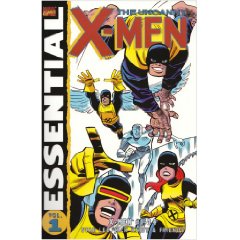
Catwoman: Crooked Little Town


By Ed Brubaker, Brad Rader, Cameron Stewart, Rick Burchett& various (DC Comics)
ISBN13: 978-1-84023-736-8

Seamlessly progressing from her reinvention in Selina’s Big Score (ISBN: 1-84023-773-3) and Catwoman: the Dark End of the Street (ISBN: 978-1-84023-567-8) the new, socially conscious defender of the underclass inhabiting Gotham City’s down-market East End District finds herself battling another gang pushing drugs in her preserve. This time however, the very guilty parties responsible seem to come from Gotham’s wealthy aristocracy. Also hungry to finger a few expensive collars is the relentless old gumshoe Slam Bradley and even Selina’s protégé Holly Robinson.

The crusade takes a dark turn when an undercover cop is murdered by his own dirty colleagues and Holly is framed for the deed. Selina and Bradley have their work cut out to survive the dirty, violent, twilight world to save the young ingénue, but behind even the artistos there’s another mastermind at work, familiar and chillingly deadly…

The four part ‘Disguises’ by Ed Brubaker, Brad Rader, Cameron Stewart and Rich Burchett is book-ended by the prequel ‘Trickle Down Theory’ and the splendidly cathartic glimpse into Selina’s past ‘Joy Ride’ (originally published as Catwoman #5-10) and complemented by the excellent and revelatory closing tale ‘The Many Lives of Selina Kyle’ by Brubaker, Michael Avon Oeming and Mike Manley, taken from Catwoman Secret Files #1.

As grim and gritty as a comic can get without become “adults only”, yet still finding room for breakneck fun and adventure, the ongoing transition from sleek, sexy cat-burglar to tarnished champion of the forgotten is a masterpiece of skillful storytelling whilst the moody, stylish art made this particular cat’s life (her fourth, I think) a series to cherish. Irresistibly readable, this is superhero shtick at its finest. Fans of caper movies, Noir thrillers and just plain literate thrill-seekers should take note…

© 2002 DC Comics. All Rights Reserved.

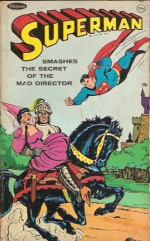
Superman Smashes the Secret of the Mad Director


By George S. Elrick and anonymous (Whitman)
ASIN: B000H7WMWA

I bang on a lot about comics as an art form and (justifiably, I think) decry the fact that they’ve never been given the mainstream recognition other forms of popular creative expression enjoy. I also encourage all and sundry to read more graphic narrative (I’m blurring my own terms here by including any product where text and image work co-operatively to tell a story, rather than simply a sequence of pictures with words attached), and I’m judicious and even selective (really and truly – there’s stuff I’m never going to share and recommend because by most critical criteria, it’s better off ignored and forgotten).

However sometimes I’m caught in a bind: I tend to minimise the impact of nostalgia on my beloved world of “funnybooks”, but so often that irresistible siren call from the Golden Years will utterly trump any hi-falutin’ aesthetic ideal and proselytising zeal for acceptance and recognition.

Superman Smashes the Secret of the Mad Director is such a product from a simpler time when it could be truly said that everybody had seen some sort of comic in their lives (not so easy to claim these days, I fear): a standard paperback more probably released to capitalise on the groundbreaking Saturday morning cartoon series ‘The New Adventures of Superman’ (first hit for the fledgling Filmation Studios) than on the periodical delights of the “World’s Best Selling Comics Magazine!”

The half-hour cartoon show was a huge success, running three seasons; initially piggybacked with Superboy in its first year, (beginning September 10th 1966), expanding into The Superman/Aquaman Hour of Adventure in 1967 and finally The Superman/Batman Hour in 1968. It was cancelled in September 1969 due to pressure from the censorious Action For Children’s Television who agitated against it for its unacceptably violent content!

As was the often the case in those times Big Little Books were produced under license by Whitman Publishing (the print giant that owned Dell and Gold Key Comics) in a mutually advantageous system that got books for younger readers featuring popular characters and cartoon brands (Man From U.N.C.L.E., the Monkees, Shazzan!, Flintstones, Journey to the Centre of the Earth, Batman, even the Fantastic Four amongst literally hundreds of others) into huge general store chains such as Woolworth’s, thus expanding recognition, product longevity – and hopefully sales.

Don Markstein’s superb Toonopedia site defines Big Little Books as: a small, square book, usually measuring about 3″x3″, with text on the left-hand pages and a single full-page illustration on the right. Big Little Books were originally created in the 1930s, to make use of small pieces of paper that had formerly gone to waste when magazines were trimmed after printing. By running a separate publication on paper that would otherwise go in the trash, the printer was able to create a salable product almost for free.

Big Little Books were an ideal way to merchandise comic strip characters, as the drawings could simply be taken directly from the strips themselves. Big Little Books flourished during the days of pulp magazine publishing, which mostly came to an end after World War II. The form was revived in the 1960s, partly as a nostalgia item, and has been used sporadically ever since. These latter-day Big Little Books are generally printed on better paper, and some, at least, have color illustrations.

This novel for children, written by BLB mainstay George S. Elrick, is slightly different, having no colour illustrations on its 166 interior pages and reformatted like a bookstore paperback of the sort that proliferated during the 1960s “Camp Superhero Craze” (check out our archived review for High Camp Super-Heroes – B50 695 – for a handy example), and tells a rather good action/mystery yarn about a demented movie maker whose search for ultimate realism draws investigative reporters Clark Kent and Lois Lane into a pretty pickle…

To be frank the illustrations are pretty poor, originals not clipped pictures, but ineptly traced from reference material provided by comics drawn by the great Kurt Schaffenberger. Still, the wholesome naivety, rapid pace and gentle enthusiasm of the package surprised and engrossed me – even after the more than forty years since I last read it.

It’s a crying shame that the world doesn’t take comics seriously nor appreciate the medium’s place and role in global society and the pantheon of Arts. Still, as long as graphic narrative has the power to transport such as me to faraway, better places I’m not going to lose too much sleep over it…

© 1966 National Periodical Publications, Inc. All Rights Reserved.

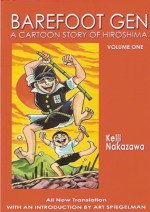
Barefoot Gen Volume 1: A Cartoon Story of Hiroshima

barefoot-gen-v
By Keiji Nakazawa (Last Gasp)
ISBN: 978-0-86719-602-3

I first found the Educomics magazine I Saw It! in 1982; initially seduced by the garish cover and the Chester Gould-like illustrations. There was very little translated manga around then, and it was lumped in with the wild, wacky and often salaciously outrageous “Underground Comix” on the racks of my regular comics shop.

I was gobsmacked.

In England we’ve had educational comics for decades, but this was something completely new to me. There was no tasteful distancing here; just an outraged scream of defiance and a direct plea to make things right. This was history and politics – and it was deadly serious, not played for laughs or to make points as British cartooning traditionally did.

I Saw It! became Barefoot Gen, constantly revised and refined, and now the entire semi-autobiographical saga is being remastered in an unabridged ten volume English translation by Last Gasp under the auspices of Project Gen, a multinational organisation dedicated to peace and the abolition of nuclear weapons.

Hadashi no Gen originally began in 1973, serialised in ShÅ«kan Shōnen Jampu (Weekly Boys Jump) after an occasional series of single stories in 1972 including Kuroi Ame ni Utarete (Struck by Black Rain) and Aru Hi Totsuzen, (One Day, Suddenly) in various magazines. These led Shonen’s editor Tadasu Nagano to commission the 45 page Ore wa Mita (I Saw It) for a Monthly Jump special devoted to autobiographical works. Nagano realised that the author – an actual survivor of the first Atomic Bombing – had much more to say and commissioned the serial which has grown into this stunning epic.

The tale was always controversial in a country that too often prefers to ignore rather than confront its mistakes and indiscretions, and after 18 months Hadashi no Gen was removed from Jump transferring first to Shimin (Citizen), Bunka Hyōron (Cultural Criticism), and Kyōiku Hyōron (Educational Criticism). Like his indomitable hero Keiji Nakazawa never gave up and his persistence led to the first Japanese book collection in 1975, translated by the first Project Gen into English, and many other languages including Norwegian, French German, Italian, Portuguese Swedish, Finnish, Indonesian, Tagalog and Esperanto. He completed the tale in 1985 and his dark chronicle has been adapted into three live action films (from 1976 to 1980), 2 anime films, (1983 and 1987) and in 2007, a 2-part live action television drama.

The unabridged first book A Cartoon Story of Hiroshima introduces six year old Gen Nakaoka in a small allotment, cultivating wheat with his father, an artist whose anti-war sentiment has made life even more difficult for his family. Hiroshima is starving, with American air-raids a constant hazard and rabid patriotic militarists urging the weary populace to greater and greater sacrifice. Every one is constantly reminded that their greatest honour would be to die for the Emperor. I almost expected Darkseid to pop up at any moment…

Gen is the third of five children; Koji and Akira, are his older brothers, his sister Eiko and brother Shinji are younger. His beloved, devoted mother is heavily pregnant. It is a desperate time. Neighbours spy on neighbours, secret police skulk everywhere, criminals and police confiscate all the food and everywhere the militarists scream that total victory for Japan is only a few days away…

Spring 1945: Hunger is everywhere. The bitter realist Papa Nakaoka is increasingly unable to suppress his anger at the greedy warmongers who have brought Japan to the edge of ruin. His open dissent turns his neighbours and friends against the family. They are all labelled traitors for his beliefs, shunned and cheated. Akira is evacuated to the countryside, Koji forced to join the ranks of the Kamikaze, but for pregnant Kimie and her youngest children the stress is unrelenting and inescapable…

Gen’s father is a complex figure – often regarded by critics as a pacifist, though he is far from that. He is however a totally honest man with a warrior’s heart and a true descendent of an honourable warrior culture. Arrested, beaten, maligned, he is unwavering in his fierce belief that the war is wrong, instigated by greedy men to line their own pockets. He always fights for what he knows is right and even as he is beaten by the police he tells his sons “When you know something’s right, don’t give it up…”

His other lesson becomes a major metaphor and visual theme of the series “Be like wheat that sprouts in the dead of winter and gets trampled over and over, but grows straight and tall and bears good fruit”.

The level of domestic violence – and indeed casual social and cultural violence – is apt to cause some modern readers a little concern. Papa Nakaoka is a “hands-on” father, always quick to physically chastise his children, and Gen himself develops into a boy all too ready to solve problems with his fists, but that the family loves deeply and is loved in return is never in doubt – you will just have to steel yourself for a tale about and prominently displaying lots of “tough love”.

There’s a great resemblance to the best of Charles Dickens in Barefoot Gen, especially Oliver Twist and Nicholas Nickleby, but as the human travails of Gen and his family mount there’s no human face of evil; only a ghastly clock counting down. We all know what’s coming even if they don’t and a repeating motif of a circle sun – more often dark than light – keeps that dread tension and foreknowledge of an utterly abhuman crisis solidly in focus.

Monday August 6th 1945 dawns bright and clear. Gen is celebrating a rare personal victory as little Shinji plays with a hard-won toy. There’s a flash of light in the sky…

Much has been written about the effects of the bomb and the incredible, matter-of-fact, nightmarish way Nakazawa has captured them. They’re all true. The depiction of the atomic aftermath and its immediate effects upon the survivors – although I hesitate to use such a hopeful term – are truly ghastly, and a testament to the power of the artist’s understated drawing talent. But this is a book about overcoming the impossible and to understand Gen’s achievement and victory, one has to see the face of his foe.

As the firestorm engulfs the city the miraculously unscathed boy rushes home. The structure has collapsed upon itself, trapping Papa, Eiko and Shinji. Despite his and mother’s efforts they can’t be extricated and no one will help. Mother and child watch helplessly as the family burns to death and the trauma induces labour. Amidst the flames Gen delivers his sister into a world of pain and horror…

Polemical, strident and unrelenting, A Cartoon Story of Hiroshima is also a great piece of craft: graphic narrative at its most effective and powerful. Gen is a flawed but likable hero, big-hearted and trustworthy, a source of cathartic laughter of the best slapstick kind, and a beacon of tragedy, hope and (im)patient understanding.

Although undoubtedly overshadowed by the strength and effect of its message, it’s also a compelling read as a drama, supremely informative and entertaining, memorably beguiling. Please read it. Read all of the series.

It might make you sick: it should. It’s meant to. Read it anyway. And when you think they’re ready, show it to your children. “Those who do not learn from history…”

© 2008 Keiji Nakazawa. All Rights Reserved.

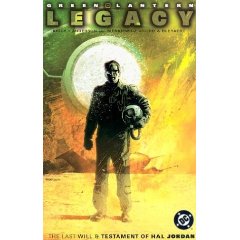
Green Lantern: Legacy – The Last Will & Testament of Hal Jordan


By Joe Kelly, Brent Anderson & Bill Sienkiewicz, with Ro & Bleyaert (DC Comics)
ISBN: 978-1-4012-0365-8

Green Lantern has been a DC star in one form or another since the company’s earliest days, but often that’s led to some rather extreme revamps and odd takes on what seems to be an extremely pliable character with an invaluable shtick – but that’s not necessarily a bad thing.

In the Silver Age revival, true-blue test pilot Hal Jordan was bequeathed a power ring by a dying officer of an intergalactic police force run by benign, if austere, immortals known as the Guardians of the Universe.

During one of the interminable crises that beset the universe Jordan saw his home town of Coast City vaporised by an alien invader. He went mad, and sought to use his power to undo the carnage, in the process destroying his beloved GL Corps, stealing all the power rings and evolving into the time-bending villain Parallax. A menace to all reality, he redeemed his life and soul by sacrificing himself to reignite Earth’s sun when it was consumed by a monstrous sun-eater.

Whilst he was alive Hal’s best friend and confidante was Thomas Kalmaku, an Inuit flight engineer nicknamed “Pieface.” Although Tom survived the destruction of Coast City, the trauma led to his marriage failing and he climbed into a bottle of booze. Just as he’s fallen as far as its possible to go a lawyer turns up with a legacy left by the dead hero. Bitter and filled with self-loathing, and despite himself, Tom is saddled with a little boy named Martin Jordan who arrived with nothing more than the clothes on his back and a note that says “Fix it.”

Thomas desperately tries to unload Martin but when the Justice League and Green Lantern survivors try to confiscate the child, he realizes that once more he’s being manipulated. There’s something unnatural about the boy, a deadly monster is hunting them both and even the time-traveling Parallax is on their trail.

Just what is the true legacy of Hal Jordan, and who or what has to die to achieve it..?

This convoluted but highly readable sidebar to the epic Green Lantern mythology might deter the casual reader, but the genned-up fan will get a lot of enjoyment out of this bittersweet, action-packed yarn, especially with the ever-impressive Brent Anderson and Bill Sienkiewicz (ably assisted by some innovative colouring and effects from Ro & Bleyaert) in the illustrators’ seats.

© 2002 DC Comics.  All Rights Reserved.

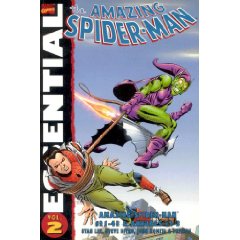
Essential Spider-Man volume 2


By Stan Lee, Steve Ditko, John Romita & various (Marvel)
ISBN: 978-0-78511-863-3

The second volume of chronological Spider-Man adventures sees the World’s Most Misunderstood Hero begin to challenge the dominance of the Fantastic Four as Marvel’s top comic book both in sales and quality. Steve Ditko’s off-beat plots and bizarre art had gradually reached an accommodation with the slick and potent superhero house-style that Jack Kirby was developing (at least as much as such a unique talent ever could), with less line-feathering, moody backgrounds and less totemic villains.

Although still very much a Ditko baby, Spider-Man had attained a sleek pictorial gloss. Stan Lee’s scripts were comfortably in tune with the times if not his collaborator, and although his assessment of the audience was probably the correct one, the disagreements with the artist over the strip’s editorial direction were still confined to the office and not the pages themselves.

Thematically, there’s still a large percentage of old-fashioned crime and gangsterism here. The dependence on costumed super-foes as antagonists was still finely balanced with thugs, hoods and mob-bosses, but those days were coming to an end too. When Ditko abruptly left the series and the company, the feared loss in quality – and sales – never happened. The mere “safe pair of hands” that John Romita (senior) considered himself blossomed into a major talent in his own right, and the Wall-Crawler continued his unstoppable rise at an accelerated pace…

This volume (reprinting Amazing Spider-Man #21-43 and Amazing Spider-Man Annual #2 and 3) kicks off with ‘Where Flies The Beetle’ featuring a hilarious love triangle as the Human Torch’s girlfriend uses Peter Parker to make the flaming hero jealous. Unfortunately the Beetle, a villain with a high-tech suit of insect armour (no sniggering, please) is simultaneously planning to use her as bait for a trap. As ever Spider-Man is in the wrong place at the right time, resulting in a spectacular fight-fest.

‘The Clown, and his Masters of Menace’ was a return engagement for the Circus of Crime (see Essential Spider-Man volume 1, ISBN: 978-0-7851-2192-3) and #23 was a superb thriller blending the ordinary criminals that Ditko loved to highlight with the arcane threat of a super-villain attempting to take over the Mob. ‘The Goblin and the Gangsters’ was both moody and explosive, a perfect contrast to ‘Spider-Man Goes Mad!’ in #24. This psychological thriller found a delusional hero seeking psychiatric help, but there’s more to the matter than simple insanity, as an old foe made an unexpected return…

Issue #25 once again saw the obsessed Daily Bugle publisher taking matters into his own hands: ‘Captured by J. Jonah Jameson!’ introduced Professor Smythe, whose robotic Spider-Slayers would bedevil the Web-Spinner for years to come, hired by the bellicose newsman to remove Spider-Man for good.

Issues #27 and 28 comprise a captivating two-part mystery featuring a deadly duel between the Green Goblin and an enigmatic new criminal. ‘The Man in the Crime-Master’s Mask!’ and ‘Bring Back my Goblin to Me!’ together form a perfect Spider-Man tale, with soap-opera melodrama and screwball comedy leavening tense thrills and all-out action. ‘The Menace of the Molten Man!’ (#28) was a tale of science gone bad and is remarkable not only for the action sequences and possibly the most striking Spider-Man cover ever produced but also as the story where Peter Parker graduated from High School.

In 1965 Steve Ditko was blowing away audiences with another oddly tangential superhero. ‘The Wondrous World of Dr. Strange!’ was the lead story in the second Spider-Man Annual, and spectacularly introduced the Web-Slinger to whole other realities when he teamed up with the Master of the Mystic Arts to battle the power-crazed wizard Xandu in a phantasmagorical, dimension-hopping masterpiece. After this story it was clear that Spider-Man could work in any milieu. Also reprinted from that impressive publication are more pin-ups of Spider-Man’s fiercest foes.

‘Never Step on a Scorpion!’ saw the return of that lab-made villain, hungry for vengeance against not just the Wall-Crawler but also Jameson for turning him into a monster. Issue #30 was another off-beat crime-thriller which laid the seeds for future masterpieces. ‘The Claws of the Cat!’ featured the hunt for an extremely capable burglar (way more exciting than it sounds, trust me!), plus the introduction of an organised mob of thieves working for the mysterious Master Planner.

The sharp-eyed will note that scripter Lee mistakenly calls their boss “The Cat” in one sequence, but really, let it go. That’s the kind of nit-picking that gives us comic fans a bad name and reduces our chance of meeting girls…

‘If This Be My Destiny…!’ in #31 concentrated on the Master Planner’s high-tech robberies and led to a confrontation with Spider-Man, as well Peter in College, the introduction of Harry Osborn and Gwen Stacy, and Aunt May on the edge of death. This saga is probably Ditko’s finest moment on the series – and perhaps of his entire career. ‘Man on a Rampage’ showed Parker pushed to the very edge of desperation as the Planner’s men made off with the only substance that could save Aunt May, with a berserk Spider-Man trying to locate them. Trapped in an underwater fortress, pinned under tons of machinery, the hero faced his greatest failure as the clock ticked down the seconds of May’s life…

Which in turn produced the most memorable visual sequence in Spidey history as the opening of ‘The Final Chapter!’ took five full, glorious pages to depict the ultimate triumph of will over circumstance. Freeing himself from the fallen debris Spider-Man gave his absolute all to deliver the medicine May needed, to be rewarded with a rare happy ending…

Kraven returned in ‘The Thrill of the Hunt!’ and so did another old foe in #35’s ‘The Molten Man Regrets…!’ a plot-light but inimitably action-packed combat classic, whilst a deranged thief calling himself the Looter proved little trouble in ‘When Falls the Meteor!’ In retrospect these brief, fight-oriented tales, coming after such an intricate and passionate tale as the Master Planner saga, should have been seen as some sort of clue that things were not going well, but the fans had no idea that ‘Once Upon a Time, There was a Robot…!’ which featured a beleaguered Norman Osborn assaulted by his disgraced ex-partner and his frankly bizarre murder machines, and the tragic comedy of ‘Just a Guy Named Joe!’ – as a hapless sad-sack gains super-strength and a bad-temper – were to be Ditko’s last arachnid adventures. When Amazing Spider-Man #39 appeared with the first of a two-part adventure that featured the ultimate victory of the Wall-Crawler’s greatest foe no reader knew what had happened – and no one told them…

In ‘How Green Was My Goblin!’ and the concluding ‘Spidey Saves the Day! (“Featuring the End of the Green Goblin!”)’ as it so facetiously and dubiously proclaimed, the arch-foes learned each other’s secret identities before the Goblin “perished” in a climactic showdown. It would have been memorable even it the tale didn’t feature the debut of a new artist and a whole new manner of story-telling…

By 1966 Stan Lee and Steve Ditko could no longer work together on their greatest creation. After increasingly fraught months the artist simply resigned leaving Spider-Man without an illustrator. Romita had been lured away from DC’s romance line and given odd assignments before settling with Daredevil, the Man Without Fear. Now he was given the company’s biggest property and told to run with it.

Issues #39 and 40 (August and September 1966) were a turning point in many ways, and inked by old DC colleague Mike Esposito (under the pseudonym Mickey Demeo) they still stand as one of the best Spider-Man yarns ever, heralding a run of classic tales from the Lee/Romita team that actually saw sales rise, even after the departure of the seemingly irreplaceable Ditko.

With #41, ‘The Horns of the Rhino!’ Romita began inking his own pencils and although the super-strong spy proved a mere diversion, his intended target, J. Jonah Jameson’s astronaut son was a far harder proposition in the next issue. Amazing Spider-Man #42 ‘The Birth of a Super-Hero!’, wherein John Jameson was mutated by space-spores and went on a rampage, was a solid, entertaining yarn but is only really remembered for the last panel of the final page.

Mary Jane Watson had been a running gag for years, a prospective blind-date arranged by Aunt May that Peter had avoided – and the creators had skilfully not depicted – for the duration of time that our hero had been involved with Betty Brant, Liz Allen, and latterly Gwen Stacy. In that last frame the gob-smacked young man finally realised that he been ducking the hottest chick in New York for two years!

‘Rhino on the Rampage!’ gave the villain one more crack at Jameson and Spidey, but the emphasis was solidly on foreshadowing future foes and building Pete and MJ’s relationship. This volume concludes with ‘…To Become an Avenger!’ (Amazing Spider-Man Annual # 3) as the World’s Mightiest Heroes offered the Web-Spinner membership if he could capture the Hulk. As usual all is not as it seems but the action-drenched epic, courtesy of Lee, Romita (on layouts), Don Heck, and Demeo/Esposito is the kind of guest-heavy package that made these summer specials a child’s delight.

This cheap and cheerful compendium is the ideal way to introduce or reacquaint readers with the early Spider-Man. The brilliant adventures and glorious pin-ups are superb value and this series of books should be the first choice of any adult with a present to buy for an impressionable child. Or for their greedy, needy selves…

© 1965, 1966, 2005 Marvel Characters, Inc. All Rights Reserved.

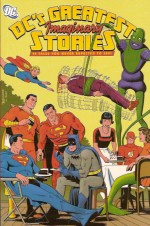
DC’s Greatest Imaginary Stories


By various (DC Comics)
ISBN13: 978-1-4012-0534-8

Alan Moore’s famous epigram notwithstanding not all comics tales are “Imaginary Stories.” When DC Editor Mort Weisinger was expanding the Superman continuity and building the legend he knew that the each new tale was an event that added to a nigh-sacred canon: that what was written and drawn mattered to the readers. But as an ideas man he wasn’t going to let that aggregated “history” stifle a good idea, nor would he allow his eager yet sophisticated audience to endure clichéd deus ex machina cop-outs to mar the sheer enjoyment of a captivating concept.

The mantra known to every baby-boomer fan was “Not a Dream! Not a Hoax! Not a Robot!” boldly emblazoned on covers depicting scenes that couldn’t possibly be true… even if it was only a comic book.

Imaginary Stories were conceived as a way of exploring non-continuity plots and scenarios devised at a time when editors believed that entertainment trumped consistency and knew that every comic read was somebody’s first …or potentially last.

This jolly tome celebrates that period when whimsy and imagination were king and stretches the point by leading with a fanciful tale of the World’s Mightiest Mortal as ‘Captain Marvel and the Atomic War’ (Captain Marvel Adventures #66, October 1946) actually hoaxes the public with a demonstration of how the world could end in the new era of Nuclear Proliferation, courtesy of Otto Binder and CC Beck.

‘The Second Life of Batman’ (Batman #127 October 1959) by Bill Finger, Dick Sprang and Charles Paris doesn’t really fit the definition either, but the tale of a device that predicts how Bruce Wayne’s life would have run if his parents had not been killed is superb and engaging all the same.

‘Mr. and Mrs. Clark (Superman) Kent!’ by Binder and the brilliant Kurt Schaffenberger, was the first tale of an occasional series that began in Superman’s Girlfriend Lois Lane #9 (August 1960), depicting the laughter and tears that might result if the plucky news-hen secretly married the Man of Steel. From an era uncomfortably parochial and patronizing to women, there’s actually a lot of genuine heart and understanding in this tale and a minimum of snide sniping about “silly, empty-headed girls”.

Eventually the concepts became so bold that Imaginary Stories could command book length status. ‘Lex Luthor, Hero!’ (Superman #149, November 1961) by Jerry Siegel, Curt Swan and Sheldon Moldoff, recounts the mad scientist’s greatest master-plan and ultimate victory in a tale as powerful now as it ever was. In many ways this is what the whole concept was made for…

No prizes for guessing what ‘Jimmy Olsen Marries Supergirl!’ (Superman’s Pal Jimmy Olsen, #57, December 1961) is about, but the story is truly a charming delight, beautifully realized by Siegel, Swan and Stan Kaye.

‘The Origin of Flash’s Masked Identity!’ (The Flash# 128, May 1962) by John Broome, Carmine Infantino and Joe Giella, although highly entertaining, is more an enthusiastic day-dream than alternate reality, and, I suspect, added to bring variety to the mix – as is the intriguing ‘Batman’s New Secret Identity’ (Batman #151, November 1961, by Finger, Bob Kane and Paris).

‘The Amazing Story of Superman-Red and Superman-Blue!’ (Superman #162, July 1963) is possibly the most influential tale of this entire sub-genre. Written by Leo Dorfman, with art from Swan and George Klein, this startling utopian classic was so well-received that decades later it influenced and flavoured the post-Crisis on Infinite Earths Superman continuity for months.

The writer of ‘The Three Wives of Superman!’ is currently unknown to us but the ever-excellent Schaffenberger can at least be congratulated for this enchanting tragedy of missed chances that originally saw print in Superman’s Girlfriend Lois Lane #51, from August 1964.

‘The Fantastic Story of Superman’s Sons’ (Superman #166, November 1964) by Edmond Hamilton, Swan and Klein is a solid thriller built on a tragic premise (what if only one of Superman’s children inherited his powers?), and the book closes with the stirring and hard-hitting ‘Superman and Batman… Brothers!’, wherein orphaned Bruce Wayne is adopted by the Kents, but cannot escape a destiny of tragedy and darkness.

Written by Jim Shooter, with art from Swan and Klein, for World’s Finest Comics # 172 (December 1967) this moody thriller in many ways signalled the end of the care-free days and the beginning of a grittier, more cohesive DC universe for a less whimsical, fan-based audience.

This book is a glorious slice of fancy, augmented by an informative introduction by columnist Craig Shutt, and bolstered with mini-cover reproductions of many tales that didn’t make it into the collection, but I do have one minor quibble: No other type of tale was more dependent on an eye-catching cover, so why couldn’t those belonging to these collected classics have been included here, too?

© 1946, 1959-1964, 1967, 2005 DC Comics. All Rights Reserved

Essential Uncanny X-Men volume 1


By Stan Lee, Jack Kirby, Roy Thomas, Werner Roth, Dick Ayers & various (Marvel)
ISBN: 978-1-90415-963-6

In 1963 things really took off for the budding Marvel Comics as Stan Lee and Jack Kirby expanded their diminutive line of action titles, putting a bunch of relatively new super-heroes (including hot off the presses Iron Man) together as the Avengers, launching a decidedly different war comic in Sgt Fury and his Howling Commandos and creating a group of alienated heroic teenagers who were gathered together to fight a rather specific threat to humanity.

The eponymously entitled X-Men #1 (September 1963) introduced Cyclops, Iceman, Angel and the Beast: very special students of Professor Charles Xavier, a wheelchair-bound telepath dedicated to brokering peace and integration between the masses of humanity and the gradually emerging race of mutant Homo Superior. The story opens as the students welcome their newest classmate, Jean Grey, a beautiful young woman with the ability to move objects with her mind.

No sooner has the Professor explained their mission than an actual Evil Mutant, Magneto, single-handedly takes over the American missile base Cape Citadel. A seemingly unstoppable threat, the master of magnetism is nonetheless driven off by the young heroes on their first mission.

It doesn’t sound like much, but the gritty power of Kirby’s art, solidly inked by Golden Age veteran Paul Reinman, imparted a raw dynamism to the tale which carried the bi-monthly book irresistibly forward. ‘No One Can Stop the Vanisher!’ introduced a federal government connection in FBI agent Fred Duncan, who requested the teens’ assistance in capturing a teleporting mutant who threatened to steal US military secrets.

Issue #3’s ‘Beware of the Blob!’ featured a rare lapse of judgement as Professor X invited a sideshow freak into the team only to be rebuffed by the felonious mutant. Impervious to harm the Blob used his carnival cronies to attack the team, before they could come after him…

With X-Men #4 (March 1964) a thematic sea-change occurred as Magneto returned with ‘The Brotherhood of Evil Mutants!’ intent on conquering a South American country to establish a global powerbase. Mastermind, Toad, Quicksilver and the Scarlet Witch were very much his unwilling thralls in the bombastic struggle that followed, but from then on the heroes were the hunted prey of the malevolent mutants. ‘Trapped: One X-Man!’ in issue #5 saw early results in that secret war as Angel was abducted to Magneto’s orbiting satellite base Asteroid M, and only a desperate battle at the edge of space could save him…

‘Sub-Mariner Joins the Evil Mutants!’ is a self-explanatory tale of gripping intensity elevated to magical levels of artistic quality as the superb Chic Stone replaced Reinman as inker for the rest of Kirby’s tenure, and genuine progress occurred in ‘The Return of the Blob!’ as their mentor left on a secret mission, but not before appointing Cyclops acting team leader. Comedy relief was provided as Lee and Kirby introduced Beast and Iceman to the Beatnik inspired “youth scene” but the high action quotient came courtesy of the troubled teaming of the Blob and Magneto’s brotherhood.

Another invulnerable mutant debuted in ‘Unus the Untouchable!’ a wrestler with an invisible force field who tried to join the Brotherhood by offering to bring them an X-Man. Also notable is the first real incident of “anti-mutant hysteria” when a mob attacked the Beast, a theme that would become a cornerstone of the X-Men mythos.

X-Men #9 is the first true masterpiece of this celebrated title. ‘Enter, the Avengers!’ reunited the mutants with Professor X in the wilds of Europe, as the deadly Lucifer attempted to destroy the world with a super-bomb, subsequently manipulating the teens into an all-out battle with the awesome Avengers. This is still a perfect Marvel comic story today, as is its follow-up ‘The Coming of Ka-Zar!’ a wild excursion to Antarctica, featuring the discovery of the Antediluvian Savage Land and the modern incarnation of one of Marvel/Timely’s oldest heroes (Kazar the Great originated in Marvel Comics #1 November 1939). Dinosaurs, lost cities, spectacular locations, mystery and all-out action: it doesn’t get better than this…

Another turning point occurred in #11 with ‘The Triumph of Magneto!’ as X-Men and Brotherhood both searched for a fantastically powered being called The Stranger. None are aware of his true identity and purpose, but when the Evil mutants found him it spelt the end of their war…

With Magneto gone and the Brotherhood broken Kirby relinquished the pencilling to other hands, although he provided layouts and design for a few more issues. Alex Toth and Vince Colletta proved an uncomfortable mix for #12’s tense drama ‘The Origin of Professor X!’ a two-part saga that introduced Xavier’s half brother Cain Marko and revealed his mystic transformation into an unstoppable human engine of destruction.

The story concluded with ‘Where Walks the Juggernaut’, a compelling tension-drenched tale guest-starring the Human Torch, but most notable for the introduction of penciller Werner Roth (using the name Jay Gavin) who would be associated with the mutants for the next half decade. His inker for this first outing was the infallible Joe Sinnott. Roth was an unsung veteran of the industry, working for the company in the 1950s on such star features as Apache Kid and the inexplicably durable Kid Colt, Outlaw, as well as Mandrake the Magician for King Features Comics and Man from U.N.C.L.E. for Gold Key. As with many pseudonymous creators it was his DC commitments (mostly romance stories) that forced him to disguise his moonlighting until Marvel grew big enough to offer him full-time work.

‘Among us Stalk the Sentinels!’ from issue #14 (inked by Colletta), celebrated the team’s elevation to monthly publication with the first chapter of a three-part saga that introduced anthropologist Bolivar Trask’s solution to the threat of Mutant takeover: super scientific robots that would protect humanity. Sadly their definition of “protect” varied wildly from the expected, but what can you expect when a social scientist dabbles in high-energy physics and engineering?

The X-Men took the battle to the Sentinels secret base and became ‘Prisoners of the Mysterious Master Mold!’ before wrapping up their ferrous foes with ‘The Supreme Sacrifice!’. Veteran Dick Ayers joined as inker with the second chapter and his clean line blended perfectly with Roth’s clean, classicist pencils. They remained a team for years, adding vital continuity to this quirky but never top-selling series.

X-Men #17 dealt with the aftermath of the battle, probably the last time the US Army and government openly approved of the team’s efforts, and the sedate nature of ‘…And None Shall Survive!’ enabled the story to generate a genuine air of apprehension as the Xavier Mansion was taken over by an old foe who picked them off one by one until only the youngest was left to battle alone in the climactic conclusion ‘If Iceman Should Fail..!’

‘Lo! Now Shall Appear… The Mimic!’ in #19 was Stan Lee’s last script, a punchy tale of a troubled teen with the power to copy the knowledge, powers and abilities of anyone in close proximity, before the writing reins were turned over to Roy Thomas in #20, who promptly jumped in guns blazing with ‘I, Lucifer…’ an alien invasion yarn that returned Xavier’s arch-nemesis as well as Unus the Untouchable and the Blob, revealed how Professor X lost the use of his legs, and, with the concluding part ‘From Whence Comes Dominus?’, completely made the book his own.

At this time Marvel Comics had a vast and growing following among older teens and college kids, and the youthful Thomas spoke and wrote as they did. Coupled with his easy delight in large casts this made X-Men a very welcoming read for we adolescents…

The next two-parter resurrected the old Avengers villain Count Nefaria, who used illusion casting technology and a band of other heroes’ second-string foes (Unicorn, Porcupine, Plantman, Scarecrow and the Eel, if you’re wondering) to hold Washington DC hostage and frame the X-Men for the entire scheme. ‘Divided… We Fall!’ and ‘To Save a City!’ comprise a fast-paced, old-fashioned goodies vs. baddies epic with a decided sting in the tail, and this excellent black and white compendium concludes with another standard plot – Evil Scientist Grows Giant Bugs…

‘The Plague of… the Locust!’ from X-Men #24 isn’t the most memorable tale in the canon but reads well enough and has the added drama of Marvel Girl being forced to leave the team to go to college; another deft sop to the audience as it enabled many future epics to include Campus life in the action-packed, fun-filled mix…

These quirky tales are a million miles removed from the angst-ridden, breast-beating, cripplingly convoluted X-brand of today’s Marvel, and in many ways are all the better for it. Well drawn, highly readable stories are never unwelcome or out of favour though, and it should be remembered that everything here informs so very much of the mutant monolith. These are stories for the dedicated fan and newest convert, and never better packaged than in this economical tome. Everyone should have this book.
© 1963, 1964, 1965, 1966, 1999 Marvel Characters, Inc. All Rights Reserved.

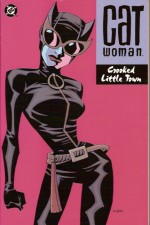
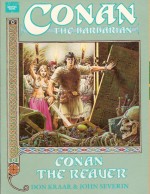
Conan the Reaver – A Marvel Graphic Novel


By Don Kraar & John Severin (Marvel)
ISBN: 0- 87135-289-3

During the 1970’s the American comic book industry opened up after more than fifteen years of cautious and calcified publishing practices that had come about as a reaction to the scrupulously-censorious oversight of the self-inflicted Comics Code Authority: A body created by the publishers to police their product and keep it palatable and wholesome after the industry suffered their very own McCarthy-style Witch-hunt during the 1950s.

One of the first genres to be revisited was Horror/Mystery comics, and from that came the pulp masterpiece Conan the Cimmerian.

Sword & Sorcery stories had been undergoing a prose revival in the paperback marketplace since the release of soft-cover editions of Lord of the Rings (first published in 1954), and the 1960s saw the revival of the two-fisted fantasies of Edgar Rice Burroughs, Otis Adelbert Kline, Fritz Lieber, whilst many modern writers such as Michael Moorcock and Lin Carter kick-started their careers with contemporary versions of man against mage. Undoubtedly the grand master of the genre was Robert E. Howard.

Marvel Comics tested the waters in early 1970 with a little tale called ‘The Sword and the Sorcerers’ (from the horror anthology Chamber of Darkness #4) whose hero Starr the Slayer bore no small resemblance to the Barbarian. It was written by Roy Thomas and drawn by Barry Smith, a recent Marvel find, and one who was just breaking out of the company’s Kirby house-style.

Despite some early teething problems, including being cancelled and reinstated in the same month, the comic-strip adventures of Robert E. Howard’s were as big a success as the prose yarns that led the global boom in fantasy and latterly, the supernatural.

Conan became a huge success, a giant brand that saw new prose tales, movies, a TV series and cartoon show, a newspaper strip and all the other paraphernalia of success. And it all largely stemmed from the vast range of comics initiated by Thomas and Smith.

From the days when he was a Marvel property – period – comes this utterly captivating tale of the Cimmerian wanderer’s days as a thief in the Kingdom of Turan. Striking a deal with a palace guard the young Barbarian infiltrates the Palace, intending to empty the treasure vault of aged King Yildiz, despite the supernatural horror that defends it. However the rudely gallant hero is hampered by his growing affection for the ruler’s child-bride, and increasingly caught up in vicious intrigues that plague the court. Then the King himself offers Conan a devil’s bargain if he will perform one task for him…

Conan the Reaver is rip-roaring pulp fare, brimming with monsters, worldly cynicism, scantily-clad damsels in distress and spectacular action, cannily recounted by veteran scripter Don Kraar (probably best known as the writer of the Tarzan newspaper strip for thirteen years) and magically illustrated by a master of our art-form, whose meticulous style adds gravity and humour as well as solid authenticity to the visuals. Severin is aided in the picture-making magic by his equally talented sister Marie, who coloured this mini-epic.

Still readily available this is a classy tale that will delight any fan of the genre and could easily convert a few die-hards too.
© 1987, 1990 Marvel Comics Group. Conan the Barbarian and all prominent characters are TM Conan Properties Inc. All Rights Reserved

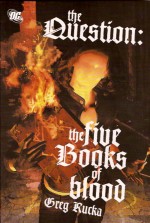
The Question: the Five Books of Blood


By Greg Rucka & various (DC Comics)
ISBN13: 978-1-4012-1799-0

Spinning out of DC’s 52 and Countdown to Final Crisis year-long mega-series, ex-Gotham City cop Renee Montoya took up the faceless mask and obsessions of the shadowy hero known as The Question and sought to track down the physical copies and adherents of the gospel of All Things Evil alternatively known as the Books of Blood or the Crime Bible.

This legendary tome is said to counter all that is good in the world and justify and codify all that is wrong. Driven by a need to understand the evils she fights and stop the spread of this monstrous belief, the driven martial artist hunts for the remaining copies of the book and the distinct factions that protect them promote their teachings. She begins by following – or perhaps being stalked by – a diabolical missionary of sin: a monk of darkness. But as she closes on the secret master of the “Dark Faith” she inexorably nears her own ultimate corruption…

Originally released as five inter-related one-shots entitled Crime Bible: the Five Books of Blood, each chapter of her quest is preceded by a salutary lesson excerpted from the dreadful chronicle, with each Book of Blood illustrated by a different artist or team. ‘The Lesson of Deceit’ leads off with art by Tom Mandrake, followed by ‘The Lesson of Lust’ by Jesus Saiz, ‘The Lesson of Greed’ by Matthew Clark and ‘The Lesson of Murder’ by Diego Olmos, culminating in ‘The Parable of the Faceless’ by Manuel Garcia and Jimmy Palmiotti. But the shock ending is not what it appears as Greg Rucka’s grim tale and Montoya’s dark voyage was designed to lead directly into the final part of the mega-series triptych Final Crisis.

Moody and stylish, this hardcover edition also contains rare promotional materials distributed to retailers in the form of Montoya’s notes collected as a hunting journal.

Although highly readable with many excellent set pieces, this book is inextricably wedded to a much larger story and is pretty much impenetrable to casual readers, and the lack of a conclusive ending (pending the events of the aforementioned Final Crisis) pretty much relegates it to the limited attention of the already converted… which is in many ways the biggest crime.

© 2007, 2008 DC Comics. All Rights Reserved.

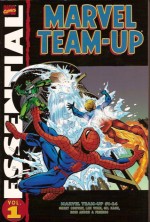
Essential Marvel Team-Up volume 1


By various (Marvel)
ISBN: 978-0-7851-2376-6

Inspiration isn’t everything. In fact as Marvel slowly grew to a position of market dominance in the wake of the losing their two most innovative and inspirational creators, they did so less by experimentation and more by expanding proven concepts and properties. The only real exception to this was the en masse creation of horror titles in response to the industry down-turn in super-hero sales – a move expedited by a rapid revision in the wordings of the increasingly ineffectual Comics Code Authority rules.

The concept of team-up books – an established star pairing or battling (often both) with less well-selling company characters – was not new when Marvel decided to award their most popular hero the lion’s share of this new title, but they wisely left their options open by allocating an occasional substitute lead in the Human Torch. In those long-lost days editors were acutely conscious of potential over-exposure – and since super-heroes were actually in a decline they may well have been right.

Nevertheless Marvel Team-Up was the second full-Spider-Man title (an abortive companion title Spectacular Spider-Man was created for the magazine market in 1968 but had died after two issues) and it launched in March 1972, with the Wall-Crawler and his friendly flaming rival reluctantly spending the holidays together as an old foe reared his gritty head in the charming ‘Have Yourself a Sandman Little Christmas!’ by Roy Thomas, Ross Andru and Mike Esposito. (Merry Marvelite Maximii can award themselves a point for remembering which martial arts heroine debuted in this issue but the folk with lives can simply take my word that it was Iron Fist’s sometime squeeze Misty Knight.)

Gerry Conway assumed the writer’s role and Jim Mooney the inker’s for ‘And Spidey Makes Four!’ in the next issue as our heroes then took on the Frightful Four and Annihilus and seemingly without pause went after Morbius the Living Vampire in #3’s ‘The Power to Purge!’ (inked by Frank Giacoia).

The new horror-star was still the villain in MTU #4 as the Torch was replaced by most of the mutant team (The Beast having gone all hairy – and solo) in ‘And Then… the X-Men!’ a pacy thriller illustrated by the magnificent Gil Kane at the top of his form and inked by Steve Mitchell. Kane became a semi-regular penciller, and his dynamic style and extreme anatomy lifted many quite ordinary tales such as #5’s ‘A Passion of the Mind!’, (Conway script and Esposito inks) pitting Spidey and The Vision against Puppet Master and robotic assassin the Monstroid and its follow-up ‘…As Those Who Will Not See!’ (with the Thing against the Mad Thinker) that most other pencillers could only dream of…

‘A Hitch in Time!’ by Conway, Andru and Mooney guest-starred Thor as Trolls froze Earth’s time-line as a prerequisite step to conquering Asgard, whilst issue #8 is a perfect example of the team-up comic’s other function – to promote and popularise new characters.

‘Man-Killer Moves at Midnight!’ was most fans first exposure to The Cat, (later retooled as Tigra) in a painfully worthy if ham-fisted attempt to address feminist issues from Conway and Jim Mooney. Iron Man began the three-part tale ‘The Tomorrow War!’ (Conway, Andru & Frank Bolle) as he and Spidey were kidnapped by Zarkko the Tomorrow Man to battle Kang the Conqueror; the Torch returned to help deal with the intermediate threat of ‘Time Bomb!’ (Conway, Mooney & Giacoia) but it took the entire race of Black Bolt’s Inhumans to help Spidey stop history unravelling in ‘The Doomsday Gambit!’ – with Len Wein scripting Conway’s plot for Mooney and Esposito to illustrate.

The same writing team produced ‘Wolf at Bay!’ from MTU #12 as the Wall-Crawler met the Werewolf (By Night) and the malevolent Moondark in foggy San Francisco, drawn by Andru and Don Perlin, and Kane and Giacoia returned for ‘The Granite Sky!’ where Wein pitted Spider-Man and Captain America against Hydra and the Grey Gargoyle. ‘Mayhem is… the Men-Fish!’ (inked by Wayne Howard) matched him with the savage Sub-Mariner against Tiger Shark and Doctor Dorcas as well as mutant sea-beasts.

Wein, Andru and Perlin created The Orb to bedevil Spidey and the Ghost Rider in ‘If an Eye Offend Thee!’ in #15 whilst Kane and Mooney illustrated ‘Beware the Basilisk my Son!’, a gripping romp featuring Captain Marvel, which concluded in ‘Chaos at the Earth’s Core!’ (inked by “everybody”!) as Mister Fantastic joined the fracas to stop the Mole Man from inadvertently blowing up the world.

The Human Torch teamed with the Hulk in MTU #18 to stop Blastaar in ‘Where Bursts the Bomb!’ inked by Giacoia & Esposito, but Spidey was back with Ka-Zar to witness ‘The Coming of… Stegron, the Dinosaur Man!’ (Wein, Kane & Giacoia) whose plans to flatten New York by releasing ‘Dinosaurs on Broadway!’ was foiled with the Black Panther’s help – as well as the artistic skills of Sal Buscema, Giacoia and Esposito.

Dave Hunt replaced Esposito for ‘The Spider and the Sorcerer!’ in #21 as Spidey and Doctor Strange once more battles Xandu, a wizard first seen in Spider-Man Annual #2, whilst ‘The Messiah Machine!’ pitted Hawkeye and Spidey against Quasimodo and a mechanoid invasion. The Torch and Iceman teamed to stop Equinox, the Thermo-Dynamic Man on ‘The Night of the Frozen Inferno!’ (Wein, Kane & Esposito) and the first two dozen tales conclude with the defiantly quirky ‘Moondog is another Name for Murder!’– illustrated by Mooney and Sal Trapani – as the web-spinner met the decidedly offbeat Brother Voodoo to quash a Manhattan murder cult.

These stories are of variable quality but nonetheless all have an honest drive to entertain and please whilst artistically the work is superb, and most fans of the genre would find little to complain about. Although not really a book for casual or more maturely-oriented readers there’s lots of fun on hand and young readers will have a blast, so there’s no real reason not to add this tome to your library…

© 1972, 1973, 1974, 2006 Marvel Characters, Inc. All Rights Reserved.