Sensation Comics Featuring Wonder Woman volume 2


By Michael Jelenic, Adam P. Knave, Alex De Campi, Amy Chu, James Tynion IV, Heather Nuhfer, Lauren Beukes, Cecil Castelucci, Sara Ryan, Aaron Lopresti, Drew Johnson, Matthew Dow Smith, Ray Snyder, Neil Googe, Bernard Chang, Noelle Stevenson, Ryan Benjamin, Mike Maihack, Chris Sprouse & Karl Story, Christian Duce & various (DC Comics)
ISBN: 978-1-4012-5862-7 (TPB/Digital edition)

Time to start planning for a Big Comics Anniversary later this year…

The Princess of Paradise Island originally debuted as a special feature in All Star Comics #8, cover-dated December 1941, but actually on sale from October 21st of that year). She was officially conceived by psychologist/polygraph pioneer William Moulton Marston and illustrated by Harry G. Peter, in a calculated attempt to offer girls a positive and forceful role model and, on forward-thinking Editor M.C. Gaines’ part, to sell more funnybooks to girls. Later research has since disclosed much of her genesis was due to Moulton’s wife – attorney turned psychologist Sarah Elizabeth Marston (née Holloway) who had worked with him to create the systolic lie detector process – and their live-in partner Olive Byrne.

Despite all the complexities and confusion surrounding her genesis, Wonder Woman was an instant hit and catapulted from the try-out into her own series as the cover-feature character of new anthology title Sensation Comics one month later. The Amazing Amazon then won her own eponymous supplemental title a few months after that, cover-dated summer 1942…

You already know the story: Once upon a time on a hidden island of immortal super-women, American aviator Steve Trevor of US Army Intelligence crashed to Earth. Near death, he was nursed back to health by young, impressionable Princess Diana. Fearful of her besotted child’s growing obsession with the creature from a long-forgotten and madly violent world, Diana’s mother Queen Hippolyte revealed the hidden history of the Amazons: how they were seduced and betrayed by men but rescued by the goddess Aphrodite on condition they forever isolate themselves from the mortal world and devote their eternal lives to becoming ideal, perfect creatures.

However, with the planet in crisis, goddesses Aphrodite and her sister Athena instructed Hippolyte to send an Amazon back with the American to fight for global freedom and liberty. Although forbidden to compete, closeted, cosseted Diana clandestinely overcame all other candidates to become their emissary: Wonder Woman.

On arriving in the Land of the Free she purchased the identity and credentials of lovelorn Army nurse Diana Prince, which elegantly allowed the unregistered immigrant to stay close to Steve whilst enabling the heartsick care-worker to join her own fiancé in South America.

The new Diana soon gained a position with Army Intelligence as secretary to General Darnell, further ensuring she would always be able to watch over her beloved. She little suspected that, although the painfully shallow Steve only had eyes for the dazzling Amazon superwoman, the General had fallen for the mousy but supremely competent Lt. Prince…

That set up enabled the Star-Spangled Sentinel to weather the notoriously transient comic book marketplace, surviving the end of costumed heroes’ Golden Age beside Superman, Batman and a few lucky hangers-on who inhabited the backs of their titles. She soldiered on well into the Silver Age revival under the auspices of Robert Kanigher, Ross Andru & Mike Esposito, but by 1968 superhero comics were in decline again and publishers sought new ways to keep audiences interested as tastes – and American society – changed.

Back then, as her sales withered during the mid-1960’s, the entire industry depended on newsstand sales and if you weren’t popular, you died. Jack Miller, Denny O’Neill & Mike Sekowsky stepped up with a radical depowering and made comic book history with the only female superhero to still have her own title in that marketplace. Eventually, however, merely mortal trouble-shooter gave way to a reinvigorated Amazing Amazon who battled declining sales (thanks to a TV-inspired boost) until DC’s groundbreaking Crisis on Infinite Earths after which she was once again fundamentally reimagined.

Minor tweaks in her continuity accommodated different creators’ tenures until 2011 when DC rebooted their entire comics line again and Wonder Woman once more underwent a drastic, fan-infuriating root-and-branch refit. Possibly to mitigate the fallout the publishers okayed a number of fall-back options such as this intriguing package…

Sensation Comics Featuring Wonder Woman began as a “digital first” series online before collecting chapters into a new standard comic book. Crafted by a fluctuating roster of artists and writers, the contents highlighted every previous era and incarnation of the character – and even a few wildly innovative alternative visions – offering a wide variety of thrilling, engaging and sincerely fun-filled moments to remember. The physical iteration was enough to warrant a series of trade paperback compilations which – in the fullness of time and nature of circularity – gained their own digital avatars as eBooks too.

This second of three full-colour treasuries gathered Sensation Comics Featuring Wonder Woman #6-10 (March-July 2015) and offered another legion of talent and multitude of different visions, beginning with ‘Generations’ by Michael Jelenic & Drew Johnson, wherein an annual odyssey for the perfect gift for Amazon Queen – and rather forbidding mother – Hippolyta leads Diana into battle with mythical monsters, an old enemy and her own obsessive drive to overachieve…

Adam P. Knave & Matthew Dow Smith’s ‘Not Included’ pairs the potent Paradise Islander with Apokolyptian New God Big Barda against evil super-science and robotic hordes of The Brain and M’sieu Mallah, after which a decidedly different take by Alex De Campi & Neil Googe has Wonder Woman coming to the rescue of a commercial space station above the Second Rock from the Sun in ‘Venus Rising’. Amy Chu & Bernard Chang then go out-world to celebrate the core concept of Wonder Woman in ‘Rescue Angel’, as soldiers pinned down in Afghanistan are saved by Lt. Angel Santiago. The wounded warrior claims her outstanding actions under fire are the result of a vision from her beloved, long-cherished comic books…

Spectacular action and sinister skulduggery inform Heather Nuhfer & Ryan Benjamin’s clash between the Amazing Amazon and Lex Luthor, who triggers ‘Sabotage is in the Stars’ when the Indian government’s space program starts impacting Lexcorp’s projected profits. James Tynion IV & Noelle Stevenson introduce feisty teen Riley as guide to a culture-shocked young Diana in ‘Wonder World’ next, but as they bond over stupid boys and cheesy beachside entertainments, the girls are blithely unaware the foreign newcomer’s Amazon bodyguards are frantically searching for their AWOL charge…

‘The Problem with Cats’ by Lauren Beukes & Mike Maihack takes a light-hearted look at sisterhood and the rivalry between Wonder Woman and The Cheetah – or is it all in the over-active imagination of frustrated. grounded little African girl Zozo? Possibly the best yarn this go-round comes as frosty, testy and possibly hostile Daily Planet journalist Lois Lane is ordered to interview Wonder Woman.

The ice is only broken after an monster invasion leads to a splendid ‘Girl’s Day Out’, courtesy of Cecil Castelucci, Chris Sprouse & Karl Story before Sara Ryan & Christian Duce reveal a timely intervention that saves the life and emotional stability of ‘VIP’ pop star Esperanza, before Aaron Lopresti wraps up this parade of pulse-pounding peril and imago of insightful episodes with a brutal dragonslaying clash as ‘Casualties of War’ shows Diana’s abiding reluctance to engage in battle, but how sometimes there is just no other choice…

Augmented by a spectacular covers-&-variants gallery from Paul Davey, Shane Davis, Michelle & Alex Sinclair, Ben Caldwell & Francesco Francavilla, this is a scintillating snapshot of the astounding variety of visions Wonder Woman has inspired in her decades of existence, and one to delight fans old and new alike.
© 2015 DC Comics. All Rights Reserved.

Today in 1928 DC star artist/inker Joe Giella (Hopalong Cassidy, Flash, Adam Strange, Justice League of America, DC Comics Presents, Flash Gordon, The Phantom, Mary Worth) was born, with creator Dan Jurgens (Booster Gold, Superman, Captain America, Thor) arriving in 1959 and Jackson Guice (Micronauts, Action Comics, The Flash, Ruse) and Canadian cartoonist Bernie Mireault (Grendel, The Jam, Dr. Robot, McKenzie Queen) sharing a 1961 birthday.

In 20005, Atsushi Suzumi’s manga Venus Versus Virus began, as did Seinen anthology magazine Monthly Comic Alive one year later. In 2001 Tove Jansson died, predeceasing co-founder of The School of Visual Arts (AKA the Cartoonists and Illustrators School, NYC) Silas Rhodes in 2007, and Belgian creator, comics historian and Spirou editor Thierry Martens/Yves Varende.

Cochlea & Eustachia


By Hans Rickheit (Fantagraphics Books)
ISBN: 978-1-60699-801-4 (TPB/Digital edition)

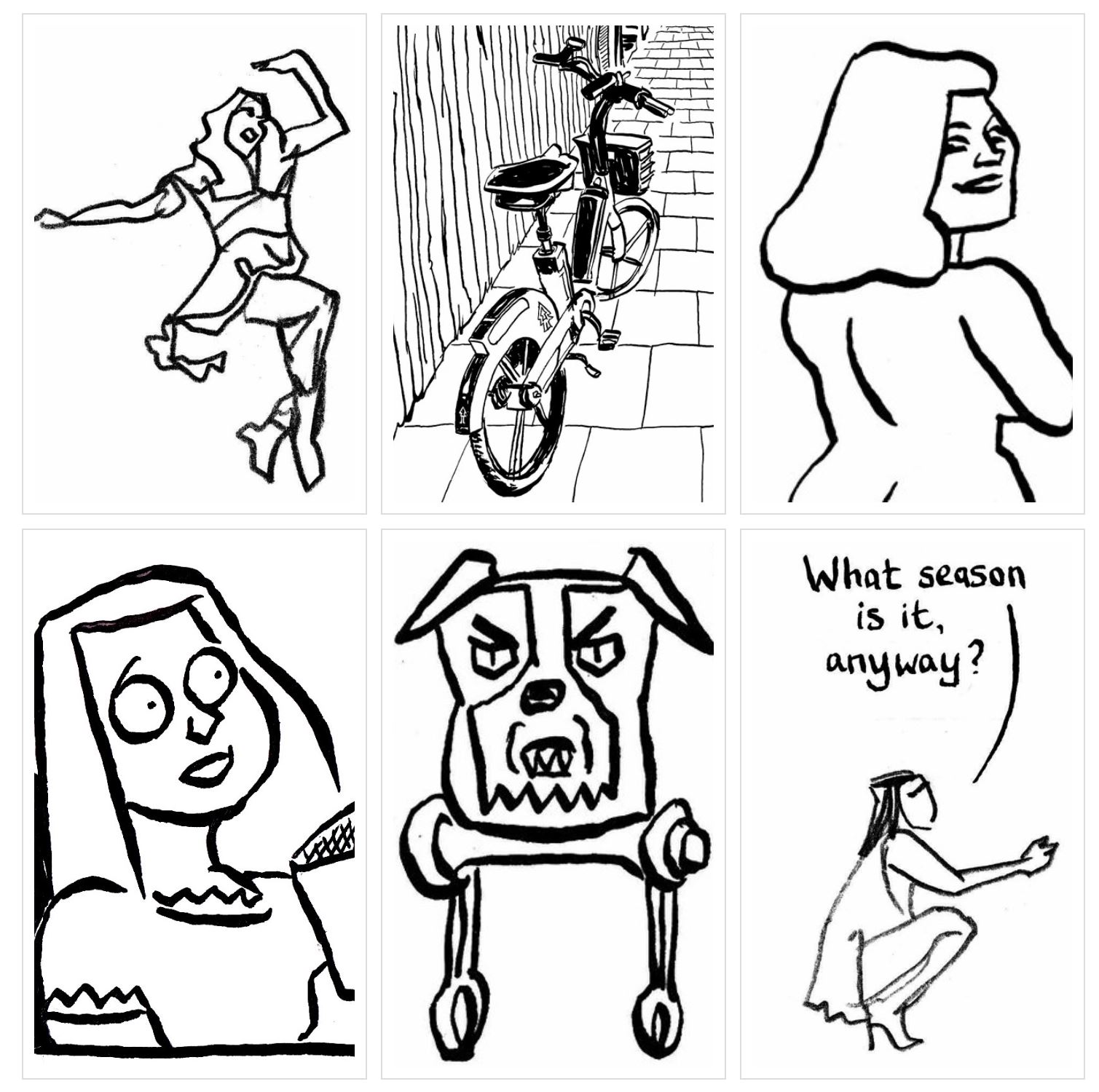
This book contains old-looking modern stories and pictures meant to amuse and creep you out. If you can’t open up and play along, you really should not be reading these books. Don’t even get me started on the nudity and nakedity. Oh, and the butchery and slaughter and body horror. You probably won’t like those either…

Jobbing fantasist Hans Rickheit was born in 1973 and has been producing skilfully crafted art in many different arenas since the 1990s, beginning with self-published mini-comics before graduating to full-sized, full-length epics like Kill, Kill, Kill and The Squirrel Machine. He has also turned his time and efforts to film, music, gallery works and performance art. A Xeric award beneficiary, he came to broader attention in 2001 with controversial graphic novel Chloe, and thereafter spread himself wide contributing to numerous anthologies and periodicals, building beguiling webcomics and instigating the occasional anthology or minicomic of his own such as Chrome Fetus.

That last was the original venue for the strangely surreal binary sorority known as Cochlea & Eustachia. They first manifested back in 2001’s issue #5, with obscure and occulted follow-ups including a regular strip feature in Seatle-based weekly paper The Stranger a year later, and guest appearances in Proper Gander, Hoax, Typhon, Blurred Visions and Pood. Then they destructively scurried through Rickheit’s webcomic pages (Chrome Fetus) before inflicting their distracting blend of ingénue iconoclasm and chaos chic through the printed page of splendidly olde worlde graphic compilations like this one.

An avid and avowed student of dreams, Rickheit has been called obscurantist, and indeed in all his beautifully rendered and realised concoctions meaning is layered and open to wide interpretation. His preferred oeuvre is the recondite imagery and sturdily fanciful milieu of Victorian/Edwardian Americana which provided such rich earth for fantasists like Edgar Allen Poe, H.P. Lovecraft, Clark Ashton Smith and August Derleth, whilst his fine, studied, meticulously clear line is a perfect, incisive counterpoint to the frequently challenging logic-bending of miasmic mystery and cosmic confusion.

In Short: pay attention, scrutinise carefully, think twice and make up your own mind…

In a shabby, battered manse peculiar contraptions and bizarre trophies of things that should never have existed – let alone be stuffed and mounted – abound. The master of the house is another strange creature and as he awakes from a unique bier and begins to wander the rooms, unseen and undetected wanton mischief makers Cochlea & Eustachia rouse also and resume their apparently aimless peregrinations through the walls, nooks and crannies of the edifice that rests atop a sea of animal skulls…

The nubile, girl-like creatures scutter about in dream-like journeys and progressions, avoiding and yet stalking the wheelchair bound savant as he continues his labours, cultivating creatures of incomprehensible oddity…

Soon, chances manifest for more manufactured calamity and a wildly sedate chase ensues, resulting in capture, shocking indignity and clashes with monsters and giant robots, but as the episode escalates we are left to wonder are the elfin wanderers a binary or in fact trinary partnership? Or is the truth – if such a thing can ever be pinned down and vivisected – something even more baroque and uncanny?

All that basically means is that I wouldn’t dream of spoiling such a sinisterly absurdist confection from one of the most impressively single-minded craftsmen working in comics today, and if you are at all tempted or intrigued you must obtain and soundly secure this splendidly skewed and offbeat chronicle.

Scary, beautiful, disturbing and often utterly inappropriate, the full-colour exploits of masked misfit misses is accompanied by an enticing extra strand in muted monochrome wherein the mysterious masqueraders return to declare ‘How It Works’, after finding a possibly handsome stranger stashed in a box in a starkly surreal swamp…

Visually reminiscent of Rick Geary, Jason Lutes and Charles Burns whilst being nothing like them at all, Rickheit presents a singularly surreal and mannered design; a highly charged, subtly disturbing delusion that will chill, bewilder and possibly even outrage many readers. It is also compelling, seductive, sublimely quirky, blackly hilarious and nigh-impossible to forget. As long as you’re an adult (mere accumulated calendar years certainly count but will probably not be enough) and braced for the absolutely unexpected, expect this to be one of the best books you’ll read this decade – or any other…
Cochlea & Eustachia © 2014 Hans Rickheit. This edition © 2014 Fantagraphics Books Inc.

Cochlea & Eustachia volume 2


By Hans Rickheit (Chrome Fetus Comix)
No ISBN: (Album PB)

This book is just like the previous one only much more so. If you feel compelled to carp on about it, please feel free to just form an opinion without reading any of the book itself just as you always do. We’ll be here waiting.

After many, many dreaming years the strangest of relations are again in print as Hans Rickheit moves into publishing his own books. Pumped, peculiarly primal and printed without recourse to editorial bumph or filler, Eustacia and Cochlea volume II offers the gathered sum of his ongoing webcomic, collated into a most beguiling and unsettling travelogue of the bizarre. As ever, think urgent journeys, surprise packages that MUST be opened, and constant forward – and occasionally sideways, downwards and upwards – motion. Sometimes, if the journey is the story, ceaseless forward motion and unleashed imagination is really all the narrative you need. Just ask Jack Kerouac, The Keystone Cops or Wile E Coyote

At its rawest – and they usually are – Cochlea and Eustacia are incessant, tireless explorers, always seeking, opening things and persons they shouldn’t and finding peril without consequence. Meaning is not the guiding principle here, momentum is, and the landscapes they traverse are bleak mechanistic, vintage, inherently organic if not actually biological and only of relative safety, security and satisfaction. On the surface this is another debauched and scatological body-comedy employing geek horror based on commonplace dream phenomena and actions to shock, but it’s all cleverly (or perhaps simply instinctively!?) manufactured by an artist auteur with questions to ask.

Through exquisite drawing offering hyper focus on extraneous detail, married to obscure super clarity, the girls are subjected to terrors and ghastly sights, but at no stage do they think of quitting or turning back. There’s as much meaning as you can handle but no discernible plot, as the whole point is that dream states are endless progressions with recurring motifs attacked from different angles. My own is walking down an utterly familiar street to a specific destination only to find that somehow I’ve turned onto a sideroad that didn’t used to be there. Finding my way back takes forever and I never get to where I came from or where I want to be. Cop that one, Jung and Freud!

All you need to know is that a vast land of monsters, creepy mansions, bewildering drones and legions of clones are all undertaking their particular personalised Local Rules in a colossal universe whilst thriving inside a dystopian survivor with the face of a teddy bear. Everything inside that scavenging explorer is looking for something. Amidst Things within Things all hollow-framed with detailed surfaces are dangerous pursuers and body-mod devotees, also on vital but inexplicable missions. Nightmare creatures scurry over weird gizmos with surrealist death symbolism, as fields of skulls and bones cover immeasurable exteriors and interiors. Hardly housebroken creatures, C&E prefer the equally endless domestic interiors but it’s not always up to them. Trust is never an issue. Oh, it must also be confirmed that Cochlea and Eustacia are far from unique in their look, drives, wild abandon or presence…

Exotically rendered but highlighting the literal vacuousness of its leads – these are no Ladies! – there is no deeper meaning for these questers, just anxiety, pursuit and search in extremely detail, but all they find is thrown away and forgotten once out of sight. Everything in their reality is anticipatory and lives in nested dolls subsumed in or fleeing from another shell. Yes, you’re probably focussing on the peek-a-boo nudity, but shake off ribald smutty schoolboy jokes. This deshabille is defanged and deprived of the porn markers that would make it tawdry, sordid or sad. Here is a level mirroring saucy postcard or Carry-On cinema caper, not thinly veiled violence against women but an assault on manners, etiquette, expectation and moral strictures.

Think Herriman’s Krazy Kat, (André Francois) Barbe or the most tripped out, freewheelin’ of Underground Commix and just follow in their wake until you get to where they’re not going…

All contents © Hans Rickheit 2025.

Today in 1921 kids comic genius Warren Kremer (Riche Rich, Hot Stuff the Little Devil, Stumbo the Giant, Ewoks, Planet Terry) was born, sharing the date with historian and founder of comics fandom Dr. Jerry Bails in 1933; cartoonist Bob Weber (Moose and Molly) in 1934; Italian author Alfredo Castelli (Mister No, Martin Mystère) in 1947; Writer/editor Tom DeFalco (Spider-Man, Thor, Fantastic Four, Spider-Girl) in 1950 and Indonesian artist Sami Basri (Voodoo, New Titans, Birds of Prey) in 1979.

This date in 1965 saw the first episode of The Spider in UK weekly Lion, the launch in 1992 of Canadian romcom strip Fisher by Phillip Street and in 1999 the final instalment of prestigious detective strip Rip Kirby.

Oracles


By Olivia Sullivan (Avery Hill)
ISBN: 978-1-917355-26-1 (TPB/Digital edition)

Tired? Fed up? Overheated? I might have what you need right here.

Addressing the same inner discontents and travelling the same internal pathways as Clare Scully’s The Wilderness Collection and Lizzy Stewart’s Walking Distance, radical designer surrealist storyteller and visual poet Olivia Sullivan’s pictorial mantra Oracles traces an internal voyage via meaningful personal place-markers through a trip back to solid emotional grounding after a surrender of stability and overwhelming chaos… like deep personal loss…

In the narrative guise of such a loss, our age-shifting narrator offers a step aside and away from communal modern life and a trek to familiar haunts and abandoned notions. Staccato bursts of thought wedded to clear, neutrally informative images are blessed with muted tones and a restricted palette that enhances the patterns, pictures and poesy of an epigrammatic, near-synaesthesic catalogue of visions. Haiku-adjacent listicle-prayers, like an OCD-gripped da Vinci, Whitman or Thoreau count down and tick off their necessities for finding their happy place again.

Looking for something better and happier, we travel back to cheerier venues of a deeply personal past, noting what is still the same, refreshing worn attitudes with mycology miracles, a personal shaman and confirmation of A Good Trip Well Had. The reconnection with a better yesterday and lost mother take us on to a universally connected consciousness shared by all animals until we come to our old new home again…

Unless there is something clinically, certifiably, diagnosably wrong with them, every human being can be caught by a full sensory burst when all cognitive spark plugs fire in a moment when Wonder, Clarity, Appreciation and unleashed Emotion Centres all go bang at once. Sometimes the experience needs to catch you complacently elsewhere and off-guard. Simply opening up to rituals or a certain relaxation of daily processes and safeguards just happens, but whenever it does, the result is magical as everything old is new again – but more so…

That all-encompassing transitional moment of fresh sensation is explored here in a procession of mergers between crystal clear drawing and incisive lyrical descriptions with icons of the natural world great and small attempting to share the woosh of wow and sheer wonder we all get when taken unawares by nature, reality, or each other. Drugs and religion or the right person at the right time can do it too…

Words as pretty as a picture. Heady visions framed (or it that trapped?) in manageable, consumable little boxes all carry the reader like a surfboard on big wave, or leaf in a cataract, providing mental bricks for you to build your own in-head house. In the end you arrive back but is it still you now?

You decide.

The most wondrous thing about comics is their sheer versality. In terms of narrative, exposition, mood-setting and information dissemination, nothing comes close, and the range of visualisations span near-abstract construction to hyper-realism. If the end-consumer is particularly receptive, the author can even dial back on narrative or plot or characterisation and let a succession of carefully-applied images make a story unique to each reader. It’s like jazz for your head and before your very eyes…

In all the most telling ways, we’re still monkeys clinging to rocks. We can’t help but respond viscerally to our environment: cowed or elated by stony heights, drawn to and pacified by pools and gardens, inexplicably moved to fear or joy by forests. It’s in our blood and bones: nobody stands on a mountaintop or looks down into the Grand Canyon and says “meh”…

When someone really talented and truly invested channels such primal responses, the fires of creativity can push right into the hindbrain to our inner primitive. It’s a trip worth taking.

There’s a route map and bag ready right here…
© Olivia Sullivan, 2026. All rights reserved.

Today in 1917 award winning scripter, author and screenwriter Bill Woolfolk (Captain Marvel, Bulletman, Blackhawk, Batman, Superman, Plastic Man, Captain America, Sub-Mariner) was born, whilst two true giants – Alex Toth and Peyo/Pierre Culliford shared the birthday in 1928. In 1953 Jerry Bingham (Beowulf, Batman: Son of the Demon) joined the party.

Today in 1979 Stan Lynde’s western Latigo debuted, whilst in 1990, we saw the last instalment of Katsuhiro Otomo’s epic Akira.

Daring New Adventures of Supergirl volume 1


By Paul Kupperberg, Carmine Infantino, Bob Oksner & various (DC Comics)
ISBN: 978-1-4012-6346-1 (TPB), 978-1-4012-7054-4 (Digital edition)

This book includes Discriminatory Content produced in less enlightened times.

As a rule, superhero comics don’t generally do whimsically thrilling anymore. They especially don’t do short or self-contained. Modern narrative momentum concentrates on continuous extended spectacle, major devastation and relentless terror and trauma. It also helps if you’ve come back from the dead once or twice and wear military-grade thongs and thigh boots. Although there’s nothing intrinsically wrong with that – other than a certain pandering inappropriateness from striving to adjust wedgies during a life-or-death struggle – sometimes the palate just craves a different flavour…

Once upon a time, angsty in-continuity cataclysm was the rule, not the exception, but ever since DC readmitted all its past epochs into one vastly welcoming expansion multiverse via the Dark Night: Death Metal, Future State, Infinite Frontier and sundry successive mega-events, a spirit of joyous experimentation has resulted in some truly memorable storytelling. The impending, as yet unreleased and yet already controversial Supergirl movie being a case in point. So let’s look at something from back then that got us to here…

This decidedly backward-looking modern fable harks back to the simpler yet far more aggressive, in-your-face era of the 1980s: days of clearly defined plots, solid, imaginative characterisation and suspensefully dramatic adventure, by way of an almost alternative take on redoubtable Kara Zor-El, late of Krypton’s Argo City and another illegal alien immigrant on Earth.

Supergirl first gained her solid slice of fan devotion as a secondary strip in Action Comics: a tag-along (and trademark protection device) to her more illustrious cousin – and his dog. After years of faithful service, both as cover feature of Action Comics, Adventure Comics and Superman Family and via her own solo title (twice!) and even her own movie as a spin-off part of the Christopher Reeve film franchise, in 1985 she was killed off as a sales gimmick to celebrate DC’s 50th anniversary in the groundbreaking Crisis on Infinite Earths. Since then, a number of characters have used the name – but none with the class or durability of the original… so she was brought back too.

Following a few intriguing concept-tweaking test-runs, the first true Girl of Steel debuted as a future star of the ever-expanding Superman pocket universe in Action Comics #252 (cover-dated May 1959 and on sale from March 31st). Superman’s cousin had been born on a city-sized fragment of Krypton, hurled intact into space when the planet exploded. Eventually, Argo’s minerals turned to Kryptonite like the rest of the detonated world’s debris, and Kara’s dying parents Zor-El and Alura, observing Earth through their viewer scopes, sent their daughter to safety even as they apparently perished. Crashlanding, she immediately and fortuitously met the Metropolis Marvel, who created a cover-identity: “Linda Lee”. Hiding her in an orphanage in bucolic Midvale, he intended allowing her time to adjust to and learn about her new world whilst mastering her powers in secrecy and safety.

… And isolation. At no stage did anyone consider moving the recent orphaned newcomer in with her only surviving family. Kara reached her maturity without the closeness Clark Kent’s human parents provided… although she was eventually adopted by human couple Fred and Edna to become Linda Lee Danvers. Supergirl experienced her own secret double life in the rear of Action Comics: gradually moving from Superman’s covert secret weapon to an independent star turn, and from minor player to globally acclaimed celebrity. From the back of the book to the front of the house is always a reason to celebrate, right?

For decades, DC couldn’t make up their minds over Supergirl. I’ve actually lost count of the number of different versions to have cropped up over the years, and never been able to shake a queasy feeling that above all else she’s a concept that was cynically shifted from being a way to get girls to reading comic books to one calculated to ease young male readers over the bumpy patch between sporadic chin-hair outbursts, voice-breaking and that nervous period of hiding things under your mattress where your mum never, never ever looks…

Her popularity waxed and waned until that attention-grabbing death during Crisis on Infinite Earths. However, in the aftermath (once John Byrne had successfully rebooted the Man of Steel and negated her existence along with all other elements of doomed Krypton) non-Kryptonian iterations began appearing: each accumulating a cadre of steadfast fans. Ultimately, early in the 21st century, DC’s Powers-That-Be decided the real Girl of Steel should come back – sort of…

The New 52 company-wide reboot recast her as an angry, obnoxious distrustful teen fresh from Argo, before the 2016 DC: Rebirth event unwrote most of those changes: reinserting much of that original origin material whilst aligning the comic book iteration with the popular TV series broadcast from October 2015 to November 2021. Then, under the aegis of the Infinite Frontier revolution, Tom King, Bilquis Evely, Mat Lopes & Clayton Cowles crafted 8-issue limited series Supergirl: Woman of Tomorrow (cover-dated August 2021-April 2022). Now you’re ready for the film, okay?

Right here though, we love comics most so let’s look at why Kara Zor-El was so resilient and indomitable…

This incarnation began as The Daring New Adventures of Supergirl with #1 through 12 (cover-dates November 1982 to October 1983) forming the contents of the collected volume under scrutiny here. The series was changed to Supergirl vol 2 for #13-23 (November 1983 to September 1984), which has its own compilation that we’ll get to in the fullness of time.

Clearly a last shot at life in a precarious, rapidly changing marketplace, this Supergirl acknowledges and accommodates all the convoluted continuity trappings grown around the feature since her 1959 debut, but combines fashionable soul-searching, “Fresh Startism”, and feminist go-getting with mad scientists, monsters, corporate skulduggery, clandestine conspiracies, darkly modern attitudes and edgy psychological underpinning, as befitted her literal last chance. This was to see if she could be a sustainable star in contemporary DC’s firmament and advance beyond “girl” to woman… even if branding wouldn’t allow a name change…

The tale unfolds throughout courtesy of Superman franchise writer Paul Kupperberg (World of Krypton, Superman, Checkmate, Vigilante, Arion, Doom Patrol, Green Lantern, Scooby Doo, Tom and Jerry) who steers Kara’s course by blending old standbys with new friends and foes. The look is handled by visual Architect of the Silver Age Carmine Infantino (Flash, Black Canary, Adam Strange, Batman, Elongated Man, Batgirl, Deadman, Human Target, Star Wars, Nova, SpiderWoman) and glamour/humour inker Bob Oksner (Jerry Lewis, Bob Hope, Angel and the Ape, Ambush Bug, Leave it to Binky). We open with strangers on a train as, after again failing to find a place for her civilian self in many roles and goals, Linda Danvers quits her acting career in New York and moves to Chicago to become a post-grad psychology student at Lake Shore University…

An introductory conceptual recap is only part of TDAoS #1’s ‘A Very strange and Special Girl!’ as the subtle delights of a placid rail journey are briefly interrupted by an industrial meltdown, which is swiftly solved by Supergirl. However, soon Linda faces a true ordeal as she registers at LSU, and impossibly finds an apartment thanks to new vivacious but goofy student friend/human whirlwind Joan Raymond. Danvers’ second first day encounter is not so happy as, after literally bumping into troubled student Gayle Marsh, the two psychically connect.

Gayle is also extraordinary: a mentally disturbed mutant who has fallen under the spell of deranged pedagogue Mr Pendergast. He is convinced Earth is doomed to decline into moral decay and is exploiting Marsh’s psionic abilities to achieve his own far from clear aims…

As Joan moves Linda into the same apartment building she currently graces and introduces her around to an exhausting flurry of fellow dwellers, Pendergast grooms Gayle to the next level, creating a costumed identity for her and unleashing “Psi” on the unknown woman who so unsettled her. Of course the chaotic attack is met not by a shy post-grad but the ever-vigilant Girl of Steel…

The second issue began a back-up feature starring Lois Lane so Supergirl tales were accordingly slightly truncated. Even so, ‘Crisis Over Chicago!’ depicted an explosive clash over the Windy City, with Psi’s initial superiority lost once Pendergast orders her not to kill another superfemale he can exploit. The spat is resolved by allowing Gayle to destroy Chicago instead, but the delay has enabled Kara to marshal her resources and decisively strike back. Driven off, Psi retreats to Pendergast’s home where, whilst Linda Danvers recovers in the bosom of new friends, master and servant have one final argument, and the sinister Svengali suffers the full force of Psi’s unleashed powers…

The introductory opus concludes with the abuser appropriately transformed into a rampaging slime monster rabidly consuming corruption (mostly “winos, dropouts and homeless people”)… Linda meanwhile, meets her excessively weird new tutor/graduate studies supervisor Dr. Metzner, and one of her new housemate takes an unwise side hustle. Acting student John Ostrander (yes, it’s an in-joke!) becomes a delivery boy to make ends meet but his cavalier work ethic gets him – and latterly Supergirl – into a world of trouble. Before that though, the malign manifestation that was Pendergast continues its depredations until clashing again with vengeful Psi and is ultimately defeated by the Girl of Tomorrow on ‘Decay Day’

In #4, ‘Hail, Hail, The Gang’s All Here!’ expands soap opera elements as Dr Metzner continues to confuse, Joan still won’t stop talking and Ostrander fails to deliver a certain package to the wrongest of people. Thus he is marked for death by a secret cabal seeking to dominate the business world by controlling Earth’s “exchange of information” through supernormal means. As Chicago’s latest superhero is kept busy battling gimmicked-up super-thugs Kong, Brains, Bulldozer and Ms. Mesmer, John makes his fatal negligent misstep, setting upon his clumsy trail the Windy City’s covert rulers The Council.

Through super-hirelings The Gang the clandestine pencil-pushers provoke an extended clash as ‘Fear Times Four’ finds the Girl of Steel neutralised by Ms. Mesmer’s powers – until Linda’s visiting human parents Fred & Edna Danvers find a work-around to crippling post- hypnotic suggestions – and all but Brains are captured. Then, murderous, mechanistically-fertile mechanoid Matrix-Prime unleashes a hordes of killer-bot babies in a vengeance strike that wrecks the airport in ‘Battleground O’Hare’ but cannot stop Supergirl discovering the Council’s secret citadel at the bottom of Lake Michigan…

Her shattering retaliation and subsequent clash with an army of mercenaries/“security consultants” in #7’s ‘This Meeting Will Come to Disorder!’ exposes a hidden mastermind behind all the chaos, but not even the fighting-mad “Maid of Steel” can stop his getaway…

With a moment of peace at last, Linda opts for a relaxing jazz concert in Grant Park but instead stumbles into even more peril after a recent ally is attacked there…

TDAoS #8 opens with outsider hero Negative Woman ambushed by an energy-stealing atomic assassin before Kara reunites with the New Doom Patrol who must act as ‘Stand-Ins For Supergirl!’ The DP (Neg-Woman, Tempest, Celsius & Robotman Cliff Steele) have been hunting a superpowered Vietnam vet/AWOL US war criminal for months; and now that hate-filled radioactive killer has had enough. Regrouping in ‘Re-Enter: Reactron!’ our heroes chase and harry Reactron as he randomly attacks places storing nuclear materials – like Linda’s new alma mater – whilst attempting to link up with prospective new employers The Council.

In the inevitable final clash, The Last Daughter of Krypton goes toe to toe with the maniac and defeats him, but at terrible cost…

In #10, aftereffects of her battle have left Kara suffering from debilitating ‘Radiation Fever!’ Committed comatose to hospital, on awakening she ignores doctor’s orders, discharges herself and retreats to her other identity, waiting for a recovery that does not happen. Elsewhere, exposed Council supremo The Chairman consults his pet evil scientist Professor Drake and hatches a plot to remove Supergirl whilst exploiting her as a resource. Thus when Matrix-Prime goes on another rampage, still-ailing Linda abandons her date with new beau – music tutor Philip Decker – to stop the robot. Instead, she is defeated and ends up in Drake’s lab as a helpless genetic template for a line of Supergirl clones under the Chairman’s control. Sadly, Drake has over-promised and the army of obedient perfect copies are not what he intended. At least they are obedient…

Drake also assumed his process and her ongoing radiation-poisoning had finished off his test subject, but while boasting to his boss, weakened, still-declining Kara breaks free of ‘A Dark and Frozen Purgatory!’ and shakily heads to the Arctic circle Fortress of Solitude. In response, the six successful, foot-long Supergirl clones are despatched to kill the already dying hero, but even without her Kryptonian powers that’s no easy task. Nevertheless, the stubborn fight can only end one way…

The yarn and this first volume closes with #12 and a full dose of pure comic book deus ex machinery as ‘Guess Who’s About to Die!’ finds Supergirl beaten and thrown into cousin Superman’s all-purpose cosmic trash-disposal unit – AKA “the Disintegration Pit”. However, interaction of the roaring radiations there with her own nuclear-ravaged form generate a spontaneous reversal, and a restored Caped Kryptonian counterattacks, cunningly dispatching the mini-me Maids of Steel to become again the One-and-Only Supergirl…

Enraged and out for blood, she heads back to Chicago and a showdown with Drake and the Chairman, but arrives too late…

To Be Continued…

With eye-catching covers from Rich Buckler, Dick Giordano, Keith Giffen, Klaus Janson, Mike DeCarlo, Ed Hannigan, Gil Kane and Paris Cullins, this is an old-school no-nonsense comics saga of goodies vs baddies and well-meaning outsiders striving to fit in. It offers nothing but fun, thrills and a brief escape from worldly woes. And what’s wrong with that?
© 1982, 1983 2016 DC Comics. Ali Rights Reserved.

Today in 1928 we welcomed both Filipino artist and creator Jesse Santos (Brothers of the Spear, The Occult Files of Dr. Spektor, Dagar the Invincible, Tragg and the Sky Gods) and Belgian all-star component of Le Journal de Spirou Yvan Delporte (Steve Severin, Gaston Lagaffe, Idées noires, The Smurfs, Isabelle), followed a year later by Atlas-era artist Vic Carrabotta (The Amazing Adventures of Buster Crabbe, Two Gun Kid, Apache Kid, Kid Colt: Outlaw, Outlaw Kid, Jann of the Jungle, and all their genre anthologies). The date also greeted writer Alan Zelenetz (Alien Legion, The Raven Banner, Kull, Conan) in 1948; mangaka Reiko Okano (Onmyoji) in 1960; writer Peter Milligan (2000 AD, Shade the Changing Man, X-Statix) in 1961; artist Mike Wieringo (Fantastic Four, Sensational Spider-Man, Flash) in1963; Kevin Van Hook (Bloodshot, Superman and Batman vs. Vampires and Werewolves) in 1965; and artist Carlo Pagulayan (Elektra, Emma Frost, Deathstroke, Planet Hulk, Batman) in 1978.

The same date saw the deaths of cartoon pioneer Frank King (Gasoline Alley, The Rectangle) in1969 and Filipino cartoonist Larry Alcala (Siopawman, Slice of Life, Mang Ambo, Kalabog en Bosyo) in 2002.

The Sub-Mariner Marvel Masterworks volume 8


By Steve Gerber, Bill Everett, Howard Chaykin, Marv Wolfman, Steve Skeates, Bill Mantlo, Don Heck, George Tuska, Win Mortimer, Sam Kweskin, Jim Mooney, Dan Adkins, Frank Giacoia, John Sinnott, Syd Shores, Don Perlin, Frank Chiaramonte, Frank Bolle, Vince Colletta, John Romita Sr., Gil Kane & various (MARVEL)
ISBN: 978-1-3029-0962-8 (HB/Digital edition)

This book includes Discriminatory Content produced in less enlightened times.

In his most primal incarnation (other origins are available but may differ due to timeslips, circumstance and screen dimensions) Prince Namor, the Sub-Mariner is the proud, noble and generally upset offspring of the union of a water-breathing Atlantean princess and an American polar explorer. That doomed romance resulted in a hybrid being of immense strength and extreme resistance to physical harm, able to fly and thrive above and below the waves. Over decades, a wealth of creators have added to the fishy tale and today’s Namor is hailed as Marvel’s First Mutant as well as the original “bad boy Good Guy”.

He was created by young, talented Bill Everett, for non-starter cinema premium Motion Picture Weekly Funnies: #1 (October 1939) so – technically – Namor predates Marvel, Atlas and Timely Comics. The Marine Miracleman first caught the public’s avid attention as part of an elementally appealing fire vs. water headlining team-up in the October 1939 Marvel Comics #1 (which renamed itself Marvel Mystery Comics from #2 onwards). The amphibian antihero shared honours and top billing with The Human Torch, having debuted (albeit in a truncated, monochrome version) in the aforementioned promotional booklet designed to be handed out to moviegoers earlier in the year.

Our late-starter antihero rapidly emerged as one of the industry’s biggest draws, winning his own title at the end of 1940 (cover-dated Spring 1941). His appeal was baffling but solid and he was one of the last super-characters to vanish at the end of the first heroic age. In 1954, when Atlas (as the company then was) briefly revived its “Big Three” line-up – the Torch and Captain America being the other two – Everett returned for an extended run of superbly dark, mordantly moody, creepily contemporary fantasy fables. Even so, his input wasn’t sufficient to keep the title afloat and eventually Sub-Mariner sank again.

In 1961, as Stan Lee & Jack Kirby were reinventing superheroes with their Fantastic Four, they revived and reimagined the awesome, all-but-forgotten aquanaut as a troubled, angry semi-amnesiac. Decidedly more bombastic, regal and grandiose, this returnee despised humanity: embittered and broken by the loss of his subsea kingdom… which had been (seemingly) destroyed by American atomic testing. His urge for rightful revenge was infinitely complicated after he became utterly besotted with the FF’s Susan Storm

Namor knocked around the budding Marvel universe for years, squabbling with star turns such as The Hulk, Avengers, X-Men and Daredevil before securing his own series as one half of Tales to Astonish. From there he graduated in 1968 to his own solo title again.

Cumulatively spanning cover-dates June 1972 – April 1973, this eighth and final deluxe subsea compilation of the Swinging Sixties Subby trawls Sub-Mariner #61-72, signalling the end of another era and rising dominance of genre fare in the superhero-saturated market of that period. Also trawled up and tipped in is a tentative attempt to revive his solo star status as seen in Marvel Spotlight #27 (April 1976) just as horror-hero dominance was giving way to superhero resurgences and all of us were unwittingly biding their time for the advent of Star Wars and a wave of Science Fiction space opera titles.

It opens with one last revelatory reminiscence from Roy Thomas’ in his Introduction before

the dry land dramas and thrill soaked yarns recommence…

Previously: Namor had endured escalating horror as old enemies like Prince Byrrah, Warlord Krang, Attuma, Dr. Dorcas and others attacked. They were soundly defeated, but constant battles cost Namor his lifelong companion in bride-to-be Lady Dorma as well as his long-absent human father Leonard McKenzie, murdered by Tiger Shark and sinister shapeshifter Llyra as they constantly assaulted his sunken kingdom. The prince had been betrayed by his most trusted ally and, heartsick, angry and despondent, had abdicated the throne, choosing to pursue the human half of his hybrid heritage as a surface dweller. These wanderings were also wracked with conflict, as, amnesiac again, he faced The Human Torch, A.I.M,. M.OD.O.K., Doctor Doom, Japanese war criminals and more, prior to meeting and adopting his unsuspected cousin Namorita (daughter of WWII ally Namora). Namor battled the Badoon, and reluctantly inevitably returned to Atlantis. Back, but not officially in charge, he became increasingly burdened again. He befriended Hellenic goddess Venus and fought war god Ares; took responsibility for an Atlantean massacre of alien ambassadors; granted asylum to alien survivor Tamara of the Sisterhood; narrowly avoided a global conflagration with the UN and clashed with Thor before at last taking up the mantle of ruler again…

It was an open secret that Bill Everett was dying at this time but his Marvel friends and employers allowed him to work on until he couldn’t. Thus Sub-Mariner #61’s ‘The Prince and the Pirate!’ – credited to Steve Gerber, Everett, Win Mortimer & Jim Mooney – opens with the old master pictorially revealing revelry in the subsea kingdom as Namor’s coronation ends before a new storyline starts with page 4 as Namorita and her human guardian Betty Prentiss are abducted along with an entire passenger plane. The voyagers are victims of deranged geneticist Dr. Hydro who mutates them all – bar already amphibian Nita – into human/merman hybrids to populate his armies of environmental conquest. All too soon Namor tracks the ongoing abductions and invades mobile island Hydrobase to save his cousin, but is soundly defeated by the maniac’s super science. Moreover, the attack inspires Hydro to invade Atlantis and make it his stronghold from which to convert the rest of humanity…

The drama plays out in #62 as Gerber, Sam Kweskin & Frank Giacoia explore ‘A Realm Besieged!’ before Tamara in Atlantis and Nita on Hydrobase thwarts Hydro’s schemes leaving the Sub-Mariner to ponder what to do with the hundreds of innocent, unwilling scaly amphibian freaks that neither Atlanteans or surface-dwellers want anything to do with…

Steve Gerber was a uniquely gifted writer who combined a deep love of Marvel’s continuity minutiae with dark irrepressible wit, incisive introspection, barbed socio-cultural criticism, a barely reigned-in imagination and boundless bizarrely wilful surrealism. His stories were always at the extreme edge of the company’s intellectual canon and never failed to deliver surprise and satisfaction, especially when he couched his sardonic sorties in thinly veiled attacks on burgeoning cultural homogenisation and commercial barbarity.

With critical success Man-Thing he was holding up a mirror to many cordoned-off and taboo subjects and weaving history from scattered snippets of Marvel’s continuity. With his final stint on Sub-Mariner, Gerber expanded that universe exponentially, building by exploring the pre-cataclysm days of Atlantis, aided by Howard Chaykin in anew back-up series dubbed ‘Tales of Atlantis!’ here the first chapter – inked by Joe Sinnott – sees antediluvian, human-built Atlantis losing its war with rival superpower Lemuria and Emperor Kamuu and his bride Zartra prepare for the bloody end…

Over Everett’s posthumous plot, Gerber, Kweskin & Syd Shores produce #63 as ‘…And the Seas Shall Explode!’ sees seemingly dead Dr Hydro return to destroy the Atlanteans by triggering a volcano under their city and compelling Namor to take no chances and offer no mercy to save his subjects once and for all…

Tales of Atlantis resumes as Gerber, Chaykin & Sinnott reveal how the fate of the first Atlantis is sealed by ‘Cataclysm!’ As hand-to-hand combat peaks, the city sinks beneath the seas, but its heritage is saved, carried away by missionary sorceress Zered-Na and her devout disciples (for which you need to scope out Gerber’s other contemporaneous assignments: Son of Satan in Marvel Spotlight and the aforementioned Man-Thing in Adventures into Fear. we’ve covered them I previous post so feel free to scroll away in the search engines…

Here, however, and taking off on a strange tangent Gerber, Don Heck & Don Perlin play with satire and pop culture during #64’s ‘Voyage into Chaos!’ When intolerant Atlanteans intern the aimless, despondent amphibian victims of Dr. Hydro, furious, ashamed Namor responds with a fit of fury, just as cool heads are needed to assess another astounding incursion.

Soon, a quartet of strange visitors from magical dimension Zephyrland – Ariel the Musician, Ibbar the Scolar, Kabal the Wizard & Zargus the Warrior – are petitioning the Sub-Mariner to hop in their Golden Submarine and help them liberate their enslaved homeland from bestial, tone-deaf horror Virago the She-Beast. Willing and even eager to go for many reasons Namor joins them but is ambushed and defeated as soon as arrives in the land of golden meanies…

Third instalment of Tales of Atlantis ‘In the Wake of the Warriors!’ reveals how, five millennia later, nomadic clans of water-breathing Homo Mermanus settle in the ruins of the sunken city-continent and clash constantly, thanks to the enmity of sworn enemies Widow-Queen Elanna and King Stegor. They cannot see waves of destiny pushing their battle-hardened children towards an incredible coalition. Successive chapters ‘The Lurker in the Ruins!’ (Gerber, Mooney & Frank Chiaramonte in #65 and concluding episode ‘The Sword in the Throne!’ inked by Sinnott in #66) ended the series abruptly as those children – destiny- touched Kamuu and Elanna’s daughter Zartra – after meeting ghosts and battling demons, unite the tribes to create the dynasty of sunken Atlantis that will lead to the coming millennia later of Namor…

Back in the now however, the series was struggling and a rapid radical rebrand as Prince Namor, the Savage Sub-Mariner with #65 leads with ‘The Cry of the She-Beast!’ as Gerber, Heck & Perlin detail how Virago crushes resistance at home, physically humiliates Namor and launches an attack across dimensions upon Atlantis. Her departure sparks a successful but so-costly revolution in Zephyrland and (with valiant Namor clinging to her Golden Submarine) provokes a shocking resurrection after splashing down on Earth in #66. ‘Rise, Thou Killer Whale’ by Gerber, Heck & Perlin sees Virago driven away from Atlantis at great cost, only to stumble upon the tomb of defeated – but apparently only dormant – Orka the (humanoid) Killer Whale – who unites with a clearly kindred spirit to devastate the sunken city with an armada of crazed cetaceans…

The catastrophic clash leads to the Sub-Mariner again falling, but this time it is amidst toxic nerve gas dumped by surface dwellers. The chemical poisons fatally alter his body chemistry, making it impossible to breathe air or maintain body moisture. Moreover, as the cloud of death expands currents wash it overs Atlantis, plunging all within the perimeter – Virago and Orka included – into a stasis-like coma in landmark tale ‘Seawinds of Change!’ by Gerber, Heck & Frank Bolle.

Thankfully, although dying Namor heads for the surface where he is found by old ally Triton of The Inhumans, who in turns brings Namor to old enemies the FF. Smartest Man Alive Reed Richards swiftly diagnoses and rapidly constructs a bodysuit to provide constant artificial respiration – over Namor’s churlish and violent protests – and he heads home to finish his fight. Sadly, what he finds in #68 (January 1974, Mooney inks), leaves him ‘On the Brink of Madness!’

Only Tamara, Nita and Hydro’s amphibians have escaped the nerve agent’s effects and now must calm down the bereft and crushed monarch. Convinced to stabilise the crisis, they relocate to the vacant Hydrobase and direct Namor to a human scientist whose research into forcefields might provide a means to protect the dormant Atlanteans from predators and further harm. After seeking spiritual guidance from patron god Father Neptune, Namor sets off, but when the king without a kingdom seeks out Dr Damon Walthers, he discovers the genius’ works stolen by his assistant. Shot from the sky by a neophyte supervillain calling himself Force, their initial clash is inconclusive but does draw the attention of passing student Peter Parker

Meanwhile in Zephyrland, the war goes badly and the survivors consider calling in Sorcerer Supreme Stephen Strange

George Tuska & Vince Colletta illustrate Prince Namor, the Savage Sub-Mariner #69 as Gerber rapidly wraps up his hanging plot threads in anticipation of a sudden cancellation. ‘Two Worlds …and Dark Destiny!’ sees Dr Strange offer aid, a pointless battle between spider hero and fishman and a second and final encounter with Force that leaves Namor victorious, in control of Walthers forcefield tech and Atlantis safely stored “under glass” until a cure can be found… an inauspicious but satisfactory stopping point. Confoundingly the series still had three issues to run with Marv Wolfman, Tuska & Colletta using #70 to depict ‘Namor Unchained!’ whilst adding further safeguards to sleeping Atlantis, until targeted by the now-independent mutated fishmen of Dr. Dorcas under the guidance of an ambitious aquatic atrocity…

The brutal duel culminated in more deaths and butchery as #71 clamours ‘Comes the Pirahna!’ and the series finally sank with #72 (dated September 1974 and on sale from 18th June) as Steve Skeates, Dan Adkins & Colletta catered an alien encounter as Namor faced obnoxious humans and a lost interstellar shapeshifter in ‘From the Void It Came…’

The antihero resurfaced in Giant-Sized Super-Villain Team-Up #1 (cover-dated March 1975), revived as one half of a tag-team with fellow misunderstood autocrat Doctor Doom whilst seeking a cure for his people and his own condition. That sustained momentum led to the last tale here, a solo exploit taken from Marvel Spotlight #27 (April 1976) as Bill Mantlo & Mooney revealed ‘Death is the Symbionic Man!’ Incorporating Prime Earth’s military industrial villain Captain Simon Stryker (of alternate Earth series Deathlok the Demolisher) the pacy yarn saw Sub-Mariner hunted for possible spare parts and powers by the maniac and battling his most deadly killer-cyborg to date…

The bonus section in this final collection includes the covers by Everett, John Romita, Rich Buckler, Larry Lieber, Sinnott, Gil Kane, Giacoia, Mike Esposito & Al Milgrom; House ads; the editorial page from #67 wherein Gerber explained the costume change; Romita’s original designs for the new outfit and a selection of original art by Heck, Perlin & Mooney.

In comics, the best thing about “the Mighty falling” is that so often another time throws up fresh ideas and creators who will regenerate faded concepts. It a cycle as timeless and relentless as the tides. The venerable Sub-Mariner always comes back stronger and more appetising, and you owe it to yourself to be ready for the next wave by getting to know these classics. Many early Marvel Comics are more exuberant than qualitative, but this volume, especially from an story-lover’s point of view, is a wonderful exception: historical treasures with narrative bite and indescribable style and panache that fans will delight in forever.
© 2018 Marvel Characters, Inc. All rights reserved. (or possibly © 2026 MARVEL.)

Today in 1924 cartoonist Frank Bolle (The Heart of Juliet Jones, Winnie Winkle, Black Phantom, Tim Holt, Doctor Solar, Man of the Atom) was born, sharing the date with writer Joss Whedon (Astonishing X-Men, Buffy, Fray) in 1964; artist ChrisCross AKA Christopher Williams (Xero, Blood Syndicate, Justice League) in 1968, and author Becky Cloonan (Demo, American Virgin, Gotham Academy, Conan) in 1980.

Today in 2005, artist Sam Kweskin (Atlas anthologies such as Battlefront & Journey Into Mystery; Kid Colt, Outlaw, Sub-Mariner) died.

Stabbed in the Front – Post-War General Elections through Political Cartoons


By various, edited by Dr. Alan Mumford (Centre for the Study of Cartoons & Caricature, University of Kent, Canterbury)
ISBN: 978-1-90267-120-8 (Album PB)

I thinks it’s time for another history lesson – or actually the same one. Normal service will be resumed one day.

“True patriotism hates injustice in its own land more than anywhere else” – Clarence Darrow

From its earliest inception cartooning was used to sell: initially ideas or values but eventually actual products too. In newspapers, magazines and especially comic books, the sheer power of narrative with its ability to create emotional affinities has been linked to the creation of unforgettable images and characters. When those stories affect the daily lives of generations of readers, the force that they can apply in a commercial or social arena is almost irresistible.

In Britain the cartoonist has held a bizarrely precarious position of power for centuries: a deftly designed bombastic broadside or savagely surgical satirical slice instantly capable of ridiculing, exposing and always deflating the powerfully elevated and apparently untouchable with a simple shaped-charge of scandalous wit and crushingly clear, universally understandable visual metaphor. For this method of concept transmission, literacy or lack of education is no barrier. As the Catholic Church proved millennia ago with the Stations of the Cross, stained glass windows and a pantheon of idealised superhero saints, a picture is absolutely worth a thousand words – and they controlled those if they could. Inner thoughts too. What cruel, cunning maniac came up with “the thought Is the deed”?

More so than work, sport, religion, fighting or even sex, politics has always been the very grist that feeds the pictorial gadfly’s mill. This gloriously informative book (sponsored by the marvellous Centre for the Study of Cartoons and Caricature, University of Kent at Canterbury), offers a fantastic overview of political adaptability and cultural life as Britain moved from Empire to mere Nationhood in the latter half of the 20th century, examined through General Elections and the wealth of cunningly contrived images and pictorial iconography they provoked and inspired. It’s one of my favourite things ever and crucially in need of updating and re-release.

After an effusive Foreword from professional politician and celebrated cartoon aficionado (the Rt. Hon.) Lord Kenneth Baker of Dorking, author Alan Mumford – a specialist in management training – covers the basic semiology and working vocabulary of the medium in his copious Introduction. Designating definitions and terms for his splendid treatise, he subdivides the territory into ‘Origins’; ‘Criteria for Selection’; ‘Newspapers and Magazines’; ‘The Longevity of Political Cartoonists’; ‘References, Symbols and Metaphors’; ‘The Impact of Cartoons on General Elections’ and ‘Savagery in Political Cartoons’ as an effective foundation course in how to best contextualise and appreciate the plethora of carefully crafted mass-market messages which follow.

The format is extremely ergonomic and effective. Thus, Philip Zec’s iconic cartoon and caption/slogan “Here You Are. Don’t Lose it Again!” begins the Great Endeavour with historical background in The Run-up to the General Election of 1945, followed by Election Issues and the 1945 Campaign; Major Personalities of the 1945 General Election; Results of… and finally a nominated “Cartoonist of the Election” whose work most captured the spirit of, or affected the outcome of, a particular contest. This methodology then proceeds to efficiently and comprehensively recreate the tone of each time, augmented whenever possible by a personal interview or remembrance from one of the campaigners involved. Telling vignettes include contributions such mythic personalities as Frank Pakenham/Lord Longford, Barbara Castle, Edward Heath, Denis Healey, Roy Jenkins, Kenneth Baker again, Jim Prior, Jim Callaghan, Margaret Thatcher, David Steel, Norman Tebbit, John Major and Tony Blair

Each fact-packed, picture-filled chapter dissects every succeeding campaign: 1950’s tame ‘Consolidation not Adventure’, which resulted in Labour and Clement Attlee’s second victory by the narrowest – practically unworkable – of margins; Churchill’s resurgence in 1951 as ‘The Grand Old Man Returns’ and a slow steady decline in fortunes and growth of a New Politics after Anthony Eden’s star rose for the 1955 General Election when ‘The Crown Prince Takes Over’

In an era of international unrest, Harold McMillan eventually became Tory top gun and in 1959 was ‘Supermac Triumphant’, but domestic troubles – race, unionism and the always struggling economy – wore away his energies. In a minor coup he was ousted and Sir Alec Douglas Home took over mid-term, consequently losing to glib, charismatic new Labour leader Harold Wilson. This entire era is one of aged and infirm Big Beasts passing away suddenly with too many lesser lights to succeed them; further complicated by both Labour and Conservative parties riven by infighting and jockeying for position with wannabe upstarts such as the Liberals cruising the room looking to pick up what scraps they could (so it’s not a new thing, OK?).

In 1966 ‘Labour Government Work’ took them to a second term, but social turmoil in the country, with unions demands spiralling out of control, enabled Edward Heath to lead the Conservatives into the most dangerous and turbulent decade in modern British history (this statement might need revising). The General Election of 1970 proved ‘Wilson Complacent, Heath Persistent’

There were two General Elections in 1974.

The ongoing crisis in industrial relations and growing racial tensions caused by maverick Tory Enoch Powell’s continual cries to “end Immigration or face rivers of blood in the streets” forced Prime Minister Heath to ask in February ‘Who Governs Britain?’ He was informed by the disaffected electorate “Not you, mate.” Even though Wilson and Labour were returned to power, the majority was miniscule and by October the people were compelled to do it all again and ‘Vote for Peace and Quiet’.

Although he’d again narrowly led them to victory, Wilson’s time was done. He abruptly resigned in 1976 to be replaced by deputy Jim Callaghan. The Conspiracy Theorists queue begins on the left…

Heath too was reduced to the ranks and relegated to the Tory Back Benches, replaced by a rising star from Finchley. As Britain staggered under terrifying economic woes in 1979, Callaghan called an election and lost to Margaret Thatcher, who had famously said “No Woman in My Time” would ever be Prime Minister. I believe that was the last time she ever admitted to being wrong. Despite horrifying and sustained assaults on the fabric of British society – and monumental unpopularity – she enjoyed two more election victories: in 1983 – “The Longest Suicide Note in History” – and again in 1987 as ‘Thatcher Moves Forward’ before finally being turned on by her own bullied and harried Cabinet… a tradition that has become the biggest perk in politics…

The best political cartooning comes from outrage, and the Tory administrations of the 1980’s provided one bloated, bile-filled easy mark after another. Just look at TV’s Spitting Image which grew fat and healthy off that government’s peccadilloes, indignities and iniquities (as well as Reagan’s America and the Royal Family) in just the way that millions of unemployed and disenfranchised workers, students and pensioners didn’t. Election cartoons reproduced here from that period come from a largely Tory Press, and whilst contextualised and accurate, do not approach the level of venom she engendered in certain sections. For a more balanced view one should also seek out Plunder Woman Must Go! by Alan Hardman; Drain Pig and the Glow Boys in Critical Mess; You are Maggie Thatcher: a Dole-Playing Game or even Father Kissmass and Mother Claws by Bel Mooney & Gerald Scarfe, not to mention any collection of the magnificent pitiless Steve Bell’s excoriating If…

In 1992, the only thing stopping a Labour landslide was the party itself, which had so dissolved into factional infighting and ideological naval-gazing that not even the fiery oratory of Welsh Wizard Neil Kinnock could pull them together. Once again, the newspapers claimed the credit when Tory consensus/concession leader John Major pulled off a surprising ‘Triumph of the Soapbox?’

That Labour Landslide had to wait until 1997 and the ‘Teeth and Sleaze’ of Tony Blair (although at that time we all thought the latter term only applied to corrupt Tory MPs selling parliamentary time and attention to business interests). That moment of fond memory brings this incredibly appealing tome to a close. I said it before and I’m saying it again: since then a whole lot has happened and I think its long past time for a new, revised and updated edition…

As well as making our subjugation addictively accessible over half a century of venal demagoguery, hard work, murky manipulations, honest good intentions and the efforts of many men and women moved in equal parts by dedication and chicanery, this oversized monochrome tome is also literally stuffed with the best visual work of some of the very best cartoonists ever to work in these Sceptred Isles.

The art, imagination, passion and vitriol of Abu, Steve Bell, Peter Brookes, Dave Brown, Michael Cummings, Eccles, Emmwood, Stanley Franklin, George Gale, Nick Garland, the Davids Gaskill & Ghilchik, Les Gibbard, Charles Griffin, Graham High, Leslie Illingworth, Jak, John Jensen, Jon, Kal, David Low, Mac, Mahood, Norman Mansbridge, Sidney Moon, Bill Papas, Chris Riddell, Paul Rigby, Rodger, Stephen Roth, Martin Rowson, Willie Rushton, Peter Schrank, Ernest Shepard, Ralph Steadman, Sidney Strube, Trog, Vicky, Keith Waite, Zec and Zoke are timeless examples of the political pictorialist’s uncanny power and – as signs of the times – form a surprising affecting gestalt of our never happy nation’s feeling and character…

None of that actually matters now, since these cartoons performed the task they were intended for at the time of deployment: shaping the opinions and intentions of generations of voters. That they have also stood the test of time and remain as beloved relics of a lethal art form is true testament to their power and passion, but – to be honest and whatever your political complexion – isn’t it just a guilty pleasure to see a really great villain get one more good kicking?

Stuffed with astounding images, fascinating lost ephemera and mouth-watering tastes of comic art no fan could resist, this colossal collection is a beautiful piece of cartoon history that will delight and tantalise all who read it.
© 2001. Text © 2001 Alan Mumford. All illustrations © their respective holders or owners. All rights reserved.
Writer/inker Al Gordon (Wildstar, Legion of Super-Heroes, X-Men) arrived today in 1953, with writer/translator Jean-Marc Lofficier (The Airtight Garage: The Elsewhere Prince, Onyx Overlord, Dr. Strange, Arzach) joining one year later, and cartoonist Kevin Fagan (Drabble) arriving in 1956. Artist Bill Jaaska (Jon Sable, Teen Titans) was born in 1961; cartoonist, critic, editor publisher Eric Reynolds in 1972: artist Jae Lee (Namor the Sub-Mariner, The Sentry, Inhumans) in 1972 and Barcelona born illustrator Daniel Sampere (Wonder Woman) in 1985.

In 1984 today, the last TV Comic (of 1696 weekly editions) was published,

Today in 1928 pioneering US comics artist A.B. Frost died, as did French creator Alain Saini-Ogan (Zig et Puce) in 1974 and, in 2001, EC Comics all-star and strip supremo George R. Evans (Terry and the Pirates, Secret Agent X-9, Flash Gordon).

The Phantom – The Complete Series: The Charlton Years Volume Three


By Pat Boyette with Joe Gill & various (Hermes Press)
ISBN: 978-1-61345-049-9 (HB/Digital edition)

This book includes Discriminatory Content produced in less enlightened times.

In the 17th century a British sailor survived an attack by pirates. Washed ashore on the African coast, he swore on the skull of his murdered father to dedicate his life and that of all his descendants to destroying all pirates and criminals. The Phantom still fights crime and injustice from a base deep in the jungles of Bengali, and throughout the continents is known as the “Ghost Who Walks”. His unchanging appearance and unswerving war against injustice led to his being considered an immortal avenger by the desperate, the credulous and especially the wicked. Down the decades one hero after another has fought and died in an unbroken family line, and the latest wearer of the mask, indistinguishable from the first, continues the never-ending battle.

Lee Falk created the Jungle Justice dealer at the request of his syndicate employers who were already making history, public headway and loads of money with his initial action strip sensation Mandrake the Magician, and although technically not the first ever costumed hero in comics, The Phantom’s astounding popularity wearing later demi-compulsory skintight bodystocking and mask with opaque eye-slits made him the prototype costumed comics paladin. He debuted on February 17th 1936 (Yep! Ninety nonstop years!!) in an extended sequence pitting him against global pirate confederation the Singh Brotherhood. Falk wrote and drew the daily strip for the first two weeks before handing over illustration to artist Ray Moore. A hugely successful Sunday feature began in May 1939. However, for such a long-lived and influential series, in terms of compendia or graphic collections, The Phantom has been very poorly served by the English language market – except in Australia where he has always been accorded the status of a pop culture god.

Numerous companies had begun releasing books of the strips – one of the longest continually running adventure serials in publishing history – but in no systematic or chronological order and never with any sustained success. However, even if only of historical value (or just printed for Australians), surely mysterious Mr. Kit Walker is worthy of a definitive chronological compendium series? Happily, and perhaps because of the tights and mask, his comic book adventures have fared slightly better – especially in recent times. From November 1962 through July 1966, all new adventures were published by West Coast giant Gold Key Comics after which King Features Syndicate dabbled with a comic book line of their biggest stars (including Popeye, Blondie, Flash Gordon, Mandrake and The Phantom) between 1966 and 1967. When they gave up the ghost (Tee. Hee.), plucky dependable, cheap ‘n’ cheerful Charlton Comics were there to pick up the slack…

The Phantom was no stranger to funnybooks, commanding his own title all over the world. Even in the US he had appeared since the Golden Age in titles like Feature Book and Harvey Hits, albeit only as reformatted newspaper strip reprints. Gold Key’s efforts were tailored to a big page and a young readership, a model King Features maintained for their own run, but which was tweaked when Charlton acquired the license. This third full-colour compilation gathers the contents of The Phantom #48-56 (originally released between February 1972 to June 1973) and opens with an historical interview conducted by Spike Barkins and modified here as Introduction ‘Lee Falk: Thoughts About the Ghost Who Walks’, offering insights and a wealth of original art pages by in situ comic book creator Pat Boyette.

San Antonio born on 27th July 1923, Aaron P. Boyette was pure mythical Texan: self-taught in everything that mattered and unstoppably confident. A truly tireless entrepreneur, he was a key component of the development of commercial radio in Texas and a journalist who researched, wrote, broadcast, managed, and presented shows. If you’ve read any Golden Age Green Lantern, it’s everyman hero Alan Scott (who did all the jobs) could have been patterned on Pat…

Boyette forsook burgeoning stardom to become a cryptographer during WWII. Coming out, he performed the same do-it-all trick with early television and later moved into making movies. After anchoring TV news, he abruptly moved sideways again, and took to comics: writing, editing, lettering, painting and illustrating as Pat Boyette, Sam Swell, Alexander Barnes & Bruce Lovelace. Working for Charlton, DC, Warren, Archie, Acclaim; a host of eighties indie outfits and as a self-publisher, Boyette produced newspaper strip Captain Flame; drew prestigious DC title Blackhawk; and found a lasting home at Charlton Comics. He co-created (with Joe Gill) The Peacemaker and assumed creative duties on Pete (“PAM”) Morisi’s Peter Cannon: Thunderbolt. As the superhero boom faded, he increasingly contributed to their anthological lines, crafting hundreds of genre short stories for romance, war, western horror, science fiction, fantasy and others. Boyette also handled Charlton’s biggest and most high-profile licensed features including The Six Million Dollar Man; Space: 1999; Korg: 70,000 B.C; Flash Gordon; Jungle Jim and the company’s runaway top seller – The Phantom. Boyette’s work was continually published at Charlton until at least 1986 when the outfit was being wrapped up. He readily adapted to the indie market, with his last work appearing in DC/Paradox Press’s The Big Book of the Weird Wild West in 1998.

Pat Boyette died of oesophageal cancer on January 14th, 2000 in Fort Worth, Texas.

The majority of the bi-monthly yarns here are scripted by Boyette, backed up by Joe Gill in #49, 52 & 54: utterly workmanlike and hitting every expected base. Most issues still offered a pictorial Contents Page teaser, heralding terse, spartan, stripped-back action; mystery yarns with themes and plots readers of newspapers and dyed-in-the-wool superhero fans alike could appreciate equally. There are of mad scientists, aliens, monsters, war criminals, brutal beasts, sadistic potentates, thieves & pirates, misunderstood loners and fringe types aplenty… and so many admiring women… but no costumed villains.

Moreover, with Africa in the contemporary news and “emerging nations” grabbing headlines everywhere, politics was paramount and old standbys of rawhide and grass-kilted natives were vanishing on the pages of the world’s most popular strips jungle strips (Tarzan too!) and as we open with The Phantom #48 and a rare full-length saga, ‘The Man of Destiny!’ follows Bandari prodigy Hokana, sponsored by the Ghost Who Walks to study at western schools and universities. Of course, with learning and independence comes selfish personal desires, decadent ways and lurking Soviet enemies ready to disrupt the Phantom’s Peace but after many struggles, adult Hokana understands the true nature of his greedy fair-weather friends before redeeming himself through right choices and valiant actions…

The anthological format returns with #49 and Joe Gill scripting opening exploit ‘The Hostage!’ Here archaeologist Diana Palmer is kidnapped by vicious ideological guerillas before her masked true love expends herculean effort to rescue her, after which Bandari boy Jelrami is also sent for schooling abroad. His path is just as temptation-tainted, but this time not even the Phantom can save the corrupted child or find ‘A Better Way!’ to save the Bandar people from crime, death and western civilisation…

It’s back in time and into space next as ‘The Intruders!’ reveals how two centuries past an earlier Ghost Who Walked faced and fought off extraterrestrial incursion, whilst #50 opens with a contemporary twist as crash-landed human astronauts are mistaken by barbaric Ashnu tribesmen for ‘The Fire Gods’ of legend. Emboldened by profitable hostages whose safety is by no means assured, they are ready to resist even Phantom force and reputation…

More mundane but no less miraculous, ‘No Gratitude’ sees the masked hero ambushed for his horse and almost murdered by a fleeing felon, before performing a most remarkable act of forgiveness that provokes a life-changing change of heart in his enemy. The issue ends with The Phantom piercing uncharted mountain ranges to face a lost Roman outpost and lead ‘The Lost Legion’ against one last tyrannical Caesar…

With the intro pages sacrificed to increased costs and dwindling page counts, #51 leaps right into ‘A Broken Vow!’ wherein ward-&-heir Rex and his Bandar companion Tomm are targeted by vengeful witchdoctor Leklu. Naturally, his kidnap plot and trained crocodiles prove useless against The Phantom’s way, after which the boys take centre-stage to save an elephant trapped by savage hunters in ‘Captive King’ whilst Diana returns to explore the lost city of Lak and becomes hostage to greedy hunters raiding ‘The Treasure Room’. Of course, they have completely different ideas of what constitutes wealth, but can all agree that the Phantom’s justice is swift, fierce and indisputable…

For #52 Gill scripted opening shot ‘Lost in the Land of the Lost!’ as both Diana and Rex are (briefly) held hostage by fugitive murderer Victor Walsk in the lost temple they have just discovered, after which Boyette places her ‘A World Away!’. Her self-sacrificing gambit to save the Phantom and his Bandar from an insidious poison plot by avaricious billionaire collector finds her dragged all over the world, but not beyond the reach of the Ghost Who Walks. Closing the issue is another Gill-penned piece as new leader Captain Ahmed enacts his ‘Revenge of the Singh Pirates!’ to end four centuries of conflict with cunning plans and the most modern of weapons only to learn his efforts will never be enough…

The next issue starts with ‘The Looters!’ as super-thieves Marcel and Jeanne ambush The hero is his own skull cave and leaving him for dead ferry his greatest treasure back to Paris. They really should have checked his body…

Back in Africa ‘The Phantom meets the… Do Gooders!’ as smug government sociologist Dr. Harrison Pugh attempts to introduce morally-improving consumer capitalism to “poverty-ridden tribes” only to – eventually – learn a painful lesson in practical politicking, after which The Phantom confronts primal force when a rogue bull-elephant ravages the region in ‘The Outlaw’s Herd!’ and sees, as usual, that it’s not the beasts to blame for all the carnage…

In #54 the lead features another plundering of Phantom treasures, setting the Jungle Judge on the trail of British bandit Lord Percy and his lethal assistant Miss Chang. They think they have home advantage thanks to London fogs, but are not the only ‘Killers in the Mist’ (Gill script). With the loot returned Boyette alone handles a magic-tinged war against ‘The Angry Gods!’ after fanatical film director Chico Fitzroy and his apparently-possessed leading lady Regina Shaw despoil ancient temples to make their latest masterpiece, leaving the battered, beguiled Phantom just enough time to ponder the exploits of an ancestor who battled Wazuli an obsessed ‘Master of Evil’ in a war for control of Bandar two centuries past…

Contemporary issues inform the first yarn in The Phantom #55 as our hero discovers illegal oil drilling near Bengali and must take extreme action to prevent ‘The Black Blight!’ destroying every oasis and water source in the area, before notions of romantic mysticism are introduced in ‘A Far-Off Drum!’ Given a hand-drum by the hero that will eternally connect them, Diana soon sees its power when she is abducted in London and the Ghost Who Walks comes running to her side from ten thousand miles away as soon as she taps it…

Closing the penultimate inclusion here is a human interest fable as a trusted member of the Phantom’s inner circle is coerced into raiding Bandar possessions like ‘A Thief in the Night’. Thankfully, the wise hero looks beyond the apparent to track down the true villain behind the betrayals… Gill is back for a dose of ‘Jungle Madness’ in #56 as friendly docile creatures – including wonder horse Hero – become deranged berserkers, much like the Ghost himself once he tracks down the polluters who poisoned the water table for quick profit…

Boyette and his associates often sagely left their time period vague and unconfirmed, allowing creative anachronism to play out in tales that could often be starring earlier Phantoms of the undying dynasty. Here however, the timeframe is solidly identified as 1942 as the incumbent Enforcer of the Jungle Peace deceives a German U-Boat crew on a scouting mission that Hitler had already conquered the primitives through one example of perfect white superiority:‘The Nazi Phantom’. The deception did not last long, but it didn’t have to…

The comic and this classic safari of strip saga closes with another bang of the drum as ‘The Chief Who Went Astray!’ finds Diana and “Kit Walker” enjoying a brief respite in London when the Ghost who Relaxes hears a spectral tympani and dashes back to Bengali and the Bandar. The new impossible task is to shut down illegal mining operations plundering the tribes mineral resources… specifically uranium. It seems that vile Mr Grimek has the full consent of local bigwig Lolomu, but all is not as it seems until the Phantom takes a hand and raises his fists…

Packed throughout with pages of Boyette original art, this is another riotous rip-roaring, nostalgia-drenched delight: stripped down, nonstop rollicking action-adventure which has always been the staple of comics fiction and the Ghost Who Walks. If that sounds like a good time to you, this is a traditional action-fest you must not miss…
The Phantom® © 1972-1973 and 2014 King Features Syndicate, Inc. ® Hearst Holdings, Inc. Reprinted with permission. All rights reserved.
In 1916, today saw the birth of Canadian veteran Jack Sparling (Claire Voyant, Six Million Dollar Man, Neutro, Turok, Son of Stone, The Outer Limits, Mission Impossible, Space Man, Challengers of the Unknown, countless genre tales for most US publishers), with New Zealand cartoonist John Kent (Varoomshka) sharing the cake and candles from 1937 onwards.

Cartoonist and author Berkely Breathed (Bloom County, Outland, A Wish For Wings That Work, Flawed Dogs, Mars Needs Moms!) was born today in 1957, as was editor/publisher Gary Carlson (Big Bang Comics, Megaton), with mangaka Gosho Aoyama (Case Closed) arriving in 1963. Horrorists Steve Niles (30 Days of Night, Criminal Macabre: A Cal McDonald Mystery, Batman: Gotham County Line, Kick-Ass) and Mike Dringenberg (Kelvin Mace, Adolescent Radioactive Blackbelt Hamsters, The Sandman) were both born today in 1965, just like artist Wilfredo Torres (Superman ‘78, The Shadow: Year One Doc Savage: The Spider’s Web) in 1972 and Christopher Hastings (Dr McNinja, Gwenpool) in 1983.

On this date in 1985 Golden Age great Charles Nicholas Wojtkoski (Blue Beetle, Sub-Mariner, Blonde Phantom, The Iron Corporal, All-Winners Squad, Nyoka the Jungle Girl, hundreds of genre shorts) died.

Spirou and Fantasio: The Marsupilami Thieves


By André Franquin, translated by Jerome Saincantin (Cinebook)
ISBN: 978-1-84918-167-9 (Album PB/Digital edition)

This book includes Discriminatory Content produced in less enlightened times. This book also contains Discriminatory Content included for comedic effect.

André Franquin was born in Etterbeek, Belgium on January 3rd 1924 and died on January 5th 1997. In between there were good times and bad, which he handled by creating the most incredible characters and stories, and by making people laugh and think… but mostly laugh. This is one of the very best you can find translated into English.

Adventure-seeking brave lad Spirou headlined the magazine he was named for from the first issue (dated April 21st 1938). He was devised and realised by French cartoonist Françoise Robert Velter using his pen-name Rob-Vel for Belgian publisher Éditions Dupuis in direct response to the success of Hergé’s Tintin over at rival outfit Casterman. Originally a plucky bellboy/lift operator employed by the Moustique Hotel (a sly reference to the publisher’s premier periodical Le Moustique), his improbable exploits with pet squirrel Spip gradually but steadily evolved into highflying, far reaching, surreal comedy dramas. That evolution was mainly thanks to Velter’s wife Blanche “Davine” Dumoulin who took over the strip when her husband enlisted in 1939 and Belgian artist/assistant Luc Lafnet… at least until 1943 when Dupuis purchased all rights to the property, after which comic-strip prodigy Joseph Gillain (Jijé) took over.

When Jijé handed his own trainee/assistant total responsibility for the flagship feature part-way through serial Spirou et la maison préfabriqué (Le Journal de Spirou #427, June 20th 1946), André Franquin ran with it for the next 20 years, enlarging the scope and expanding its horizons until the feature was purely his own. Almost every week fans would meet startling new characters such as comrade/rival Fantasio or crackpot inventor and Merlin of mushroom mechanics The Count of Champignac. Spirou and Fantasio became globetrotting journalists, travelling to exotic places, uncovering crimes, exploring the fantastic and clashing with a coterie of exotic arch-enemies such as Zorglub and Fantasio’s unsavoury cousin Zantafio.

Gradually sidelining short, done-in-one gag vignettes in favour of longer epic adventure serials, Franquin’s growing cast of engaging regulars soon included one of the first strong female characters in European comics (rival journalist Seccotine, renamed Cellophine in the current English translation) and ultimately led to the debut of a scene-stealing, phenomenally popular apparently-magic animal. Marsupilami arrived during 1952’s serial Spirou et les héritiers and never left…

Franquin, plagued in later life by bouts of depression, died in 1997 but his legacy remains and still grows; a vast body of work which reshaped the landscape of European comics inspiring many others to carry on in his name and manner.

The Marsupilami Thieves was originally serialised in LJdS #729-761 (collected into an album in 1954); a direct sequel to Spirou et les héritiers, in which the valiant inseparable companions encountered an incredible elastic-tailed anthropoid in the rain forests of Palombia before bringing the fabulous, affable creature back to civilisation. Franquin’s follow-up, fleshed out from an idea by fellow cartoonist Jo Almo (Geo Salmon), sees the triumphant journalists visit the vast City Zoo where their latest headline ended up, only to be stricken with guilt and remorse at the poor creature’s sorry state of incarceration.

Resolved to free the poor thing and return him to his jungle home, their plan is foiled when the critter suddenly dies in its cage. Distraught and suspicious, they muscle their way in to see the vet and discover the corpse has gone missing…

Acting quickly, Spirou & Fantasio rouse the authorities. The commotion prevents the body thief escaping and all through the night Keepers and our heroes scour the institution. Thus, in the deadly dark they finally spook the mystery malefactor from his cosy hiding place…

There follows a spectacular and hilarious midnight chase through the zoo, with the lads harrying a dark figure – who must be some kind of athlete – past a panoply of angry animals, hindered more than helped by inept animal custodians. Nevertheless, they almost catch the intruder, but a last burst of furious energy propels the bandit over a back wall, although not before Spirou snatches a paper clue from him…

The precious scrap takes our resolute investigators to the flat of Victor Shanks, where his wife Clementine provides further information. Her man is flying off to the city of Magnana for his new job… and to deliver a package! The lads’ frantic chase to the airport is plagued by manic misfortune and they miss Victor by moments. Undeterred, they borrow a neighbour’s car and attempt to follow overland, leading to a fractious episode of fisticuffs with striking Customs Officers (they’re withholding their labour, not exceptionally attractive…). After a night in jail, the undeterred duo and kvetching Spip eventually fetch up in Magnana and the search begins…

One month later, they are fully frustrated and ready to throw in the towel when Spirou literally runs into Clementine Shanks and trails her to a football stadium where formerly unemployed, desperate Victor is now a star of the local soccer team. Confronting the essentially good-hearted rogue, Fantasio & Spirou force the truth from him. In return for his new job, Victor drugged and swiped the Marsupilami for ruthless showman The Great Zabaglione who sees an irresistible star attraction for his circus and travelling menagerie…

Determined to see the little creature free, the boys try to infiltrate the show but are quickly discovered and forcefully expelled. Then, following a chance meeting with weird science savant the Count of Champignac, they try once more, perfectly disguised as miraculous magic act Cam and Leon

This time the ruse succeeds, but after a phenomenally outrageous opening performance, brutal but sharp Zabaglione rumbles the reporters. Things look bleak for the lads and the Marsupilami until guilt-wracked Victor steps in to save the day. Once the dust settles, the wondrous beast is freed, but gleefully opts to stay with the lads and share their fun-filled, exciting exploits…

Soaked in superb slapstick comedy and with gallons of gags throughout, this exuberant yarn is packed with angst-free action, thrills and spills and also offers an early ecological message and an always-timely moral regarding the humane treatment of animals. There’s even a fascinating history and creative overview of the timeless wandering heroes in back-up text feature ‘Spirou & Fantasio’s Stories Last Through Generations’.

The Marsupilami Thieves is the kind of lightly-barbed, comedy romp to delight readers fed up with a marketplace far too full of adults-only carnage, testosterone-fuelled breast-beating, teen-romance monsters or sickly-sweet fantasy. Easily accessible to readers of all ages and drawn with all the beguiling style and seductive yet wholesome verve and panache which make Asterix, Lucky Luke, and Yakari so compelling, this is a truly enduring landmark tale from a long line of superb exploits, and deserves to be a household name as much as those series… and even that other kid with the white dog…
Original edition © Dupuis, 1954 by Franquin. All rights reserved. English translation 2013 © Cinebook Ltd.
Born today in 1934, Mexican artist, cartoonist and political thinker Eduardo Humberto del Río García AKA Ruis (the …for Beginners series) shared the occasion with master of all comics trades John E. Workman (Thor, Star*Reach, Heavy Metal, Eros Comics, Sonic the Hedgehog) from 1950 onwards. So do writer Marc Andreyko (Jinx: Torso, Manhunter) from 1970 and, in 1974, Canadian art ace Karl Kerschl (Adventures of Superman, Majestic, All-Flash, Teen Titans: Year One, Gotham Academy).

The date also saw André Franquin debut as Spirou’s new controlling creator in 1946 (halfway through ongoing serial Spirou et la maison préfabriquée) and, in 1964 the launch of pivotal UK weekly Wham!, as well as the death of Belgian superstar Jijé in 1980.

Adam Strange Archives volumes 1 – 3


By Gardner F. Fox, Carmine Infantino, Mike Sekowsky, Bernard Sachs, Joe Giella, Murphy Anderson, Gil Kane & various (DC Comics)
ISBN: 978-1-4012-0148-7 (HB)

This book includes Discriminatory Content produced in less enlightened times.

For many of us the Silver Age of comics is the ideal era. Varnished by nostalgia (because that’s when most of us caught this crazy childhood bug) the clear, clean-cut, uncomplicated optimism of the late 1950s and early 1960s produced captivating heroes and villains who were still far less terrifying than the Cold War baddies who troubled our parental units. The sheer talent and professionalism of the creators working in that temporarily revitalised comics world resulted in triumph after triumph to brighten our young lives and which – remarkably – still shine today with quality and achievement.

One of the most compelling stars of those days was an ordinary Earthman who regularly commuted to another world for spectacular adventures, armed with nothing more than a ray-gun, a jetpack and his own ingenuity. He was Adam Strange, and like so many of that era’s comics triumphs, he was the brainchild of Julius Schwartz and his close team of creative stars.

Showcase was a try-out comic conceived to launch new series and concepts with minimal commitment of publishing resources. If the new character sold well initially, a regular series would follow. The process had already worked with phenomenal success. The revised Flash, new concept Challengers of the Unknown and at-last-promoted-to-solo-status (Superman’s Girlfriend) Lois Lane had all won their own titles and Editorial Director Irwin Donenfeld now wanted his two Showcase editors to create science fiction themed stars to capitalise on the twin zeitgeists of the “Space Race” and the popular fascination with movie monsters and aliens.

Jack Schiff came up with the futuristic crime fighter Space Ranger (who debuted in issues #15-16) and Schwartz went to reliable cohort Gardner Fox, Mike Sekowsky & Bernard Sachs to craft the saga of a modern-day explorer in the most uncharted territory yet imagined.

Showcase #17 (cover-dated November/December 1958 and on sale from September 18th) launched as Adventures on Other Worlds, and told of American archaeologist Strange who, whilst fleeing from enraged natives in Peru, jumps a 25 ft chasm only to be hit by a stray teleport beam from a planet orbiting Alpha Centauri. He materialises in another world, filled with giant plants and monsters and is rescued by a beautiful woman named Alanna who teaches him her language through uncanny science!

Premier yarn ‘Secret of the Eternal City!’ reveals that Rann is a planet recovering from atomic war, and the beam was in fact a simple flare, one of many sent in an attempt to communicate with other races. In the four years (speed of light, right? As we all knew, Alpha Centauri is about 4.3 light-years from Sol) that Zeta-Flare travelled through space, cosmic radiation converted it into a teleportation beam. Until the radiation drained from his body, Strange would be a very willing prisoner on a fantastic new world.

… And an incredibly unlucky one apparently, as no sooner has Adam started acclimatising than an alien race named The Eternals invade, seeking a mineral that can grant them immortality. The Terran tourist’s courage and sharp wits enable him to defeat the invaders, only to have the radiation finally fade, drawing him home before the adoring Alanna can administer a hero’s reward. Thus were established the narrative principles of this beguiling series. Adam would intercept one of the many follow-up Zeta-beams sent by Rann over the years, hoping for some joyful times with his alien sweetheart, only to be confronted with a planet-menacing crisis. The very next of these came in the same debut issue. ‘The Planet and the Pendulum’ saw him obtain the crimson spacesuit and weaponry that became distinctive trademarks in a tale of alien invaders which also introduced the subplot of Rann’s warring city-states, each desperate to progress and all at different stages of recovery and development. Rann was a world of constant danger both domestic and from the skies above: non-stop peril for which brains, not brawn, were the best solution. Sadly, Strange was only able to stay on the atom-war scarred planet for as long as it took teleporting Zeta Beam radiation to dissipate, whence he would fade away to reappear on Earth until the next beam hit him – a procedure just as fraught and risky. Adam found true love with Alanna and unparalleled adventure, but the universe seemed determined to keep them apart.

The next issue featured the self-explanatory ‘Invaders from the Atom Universe’ and ‘The Dozen Dooms of Adam Strange’ wherein our reluctant hero must outwit the dictator of Dys who plans to invade Alanna’s city of Rannagar. With this tale Sachs was replaced as inker by Joe Giella, although he would return as soon as #19’s Gil Kane cover, the first to feature the title Adam Strange over the unwieldy logo “Adventures on Other Worlds”. ‘Challenge of the Star-Hunter’ and ‘Mystery of the Mental Menace’ are classic puzzle tales wherein the Earthman must outwit a shape-changing alien and an all-powerful energy-being. These were the last in Showcase (cover-dated March/April 1959). With the August issue (on sale from Jue 4th) Adam Strange took over the pole position and cover spot of venerable anthology title Mystery in Space.

As well as a new home, the series also found a new artist. Carmine Infantino, who had worked magic with The Flash, applied his clean, classical line and superb design sense to create a stark, pristine, sleekly beautiful universe that was spellbinding in its cool but deeply humanistic manner, and genuinely thrilling in its imaginative wonders. MIS #53 began an immaculate run of exotic high adventures with ‘Menace of the Robot Raiders!’ by Fox, Infantino & Sachs, followed in glorious succession by ‘Invaders of the Underground World’ and ‘The Beast from the Runaway World!’

With #56 Murphy Anderson became lead/semi-regular inker, and his precision brush and pen made the art a thing of unparalleled beauty. ‘The Menace of the Super-Atom’ and ‘Mystery of the Giant Footprints’ are sheer visual poetry, but even ‘Chariot in the Sky’, ‘The Duel of the Two Adam Stranges’ (MIS #58 & #59, inked by Giella) and ‘The Attack of the Tentacle World’, ‘Threat of the Tornado Tyrant’ and ‘Beast with the Sizzling Blue Eyes’ (MIS #60-62, inked by Sachs) were – and remain – streets ahead of the competition in terms of thrills, plot complexity, spectacle and imagination.

Anderson returned with #63, marking the introduction of some much-needed recurring villains (the Vacuumizers of Vantor) who employed ‘The Weapon That Swallowed Men!’, #64’s chilling ‘The Radio-active Menace!’ and, ending this initial volume, ‘The Mechanical Masters of Rann’; all superb short-story marvels that appealed to their young readers’ every sense – especially that burgeoning sense of wonder.

The deluxe Archive format made a fitting home for these extraordinary exploits that are still some of the best written and drawn science fiction comics ever produced. Whether for nostalgia’s sake, for your own entertainment or even to get your own impressionable ones properly indoctrinated, you really need this book in your home.
© 1958, 1959, 1960, 1961, 2003 DC Comics. All Rights Reserved.
Adam Strange Archive volume 2

By Gardner Fox, Carmine Infantino, Joe Giella, Murphy Anderson & various (DC Comics)
ISBN13: 978-1-4012-0780-9 (HB)

This book includes Discriminatory Content produced in less enlightened times.

The Silver Age “thinking man’s hero” returned for more alluring Love & Jetpacks action in this second compilation of adventures on other worlds, reprinting tales from Mystery in Space #66-80 (cover-dated March 1961 to December 1962).

Adam Strange, more than any other character, epitomises the Silver Age of Comics. A calm clearheaded Earth archaeologist and scientist who coolly conquered all adversity through rational effort. It was witty, sophisticated, gloriously illustrated and fantastically imaginative, and there was always Alanna: beautiful, capable but somehow unattainable. The happy-ever-after was always just in reach, but only after one last triumphant exploit…

After the bravura boldness of the first Adventures on Other Worlds the far-flung fantasy continued with ‘Space Island of Peril’ by Fox, Infantino & Giella, a duel with an alien super-being who planned to throw Rann into one of its suns, followed in #67 by the deceptively eerie ‘Challenge of the Giant Fireflies!’, as Adam’s adopted home was menaced by thrill-seeking creatures who live on the surface of Earth’s sun.

Next, Anderson returned as inker-in-residence for ‘The Fadeaway Doom!’ wherein Rannian General Kaskor (another menace who would constantly vex Adam and many planets) made a unique attempt to seize power by co-opting the Zeta Beam itself. Then ‘Menace of the Aqua-ray Weapon!’ saw the Kirri – a primordial species from Rann’s primeval past – return to take possession of their old world, whilst #70 revealed how ‘The Vengeance of the Dust Devil!’ threatened not just Rann but also Earth itself!

Inked by Giella, ‘The Challenge of the Crystal Conquerors!’ was a sharp game of bluff and double-bluff with Adam’s other home planet at stake, whereas MIS #72 delivered a radical departure from the tried-&-true formula. ‘The Multiple Menace Weapon!’ found Adam deliberately diverted to Rann of the year 101,961AD to save his own distant descendants before being dumped back to deal with a threat to his own time and place. This was followed by action-packed mystery thriller ‘The Invisible Raiders of Rann!’ after which the puzzles continued with #74’s complex conundrum ‘The Spaceman who Fought Himself!’, inked by back-for-good Murphy Anderson, and leading into Mystery in Space #75 and a legendary team-up with the freshly-minted Justice League of America. Here Adam & Alanna save two worlds threatened by despicable slaver and star pirate Kanjar Ro in ‘Planet That Came to a Standstill!’ – indisputably one of the best tales of DC’s Silver Age and a key moment in the development of cross-series continuity.

After that 25 page extravaganza it was back to 14 pages for #76’s ‘Challenge of the Rival Starman!’ as Adam becomes involuntary tutor and stalking-horse for an alien Champion, prior to ‘Ray-Gun in the Sky!’– an invasion mystery that invited readers to solve the puzzle before our hero did. ‘Shadow People of the Eclipse!’ then pitted the Earthman against a bored alien thrill seeker. MIS #79’s ‘The Metal Conqueror of Rann!’ found him fighting a much more personal battle to bring Alanna back from the brink of death. This second deluxe tome closes with ‘The Deadly Shadows of Adam Strange!’ wherein nemesis in waiting Mortan wreaks a bizarre personal revenge on the Champion of two Worlds…

Don’t dawdle now. Catch that next Zeta beam for more amazing adventures…
©1961, 1962, 2006 DC Comics. All Rights Reserved.
Adam Strange Archive volume 3

By Gardner F. Fox, Carmine Infantino, Murphy Anderson, John Giunta, Sid Greene, Joe Giella & various (DC Comics)
ISBN: 978-1-4012-1661-0 (HB)

For us remaining Baby-Boomer brats, Adam Strange, more than any other character, epitomises the Silver Age of Comics. An Earthman visiting other worlds, filled with monsters, fabulous marvels and non-stop peril for which brains, not brawn, were the only solution. Strange was an interplanetary ambassador very much of his era. However, as his elegant genre-adventures gave way to a superhero avalanche, the creative dream team of Fox, Infantino & Anderson, (latterly aided and abetted by Sid Greene & Giella) were called away to shepherd more urgent and new-fangled costumed creations…

From Mystery in Space #92 (June 1964 and on sale from April 30th) incoming editor Jack Schiff supervised Strange’s exploits until his final appearance in #102 (September 1965). Space Ranger had joined the book’s line-up and immediately taken over the cover-spot, with Adam & Allana’s forays (not included here) crafted by Fox, Dave Wood, Jerry Siegel, Lee Elias & Dick Dillin, until they were ousted by incoming experiment Ultra, the Multi-Alien

This third and final hardback outing gathers the last vestiges of that Silver Age excellence – comprising Mystery in Space #81-91, and includes a team-up from Hawkman #18 and a pertinent short story from Strange Adventures #157.

Jim Starlin’s introduction ‘Adam Strange: The Coolest Dude Around’ precedes a deluge of daring delights from Fox, Infantino & Anderson, beginning with MIS #81 and testing our hero to his limits as Alva Xar – the dictator who caused Rann’s nuclear armageddon – returns after 1000 years to threaten both Adam’s home planets in ‘The Cloud-Creature that Menaced Two Worlds!’

Then a terrestrial criminal’s scheme to conquer Earth is thwarted as a result of Adam ending a ‘World War on Earth – and Rann!’ before #83 pits the sagacious star man against a desperate ‘Emotion Master of Space!’ whilst relentless Rhyntharian Dust-Devil Jakarta returns, shrugging off ‘The Powerless Weapons of Adam Strange!’ (Giella inks). Triumphing anyway, Strange & Alanna are almost annihilated by the ‘Riddle of the Runaway Rockets!’ – which sees a revived primordial robot rampage under the vivid veridian skies – before ‘Attack of the Underworld Giants!’ (inked by John Giunta) foreshadows big changes to come via a fantastic vision…

An intriguing diversion from sci fi sister anthology Strange Adventures #157 (October 1963) follows. ‘Rescue by Moonlight!’ (Fox, Infantino, Giunta & Anderson) is a Space Museum yarn (anthological done-in-one tales centred around Earth’s official interstellar knowledge repository) wherein 25th century descendent Alan Strange foils the theft of exotic mineral “parastil”.

Mystery in Space had headlined Strange since #53, but with #87 (November 1963) Schwartz capitulated to and capitalized on the growing superhero boom: adding Hawkman (and Hawkgirl!) in a back-up slot that included full cover-privileges. Not included here, initial yarn ‘The Amazing Thefts of the I.Q. Gang!’ subtly impacted our hero’s lead tale as ‘The Super-Brain of Adam Strange!’ (with Sid Greene as final regular inker) sees the Earthman hyper-evolved by Zeta-radiation and an unlikely menace to all…

An ethereal do-gooder went well astray in ‘The Robot-Wraith of Rann!’ and Adam subsequently proved irresistible to the ‘Siren of the Space Ark!’ before Infantino & Anderson reunited for Fox’s extra-length length End-of the-World(s) epic ‘Planets in Peril!’ in #90. However, after teaming Adam and the Hawks to save two worlds, the glory days concluded quietly with ‘Puzzle of the Perilous Prisons!’ (MIS #91, May 1964), offering a return engagement with archfoe Mortan and a nasty case of evil duplicate girlfriend…

Strange’s later divergent direction was ignored by Fox & Anderson in early 1967 when they crafted Hawkman #18 wherein the Winged Wonder joined Strange against malevolent Manhawks to locate the ‘World That Vanished!’ The planet in question was Thanagar and when it went, it took Hawkman’s beloved wife Shayera with it…

This volume concludes with biographies of the creators, but not sadly the conclusion of that fable as Adam wasn’t in it. If you hate to be kept hanging you’ll need to find a different reprint edition carrying that one.

Also available in a monumental omnibus edition, but not in any format ordinary earthlings can lift or afford, these tales are desperately in need of a digital age refit and restoration.
© 1963, 1964, 1967, 2008 DC Comics. All Rights Reserved.
Today in 1915 literary agent, writer, editor and architect of the Silver Age of comic books Julius Schwartz was born. He shares his birthday with British cartoonist Jack Edward Oliver (Fresco-Le-Ray, The Champ, Master Mind, Vid Kid, Cliff Hanger) in 1942 and in 1976 Brazilian illustrator Adriana Melo (Star Wars, Iron Man, Fantastic Four, Silver Surfer, Rose & Thorn, Birds of Prey, Sinestro, Witchblade).
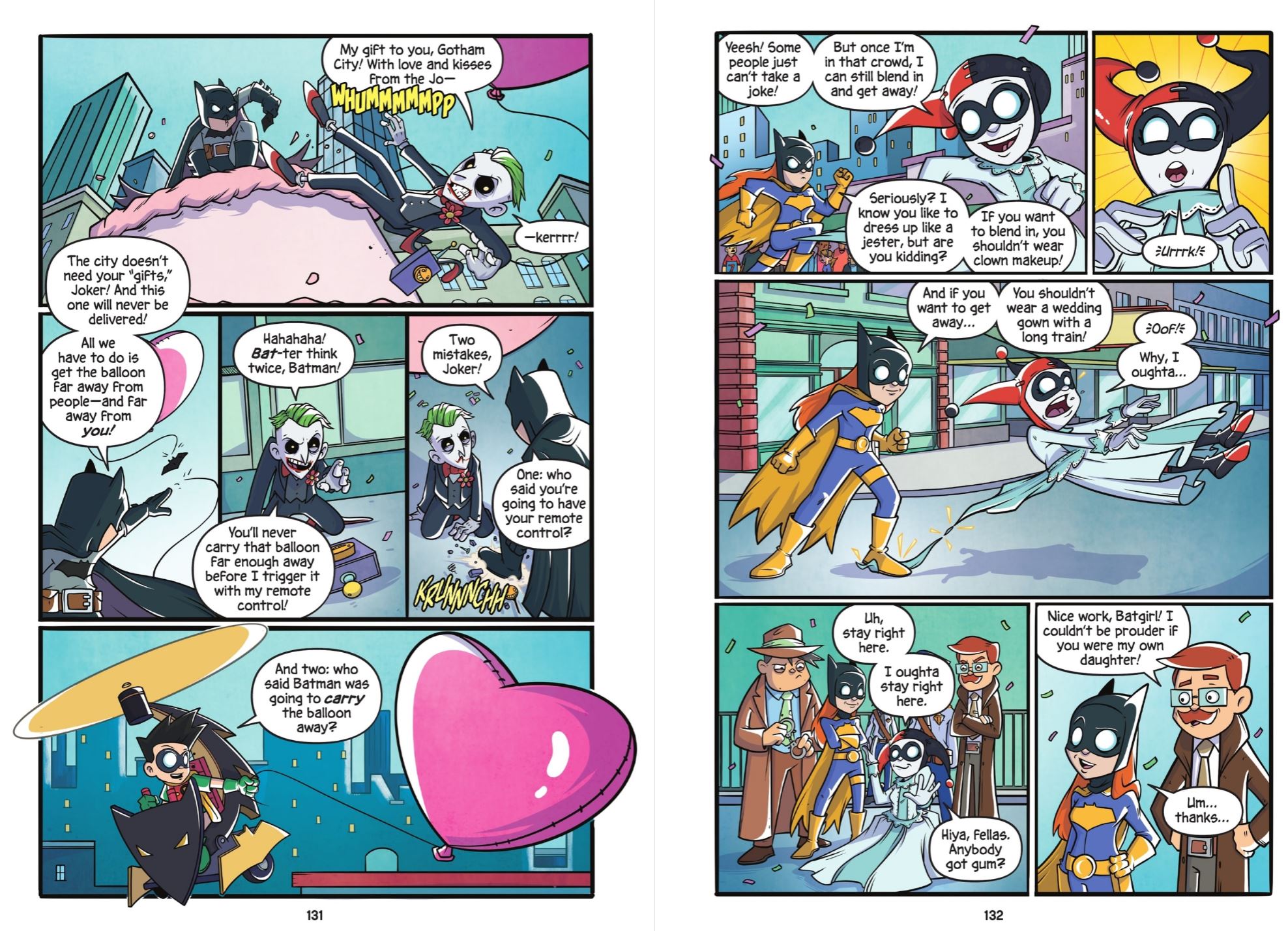
The date also marks the launch of Frank Willard’s pioneering Moon Mullins strip in 1923 and Jim DavisGarfield in 1978.