Stay


By Lewis Trondheim & Hubert Chevillard, translated & edited by Mike Kennedy (Magnetic Press)
ISBN: 978-1-54930-771-3 (HB/Digital edition)

Until so very recently, comics in the English-speaking world were largely comedy or genre adventure, with a small but vital niche of breakthrough biography, autobiography and reportage such as Maus, Palestine, The End of the F**king World and Persepolis. What we have never had, and still largely don’t have, is an equivalent to general fiction and drama/melodrama.

That’s not so in Europe, where a literal “anything goes” attitude has always accommodated human-scaled slice of life stories that depict ordinary people in the quiet as well as extraordinary moments. Think of such comics as the sequential narrative equivalent of watching mainstream broadcast TV. In the UK that would be BBC 1, 2 (and maybe 4); ITV1 and Channels 4 or 5. But in comics even that resource offers a vast variety, and in Euro Comics it isn’t hard to find almost impossible genres thriving. For example, there’s a wealth of superb material just about going on holiday…

That’s not really a fair comparison for Americans, but quite frankly, your TV networks are a hellhole of your own devising; although we are proudly debasing our system to match yours. Still, it’s a miracle that you have generated so many great shows and programmes over the decades and it’s also why I keep banging on about comics. In them, there are always infinite worlds and possibilities…

So, now that our own Powers-That-Be (hopeless, whoever you vote for) have arranged it so that it’s now all-but-impossible for any UK-based folk to pop across and have une petite vacance in Europe unless immune to passports and able to teleport, over there organized timewasting and energy-restoration is still an inescapable right, and they have some fabulous tales about taking a simple break. This is arguably one of the best you’ll ever read…

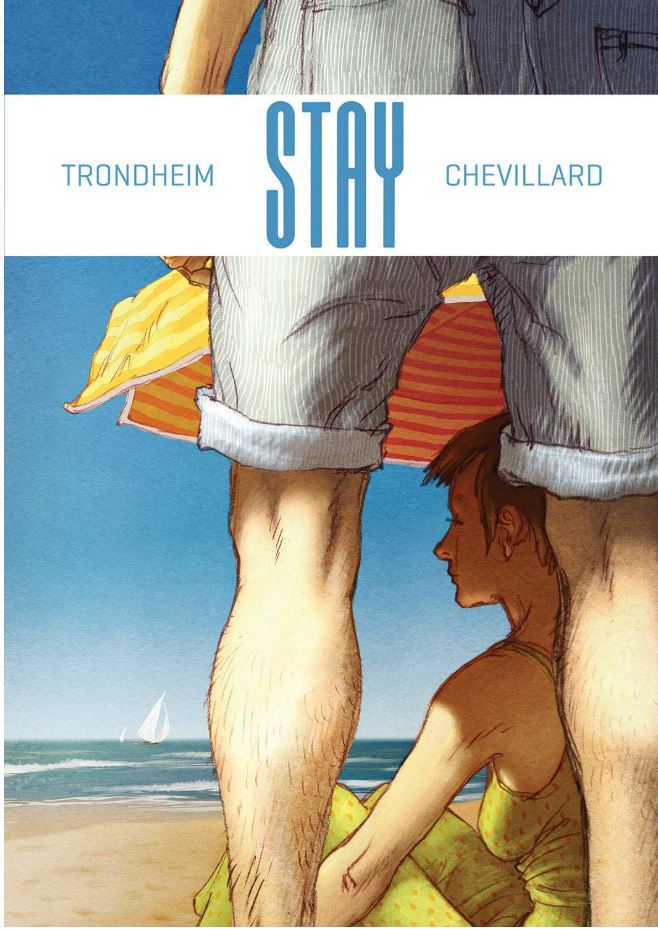
A sublime example of everything I’m talking about, this is Lewis Trondheim & Hubert Chevillard’s Je vais rester. Translated by Magnetic Comics as Stay, it challenges all the commercial pressures I’ve alluded to above: an intriguing, engaging drama in both print and byte-sized versions for me to recommend and you to fall in love with. It also means that if you’re stuck in road, rail or airport queues you can download it after getting bored with me…

With north of 100 books bearing his pen-name (his secret identity is actually Laurent Chabosy), writer/artist/editor/animator/educator Lewis Trondheim is one of Europe’s most prolific comics creators: illustrating his own work; overseeing cartoon adaptations of earlier successes like La Mouche (The Fly) and Kaput and Zösky or editing young-readers book series Shampooing for Dargaud.

His most famous tales are such global hits as Les Formidables Aventures de Lapinot (seen in English as The Spiffy Adventures of McConey); the Donjon series of nested fantasy epics (co-created with Joann Sfar and translated as conjoined sagas Dungeon: Parade, Dungeon: Monstres and Dungeon: the Early Years); comedy fable Ralph Azham and his utterly beguiling cartoon diaries collected as Little Nothings.

In his spare time – and when not girdling the globe from convention to symposium to festival – the dourly shy and neurotically introspective savant wrote for satirical magazine Psikopat and provided scripts for many of the continent’s most popular artists such as Fabrice Parme (Le Roi Catastrophe, Vénézia), Manu Larcenet (Les Cosmonautes du futur), José Parrondo (Allez Raconte and Papa Raconte) and Thierry Robin (Petit Père Noël).

Ostensibly retired but still going strong, Trondheim is a cartoonist of uncanny wit, outrageous imagination, piercing perspicacity, comforting affability and self-deprecating empathy who prefers to scrupulously control what is known and said about him…

I must admit that, at this moment, from all his vast canon, STAY is probably my absolute favourite…

Born in Angers in 1962, Hubert Chevillard (Le Pont dans la Vase, Corcal, Terra Incognita, Le Facteur, Pavillon Rouge, Donald’s Happiest Adventures) is a French cartoonist who studied animation at the Gobelins School and School of Fine Arts in Angoulême. He worked at Walt Disney Animation France’s Montreuil Studious for almost a decade before switching to comics as illustrator of Didier Crisse’s Luuna. He thereafter branched out and carried on, scripting his own stuff whilst remaining an in-demand artist for others…

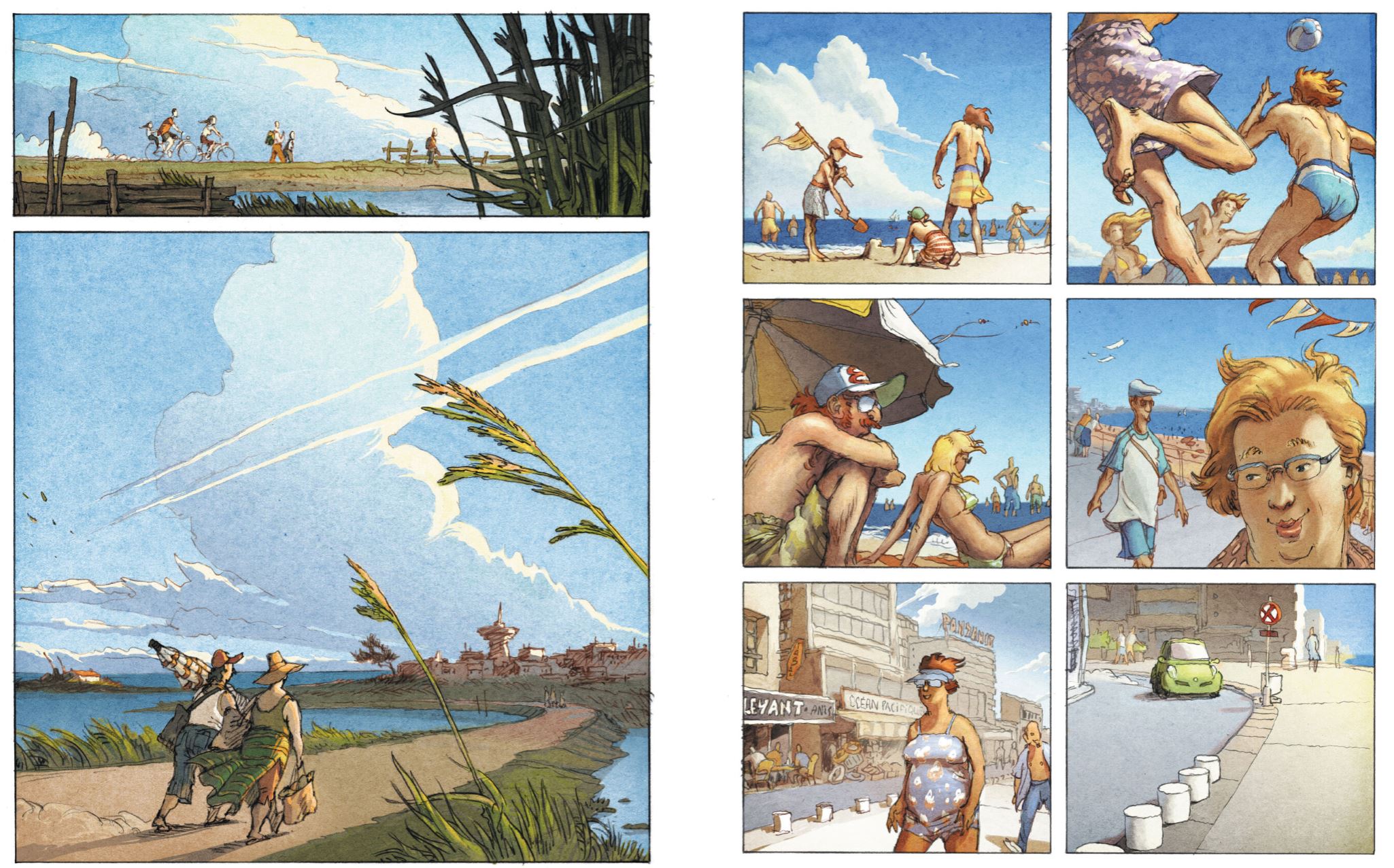
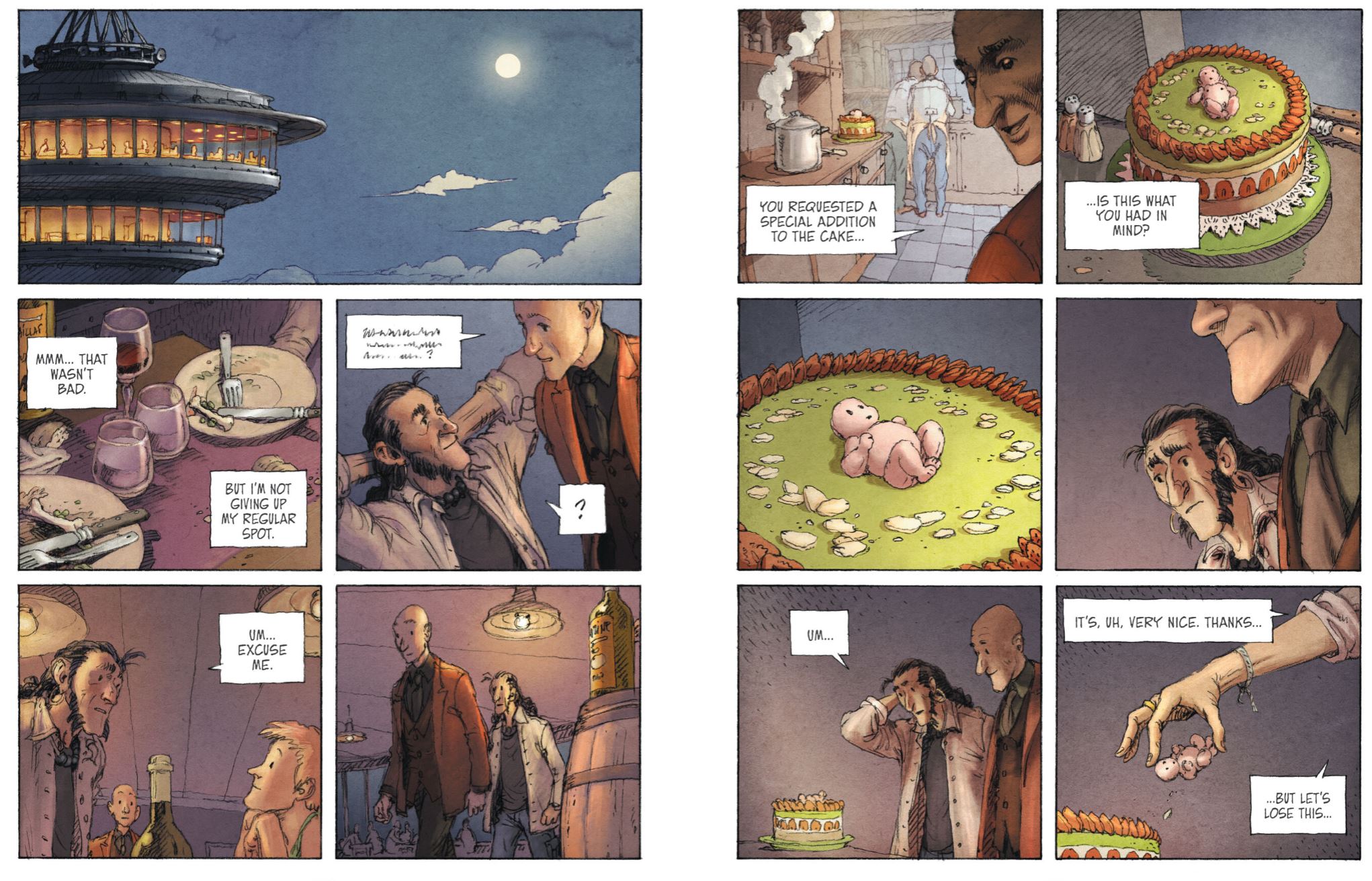
Here his softly endearing images paint us a picture of idyllic summer holidays at the seaside for affianced couple Roland Matturet and Fabienne Guillardin. For their trip to the South of France, he has meticulously (it’s his way) planned everything and paid for it all in advance as a build-up to asking her a certain question. Sadly, the entire sunny escapade is cut short – as is Roland himself – when a bizarre accident leaves Fabienne instantly and utterly alone in a strange but welcoming resort of happy strangers…

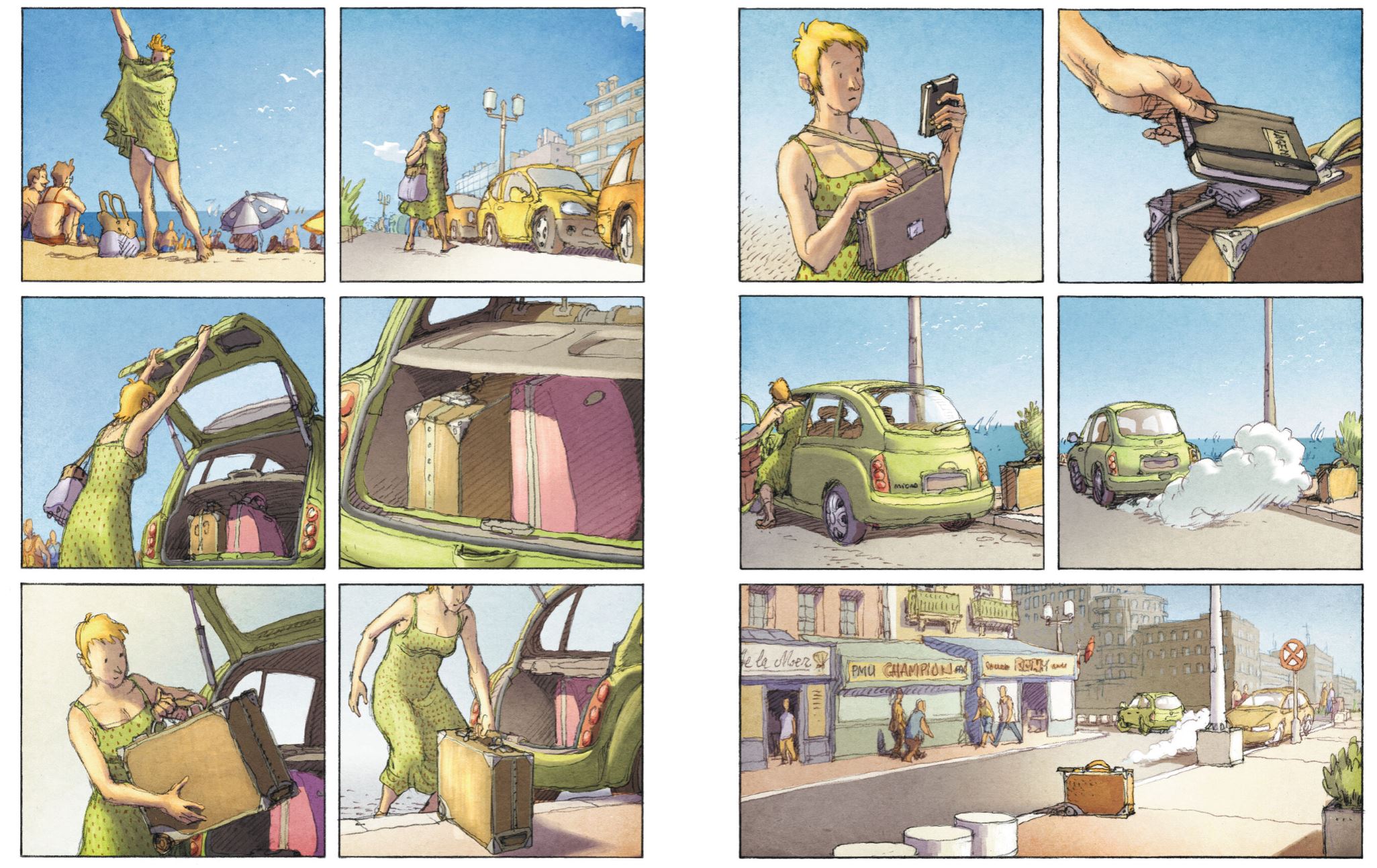
Shocked and stunned, but still posthumously guided by Roland’s notebook itinerary, Fabienne seems to pause inside. Not even informing the families of the change in circumstance, she roams like a ghost, sampling all the prepaid amenities, diligently attending to Roland’s checklist of events… and gradually reinventing herself.

Avoiding all past connections and her current situation, she savours being unknown, alone, and not yet bereaved: pondering the ramifications in her pensive way, as she grudgingly befriends eccentric, exotic and quixotic local Paco… a man unlike any she has ever met before.

With no idea how she feels about anything, Fabienne allows herself to be intrigued as Roland’s hold on her diminishes and fades away…

What’s next…?

Lyrical, laconic, blackly comic and engagingly demure, this gleefully morbid, platonic holiday non-romance unfolds with a minimum of verbiage and powerfully understated silent visuals: exploring life and death, addressing denial, avoidance and coping mechanisms through a soft-focussed lens of friendships in adversity and those ever-present, never-acted upon holiday impulses…

Vacations are built of never-seized moments of seductive might-have-beens and affable strangers, channelled here in astonishingly compelling episodes that make the mundane magical, and encapsulating those brief spells of transient opportunity that comprise such “holidays of a lifetime”. This is tale of woe and wonder writ small, and all the more perfect because of it.
Stay published 2019 by The Lion Forge, LLC. © 2019 The Lion Forge, LLC. Originally published in France as Je vais rester, scenario by Lewis Trondheim, illustrations by Hubert Chevillard © Rue de Sevres, Paris 2018. All rights reserved.

Today in 1951 Wendy (Elfquest) Pini was born, as was inker Josef Rubinstein in 1958, but the date also marks the loss of artist and back-stage comics boffin Sol Brodsky in 1984 and premier cartoonist Dik Browne (Hägar the Horrible, Hi and Lois, The Tracy Twins) in 1989.

Today in 1938, Britain’s Daily Mirror launched Bernard Graddon’s long running Just Jake strip, and Keiji Nakazawa’s epic Barefoot Gen began in 1973. In 1988 Steve Canyon parked the jet for the last time and in 1994 the initial Alternative Press Expo opened in San Jose, CA.

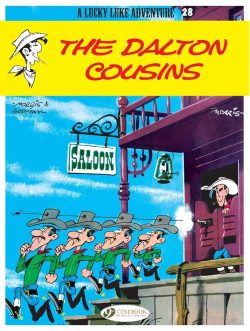
Lucky Luke Vol 28 The Dalton Cousins


By Morris & Goscinny, translated by Luke Spear (Cinebook)
ISBN: 978-1-84918-076-4 (Album PB/Digital edition)

This book includes Discriminatory Content produced in less enlightened times. This book also includes Discriminatory Content added for comedic effect.

Created by Belgian animator, illustrator and cartoonist Maurice de Bévère (AKA “Morris”), Lucky Luke debuted in the summer of 1946, initially riding out in Le Journal de Spirou summer sans title or banner, and only in the French-language edition. The Lone Rider’s official launch came in Christmas Annual L’Almanach Spirou 1947, before beginning his first official serial – ‘Arizona 1880’ – in December 7th 1946’s multinational weekly issue.

Doughty, dashing, dependable cowboy “good guy” Lucky is a rangy, implacably even-tempered do-gooder able to “draw faster than his own shadow”. He amiably ambles around the mythic Old West, having light-hearted adventures on his petulant and rather sarcastic wonder-horse Jolly Jumper. For 80 years (Joyeux anniversaire, Mon Brave!), his exploits have made him a top-ranking global comic character, filling more than 90 individual albums and spin-off series like Kid Lucky and Ran-Tan-Plan, with sales upwards of 300 million copies in 30 languages. That renown translated into a mountain of merchandise, toys, games, animated cartoons, TV shows and live-action movies and even commemorative exhibitions. No theme park yet, but you never know…

Lucky’s global dominance resulted from a decades-long, 45 volume collaboration with superstar scripter René Goscinny, spanning Des rails sur la Prairie/Rails on the Prairie beginning August 25th 1955 to La Ballade des Dalton et autres histoires/The Ballad Of The Daltons And Other Stories in 1986. On Goscinny’s death, Morris worked on alone again before recruiting others, to form a posse of legacy creators including Lo Hartog van Banda, Achdé & Laurent Gerra, Xavier Fauche, Benacquista & Pennac, Jean Léturgie, Jacques Pessis and more, all taking their own shots at the venerable vigilante. Morris soldiered on singly and with these successors before his own passing in 2001, having drawn fully 70 adventures, plus numerous sidebar and spin-off sagebrush sagas.

His grande idée draws on western history as much as movie mythology, regularly meeting historical figures as well as even odder fictional folk in tales drawn from key themes of classic cowboy mythology – as well as some uniquely European notions or interpretations such as seen here. As previously hinted, our six-gun star is not averse to being a figure of political change and Weapon of Mass Satire, but here spoofs his own antecedents and venerated movie schtick for a delicious drive down memory lane…

Goscinny had started scripting Lucky uncredited in 1955. Morris had taken nearly a decade to fill nine albums with affectionate sagebrush parody, action and Lucky Laughs, but now, with Goscinny as regular wordsmith, Luke would attain dizzying heights of super swift superstardom, commencing with Des rails sur la Prairie (Rails on the Prairie), and following up with Lucky Luke contre Joss Jamon, (Vs. Joss Jamon) before – still anonymously – delivering a true landmark with the next storyline.

The Dalton Cousins was first enjoyed in LJdS #992 – 1013 (April 18th to September 12th 1957): a manic mirth-fest for which Goscinny performed a much-demanded act of necromancy by resurrecting a quartet of killers Lucky had already permanently dealt with, but whom readers want not dead but alive…

Serially published back in December 1954 Hors-la-loi became Morris’ 6th full album and included a strip which saw our hero meet and beat Emmett, Bill, Grat & Bob Dalton: real life badmen who had plagued the actual west during the 1890s. On those funny pages from simpler times, Lucky was hired by railroad companies to end the depredations of the desperados who had been imported into the strip, but given a comedic, yet still vicious spin. A cat & mouse chase across the wildest of wests saw Luke constantly frustrated by close calls and narrow escapes in superbly gripping movie set-pieces until, inevitably, justice claimed the killers. At the close, Morris had Lucky end the gang forever, but they and the story itself were insanely popular with fans. These owlhoots were comedy gold and ideal foils, so eventually they returned in the form of their own cousins…

From the reader response to that tale eventually came this aforementioned revival, as Goscinny’s third collaboration. When this iteration of the appalling Dalton Brothers – now and forever after Averell, Jack, William & devious, slyly psychotic, tyrannical, diminutive brother Joe – showed up, the course of the strip altered forever…

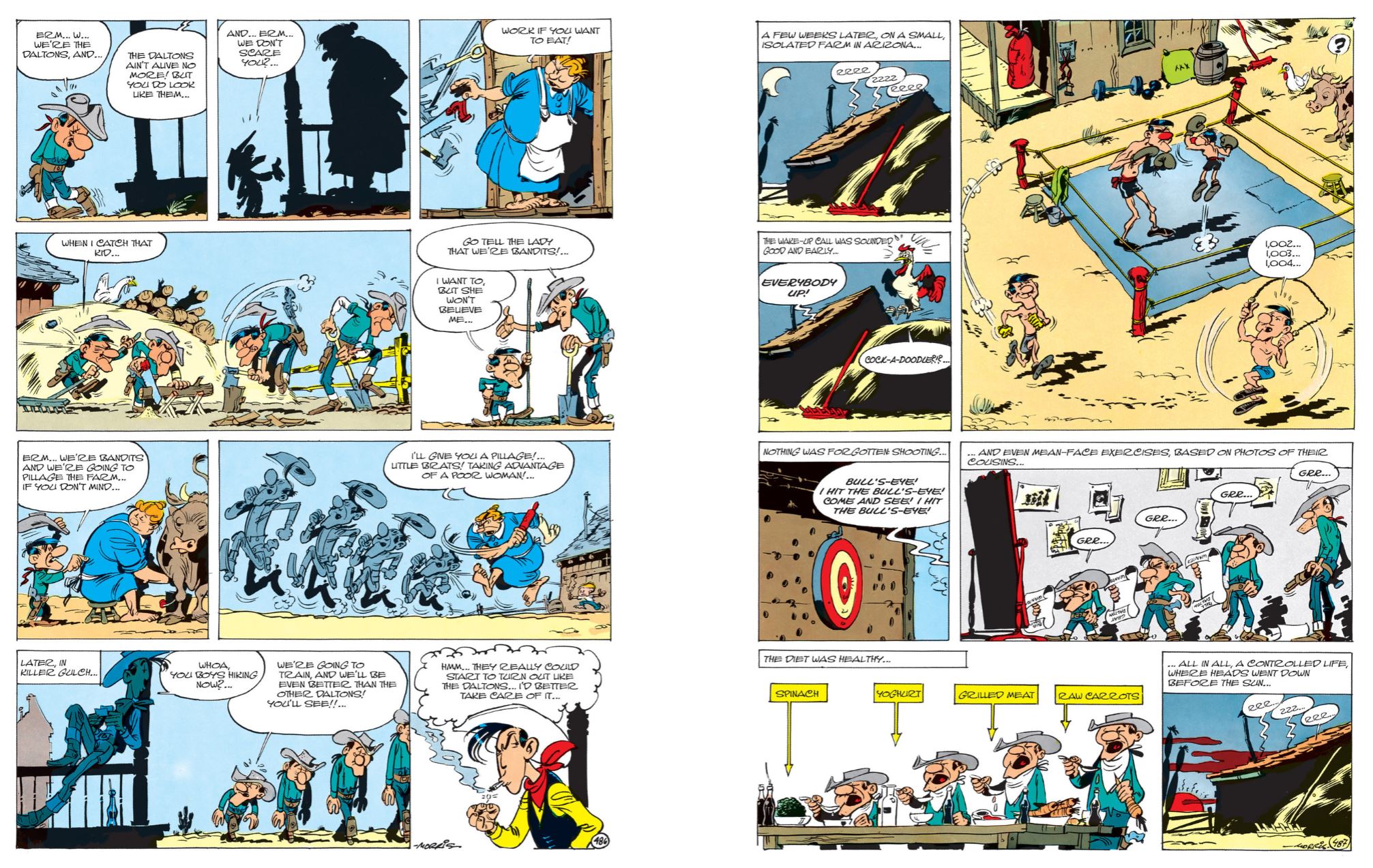
It opens on a remote farm in Arizona where four brothers mourn the loss of murderous bandits they resemble and are related to. They know they aren’t nearly good enough to fill the dead men’s boots or kill their killer… but they are willing to try their hardest to change all that. The replacement Daltons’ first attempt to settle the score is frankly embarrassing, but fortune and persistence gradually harden and hone them. They even at one stage have the heroic happy wanderer train them up to “match fitness”…

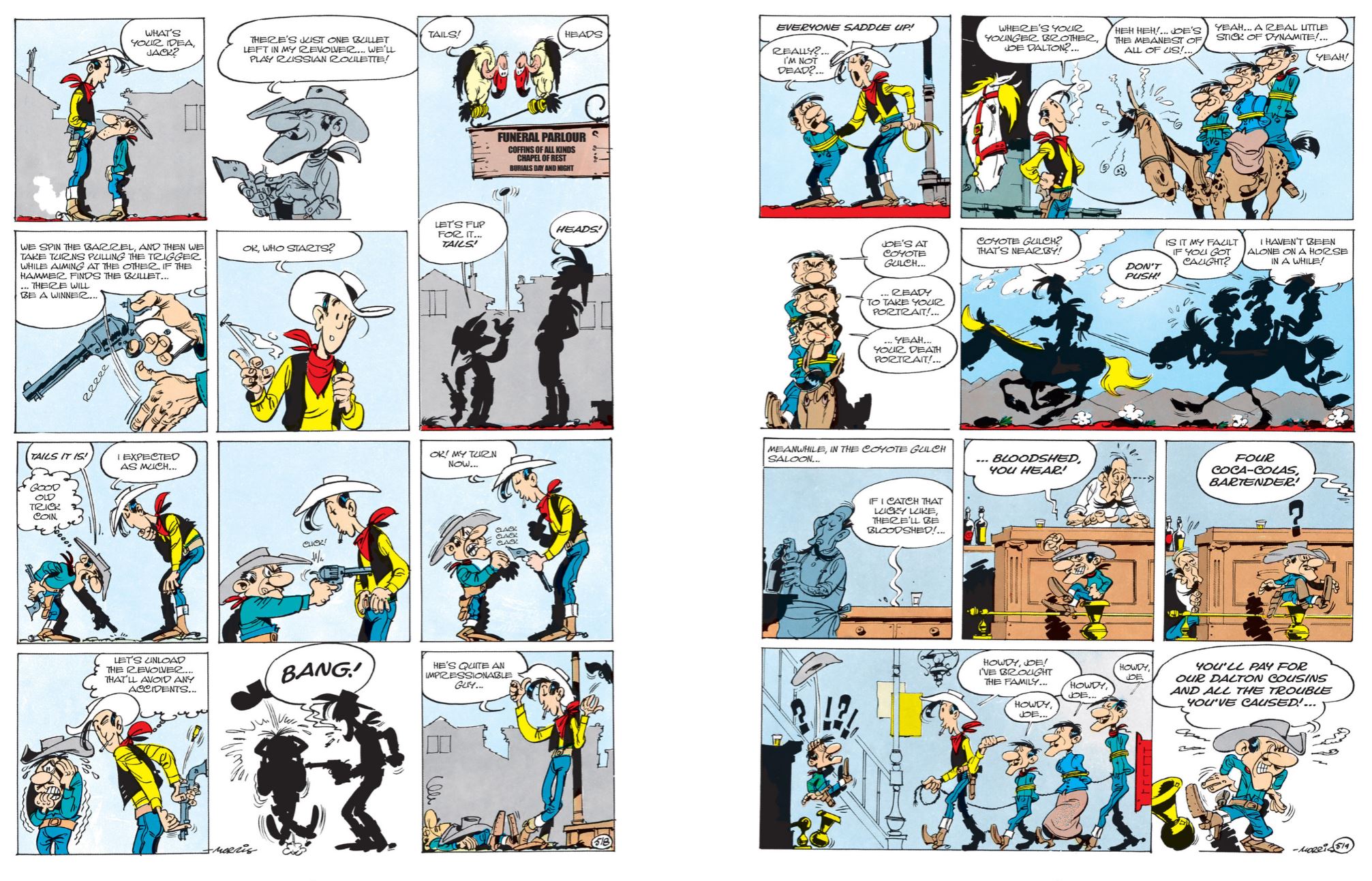
Ultimately, however, after they besiege a town and regularly succeed in theft and terrorism, Lucky is forced to take action before they become as great a menace as their dearly departed favourites ever were, but sadly, leaves it too late and is forced to resort to tricky tactics and even dividing to conquer. It’s either that or be hunted down like a dog: a role he’s just not suited for…

As much thriller as comedy romp, this yarn proved how crucial great villains are to any hero and started a western showdown that fruitfully persists and thrives to this day. These tall-to-small tales are perfect for kids with a smidgen of historical perspective and social understanding, although the action and slapstick situations are no more contentious than any Laurel and Hardy film – perfectly understandable as Morris was a huge fan of the duo. These formative forays are a grand old hoot in the tradition of Destry Rides Again or Support Your Local Sheriff, superbly executed by master storytellers, and a wonderful introduction to a unique genre for anyone who might well have missed the romantic allure of the Wild West that never was…
© Dargaud Editeur Paris 1971 by Goscinny and Morris. © Lucky Comics. English translation © 2010 Cinebook Ltd.

Today in 1913, artist Tom Gill (The Lone Ranger, Bonanza, Red Warrior) was born, sharing his birthday with DC’s hyper-prolific colourists Jerry Serpe (1919) and Bob LeRose (1921). The date also saw the debut of Russell Stamm’s strip Invisible Scarlett O’Neil in 1940 and the deaths of the great Syd Shores (Captain America, Black Rider, Blonde Phantom, The Westerner) in 1973; Ozzie cartoonist Syd (Fatty Finn) Nicholls in 1977 and Industry-shaking innovator Bill Gaines (EC Comics, Mad Magazine) in 1992.

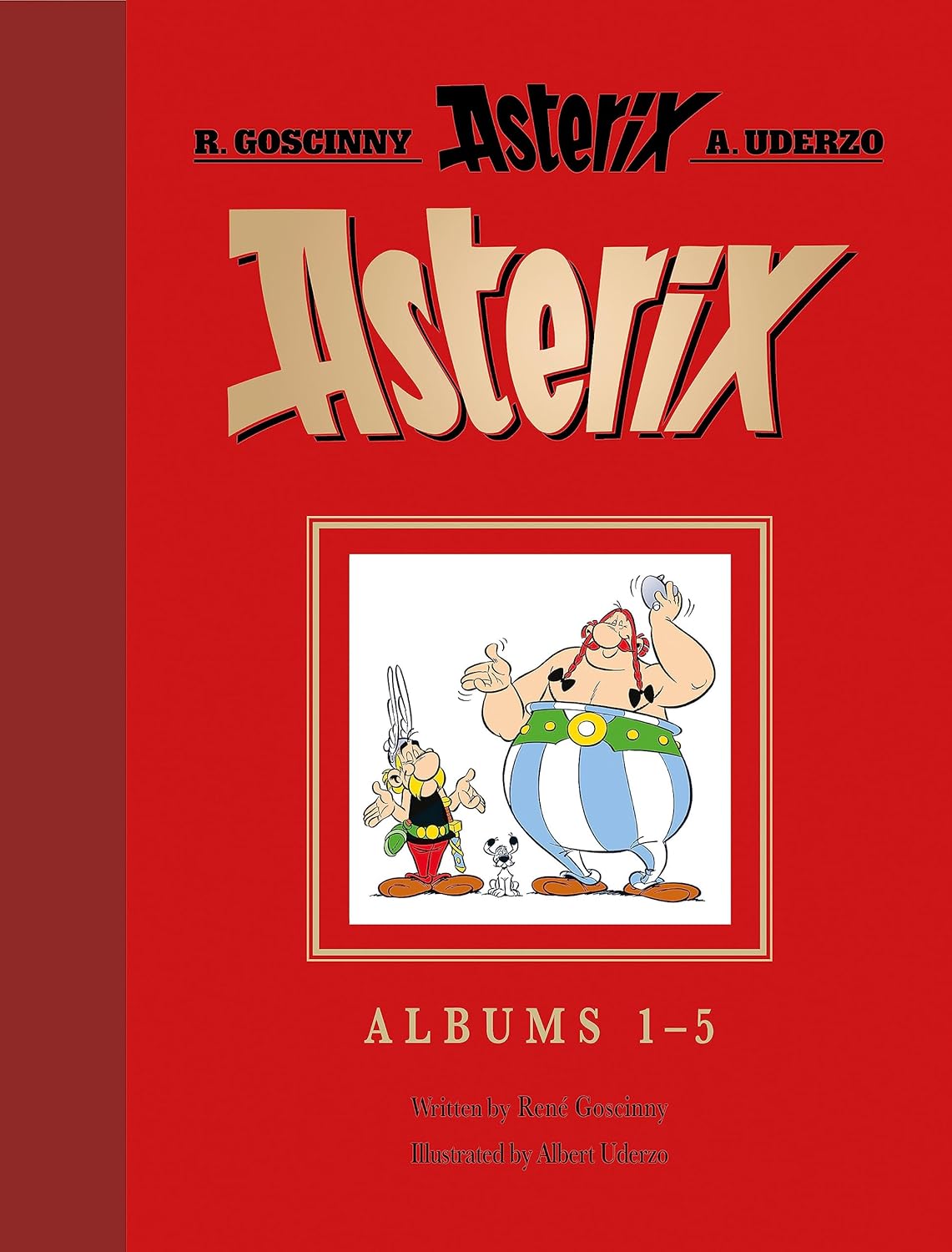
Asterix Gift Edition: Albums 1-5: Asterix the Gaul, Asterix and the Golden Sickle, Asterix and the Goths, Asterix the Gladiator, Asterix and the Banquet


By René Goscinny & Albert Uderzo. translated by Anthea Bell & Derek Hockridge (Sphere)
ISBN: 978-1-40872-831-4 (HB)

This book includes Discriminatory Content produced in less enlightened times. This book includes Discriminatory Content included for comedic effect.

Asterix the Gaul is probably France’s greatest literary export. The feisty, wily little warrior who fought the iniquities and viewed the myriad wonders of Julius Caesar’s Roman Empire with brains, bravery and (whenever necessary) a magical potion imbuing the imbiber with incredible strength, speed and vitality, is the go-to reference all we non-Gallic gallants resort to when we think of France.

The diminutive, doughty, daring darling was created at the close of the 1950s by two of our artform’s greatest masters, with his first official appearance being on October 29th in Pilote #1, even though he had actually debuted in a pre-release teaser – or “pilot” – weeks earlier. On this date in fact. Joyeux anniversaire, mon petit brave!

René Goscinny was arguably the most prolific – and remains one of the most read – writers of comic strips the world has ever known. Born in Paris in 1926, he grew up in Argentina where his father taught mathematics. From an early age René showed artistic promise. He studied fine arts and graduated in 1942. Three years later, while working as junior illustrator at an ad agency, his uncle invited him to stay in America, where he worked as a translator. After National Service in France, he returned to the States and settled in Brooklyn, pursuing an artistic career and becoming, in 1948, an assistant in a small studio which included Harvey Kurtzman, Will Elder, Jack Davis & John Severin, as well as European giants-in-waiting Joseph Gillain (Jijé) and Maurice de Bévère (Morris) with whom from 1955-1977 Goscinny produced 46 volumes of Lucky Luke.

Goscinny also met Georges Troisfontaines, head of World Press Agency, the company that provided comics for Le Journal de Spirou. After contributing scripts to Belles Histoires de l’Oncle Paul and Jerry Spring, Goscinny was promoted to head of World Press’ Paris office. Here he met his ultimate creative collaborator Albert Uderzo. In his spare time (!), René also created Sylvie and Alain et Christine with Martial Durand (“Martial”) and Fanfan et Polo, drawn by Dino Attanasio. In 1955, Goscinny, Uderzo, Charlier & Jean Hébrad formed independent syndicate Édifrance/Édipresse, creating magazines for business and general industry like Clairon for the factory union and Pistolin for a chocolate factory. With Uderzo, René spawned Bill Blanchart, Pistolet and Benjamin et Benjamine, whilst illustrating his own scripts for Le Capitaine Bibobu.

Under nom-de-plume Agostini, he wrote Le Petit Nicholas (drawn by Jean-Jacques Sempé), and in 1956 began an association with revolutionary periodical Le Journal de Tintin, writing for various illustrators including Attanasio (Signor Spagetti); Bob De Moor (Monsieur Tric); Maréchal (Prudence Petitpas); Berck (Strapontin); Globule le Martien and Alphonse with Tibet; as well as Modeste et Pompon for André Franquin, and with Uderzo the fabulously funny adventures of inimitable Indian brave Oumpah-Pah. Goscinny also wrote for magazines Paris-Flirt and Vaillant. In 1959, Édifrance/Édipresse launched Pilote and René went into overdrive. The first issue featured re-launched versions of Le Petit Nicolas, Jehan Pistolet/Jehan Soupolet, original serials Jacquot le Mousse and Tromblon et Bottaclou (drawn by Godard), plus a little something called Astérix le gaulois: incontrovertibly the greatest achievement of his partnership with Uderzo.

When Georges Dargaud bought Pilote in 1960, Goscinny became Editor-in-Chief, still making time to add new series Les Divagations de Monsieur Sait-Tout (with Martial); La Potachologie Illustré (Cabu); Les Dingodossiers (Gotlib) and La Forêt de Chênebeau (Mic Delinx). He also wrote frequently for television, but never stopped creating strips like Les Aventures du Calife Haroun el Poussah (for Record and illustrated by Swedish artist Jean Tabary). A minor success, it was re-tooled as Iznogoud when it transferred to Pilote. Goscinny died far too young, in November 1977.

Alberto Aleandro Uderzo was born on April 25th 1927, in Fismes on the Marne, a child of Italian immigrants. As a boy reading Mickey Mouse in Le Pétit Parisien, he showed artistic flair from an early age. Alberto became a French citizen at age seven and dreamed of being an aircraft mechanic, but at 13 became an apprentice of the Paris Publishing Society, learning design, typography, calligraphy and photo retouching. When WWII came, he spent time with farming relatives in Brittany, joining his father’s furniture-making business. Brittany beguiled Uderzo: when a location for Asterix’s idyllic village was being decided upon, the region was the only choice…

In France’s post-war rebuilding, Uderzo returned to Paris to become a successful illustrator in the country’s burgeoning comics industry. His first published work – a pastiche of Aesop’s Fables – appeared in Junior and, in 1945, he was introduced to industry giant Edmond- Françoise Calvo (The Beast is Dead). Young Uderzo’s subsequent creations included indomitable eccentric Clopinard, Belloy, l’Invulnérable, Prince Rollin and Arys Buck. He illustrated novels, worked in animation, as a journalist, as illustrator for France Dimanche and devised vertical comic strip ‘Le Crime ne Paie pas’ for France-Soir. In 1950, he drew a few episodes of the franchised European version of Fawcett’s Captain Marvel Jr. in Bravo!

Another inveterate traveller, he met Goscinny in 1951. Soon fast friends, they decided to work together at the new Paris office of Belgian Publishing giant World Press. Their first collaboration was in November of that year; a feature piece on savoir vivre (how to live right or “gracious living”) for women’s weekly Bonnes Soirée, after which an avalanche of strips and serials poured forth.

Jehan Pistolet and Luc Junior were devised for La Libre Junior and they produced a comedy Western starring a very Red (but not so American) Indian who evolved into Oumpah-Pah. In 1955, with the birth of Édifrance/Édipresse, Uderzo drew Bill Blanchart for La Libre Junior, replacing Christian Godard on Benjamin et Benjamine before, in 1957 adding Charlier’s Clairette to his bulging portfolio. The following year, he made his Tintin debut, as Oumpah-Pah finally found a home and rapturous audience. Uderzo also drew Poussin et Poussif, La Famille Moutonet and La Famille Cokalane. When Pilote launched in October 1959, Uderzo was its major creative force, limning Charlier’s Tanguy et Laverdure and a comedy historical strip about Romans…

Although Asterix was a massive hit from the start, Uderzo continued with Charlier on Michel Tanguy, (subsequently Les Aventures de Tanguy et Laverdure), but soon after that first comedy history was collected in a single volume as Astérix le gaulois in 1961, it was clear the series would demand most of his time – especially as the incredible Goscinny never seemed to require rest or run out of ideas (after the writer’s death, the publication rate of Asterix tales dropped from two per year to one volume every 3-to-5).

By 1967, Asterix occupied all Uderzo’s time and attention. In 1974 the partners formed Idéfix Studios to fully exploit their inimitable creation, and when Goscinny passed away three years later, Uderzo had to be convinced to continue the adventures as writer and artist. Happily, he gave in and produced a further 10 tomes before retiring in 2009. According to UNESCO’s Index Translationum, Uderzo is the 10th most-often translated French-language author in the world and 3rd most-translated French language comics author – right behind his old mate René and the grand master Hergé.

So what’s it all about?

Like all the best entertainments the premise works on two levels: as action-packed comedic romps of sneaky and bullying baddies coming a-cropper for younger readers and as pun-filled, sly and witty satire for older, wiser heads, transformed here by the brilliantly light touch of master translators Anthea Bell & Derek Hockridge (who played no small part in making the indomitable little Gaul so very palatable to the English tongue).

Originally seen in Pilote #1-38 (29th October 1959 – 4th July 1960, with the first page appearing a week earlier in a promotional issue #0 distributed from June 1st 1959), the story is set in the year 50 BC (never BCE!) on the outermost tip of Uderzo’s beloved Brittany coast. Here a small village of redoubtable warriors and their families frustrate every effort of the immense but not so irresistible Roman Empire to complete the conquest of Gaul.

Unable to defeat these Horatian hold-outs, the Empire resorts to a policy of containment, leaving the little seaside hamlet hemmed in by heavily fortified permanent garrisons – Totorum, Aquarium, Laudanum and Compendium. The Gauls don’t care: they daily defy the world’s greatest military machine by just going about their everyday affairs, protected by a magic potion provided by the resident druid and the shrewd wits of a rather diminutive dynamo and his simplistic best friend…

In Asterix the Gaul, this immaculate comedy-drama scenario is hilariously demonstrated when Centurion Crismus Bonus – fed up with his soldiers being casually beaten up by the fiercely free pre-Frenchmen – sends reluctant spy Caligula Minus to ferret out the secret of their incredible strength. The affable insurgents take the infiltrator in and, soon dosed up with potion, the perfidious Roman escapes with the answer – if not the formula itself…

Soon after, wise, wily Druid Getafix is captured by the invaders and the village seems doomed, but crafty Asterix is on the case. Breaking into Compendium and resolved to teach the Romans a lesson, he drives them crazy for ages by resisting all efforts at bribery and coercion, until abruptly wizard and warrior seemingly capitulate. They make the Romans a magic potion – but not the one the rapacious oppressors were hoping for…
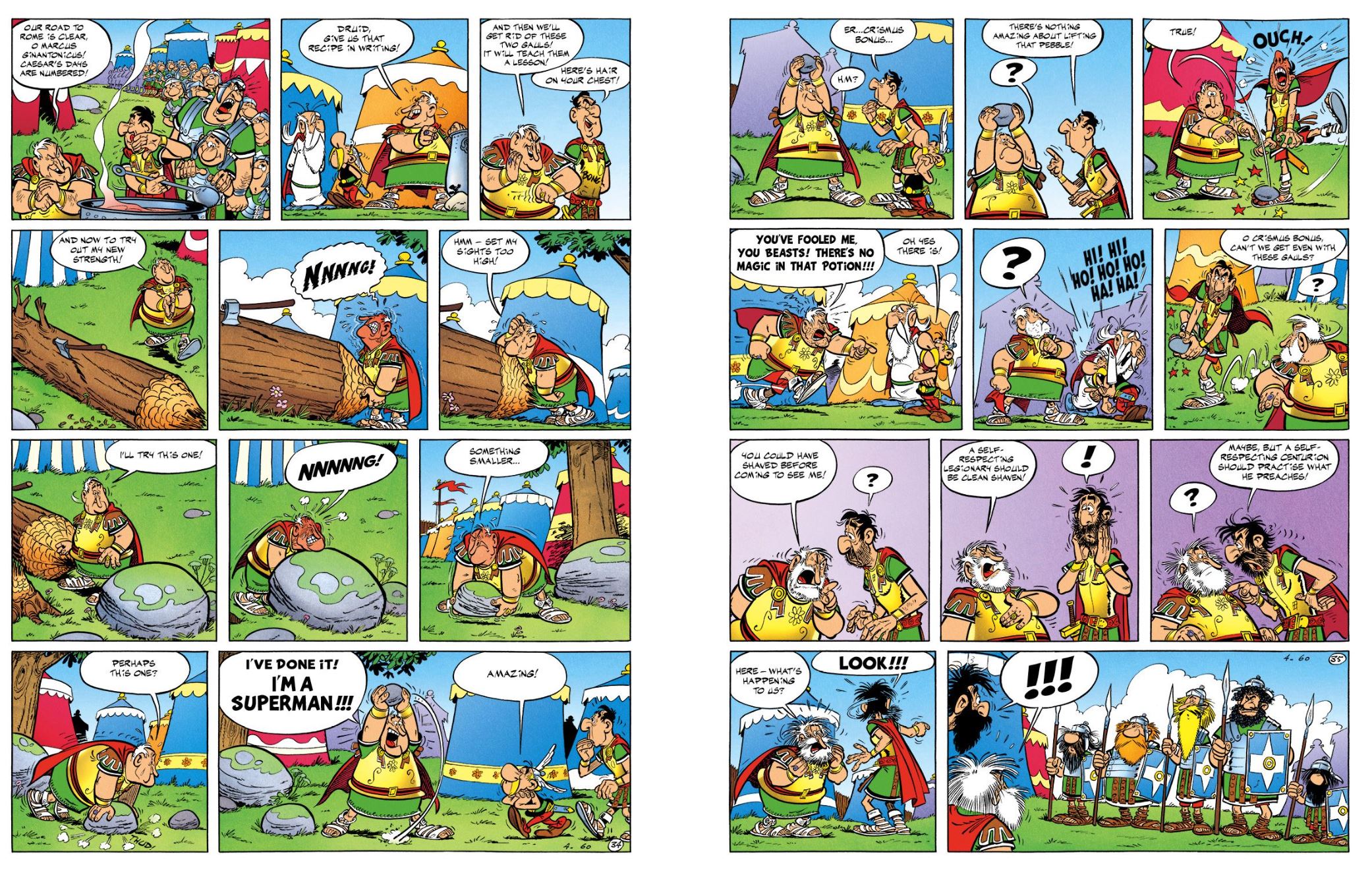
Although comparatively raw and unpolished, the good-natured, adventurous humour and sheer energy of the yarn barrels along, delivering barrages of puns, oodles of insane situations and loads of low-trauma slapstick action, all marvellously rendered in Uderzo’s seductively stylish bigfoot art-style. From the second saga on, the unique and expanding cast would encroach on events, especially the unique and expanded, show-stealing sidekick Obelix – who had fallen into a vat of potion as a baby – and became a genial, permanently superhuman, eternally hungry foil to our little wise guy…

Asterix and the Golden Sickle originally unfolded in Pilote #42-74, recounting disastrous consequences after Getafix loses his ceremonial precious metal blade just as the grand Annual Conference of Gaulish Druids is beginning. Since time is passing and no ordinary replacement will suffice to cut ingredients for magic potion, Asterix offers to go all the way to Lutetia (you can call it Paris if you want) to find another one.

Since Obelix has a cousin there – Metallurgix the Smith – he volunteers for the trip too and the punning pair are swiftly away, barely stopping to teach assorted bandits the errors of their pilfering ways, but still finding a little time to visit many roadside inns and taverns serving traditional roast boar. There is concurrently a crisis in Lutetia: a mysterious gang is stealing all the Golden Sickles and forcing prices up. The Druid community is deeply distressed and, more worrying still, master sickle-maker Metallurgix has gone missing too. When Asterix and Obelix investigate the dastardly doings in their own bombastic manner they discover a nefarious plot that seems to go all the way to the office of the local Roman Prefect…
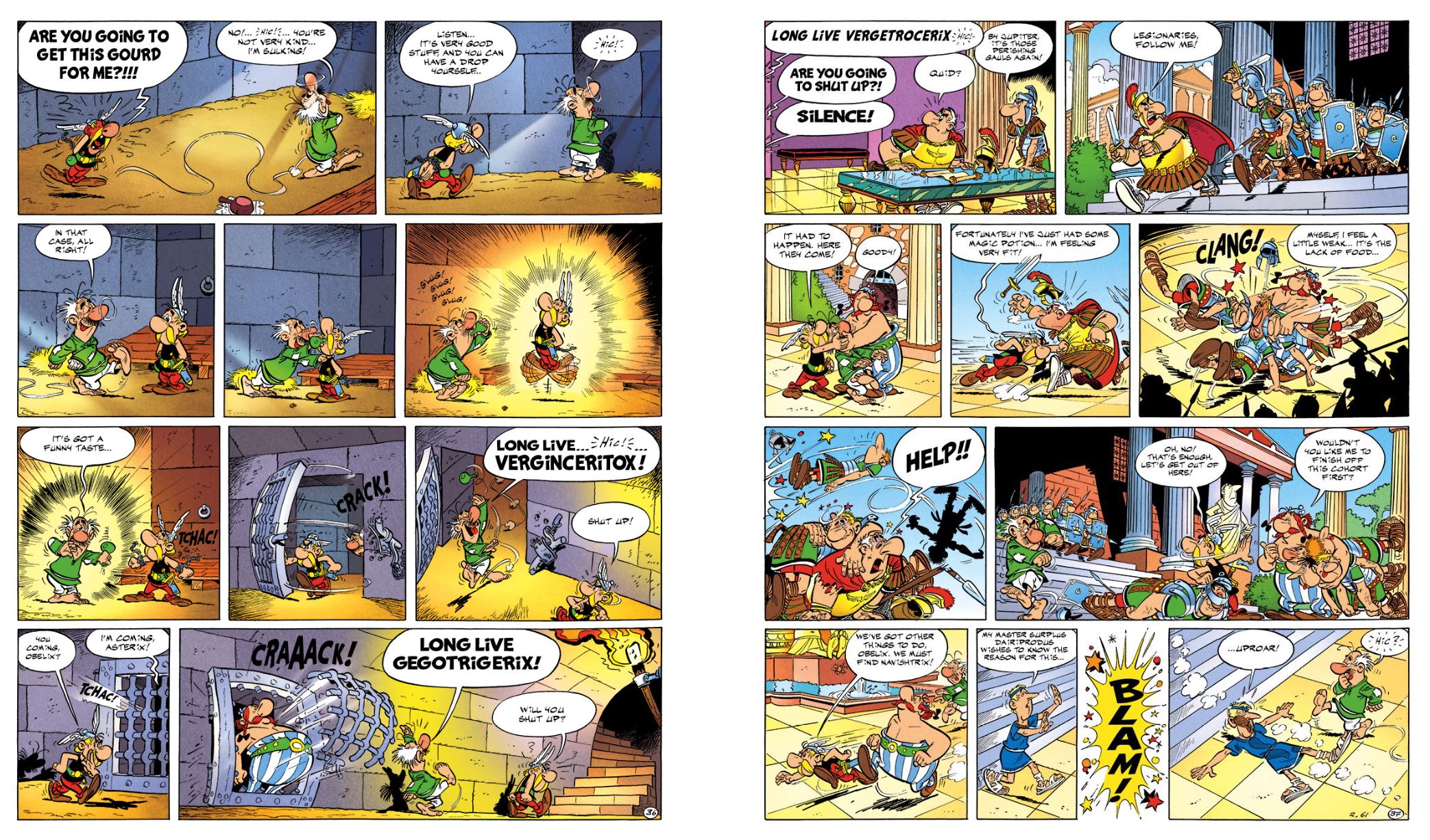
The early creative experiment was quickly crystallizing into a supremely winning format of ongoing weekly episodes slowly building into complete readily divisible adventures. The next epic cemented the strip’s status as a popular icon of Gallic excellence.

Asterix and the Goths ran from 1962-1963 and followed a dangling plot-thread of the Druid Conference as Getafix, brand new sickle in hand, sets off for the Forest of the Carnutes to compete. However, on Gaul’s Eastern border savage Goths – fierce barbarians who remain unconquered despite the might of the Empire – have crossed into pacified Roman territory. These hairy louts are intent on capturing the mightiest Druid and turning his magic against the rule of Julius Caesar

Although non-Druids aren’t barred from the forest, Asterix & Obelix had accompanied Getafix to its edge, and as the Conference competition round ends in victory for him and his power-potion, the Goths strike, abducting the old boy in his moment of triumph. Alerted by fellow Druid Prefix, our heroic duo track the kidnappers, but are mistaken for Visigoths by Roman patrols, allowing the Goths to cross the border into Germania. Although Romans are no threat, they can be a time-wasting hindrance, so Asterix & Obelix disguise themselves as Romans to invade the Barbarian lands…
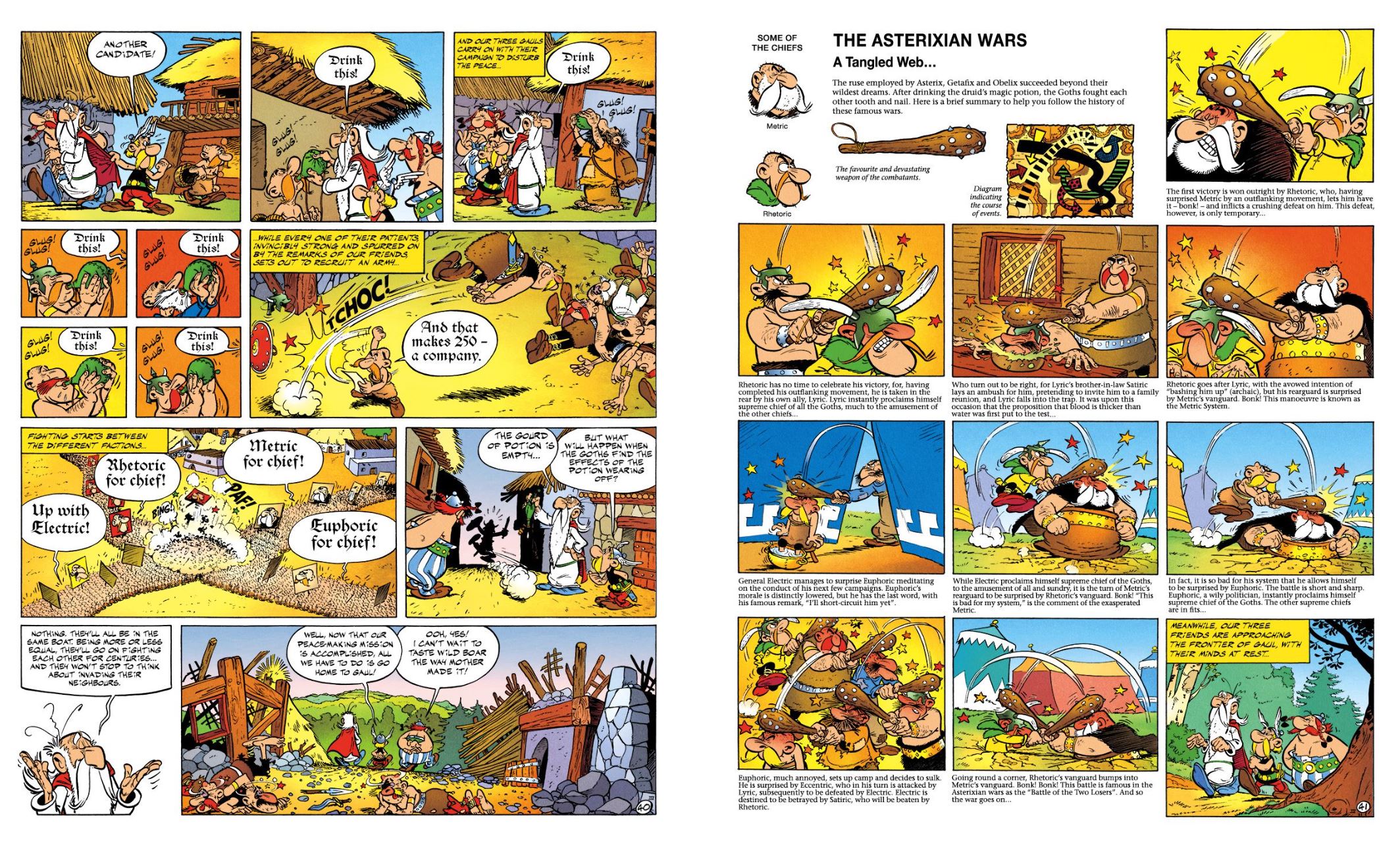
By now well-used to being held prisoner, Getafix is making himself a real nuisance to his bellicose captors and a genuine threat to the wellbeing of his long-suffering Goth-appointed translator. Thus when Asterix & Obelix are captured dressed as Goths, they concoct a cunning plan to end the ever-present threat of Gothic invasion – a scheme that continues successfully for almost two thousand years…

Asterix the Gladiator ran across Pilote #126 to 168 (1963) with the canny rebel and increasingly show-stealing pal despatched to the heart of the Roman Empire on an ill-conceived mission of mercy. When Prefect Odius Asparagus seeks to give Julius Caesar a unique gift, he decides upon one of the indomitable Gauls giving his occupying forces such a hard time. Thus, he has village Bard Cacofonix abducted and bundled off to Rome. Although in two minds about losing the raucous harpist, pride wins out and the villagers mount a rescue attempt, but after thrashing the Romans again they discover that their lost comrade is already en route for the Eternal City…

Assigned to retrieve the missing musician, Asterix & Obelix hitch a ride on a Phoenician galley operated under a bold new business plan by captain/general manager Ekonomikrisis. On the way to Italy the boys first encounter a band of pirates who would become frequent guest-stars and perennial gadflies. The pirates were a creative in-joke between the close-knit comics community: Barbe-Rouge/Redbeard was a buccaneering strip created by Charlier & Victor Hubinon also appearing in Pilote at the time.
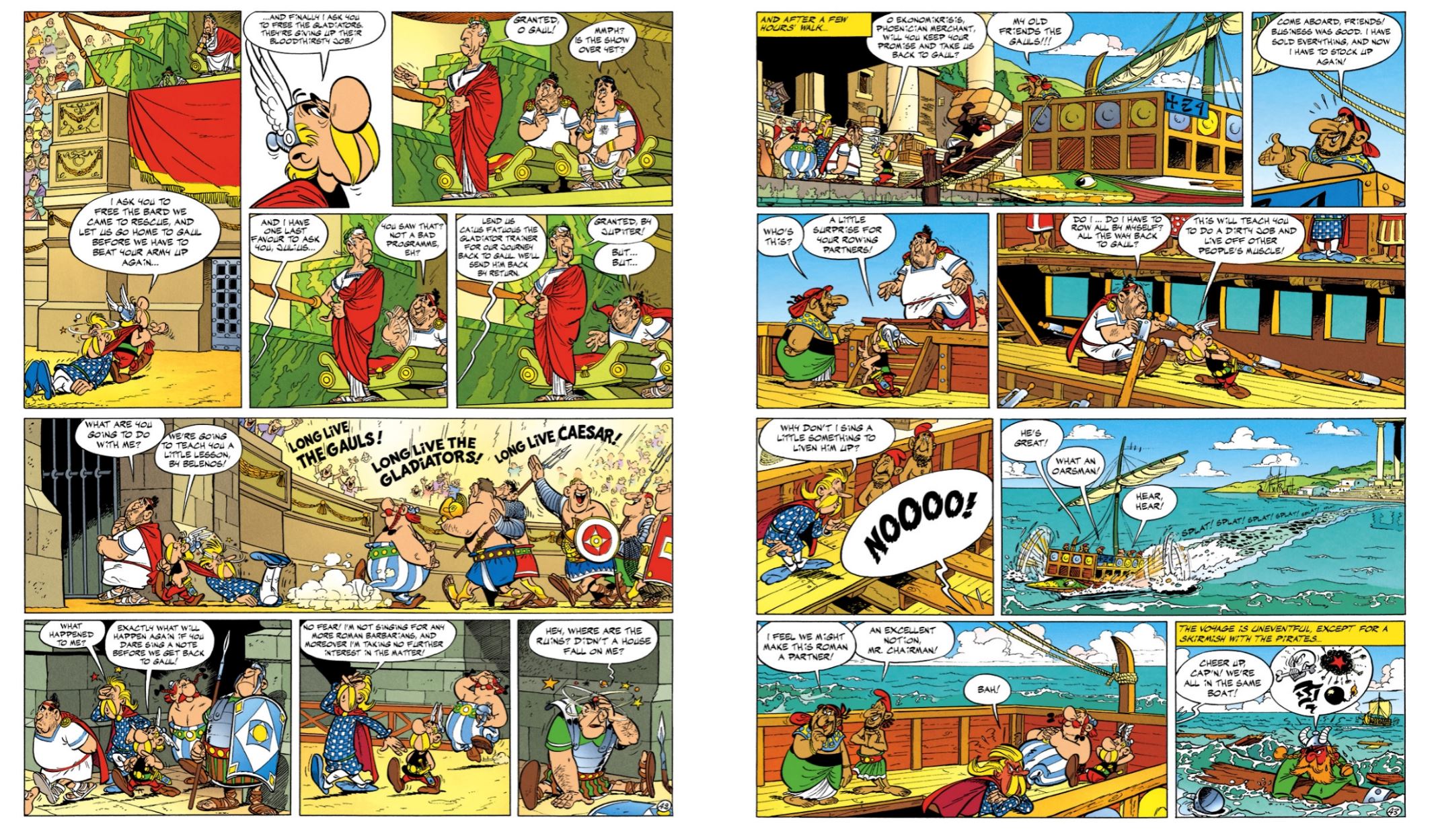
As Asterix & Obelix make friends among the cosmopolitan Roman crowds, Caesar has already received his latest present. Underwhelmed by his new Bard, the Emperor re-gifts Cacofonix to the Circus Maximus, to be thrown to the lions just as his chief of Gladiators Caius Fatuous is “talent-spotting” two incredibly tough strangers who would make ideal arena fighters…

Since it’s the best way to get to Cacofonix, our heroes join the Imperial Gladiatorial school; promptly introducing a little Gallic intransigence to the tightly disciplined proceedings. When the great day arrives, the lions get the shock of their lives and the entertainment-starved citizens of Rome experience a show they will never forget…

As always, the good-natured, comedic situations and sheer finesse of the yarn rattles along, delivering barrages of puns, oodles of insane situations and loads of low-trauma slapstick action, marvellously rendered in Uderzo’s expansive, authentic and continually improving big-foot art-style.

Asterix and the Banquet comes from Pilote #172-213 (also 1963), inspired by the Tour de France cycle race. After being continually humiliated by the intractable Gauls coming and going as they please, Roman Inspector General Overanxius instigates a policy of exclusion, building a colossal wall around the little village, determined to shut them off from their country and the world. Modern world leaders might get a clue from this book, here – if they read books. Even books with pictures…

Incensed, Asterix bets the smug Prefect that Gauls can go as and wherever they please and to prove it invites the Romans to a magnificent feast where they can sample fresh culinary delights from various regions. Breaking out of the stockade and through the barricades, A & O gather produce from as far afield as Rotomagus (Rouen); Lutetia (Paris, where they also picked up a determined little mutt who would eventually become a star cast-member); Camaracum (Cambrai) and Durocortorum (Rheims), whilst easily evading or overcoming the assembled patrols and legions of man-hunting soldiers. However, the heroes don’t reckon on the corrupting power of the huge – and growing – bounty on their heads and some Gauls are apparently more greedy than patriotic…
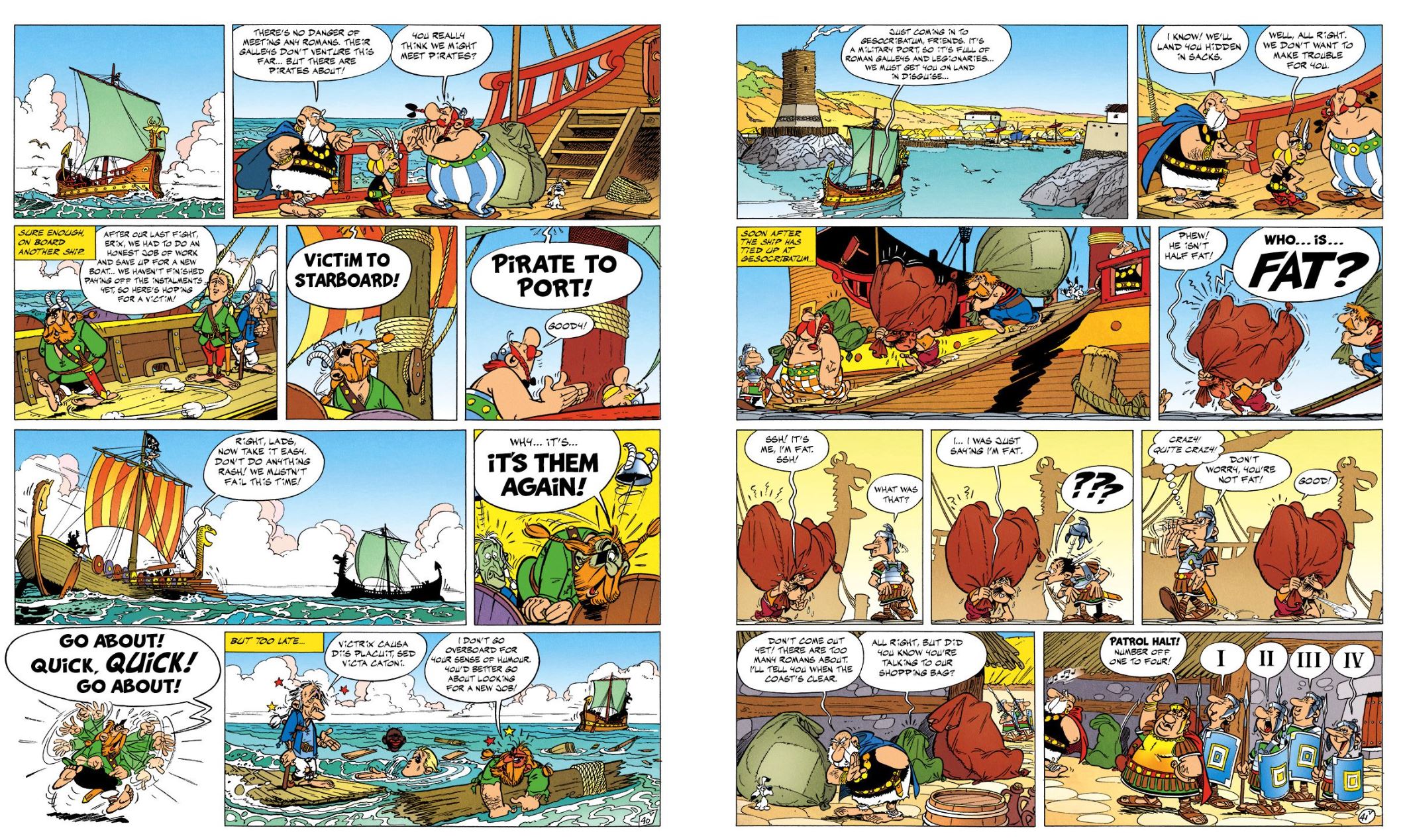
Even with Asterix held captive and all the might of the Empire ranged against them, Gaulish honour is upheld and Overanxius, after some spectacular fights, chases and close calls, is made to eat his words (and a few choice Gallic morsels) in this delightful, bombastic and exceedingly clever celebration of pride and whimsy.

Astérix is one of the most popular comics in the world, translated into 111 languages, with a host of animated and live-action movies, games and even his own theme park (Parc Astérix, near Paris). Approaching 400 million copies of 41 Asterix books and spin-off volumes have been sold worldwide, making Goscinny & Uderzo France’s bestselling international authors. This is sublime, supremely enjoyable comics storytelling and you’d be as Crazy as the Romans not to increase those statistics by finally getting around to acquiring your own copies of this fabulous, frolicsome French Folly. This collection is a great way to enjoy that legacy of legends but be aware that – weighing over a kilo – you might want to top up on magic potion before picking it up…
© 1961-1965 Goscinny/Uderzo. Revised English translation © 2004 Hachette. All rights reserved.

Today in 1907, Disney animator/Gold Key artist & scripter George Waiss (Uncle Scrooge, Donald Duck, Junior Woodchucks, Looney Tunes, Porky Pig) was born, followed in 1919 by Argentinean Golden Age artist Arturo Cazeneuve (Seven Soldiers of Victory, Newsboy Legion, Blue Beetle).

Despite ushering in the age of Immortal Asterix this day in 1959, we lost cartoonist/writer/artist and creator of Millie the Model Ruth Atkinson in 1997 and pioneering strip cartoonist Martha B.MartyLinks (Emmy Lou, Bobby Sox) in 2008.
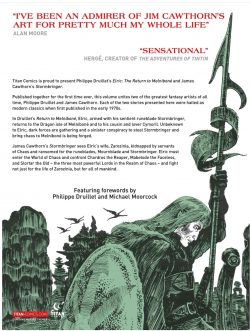
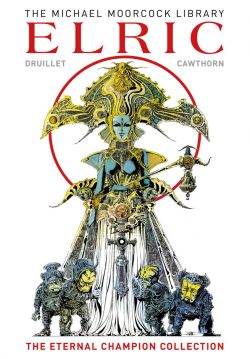
The Michael Moorcock Library – Elric: the Eternal Champion Collection


Adapted by James Cawthorn and Philippe Druillet, & various (Titan Comics)
ISBN: 978-1-78586-955-6 (HB/Digital edition)

This book includes Discriminatory Content produced in less enlightened times.

Michael Moorcock began his career at age 15; writing and editing classic British comic strips like Dogfight Dixon, Jet Ace Logan, Captain Condor, Olac the Gladiator, Tarzan and many, many other weekly favourites. As the swinging Sixties dawned he made the transition to prose fiction where he single-handedly revitalised a genre via the creation of Elric and the high-concept notion of an Eternal Champion.

Debuting in 1961, Elric is a landmark of fantasy and particularly its Sword & Sorcery subdivision: the foretold, fore-doomed last ruler of pre-human civilisation Melniboné, a race of cruel, nigh-demonic sorcerers. These arrogant, dissolute creatures are at the end of a slow, decadent decline after millennia of dominance over Earth. Albino Elric is physically weak, buoyed up by drugs, blood and dark magic, and of a brooding, philosophical temperament. He cares for little save his beautiful cousin Cymoril, who will die one day whilst he battles her loathsome usurping brother Prince Yyrkoon in service to a manipulative god of Chaos.

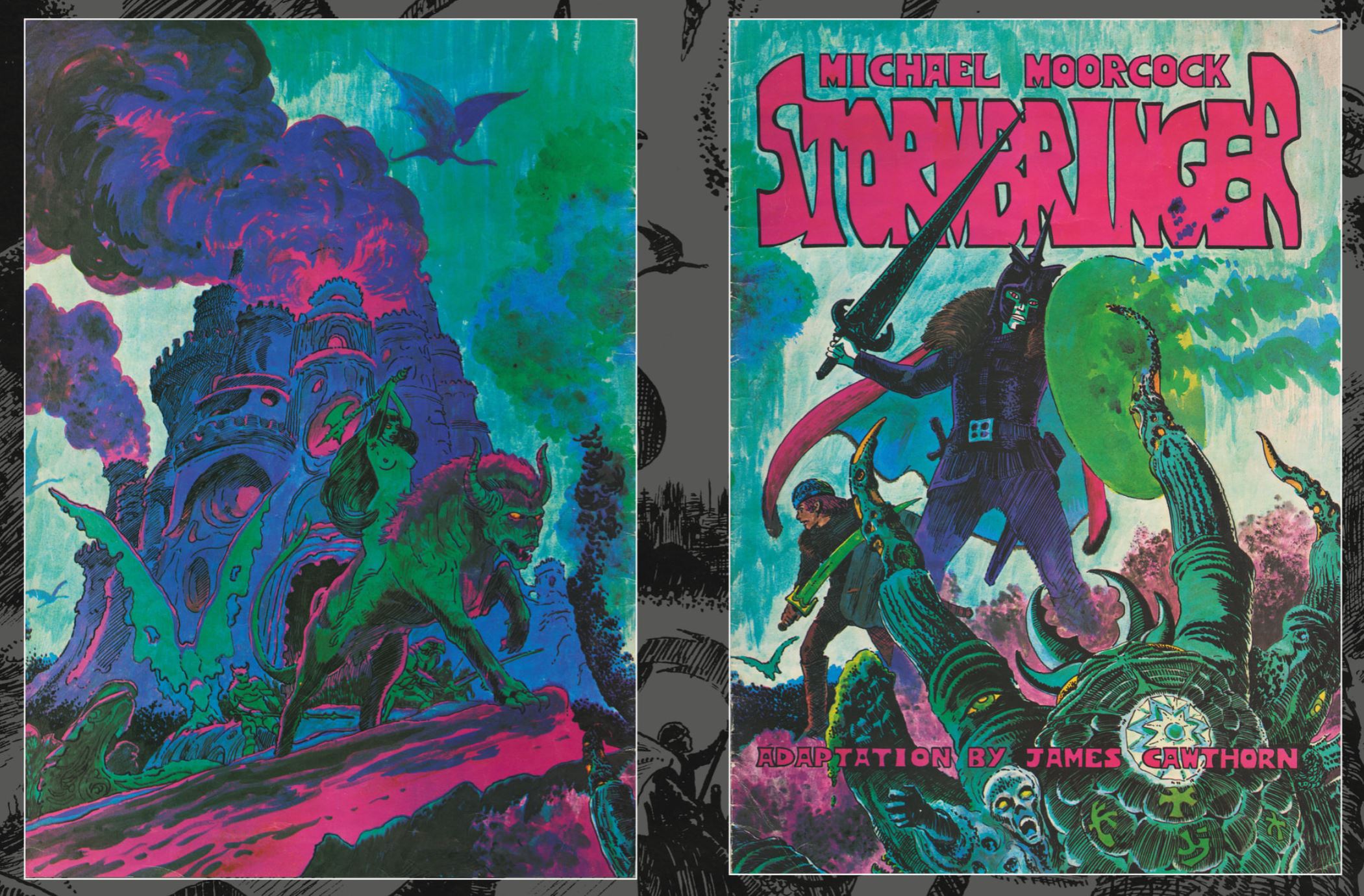
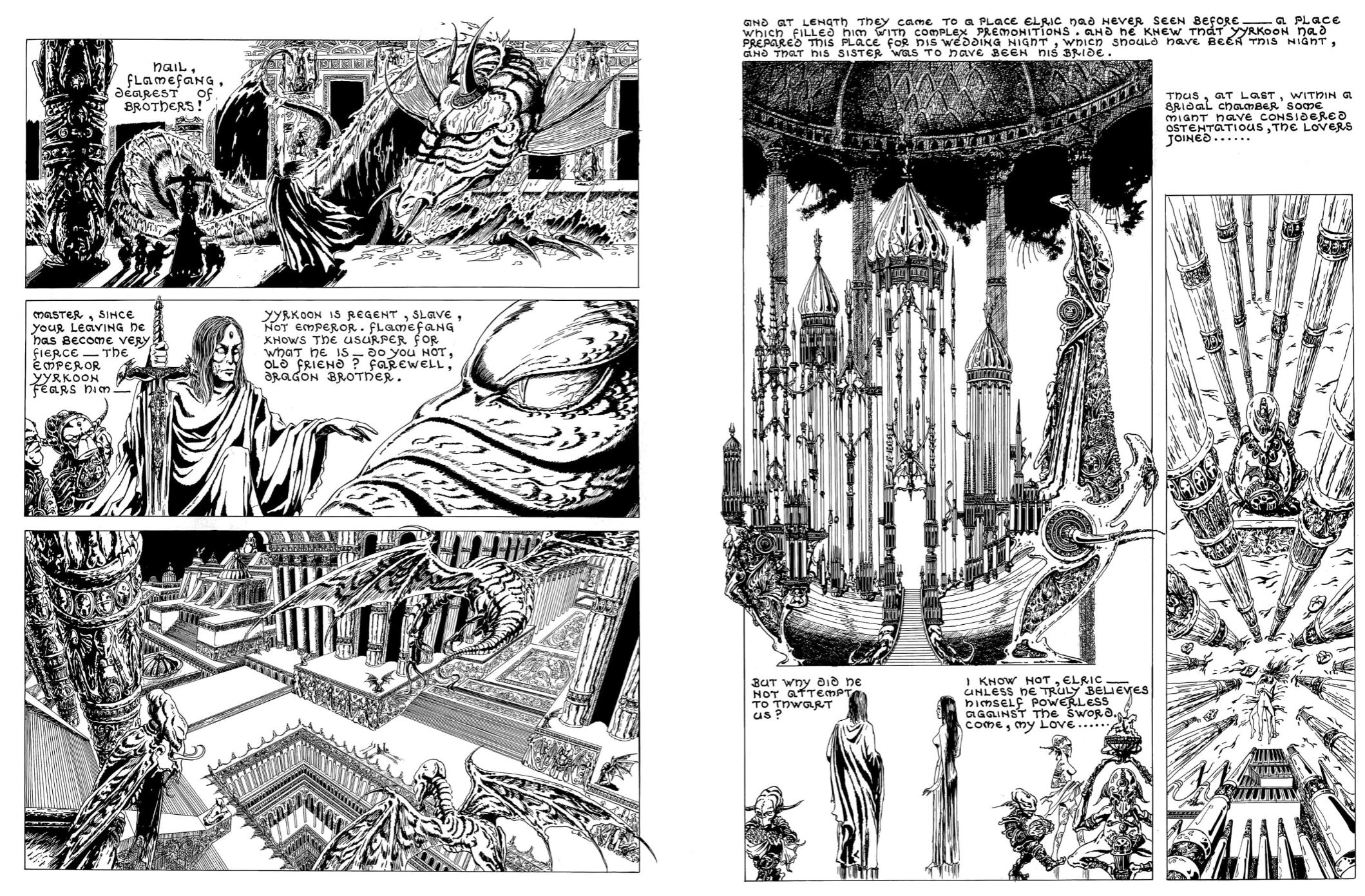
In this collection that day is right now as primary and premiere Elric artist Jim Cawthorne limns that final clash in a hugely personal adaptation from 1976, first and privately published by British concern Savoy Books in an edition that never really reached its natural audience…

“White Wolf” Elric doesn’t even want to rule, but it is his duty, and he is the only one of his debased race to see the (comparatively) freshly evolved race of Man as a threat to the Empire. He is owned if not actually possessed by terrible black sword Stormbringer: one of a matched pair of sorcerous weapons that steal the souls of their victims and feed that stolen life and vitality to the wielder…

Elric is a tragic incarnation of the restless Eternal Champion, reincarnated in every time, place and alternate dimension. His life is violence, blood and unending tragedy, exacerbated by dependence on that soul-drinking ebony blade and his sworn – if somewhat compelled and thus reluctant – allegiance to the chimerical Lords of Chaos.

Everybody knows all that, right?

The 13th volume in a proposed complete Michael Moorcock Library of comics adaptations (as well as reissue of the prose works), these yarns – chronologically at least – are the very first pictorial narratives of the doomed king; given an archival polish and pictorial upgrade by way of a brace of Introductions from Moorcock himself and Philippe Druillet. They are bolstered by a substantial contextual essay at the end. First, though, is time for a little history…

A migrated Tynesider lodged surreptitiously and contentedly in Ladbroke Grove at a time of great turmoil in the UK, James Cawthorn was an old friend, comics co-worker and always Moorcock’s preferred illustrator of the Last Emperor. Driven, solitary, universally respected and wedded to his craft, he wrote strips for Lion, Tiger and the UK weekly comics mill, painted murals and probably book covers; made backdrops for theatre productions; private art commissions; decorated apparel and/or instruments for musicians and bands like Hawkwind and Motörhead while toiling laboriously (and far too slowly and meticulously to be commercial) on beloved passion pieces like Stormbringer.

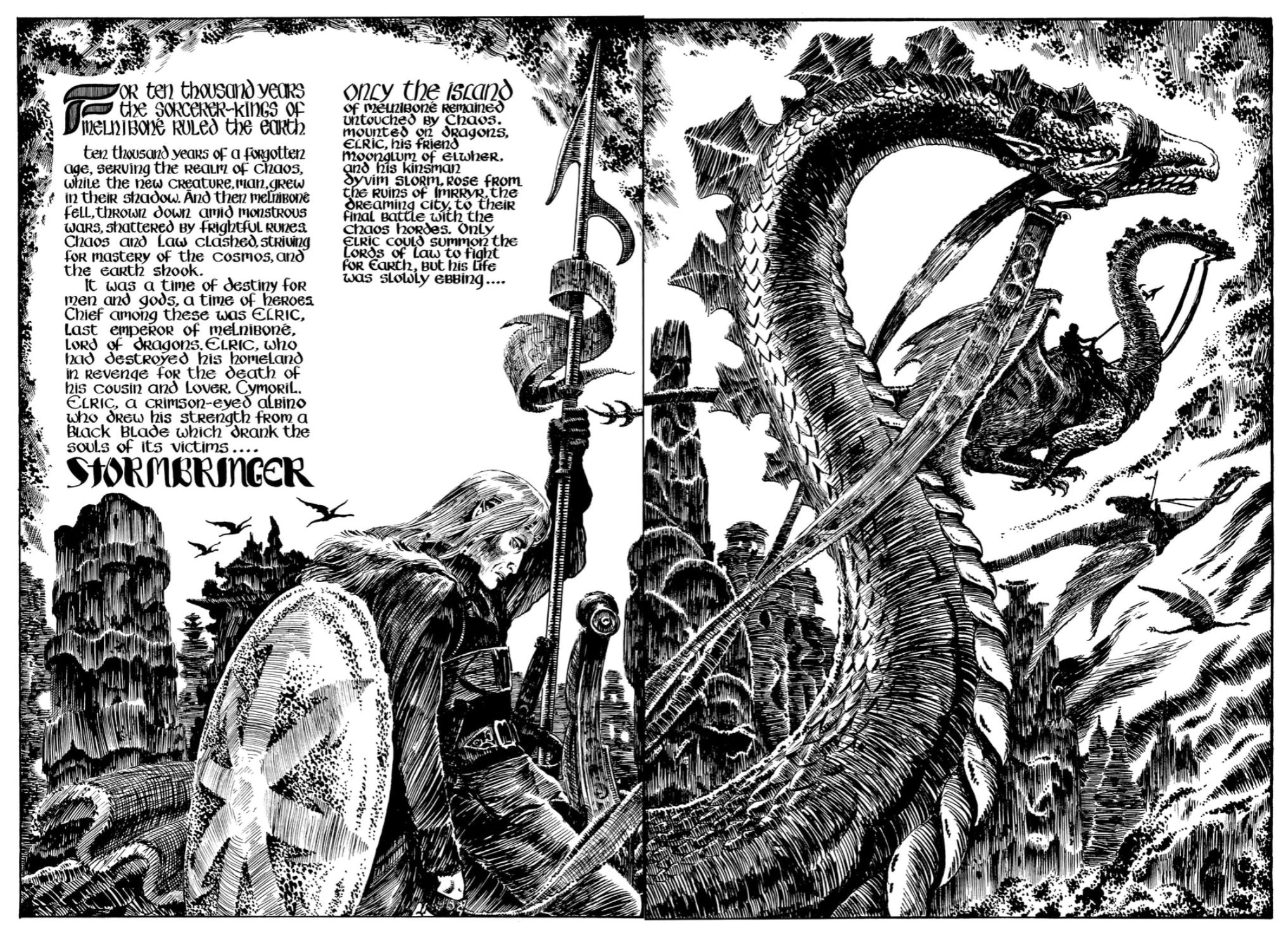
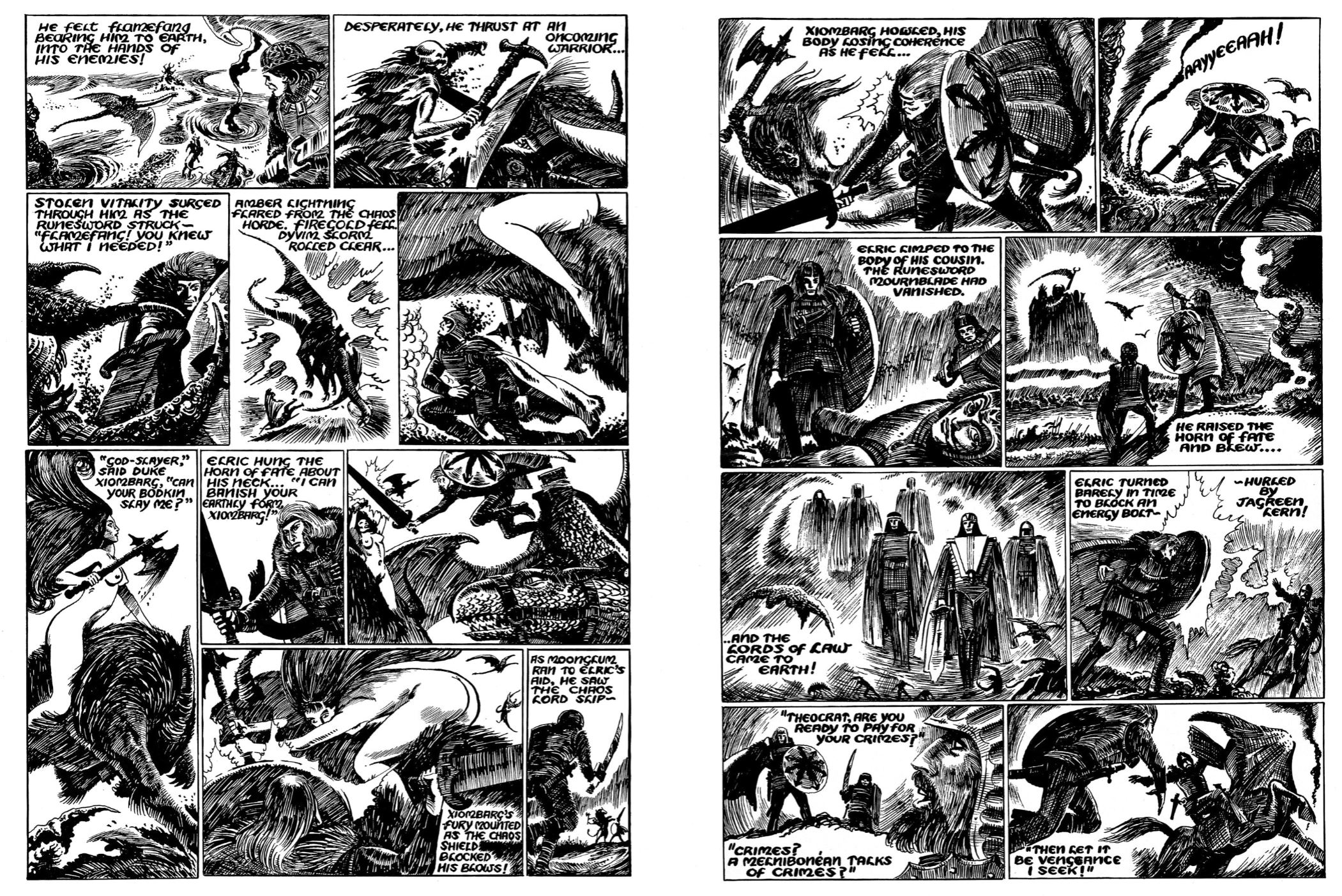
Cawthorne’s unique and potent adaptation of Moorcock’s epic book (a reworking of novellas Dead God’s Homecoming, Black Sword’s Brother, Sad Giant’s Shield and Doomed Lord’s Passing) was his masterpiece: released by admirers at Savoy because its owners Dave Britton & Michael Butterworth were prepared to pay in advance and wait for him to finish according to his own excoriatingly exaction standards. It was worth the wait when that epically huge cardstock album (600 x 430mm – 24 inches by 17!) finally blew away those lucky enough to get a copy. This reproduction gives readers everything they could want, but sadly cannot impart the wonderous sheer bloody size of it in your hands…

It was mostly missed here but hugely popular in German…

The complex convoluted story of that book’s creation holds even more revelations but are Moorcock’s to share, so let’s turn briefly to the tale itself.

Michael Moorcock’s irresistible blend of brooding Faustian tragedy and all-consuming action is (arguably) best enjoyed in his stories of Elric, but that restless imagination crafted many incarnations of his Eternal Champion able to stand on their own bloody merits and constantly shaped and reinterpreted by a vast and varied array of unique artistic visions. Elric is one doom-drenched, tragedy-attracting incarnation of the Eternal Champion, an aspect of a heroic force reincarnated in every time, place and alternate dimension. His specific life is bound to blood and self-torment, exacerbated by his dependence on a soul-drinking black sword and his sworn allegiance to callous and chimerical Lords of Chaos.

Here that angst-filled destiny come crashing around the hero’s head as brief moments of domestic contentment are washed away in blood when the eternal war between the Lords of Chaos and Order leads to the abduction of his human wife Zarozinia and Elric taking up the black blade for the final times. He reunites with old companion Moonglum and hunts down Jagreen Lern, Theocrat of Pan Tang as he attempts to conquer the world for his allies, the Dukes of Hell. The battles are long, savage, brutal and fantastical and result in the end of all that exists. However, it’s never been about when or where one dies but how and why…

Admit it, you should read more books, right?

Counterpointing that epic comics narrative is a contemporaneous appreciation from across the channel, where Europe also caught the cosmic zeitgeist of the era..

In the 1960s Elric’s oeuvre was translated by Moorcock & author Maxim Jakubowski introducing an up and coming illustrator to the world of Heroic Fantasy. Comics and fantasy storytelling took a huge leap forward in 1975 when Gallic comics collective Les Humanoides Associes began publishing groundbreaking magazine Métal Hurlant. However, one of their future visual mainstays had begun breaking borders and boundaries almost a decade earlier.

Photographer/artist Philippe Druillet started his comics career in 1966 with apocalyptic science fiction epic Le Mystère des abîmes (The Mystery of the Abyss) which introduced doom-tainted intergalactic freebooter and nomadic wanderer Lone Sloane in a tale of a far distant tomorrow thematically influenced in equal measure by H.P. Lovecraft, Clark Ashton Smith and A.E. Van Vogt. We will get to his other works in the courses of times…

Born in Toulouse in 1944, Druillet was raised in Spain, and his comics work was grandiose, panoramic, deeply baroque and overwhelmingly cosmic in scope. He also pretty much rejected standard formats and panels layouts in favour of boldly shocking graphics. Druillet began working for Pilote in 1969 and revived his star-rover in numerous shorter pieces, initially published together in 1972 as The Six Voyages. This collection, however, focuses on his brief but inspirational dealings with Moorcock’s primary ill-fated cosmic traveller…

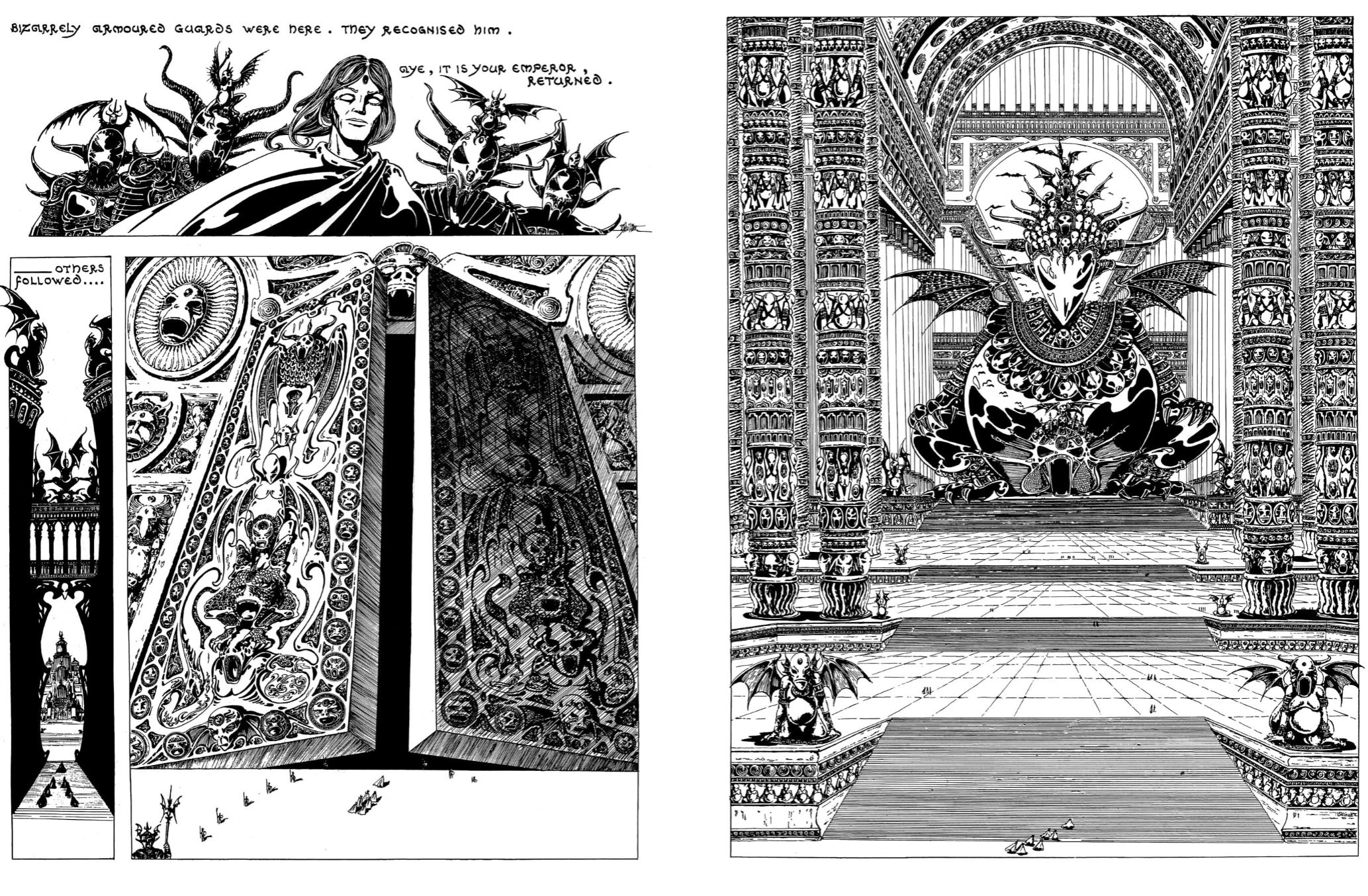
After preliminary tentative spreads in Moi Aussi, in 1969, a 21-plate portfolio entitled La Saga d’Elric le Necromancien was published. In 1973 Moorcock’s reworking of Michel Demuth’s text for the portfolio became Elric: The Return to Melniboné as published by Unicorn Bookshop in 1973. Its influence was far-reaching: just ask American creators like Keith Giffen, who repatterned his entire drawing style on what he saw…

Reproduced in its original monochrome, the brief interlude spectacularly and mind-alteringly details how the former Emperor reclaims his throne and position from apparently-ascendant rival Prince Yyrkoon and reacquaints himself with his bride-to-be Cymoril. Elric has no conception that the Lords of Chaos are closely watching and laying their plans for his future…

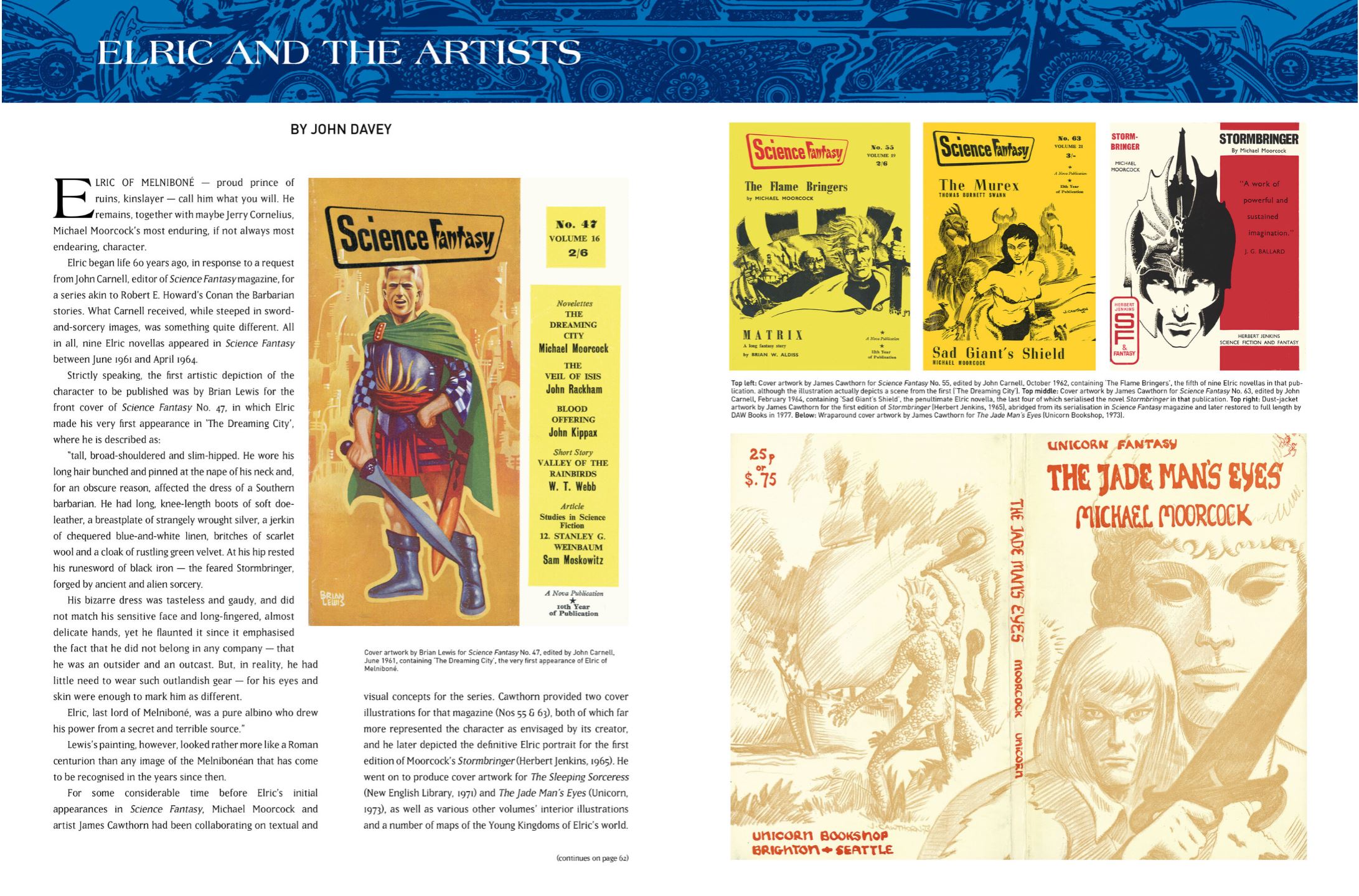
Closing the arcana and antiquities is ‘Elric and the Artists’ an incisively informative briefing by John Davey, detailing earlier efforts to visualise the Last Emperor, concentrating on his prose debuts, before going on to summarise and scrutinise the long history of graphic novel and comics interpretations.

Moorcock and his visual collaborators changed the comics world forever, This is how that all started…

Adapted from the works of Michael Moorcock related to the character of ELRIC © 2021, Michael & Linda Moorcock. All characters, the distinctive likenesses thereof, and all related indicia are TM & © Michael Moorcock and Multiverse Inc.
Elric the Return to Melniboné was first published by Unicorn Bookshop, 1973. Stormbringer was first published by Savoy Books in 1976.

EC horror and romance maestro Jack Kamen was born today in 1920, and shares the date with eco-activist cartoonist Larry Marder (Tales of the Beanworld) from 1951; editor and scripter Jim Salicrup in 1957; British comics veteran/educator Nigel Kitching (Sonic the Comic) in 1959 and The Boondocks creator Aaron McGruder in 1974.

Today in 1960 an era ended with the final page published of Warren TuftsLance.

Alone volumes 1 and 2: The Vanishing and The Master of Knives


By Gazzotti & Vehlmann, translated by Jerome Saincantin (Cinebook)
ISBNs: 978-1-849181-96-9 (PB Album/Digital edition vol 1) 978-1-84918-206-5 (PB Album/Digital edition vol 2)

These books include potentially Discriminatory Content produced for dramatic effect.

Fabien Vehlmann was born in 1972 yet his prodigious canon of work (from 1998 to the present) has earned him the soubriquet of “the Goscinny of the 21st Century”. He entered the world in Mont-de-Marsan and grew up in Savoie, growing up to study business management before taking a job with a theatre group. In 1996, after entering a writing contest in Le Journal de Spirou, he caught the comics bug. Two years later with illustrative collaborator Denis Bodart he published a mordantly quirky, sophisticated portmanteau period crime comedy entitled Green Manor. From there on his triumphs grew to include – amongst many others – Célestin Speculoos for Circus, Nicotine Goudron for L’Écho des Savanes, The Marquis of Anaon and major-league property Spirou and Fantasio

Bruno Gazzotti is Belgian, born in 1970 and was a student of Institut Saint Luc in Liège. Another artist addicted to comics from his earliest years, he started being paid to draw them in 1988, after being hired by Le Journal de Spirou editor Patrick Pinchart on the strength of his portfolio alone. Before long he was illustrating Le Petit Spirou with Tome & Janry. In 1989, he and Tome created New York Cop Soda, which kept Gazzotti busy until 2005, when he resigned to co-create award-winning feature Seuls

Alone volume 1: The Vanishing

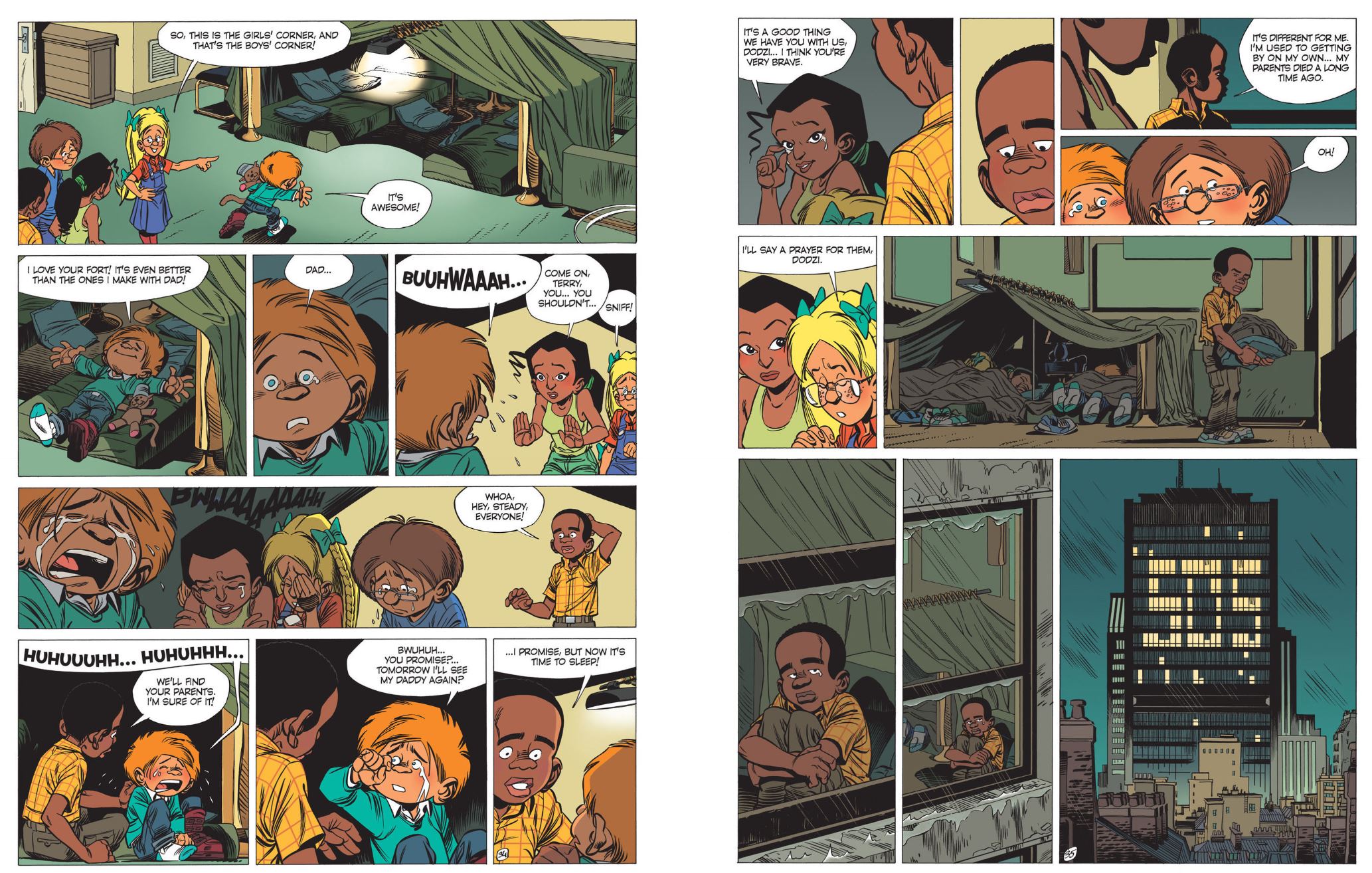
Released in January 2006, Seuls – La disparition is a superb example of a kids’ thriller suitable for all ages: evoking the eerie atmosphere of TV series Lost, with notes of modern phenomenon Stranger Things and the most disturbing elements of Philip Wylie’s novel The Disappearance and William Golding’s Lord of the Flies.

Translated as The Vanishing, the first chapter show glimpses of an ordinary bustling town, with simple folk going about their business. Our swift peeping settles on a cross section of kids: Ivan, an imaginative child of wealth who wants for nothing but never sees his dad anymore and Leila, a born engineer, inventor and tinkerer. Her poor but honest dad always has time to play and favourably critique her latest gadget…

Camille is studious and over-focussed on exams and achievement and Terry is pretty much still a baby. He certainly acts like one, trying to stay up late, binge watching TV and throwing tantrums if he doesn’t get his way. Sadly, not all the children in town have such typical lives. Dodzi has just been taken into the social care system. His early life has made him tough and resilient but won’t stop other young inmates handing him a beating on this ominous, odd-feeling portentous night…

Morning dawns overcast and forbidding. The city is quiet. Roaming empty streets, Dodzi calls out to anyone who can hear and is met – actually run over – by Leila and Terry on her bike. They are all pretty scared and have seen nobody else at all…

No one else is around. All the adults are gone, and every kid they know. The internet is down, television and radio only roar out static. Above, fearsome ponderous storm clouds gather. Within minutes fear turns to panic and violence before, eventually, Dodzi brutally enforces calm and leads them away, only to stumble into Camille being attacked by a dog. As the tough guy tries to fight it off, the rabid beast senses something in the shadows of an alley and bolts away…

As the youngsters wander, someone watches the shocked, scared waifs, and after they joyously blow off steam in a fountain, they meet final lost boy Ivan. He invites them back to his mansion at the edge of town where they find food while being subjected to his theories on what’s happened… everything from a shared dream to an extinction event to the possibility that they’re dead and in hell…

Needing more information, Dodzi and Leila try to drive one of many cars on the estate while the smaller kids sort out a proper meal. Neither task goes well. The cooking is a disaster while the near-lethal reconnaissance only reveals more empty streets, wrecked shop fronts and wild animals roaming the avenues and alleys. While the motoring minors seek to evade two rhinos, Terry and Camille are nearly eaten by a white tiger that’s got through the estate gates! When Dodzi and Leila return – and following a burst of viciously released tensions – the kids modify and weaponize a 4-by-4 and head back into town. Ivan’s dad owns the tallest building in the city: somewhere stuffed with crucial resources and a place easily fortified and defended…

As the first day alone ends, the kids are bloated with vending machine snacks and playing in the vast office block’s upper reaches, but de facto leader Dodzi is still uneasy. When Leila reports tiny Terry is missing, the notional “man-in-charge” heads out to search, finding to his horror where all those animals came from: a scene of destruction that distracts Dodzi enough that a hidden stalker almost takes him. Naturally, the others have completely ignored his orders and followed, so it isn’t Dodzi who dies…

Thus begins a spooky, powerful and often shocking tale of mystery and imagination with bereft children facing increasingly daunting physical hazards and an escalating series of events which can have no logical or rational explanation…

To Be Continued…

Alone volume 2: The Master of Knives

Debut volume The Vanishing showed an ordinary bustling town rendered an empty mausoleum overnight, with a small cross-section of kids left to survive or die. When it happened, the mystified minors wandered a terrifyingly quiet, suddenly unfamiliar environment until finding each other and the relief of “bad kid” Dodzi who reluctantly took responsibility for their staying alive. Adults were gone, all outside contact severed and wild beasts stalked them so Dodzi brutally enforced calm and lead them away to find a succession of temporary – albeit palatial – refuges to regroup and think. Encounters with escaped circus animals resulted in the little band settling in the towering Majestic Hotel to await whatever came next…

Originally released as Seuls: Le Maître des couteaux in 2007, The Master of Knives opens with Dodzi scouting the vacant metropolis and helping Leila consolidate supplies for a long stay in the lap of luxury. His nervousness remains high as close calls with the liberated beasts in the streets come continually, but the younger children seem to be adapting well. It certainly helps that they are hoarding every toy and treat they find in abandoned shops and houses. Ivan has a plan to occupy him too: systematically calling every telephone number in the phone book. No luck yet, though…

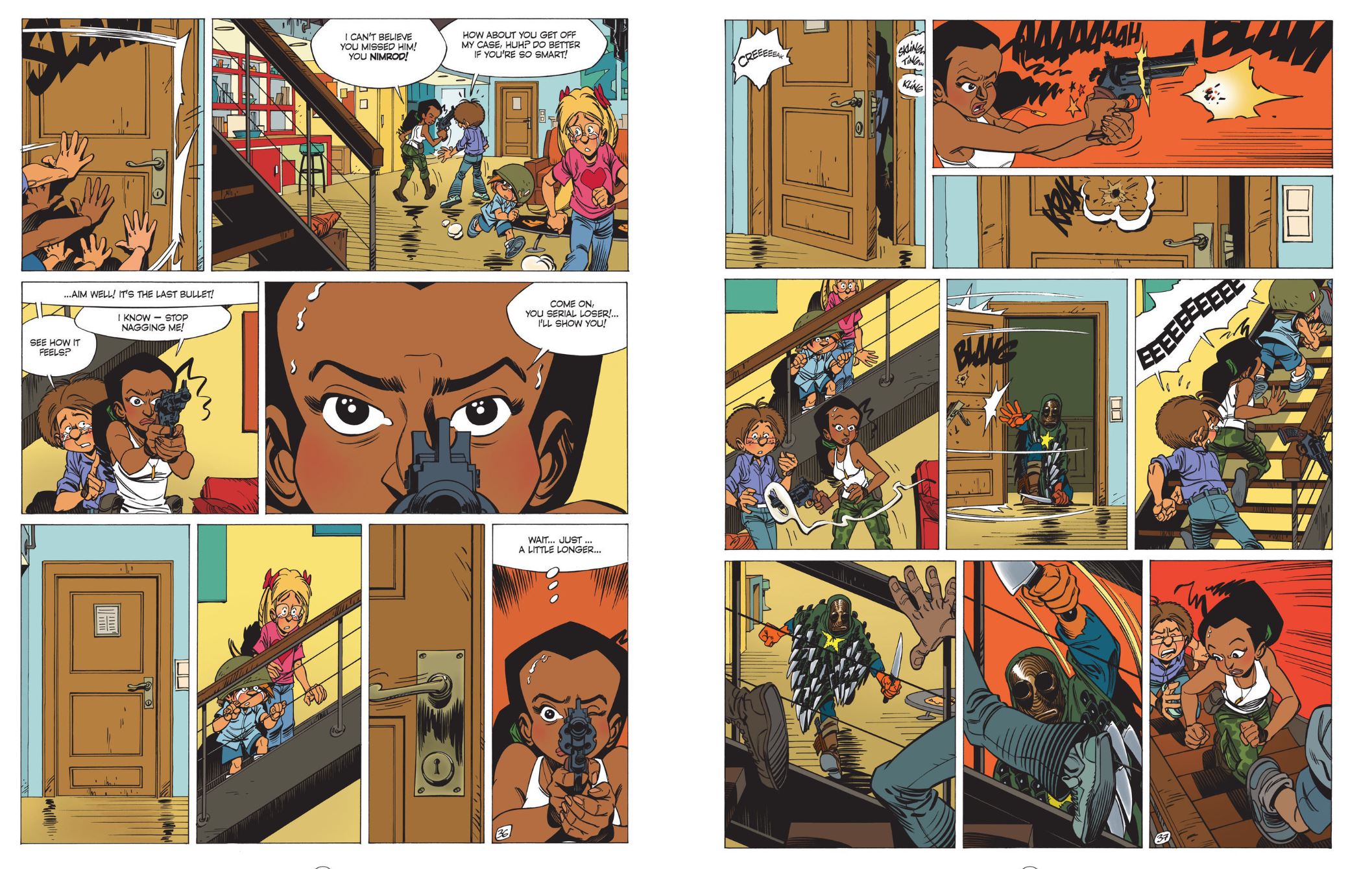
Things start to go south swiftly after he finds his father’s pistol and tempts Leila into a spot of rooftop target practice. When Dodzi furiously confiscates the lethal plaything, he has no idea that he has now become the preferred prey of a mystery stalker. As this masked pursuer enacts a chilling campaign of terror, stressed-out Dodzi agonisingly learns that he is not the only obsession of the terrifying, nebulous cloaked figure draped in blades and daggers…

While the others obliviously fritter away the day, pressure-laden Dodzi is remorselessly hunted over rooftops by the manic killer. When he briefly eludes the hunter, the Master simply doubles back to menace the children in the hotel. Ultimately a shocking confrontation ensues, with the tables turned… but only at the cost of Dodzi’s closely withheld shameful secrets being exposed to all…

In the painful aftermath, the days of innocence are discarded and the orphan family prepares to hit the open road to see if other cities have been emptied too…

To Be Continued…

This spooky, powerful, frequently shocking tale of mystery and imagination sees bereft children facing increasingly daunting physical hazards and an escalating series of events which apparently have no logical or rational explanation. Tension and terror inexorably amplifies with every instalment – just like the real world at the moment.

Alone – running to 12 translated volumes thus far of a projected 14 – was one of the biggest critical and commercial comics hits of the last decade (more than 2 million copies sold!). Seuls even made it to the big screen in 2017, so if you love eerie enigmas and powerful tale-telling, you’ll soon be buying this, you’ll buy these and successive releases to know why…
© Dupuis 2006 and 2007 by Gazzotti & Vehlmann. All rights reserved. English translation © 2014 Cinebook Ltd.

Today in 1912, Terry and the Pirates crafter George Wunder (officially in charge from December 30, 1946 to 1973) was born, followed in 1930 by filmmaker and occasional Superman comics scripter Richard Donner. That same year cartoonist/children’s book illustrator Howie (Eek & Meek) Schneider arrived. In Canada in 1957, small press maven John McLeod (Dishman, Space Kid) joined the party, as did superhero/cover star J.G. Jones in 1962.

This date in 1981 we lost the great Howard Purcell (Sargon the Sorcerer, Green Lantern, Gay Ghost, Mister District Attorney, Enchantress, Sea Devils, Nick Fury, Black Knight, DC mystery and Sci Fi anthologies) and in 2004 comics author and scripter Nat Gertler initiated the first 24-hour comics day.

Spirou and Fantasio volume 7: The Rhinoceros’ Horn


By André Franquin, translated by Jerome Saincantin (Cinebook)
ISBN: 978-1-84918-224-9 (Album PB/Digital edition)

This book includes Discriminatory Content produced in less enlightened times. This book also contains Discriminatory Content included for comedic effect.

André Franquin was born in Etterbeek, Belgium on January 3rd 1924 and died on January 5th 1997. In between there were good times and bad, which he offset by creating the most incredible characters and stories, and by making people laugh and think – but mostly laugh. This is one of the very best you can find translated into English.

Adventure-seeking brave lad Spirou headlined the magazine he was named for from the first issue (dated April 21st 1938). He was created by French cartoonist Françoise Robert Velter using his pen-name Rob-Vel for Belgian publisher Éditions Dupuis in direct response to the success of Hergé’s Tintin for rival outfit Casterman. Originally a plucky bellboy/lift operator employed by the Moustique Hotel (a puckish reference to the publisher’s premier periodical Le Moustique), his improbable exploits with pet squirrel Spip gradually but steadily grew into high-flying, far-reaching, surreal comedy dramas. That evolution was mainly thanks to Velter’s wife Blanche “Davine” Dumoulin who took over the strip when her husband enlisted in 1939 and Belgian artist/assistant Luc Lafnet… at least until 1943 when Dupuis purchased all rights to the property, after which comic-strip prodigy Joseph Gillain (Jijé) took the helm.

When Jijé handed his own trainee/assistant total responsibility for the flagship feature part-way through serial Spirou et la maison préfabriqué (Le Journal de Spirou #427, June 20th 1946), André Franquin ran with it for the next 20 years, enlarging the scope and horizons until it was purely his own. Almost every week fans would meet startling new characters such as comrade/rival Fantasio or crackpot inventor and Merlin of mushroom mechanics the Count of Champignac. Spirou and Fantasio became globe-trotting journalists, travelling to exotic places, uncovering crimes, exploring the fantastic and clashing with a coterie of exotic arch-enemies such as Zorglub and Fantasio’s unsavoury cousin Zantafio.

Franquin, plagued in later life by bouts of depression, passed away in 1997 but his legacy remains; a vast body of work which reshaped the landscape of European comics.

With that brave experiment clearly having paid dividends over decades it’s perhaps timely to remind readers that times and taste having changed radically since then, and as such current UK publisher Cinebook felt the need to issue a heartfelt warning and carefully considered apologia regarding some content of The Rhinoceros’ Horn

I’ll précis it here: it was seventy years ago and our attitudes to hunting, other ethnicities and especially the modern obscenity of killing for ivory and horn have thankfully changed. Please read this book with that in mind. The publishers, of course, phrased it much better…

The Rhinoceros’ Horn was originally serialised in two sequences in Le Journal de Spirou: #764-787 (Spirou et la Turbotraction) and #788-797(La corne de rhinocéros), and spanned 1952 and early 1953 before being united in 1955 hardback album La corne de rhinocéros. The story begins with Spirou exulting over the success of Fantasio’s latest enterprise – personal helicopters worn as backpacks – but discovers his pal is rather down in the dumps. The ingenious journo’s just been dressed down by his editor on The Mosquito and warned that the paper has hired a new reporter: a real go-getting hotshot. Dejected and desperate, Fantasio resolves to revive his flagging career by staging a publicity stunt: robbing the Good Bazaar Department Store

As the rattled reporter draws up his plans and sends a warning to the store of his intentions, a colossal explosion shakes the town. Persons unknown have blown up the nearby Turbot car plant. With even more to prove now, Fantasio proceeds…

Dragged along for the ride and to photograph the stunt, Spirou and snarky squirrel Spip reluctantly join their pal in the harebrained venture. Alighting on the roof of the emporium courtesy of those petrol-powered “Fantacopters”, they deftly break in through the fire-door, Spirou recording everything with his gigantic flash camera. Of course, our lead-footed burglars make an appalling clatter and tremendous mess, but no night-watchmen confront them. They’ve all been incapacitated and tied up by real robbers…

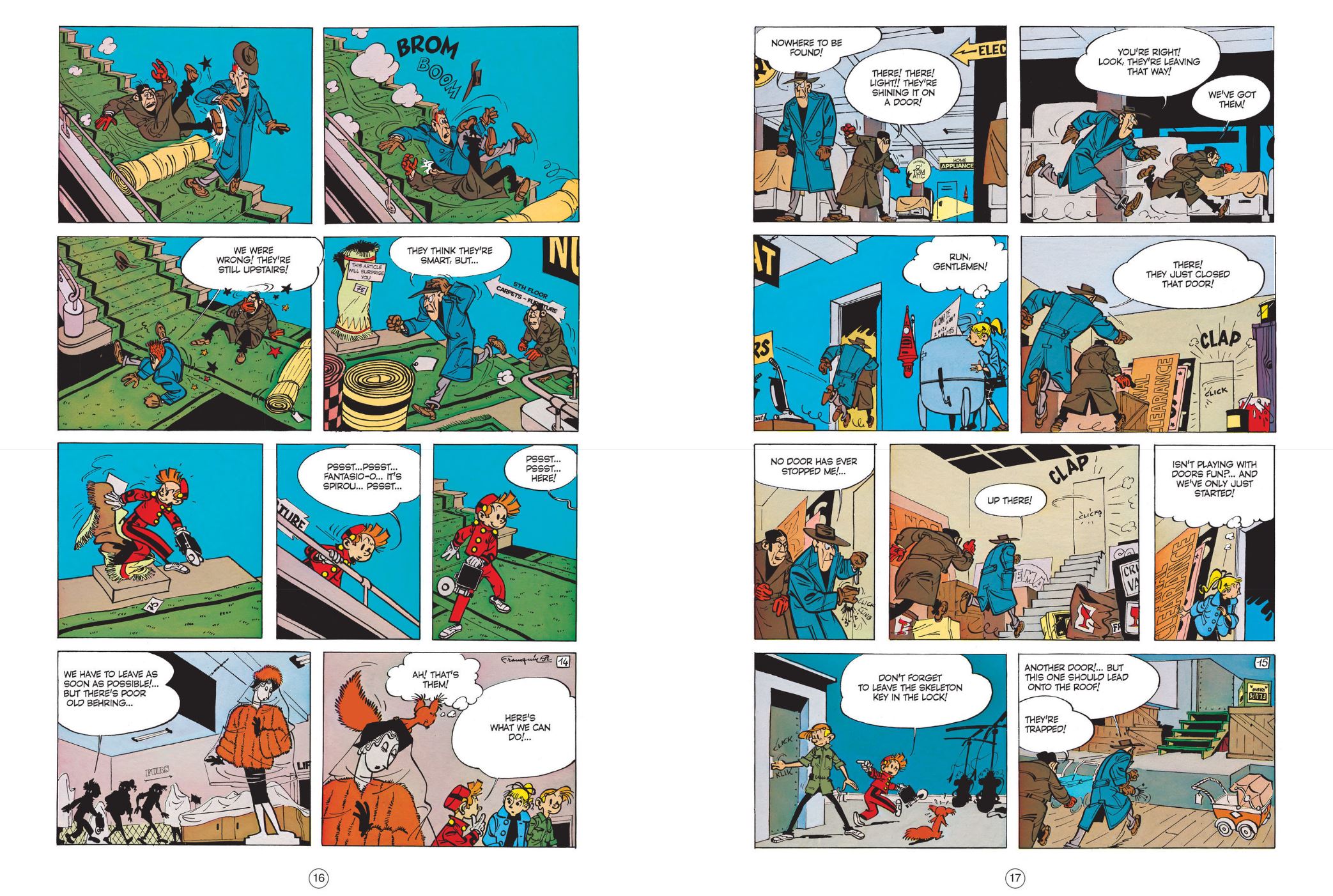
Hearing villains approaching, the lads take refuge in a wardrobe in the bedrooms department and discover an old acquaintance already there. Behring works for Turbot and was wounded in the explosion earlier. Moreover, he’s carrying the company’s blueprints for their latest advancement. The burglars in the darkened store are actually trying to finish him off to get them. Handing the boys an envelope and begging them to get it to his employer Mr. Martin, the troubleshooter loses consciousness just as the involuntary heroes are challenged by a shadowy figure demanding the precious prize. It’s not the bad guys, however, but Fantasio’s journalistic nemesis…

Cellophine is already streets ahead of them: she knows of the plot to steal Turbot’s revolutionary supercar. All she needs is the address Behring muttered to secure an interview with the in-hiding Martin and her next terrific scoop.

…And that’s when the gun-toting goons make their move, demanding blueprints and the rendezvous address. Thankfully, Spirou is still holding the camera and super-bright flashgun…

Calamitously – and hilariously – fleeing for their lives through the darkened store, the guys eventually escape via fantacopters from the top storey, allowing Cellophine to lock the bandits up on the roof before dragging Behring to safety. Next morning the boys are in Whistleton but Martin has already fled. His note reveals nothing, but later a sinister stranger in a café advises them to surrender the blueprints and warns them not to join Mr. Martin at Bab-el-bled in North Africa.

Ignoring him and returning home, they encounter distressingly persistent Cellophine and Spirou clues her in. Sadly, the thugs have also tracked them down and overhear the plans, so when the boys catch a jet liner to Africa, heavily disguised heavies are in the seats behind them…

These villains are on the lads’ tails all though the avenues and alleyways of Bab-el-bled, before a wig malfunction in the Souk warns Spirou that they’re being shadowed and another hectic chase ensues. Thinking they’ve at last shaken their pursuers our heroes go to Martin’s house only to learn he was ambushed by the bandits…

Happily the troubled Turbot exec had escaped and fled further into North Africa. He’s apparently rushing off to the M’saragba Animal Reservation but as the boys try to follow Cellophine appears and pips them to the last spot on the plane – stowed away in the baggage hold.

Forced to follow by train, it is eight days later when Fantasio & Spirou finally reach the Reserve and yet again – as infinitely aggravating Cellophine explains – they’ve just missed Martin. He was chased into the bush by the implacable bandits…

Going after him they find him just after the thugs do. Having shot Martin, the villains are smugly gloating when the sinister stranger from Whistleton café appears. He’s a cop and finally has enough evidence to arrest them for blowing up the factory, but they are all too late. The harassed entrepreneur has already got rid of his portion of the plans, giving them to a local friend to hide.

As Martin is carried to hospital, Spirou & Fantasio volunteer to retrieve those accursed documents but have not reckoned on the quirky ingenuity of the chief of the Wakukus, the vastness of the reserve and the sheer bloody-mindedness of local flora and fauna. After days of unpleasant and painful adventures, they finally locate the safeguarding tribe and, following even more nerve-wracking moments convince the chief that they too are friends of Martin. That’s when the king delivers his bombshell…

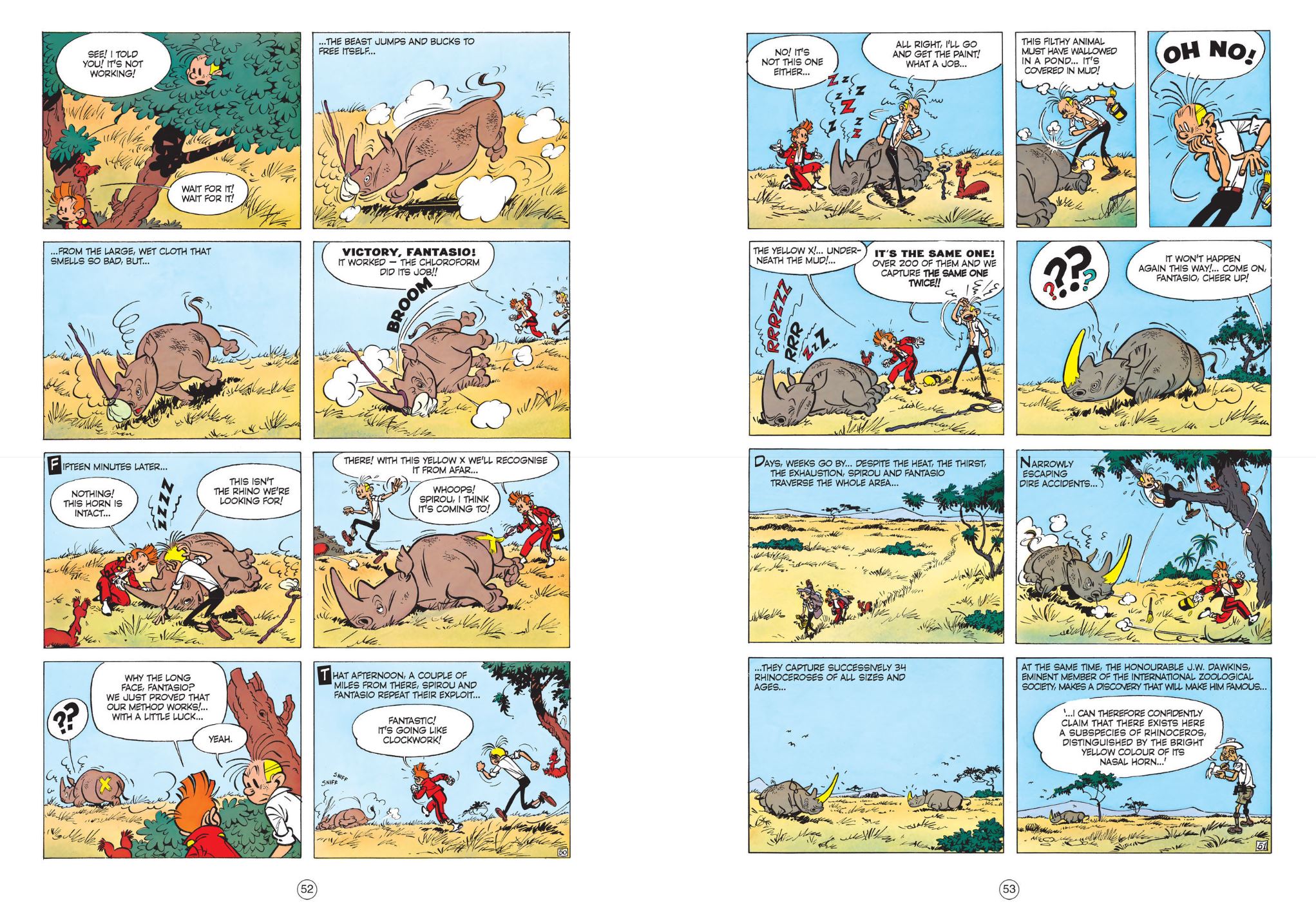
Tasked with keeping safe the plans – now contained on a spool of microfilm – the wily Wakuku had his subjects capture a rhino before drilling a hole in its horn and sealing the container within. They then released it back into the wild. He has no idea where it is now or even which of the 200 in the park it might be…

Determined to complete their mission, the lads spend months tracking and capturing assorted beasts. The task becomes only slightly easier after they find a dipsomaniac white trader who sells them hunting gear and latterly, yellow paint so that they can tell the rhinos they’ve already checked from the ones so cunningly evading them…

It’s a backbreaking, heartbreaking and increasingly pointless task but only when their resolve crumbles and they brokenly give up and head for home do they find the prize in the very last place they looked…

Even the trip back is a tribulation, and eventually they collapse only to awake in a nice clean hospital with Martin and Cellophine offering to fill in the blanks on this baffling case. Six weeks later the lads are recuperating at home when Behring shows up. He’s got a little reward for them from the grateful Turbot Company but, as usual, Cellophine is on hand to spoil it for Fantasio…

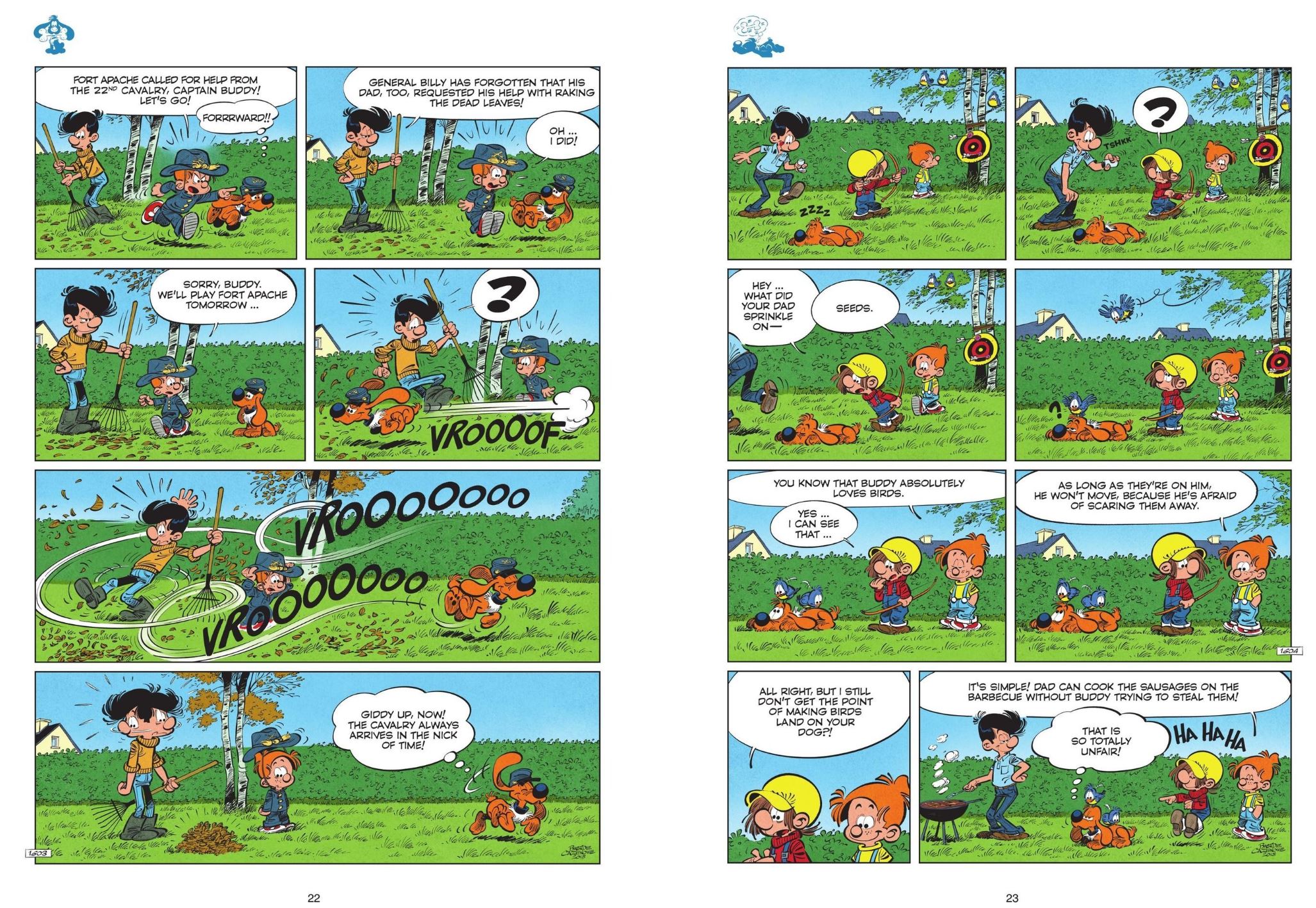
Stuffed with superb slapstick situations, riotous Keystone Cops chases and gallons of gags, this exuberant, high-spirited yarn is a true celebration of angst-free action, thrills and spills. accessible to readers of all ages and drawn with all the beguiling style and seductively wholesome élan which makes Asterix, and Lucky Luke so compelling, this is an enduring comics treat from a long line of superb exploits, certain to be as much a household name as those series – and even that other kid with the white dog…
Original edition © Dupuis, 1955 by Franquin. All rights reserved. English translation 2014 © Cinebook Ltd.

Today in 1942 Underground Commix pioneer Dan O’Neill (Air Pirates Funnies, Odd Bodkins) was born, preceding both Teris Sue Wood (Wandering Star) in1965 and super-glamour artist Michael Turner (Witchblade, Fathom, Superman/Batman) in 1971.

Deaths on this date include British satirist & caricaturist Thomas Rowlandson in 1827. In 1962 Golden Age cartoonist/animator Robert Winsor McCay (Nemo in Adventureland, Impie, Bulletman, Ajax the Sun Man, Blackstone the Magician) and animator turned cartoonist Bob Wickersham (Spencer Spook, Funny Films, Ha Ha Comics, The Kilroys, The Kellys, Flippity and Flop, Colonel Punchy Penguin) both passed on as did veteran comics book illustrator Art Saaf (Sheena, Jumbo Comics, Princess Pantha, Boris Karloff Tales of Mystery, Ripley’s Believe It or Not!, The Twilight Zone, Supergirl) in 2007.

In 1938 on this date, Tif et Tondu and Spirou premiered in the debut issue of Le Journal de Spirou.

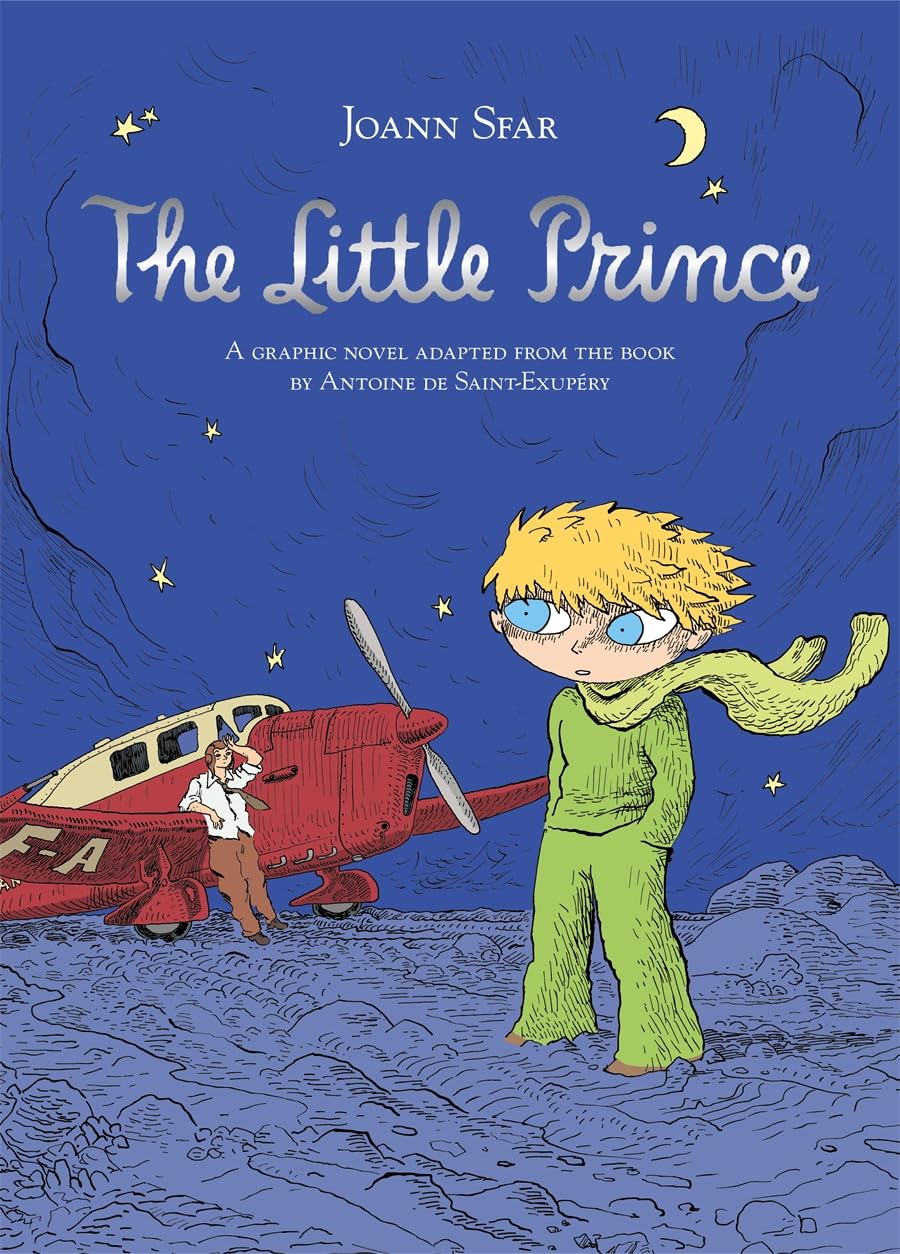
The Little Prince – A Graphic Novel adapted from the book by Antoine de Saint-Exupéry


By Joann Sfar, with colours by Brigitte Findakly, translated by Sarah Ardizzone (SelfMadeHero)
ISBN: 978-1-914224-46-1 (HB)

This book includes Discriminatory Content included for dramatic effect.

The Little Prince was written by warrior, aeronaut, aristocrat, illustrator and auteur Antoine de Saint-Exupéry, Published in 1943 in the US in French & English, and again posthumously in1946 (as the pilot/writer had been Missing; Presumed Dead for two years), it became a glabally popular classic. You should read it in the language of your choice. It’s been adapted into every form of human expression and never failed to impress or deeply move.

In 2008 Joann Sfar adapted it to his preferred medium, and Le Petit Prince: d’après d’oeuvre d’Antoine de Saint-Exupéry was published by Gallimard Jeunesse. In the 80th anniversary year since the original book took off, SelfMadeHero celebrate the event with a fabulous, augmented edition to simply wallow in.

As well as fully re-presenting Sfar’s bold interpretation this tome also offers a fully updated translation and includes a ‘Timeline’ for Antoine de Saint-Exupéry and his creations, and from Ardizzone herself a concluding ‘Translator’s Note – The Reader Perched on Your Shoulder’ to accompany the now-traditional creators’ biographies as closing ‘Authors’ section.

You’ve heard this before and its’s still utterly true, some things you don’t talk about, you just do, and this mesmerising adaptation is the very epitome of that. Here’s all you get from me…

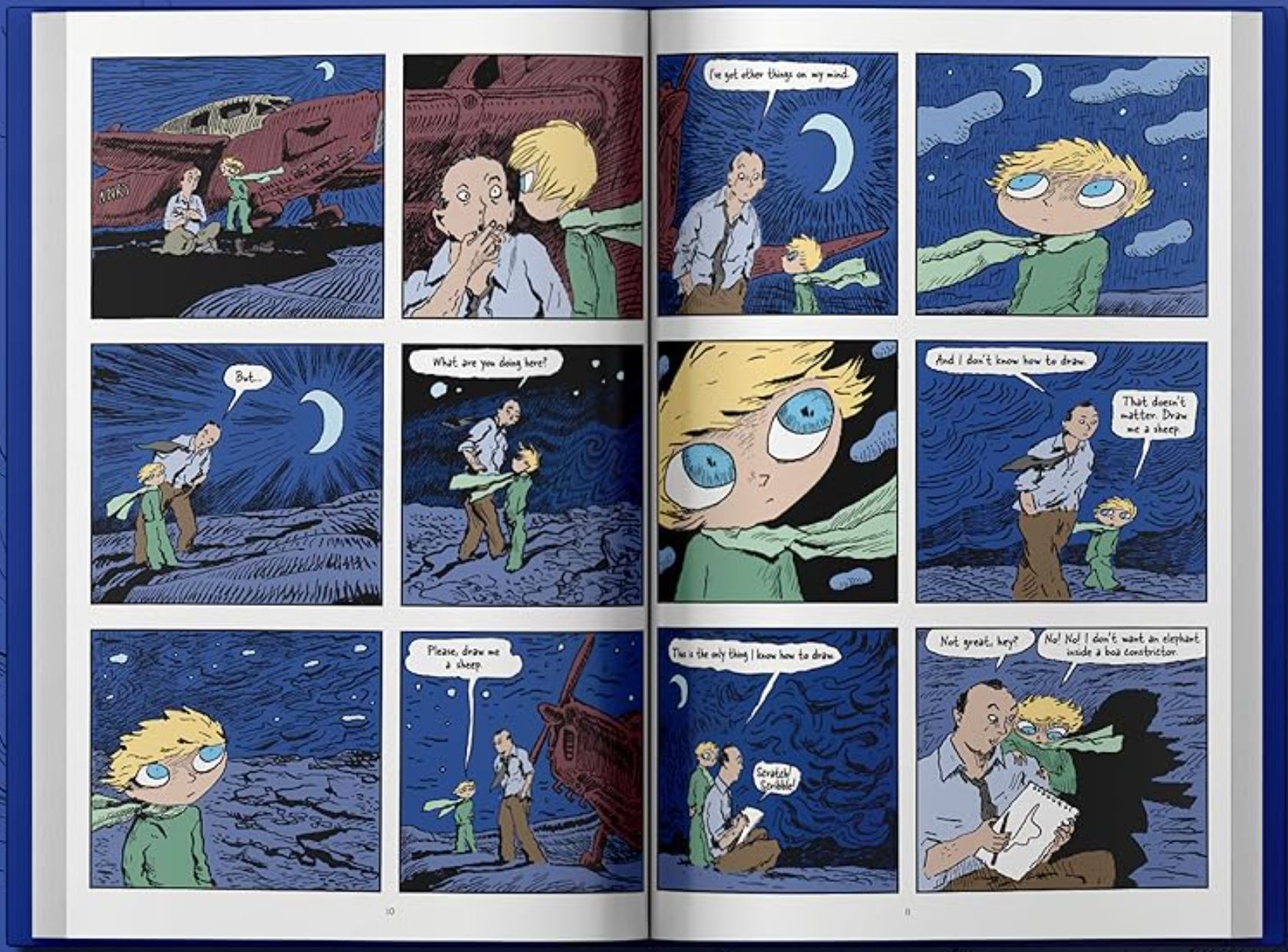
In the African desert an aviator strives to repair his downed plane. The work is hard, his head hurts and he doesn’t really know what he’s doing. He always wanted to be an artist, not a flier doomed to die of thirst and loneliness in blistering heat…

Abruptly his prospects change as a strange, golden-haired boy asks him to draw a sheep…

Soon the politely engaging lad is keeping him company as he works: telling of the strange small planet he came from, the oddly toxic relationship that compelled him to leave, and the bizarre individuals he met in his travels through space to Earth. Companionship is welcome, even if the shared tales are dolorous and often painful and distressing to hear, but as the aviator adapts to the fact that he probably won’t make it, he increasingly fears for the mournful child. The Little Prince claims to be preparing to return to his small world and lost inamorata, but only seems to be courting the company of the deadly, poisonous reptiles that abound in the arid wastelands…

In a place most folks don’t visit anymore, there’s a secret list of all the books and stories one needs to read to be considered a human being. This is on it (quite near the top, in fact) and, even as radically re-imagined as it was been here by Sfar, demands your attention and consideration.

So go do that then. Vite! Vite!
© Gallimard Jeunesse, 2008. English translation © Sarah Ardizzone, 2010, 2026. All rights reserved.
Yesterday in 1962 Swedish comics maven Joakim Lindgren was born, but in 1957, we lost Jack Butler Yeats, creator of Chublock Holmes in Comic Cuts (arguably the first comic book serial), Underground Commix mega-star Dave Sheridan in 1982, Italian comics stalwart Nicola Del Principe (Le Justicier Masqué, Tom and Jerry) in 2002 and in 2013 Spanish/Argentine artist, cartoonist, animator and publisher Manuel García Ferré.

Yesterday in 1991, iconoclastic UK all-star comic Toxic began: running until October 24 of that year and introducing many cool characters such as Accident Man, The Bogie Man and Marshal Law.

Today in 1901, foundational Croatian comics artist Andrija Maurovi? (Empress of the Netherworld, Beware the Hand from Senj) was born, as was Mark Trail cartoonist Jack Elrod in 1924, and UK scribbler David Austin (Hom Sap) in 1935. Trail-blazing Wayne Howard (first US creator to be cover-credited for a strip series) was born in 1949, Val Mayerik (Howard the Duck co-creator) one year later, Marc Silvestri in 1958 and Jim Mahfood (Clerks, Grrl Scouts, Spider-Man, The Further Adventures of One Page Filler Man, Carl, The Cat That Makes Peanut Butter Sandwiches) in 1975. In 1983, Gene Ahern’s 60-year run on legendary strip Our Boarding House ended with its cancelation. Two years later Kerry Drake creator Alfred Andriola died, followed in 2007 by writer Leslie Waller, co-creator (with Arnold Drake & Matt Baker) of the “first US Original Graphic Novel” It Rhymes with Lust (St John Press Picture Novel, 1950).

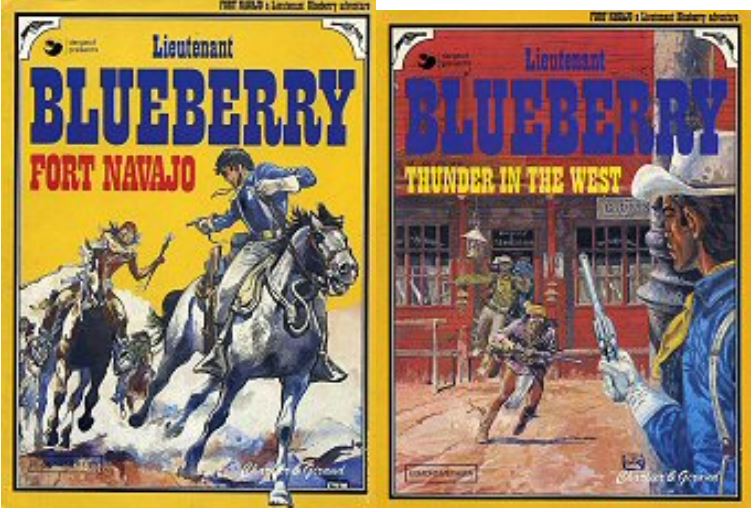
Dargaud Presents Lieutenant Blueberry: Fort Navajo & Thunder in the West


By Charlier & Giraud, translated by Anthea Turner & Derek Hockridge (Egmont/ Methuen)
ISBN: 978-0-41605-370-8 and 978-0-41605-370-X (Album PBs)

This book includes Discriminatory Content produced in less enlightened times.

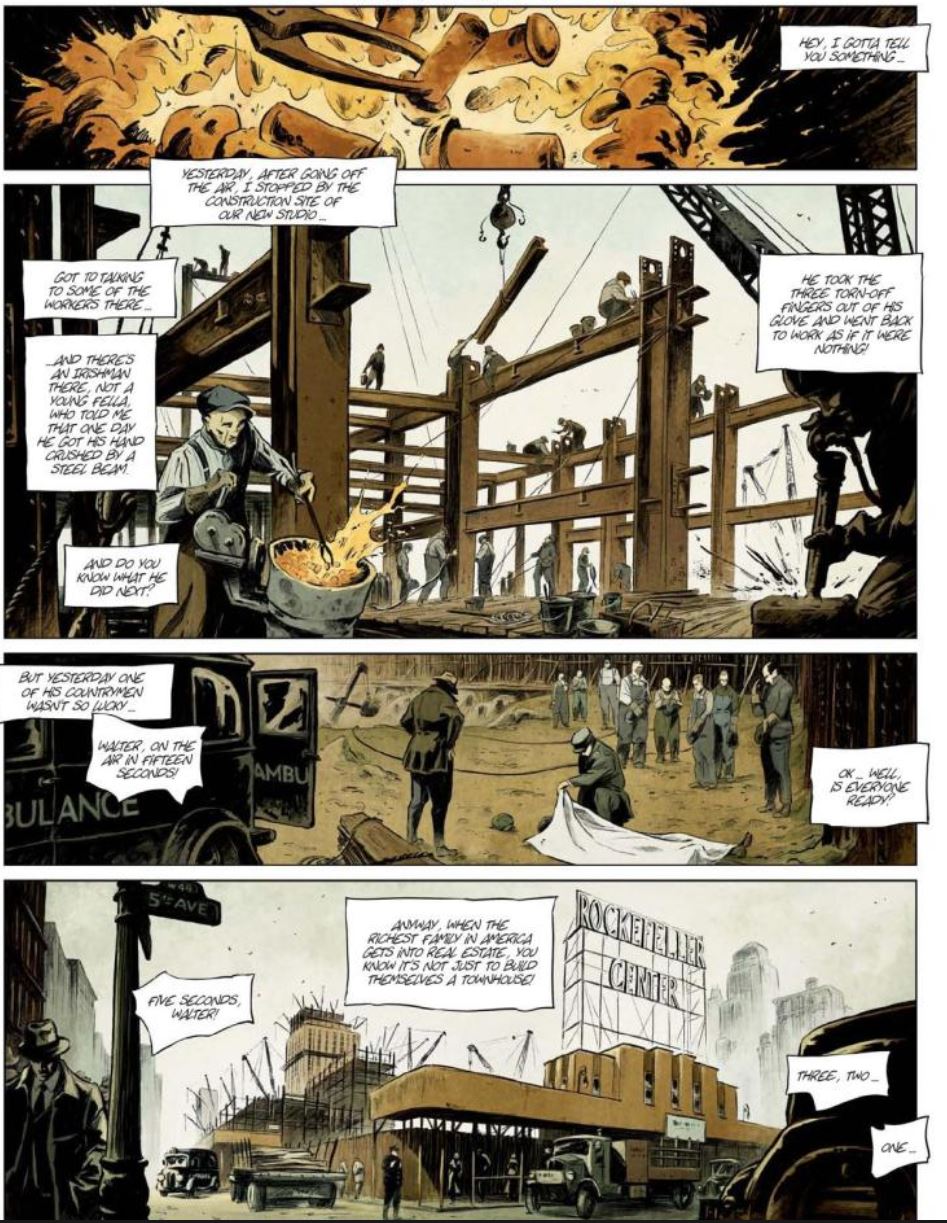
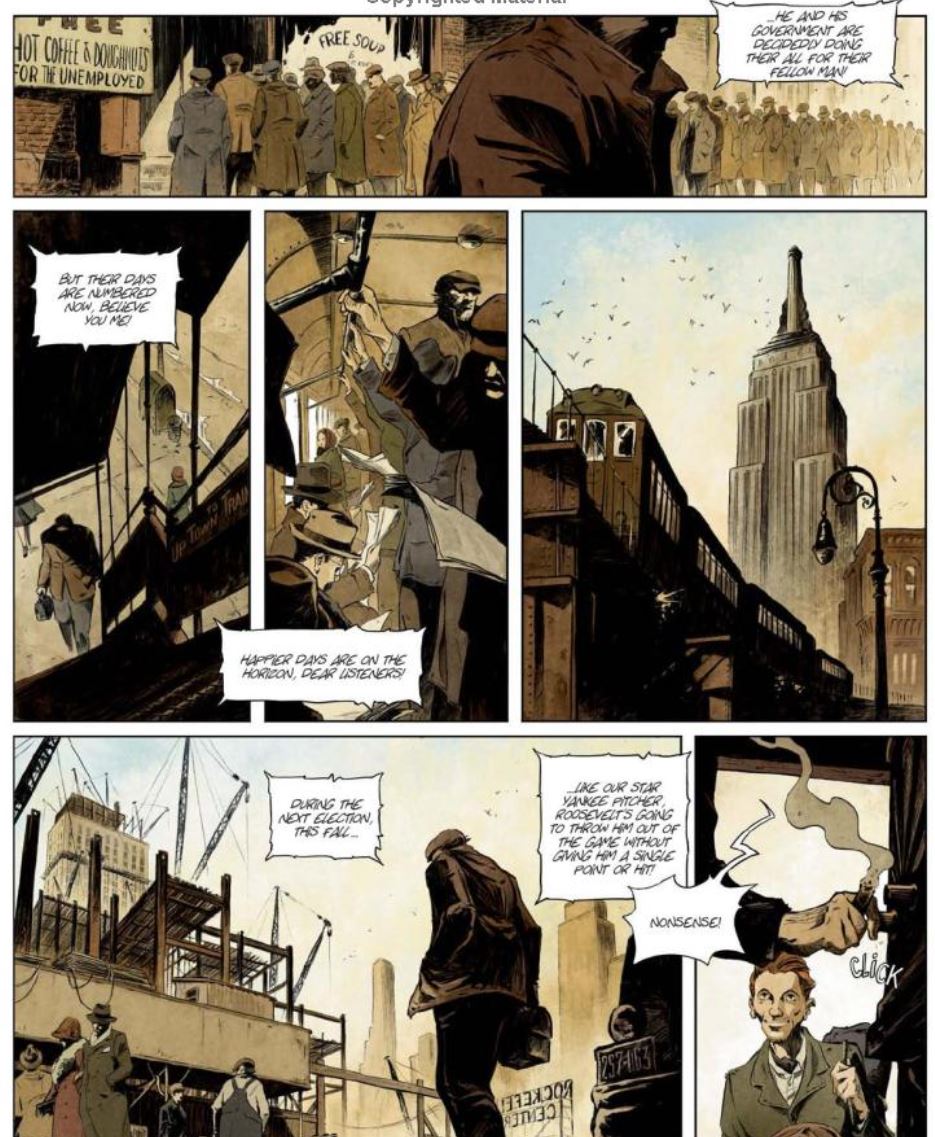
Franco-Belgian comics have enjoyed a decades-long love affair with the mythos of the American West and responded with some of the most beautiful and exciting graphic narratives in the history of the medium. They have, however, had less success creating characters that have gone on to be global household names. One that did has made that jump is Michel Charlier & Jean Giraud’s immortal bad-ass Blueberry.

Sadly, although many publishers have sporadically attempted to bring him to our thrill-starved shores, there’s no readily available complete catalogue (STILL!) of the quintessential antihero in the English language. Thus, this first of many forthcoming reviews with a brace of albums that are decades old, although they do still turn up in back-issue bins and in second hand or charity shops – if those still exist…

Jean-Michel Charlier was arguably Europe’s most important writer of realistic adventure strips.

Ever.

He was born in Liege, Belgium in 1924 and like so many groundbreaking comics creators, began as an artist, joining the staff of Le Journal de Spirou in September 1944, contributing aviation illustrations, and a strip about gliders co-produced with Flettner. In 1946 Charlier’s love affair with flying inspired him to co-create fighter-pilot strip Buck Danny, providing scripts for star turn artist Victor Hubinon. Before long – and on the advice of prestigious senior illustrator Jijé – Charlier was scripting full time and expanding his portfolio with many other series and serials.

In 1951 he co-created historical series Belles Histoires de l’Oncle Paul which afforded dozens of major artists their big break over the years, and supplemented the series with other strips such as Kim Devil (art Gérald Forton), Jean Valhardi and Marc Dacier (both with artist Paape) and Thierry le Chevalier (with Carlos Laffond), as well as popular scouting series La Patrouille des Castors, illustrated by MiTacq. In conjunction with Goscinny and Uderzo, Charlier founded the business and industry oriented commercial comics agency Edifrance after which Charlier and Goscinny edited the magazine Pistolin (1955-1958) before launching Pilote together in October 1959. For the soon to be legendary periodical Charlier created Tanguy and Laverdure (with Uderzo and later Jijé), Barbe-Rouge (with Hubinon) and Jacques le Gall (with MiTacq). In 1963, after Charlier visited the US he created arguably his most significant character – and Europe’s greatest Western comic – which would eventually be known as Blueberry.

In later years, the engaging antihero supported his own equally successful spin-off La Jeunesse de Blueberry (AKA Young Blueberry, illustrated by Colin Wilson) but Charlier never rested on his laurels, concocting further grittily realistic fare: historical biographies in collaboration with Hubinon (Surcouf, Jean Mermoz, and Tarawa) and Martial (Alain et Christine in Libre Junior, Rosine in Pistolin), Brice Bolt for Spirou with Aldoma Puig, Los Gringos with Victor de la Fuente and many more. He passed away in 1989.

Jean Henri Gaston Giraud was born in the suburbs of Paris on 8th May 1938. Raised by grandparents after his mother and father divorced in 1941, he began attending Institut des Arts Appliqués in 1955, becoming friends with Jean-Claude Mézières who, at 17, was already selling strips and illustrations to magazines such as Coeurs Valliants, Fripounet et Marisette and LJdS. Giraud apparently spent most of his college time drawing cowboy comics and left after a year.

In 1956 he travelled to Mexico, staying with his mother for eight months, before returning to France and a full-time career drawing comics, mostly Westerns such as Frank et Jeremie for Far West and King of the Buffalo, A Giant with the Hurons and others for Coeurs Valliants, all in a style based on French comics legend Joseph Gillain AKA Jijé. Between 1959 and 1960 Giraud spent his National Service in Algeria, working on military service magazine 5/5 Forces Françaises before returning to civilian life as Jijé’s assistant in 1961, working on the master’s long-running (1954-1977) western epic Jerry Spring. A year later, Giraud and Belgian Jean-Michel Charlier launched serial Fort Navajo in Pilote #210. All too soon the ensemble feature threw forth a unique icon in the shabby shape of disreputable, rebellious Lieutenant Mike Blueberry who took over as the star and evolved into one of the most popular European strip characters of all time…

In 1963-1964, Giraud produced numerous strips for satire periodical Hara-Kiri and, keen to distinguish and separate the material from his serious day job, first coined pen-name Moebius

He didn’t use it again until 1975 when he joined Bernard Farkas, Jean-Pierre Dionnet and Philippe Druillet – all devout science fiction fans – as founders of a revolution in narrative graphic arts created by Les Humanoides Associes. Their ground-breaking adult fantasy mag Métal Hurlant utterly enraptured the comics-buying public and Giraud again wanted to utilise a discreet creative persona for the lyrical, experimental, soul-searching material he was increasingly driven to produce: series such as The Airtight Garage, The Incal and mystical, dreamy flights of sheer fantasy contained in Arzach

To further separate his creative twins, Giraud worked his inks with a brush whilst the dedicated futurist Moebius rendered his lines with pens. After a truly stellar career which saw him become a household name, both Giraud & Moebius passed away today in 2012.

Fort Navajo and Thunder in the West were originally released in Britain in 1977 by Euro-publishing conglomerate Egmont/Methuen; the first of four full-colour albums which utterly failed to capture the attention of a comics-reading public besotted in equal amounts by Science Fiction in general, Star Wars in specific and new anthology 2000AD in the main. It’s a great shame: if the translated series had launched even a year earlier, I might not be whining about lack of familiarity with a genuine classic of genre comics…

The magic begins in Fort Navajo as clean-cut West Point graduate Lieutenant Craig takes a break from his dusty journey. The stagecoach stopover is just another town on the border between Arizona and New Mexico, but leads to involvement in a brutal battle sparked by a cheating cardsharp. After the gun-smoke clears the military paragon is appalled to discover that the quick-shooting cad at the centre of the chaos is a fellow officer stationed at his new posting.

Further outraged after Lieutenant Mike Blueberry inadvertently insults Craig’s father – a much-decorated general – the pair acrimoniously part company, but are soon reunited on the trail as the scoundrel’s horse dies even as Craig’s stagecoach encounters remnants of settlers slaughtered by marauding Indians…

Dying survivor Stanton informs them that his son has been taken by the Apache. However, Craig’s vow to hunt them down is overruled by Blueberry and the stage crew and passengers. Incensed, the young fool sets off in pursuit of the attackers on his own. Despite his better judgement, Blueberry trails him, cursing all the while. After using an arsenal of canny tricks to repeatedly save Craig from his suicidal notions of heroism, the pair are picked up by a relief column from Fort Navajo led by Major Bascom: a man who sincerely believes the old maxim that the only good Indians are dead ones…

Ignoring orders and the advice of his officers, Bascom decides to pursue the kidnappers and compounds that insubordination by attacking a group of women, children and old men. The massacre would have been total had not Blueberry “accidentally” given the wrong bugle calls and called the cavalry back too soon. Learning quickly, Lieutenant Craig covertly assists the rogue in calling back the troops…

In the aftermath, Bascom demonstrates how unstable he is by trying to execute Blueberry without convening a court martial and goes near-ballistic when Craig prevents him by quoting chapter and verse of the military code. Frustrated on all sides, Bascom can only turn the column back to Fort Navajo and plan revenge on the puppies that baulked his bloodlust. Commanding officer Colonel Dickson is a reasonable man, however, and refuses Bascom’s entreaties. He even tries to broker a “pow-wow” and new treaty with great chief Cochise for the return of the kidnapped boy and to forestall the war Bascom so fervently desires. It’s a valiant effort doomed to failure. The Apache were not responsible for the butchery and abduction at all. The true culprits were Mescaleros from across the Mexican border.

Tragically, when Dickson is bitten by a rattlesnake, Bascom seizes command and uses peace talks to capture Cochise and his delegation. In a flurry of action the aged warrior breaks free and escapes to his waiting armies: determined to make the two-faced soldiers pay for their treachery by bringing blood and vengeance to all of Nevada, Arizona and New Mexico…

The brooding tension resumes in Thunder in the West as affronted tribal chiefs fiercely debate how to liberate the rest of their hostage peace-delegation before their own war-hungry followers start a bloodbath no one can win. At Fort Navajo Blueberry & Craig ponder the coming dawn and are on hand when a tortured settler arrives to warn them every messenger sent for reinforcements has perished, and the savages have taken dozens of new prisoners. The weary soul then delivers an ultimatum and final offer from Cochise: safe passage for the soldiers to Tucson or Albuquerque in return for the captive Indians in their custody. Bascom, clearly beyond all reason, instead threatens to execute the prisoners…

Desperate Blueberry counters with a tactic to forestall the growing certainty of all-out war: attempting to cross the siege lines and reach Tucson for reinforcements. However, before he can start, a fellow officer – “half-breed” scout Lieutenant Crowe – acts precipitately and frees the Indians from the stockade. Whilst Bascom raves and blusters, Blueberry takes off anyway, undertaking an epic journey through hostile territory past hundreds of warriors hungry for blood, not just to call for more troops but to get snakebite antidote for Dickson so that he can end the escalating madness…

Capping peril-filled days of fight & flight, the battered cavalryman successfully crosses searing desert only to stumble into Mexican bandits who almost end his voyage and life… until he turns their own greed against them. Finally, Mike rides into Tucson, only to find the town all but deserted because thousands of Apaches have been approaching the outskirts of town for hours…

Frantically batting his way out of the trap, Mike wearily retraces his route to Fort Navajo. The citadel is deserted except for Crowe, who tells him that after a catastrophic battle he negotiated a truce allowing the white survivors a means of escape. Now the half-breed has a new plan. He and Blueberry will track down the Mescalero renegades who actually started the war by abducting young Stanton…

A feat of staggering bravado, the audacious plan succeeds, but as Blueberry outdistances the outraged renegades and thunders through the mountains with the rescued boy on his horse, he realises Crowe is missing and must go back for him…

To Be Continued…

Although perhaps a tad traditional (and painfully unreconstructed!) for modern tastes and nowhere near as visually or narratively sophisticated as it was to become, this epic opening to the saga of immortal Blueberry is an engaging all-action romp and stunning reaffirmation of the creative powers of Charlier & Giraud. This potent testimony to the undying appeal and inspiration of the Western genre deserves it place on graphic novel shelves and must be seen by all who love comics.
© 1965, 1966 Dargaud Editeur. Text these editions © 1977 by Egmont Publishing Limited, London. All rights reserved.

Today in 1877 was born political cartoonist turned strip star Norman E. Jennett (The Monkey Shines of Marseleen) and in 1935 Bill Holman’s epic strip Smokey Stover debuted.

It’s a remarkable day for departures however, with Tex Willer co-creator Aurelio Galleppini passing on in 1994, Stan Drake (Blondie, Heart of Juliet Jones, Kelly Green) in 1997, historian, founder of the San Francisco Academy of Comic Art & co-editor of The Smithsonian Collection of Newspaper Comics Bill Blackbeard in 2011, as well as historian Don Markstein (Don Markstein’s Toonopedia) and Giraud one year later.

Giant


By Mikaël, translated by Matt Maden (NBM)
ISBN: 978-1-68112-253-3 (HB) eISBN: 978-1-68112-254-0

As a purported land of promises and untapped opportunity, America has always fascinated storytellers – especially comics-creators – from the “Old World” of Europe: an inclination and interest that has frequently delivered potent and rewarding results. This continentally-published yarn by self-taught, multi-disciplined, multi award-winning French-born Québecois auteur Mikaël (Harlem, Junior l’Aventurier, Rapa Nui, Promise) was first released by Dargaud in 2018 as twinned albums before breaking into English via a monolithically oversized hardback (229 x 305mm) edition that got the entire story done-in-one.

Everything about this stylish Depression-era drama is big and powerfully mythic. In March 1932, with poverty wracking the nation and the world, and Herbert Hoover dreading the upcoming Presidential election, immigrants and natives flock to Manhattan and the bustling, dangerous construction site that will one day be Rockefeller Center. Casualties are high as we focus on the Irish contingent rushing daily into the skies to rivet and weld a concrete and steel colossus into New York City’s ever-changing skyline.

The story unfolds through the eyes of fresh-off-the-boat new recruit Dan Shackleton who joins the crew after the death of “high-steel” man Ryan Murphy. Dan is a garrulous, easy-going son-of-the-sod, but even he has difficulty befriending the taciturn, thoughtful, barely-human behemoth everyone calls Giant. A formidable, remarkable worker, Giant lives in a grubby flophouse and keeps to himself, but affable Dan persists and eventually the big man almost-imperceptibly thaws… at least enough that Shackleton becomes unwitting witness to a strange ritual…

Hiding a tragic secret that dates back to the recent Irish War of Independence, the Big Man is a solitary creature of fiercely controlled passions who keeps his every opinion to himself. A dutiful worker, Giant was given the task of informing Murphy’s widow in Ireland when he died. Instead, he began impersonating the dead man in a string of letters containing the bulk of his own carefully-hoarded wages and savings. Over months, a bizarre one-sided relationship develops that metastasizes into a full-blown crisis after the silent bruiser falls foul of organised crime. When the letters and money stop, Mary Ann Murphy and her children take ship for America to be reunited with her beloved husband. As the wounded colossus recuperates, he has no idea of the troubles that are heading his way…

Tapping into a wealth of powerful socially-crusading movies that immortalised pre-WWII America and packed with period detail and mythology, pungent political commentary, a broad cast of moving characters and timeless drama, this is a human-scaled tale playing out amongst mighty edifices – both human and architectural – with warmth, passion, humour and beguiling humanity.

Supplemented with an Introduction by Jean-Louis Tripp and a stunning selection of production sketches, covers and other art, Giant is a stunning saga of uncommon folk in perilous times and one no lover of grand stories could possibly resist.
© 2018 Dargaud-Benelux. © 2020 NBM for the English Translation. All rights reserved.

Most NBM books are also available in digital formats. For more information and other great reads go to NBM Publishing at nbmpub.com.

Today in 1923 American Blondie artist Paul Fung Jr was born, while Warrington’s finest author/animator/cartoonist/editor John Geering (Puss ‘n’ Boots, Smudge, Bananaman, Danger Mouse, Count Duckula) came along in 1941, and Rich Burchett (The Batman Adventures, Superman Adventures, Blackhawk) in 1952, but we lost Doc Attaboy, It’s Papa Who Pays! and Toots and Casper cartoonist Jimmy Murphy in 1965.

In 1974 the 11-year run of UK goggle fest Whoopee! began today.

Billy and Buddy volume 10: Walks on the Wild Side


By Christophe Cazenove & Jean Bastide in the style of Roba, translated by Jerome Saincantin (Cinebook)
ISBN: 978-1-80044-186-6 (Album PB/Digital edition)

Known as Boule et Bill in Europe (at least in the French speaking bits – the Dutch and Flemish call them Bollie en Billie or perhaps Bas et Boef if readers first glimpsed them in legendary weekly Sjors), this evergreen, immensely popular cartoon saga of a dog and his boy first debuted at Christmas in 1959. The perennial family favourite resulted from Belgian writer-artist Jean Roba (Spirou et Fantasio, La Ribambelle) putting his head together with Maurice Rosy: the magazine’s Artistic Director and Ideas Man, who had also ghosted art and/or scripts on Jerry Spring, Tif et Tondu, Bobo and Attila during a decades-long, astoundingly productive career at the legendary periodical.

Intended as a European answer to Charles Schulz’s Peanuts, Boule et Bill quickly went its own way, developing a unique style and personality to become Roba’s main occupation for the next 45 years. He had launched the feature as a mini-récit (32-page, half-sized freebie inserts) in the December 24th edition of Le Journal de Spirou.

Like Dennis the Menace in The Beano, the strip was a huge hit from the start, and for 25 years held the coveted and prestigious back-cover spot. It was even syndicated to rival publishers and became a popular feature in Le Journal de Mickey, rubbing shoulders with Walt Disney’s top stars. Older Brits might recognise the art as early episodes – retitled It’s a Dog’s Life – ran in Fleetway’s prestigious weekly Valiant from 1961 to 1965…

A cornerstone of European life, the strip has generated a live-action movie, four animated TV series, computer games, permanent art exhibitions, sculptures and even postage stamps. As with a select few immortalized Belgian comics creations, Bollie en Billie were awarded a commemorative plaque and have a street named after them in Brussels…

Large format album compilations began immediately, totalling 21 volumes throughout the 1960s and 1970s from publisher Dupuis. These were completely redesigned and re-released in 1985 when Roba moved to Dargaud and became his own editor. The standard albums (44 to date) are supplemented by a range of early-reader books for toddlers. Assorted collections are available in 14 languages, selling well in excess of 25 million copies.

Roba crafted more than a thousand pages of gag-strips in his beguiling, idealised domestic comedy setting, all about a little lad and an exceedingly smart Cocker Spaniel. Long before his death in 2006, the auteur wisely appointed successors for the strip, which has thus continued to this day. He began by surrendering art chores to his long-term assistant Laurent Verron in 2003, and the successor subsequently took on the scripting too upon Roba’s passing. Verron was soon joined by gag-writers Veys, Corbeyran, Chric & Cucuel whilst this tome comes courtesy of latest team Christophe Cazenove & Jean Bastide. For this collection Verron is still present, as illustrator of the “cabochons”: illustrated icons at the top of each strip. They’re what old folks like us employed before emoticons…

As Billy and Buddy, the strip returned to British eyes in 2009: stars of enticing Cinebook compilations introducing to 21st century readers an endearingly bucolic sitcom-styled nuclear family set-up consisting of one bemused, long-suffering and short-tempered dad; a warmly compassionate but constantly wearied and distracted mum; a smart but mischievous son and a genius dog who has a penchant for finding bones, puddles and trouble. As the feature accommodates the passage of time, we see a few more mod-cons and a bigger role for girls – such as dog-loving Hazel but, in essence, nothing has changed… and that’s the whole point…

Y a d’la promenade dans l’air was the 39th European collection, comfortingly resuming in the approved manner and further exploring the evergreen relationship of a dog and his boy (and tortoise) for our delight and delectation. Available in paperback and digital editions and delivered as a series of stand-alone rapid-fire, single-page gags, Walks on the Wild Side is packed with visual puns, quips, slapstick and jolly jests and japes: all affirming the gradual socialisation and behaviour of little Billy as measured in carefree romps with four-footed friends and an even split between parental judgements and getting away with murder…

This time though those pawed pals are extensively featured in many human-free romps with the proudly affable pooch’s ever-growing street pack: Muffin, Scamp, Vix and the rest…

Buddy is the perfect pet for an imaginatively playful lad, although the manipulative mutt is still far too fond of purloined food, buried bones (ownership frequently and raucously to be determined), and, as seen in this volume, sleeping where he really shouldn’t. However, when not being a problem, he’s a unique helper when dad plays plumber and also ferociously protective of his boy, tortoise and ball and even down-on-their-luck strangers…

The pesky pooch simply cannot understand why everyone wants to constantly plunge him into foul-tasting soapy water, but it’s just a sacrifice he’s prepared to make to be with Billy, and as seen here a trial he’s prepared to endure for peace, pieces of food and the occasional Psy-ops/April’s Fool gag…

Buddy’s fondly platonic relationship with tortoise Caroline is heavily emphasised here and his knack for clearing off whenever Dad has one of his explosive emotional meltdowns (over the cost of treats, repair bills or other impositions) is again dialled down, but most traditional themes and schemes are revisited abundantly albeit with novel twists like taking the dog(s) for a nice drive…

Our inseparable duo interact with many pals (particularly Billy’s school chum and cavalry-loving playmate Pat – who acts as confidante and best two-legged crony in all mischief making) and at every carefree moment they all play pranks, encounter other animals, dodge surveillance, hunt and hoard (bones, toys, shoes, phones and other crucial household items), rummage in bins, wilfully and/or honestly misunderstand adults, cause accidents and cost money, with both kid and mutt equally adept at all of the above.

This time, domestic chaos is heightened by many visits to wild country and green pastures and Buddy’s new passion for recycling/pre-cycling…

And of course, hostile neighbour Madame Stick and her evil cat Corporal are on hand to spoil all fun and frustrate their frolics…

Roba was a master of this cartoon art form and under his successors the strips remain genially paced, filled with wry wit and potent sentiment: enchantingly funny episodes running the gamut from heart-warming to hilarious, silly to surreal and thrilling to just plain daft.

This collection is exactly what fans would expect and deserve: another charming homage to and lasting argument for a child for every pet and vice versa. Here is a supremely engaging family-oriented compendium of cool and clever comics no one keen on introducing youngsters to the medium should be without.
Original edition © Dargaud, 2018 by Cazenove & Bastide in the style of Roba © Studio Boule & Bill 2018. English translation © 2025 Cinebook Ltd.
Today in 1902 Bud Fisher’s Mutt & Jeff successor Al Smith was born, followed in 1904 by Theodor Seuss Geisel AKA Dr Seuss. In 1913 Fred Bassett creator Alex Graham was born, with German colour artist Tatjana Wood arriving ten years later and the amazing, beguiling Mark Evanier coming along in 1952.

In 1962 we lost cartoonist/author/critic/Member of Parliament J.F. Horrabin, originator of wonders such as The Adventures of the Noah Family and Dot and Carrie.