
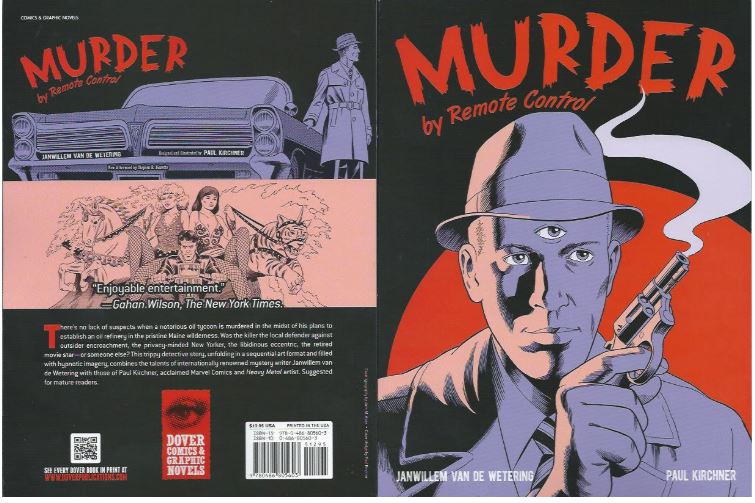
By Janwillem van de Wetering & Paul Kirchner Dover Comics & Graphic Novels)
ISBN: 978-0-486-80560-3 (TPB) 978-0-486-81208-3 (Digital edition)
This book includes Discriminatory Content produced in less enlightened times.
Graphic Novels are utterly ubiquitous these days, even though a vast part of the population still can’t – or won’t – differentiate between the big books we insiders mean and the flimsy, pamphlet periodicals comprising the bulk of items on sale.
Can I at least muddy the waters a little more?
Yes I Can.
Something that gathers a selection of previously-published material – strips from newspapers or anthological sources, comic book issues, selected stories on a theme – all used to be deemed an Album, Collection, or even, Gods help us, an Omnibus or Trade Paperback. These included any re-presentation of superhero sagas like Archives or Essentials, themed or curated conglomerations like Greatest Batman Stories Ever Told or Marvel Visionaries or even the groundbreaking Cerebus “phone-book” editions. Anything serialised in periodicals, but intended from conception to be eventually gathered into one unified form, WAS a graphic novel (Maus, Watchmen, Persepolis or Cerebus again). As Bugs Bunny adroitly quipped “confusing… ain’t it?”
Any long-form tale utilising sequential narrative (A Contract with God, Sabre, Pride of Baghdad) released in one big bite is a true Graphic Novel these days called an OGN -Original Graphic Novel, That’s what Will Eisner, Jim Steranko & Neal Adams were getting at when they started using the term in the late 1970s, and it’s what we should mean when lobbing these terms about willy-nilly.
For every person who accepts those categorisations, there are dozens who will violently disagree and can cite at least one package which correctly refutes and defies the definition. And because I’m a wilfully contrary pixie, I’ll just remind you that Charles Dickens published his greatest books as periodical magazine part-works before some avaricious bright spark stitched them all together in single complete editions called novels…
I don’t care: just remember all modern comics publishers crave the cachet of the term graphic novel attached to their product but it is one that has been adopted and most ardently championed by retailers and distributors who, from the moment big books of drawn stories started appearing at the turn of the 19th to 20th century, needed some way to pigeonhole and differentiate them from cookbooks, coffee-table tomes, kids storybooks and other releases packed with pictures.
Murder by Remote Control is a true Graphic Novel – amongst the very first planned and premeditated examples of the form – and after decades in obscurity was granted a second chance to be seen it in all its intended glory…
In the 1980s US comics got a huge creative boost with the advent of high quality pictorial narrative magazines like Heavy Metal and Epic Illustrated which showcased adult-oriented material with high quality graphics and formats such as had taken Europe by storm a decade previously. Earlier American experience of such work had been limited to the Underground Comix scene (in terms of content if not production values, at least) and an occasional independent, out-market experiment of such maverick luminaries as Wallace Wood, Steve Ditko or Steranko.
When Heavy Metal premiered in April 1977, looking very much like its French conceptual parent Métal Hurlant, there was precious little original American material to supplement the sumptuous continental treats therein. One of the first US creators to join the magazine was Paul Kirchner (The Bus, Realms, Dope Rider), who had worked as an assistant to Wood in the early 1970s and contributed to such indie projects as Big Apple Comics. Born in 1952, Kirchner was in his third year at Cooper Union School of Art in New York when Neal Adams & Larry Hama introduced him to the horror editors at DC, whose anthology titles always needed fresh blood. He thereafter assisted Tex Blaisdell on Little Orphan Annie and in 1973 joined Ralph Reese at Wood’s studio.
A young man in tune with many spiritual and conceptual tropes prevalent during those culturally cosmopolitan times, there was a thoughtful, underplayed intensity in his meticulously-crafted work, but Kirchner was hampered by slow working-speed, at a time when quick turnaround always trumped artistic merit or quality. He eventually drifted out of comics to find far better-paying work in the advertising, animation and design trades. In recent years he has drifted back into comics with additions to his Bus and Dope Rider sequences…
Part of the reason for the transition is explained in his Introduction, which describes his meeting with Dutch expatriate author Janwillem Lincoln van de Wetering (The Empty Mirror, Grijpstra and de Gier crime novels, Hugh Pine (the Porcupine) Judge Dee Plays His Lute) He is a global-traveller and Zen Buddhist scholar who eventually settled in Maine. Under circumstances best enjoyed first hand by reading the actual Intro, the exuberant writer and jaded cartoonist met in 1981 and decided to work together on a dream project: a crime mystery in comics form.
The project took Kirchner a few years to complete but when ready for publication the real hard work began. Most publishers prefer to work in 20-20 hindsight: happy to jump on a successfully blazing bandwagon but preferring to chew off their own arms rather than risk money on being first with something new that can’t be easily categorised. The completed work was schlepped around for two years until Ballantine bought it in 1986. This was when Maus, The Dark Knight Returns and Watchman simultaneously slapped the world in the face and the public went ga-ga for graphic narratives…
Ballantine – who had decades earlier introduced America to comic strip paperbacks with its digest-sized collections of Mad reprints – were willing to take a chance on a mass-market edition, albeit in a diminished size and format, even though as Moord Op Afstand the tale had been a success in Holland and elsewhere as a lavish, full-sized hardback album. Despite favourable coverage from Gahan Wilson in The New York Times Book Review, that bowdlerised Murder by Remote Control sank without trace and the creators reluctantly moved on to other things.
Back in 2016, after far too long, Dover added the sublime metaphorical masterpiece in monochrome to their crucial list of rescued comics treasures, restored to its intended page size (278 x 218 mm) and with the original cover replacing the sliced-&-sampled multiple-panel mock-up of the 1986 edition. The story itself would have been groundbreaking if it had been released in 1983 but happily remains decidedly off-key, devilishly off-beat and delightfully engaging with echoes of Agent Dale Cooper, Blue Velvet or other cult entertainment icons eerily abounding here…
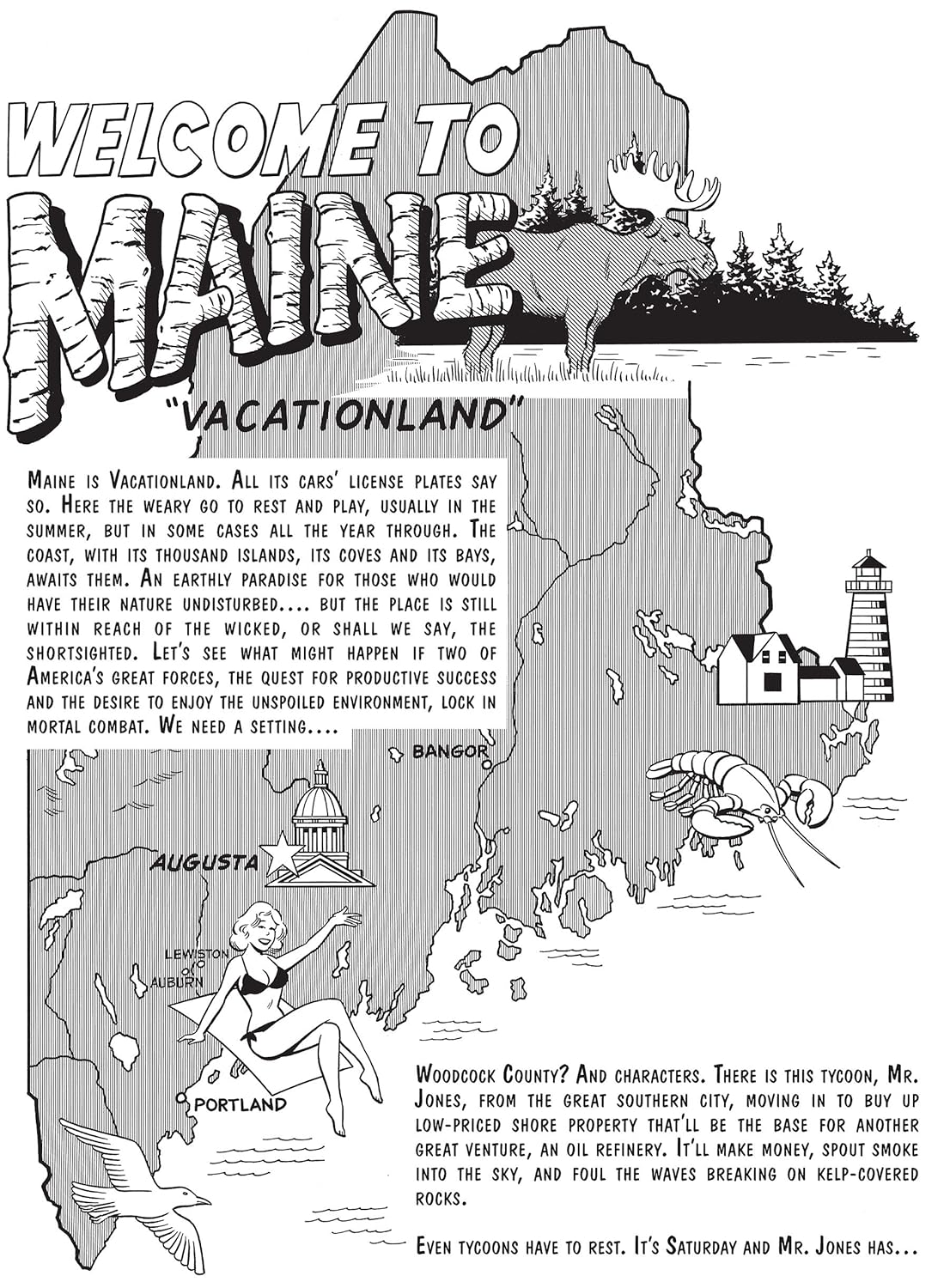
After obnoxious property speculator Mr. Jones starts buying up sections of idyllic Maine coastline, he suddenly turns up dead in his little fishing dingy. The death occurs in full view of four residents who each might have a strong motive to remove the interloper, but the County Sheriff is extremely keen on ruling the case an accidental death. However, his report results in the unwelcome arrival of agonisingly restrained and refined – almost emotionless – Detective Jim Brady from the Augusta Office.
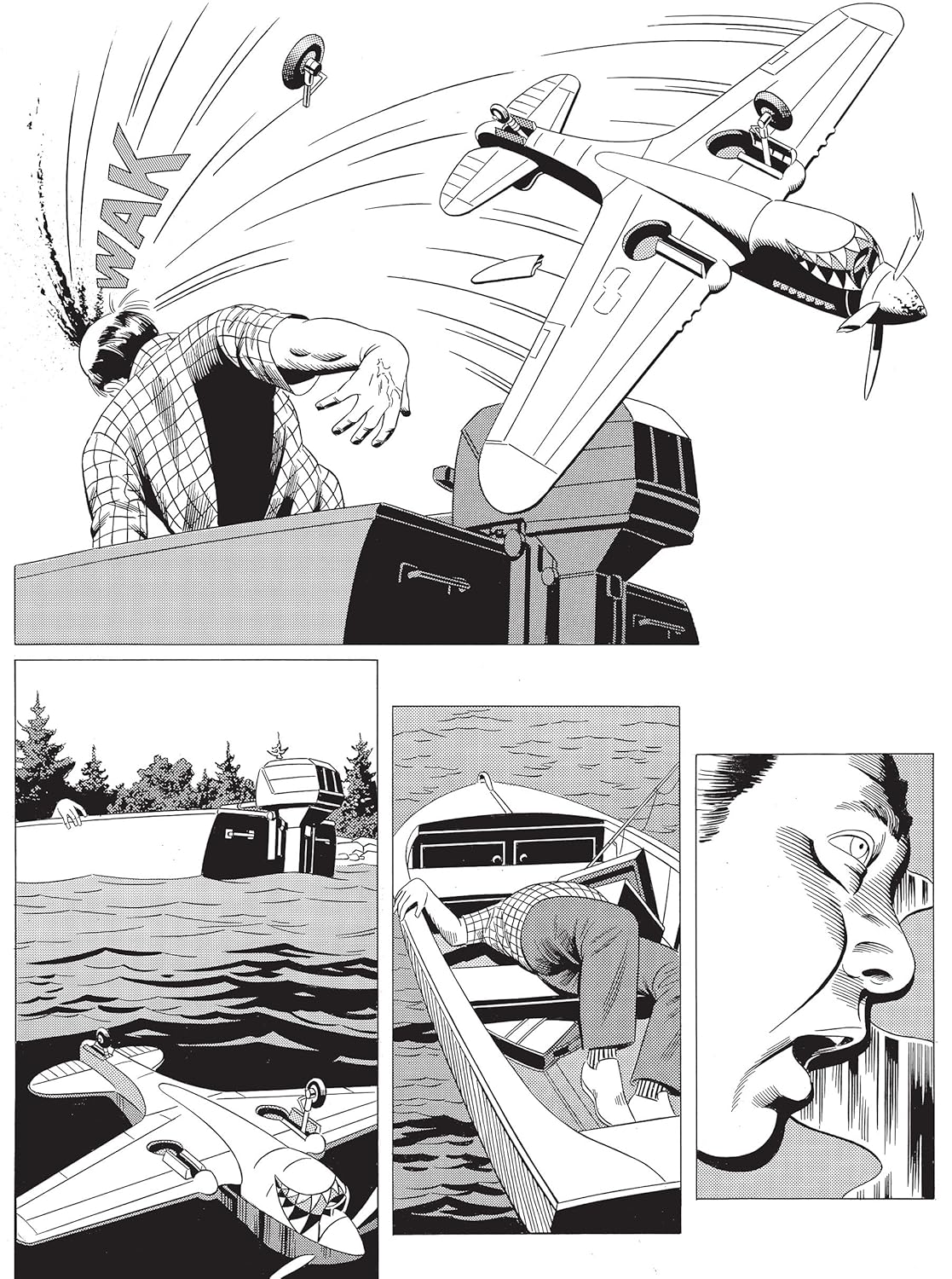
Cool and preternaturally calm, the self-effacing little man has a way of seeing deep into the hearts and minds of everybody, and he quickly rules it a homicide by most arcane means. Now he’s planning on hanging around, probing the characters and backgrounds of the uniquely baroque quartet of suspects and undoubtedly sticking his nose where it doesn’t belong…
Informed by Zen principles, the story unfolds as Brady flamboyantly deconstructs each potential suspect, consequently uncovering far more secrets than any little rural enclave could possibly contain before reaching his conclusions. However, even with the case closed, his actions remain at odds with your run-of-the-mill copper, and there’s one last twist still in store…
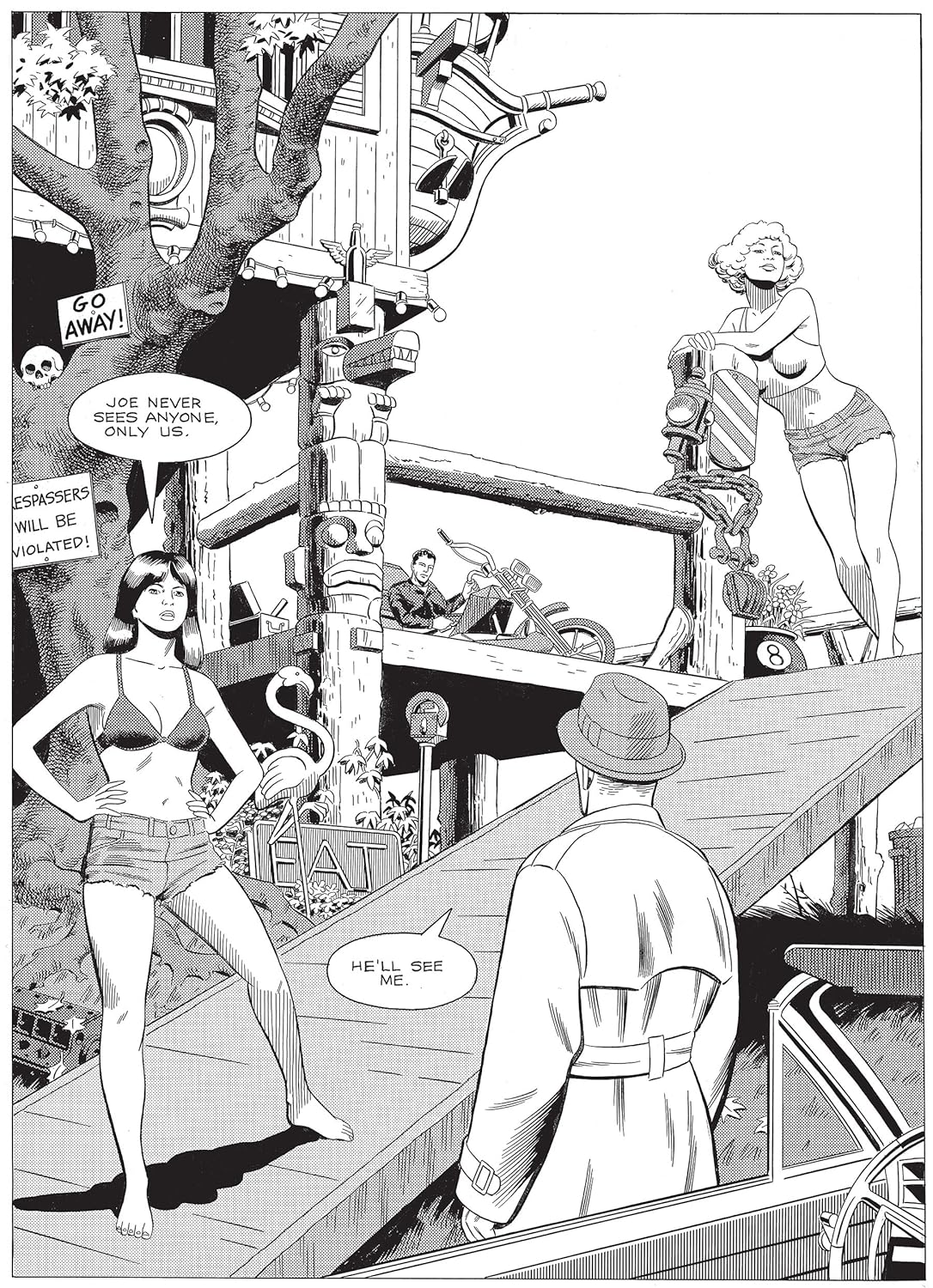
Cool, surreal and challengingly psychedelic, the plot is realised with sleek and understated panache; mixing the welcoming warmth and idiosyncratic style of Ditko’s figurework and facial expressions with the glossily sleek glamour and factual solidity of Wood. This book is a delicious treat for the eyes and a therapeutic exercise for the mind…
Supplemented by Stephen R. Bissette’s incisive and expansive Afterword ‘A Man, A Boat, A Bay, A Bite, A Beer Can…’ offering historical context and artistic commentary, this is a magnificent lost gem, rightly restored to its place in the history of our art form, but it’s also a beautifully-crafted, intellectually challenging Bloody Good Read.
Go get it.
© 1986, 2016 by The Wetering Family Trust and Paul Kirchner. Afterword © 2016 by Stephen R. Bissette. All rights reserved.
Today in 1936 British licensed strip superstar creator Angus Allan (Captain Scarlet and the Mysterons, Logan’s Run, Six Million Dollar Man, DangerMouse) was born, and shares his natal day with iconic cartoonist Vaughn Bodé (Cheech Wizard, Cobalt-60, Deadbone) in 1941.
In 1939 this day DC Thomson’s landmark but luckless UK weekly The Magic Comic launched, as did Frédéric Othon Théodore “Fred” Aristidès’ strip Philémon in Pilote in 1965 and Go Nagai’s manga thriller Violence Jack in 1973.
We lost two giants of all ages cartooning on this date: Mickey Mouse pathfinder Floyd Gottfredson in 1986 and the wonderfully inventive, brilliant talented and kind John Ryan (Captain Pugwash, Harris Tweed, Mary, Mungo and Midge, Crockle, Sir Prancelot) in 2009.