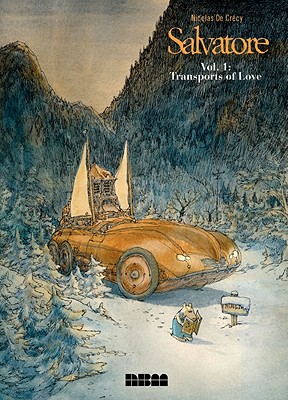
Salvatore volume 1: Transports of Delight


By Nicolas de Crécy, coloured by Ruby & Walter, translated by Joe Johnson (NBM)
ISBN: 978-1-56163-593-1 (TPB)

Nicolas de Crécy was in the Class of ’87 – the first year to graduate from the École supérieure de l’image d’Angoulême. After a stint at Disney he moved into bande dessinée and has released upwards of 3 dozen books and albums since he began professionally working in 1990: both one-offs like Journal d’un fantôme, Escales, Plaisir de myope and La Nuit du grand méchant loup and serials such as Léon la came, Monsieur Fruit, and Salvatore.

That last one is about a dog who’s a grease-monkey…

Salvatore mends cars: a mechanic and absolute wizard with all things metallic and oil-spattered, but a grumpy sod who dislikes customers so much he built his garage on the peak of a mountain to discourage them. However, he is simply so good that they all come anyway, prepared to put up with the hassle and his attitude, if only he will fix their ailing vehicles.

Moreover, Salvatore has a secret he needs peace and quiet for and that’s so attractive…

He has plenty of pain in his life but has struggled on, buoyed by an artisan’s dedication and sensibilities. It’s what makes him such an exceedingly good mechanic. One day, the tragically short-sighted widow Amandine pulls into his frosty, cloud bedecked garage with a suspicious knocking in her engine and his life changes for ever…

As well as practically blind, Amandine is heavily pregnant with twelve piglets (not unknown for a sow of her breed) and something softens within the cold canine. Offering her the unexpected hospitality of his fondue lunch, the spanner jockey nevertheless succumbs to his one weakness – “borrowing” a surplus part from her vehicle for his great project.

The little mutt has a dream and is prepared to sacrifice his principles to achieve it. Once, he loved and lost Julie. The bitch – don’t know what breed or her pedigree – moved to South America and since then he has devoted all his spare time to building a fantastic vehicle to follow her, where undoubtedly, love will reunite them forever…

His super-car is almost ready: the last part necessary can be picked up on the way; all he has to do is reach an understanding with its current owner – a perfectly reasonable bull named Jerome. Amandine, however, has not quite left his life: visually impaired to a comic degree, and heavily pregnant, she cannot be trusted to drive a small family runabout down a snow-capped alpine slope…

Her chaotic and magnificently slapstick journey leaves her and the car stranded many kilometres away atop a Parisian garret where she prematurely delivers her dozen babies. Horribly one little piggy goes missing on the way to hospital, and one fine day that stray waif will have a huge impact on Salvatore’s fate…

First seen in 2005 as Transports Amoureux (beautifully coloured by Ruby) ‘Transports of Love’ seamlessly segues here into the second album, Le Grand Départ‘The Grand Departure’ – with tints and hues provided here by Walter.

Finally off on his dream trip in the almost-perfect Julie-Mobile, Salvatore has hit a snag. Jerome might be an amenable type, but the wife who just divorced him is not. She took the car – including that desperately needed final component – as part of the settlement and had it dismantled as an art installation – or possibly just out of sheer spite.

Amandine, meanwhile, has broken out of hospital with eleven piglets, driven by maternal hormones to find her missing infant. The lost cherub has fallen into odd circumstances, amongst sewer scum, political activists and a seductively dark and twisted catwoman siren of the underworld…

Hard-pressed by defrayed and delayed desire for his distant Julie, Salvatore’s ethics have degenerated to the point where he’s contemplating fraud and outright theft to get that vital last component. Fortunately, he has allied with a mysterious and peculiarly moralistic tiny mute man with a knack for computers. Perhaps together they can find a way to ease true love’s path?

Surreal and joyously whimsical, but with a delightfully dark edginess, this lost delight from multi-award winning cartoonist de Crécy – who revolutionised French comics with such popular and groundbreaking works as Période glaciaire /Glacial Period and The Celestial Bibendum – is a hypnotically addictive, daftly sophisticated fable of the dangerous accelerant called love and remains one of the best comics you STILL haven’t read.

Funny, gently adventurous, subversively satirical and filled to bursting with empathy and pathos, this beguiling yarn will schmooze itself into your head and make itself far too comfortable to have removed…
© 2005 Dupuis, by de Crécy, Ruby. © 2006 Dupuis, by de Crécy, Walter. English edition © 2010 NBM. All rights reserved.

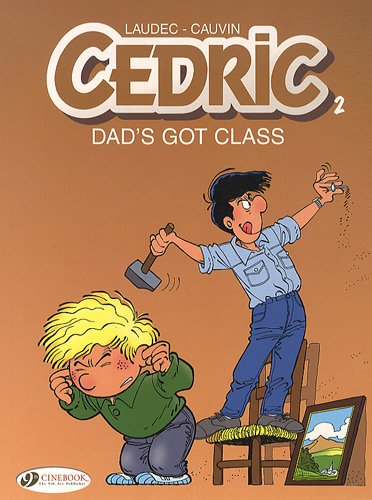
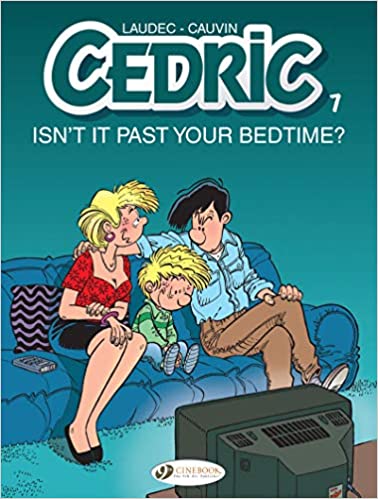
Cedric volume 2: Dad’s Got Class


By Laudec & Cauvin with colours by Leonardo and translated by Erica Jeffrey (Cinebook)
ISBN: 978-1-84918-003-0 (Album PB & Digital edition)

Time for another rumination on romance, and this one has both kinds that afflict Young Boys of an Impressionable Age: older women and the unattainable classmate…

At least our continental cousins have discovered the secret of finding the funny side of the horrors of young love…

Raoul Cauvin was one of Europe’s most successful comics scripters. Born in Antoing, Belgium in 1938, he joined publishing giant Dupuis’ animation department in 1960 after studying Lithography. Happily, he soon discovered his true calling – comedy writing – and began a glittering, prolific career at Le Journal de Spirou where he devised (with Salvérius) the astoundingly successful Bluecoats amongst dozens of other long-running, award winning series. Those included Sammy, Les Femmes en Blanc, Boulouloum et Guiliguili, Cupidon, Pauvre Lampil and Agent 212: cumulatively shifting more than 240 separate albums topping 45 million books in total thus far. Bluecoats alone has sold in excess of 15 million copies thus far.

We lost him to cancer on 19th August 2021.

His collaborator on sharp, witty yet kid-friendly family strip Cédric is Italian born, Belgium-raised Tony de Luca who studied electro-mechanics and toiled as an industrial draughtsman until he could make his break into comics.

Following a few fanzine efforts in the late 1970s, Laudec landed soap-style series Les Contes de Curé-la-Fl’ûte at Spirou in 1979. He built it into a brace of extended war-time serials (L’an 40 in 1983 and Marché Noir et Bottes à Clous in 1985) whilst working his way around many of the title’s other strips. In 1987 Laudec united with Cauvin on the first Cédric shorts and the rest is history… and science and geography and PE and…

We have Dennis the Menace (the Americans have one too but he’s just not the same) and the French-speaking world has Cédric: an adorable lovesick rapscallion with a heart of gold and an irresistible streak of mischief dogging his heels. Collected albums of the variable-length strips – ranging from a ½ page to half a dozen – began appearing in 1989 (with 34 released so far) and are always amongst the most popular and best-selling on the Continent, as is the animated TV show spun off from the strip.

This second Cinebook translation – from 2009 and originally continentally released as Cédric 4: Papa a de la classe – hauls straight in to the love action as the little lout is invited to a party at the palatial home of posh-boy and romantic rival The Right Honourable Alphonse Andre Jones-Tarrington-Dupree…

Previously, overly-imaginative Cedric had been utterly enamoured of his teacher Miss Nelly, but once new girl Chenjoined the class his life changed forever. Chen is different: her skin isn’t the same colour as everyone else’s and she talks really funny. He just can’t stop thinking about her…

All’s fair in love and war as ‘Milady and the Geisha’ finds Dupree tricking Cedric into wearing the most embarrassing fancy dress costume imaginable, only to see his devilish scheme badly backfire, after which ‘There are Flakes, and then there are Flakes…’ reveals how not everything falling from the sky is snow, before ‘Cats, Cats, Cats…’ sees Cedric and best pal Christian try to extort extra New Year’s gifts from feline fancier Aunt Jean only to fall at the first hurdle…

A young man’s initial encounter with grooming products and cologne is always a heady experience and ‘The A-Scent of Man’ shows the result of Cedric’s lack of impulse control, whilst grown-ups take centre stage in ‘A Story That’ll Make Your Hair Stand Up Straight’ as Grandpa starts dangerously criticising his useless son-in-law’s visit to a tonsorial stylist, after which ‘To Each His Own’ renews the simmering war after each tries – and fails – to hang a picture on the living room wall…

When Chen falls ill, Cedric goes to extreme efforts to be with and be like her in ‘Love, Love, Love’ before ‘Tails of All Sorts’ finds Cedric and Grandpa checking out each other’s romantic fascinations…

Kicking and screaming, Cedric is forced into the local Cub Scout group, and even after yomping all over the countryside in ‘Valderee, Valderah’ uses every opportunity to sabotage the experience. Just as he’s being kicked out, however, the Girl Guides march past with little Chen happily with them in line.

When she becomes obsessed with her headphones, Cedric decides to record a message for his darling Chen, but his delivery is no match for his heartfelt enthusiasm in ‘Message Not Received’ and – after Mum and Dad have one of those blazing row over nothing – Grandpa has to explain a few painful facts of life about ‘The Big Scene’ to the appalled kid…

‘Hair Apparent’ deals with the 8-year-old’s first attempt at shaving whilst ‘A Tough Choice’ finds the cash-strapped kid having to choose between a present for Mum or Chen, before the episodic antics end on a slapstick high note with another Cubs camping trip disrupted when ‘A Man Misses His Calling’ finds Cedric seemingly lost in the woods…

Rapid-paced, warm and witty, the exploits of this painfully keen, adorably amorous scallywag are a superbly charming example of how all little boys are just the same and infinitely unique. Cedric is a splendid family-oriented strip perfect for enticing youngsters and old folk alike – but should not to be considered a “How-To” manual for romance…
© Dupuis 1991 by Cauvin & Laudec. All rights reserved. English translation © 2009 Cinebook Ltd.

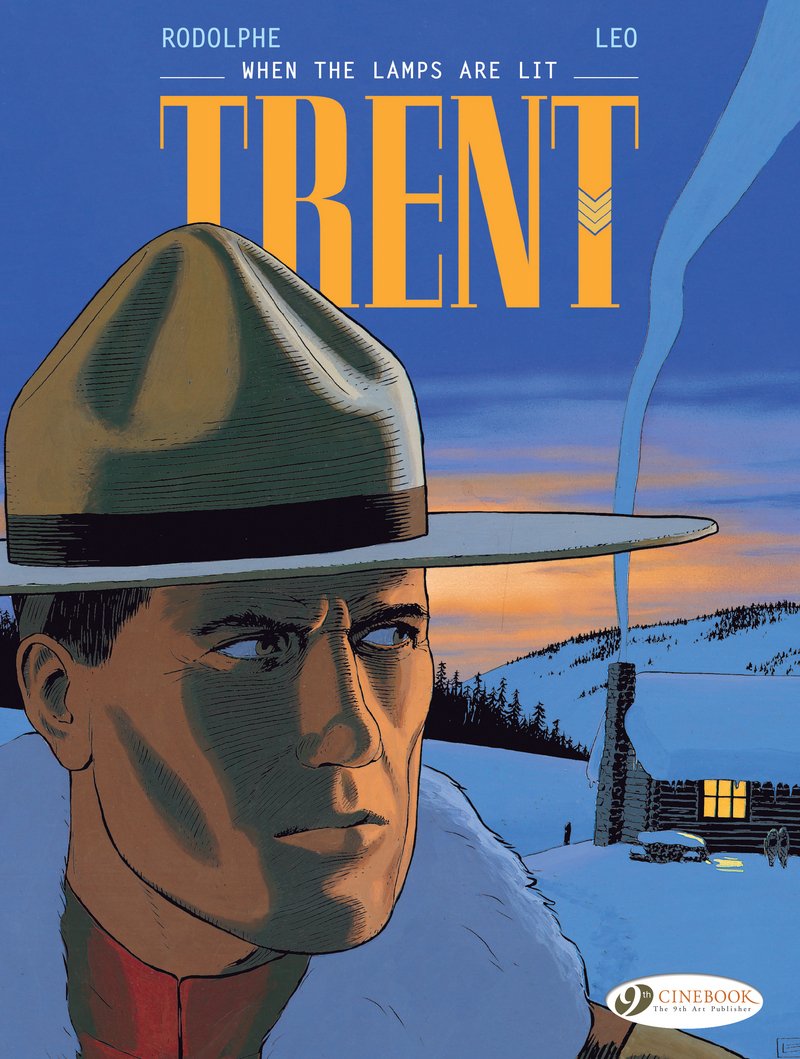
Trent volume 3: When the Lamps are Lit


By Rodolphe & Léo with colour by Marie-Paule Alluard, translated by Jerome Saincantin (Cinebook)
ISBN: 978-1-84918-836-4 (Album PB)

I’m thinking about relationships and romance at the moment, and comics have always explored pair-bonds as a fundamental aspect of any genre they exploit. It’s not always about simple attainment of a dream either. Sometimes, failure and the loss of love is more powerful, rewarding and/or entertaining than “True Love Ways”. The attendant emotion certainly has generated some astoundingly moving fiction…

European comics audiences have long been fascinated with the mythologised American experience, whether it be the Big Sky Wild West or later eras of crime-riddled, gangster-fuelled dramas. They also have a vested historical interest in the northernmost parts of the New World which has resulted in some pretty cool graphic extravaganzas.

Léo is actually Brazilian artist and storymaker Luiz Eduardo de Oliveira Filho: born in Rio de Janeiro on December 13th, 1944. Attaining a degree in mechanical engineering from Puerto Alegre in 1968, he was a government employee for three years, until forced to flee the country because of his political views. While a military dictatorship ran Brazil, he lived in Chile and Argentina before illegally returning to his homeland in 1974. To survive, he worked as a designer/graphic artist in Sao Paulo and created his first comics art for O Bicho magazine.

In 1981 he migrated to Paris, seeking to pursue a career in Bande Dessinée, and found work with Pilote and L’Echo des Savanes as well as more advertising and graphics fare. The big break came when Jean-Claude Forest invited him to draw stories for Okapi which led to regular illustration work for Bayard Presse. In 1988 Léo began his long association with scripter and scenarist Rodolphe D. Jacquette – AKA Rodolphe.

His prolific, celebrated writing partner has been a giant of comics since the 1970s: a Literature graduate who transitioned from teaching and running libraries to creating poetry and writing criticism, novels, biographies, children’s stories and music journalism. In 1975, after meeting Jacques Lob, he expanded his portfolio to write for a vast number of artists and strip illustrators in magazines ranging from Pilote and Circus to À Suivre and Métal Hurlant. Amongst his most successful endeavours are Raffini (with Ferrandez) and L’Autre Monde (Florence Magnin) but his collaborations in all genres and age ranges are too numerous to list here.

In 1991 he began working with Léo on a period adventure series of the far north. Taciturn, introspective and fiercely driven Royal Canadian Mounted Police sergeant Philip Trent premiered in L’Homme Mort, forging a lonely path through the 19th century Dominion over eight tempestuous, hard-bitten albums between then and 2000. He also prompted the collaborators’ later fantasy classics Kenya (and its spin-offs), Centaurus and Porte de Brazenac.

Cast very much in the classic adventure mould perfected by Jack London and John Buchan, Trent is a man of few words, deep thoughts and unyielding principles who gets the job done whilst stifling emotional turmoil boiling deep within him, but is the very embodiment of the phrase “still waters run deep”…

As ‘Quand S’allument Les Lampes’, this third adventure comes from 1993, with the solitary man and his faithful hound “Dog” trudging into and through another snow-wrapped town (stunning rendered as always by Leo) to eventually make camp alone in the frozen woods beyond. His thoughts dwell on the warm loving families therein, and wander back, as they always will, to Agnes.

He had saved her – but not her brother – and was given a clear invitation that he had never acted upon. Now, under the cold stars, he makes a decision. Applying for leave, he travels to Providence with marriage in mind, but on arrival finds a dilapidated, empty house and learns that his Miss St. Yves had reached the same conclusion years ago… and with another man…

Shaken and crushed, he finds a saloon and picks up a whisky glass…

Weeks later, a penniless broken staggering shambles, he plagues the barkeeps of a nameless frontier railtown, pitied and despised by residents as they go about their business and try to avoid the rummy in the gutter.

Howling constantly with desolated loss, Trent’s only human connection is bar girl Mary Lou, but he is blind to her more than Christian interest. Wendley City is all bustle and terror. The railway will bring wealth – and is already reaping dividends – but it’s also drawn out human wolves. Seemingly invisible outlaws dubbed “the Coalmen” have targeted elderly residents for months, cruelly torturing and killing to extract the savings of the weakest townsfolk…

After another night of atrocity, an outraged posse manages to wound a suspect before losing him. The fugitive hides under the stoop drunken sot Trent is slumped on, and in gratitude offers the despised reprobate a job if he has the stomach for bad business and can sober up…

The final act contains a brutal denouement and reveals a cunning and extended undercover scheme to catch the Coalmen, but one that turned on the implacable Mountie’s honest despair and deadly near all-consuming brush with loss and loneliness…

Mission accomplished, the quiet man returns to duty and the wastelands he patrols to preserve the safety of the families he cannot find a way to join…

Another beguiling and introspective voyage of internal discovery, where environment and locales are as much lead characters as hero and foe, When the Lamps are Lit offers suspense, action, drama and poignant evocation in a compelling confection that will appeal to any fan of widescreen cinematic crime fiction or epic western drama.
Original edition © Dargaud Editeur Paris 1993 by Rodolphe & Léo. All rights reserved. English translation © 2017 Cinebook Ltd.

Die Laughing


By Andre Franquin, translated by Jenna Allen (Fantagraphics Books)
ISBN: 978-1-68396-091-1 (HB)

Like so much in Franco-Belgian comics, it all starts with Le Journal de Spirou. The magazine was first seen on April 2nd1938, with its engaging and eponymous lead strip created by Rob-Vel (François Robert Velter). In 1943 publishing giant Dupuis purchased all rights to the comic and its titular star, after which comic-strip prodigy Joseph Gillain (“Jijé”) took the helm.

In 1946 Jijé’s assistant assumed the creative reins, gradually side-lining the previously-established short gag vignettes in favour of extended adventure serials. He introduced a broad, engaging cast of regulars: adding to the mix phenomenally popular rare beast and animal marvel Marsupilami (first seen in Spirou et les héritiers in 1952 and eventually a spin-off star of screen, plush toy store, console games and albums in his own right).

He continued crafting increasingly fantastic tales and absorbing Spirou sagas until his resignation in 1969. Throughout that period the creator was deeply involved in the production of the weekly Spirou comic and increasingly beset by depression and other mental health issues.

André Franquin was born in Etterbeek, Belgium on January 3rd 1924. Drawing from an early age, the lad only began formal art training at École Saint-Luc in 1943. When the war forced the school’s closure a year later, he found work at Compagnie Belge d’Animation in Brussels where he met Maurice de Bévère (AKA Lucky Luke creator “Morris”), Pierre Culliford (Peyo, creator of The Smurfs and Benny Breakiron) and Eddy Paape (Valhardi, Luc Orient).

In 1945 all but Peyo signed on with Dupuis, and Franquin began his career as a jobbing cartoonist/illustrator, producing covers for Le Moustique and scouting magazine Plein Jeu. During those early days, Franquin and Morris were being tutored by Jijé, who was the main illustrator at Le Journal de Spirou. He turned the youngsters – and fellow neophyte Willy Maltaite (AKA “Will” – Tif et Tondu, Isabelle, Le jardin des désirs) – into a smoothly functioning creative bullpen known as La bande des quatre or “Gang of Four”. They later reshaped and revolutionised Belgian comics with their prolific and engaging “Marcinelle school” style of graphic storytelling…

Jijé handed Franquin all responsibilities for the flagship strip part-way through Spirou et la maison préfabriquée (Spirou #427, June 20th 1946). The new kid ran with it for the next two decades; enlarging the scope and horizons of the feature until it became purely his own. Almost every week fans would meet startling new characters such as comrade/rival Fantasio or crackpot inventor and Merlin of mushroom mechanics the Count of Champignac.

Spirou & Fantasio became globe-trotting journalists, travelling to exotic places, uncovering crimes, exploring the fantastic and clashing with a coterie of exotic arch-enemies. However, throughout all that time Fantasio was still a full-fledged reporter for Le Journal de Spirou and had to pop into the office all the time.

While there he conceived another landmark icon, a comedic foil and meta-real alter ego who was an accident-prone, big-headed junior in charge of minor jobs and dogs-bodying. His name was Gaston Lagaffe and through him Franquin expressed his unruly dissident opinions and tendencies…

Gaston – who debuted in #985, (February 28th 1957) – grew to be one of the most popular and perennial components of the comic. In terms of entertainment schtick and delivery, older readers will certainly recognise beats of Jacques Tati and timeless elements of well-meaning self-delusion British readers will recognise from Some Mothers Do Have ‘Em or Mr Bean. It’s slapstick, paralysing puns, pomposity lampooned and no good deed going noticed, rewarded or unpunished…

In a splendid example of good practise, Franquin mentored his own band of apprentice cartoonists during the 1950s. These included Jean Roba (La Ribambelle, Boule et Bill/Billy and Buddy); Jidéhem (Sophie, Starter, Gaston Lagaffe) and Greg (Comanche, Bruno Brazil, Bernard Prince, Zig et Puce, Achille Talon), who all worked with him on Spirou et Fantasio. In 1955, a contractual spat with Dupuis saw Franquin briefly enlist with rivals Casterman on Le Journal deTintin, where he collaborated with René Goscinny and old pal Peyo whilst creating the fashion/lifestyle domestic comedy gag strip Modeste et Pompon. Franquin almost immediately  patched things up with Dupuis and returned to Spirou, subsequently co-creating Gaston Lagaffe (known in Britain these days as Gomer Goof) in 1957, but was obliged to carry on his Casterman commitments too…

From 1959, writer Greg and background artist Jidéhem assisted Franquin, but by 1969 the artist had reached his Spirou limit. He quit, taking his mystic yellow monkey with him…

Later creations include fantasy series Isabelle, illustration sequence Monsters and this arcane convergence of bleak gallows humour, adult conceptual nihilism and impassioned social and ideological frustration lensed through comedy. If you’re aware of the later work of Spike Milligan, you’ll know instinctively what I mean. The strip and original series title Idées Noires has entered into common usage in French-speaking countries, as a term for gloomy or negative thoughts: dark ideas daily obsessing people in crisis expunged and expressed through strident manic humour…

It began as he recuperated from a heart attack in 1975. Idées Noires was part of an insert comic – Le Trombone illustré – he and Yvan Delporte produced for weekly Le Journal de Spirou beginning with the March 17th 1977 issue. After 30 mini-issues, and with the global situation looking increasingly fraught, a revitalised Franquin took the strip to mature reader magazine Fluide Glacial where it ran until 1983.

Plagued throughout his life by depression, Franquin passed away on January 5th 1997, but his legacy remains: a vast body of work that reshaped the landscape of European comics.

In 2018, Fantagraphics gathered and translated the strips, releasing them as Die Laughing.

As seen in Cynthia Rose’s erudite and informative Introduction – ‘Liberty, Audacity, Hilarity: André Franquin‘ – the peripatetic feature gave Franquin room to address his allegiances with issues of environmentalism, animal cruelty, political duplicity and plain old human insanity and strike back with the best weapons in his arsenal: sarcasm, mockery and despairing outrage.

To further demarcate the series from past works, the images are delivered in scratchy, shocking lines and solid blacks, with elements reversed out: it’s a world of silhouettes, deep shadows and brooding forward spaces and middle-grounds, with no extraneous detail: all delivered in eerie evocative, expressionist monochrome, rather than the shining and substantial Disney-inspired colour of Spirou and the Marsupilami…

This hardback and digital compilation consists of half and full page shorts plus a few longer cartoon strips lampooning and spearing, smug pomposity, business greed, military-industrial chicanery and ruthlessness, planetary abuse such as inflicted by oil companies and the global arms race. There are many mordant observations on sport, war for profit, the death penalty (still the guillotine, for Pete’s sake!), alien abduction, the rat race, sheer random surreal absurdism, all skewered by a sense of cosmic justice acknowledged, if not satisfied…

A constant theme returned to with merciless regularity is bloodsports and the kind of arsehole who finds fun and feels magnified by pointless slaughter. Especially singled out are those French “traditionalists” who simply must slaughter songbirds in their thousands every year as they migrate to and from Europe…

Franquin was a master of comedy in all its aspects from whimsically light to trenchantly black-edged. Come see how and why…
Die Laughing © 2018 by Fantagraphics Books, Inc. Comics © Editions Audie/Franquin Estate. All rights reserved. Introduction © 2018 by Cynthis Rose. Afterword © 2018 Gotlib Estate. All other images and text © 2018 their respective copyright holders. All rights reserved.

Iznogoud the Infamous


ISBN: 978-1-84918-074-0 (Album PB)

For the greater part of his too-short lifetime (1926-1977) René Goscinny was one of – if not the – most prolific and most-read writers of comic strips the world has ever seen. He still is.

Among his most popular comic collaborations are Lucky Luke, Le Petit Nicolas and, of course, Asterix the Gaul, but there were so many others, such as the dazzling, dark deeds of a dastardly usurper whose dreams of diabolical skulduggery perpetually proved to be ultimately no more than castles in the sand…

Scant years after the Suez crisis, the French returned to those hotly contested deserts when Goscinny teamed with sublimely gifted Swedish émigré Jean Tabary (1930-2011) – who numbered Richard et Charlie, Grabadu et Gabaliouchtou, Totoche, Corinne et Jeannot and Valentin le Vagabond amongst his other hit strips – to detail the innocuous history of imbecilic Arabian (im)potentate Haroun el-Poussah.

However, it was the strip’s villainous foil, power-hungry vizier Iznogoud who stole the show – possibly the conniving little imp’s only successful coup…

Les Aventures du Calife Haroun el Poussah was created for Record; with the first episode appearing in the January 15th1962 issue. A minor hit, it jumped ship to Pilote – a comics magazine created and edited by Goscinny – where it was artfully refashioned into a starring vehicle for the devious little ratbag who had increasingly been hogging all the laughs and limelight.

Like all great storytelling, Iznogoud works on two levels: for youngsters it’s a comedic romp with adorably wicked baddies invariably hoisted on their own petards and coming a-cropper, whilst older, wiser heads can revel in pun-filled, witty satires and marvellously accessible episodic comic capers. Just like our Parliament today.

This same magic formula made its more famous cousin Asterix a monolithic global success and, just like the saga of the indomitable Gaul, the irresistibly addictive Arabian Nit was originally adapted into English by master translators Anthea Bell & Derek Hockridge, who made those Roman Follies so very palatable to British tastes. As always the deliciously malicious whimsy is heavily dosed with manic absurdity, cleverly contemporary cultural critiques and brilliantly delivered creative anachronisms which serve to keep the assorted escapades bizarrely fresh and hilariously inventive.

Insidious anti-hero Iznogoud is Grand Vizier to affable, easy-going Caliph of Ancient Baghdad Haroun Al Plassid, but the sneaky little toad has loftier ambitions, or – as he is always declaiming – “I want to be Caliph instead of the Caliph!”…

The retooled series launched in Pilote in 1968, quickly growing into a massive European hit, with 31 albums to date (carried on by Tabary’s children Stéphane, Muriel and Nicolas), his own solo comic, a computer game, animated film, TV cartoon show and a live-action movie.

When Goscinny died in 1977, Tabary started scripting his own sublimely stylish tales (from the 13th album onwards), switching to book-length complete adventures, rather than the compilations of short, punchy vignettes which typified the collaborations.

Originally released in 1969, Iznogoud l’infâme was the fourth Dargaud collection, the second volume published by Methuen in 1977, and the seventh splendid Cinebook album; offering a wry and raucous quintet of short tales with the Vile Vizier on top form as he schemes to seize power from his oddly oblivious Lord and Master.

The eternal drama begins with ‘The Sinister Liquidator’, which finds Iznogoud and his bumbling, long-suffering henchman and strong-arm crony Wa’at Alahf making their way through a malodorous swamp in search of a Djinn with the power to reduce all he touches to unliving liquid. Enduring the evil Ifreet’s ghastly manners and painful punning, the devilish diplomat strikes a bargain which spells doom for the Caliph… but first he has to get the demon back to the palace.

Since the Djinn cannot completely leave his fetid fluid environment and glorious bustling Baghdad is beyond the Great Desert, Iznogoud and Wa’at Alahf must Djinngerly transport their secret weapon home. Moreover, as under no circumstances can they afford to be moistened by the monster themselves, a succession of buckets, bowls, bottles and vials inexorably diminish the watery wonder and the Vile Vizier’s chances of success until – as you’d expect – the inevitable occurs…

The pun-punctuated comedy of errors is followed by a sneaky dose of inspired iniquity dubbed ‘The Invisible Menace’wherein the dictator-in-waiting learns a magic spell which will banish his imperial impediment from the sight of man. Of course, he still has to find and keep his target still long enough for the magic to work…

Sheer broad slapstick-riddled farce is the secret ingredient of the next craftily convoluted saga. When Iznogoud deliberately accepts a cursed gem which brings catastrophic misfortune in the expectation that he can palm it off on his unsuspecting boss, he greatly underestimates the power of ‘The Unlucky Diamond’.

As soon the ghastly gem latches on to a truly deserving victim and unleashes a succession of punitive calamities, it determines to never let go…

A state visit by an African potentate allows the Vizier plenty of time to confer with his opposite number in ‘The Magic Doll’. Sadly, the bemused Witch Doctor has no idea that his numerous demonstrations of voodoo magic with a clay figurine are Iznogoud’s dry runs for a stab at the throne.

Of course, for the sorcery to work, the Vizier has to somehow obtain a lock of Haroun Al Plassid’s closely guarded and held-as-holy hair…

The manic mirth concludes by descending into sheer surreal absurdity (granting Tabary license to ascend to M.C. Escher-like heights of graphic invention) as an itinerant magician known as ‘The Mysterious Billposter’ crafts a magic advert which can transport people to an idealised paradisiacal holiday destination.

Iznogoud is far more interested in the fact that, once in, no-one can get out again…

Just for a change the plan succeeds perfectly and the blithely unaware Caliph is trapped in an inescapable, idealised extra-dimensional state. Then again – due to his extreme eagerness – so is his not-so-faithful Vizier…

Just such witty, fast-paced hi-jinks and craftily crafted comedy set pieces have made this addictive series a household name in France where “Iznogoud” is common term for a certain type of politician: over-ambitious, unscrupulous – and frequently a little lacking in height.

When first released in Britain during the late 1970s (and again in 1996 as a periodical comicbook) these tales made little impression, but certainly now these snappy, wonderfully beguiling strips have found an appreciative audience among today’s more internationally aware, politically jaded comics-and-cartoon savvy Kids Of All Ages…

And Hansard…
Original edition © Dargaud Editeur Paris, 1969 by Goscinny & Tabary. All rights reserved. This edition published 2011 by Cinebook Ltd.

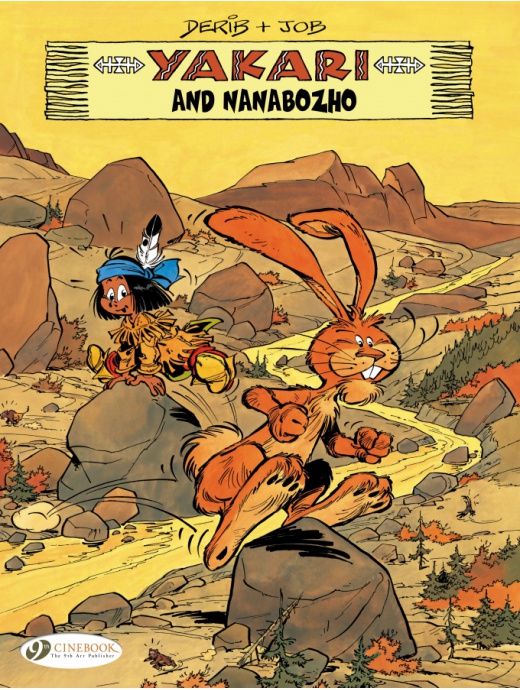
Yakari volume 19: The Devil in the Woods


By Derib & Job, coloured by Dominique and translated by Jerome Saincantin (Cinebook)
ISBN: 978-1-80044-037-1 (Album PB)

Le Crapaud à lunettes was founded in 1964 by Swiss journalist André Jobin who wrote for it under the pseudonym Job. Three years later he hired fellow French-Swiss artist Claude de Ribaupierre AKA “Derib”. The illustrator had launched his own career as an assistant at Studio Peyo, working on The Smurfs strips for venerable weekly Le Journal de Spirou.

Derib – equally au fait with enticing, comically dynamic “Marcinelle” cartoon style yarns and devastatingly compelling meta-realistic illustrated action epics – went on to become one of the Continent’s most prolific and revered creators.

Many of Derib’s stunning works feature his cherished Western themes; magnificent geographical backdrops and epic landscapes, with Yakari considered by fans and critics to be the strip which first led him to deserved mega-stardom. Debuting in 1969, it details the life of a young Oglala Lakota boy on the Great Plains: set sometime after the introduction of horses by the Conquistadores but before the coming of modern Europeans.

The content and set-up are both stunningly simple and effectively timeless, affording new readers total enjoyment with a minimum of required familiarity or foreknowledge. The series – which has generated two separate animated TV series and a movie release last year – has achieved 40 albums thus far: a testament to the strip’s evergreen vitality and the brilliance of its creators, even though originator Job has moved on and Frenchman Joris Chamblain assumed the writer’s role in 2016.

Overflowing with gentle whimsy and heady compassion, young Yakari enjoys a largely bucolic existence: at one with nature and generally free from privation or strife. For the sake of our delectation, however, the ever-changing seasons are punctuated with the odd crisis. Generally they are resolved without fuss, fame or fanfare by a little lad who is smart, brave and can – thanks to a boon of his totem guide the Great Eagle – chat with all animals. This time, however, the conclusion is far from cheery or cosy and presages dark times ahead for some…

It begins in the depths of winter, with deep snow covering the plains and provender scarce for all. As the youngsters Rainbow, Buffalo Seed and Yakari amuse themselves with his pony Little Thunder, the talkative boy’s father Bold Gazeand hunter Taut Bow urgently seek food. Luck turns their way when a large hehaka (wapiti) rushes right into their arrows. By nightfall the entire tribe has eaten well and the leftovers are preserved and dressed to provide more food in the days to come.

The adults cannot shake the impression that their welcome repast was fleeing from something worse than their arrows, and that apprehension is confirmed in the morning when the tribe discover all the remaining food has gone. The fresh snow carries no trace of the thief…

Ever-inquisitive Yakari wants an explanation and sets out to ask his animal pals, eventually finding strange tracks that might belong to some sort of bear. Incautiously following, he sees the footprints peter out just as beaver chieftain Double-Tooth pops up.

The jolly rodent is disturbed by the news and helps in searching, but as Yakari and Double-Tooth follow tracks that constantly seem to vanish into thin air, Bold Gaze and Taut Bow are trailing the thief with the camp dogs. It’s  a horrific mistake as something unseen kills and eats the valiant hounds!

Dread haunts the humans huddled in their tents that night, but in the morning Yakari and Little Thunder check out and eliminate all the local bears – even the notoriously grumpy and insomniac Grizzly who’s having difficulty hibernating – from the suspect list, unaware that something sinister and malign is tracking them…

Baffled and scared that one of their ursine pals has gone mad, Yakari and the beaver clan build a wonderful trap to catch the mysterious thief, but again the stalker outwits them all: even diverting their suspicions to the most unlikely culprit whilst retaliating by destroying the beavers’ precious dam and home…

With all creatures equally endangered by the “devil”, Yakari and his allies convince the mighty and increasingly irate Grizzly to help them hunt, and before long the arrogant quarry rises to the challenge. It confronts its pursuers but the resultant battle is swift, terrible and sadly inconclusive as their brutal clash triggers an avalanche…

In the eerie aftermath, the Great Eagle arrives and shares some disturbing thoughts that may have terrible implications in days to come…

Originally released in 1994, Le diable des bois was the 20th European album, and although its suspenseful, ominous tone feels like a dark departure from the cheery norm, there’s still plenty of humour and slapstick hijinks to balance the grim proceedings, and – in deference to the younger readers – everything is carried out with sensitivity and wit.

As ever, Derib & Job display astounding and compelling narrative virtuosity in this glorious graphic tour de force highlighting the appealing courage of our diminutive heroes, in a visually stunning, seductively smart saga to delight young and old alike.

Yakari is one of the most unfailingly absorbing all-ages strips ever conceived and should be in every home, right beside Tintin, Uncle Scrooge, Asterix and The Moomins.

Original edition © Derib + Job – Editions du Lombard (Dargaud- Lombard s. a.) 2000. All rights reserved. English translation 2021 © Cinebook Ltd.

Yakari volume 18: The Wall of Fire


By Derib & Job, coloured by Dominique and translated by Jerome Saincantin (Cinebook)
ISBN: 978-1-84918-591-2 (Album PB)

Win’s Christmas Gift Recommendation: Superb All-Ages Entertainment and Adventure… 9/10

Children’s magazine Le Crapaud à lunettes was founded in 1964 by Swiss journalist André Jobin who then wrote for it under the pseudonym Job. Three years later he hired fellow French-Swiss artist Claude de Ribaupierre AKA “Derib”. The illustrator had launched his own career as an assistant at Studio Peyo (home of Les Schtroumpfs), working on The Smurfs strips for venerable weekly Le Journal de Spirou. Together, they created the splendid Adventures of the Owl Pythagore before striking pure comics gold a few years later with their next collaboration.

Derib – equally au fait with enticing, comically dynamic “Marcinelle” cartoon style yarns and devastatingly compelling meta-realistic action illustrated action epics – went on to become one of the Continent’s most prolific and revered creators. It’s a crime that groundbreaking strips such as Celui-qui-est-né-deux-fois, Jo (the first comic ever published dealing with AIDS), Pour toi, Sandra and La Grande Saga Indienne) haven’t been translated into English yet, but we still patiently wait in hope and anticipation…

Many of Derib’s stunning works over the decades feature his cherished Western themes; magnificent geographical backdrops and epic landscapes. Yakari is considered by fans and critics to be the strip which first led him to deserved mega-stardom.

Debuting in 1969, Yakari follows the life of a young Oglala Lakota boy on the Great Plains and is set sometime after the introduction of horses by the Conquistadores but before the coming of modern Europeans.

The series – which has generated two separate animated TV series and a movie release last year – has achieved 40 albums thus far: a testament to the strip’s evergreen vitality and the brilliance of its creators, even though originator Job has moved on and Frenchman Joris Chamblain assumed the writer’s role in 2016.

Overflowing with gentle whimsy and heady compassion, young Yakari enjoys a largely bucolic existence: at one with nature and generally free from privation or strife. For the sake of our delectation, however, the ever-changing seasons are punctuated with the odd crisis, generally resolved without fuss, fame or fanfare by a little lad who is smart, brave… and can – thanks to a boon of his totem guide the Great Eagle converse with all animals …

Originally released in 1993, la barrière de feu was the 19th European album, but – as always with the best books – the content and set-up are both stunningly simple and effectively timeless, affording new readers total enjoyment with a minimum of familiarity or foreknowledge required…

This time, the little wonder is embroiled in uncharacteristically dark deeds as a raiding party led by Wild Mane results in the loss of all the horses – except valiant pony Little Thunder who not only escapes but also raises the alarm and rouses the sleeping tribe.

As the adults set out on foot to recover their steeds and reclaim their honour, little Yakari tracks his equine friend and is amazed to find Little Thunder is trailing his stolen herdmates. As he follows, the loquacious lad meets a flying squirrel who kindly offers to act as an advance scout…

While the grown-ups are stymied by their cunning quarry’s tactics, the tiny tree-hugger rapidly reunites the boy with his horse and the trio set off together after the thieves. All too soon they have located the raiders, but instead of useless heroic gestures they sagely seek out Yakari’s father and lead his team to the thieves.

Dauntingly, it’s a nomadic convocation of thousands, and a retaliatory raid seems impossible. Moreover, something is shadowing the stalkers themselves, ever unseen but even getting close enough to steal supplies while they’re being carried! The adults are seriously considering swallowing their shame and retreating, but Yakari cannot let go of the notion that something is smarter than he is…

Ultimately, with help from his bestial buddies, the mystery is solved and the boy meets a new friend: a wounded lynx. The beautiful, cunning creature shows the curious kid a new trick: a sticky black liquid that oozes out of the ground and is ideal for sealing wounds.

When the shaman sees it he recognises it for all its many properties, including a tendency to burn, which gives Yakari’s father an inspired idea for countering the raiders’ superior numbers and getting back the tribe’s most treasured possessions…

Exotically enticing, deviously educational and wildly entertaining, this boldly action-packed and splendidly spectacular yarn sees Yakari’s gifts not only used to benefit his people and animal friends but also with the full acknowledgement of the adults he’s previously been unknowingly slighted by. Is our boy finally on the path to being a man?

Once again, Derib & Job display their astounding and compelling narrative virtuosity in another glorious graphic tour de force capturing the appealing courage of our diminutive heroes, and a visually stunning, seductively smart saga to delight young and old alike.

Yakari is one of the most unfailingly absorbing all-ages strips ever conceived and should be in every home, right beside Tintin, Uncle Scrooge, Asterix and The Moomins.
Original edition © Derib + Job – Editions du Lombard (Dargaud- Lombard s. a.) 1993. All rights reserved. English translation 2020 © Cinebook Ltd.

Lucky Luke: The Complete Collection volume 3


By Morris, with René Goscinny; translated by Jerome Saincantin (Cinebook)
ISBN: 978-1-84918-455-7 (Album HB)

Win’s Christmas Gift Recommendation: Blockbuster Thrills No Movie Could Match… 8/10

On the Continent, the populace has a mature relationship with comics: according them academic and scholarly standing as well as meritorious nostalgic value and the validation of acceptance as an art form. Whilst tracing the lost origins of a true global phenomenon, this hardback and digital compilation celebrates the formulative early triumphs of a fictional hero who is certainly a national treasure for both Belgium and France, and it’s also timely in that this worldwide western wonder celebrates his 75th Anniversary this year…

As we know him now, Lucky Luke is a rangy, good-natured, lightning-fast cowboy roaming the fabulously mythic Old West, having light-hearted adventures with his horse Jolly Jumper whilst interacting with a host of historical and legendary figures and icons.

His ongoing exploits have made him one of the best-selling comic characters in Europe (upwards of 80 collected books, plus spin-off series, archival collections and specials, translated into more than 300 million albums in at least 33 languages thus far). He’s also accrued all the usual merchandise spin-offs: toys, computer games, puzzles, animated cartoons, TV shows and live-action movies.

Lucky debuted in 1946, courtesy of Belgian animator, illustrator and cartoonist Maurice de Bévère (“Morris”). For many years we all believed his first appearance was in a Le Journal de Spirou Christmas Annual – L’Almanach Spirou 1947 – before being catapulted into his first weekly adventure ‘Arizona 1880’ on December 7th 1946.

However, the initial volume in this superb archival series (in hardback album and digital editions) revealed the strip actually premiered earlier that year in the multinational weekly comic, but without a title banner and only in the edition released in France…

This third curated outing exhibits – in strict chronological order – strips created between December 1952 and February 1955, with all the art and pages here restored, rejiggled and remastered to achieve maximum contemporary authenticity with the original weekly serialisation. The stories were subsequently gathered as albums L’Élixir du Docteur DOXEY (November 1955, with successive volumes launching every year in that month), Lucky Luke contre Phil Defer (1956) and Des rails sur la Prairie (1957) and this tome even offers a little something extra at the end…

Previous volumes have detailed Morris’s life, career, and achievements, paying particular attention to his alternate duties as an illustrator and caricaturist for magazine Le Moustique and at the CBA (Compagnie Belge d’Actualitiés) cartoon studio, where he met future comics superstars Franquin and Peyo.

Morris was one of “la Bande des quatre” – The Gang of Four – comprising Jijé, Will and Franquin: leading proponents of a new, loosely free-wheeling artistic style known as the “Marcinelle School” which dominated Le Journal de Spirou in aesthetic contention with the “Ligne Claire” style used by Hergé, EP Jacobs and other artists in Le Journal de Tintin.

In 1948 said Gang (all but Will) visited America, meeting US creators and sightseeing. Morris stayed for six years, meeting fellow émigré René Goscinny, scoring work at newly-formed EC sensation Mad and constantly making copious notes and sketches of the swiftly vanishing Old West.

His ongoing works are further detailed and  his “American Period” is extensively explored here in another lavishly illustrated essay from researchers Christelle & Bertrand Pissavy-Yvernault, who relate the Morris family’s jaunts and travels, paying particular attention to the movies they saw and how cinematic flourishes were transformed and recycled on the pages of Lucky Luke. Also on view are examples of work done for American consumption, such as children’s book Puffy Plays Baseball.

Crucially, there’s a detailed section on Goscinny, featuring his artwork – like so many, he was originally a cartoonist who realised his true strengths were plots and words – and side gigs in the USA: foreign correspondent, copywriter, business manager and more. At this time he created evergreen kids feature Le Petit Nicolas with Sempé in Le Moustique and his partnership with Morris formally began. What began as casual assistance eventually became a team effort that changed both their lives after they returned to Europe…

Accompanied by published cartoons and covers, contemporary ads, family photos and tons of original art, the in-depth treatise also focuses on the how and why of edited comics pages; reveals the artist’s film memorabilia (from movies that especially influenced his stories in this collection) and also includes both artwork from European and US publications by Goscinny. There’s even an in-depth analysis of how What Morris Saw became What Lucky Did, closely referencing the comics stories that follow…

Working solo (with early script assistance from his brother Louis De Bevere) until 1955, Morris produced nine albums of affectionate sagebrush parody and action before uniting with Goscinny, who became the regular wordsmith as Luke attained the dizzying heights of superstardom, commencing with Des rails sur la Prairie (Rails on the Prairie), in Le Journal de Spirou in August 1955.

Before we get there though, there’s all-Morris action to enjoy, starting with Doc Doxey’s Elixir which was originally serialised in Le Journal de Spirou #765-808, from December 11th 1952 to 8th October 1953. It relates the predatory journeys of a charlatan physician dispensing disgusting and often lethal liquid cure-alls, aided and abetted by his athletic stooge Scraggy, who gulls the public with his disguises and semi-miraculous instantaneous “recuperations” and fast exits.

Their pernicious peregrinations come to an end after poisoning the frontier town of Green Valley, which puts dogged Lucky on their trail. Packed with classic and episodic chase gags, the hunt concludes with the sneaky snake oil peddler behind bars. Of course, he doesn’t stay there long as sequel saga ‘Manhunt’ details his cunning escape, change of identity – but not modus operandi – and ultimately unsuccessful plot to murder the wandering cowboy…

Follow-up album Lucky Luke contre Phil Defer (or Lucky Luke: Phil Wire in Britain) also comprised two tales, but this time taken from the company’s general entertainment periodical. It introduced deadly gunslinger Phil Wire “The Spider” – based on legendary cinematic bad man Jack Palance – in a strip taken from Le Moustique #1464-1494 (14thFebruary-12th September 1954).

Phil Defer “LE FAUCHEUX” sells his lethal talents to sinister saloon owner O’Sullivan who’s looking to remove a rival. Fate – or perhaps the gods of comedy – unfortunately decree that another tall guy good with guns gets to Bottleneck Gulch first and is mistaken for the rather idiosyncratic notoriously superstitious killer…

Lucky and Wire have already clashed once before and – despite all the hero’s efforts to deter O’Sullivan – meet once more after all “the Spider’s” schemes to remove rival barkeep O’Hara are foiled. It comes down to a showdown on main street and only one man walks away…

The album also features a second serial from Le Moustique #1508-1516 (spanning 19th December 1954 to 13th February 1955): originally entitled Lucky Luke et Pilule.

As Lucky Luke and The Pill it here details a camp fire story told by the rangy gunman, relating how a short-sighted, diminutive hypochondriac tenderfoot with no discernible fighting ability or action acumen became a true gun-toting town-tamer…

It was back to Le Journal de Spirou for the final album reprinted here: gathering material from #906-929 and spanning 25th August 1955 to 2nd February 1956 before launching in November 1957 as ninth album Des rails sur la Prairie. Although uncredited, it was cowritten by Morris and fellow tourist Goscinny: auguring an astounding creative partnership to come…

In 1967 the six-gun star switched publishing teams, transferring to Goscinny’s own magazine Pilote with La Diligence (The Stagecoach). Goscinny produced 45 albums with Morris before his death, from whence Morris continued both singly and with fresh collaborators.

Morris died in 2001 having drawn fully 70 adventures, plus the spin-off adventures of Rantanplan (“dumbest dog in the West” and a charming spoof of cinema canine Rin-Tin-Tin), with Achdé, Laurent Gerra, Benacquista & Pennac taking over the franchise, producing another five tales to date.

Also in 1967, Lucky Luke appeared in British comic Giggle where he was renamed Buck Bingo. He had previously been seen here in weekly comic Film Fun. Before all that, though, this wild and woolly transitional delight features a far more boisterous and raw hero, offering the lighter side of another mythic western scenario…

When track-laying for the Transcontinental Railroad stalls, outraged train moguls demand action and Dead Ox Gulch, Nebraska becomes the crunch point of confrontation. The construction problems are actually caused by a traitor at home. Although a board-member in good standing Black Wilson is also secretly sabotaging the project to protect his other business: a stage coach company…

He contacts the nefarious Wilson Boys gang to keep up the bad work, just as a tall, laconic stranger rides into town. Before long, he is spearheading the march of progress and civilisation by foiling every dirty trick the gang can conceive…

Once the renewed efforts have moved beyond town and onto the prairie and inching closer to California, a train carries Lucky, passengers and the navvies ever-westward, negotiating and stymying hostile natives, greedy townships and the still-active Wilson boys’ shady tactics and stratagems.

Ultimately, Black Wilson takes personal charge and boards a stagecoach westward to destiny. Despite his every trick, though, the showdown is a foregone conclusion…

Adding extra value here is a short Luke lark that first appeared in Risque-Tout #5 (December 1955). A monochrome vignette, ‘Ruckus in Pancake Valley’ has been redrawn and coloured here and details how Lucky tracks down a miscreant who stole his horse…

Packed with contemporaneous extras, commentary, creator biographies, a special ‘Christmas in the Far West’ feature and more, this is perfect for older kids who have gained a bit of historical perspective and social understanding, although the action and slapstick situations are no more contentious than any Laurel and Hardy film – perfectly understandable as Morris was a huge fan of the duo. These early exploits are a grand old hoot in the tradition of Destry Rides Again or Support Your Local Sheriff, superbly executed by a master storyteller, and a wonderful introduction to a unique genre for modern kids who might well have missed the romantic allure of the Wild West that never was…

Bon Anniversaire, Lucky!
All pages relating to Doc Doxey’s Elixir, Phil Wire and Ruckus in Pancake Valley are © Morris/Dupuis 2018. 1949 to 1954 for the first publications in Le Journal de Spirou. All pages relating to Rails on the Prairie © Morris/Goscinny/Dupuis 2018. English translation © 2019 Cinebook Ltd.

The Adventures of Blake and Mortimer volumes 9 and 10: The Sarcophagi of the Sixth Continent parts 1 & 2


By Yves Sente & André Juillard, coloured by Madeleine DeMille & translated by Jerome Saincantin (Cinebook)
ISBN: 978-1-84918-067-2 (Album PB) 978-1-84918-077-1 (Album PB)

Win’s Christmas Gift Recommendation: Blockbuster Thrills No Movie Can Match… 9/10

Pre-eminent fantasy raconteur Edgar P. Jacobs devised one of the greatest heroic double acts in pulp fiction: pitting his distinguished scientific adventurers Professor Philip Mortimer and Captain Francis Blake against a daunting variety of perils and menaces in a sequence of stellar action-thrillers blending science fiction scope, detective mystery suspense and supernatural thrills. The magic was made perfect through his stunning illustrations, rendered in the timeless Ligne Claire style which had made intrepid boy-reporter Tintin a global sensation.

The Doughty Duo debuted on 26th September 1946: gracing the pages of the very first issue of Le Journal de Tintin: an ambitious international anthology comic with editions in Belgium, France and Holland. It was edited by Hergé, with his eponymous, world-famous star ably supplemented by a host of new heroes and features for the rapidly-changing post-war world. Bon anniversaire, Chaps!…

Blake & Mortimer are the graphic personification of Britain’s Bulldog Spirit and worthy successors to the likes of Sherlock Holmes, Allan Quatermain, Professor Challenger, Richard Hannay and all the other valiant stalwarts of lost Albion: valiant champions with direct connections to and allegiance beyond shallow national boundaries…

After decades of fantastic exploits, the series apparently ended with the 11th album. The gripping contemporary adventure had been serialised between September 1971 and May 1972 in LJdT, but after the first volume was completed Jacobs simply abandoned his story due to failing health and personal issues.

Edgard Félix Pierre Jacobs died on February 20th 1987, never having returned to extended adventure Les 3 formules du professeur Satō. That concluding volume was only released in March 1990, after veteran cartoonist Bob de Moor was commissioned by the Jacobs family and estate to complete the tale from the grand originator’s pencils and notes.

The long-postponed release led to a republishing of all the earlier volumes, followed in 1996 by new adventures from two separate creative teams hired by the Jacobs Studio who would produce complete books rather than weekly serials.

The first was the L’Affaire Francis Blake by Jean Van Hamme & Thierry “Ted” Benoit which settled itself into a comfortably defined, familiar mid-1950s for a rousing tale of espionage and double-dealing. The tale controversially omitted the fantastic elements of futuristic fiction and fringe science which had characterised Jacobs’ creation, whilst focusing on the suave MI5 officer rather than bombastic, belligerent boffin and inveterate scene-stealer Mortimer…

The same was broadly true for the follow-up release, published in 1999, although references to the space race and alien infestation did much to restore the series’ fantasy credentials in Yves (XIII, Le Janitor, Thorgal) Sente & André (Arno, Bohémond de Saint-Gilles, Masquerouge, Mezek) Juillard’s La machination Voronov.

The latter team eventually won the plum job of detailing the early days and origins of Blake & Mortimer in Les Sarcophages du Sixième Continent, Tome 1: La Menace universelle and Les Sarcophages du Sixième Continent, Tome 2: Le Duel des Esprits. The albums were the 16th and 17th published exploits of the peerless pair: a boldly byzantine epic spanning decades and stretching from India under the Raj to Cold War Europe and deep beneath Antarctic ice…

Retitled The Global Threat for English speakers, our mystery opens in Simla, former summer capital of India when Britain ruled the vast, disparate nation. It is February 1958, and a decade after independence and partition, a glittering conclave of rich men and maharajas has gathered, in splendour and secrecy…

Surveilling the ominous meeting of truculent minor warlords are agents of the Indian government, led by veteran warrior Lieutenant Ahmed Nasir. The mission goes badly wrong, but before the end, the operatives observe a fantastic demonstration of power from a masked demagogue who claims to be immortal Emperor Ashoka, and claims to hold an ultimate weapon that will make him – and them – the rightful rulers of all they desire…

As the discovered spies are ruthlessly dealt with, Ashoka heads for another meeting: this one with Soviet representative Major Varich (last seen in Blake and Mortimer: The Voronov Plot). The disgraced soldier soon realises his melodramatic new ally has an even greater hatred of the British do-gooders…

In a flashback to the last days of the empire, young graduate Philip Angus Mortimer travels home to Simla to stay with his military doctor father and elites of their social circle. India is in turmoil however, with independence agitators everywhere. In Bombay, he saves the life of a fellow English traveller and has an impromptu encounter with an aged gentleman called “the Mahatma” by the gathering crowd. Francis Percy Blake is also the son of a soldier and is seeing his father for the first time in years, so they agree to travel on together. After they separate at Ambala, Mortimer’s adventures continue when he is attacked by a mysterious stalker. The assault actually saves his life as the connecting train he was supposed to catch is blown up…

Despite everything, the young man eventually reaches Simla, but his fondly-remembered childhood days have clearly ended. His first clue is how lifelong friend Sushil treats him, later bolstered by a friendly warning from his mother to stay away from the natives…

That doesn’t stop him from trying to bridge barriers, but only leads to heartbreak after he meets Princess Gita, daughter of local rajah and militant the great Emperor Ashoka. Irresistibly drawn together, their brief romance stoked deadly tensions between the races and led to her death and his being cursed by the allegedly immortal rebel leader. For his own safety, the heartbroken boy is sent from India to lose himself in the study of physics at university…

February 1958, and older, sadder Mortimer wakes from a horrific familiar nightmare of the home and love he lost. Oddly, it has not gripped him for years but he has no time to ponder, as he is imminently to depart for Belgium: part of the British Pavilion contingent attending the Universal Exposition. As the cultural, scientific and trade fair of the world’s nations, it will be a hotbed of intrigue and propaganda…

Meanwhile in Antarctica, an Indian team are setting up their own science colony, aided by neighbouring British outpost Halley Station. However, “Gondwana Base” has been compromised from the start, and transformed – with the logistical assistance of Soviet technology and Major Varich – into a sub-surface citadel housing Emperor Ashoka’s fabled secret weapon. The last component to arrive is villainous Colonel Olrik, but the nemesis of Blake and Mortimer is a far from willing participant…

Day later, Mortimer is in Brussels, meeting Blake and supervising the breakthrough radio experiment connecting them to Halley Station, unaware that the expo – and his own team – are riven with spies and saboteurs. He is troubled by another dream, one where Olrik was menaced by Ashoka and the trained apes that followed him everywhere in long-ago Simla.

After quieting his friend’s concerns, the MI5 Intelligence Chief is introduced to the rest of the British contingent given a privileged tour of the whole site and meets again old ally Labrousse (S.O.S. Meteors). The French meteorologist has a bold new venture underway and is actually in transit to South Africa and ultimately Antarctica…

It’s a “busman’s holiday” for Blake too. He’s actually at the Expo to prevent the illegal transfer of uranium from a foreign power to a nebulous new independent threat and is working with the Indian government…

His seemingly casual meet-&-greet with representatives from third world countries soon bears fruit, even as, at Gondwana Base, Olrik is reluctantly encased in a high tech coffin. His previous susceptibility to the telecephalscope of Professor Septimus (The Yellow M) makes him an ideal candidate for Ashoka’s weapon: a system capable of turning cerebral energy into planet-spanning power capable of affecting electrical devices, heavy machinery and solid objects with tremendous force.

The results are catastrophically and almost instantly experienced at the Expo as a weird energy wrecks buildings and exhibits. Only technical difficulties at the base prevent more death and destruction in Brussels, but before it ends Olrik commandeers Pavilion TV screens to send a threatening message to his despised foes…

Mortimer canvases other countries’ science teams and while seeking to quash resurgent national rivalries and unrepentant suspicions soon forms a hypothesis which is suddenly confirmed by Nasir. Their old comrade has covertly made his  way to Europe to warn them and brings also the name of the traitor in the British party. They are too late to stop the uranium transfer, but now know it is southbound to Antarctica and meant to power a doomsday weapon. Without a moment’s pause the trio take a plane to South Africa in desperate pursuit…

Concluding volume The Sarcophagi of the Sixth Continent part 2: Battle of the Spirits opens with our heroes initially frustrated. Their plan had been to join old friend Labrousse as he transported his atomic powered-ice-boring submersible to the frozen continent, but his ship has already sailed. Their dashed hopes are restored after eccentric millionaire ecological advocate and adventurer Lord Archibald McAuchentoshan offers them his ship and crew.

Their hopes are even further elevated when the vessel turns out to be a capacious flying boat, not a luxury yacht. Three hours later they are reunited with Labrousse aboard the freighter Madeline and en route to Halley Base, but they have not reckoned with storms and icebergs. The stormy conditions prove fortuitous however, as they allow them to catch up to the uranium-carry traitor’s ship and a little cunning allows them to secrete Nasir aboard as a wounded sailor…

Ahead of them climate and geology are playing tricks on all concerned. A minor earthquake wrecks the British loading dock and a polar storm looms, prompting Ashoka’s minions into attacking Halley Base and abducting the staff. The Eternal Emperor knows Mortimer is coming and seeks time for his agent to deliver the uranium, but has again underestimated the determination and ingenuity of his foes. Even though the Professor is captured on arrival, Blake escapes into the icy wastes. His epic pursuit leads him to Varich and exposes Ashoka’s Soviet support system, before he eventually links up with Labrousse’s team and is offered the use of his ice-sub for a counterattack.

Meanwhile at Gondwana Base, gloating Ashoka is attempting to use Mortimer as a second living battery in his diabolical machine, until long-forgotten Nasir – who had infiltrated the base as the traitor agent – intervenes. In the chaos that ensues, the ice-borer breaks into the control room from below. Amidst bloodshed and tectonic turmoil, Mortimer is cut off and leans from a dying acolyte the true story of Gita’s death, shaking him from decades of guilt and shame, but is forced by an unrepentant and finally exposed Ashoka to man the second electronic sarcophagus. Soon, his consciousness joins the ether inhabited by Olrik’s personality, resolved to stop the crazed villain from wreaking havoc at the Universal Exposition, in a mind-bending and literal battle of wills…

Thankfully, the Professor’s allies are as swift-thinking and indomitable as he, and one final sally against the Emperor saves him as he saves the Expo and as Gondwana erupts and vanishes in a welter of fire and ice.

…But what happened to Olrik?…

Binding many vivid facets of the heroes’ prestigious past exploits and achievements into a vibrant sci fi romp, this epic extravaganza blends Cold War tension with modern ethical and ecological concerns in a rip-roaring chase yarn to delight fans of many genres.

These Cinebook editions – available in paperback album and digital formats – also include previews for other albums, plus a biographical feature and chronological publication chart of Jacobs’ and his successors’ efforts.

Gripping and fantastic in the truest tradition of pulp sci-fi and Boy’s Own Adventures, Blake and Mortimer are the very epitome of dogged heroic determination; always delivering grand, old-fashioned thrills and spills in timeless fashion and with astonishing visual punch. Any kid will experience the adventure of their lives… and so will their children.
Original editions © Editions Blake & Mortimer/Studio Jacobs (Dargaud-Lombardgreet s.a.) 2003, 2004 by André Juillard & by Yves Sente. All rights reserved. English translation © 2010, 2011 Cinebook Ltd.

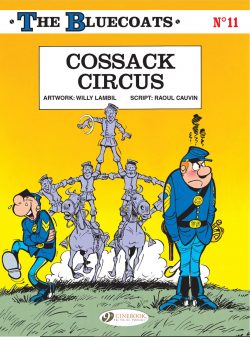
The Bluecoats volume 10: The Blues in Black and White


By Willy Lambil & Raoul Cauvin, translated by Jerome Saincantin (Cinebook)
ISBN: 978-1-84918-341-3 (Album PB)

Win’s Christmas Gift Recommendation: Read Some Pictures: It’ll Last Longer… 8/10

The myths and legends of the cinematic American West have fascinated Europeans virtually since the actual days of stagecoaches and gunslingers. Hergé and Moebius were passionate devotees and the wealth of stand-out Continental comics series ranges from Italy’s Tex Willer to such Franco-Belgian classics as Blueberry and tangential all-ages classics such as Yakari. Even colonial dramas such as Pioneers of the New World and Milo Manara & Hugo Pratt’s Indian Summer fit the broad-brimmed bill.

As devised by Louis “Salvé” Salvérius & Raoul Cauvin – who scripted the first 64 best-selling volumes until his retirement in 2020 – Les Tuniques Bleues (The Bluecoats) debuted at the end of the 1960s, specifically created to replace Lucky Luke when the laconic maverick defected from weekly anthology Le Journal de Spirou to rival publication Pilote.

The substitute swiftly became one of the most popular bande dessinée series in Europe.

Salvé was a cartoonist of the Gallic big-foot/big-nose humour school, and when he died suddenly in 1972, his replacement, Willy “Lambil” Lambillotte slowly introduced a more realistic – but still overtly comedic – illustrative tone and manner. Lambil is Belgian, born in 1936 and, after studying Fine Art in college, joined publishing giant Dupuis in 1952 as a letterer.

Born in 1938, scripter Cauvin is also Belgian and – before entering Dupuis’ animation department in 1960 – studied Lithography. He soon discovered his true calling – comedy writing – and began a glittering and prolific career at Spirou. In addition to Bluecoats he scripted dozens of long-running, award winning series including Cédric, Les Femmes en Blanc and Agent 212: more than 240 separate albums. The Bluecoats alone has sold more than 15 million copies of its 65 (and counting) album sequence.

Our sorry, long-suffering protagonists are Sergeant Cornelius Chesterfield and Corporal Blutch; a pair of worthy fools in the manner of Laurel & Hardy: hapless, ill-starred US cavalrymen posted to the wild frontier and various key points of fabled America during the War Between the States.

The original format featured single-page gags set around an Indian-plagued Wild West fort, but from the second volume – Du Nord au Sud – the sad-sack soldiers were situated back East, fighting in the American Civil War. All subsequent adventures – despite ranging far beyond the traditional environs of America and taking in a lot of genuine and thoroughly researched history – are set within the timeframe of the Secession conflict.

Blutch is your run-of-the-mill, whinging little-man-in-the street: work-shy, mouthy, devious and especially critical of the army and its inept commanders. Ducking, diving, even deserting whenever he can, he’s you or me – except sometimes he’s quite smart and heroic if no easier option is available.

Chesterfield is a big, burly professional fighting man; a career soldier who has passionately bought into all the patriotism and esprit-de-corps of the Military. He is brave, never shirks his duty and wants to be a medal-wearing hero. He also loves his cynical little troll of a pal. They quarrel like a married couple, fight like brothers and simply cannot agree on the point and purpose of the horrendous war they are trapped in…

The Blues in Black and White was the 10th translated Cinebook album (chronologically the 11th European volume) and as Les Tuniques Bleues: Des bleus en noir et blanc was first seen on the continent in 1975, serialised in Le Journal de Spirou #1965 to #1975 before becoming an album collection two years later.

It opens with another spectacular yet pointless battle, with Blutch in fine whining form after a string of horrific near-death experiences. His mood is further tested when he finds a civilian prowling about, pointing a weird box at casualties and other scenes of horror…

The oblivious, self-absorbed stranger is Matthew Brady, who has been sent by President Lincoln to record the war through the strange new medium of photography. After becoming an unwilling subject and accidental laughing stock, Chesterfield is deeply suspicious and, soon after, resentfully resistant as his vain superiors and battle-weary comrades embrace the technological marvel. Before he can react, he and Blutch are appointed bodyguards and dogsbodies: compelled to escort the oblivious, practically-suicidal snapper anywhere and everywhere he wants…

Soon, however, the surly sergeant has all the combat his warrior’s heart can cope with – and even the long-desired prospect of a gong – whilst the sly, shirking corporal has found a way to utterly avoid battle by becoming the photographer’s assistant. He even dresses like a civilian now!

As the daily carnage continues, Chesterfield becomes increasingly irked at the effect of the picture maker. Almost everyone wants to be captured for posterity, to the detriment of actual fighting. While Brady is gone, Blutch “immortalises” everyone, and the sergeant teeters on the brink of madness. He even takes charge of charging whilst his officers are too busy preening and primping for their next heroic pose…

The lethal status quo returns with a bump when the President shows up to decorate Chesterfield. Brady is with him and ready to take his own shots again, meaning Blutch can get back to fighting – just as the Confederate forces rally to retake all the ground they’ve lost while the Sarge was secretly in command…

Things go from bad to worst, as the Rebel response swiftly overwhelms the Union forces. When Lincoln and Brady are almost captured, Blutch and Chesterfield show just what they’re made of… and pay a heavy price…

A shade darker than usual, this wry treatise on fame and pride is a hugely amusing poke at the glory boys of history, deftly delivering an anti-war saga cleverly targeting younger, less world-weary audiences. Historically authentic, and always in good taste despite an uncompromising portrayal of violence, the attitudes expressed by our down-to-earth pair never make battle anything but arrant folly. These are comedic tales whose very humour makes the occasional moments of shocking verity doubly powerful and hard-hitting.

Funny, thrilling, beautifully realised and eminently readable, Bluecoats is the kind of war-story and Western that appeals to the best, not worst, of the human spirit.
© Dupuis 1977 by Lambil & Cauvin. All rights reserved. English translation © 2017 Cinebook Ltd.