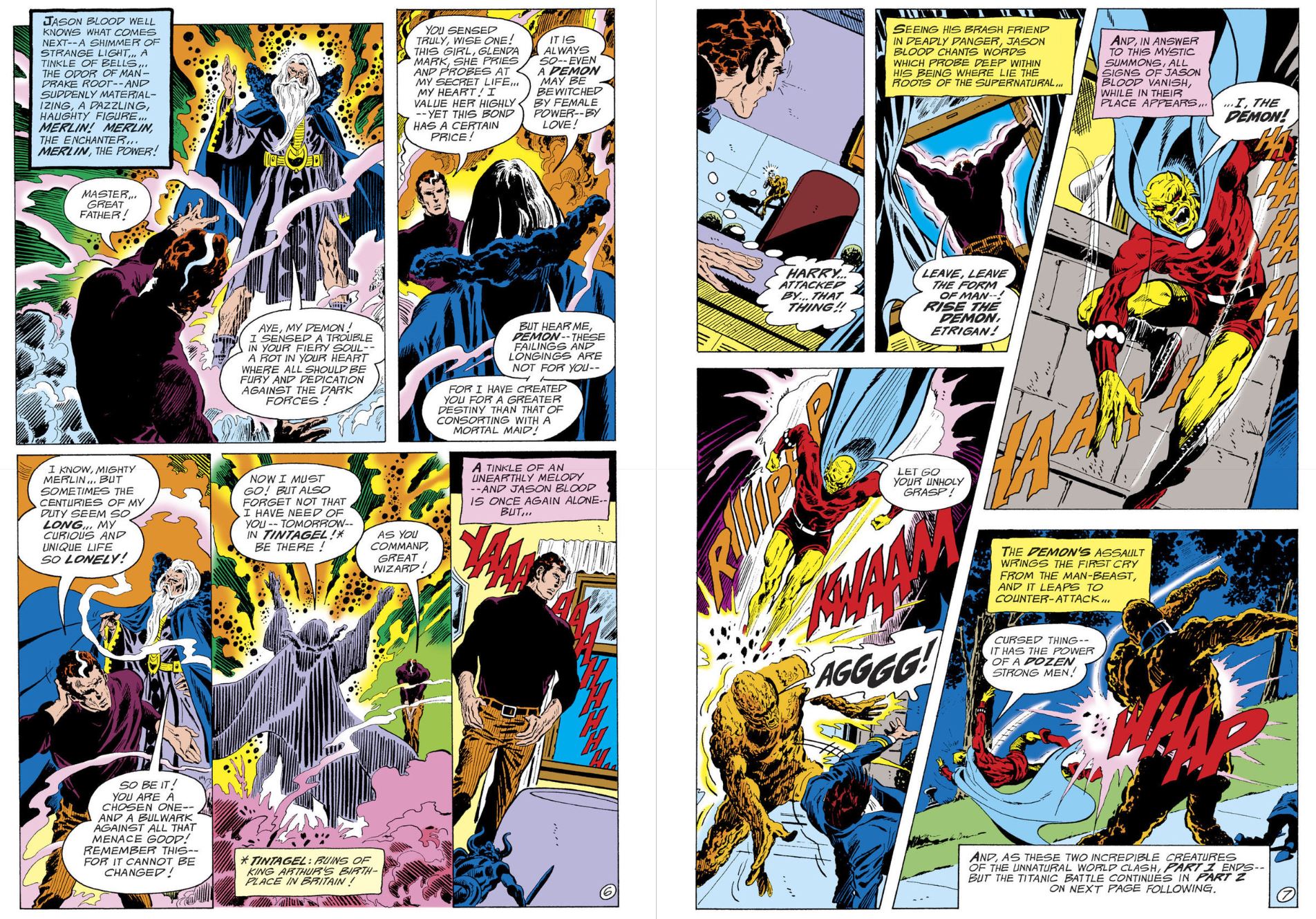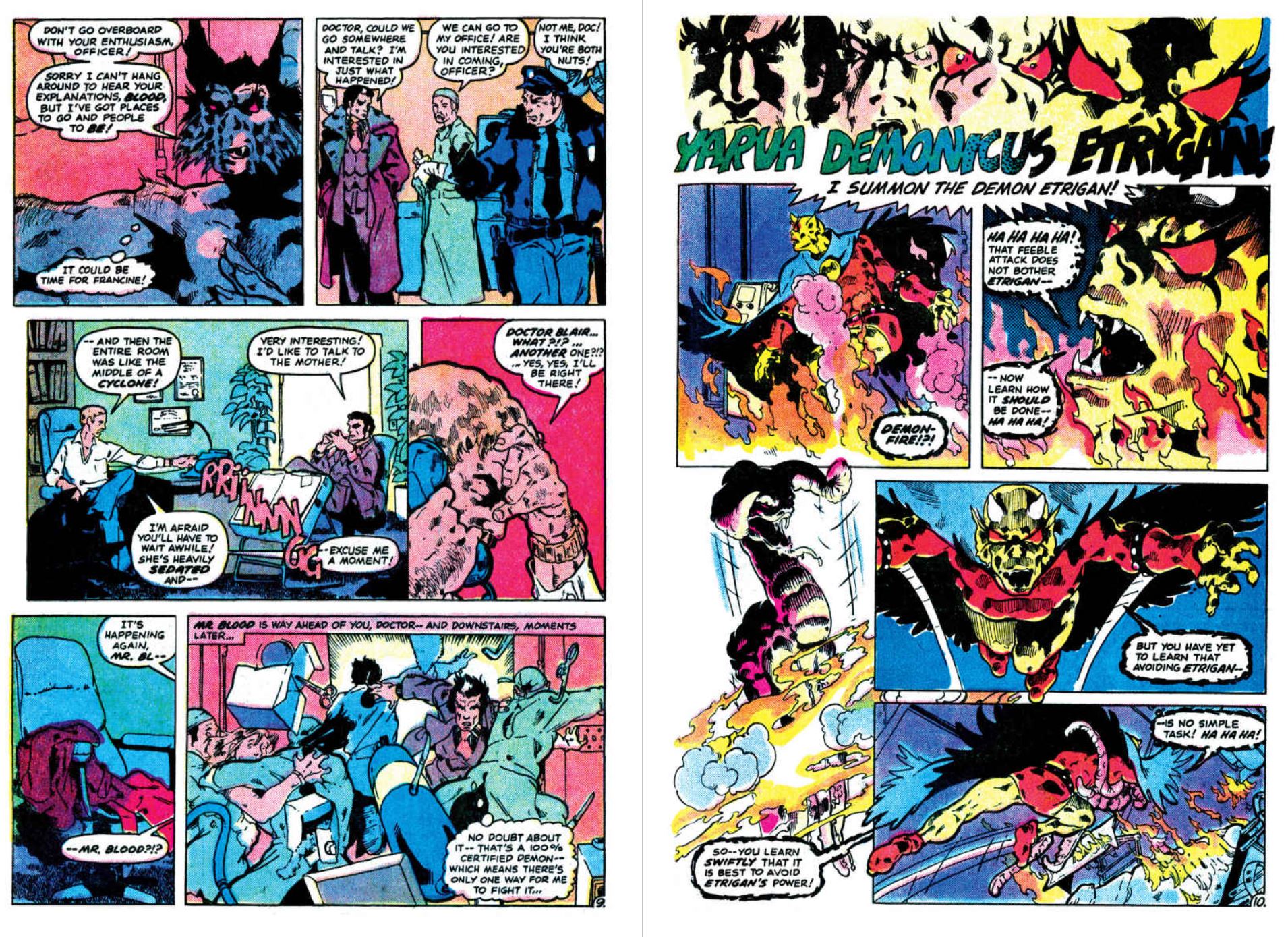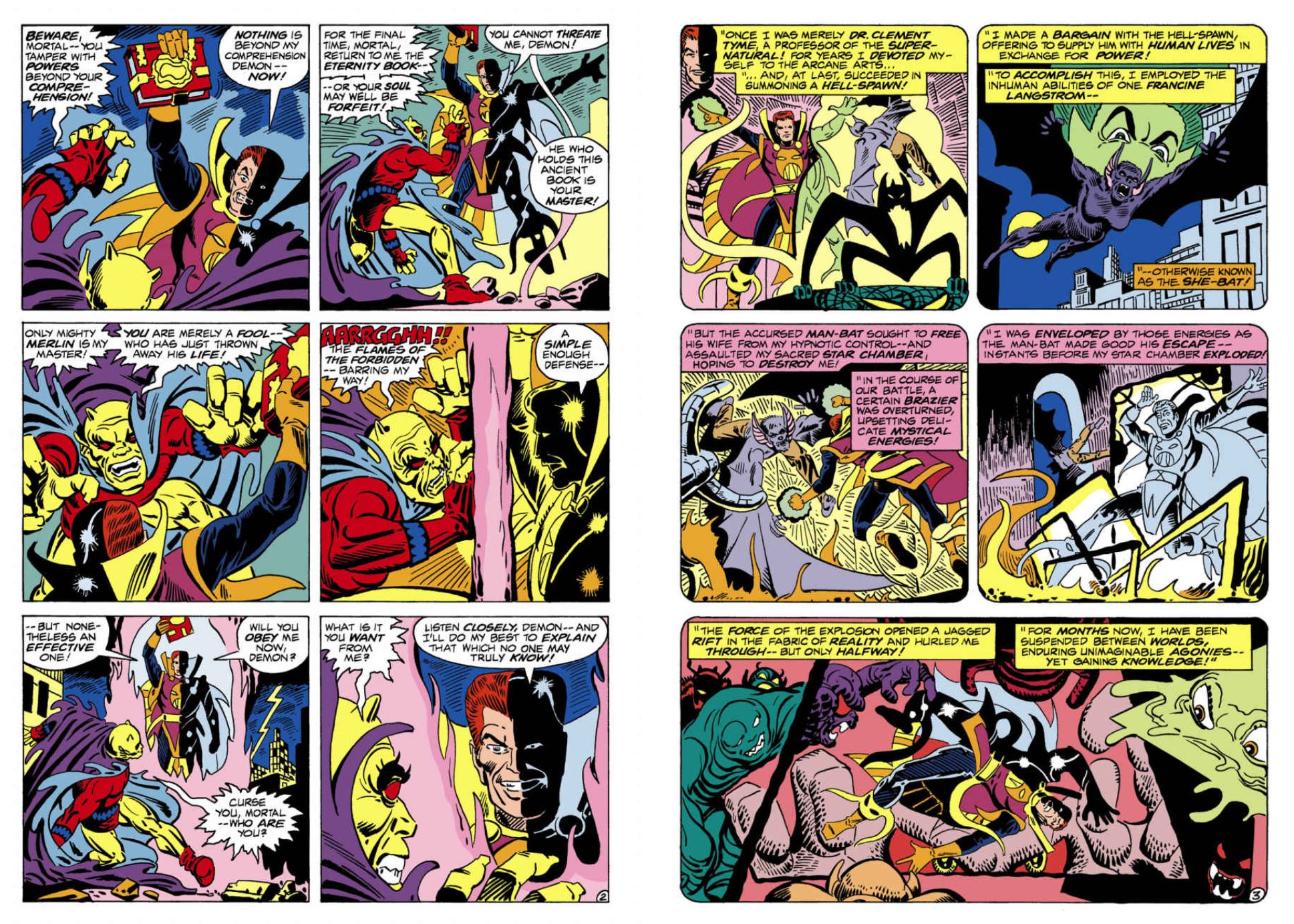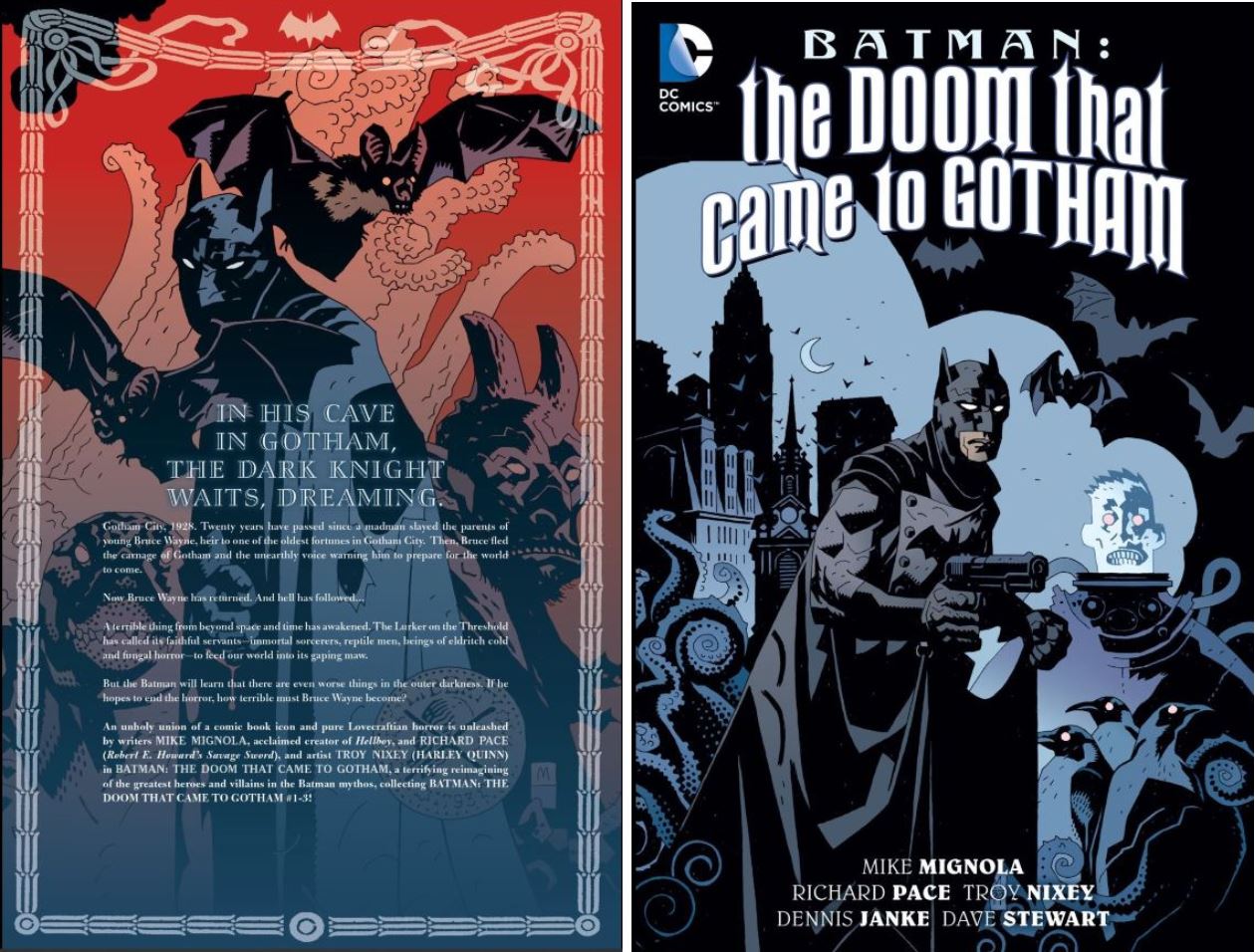
Osama Tezuka’s Astro Boy volume 10


By Osamu Tezuka, translated by Frederik L. Schodt (Dark Horse Manga)
ISBN: 978-1-56971-793-1 (tank?bon PB/Digital edition)

This book contains Discriminatory Content produced during less enlightened times.

From beginning his professional career in the late 1940s until his death in 1989, Osamu Tezuka generated an incomprehensible volume of quality work which transformed the world of manga and how it was perceived in his own country and, ultimately, across the globe. Devoted to Walt Disney’s creations, he also performed similar sterling service with Japan’s fledgling animation industry. Look what that led to…

The earliest stories were intended for children but right from the start Tezuka’s expansive fairy tale stylisations harboured more mature themes, holding hidden pleasures for older readers and the legion of fans growing up with the Mankaga’s manga masterworks…

The “God of Comics” was born in Osaka Prefecture on November 3rd 1928, and as a child suffered from severe illness. The doctor who cured him inspired the lad to study medicine, and although Osamu began drawing professionally whilst at university in 1946, he persevered with college and qualified as a medical practitioner too. Then, as he faced a career crossroads, his mother advised him to do the thing which made him happiest.

He never practiced as a healer but the world was gifted such masterpieces as Kimba the White Lion, Buddha, Black Jack and so many other graphic narratives. Working ceaselessly over decades, Tezuka and his creations inevitably matured, but he was always able to speak to the hearts and minds of young and old equally. His creations ranged from the childishly charming to the distinctly disturbing such as The Book of Human Insects or Tomorrow the Birds.

Tezuka died on February 9th 1989, having produced more than 150,000 pages of timeless comics; reinvented the Japanese anime industry and popularised a uniquely Japanese graphic narrative style which has become a fixture of global culture.

These monochrome digest volumes (173 x 113 mm in the physical world and any size you like if you read them digitally) present – in non-linear order – early exploits of his signature character, with the emphasis firmly on fantastic fun and family entertainment…

Tetsuwan Atomu (literally “Mighty Atom” but known universally as Astro Boy due to its dissemination around the world as an animated TV cartoon and one of post-war Japan’s better exports) is a spectacular, riotous, rollicking sci fi action-adventure starring a young boy who also happens to be one of the mightiest robots on Earth.

The series began in 1952 in Sh?nen Kobunsha and ran until March 12th 1968 – although Tezuka often added to the canon in later years, both in comics but in also in other media such as newspaper strips and in magazines. Throughout that period, the plucky robot lad spawned the aforementioned global TV cartoon boom, starred in comic book specials and featured in games, toys, collectibles, movies and the undying devotion of generations of ardent fans.

Tezuka frequently drew himself into his tales as a commentator, and in his later revisions and introductions often mentioned how he found the restrictions of Sh?nen comics stifling; specifically, having to periodically pause a plot to placate the demands of his audience by providing a blockbusting fight every episode. That’s his prerogative: most of us avid aficionados have no complaints and one upheld in abundance in the early tales included here…

Tezuka and his production team were never as wedded to close continuity as fans are. They constantly revised stories and artwork for later collections, so if you’re a purist you are just plain out of luck. Such tweaking and modifying is the reason these editions seemingly skip up and down publishing chronology. The intent is to entertain at all times so stories aren’t treated as gospel and order is not immutable or inviolate. It’s just comics, guys, and in case you came in late, here’s a little background to set you up.

In a forthcoming world where robots are ubiquitous and have won (limited) human rights, brilliant Dr. Tenma lost his son Tobio in a traffic accident. Grief-stricken, the tormented genius used his position as head of Japan’s Ministry of Science to have his team build a replacement. The android created was one of the most groundbreaking constructs in history, and for a while Tenma was content. However, as his mind re-stabilised, Tenma realised this unchanging humanoid was not Tobio and, with cruel clarity, no longer accepted a substitute. Ultimately, the savant removed the insult to his real boy by selling the robot to a shady dealer…

One day, independent researcher Professor Ochanomizu was in the audience at a robot circus and realised diminutive performer Astro was unlike the other acts – or indeed, any artificial being he’d ever encountered. Convincing the circus owners to part with the little robot, the boffin closely studied the unique creation and realised just what a miracle had come into his hands…

Part of Ochanomizu’s socialization process for Astro included placing him in a family environment and having him attend school just like a real boy. As well as providing friends and admirers the familiar environment turned up other foils and occasional assistants such as the bellicose Elementary School teacher Higeoyaji (AKA Mr. Mustachio) and a robot little sister dubbed Uran

The wiry, widgety wonder’s astonishing exploits resume here after the now traditional ‘A Note to Readers’ – explaining why one thing that hasn’t been altered is the depictions of various racial types in the stories. Since the author was keen to combine all aspects of his creation into one overarching continuity, this volume (at last) incorporates classic 1950s material as well as the masterful Sixties sagas and following an intimate chat with the cartoonist opens with masterful monster mash -up ‘Astro vs Garon’ which was originally serialised in Sh?nen Magazine from October 1962 to February 1963. Here a sequence of wild weather events precedes the arrival of a bizarre object from space. As scientists gather, prod and poke about, they determine the package is some sort of cosmic flat-pack parcel. Sadly, once they put all the pieces together, what they have is a planet-restructuring autonomous entity…

Thanks to Ochanomizu and his little robot companion, a packing note is translated, revealing the power and purpose of the construct, and – crucially – that it has arrived on the WRONG PLANET!

Sent to the Superintendent of Megalopa by the King of Planet Yura, the package has been despatched to “kill Plasta” and “modify” planets, so the sagacious observers are perfectly happy to leave it alone from now on if they can’t find a way to destroy it. Sadly, they aren’t quick enough and lightning awakens “the Garon”, which goes on a catastrophic rampage that all Earth’s military might and valiant Astro Boy can barely handle.

Thinking the crisis over, the handmade hero is called back into action when inert Garon is stolen by sleazy Professor Amagawa and a conglomerate of greedy capitalists and gangsters, Transported to the South Pacific the monster is then deliberately unleashed and all hell inevitably breaks loose. Able to convert the atmosphere and alter gravity, Garon goes wild and the astonishingly outpowered robot kid seems unable to pull off a second miracle.

Thankful for an old fable he once heard, Astro Boy devises a way to outsmart and banish the beast he cannot kill…

Japanese kids were editorially and parentally sheltered in different ways to us in the West, and second saga ‘Yellow Horse’ (Sh?nen, October 1955 – February 1956) might be a little shocking to some. It deals with diabolical drug dealers and sees Astro seconded by Police Inspector Nakamura to crack a ruthless smuggling gang with a hideout that is literally out of this world. To defeat them, the boy ‘bot goes undercover posing as a young user and eventually junkie/recruit, having to allow his hero Mr. Mustachio to be attacked and nearly killed and Professor Ochanomizu to be tortured and turned into an addict…

Eventually however, the plan gels and a calamitous battle reveals another shocking secret before the case can be closed…

Next, from Sh?nen magazine March to April 1967, ‘The 100 Million Year Old Crime’ sees a gang of French mutant juvenile delinquents run amok, endangering all of society with their unchecked mental powers. Called in to help, Professor O and Astro are crushed and defeated by the teens after they steal unstoppable robot superweapon Karabusu

As the professor is cruelly enslaved by the mutant kids, the wrecked scraps of Astro are found by ancient aliens. These “water ghosts” have been on/in Earth for 100,000,000 years and the father one is mired in guilt for committing an utterly unpardonable act. His daughter Parma is, however, enchanted by the robot remains and rebuilds him, triggering a cycle of redemption. Repaired and curious, Astro learns that heinous antediluvian crime was meddling with earth creatures’ genetic and creating humanity. All their historical atrocities and planetary harms are the alien’s fault and now he will wipe out his mistake. Desperate, Astro debates with the despondent progenitor and a deadly deal is struck, one involving reforming those mutant kids who seem to be the very worst the species can offer…

Sadly, the morbid maker has no intention of honouring it and Astro has to resort to the kind of tactics he despises for the good of all…

This outing to the orient of cartoon yore ends with a cunning crime caper and contemporary spoof saga as ‘Astro’s Been Stolen!’ (June to September in Tetsuwan Atom Kurabu AKA Mighty Atom Club) sees the mecha mite and his loving (equally mechanical) family distraught following a message from Professor O. This explains that the boy, his sister and they all need to grow for their mental health. That means transferring their processors and personalities into new, appropriately aged bodies every ten years…

Tragically, Ochanomizu has been targeted by diabolical twinned Doctors Rukarike. He’s actually a singular supervillain called Gettrich who cons the well-meaning savant into switching Astro Boy’s electro-brain into an adult replacement frame just so he can steal the junior version and place a hench-minion’s mind in it. The purpose is to gain admittance to the top-secret base containing super artefact the Neo-pyramid, but the fiend has not reckoned with Astro’s resilience and determination, nor the timely interference of British agent James Itch Dnob…

Breathtaking pace, outrageous invention, slapstick comedy, heart-wrenching sentiment and frenetic action are hallmarks of these captivating comics constructions: all ideal examples of Tezuka’s uncanny storytelling gifts. These still deliver a potent punch and instil wide-eyed wonder on a variety of intellectual levels and our melange of mecha-marvels is further enhanced an older, more sophisticated tone via the material’s constant revision, confirming Astro Boy as a genuine delight for all ages.
Tetsuwan Atom by Osama Tezuka © 2002 by Tezuka Productions. All rights reserved. Astro Boy is a registered trademark of Tezuka Productions Co., Ltd., Tokyo Japan. Unedited translation © 2002 Frederik L. Schodt.

Today in 1998 Batman co-creator Bob Kane died. Coincidentally, way back in 1927 letterer Milt Snappin was born on this same date. Milt put the words in Batman & Robin’s bubbles – as well as Superman, Superboy and other DC World’s Finest stars throughout the post Golden and Silver Age period.

The Creeper by Steve Ditko


By Ditko, Don Segall, Denny O’Neil, Michael Fleisher, Mike Peppe, Jack Sparling & various (DC Comics)
ISBN: 978-1-4012-2592-6 (HB)

This book includes Discriminatory Content produced in less enlightened times.

It’s Steve Ditko’s 99th birthday today and I’m not letting the fact that he’s no longer with us stop us enjoying his wonders and celebrating his unique storytelling mastery…

Steve Ditko was one of our industry’s greatest and most influential talents and, during his lifetime, amongst America’s least lauded. Always reclusive and reticent by inclination, his fervent desire was always just to get on with his job, tell stories the best way he can and let his work speak for him.

Whilst the noblest of aspirations, that attitude was usually a minor consideration – and even an actual stumbling block – for the commercial interests which for so long controlled all comics production and still exert an overwhelming influence upon the mainstream bulk of the comic industry’s output. After Ditko’s legendary disagreements with Stan Lee led to his quitting Marvel – where his groundbreaking efforts made the reclusive genius (at least in comicbook terms) a household name – he found work at Warren Comics and resumed his long association with Charlton Comics.

That company’s laissez faire editorial attitudes had always offered him the most creative freedom, if not greatest financial reward, but in 1968 their wünderkind editor Dick Giordano was poached by the rapidly-slipping industry leader and he took some of his bullpen of key creators with him to DC Comics. Whilst Jim Aparo, Steve Skeates, Frank McLaughlin and Denny O’Neil found a new and regular home, Ditko began only a sporadic – if phenomenally productive – association with DC.

It was during this heady if unsettled period that the first strips derived from Ditko’s interpretation of the Objectivist philosophy of novelist Ayn Rand began appearing in fanzines and independent press publications like Witzend and The Collector, whilst for the “over-ground” publishing colossus he devised a brace of cult classics with The Hawk and the Dove and the superbly captivating concept re-presented here: Beware The Creeper. Later efforts would include Shade, the Changing Man, Stalker and The Odd Man, plus truly unique interpretations of Man-Bat, the Legion of Super-Heroes and many more… including a wealth of horror, mystery and sci fi shorts reminiscent of his Charlton glory days.

The auteur’s comings and goings also allowed him to revisit past triumphs and none more so than with The Creeper – who kept periodically popping up like a mad, bad penny. This superb hardcover compilation – still tragically and inexplicably languishing with other classics DC hasn’t got around to making available in digital formats – gathers every Ditko-drafted/delineated Creeper classic from a delirious decade for your delight, and the spooky superhero spectacle kicks off with an effusive Introduction from appreciative fan Steve (30 Days of Night) Niles.

This collation curates tales from Showcase #73; Beware the Creeper #1-6; 1st Issue Special #7; World’s Finest Comics #249-255 and Cancelled Comics Cavalcade #2/Showcase #106 (collectively spanning March/April 1968 to February/March 1979), so settle in for a long ride…

Like so many brilliant ideas before it, Ditko’s bizarre DC visions first exploded off the newsstands in try-out title Showcase. Issue #73 heralded ‘The Coming of the Creeper!!’ with veteran comics & TV scripter Don Segall putting the words to Ditko’s plot and illustrations. The moodily macabre tale introduces suicidally-outspoken TV host Jack Ryder, whose attitude to his show’s sponsors and cronies loses him his cushy job. His brazen attitude does, however, impress network security chief Bill Brane and the gruff oldster offers him a job as an investigator and occasional bodyguard.

Jack’s first case involves tracking down recent Soviet defector Professor Yatz who has gone missing. The CIA suspect has been abducted by gangster Angel Devilin and sold to Red agent Major Smej. Displaying a natural affinity for detective work, Ryder tracks a lead to Devilin’s grand house and interrupts a costume party designed as a cover to make the trade. Promptly kicked out by thugs, Ryder heads for a costume shop but can only find a box of garish odds and ends… and lots of makeup.

Kitted out in a strange melange of psychedelic attire and accoutrements, he breaks back in but is caught and stabbed before being thrown into a cell with the missing Yatz. The scientist – also grievously wounded – is determined to keep his inventions out of the hands of evil men. These creations comprise an instant-healing serum and a Molecular Transmuter, able to shunt whatever a person is wearing or carrying into and out of our universe. A fully equipped army could enter a country as harmless tourists and materialise a complete armoury before launching sneak attacks…

To preserve them, Yatz lodges the Transmuter inside Ryder’s knife wound before injecting him with the untested serum. The effect is instantaneous and doesn’t even leave a scar. The investigator is also suddenly faster, stronger and more agile…

When Jack presses a handheld activator, he is instantly naked, and experimentation shows that he can make his motley costume appear and disappear just by touching a button. Of course, now, whenever it is activated, neither makeup nor wig, bodystocking, boots or gloves will come off. It’s like the crazy outfit has become his second skin…

When the gangsters come for their captives, Yatz is burning his notes. In the fracas that follows he catches a fatal bullet and, furious, guilt-ridden and strangely euphoric, Ryder goes after the thugs and spies. By the time the cops arrive he finds himself (or at least his canary yellow alter ego) blamed by Devilin for the chaos and even a burglary. The mobster has even given him a name – The Creeper

As soon as the furore dies down vengeful Ryder returns to exact justice for the professor and discovers his uncanny physical prowess and macabre, incessant unnerving laughter give him an unbeatable edge whilst winning him a supernatural reputation…

After that single yarn the haunting hero hurtled straight into his own bimonthly series. Beware the Creeper #1 debuted with a May/June cover-date. Behind one of the most evocative covers of the decade – or indeed, ever – ‘Where Lurks the Menace?’ (scripted by Denny O’Neil under his occasional pen-name Sergius O’Shaughnessy) finds Ryder and the Creeper hunting an acrobatic killer beating to death numerous shady types in a savage effort to take over the city’s gangs. Sadly, Jack’s relentless pursuit of “the Terror” and careful piecing together of many disparate clues to his identity is hindered by the introduction of publicity-hungry, obnoxious glamour-puss ‘Vera Sweet’. The TV weathergirl thinks she has the right to monopolise Ryder’s time and attention, even when he’s ducking fists and bullets…

The remainder of the far-too-brief run featured a classic duel of opposites as a chameleonic criminal mastermind insinuated himself into the lives of Jack and the Brane bunch. It all began with ‘The Many Faces of Proteus!’ in BtC #2 (by Ditko & O’Shaughnessy) wherein a pompous do-gooder’s TV campaign against The Creeper is abruptly curtailed after the Golden Grotesque shows up at the studio and throws bombs.

Caught in the blast is baffled and battered Jack Ryder, and he’s even more bewildered when Brane informs him that a tip has come in confirming the Creeper is working for gambler gangboss Legs Larsen

Dodging Vera, whose latest scheme involves a fake engagement, the real Creeper reaches Larsen’s gaming house in time to see a faceless man put a bullet into the prime suspect. In the ensuing panic the Laughing Terror transforms back into Ryder and strolls out with Larsen’s files, unaware that the faceless man is watching him leave and putting a few clues together himself…

The documents reveal a lone player slowly consolidating a grip on the city’s underworld but discloses no concrete information, so the Creeper goes on a very public rampage against all criminals in hopes of drawing Proteus out. The gambit works perfectly as a number of close friends try to kill Ryder, but only after frantically fending off flamethrower-wielding Vera in his own apartment does the Creeper realise that Proteus is far more than a madman with a makeup kit. A spectacular rooftop duel ends in a collapsed building and apparent end of the protean plunderer… but there’s no body to be found in the rubble…

Beware the Creeper #3 has our outré hero tearing the city’s thugs apart looking for Proteus, but his one-man spook-show is curtailed when Brane sends Ryder to find Vera. Little Miss Wonderful is determined to be the first to interview an island society cut off from the world for over a century, but all contact has been lost since she arrived. Tracking her to ‘The Isle of Fear’ Jack finds her in the hands of a death cult. More important to Ryder, however, is the fact that the Supreme One leading the maniacs is actually a top criminal offering sanctuary to Proteus flunkies he’s been scouring the city for…

Back in civilisation again, ‘Which Face Hides My Enemy?’ sees Ryder expose High Society guru and criminal mesmerist Yogi Birzerk’s unsuspected connection to Proteus. The cops drive The Creeper away before he can get anything from the charlatan, and when he dejectedly returns home Jack walks into an explosive booby trap in his new apartment. The “warning” from Proteus heralds the arrival of Asian troubleshooters Bulldog Bird and Sumo who claim to be also pursuing the faceless villain. They reveal he was a high-ranking member of the government of Offalia who stole a chemical which alters the molecular composition of flesh, before suggesting they all team up. Heading back to Bizerk’s place, it soon becomes clear that they are actually working for Proteus and that the faceless fiend knows Ryder’s other identity…
With #5, inker Mike Peppe joined Ditko & O’Neil as the epic swung into high gear with ‘The Color of Rain is Death!’ Proteus makes his closing moves, attacking Jack’s associates and framing him again whilst preparing for a criminal masterstroke which will win him much of the city’s wealth. Luring the Creeper into the sewers as a major storm threatens to deluge the city, the face-shifter reveals a scheme to blow up the drainage system and cause catastrophic flooding. After a brutal battle, he also leaves The Creeper tied to a grating to drown…

The stunning saga closed with final issue Beware the Creeper #6 (March/April 1969), by which time Ditko had all but abandoned his creation. ‘A Time to Die’ saw tireless, reliable everyman artist Jack Sparling pencil most of the story as the Howling Hero escapes his death-trap, deciphers the wily villain’s true gameplan and delivers a crushing final defeat. It was fun and thrilling and – unlike many series which folded at that troubled time – even provided an actual conclusion, but it somehow it wasn’t satisfactory and it wasn’t what we wanted.

This was a time when superheroes went into another steep decline with supernatural and genre material rapidly gaining prominence throughout the industry. With Fights ‘n’ Tights comics folding all over, Ditko concentrated again on Charlton’s mystery line, an occasional horror piece for Warren and his own projects…

In the years his own title was dormant, the Creeper enjoyed many guest shots in other comics and it was established that the city he prowled was in fact Gotham. When Ditko returned to DC in the mid-1970s, try-out series 1st Issue Special was alternating new concepts with revivals of old characters. Issue #7 (October 1975) gave the quirky crusader another shot at stardom in ‘Menace of the Human Firefly’ – written by Michael Fleisher & inked by Mike Royer. Here restored TV journalist Jack Ryder is inspecting the fantastic felons in Gotham Penitentiary just as manic lifer Garfield Lynns breaks jail to resume his interrupted costumed career as the master of lighting effects. By the time the rogue’s brief but brilliant rampage is over, the Creeper has discovered something extremely disturbing about his own ever-evolving abilities…

The story wasn’t enough to restart the rollercoaster, but some years later DC instituted a policy of giant-sized anthologies, and the extra page counts allowed a number of lesser lights to secure back-up slots and shine again. For World’s Finest Comics #249-255 (cover-dated February/March 1978 to February/March 1979) Ditko was invited to produce a series of 8-page vignettes starring his most iconic DC creation. This time he wrote as well as illustrated and the results are pure eccentric excellence. The sequence begins with ‘Moon Lady and the Monster’ as Ryder – once again a security operative for Cosmic Broadcasting Network – must ferret out a grotesque brute stalking a late-night horror-movie hostess, after which #250’s ‘Return of the Past’ reprises the origin as Angel Devilin gets out of jail and goes looking for revenge…

In WFC #251, ‘The Disruptor’ proves to be a blackmailer attempting to extort CBN by sabotaging programmes whilst ‘The Keeper of Secrets is Death!’ in #252 follows the tragic murder of Dr. Joanne Russell who was accused on a sensationalistic TV show of knowing the Creeper’s secret identity. Next issue ‘The Wrecker’ offers an actual grudge-bearing mad scientist who has built a most unconventional robot, whilst ‘Beware Mr. Wrinkles!’ in #254 debuts a villain with the power to age his victims. Neither, however, are a match for the tireless, spring-heeled Technicolor Tornado, whose too-short return culminates in a lethal duel with a knife-throwing jewel thief in #255’s ‘Furious Fran and the Dagger Lady’

Until this volume, that was it for Ditko devotees and Creeper collectors, but as the final delight in this splendid compendium reveals, there was more. An ill-considered expansion was followed by 1978’s infamous “DC Implosion”, when a number of titles were shut down or cancelled before release. One of those was Showcase #106 which would have featured a new all-Ditko Creeper tale.

It was collected – with sundry other lost treasures – in a copyright-securing, monochrome, minimum print-run internal publication entitled Cancelled Comics Cavalcade. Here, from CCC #2 (1978) and presented in stark black & white, fans can see the Garish Gallant’s last Ditko-devised hurrah as ‘Enter Dr. Storme’ pits the Creeper (and cameo crimebuster The Odd Man) against a deranged weatherman turned climatic conqueror able to manipulate the elements.

Fast, fight-filled, furiously fun and devastatingly dynamic, Beware the Creeper was a high-point in skewed superhero sagas and this is a compendium no lovers of the genre can do without.
© 1968, 1969, 1975, 1978, 1979, 2010 DC Comics. All Rights Reserved.

Today in 1926 Harvey Comics star and Anthro originator Howie Post was born, followed a year later by the mighty Steve Ditko. Just scroll back up or look anywhere on this blog, dude!

Sadly, it’s also the anniversary of Wally Wood’s death in 1981. We last looked closely at Ditko’s frequent collaborator in Cannon.

The Golden Age Spectre Archives


By Jerry Siegel & Bernard Baily with Gardner F. Fox & various (DC Comics)
ISBN: 978-1-5638-9955-3 (HB)

This book includes Discriminatory Content produced in less enlightened times.

Win’s Christmas Gift Recommendation: Masterpieces for all Comics Addicts… 9/10

Ola! Happy Día de (los) Muertos!

There were and still are a lot of comics anniversaries this year: many rightly celebrated, but a lot were unjustly ignored. As a feverish fanboy wedged firmly in the past, I’m abusing my privileges here to kvetch again about another brilliant vintage book, criminally out of print and not slated for revival either physically or in digital formats. That means occasionally recommending items that might be a bit hard to find. At least you might be buying from those poor beleaguered comics shops and specialists desperately in need of your support now, rather than some faceless corporate internet emporium..,

In fact, considering the state of the market, how come DC doesn’t just convert its entire old Archive line into eBooks and win back a few veteran fans? Don’t ask me, I only imitate working here…

Created by Jerry Siegel & Bernard Baily in 1939, The Spectre is one of the oldest characters in DC’s vast character stable. He debuted with a 2-part origin epic in More Fun Comics #52 and 53 (cover-dated February & March 1940 and on sale from December 28th 1939 and February 2nd 1940 respectively). He was the first superhero to star in that previously all-genres anthology, and reigned supreme in the title with flamboyant, eerily eccentric supernatural thrillers. He gradually slipped from popularity as firstly Dr. Fate and then Johnny Quick, Aquaman, Green Arrow and finally Superboy showed up to steal the limelight.

By the time of his last appearance in More Fun #101 February 1945, the Ghostly Guardian had been reduced to a foil for his own comedic sidekick Percival Popp, the Super-Cop

Just like Siegel’s other iconic creation, the Dark Man suffered from a basic design flaw: he was just too darn powerful. Unlike that vigorously vital and earthy early Superman, however, the ethereal champion of justice was already dead, so he couldn’t be logically or dramatically imperilled. Of course, in those far-off early days that wasn’t nearly as important as sheer spectacle: grabbing the reader’s utter attention and keeping it stoked to a fantastic fever pitch. This the Grim Ghost could do with ease and ever-increasing intensity.

Re-presenting the first 19 eerie episodes and following a fulsome Foreword detailing the state of play within the budding marketplace during those last months of the 1930s – courtesy of preeminent Comics historian Dr. Jerry Bails – the arcane action in this astoundingly enticing collection commences with ‘The Spectre: Introduction’ as first espied in More Fun Comics #52. This wasn’t the actual title: like so many strips of those early days, most stories didn’t have individual descriptors and have been retroactively entitled for compilations such as this.

The Astral Avenger was only barely glimpsed in this initial instalment. Instead, focus rests on hard-bitten police detective Jim Corrigan, who is about to wed rich heiress Clarice Winston when they are abducted by mobster Gat Benson. Stuffed into a barrel of cement and pitched off a pier, Corrigan dies and goes to his eternal reward.

Almost…

Rather than finding Paradise and peace, Corrigan’s spirit is accosted by a glowing light and disembodied voice which, over his strident protests, orders him return to Earth to fight crime and evil until all vestiges of them are gone. Standing on the seabed and looking at his own corpse, Corrigan began his mission by going after his own killers…

MFC #53 details how ‘The Spectre Strikes’ as the outraged revenant swiftly, mercilessly and horrifically ends his murderers before saving Clarice. Naturally “Corrigan” calls off the engagement and moves out of the digs he shares with fellow cop and best friend Wayne Grant. A cold, dead man has no need for the living. The origin ends with Corrigan implausibly sewing himself a green & white costume and swearing to eradicate all crime…

Splendidly daft and intensely enthralling, this 2-part yarn comprises one of the darkest and most memorable origins in comic book annals and the feature only got better with each issue as the bitter, increasingly isolated lawman swiftly grows into the most overwhelmingly powerful hero of the Golden Age.

In MFC #54 the Supernatural Sentinel tackles ‘The Spiritualist’, a murderous medium and unscrupulous charlatan who almost kills Clarice and forever ends the Spectre’s hopes for eternal rest, after which #55 introduces worthy opposition in ‘Zor’: a ghost of far greater vintage and power, dedicated to promulgating evil on Earth. He too menaces Clarice and only the intervention of the Heavenly Voice and a quick upgrade in phantasmal power enables Spectre to overcome this malign menace.

More Fun Comics #56 was the first to feature Howard Sherman’s Dr. Fate on the cover, but the Spectre was still the big attraction, even if merely mundane bandits and blackmailers instigating ‘Terror at Lytell’s’ were no match for the ever-inventive wrathful wraith. Far more serious was ‘The Return of Zor’ in #57, as the horrific haunt escapes from beyond to frame Corrigan for murder and again endanger the girl Jim dare not love…

An embezzler turns to murder as ‘The Arsonist’ in #58, but is no match for the cop – let alone his eldritch alter ego – whilst ‘The Fur Hi-Jackers’ actually succeed in “killing” the cop, yet still suffer the Spectre’s unique brand of justice. In #60, ‘The Menace of Xnon’ sees a super-scientist utilising incredible inventions to frame the ghost and even menace his ethereal existence – prompting The Voice to again increase its servant’s power. This means giving The Spectre the all-powerful Ring of Life – but not before the Ghostly Guardian has been branded Public Enemy No. 1.

With Corrigan now ordered to arrest his spectral other self on sight, #61 (another Dr. Fate cover) features ‘The Golden Curse Deaths’ wherein prominent citizens perish from a tech terror with a deadly Midas Touch, prior to ‘The Mad Creation of Professor Fenton’ pitting the Phantom Protector against a roving, ravaging, disembodied mutant super-brain. In #63, a kill-crazy racketeer gets his just deserts in the electric chair only to return and personally inflict ‘Trigger Daniels’ Death Curse’ upon all who opposed him in life. Happily, The Spectre is more than his match whereas ‘The Ghost of Elmer Watson’ is a far harder foe to face. Murdered by mobsters who also nearly kill Wayne Grant, the remnant of the vengeful dead man refuses to listen to The Spectre’s brand of reason. Thus, its dreadful depredations must be dealt with in fearsome fashion…

‘Dr. Mephisto’ was a real-deal spiritualist who used an uncanny blue flame for crime in MFC #65, after which the Ghostly Guardian battles horrendous monsters called forth from ‘The World Within the Paintings’ (probably written by the series’ first guest writer Gardner Fox), whilst Siegel scribes ‘The Incredible Robberies’, putting the phantom policeman into fearful combat to the death and beyond with diabolical mystic Deeja Kathoon. From #68 on The Spectre finally acknowledged someone’s superiority after losing his protracted cover battle to Dr. Fate even though, inside, the ‘Menace of the Dark Planet’ features a fabulously telling tale of Earthbound Spirit against alien invasion by life-leeching Little Green Men. In his next exploit ‘The Strangler’ murders lead Corrigan into an improbable case with an impossible killer…

This terrifying titanic but far-too-short tome terminates on issue #70 and ‘The Crimson Circle Mystery Society’ in which a sinister cult employs merciless phantasmal psychic agent Bandar to carry out its deadly schemes and desires…

Although still a mighty force of fun and fearful entertainment, The Spectre’s Glory Days and Nights were waning, with more credible champions coming to the fore. He would be one of the first casualties of the post-War decline in mystery men and not be seen again until the Silver Age of 1960’s. His path to his own title was tough then too and also led to an early retirement…

Moreover, when he did finally return to comics full-time, the previously omnipotent phantasm was curtailed by strict limits and as he continued to evolve through various returns, refits and reboots The Spectre was finally transmogrified: being bound to a tormented mortal soul inescapably attached to the actual embodiment of the biblical Wrath of God. Revamped and revived in perpetuity, revealed as the Spirit of Vengeance wedded to a human conscience, Jim Corrigan was finally laid to rest in the 1990s and Hal (Green Lantern) Jordan replaced him. Returning to basics in more recent years, the next host was murdered Gotham City cop Crispus Allen.

They’re all worth tracking down and exhuming: spooky comic champions who have never failed to deliver an enthralling, haunted hero rollercoaster – or is that Ghost Train? – of thrills and chills.
© 1940, 1941, 2003 DC Comics. All Rights Reserved.

Today in 1942 writer Michael Fleischer was born. We’ve covered far too many of his books like Jonah Hex and the Spectre to list here so just use the search box, OK? One year later Roy CranesBuz Sawyer began. Do yourself a huge favour by diving into Buz Sawyer: The War in the Pacific.

All Star Comics Archives volume 0


By Gardner Fox, Jerry Siegel, Ken Fitch, Bill Finger, John B. Wentworth, Sheldon Moldoff, Sheldon Mayer, Albert & Joseph Sulman, Creig Flessel, Jon L. Blummer, Martin Nodell, E.E. Hibbard, Chad Grothkopf, Stan Aschmeier, Bernard Baily, Howard Purcell, William Smith & various (DC Comics)
ISBN: 978-1-4012-0791-X (HB)

Win’s Christmas Gift Recommendation: Golden Moments for All… 9/10

This book includes Discriminatory Content produced in less enlightened times.

I will never stop saying it: the creation of the Justice Society of America in 1941 utterly changed the shape of the budding comicbook industry. However, before that team of All-Stars could unite, they had to become popular enough to qualify, and this slim yet superb hardcover sampler gathers a selection of individual exploits featuring many of the soon-to-be beloved champions who would populate the original big team and guarantee their immortality long after the Golden Age of American Comics ended.

Following the runaway successes of Superman and Batman, both National Comics and its wholly separate-but-equal publishing partner All-American Comics were looking for the next big thing in funnybooks whilst frantically concentrating on getting anthology packages into the hands of the hungry readership. Thus All Star Comics: conceived as a joint venture to give the characters already in their stables an extra push towards winning an elusive but lucrative solo title.

As scrupulously detailed in Roy Thomas’s history-packed Foreword, characters from Flash Comics, Adventure Comics, More Fun Comics and All-American Comics were bundled into the new (anthological) quarterly with ‘A Message from the Editors’ requesting readers vote on the most popular, and even offering free copies of forthcoming issues as prizes/bribes for participating…

The merits of the project would never be proved: rather than a runaway favourite graduating to their own starring vehicle, something different evolved. For the third issue, prolific scripter Gardner Fox apparently had the smart idea of linking the solo stories through a framing sequence as the heroes got together for dinner and a chat about their most recent cases. With the simple idea that Mystery Men hung around together, history was made and from #4 the heroes would regularly unite to battle a shared foe…

This slim sublime hardcover tome collects the stories from the first two All Star Comics (cover-dates Summer and Fall 1940) and opens with a tale of a fantastic winged warrior…

Although perhaps one of DC’s most resilient and certainly their most visually iconic character, iterations of Hawkman have always struggled to find enough of an audience to sustain a solo title.

From his beginnings as one of the B-features in Flash Comics, Carter Hall soared through assorted engaging, exciting but always short-lived reconfigurations. Over decades from ancient hero to re-imagined alien space-cop and post-Crisis on Infinite Earths freedom fighter, or the seemingly desperate but highly readable mashing together of all previous iterations into the reincarnating immortal berserker-warrior of today, the Pinioned Paladin has performed exemplary service without ever really making it to the big time.

Created by Gardner Fox & Dennis Neville, he premiered in Flash Comics #1 (cover-dated January 1940, but on sale from 20th November 1939) and stayed there, growing in quality and prestige until the title died, with the most celebrated artists to have drawn the Winged Wonder being Sheldon Moldoff and Joe Kubert, whilst a young Robert Kanigher was justly proud of his later run as writer. For over a decade, with his partner Hawkgirl/Hawkwoman, the gladiatorial mystery-man countered uncanny and fantastic arcane threats, battled modern crime and opposed tyranny with weapons of the past before vanishing with the bulk of costumed heroes as the 1950s began.

His last appearance was in All Star Comics #57 (1951) as leader of the Justice Society of America, before the husband-&-wife hellions were revived and re-imagined nine years later as Katar Hol and Shayera Thal of planet Thanagar by Julie Schwartz’s crack creative team Gardner Fox, Joe Kubert & Murphy Anderson. Their long career, numerous revamps and perpetual retcons ended during the 1994 Zero Hour crisis, but they’ve reincarnated and returned a few times since then too…

Here Fox & Sheldon Moldoff offered the eldritch saga of ‘Sorcerer Trygg’, wherein the still-bachelor hero travels to the mountains of Wales to crush a callous capitalist making zombies to work the mines he had stolen from his nephew and niece.

The Sandman premiered in either Adventure Comics #40 July 1939 (two months after Batman debuted in Detective Comics #27) or possibly two weeks earlier in New York World’s Fair Comics 1939, depending on which distribution records you choose to believe. He was originated and illustrated by multi-talented all-rounder Bert Christman with the assistance of rising scripting star Gardner F. Fox…

Head utterly obscured by a gas-mask and slouch hat; caped, business-suited millionaire adventurer Wesley Dodds was cut from the radio drama/pulp fiction mystery-man mould that had made The Shadow, Green Hornet, Black Bat and so many others household names and monster hits of early mass-entertainment and periodical publication. Wielding a sleeping-gas gun and haunting the night hunt killers, crooks and spies, he was eventually accompanied by plucky paramour Dian Belmont, before gradually losing the readers’ interest. His fortunes revived when Joe Simon & Jack Kirby took over the feature, but here, in his salad days, Fox & Chad Grothkopf spectacularly pit him against ‘The Twin Thieves’ baffling and bamboozling the hapless cops with their murderous jewel capers…

Gary Concord, the Ultra-Man premiered in All-American Comics #8 (cover-dated November 1939) the son of a 20th century scientist awoken from suspended animation in 2174AD and blessed with incredible physical abilities. His son inherited these attributes and became guardian of a troubled future and official High Moderator of the United States of North America

Created by Jon L. Blummer working as “Don Shelby” the Buck Rogers-inspired serial ran until A-AC #19 and is represented here with a then-topical threat in ‘The European War of 2240’ wherein conflict orchestrated in a foreign zone allows a scurrilous third party nation to attempt seizure of neutral America’s Uranium mines. Naturally, bombastic politico Ultra-Man quickly scotches the scheme and restored peace and prosperity to the world…

Devised, created and written by Fox and first drawn by Harry Lampert, Jay Garrick debuted as the very first Monarch of Motion in Flash Comics #1 and quickly – how else? – became a veritable sensation. He was the first AA character to win a solo title, mere months after All-Star Comics #3 hit the newsstands.

The Fastest Man Alive wowed readers in anthologies Flash Comics, Comics Cavalcade and All Star as well as All-Flash Quarterly for just over a decade before changing tastes benched him and most other Mystery Man heroes in the early1950s. His invention as a single power superhero triggered a new trend in the burgeoning action-adventure funnybook marketplace, and his particular riff was replicated many times at various companies as myriad Fast Furies sprang up. Then, he paused and only after over half a decade of interchangeable cops, robbers, horrors, cowboys and cosmic invaders, the concept of human rockets and superheroes in general was spectacularly revived in 1956 by Julie Schwartz in Showcase #4 when police scientist Barry Allen became the second hero to run with the concept.

It’s been non-stop ever since…

Here Garrick speedily solves ‘The Murder of Widow Jones’ (by Fox and signature illustrator Everett E. Hibbard) in the time it takes the cops to simply report that a crime has been committed…

The Spectre is one of the oldest characters in DC’s vast pantheon, created by Jerry Siegel & Bernard Baily in 1940 and debuting with a 2-part origin epic in More Fun Comics #52-53.

Initially the Ghostly Guardian reigned supreme in the title, in flamboyant and eerily eccentric supernatural thrillers, but gradually he slipped from popularity as firstly Dr. Fate and successively Johnny Quick, Aquaman, Green Arrow and finally Superboy turned up to steal the show. By the time of his last appearance, the Spectre had been reduced to a foil for his own comedic sidekick Percival Popp, the Super-Cop

The Astral Avenger was Jim Corrigan, a hard-bitten police detective who was about to marry rich heiress Clarice Winston when they were abducted by mobster Gat Benson. Stuffed into a barrel of cement and pitched off a pier, Corrigan died and went to his eternal reward. Almost.

Rather than finding Paradise and peace, Corrigan’s spirit was accosted by a glowing light and disembodied voice which, over his strident protests, ordered him to return to Earth to fight crime and evil until all vestiges of them were gone. Just like Siegel’s other iconic creation, the Dark Man suffered from a basic design flaw: he was just too darn powerful. Unlike the vigorously vital and earthy early Superman, however, the arcane agent of justice was already dead, so he couldn’t be logically or dramatically be imperilled.

Of course in those far-off early days that wasn’t nearly as important as sheer spectacle: grabbing a reader’s utter attention and keeping it stoked to a fantastic fever pitch. This the Grim Ghost could do with ease and always-increasing intensity. In ‘The Tenement Fires’ Siegel & Baily pulled out all the stops for a sinister struggle against merciless arsonists with the Ethereal Avenger recruiting recently murdered victims to help dispense final judgement…

Although we think of the Golden Age as a superhero wonderland, the true guiding principle was variety. Almost every comic book also offered a range of genre features from slapstick comedy to prose thrillers to he-man adventure on its four-colour pages, and More Fun Comics had its fair share of straight adventurers like freelance troubleshooter Biff Bronson, who debuted in #43 (May 1939) with sidekick Dan Druff for a near 30-issue run thrashing thugs, crushing crooks and exposing espionage. He last appeared in #67. Here the special agent exposes scurvy spy ‘The Great Remembo’ in a smart thriller deftly detailed by brothers Albert & Joseph Sulman.

At this time all comic books featured a prose story, and in All Star #1 Publisher Max Gaines’ niece Evelyn contributed a fanciful science fiction romp entitled ‘Exile to Jupiter’ that wasn’t up to much but was graced with illustrations by the wonderful Sheldon Mayer. Then the comics sagas resumed with The Hour-Man stepping in to combat ‘The Forest Fires’ in a moody drama by Ken Fitch & Bernard Baily. He’d started strongly in Adventure Comics #48 (March 1940) but slowly ran down until he faded away in #83, February 1943. ‘Tick-Tock Tyler, the Hour-Man’ began by offering his unique services through classified ads to any person in need. Chemist Rex Tyler had invented a drug he called Miraclo which super-energised him for 60 minutes at a time and here he helped beleaguered loggers enduring sabotage and murder…

The first issue closed with long-lived, much-loved, light-hearted military strip Red, White and Blue by Jerry Siegel & William Smith. Marine Sergeant Red Dugan, Whitey Smith of the US Army and Naval Rating Blooey Blue were good friends who frequently worked for military intelligence service G-2 whilst saving trouble magnet Doris West from her own dangerously inquisitive nature. The series began in All-American Comics #1 (April 1939): running there and in sundry other titles like World’s Finest Comics until 1946, with the trio turning up all over the world solving the USA’s problems.

Here they find themselves despatched to Alaska to find a missing G-2 agent, only to discover Doris already there exposing a slow infiltration by sneaky “Asiatics” of an ostensibly neutral nation in ‘The Volcano Invasion’.

All Star Comics #2 immediately follows with Hawkman (by Fox & Moldoff) fighting an Aztec cult in America and the jungles of Mexico, desperately seeking to rescue the latest kidnapped ‘Sacrifice for Yum-Chac’

Green Lantern then debuts in ‘The Robot Men’ by Bill Finger & Martin Nodell. In fact, the Emerald Gladiator was first seen All-American Comics #16 (July 1940 and practically simultaneously with this All Star appearance), devised by up-&-coming cartoonist Nodell and fully fleshed out by Finger in the same way he had with Bob Kane’s Batman.

Green Lantern was another sensation, becoming AA’s second smash hit six months after The Flash and preceding by 18 months the unprecedented success of Amazing Amazon Wonder Woman.

Engineer Alan Scott survived the sabotage and destruction of a passenger-packed train due only to the intervention of a battered old railway lantern. Bathed in its eerie verdant glow, he was regaled by a mysterious green voice with the legend of how a meteor fell in ancient China and spoke to the people: predicting Death, Life and Power. Instructing Scott to fashion a ring from its metal and draw a charge of power from the lantern every 24 hours, the ancient artefact urged the engineer to use his formidable willpower to end all evil – a mission Scott eagerly embraced. The ring made him immune to all minerals and metals, and enabled him to fly and pass through solid matter amongst many other miracles, but was powerless against certain organic materials such as wood or rubber which could penetrate his jade defences and cause him mortal harm…

He won his own solo title within a year of his launch and feature-starred in many anthologies like Comics Cavalcade for just over a decade, before he too blinked out in the early1950s, having first suffered the humiliating fate of being edged out of his own comic book by his pet, Streak the Wonder Dog

In this issue, however, he was at his mightiest and most impressive, battling a nationwide invasion of men turned into shambling monster slaves by an enemy spy…

Siegel & Baily then expose The Spectre to ‘The Curse of Kulak’, wherein an antediluvian sorcerer returns to punish mankind for desecrating his tomb: inundating the world with a plague of murderous hatred, after which The Sandman’s second stint delivers a spooky science thriller by Fox & Creig Flessel with the Man of Mystery tracking down a killer using a deadly radioactive weapon – ‘The Glowing Globe’ – to terrorise and rob.

Siegel & William Smith’s ‘Invisible Ink Gas’ pits Red, White & Blue against spies with a diabolical scheme for stealing Army documents whilst Johnny Thunderbolt’s All Star debut adds even more light-hearted shenanigans to the mix as the imbecilic genie-wielder becomes guardian of ‘The Darling Apartment’ (John B. Wentworth & Stan Aschmeier).

Johnny Thunder – as he eventually became – was an honest, well-meaning, courageous soul who was also a grade “A” idiot. However, what he lacked in smarts he made up for with sheer luck, unfailing pluck and unwitting control of an irresistible magic force. The feature always played for action-packed laughs but there was no getting away from it: Johnny was a simpleton in control of an ultimate weapon…

Decades before, the infant seventh son of a seventh son had been abducted by priests from mystic island Badhnisia and raised as the long-foretold controller of a fantastic magical weapon. This was done by voicing the eldritch command “Cei-U” – which sounds to western ears awfully like “say, you”…

Each month Johnny would look for gainful employment, stumble into a crime or crisis and his voluble temperament would result in an inexplicable unnatural phenomenon that would solve the problem but leave him no better off. It was a winning theme that lasted until 1947 – by which time the Force had resolved into a wisecracking thunderbolt-shaped genie – and Johnny was ousted from his own strip by sultry new crimebuster Black Canary

For now, though, back in America and seeking his fortune, Johnny spent lots of time trying to impress his girlfriend Daisy Darling’s dad. In this episode the irate property magnate is experiencing difficulties with a new building he’s erecting and Johnny decides to tackle head-on mobsters holding up production. After Evelyn Gaines text vignette ‘The Invisible Star’, Hour-Man crushes murderous charlatan ‘Dr. Morte, Spiritualist’ (Fitch & Baily) before the Flash closes out this stunning show in fine form, foiling thugs who kidnap an entire publishing company, by becoming ‘The One-Man Newspaper’ in a fast, furious, funny thriller from Fox & Hibbard.

With the entire Justice Society canon collected in eleven dedicated Archive Editions, this particularly impressive afterthought completed the resurrection of the rare and eccentric material which revolutionised comic books. Hopefully the new DC Finest reprint line will revive and reinvigorate the readers’ taste for these relics. These early adventures might not be to every modern fan’s taste but they certainly stand as an impressive and joyous introduction to the fantastic worlds and exploits of the World’s First Superheroes. If you have a love of the way things were, a hankering for simpler times remarkable for less complicated adventures of bold days and dark nights, this is another glorious collection you’ll cherish forever…
© 1940, 2006 DC Comics, Inc. All Rights Reserved.

Speaking of Dark Nights, today in 1915 Bob Kane was born. Whatever happened to him?

Ten years later, Al Feldstein entered the world. By the time he left it again he’d been Editor of Mad Magazine for 28 years after co-scripting and drawing the EC comics revolution, as seen in collections like Child of Tomorrow and Other Stories.

Thanks to all who enquired about our health and apparent obsession with sharing our opinions on certain subjects.

Upon reflection, it turns out that I’m very old and much confused, and thought that if I didn’t post a review every day or as often as possible, the specific hole in the Interweb we use would heal up. Turns out that’s not the case. We might post less often from now unless I see something I like…

Hellboy: Weird Tales


By Mike Mignola, Fabian Nicieza, John Cassaday, Eric Powell, Tom Sniegoski, Tommy Lee Edwards, Randy Stradley, Joe Casey, Sara Ryan, Ron Marz, J. H. Williams III, Jim Pascoe & Tom Fassbender, Will Pfeifer, John Arcudi, Matt Hollingsworth, Jill Thompson, Alex Maleev, Jason Pearson, Scott Morse, Akira Yoshida & Kia Asamiya, Doug Petrie, Bob Fingerman, Evan Dorkin, Andi Watson, Mark Ricketts, Kev Walker, Craig Thompson, Guy Davis, Stefano Raffaele, Ovi Nedelcu, Seung Kim, Steve Parkhouse, Steve Lieber, Jim Starlin, P. Craig Russell, Simeon Wilkins, Gene Colan, Roger Langridge, Eric Wright, Dave Stewart, Clem Robins & various (Dark Horse Books)
ISBN: 978-1-61655-510-8 (HB) eISBN: 978-1-63008-121-8 (digital) 978-1506733845 (2022 Omnibus TPB)

This book includes Discriminatory Content produced in less enlightened times. It also has Discriminatory Content included for comedic and satirical effect.

After the establishment of the comic book direct market system, there was a huge outburst of independent publishers in America and, as with all booms, a lot of them went bust. Some few, however, were more than flash-in-the-pans and grew to become major players in the new world order.

Arguably, the most successful was Dark Horse Comics who fully embraced the shocking new concept of creator ownership (amongst other radical ideas). This concept – and professional outlook and attitude – drew many big-name creators to the new company and in 1994 Frank Miller & John Byrne formally instituted sub-imprint Legend for those projects major creators wanted to produce their own way and at their own pace. Over the next four years the brand counted Mike Mignola, Art Adams, Mike Allred, Paul Chadwick, Dave Gibbons and Geof Darrow amongst its ranks; generating superbly entertaining and groundbreaking series and concepts. Unquestionably the most impressive, popular and long-lived was Mignola’s supernatural thriller Hellboy.

The hulking monster-hunter debuted in San Diego Comic-Con Comics #2 (August 1993) before formally launching in 4-issue miniseries Seed of Destruction (with Byrne scripting Mignola’s plot & art). Colourist Mark Chiarello added layers of mood with his understated hues. Once the fans saw what was on offer there was no going back…

What You Need to Know: on December 23rd 1944 American Patriotic Superhero Torch of Liberty and a squad of US Rangers intercepted and – almost – foiled a satanic ceremony predicted by Allied parapsychologist Professors Trevor Bruttenholm and Malcolm Frost. They were working in conjunction with influential medium Lady Cynthia Eden-Jones. Those stalwarts were waiting at a ruined church in East Bromwich, England when a demon baby with a huge stone right hand appeared in a fireball. The startled soldiers took the infernal yet seemingly innocent waif into custody.

Far, far further north, off the Scottish Coast on Tarmagant Island, a cabal of Nazi Sorcerers roundly berated ancient wizard Grigori Rasputin whose Project Ragna Rok ritual seemed to have failed. The Russian was unfazed. Events were unfolding as he wished…

Five decades later, the baby had grown into a mighty warrior engaging in a never-ending secret war: the world’s most successful paranormal investigator. Bruttenholm spent years lovingly raising the weird foundling whilst forming an organisation to destroy unnatural threats and supernatural monsters – The Bureau for Paranormal Research and Defense. “Hellboy” quickly became its lead agent.

As the decades of his career unfolded, Hellboy gleaned tantalising snatches of his origins, hints that he was an infernal creature of dark portent: born a demonic messiah, somehow destined to destroy the world and bring back ancient powers of evil. It is a fate he despises and utterly rejects, even though the universe keeps inexorably and relentlessly moving him towards it.

Hellboy earned the status of ‘actual legend’ in the comics world, starting as the particular vision of a single creator and, by judicious selection of assistants and deputies, cementing a solid take on the character in the hearts of the public. That’s just how it worked for Superman, Batman and Spider-Man (except for the whole “owning the fruits of your own labours” thing) and a big part of the same phenomenon was the eagerness of fellow creators to play in the same universe. Just how that and this collection came about is detailed in Editor Scott Allie’s Introduction preceding a blazing welter of strange and bizarre entertainment…

Originally an 8-part comics series wherein a star-studded cast of creators tell their own stories in their own varied styles under the watchful supervision of the big cheese himself in his unique infernal playground, Hellboy’s Weird Tales was gathered into a 2-volume set in 2004. This luxurious hardback and digital reissue originated in 2014, supplementing the original miniseries with back-up stories from Hellboy: The Wild Hunt #2-4.

Dramas that add to the canon nestle alongside bizarre and humorous vignettes that simply live for the moment and begin with ‘How Koschei Became Deathless’ crafted by Mignola, Guy Davis, Dave Stewart & Clem Robins. The filler from Hellboy: The Wild Hunt #2 & 3 details the valiant trials of a noble warrior and the bad bargain he made, after which a crafty man turns the tables on the world’s wickedest witch in ‘Baba Yaga’s Feast’ (H:TWH #4).

The mother of monsters returns in Fabian Nicieza & Stefano Raffaele’s ‘The Children of the Black Mound’ wherein a future soviet dictator has his own youthful, life-altering encounter with the queen of magic.

John Cassaday spoofs classic newspaper strips with rollicking pulp science hero in ‘Lobster Johnson: Action Detective Adventure’ after which Nazi-bashing nonsense, Eric Powell explores Hellboy’s childhood and early monster-mashing in ‘Midnight Cowboy’ whilst Tom Sniegoski & Ovi Nedelcu raise our spirits with an older ghostbuster failing to tackle a playful posse of spooks in ‘Haunted’

A classical doomed East/West war romance ghost tragedy is settled by Tommy Lee Edwards & Don Cameron in ‘A Love Story’, setting a scene for more Japanese myth busting in Randy Stradley & Seung Kim’s ‘Hot’ wherein the B.P.R.D. star clashes with an unhappy Tengu (water spirit) inhabiting a mountain hot spring…

Joe Casey & Steve Parkhouse celebrate the glory days of test pilots and the right stuff in ‘Flight Risk’ when Hellboy is involved in a competition to see who’s got the best jetpack, after which ‘Family Story’ (Sara Ryan & Steve Lieber) sees him acting as counsellor to the mum and dad of a rather diabolical kid, before we slip into all-out arcane action to retrieve a time bending artefact from a Guatemalan temple in ‘Shattered’ by Ron Marz & Jim Starlin.

A stakeout with an over-amorous fellow agent leads to unanticipated consequences in J. H. Williams III’s ‘Love is Scarier than Death’, whilst Will Pfeifer & P. Craig Russell’s dalliance with an undying theatre troupe traps our hellish hero in a ‘Command Performance’ and the entertainment motif continues in John Cassaday’s ‘Big-Top-Hell-Boy’ as the B.P.R.D. try to exorcise a mass-murderous circus in Germany before Hellboy and aquatic investigator Abe Sapien battle zombies in the ‘Theatre of the Dead’ courtesy of scripters Jim Pascoe & Tom Fassbender, as illustrated by Simeon Wilkins.

Thanks to John Arcudi & Roger Langridge, the undersea avenger sort of stars in comedic daydream ‘Abe Sapien: Star of the B.P.R.D.’, after which Jill Thompson takes ‘Fifteen Minutes’ to offer us the other side’s view of the eternal struggle, whilst Matt Hollingsworth & Alex Maleev show us the struggle against evil starts before we’re even legally alive in ‘Still Born’. Indomitable psychic Firestarter Liz Sherman acknowledges personal loss and the dreadful cost of the job in Jason Pearson’s ‘The Dread Within’ before Scott Morse conjures up a calmer moment for Hellboy in ‘Cool Your Head’ and Akira Yoshida & Kia Asamiya return us to ghost-riddled Japan for an unconventional duel with childish spirits in ‘Toy Soldier’

Bob Fingerman’s ‘Downtime’ pits the cream of the B.P.R.D. against the vexatious thing inhabiting the office vending machine, after which Doug Petrie & Gene Colan follow Liz and Abe on a typical ‘Friday’, even as artificial hero Roger the Homunculus foolishly seeks ‘Professional Help’ during a devious demonic assault (as recorded by Evan Dorkin). Andi Watson tackles Hellboy’s infernal heritage and possible future during a social function where he is – as always – the ‘Party Pooper’, after which team leader/psychologist Kate Corrigan endures an acrimonious reunion with her dead-but-still-dreadful mother in ‘Curse of the Haunted Dolly’ (Mark Ricketts & Eric Wright), whilst Kev Walker pits bodiless spirit Johann Krauss against a thing from outer space in ‘Long Distance Caller’.

The narrative portion of this stellar fear & fun fest rightly focuses on Hellboy himself as Craig Thompson takes the weird warrior on an extended tour of the underworld in ‘My Vacation in Hell’ and there’s still a wealth of wonder to enjoy with Mike Mignola’s Hellboy Weird Tales Gallery offering a selection of potent images by Cameron Stewart, Maleev, Dave Stevens with Dave Stewart, Steve Purcell, William Stout, Leinil Francis Yu, Phil Noto, Gary Fields with Michelle Madsen, J. H. Williams III, Rick Cortes with Anjin, Galen Showman with Michelle Madsen, Ben Templesmith, Frank Cho with Dave Stewart, Michael Wm. Kaluta, Lee Bermejo with Dave Stewart and Scott Morse.

Baroque, grandiose, scary, hilarious and even deeply moving, these vignettes alternate suspenseful slow-boil tension with explosive catharsis, and trenchant absurdity, proving Hellboy to be a fully rounded character who can mix apocalyptic revelation with astounding adventure to enthral horror addicts and action junkies alike or enthral jaded fun-lovers in search of a momentary chuckle. This is a classic compendium of dark delights you simply must have.

™ & © 2003, 2009, 2014 Mike Mignola. Weird Tales is ® Weird Tales, Ltd.

Today in 1932 Francis Burr Opper’s landmark strip And Her Name Was Maud ended. If only someone would release a definitive archive I certainly review it!

Also today, the amazing and astounding Otto Binder died in 1974. He wrote everything from Superman to Captain Marvel to Mighty Samson so go seek him out too for a grand old time…

Bram Stoker’s Dracula


By Bram Stoker & Fernando Fernández (Catalan Communications/Del Rey Books)
ISBN: 978-0-34548-312-6 (Del Rey)
DLB: 18118-1984 (Catalan)

This book includes Discriminatory Content produced in less enlightened times

Here a gloriously OTT example of Anglo-European collaboration long overdue for reconsideration and another go-round…

Multi-disciplinary Spanish artist Fernando Fernández began working to help support his family at age 13 whilst still at High School. He graduated in 1956 and immediately began working for British and French comics publishers. In 1958 his family relocated to Argentina and whilst there he added strips for El Gorrión, Tótem and Puño Fuerte to his ongoing European and British assignments for Valentina, Roxy and Marilyn.

In 1959 he returned to Spain and began a long association with Fleetway Publications in London, generating mostly war and girls’ romance stories. By the mid-1960’s he was experimenting with painting: selling book covers and illustrations to a number of clients. He resumed comics work in 1970, creating a variety of strips (many of which found their way into US horror magazine Vampirella), the successful comedy feature ‘Mosca’ for Diario de Barcelona and educational strips for the publishing house Afha.

Increasingly expressive and experimental as the decade passed, Fernández crafted ‘Cuba, 1898’ and ‘Círculos’ before, in 1980, beginning his science fiction spectacular Zora y los Hibernautas for the Spanish iteration of US fantasy magazine 1984. It eventually made it into English via Heavy Metal magazine as Zora and the Hibernauts.

He then adapted this moody, Hammer Films-influenced version of Dracula for the Spanish iteration of Creepy, before (working with Carlos Trillo) moving on to mediaeval fantasy thriller La Leyenda de las Cuatro Sombras. That done, he created illustration series Galería de Personajes Fantásticos, Argón, el Salvaje and a number of adaptations of Isaac Asimov tales in Firmado por: Isaac Asimov and Lucky Starr – Los Océanos de Venus.

His last comics work was Zodíaco, begun in 1989, before mounting heart problems curtailed the series and he returned to painting and illustration. He died in August 2010, aged 70.

For his interpretation of the gothic masterpiece under review here, Fernández sidelined the expansive, experimental layouts and lavish page design that had worked so effectively in Zora and the Hibernauts, opting for a moodily classical and oppressively claustrophobic, traditional page construction: trusting to his staggering mastery of colour and form to carry his luxuriously mesmeric message of mystery, seduction and terror.

The story is undoubtedly a familiar one and the set pieces are all executed with astounding skill and confident aplomb as, in May 1897, English lawyer Jonathan Harker is lured to the wilds of Transylvania and horror beyond imagining wherein an ancient bloodsucking horror prepares to move to the pulsing heart of the modern world. Leaving Harker to the tender mercies of his vampiric harem, Dracula voyages by schooner to England, slaughtering every seaman aboard the S.S. Demeter and unleashing a reign of terror throughout the sedate, complacent British countryside.

Meanwhile, in the seat of Empire, Harker’s fiancée Mina Murray finds her flighty friend Lucy Westenra fading from troublesome dreams and an uncanny lethargy which none of her determined suitors, Dr. Jack Seward, Texan Quincy P. Morris and Arthur Holmwood – the future Lord Godalming – seem capable of dispelling…

As Harker struggles to survive in the Carpathians, in Britain, Seward’s deranged but impotent patient Renfield confesses to horrifying visions and becomes greatly agitated. Freshly arrived in England, the Count is already causing chaos and disaster, as well as constantly returning to rapidly declining Lucy. His bestial bloodletting prompts her three beaux to summon famed Dutch physician Abraham Van Helsing to save her life and cure her increasing mania.

Harker survived his Transylvanian ordeal, and when nuns summoned Mina she rushed to Romania where she married him in a hasty ceremony to save his health and wits…

In London, Dracula renews his assaults and Lucy dies, only to be reborn as a predatory child-killing monster. After dispatching her to eternal rest, Van Helsing, Holmwood, Seward & Morris – joined by recently returned and much-altered Harker and his new bride – resolve to hunt down and destroy the ancient evil in their midst, following a chance encounter in a London street between the newlyweds and the astoundingly rejuvenated Count…

Dracula, however, has incredible forces and centuries of experience on his side and having tainted Mina with his blood-drinking curse flees back to his ancestral lands. Frantically, the mortal champions give chase, battling the elements, Dracula’s enslaved “gypsy army” and the monster’s horrific eldritch power in a race against time lest Mina finally succumb forever to his unholy influence…

Although translation to English in the Catalan version is a little slapdash in places – a fact happily addressed in a 2005 re-release from Del Rey – the original does have the subtly enhanced benefit of richer colours, sturdier paper stock and a slightly larger page size (285 x 219mm as opposed to 274 x 211mm) which somehow makes the 1984 edition feel more substantial. Of course, this would all be irrelevant if a digital edition were available.

This breathtaking take on the oft-retold yarn delivers fast paced, action-packed, staggeringly beautiful and astoundingly exciting thrills and chills in a most beguiling manner. Being Spanish, however, there’s perhaps the slightest hint of brooding machismo, if not subverted sexism, on display and – of course – plenty of heaving, gauze-filtered female nudity which might challenge modern sensibilities.

Nevertheless, what predominates in this Dracula is an overwhelming impression of unstoppable evil and impending doom. There’s no sympathy for the devil here – this is a monster from Hell all good men must oppose to their last breath and final drop of blood and sweat…

With an emphatic introduction (‘Dracula Lives!’) from comics historian Maurice Horn, this is a sublime treatment by a master craftsman all dark-fearing, red-blooded fans will want to track down and savour.
© 1984, 2005 Fernando Fernández. All rights reserved.

Today in 1894 letterer Ira Schnapp was born. I haven’t even listed most of his work on Now Read This!, but you’ve appreciated some of it every time you saw a golden age Superman logo.

Simultaneously culturally significant and insensitive, today in 1953 saw the first appearance of Leo Baxendale’s Little Plum in The Beano. You can weigh his pros and cons for yourself with Dandy and Beano Present The Comics at Christmas or any 20th century Beano Annual we’ve reviewed.

In 1957 Rumiko Takahashi was born. We covered Mermaid Forest so long ago it’s probably time for a revisit, and we should probably do Ranma ½ while we’re at it…

In 1959 the last episode of Norman Pett’s Jane was published. It had begun in 1932, but once you’ve seen The Misadventures of Jane you’ll probably agree it was best to let her go.

DC Finest Blue Beetle – Blue Beetle Challenges The Red Knight


By Joe Gill, Roy Thomas, Gary Friedrich, Benjamin Smith, Bill Fraccio, Tony Tallarico, Dick Giordano, Steve Ditko, Dan Reed & Bob McLeod, Albert Val, Bill Black & various (DC Comics)
ISBN: 978-1-79950-248-7 (TPB)

This book includes Discriminatory Content produced in less enlightened times

This absorbing yet inarguably eccentric DC Finest compilation offers some of the rarest material ever aquired by the company and probably owes its existence solely to the screen success of the ever-changing titular star. I honestly never expected to see such seminal material in a modern collection and I hope the dated nature of the material finds an appreciative audience and rewards DC for their boldness… 

Sadly as ever, it’s not yet available digitally, but we live in hope…

The Blue Beetle premiered in Mystery Men Comics #1, released by Fox Comics and cover-dated August 1939. The pulp-inspired star was created by Charles Nicholas and possibly initially scripted by Will Eisner. “Charles Nicholas” was a shared pseudonym used by Chuck Cuidera (Blackhawk), Jack Kirby (everything) and Charles Wojtkowski (Blonde Phantom, Young Allies, Nyoka, Iron Corporal) with the last one generally attributed with actually inventing our remarkably resilient Azure Adventurer.

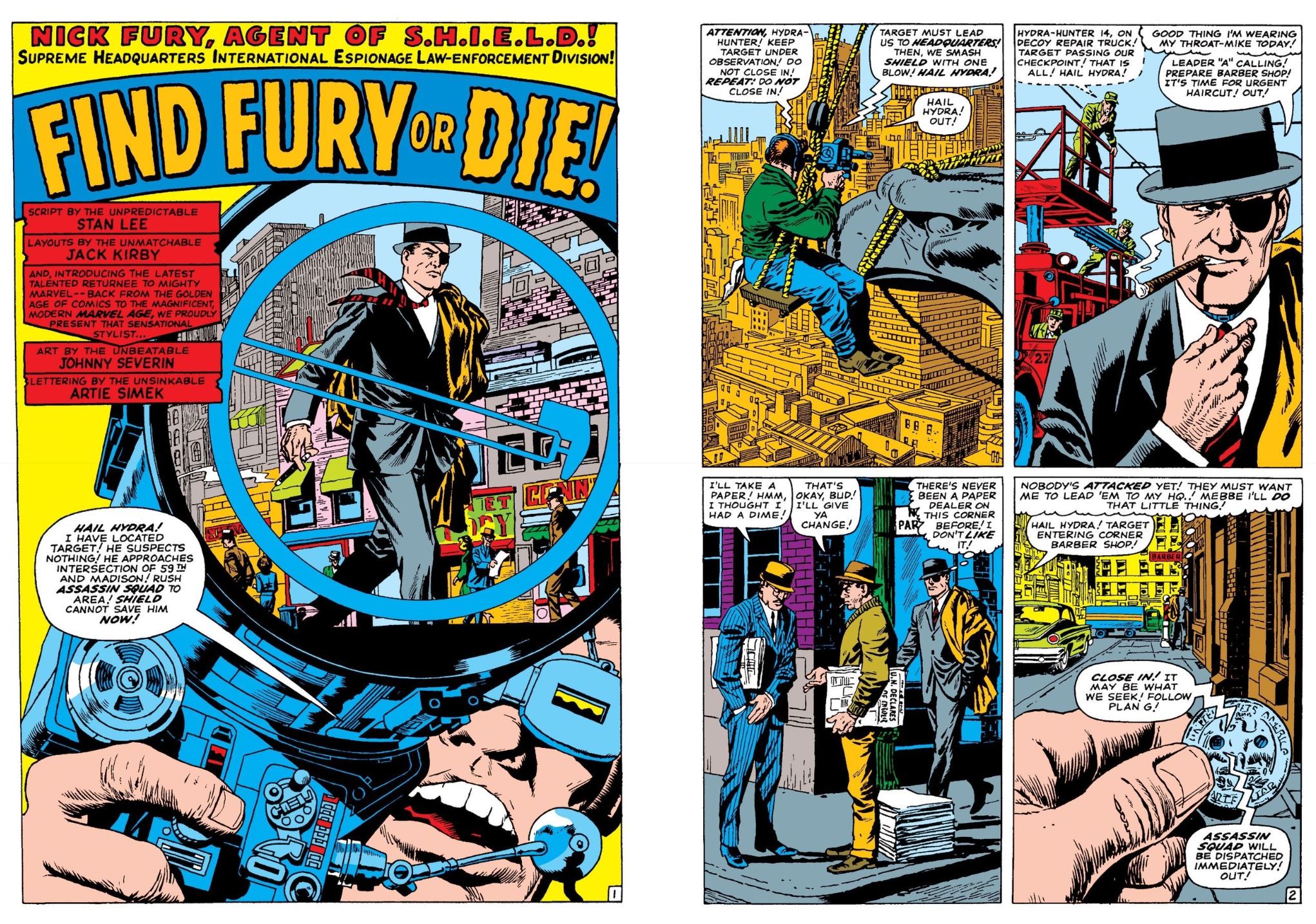
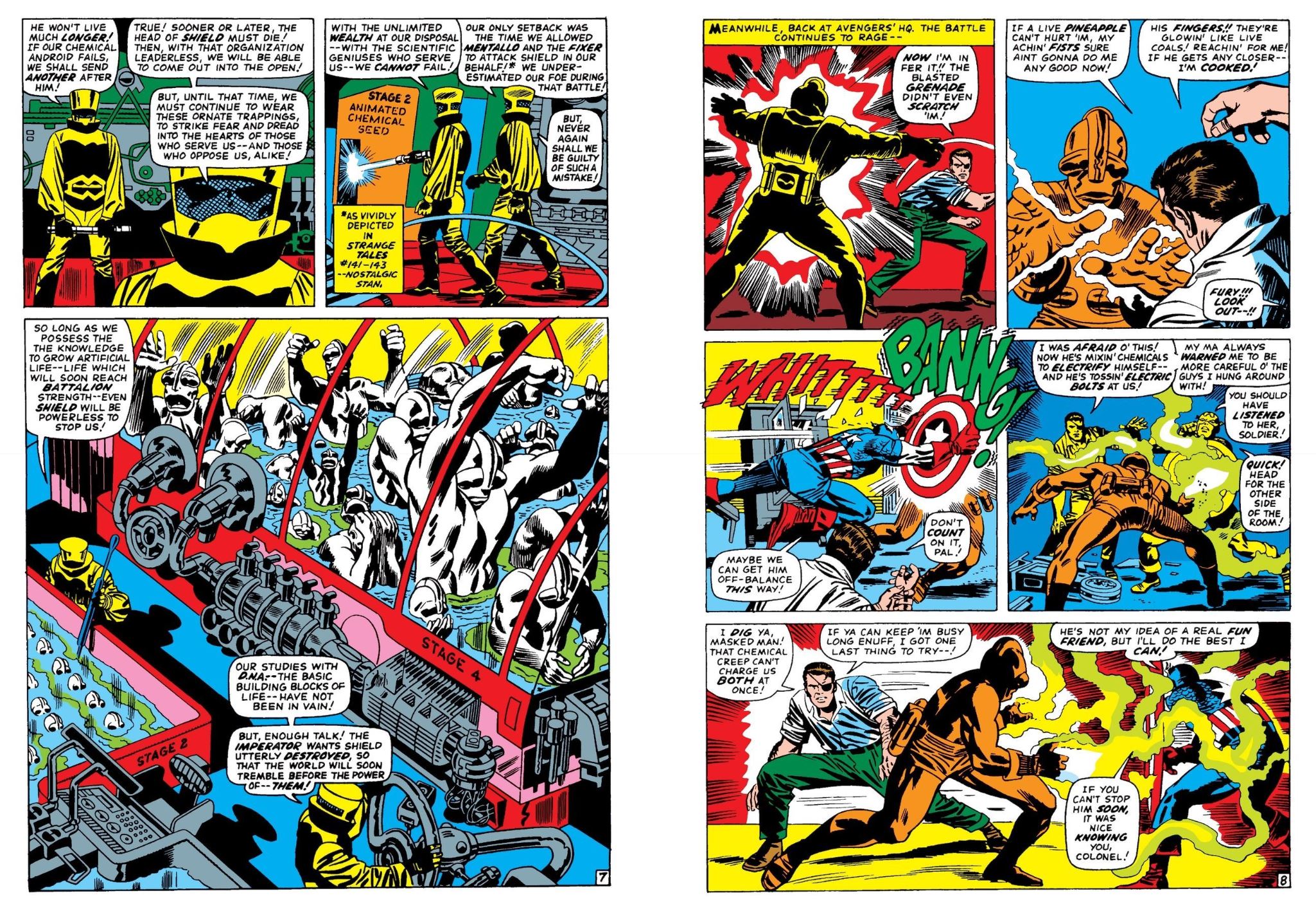
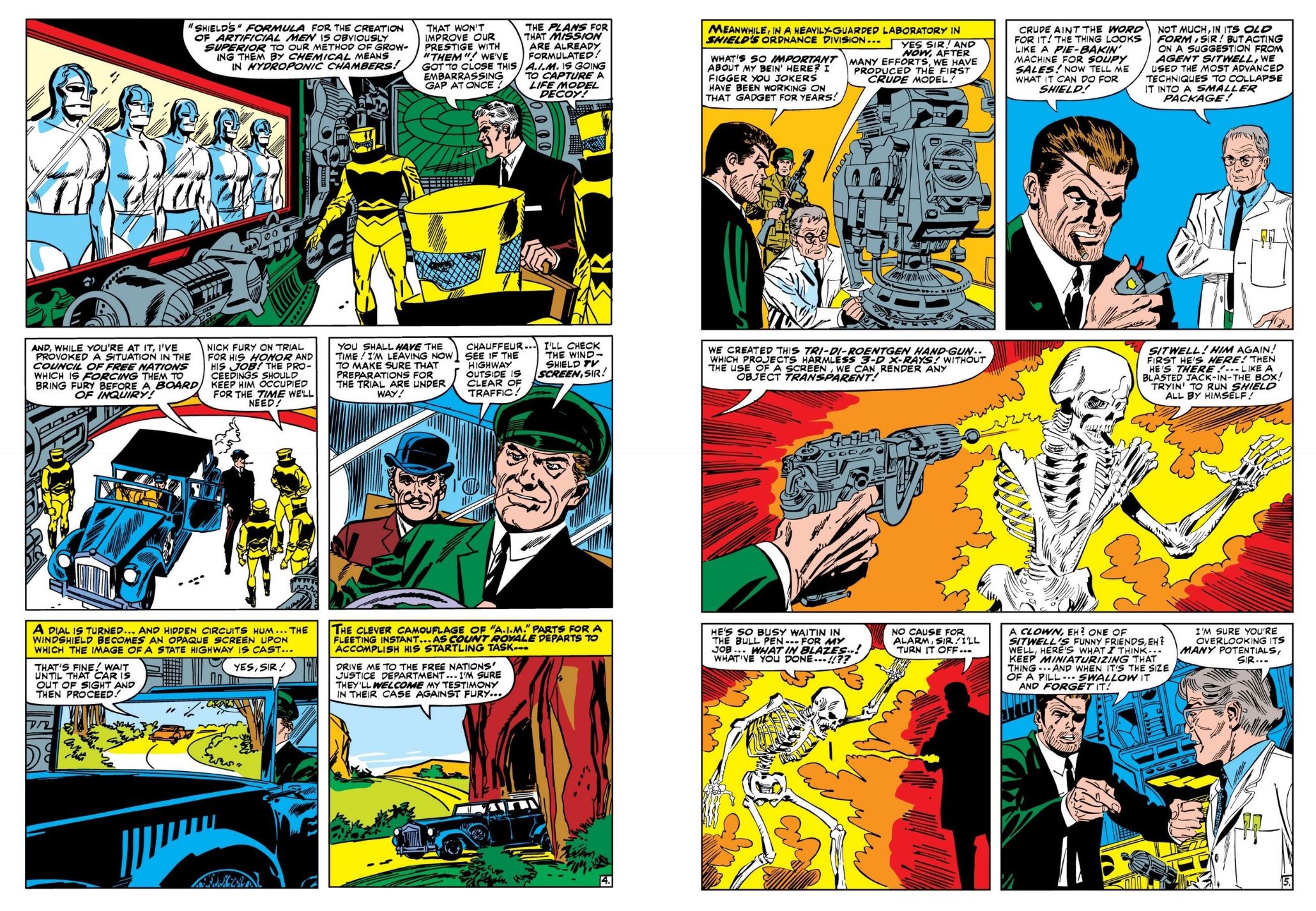
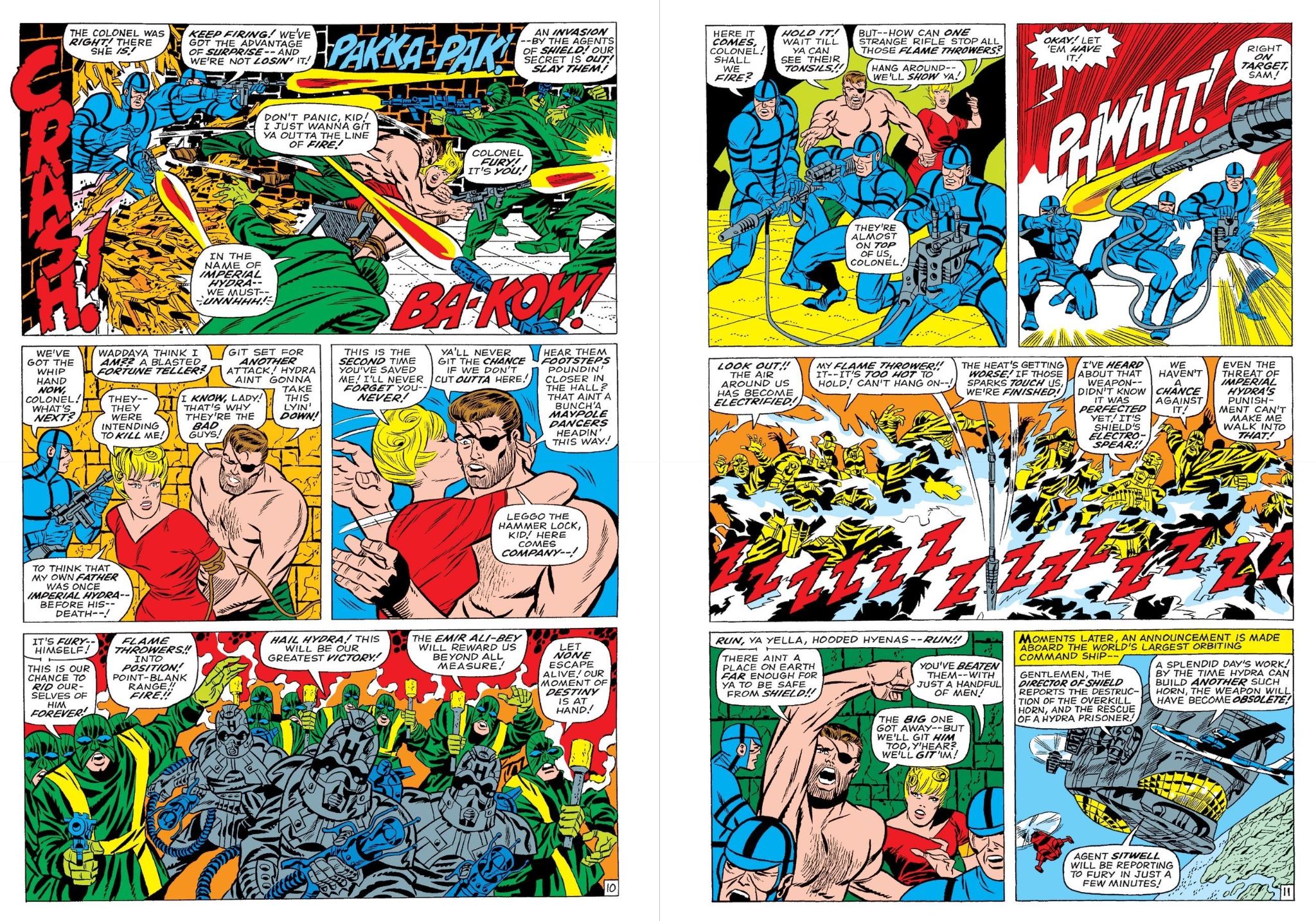
A mystery man in every sense of the term, the Cobalt Crimecrusher was inexplicably popular from the start: translating his comics venues into merchandise, a radio show and even a newspaper comic strip. Constantly acquired and traded by numerous publishers, BB survived the extinction of most of them: blithely undergoing many revisions to his origins and powers. By the mid-1950s he had ended up at Charlton Comics, appearing sporadically in a few long-inventoried tales before seemingly fading away. However, that was only until the early 1960s superhero resurgence when Joe Gill, Bill Fraccio, Tony Tallarico and, latterly, neophyte scripter/devoted Golden Age acolyte Roy Thomas revised and revived the character. It led to a unique 10-issue run spanning June 1964 to March 1966 (technically, two separate 5-issue runs), but you’ll see that it wasn’t quite that simple…

Pulling together many disparate strands from previous incarnations, former cop and valiant troubleshooter Dan Garrett was reshaped into an archaeologist gifted with a mysterious, magical ancient Egyptian scarab. This trinket would transform him into a lightning-throwing, super-sensed flying superman whenever he touched the scarab and uttered trigger phrase “Khaji Dha!”

After another brief sojourn in comic book limbo, Garrett resurfaced when Steve Ditko took on the concept, tweaking it to construct a fresh retooled hero for the gadget-conscious, superhero-savvy society perfect to continually confront a crimeridden culture.

Ditko accepted and acknowledged but sagely set aside all that prior history to utterly recreate a hero he could understand. Ted Kord is an earnest and proudly decent young scientist with a secret tragedy in his past, which Ditko and scripter Gary Friedrich sagely forbore revealing in deference to intrigue and action. The result was a taut, captivating noir thriller that opened the neopgyte’s azure casebook – which we’ll get to in the fullness of time…

Here, though, we open with the venerable veteran bursting back onto newstands courtesy of Gill, Fraccio, & Tallarico.

Cover-dated June 1964 the revival began in Blue Beetle (vol. 1, #1) with the disinterrment of ‘The Giant Mummy Who Was Not Dead’ as prominent visitor Dr. Dan Garrett and comely local egyptologist Professor Luri Hoshid fall foul of a rapidly changing political crisis whilst excavating an ancient site. The tomb of Kha-Ef-Re holds untold discoveries but resident strongman-with-despotic-aspirations – and a private nuclear arsenal – General Amenhotep may well end their dig out of sheer spite. Threatened but perservering, the duo unearth vile Kha-Ef-Re’s remains and a fantastic blue scarab that seemingly acts as a means of imprisoning his mummy.

On touching the gem, Garrett experiences an astounding vision as another ancient Egyptian – “The Great Pharoah” – reveals the scarab is a portal to fantastic power to be used in the service of good…

Transformed, Garrett immediately gets a chance to test it as a nuclear strike by Amenhotep’s forces awakens the mummy which grows to fantastic size and rampages across the nation. Thankfully the powers and abilities of The Blue Beetle are sufficient to defeat and re-entomb the monster and deal with the military maniac who thought to exploit him…

Relentlessly formulaic but somehow ly kitsch and bizarrely appealing, the stage was set for a succession of the same as BB #2’s ‘Hot War in the Arctic’ finds Garrett and sexy accomplice du jour Captain Elaine Norr (USAF) investigating peril in the far north. Here they clash with Red Chinese forces building secret airbases as well as cavemen, lost Goths, extinct big beasts and even dinosaurs from the sanctuary of a lost land… until more hastily applied atomics trigger a disaster…

Alien invasion was the theme of the third adventure as supersonic transport and possibly even the space program were threatened by a man who talked to lightning. ‘Mr. Thunderbolt and the Superstar’ led to a sustained war of nerves and powers narrowly won for humanity before a traditional supervillain arrived in the bright green form of ‘The Praying Mantis-Man’. Aided by Mexican entymologist firecracker Juanita Rivera, Garrett and his alter ego barely survive the efforts of self-mutating chlorophyl addict Hunter Mann to replace humanity with giant bugs. The macabre yarn is supplemented by a pinup of the Cobalt Crusader by Pat Masulli, before #5 finds Gill, Fracchio & Tallarico disclosing how and why ‘Blue Beetle Challenges the Red Knight’

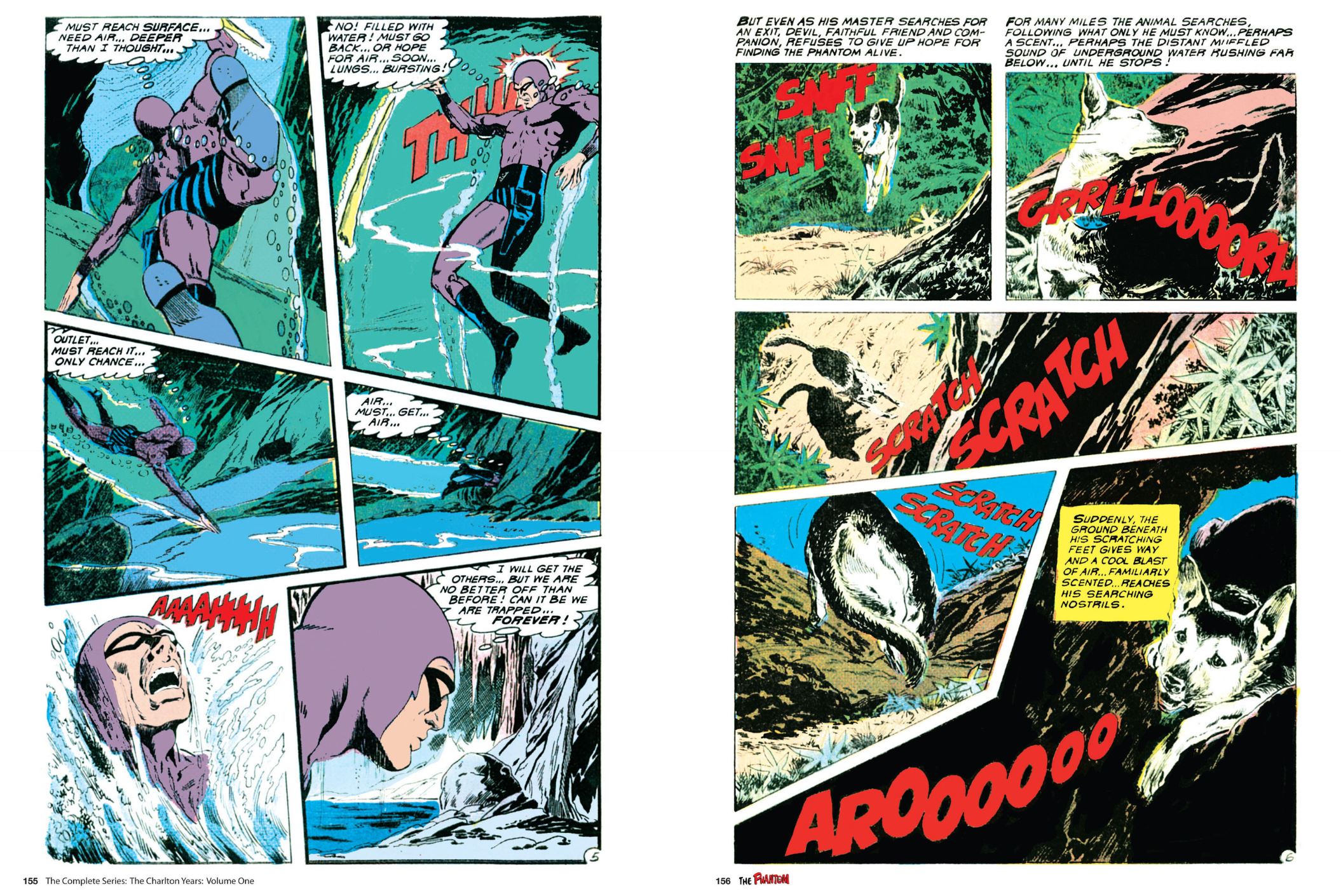
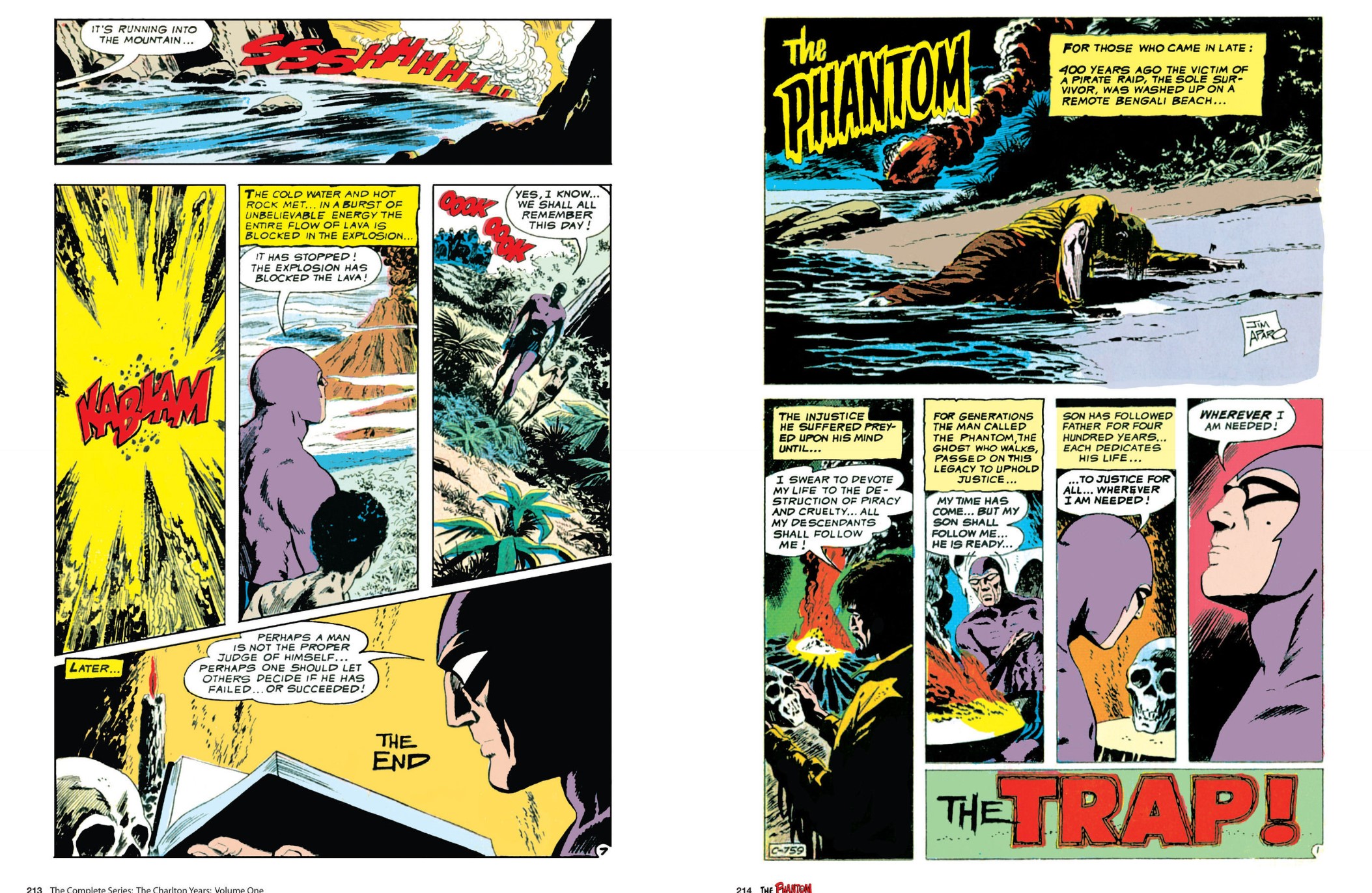
This eerie yarn sees Garrett come to the aid of his friend Lewis Coll after the astrophysicist returns from a space mission strangely altered. Now obsessive and cruel, Coll shuns his fiancee Regina White and transforms himself into a invulnerable crimson armoured tyrant seeking to destroy all aircraft. So tough is his opposition that Blue Beetle must seek aid from the The Great Pharoah himself to end the threat…

The series went on a brief hiatus and returned with a new numbering system as, cover-dated July 1965, Blue Beetle #50 pitted the hero against ‘The Scorpion’ as villainous Mister Crabb sought to control the oil industry with thugs and giant robots, whilst in # 51 deranged incel Dr. Jeremiah Clugg sought to offset his self-perceived physical flaws and failings with women by placing his personality and mentality inside a super-srobot dubbed ‘Mentor the Magnificent’. Unable to reason, the Beetle had to quell his increasing instability with force…

Gill & Tallarico handled #52 as ‘Magno, the Man Who Shakes the World’ finds disgraced anthropologist Louis Forte targeting Garrett for revenge that escalates into shattering the entire planet as tectonic terrorist Magno-Man, after which Praying Mantis-Man returns to bedevil humanity in ‘The People Theives’, with the mantid maniac snatching humans as lab fodder until the Azure Avenger steps in and stomps him…

The last hurrah of the old guard saw aspiring junior Roy Thomas script for Fracchio & Tallarico a deft return to Egypt in final foray (Blue Beetle #54 February/March 1966) as Garrett and Luri Hoshid reunite after her latest find is co-opted by a rival who knows its true power. Sadly even Professor Philipps is unaware of the full force and malign sentience of ‘The Eye of Horus’ Soon the ancient device is enslaving and transforming humans in its quest for dominance, but the Great Pharoah has a plan to aid his new agent defeat it. All the hero has to do is visit the gods in the Land of the Dead and return with a certain weapon…

Despite it being the height of superhero madness in popular culture, Blue Beetle folded then and was left fallow until the end of the year. As stated above, he returned much changed in the back of Captain Atom (#83 November 1966) with Charlton Comics’ biggest gun in the process of his own refit and renewal again courtesy of Ditko.

The remodelling of the Atomic Ace left room for expansion and experimentation so Ditko plunged right in, introducing an acrobatic, technologically armed swashbuckler taking care of business without any extraneous exposition or explanation… and using one of the oldest names in the business.

Here ‘The New Blue Beetle’ displays his modus operandi by stopping a vicious crime-spree by the Killer Koke Gang. The untitled yarn has all classic elements of a Ditko masterpiece: outlandish, intense fight scenes, compact, claustrophobic yet dynamic layouts, innovative gimmickry and a clear-cut battle between Right and Wrong. It’s one of the very best introductory stories of a new hero anywhere in comics – and it’s only 7 pages long…

With a definite feeling of no safety or status quo, next instalment ‘Wanted for Murder’ – scripted by Mike Friedrich with full art from Ditko – pits the new kid against a mysterious Masked Marauder who has invaded ghis own home. However, the real kicker is a bombshell revelation that Homicide Detective Fisher, investigating the disappearance of Garrett, suspects a possible connection to Kord…

Next in the imaginatively entitled ‘Blue Beetle Fights a Submarine’ the vigour and vitality of the hero is again undeniable as a mid-air hijack is foiled before a spy sub and giant killer octopus are given short shrift by the indomitable rookie crusader. Then CA #86 sees the return of ‘The Masked Marauder’ as the cobalt crimebuster confronts a ruthless scientist/industrial spy he’s convinced he has battled before…

This is all preamble to the main event as – cover-dated June 1967 – Blue Beetle (volume 2) #1 launched.with lead tale ‘Blue Beetle Bugs the Squids’; an all-Ditko masterpiece (even scripting it as “D.C. Glanzman”) with the hero in astounding action against a deadly gang of bandits. ‘Blue Beetle… Bugs the Squids’ is crammed with the eccentric vitality that made Amazing Spider-Man such a monster hit, with justice-dispensing joie de vivre balanced by the moody, claustrophobic introduction of Ditko’s most challenging mainstream superhero creation. Sadly, you’ll need a different book to meet this version of The Question

Another all-Ditko affair, Blue Beetle #2 shows the master at his peak. ‘The End is a Beginning!’ at last reveals the origin of the hero as well as the fate of Dan Garrett, and even advances Kord’s relationship with his long-suffering ever-pining assistant Tracey. #3 is another superbly satisfying read, as the troubled warrior routs malevolent, picturesque thugs ‘The Madmen’ in a sharp parable about paranoia and misperception.

Blue Beetle #4 is visually the best of the bunch as Kord follows a somehow-returned Garrett to an Asian backwater in pursuit of lost treasure and a death cult. ‘The Men of the Mask’ is pure strip poetry and bombastic action, cunningly counterbalanced by final outing ‘Blue Beetle Faces the Destroyer of Heroes’ (Blue Beetle #5). It remains a decidedly quirky tale featuring a notional team-up of the azure avenger and The Question wherein a frustrated artist defaces heroic and uplifting paintings and statues. Ditko’s committed if reactionary views of youth culture, which so worried Stan Lee, are fully on view in this charged, absorbing tale…

The Ditko Beetle was sublime but short-lived: an early casualty when the Sixties Superhero boom reversed and horror again ruled the newsstands, Charlton’s “Action Hero” experiment was gone by the close of 1968, preceding a long line of costumed champions into limbo and clearing the decks for a horror renaissance.

Time passed and reading tastes changed again. After the cosmos-consuming Crisis on Infinite Earths re-sculpted DC’s universes in 1986, a host of stars and even second stringers got floor-up rebuilds to fit them for a tougher, uncompromising, straight-shooting, no-nonsense New American readership of the Reagan era. In the intervening years, DC had pursued an old policy: gobbling up the characters and properties of defunct publishers. A handful of Charlton buy-outs had already appeared in Crisis, and now Captain Atom, The Question and two separate Blue Beetles seamlessly slotted into the new DCU, ahead of the rest of the lost contingent…

Before that moment though, there was a final flurry of the old guard.

This collection ends with the rare one-off Charlton Bullseye #1 (June 1981), released as Charlton was finally winding down its business. Written by Bejamin Smith and illustrated by Dan Reed, Albert Val & Bill Black ‘The Enigma’ sees Blue Beetle and The Question officially meet for the first time as someone they just don’t know targets them both for vengeance and assassination. He doesn’t succeed this time but does get away and threaten to return…

With covers by Fraccio, Frank McLaughlin, Vince Colletta, Masulli, Dick Giordano, Tallarico, Ditko, Rocke Mastroserio, Reed & Bob McLeod this a book that is both sublime and ridiculous, but one any lover of Fights ‘n’ Tights fiction just must have.
© 1964, 1965, 1966, 1967, 1968, 1969, 1981, 2025 DC Comics. All Rights Reserved.

Today in 1913 utterly unique UK cartoonist and raconteur Bill Tidy was born. We last bowed before T’ Mastuh with our coverage of The Fosdyke Saga volume 1. In 1949 Jim Starlin entered this world, and you can check out the bajillions he’s created since by using our search box. Ditto for Matt Wagner, who is so much more than just Grendel, Mage, Batman and Sandman Mystery Theatre. He joined us right about…. NOW! back in 1961.

Showcase Presents Dial H for Hero


By Dave Wood, Jim Mooney, George Roussos, Frank Springer, Sal Trapani, Jack Sparling & various (DC Comics)
ISBN: 978-1-4012-2648-0 (TPB)

This book includes Discriminatory Content produced in less enlightened times.

In the mid-Sixties the entire world went crazy for costumed crusaders and every comic book publisher (and some who weren’t) frantically sought new ways to repackage an extremely exciting yet intrinsically limited concept. Perhaps its ultimate expression – for Americans at least as UK comics were always skewing the curves – came with the creation of a teen-aged everyman champion who battled crime and disaster in his little town with the aid of a fantastic wonder-tool…

This slim monochrome paperback compendium collects the entire eclectic run from House of Mystery (#156, January 1966 to #173, March-April 1968), after which the title vanished for a few months, only to re-emerge as DC’s first new anthological supernatural mystery title and next big publishing sensation…

Created by Dave Wood & Jim Mooney, Dial H For Hero detailed the incredible adventures of lonely boy genius Robby Reed who lived with his grandfather in idyllic Littleville: a genial small town where nothing ever happened…

Born in Arlington, Massachusetts on September 5th 1926, Dave Silva worked prodigiously in comics as Dave Wood, as did his brothers Bob Wood and Dick Wood. Their father was a doctor who blotted his copybook so badly that the family had their surname legally changed sometime after 1932.

Dave’s brothers got into making comics early – founding a studio shop with Charles (Airboy, Crime Does Not Pay, The Little Wise Guys) Biro – and Dave joined them before his war service as an army reporter in 1944. He returned and blossomed into a go-to writer in many genres. His prolific output really began in the post-superhero days of AUS comic books and includes such seminal classics – often with artistic legends Jack Kirby and Wally (no-relation) Wood) – as Challengers of the Unknown and seminal Space Race newspaper strip Sky Masters. A skilled jobbing writer, Wood frequently and closely collaborated with brother Dick. They bounced around the industry, scripting mystery, war, science fiction and he-man adventure yarns. Amongst his/their vast credits are stints on Danger Trail, Our Army at War, most Superman family titles, Batman, Detective Comics, World’s Finest Comics, Green Arrow, Rex the Wonder Dog, Tomahawk, Blackhawk, Martian Manhunter and so many more. As well as Dial H For Hero Dave Wood created bizarre sleeper hit Animal Man and the esoteric but fondly regarded Ultra, the Multi-Alien. He was Bob Kane’s ghost writer and co-created eccentric villains Mister Zero/Mr Freeze, Doctor Double X and the Terrible Trio/The Fox, the Shark and the Vulture. He died far, far too young on July 7th 1974

The majority of the illustration was left to capable, unflappable, slick James Noel Mooney. He started his comics career in 1940, aged 21, working for the Eisner & Eiger production shop, and at Fiction House on The Moth, Camilla, Suicide Smith and other B-features. By the end of that year he was a mainstay of Timely Comic’s vast funny animal/animated cartoon tie-in department.

In 1946, he migrated to National/DC to ghost Batman for Bob Kane & Dick Sprang. He stayed until 1968, a regular on a host of key features including Superman, Superboy, Legion of Super-Heroes, World’s Finest Comics and Tommy Tomorrow, as well as many genre short stories for the company’s assorted anthology titles like Tales of the Unexpected and House of Mystery. He famously drew Supergirl from her series debut in Action Comics #253 to #373. He returned to Marvel in the late 1960s, delivering stellar runs on Spider-Man, Marvel Team-up, Omega the Unknown, Man-Thing, Ghost Rider and a host of other features including early adults-only feature Pussycat as both penciller and inker. Prior to that move he was illustrating Dial H For Hero; the only original DC feature he co-created.

Big things were clearly expected of the new feature, which was parachuted in as lead and cover feature, demoting the venerable Martian Manhunter J’onn J’onzz to a back-up role at the rear of each issue. Cover dated January 1966 (and on sale from November 18th 1965) House of Mystery #156 kicked off the strange adventures with an untitled tale that opens in an attack on the local chemical works by super-scientific criminal organisation Thunderbolt. This occurs just as young Robby and his pals are playing in the hills above the site. As they flee, the plucky kid is caught in a landslide and falls into an ancient cave where lies hidden an obviously alien artefact… that looks like an outlandish rotary telephone dial. If these words mean nothing to you, feel free to investigate on-line…

After finding his way out of the cavern Robby becomes obsessed with the device and spends all his time attempting to translate the arcane hieroglyphs on it. Eventually he determines that they are instructions to dial the dial symbols which roughly translate to “H”, “E”, “R” and “O”…

Ever curious, Robby complies and is suddenly transformed into a colossal super-powered Giantboy, just in time to save a crashing airliner and quash another Thunderbolt raid. On returning home, he simply reverses the dialling process and goes to bed…

These were and still are perfect wish-fulfilment stories: uncluttered, uncomplicated yarns concealing no grand messages or themes: just straight entertainment expertly undertaken by experienced and gifted craftsmen who knew how to reach their young-at-heart audiences. After all, what right minded child wouldn’t rush out and DO GOOD if they got superpowers?

Thus, no-one is surprised at the ease with which Robby adapts to his new situation. When Thunderbolt strikes again next morning Robby grabs his dial but is startled to become a different hero – high-energy being The Cometeer. Streaking to the rescue Robby is overcome by the raider’s super weapon and forced dial back into being a boy again. Undeterred, he later tries again and as The Mole finally tracks the villains to their base and crushes them. The leader escapes, however, to become the series’ only returning villain…

Mr. Thunder was back in the next issue as Robby became The Human, Bullet, bestial energy-being Super-Charge and eerie alien Radar-Sonar Man to combat ‘The Marauders from Thunderbolt Island’ after which criminal scientist Daffy Dagan steals the H-Dial after defeating the boy’s next temporary alter ego Quake-Master. Dagan becomes a horrifying multi-powered monster when he learns to ‘Dial… V… For Villain’ but after the defeated hero takes back the artefact, Robby redials into techno-warrior The Squid and belatedly saves the day. Clearly the Mystery in House of… was related to where the Dial came from, what its unknown parameters were and especially who or what Robby would transform into next…

HoM #159 pitted The Human Starfish, Hypno-Man and super-powered toddler Mighty Moppet (wielding weaponised baby bottles) in single combats with a shape-shifting bandit gang dubbed ‘The Clay-Creep Clan’ whilst ‘The Wizard of Light’ played with the format by introducing a potential love-interest for Robby in his best friend’s cousin Suzy. It also saw the return of Giant-Boy, introduction of sugar-based sentinel of justice King Candy and the lad’s only transformation into an already established hero – Golden Age legend Plastic Man.

Cynical me suspects the move was a tester to see if the Pliable Paladin – who had been an inert resource since the company had bought out original publisher Quality Comics in 1956 – was ripe for a relaunch in the new, superhero-hungry environment.

DC’s Plastic Man #1 was released five months later…

House of Mystery #161 featured awesome ancient Egyptian menace ‘The Mummy with Six Heads’ who proved too much for Robby as Magneto (same powers but so very not a certain Marvel villain) and Hornet-Man, but not intangible avenger Shadow-Man who eventually triumphed, whilst in the next issue ‘The Monster-Maker of Littleville’ is proved by Mr. Echo and Future-Man to be less mad scientist than greedy entrepreneur. Then, ‘Baron Bug and his Insect Army’ almost ends Robby’s clandestine career when the boy turns into two heroes at once. However, even though celestial twins Castor and Pollux are overmatched, animated slinky-toy King Coil proves sufficient to stamp out the Baron’s giant mini-beasts. Human wave Zip Tide, living star Super Nova and Robby the Super-Robot are then increasingly hard-pressed to stop the rampages of ‘Dr. Cyclops – the Villain with the Doomsday Stare’, but eventually overcome the outrageous odds – and oddness…

Things got decidedly peculiar in #165 when a clearly malfunctioning H-Dial called up ‘The Freak Super-Heroes’Whoozis, Whatsis and Howzis – to battle Dr. Rigoro Mortis and his artificial thug Super-Hood in a bizarrely captivating romp with what looks like some unacknowledged inking assistance from veteran brush-meister George Roussos (who popped in a couple more times until Mooney’s departure).

Suzy became a fixture and moved into the house next door with ‘The King of the Curses!’ He found his schemes to plunder the city thwarted by The Yankee-Doodle Kid and Chief Mighty Arrow, a war-bonneted “Indian brave” on a winged horse, before in HoM #167, ‘The Fantastic Rainbow Raider’ easily defeated Balloon Boy and Muscle Man but had no defence against returning Radar-Sonar Man. Next ‘The Marauding Moon Man’ easily overmatched Robby as The Hoopster, but had no defence when another glitch turned old incarnations The Mole and Cometeer into a single heroic composite imaginatively christened Mole-Cometeer. The biggest shock of all came when ‘The Terrible Toymaster’ defeats Robby – AKA Velocity Kid – and Suzy cajoles the fallen hero into dialling her into the scintillating Gem Girl to finish the mission.

Of course, as it was the 1960s, plucky Suzy didn’t quite manage on her own, but after Robby transforms into psionically potent Astro, Man of Space they soon closed the case – and toybox – for good. This one was all Mooney and so was the next, which turned out to be the artist’s last hurrah with the Kid of a Thousand Capes. ‘Thunderbolt’s Secret Weapon’ saw the crooks cartel seek to steal a supercomputer, only to be stopped dead by Baron Buzz-Saw, Don Juan (and his magic sword!) and the imposing Sphinx-Man. With House of Mystery #171 a radical new look emerged, as well as a darker tone. The writing was clearly on the wall for exuberant, angst-free adventurers…

‘The Micro-Monsters!’ was illustrated by Frank Springer and saw Robby dial up King Viking – Super Norseman, Go-Go (a fab hipster who utilised the incredible powers of popular disco dances… and how long have I waited to type that line?) and multi-powered Whirl-I-Gig to defeat bio-terrorist Doc Morhar and his belligerent invaders from a sub-atomic dimension. Springer also drew ‘The Monsters from the H-Dial’, wherein the again on-the-fritz gear simultaneously turns Reed’s friend Jim into assorted ravening horrors every time Robby dials up. Luckily the unnamed animated Pendulum, Chief Mighty Arrow and the Human Solar Mirror our hero successively turns into prove just enough to stop the beasts until the canny boy can apply his trusty screwdriver to the incredible artefact once again.

In those distant days series ended abruptly, without fanfare and often in the middle of something… and such was the fate of Robby Reed. HoM #173, by Wood & Sal Trapani, saw the lad solve a mystery in ‘The Revolt of the H-Dial’, wherein the process reshapes him into water-breathing Gill-Man and a literal Icicle Man: beings not only unsuitable for life on Earth but also compelled to commit crimes. Happily by the time Robby dials into Strata Man he’s deduced what outside force is affecting his dangerously double-edged device…

And that was that. The series was gone, the market was again abandoning Fights ‘n’ Tights fantasy and on the immediate horizon lay a host of war, western, barbarian and horror comics…

Exciting, fun, inspirational, imaginatively engaging and silly in equal amounts (heck, even I couldn’t resist a jibe or too and I genuinely revere these daft, nostalgia-soaked gems), Dial H For Hero has been re-imagined many times since these innocent odysseys first ran, but never with the clear-cut, unsophisticated, welcoming charm displayed here.

This was Ben-10 (remember him?) for your granddad’s generation and perhaps your kid’s delectation: and only if they’re at just that certain age. Certainly you’re too grown up to enjoy these glorious classics. Surely you couldn’t be that lucky; could you?
© 1966, 1967, 1968, 2010 DC Comics. All rights reserved.

Today in 1950 comics iconoclast and creative pioneer Howard Chaykin was born. You should track down American Flagg! and his interpretation of The Shadow but don’t miss Ironwolf: Fires of the Revolution. One year later international comics legend Enki Bilal did likewise, before going on to create masterpieces such as Century’s End: The Black Order Brigade & The Hunting Party.

Fantastic Four Marvel Masterworks volume


By Doug Moench & Bill Sienkiewicz, John Byrne, Roger Stern, Joe Sinnott, Al Milgrom, George Pérez, Tom Sutton, Jerome Moore, Chic Stone, Jon D’Agostino, Mike Esposito, Pablo Marcos, Frank Giacoia, George Roussos, Jim Novak, Irving Watanabe & various (MARVEL)
ISBN: 978-1-3029-1027-3 (TPB/Digital edition)

This book includes Discriminatory Content produced in less enlightened times.

For Marvel everything started with The Fantastic Four.

Monolithic modern Marvel truly began with eccentric monster ‘n’ alien filled adventures of a compact superteam as much squabbling family as coolly capable costumed champions. All that Modern Marvel is, company and brand, stems from that quirky quartet and the inspired, inspirational, groundbreaking efforts of Stan Lee & Jack Kirby…

Cautiously bi-monthly and cover-dated November 1961, Fantastic Four #1 – by Stan, Jack, George Klein and/or Christopher Rule – was raw and crude even by the ailing publisher’s standards; but it seethed with rough, passionate, uncontrolled excitement. Thrill-hungry kids pounced on its dynamic storytelling and caught a wave of change beginning to build in America. It and every succeeding issue changed comics a little bit more… and forever. As revealed in that premier issue, maverick scientist Reed Richards, fiancée Sue Storm, close friend Ben Grimm and Sue’s bratty teen brother survived an ill-starred private spaceshot after cosmic rays penetrated their ship’s inadequate shielding.

All were permanently mutated: Richards’ body became elastic, diffident Sue became (even more) invisible, Johnny Storm burst into living flame and tragic Ben shockingly devolved into a shambling, rocky freak. After the initial revulsion and trauma passed, they solemnly agreed to use their abilities to benefit mankind. Throughout the 1960s The Fantastic Four was indisputably the key title and most consistently groundbreaking series of Marvel’s ever-unfolding web of cosmic creation: a forge for new concepts and characters.

Kirby was approaching his creative peak: unleashing his vast imagination on plot after spectacular plot, and intense, incredible new characters whilst Lee scripted some of the most passionate superhero sagas ever seen. Both were on an unstoppable roll, at the height of their powers and full of the confidence only success brings, with The King particularly eager to see how far the genre and the medium could be pushed… which is rather ironic since it was the company’s reticence to give the artist more creative freedom that led to Kirby’s moving to National/DC in the 1970s.

Without Kirby’s soaring imagination the rollercoaster of mindbending High Concepts lost out to traditional tales of characters in conflict, with soap opera leanings and supervillain-heavy Fights ‘n’ Tights forays abounding. With Lee & Kirby long gone but their mark very much still stamped onto every page of the still-prestigious title, this full-colour luxury compendium collects Fantastic Four #219-231 and Annual #15, spanning June 1980-June 1981, wherein editor Jim Salicrup sanctioned a bold new look and direction for the Hallowed team. The call for and upshot of all that is discussed by incoming writer Doug Moench who recalls fan-fright paralysis and jumping in full throttle in his Introduction ‘The Big-Kid Stuff Cold Turkey Fail’ prior to a distinctly spookily toned and frequently supernaturally themed change of pace commencing.

What You Should Know: After being rejuvenated and repowered in an extended space-spanning saga, the Family FF are getting used to being back on earth even with supervillains all over the place. Now Read On…

Penciller John Byrne, having served out his first term of duty on the series he was to soon make his alone was officially and ostensibly only temporarily replaced for FF #219. Ably augmented by Joe Sinnott, stalwart “Guest-Team” Doug Moench & Bill Sienkiewicz were parachuted in for monster mash-up ‘Leviathans’, on the back of huge success and acclaim for their vigilante thriller Moon Knight, bringing with them a whole new look and sensibility, as well as far faster pace to the stories.

Here, modern day pirate Cap’n Barracuda steal the fabled Horn of Proteus from Atlantis and unleashes a wave of giant monsters on New York City. Thankfully, this is a subject the mighty Sub-Mariner and Mr. Fantastic can agree on and their combined forces are soon stomping beasties and taking names (like Giganto!) to restore order and stop a piratical plunder ploy without peer…

Byrne was back writing & pencilling in #220 as ‘…And the Lights Went Out All Over the World!’ sees the Avengers call in Reed and his team when all of Earth suffers a catastrophic power-outage. Science! soon sends the explorers to the arctic where they encounter an astounding and unbelievable obelisk being constructed by beings of utterly alien appearance…

The story includes an updated origin for the quartet and guest shot for Canada’s finest (that’s Vindicator of Alpha Flight in case you were wondering) and the issue halts with a pinup/possible rejected cover by inker Sinnott (the Torch battling a flaming Skrull) before #221’s concluding chapter ‘Tower of Glass… Dreams of Glass!’ – after the usual misconceptions and rash clashes reveal three aliens shipwrecked for half a million years who just need their myriad mobile mechanisms to reverse the planet’s magnetic poles so that they can return home at last. Thankfully, Reed has a less end of human civilisation-y solution that leaves everyone involved happy and safe…

Now officially the latest regular creative team, Moench & Sienkiewicz return to prep for Halloween in FF #222’s ‘The Possession of Franklin Richards!’ as the kid is targeted from beyond the unknown by the exiled soul of Nicholas Scratch, son of Agatha Harkness and the kind of warlock who gives witchcraft a bad name. Having made the boy his conduit back to reality, Scratch terrorises and tortures his hated enemies, who with Doctor Strange unavailable, must call on the dubious gifts of self-doubting failed horror hero Gabriel the Devil Hunter and his sexy morally ambiguous familiar Desadia (as mostly seen in the Marvel monochrome magazine line such as Haunt of Horror and Monsters Unleashed).

Apparently acquiescing, the team agree to liberate the dead diabolist’s minions of magical cult Salem’s Seven in ‘That a Child May Live…’ but their instant assaults on humanity are an acceptable risk and consequence in a long plan that sets the worlds to rights for all but the defeated devil…

Fantastic Four Annual #15 swiftly follows, wherein Moench & George Pérez, abetted by Chic Stone, Jon D’Agostino & Mike Esposito, renew hostilities between the FF and the Skrull empire when the shapeshifters target Reed’s latest energy-casting breakthrough in ‘Time for the Prime Ten!’ Infiltrating the Baxter Building, negating his teammates and almost banishing Mr. Fantastic to the tender mercies of Annihilus in the Negative Zone, the sneaky killers are actually seeking to end their millennial war against stellar rivals The Kree, but have underestimated Reed’s brilliance, his team’s tenacity and the sheer power and cosmic awareness of Earth-loving Kree Exile Captain Mar-Vell…

A back-up tale by Moench & Tom Sutton takes us to recently liberated Latveria for the opening of proposed series ‘The Return of Doctor Doom!’ with only episode ‘The Power of the People!’ showing how restored monarch King Zorba failing to live up to his democratic promise and discovering how excessive taxation really upsets subjects, at around the same moment crazed and catatonic Victor von Doom goes missing from the most secure dungeon in Doomstadt…

Sadly, the impending crisis never materialised and was only addressed by John Byrne in Fantastic Four #247…

Over in FF #224 & 225, fresh calamity unfolds in Moench, Sienkiewicz & Pablo Marcos’ ‘The Darkfield Illumination’ as an eerie radioactive red mist blankets Manhattan and plays hob with the team’s powers. Tracing the cloud’s origin point to an icy dome in the Arctic, the FF discover a lost colony of technologically advanced Vikings utterly dependent upon a mutated immortal giant. ‘The Blind God’s Tears’ supply heat, light, food materials from the outside world and immortality, but now Korgon is dying and demands the explorers save him and the people who worship him…

Always eager to help, the team strive hard and succeed in saving the God, only to see him betrayed by his most trusted ally. As Korgon rages madly in response, the situation escalates as Thor arrives to investigate Viking worshippers who have abandoned their true god for a false one…

Bruce Patterson joins Marcos inking Sienkiewicz as Moench takes the opportunity to bring closure to fans of his old Shogun Warriors series next. In their own title the former pilots of monster-fighting mega-mecha Dangard Ace, Raydeen and Combatra had been recruited by an ancient order to defend humanity, but had ultimately retired when their machines were destroyed. That epic sacrifice had come when evil enemy Maur-Kon had targeted the Fantastic Four and attempted to kill Reed.

Now a new giant mecha rampages and robs and the teams reunite with Ilongo Savage, Richard Carson and Genji Odashu aiding the battle against ‘The Samurai Destroyer’ and the unworthy soul exploiting its power for profit….

Movie-toned terror in the heartland follows as a meteor crashes in rural Pennsylvania resort Lost Lake just as the FF head out to the Boonies for a break. Their encounter with ‘The Brain Parasites’ infesting hosts and reverting them to earlier evolutionary forms is by-the-books horror fun from Moench, Sienkiewicz & Patterson, and readily fixed by little Franklin’s unreliable mental powers. This sets the scene for the next issue where further tests by professional head shrinkers and brain benders only unleash uncontrollable chaos, possessing bystanders and an adult super-powered version of the lad. Thankfully loving parents and uncles allow Franklin to exorcise his deadly ‘Ego-Spawn’ (Sinnott inks)…

The experiment in alternative tale-telling ends on a 3-part saga that opens with #229’s ‘The Thing From the Black Hole’. After it homes in on Reed’s latest invention, Earth soon totters on the edge of destruction as a living, sentient singularity made of antimatter disrupts physical laws. Desperate Richards makes contact with its cosmic equivalent and uncovers a tale of love lost in service to scientific exploration. The mobile extinction event was once a sentient being whose love for a fellow astronaut turned them both into creatures of uncanny forces. Thankfully ‘Firefrost and the Ebon Seeker’ reach an understanding that saves the world, but as a consequence a section of Manhattan – including the Baxter Building – is marooned inside the Negative Zone.

With panic amongst the hordes of abducted New Yorkers barely suppressed, the FF search for a solution ‘In All the Gathered Gloom!’ (by Moench & Roger Stern with art from Sienkienwisz, Jerome Moore, Sinnott, & Frank Giacoia) even as new antimatter menace Stygorr zeroes in on the intruding enclave. The last thing the FF need is bullying big business plutocrat Lew Shiner telling everyone his money puts him in charge. After his posturing triggers a riot, tragedy is guaranteed, and the heroes barely beat the alien invader in time to return everyone surviving back home…

With covers by Sienkienwicz, Byrne Sinnott & Bob McLeod, the extras here include a Sinnott Thing pinup from FF #219, Sienkievich’s rejected cover-turned-pinup as printed in #224 original art pages/covers inked by Marcos, Bruce Patterson, Sinnott, and original colour-guides painted by George Roussos.

Although never quite returning to the stratospheric heights of the Kirby era, this truly different collection represents a closing of the First Act for the “World’s Greatest Comics Magazine”, and palate cleansing preparation for the second groundbreaking run by an inspired John Byrne. These extremely capable efforts are probably most welcome to dedicated superhero fans and continuity freaks like me, but will still thrill and delight casual browsers looking for an undemanding slice of graphic narrative excitement – especially if this time the movie continues to deliver on its promise…
© 2018 Marvel Characters, Inc. All rights reserved.

To Be Continued…

Today in 1918 artist John Forte was born. He’s most fondly remembered for costumed charm, as best seen in Legion of Super-Heroes: The Silver Age volume 1 . We don’t have nearly enough collected material for UK visionary comics stalwart Ron Embleton who was born today in 1930. If you think you’re old enough, you could look at Oh, Wicked Wanda!.

Indomitable weekly anthology Valiant began its stellar 712 issue run today in 1962. Inside was the magnificent Steel Claw whom we comprehensively covered in The Steel Claw: Invisible Man. Yes. Well done, the modern invisible man could be seen from the start…