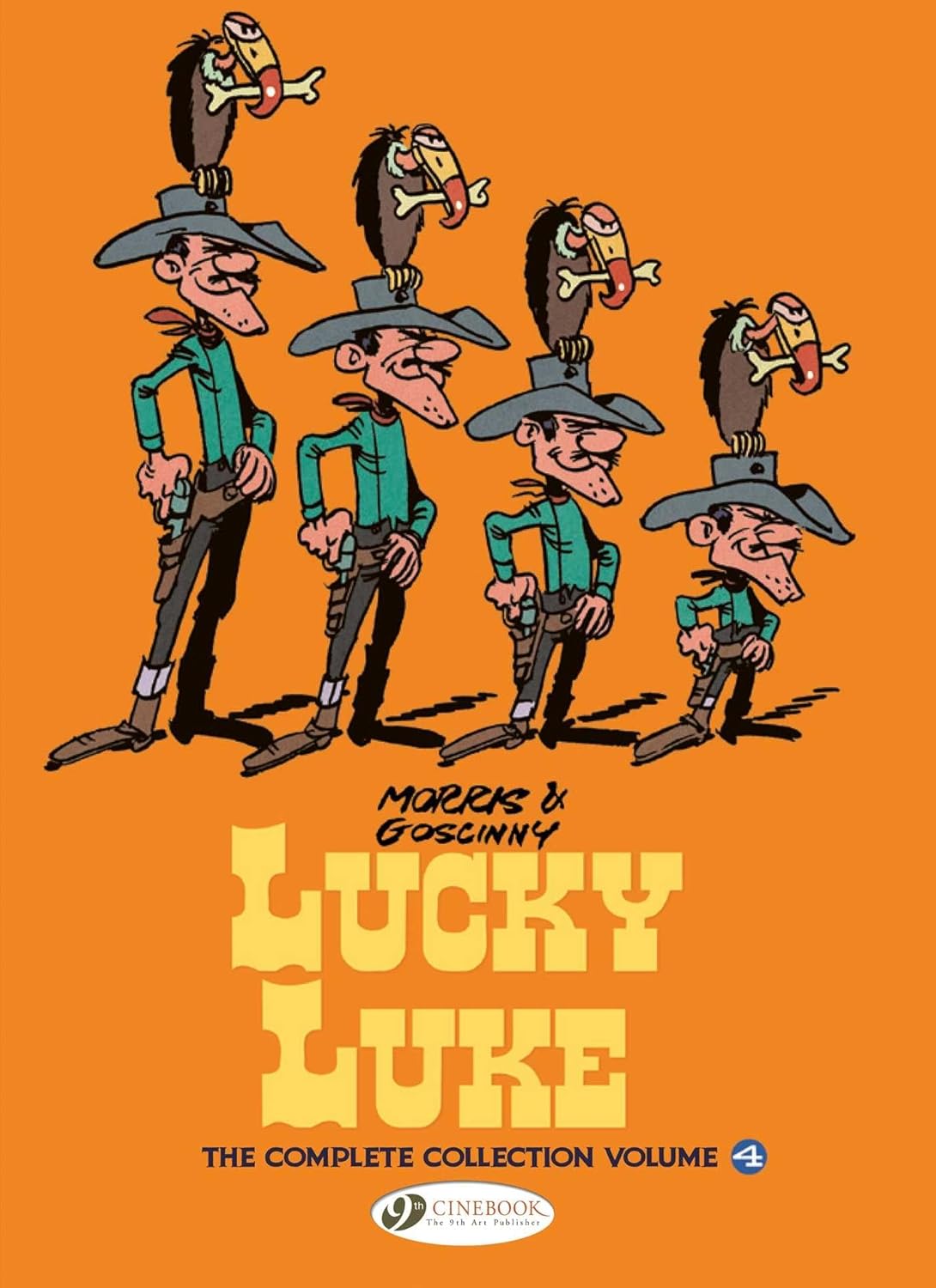
Lucky Luke: The Complete Collection volume 4


By Morris & René Goscinny, with Christelle & Bertram Pissavy-Yvernault: translated by Jerome Saincantin (Cinebook)
ISBN: 978-1-80044-169-9 (Album HB/Digital edition)

This book includes Discriminatory Content produced in less enlightened times.

Win’s Christmas Gift Recommendation: Family Thrills and Frolics No Movie Can Match… 8/10

On the Continent, the populace has a mature relationship with comics: according them academic and scholarly standing as well as meritorious nostalgic value and the validation of acceptance as an art form. Whilst tracing the lost origins of a true global phenomenon, this hardback and digital compilation celebrates the formulative early triumphs of a fictional hero who is certainly a national treasure for both Belgium and France, and it’s also timely in that this worldwide western wonder celebrates his 80th anniversary next year.

As we know him now, Lucky Luke is a rangy, good-natured, lightning-fast cowboy roaming the fabulously mythic Old West, having light-hearted adventures with his horse Jolly Jumper and interacting with archetypes, historical figures and mythic icons. His ongoing exploits have made him one of the best-selling comic characters in Europe (83 collected books plus around a dozen spin-offs and specials, totalling over 300 million albums in at least 33 languages thus far). That has generated all the usual spin-off toys, computer games, puzzles, animated cartoons, TV shows and live-action movies that come with that kind of popularity. It has also spurred a bunch of academicians to steer studies his way and garnered a lot of learned words. Some of those you can read here, if you’re keen…

Lucky debuted in 1946, courtesy of Belgian animator, illustrator and cartoonist Maurice de Bévère (“Morris”). For decades we all believed his first appearance was in autumn release Le Journal de Spirou Christmas Annual (L’Almanach Spirou 1947) prior to being catapulted into his first weekly adventure ‘Arizona 1880’ on December 7th 1946. However, the initial volume in this superb archival series proved the value of scholarship by revealing that the strip actually premiered earlier that year in the multinational weekly comic, albeit sans title banner and only in the edition released in France.

This fourth curated outing presents – in strict chronological order – strips published between February 2nd 1956 through September 1957 with all the art and pages fully restored, rejiggled and remastered to achieve maximum contemporary authenticity and synchronicity with the original weekly serialisation. Those stories were subsequently gathered as albums The Bluefeet are Coming!, Lucky Luke vs Joss Jamon and The Dalton Cousins and there’s even a few little extras scattered about for fascinated completists.

Before all that, though, there’s a wealth of background and unseen other works to enjoy, beginning with a lost cartoon gem as an old goldminer waggishly details ‘The Thousand Uses… of a Hat’…

A precocious, westerns-addicted, art-mad kid, well off and educated by Jesuits, Maurice de Bevere was born on December 1st 1923 in Kortrijk, Belgium. A far from illustrious or noteworthy scholar – except in all the ways teachers despise – Maurice sought artistic expression in his early working life via forays into film animation before settling into his true vocation. While working at the CBA (Compagnie Belge d’Actualitiés) animation studio, “Morris” met future comics superstars Franquin & Peyo, and worked as a caricaturist for weekly magazine Le Moustique. Morris quickly became one of la Bande des quatre (Gang of Four) comprising Jijé, Will and old comrade Franquin. Each was a leading proponent of a loose, free-wheeling artistic style known as the “Marcinelle School” which came to dominate Le journal de Spirou in aesthetic contention with the “Ligne Claire” style of Hergé, E.P. Jacobs and others in Le Journal de Tintin.

Previous volumes detailed Morris’s life, career, and achievements, and here Christelle & Bertram Pissavy-Yvernault augment past pictorial essays with ‘Wanted: Lucky Luke’ exploring life after returning to Belgium after his American holiday. It was May 1955 and the artist and his family had been gone for seven years…

Back home and back at work, Morris added to his output by illustrating novels, adding editorial content like quizzes to his Lucky workload and tasting new styles with a vast range of magazine covers, an inordinate number of which were ‘Sappy Moments’ for romance magazines and periodicals…
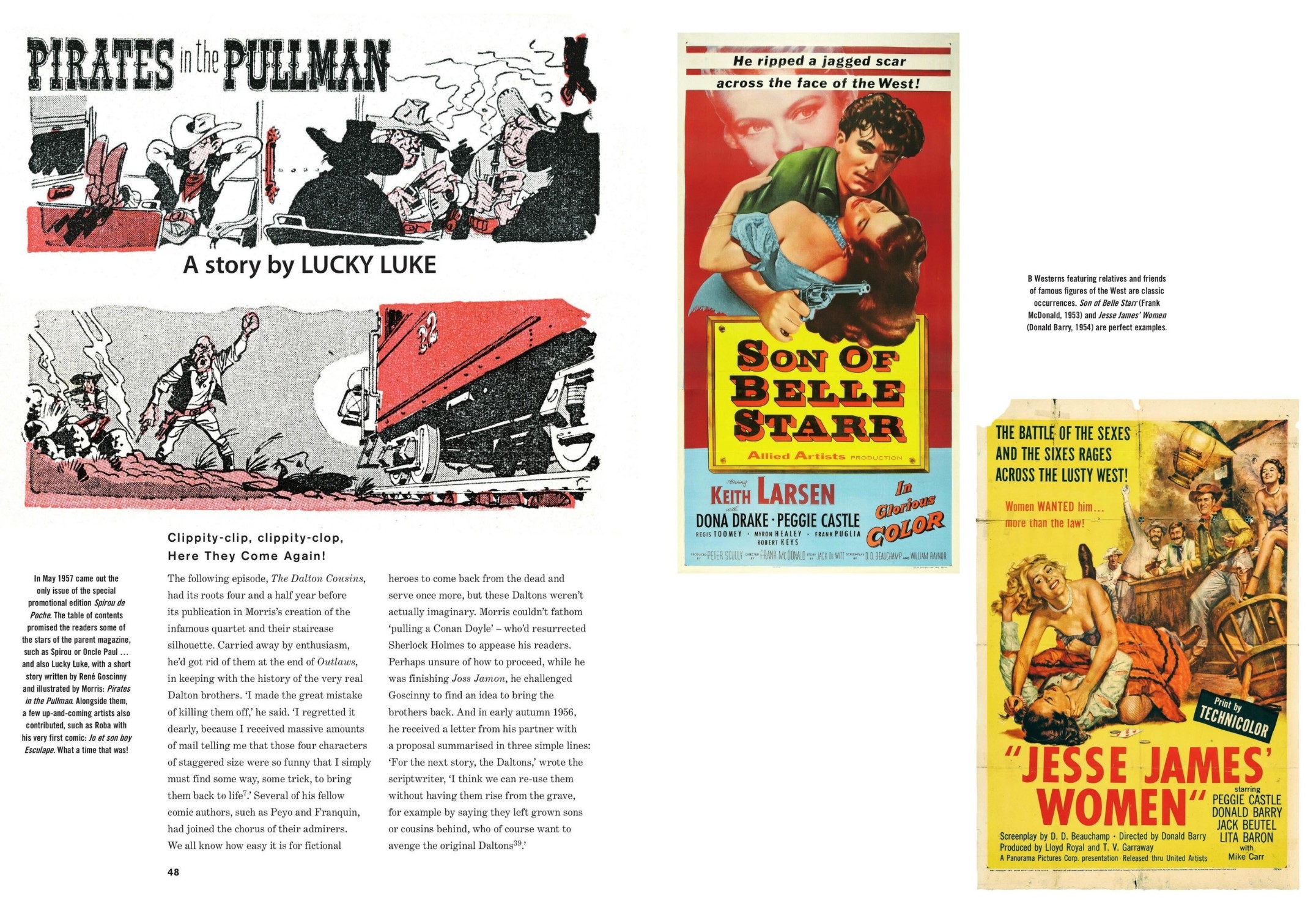
For Flemish readers he did cartoon sports columns and generally traded as a jobbing commercial artist, but all the while, he was still watching westerns and producing cowboy wonders and other comics stuff, such as the ‘Wild West Journalism’ article he wrote and included here in full. He was also constantly chatting with one of the Europeans he’d met in the US: cartoonist and scripter René Goscinny…

Accompanied by published cartoons, covers, script pages, contemporary ads, family photos and tons of original art, the in-depth treatise focuses on artistic development and the team building that resulted in one of comics’ most fruitful double acts Goscinny.

Morris had taken nearly a decade to craft nine albums of affectionate sagebrush parody and action. Now, with Goscinny as regular wordsmith, Luke would attain dizzying heights of super swift superstardom, commencing with Des rails sur la Prairie (Rails on the Prairie), in Le Journal de Spirou in August 1955. Before that though we enjoy a lost treat that first appeared in Risque Tout #11 (February 2nd 1956) prior to inclusion in Under A Western Sky. ‘Androcles’ details animal lover Luke’s interactions with a mistreated circus bear and proves that western justice applies equally to all…

Then the main event begins with all-Morris action as originally serialised in LJdS #938-957 (April 5th – August 16th and released in 1958 as Alerte aux Pied-Bleus/The Bluefeet are Coming!) It’s seen here with original French cover, editorial material and even ads.

A procession of linked gags sees Morris pile on and kick hard familiar themes and scenarios as the town of Rattlesnake Valley welcomes wanderer Lucky. The lone rider is just in time to save super-superstitious sheriff Jerry Grindstone from sneaky gambler/professional card cheat Pedro Cucaracha. His plans to fleece the old codger result in his painful and shameful eviction from civilisation; so naturally, the scoundrel tries to rob and blow up the bank on his way out. Chased into the surrounding desert, the scurvy Mexican then gulls the alcoholic Great Chief of the local Bluefeet Indians into laying siege to the town, tempting the old warrior with promises of unlimited booze…

Old Parched Bear is happy to oblige, and soon the town is forming a militia, telegraphing for the cavalry and erecting barricades. As food and water grow scarce profiteering proliferates, with Lucky and Jerry battening down the hatches and bolstering morale for a protracted and perilous defence of their lives and loved ones…
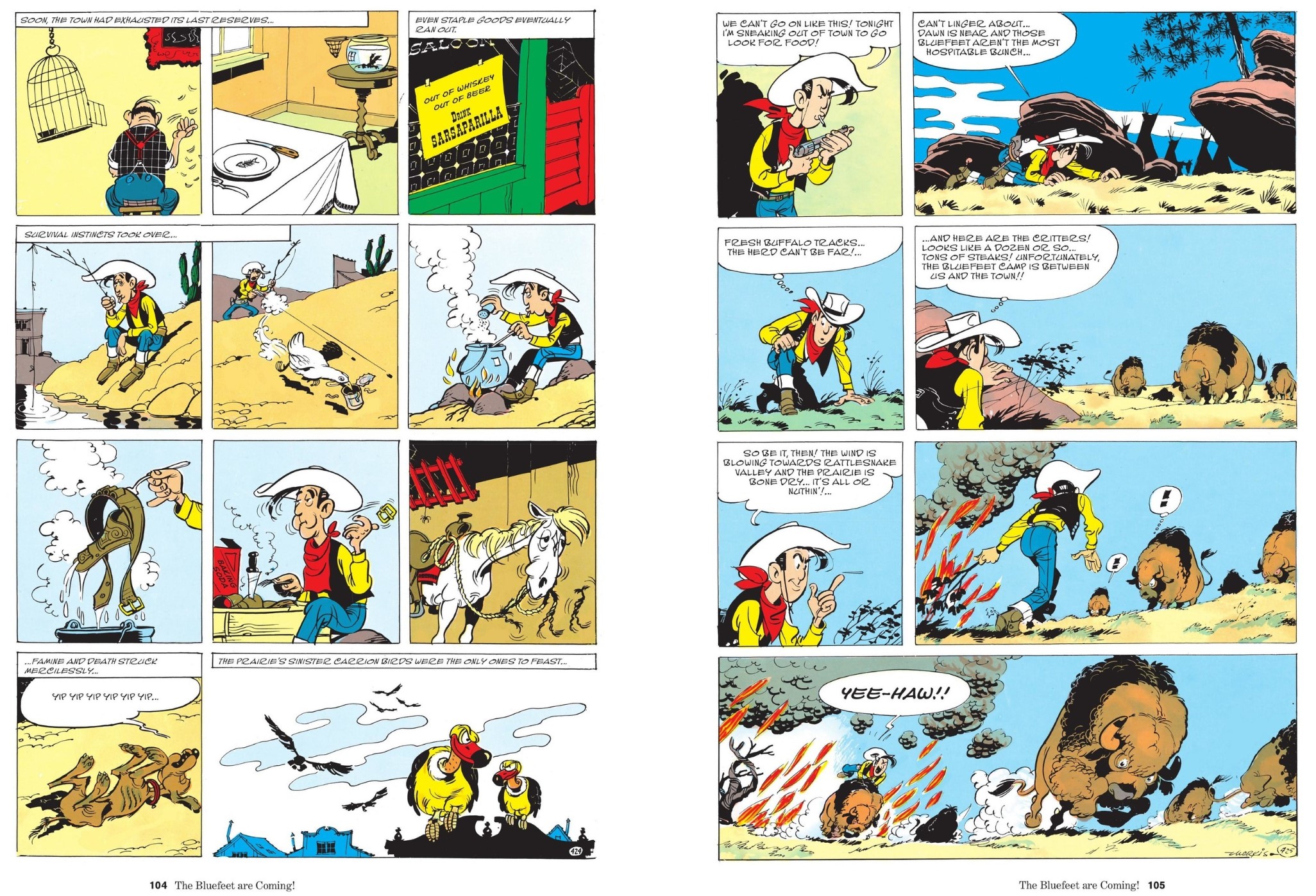
Against that framework of classic movie moments there are rich slapstick pickings as spies, crossdressers, raids & counter-raids and devious secret weapons all build to a bombastic finale, with Pedro and Parched Bear attempting all manner of nefarious invention to get respectively vengeance and more “firewater”…

… And then, when it’s almost too late, the Cavalry arrive… just after the deployment of late arriving support from Greenfeet and Yellowfeet branches of the family of First Nations. It can only end in catastrophe unless Lucky can contrive a solution…

Daft and Spectacular in equal amounts, this is perhaps a tale for older kids who have gained a bit of historical perspective and social understanding, although the action and slapstick situations are no more contentious than any old movie – as if that’s any help or comfort…

Rushing right on, Le Journal de Spirou #966-989 (October 18th 1956 – March 28th 1957) offered an uncredited Goscinny script as La bande de Joss Jamon and/or Lucky Luke contre Joss Jamon pitted our laconically lanky hero against a very different kind of bad guy. Again on view with original cover and ads, what we know as Lucky Luke vs Joss Jamon finds our happy wanderer facing guns, lynching, slander, a diabolical frame-up and political office, after Confederate soldiers turn their wartime skills to garnering personal profit in the years of Reconstruction that followed the American Civil War.

However, as vile as sly conman Pete the Wishy-washy, brutish Jack the Muscle, murderous Indian Joe, ruthless trickster Sam the Farmer and cardsharp Bill the Cheater may be, their combined villainy cannot match that of their ambitious scheming leader Joss Jamon. He has a dream of running the state if not the country and enough drive to make it happen…

How that doesn’t happen sees Luke battle them singly and in a wild bunch as Jamon moves into Los Palitos and frames Luke for robbery. Barely escaping the neck-stretching, Luke swears to bring back the real culprits in six months or surrender himself for the waiting noose…

The trail finds Jamon in bustling metropolis Frontier City where, after taking over businesses by making offers nobody dares to refuse, Jamon is running for Mayor. Despite physically a match for his enemies, Luke now needs to change tactics to unseat the entrenched plutocrat. That means a menace-packed war of nerves and even running as a rival candidate…

Even though election day is the farce you’d expect, and Lucky is branded an outlaw, he has one last card to play… civil dissatisfaction and unrest…
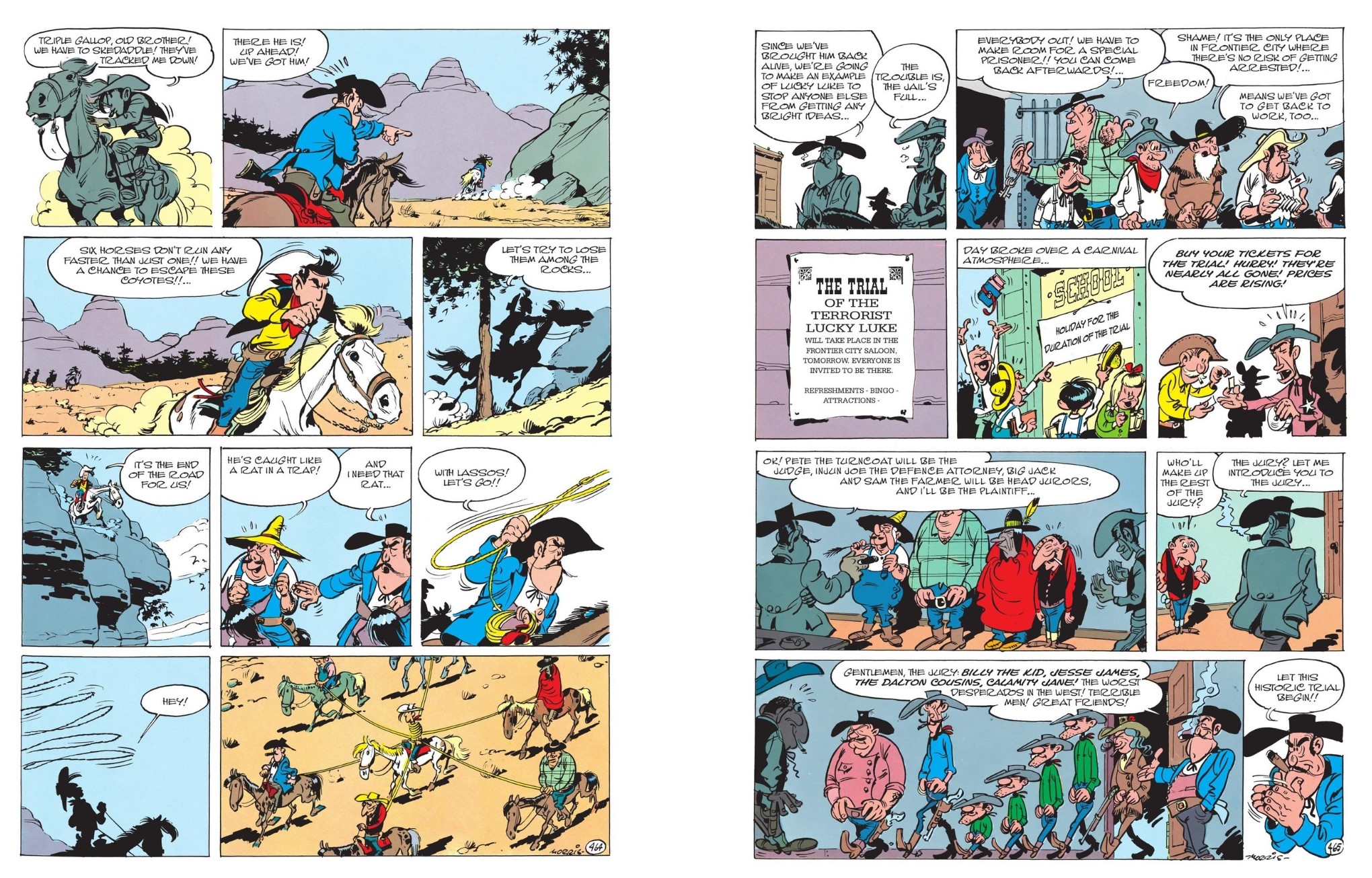
Witty, wry and cynical, this yarn is actually more socially relevant mow than it ever was when politicians at least feared the repercussions of being caught doing wrong…

Still anonymous, Goscinny also wrote closing inclusion. The Dalton Cousins was first enjoyed in LJdS #992-1013 (April 18th to September 12th 1957) and reappears here with original cover and ads. For this manic mirth-fest Goscinny performed a much-demanded act of necromancy, resurrecting a quartet of killers Lucky had already dealt with, but whom readers want not dead but alive…

Published back in December 1954 Hors-la-loi was Morris’ 6th album and included a strip which saw our hero meet and beat Emmett Bill, Grat & Bob Dalton: real life badmen who had plagued the west during the 1890s. On those funny pages, Lucky was hired by railroad companies to end the depredations of the desperados who had been imported into the strip, but given a comedic, yet still vicious spin. A cat & mouse chase across the wildest of wests saw Luke constantly frustrated by close calls and narrow escapes in superbly gripping movie set-pieces until, inevitably, justice claimed the killers. At the close, Morris had Lucky end the gang forever, but they and the story itself were insanely popular with fans. These owlhoots were comedy gold and ideal foils, so eventually they returned in the form of their own cousins…

From the response to that tale eventually came this aforementioned revival, as Goscinny’s third collaboration. When this iteration of the appalling Dalton Brothers – now and forever after Averell, Jack, William & devious, slyly psychotic, tyrannical diminutive brother Joe – showed up, the course of the strip altered forever…

It opens on a remote farm in Arizona where four brothers mourn the loss of the murderous bandits they resemble and are related to. They know they aren’t nearly good enough to fill the dead men’s boots or kill their killer Lucky Luke… but they are willing to try their hardest to change all that…

The replacement Daltons’ first attempt to settle the score is frankly embarrassing, but fortune and persistence gradually harden and hone them. They even at one stage have the happy wanderer train them…

Ultimately, however, after they besiege a town and regularly succeed in theft and terrorism, Lucky is forced to take action before they become as great a menace as their dearly departed favourites ever were…

Sadly, he leaves it too late and is forced to resort to tricky tactics of dividing to conquer. It either that or be hunted down like a dog: a role he’s just not suited for…
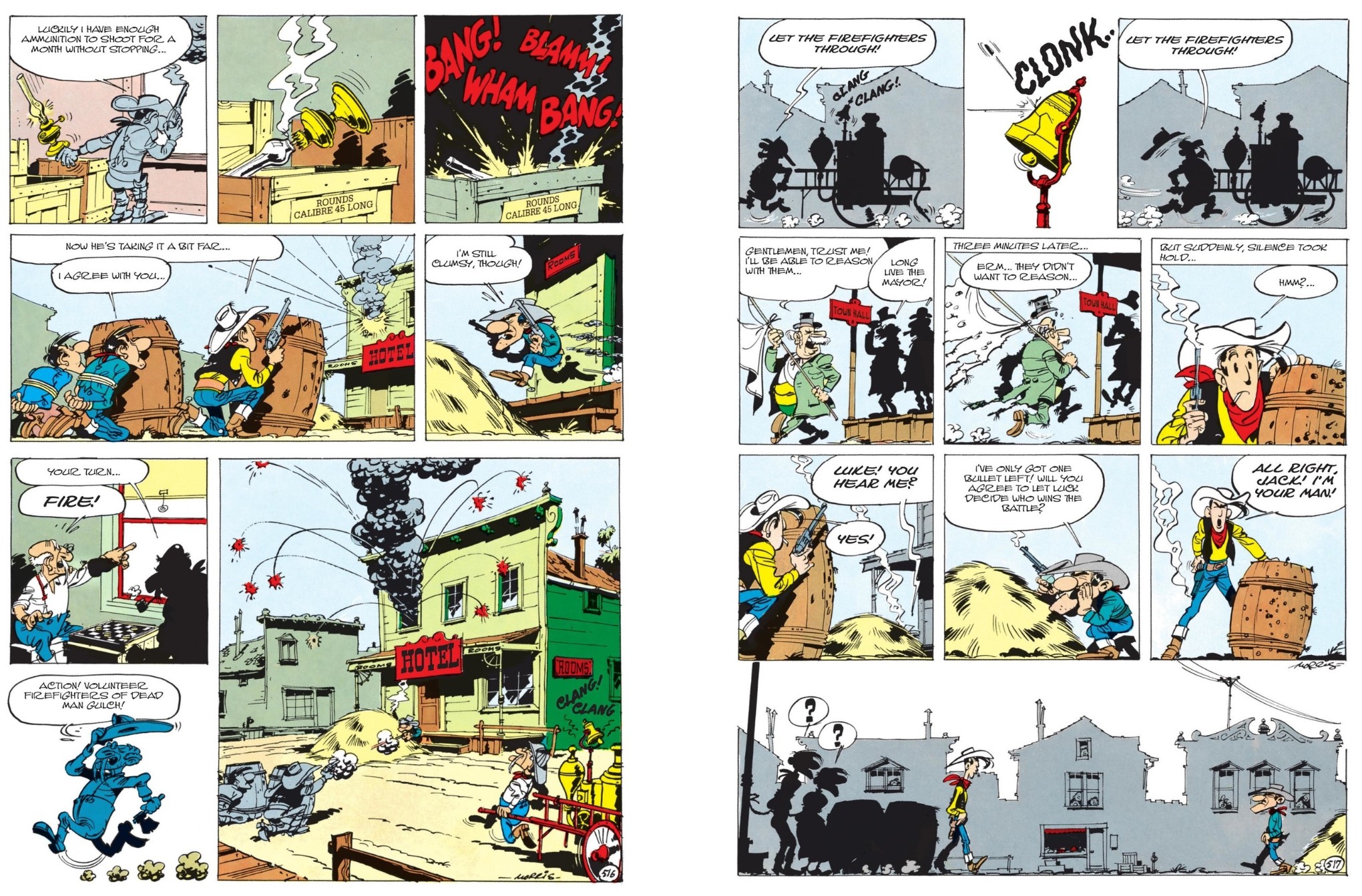
As much thriller as comedy romp, this yarn proved how crucial great villains are to any hero and started a western showdown that fruitfully persists and thrives to this day…

Graced with biographies of Morris and Goscinny and peppered with contemporaneous extras this is perfect for kids with a smidgen of historical perspective and social understanding, although the action and slapstick situations are no more contentious than any Laurel and Hardy film – perfectly understandable as Morris was a huge fan of the duo. These formative forays are a grand old hoot in the tradition of Destry Rides Again or Support Your Local Sheriff, superbly executed by master storytellers, and a wonderful introduction to a unique genre for anyone who might well have missed the romantic allure of the Wild West that never was…
Original edition © Lucky Comics 2022. English translation © 2025 Cinebook Ltd.
All pages & illustrations relating to The Thousand Uses of a Hat, Androcles and The Bluefeet are Coming! © Morris/Goscinny/Dupuis 2022.
All pages & illustrations relating to Horse Thieves, Lucky Luke vs Joss Jamon and The Dalton Cousins © Morris/Goscinny/Dupuis 2022.
All documents relating to Morris are © Morris/Dupuis 2022.
All documents relating to René Goscinny are © Anne Goscinny 2022 barring cited exceptions.

Today in 1948 Underground Commix cartoonist and proud pornographer Larry Welz (Yellow Dog, Captain Guts, Cherry PopTart) was born, whilst in 1992 epically long-running UK adventure weekly The Victor published its last issue.

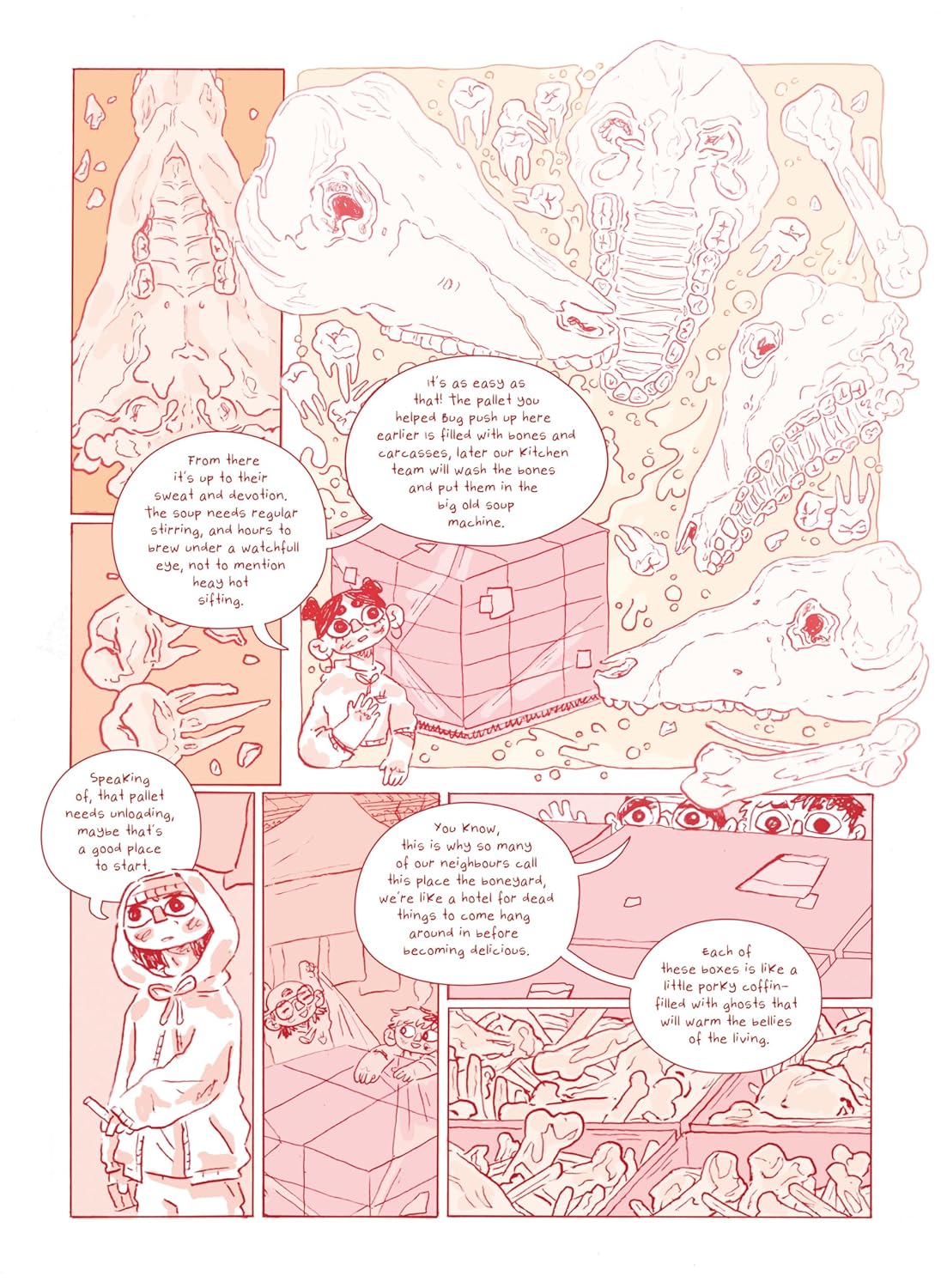
Bone Broth


By Alex Taylor (SelfMadeHero)
ISBN: 978-1-91422-432-4 (TPB)

Win’s Christmas Gift Recommendation: Tasty Treats for Comics Fan-Addicts… 9/10

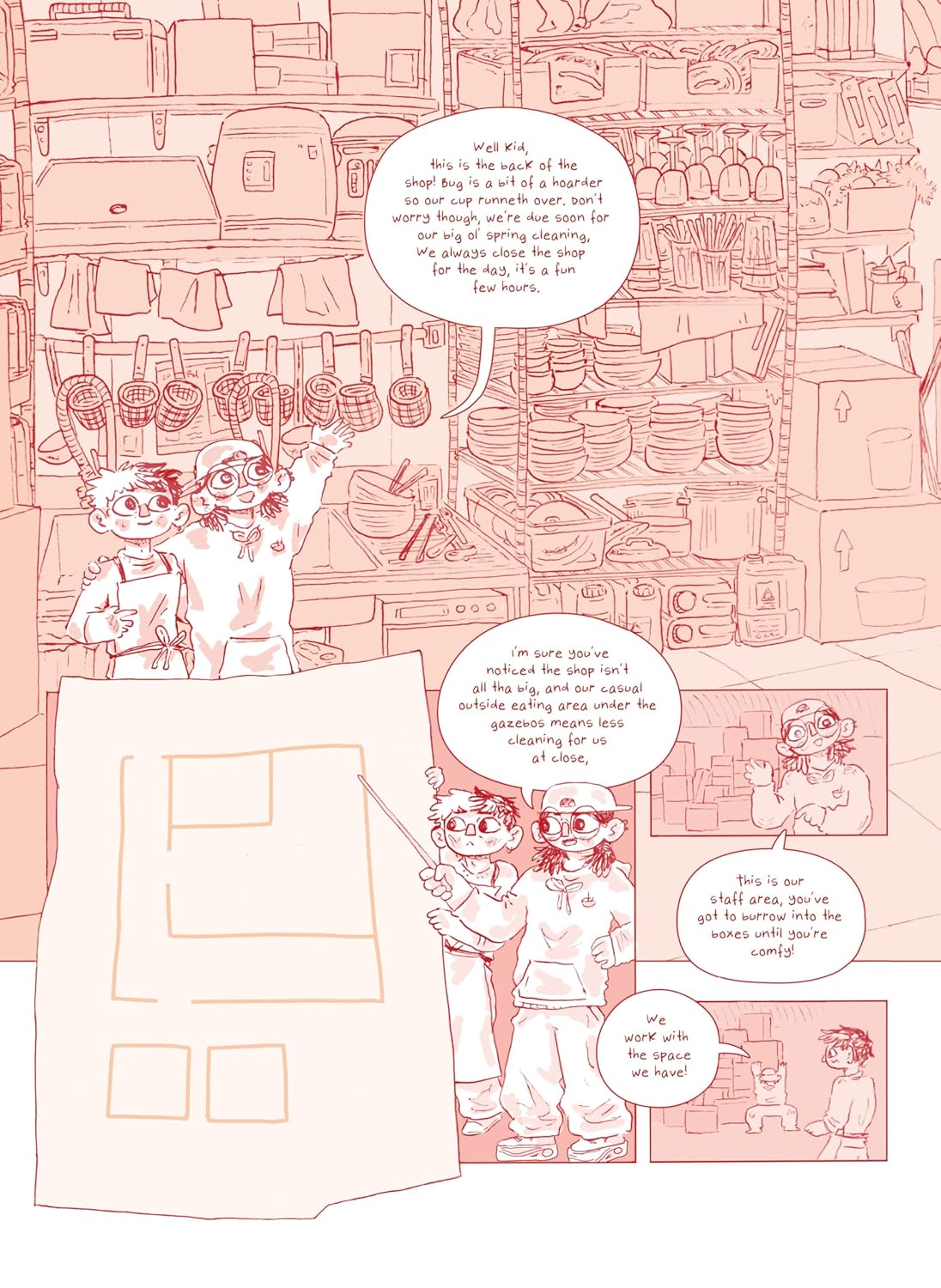
Here’s a quick, short review of a big, utterly fulfilling, extremely entertaining new confection from queer visual artist Alex Taylor. Winner of the First Graphic Novel Award for 2023, Bone Broth is set in contemporary London – literally underneath the arches! – and compellingly addresses modern living via the oldest traditions of mystery thriller writing…

Ash ia young transmaculine artist who almost nearly properly grown up. All that’s missing is to make enough money to pay rent, buy supplies and secure the meds supporting still- ongoing surgeries. That ideal opportunity knocks when crusty old coot/ramen sensei Bug adds the weedy-seeming new guy to the remarkable staff at his traditional noodle bar.

That highly popular haven of exotic eats and affordable takeouts is located off a dingy alley with trains roaring and clattering above at all times. It reminds me of Brixton, but of course, other rail lines, vibrant cross-cultural districts and eateries are available…

Business is brisk and Ash gets acquainted with floor maneger Honey, Sock, Blue, and burly Japanese broth-engineer Creamy – who philosophically monitors and stirs the industrial scale tonkotsu that is basis of all the dishes – whilst scrambling to learn the ropes. The work is intense, fast, complicated, relentless and – just like in any specialist enteprise (like a comic shop for instance ) – sticky, clammy, cloying and jampacked with weirdoes individualists on both sides of the till.

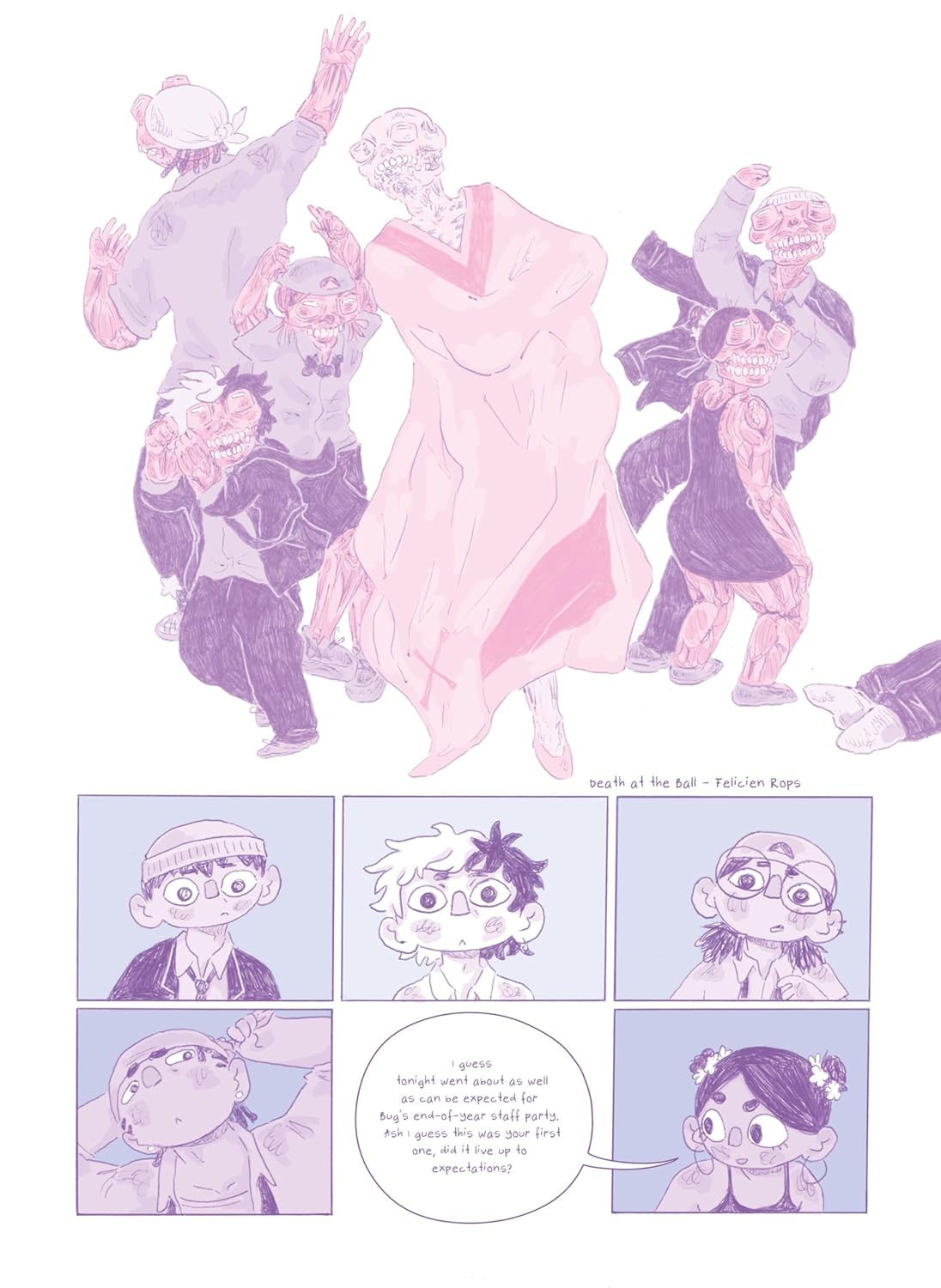
Nevertheless, Ash is immediatly part of the family, trading history and opinions, sharing moments and learning to live with the miasmic funk of entire pig carcasses perpetually becoming soup 24/7. It’s the kind of toil that quickly builds bonds that feel decades old so it’s no wonder everybody kicks back for celebratory drinks occaiosnally. Like the End-of-Year staff do when Bug drinks so much that he just goes to sleep on the floor and everybody took selfies with him.

Of course, Bug wasn’t unconcious and they all have to try and make rational decisions whilst being that drunk. Deleting recents posts is easy and logical but voting to lose the sensei in the body-rending broth doesn’t seem like such a great idea now…

Draped in biological hues and mired in literally organic imagery, Bone Broth’s motifs accentuate an unfolding comedy of errors: deftly mirroring the surgical progress of changing gender whilst reflecting on whatever beneficial butchery is involved in resculpting and crafting a human form with secret knowledge is exposed to those willing to look and think instead of react and revolt. This is a tale that some people will never countenance and that’s sad for them, because its also great stuff demanding second helpings…

Wryly subversive, tantalisingly warming and definitely NOT for little kids, this potent parable is seasoned with buddy film tropes and garnished with a delicious twist that will hit the spot for anyone with a taste for the out-of-the-ordinary fodder. Also included are a heartfelt ‘Thanks’ section and look at the artist’s ‘Process’ to deliver a multi-layered trifle you’d be fool to turn your nose up at.
Text and images © 2025 Alex Taylor. All rights reserved.

Today in 1951 Bob Smith (Super Friends, Superman, Plastic Man, Archie Comics) was born, as was Northampton’s Finest Alan Moore two years later. In 1985 Bill Watterson’s enfant terrible et big buddy Calvin and Hobbes launched. 1991 today saw UK comics stalwart Reg Parlett leave us. All of these optical miracles should be scrutinised at great length, so please go do that…

Yoko Tsuno volume 7 – The Curious Trio


By Roger Leloup (Cinebook)
ISBN: 978-1-84918-127-3 (PB Album)

This book includes Discriminatory Content produced in less enlightened times.

Win’s Christmas Gift Recommendation: Rollercoaster, Role Model Wonderment for All… 8/10

Today in 1933 master craftsman and raconteur Roger Leloup was born. Bon anniversaire and many more, mate…

On September 24th 1970, “electronics engineer” Yoko Tsuno began her troubleshooting career as an indomitable intellectual adventurer. Her debut in Le Journal de Spirou came in “Marcinelle style” 8 page short ‘Hold-up en hi-fi’, and although she is still delighting readers and making new fans today, for a while it looked as if she wasn’t going anywhere soon. Thankfully, her astonishing, astoundingly accessible exploits were revised as she quickly evolved into a paragon of peril: helming pseudo-realistic fantasies numbering amongst the most intoxicating, absorbing and broad-ranging comics thrillers ever created. Her globe-girdling mystery cases and space-&-time-spanning epics are the brainchild of Belgian maestro Roger Leloup. He launched his own solo career in 1953 whilst working as studio assistant and technical artist on Hergé’s Adventures of Tintin.

Compellingly told, sublimely imaginative and – no matter how implausible the premise of any individual yarn – always firmly grounded in hyper-authentic settings underpinned by solidly constructed, unshakably believable technology and unswerving scientific principles, Leloup’s illustrated escapades were at the vanguard of a wave of strips revolutionising European comics. Early in the journey, he switched from loose cartooning to mesmerising, nigh-photo realistic illustration that has become a series signature. The long-overdue sea-change in gender roles and stereotyping he led heralded a torrent of clever, competent, brave, formidable women taking their rightful places as heroic protagonists, not romantic lures. That consequently elevated Continental comics in the process. Such endeavours are as engaging and empowering now as they ever were, none more so than the travails of masterful Miss Tsuno.

Her first outings (oft-aforementioned, STILL unavailable Hold-up en hi-fi, and co-sequels La belle et la bête and Cap 351) were mere introductory vignettes prior to epic authenticity taking a grip in 1971 when the unflappable problem solver met valiant but lesser (male) pals Pol and Vic. Instantly hitting her stride in premier full-length saga Le trio de l’étrange (LJdS’s May 13th edition), from then on, Yoko’s efforts encompassed explosive exploits in exotic corners of our world, spy and crime capers, time-travelling jaunts and sinister deep-space sagas such as this one. There are 31 bande dessinée albums to date, with 21 translated into English thus far, albeit – and ironically – none available as digital books…

The series has a complex history in English. Comcat previously released a few adventures – sadly, poorly translated and adapted – before British-based Cinebook acquired the franchise and opened a comprehensive and entrancing sequence in 2007 with 1976’s (seventh) saga On the Edge of Life.

Translated as The Curious Trio, Le trio de l’étrange was actually the 7th chronicle released by Cinebook and opens in a busy TV studio at midnight (back when actual humans pushed, pulled and focussed the clunky paraphernalia). Young Director Vic Van Steen loses his rag with best pal Pol Paris for falling asleep on his camera. Later, still smarting from another fractious tiff, the pair walk home past a deserted construction site and witness what looks like an elegantly brilliant burglary…

The quietly flamboyant break-in is, in fact, a pre-arranged test by sleekly capable freelance Japanese electrical engineer Yoko Tsuno. She’s been hired by a major company to test their new security. After apologising for nearly ruining her trial with well-intentioned interference, the lads invite the enigmatic tech-bod to join their film crew as sound engineer on a proposed outside shoot.

The gig is to explore flooded caves for a documentary and before the week ends the new friends are hauling equipment to a spectacular cavern, keen to work out the technical details. No sooner do they begin, however, than something goes terribly wrong and the trio are dragged deep underground by irresistible, swirling waters…

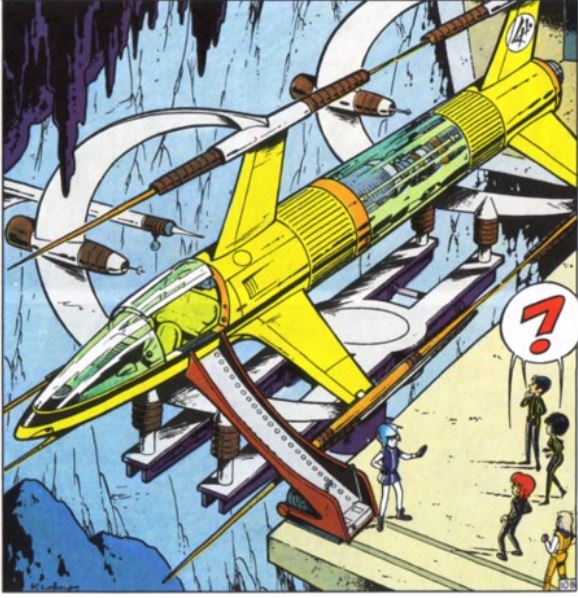
From here the achingly realistic, rationalist strip takes a huge leap into the uncanny as their subterranean submersion dumps them into a huge metal-shod vault where they are seized by blue-skinned humanoids. The colossal complex is of incredible size, and the captives are bundled into a fantastic vessel which runs on rails via magnetic levitation. Driven even deeper underground, a handy translation helmet enables the only friendly-seeming stranger to explain. She is Khany and her race, the Vineans, have been sleeping deep beneath the Earth for almost half a million years.

However, since recently awakening, internecine strife has disrupted the colonists’ lives. Ambitious militaristic martinet Karpan constantly manoeuvres to seize power from vast electronic complex The Centre, which regulates the lives of the awakened colonists. The humans’ first meeting with the blustering bully does not go well. When he attempts to beat Khany, martial artist Yoko delivers a humiliating and well-deserved thrashing…

Infuriated, Karpan tries to disintegrate them but is pulled away by security forces. As the newcomers resume their voyage to The Centre, he secretly follows their magneto-carrier, resolved to destroy them. With the maglev ship hurtling to unimaginable depths, Khany introduces the humans to a stowaway – her young daughter Poky – while relating the astounding tale of the Vinean escape from planetary doom and two-million-light-year trip to Earth. Accustomed to subterranean living, on arrival the Vineans hollowed out a mountain and dug down even further.

The history lesson is interrupted by Karpan’s murderous attack, which is thwarted by Yoko’s quick thinking and her companions’ near-insane bravery…

Eventually, after another, far subtler murder attempt, the damaged magneto-carrier reaches its destination and the astonished visitors are brought before a stupendous computer to plead their case and expose Karpan’s indiscretions. The vast calculator controls every aspect of the colony’s life and will deliver judgement on the human invaders’ ultimate fate. After mind-scanning Yoko The Centre’s pronouncement is dire: the strangers must be placed in eternal hibernation…

When Pol plays his long-hidden trump card and threatens to destroy the machine with a stolen disintegrator, diplomatic Khany proposes a solution; suggesting simply waiting until they can all confront still-absent Karpan. Yoko is still deeply suspicious and not convinced Karpan is responsible for every attempt on their lives. That “night”, while Yoko rests, Poky sneaks into her habitation chamber and takes her on an illicit tour of the underside and innards of the impossibly huge complex. The jaunt verifies the engineer’s suspicions with a ghastly revelation. What they expose is a horrific threat not just to the Vineans – Karpan included – but to every human on the surface of Earth…

The eerie mystery then explodes into spectacular action and a third act finale worthy of any  Bond blockbuster as Tsuno’s dramatic duel with an incredible malign menace settles the fate of two species…

Absorbing, rocket-paced and captivatingly combining tense suspense with bombastic thrills, spills & chills, this is a terrific introduction to a world of rationalist mystery and humanist imagination with one of the most unsung female action heroes of all… and one you’ve waited far too long to meet…
Original edition © Dupuis, 1979 by Roger Leloup. All rights reserved. English translation 2012 © Cinebook Ltd.

Today in 1916 DC Golden/Silver age and newspaper strip scripter Alvin Schwartz was born, followed 11 years later by Belgian author Maurice Rosy, whose art direction made Spirou what it is.

In 1928 Don Lawrence was born. You can go look back at his Trigan Empire stuff, but why not also enjoy Maroc the Mighty like we just did…

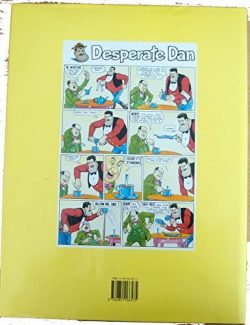
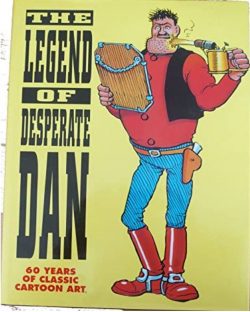
The Legend of Desperate Dan – 60 Years of Classic Cartoon Art


By Dudley D. Watkins, with Charles Grigg, Ken Harrison & various (DC Thomson & Co)
ISBN: 978-0-85116-657-5 (tabloid HB)

This book includes Discriminatory Content produced in less enlightened times.

It needs to be said. Scotland is an ancient and proud nation steeped in unique history, character and culture, and one that has enriched the entire world. That having been said, they all seem to have a rather odd and frequently disturbing fascination with the notion of cowboys…

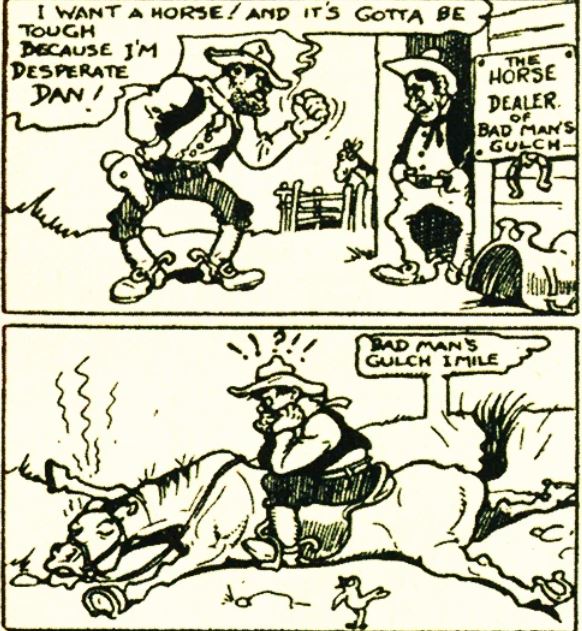
A timeless case in point is an icon of action and hilarity who began life as a mere half-page feature in the very first issue of The Dandy. The rowdy roughneck (and chin, and chest and…) was first seen fleeing town on December 4th 1937, but has since mellowed, found a family and settled down, He’s still the Strongest Man on Earth and always in trouble because he doesn’t know his own strength…

As seen in the eponymous opening historical section of this colossal tome, ‘The Legend of Desperate Dan’ predates Superman’s debut and owes more to Elzie Segar’s maritime masterpiece Popeye (as seen back then in Thimble Theatre) by way of a countless stampede of Saturday morning movie two-reelers. However Desperate Dan didn’t roam too long on the range and swiftly garnered a family including formidable Aunt Aggie, super-tough nephew Danny, niece Katey, the hard-pressed Mayor, Sheriff and so forth… and lots of put-upon, shell-shocked neighbours usually caught in the catastrophic aftermath of Dan’s latest efforts to help…

Like so many of DC Thompson’s most memorable stars, the Big Guy was the brainchild of Dudley D. Watkins (1907-1969) at his most imaginative and culturally adroit. A tireless and prolific illustrator equally adept at comedy, adventure, educational and drama storytelling, Watkins’ style more than any other shaped the pre and especially postwar look and form of the Scottish publishing giant’s comics output. Yes, the company AND the cowboy…

Watkins started life in Manchester and Nottingham as an artistic prodigy prior to entering Glasgow College of Art in 1924. Before long he was advised to get a job at expanding, Dundee-based Thomson’s, where a 6-month trial period illustrating prose “Boys’ Papers” stories led to comic strip specials and some original cartoon creations. Percy Vere and His Trying Tricks and Wandering Willie, The Wily Explorer made him the only contender for both lead strips in a bold new project conceived by Robert Duncan Low (1895-1980). Managing Editor of Children’s Publication. Between 1921 – 1933, Low launched the company’s “Big Five” story papers for boys: Adventure, The Rover, The Wizard, The Skipper and The Hotspur. In 1936, he created the “Fun Section”: a landmark 8-page comic strip supplement for national newspaper The Sunday Post. This illustrated accessory – prototype and blueprint for every comic the company subsequently released – was launched on 8th March. From the outset, The Broons and Oor Wullie were the uncontested headliners… and both illustrated by Watkins. The other features included Chic Gordon’s Auchentogle, Allan Morley’s Nero and Zero, Nosey Parker and others. These pioneering comics laid the groundwork for the company’s next great leap. In December 1937 Low launched DC Thomson’s first weekly all-picture strip comic, The Dandy. Amidst the serried rank of funsters was a half-page western gag strip. It related the riotous outrages of a mean desperado dubbed Dan…

Dan was extremely popular and in 1939 briefly enjoyed taking up 75% of a page before expanding onto the star status of a full one. Famously, Dandy editor Alber Barnes – who hired Watkins and was the comic’s boss until 1982 – was the model for that unmissable chin. Almost everything else was made up…

This collation offers a wealth of strips, beginning with those calamity-stuffed half-pagers, filled with mighty gaffes, massive consumption and appalling comedic animal cruelty, all preceding the inevitable war contributions as the officially neutral US citizen kept finding ways to bugger up Hitler and Goebbels’ plans for Britain. Another cautionary note: back then smoking tobacco was MANLY, so Dan did it in vast and generally competitive amounts. Be warned and wary…

Monochrome trips about eating, fighting, shaving, Dan’s Girlfriend Lizzie, eating, fighting some more and getting even pause for a colour featurette on ‘The Dandy Monster Comic’ as Dan hoved further westward into Books and Annuals before the strips concentrate on the ‘War years’ with Cactusville slowly morphing in all but name into a fair-sized Scottish town as Dan inflicted ever more outlandish punishments on the weary, wary Wehrmacht…

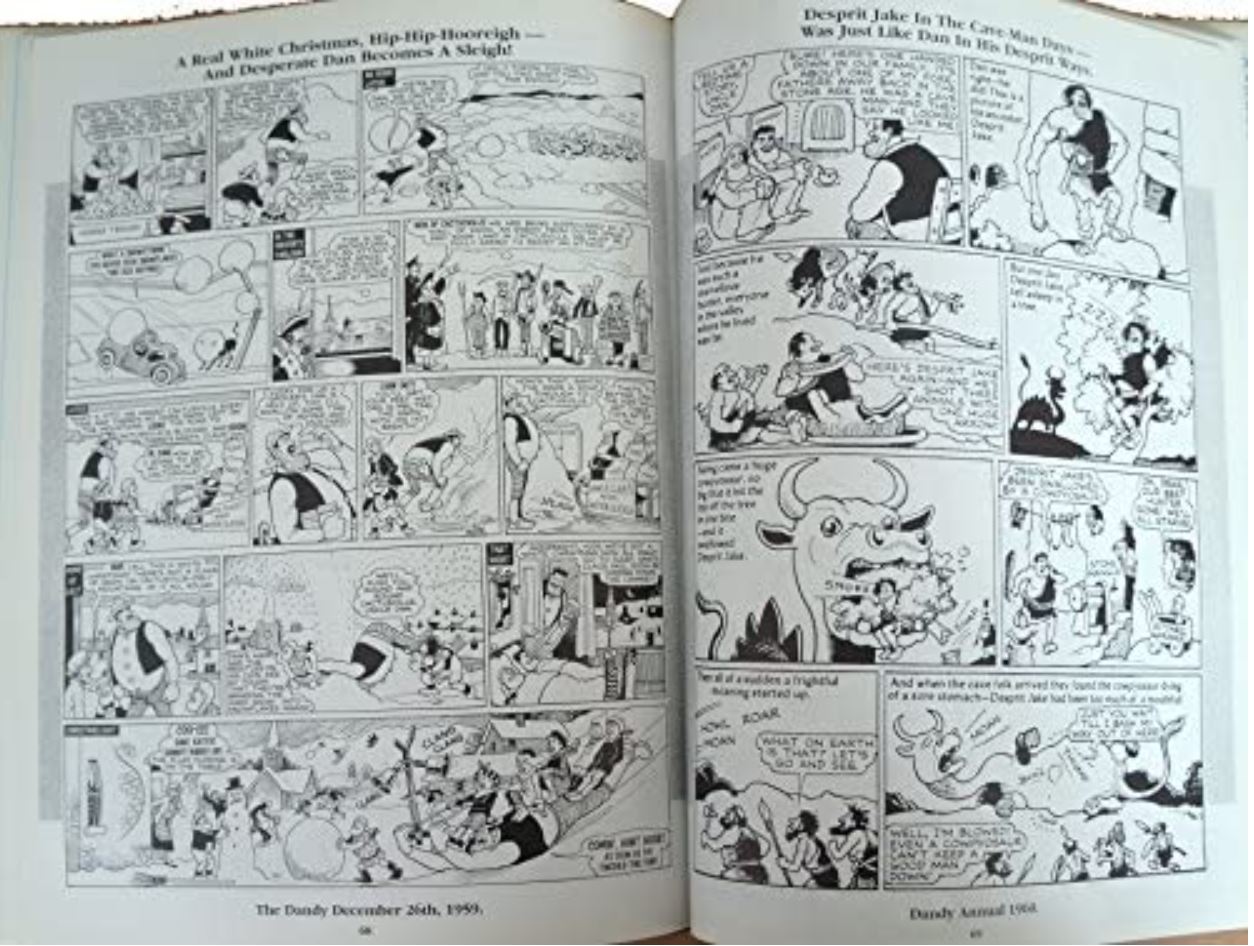
Feature on firsts follows with ‘Desperate Dan’ shouting out to his ever expanding cast, after which post-war tales encompass a momentous trip to the North Pole; jobs; cow pie; sweet rationing; clothing for the bigger man; bank robbers; cow pie; how feeble modern buildings are; toothache for tough guys and how meat rationing impacts on the mightiest appetite ever known. Once again it’s some pretty hard sledding for us wimpy modern animal-lovers…

Covers, strips and other treats from the Christmas tomes explore Dan’s unstoppable progress and includes a spread on ‘Back Covers on Annuals’ – the cowboy’s sole province from 1954 to 1965 – before segueing into a 1950s selection as Britain, Empire & Commonwealth and Dandy underwent dramatic revision and change…

The Watkins-limned prose yarn ‘Two Desperate Tiddley-Winkers’ leads to more fifties fun with Dan no longer in any way intentionally dangerous in strips covering the star’s invulnerable hair & bristles, coal mining in the High Street; cow pie; and Dan’s utterly unique pedal bike (take one steamroller and three parts tractor…) before closing on a momentous moment of history as Dan voyages to London to see the Queen’s coronation as originally published in Dandy dated June 6th 1953…

‘The Desperate Dan Song’ – sorry, just words & pictures so you’ll need to wrangle up your own tune – leads into more strips with enhanced roles for Danny & Katey, prior to the Sixties revivals opening with ‘Annual features’ including a glance at Dan’s primordial forebear Desprit Jake.

With contemporary strips coming thick & fast the fun is closely followed by two-colour Annual larks involving li’l Dan’s photo-day at ‘Cactusville School’ whilst – happily mining a fresh seam – ‘Desperate Dan’s Schooldays’ (as illustrated by Charles Grigg and first published in the Desperate Dan Annual 1979) gives readers another bucket of whimsical back-story from the big man boyhood as the end approaches.

In 1984, the Biggest Yin made it to the front – and back – of the weekly Dandy covers, displacing Grigg’s Korky the Cat after five straight decades. Here a full colour spread celebrates an anniversary year with a quartet (octet?) of images shouting out fifty years of Desperate astonishment wonder before we unsaddle for the moment with final modern colour feature ‘The Hobbies of Desperate Dan’ as seen in the 1994 Dandy Annual and showing what the term “extreme sports” really means…

Timeless, hilarious and not nearly as tame as you thought, Desperate Dan is a pure paradigm of our lengthy comics glory – and disregard for other people’s culture. Here is a book that – if you’re properly braced and forewarned – will delight and warm your secret, stifled cartoon coloniser’s heart.
© D.C. Thomson & Co Ltd 1997.

Today in 1913 Golden Age artist Charles (Spy Smasher, et al) Sultan was born. In 1943, Metabarons artist Juan Giménez was born. You might also want to peek at A Matter of Time, before celebrating that in 1962 Darwyn Cooke (DC: The New Frontier, Batman: Ego, Parker) joined us for far too short a time.

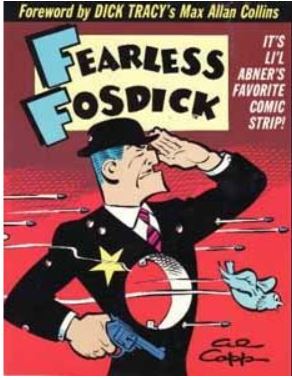
Fearless Fosdick


By Al Capp (Kitchen Sink Press)
ISBN: 978-0-87816-108-9 (TPB)

This book includes Discriminatory Content produced in less enlightened times. This book also contains Discriminatory Content included for satirical and comedic effect.

Al Capp’s Li’l Abner is rightly considered one of the greatest comic strips ever created, a devastatingly satirical, superbly illustrated, downright brilliant comedic masterwork which lampooned anything and everything America held dear and literally reshaped their popular culture. Generations of readers took Capp’s outrageous inventions and graphic invectives to their hearts. Many of the strips best lines and terms entered the language, as did the role-reversing college bacchanal known as Sadie Hawkins Day. Some fictional shticks even became licensed and therefore “real” – just Google “Shmoo” and “Kickapoo Joy-juice” to see what I mean.

Apart from the satirical and funny bits you can say pretty much the same about Chester Gould’s legendary lawman Dick Tracy – a landmark creation which has influenced all popular fiction, not simply comics. Baroque villains, outrageous crimes and fiendish death-traps have pollinated the work of numerous strips, shows and movies since then, but the indomitable Tracy’s studied use – and startlingly accurate predictions – of crime fighting technology and techniques gave the world a taste of cop thrillers, police procedurals and forensic mysteries such as CSI decades before our current fascination took hold.

In August 1942 Alfred Gerald Caplin, as he didn’t prefer to be known, took a studied potshot at the cartooning game, joyously biting the hand that fed him (grudgingly and far from enough) when he introduced a frantic, barbed parody of Tracy into Li’l Abner.

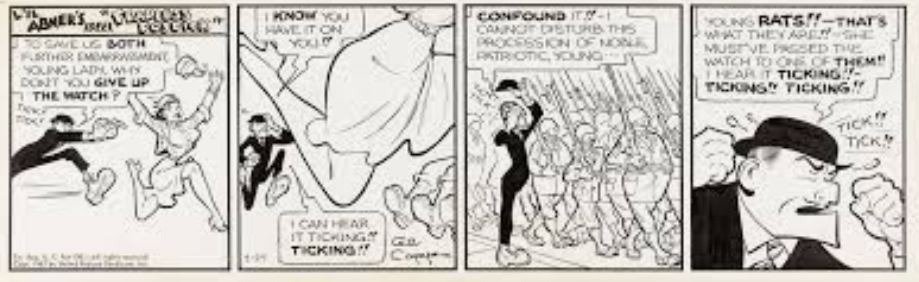
As depicted by cartoonist-within-a-cartoon “Lester Gooch”, Fearless Fosdick was a deadpan, compulsively honest, straight-laced cop who worked for a pittance in a corrupt, venal crime-plagued city, controlled by shifty, ungrateful authorities – i.e. typical bosses. Fosdick slavishly followed the exact letter of the law, if not the spirit: always over-reacting, and often shooting litterbugs or Jaywalkers whilst letting bandits and murderers escape.

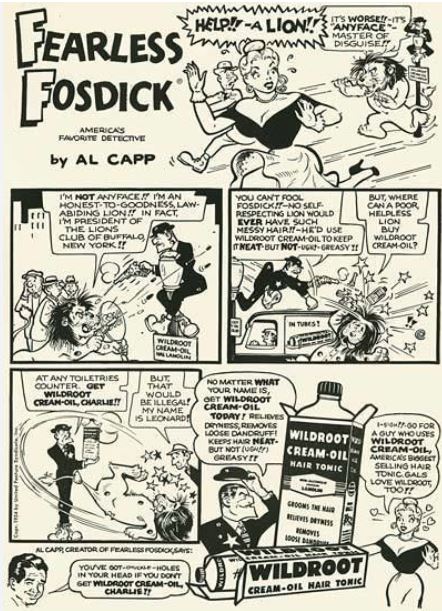
The extended gag began as a sly poke at strip cartoonists and syndicates whom Capp portrayed as slavering maniacs and befuddled psychotics manipulated by ruthless, shameless, rapacious exploiters. It became so popular on its own admittedly bizarre merits that Fosdick’s sporadic appearances quickly generated licensed toys and games, a TV puppet show and a phenomenally popular advertising deal for Wildroot Cream-Oil hair tonic.

The hard-hitting, obtuse he-man hero was impulsive Abner’s “Ideel” and whenever the crime-crusher appeared as a strip within the strip, the big goof aped his behaviour to outlandish degree. When Fosdick married as part of a bizarre plot, Abner finally capitulated to devoted girlfriend Daisy Mae’s matrimonial aspirations and “married up” too… even though he didn’t really want to!

Fosdick made the jump to comic books when edited reprints of the strip appeared from Toby Press, and a promotional comic – ‘Fearless Fosdick and the Case of the Red Feather’ – followed. Thus in 1956 Simon and Shuster published Al Capp’s Fearless Fosdick: His Life and Deaths which forms the basis of the classy Kitchen Sink softcover under review here.

Prefaced with an absorbing and informative introduction by award-winning crime and comics writer Max Allan Collins – who took over Dick Tracy when Gould retired – this outrageous tome relates five of the very best felonious fiascos and forensic farces beginning with ‘Introducing: AnyFace!’ from 1947, wherein Abner is hired to protect cartoonist Lester Gooch as he crafts the tale of a crook with a plastic face. The fiend is un-catchable since he can mimic anybody, constantly fooling Fosdick into shooting the wrong guy. Eventually the cop starts killing people pre-emptively – just in case – but in the “real” world as Abner gets more engrossed in the serial, Gooch, always as bonkers as a bag of badgers (because only certified loons create comics strips), is suddenly cured, casting the conclusion into desperate doubt! Confused? Good: that’s the point!

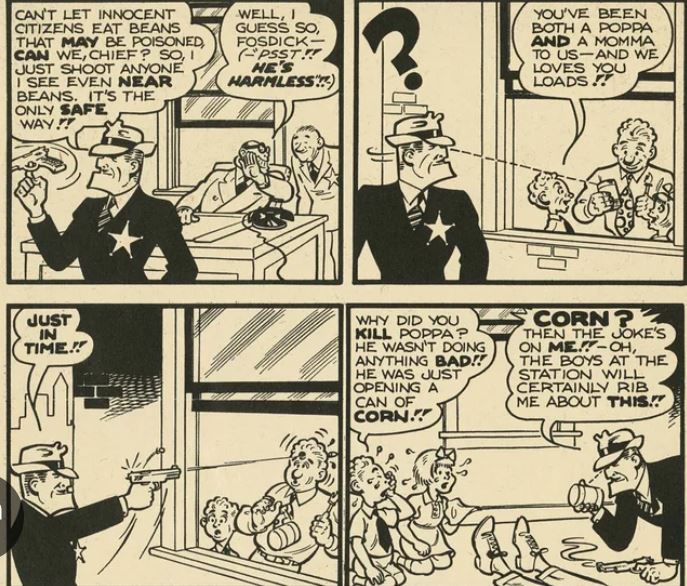
From 1950 comes ‘The Case of the Poisoned Beans’ in which madman Elmer Schlmpf randomly contaminates a tin of “Old Faithful” – the city’s most popular brand of beans. So popular are they that most shops and restaurants refuse to take them off sale and the populace won’t stop buying them. As no panic ensues and indifference rages, Fosdick begins shooting citizens who won’t stop eating the beans. Better a safe, clean police bullet than a nasty case of poison…

‘Sidney the Crooked Parrot’ (1953) was once Fosdick’s faithful pet, but living with the obsessive do-gooder turned the bird into a vengeance-crazed criminal genius. Cunningly causing Fearless to lose his job, the bird then organises a campaign of terror, but even humiliated, derelict and starving, the unswerving righteousness of the super-cop finds a way to triumph…

‘The Case of the Atom Bum’ (1951) finds the dapper detective helpless to halt depredations of a radioactive hobo who robs with impunity since the slightest wound might cause him to detonate like a thermonuclear bomb. Forced to ignore and even – shudder!! – abet the ne’er-do-well, Fosdick is going even more insane with frustrated justice – and then he snaps!

This manic monochrome monument to the Bad Old Days concludes with 1948’s utterly surreal ‘Case of the Chippendale Chair’, which begins only after certifiably cured and sane Lester Gooch is kidnapped by thugs working for the syndicate who torture him until he is crazy enough to produce Fearless Fosdick cartoons once more…

Once more demented, Gooch sets to delivering a startling saga of murder, theft and general scofflawing to sate the nation’s desire for graphic gang-busting with a new mastermind ravaging the palaces of the rich. Who can possibly be behind such brilliant crimes? (The clue is in the title…) and as Fosdick ineptly yet unerringly closes in on the culprit, collateral casualties mount. Still, isn’t justice worth a few sacrifices?

Madcap, cynical and hilariously ultra-violent, these eccentric yarns are credited with inspiring Harvey Kurtzman to create Mad comic books and the magazine it became. Capp’s creations clearly shaped decades of American comics comedy. Fosdick kept on turning up until 1972, leavening all the hillbilly high-jinks, satire and social commentary and defanging Capp’s increasingly reactionary stance and declining popularity with healthy, recreational slapstick slaughter, justifiable homicides and anticipatory cold-case clean-up. Moreover, if you’re British, you will see quite a few antecedents of our own utterly rational and reasonable supercop Judge Dredd…

If you have a taste for over-the-top hilarity and stunning draughtsmanship this is a book you must track down. Consider it a constabulary duty to be done…
Strip material © 1947, 1949, 1950, 1951, 1990 Capp Enterprises, Inc. Introduction © 1990 Max Allan Collins. Entire Contents © 1990 Kitchen Sink Press, Inc.

Today in 1907, the first Mutt and Jeff strips by Bud Fisher were published. We already told you that in Forever Nuts: The Early Years of Mutt & Jeff (Classic Screwball Strips). In 1915 Green Lantern originator Martin Nodell was born, whilst comics presence, writer, editor and The Beat blogger Heidi MacDonald joined us in 1961, as did comics colour artist Lee Loughridge (Batman Adventures, Stumptown) in 1969.

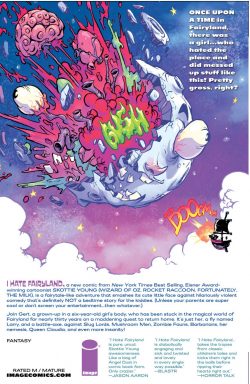
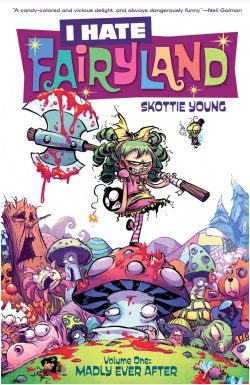
I Hate Fairyland volume 1: Madly Ever After


By Skottie Young, Jean-Francois Beaulieu, Blambot®’s Nate Piekos & various (Image Comics)
ISBN: 978-1-63215-685-3 (TPB/Figital edition)

This book contains Discriminatory Content included for comedic effect.

Win’s Christmas Gift Recommendation: Sugar & Spice & Everything Nicely Reimagined… 10/10

It feels like we haven’t had a good laugh in ages. Oh wait, here’s one now…

We grow up with fairytales all around us. They’re part of the fabric of our lives. Some people generally outgrow them whilst others take them to heart and make them an intrinsic aspect of their lives…

Have you met Skottie Young?

He’s a guy with feet firmly planted in both camps and well able to alternatively embrace the enchantment of imagination and give it a hilariously cynical mean-spirited drubbing at the same time. Hopefully you’ll have seen his glorious, multi-award-winning interpretation of Baum’s Oz books produced by Marvel and his spectacular run on Rocket Raccoon (and Groot!); or perhaps just his gut-bustingly funny baby superhero covers. Maybe you’re aware of his collaboration with Neal Gaiman on Fortunately the Milk?

If not, there’s so much more in store for you after enjoying this particular slice of vintage mirthful mayhem…

I Hate Fairyland is a truly cathartic little gem: a mind-buggering romp of deliciously wicked simplicity and one I heartily recommend as a palate-cleanser for anyone overdosing on cotton candy, wands and glitter, or spandex and slicked-back pecs.

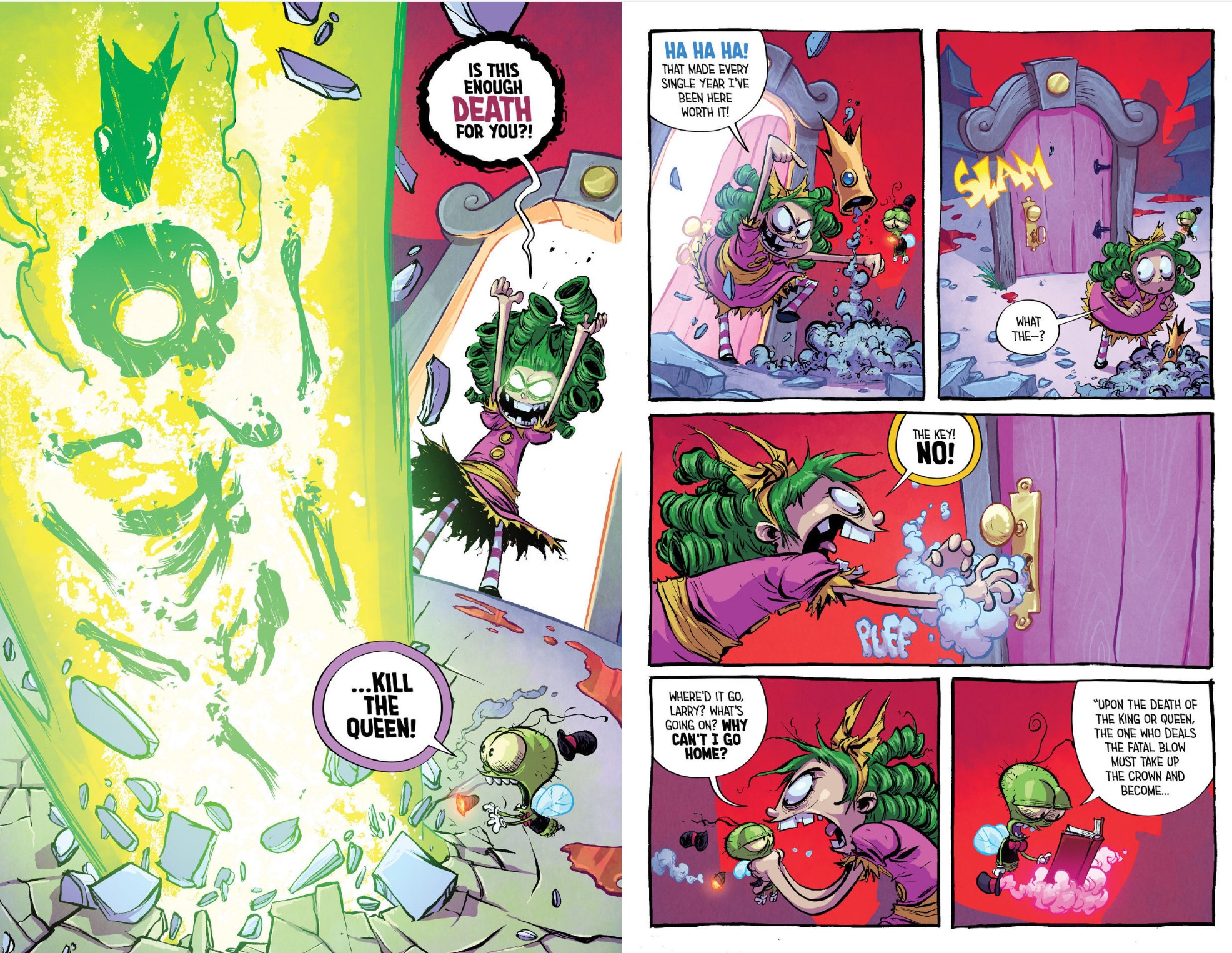
Once upon a time little Gertrude wished she could visit the wonderful world of magic and joyous laughter. Her wish was inexplicably granted and she met happy shiny people: fairies, elves, giants, talking animals and animated trees, rocks, stars, suns and moons; Gert just loved them all…

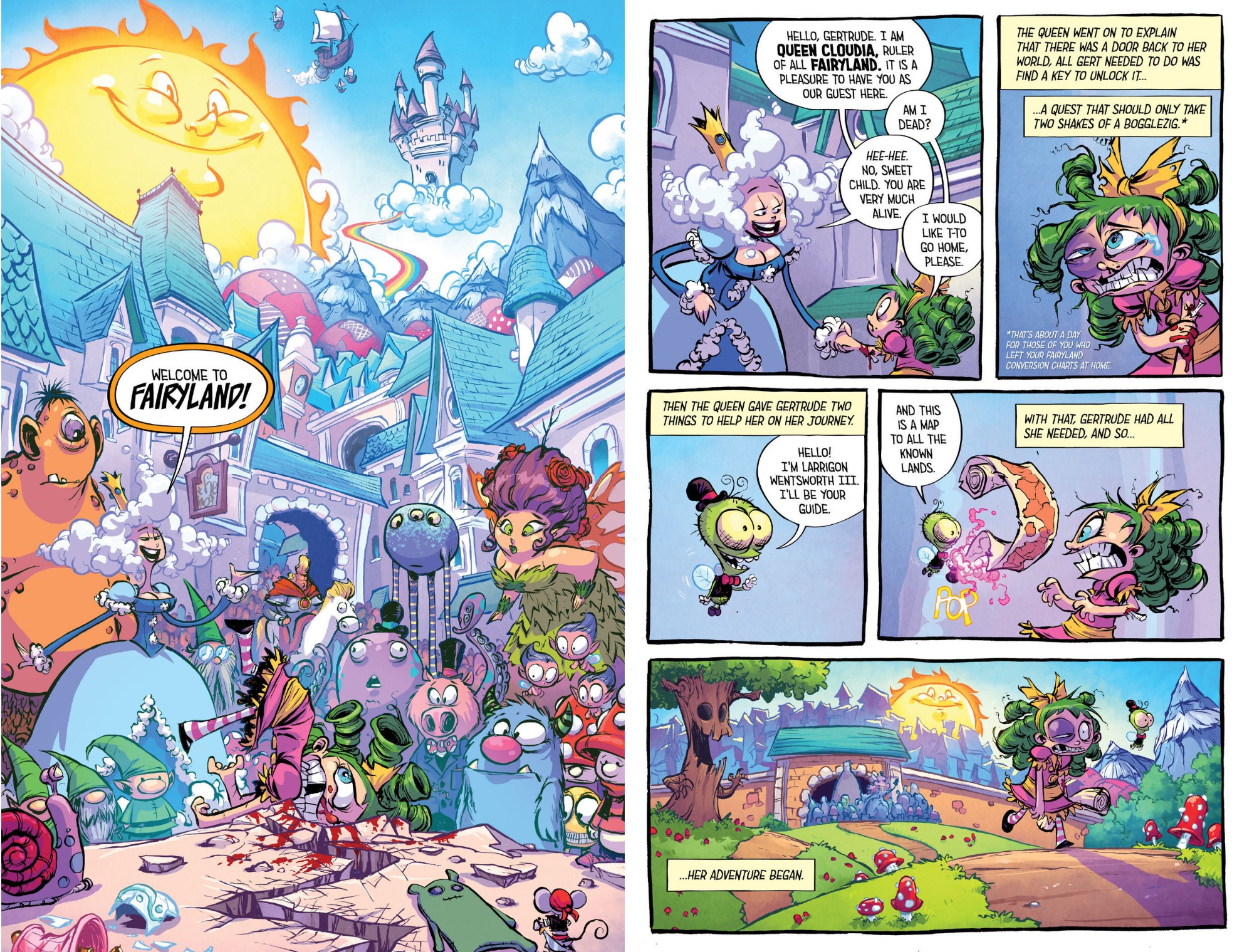
Resplendent Queen Cloudia made her an Official Guest of Fairyland and invited her to play a game. When she wanted to go back to her own world the bedazzled six-year-old simply had to find a magic key and open the door to the realm of reality. The fabulous Fairy Queen even gave Gertrude a quaintly talking bug as guide and helpmeet, plus a magic map of all the Known Lands…

That was 27 years ago and although Gert’s body has not aged a day her mind certainly has. It’s also gotten pretty pissed-off at the interminable insufferable task and just wants it all to end.

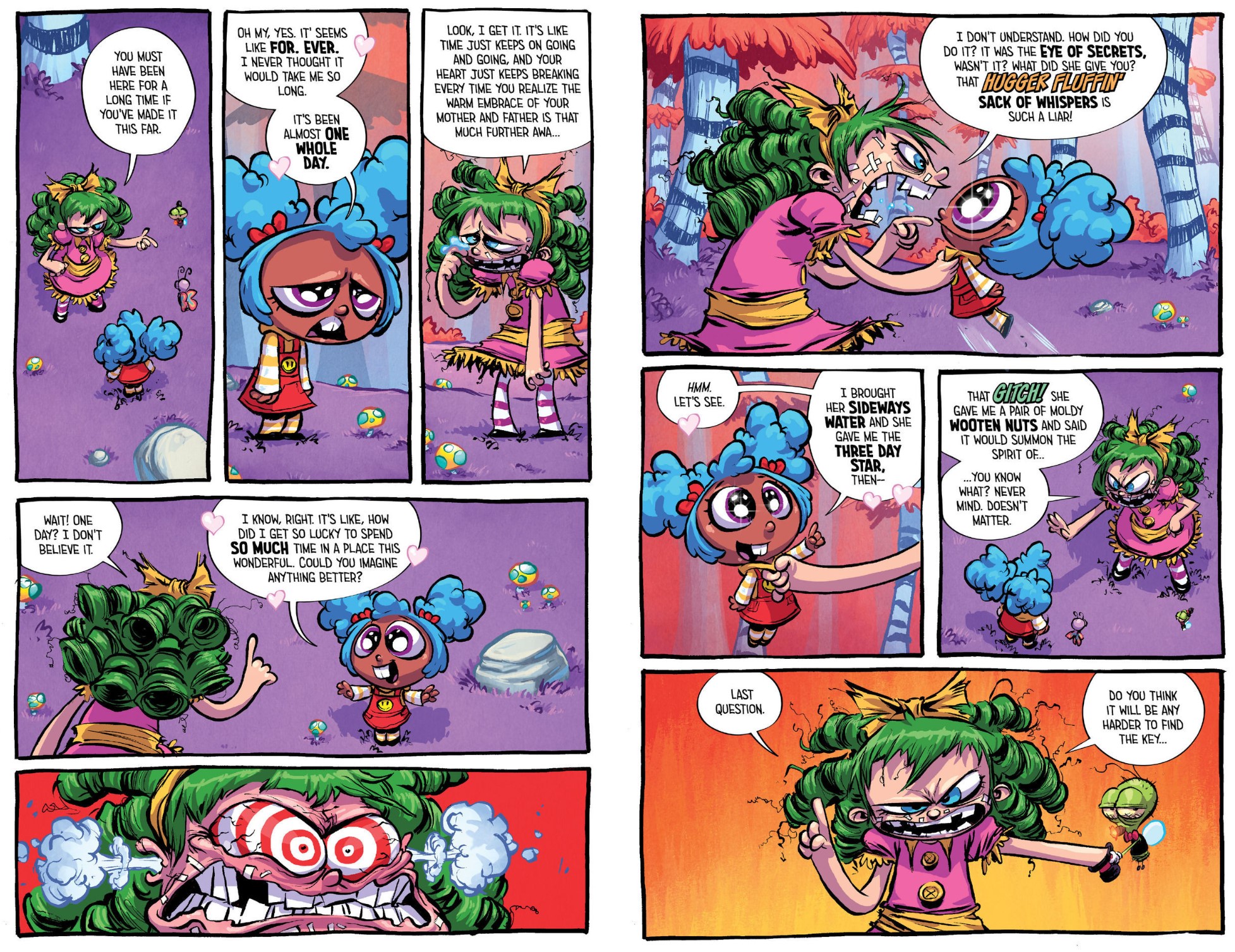
Of course, as an Official Guest of Fairyland Gert can’t die and has taken to expressing her monumental frustration in acts of staggering violence and brutal excess as she continues hunting for that fluffer-hugging key…

With no other choice, Gert and dissolute bug Larrigon Wentsworth III toil ever onward in search of the way home, regularly enduring horrific – but non-fatal – injuries and taking out their spleen (and often other peoples’) on whoever gets in her way.

After all this time, however, Even Queen Cloudia has had enough. Sadly, she can’t do anything about it whilst Gert is “OFG” (Official Guest of Fairyland, keep up!): a privilege that simply cannot be revoked.

Subtle hints of vast rewards to barbarians and assassins and evil witches all prove worthless too. Between the protection spell and Gert’s own propensity for spectacular bloodletting, there’s nothing in the incredible kingdoms to stop her.

… And then someone has a really amazing idea. Why not invite another sweet little girl to Fairyland and offer her the same deal? When she finds the key, wins the game and goes back, Gert will lose her OFG status and they can be rid of her at last!

Of course, that all goes swimmingly, just like Cloudia hoped and everybody but Gert lives happily ever after.

No, it really, really doesn’t work out like that…

To Be Continued…

Collecting the first five issues of the Image Comic series from October 2015 – February 2016 by Young, colourist Jean-Francois Beaulieu and letterer Nate Piekos of Blambot®, this sublimely outrageous treat offers hilariously over-the-top cartoon violence and the most imaginative and inspired use of faux-profanity ever seen in comics.

This is an unmissable wakeup call for everybody whose kids want to be little princesses and proves once and for all that sweet little girls (and probably comics artists) are evil to the core if you push them too far…
© 2016 Skottie Young. All rights reserved.

Today in 1911, cartoonist Clarence Gray was born. Sadly, there isn’t much of his wonderful Brick Bradford strip around to review. Far more readily represented is Alberto Giolitti whose art can be seen on loads of licensed features books we’ve covered like Star Trek: Gold Key Archives volume 1, and who would be 102 today if he still lived…

In 1941 French star fantasist Caza was born, whilst Superman scribe Elliot S! Maggin joined us in 1950 and FF artist Carlos Pacheco was born in the same year they were: 1961…

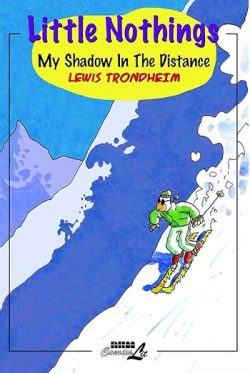
Little Nothings volumes 1-4: The Curse of the Umbrella, The Prisoner Syndrome, Uneasy Happiness, My Shadow in the Distance


By Lewis Trondheim, translated by Joe Johnson (NBM/ComicsLit)
ISBN: vol. 1: 978-1-56163-523-8 (Album PB), vol. 2: 978-1-56163-548-1 (Album PB),

vol. 3: 978-1-56163-576-4(Album PB), 978-1-56163-523-8 (Album PB),

I first became aware of Lewis Trondheim’s subtly enchanting vignettes in Fantagraphics’ Mome comics anthologies rather than through its internet presence and it’s a constant and utter delight for this old duffer (me, not him) to see this blend of cartoon philosophy, personal introspection, whimsical inquiry and foible-filled observations gathered into such handy tomes for constant re-reading. With over 100 books sporting his name (which isn’t actually Lewis Trondheim but Laurent Chabosy), the writer/artist/editor/educator is one of Europe’s most prolific comics creators: illustrating his own work, overseeing animated cartoons of such print successes as La Mouche (The Fly) and Kaput and Zösky or editing younger readers books (Dargaud’s series Shampooing).

His most famous works are global hits Les Formidables Aventures de Lapinot (translated as The Spiffy Adventures of McConey), Infinity 8, Ralph Azam and, with Joann Sfar, epic nested fantasy series Donjon as seen anglicised as Dungeon, Dungeon: Parade, Dungeon: Monstres, Dungeon: the Early Years et al. In his spare time he has written for satirical magazine Psikopat and provided scripts for the continent’s most popular artists, such as Fabrice Parme, Manu Larcenet, José Parrondo and Thierry Robin. Trondheim is, of course, a cartoonist of uncanny wit: piercing, gentle perspicacity, comforting affability and self-deprecating empathy, and prefers to control scrupulously what is known and said about him…

Some while ago the well-travelled graphic introvert began drawing a deliciously intimate cartoon blog wherein all the people Trondheim knows are rendered as anthropomorphised animals (with him a dowdy, parrot-beaked actor/director) which has been edited into a series of enchanting full-colour albums. Page after page of introspective, whimsical, querulous and enticingly intriguing reportage has emerged since.

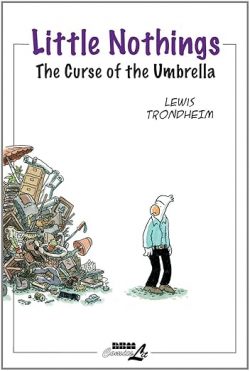
Volume 1 – The Curse of the Umbrella – features ruminations on gardening and possessing a vegetable death-touch; introduces his family; examines a love-hate relationship with technology and computer games, also covering the dramas of becoming first time cat-owners at an advanced (human) age. Similarly scrutinised are hypochondria and the internet’s impact as an enabler of such recurs, as also work-processes for the self-employed, snacks, keeping fit, memory, death, bird-poop, the weather and travel to comics events in exotic locations such as the Reunion Islands and Edinburgh.

The daily bulletins explore little events and really big themes and there are also purely visual moments that you just have to see to appreciate and get…

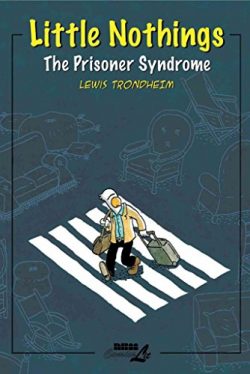
In second volume The Prisoner Syndrome, the cascade of cartoon delights continues with more of the same whilst adding summer beach madness, floating with the fishes, exploring volcanoes, ecology and hotel wastefulness, comic convention memory (so different from the regular kind). There’s animal antics, travel, energy-saving, visiting Africa, Guadeloupe, Romania and London, the differences between men and women, global political crises and the heartbreaking helplessness and inevitable consequences of seeing your pet die.

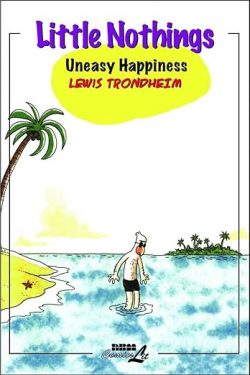
Third stanza Uneasy Happiness sees our absurdly bird-faced gentleman amicably nit-picking and further musing his way through the life of an old and successful comic creator: travelling to conventions, making stories and dealing with the distressingly peculiar modern world, especially focusing on his increasing hoarding proclivities, concerns over his creative and financial legacy, mice in the bookshelves and packing…

The ruminations and anti-dramas regularly range from his inability to de-clutter (every comic maven’s weakness!), toilet etiquette (public and private), gadgets, marriage, parenthood, the actual science in TV shows, how mad are cats, brilliant ideas that come when you’re asleep, computers (again and still!), and getting old, all interspersed with reactions to the many wonderful places he has visited on the comics convention circuit (Venice, Portugal, Fiji, Australia and others in this volume alone).

My Shadow in the Distance was the fourth Little Nothings accumulation of deliciously rendered watercolour epigrams…

This collection focuses heavily on Trondheim’s global peregrinations – with and without his family – to such far-flung places as Iceland, America (for an extended and hilariously unsettling family vacation spanning New York to Las Vegas), Quebec & Canada, Germany, Prague, Madrid, Italy, Corsica, Argentina, Ushuaia, Antarctica and Africa, with all attendant joys and night-terrors such voyages engender for him.

As ever, the auteur highlights the ways in which humans vary whilst remaining intrinsically similar – although only my own German forebears could possibly have devised such a brilliant method of enhancing and yet sanitising men’s urinal experiences…

Trondheim also finds time and space to ponder the inevitable decline in quality of movie sequels; roaming credit-card charges; his health, travel etiquette and preparation; the pitfalls of snacking; airports everywhere; the urge to eavesdrop; varying quality of hotels; weather & climate; forgetfulness; comics conventions; fans & professionals; personal space & getting old; skiing holidays; making your own music and what cats are good for before concluding with an extended if rather grotesque episode covering nasal polyp surgery and his inevitable overreaction to it…

All genteelly re-coloured for book publication, Little Nothings is easily one of the most comforting, compelling biographical comics series ever created: gently contemplative, subtly pleasing and ineffably something no fan of any advanced or significant vintage would care to miss. I once more strongly suggest that if you need a little non-theological, un-theosophical yet hilariously existential spiritual refreshment you take advantage of these visual bon mots toot da sweet and with the utmost alacrity…
© 2009-2010 Trondheim. English translation © 2010, 2011 NBM. All Rights Reserved.

Today in 1934, Batman, Phantom and Aquaman artist Don Newton was born. In 1977 landmark UK comic Action was controversially cancelled. In 2003 US artist John Tartaglione died. He was a solid journeyman best know now for his inking during the 1960s and 1970s but he was good at his job and should be lauded for it. Go Google or scroll about on this blog for more.

Moomin volume Ten – The Complete Lars Jansson Comic Strip


By Lasse Lars Jansson (Drawn & Quarterly)
ISBN: 978-1-77046-202-1 (HB) eISBN: 978-1-77046-557-2

Win’s Christmas Gift Recommendation: the Personification of Good Will at Every Season… 9/10

Tove Jansson was one of the greatest literary innovators and narrative pioneers of the 20th century: equally adept at shaping words and images to create worlds of wonder. She was especially expressive with basic components like pen & ink, manipulating economical lines and patterns into sublime realms of fascination, whilst her dexterity made simple forms into incredibly expressive and potent symbols. So was her brother…

Tove Marika Jansson was born into an artistic, intellectual and rather bohemian Swedish family in Helsinki, Finland on August 9th 1914. Patriarch Viktor was a sculptor and mother Signe Hammarsten-Jansson a successful illustrator, graphic designer and commercial artist. Tove’s brothers Lars AKA “Lasse” and Per Olov became – respectively – an author and cartoonist, and an art photographer. The family and its close intellectual, eccentric circle of friends seems to have been cast rather than born, with a witty play or challenging sitcom as the piece they were all destined to inhabit. After extensive and intensive study (from 1930-1938 at the University College of Arts, Crafts and Design, Stockholm, Graphic School of the Finnish Academy of Fine Arts and L’Ecole d’Adrien Holy and L’Ecole des Beaux-Arts, Paris), she became a successful exhibiting artist through the troubled years of WWII.

Brilliantly creative across many fields, she published her first Moomins fable in 1945. Småtrollen och den stora översvämningen (The Little Trolls and the Great Flood – latterly and more euphoniously The Moomins and the Great Flood) was a whimsical epic of gentle, inclusive, accepting, understanding, bohemian misfit trolls and their strange friends…

The term “Moomin” came from maternal uncle Einar Hammarsten who tried to stop Tove pilfering food when she visited by warning that a Moomintroll guarded the kitchen, creeping up on trespassers and breathing cold air down their necks… you can check out our other reviews such as Christmas Comes to Moominvalley for how the critter made a mega franchise and proto-mythology. Here and now, let’s discuss how Lars got involved…

Exponentially more popular with each successive book, global fame loomed. In 1952 Finn Family Moomintroll/The Happy Moomins was translated into English to great acclaim, prompting British publishing giant Associated Press to commission a daily newspaper strip starring the seductively sweet & sensibly surreal creations. Jansson had no misgivings or prejudices about strip cartoons as she had already adapted Comet in Moominland for Swedish/Finnish paper Ny Tid.

Mumintrollet och jordens undergäng/Moomintrolls and the End of the World was hugely popular and she welcomed the chance to extend her eclectic family’s range. In 1953, The London Evening News began the first of 21 Moomin strip sagas which captivated readers of all ages. Tove Jansson’s involvement in the cartoon ended in 1959, a casualty of its own success and the punishing publication schedule. So great was the strain that she had already recruited brother Lars to help. He quietly took over, continuing the feature until its close in 1975. His tenure as sole creator officially began with the sixth collection in this series and reaches its penultimate volume here…

Liberated from cartooning pressures, Tove returned to painting, writing and other pursuits: generating plays, murals, public art, stage designs, costumes for dramas and ballets, a Moomin opera and 9 more Moomin-related picture-books and novels, as well as 13 books and short-story collections strictly for grown-ups. She died on June 27th 2001, with awards too numerous to mention, and her face on the national currency…

Lars Fredrik Jansson (October 8th 1926 – July 31st 2000) was almost as amazing as his sister. Born into that astounding overachieving clan 12 years after Tove, at 16 he started writing – and selling – his own novels (nine in all). He also taught himself English as there weren’t enough Swedish-language translations of books available for his voracious reading appetite. In 1956 at his sister’s request he began co-scripting the Moomin strip: injecting his own witty whimsicality to ‘Moomin Goes Wild West’. He had been Tove’s English language translator and sense-reader from the start, seamlessly converting her Swedish into text and balloons even the British could grasp. In 1959, when her contract with The London Evening News expired, Lars officially took over, having spent the interim period learning to draw and perfectly mimic his sister’s art style. He had done so in secret, assisted and tutored by their mother Signe Hammarsten-Jansson. From 1961 to strip’s end in 1974, Lars was sole steersman of trollish tabloid tails (I fear that could be much misconstrued these days…).

“Lasse” was a man of many parts. Other careers included aerial photographer, professional gold miner, writer and translator. He was basis and model for ultimate cool kid Snufkin and his Moomins exploits were subtly sharper than his sister’s version: far more closely in tune with the quirky British sense of humour. Nevertheless, his whimsically wry sense of wonder was every bit as compelling. In 1990, long after the original series, Lasse began a new career, working with Dennis Livson (designer of Finland’s acclaimed Moomin World theme park) as producers of anime series The Moomins and, with daughter Sophia Jansson in 1993, on new Moomin strips…

Moomintrolls are easy-going free spirits: polite modern bohemians untroubled by hidebound domestic mores but under Lars, increasingly diverted and distracted by societal pressures. Moominmama is warm, kindly tolerant and capable, if perhaps overly concerned with propriety and appearances, whilst her devoted spouse Moominpappa spends most of his time trying to rekindle his adventurous youth or dreaming of fantastic journeys. Doting, darling son Moomintroll is a meek, dreamy boy with a big imagination and confusing ambitions who adores – and so moons over – permanent houseguest the Snorkmaiden. That impressionable, flighty gamin prefers to play things slowly whilst awaiting somebody potentially better…

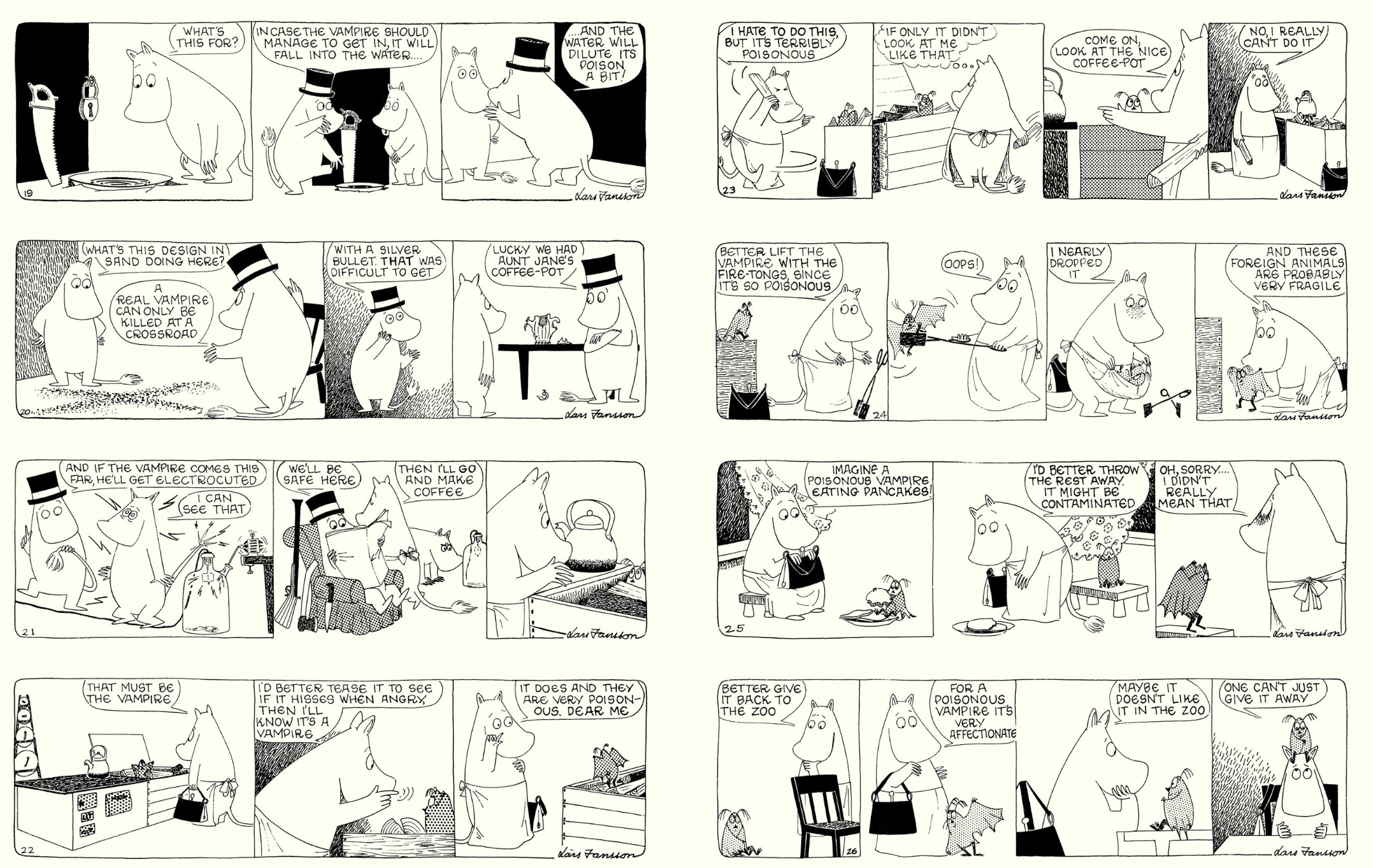
A wonderfully whimsy driven affair, this 10th and final monochrome moon melange delivers serial strip sagas #38 to 41, and commences with Lars still totally in charge as panic grips the sheltered valley-dwelling community. This is thanks to something supernally sinister and quite unknown pops by for the mass mess deemed ‘Moomin and the Vampire’…

The parable on uncontrolled hysteria sees the dozy denizens driven mad by an assumed monster in their midst and begins following a normal day of big game hunting in the small Scandinavian valley. When rumour of an undead horror haunting the fir forests and charming cottages, the usual miscommunications and madnesses leave everyone in a tizzy, tracking or hiding from the unseen doom. All poor placid Moominmama sees is a tiny fuzzy flying creature in need of a feed and a place to rest, but it probably best not to share the secret of her new guest with all her excitable neighbours…

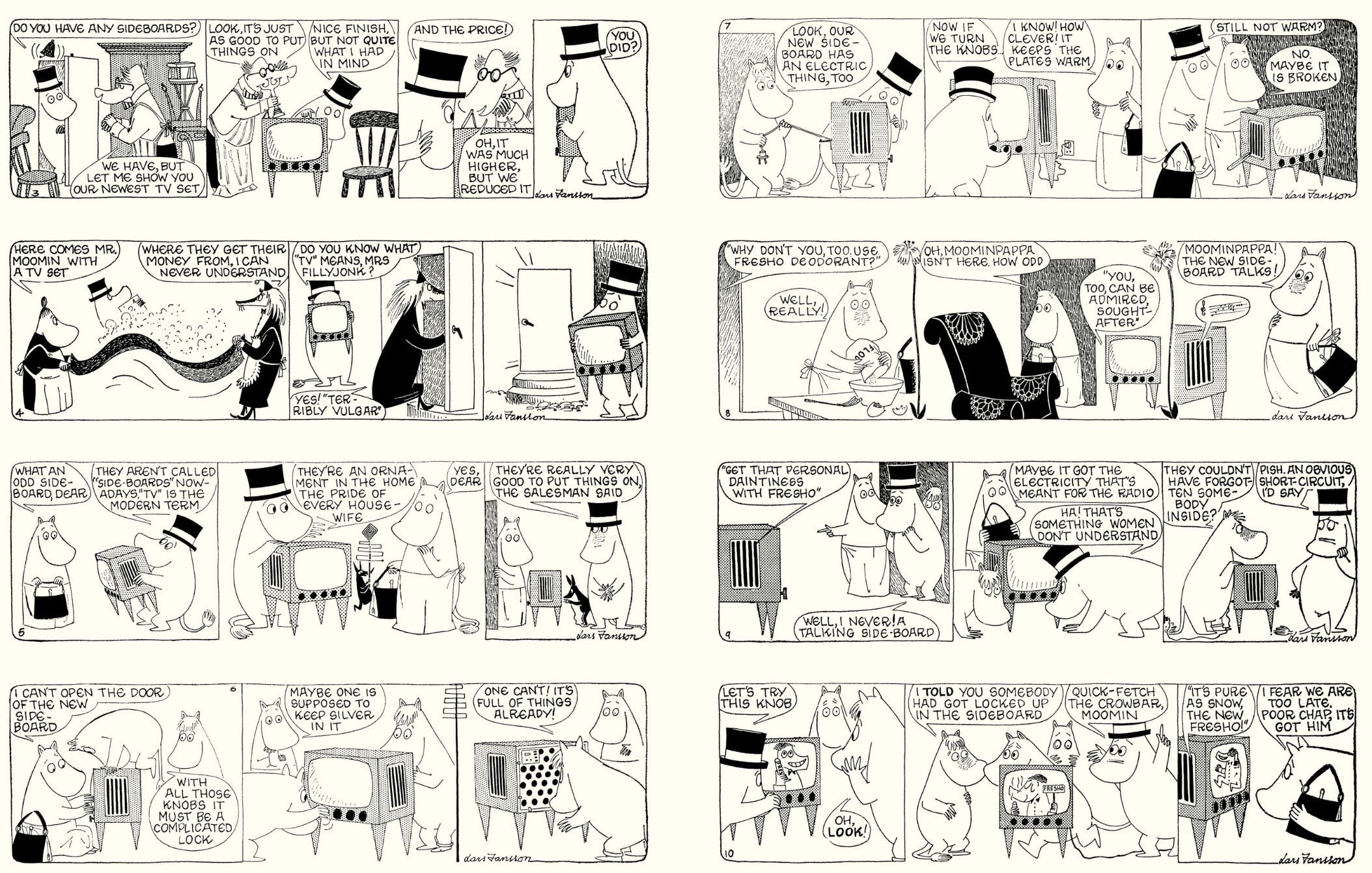
Up next and a swingeing assault on popular cultures comes ‘Moomin and the TV’, as the reclusive Moomins go shopping for anew sideboard and are pressured into purchasing a top of the line television set…

Despite initial resistance and treating the box as a giant wooded chest, eventually the family succumb to the shows and ads perpetually erupting from it, but that’s as nothing to the chaos caused as the friendly visits from everyone else in Moominvalley – even passing strangers! -threaten to overwhelm even Moominpapa’s legendary hospitality and deplete the mythic capacity of ‘Mama’s larder and pantry…

And my gosh, the rubbish they all watch!

A delicious poke at town planning, social crusaders, local politics and property developers follows as ‘The Underdeveloped Moomins’ finds the big white darlings helping a dedicated but unemployed and under-appreciated Assessor of Under-Developed Areas feel fulfilled. She knows her gifts, specialisms and training can readily bring these primitive, happy valley-folk into the top echelon of progressive go-getting modern citizens, and the Moomins are happy to help, no matter how miserable all these new-fangled ideas, gadgets and schemes make everyone…

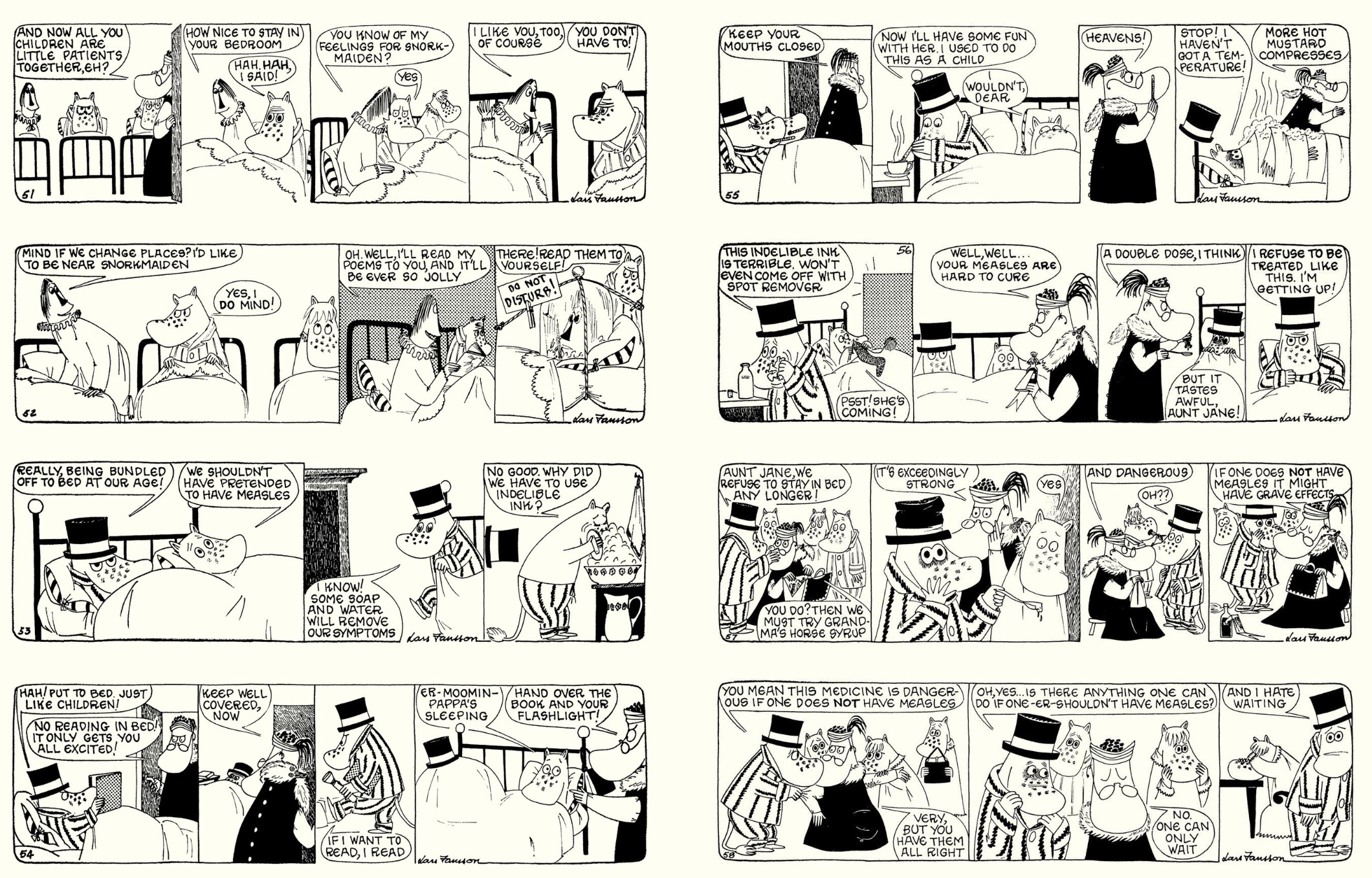
The wonderment comes to a close with a whiff of prognostication and prophecy as winter draws on in ‘Moomin and Aunt Jane’. When glamourous but generally useless Romantic poet Wispy moves in next door, he accidentally and then intentionally beguiles flirtatious dreamer Snorkmaiden, just as a little old lady haunts the chilly community. Perpetually predicting frozen doom and deadly privation, she starts to snaffle any potentially useful kit – other people’s blankets, firewood, food, skis, stores. As young Moomin and the maiden again perform their standard jealousy dance, ‘Pappa finally listens to the busy biddy and is convinced the extremely cold end of days is coming. As he begins his own excessive doomsday-prepper precautions, Wispy and Snorkmaiden elope with Moomin in cold pursuit, and the crisis goes into overdrive as prim, officious Moomin Aunt Jane invites herself to stay. Not even faking deadly illness can deter this dowager do-gooding know-it-all and she has no time for silly biddies, puling poets, vacuous romance or any sort of nonsense..

Finishing the fabulous Finnish saga in a cloud of confusion with a domestic dramedy in the best Ealing Comedy traditions of anything with Dame Magaret Rutheford in it, this is the ideal end to a cartoon era…

This compilation again closes with a closer look at the creator in ‘Lars Jansson: Roll Up Your Sleeves and Get to Work’ courtesy of family biographer Juhani Tolvanen, extolling his many worthy attributes…

These are utterly, adorably barbed tales for the young, laced with that devastating observation and razor-sharp wit which enhances and elevates only the greatest kids’ stories into classics of literature. These tomes – both Tove & Lars’ – are an international treasure trove no fan of the medium – or carbon-based lifeform with even a hint of heart and soul – can afford to be without.
© 2015 Solo/Bulls, except “Lars Jansson: Roll Up Your Sleeves and Get to Work” © 2011/2015 Juhani Tolvanen. All rights reserved.

Today in 1921, Heart of Juliet Jones & Blondie artist Stan Drake was born. Why not treat yourself to a rarer delight such as Kelly Green volume 1: The Go-Between? In 1951, Bill Mantlo was born, and in 1964, Brant Parker & Johnny Hart’s Wizard of Id strip debuted. Three years later in France, Jean-Claude Mézières & Pierre Christin’s Valérian and Laureline began utterly revolutionising sci fi. In 1993 star penciller/ editor Ross Andru died. All of the above make multiple appears in Now Read This! so just go wild in that search box…

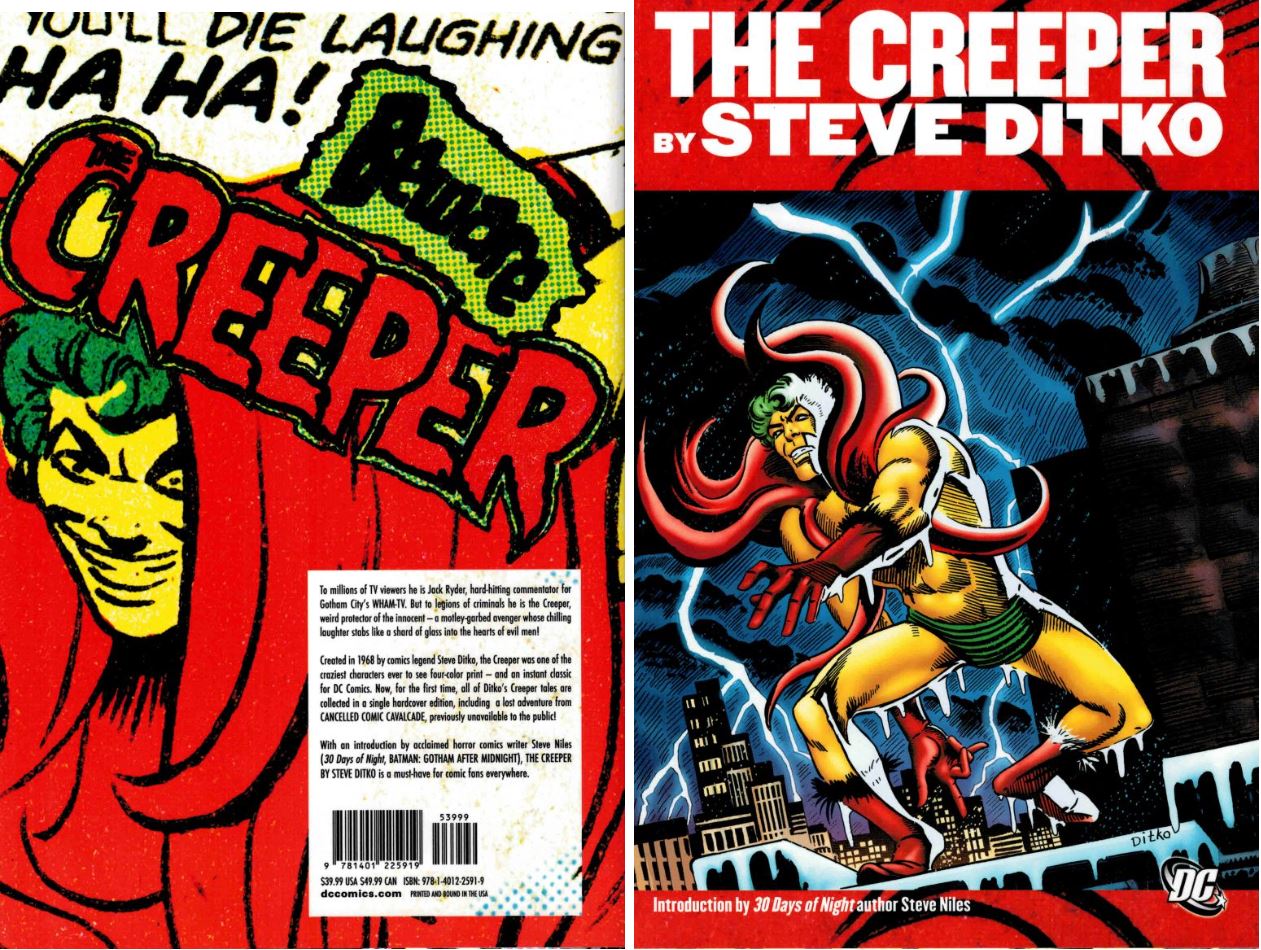
The Creeper by Steve Ditko


By Ditko, Don Segall, Denny O’Neil, Michael Fleisher, Mike Peppe, Jack Sparling & various (DC Comics)
ISBN: 978-1-4012-2592-6 (HB)

This book includes Discriminatory Content produced in less enlightened times.

It’s Steve Ditko’s 99th birthday today and I’m not letting the fact that he’s no longer with us stop us enjoying his wonders and celebrating his unique storytelling mastery…

Steve Ditko was one of our industry’s greatest and most influential talents and, during his lifetime, amongst America’s least lauded. Always reclusive and reticent by inclination, his fervent desire was always just to get on with his job, tell stories the best way he can and let his work speak for him.

Whilst the noblest of aspirations, that attitude was usually a minor consideration – and even an actual stumbling block – for the commercial interests which for so long controlled all comics production and still exert an overwhelming influence upon the mainstream bulk of the comic industry’s output. After Ditko’s legendary disagreements with Stan Lee led to his quitting Marvel – where his groundbreaking efforts made the reclusive genius (at least in comicbook terms) a household name – he found work at Warren Comics and resumed his long association with Charlton Comics.

That company’s laissez faire editorial attitudes had always offered him the most creative freedom, if not greatest financial reward, but in 1968 their wünderkind editor Dick Giordano was poached by the rapidly-slipping industry leader and he took some of his bullpen of key creators with him to DC Comics. Whilst Jim Aparo, Steve Skeates, Frank McLaughlin and Denny O’Neil found a new and regular home, Ditko began only a sporadic – if phenomenally productive – association with DC.

It was during this heady if unsettled period that the first strips derived from Ditko’s interpretation of the Objectivist philosophy of novelist Ayn Rand began appearing in fanzines and independent press publications like Witzend and The Collector, whilst for the “over-ground” publishing colossus he devised a brace of cult classics with The Hawk and the Dove and the superbly captivating concept re-presented here: Beware The Creeper. Later efforts would include Shade, the Changing Man, Stalker and The Odd Man, plus truly unique interpretations of Man-Bat, the Legion of Super-Heroes and many more… including a wealth of horror, mystery and sci fi shorts reminiscent of his Charlton glory days.

The auteur’s comings and goings also allowed him to revisit past triumphs and none more so than with The Creeper – who kept periodically popping up like a mad, bad penny. This superb hardcover compilation – still tragically and inexplicably languishing with other classics DC hasn’t got around to making available in digital formats – gathers every Ditko-drafted/delineated Creeper classic from a delirious decade for your delight, and the spooky superhero spectacle kicks off with an effusive Introduction from appreciative fan Steve (30 Days of Night) Niles.

This collation curates tales from Showcase #73; Beware the Creeper #1-6; 1st Issue Special #7; World’s Finest Comics #249-255 and Cancelled Comics Cavalcade #2/Showcase #106 (collectively spanning March/April 1968 to February/March 1979), so settle in for a long ride…

Like so many brilliant ideas before it, Ditko’s bizarre DC visions first exploded off the newsstands in try-out title Showcase. Issue #73 heralded ‘The Coming of the Creeper!!’ with veteran comics & TV scripter Don Segall putting the words to Ditko’s plot and illustrations. The moodily macabre tale introduces suicidally-outspoken TV host Jack Ryder, whose attitude to his show’s sponsors and cronies loses him his cushy job. His brazen attitude does, however, impress network security chief Bill Brane and the gruff oldster offers him a job as an investigator and occasional bodyguard.

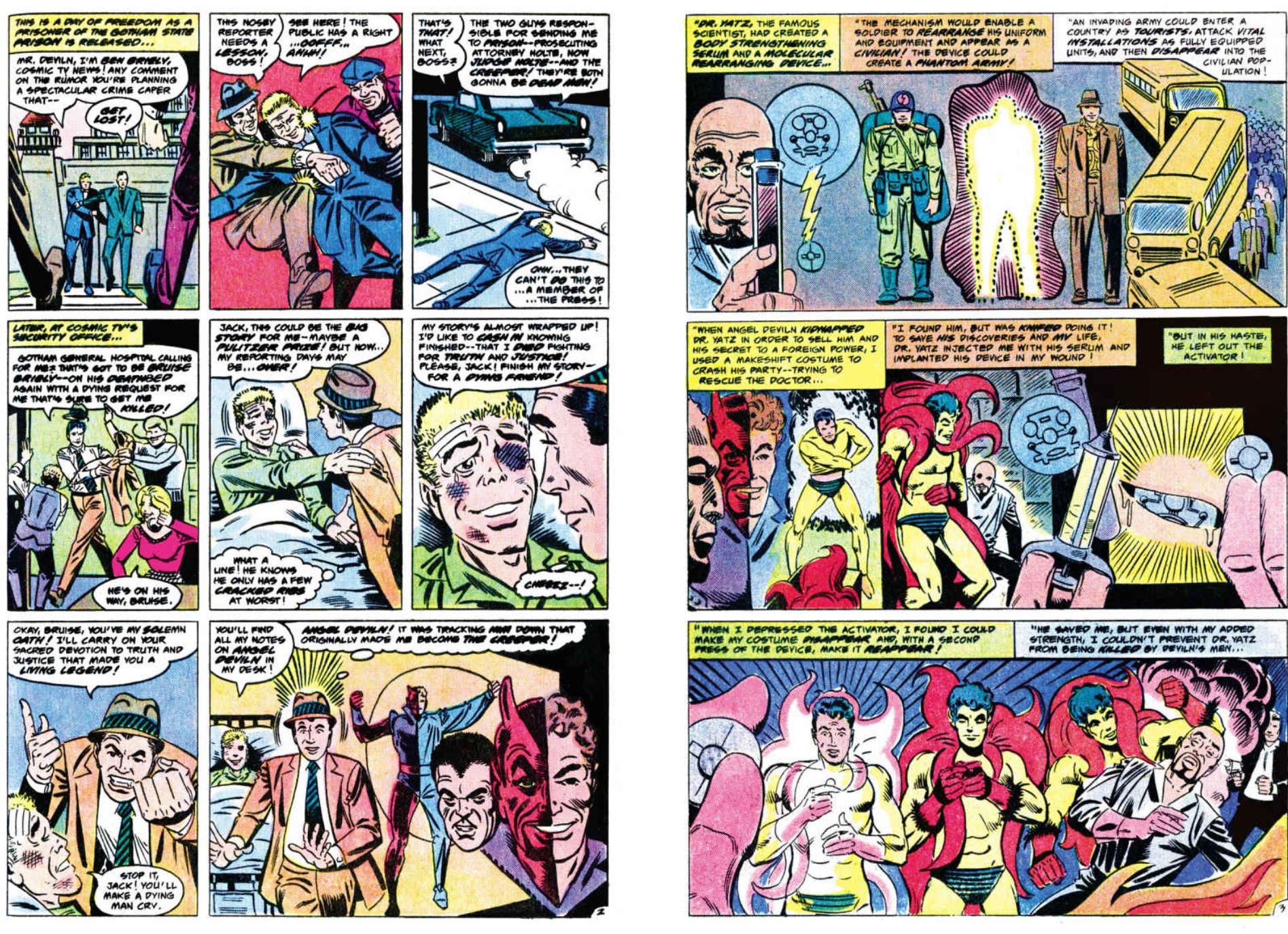
Jack’s first case involves tracking down recent Soviet defector Professor Yatz who has gone missing. The CIA suspect has been abducted by gangster Angel Devilin and sold to Red agent Major Smej. Displaying a natural affinity for detective work, Ryder tracks a lead to Devilin’s grand house and interrupts a costume party designed as a cover to make the trade. Promptly kicked out by thugs, Ryder heads for a costume shop but can only find a box of garish odds and ends… and lots of makeup.

Kitted out in a strange melange of psychedelic attire and accoutrements, he breaks back in but is caught and stabbed before being thrown into a cell with the missing Yatz. The scientist – also grievously wounded – is determined to keep his inventions out of the hands of evil men. These creations comprise an instant-healing serum and a Molecular Transmuter, able to shunt whatever a person is wearing or carrying into and out of our universe. A fully equipped army could enter a country as harmless tourists and materialise a complete armoury before launching sneak attacks…

To preserve them, Yatz lodges the Transmuter inside Ryder’s knife wound before injecting him with the untested serum. The effect is instantaneous and doesn’t even leave a scar. The investigator is also suddenly faster, stronger and more agile…

When Jack presses a handheld activator, he is instantly naked, and experimentation shows that he can make his motley costume appear and disappear just by touching a button. Of course, now, whenever it is activated, neither makeup nor wig, bodystocking, boots or gloves will come off. It’s like the crazy outfit has become his second skin…

When the gangsters come for their captives, Yatz is burning his notes. In the fracas that follows he catches a fatal bullet and, furious, guilt-ridden and strangely euphoric, Ryder goes after the thugs and spies. By the time the cops arrive he finds himself (or at least his canary yellow alter ego) blamed by Devilin for the chaos and even a burglary. The mobster has even given him a name – The Creeper…

As soon as the furore dies down vengeful Ryder returns to exact justice for the professor and discovers his uncanny physical prowess and macabre, incessant unnerving laughter give him an unbeatable edge whilst winning him a supernatural reputation…

After that single yarn the haunting hero hurtled straight into his own bimonthly series. Beware the Creeper #1 debuted with a May/June cover-date. Behind one of the most evocative covers of the decade – or indeed, ever – ‘Where Lurks the Menace?’ (scripted by Denny O’Neil under his occasional pen-name Sergius O’Shaughnessy) finds Ryder and the Creeper hunting an acrobatic killer beating to death numerous shady types in a savage effort to take over the city’s gangs. Sadly, Jack’s relentless pursuit of “the Terror” and careful piecing together of many disparate clues to his identity is hindered by the introduction of publicity-hungry, obnoxious glamour-puss ‘Vera Sweet’. The TV weathergirl thinks she has the right to monopolise Ryder’s time and attention, even when he’s ducking fists and bullets…

The remainder of the far-too-brief run featured a classic duel of opposites as a chameleonic criminal mastermind insinuated himself into the lives of Jack and the Brane bunch. It all began with ‘The Many Faces of Proteus!’ in BtC #2 (by Ditko & O’Shaughnessy) wherein a pompous do-gooder’s TV campaign against The Creeper is abruptly curtailed after the Golden Grotesque shows up at the studio and throws bombs.

Caught in the blast is baffled and battered Jack Ryder, and he’s even more bewildered when Brane informs him that a tip has come in confirming the Creeper is working for gambler gangboss Legs Larsen…

Dodging Vera, whose latest scheme involves a fake engagement, the real Creeper reaches Larsen’s gaming house in time to see a faceless man put a bullet into the prime suspect. In the ensuing panic the Laughing Terror transforms back into Ryder and strolls out with Larsen’s files, unaware that the faceless man is watching him leave and putting a few clues together himself…

The documents reveal a lone player slowly consolidating a grip on the city’s underworld but discloses no concrete information, so the Creeper goes on a very public rampage against all criminals in hopes of drawing Proteus out. The gambit works perfectly as a number of close friends try to kill Ryder, but only after frantically fending off flamethrower-wielding Vera in his own apartment does the Creeper realise that Proteus is far more than a madman with a makeup kit. A spectacular rooftop duel ends in a collapsed building and apparent end of the protean plunderer… but there’s no body to be found in the rubble…

Beware the Creeper #3 has our outré hero tearing the city’s thugs apart looking for Proteus, but his one-man spook-show is curtailed when Brane sends Ryder to find Vera. Little Miss Wonderful is determined to be the first to interview an island society cut off from the world for over a century, but all contact has been lost since she arrived. Tracking her to ‘The Isle of Fear’ Jack finds her in the hands of a death cult. More important to Ryder, however, is the fact that the Supreme One leading the maniacs is actually a top criminal offering sanctuary to Proteus flunkies he’s been scouring the city for…

Back in civilisation again, ‘Which Face Hides My Enemy?’ sees Ryder expose High Society guru and criminal mesmerist Yogi Birzerk’s unsuspected connection to Proteus. The cops drive The Creeper away before he can get anything from the charlatan, and when he dejectedly returns home Jack walks into an explosive booby trap in his new apartment. The “warning” from Proteus heralds the arrival of Asian troubleshooters Bulldog Bird and Sumo who claim to be also pursuing the faceless villain. They reveal he was a high-ranking member of the government of Offalia who stole a chemical which alters the molecular composition of flesh, before suggesting they all team up. Heading back to Bizerk’s place, it soon becomes clear that they are actually working for Proteus and that the faceless fiend knows Ryder’s other identity…

With #5, inker Mike Peppe joined Ditko & O’Neil as the epic swung into high gear with ‘The Color of Rain is Death!’ Proteus makes his closing moves, attacking Jack’s associates and framing him again whilst preparing for a criminal masterstroke which will win him much of the city’s wealth. Luring the Creeper into the sewers as a major storm threatens to deluge the city, the face-shifter reveals a scheme to blow up the drainage system and cause catastrophic flooding. After a brutal battle, he also leaves The Creeper tied to a grating to drown…

The stunning saga closed with final issue Beware the Creeper #6 (March/April 1969), by which time Ditko had all but abandoned his creation. ‘A Time to Die’ saw tireless, reliable everyman artist Jack Sparling pencil most of the story as the Howling Hero escapes his death-trap, deciphers the wily villain’s true gameplan and delivers a crushing final defeat. It was fun and thrilling and – unlike many series which folded at that troubled time – even provided an actual conclusion, but it somehow it wasn’t satisfactory and it wasn’t what we wanted.

This was a time when superheroes went into another steep decline with supernatural and genre material rapidly gaining prominence throughout the industry. With Fights ‘n’ Tights comics folding all over, Ditko concentrated again on Charlton’s mystery line, an occasional horror piece for Warren and his own projects…

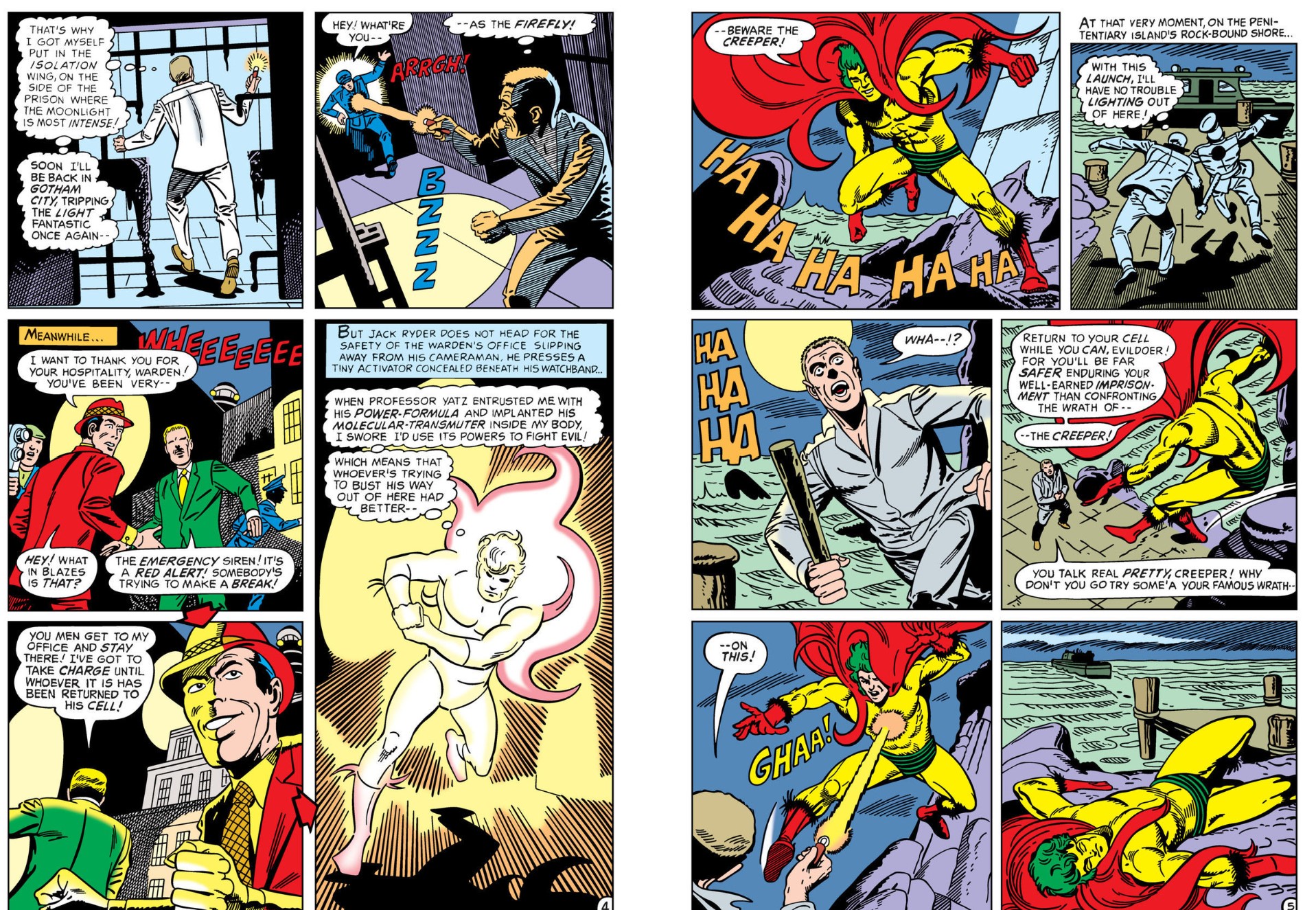
In the years his own title was dormant, the Creeper enjoyed many guest shots in other comics and it was established that the city he prowled was in fact Gotham. When Ditko returned to DC in the mid-1970s, try-out series 1st Issue Special was alternating new concepts with revivals of old characters. Issue #7 (October 1975) gave the quirky crusader another shot at stardom in ‘Menace of the Human Firefly’ – written by Michael Fleisher & inked by Mike Royer. Here restored TV journalist Jack Ryder is inspecting the fantastic felons in Gotham Penitentiary just as manic lifer Garfield Lynns breaks jail to resume his interrupted costumed career as the master of lighting effects. By the time the rogue’s brief but brilliant rampage is over, the Creeper has discovered something extremely disturbing about his own ever-evolving abilities…

The story wasn’t enough to restart the rollercoaster, but some years later DC instituted a policy of giant-sized anthologies, and the extra page counts allowed a number of lesser lights to secure back-up slots and shine again. For World’s Finest Comics #249-255 (cover-dated February/March 1978 to February/March 1979) Ditko was invited to produce a series of 8-page vignettes starring his most iconic DC creation. This time he wrote as well as illustrated and the results are pure eccentric excellence. The sequence begins with ‘Moon Lady and the Monster’ as Ryder – once again a security operative for Cosmic Broadcasting Network – must ferret out a grotesque brute stalking a late-night horror-movie hostess, after which #250’s ‘Return of the Past’ reprises the origin as Angel Devilin gets out of jail and goes looking for revenge…

In WFC #251, ‘The Disruptor’ proves to be a blackmailer attempting to extort CBN by sabotaging programmes whilst ‘The Keeper of Secrets is Death!’ in #252 follows the tragic murder of Dr. Joanne Russell who was accused on a sensationalistic TV show of knowing the Creeper’s secret identity. Next issue ‘The Wrecker’ offers an actual grudge-bearing mad scientist who has built a most unconventional robot, whilst ‘Beware Mr. Wrinkles!’ in #254 debuts a villain with the power to age his victims. Neither, however, are a match for the tireless, spring-heeled Technicolor Tornado, whose too-short return culminates in a lethal duel with a knife-throwing jewel thief in #255’s ‘Furious Fran and the Dagger Lady’…

Until this volume, that was it for Ditko devotees and Creeper collectors, but as the final delight in this splendid compendium reveals, there was more. An ill-considered expansion was followed by 1978’s infamous “DC Implosion”, when a number of titles were shut down or cancelled before release. One of those was Showcase #106 which would have featured a new all-Ditko Creeper tale.

It was collected – with sundry other lost treasures – in a copyright-securing, monochrome, minimum print-run internal publication entitled Cancelled Comics Cavalcade. Here, from CCC #2 (1978) and presented in stark black & white, fans can see the Garish Gallant’s last Ditko-devised hurrah as ‘Enter Dr. Storme’ pits the Creeper (and cameo crimebuster The Odd Man) against a deranged weatherman turned climatic conqueror able to manipulate the elements.

Fast, fight-filled, furiously fun and devastatingly dynamic, Beware the Creeper was a high-point in skewed superhero sagas and this is a compendium no lovers of the genre can do without.
© 1968, 1969, 1975, 1978, 1979, 2010 DC Comics. All Rights Reserved.

Today in 1926 Harvey Comics star and Anthro originator Howie Post was born, followed a year later by the mighty Steve Ditko. Just scroll back up or look anywhere on this blog, dude!

Sadly, it’s also the anniversary of Wally Wood’s death in 1981. We last looked closely at Ditko’s frequent collaborator in Cannon.

DC Finest Horror – The Devil’s Doorway


By Alex Toth, Gil Kane, Mike Friedrich, Gerry Conway, Sergio Aragonés, Dave Wood, Joe Orlando, Marv Wolfman, Len Wein, Steve Skeates, John Costanza, Otto Binder, D.J. Arneson, John Albano, Julius Schwartz, E. Nelson Bridwell, Joe Gill, Robert Kanigher, Jack Oleck, Cliff Rhodes, Bob Haney, George Kashdan, Jack Miller, Carl Wessler, Dennis O’Neil, Alan Riefe, Dave Kaler, Jack Phillips, Murray Boltinoff, Curt Swan, Jerry Grandenetti, Bill Draut, Werner Roth, Jack Sparling, Morris Waldinger, Tom Nicolosi, Bernard Baily, Jack Abel, George Roussos, Eddie Robbins, Wayne Howard, Stanley Pitt, Bruno Premiani, Dick Giordano, Dick Dillin, Murphy Anderson, Pat Boyette, Neal Adams, Nick Cardy, Mike Sekowsky, Sid Greene, Mike Roy, Mike Peppe, Don Heck, Wally Wood, Ralph Reese, George Tuska, Gray Morrow, John Celardo, Art Saaf, José Delbo, Vince Colletta, Frank Giacoia, Al Williamson & many & various (DC Comics)
ISBN: 978-1-79950-280-7 (TPB)

Sadly this masterful mystery megamix is not yet available digitally, but we live in hope…

This book includes Discriminatory Content produced in less enlightened times.

Win’s Christmas Gift Recommendation: Splendid Slice of Spectral Shock & Awe… 9/10

It’s the time for sweet indulgence, shocking over-eating and spooky stories, so let’s pay a visit to a much-neglected old favourite in a fresh new costume…

US comic books started slowly until the coming of superheroes unleashed a torrent of creative imitation and sparked a new genre. Implacably vested in World War II, the Overman swept all before him (and very occasionally her or it) until the troops came home and the more traditional genres resurfaced and eventually supplanted the Fights ‘n’ Tights crowd. Although new kids kept on buying, much of the previous generation of consumers also retained their four-colour habit but increasingly sought older themes in the reading matter. The war years altered global psychological landscapes and as a more world-weary, cynical young public came to see that all the fighting and dying hadn’t really changed anything, their chosen forms of entertainment (film and prose as well as comics) reflected this.

As well as Westerns, War and Crime comics, celebrity tie-ins, madcap escapist comedy and anthropomorphic funny animal features were immediately resurgent, but gradually another of the cyclical revivals of spiritualism and public fascination with all things occult, eldritch and arcane led to them being outshone and outsold by a wave of increasingly impressive, evocative and shocking horror comics.

There had been grisly, gory and supernatural stars before, including a pantheon of ghosts, monsters and wizards draped in mystery-man garb and trappings (The Spectre, Mr. Justice, Sgt. Spook, Frankenstein, The Heap, Sargon the Sorcerer, Zatara, Monako, Zambini the Miracle Man, Kardak the Mystic, Dr. Fate and dozens more), but these had been victims of circumstance: The Unknown as a “narrativium” power source for super-heroics.

Now the focus shifted to ordinary mortals thrown into a world beyond their ken with the intention of unsettling, not vicariously empowering, the reader. Almost every publisher jumped on the increasingly popular bandwagon, with B & I (which became magical one-man-band Richard E. Hughes’ American Comics Group) launching the first regularly published horror comic in the Autumn of 1948. Technically, though, Adventures Into the Unknown was actually pipped by Avon who had released an impressive single issue entitled Eerie in January 1947 before finally committing to a regular series in 1951. By this time, and following the filmic horror heyday of Universal Pictures’ fright films franchises, worthy comic book monolith Classics Illustrated had already long milked the literary end of the medium with adaptations of The Headless Horseman, Dr. Jekyll and Mr. Hyde (both 1943), The Hunchback of Notre Dame (1944) and Frankenstein (1945) among others.

If we’re keeping score, this was also the period in which Joe Simon & Jack Kirby identified another “mature market” gap by inventing the Romance comic (Young Romance #1, cover-dated September 1947) but they too saw sales potential in macabre mood material, resulting in seminal anthologies Black Magic (launched in 1950) and boldly obscure psychological drama vehicle Strange World of Your Dreams (1952). Around that time the staid cautious company that would become DC Comics bowed to the commercial inevitable and launched a comparatively straightlaced anthology that became one of their longest-running and most influential titles with the December 1951/January 1952 opening of The House of Mystery.

When the hysterical censorship scandal which led to witch-hunting hearings was at its height, the mobs with pitchforks furore was adroitly curtailed by the industry adopting a castrating straitjacket of self-regulatory rules. Horror titles produced under the aegis of the Comics Code Authority were sanitised, anodyne affairs in terms of Shock ‘n’ Gore.

However, since appetite for suspenseful short stories remained high, in 1956 National DC introduced sister title House of Secrets (a November/December cover-date). Plots were dialled back into superbly illustrated, rationalistic, fantasy-adventure vehicles which would dominate the market until the 1960s when superheroes (which began sneaking back in 1956 after Julius Schwartz reintroduced The Flash in Showcase #4), finally overtook them.

Green Lantern, Hawkman, The Atom and a slew of other costumed cavorters generated a gaudy global bubble of masked mavens which even forced the dedicated anthology suspense titles to transform into super-character split-books, with Martian Manhunter and Dial H for Hero monopolising House of Mystery whilst Mark Merlin – later Prince Ra-Man – sharing space with Eclipso in House of Secrets. When caped crusader craziness peaked and popped, HoS was one of the first casualties, folding with #80, the September/October 1966 issue.
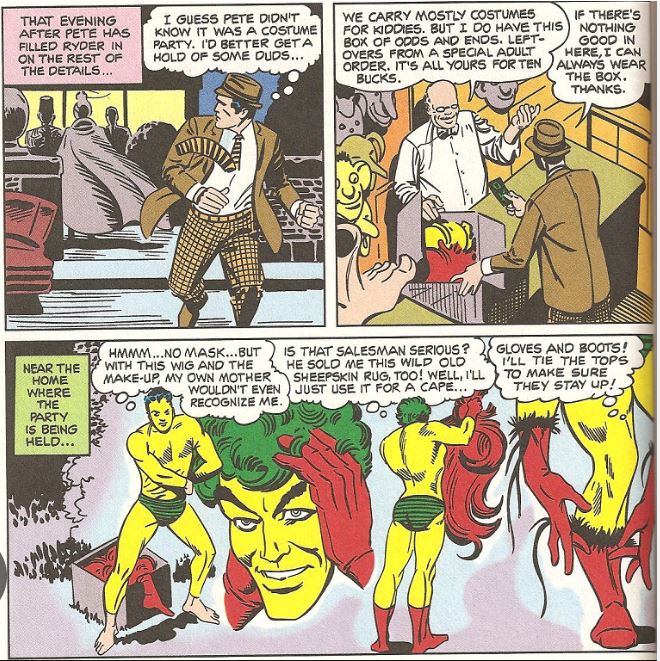
However, nothing combats censorship better than falling profits and by the end of the 1960s the Silver Age superhero boom was over, with many titles gone and some of the industry’s most prestigious series circling the drain. This real-world Crisis prompted surviving publishers to loosen self-imposed restraints against crime and horror comics. Nobody much cared about gangster titles at that juncture, but liberalisation coincided with another bump in public interest for all things Worlds Beyond-ey, so resurrection of scary stories was a foregone conclusion and obvious no-brainer…

Even ultra-wholesome Archie Comics re-entered the field with a rather tasty line of Red Circle Chillers: a minor substrate they regularly return to with style and potency to this day.

Thus, with absolutely no fanfare at all House of Mystery #174 (cover dated May/June 1968), confirmed the downturn in superhero stories eveywhere as it hit newstands everywhere presenting a bold banner asking Do You Dare Enter The House of Mystery? Inside it reprinted admittedly excellent short fantastic thrillers originally seen in House of Secrets from those heady days when it was okay to scare kids…

It was a slow but unstoppable hit which just kept spreading…

This DC Finest collection gathers a year’s worth of scary stuff snapshotted from House of Secrets #81-85; House of Mystery #180-185; The Witching Hour #3-7; The Unexpected #113-117 and includes a short back-up yarn from Phantom Stranger volume 2 #5, which cumulatively filled dank evenings from May 1969-April 1970. It all starts – with absolutely no fanfare at all – in HoM #180…

Going from strength to strength, the fear flagship was increasingly drawing on DC’s major artistic resources. Astounding opener ‘Comes a Warrior’ is a chilling faux Sword & Sorcery classic written and drawn by da Vinci of Dynamism Gil Kane, and inked by incomparable Wally Wood, before they illustrate Mike Friedrich’s fourth-wall-demolishing ‘His Name is Cain Kane!’

A Sergio Aragonés gag page in the long-running ‘Cain’s Game Room’ roaming sequence then cleanses palates for Cliff Rhodes & Joe Orlando’s text-terror ‘Oscar Horns In!’ before Marv Wolfman & Bernie Wrightson proffer prophetic vignette ‘Scared to Life’. A double-page ‘Cain’s Game Room’ precedes an uncredited forensic history lesson drawn by Morris Waldinger and recycled as‘Cain’s True Case Files’ to close proceedings for that title. Meanwhile over in long-running, recently remodelled fantasy anthology The Unexpected, the former sci fi vehicle was retooling as a gritty, weird thriller venue with George Kashdan, Jack Sparling & Vince Colletta detailing ‘The Shriek of Vengeance’. Here, Golden Age troubleshooter Johnny Peril is accused of heinous crimes and then abducted by maniac justice dispenser The Executioner. His gladiatorial tests are no problem for an ordinary guy who’d been facing the incomprehensible unknown since Comics Cavalcade #19 (February 1947) and soon the true motive is exposed and the scheme crushed…

Dave Wood & recent Charlton Comics émigré Pat Boyette then glare into ‘The Eyes of Death’, revealing the fate of an actual criminal who gains the power to see iminent fatalities before Wood, Curt Swan & Mike Esposito ride ‘The Tunnel of Love Fear!’ to introduce potential host narrator Judge Gallows, discussing one of his stranger cases…

With Tales of the Unexpected #105 and House of Mystery #174, National/DC had gambled heavily that anthology horror material was back and wouldn’t call the wrath of the gods – and parents – down upon them. Now that they had a boutique mystery stable, they put lots of thought and effort into creating an all-new title to further exploit our morbid fascination with all thingies fearsome and spooky. They would also resurrect House of Secrets (cancelled in late 1969. Apparently in those heady days it was okay – and profitable – to scare the heck out of little kids if you also made them laugh.

Edited until #14 by Dick Giordano, The Witching Hour first struck with a February/March 1969 cover-date (actually on-sale from December 19th 1968). From the outset it was an extremely experimental and intriguing beast. Here however we begin with #3 (cover-dated July 1969). In this graphic grimoire, cool & creepy horror-hosts traditionally introducing the entertainments are replaced by three witches. Based as much on a common American misapprehension of Macbeth as the ancient concept of Maiden, Mother & Crone, this torrid trio constantly strove to outdo (and outgross) each other in telling of terror tales.

Crucially, Cynthia, Mildred & Mordred – as well as shy monster man-servant minion Egor – were designed by and initially delineated by master illustrator Alex Toth, making framing sequences between yarns as good as and frequently more enthralling than the stories they brazenly bracketed. Following intro ‘You Be Our Judge’ from Toth & Giordano, the graphic genius & Colletta illustrate Don Arneson’s medieval mood masterpiece ‘The Turn of the Wheel!’ before Alan Riefe & Sparling tell a decidedly different ghost-story in ‘The Death Watch’. Steve Skeates & Bernie Wrightson then debut a decidedly alterative fantasy hero in ‘…And in a Far-Off Land!’, followed by the first in a series of short prose vignettes: anonymous fright-comedy ‘Potion of Love’ and Mike Sekowsky & Giordano deliver the sisters’ farewell epilogue…

Back at House of Mystery #181, scripted by Otto Binder and drawn by quirkily capable Sparling, ‘Sir Greeley’s Revenge!’ offers a heart-warmingly genteel spook story, albeit jump-cut interrupted by new comedy featire Page 13 (from Aragonés) after which Wrightson’s first long tale is fantastical reincarnation saga ‘The Siren of Satan’ (scripted by Bob Kanigher) before we get to the next big thing – and an actual resurrection…

House of Secrets returned with #81 (August/September 1969) just as big sister HoM had done a year previously. Under a bold banner declaiming “There’s No Escape From… The House of Secrets”, Mike Friedrich, Jerry Grandenetti & George Roussos introduced a ramshackle, sentient old pile in ‘Don’t Move It!’, after which Bill Draut limned the introduction of bumbling caretaker Abel (with a guest-shot by his murderous older brother Cain) in eponymous intro set-up fable ‘House of Secrets’. A prose yarn by Gerry Conway ‘Burn this House!’ gave the portly porter a pause before he kicked off his storytelling career with Conway & Sparling’s‘Aaron Philip’s Photo Finish!’ before the inaugural issue is put to bed with a Draut limned ‘Epilogue’…

The Unexpected #114 led with Kashdan, Ed Robbins & Colletta’s ‘Johnny Peril – My Self… My Enemy!’ as a modern day alchemist unleashes a lifeforce-stealing golem on the doughty P.I., after Dave Wood & Art Saaf premier a new host regaling readers with ‘Tales of the Mad, Mod Witch’ and opening with a warning about magic fountains and poorly aimed coins in ‘The Well of Second Chances’. Thematically on safe ground, we switch to Witching Hour #4 as Toth renders a ‘Witching Hour Welcome Wagon’ after which Conway scripts spectral saga ‘A Matter of Conscience’ for Sparling & George Roussos. Anonymous prose piece ‘If You Have Ghosts?’ then segues into smashing yarn ‘Disaster in a Jar’ (Riefe & Boyette) before Conway turns in period witchfinder thriller ‘A Fistful of Fire’ for José Delbo – a vastly underrated artist who was on the best form of his career at this time.

Toth’s Weird Sisters close out that issue as we move on to HoM #182 which opens with one of the most impressive tales of the entire decade. Jack Oleck’s take on the old cursed mirror plot is elevated to high art with his script for ‘The Devil’s Doorway’ illustrated by incredible Alex Toth. Marv Wolfman & Wayne Howard follow with ‘Cain’s True Case Files: Grave Results!’, and an expose of the Barbadian sugar trade, after which an Aragonés Game Room break leads to nightmarish Gothic revenge tale ‘The Hound of Night!’ from Kanigher & Grandenetti. HoS #82 was a largely Conway scripted affair with Draut drawing both ‘Welcome to the House of Secrets’ and ‘Epilogue’, whilst cinema shocker ‘Realer Than Real’ was illustrated by Werner Roth & Vince Colletta. Prose poser ‘His Last Resting Place!’ leads to Wolfman & Giordano’s short sci fi saga ‘Sudden Madness’ prior to Conway & Sparling regaling us with salutary tale of murder and revenge ‘The Little Old Winemaker’. Finally, as realised by Dick Dillin & Neal Adams ‘The One and Only, Fully-Guaranteed, Super-Permanent, 100%’ presents a darkly comedic eerily unsettling tale of domestic bliss and how to get it…

Carl Wessler & Ed Robbins open Unexpected #115 with Blitz- survivor Maude Waltham unwisely accessing the ‘Diary of a Madman’ and being drawn into a world she could not comprehend or cope with, after which Dave Wood, Swan & Jack Abel reveal how an opportunistic showman appropriates an old abndined house and discovers ‘Abrakadabra – You’re Dead!’ A classic plot gets a sixties makeover as ‘The Day Nobody Died!’ (by Wood as D.W. Holz, Werner Roth & Frank Giacoia) details the repercussions of a wise man unwisely caging the angel of death…

In Witching Hour #5 the sisters are at their most outrageously, eerily hilarious introducing an anonymous yarn lavishly embellished by Wrightson – a nifty nautical nightmare of loneliness and ‘The Sole Survivor!’, before text-teaser ‘The Non-Believer! and Boyette’s stunning, clownish creep-feature ‘A Guy Can Die Laughing!’ set the scene for Steve Skeates, Stanley Pitt & Giordano’s dating dilemma ‘The Computer Game’ I think this was one of the first to explore that now-hoary plot, and it neatly anticipates Toth’s sign off for the witches and added single-page black-comedy bonus ‘My! How You’ve Grown!’ from Sid Greene…

For #183, Joe Orlando offers Cain introductory chuckle ‘Welcome to the House of Mystery’ before, in collaboration with Oleck, Grandenetti reveals the misery of ‘The Haunting!’ Following more mirth in Cain’s Game Room (by John Albano) and vintage Bernard Baily ‘Odds and Ends from Cain’s Cellar’, ‘Curse of the Blankenship’s’ and ‘Superstitions About Spiders’, Wolfman & Wrightson contribute ‘Cain’s True Case Files: The Dead Can Kill!’ A bonanza of Aragonés comprising a comedic horroscope on Page 13 and two pages of Cain’s Game Room precedes a canny teaming of Kanigher with Grandenetti & Wally Wood that results in the truly bizarre ‘Secret of the Whale’s Vengeance’…

After Draut & Giordano’s ‘Welcome to the House of Secrets’ piece, superstar Toth made his modern HoS debut with Wolfman-written fantasy ‘The Stuff That Dreams are Made Of’, before Mikes Royer & Peppe visualise sinister love-story ‘Bigger Than a Breadbox’, bookended by anonymous text teaser ‘Once Upon a Time in Mystery Book…’ Wrapping up, Conway & Draut revive gothic menace for chilling fable ‘The House of Endless Years’.

Modernity is briefly embraced in Unexpected #116 as thanks to Dave Wood & Art Saaf, The Mad Mod Witch escorts a group of strangers on an ‘Express Train to Nowhere!’ after which author unknown & Boyette describe a doomed Dutch peddlar’s brush with legend and ‘Steps to Disaster’, before Murphy Anderson picks out apparel ‘Mad to Order’ as Wrightson details the problems wrapped up in a ‘Ball of String!’ ‘Ashes to Ashes, Dustin to Dust?’ then closes the issue with a spectral tale of love & death from Murray “Al Case” Boltinoff & Sid Greene…

Sekowsky & Giordano limn Dave Kaler’s take on the sinister sisters’ intro for Witching Hour #6, after which far darker horror debuts as ‘A Face in the Crowd!’ (Conway, Mike Roy & Mike Peppe), wherein a Nazi war-criminal and concentration camp survivor meet in an American street. Wolfman & Delbo depict a tale of neighbourly intolerance in ‘The Doll Man!’ and ‘Treasure Hunt’ (Skeates, John Celardo & Giordano) shows why greed isn’t always good. Also included were Conway’s prose tale ‘Train to Doom’, ‘Mad Menace’ – a ½-page gag strip by John Costanza – and ‘Distortion!’: another Greene-limned one-pager.

HoM #184 features the triumphant return of Oleck & Toth for captivating Egyptian tomb raider epic ‘Turner’s Treasure’ before cartoon pauses for Page 13 (a diploma fron Aragonés & Orlando) and Orlando gag ‘The Fly’ deftly segues into epic barbarian blockbuster ‘The Eyes of the Basilisk!’ by Bridwell, Gil Kane & Wally Wood…

Closing with more Albano Cain’s Game Room giggles, next comes info short ‘The Devil’s Footprints!’ by Kanigher, Swan & Nick Cardy from The Phantom Stranger #5 (cover-dated January/February 1970) before in House of Secrets #84, Conway & Draut maintain the light-hearted bracketing of stories prior to properly beginning with ‘If I Had but World Enough and Time’ (Wein, Dillin & Peppe): a cautionary tale about too much TV. Tensions grow with Wolfman & Greene’s warning against wagering in ‘Double or Nothing!’ and Skeates, Sparling & Abel’s utterly manic parable of greed ‘The Unbelievable! The Unexplained!’, before Wein & Sparling mess with our dreams in ‘If I Should Die before I Wake…’

Johnny Peril leads in Unexpected #117, as Kashdan & Greene reveal how he becomes the patsy for a clan seeking to avoid a hereditary curse in ‘Midnight Summons the Executioner!’, after which Case, Grandenetti & Draut see a woman trick fate by accepting ‘Hands of Death’ whilst Wessler & Tuska detail the downfall of a money-mad beast in ‘The House that Hate Built!’ Wessler & Bruno Premiani then detail the uncanny ‘Death of the Man Who Never Lived!’ in a spy yarn unlike any other…

In Witching Hour #7, Toth & Mike Friedrich show spectacular form for the intro and bridging sequences, whilst Draut is compulsively effective in prison manhunt saga ‘The Big Break!’, with scripter Skeates also writing modern-art murder-mystery ‘The Captive!’ for Roussos. Friedrich & Abel advise a most individual baby to ‘Look Homeward, Angelo!’, whilst text piece ‘Who Believes Ouija?’ and Jack Miller & Michael Wm. Kaluta’s Gothically delicious ‘Trick or Treat’ round out the sinister sights in this issue. Then, House of Mystery #185 sees Cain take a more active role in all-Grandenetti yarn ‘Boom!’, with Albano, Aragones & Orlando Page13 and Cain’s Game Room, prior to Wayne Howard illustrating the sinister ‘Voice from the Dead!’ Following more Orlando Game-iness prolific Charlton scribe Joe Gill debuts with ‘The Beautiful Beast’: a lost world romance perfectly pictured by EC alumnus Al Williamson.
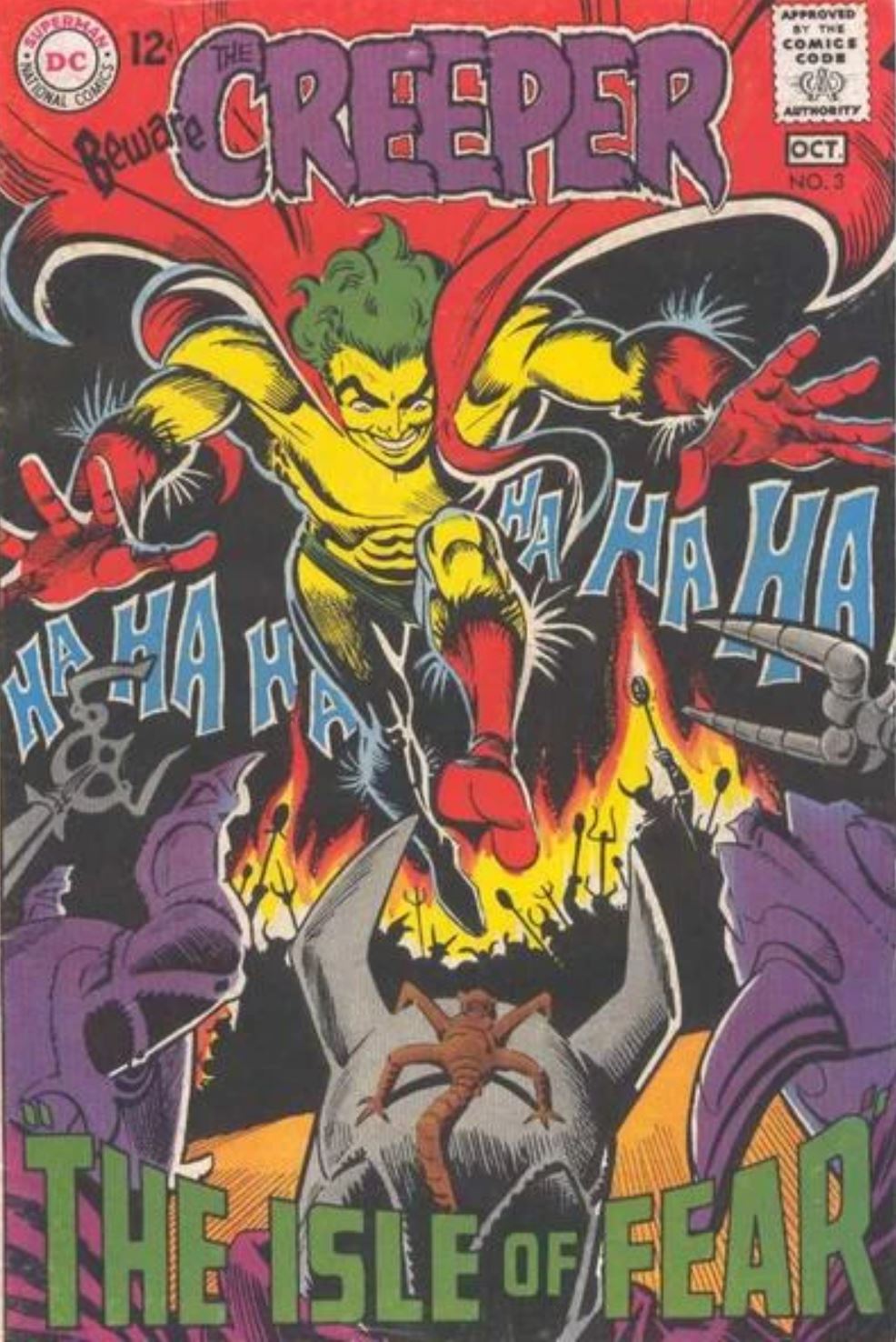
This monolitic montage of macabre mirth and scary sagas ceases with House of Secrets #85. Here, Cain & Abel acrimoniously open, after which Wein & Don Heck disclose what can happen to ‘People Who Live in Glass Houses…’ whilst graphic legend Ralph Reese limns Wein’s daftly ironic ‘Reggie Rabbit, Heathcliffe Hog, Archibald Aardvark, J. Benson Baboon and Bertram the Dancing Frog’, ere John Costanza contributes comedy page ‘House of Wacks’ and Conway, Kane & Adams herald the upcoming age of slickly seductive barbarian fantasy with gloriously vivid and vital ‘Second Chance’.

With iconic covers from Neal Adams, Jack Adler, Toth, Sekowsky, Cardy and Gray Morrow this (hopefully first of many) moody mystery compilations is a perfect accompaniment to dark nights in, and one you can depend on to astound and amaze in equal amounts.
© 2025 DC Comics. All Rights Reserved.

Today – or maybe even tonight – in 1939 underground cartoonist Frank Stack was born. His blasphemous antics have made us laugh for decades. Why not check out The New Adventures of Jesus: The Second Coming.

In 2011 today UK icon Mick Anglo died. He’s all over this blog if you want to see something very special but I’d advise scoping out one of his unique Annual creations, such as Batman Story Book Annual 1967 (with Robin the Boy Wonder).