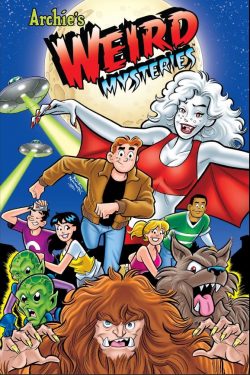
Archie’s Weird Mysteries


By Paul Castiglia, Fernando Ruiz, Rich Koslowski & various (Archie)
ISBN: 978-1-879794-74-0 (TPB)

Win’s Christmas Gift Recommendation: Family Friendly Seasonal Fear Fest… 8/10

MLJ were a publisher who promptly jumped on the “mystery-man” bandwagon following the debut of Superman. They began their own small but inspirational pantheon of gaudily clad crusaders in November 1939, starting with Blue Ribbon Comics, and followed up by Top-Notch and Pep Comics. The content was the standard blend of costumed heroes, two-fisted adventure strips, prose pieces and gag panels.

After a few years, Maurice Coyne, Louis Silberkleit and John Goldwater (hence MLJ) spotted a gap in their blossoming market. From December 1941 the costumed heroes and two-fisted adventure strips were gradually nudged aside by a far less imposing paragon: an “average teen” enjoying ordinary adventures like the readers, but with the laughs, good times, romance and slapstick emphasised.

Pep Comics #22 introduced a gap-toothed, freckle-faced red-headed goof showing off to the pretty blonde next door. Taking his lead from the popular Andy Hardy matinee movies starring Mickey Rooney, Goldwater developed the concept of a young everyman protagonist, tasking writer Vic Bloom and artist Bob Montana with the job of making it work.

In six pages, eponymously entitled ‘Archie’ introduced goofy Archie Andrews and pretty girl-next-door Betty Cooper. Archie’s unconventional best friend and confidante Jughead Jones also debuted in that first story, as did the scenic small-town utopia Riverdale.

The feature was an instant hit and by the winter of 1942 had won its own title. Archie Comics #1 was the company’s first non-anthology magazine and with it began the gradual transformation of the entire company. With the introduction of rich, raven-haired Veronica Lodge, all the pieces were in play for the comicbook industry’s second Genuine Phenomenon (Superman being the first).

By 1946 the kids had taken over, so the company renamed itself Archie Comics, retiring its costumed characters years before the end of the Golden Age and becoming, to all intents and purposes, a publisher of family comedies.

Its success, like the Man of Steel’s, changed the content of every other publisher’s titles, and led to a multi-media industry including TV, movies and a chain of restaurants. In the swinging sixties pop hit “Sugar, Sugar” (a tune from their first animated television show) became a global smash. Wholesome garage band “The Archies” has been a fixture of the comics ever since.

Adapting seamlessly to every trend and fad of youth culture since before there even was such a thing, the host of writers and artists who’ve crafted the stories over the decades have made the “everyteen” characters of utopian Riverdale a benchmark for childhood development and a visual barometer of growing up.

At the end of the last century, one of those fads was for savvy band of teens to fight Vampires and Demons in a small town…

It led to Archie’s Weird Mysteries: a French/American animated TV co-production with the regular cast encountering all manner of bizarre phenomena, creatures and situations after Archie starts writing a school newspaper column on mysteries and cryptozoology.

That small screen enterprise led to a comic book iteration mostly created by Paul Castiglia, Fernando Ruiz & Rich Koslowski – backed up by letterer Vickie Williams and colourists Rick Taylor Stephanie Vozzo – with parody and contemporary satire leading the thematic charge …although the company also used the broad church the series presented to reintroduce a number of those early MLJ super-doers; sadly, not included in this all-strange phenomena compilation…

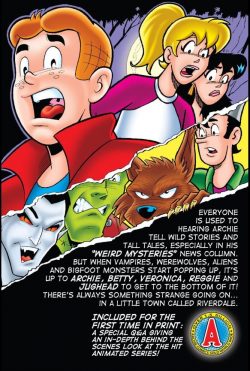
In this splendidly entertaining paperback and digital collection, the warring gal-pals and extended cast of the small-town American Follies are plunged deep into terror territory as Archie‘s Weird Mysteries #2 (March 2000) reveals how the gang are targeted by a spooky movie monster in ‘Shriek’.

The deft – and suitably daft in appropriate places – spoof of film franchise Scream is followed here by a delightful and arch tribute to the incomparable Scooby-Doo phenomenon as ‘A Familiar Old Haunt’ (#6 July) sees Archie signing up for “Bo and Gus’s Paranormal Investigation Camp” with Jughead, Betty and Veronica joining him in a borrowed panel van. Even Jughead’s faithful mutt Hot Dog tags along. The freak du jour is a bizarre vegetable horror, but it’s no match for a bunch of pesky kids….

Archie‘s Weird Mysteries #10 (July) found a fashion for many beards and chest hair at Riverdale High. However, hirsute attractiveness and rampant testosterone can’t explain why girls and boys are all going follicle crazy until Archie uncovers a ‘Bigfoot on Campus’…

At the height of competitive sports season school principal Mr. Weatherbee is kidnapped by aliens who need his (sadly non-existent) baseball expertise to beat a band of bullying space jocks in ‘U.F.O. Uh-oh!’ (#7 August) after which ‘The Scarlet Chronicles’ (AWM #10 July) introduces vampire hunter Scarlet Helsing to readers who might have missed her starring role in the TV show. As seen in the brace of cartoon episodes reprised here, the beautiful young warrior was drawn to Riverdale and allied with the town’s reclusive paranormal expert Dr. Beaumont to battle the assembling forces of darkness…

New ground is broken with issue #12 (April 2001) as ‘The Return of Scarlet’ sees the slayer suborned by a cabal of bloodsuckers and set upon Beaumont and Archie. Naturally, Betty is ready to lead the gang in their counterattack…

Complimenting the chronicles is a lighthearted cartoon ‘Guide to Fighting Vampires’ from issue #15 (September 2001) wherein Scarlet lists a number of methods for defeating the Darkness before this fun-filled fear fest concludes with behind-the-scenes text feature ‘Scarlet’s Guide to Archie’s Weird Mysteries’; interviewing Castiglia and Ruiz on their role in the TV iteration and how the comic book spun out of it.

Co-starring all the crucial supporting characters we know and love, these smartly beguiling skits are a prime example of just why Archie has been unassailable for generations: providing decades of family-friendly fun and wholesome teen entertainment – complete with goblins, ghosts and ghouls as required…
© 2011 Archie Comic Publications, Inc. All rights reserved.
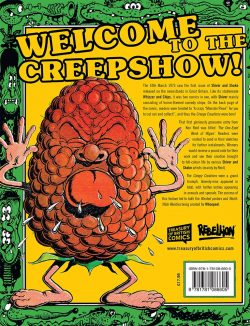
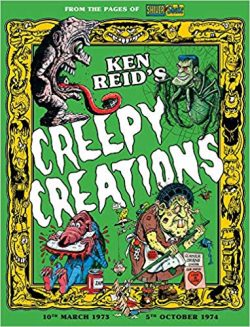
Ken Reid’s Creepy Creations


By Ken Reid, with Reg Parlett, Robert Nixon & various (Rebellion Studios)
ISBN: 978-1-78108-660-5 (HB)

Win’s Christmas Gift Recommendation: Hopelessly Hilarious Horrendousness… 10/10

If you know British Comics, you’ll know Ken Reid.

He was one of a select and singular pantheon of rebellious, youthful artistic prodigies who – largely unsung – went about transforming British Comics, entertaining millions and inspiring hundreds of those readers to become cartoonists too.

Reid was born in Manchester in 1919 and drew from the moment he could hold an implement. Aged nine, he was confined to bed for six months with a tubercular hip, and occupied himself by constantly scribbling and sketching. He left school before his fourteenth birthday and won a scholarship to Salford Art School, but never graduated.

He was, by all accounts, expelled for cutting classes and hanging about in cafes. Undaunted he set up as a commercial artist, but floundered until his dad began acting as his agent.

Ken’s big break was a blagger’s triumph. Accompanied by his unbelievably supportive and astute father, Ken talked his way into an interview with the Art Editor of the Manchester Evening News and came away with a commission for a strip for its new Children’s Section.

The Adventures of Fudge the Elf launched in 1938 and ran until 1963, with only a single, albeit lengthy, hiatus from 1941 to 1946 when Reid served in the armed forces.

From the late 1940s onwards, Reid dallied with comics periodicals: with work (Super Sam, Billy Boffin, Foxy) published in Comic Cuts and submissions to The Eagle, before a fortuitous family connection (The Dandy illustrator Bill Holroyd was Reid’s brother-in-law) brought DC Thomson managing editor R.D. Low to his door with a cast-iron offer of work.

On April 18th 1953 Roger the Dodger debuted in The Beano. Reid drew the feature until 1959 and created numerous others including the fabulously mordant doomed mariner Jonah, Ali Ha-Ha and the 40 Thieves, Grandpa and Jinx amongst many more.

In 1964, Reid and fellow under-appreciated superstar Leo Baxendale jumped ship to work for DCT’s arch rival Odhams Press. This gave Ken greater license to explore his ghoulish side: concentrating on comic horror yarns and grotesque situations in strips like Frankie Stein, and The Nervs in Wham! and Smash! as well as more visually wholesome but still strikingly surreal fare as Queen of the Seas and Dare-a-Day Davy.

In 1971 Reid devised Faceache – arguably his career masterpiece – for new title Jet. The hilariously horrific strip was popular enough to survive the comic’s demise – after a paltry 22 weeks – and was carried over in a merger with stalwart periodical Buster where it thrived until 1987. During that time, he continued innovating and creating through a horde of new strips such as Harry Hammertoe the Soccer Spook, Wanted Posters, Martha’s Monster Makeup, Tom’s Horror World and a dozen others. One of those – and the worthy subject of this splendid luxury hardback (and eBook) is Creepy Creations.

Part of Rebellion’s ever-expanding Treasury of British Comics collected here are all 79 full colour portraits from Shiver & Shake episodes (spanning March 10th 1973 to October 5th 1974), plus related works from contemporary Christmas annuals.

After the initial suggestion and 8 original designs by Reid, Creepy Creations featured carefully crafted comedic horrors and mirthful monsters inspired by submissions from readers, who got their names in print plus the-then princely sum of One Pound (£1!) sterling for their successful efforts.

The mechanics and details of the process are all covered in a wealth of preliminary articles that begin with ‘Creepy Creation Spotter’s Guide’ listing the geographical locations so crucial to the feature’s popularity and is backed up by a fond – if somewhat frightful – family reminiscence from Anthony J. Reid (Ken’s son) in ‘The Erupting Pressure Cooker of Preston Brook’.

The convoluted history of Ken’s feature (which came and went by way of 1960s cult icon Power Comics, Mad magazine, Topps Trading Cards and even stranger stops and was originally intended to save him having to draw the same old characters every day) is detailed in an engrossing historical overview by Irmantas Povilaika dubbed ‘Plus a “Funny Monsters” Competition with These Fantastic Prizes’ before the real wonderment ensues…

Astounding popular from beginning to end, Creepy Creations offered a ghastly, giggle-infused grotesque every week: a string of macabre graphic snapshots (some, apparently, too horrific to be published at the time!) beloved by kids who adore being grossed out.

Seen here are ratified Reid-beasts like ‘The One-Eyed Wonk of Wigan,’, ‘The Chip Chomping Tater Terror of Tring’ and the ‘The Boggle-Eyed Butty-Biter of Sandwich’, his stunning kid collaborations on arcane animals like ‘The Gruesome Ghoul from Goole’ or ‘Nelly, the Kneecap-Nipping Telly from Newcastle’, and due to the stark demands of weekly deadlines, there are even cartoon contributions from UK comics royalty Reg Parlett and Robert Nixon.

Supplementing and completing the eldritch, emetic experience are a selection of Creepy Creations Extras, comprising images and frontispieces from Christmas Annuals, the entire ‘Creepy Creations Calendar for 1975’, four pages of ‘Mini Monsters’, and the entire zany zodiac of ‘Your HORRORscope’…

Adding even more comedy gold, this tome also includes tantalising excepts from the Leo Baxendale Sweeny Toddler compilation and Reid’s magnificent World-Wide Wonders collection…

Ken Reid died in 1987 from the complications of a stroke he’d suffered on February 2nd at his drawing board, putting the finishing touches to a Faceache strip. On his passing, the strip was taken over by Frank Diarmid who drew until its cancelation in October 1988.

This astoundingly absorbing comedy classic is another perfect example of resolutely British humorous sensibilities – absurdist, anarchic and gleefully grotesque – and these cartoon capers are amongst the most memorable and re-readable exploits in all of British comics history: painfully funny, beautifully rendered and ridiculously unforgettable. This a treasure-trove of laughs to span generations which demands to be in every family bookcase.
© 1973, 1974, & 2018 Rebellion Publishing Ltd. All Rights Reserved.

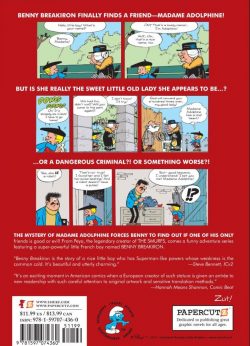
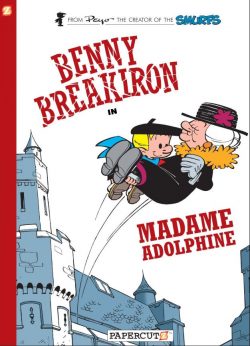
Benny Breakiron volume 2: Madame Adolphine


By Peyo, with backgrounds by Will, translated by Joe Johnson (Papercutz/NBM)
ISBN: 978-1-59707-436-0 (HB Album)

Pierre Culliford was born in Belgium in 1928 to a family of British origin living in the Schaerbeek district of Brussels. An admirer of the works of Hergé and American comics licensed to Le Journal de Mickey, Robinson and Hurrah!, he developed his own artistic skills but the war and family bereavement forced him to forgo further education and find work.

After some time toiling as a cinema projectionist, in 1945 Culliford joined C.B.A. animation studios, where he met André Franquin, Morris and Eddy Paape. When the studio closed, he briefly studied at the Brussels Academy of Fine Arts before moving full-time into graphic advertising. In his spare time, he began submitting comic strips to the burgeoning post-war comics publishers.

His first sale was in April 1946: Pied-Tendre, a tale of American Indians in Riquet, the comics supplement to the daily L’Occident newspaper. Further sales to other venues followed and in 1952 his knight Johan found a permanent spot in Le Journal de Spirou. Retitled Johan et Pirlout, the strip prospered and in 1958 introduced a strange bunch of blue woodland gnomes called Les Schtroumpfs.

Culliford – who now used the nom de plume Peyo – would gradually turn those adorable little mites (known to us and most of the world as The Smurfs) into an all-encompassing global empire, but before being sucked onto that relentless treadmill, he still found time to create a few other noteworthy strips such as the titanic tyke on view here today.

In 1960 Benoît Brisefer – AKA Benedict Ironbreaker and/or (in Dutch) Steven Sterk – debuted in Le Journal de Spirou #1183 (December 1960). With a few slyly added tips of the hat to Siegel & Shuster’s Superman, the wryly bucolic adventures celebrated a small boy with superhuman strength living in a generally quiet and unassuming little Belgian town.

Quiet, well-mannered, gentle and a bit lonely, Benny just happens to be the mightiest boy on Earth; able to crush steel or stone in his tiny hands, leap huge distances and run faster than a racing car. He is also generally immune to all physical harm, but his fatal and rather ubiquitous weakness is that all his strength deserts him whenever he catches a cold…

Benny never tries to conceal his abilities but somehow no adults ever catch on. They generally think he’s telling fibs or boasting and whenever he tries to prove he can bend steel in his hands, the unlucky lad gets another dose of the galloping sniffles…

Most kids avoid him. It’s hard to make friends or play games when a minor kick can pop a football like a balloon and a shrug can topple trees…

Well-past-it Brits of my age and vintage might remember the character from weekly comics in the 1960’s. As Tammy Tuff – The Strongest Boy on Earth – and later as Benny Breakiron and Steven Strong – our beret-wearing champion appeared in Giggle and other periodicals from 1967 onwards.

With Peyo’s little blue cash-cows taking up ever larger amounts of his concentration and time, other members of his studio assumed greater responsibilities for Benoît as the years passed. Willy Maltaite (“Will”), Gos, Yvan Delporte, François Walthéry and Albert Blesteau all pitched in and Jean Roba created many eye-catching Spirou covers, but by 1978 the demands of the Smurfs were all-consuming and all the studio’s other strips were retired.

You can’t keep a good super-junior down, though, and after Peyo’s death in 1992, his son Thierry Culliford and cartoonist Pascal Garray revived the strip, adding six more volumes to the eight generated by Peyo and his team between 1960 and 1978.

Thanks to the efforts of US publisher Papercutz, the first four of those gloriously genteel and outrageously engaging power fantasies are available to English-language readers again – both as robust full-colour hardbacks and as all-purpose eBooks – and this second translated exploit begins in the sedate city of Vivejoie-la-Grande, where the kid goes about his rather solitary life, doing good deeds in secret and being as good a boy as he can….

After another day of being shunned by everyone around, disconsolate Benny heads for the park and is befriended by a sweet old lady named Adolphine. No respecter of old graceful retirement, the old dear romps boisterously and disgracefully with the lad – to the disgust of the other park patrons. Eventually, Benny escorts her to his home where she has a strange fit and collapses.

When even a doctor refuses to help, Benny finds a phone number in her bag and a rather strange gentleman comes to collect her. He’s none too gentle in his behaviour and even throws the old lady in the boot of his car…

Even more distressingly, when Benny sees her in the street next day, Madame Adolphine claims to have never met him before…
Baffled but unwilling to let the matter go, Benny tracks her down to a toyshop run by inventor Serge Vladlavodka and finds her standing over the tinkerer’s unconscious body with a massive mallet in her hand. Moreover, her manner is brusque and almost callous…

The belligerent biddy bustles off whilst Benny is trying to revive her prone victim, but when Serge recovers, he also rushes off, fearing the harm she might cause. Accompanying him, Benny learns a starling secret…

There are two Adolphines and one is indeed a sweet old lady. Unfortunately, the other is an increasingly unstable, aggressive and just plain mean robot doppelganger who soon begins robbing banks and terrorising the public, so guess which one the police subsequently arrest?

As indignant Benny single-handedly breaks the organic pensioner out of prison, the automaton Adolphine forms a gang of professional thugs and goes on a crime spree the cops are helpless to stop.

Good thing Benny is made of sterner stuff…

This superbly surreal spoof has delicious echoes of classic Ealing Comedies such as The Ladykillers and The Lavender Hill Mob as it follows the little wonder boy’s resolute, dynamic and spectacular campaign to save his friend: blending deft wit with bombastic and hilarious slapstick. Madame Adolphine is another fabulously winning fantasy about childhood validation and agency, offering a distinctly Old-World spin to the concept of superheroes and providing a wealth of action, thrills and chortles for lovers of incredible adventure and comics excellence.
© Peyoâ„¢ 2013 – licensed through Lafig Belgium. English translation © 2013 by Papercutz. All rights reserved.

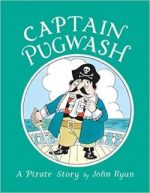
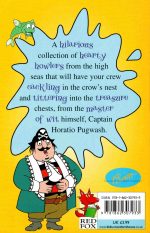
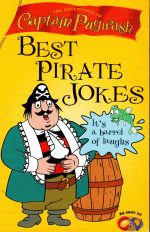
The Adventures of Captain Pugwash: Best Pirate Jokes


By Ian D. Rylett & Ian Hillyard (Red Fox/Random House)
ISBN: 978-1-862-30793-3

The problem with pirates is that they don’t know when enough’s enough, so here’s another review to reconnoitre: tangentially celebrating the greatest buccaneer of all…

John Ryan was an artist and storyteller who straddled three distinct disciplines of graphic narrative, with equal qualitative if not financial success.

Born in Edinburgh on March 4th 1921, Ryan was the son of a diplomat, served during WWII in Burma and India and – after attending the Regent Street Polytechnic (1946-48) – took up a post as assistant Art Master at Harrow School from 1948 to 1955.

It was during this time that he began contributing strips to Fulton Press publications, in the company’s glossy distaff alternative Girl, but most especially in the pages of the legendary “boys’ paper” The Eagle.

On April 14th 1950, Britain’s grey, post-war gloom was partially lifted with the first issue of a new comic that literally shone with light and colour. Avid children were soon understandably enraptured with the gloss and dazzle of Dan Dare, Pilot of the Future, a charismatic star-turn venerated to this day.

The Eagle was a tabloid-sized paper with full-colour inserts alternating with text and a range of various other comic features. “Tabloid” is a big page and one can get a lot of material onto each one. Deep within, on the bottom third of a monochrome page was an 8-panel strip entitled Captain Pugwash – The story of a Bad Buccaneer and the many Sticky Ends which nearly befell him. Ryan’s quirky, spiky style also lent itself to the numerous spot illustrations required throughout the comic every week.

Pugwash, his harridan of a wife and the useless, lazy crew of the Black Pig ran (or more accurately capered and fell about) until issue 19 when the feature disappeared. This was no real hardship for Ryan who had been writing and illustrating Harris Tweed – Extra Special Agent as a full-page (tabloid, remember, an average of twenty panels a page, per week!) from Eagle #16. (I really must reinvestigate the solidly stolid sleuth too sometime soon…)

Tweed ran as a page for three years until 1953 when it dropped to a half-page strip and was repositioned as a purely comedic venture

In 1956 the indefatigable old sea-dog (I mean old Horatio Pugwash but it could so easily be Ryan) made the jump to children’s picture books. He was an unceasing story-peddler with a big family, and somehow also found time to be head cartoonist for The Catholic Herald for forty years.

A Pirate Story was first published by Bodley Head before switching to the children’s publishing specialist Puffin for further editions and more adventures. It was the first of a vast (sorry, got away with myself again there!) run of children’s books on a number of different subjects.

Pugwash himself starred in 21 tomes; there were a dozen books based on the animated TV series Ark Stories, plus Sir Prancelot and a number of other creations. Ryan worked whenever he wanted to in the comics world and eventually the books and the strips began to cross-fertilise.

The primary Pugwash is very traditional in format with blocks of text and single illustrations to illuminate a particular moment. But by the publication of Pugwash the Smuggler (1982) entire sequences were lavishly painted comic strips, with as many as eight panels per page, and including word balloons. A fitting circularity to his interlocking careers and a nice treat for us old-fashioned comic drones.

After A Pirate Story was released in 1957 the BBC pounced on the property, commissioning Ryan to produce five-minute episodes (86 in all from 1957 to 1968: later reformatted in full colour and rebroadcast in 1976). In the budding 1950s arena of animated television cartoons, Ryan developed a new system for producing cheap, high quality animations to a tight deadline.

He began with Pugwash, keeping the adventure milieu, but replaced the shrewish wife with a tried-and-true boy assistant. Tom the Cabin Boy is the only capable member of a crew which included such visual archetypes as Willy, Barnabas and Master Mate (fat, thin and tall – and all dim), instantly affirming to the rapt, young audience that grown-ups are fools and kids do, in fact, rule.

Ryan also drew a weekly Captain Pugwash strip in The Radio Times for eight years, before going on to produce a number of other animated series including Mary, Mungo and Midge, The Friendly Giant and the aforementioned Sir Prancelot. There were also adaptations of some of his many other children’s books and in 1997 Pugwash was rebooted in an all-new CGI animated TV series.

The first book – A Pirate Story – sets the scene with a delightful clown’s romp as the so-very-motley crew of the Black Pig sail in search of buried treasure, only to fall into a cunning trap set by the truly nasty corsair Cut-Throat Jake. Luckily, Tom is as smart as his shipmates and Captain are not…

A 2008 edition of A Pirate Story from Frances Lincoln Children’s Books came with a free audio CD, and just in case I’ve tempted you beyond endurance here’s a full list of the good (ish) Captain’s exploits that you should make it your remaining life’s work to unearth…:

Captain Pugwash: A Pirate Story (1957), Pugwash Aloft (1960), Pugwash and the Ghost Ship (1962), Pugwash in the Pacific (1963), Pugwash and the Sea Monster (1976), Captain Pugwash and the Ruby (1976), Captain Pugwash and the Treasure Chest (1976), Captain Pugwash and the New Ship (1976), Captain Pugwash and the Elephant (1976), The Captain Pugwash Cartoon Book (1977), Pugwash and the Buried Treasure (1980), Pugwash the Smuggler (1982), Captain Pugwash and the Fancy Dress Party (1982), Captain Pugwash and the Mutiny (1982), Pugwash and the Wreckers (1984), Pugwash and the Midnight Feast (1984), The Battle of Bunkum Bay (1985), The Quest of the Golden Handshake (1985), The Secret of the San Fiasco (1985), Captain Pugwash and the Pigwig (1991) and Captain Pugwash and the Huge Reward (1991). They are all pearls beyond price and a true treasure of graphic excellence…

Although currently out of print, the assembled Pugwash canon (the only sort this band of rapscallions can be trusted with) are still widely available through online vendors and should be a prize you set your hearts on acquiring.

As you might expect, such success breeds ancillary projects, and cleaving close to the wind and running in the master’s wake is this minor mirthquake that no sassy brat could possibly resist. Compiled by Ian D. Rylett and copiously illustrated by Ian Hillyard in stark monochrome, it’s a fairly standard cartoon joke book as beloved by generations of youngsters and loathed beyond endurance by parents, guardians, older siblings and every other adult whose patience is proven quite exhaustible…

Divided into themed chapters ‘The Captain’s Crackers’, ‘Jakes’ Jests’, ‘Blundering Bucaneersk, KHysterics in the Harbour’, ‘Fishy Funnies’ and ‘All Aboard’, the level of wit is almost lethal in its predictability and vintage (Q: why did the irate sailor go for a pee? A: he wanted to be a pirate.) but the relentless pace and remorseless progression is actually irresistible in delivery.

With the world crashing down around us and the water levels inexorably rising, we don’t have that much to laugh at, so why don’t you go and find something to take your minds off the chaos to come? Your kids will thank you and if you’ve any life left in your old and weary soul, you will too…
Pugwash books © 1957-2009 John Ryan and (presumably) the Estate of John Ryan. All rights reserved.
Best Pirate Jokes © Britt-Allcroft (Development Ltd) Limited 2000. All rights worldwide Britt-Allcroft (Development Ltd) Limited.

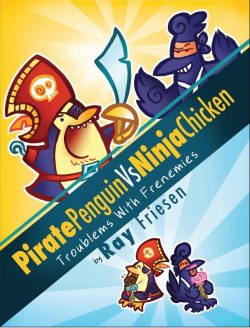
Pirate Penguin Vs Ninja Chicken: Troublems with Frenemies


By Ray Friesen (Top Shelf Productions)
ISBN: 978-1-60309-071-1 (HB)

Yo Ho-Ho, me Hearties! You know what day it be? International Burble like a Buccaneer Day! Or somesuch festival at least…

Pirates have been a cornerstone of popular fiction for centuries and these days the very best of the genre can usually be found issuing from European shores. However, even these salty swabs often aren’t enough to satiate modern attention-deficient little (sea) urchins, so it’s probably best to beef up the proceedings with an equally-prolific sub-set of thrillingly iconic evil-doers from the recent past, popular mythology and the New World…

Some cartoonists and childrens’ authors like to beguile and bemuse the readership: building mesmerising plots and seducing the attentions. Others – like Ray Friesen – instead choose to hit them with a million gags a minute, getting ’em all shook up like fizzy, sugar-saturated drinks inexorably building to a big, bombastic explosion and imagination-overload coma…

Making his name with vibrant all-ages volumes such as Lookit! A Cheese Related Mishap, Another Dirt Sandwich or Fairy Tales I Just Made Up: Snarky Bedtime Stories for Weirdo Children, self-made zany Friesen here introduces lifelong foes and best buds each dedicated to propounding their own swashbuckling action-packed philosophies and fighting styles in initial outing ‘Smoothies and Scuffling’ in which the fowl fiends can’t help but prove that they can’t get on for long…

The hunt for appropriate animal companions comes to a typical conclusion in ‘Pet Store Peer Pressure’ and gender identity is cautiously explored in ‘Sticks and Stones and Sugar and Spice’ before ‘Shiny Power Costs Extra’ sees the fighting fools one-upping each other in the armaments race…

A cunning third force and potential mutual adversary debuts in ‘Chameleon Short Circuit’, after which the war of wills resolves into a ‘Question Inquizition’, but halts to allow re-provisioning. Sadly, the clash with ‘Selfish Shellfish’ leaves Ninja Chicken ‘All Alone’ with a deadly yoyo, before the Penguin privateer pops back for tonsorial advice in ‘Follicle Follies’ and makes the ninja deal with a pushy spider in ‘Arachnophobia’

An untitled origami lesson – tricky if you’ve got a hook instead of flippers – then finds ‘Ninja Chicken Vs Somebody Else’ after which ‘Quick! Everybody Disco!’ sees a battle dance off result in a clear victory for one of the ancient adversaries…

Following a fraught and inflammatory ‘Breakfast of Champions’, reality itself gets a soft makeover in ‘Tough yet Fluffy’, after which the dire disadvantages of a ‘Night Fight’ soon become painfully apparent whilst packets of gum cause ‘Bubble Problems’ and inspire a musical interlude in ‘Revenge! The Musical’ as well as a petty encore in ‘Revenge! Revenge Against Stupid Dry Cleaners!’

A flurry of silent gags follows under the umbrella heading of ‘Pirate Penguin Vs Ninja Chicken: Card Trick or Treat’ after which the war goes wide screen in ‘The Biggest, Giantest, Epicest Pirate Penguin versus Ninja Chicken Story Evar!’ (consider yourself warned…)

It all starts over ‘Breakfast’ when Astronaut Armadillo comes to call and the Chicken heads to Vegas for a Ninja convention…

Feeling abandoned, Penguin has ‘More Breakfast’ whilst learning there are worse things than an eternal frenemy. The Chicken also has second thoughts. After enduring an ‘Inflight Snack’, ‘Telephone Calls’ and ‘Walking Calamari’ the allure of hotel accommodation is beginning to pall, but by now the restless pirate soulmate has headed off-planet, encountering ‘Sandwich Inna Tube’, ‘Fancy Space Chocolates’ and a ringside seat to a clash of titans in ‘Astronaut Armadillo versus Cosmonaut Capybara’. Meanwhile, the evil genius behind all the mayhem shares his Machiavellian schemes and things start getting a bit strange…

It all wraps up in blistering fight fashion in ‘Land Ho!’ with a trans-dimensional ‘Epilogue’, offering clarity and the “Endingest End” imaginable…

Added attractions to occupy anybody left capable of coherent thought or movement include an Activities section revealing ‘How to Make a Pirate Hat’, ‘How to Draw Pirate Penguin {both the Quick and Geometric methods!})’, mazes, puzzles, ‘Ninja Chicken’s Extra Hard SuDontku’ and ‘How to Make a Pair of Nunchuks’. Capping it all is a vast (Avast! Gettit?) gallery of guest drawings by the likes of Roger Langridge, Katie Cook and others of the cast and a Fumetti Outroduction from Friesen himself…

Frantic fun, ferociously daft, and available on paper or via the electric ethers, this is a cartoon corsair no kid of any age should steer clear of…
© 2011 Ray Friesen. All Rights Reserved.

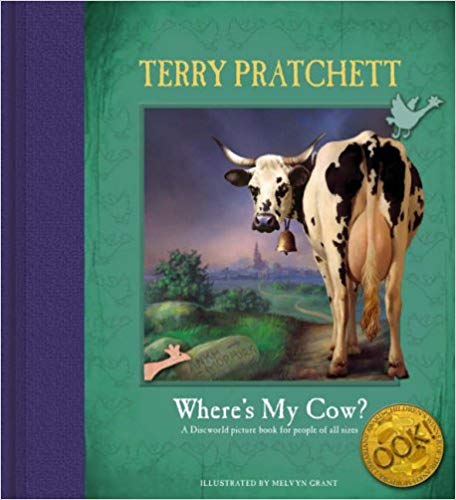
Where’s My Cow?


By Terry Pratchett, illustrated by Melvyn Grant (Doubleday)
ISBN: 978-0-38560-937-1

Here’s a charming little thing. Not strictly a comic strip or a graphic novel, but rather a beautifully illustrated picture book. Originally a plot device from Thud!, one of Terry Pratchett’s Discworld prose fantasy novels, until some bright spark wisely decided to manufacture the thing for real. They also pulled the same trick for The World of Poo, as seen in Snuff

What’s it all about?: Watch Commander Sam Vimes is the best copper in Anhk Morpork (the most unpleasant city in all fact and fiction), and his day job ranges from colourful to sheer hell. What makes worth living for him is to get home, kick off his boots and breastplate, and read his baby boy their favourite bedtime story – and do all the noises too.

And so can you if you get this wonderful book (sadly only available in hardback, not digital editions) which manages to be both an engaging, clever side-bar to the novels and also a superbly illustrated easy reader for the very young.

If you’re a fan of the Discworld you’ll want this, if you’re not, buy the novels and become one, and if you have small kids get them one of the prettiest picture books on the market. It’s the first sure step to getting them hooked on pictorial wonderment, and a darn fine thing besides.

Text © 2005 Terry Pratchett & Lyn Pratchett. All Rights Reserved.
Illustrations © 2005 Melvyn Grant. All Rights Reserved.W

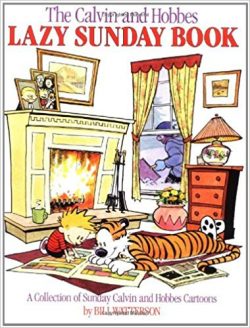
The Calvin and Hobbes Lazy Sunday Book


By Bill Watterson (Andrews McMeel)
ISBN: 978-0-83621-852-7 (TPB)

Almost any event big or small is best experienced through the eyes of a child – and better yet if he’s a fictional waif controlled by the whimsical sensibilities of a comic strip genius like Bill Watterson.

Calvin is the child in us all; Hobbes is the sardonic unleashed beast of our Aspirations; no, wait… Calvin is this little boy, an only child with a big imagination and a stuffed Tiger that is his common sense and moral sounding board…

No; Calvin is just a lonely little boy and Hobbes talks only to him. That’s all you need or want.

A best-selling strip and critical hit for ten years (running from November 18th 1985 through December 31st 1995), Calvin and Hobbes came and went like a comet and we’re all now the poorer for its passing. The strip redefined depictions of the “Eyes of Wonder” which children all possess, and made us adults laugh, and so often cry too: its influence shaping a generation of up-and-coming cartoonists and comicbook creators.

We all wanted a childhood like that kid’s; bullies, weird teachers, obnoxious little girls and all. At least we could – and still do – visit…

The Daily and Sundays appeared in more than 2,400 newspapers all over the planet and from 2010 reruns have featured in over 50 countries. There have been 18 unmissable collections (selling over 45,000,000 copies thus far), including a fabulous complete boxed set edition in both soft and hard cover formats. I gloat over my hardback set almost every day.

Unlike most of his fellows, Watterson shunned the spotlight and the merchandising Babylon that follows a comic strip mega-hit and dedicated all his spirit and energies into producing one of the greatest treatments on childhood and the twin and inevitably converging worlds of fantasy and reality anywhere in fiction. All purists need to know is that the creator cites unique sole-auteur strips Pogo, Krazy Kat and Peanuts as his major influences and all mysteries are solved…

Calvin is a hyper-active little boy growing up in a suburban middle-American Everytown. There’s a city nearby, with museums and such, and a little bit of wooded wilderness at the bottom of the garden. The kid’s smart, academically uninspired and happy in his own world. He’s you and me. His best friend and companion is stuffed tiger Hobbes, who – as I might have already mentioned – may or may not be alive. He’s certainly far smarter and more ethically evolved than his owner…

And that’s all the help you’re getting. If you know the strip you already love it, and if you don’t you won’t appreciate my destroying the joys of discovery for you. This is beautiful, charming, clever, intoxicating and addictive tale-telling, blending wonder and laughter, socially responsible and wildly funny.

After a miraculous decade, at the top of his game Watterson retired the strip and himself, and though I bitterly resent it, and miss it still, I suppose it’s best to go out on a peak rather than fade away by degrees. I certainly respect and admire his dedication and principles.

This slim tome collects some of the earliest full-colour Sunday pages from the strip, and includes a new 10-page adventure painted in staggeringly lovely watercolours. Imaginative, dazzling, unforgettably captivating, these are some of the best of Watterson’s work. You should have them in your house.

The entire Calvin and Hobbes canon is still fully available in solo volumes and the aforementioned wrist-cracking box set but not, sadly, in a digital edition yet. You can however, enjoy digital dollops of this graphic milestone if so inclined by going to gocomics.com/calvinandhobbes. They are also available online through the Andrews McMeel Uclick platform, so there’s no reason for you not to make this brilliant example of our art form a permanent part of your life. And you’ll thank me for it, too…
© 1989 Universal Press Syndicate. All Rights Reserved.

Yakari and Great Eagle (volume 1)


By Derib & Job, translated by Erica Jeffrey (Cinebook)
ISBN: 978-1-90546-004-5 (PB Album)

Westerns of every sort have always captivated consumers in Europe and none more so than the assorted French-speaking sections who also avidly devour comics. Historically, we Brits have also been big fans of sagebrush sagas and the plight of the “noble savage”…

In 1964, French-Swiss journalist André Jobin founded children’s magazine Le Crapaud à lunettes and began writing stories for it under the pseudonym Job. Three years later he hired young fellow French-Swiss artist Claude de Ribaupierre, who had begun his own career as an assistant at Studio Peyo, (home of Les Schtroumpfs/The Smurfs) where the promising lad had worked on a number of Smurfs strips for venerable weekly Le Journal de Spirou.

As “Derib”, Claude co-created with Job Adventures of the Owl Pythagore for Le Crapaud à lunettes.

Two years later they struck pure glittering gold with their next collaboration.

Launching in 1969, Yakari told the compassionate, whimsical tale of a young Oglala Lakota boy on the Great Plains; set sometime after the introduction of horses by the Conquistadores but before the coming of the modern White Man.

Delib, equally adept in both the enticing, comically dynamic “Marcinelle” cartoon big-foot style and a devastatingly evocative meta-realistic mannerism, went on to become one of the Continent’s most prolific, celebrated, honoured and beloved artists – mostly of western-themed tales with astounding and magnificent geographical backdrops and landscapes – and Yakari is considered by many to be the feature that catapulted him to mega-stardom.

It’s a crime that such groundbreaking strips as Celui-qui-est-né-deux-fois, Jo (the first comic ever published dealing with AIDS), Pour toi, Sandra and La Grande Saga Indienne) haven’t been translated into English yet, but we still patiently wait in hope and anticipation…

The series has reached 39 albums: a testament to the strip’s evergreen vitality and the brilliance of its creators, although Job has finally relinquished scripting to French writer Joris Chamblain (Les Carnets de Cerise) for the upcoming 40th tome….

Overflowing with gentle whimsy and heady compassion, young Yakari enjoys a largely bucolic existence: at one with nature and generally free from privation or strife. For the sake of our delectation, however, the ever-changing seasons are punctuated with the odd crisis, generally resolved without fuss, fame or fanfare by a little lad who is smart, brave… and can – thanks to the boon of his totem guide who he meets for the first time in the tale under review here – communicate with all animals…

The eponymous first collected edition was released in 1973 and the strip rapidly rose to huge prominence. In 1978 it began running in Le Journal de Tintin, spawning two animated TV series (1983 and 2005), the usual merchandising spin-offs and monumental global sales in 17 languages to date. There’s also a movie…

In 2005 that translated first volume – Yakari et le grand aigle – was released by Cinebook as part of their opening salvo in converting British audiences to the joys and magic of Euro-comics and is still readily available for you and your family to enjoy on paper or digitally.

Yakari and Great Eagle begins one quiet night on the plains whilst the little boy is deep in dreams. In that sunny ethereal world, he is walking to meet his totem spirit who greets him with a grand flourish and presents him with a huge feather enabling the child to soar like a bird. The rendezvous is tinged with joy and sadness as the sagacious raptor informs him that he will no longer come to him in dreams, but if the boy becomes as much like an eagle as possible, they will meet again in the living world…

Awake and excited, Yakari rushes about the camp trying to decide what the riddle means. Hunt like a raptor? Wear a feather-filled war-bonnet? Every eager attempt leads to disappointment and embarrassment and sleepy loafer Eye-of-Broth can’t even be bothered to wake up and share the benefit of his years of idle contemplation…

However, when young friend Rainbow loses the puma cub she is carrying, Yakari gallantly dashes after it and only quick thinking saves them both from the baby’s furious mother…

The next day Yakari asks his father Bold Gaze, but the warriors are all too busy preparing to capture a new herd of wild horses. Sneaking off into the rocky desert with older boy Buffalo Seed to watch the roundup, Yakari wonderingly observes how nimble pinto Little Thunder easily avoids all the experienced wranglers’ traps.

As the adults drive the new intake back to the encampment, Yakari follows Little Thunder high into the rocky escarpments and frees the panicked pony from a rockslide that’s pinned a hind leg.

Great Eagle appears and for this selfless act awards the boy a feather, but when Yakari returns home his father takes it from him, admiring his imagination but explaining that only those who have accomplished great deeds – for which read grown-ups – have a right to wear one. Nothing the stern but loving parent can do will change the stubborn boy’s story that a talking eagle awarded him the singular honour…

Days pass and the despondent – featherless – lad wanders alone when he is suddenly engulfed in a stampede and trapped by a brushfire. Immediately Great Eagle is there, guiding him to safety and advising him that soon his father will return the feather to him. The lad is grateful but confused. How is he ever meant to become like his totem spirit? Moreover, how will he ever find his way home from the strange region he now finds himself in?

As the tribe searches for lost Yakari, the hungry child has a close encounter with a bear; finds food by observing her cubs; falls into and subsequently escapes from a deep bear trap and narrowly escapes becoming supper for a lone wolf.

Eventually, he finds a river and rides a makeshift canoe until washed up on a shore where horses are drinking. Spotting Little Thunder, the boy tries to capture him, but the tricks and tactics Yakari has seen working for his elders are useless against the wily horse. The lad is utterly gobsmacked when Little Thunder refuses to be his captive but offers to be his friend…

With his new comrade, it’s not long before Yakari comes riding proudly home out of the wilderness astride a pony no man can tame and justifiably reclaims his honour-feather… Thus begins the gloriously gentle and big-hearted saga of the valiant little brave who can speak with animals and who enjoys a unique place in an exotic world: a 50-year parade of joyous, easygoing and inexpressibly fun adventures honouring and eulogising an iconic culture with grace, wit, wonder and especially humour.

A true masterpiece of children’s comics literature, Yakari is a series no fan should be without and here is just the place to start…
Original edition © 1973 Le Lombard/Dargaud by Derib + Job. English translation 2005 © Cinebook Ltd.

Cedric volume 6: Skating on Thin Ice


By Laudec & Cauvin with colours by Leonardo; translated by Jerome Saincantin (Cinebook)
ISBN: 978-1-84918-408-3 (PB Album)

Raoul Cauvin is one of Europe’s most successful comics scripters. Born in Antoing, Belgium in 1938, by 1960 he was working in the animation department of publishing giant Dupuis after studying the print production technique of Lithography.

Happily, he quickly discovered his true calling was writing funny stories and began a glittering, prolific career at Le Journal de Spirou.

While there he concocted (with Salvérius) the astoundingly successful Comedy-Western Bluecoats plus dozens of other long-running, award-winning series such as Sammy, Les Femmes en Blanc, Boulouloum et Guiliguili, Cupidon, Pauvre Lampil and Agent 212: cumulatively shifting more than 240 separate albums.

His collaborator on superbly sharp and witty kid-friendly family strip Cédric is Italian born, Belgium-raised Tony de Luca, who studied electro-mechanics and toiled as an industrial draughtsman until he could make his own break into bandes dessinée.

Following a few fanzine efforts in the late 1970s, as “Laudec” he landed soap-style series Les Contes de Curé-la-Fl’ûte at Spirou in 1979. He built that into a brace of extended war-time serials (L’an 40 in 1983 and Marché Noir et Bottes à Clous in 1985) whilst working his way around many of the comic’s other regular strips. In 1987, he united with Cauvin on the first Cédric shorts and from then on all was child’s play…

We have Dennis the Menace (the Americans have their own too, but he’s not the same) whilst the French-speaking world has Cédric: an adorable, lovesick rapscallion with a heart of gold and an irresistible penchant for mischief. He’s also afflicted with raging amour…

Collected albums (31 so far) of variable-length strips – ranging from a ½ page to half a dozen – began appearing in 1989, and remain amongst the most popular and best-selling in Europe, as is the animated TV show spun off from the strip.

…A little Word to the Wise: this is not a strip afraid to suspend the yoks in favour of a little suspense or near-heartbreak. Our bonny boy is almost-fatally smitten with Chen: a Chinese girl newly arrived in his class yet so very far out of his league, leading to frequent and painful confrontations and miscommunications.

Whilst the advice given by his lonely, widowed grandpa is seldom of any practical use, it can pick open scabs from the elder’s long, happy but now concluded marriage which can reduce normal humans to tears…

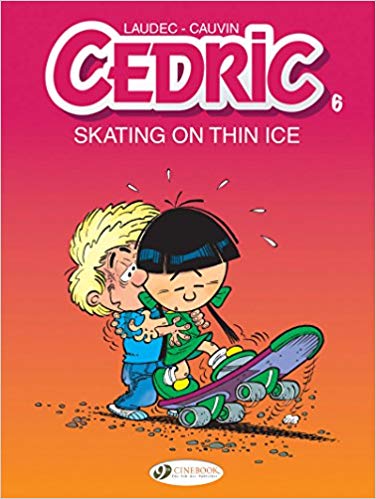
This sixth Cinebook translation (available in paperback album and digital formats) was continentally released in 1994 as Cédric – Comme sur des roulettes and opens with a typically chaotic school Christmas play which is anything but a ‘Holy Night, Silent Night‘, after which select parents and kids attend a downtown school carnival. Contrary to the notion that ‘Everyone’s a Winner…‘, there’s a lot of pain and resentment come close of play…

Cedric’s belief that his grandad walked with dinosaurs is painfully refuted in ‘Showing His Age’, after which a ‘Recycling Report‘ and river clean-up exhumes some report cards thought lost forever, before the diminished energy of the young and old leave mum and dad with some unexpected ‘Snuggling Time‘… but not for long…

A bone of domestic contention is the elder’s bitterly-expressed belief that his son-in-law’s career in lowly retail is not real work. However, ‘Carpet Diem‘ reveals how a young rug seller made his mark and met his true love – albeit at risk of life, limb and sanity – before Cedric and co-conspirator Freddy devise a new way to hide bad news from the teacher in ‘Hidden in Plain Sight‘…

Our boy’s constant quest to impress Chen plumb new depths when the ‘Budding Artist‘ attempts to make a clay bust of his inamorata and, unabashed by that debacle, then idiotically agrees to teach her how to skateboard in ‘Balancing Act…

When Grandpa gets sick, Cedric offers to babysit for the most selfish of motives in ‘The Labourer is Worthy of his Hire‘ and is similarly selfish in sabotaging Chen’s attempts to get fit in ‘Miss Muscle‘ but is totally outmatched when Mum gets out a crystal ball to detail his latest crimes in ‘Misfortune Teller‘…

As Chen’s birthday rolls around again, Cedric determines to win the humiliating war of gifts and ‘Put a Ring on it‘, after which Grandpa feel invisible thanks to a familial loss of ‘Listening Skills‘, even as an acrobatic new kid’s showing off turns all the female classmates’ heads. His attempts to steal back the limelight end in the usual aggrieved fashion in ‘Hanging in There…‘ before this slice of school life closes with the lad’s latest psychological ploy to lighten his egregious learning load collapsing in failure when he discovers ‘It’s All in the Delivery‘…

Sharp, rapid-paced, warmly witty yet unafraid to explore the harsher moments of life, the exploits of this painfully keen, beguilingly besotted rapscallion are a charming example of how all little boys are just the same and infinitely unique. Cedric is a superb family strip perfect for youngsters of every vintage…
© Dupuis 1994 by Cauvin & Laudec. All rights reserved. English translation © 2018 Cinebook Ltd.

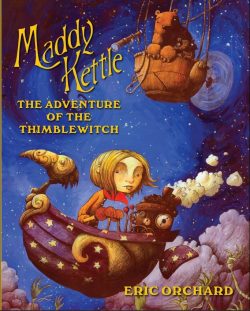
Maddie Kettle – The Adventure of the Thimblewitch


By Eric Orchard (Top Shelf Productions)
ISBN: 978-1-60309-072-8 (TPB)
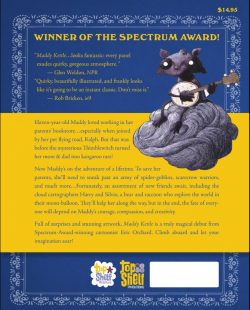
When this fantastic tale – the debut graphic novel of Canadian cartoonist and illustrator Eric Orchard – was released a few years ago, it created quite a stir among critics and comics fans, won a Spectrum Award and made us all hungry for more. We’re still waiting for a sequel but the power and imagination of the story hasn’t diminished one whit…

Maddy Kettle is eleven years old and used to work in her parents’ bookshop in Dustcloud Gap, but now she’s a girl with a mission. Unfortunately, that mission keeps changing on the fly…

With her pet floating Spadefoot Toad Ralph, she takes a steam train across the wild country, seeking the spider goblins who attacked their store and seeking the mysterious Thimblewitch who turned mum and dad into mole rats…

When more goblins attack the train, Maddie is lost in the desert, but soon finds new allies in cloud cartographers Harry the bear and musical raccoon Silvio. They offer her a ride in their moon-gas powered balloon, but refuse to believe her story. After all, the Thimblewitch used to be the protector of the cloudscape and these days doesn’t even use magic anymore…

After many adventures, and encounters with strange creatures such as vampire bats and unlikely warrior Splike, Maddy finally has her showdown with the Thimblewitch, only to learn a few amazing truths and set out on even more perilous quests…

Visually spectacular, hyper-imaginative and mordantly moody in the manner of Ghormenghast and the darker passages of Baum’s Oz books, this is a deliciously dark fable with a wonderfully memorable girl hero, showing that intelligence, determination, creativity, courage and a willingness to admit mistakes are also super powers.

Available in paperback and eBook formats, this is a fabulous romp no kid of any vintage could resist.
© and ™ 2014 Eric Orchard. All Rights Reserved.