The Littlest Pirate King


By David B. & Pierre Mac Orlan, translated by Kim Thompson (Fantagraphics Books)
ISBN: 978-1-60699-403-0

Win’s Christmas Gift Recommendation: Perfect for bold kids and timid parents…  8/10

Tim Burton has pretty much cornered the market on outlandish spooky fairytales but if you and your kids have a fondness for scary fables and macabre adventure with a uniquely European flavour you might want to take a peek at this impressive yarn of unquiet buccaneers and phantom piracy.

Pierre Mac Orlan was one of the nom-de-plumes of celebrated French author, musician and performer Pierre Dumarchey who between his birth in 1882 and death in 1970 managed to live quite a number of successful, productive and action-packed lives.  As well as writing straight books, he produced a wealth of artistic materials including children’s tales like this one, hundreds of popular songs and quite a bit of outré pornography.

A renowned Parisian Bohemian, he sang and played accordion in nightclubs and cabaret, was wounded in the trenches in 1916, subsequently becoming a war correspondent, and after the conflict became a celebrated film and photography critic as well as one of the country’s most admired songwriter and novelists.

David B. is a founder member of the groundbreaking strip artists group L’Association, and has won numerous awards including the Alph’ Art for comics excellence including European Cartoonist of the Year in 1998. His seamless blending of artistic Primitivism visual metaphor, high and low cultural icons, as seen in such landmarks as Babel and Epileptic, are augmented here by a welcome touch of morbid whimsy and stark fantasy which imbues this work with a cheery ghoulish intensity only Charles Addams and Ronald  Searle can match.

Mac Orlan’s tale perhaps owes more to song than storybook, with its oddly jumpy narrative structure, but Davis B.’s canny illustration perfectly captures the spirit of grim wit as it recounts the tale of the ghostly crew of the Flying Dutchman, damned sailors cursed to wander the oceans, never reaching port, destroying any living sailors they encounter and craving nothing but the peace of oblivion.

Their horrendous existence forever changes when, on one of their periodic night raids, they slaughter the crew of a transatlantic liner but save a baby found on board. Their heartless intention is to rear the boy until he is old enough to properly suffer at their skeletal hands, but as the years pass the eagerly anticipated day becomes harder and harder for the remorseless crew to contemplate…

Stark and vivid, scary and heartbreakingly sad as only a children’s tale can be, this darkly swashbuckling romp is a classy act with echoes of Pirates of the Caribbean (which it predates by nearly a century) that will charm, inspire and probably cause a tear or two to well up.

© 2009 Gallimard Jeunesse. This edition © 2010 Fantagraphics Books. All rights reserved.

Turok Son of Stone volume 1


By Gaylord DuBois & various (Dark Horse Books)
ISBN: 978-1-59582-238-3

Win’s Christmas Gift Recommendation: Perfect for the wide-eyed kid in us all  8/10

By never signing up to the draconian overreaction of the bowdlerizing Comics Code Authority, in the late 1950s Dell became the company for life and death thrills, especially in the arena of traditional adventure stories. If you were a kid in search of a proper body count instead of flesh wounds you went for Tarzan, Roy Rogers, Tom Corbett and their ilk. That’s not to claim that the West Coast outfit were gory, exploitative sensationalists – far from it – but simply that the writers and editors knew that fiction – especially kid’s fiction – needs a frisson of danger to make it work.

That was never more aptly displayed than in the long-running cross-genre saga of two Native Americans trapped in a world of saber-tooth tigers, cavemen and dinosaurs…

Printing giant Whitman Publishing had been producing their own books and comics for decades through their Dell and Gold Key imprints, rivaling and often surpassing DC and Timely/Marvel at the height of their powers. Famously they never capitulated to the wave of anti-comics hysteria which resulted in the crippling self-censorship of the 1950s and Dell Comics never displayed a Comics Code Authority symbol on their covers.

They never needed to: their canny blend of media and entertainment licensed titles were always produced with a family market in mind and the creative staff took their editorial stance from the mores of the filmic Hayes Code and the burgeoning television industry.

Like the big and little screen they enticed but never shocked and kept contentious social issues implicit instead of tacit. It was a case of “violence and murder are fine but never titillate.”

Moreover, most of their adventure comics covers were high quality photos or paintings – adding a stunning degree of authenticity and realism to even the most outlandish of concepts for us wide-eyed waifs in need of awesome entertainment.

Dell hit the thrill jackpot in 1954 when they combined a flavour of westerns with monster lizards: after all what 1950s kid could resist Red Indians and Dinosaurs?

Debuting in Four-Color Comics #596 (October/November 1954) Turok, Son of Stone told of two Native Americans hunting in the wilderness North of the Rio Grande when they became lost in a huge cave-system and emerged into a lost valley of wild men and antediluvian beasts. They would spend the next twenty-six years (a total of 125 issues) wandering there, having adventures kids of all ages would happily die for.

Despite solid claims from historian Matthew H. Murphy and comics legend Paul S. Newman (who definitely scripted the series from #9 onwards) Son of Stone was almost certainly created and first written by Dell’s editorial supremo Gaylord DuBois and this magnificent hardcover collection gathers both Four Color tryouts (the second originally appearing in #656, October/November 1955) and issues #3-6 of his own title.

Dell had one of the most convoluted numbering systems in comics collecting and successive appearances in the tryout title usually – but not always – corresponded to the eventual first issue of a solo series. Therefore FC #596 = Turok #1, FC #646 was #2 and the series proper began with #3. It isn’t always that simple though: after 30-odd Donald Duck Four Colors, Donald Duck proper launched his own adventures with #26!

Go figure… but just not now…

Set sometime in the days before Columbus discovered America Turok is a full brave mentoring a lad named Andar (although the original concept called for two teens, with the mature warrior originally a boy called Young Hawk) and in ‘The World Below’ illustrated by Rex Maxon, the pair become lost while exploring Carlsbad Caverns, New Mexico (DuBois was a frequent visitor of that fabulous subterranean site) and after days emerged into a vast, enclosed valley where they are menaced by huge creatures they never dreamed could exist.

In ‘The Terrible Ones’ they encounter beast-like cavemen and discover a way to make their puny arrows potent against the colossal cats, wolves and lizards that make human life spans so brief in this lost world. In return they teach the ape-men the miracle of archery…

One year later Four Color #656 opened with the morning after in ‘The Mystery of the Mountain’ as caveman Lanok helped Turok and Andar solve a grisly disappearance before the Braves became lost once more in the great caverns. Eventually emerging at a far distant point of the lush valley they were befriended by another tribe; one composed only of women and children. The pair helped the primitives recover their men-folk in ‘The Missing Hunters’ and came tantalizingly close to escaping the sunken world forever before their hopes were cruelly dashed…

The format was set and successful. With Turok, Son of Stone #3 (March-May 1956) the pair began decades of incessant wandering seeking escape from the valley, encountering a fantastic array of monsters and lost tribes to help or fight, illustrated by a team of artist which included Ray Bailey, Bob Correa, Jack Abel & Vince Alascia. ‘The Exiled Cave Men’ saw them find their way back to Lanok, whose tribe had since been driven from their home by a gigantic tyrannosaur. As well as helping them find a new digs Andar and Turok gave them a further short and profitable lesson in modern weaponry.

Of course the natives didn’t call it a tyrannosaur. The absolute best thing about this glorious series is the imaginative names for the monsters. Cavemen might have called T. Rexes “Runners”, Allosaurs “Hoppers” and Pterosaurs “Flyers” whilst generally referring to giant lizards as “Honkers” but us kids knew all the proper names for these scaly terrors and felt pretty darn smug about it…

Relocated to an island in a great lake Lanok’s tribe marveled at the coracles and canoes Turok built to explore its tributaries. ‘Strange Waters’ followed the homesick braves’ to another section of the valley with even stranger creatures.

Issue #4 opened with ‘The Bridge to Freedom’ finding Turok and Andar escaping the valley, only to turn back and help Lanok, whilst ‘The Smilodon’ pitted the reunited trio against the mightiest hunter of all time when a saber-tooth tiger took an unrelentingly obsessive interest in how they might taste…

‘The River of Fire’ opened #5 as geological turbulence disrupted the valley, causing beasts to rampage and forcing Lanok’s people to flee from volcanic doom, whilst ‘The Secret Place’ saw Turok and Andar suffer from the jealous rage of the tribe’s slighted shaman. Of course the witch-doctor turned out to be his own worst enemy…

Issue #6 (December 1956-February 1957) opened with an inevitable but delightful confrontation as the wanderers faced ‘The Giant Ape’; a Kong-like romp with a bittersweet sting and Turok’s initial collected outing ends with ‘The Stick Thrower’ wherein a monkey-like newcomer introduced the Braves to the magic of boomerangs and the pernicious willfulness of mastodons…

But that’s not all! For sundry commercial reasons comicbooks were compelled to include at least three features per issue at this period so this selection concludes with a text vignette ‘Aknet Becomes a Man’ and, just to be safe, ‘Lotor’ a natural history comic strip starring a wily raccoon looking to feed his brood, despite the best efforts of giant Bullfrogs and hungry Allosaurs…

With a rapturous introduction from artistic superstar and dino-buff William Stout, plus the assorted fact-features that graced the original issues (‘The Dinosauria’, ‘The Ichthyosaurs’, ‘The Smilodon’, ‘The Mastodon’, ‘Turok’s Lost Valley’ and ‘Prehistoric Men’) this is a splendid all-ages adventure treat that will enrapture and enthrall everybody who ever wanted to walk with dinosaurs… and Mammoths and Moas and…

™ & © 2009 Random House, Inc. Under license to Classic Media, Inc., an Entertainment Rights Company. All rights reserved.

Walt Disney’s Uncle Scrooge: The Money Well


By Carl Barks and others (Gladstone Comic Album #14)
ISBN: 978-0-94459-914-3

Carl Barks was born in Merrill, Oregon in 1901, growing up in the rural areas of the West where during some of the leanest times in American history. He tried his hand at many jobs before settling into the profession that chose him. His early life is well-documented elsewhere if you need detail, but briefly, Barks worked as a animator at Disney’s studio before quitting in 1942 to work in the newborn field of comicbooks.

With cartoon studio partner Jack Hannah (himself an occasional strip illustrator) he adapted a Bob Karp script for an animated cartoon short into the comicbook Donald Duck Finds Pirate Gold (published as Dell Four Color Comics Series II #9 in October of that year). Although not his first published comics work, it was the story that shaped the rest of his career.

From then until his official retirement in the mid-1960s Barks worked in self-imposed isolation seclusion writing and drawing a vast array of adventure comedies, gags, yarns and covers, creating a Duck Universe of memorable and highly bankable characters such as Gladstone Gander (1948), Gyro Gearloose (1952), Magica De Spell (1961) and the nefarious Beagle Boys (1951) to supplement Disney’s stable of cartoon actors. His greatest creation was undoubtedly the crusty, energetic, paternalistic, money-mad gazillionaire Scrooge McDuck: the World’s wealthiest winged septuagenarian and the harassed, hard-pressed star of this show.

Whilst producing all that landmark innovative material Barks was just a working guy, generating cover art, illustrating other people’s scripts when asked and contributing story to the burgeoning canon of Duck Lore. Gladstone Publishing began re-packaging Barks material – and a selection of other Disney comics strips – in the 1980s and this fabulous and spectacular tome is another of the very best – as they all seem to be.

So potent were his creations that they inevitably fed back into Disney’s animation output itself, even though his brilliant comic work was done for the licensing company Dell/Gold Key, and not directly for the studio. The greatest tribute was undoubtedly the animated series Duck Tales heavily based on his comics output of the 1950s and 1960s.

This album is printed in the large European oversized format (278mm x 223mm) -although dedicated collectors should also seek out the publisher’s superb line of Disney Digests and comics books that grew out of these pioneering tomes – and features one of the most madcap and wryly funny yarns Barks ever concocted.

Taken from Uncle Scrooge #21 (March-May 1958) this is one of the most ingenious campaigns by the Beagle Boys to divest the Billed Billionaire of his ocean of cash and  kicks off when the ever-vigilant miser spots the canine crooks attempting to pump his stupendous money-bin dry with oil-drilling technology.

Determined to find a completely secure home for his money Scrooge consults experts and electronic brains but eventually outsmarts himself by hiding the loot in a place where the Beagles can actually take it legally! Happily, Scrooge is mean yet honourable and always ready to take advantage of a situation when the opportunity arises. Therefore he’s able to reclaim his hard-earned horde when the crucial moment comes…

The lead story is balanced by ‘Quest for the Curious Constable’ an anonymous saga produced by Disney’s European packager the Gutenberghus Group and translated and rewritten by Barks historian Geoffrey Blum. Here Donald and the nephews Huey, Dewie and Louie become embroiled in the decades-long rivalry between Scrooge and rival magnate Flintheart Glomgold and find themselves travelling back in time to obtain bragging rights to a lost art masterpiece, courtesy of Über-inventor Gyro Gearloose.

This fast-paced, whacky romp is a fine continuation of and addition to the Barks canon as the ducks rampage in a quest against the clock through the foggy, cobbled meta-fictional streets of 19th century London in search of treasure and adventure. Of course there’s a little sting in this tale too…

Barks’ work – as well as the best of the rest – is now readily accessible through a number of publications and outlets. No matter what your age or temperament if you’ve never experienced this captivating magic, you can discover “the Hans Christian Andersen of Comics” simply by applying yourself and your credit cards to any search engine.
© 1988, 1958 The Walt Disney Company. All rights reserved.

Archie & Friends All-Stars: Christmas Stocking


By Dan Parent & various (Archie Comics Publications)
ISBN: 978-1-879794-57-3

Win’s Christmas Gift Recommendation: Perfect for all the Good little girls and Boys who deserve something extra-special this year 8/10

My good lady wife and I have a peculiar ritual that I’m not ashamed to share with you. Every Christmas we lock the doors, draw the shutters and stoke up the radiators before settling down with a huge pile of seasonal comics from yesteryear. There’s a few DC’s, a bunch of Disneys and some British annuals, but the huge preponderance is Archie Comics. From the 1950s onwards this seldom-mentioned comics institution has quite literally “owned Christmas” with a gloriously funny, charming, nostalgically sentimental barrage of perfect stories capturing the spirit of the season throughout a range of comicbooks running from Archie to Veronica, Betty to Sabrina and Jughead to Santa himself…

For most of us, when we say comicbooks people’s thoughts turn to buff men and women in garish tights hitting each other and lobbing trees or cars about, or stark, nihilistic crime, horror or science fiction sagas aimed an extremely mature and sophisticated readership of confirmed fans – and indeed that has been the prolific norm of late. Throughout the years though, other forms and genres have waxed and waned but one that has held its ground over the years – although almost completely migrated to television – is the teen-comedy genre begun by and synonymous with a carrot topped, homely (at first just plain ugly) kid named Archie Andrews.

MLJ were a small publisher who jumped on the “mystery-man” bandwagon following the debut of Superman. In November 1939 they launched Blue Ribbon Comics, promptly following with Top-Notch and Pep Comics. The content was the common blend of funny-book costumed heroes and two-fisted adventure strips, although Pep did make some history with its lead feature The Shield, who was the industry’s first super-hero to be clad in the flag (see America’s 1st Patriotic Hero: The Shield)

After initially profiting from the Fights ‘N’ Tights crowd Maurice Coyne, Louis Silberkleit and John Goldwater (hence MLJ) were quick to spot a gap in their blossoming market. In December 1941 the costumed heroes and two-fisted adventure strips were supplemented by a wholesome ordinary hero, an “average teen” who would have ordinary adventures like the readers, but with the laughs, good times, romance and slapstick emphasised.

Pep Comics #22 introduced a gap-toothed, freckle-faced red-headed goof showing off to the pretty blonde next door. Taking his lead from the popular Andy Hardy matinee movies starring Mickey Rooney, Goldwater developed the concept of a wholesome youthful everyman protagonist, tasking writer Vic Bloom and artist Bob Montana with the job of making it work. It all started with an innocuous six-page tale entitled ‘Archie’ which introduced boy-goofball Archie Andrews and pretty girl-next-door Betty Cooper. Archie’s unconventional best friend and confidante Jughead Jones also debuted in that first story as did the small-town utopia of Riverdale.

The feature was an instant hit and by the winter of 1942 had graduated to its own title. Archie Comics #1 was the company’s first non-anthology magazine and with it began the slow transformation of the entire company. With the introduction of rich, raven-haired Veronica Lodge, all the pieces were in play for the industry’s second Phenomenon (Superman being the first).

By May 1946 the kids had taken over, so the company renamed itself Archie Comics, retiring its heroic characters years before the end of the Golden Age and becoming to all intents and purposes a publisher of family comedies. Its success, like the Man of Steel’s, changed the content of every other publisher’s titles, and led to a multi-media industry including TV, movies, pop-songs and even a chain of restaurants.

Those costumed cut-ups have returned on occasion (see High Camp Superheroes), but the company now seems content to simply license them to DC whilst they concentrate on what they do uniquely best.

Archie is a well-meaning boy but lacks common sense. Betty is the pretty, sensible girl next door, with all that entails, and she loves Archie. Veronica is rich, exotic and glamorous; she only settles for our boy if there’s nobody better around. She might actually love him, though. Archie, typically, can’t decide who or what he wants…

This family-friendly eternal triangle has been the basis of nearly seventy years of charming, raucous, gentle, frenetic, chiding and even heart-rending comedy encompassing everything from surreal wit to frantic slapstick, as the kids and an increasing cast of friends grew into an American institution. So pervasive is the imagery that it’s a part of Americana itself. Adapting seamlessly to every trend and fad of the growing youth culture, the battalion of writers and artists who’ve crafted the stories over the decades have made the “everyteen” characters of mythical Riverdale a benchmark for youth and a visual barometer of growing up.

Archie’s unconventional best friend Jughead Jones is Mercutio to Archie’s Romeo, providing rationality and a reader’s voice, as well as being a powerful catalyst of events in his own right. That charming triangle (+ one) has the foundation of decades of comics magic. Moreover the concept is eternally self-renewing…

Each social revolution was painlessly assimilated into the mix (the company has managed to confront a number of social issues affecting the young  in a manner both even-handed and tasteful over the years) and the addition of new characters such as Chuck, an African-American kid who wants to be a cartoonist, his girlfriend Nancy, fashion-diva Ginger, Hispanic couple Frankie and Maria and a host of others such a spoiled home-wrecker-in -waiting Cheryl Blossom all contributed to a broad and refreshingly broad-minded scenario.

Archie Comics has always looked to new formats for their material and this volume is the sixth in a line of albums blending old with new and capitalising on the growing popularity of graphic novels. This sparkling volume collects some of the best Christmas stories of recent years as well as an all-original Yule adventure which delightfully shows the overwhelming power of good writing and brilliant art to captivate an audience of any age.

Beginning with ‘Have Yourself a Cheryl Little Christmas’, this volume sees the gang head off en masse for a winter break, not knowing that Queen of Mean Cheryl Blossom is intending to spoil all their fun. Luckily the ever-vigilant Santa knows who’s going to be naughty or nice and dispatches his top agent Jingles the Elf (an Archie regular for decades) to foil her plans…

‘The Night Before Christmas’ adapts the perennial 1823 poem “A Visit from St. Nicholas” attributed to Clement Clarke Moore into a handy introduction to the Riverdale stars before culminating in a clever and heart-warming family moment for Archie and his long-suffering parents, whilst Jughead’s family take centre-stage in the mini-miracle ‘Playing Santa’.

The stresses of having two girlfriends finally overcomes Archie in ‘A Not-So-Cool Yule’ whilst Veronica’s hard-pressed dad once more gets the short end of the stick in ‘Santa Cause’ before the rivals Betty & Veronica succumb to another bout of insane competition in ‘Tis the Season For… Extreme Decorating’.

That darned elf returns in ‘Jingles All the Way’ trying to pry Archie out from under Betty & Veronica’s shapely thumbs, but faces unexpected opposition from that pixie hottie Sugar Plum the Yule Fairy, and we get a glimpse of the kids’ earliest experiences when Betty digs out her diary for a delightful trip ‘Down Memory Lane’ after which this sparkling comic bauble concludes with another tale based on that inescapable ode in ‘The Nite Before X-Mas!’

These are perfect stories for young and old alike, crafted by those talented Santa’s Helpers Dan Parent, Greg Crosby, Mike Pellowski & George Gladir, and polished up by the artistic talents of Parent, Stan Goldberg, Fernando Ruiz, Rich Koslowski, Bob Smith, Al Milgrom, John Lowe, Jack Morelli, Vickie Williams, Jon D’Agostino, Tito Peña, Barry Grossman and Digikore Studios.

These stories epitomise the magic of the Season and celebrate the perfect wonder of timeless children’s storytelling: What kind of Grinch could not want this book in their stocking?

© 2010 Archie Comics Publications, Inc. All rights reserved.

Walt Disney’s Uncle Scrooge in Hawaiian Hideaway


By Carl Barks (Gladstone Comic Album #11)
ISBN: 0-944599-10-9

Amongst the other benefits to derive from the radical shake up of the American comics industry in the 1980s (specifically the creation of a specialist retailing sector that ended the newsstand monopoly by sale or return distributors) was a crucial opportunity for small publishers to expand their markets. There was an explosion of companies with new titles that quickly came and went, but there was also an opportunity for older, wiser heads to get their product fairly seen by potential fans who had for so very long been subject to a DC/Marvel duopoly.

Gladstone Publishing began re-releasing a selection of other Disney strips in classy oversized albums based on a format that had been popular for decades in Scandinavia and Europe. Reintroduced to the country of their birth the archival material quickly led to a rapid expansion and even resulted in new comicbooks being created for the first time since Dell/Gold Key quit the comics business.

That West Coast outfit had for decades published the lion’s share of licensed properties, delighting generations of children with their film, TV and movie comicbooks. One of their greatest wage-slaves was a shy, retiring and fiercely independent writer/artist named Carl Barks.

From the late 1940’s until the mid-1960s Barks worked in productive seclusion writing and drawing a vast array of comedic adventure yarns for kids, based on and expanding the Disney stable of Duck characters. Almost single-handed he crafted a Duck Universe of fantastically memorable and highly bankable characters such as Gladstone Gander (1948), Gyro Gearloose (1952) and Magica De Spell (1961).

Throughout this period Barks was blissfully unaware that his work (uncredited by official policy as was all Disney’s cartoon and comicbook output), had been singled out by a rabid and discerning public as being by “the Good Duck Artist.” When some of his most dedicated fans finally tracked him down, his belated celebrity began.

Undoubtedly though, Barks’ greatest creation was the crusty, energetic, money-mad yet oddly lovable dodecadillionaire Scrooge McDuck who premiered in the Donald Duck tale ‘Christmas on Bear Mountain’ (Four Colour Comics #178 December 1947).

This book highlights another of the Money-mad Mallard’s spectacular battles of wits – and avarice – with nefarious criminal clan the Beagle Boys: another Barks confabulation who first collectively cased the duck’s ponderous holdings in Walt Disney’s Comics and Stories #134 (November 1951).

Printed in that aforementioned European oversized format (278mm x 223mm) this captivating caper originally appeared in Uncle Scrooge #4 (December 1953-February 1954) and relates how the security-conscious Scrooge buys an island where he can safely squirrel away his acres of cash. Unfortunately the ever-rapacious Beagles get wind of his scheme and plan to intercept the moolah in transit, leading to nautical hi-jinks that would stun Jack Sparrow himself and jungle japes that captured the true mysterious glamour of the South Pacific…

Luckily Donald and his scarily inventive nephews Huey, Dewey and Louie are there to counteract the villains – as well as a decidedly supernatural presence derived from Barks’ scrupulous and exhaustive research. As well as a brilliant artist and inspired gag-man Barks was a fanatical armchair explorer and his addictive light adventure yarns always had some basis in authentic fact or folklore.

Filling out this volume are a clever Gyro Gearloose vignette from Uncle Scrooge #26 (1959) wherein ‘Krankenstein Gyro’ flaunts the laws of chemistry and biology as well as his traditional physi   cs in an attempt to create life; all prompted by an ill-advised trip to a monster matinee and that lucky old duck Glandstone Gander gets annoyingly involved in Scrooge’s newest scheme to camouflage his cash in the farm-belt in an untitled Donald Duck yarn from Walt Disney’s Comics and Stories #126 (April 1951). Sadly, when Scrooge bought the farm nobody reminded him that the Mid-West is tornado country…

Dryly satirical and outrageously slapstick, Bark’s delightfully folksy observations on the frustrating responsibilities and ultimate worthlessness of wealth have never been better expressed than here and these captivating parables are among his very best.

Even if you can’t find this particular volume, Barks’ work is now readily accessible through a number of publications and outlets. No matter what your age or temperament if you’ve never experienced his captivating magic, there’s no time left to lose. Read your way out of this financial crisis with a healthy helping of fiscally prudent fun fiction…
© 1988, 1959, 1953, 1951 The Walt Disney Company. All rights reserved.

Bone volume 1: Out of Boneville


By Jeff Smith (Cartoon Books)
ISBN: 978-0-96366-094-7

Jeff Smith burst out of relative obscurity in 1991 and changed the comics-reading landscape with his enchanting all-ages comic-book Bone. The compelling black and white saga captivated the market and prospered at a time when an endless procession of angst-ridden, steroid-breathed super-vigilantes and implausibly clad “Bad-Grrls” came and went with machine-gun rapidity.

Born in Pennsylvania and raised in Ohio, Smith absorbed the works of Carl Barks, Charles Schultz and especially Walt Kelly from an early age, and purportedly first began producing the adventures of his Boneville creations at age ten. Whilst at Ohio State University he crated a strip for the College newspaper: ‘Thorn’ was another early incarnation of his personal universe and a proving ground for many characters that would appear in Bone. A high school classmate became a Disney animator and Smith subsequently worked in the industry before striking on his own, mastering the graceful slapstick timing and high finish that typifies his art style.

He founded Cartoon Books to self-publish 55 delightful black and white issues (to be accurate ten of them were put out under the Image Comics imprimatur, but reverted to Smith’s company with #29): a fantasy quest yarn that owed as much to Tex Avery as J.R.R. Tolkien, as well as his holy trinity, Barks Schultz & Kelly. The bold thrilling and fantastically funny saga progressed at its own unique pace between 1991 and 2004. Since then it has been collected into nine volumes from Cartoon Books (with two further collections of prequels and side tales), reissued in colour by Scholastic Books and even reprinted in Disney Adventures magazine.

At series’ end Smith issued a monumental one volume compilation (more than 1300 black and white pages) which Time magazine dubbed “the best all-ages graphic novel yet published” and one of the “Top Ten Graphic Novels of All Time.”

Smith has won many awards including 11 Harveys and 10 Eisners. In 2003 he turned his magic loose again and revived the World’s Mightiest Mortal for DC with Shazam: The Monster Society of Evil. The project took three years but was worth every moment…

His latest work is the science fiction tale RASL.

As you can see there are plenty of versions to opt for but purist that I am I’ve plumped for the original Cartoon Books collection where the action commences in Out of Boneville, which re-presents the first six episodes.

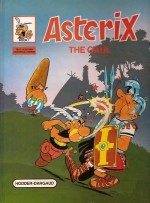
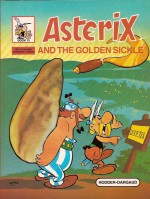
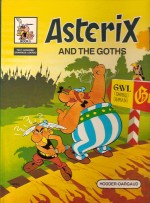
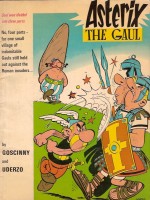
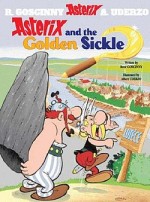
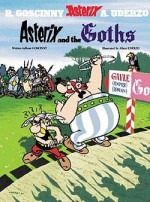
Fone Bone is a strange, amorphous, yet decent little bald guy, a thematic blend of Mickey Mouse and Asterix who has been run out of the town of Boneville along with his tall and not-so-bright cousin Smiley Bone. Well to be exact they haven’t, but their dastardly, swindling cousin Phoncible P. “Phoney” Bone has, due to the kind of irregularities, misdemeanours and malfeasances that bring down presidents – and he running for Mayor at the time…

Crossing a deadly desert and near death the trio are separated by a storm of locusts and Fone finds himself in a lost valley: an oasis of pastoral beauty hidden from the rest of the world. Along the way he is adopted by a dragon he doesn’t believe in, stalked by ghastly rat monsters and befriended by a talking leaf-insect (like a stick insect but flat, not long – and very talkative…)

The little refugee is forced to spend a harsh winter living wild in the deep forest where he befriends many of the small creatures who live there, but as the thaw approaches he meets the beauteous and oddly compelling human girl Thorn. It is Crush-at-First-Sight…

She invites him to stay with her and her grandmother Rose until he can find his lost cousins, but soon regrets it when Phoney turns up: rude, duplicitous, greedy as ever and determined to be a real pain…

Phoney’s insatiable drive to steal, cheat and fake a buck makes life pretty uncomfortable for the besotted Fone Bone, but trouble is brewing in the deep woods. An ancient evil has stirred, driving the rat creatures into a frenzy. An old, cold war is heating up again and for the humans of nearby village Barrelhaven the stakes are really high. The dark creatures have only been waiting for the arrival of their prophesied one – a small bald creature with a star on its chest remarkably similar to the one on Phoney’s shirt…

The assembled horror-hordes attack Thorn’s cottage but their chosen one is long gone. Phoney has scented money and gone to Barrelhaven in search of easy marks. Gran’ma fights a desperate holding action as Thorn and Fone flee through the forest to warn the villagers. After a nightmarish retreat the pair are rescued by the dragon – sworn foe of the rat things and their master. They return to the cottage to find that Gran’ma has survived: moreover she and the Dragon are old acquaintances…

As the Dragon returns to the deep woods the humans (and Bone) relocate to Barrelhaven, where Fone discovers that Smiley has been there all along, working as a bartender in the local tavern. Phoney is there too – working off a tremendous bar-tab…

This volume ends on a happy note as the cousins are finally reunited, but malevolent forces are gathering all around them and there are dark days ahead…

I’ve talked a lot about the influences that informed this wonderful series and there’s one more that cannot be ignored: if you squint your eyes just right you can hear the dulcet deceptions of Bill Watterson’s Calvin (see The Essential Calvin and Hobbes. Just Do. It’s wonderful and so are all the other collections) leaking in to flavour this equally marvelous, child-friendly extravaganza…

Bone is a truly perfect comic tale and one that appeals to kids and adults equally. Already it is in the rarefied rank starring Tintin, Pogo, Rupert Bear, Little Nemo and the works of Carl Barks. It is only a matter of time before it breaks out of the comic club completely and becomes kin to the likes of Wind in the Willows, the Moomins and the Oz books.

If you have kids or can still think and behave like one you must have these books…

© 1996 Jeff Smith. All rights reserved.

Wallace & Gromit in The Wrong Trousers – A Hardback Graphic Novel


By Nick Park, illustrated by Bill Kerwin (Egmont)
ISBN: 978-1-4052-5238-6

Here’s another superb cartoon adaptation of the world’s most animated British heroes. Hard though it is to believe, Wigan’s Finest have been delighting us for over twenty years and this delightful commemorative edition celebrates the fact, adding major mirth and mild menace to the malleable mix in a follow-up edition to last year’s science fiction fantasy Wallace & Gromit in A Grand Day Out.

In fact this magical comic strip adaptation is only coming full circle. Nick Park originally created the ingenious, quintessentially English cheese-loving duo as an art school graphic novel, before the lure of movement and sound diverted the concept into the world of animation and the olfactory, morphic joys of Plasticine.

Bill Kerwin’s moody watercolours aptly capture the pecuniary peril and muted menace of the dauntless duo as they struggle to make ends meet and poor Gromit is summarily ousted from his home to make room for a penguin lodger.

The felonious fowl then proceeds to steal Wallace’s filial affections and even appropriates the wonder dog’s birthday present from his cheese-loving master. What possible use could a penguin have for a pair of robotic techno-trousers?

Gromit must discover the reasons behind the actions of the ruthless, flightless sea-bird before Wallace is lost forever in this spellbinding rollercoaster romp, which perfectly captures the slapstick madness and utter glee of the original film. Lovingly rendered, perfectly timed, the skilful blend of low comedy and whimsy is every bit as effective on paper as on screen and this book is going to make a lot of kids – of all ages – deliriously happy.

Is it ever too soon to start recommending what to buy for Christmas? If not then consider this an essential “must have” – and don’t forget the first utterly excellent excursion A Grand Day Out while you’re about it and completists might also want to track down the 2004 Wallace & Gromit: The Whippet Vanishes. More Crackers, Gromit?!
© and ™ 2010 Aardman Animations Ltd. All rights reserved.

Walt Disney’s Donald Duck Adventures: Voodoo Hoodoo


By Carl Barks (Gladstone Comic Album #16)

ISBN: 0-944599-15-X

Carl Barks was the greatest armchair (and drawing board) adventurer of his generation. A dedicated and voracious researcher who loved exploration and thrived on local colour and detail in his work, he seamlessly blended history, geography and the natural world into his rollicking rip-roaring light-thrillers. All Barks’ spectacular yarns were screened through a mesmerising lens of wonder and excitement and executed with riotous bursts of outrageous comedy that appealed to fun-starved fans of all ages. They still do.

From the 1940’s to the1960s Barks worked in seclusion, concocting a timeless treasure trove of golden myths and fables (ostensibly) for kids; forging a cohesive Duck Universe stuffed with memorable and highly bankable characters such as Uncle Scrooge McDuck, Gladstone Gander, the Beagle Boys, Gyro Gearloose, and Magica De Spell to augment the stable of cartoon actors from the Disney Studio, but his most exciting work always involved the rowdy, know-it-all nephews Huey, Dewey and Louie and their irascible, excitable, indomitable “unca” Donald Duck.

The boys’ assigned roles were as sensible, precocious and just-a-little-bit snotty counterfoils to their guardian whose intemperate nature caused him to act like an overgrown brat most of the time, but they often fell prey to a perpetual and natural temptation to raise a ruckus as well: clearly something in the genes…

West Coast publishing giant Dell/Gold Key held the license to produce comic-books based on Disney properties from the 1940s, generating a vast treasure-trove of graphic wonderment before grinding to a close in the early 1980s. Fan-based publishers Gladstone began re-releasing Barks material and a selection of other Disney comics classics at the end of the decade and this album is one of the best.

Whilst producing all that landmark material Barks considered himself just a working guy, drawing eye-catching covers, illustrating other people’s scripts to order yet still setting the bar for his compatriots with utterly perfect tales that added to the burgeoning canon of Donald Duck and other Disney properties. His output was incredible in terms of quantity and especially in its unfailingly high quality.

Printed in the large European oversized format (278mm x 223mm) this chilling departure into the realms of the unknown reprints one of his eeriest masterpieces with the lead tale from Dell Four Color Comics #238 (August 1949) and sees the author once more accessing darker themes via the sinister delights of horror movies – albeit seductively tempered with Barks’ winningly absurd humour (for more of the same see also Donald Duck Adventures: Ancient Persia).

Duckburg is all in a tizzy when a hulking undead brute begins loitering around town. Eventually Bombie the Zombie delivers a poisoned devil-doll to Donald which apparently makes him start to shrink. Zombies aren’t particularly smart and he/it had been trying for years to deliver the potent vengeance of his witch-doctor master Foola Zoola to the duck that swindled him … and unfortunately Donald looks a lot like Scrooge McDuck did seventy years ago!

Not believing in curses Uncle Scrooge is less than sympathetic but after experiencing the pester-power of Donald and the nephews he grudgingly funds an expedition to Africa to set things right. And only then do their troubles really begin…

Wacky and deeply satirical this tale was the subject of some controversy after it was first published, with Barks’ evolving drawing style skirting jarringly close to some pretty prejudicial and unwholesome racial stereotypes of the time, and considering the target audience it is a pretty scary story in a lot of places, but as ever, the wildly over-the-top madcap humour keeps everything addictively comforting and compelling.

Filling out this volume is another spooky fantasy fable starring Donald and the boys with a far more prominent role for their Bajillionaire relative as the entire family check out his latest acquisition. Scrooge has bought a castle in Scotland because a legendary treasure is hidden within it, but ‘McMerganser Macabre’ (from Donald Duck #26 November 1952) proves the old adage “buyer beware” as the old pile also seems to have an extremely agitated ghost as an unwelcome squatter…

However even when running for their lives and dodging certain death Huey, Dewey and Louie are pretty sure all is not as it seems…

Breathtaking and supremely hilarious this is a sheer graphic treat for fans of comics in their purest and most enticing form and still readily available from a number of online retailers, but even if you can’t find this specific volume most of Barks’ work is readily accessible through a number of publications and outlets.

As everything he’s ever done is well worth reading, no matter what your age or temperament, you’ve nothing to lose and all to gain by tracking down Barks’ captivating creations; so please do do – or experience the repercussions of the Voodoo Hoodoo…
© 1989, 1949 The Walt Disney Company. All Rights Reserved.

The Brambly Hedge Treasury


By Jill Barklem (Carnival)
ISBN: 978-0-26167-207-9

Britain has always led the world in illustrated children’s books, from Beatrix Potter and Arthur Rackham to Raymond Williams, Roger Hargreaves and Quentin Blake. Carrying on that splendid tradition is Jill Barklem, who began in 1980 to produce stunningly beautiful rural, ecologically sound fantasy fables about a delightfully engaging tribe – or more correctly hamlet – of mice thriving in the resoundingly English thicket of a Bramble Hedge somewhere in this wonderful country of ours.

Beginning with Spring Story, Summer Story, Autumn Story and Winter Story Barklem’s gloriously enviable miniscule community presented a tiny world of huge rustic delights engrossingly reminiscent of the idealised environs of Alfred Bestall’s Rupert stories, with the land beneath the bushes easily the equal of Nutwood: placid, enticing, enchanting and when necessary, just hazardous enough to provide the element of mild danger necessary for all dramas – even small ones.

An instant global hit with children and their book-providers, the meticulous, miraculous artwork and wry, genteel tales spawned a number of sequels and spin-off tomes including a pattern book, (designs for making one’s own mouse household), a poster book, a collection of tunes for the recorder, address books and all the usual merchandise from shampoo to tableware (what I wouldn’t give for a Brambly Hedge Teacup…).

In 1999 County Books collected the fifth and sixth tales – ‘The Secret Staircase’ and ‘The High Hills’ into a large-sized, spectacularly printed compendium which included a stunning introductory section introducing the extended cast, (nearly two dozen distinctive and adorable mice), maps of the area, cutaway paintings and locations of interest all accompanied by Barklem’s beguiling prose.

The nominal stars of the stories are children Primrose Woodmouse and Wilfred Toadflax, and in ‘The Secret Staircase’ they are both eagerly anticipating the big party at Old Oak Palace, the sprawling stately mansion of Primrose’s father, Lord Woodmouse. As the adults pitch in to prepare the great hall for the evening’s festivities the kids go looking for costumes in the immense domicile and discover hidden passages and a wonderful secret ballroom…

This magical Christmas allegory is filled with incredible illustrations, poems and rhymes perfectly capturing the young’s fascination with discovery and exploration.

‘The High Hills’ features Wilfred in a rather thrilling exploit. Chafing in the Weaver’s house as they make blankets, he dreams of being a grand Explorer like the legendary Sir Hogweed Horehound. When his mother collects him Wilfred convinces her to let him accompany Mr. Apple when he delivers the finished blankets to the Voles who live in the distant High Hills.

The same hills first explored by Hogweed Horehound and where the great man discovered gold!

Filling his rucksack with all the paraphernalia listed in the Great Adventurer’s journal Wilfred looks forward to recreating the historic trip, but the lad has no idea that he’s headed for a unique experience all his own…

A complete compilation of the Brambly Hedge stories was released in 1999, but seems to be out of print and astonishingly expensive to acquire these days. Surely it’s time for another edition of such a timelessly beautiful book? These are tales that every child will love and are a great way to get youngsters into reading, comics and the environment. How cool is that?
© 1983, 1986, 1990, 1999 Jill Barklem. All rights reserved

Walt Disney’s Donald Duck: the Brittle Mastery of Donald Duck


By Carl Barks (Gladstone Comic Album #7)
ISBN: 0-944599-06-0

Carl Barks is one of the greatest storytellers America has ever produced, beginning his glittering career as a jobbing cartoonist before joining Disney’s animation studio in 1935. In 1942 he left to work exclusively and anonymously in comic books, working in productive seclusion until the mid-1960s, writing and drawing an incredible wealth of comedic adventure yarns starring the irascible Donald Duck and crafting a cohesive and utterly believable Duck Universe filled with memorable characters such as the nefarious Beagle Boys (1951), feathered Edison Gyro Gearloose (1952), and sinister siren Magica De Spell (1961) to augment Disney’s stable of established screen “actors”. His greatest creation was undoubtedly the crusty, ideal Benign Capitalist Scrooge McDuck. So potent were his creations that they fed back into Disney’s animation output itself, even though his brilliant comic work was done for the licensing company Dell/Gold Key, and not directly for the studio.

Throughout this period Barks was blissfully unaware that his work (uncredited by official policy as was all the company’s cartoon and comicbook output), was nevertheless singled out by a rabid and discerning public as being by “the Good Duck Artist.” Whilst producing all that magical material Barks was just a working guy, generating covers, illustrating other people’s scripts when required. However, when his most dedicated fans finally tracked him down, his belated celebrity began.

Gladstone Publishing began re-releasing Barks material along with sundry other Disney strips in the late-1980s and this album is another one of their best. Printed in the European oversized format (278mm x 223mm) this joyous compendium collects an occasional series of similarly-themed yarns: some of the best and funniest Duck tales ever crafted.

The Brittle Master series is the name given to a group of stories wherein the perennial failing, fiery-tempered and eternally put-upon everyman Donald displayed an excellence in some unique skill or service, winning the approval and veneration of all and sundry – only to have his own smug hubris bring about his ultimate humiliation and downfall.

The first untitled tale, from Walt Disney Comics and Stories #156 (1953) saw Donald as an airplane-piloting, cloud-sculpting Master Rainmaker and, as with all these stories increasingly outrageous requests from his adoring public lead him inevitably to disaster – in this case the creation of a full-blown, devastating Ice-storm.

Next, from WDC&S #222 (1959) comes the tale of the Master Mover, as Donald displays the uncanny ability to transport anything anywhere, only to come a crushing cropper when he guarantees to shift an entire zoo to a mountaintop in one afternoon!

‘The Master Glasser’ (yes, we’d call him a glazier) from Donald Duck #68 (also from 1959) is a wickedly satirical glimpse at small-town America as the arrogant artificer, at the height of his fame attempts to repair the aged fascia of Duckburg’s giant clock. Perhaps he shouldn’t have tried to do it live on TV…?

The fourth tale is one where I suspect Donald actually found his true calling. The ‘Master Wrecker’ WDC&S #264 (1962) is the go-to-duck if you need something demolished with no muss or fuss, and even in this hilarious yarn Donald doesn’t actually fail. The target is utterly razed: it’s just not the one he was supposed to wreck…

This delightful collection ends with the satisfyingly sharp ‘Spare That Hair’ (WDC&S #272, 1963) as Donald the Master Barber finally wins one for a change, even though he mistakenly shaves a gorilla and inspires the ire of a rowdy circus ringmaster…

Barks was as adept with quick-fire gag stories as epic adventures; blending humour with drama and charm with action, and even if you can’t find this particular volume, most of his unforgettable work is readily accessible through a number of publications and outlets. So if you want to be a Master Reader, you know what you need to do…

© 1988, 1963, 1962, 1959, 1953 The Walt Disney Company. All Rights Reserved.