
Chandler


By Steranko (Byron Preiss Visual Publications Inc/Pyramid Books)
ISBN: 978-0-515-04241-2 (Pyramid Books)

This book contains Discriminatory Content produced during less enlightened times.

Jim Steranko was born today in 1938. Can you guess what time it is?

Steranko is an artist with many strings to his bow. Whether as publisher, typographer, graphic designer, artist, writer, storyteller, historian, or musical performer he has always excelled. As magician & escapologist he found celebrity, inspiring new friend Jack Kirby to create Super Escape Artist Mister Miracle, but it’s as a comics creator the man of many talents has most memorably succeeded.

At the peak of Marvel’s first creative flowering he revolutionised the telling of graphic stories with Nick Fury, Agent of S.H.I.E.L.D. His retro-revisionist take on Captain America is reverently remembered, as is his brief meddling with mutant outriders The X-Men.

Decades after his experimental forays in Marvel’s horror and romance titles, the results are remembered – and now finally in print – as high-points in style and cinematic design.

Steranko left Marvel to pursue other interests and began publication of pop culture mainstay Mediascene Prevue, only rarely returning to the comics medium. If you’ve never seen his strip work you’ll know him by his film production concept art for blockbusters like Raiders of the Lost Ark and Bram Stoker’s Dracula. In the mid-1970s he linked up with comics Svengali Byron Preiss to create this fabulous experimental precursor of the graphic novel: a dynamic and vivid tribute to the hard-boiled detective and film noir genres, and something which perhaps not altogether to the tastes of fans at the time is certainly now very much in the bailiwick of contemporary comics consumers.

Alternatively entitled FICTION ILLUSTRATED VOLUME 3 in its pocket digest sized paperback iteration (as well as proper full-sized graphic novel Chandler: Red Tide), it still packs a potent visual and narrative punch.

Chandler is a private eye, in the iconic myth-country of 1940’s New York City. One night a desperate man comes looking for someone to track down his inescapable killer. Bramson Todd witnessed a mob hit and has somehow been poisoned because of it. With 72 hours to live, the walking corpse wants proactive revenge, and as well as a vast amount of money, he offers Chandler the chance to save three other witnesses from the same fate or worse…

The familiar iconography of a seedy, noble gumshoe is augmented by two-fisted action, flying bullets, sundry thugs and scoundrels, memorable, glamorous women and a ticking clock, all working to make this loving and effective pastiche a minor masterpiece…

Back then, however, a major stumbling block for many readers was the unconventional format of the book. Each folio is divided into two columns – in the manner of classic pulp prose page layouts – with each column comprising an illustration above a block of accompanying text.

Despite Steranko’s superb draughtsmanship and design skill (some spreads form extended visual continuities with 4-single frames becoming one large illustration), there is an element of separation between prose & picture that can take a little adapting to. But you should try. It’s worth it.

This is still a powerful tale, well told and worth any extra effort necessary to enjoy it. Another contender for immediate reissue, I think…

© 1976 Byron Preiss Visual Publications Inc. The character Chandler © 1976 James Steranko.

Today in 1977 René Goscinny died. You must by now know where to look for him. Two years later Li’l Abner’s Al Capp passed on too, in 2007 unsung star Paul Norris died. He’s most renowned for co-creating DC’s Sea King as most recently seen in Aquaman: 80 Years of the King of the Seven Seas – the Deluxe Edition.

The Creeper by Steve Ditko


By Ditko, Don Segall, Denny O’Neil, Michael Fleisher, Mike Peppe, Jack Sparling & various (DC Comics)
ISBN: 978-1-4012-2592-6 (HB)

This book includes Discriminatory Content produced in less enlightened times.

It’s Steve Ditko’s 99th birthday today and I’m not letting the fact that he’s no longer with us stop us enjoying his wonders and celebrating his unique storytelling mastery…

Steve Ditko was one of our industry’s greatest and most influential talents and, during his lifetime, amongst America’s least lauded. Always reclusive and reticent by inclination, his fervent desire was always just to get on with his job, tell stories the best way he can and let his work speak for him.

Whilst the noblest of aspirations, that attitude was usually a minor consideration – and even an actual stumbling block – for the commercial interests which for so long controlled all comics production and still exert an overwhelming influence upon the mainstream bulk of the comic industry’s output. After Ditko’s legendary disagreements with Stan Lee led to his quitting Marvel – where his groundbreaking efforts made the reclusive genius (at least in comicbook terms) a household name – he found work at Warren Comics and resumed his long association with Charlton Comics.

That company’s laissez faire editorial attitudes had always offered him the most creative freedom, if not greatest financial reward, but in 1968 their wünderkind editor Dick Giordano was poached by the rapidly-slipping industry leader and he took some of his bullpen of key creators with him to DC Comics. Whilst Jim Aparo, Steve Skeates, Frank McLaughlin and Denny O’Neil found a new and regular home, Ditko began only a sporadic – if phenomenally productive – association with DC.

It was during this heady if unsettled period that the first strips derived from Ditko’s interpretation of the Objectivist philosophy of novelist Ayn Rand began appearing in fanzines and independent press publications like Witzend and The Collector, whilst for the “over-ground” publishing colossus he devised a brace of cult classics with The Hawk and the Dove and the superbly captivating concept re-presented here: Beware The Creeper. Later efforts would include Shade, the Changing Man, Stalker and The Odd Man, plus truly unique interpretations of Man-Bat, the Legion of Super-Heroes and many more… including a wealth of horror, mystery and sci fi shorts reminiscent of his Charlton glory days.

The auteur’s comings and goings also allowed him to revisit past triumphs and none more so than with The Creeper – who kept periodically popping up like a mad, bad penny. This superb hardcover compilation – still tragically and inexplicably languishing with other classics DC hasn’t got around to making available in digital formats – gathers every Ditko-drafted/delineated Creeper classic from a delirious decade for your delight, and the spooky superhero spectacle kicks off with an effusive Introduction from appreciative fan Steve (30 Days of Night) Niles.

This collation curates tales from Showcase #73; Beware the Creeper #1-6; 1st Issue Special #7; World’s Finest Comics #249-255 and Cancelled Comics Cavalcade #2/Showcase #106 (collectively spanning March/April 1968 to February/March 1979), so settle in for a long ride…

Like so many brilliant ideas before it, Ditko’s bizarre DC visions first exploded off the newsstands in try-out title Showcase. Issue #73 heralded ‘The Coming of the Creeper!!’ with veteran comics & TV scripter Don Segall putting the words to Ditko’s plot and illustrations. The moodily macabre tale introduces suicidally-outspoken TV host Jack Ryder, whose attitude to his show’s sponsors and cronies loses him his cushy job. His brazen attitude does, however, impress network security chief Bill Brane and the gruff oldster offers him a job as an investigator and occasional bodyguard.

Jack’s first case involves tracking down recent Soviet defector Professor Yatz who has gone missing. The CIA suspect has been abducted by gangster Angel Devilin and sold to Red agent Major Smej. Displaying a natural affinity for detective work, Ryder tracks a lead to Devilin’s grand house and interrupts a costume party designed as a cover to make the trade. Promptly kicked out by thugs, Ryder heads for a costume shop but can only find a box of garish odds and ends… and lots of makeup.
Kitted out in a strange melange of psychedelic attire and accoutrements, he breaks back in but is caught and stabbed before being thrown into a cell with the missing Yatz. The scientist – also grievously wounded – is determined to keep his inventions out of the hands of evil men. These creations comprise an instant-healing serum and a Molecular Transmuter, able to shunt whatever a person is wearing or carrying into and out of our universe. A fully equipped army could enter a country as harmless tourists and materialise a complete armoury before launching sneak attacks…
To preserve them, Yatz lodges the Transmuter inside Ryder’s knife wound before injecting him with the untested serum. The effect is instantaneous and doesn’t even leave a scar. The investigator is also suddenly faster, stronger and more agile…
When Jack presses a handheld activator, he is instantly naked, and experimentation shows that he can make his motley costume appear and disappear just by touching a button. Of course, now, whenever it is activated, neither makeup nor wig, bodystocking, boots or gloves will come off. It’s like the crazy outfit has become his second skin…

When the gangsters come for their captives, Yatz is burning his notes. In the fracas that follows he catches a fatal bullet and, furious, guilt-ridden and strangely euphoric, Ryder goes after the thugs and spies. By the time the cops arrive he finds himself (or at least his canary yellow alter ego) blamed by Devilin for the chaos and even a burglary. The mobster has even given him a name – The Creeper

As soon as the furore dies down vengeful Ryder returns to exact justice for the professor and discovers his uncanny physical prowess and macabre, incessant unnerving laughter give him an unbeatable edge whilst winning him a supernatural reputation…

After that single yarn the haunting hero hurtled straight into his own bimonthly series. Beware the Creeper #1 debuted with a May/June cover-date. Behind one of the most evocative covers of the decade – or indeed, ever – ‘Where Lurks the Menace?’ (scripted by Denny O’Neil under his occasional pen-name Sergius O’Shaughnessy) finds Ryder and the Creeper hunting an acrobatic killer beating to death numerous shady types in a savage effort to take over the city’s gangs. Sadly, Jack’s relentless pursuit of “the Terror” and careful piecing together of many disparate clues to his identity is hindered by the introduction of publicity-hungry, obnoxious glamour-puss ‘Vera Sweet’. The TV weathergirl thinks she has the right to monopolise Ryder’s time and attention, even when he’s ducking fists and bullets…

The remainder of the far-too-brief run featured a classic duel of opposites as a chameleonic criminal mastermind insinuated himself into the lives of Jack and the Brane bunch. It all began with ‘The Many Faces of Proteus!’ in BtC #2 (by Ditko & O’Shaughnessy) wherein a pompous do-gooder’s TV campaign against The Creeper is abruptly curtailed after the Golden Grotesque shows up at the studio and throws bombs.

Caught in the blast is baffled and battered Jack Ryder, and he’s even more bewildered when Brane informs him that a tip has come in confirming the Creeper is working for gambler gangboss Legs Larsen

Dodging Vera, whose latest scheme involves a fake engagement, the real Creeper reaches Larsen’s gaming house in time to see a faceless man put a bullet into the prime suspect. In the ensuing panic the Laughing Terror transforms back into Ryder and strolls out with Larsen’s files, unaware that the faceless man is watching him leave and putting a few clues together himself…

The documents reveal a lone player slowly consolidating a grip on the city’s underworld but discloses no concrete information, so the Creeper goes on a very public rampage against all criminals in hopes of drawing Proteus out. The gambit works perfectly as a number of close friends try to kill Ryder, but only after frantically fending off flamethrower-wielding Vera in his own apartment does the Creeper realise that Proteus is far more than a madman with a makeup kit. A spectacular rooftop duel ends in a collapsed building and apparent end of the protean plunderer… but there’s no body to be found in the rubble…

Beware the Creeper #3 has our outré hero tearing the city’s thugs apart looking for Proteus, but his one-man spook-show is curtailed when Brane sends Ryder to find Vera. Little Miss Wonderful is determined to be the first to interview an island society cut off from the world for over a century, but all contact has been lost since she arrived. Tracking her to ‘The Isle of Fear’ Jack finds her in the hands of a death cult. More important to Ryder, however, is the fact that the Supreme One leading the maniacs is actually a top criminal offering sanctuary to Proteus flunkies he’s been scouring the city for…

Back in civilisation again, ‘Which Face Hides My Enemy?’ sees Ryder expose High Society guru and criminal mesmerist Yogi Birzerk’s unsuspected connection to Proteus. The cops drive The Creeper away before he can get anything from the charlatan, and when he dejectedly returns home Jack walks into an explosive booby trap in his new apartment. The “warning” from Proteus heralds the arrival of Asian troubleshooters Bulldog Bird and Sumo who claim to be also pursuing the faceless villain. They reveal he was a high-ranking member of the government of Offalia who stole a chemical which alters the molecular composition of flesh, before suggesting they all team up. Heading back to Bizerk’s place, it soon becomes clear that they are actually working for Proteus and that the faceless fiend knows Ryder’s other identity…

With #5, inker Mike Peppe joined Ditko & O’Neil as the epic swung into high gear with ‘The Color of Rain is Death!’ Proteus makes his closing moves, attacking Jack’s associates and framing him again whilst preparing for a criminal masterstroke which will win him much of the city’s wealth. Luring the Creeper into the sewers as a major storm threatens to deluge the city, the face-shifter reveals a scheme to blow up the drainage system and cause catastrophic flooding. After a brutal battle, he also leaves The Creeper tied to a grating to drown…

The stunning saga closed with final issue Beware the Creeper #6 (March/April 1969), by which time Ditko had all but abandoned his creation. ‘A Time to Die’ saw tireless, reliable everyman artist Jack Sparling pencil most of the story as the Howling Hero escapes his death-trap, deciphers the wily villain’s true gameplan and delivers a crushing final defeat. It was fun and thrilling and – unlike many series which folded at that troubled time – even provided an actual conclusion, but it somehow it wasn’t satisfactory and it wasn’t what we wanted.

This was a time when superheroes went into another steep decline with supernatural and genre material rapidly gaining prominence throughout the industry. With Fights ‘n’ Tights comics folding all over, Ditko concentrated again on Charlton’s mystery line, an occasional horror piece for Warren and his own projects…

In the years his own title was dormant, the Creeper enjoyed many guest shots in other comics and it was established that the city he prowled was in fact Gotham. When Ditko returned to DC in the mid-1970s, try-out series 1st Issue Special was alternating new concepts with revivals of old characters. Issue #7 (October 1975) gave the quirky crusader another shot at stardom in ‘Menace of the Human Firefly’ – written by Michael Fleisher & inked by Mike Royer. Here restored TV journalist Jack Ryder is inspecting the fantastic felons in Gotham Penitentiary just as manic lifer Garfield Lynns breaks jail to resume his interrupted costumed career as the master of lighting effects. By the time the rogue’s brief but brilliant rampage is over, the Creeper has discovered something extremely disturbing about his own ever-evolving abilities…

The story wasn’t enough to restart the rollercoaster, but some years later DC instituted a policy of giant-sized anthologies, and the extra page counts allowed a number of lesser lights to secure back-up slots and shine again. For World’s Finest Comics #249-255 (cover-dated February/March 1978 to February/March 1979) Ditko was invited to produce a series of 8-page vignettes starring his most iconic DC creation. This time he wrote as well as illustrated and the results are pure eccentric excellence. The sequence begins with ‘Moon Lady and the Monster’ as Ryder – once again a security operative for Cosmic Broadcasting Network – must ferret out a grotesque brute stalking a late-night horror-movie hostess, after which #250’s ‘Return of the Past’ reprises the origin as Angel Devilin gets out of jail and goes looking for revenge…

In WFC #251, ‘The Disruptor’ proves to be a blackmailer attempting to extort CBN by sabotaging programmes whilst ‘The Keeper of Secrets is Death!’ in #252 follows the tragic murder of Dr. Joanne Russell who was accused on a sensationalistic TV show of knowing the Creeper’s secret identity. Next issue ‘The Wrecker’ offers an actual grudge-bearing mad scientist who has built a most unconventional robot, whilst ‘Beware Mr. Wrinkles!’ in #254 debuts a villain with the power to age his victims. Neither, however, are a match for the tireless, spring-heeled Technicolor Tornado, whose too-short return culminates in a lethal duel with a knife-throwing jewel thief in #255’s ‘Furious Fran and the Dagger Lady’

Until this volume, that was it for Ditko devotees and Creeper collectors, but as the final delight in this splendid compendium reveals, there was more. An ill-considered expansion was followed by 1978’s infamous “DC Implosion”, when a number of titles were shut down or cancelled before release. One of those was Showcase #106 which would have featured a new all-Ditko Creeper tale.

It was collected – with sundry other lost treasures – in a copyright-securing, monochrome, minimum print-run internal publication entitled Cancelled Comics Cavalcade. Here, from CCC #2 (1978) and presented in stark black & white, fans can see the Garish Gallant’s last Ditko-devised hurrah as ‘Enter Dr. Storme’ pits the Creeper (and cameo crimebuster The Odd Man) against a deranged weatherman turned climatic conqueror able to manipulate the elements.

Fast, fight-filled, furiously fun and devastatingly dynamic, Beware the Creeper was a high-point in skewed superhero sagas and this is a compendium no lovers of the genre can do without.
© 1968, 1969, 1975, 1978, 1979, 2010 DC Comics. All Rights Reserved.

Today in 1926 Harvey Comics star and Anthro originator Howie Post was born, followed a year later by the mighty Steve Ditko. Just scroll back up or look anywhere on this blog, dude!

Sadly, it’s also the anniversary of Wally Wood’s death in 1981. We last looked closely at Ditko’s frequent collaborator in Cannon.

The Golden Age Spectre Archives


By Jerry Siegel & Bernard Baily with Gardner F. Fox & various (DC Comics)
ISBN: 978-1-5638-9955-3 (HB)

This book includes Discriminatory Content produced in less enlightened times.

Win’s Christmas Gift Recommendation: Masterpieces for all Comics Addicts… 9/10

Ola! Happy Día de (los) Muertos!

There were and still are a lot of comics anniversaries this year: many rightly celebrated, but a lot were unjustly ignored. As a feverish fanboy wedged firmly in the past, I’m abusing my privileges here to kvetch again about another brilliant vintage book, criminally out of print and not slated for revival either physically or in digital formats. That means occasionally recommending items that might be a bit hard to find. At least you might be buying from those poor beleaguered comics shops and specialists desperately in need of your support now, rather than some faceless corporate internet emporium..,

In fact, considering the state of the market, how come DC doesn’t just convert its entire old Archive line into eBooks and win back a few veteran fans? Don’t ask me, I only imitate working here…

Created by Jerry Siegel & Bernard Baily in 1939, The Spectre is one of the oldest characters in DC’s vast character stable. He debuted with a 2-part origin epic in More Fun Comics #52 and 53 (cover-dated February & March 1940 and on sale from December 28th 1939 and February 2nd 1940 respectively). He was the first superhero to star in that previously all-genres anthology, and reigned supreme in the title with flamboyant, eerily eccentric supernatural thrillers. He gradually slipped from popularity as firstly Dr. Fate and then Johnny Quick, Aquaman, Green Arrow and finally Superboy showed up to steal the limelight.

By the time of his last appearance in More Fun #101 February 1945, the Ghostly Guardian had been reduced to a foil for his own comedic sidekick Percival Popp, the Super-Cop

Just like Siegel’s other iconic creation, the Dark Man suffered from a basic design flaw: he was just too darn powerful. Unlike that vigorously vital and earthy early Superman, however, the ethereal champion of justice was already dead, so he couldn’t be logically or dramatically imperilled. Of course, in those far-off early days that wasn’t nearly as important as sheer spectacle: grabbing the reader’s utter attention and keeping it stoked to a fantastic fever pitch. This the Grim Ghost could do with ease and ever-increasing intensity.

Re-presenting the first 19 eerie episodes and following a fulsome Foreword detailing the state of play within the budding marketplace during those last months of the 1930s – courtesy of preeminent Comics historian Dr. Jerry Bails – the arcane action in this astoundingly enticing collection commences with ‘The Spectre: Introduction’ as first espied in More Fun Comics #52. This wasn’t the actual title: like so many strips of those early days, most stories didn’t have individual descriptors and have been retroactively entitled for compilations such as this.

The Astral Avenger was only barely glimpsed in this initial instalment. Instead, focus rests on hard-bitten police detective Jim Corrigan, who is about to wed rich heiress Clarice Winston when they are abducted by mobster Gat Benson. Stuffed into a barrel of cement and pitched off a pier, Corrigan dies and goes to his eternal reward.

Almost…

Rather than finding Paradise and peace, Corrigan’s spirit is accosted by a glowing light and disembodied voice which, over his strident protests, orders him return to Earth to fight crime and evil until all vestiges of them are gone. Standing on the seabed and looking at his own corpse, Corrigan began his mission by going after his own killers…

MFC #53 details how ‘The Spectre Strikes’ as the outraged revenant swiftly, mercilessly and horrifically ends his murderers before saving Clarice. Naturally “Corrigan” calls off the engagement and moves out of the digs he shares with fellow cop and best friend Wayne Grant. A cold, dead man has no need for the living. The origin ends with Corrigan implausibly sewing himself a green & white costume and swearing to eradicate all crime…

Splendidly daft and intensely enthralling, this 2-part yarn comprises one of the darkest and most memorable origins in comic book annals and the feature only got better with each issue as the bitter, increasingly isolated lawman swiftly grows into the most overwhelmingly powerful hero of the Golden Age.

In MFC #54 the Supernatural Sentinel tackles ‘The Spiritualist’, a murderous medium and unscrupulous charlatan who almost kills Clarice and forever ends the Spectre’s hopes for eternal rest, after which #55 introduces worthy opposition in ‘Zor’: a ghost of far greater vintage and power, dedicated to promulgating evil on Earth. He too menaces Clarice and only the intervention of the Heavenly Voice and a quick upgrade in phantasmal power enables Spectre to overcome this malign menace.

More Fun Comics #56 was the first to feature Howard Sherman’s Dr. Fate on the cover, but the Spectre was still the big attraction, even if merely mundane bandits and blackmailers instigating ‘Terror at Lytell’s’ were no match for the ever-inventive wrathful wraith. Far more serious was ‘The Return of Zor’ in #57, as the horrific haunt escapes from beyond to frame Corrigan for murder and again endanger the girl Jim dare not love…

An embezzler turns to murder as ‘The Arsonist’ in #58, but is no match for the cop – let alone his eldritch alter ego – whilst ‘The Fur Hi-Jackers’ actually succeed in “killing” the cop, yet still suffer the Spectre’s unique brand of justice. In #60, ‘The Menace of Xnon’ sees a super-scientist utilising incredible inventions to frame the ghost and even menace his ethereal existence – prompting The Voice to again increase its servant’s power. This means giving The Spectre the all-powerful Ring of Life – but not before the Ghostly Guardian has been branded Public Enemy No. 1.

With Corrigan now ordered to arrest his spectral other self on sight, #61 (another Dr. Fate cover) features ‘The Golden Curse Deaths’ wherein prominent citizens perish from a tech terror with a deadly Midas Touch, prior to ‘The Mad Creation of Professor Fenton’ pitting the Phantom Protector against a roving, ravaging, disembodied mutant super-brain. In #63, a kill-crazy racketeer gets his just deserts in the electric chair only to return and personally inflict ‘Trigger Daniels’ Death Curse’ upon all who opposed him in life. Happily, The Spectre is more than his match whereas ‘The Ghost of Elmer Watson’ is a far harder foe to face. Murdered by mobsters who also nearly kill Wayne Grant, the remnant of the vengeful dead man refuses to listen to The Spectre’s brand of reason. Thus, its dreadful depredations must be dealt with in fearsome fashion…

‘Dr. Mephisto’ was a real-deal spiritualist who used an uncanny blue flame for crime in MFC #65, after which the Ghostly Guardian battles horrendous monsters called forth from ‘The World Within the Paintings’ (probably written by the series’ first guest writer Gardner Fox), whilst Siegel scribes ‘The Incredible Robberies’, putting the phantom policeman into fearful combat to the death and beyond with diabolical mystic Deeja Kathoon. From #68 on The Spectre finally acknowledged someone’s superiority after losing his protracted cover battle to Dr. Fate even though, inside, the ‘Menace of the Dark Planet’ features a fabulously telling tale of Earthbound Spirit against alien invasion by life-leeching Little Green Men. In his next exploit ‘The Strangler’ murders lead Corrigan into an improbable case with an impossible killer…

This terrifying titanic but far-too-short tome terminates on issue #70 and ‘The Crimson Circle Mystery Society’ in which a sinister cult employs merciless phantasmal psychic agent Bandar to carry out its deadly schemes and desires…

Although still a mighty force of fun and fearful entertainment, The Spectre’s Glory Days and Nights were waning, with more credible champions coming to the fore. He would be one of the first casualties of the post-War decline in mystery men and not be seen again until the Silver Age of 1960’s. His path to his own title was tough then too and also led to an early retirement…

Moreover, when he did finally return to comics full-time, the previously omnipotent phantasm was curtailed by strict limits and as he continued to evolve through various returns, refits and reboots The Spectre was finally transmogrified: being bound to a tormented mortal soul inescapably attached to the actual embodiment of the biblical Wrath of God. Revamped and revived in perpetuity, revealed as the Spirit of Vengeance wedded to a human conscience, Jim Corrigan was finally laid to rest in the 1990s and Hal (Green Lantern) Jordan replaced him. Returning to basics in more recent years, the next host was murdered Gotham City cop Crispus Allen.

They’re all worth tracking down and exhuming: spooky comic champions who have never failed to deliver an enthralling, haunted hero rollercoaster – or is that Ghost Train? – of thrills and chills.
© 1940, 1941, 2003 DC Comics. All Rights Reserved.

Today in 1942 writer Michael Fleischer was born. We’ve covered far too many of his books like Jonah Hex and the Spectre to list here so just use the search box, OK? One year later Roy CranesBuz Sawyer began. Do yourself a huge favour by diving into Buz Sawyer: The War in the Pacific.

DC Finest Horror – The Devil’s Doorway


By Alex Toth, Gil Kane, Mike Friedrich, Gerry Conway, Sergio Aragonés, Dave Wood, Joe Orlando, Marv Wolfman, Len Wein, Steve Skeates, John Costanza, Otto Binder, D.J. Arneson, John Albano, Julius Schwartz, E. Nelson Bridwell, Joe Gill, Robert Kanigher, Jack Oleck, Cliff Rhodes, Bob Haney, George Kashdan, Jack Miller, Carl Wessler, Dennis O’Neil, Alan Riefe, Dave Kaler, Jack Phillips, Murray Boltinoff, Curt Swan, Jerry Grandenetti, Bill Draut, Werner Roth, Jack Sparling, Morris Waldinger, Tom Nicolosi, Bernard Baily, Jack Abel, George Roussos, Eddie Robbins, Wayne Howard, Stanley Pitt, Bruno Premiani, Dick Giordano, Dick Dillin, Murphy Anderson, Pat Boyette, Neal Adams, Nick Cardy, Mike Sekowsky, Sid Greene, Mike Roy, Mike Peppe, Don Heck, Wally Wood, Ralph Reese, George Tuska, Gray Morrow, John Celardo, Art Saaf, José Delbo, Vince Colletta, Frank Giacoia, Al Williamson & many & various (DC Comics)
ISBN: 978-1-79950-280-7 (TPB)

Sadly this masterful mystery megamix is not yet available digitally, but we live in hope…

This book includes Discriminatory Content produced in less enlightened times.

Win’s Christmas Gift Recommendation: Splendid Slice of Spectral Shock & Awe… 9/10

It’s the time for sweet indulgence, shocking over-eating and spooky stories, so let’s pay a visit to a much-neglected old favourite in a fresh new costume…

US comic books started slowly until the coming of superheroes unleashed a torrent of creative imitation and sparked a new genre. Implacably vested in World War II, the Overman swept all before him (and very occasionally her or it) until the troops came home and the more traditional genres resurfaced and eventually supplanted the Fights ‘n’ Tights crowd. Although new kids kept on buying, much of the previous generation of consumers also retained their four-colour habit but increasingly sought older themes in the reading matter. The war years altered global psychological landscapes and as a more world-weary, cynical young public came to see that all the fighting and dying hadn’t really changed anything, their chosen forms of entertainment (film and prose as well as comics) reflected this.

As well as Westerns, War and Crime comics, celebrity tie-ins, madcap escapist comedy and anthropomorphic funny animal features were immediately resurgent, but gradually another of the cyclical revivals of spiritualism and public fascination with all things occult, eldritch and arcane led to them being outshone and outsold by a wave of increasingly impressive, evocative and shocking horror comics.

There had been grisly, gory and supernatural stars before, including a pantheon of ghosts, monsters and wizards draped in mystery-man garb and trappings (The Spectre, Mr. Justice, Sgt. Spook, Frankenstein, The Heap, Sargon the Sorcerer, Zatara, Monako, Zambini the Miracle Man, Kardak the Mystic, Dr. Fate and dozens more), but these had been victims of circumstance: The Unknown as a “narrativium” power source for super-heroics.

Now the focus shifted to ordinary mortals thrown into a world beyond their ken with the intention of unsettling, not vicariously empowering, the reader. Almost every publisher jumped on the increasingly popular bandwagon, with B & I (which became magical one-man-band Richard E. Hughes’ American Comics Group) launching the first regularly published horror comic in the Autumn of 1948. Technically, though, Adventures Into the Unknown was actually pipped by Avon who had released an impressive single issue entitled Eerie in January 1947 before finally committing to a regular series in 1951. By this time, and following the filmic horror heyday of Universal Pictures’ fright films franchises, worthy comic book monolith Classics Illustrated had already long milked the literary end of the medium with adaptations of The Headless Horseman, Dr. Jekyll and Mr. Hyde (both 1943), The Hunchback of Notre Dame (1944) and Frankenstein (1945) among others.

If we’re keeping score, this was also the period in which Joe Simon & Jack Kirby identified another “mature market” gap by inventing the Romance comic (Young Romance #1, cover-dated September 1947) but they too saw sales potential in macabre mood material, resulting in seminal anthologies Black Magic (launched in 1950) and boldly obscure psychological drama vehicle Strange World of Your Dreams (1952). Around that time the staid cautious company that would become DC Comics bowed to the commercial inevitable and launched a comparatively straightlaced anthology that became one of their longest-running and most influential titles with the December 1951/January 1952 opening of The House of Mystery.

When the hysterical censorship scandal which led to witch-hunting hearings was at its height, the mobs with pitchforks furore was adroitly curtailed by the industry adopting a castrating straitjacket of self-regulatory rules. Horror titles produced under the aegis of the Comics Code Authority were sanitised, anodyne affairs in terms of Shock ‘n’ Gore.

However, since appetite for suspenseful short stories remained high, in 1956 National DC introduced sister title House of Secrets (a November/December cover-date). Plots were dialled back into superbly illustrated, rationalistic, fantasy-adventure vehicles which would dominate the market until the 1960s when superheroes (which began sneaking back in 1956 after Julius Schwartz reintroduced The Flash in Showcase #4), finally overtook them.

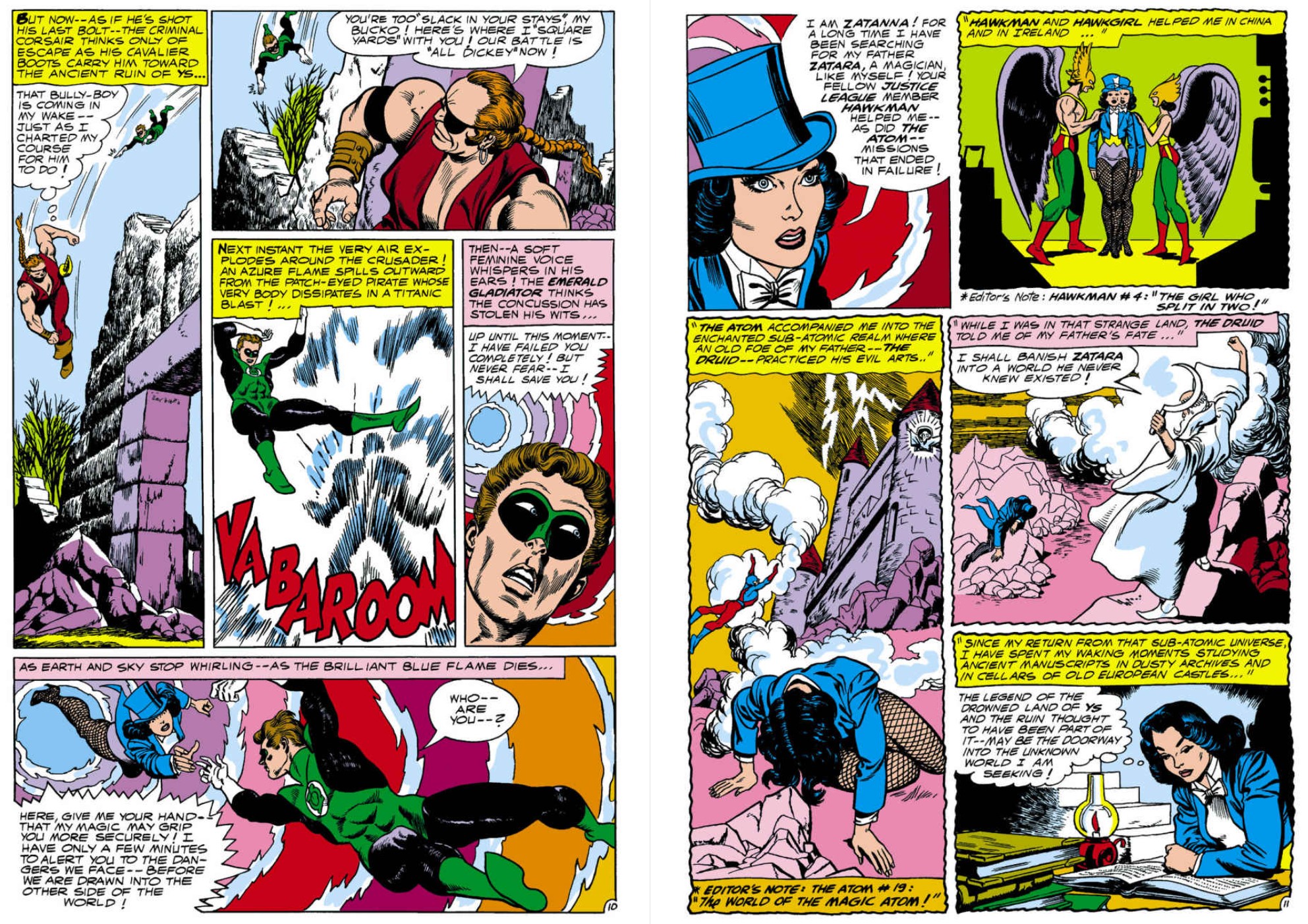
Green Lantern, Hawkman, The Atom and a slew of other costumed cavorters generated a gaudy global bubble of masked mavens which even forced the dedicated anthology suspense titles to transform into super-character split-books, with Martian Manhunter and Dial H for Hero monopolising House of Mystery whilst Mark Merlin – later Prince Ra-Man – sharing space with Eclipso in House of Secrets. When caped crusader craziness peaked and popped, HoS was one of the first casualties, folding with #80, the September/October 1966 issue.

However, nothing combats censorship better than falling profits and by the end of the 1960s the Silver Age superhero boom was over, with many titles gone and some of the industry’s most prestigious series circling the drain. This real-world Crisis prompted surviving publishers to loosen self-imposed restraints against crime and horror comics. Nobody much cared about gangster titles at that juncture, but liberalisation coincided with another bump in public interest for all things Worlds Beyond-ey, so resurrection of scary stories was a foregone conclusion and obvious no-brainer…

Even ultra-wholesome Archie Comics re-entered the field with a rather tasty line of Red Circle Chillers: a minor substrate they regularly return to with style and potency to this day.

Thus, with absolutely no fanfare at all House of Mystery #174 (cover dated May/June 1968), confirmed the downturn in superhero stories eveywhere as it hit newstands everywhere presenting a bold banner asking Do You Dare Enter The House of Mystery? Inside it reprinted admittedly excellent short fantastic thrillers originally seen in House of Secrets from those heady days when it was okay to scare kids…

It was a slow but unstoppable hit which just kept spreading…

This DC Finest collection gathers a year’s worth of scary stuff snapshotted from House of Secrets #81-85; House of Mystery #180-185; The Witching Hour #3-7; The Unexpected #113-117 and includes a short back-up yarn from Phantom Stranger volume 2 #5, which cumulatively filled dank evenings from May 1969-April 1970. It all starts – with absolutely no fanfare at all – in HoM #180…

Going from strength to strength, the fear flagship was increasingly drawing on DC’s major artistic resources. Astounding opener ‘Comes a Warrior’ is a chilling faux Sword & Sorcery classic written and drawn by da Vinci of Dynamism Gil Kane, and inked by incomparable Wally Wood, before they illustrate Mike Friedrich’s fourth-wall-demolishing ‘His Name is Cain Kane!’

A Sergio Aragonés gag page in the long-running ‘Cain’s Game Room’ roaming sequence then cleanses palates for Cliff Rhodes & Joe Orlando’s text-terror ‘Oscar Horns In!’ before Marv Wolfman & Bernie Wrightson proffer prophetic vignette ‘Scared to Life’. A double-page ‘Cain’s Game Room’ precedes an uncredited forensic history lesson drawn by Morris Waldinger and recycled as‘Cain’s True Case Files’ to close proceedings for that title. Meanwhile over in long-running, recently remodelled fantasy anthology The Unexpected, the former sci fi vehicle was retooling as a gritty, weird thriller venue with George Kashdan, Jack Sparling & Vince Colletta detailing ‘The Shriek of Vengeance’. Here, Golden Age troubleshooter Johnny Peril is accused of heinous crimes and then abducted by maniac justice dispenser The Executioner. His gladiatorial tests are no problem for an ordinary guy who’d been facing the incomprehensible unknown since Comics Cavalcade #19 (February 1947) and soon the true motive is exposed and the scheme crushed…

Dave Wood & recent Charlton Comics émigré Pat Boyette then glare into ‘The Eyes of Death’, revealing the fate of an actual criminal who gains the power to see iminent fatalities before Wood, Curt Swan & Mike Esposito ride ‘The Tunnel of Love Fear!’ to introduce potential host narrator Judge Gallows, discussing one of his stranger cases…

With Tales of the Unexpected #105 and House of Mystery #174, National/DC had gambled heavily that anthology horror material was back and wouldn’t call the wrath of the gods – and parents – down upon them. Now that they had a boutique mystery stable, they put lots of thought and effort into creating an all-new title to further exploit our morbid fascination with all thingies fearsome and spooky. They would also resurrect House of Secrets (cancelled in late 1969. Apparently in those heady days it was okay – and profitable – to scare the heck out of little kids if you also made them laugh.

Edited until #14 by Dick Giordano, The Witching Hour first struck with a February/March 1969 cover-date (actually on-sale from December 19th 1968). From the outset it was an extremely experimental and intriguing beast. Here however we begin with #3 (cover-dated July 1969). In this graphic grimoire, cool & creepy horror-hosts traditionally introducing the entertainments are replaced by three witches. Based as much on a common American misapprehension of Macbeth as the ancient concept of Maiden, Mother & Crone, this torrid trio constantly strove to outdo (and outgross) each other in telling of terror tales.

Crucially, Cynthia, Mildred & Mordred – as well as shy monster man-servant minion Egor – were designed by and initially delineated by master illustrator Alex Toth, making framing sequences between yarns as good as and frequently more enthralling than the stories they brazenly bracketed. Following intro ‘You Be Our Judge’ from Toth & Giordano, the graphic genius & Colletta illustrate Don Arneson’s medieval mood masterpiece ‘The Turn of the Wheel!’ before Alan Riefe & Sparling tell a decidedly different ghost-story in ‘The Death Watch’. Steve Skeates & Bernie Wrightson then debut a decidedly alterative fantasy hero in ‘…And in a Far-Off Land!’, followed by the first in a series of short prose vignettes: anonymous fright-comedy ‘Potion of Love’ and Mike Sekowsky & Giordano deliver the sisters’ farewell epilogue…

Back at House of Mystery #181, scripted by Otto Binder and drawn by quirkily capable Sparling, ‘Sir Greeley’s Revenge!’ offers a heart-warmingly genteel spook story, albeit jump-cut interrupted by new comedy featire Page 13 (from Aragonés) after which Wrightson’s first long tale is fantastical reincarnation saga ‘The Siren of Satan’ (scripted by Bob Kanigher) before we get to the next big thing – and an actual resurrection…

House of Secrets returned with #81 (August/September 1969) just as big sister HoM had done a year previously. Under a bold banner declaiming “There’s No Escape From… The House of Secrets”, Mike Friedrich, Jerry Grandenetti & George Roussos introduced a ramshackle, sentient old pile in ‘Don’t Move It!’, after which Bill Draut limned the introduction of bumbling caretaker Abel (with a guest-shot by his murderous older brother Cain) in eponymous intro set-up fable ‘House of Secrets’. A prose yarn by Gerry Conway ‘Burn this House!’ gave the portly porter a pause before he kicked off his storytelling career with Conway & Sparling’s‘Aaron Philip’s Photo Finish!’ before the inaugural issue is put to bed with a Draut limned ‘Epilogue’

The Unexpected #114 led with Kashdan, Ed Robbins & Colletta’s ‘Johnny Peril – My Self… My Enemy!’ as a modern day alchemist unleashes a lifeforce-stealing golem on the doughty P.I., after Dave Wood & Art Saaf premier a new host regaling readers with ‘Tales of the Mad, Mod Witch’ and opening with a warning about magic fountains and poorly aimed coins in ‘The Well of Second Chances’. Thematically on safe ground, we switch to Witching Hour #4 as Toth renders a ‘Witching Hour Welcome Wagon’ after which Conway scripts spectral saga ‘A Matter of Conscience’ for Sparling & George Roussos. Anonymous prose piece ‘If You Have Ghosts?’ then segues into smashing yarn ‘Disaster in a Jar’ (Riefe & Boyette) before Conway turns in period witchfinder thriller ‘A Fistful of Fire’ for José Delbo – a vastly underrated artist who was on the best form of his career at this time.

Toth’s Weird Sisters close out that issue as we move on to HoM #182 which opens with one of the most impressive tales of the entire decade. Jack Oleck’s take on the old cursed mirror plot is elevated to high art with his script for ‘The Devil’s Doorway’ illustrated by incredible Alex Toth. Marv Wolfman & Wayne Howard follow with ‘Cain’s True Case Files: Grave Results!’, and an expose of the Barbadian sugar trade, after which an Aragonés Game Room break leads to nightmarish Gothic revenge tale ‘The Hound of Night!’ from Kanigher & Grandenetti. HoS #82 was a largely Conway scripted affair with Draut drawing both ‘Welcome to the House of Secrets’ and ‘Epilogue’, whilst cinema shocker ‘Realer Than Real’ was illustrated by Werner Roth & Vince Colletta. Prose poser ‘His Last Resting Place!’ leads to Wolfman & Giordano’s short sci fi saga ‘Sudden Madness’ prior to Conway & Sparling regaling us with salutary tale of murder and revenge ‘The Little Old Winemaker’. Finally, as realised by Dick Dillin & Neal Adams ‘The One and Only, Fully-Guaranteed, Super-Permanent, 100%’ presents a darkly comedic eerily unsettling tale of domestic bliss and how to get it…

Carl Wessler & Ed Robbins open Unexpected #115 with Blitz- survivor Maude Waltham unwisely accessing the ‘Diary of a Madman’ and being drawn into a world she could not comprehend or cope with, after which Dave Wood, Swan & Jack Abel reveal how an opportunistic showman appropriates an old abndined house and discovers ‘Abrakadabra – You’re Dead!’ A classic plot gets a sixties makeover as ‘The Day Nobody Died!’ (by Wood as D.W. Holz, Werner Roth & Frank Giacoia) details the repercussions of a wise man unwisely caging the angel of death…

In Witching Hour #5 the sisters are at their most outrageously, eerily hilarious introducing an anonymous yarn lavishly embellished by Wrightson – a nifty nautical nightmare of loneliness and ‘The Sole Survivor!’, before text-teaser ‘The Non-Believer! and Boyette’s stunning, clownish creep-feature ‘A Guy Can Die Laughing!’ set the scene for Steve Skeates, Stanley Pitt & Giordano’s dating dilemma ‘The Computer Game’ I think this was one of the first to explore that now-hoary plot, and it neatly anticipates Toth’s sign off for the witches and added single-page black-comedy bonus ‘My! How You’ve Grown!’ from Sid Greene…

For #183, Joe Orlando offers Cain introductory chuckle ‘Welcome to the House of Mystery’ before, in collaboration with Oleck, Grandenetti reveals the misery of ‘The Haunting!’ Following more mirth in Cain’s Game Room (by John Albano) and vintage Bernard Baily ‘Odds and Ends from Cain’s Cellar’, ‘Curse of the Blankenship’s’ and ‘Superstitions About Spiders’, Wolfman & Wrightson contribute ‘Cain’s True Case Files: The Dead Can Kill!’ A bonanza of Aragonés comprising a comedic horroscope on Page 13 and two pages of Cain’s Game Room precedes a canny teaming of Kanigher with Grandenetti & Wally Wood that results in the truly bizarre ‘Secret of the Whale’s Vengeance’

After Draut & Giordano’s ‘Welcome to the House of Secrets’ piece, superstar Toth made his modern HoS debut with Wolfman-written fantasy ‘The Stuff That Dreams are Made Of’, before Mikes Royer & Peppe visualise sinister love-story ‘Bigger Than a Breadbox’, bookended by anonymous text teaser ‘Once Upon a Time in Mystery Book…’ Wrapping up, Conway & Draut revive gothic menace for chilling fable ‘The House of Endless Years’.

Modernity is briefly embraced in Unexpected #116 as thanks to Dave Wood & Art Saaf, The Mad Mod Witch escorts a group of strangers on an ‘Express Train to Nowhere!’ after which author unknown & Boyette describe a doomed Dutch peddlar’s brush with legend and ‘Steps to Disaster’, before Murphy Anderson picks out apparel ‘Mad to Order’ as Wrightson details the problems wrapped up in a ‘Ball of String!’ ‘Ashes to Ashes, Dustin to Dust?’ then closes the issue with a spectral tale of love & death from Murray “Al Case” Boltinoff & Sid Greene…

Sekowsky & Giordano limn Dave Kaler’s take on the sinister sisters’ intro for Witching Hour #6, after which far darker horror debuts as ‘A Face in the Crowd!’ (Conway, Mike Roy & Mike Peppe), wherein a Nazi war-criminal and concentration camp survivor meet in an American street. Wolfman & Delbo depict a tale of neighbourly intolerance in ‘The Doll Man!’ and ‘Treasure Hunt’ (Skeates, John Celardo & Giordano) shows why greed isn’t always good. Also included were Conway’s prose tale ‘Train to Doom’, ‘Mad Menace’ – a ½-page gag strip by John Costanza – and ‘Distortion!’: another Greene-limned one-pager.

HoM #184 features the triumphant return of Oleck & Toth for captivating Egyptian tomb raider epic ‘Turner’s Treasure’ before cartoon pauses for Page 13 (a diploma fron Aragonés & Orlando) and Orlando gag ‘The Fly’ deftly segues into epic barbarian blockbuster ‘The Eyes of the Basilisk!’ by Bridwell, Gil Kane & Wally Wood…

Closing with more Albano Cain’s Game Room giggles, next comes info short ‘The Devil’s Footprints!’ by Kanigher, Swan & Nick Cardy from The Phantom Stranger #5 (cover-dated January/February 1970) before in House of Secrets #84, Conway & Draut maintain the light-hearted bracketing of stories prior to properly beginning with ‘If I Had but World Enough and Time’ (Wein, Dillin & Peppe): a cautionary tale about too much TV. Tensions grow with Wolfman & Greene’s warning against wagering in ‘Double or Nothing!’ and Skeates, Sparling & Abel’s utterly manic parable of greed ‘The Unbelievable! The Unexplained!’, before Wein & Sparling mess with our dreams in ‘If I Should Die before I Wake…’

Johnny Peril leads in Unexpected #117, as Kashdan & Greene reveal how he becomes the patsy for a clan seeking to avoid a hereditary curse in ‘Midnight Summons the Executioner!’, after which Case, Grandenetti & Draut see a woman trick fate by accepting ‘Hands of Death’ whilst Wessler & Tuska detail the downfall of a money-mad beast in ‘The House that Hate Built!’ Wessler & Bruno Premiani then detail the uncanny ‘Death of the Man Who Never Lived!’ in a spy yarn unlike any other…

In Witching Hour #7, Toth & Mike Friedrich show spectacular form for the intro and bridging sequences, whilst Draut is compulsively effective in prison manhunt saga ‘The Big Break!’, with scripter Skeates also writing modern-art murder-mystery ‘The Captive!’ for Roussos. Friedrich & Abel advise a most individual baby to ‘Look Homeward, Angelo!’, whilst text piece ‘Who Believes Ouija?’ and Jack Miller & Michael Wm. Kaluta’s Gothically delicious ‘Trick or Treat’ round out the sinister sights in this issue. Then, House of Mystery #185 sees Cain take a more active role in all-Grandenetti yarn ‘Boom!’, with Albano, Aragones & Orlando Page13 and Cain’s Game Room, prior to Wayne Howard illustrating the sinister ‘Voice from the Dead!’ Following more Orlando Game-iness prolific Charlton scribe Joe Gill debuts with ‘The Beautiful Beast’: a lost world romance perfectly pictured by EC alumnus Al Williamson.

This monolitic montage of macabre mirth and scary sagas ceases with House of Secrets #85. Here, Cain & Abel acrimoniously open, after which Wein & Don Heck disclose what can happen to ‘People Who Live in Glass Houses…’ whilst graphic legend Ralph Reese limns Wein’s daftly ironic ‘Reggie Rabbit, Heathcliffe Hog, Archibald Aardvark, J. Benson Baboon and Bertram the Dancing Frog’, ere John Costanza contributes comedy page ‘House of Wacks’ and Conway, Kane & Adams herald the upcoming age of slickly seductive barbarian fantasy with gloriously vivid and vital ‘Second Chance’.

With iconic covers from Neal Adams, Jack Adler, Toth, Sekowsky, Cardy and Gray Morrow this (hopefully first of many) moody mystery compilations is a perfect accompaniment to dark nights in, and one you can depend on to astound and amaze in equal amounts.
© 2025 DC Comics. All Rights Reserved.

Today – or maybe even tonight – in 1939 underground cartoonist Frank Stack was born. His blasphemous antics have made us laugh for decades. Why not check out The New Adventures of Jesus: The Second Coming.

In 2011 today UK icon Mick Anglo died. He’s all over this blog if you want to see something very special but I’d advise scoping out one of his unique Annual creations, such as Batman Story Book Annual 1967 (with Robin the Boy Wonder).

Chas Addams™ Half-Baked Cookbook: Culinary Cartoons for the Humorously Famished


By Charles Addams (Simon & Schuster)
ISBN: ?978-0-7432-6775-5 (PB) eISBN: 978-1-439-10386-9

This boos includes Discriminatory Content produced in less enlightened times. It also uses Discriminatory Content included for comedic and satirical effect.

Cartoonist Charles Samuel Addams (1912-1988) was a distant descendant of two American Presidents (John Adams & John Quincy Adams). He compounded that hereditary infamy by perpetually making his real life as extraordinary as his dark, mordantly funny drawings.

Born into a successful family in Westfield, New Jersey, the precocious, prankish, constantly drawing child was educated at the town High School, Colgate University, the University of Pennsylvania, and New York City’s Grand Central School of Art, and apparently spent the entire time producing cartoons and illustrations for a raft of institutional publications.

In 1932 he became a designer for True Detective magazine – “retouching photos of corpses” – and soon after started selling drawings to The New Yorker. In 1937, at the peak of popular fascination in cinematic and literary horror stories, he began a ghoulish if not outright macabre sequence of family portraits that ultimately became his signature creation. However, during WWII, he toned down the terror and served with the US Signal Corps Photographic Center, devising animated training films for the military.

Whether Addams artfully manufactured his biography to enhance his value to feature writers or was genuinely a warped and wickedly wacky individual is irrelevant, although it makes for great reading – especially the stuff about his wives – and, as always, the internet is eager to be your informative friend…

What is important is that in all the years he drew and painted those creepily sardonic, gruesome gags and illustrations for The New Yorker, Colliers, TV Guide and so many others, he managed to beguile and enthral his audience with a devilish mind and a soft, gentle approach that made him a household name long before television turned his characters into a hit and generated a juvenile craze for monsters and grotesques that lasts to this day. That eminence was only magnified once the big screen iterations debuted. And now we have streaming fun too. He would have loved the sheer terrifying inescapability of it all…

As he worked on unto death, Addams got even wackier: marrying his third wife in a pet cemetery, spending a fortune collecting weapons and torture devices – “for reference” – and inventing… recipes…

In a legendary career dedicated to being odd, the sudden swerve into crafting and compiling an actual cookbook garnished with macabre cartoon japery is a fabulous affirmation of all the unharnessed unpredictability man stood for, and one which constantly delivers treat after tasty treat…

The compendium commences with introduction ‘Café Styx’ from culinary author Allen S. Weiss, after which a bundle of gags – many starring Addams Family stalwarts – brings us to the secrets of making mouthwatering ‘Mushrooms Fester’. Always be sure when cooking this where you sourced your fungi from – and what you need them to do…

The pattern repeats throughout in chapters divided into ‘Platters’: soundly sinister laughs and gruesomely gustatory giggles peppered with rather tasty recipes. You can see for yourself the quality of the cartooning here so I’ll be brief for a change and simply menu the other olfactory and tongue-tangling taste-bombs included.

The next is utterly self-explanatory ‘Macaroni and Oysters’, ending the first course prior to commencing the ‘Second Platter’ – specifically ‘Black Puddings’ (Yanks call them “blood puddings” and they’re not wrong) and ‘Transparent Pie’ with ‘Boiled Salad of Fiddleheads’ (that’s newly sprouted ferns)…

Pausing for a delicious ‘Intermezzo’ of home-made (for who could sell them?) ‘Dandelion Beer’ and ‘Influenza Punch’ accompanied by ‘Stewed Pigeons’, ‘Potted Woodland Squirrel’ & ‘Fried Locusts’ sagaciously catered to with helpful ‘Hints for the Ill’, we eventually come to what all gastrophiles, gastronomes (and gastrophobes!) have been waiting for: the triumphant ‘Third Platter’ and subsequent ‘Digestifs’

Here the drawings are in their prime and perfectly piquant whilst consumers are advised on how to tackle ‘Hearts Stuffed for Valentine’s Day’ (with a most special Stuffing mix); ‘Ostrich Eggs’ and ‘Reindeer Rice Curry’. Of course, as with all comedy, acquiescence and acceptance in adversity might mean modern kitchen scullions might need to replace the odd ingredient for all these GENUINE early American recipes collected by Chas and Tee Addams over decades, but what really matters is that gradually older collections of the Addams oeuvre are being unearthed and this one’s truly scrumptious; or perhaps just an acquired taste…

For clarity and pure knowledge this volume closes with a full biography of the auteur and full list of ‘Credits’ for the recipes included.

Should you not be as familiar with his actual cartoons as with the big and small screen legacy Addams unleashed, you really owe it to yourself to see the uncensored brilliance of one of America’s greatest humourists. It’s very appetising and dead funny…

© 2005 by Tee and Charles Addams Foundation. All rights reserved.

Today was a biggie for Comics. In 1764, grand master and originator of mean drawing William Hogarth died. In 1931 Stan’s brother (the one who could write AND Draw) Larry Lieber was born. Among his many unsung triumphs was Rawhide Kid, co creating Iron Man and writing most of the stories in Mighty Marvel Masterworks: The Mighty Thor volume 1: The Vengeance of Loki.

In 1941 Belgian Bob De Groot was born. You really should read one of his many light adventure gems such as Clifton volume 5: Jade.

In 1970, two US strips launched today one was Mel Lazarus’ venerable Momma, and the other was by Gary Trudeau. Go see and worship some more with the fabulous Yuge! – 30 Years of Doonesbury on Trump.

You Are Maggie Thatcher: A Dole-Playing Game


By Pat Mills & Hunt Emerson (Titan Books)
ISBN: 978-1-85286-011-0 (TPB)

This book includes Discriminatory Content produced in less enlightened times, and for comedic and satirical effect.

With the recent anniversary hagiographic whitewashing of “the Greatest Prime Minister we’ve ever had”, fond reminiscences of those truly grim times and policies by the still-privileged and renewed assaults on the poor and unwelcome in Britain, why don’t we proles also indulge in bit of comforting nostalgia for the good old days?

The most successful comic strips depend more on the right villain than any hero or combination of protagonists, so this quirky oddment was better placed than most for success. Created by British comics legends Pat Mills & Hunt Emerson at a time when our industry was at its most politically active, this strident, polemical satire put the proletarian boot in on the appalling tactics and philosophies of the third term Thatcher government with savagely hilarious art and stunningly biting writing.

Illo 1 here please


The concept is simple now but groundbreaking in 1987. The reader is to be Prime Minister Maggie who, by reading sections of the book and selecting a choice of action at the end of each chapter is directed to another page to experience the ramifications of that decision. The objective is to win another election (ah the wonderful irony!) and the method is to make only vote-winning decisions – hence the multiple-choice page-endings. The intention is not to win the game, obviously. What kind of monster are you?!

This powerful piece of graphic propaganda may have dated on some levels but the home truths are still as pertinent. Even as Maggie and her demented pack of lap-dogs wriggled and squirmed on Mills & Emerson’s pen-points, their legacy of personal gain was supplanting both personal and communal responsibility to become the new norm. More than ever, today’s Britain is their fault and this still readily available book reminds us of a struggle too few joined and a fight we should have won, but didn’t.

It’s still really, really funny too.
Text and concept © 1987 Pat Mills. Illustrations © 1987 Hunt Emerson. All Rights Reserved.

Today in 1969 anarchic weekly British treasure trove Whizzer and Chips began its three-decade rampage of fun. You could get a flavour of it all (mostly toffees, liniment, perished rubber and sweaty feet) by seeing Whizzer and Chips Annual 1979.

In 1973 cartoonist Walt Kelly finally had enough of our petulant crap and passed over. You can pay your respects at Pogo – The Complete Syndicated Comic Strips volume 3: Evidence to the Contrary

Steve Ditko Archives volume 2: Unexplored Worlds


By Steve Ditko, Joe Gill & various, edited by Blake Bell (Fantagraphics Books)
ISBN: 978-1-60699-289-0 (HB/Digital edition)

Win’s Christmas Gift Recommendation: Immaculate Yarn-Spinning… 9/10

This book includes Discriminatory Content produced in less enlightened times. It also has Discriminatory Content included for comedic and satirical effect.

Once upon a time the anthological title of short stand-alone stories was the sole staple of the comicbook profession, where the plan was to deliver as much variety as possible to the reader. Sadly, that particular vehicle of expression seems all but lost to us today…

Despite his death Steve Ditko remains one of our industry’s greatest talents and one of America’s least lauded. His fervent desire to just get on with his job and to tell stories the best way he can – whilst the noblest of aspirations – had always been a minor consideration or even stumbling block for the commercial interests which for so long controlled all comics production and still exert an overwhelming influence upon the mainstream bulk of comic book output. Before his time at Marvel, young Ditko perfected his craft creating short sharp yarns for a variety of companies and it’s an undeniable joy today to be able to look at this work from such an innocent time when he was just breaking into the industry: tirelessly honing his craft with genre tales for whichever publisher would have him, utterly free from the interference of intrusive editors.

A superb full-colour series of hardback collections reprinted those early efforts (all of them here are from 1956-1957) with material produced after the draconian, self-inflicted Comics Code Authority sanitised the industry following Senate Hearings and a public witch-hunt.

Most are wonderfully baroque bizarre supernatural or science fantasy stories, but there are also examples of Westerns, Crime and Humour: cunningly presented in the order he completed and sold them rather than the more logical but far-less-revealing chronological release dates. Moreover, they’re all helpfully annotated with a purchase number to indicate approximately when they were actually drawn – even the brace of tales done for Stan Lee’s pre-Marvel Atlas company.

Sadly, there’s no indication of how many (if any) were actually written by the moody master…

This second sublime selection reprints more heaping helpings of his increasingly impressive works: most courtesy of the surprisingly liberal (at least in its trust of its employees’ creative instincts) sweat-shop publisher Charlton Comics.

And whilst we’re being technically accurate, it’s also important to reiterate that those cited publication dates have very little to do with when Ditko crafted them: as Charlton paid so little, the cheap, anthologically astute outfit had no problem in buying material it could leave on a shelf for months – occasionally years! – until the right moment arrived to print. The work is assembled and runs here in the order Ditko submitted it, rather than when it reached our grubby sweaty paws…

Following an historically informative Introduction and passionate advocacy by Blake Bell, concentrating on Ditko’s near-death experience in 1954 (when the artist contracted tuberculosis) and subsequent recovery, the evocatively eccentric excursions open with a monochrome meander into the realms of satire with the faux fable – now we’d call it a mockumentary – ‘Starlight Starbright’ as first seen in From Here to Insanity (volume 3 #1 April 1956) before “normal” service resumes with financial fable ‘They’ll Be Some Changes Made’ (scripted by Carl Wessler from Atlas’ Journey Into Mystery #33, April 1956).

Here a petty-minded pauper builds a time machine to steal the fortune his ancestors squandered, after which a crook seeking to exploit a mystic pool finds himself the victim of fate’s justice in ‘Those Who Vanish’ (Journey Into Mystery #38, September 1956) again scripted by Wessler.

Almost – if not all – the Charlton material was scripted by astoundingly prolific Joe Gill at this time, and records are spotty at best, so let’s assume his collaboration on all the material here begins with ‘The Man Who Could Never Be Killed’ (Strange Suspense Stories #31, published in February 1957). This yarn of a circus performer with an incredible ethereal secret segues into ‘Adrift in Space’ (Mysteries of Unexplored Worlds #8 June 1958) as a veteran starship captain pushes his weary crew over the edge, whereas ‘The King of Planetoid X’ from the previous MoUW (February) details a crisis of conscience for a benevolent and ultimately wise potentate…

The cover of Strange Suspense Stories #31 (February 1957) leads into ‘The Gloomy One’ as a misery-loving alien intruder is destroyed by simple human joy, before the cover to Out of This World #5 (September 1957) heralds that issue’s ‘The Man Who Stepped Out of a Cloud’ and an alien whose abduction plans only seem sinister in intent. MoUW #5 (October 1957) tells the story of a young ‘Stowaway’ who finds fulfilment aboard a harshly-run space ship after which Out of This World #3’s cover (March 1957) ushers us to an apparent alien paradise for weary star-men in ‘What Happened?’

Next up is a tale from one of Charlton’s earliest star characters. The title came from a radio show that Charlton licensed the rights to, with the lead/host/narrator acting more as voyeur than active participant. The Mysterious Traveler spoke directly to camera, asking readers for opinion and judgement as he shared a selection of funny, sad, scary and miraculous human-interest yarns, all tinged with a hint of the weird or supernatural. Whenever rendered by Ditko, whose storytelling mastery, page design and full, lavish brushwork were just beginning to come into its mature full range, the contents of Tales of the Mysterious Traveler were always exotic and esoteric and utterly beguiling.

From issue #2 (February 1957), ‘What Wilbur Saw’ reveals the reward bestowed on a poverty-stricken country bumpkin who witnessed a modern-day miracle, after which Out of This World #3 covers a cautionary tale of atomic mutation in ‘The Supermen’ before the eerie cover to OoTW #4 (June 1957) signals a chilling encounter for two stranded sailors who briefly board the ‘Flying Dutchman’ whilst SSS #32’s cover (May 1957) dabbles in magic art when a collector is victimised by a thief who foolishly stumbles into ‘A World of His Own’.

From the same issue comes a salutary parable concerning a rich practical joker who goes too far before succumbing to ‘The Last Laugh’, after which ‘Mystery Planet’ (SSS #36, March 1958) offers a dash of interplanetary derring-do as valiant agent Bryan Bodine and comely associate Nedra confound intergalactic pirates piloting a planet-eating weapon against Earth!

A similarly bold defender liberates ‘The Conquered Earth’ from alien subjugation (OoTW #4, June 1957) whilst in ‘Assignment Treason’ (Outer Space #18. August 1958) the clean-cut hero goes undercover to save Earth from the predatory Master of Space as OoTW #8 (May 1958) and ‘The Secret of Capt. X’ reveals the inimical alien tyrant threatening humanity is not what he seems…

The cover to Mysteries of Unexplored Worlds #3 (April 1957) makes way for three fantastic thrillers, beginning with ‘The Strange Guests of Tsaurus’ as an alien paradise proves to be anything but, then ‘A World Where I Was King’ sees a clumsy janitor catapulted into a wondrous realm to win a kingdom he doesn’t want. Diverting slightly, Fightin’ Army #20 (May 1957) provides a comedic interlude as a civil war soldier finds himself constantly indebted to ‘Gavin’s Stupid Mule’ before ‘A Forgotten World’ wraps up MoUW #3’s contributions with a scary tale of invasion from the Earth’s core. ‘The Cheapest Steak in Nome’ turns out to be defrosted from something that died millions of years ago in a light-hearted yarn from MoUW #7 (February 1958)…

The cover to MoUW #4 (July 1957) precedes more icy antediluvian preservations found in the ‘Valley in the Mist’ whilst the one for Strange Suspense Stories #33 (August 1957) leads into a bizarre corporate outreach project as the ‘Director of the Board’ attempts to go where no other exploitative capitalist has gone before. Next, it’s back to MoUW #3 for a brush with the mythological in ‘They Didn’t Believe Him’ after which ‘Forever and Ever’ (SSS #33) reveals an unforeseen downside to immortality and Out of This World #3 sees a stranger share ‘My Secret’ with ordinary folk despite – or because of – a scurrilous blackmailer…

‘A Dreamer’s World’ from Mysteries of Unexplored Worlds #5 (October 1957) follows the chilling cover thereof as a test pilot hits his aerial limit and discovers a whole new existence, whilst Unusual Tales #7 (May 1957) traces the tragic path of ‘The Man Who Could See Tomorrow’ before the cover of Tales of the Mysterious Traveler #4 (August 1957) opens a mini-feast of voyeur’s voyages beginning with that issue’s ‘The Desert’: a saga of polar privation and survival.

TotMT #3 (May 1957) shows the appropriate cover and a ‘Secret Mission’ for a spy parachuted into Prague, whilst #4 offers ‘Escape’ for an unemployed pilot dragged into a gun-running scam in a south American lost world; ‘Test of a Man’ sees a cruel animal trainer receive his just deserts and ‘Operation Blacksnake’ grittily exposes American venality in the ever-expanding Arabian oil trade. Returning to Mysteries of Unexplored Worlds #5, ‘The Mirage’ torments an escaped convict who thinks he’s escaped his fate, whilst Texas Rangers in Action #8 (July 1957) sees a ruthless rancher crushed by the weight of his own wicked actions as ‘The Only One’, after which stunning covers to Unusual Tales #6 and 7 (February and May 1957) lead into our final vignette – ‘The Man Who Painted on Air’: exposing and thwarting a unique talent to preserve humanity and make a few bucks on the side…

This sturdily capacious volume has episodes that terrify, amaze, amuse and enthral: utter delights of fantasy fiction with lean, plots and stripped-down dialogue that let the art set the tone, push the emotions and tell the tale, from times when a story could end sadly as well as happily and only wonderment was on the agenda, hidden or otherwise.

These stories display the sharp wit and contained comedic energy which made so many Spider-Man/J. Jonah Jameson confrontations an unforgettable treat half a decade later, and this is another cracking collection not only superb in its own right but as a telling tribute to the genius of one of the art-form’s greatest stylists. This is something every serious comics fan would happily kill or die or be lost in time for…
Unexplored Worlds: The Steve Ditko Archive Vol. 2. This edition © 2010 Fantagraphics Books. Introduction © 2010 Blake Bell. All rights reserved.

Today in 1914, Jerry Siegel was born. Don’t make me have to finish this heads-up…

In 1937 Huey, Dewey & Louie Duck debuted. Ditto.

In 1959 The last issue of UK icon Comet was published and a decade later across the Pond Sidney Smith’s The Gumps ended. It had begun in 1917 as you’d know if read Sidney Smith’s The Gumps.

Chas Addams Happily Ever After: A Collection of Cartoons to Chill the Heart of You


By Charles Addams (Simon & Schuster)
ISBN: 978-1-43910-356-2 (PB/Digital edition)

This book includes Discriminatory Content produced in less enlightened times. It also has Discriminatory Content included for comedic and satirical effect.

Cartoonist Charles Samuel Addams (1912-1988) was a distant descendant of two American Presidents (John Adams & John Quincy Adams). He compounded that hereditary infamy by perpetually making his real life as extraordinary as his dark, mordantly funny drawings.

Born into a successful family in Westfield, New Jersey, the precocious, prankish, constantly drawing child was educated at the town High School, Colgate University, the University of Pennsylvania, and New York City’s Grand Central School of Art, and apparently spent the entire time producing cartoons and illustrations for a raft of institutional publications.

In 1932 he became a designer for True Detective magazine – “retouching photos of corpses” – and soon after started selling drawings to The New Yorker. In 1937, at the peak of popular fascination in cinematic and literary horror stories, he began a ghoulish if not outright macabre sequence of family portraits that ultimately became his signature creation. However, during WWII, he toned down the terror and served with the US Signal Corps Photographic Center, devising animated training films for the military.

Whether Addams artfully manufactured his biography to enhance his value to feature writers or was genuinely a warped and wickedly wacky individual is irrelevant, although it makes for great reading – especially the stuff about his wives – and, as always, the internet is eager to be your informative friend…

What is important is that in all the years he drew and painted those creepily sardonic, gruesome gags and illustrations for The New Yorker, Colliers, TV Guide and so many others, he beguiled and enthralled his audience with a devilish mind and a soft, gentle approach that made him a household name long before television turned his characters into a hit. This was a substantial part of what generated the craze for monsters and grotesques that lasts to this day. That eminence was only magnified once the big screen iterations debuted. And now we have streaming fun too. He would have loved the sheer terrifying inescapability of it all…

As he worked on unto death, Addams got even wackier: marrying his third wife in a pet cemetery, spending an absolute fortune collecting weapons and torture devices – “for reference don’cha know” – and inventing… recipes…

There will be more on that last one another time but what really matters is that older collections of his oeuvre are finally being unearthed. This one – compiled from Addams’s personal archive, with many previously unpublished gems, explores the widest gamut of emotion, from ecstatic love to disappointed affection to murderous obsession. It’s a creepy corker demonstrating that love really does hurt…

Chas Addams Happily Ever After: A Collection of Cartoons to Chill the Heart of You opens in full scholar mode with ‘Chas Addams’ a photo-essay appreciation by H. Kevin Miserocchi, backed up by an explanation of the work of the ‘Tee and Charles Addams Foundation’ – remembering of course that the Tee here is his truly kindred spirit third wife Marilyn Matthews Miller-Addams (1926–2002).

Then the cartoon carnival commences with early works as ‘In the Beginning’ sets the cultural scene with crime, terror, murder and the ever-lurking supernatural before the remainder of the perilous pictorium offers insights into what used to be called “the war of the sexes”. This socially sensitive selection judiciously deals even handedly with ‘His Side’ and ‘Her Side’ before going on to test ‘His Resolve’ and ‘Her Resolve’

The matter is naturally settled in revelatory style with ‘The Final Score’

For clarity and pure knowledge this hilariously judgemental tome closes with a full list of ‘Dates of First Publication’ and the happy confirmation that a goodly proportion of the gags are new/unpublished until this time.

Should you not be as familiar with his actual cartoons as with the big and small screen legacy Addams unleashed, you really owe it to yourself to see the uncensored brilliance of one of America’s greatest humourists. It’s dead funny…
© 2006 by Tee and Charles Addams Foundation. All rights reserved.

Today in 1897 English writer & cartoonist Charles Henry Ross died. He’s one of the chaps accused of inventing comics with his disreputable rogue Ally Sloper. The closest we’ve got yet to exposing that rapscallion was in Great British Comics.

DC Finest Blue Beetle – Blue Beetle Challenges The Red Knight


By Joe Gill, Roy Thomas, Gary Friedrich, Benjamin Smith, Bill Fraccio, Tony Tallarico, Dick Giordano, Steve Ditko, Dan Reed & Bob McLeod, Albert Val, Bill Black & various (DC Comics)
ISBN: 978-1-79950-248-7 (TPB)

This book includes Discriminatory Content produced in less enlightened times

This absorbing yet inarguably eccentric DC Finest compilation offers some of the rarest material ever aquired by the company and probably owes its existence solely to the screen success of the ever-changing titular star. I honestly never expected to see such seminal material in a modern collection and I hope the dated nature of the material finds an appreciative audience and rewards DC for their boldness… 

Sadly as ever, it’s not yet available digitally, but we live in hope…

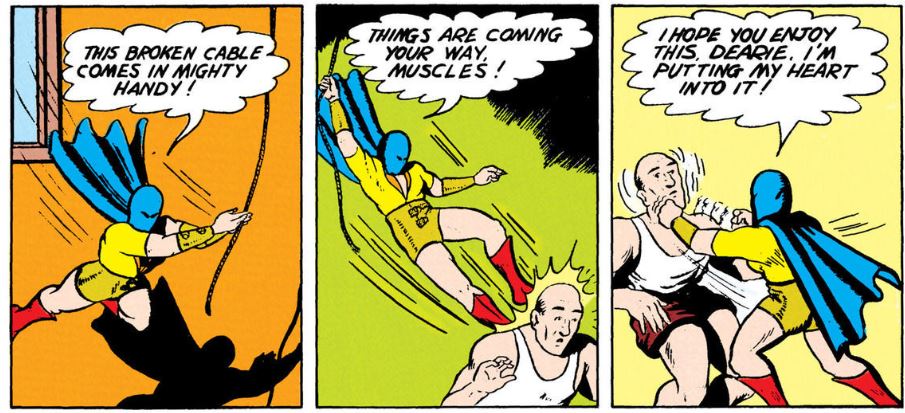
The Blue Beetle premiered in Mystery Men Comics #1, released by Fox Comics and cover-dated August 1939. The pulp-inspired star was created by Charles Nicholas and possibly initially scripted by Will Eisner. “Charles Nicholas” was a shared pseudonym used by Chuck Cuidera (Blackhawk), Jack Kirby (everything) and Charles Wojtkowski (Blonde Phantom, Young Allies, Nyoka, Iron Corporal) with the last one generally attributed with actually inventing our remarkably resilient Azure Adventurer.

A mystery man in every sense of the term, the Cobalt Crimecrusher was inexplicably popular from the start: translating his comics venues into merchandise, a radio show and even a newspaper comic strip. Constantly acquired and traded by numerous publishers, BB survived the extinction of most of them: blithely undergoing many revisions to his origins and powers. By the mid-1950s he had ended up at Charlton Comics, appearing sporadically in a few long-inventoried tales before seemingly fading away. However, that was only until the early 1960s superhero resurgence when Joe Gill, Bill Fraccio, Tony Tallarico and, latterly, neophyte scripter/devoted Golden Age acolyte Roy Thomas revised and revived the character. It led to a unique 10-issue run spanning June 1964 to March 1966 (technically, two separate 5-issue runs), but you’ll see that it wasn’t quite that simple…

Pulling together many disparate strands from previous incarnations, former cop and valiant troubleshooter Dan Garrett was reshaped into an archaeologist gifted with a mysterious, magical ancient Egyptian scarab. This trinket would transform him into a lightning-throwing, super-sensed flying superman whenever he touched the scarab and uttered trigger phrase “Khaji Dha!”

After another brief sojourn in comic book limbo, Garrett resurfaced when Steve Ditko took on the concept, tweaking it to construct a fresh retooled hero for the gadget-conscious, superhero-savvy society perfect to continually confront a crimeridden culture.

Ditko accepted and acknowledged but sagely set aside all that prior history to utterly recreate a hero he could understand. Ted Kord is an earnest and proudly decent young scientist with a secret tragedy in his past, which Ditko and scripter Gary Friedrich sagely forbore revealing in deference to intrigue and action. The result was a taut, captivating noir thriller that opened the neopgyte’s azure casebook – which we’ll get to in the fullness of time…

Here, though, we open with the venerable veteran bursting back onto newstands courtesy of Gill, Fraccio, & Tallarico.

Cover-dated June 1964 the revival began in Blue Beetle (vol. 1, #1) with the disinterrment of ‘The Giant Mummy Who Was Not Dead’ as prominent visitor Dr. Dan Garrett and comely local egyptologist Professor Luri Hoshid fall foul of a rapidly changing political crisis whilst excavating an ancient site. The tomb of Kha-Ef-Re holds untold discoveries but resident strongman-with-despotic-aspirations – and a private nuclear arsenal – General Amenhotep may well end their dig out of sheer spite. Threatened but perservering, the duo unearth vile Kha-Ef-Re’s remains and a fantastic blue scarab that seemingly acts as a means of imprisoning his mummy.

On touching the gem, Garrett experiences an astounding vision as another ancient Egyptian – “The Great Pharoah” – reveals the scarab is a portal to fantastic power to be used in the service of good…

Transformed, Garrett immediately gets a chance to test it as a nuclear strike by Amenhotep’s forces awakens the mummy which grows to fantastic size and rampages across the nation. Thankfully the powers and abilities of The Blue Beetle are sufficient to defeat and re-entomb the monster and deal with the military maniac who thought to exploit him…

Relentlessly formulaic but somehow ly kitsch and bizarrely appealing, the stage was set for a succession of the same as BB #2’s ‘Hot War in the Arctic’ finds Garrett and sexy accomplice du jour Captain Elaine Norr (USAF) investigating peril in the far north. Here they clash with Red Chinese forces building secret airbases as well as cavemen, lost Goths, extinct big beasts and even dinosaurs from the sanctuary of a lost land… until more hastily applied atomics trigger a disaster…

Alien invasion was the theme of the third adventure as supersonic transport and possibly even the space program were threatened by a man who talked to lightning. ‘Mr. Thunderbolt and the Superstar’ led to a sustained war of nerves and powers narrowly won for humanity before a traditional supervillain arrived in the bright green form of ‘The Praying Mantis-Man’. Aided by Mexican entymologist firecracker Juanita Rivera, Garrett and his alter ego barely survive the efforts of self-mutating chlorophyl addict Hunter Mann to replace humanity with giant bugs. The macabre yarn is supplemented by a pinup of the Cobalt Crusader by Pat Masulli, before #5 finds Gill, Fracchio & Tallarico disclosing how and why ‘Blue Beetle Challenges the Red Knight’

This eerie yarn sees Garrett come to the aid of his friend Lewis Coll after the astrophysicist returns from a space mission strangely altered. Now obsessive and cruel, Coll shuns his fiancee Regina White and transforms himself into a invulnerable crimson armoured tyrant seeking to destroy all aircraft. So tough is his opposition that Blue Beetle must seek aid from the The Great Pharoah himself to end the threat…

The series went on a brief hiatus and returned with a new numbering system as, cover-dated July 1965, Blue Beetle #50 pitted the hero against ‘The Scorpion’ as villainous Mister Crabb sought to control the oil industry with thugs and giant robots, whilst in # 51 deranged incel Dr. Jeremiah Clugg sought to offset his self-perceived physical flaws and failings with women by placing his personality and mentality inside a super-srobot dubbed ‘Mentor the Magnificent’. Unable to reason, the Beetle had to quell his increasing instability with force…

Gill & Tallarico handled #52 as ‘Magno, the Man Who Shakes the World’ finds disgraced anthropologist Louis Forte targeting Garrett for revenge that escalates into shattering the entire planet as tectonic terrorist Magno-Man, after which Praying Mantis-Man returns to bedevil humanity in ‘The People Theives’, with the mantid maniac snatching humans as lab fodder until the Azure Avenger steps in and stomps him…

The last hurrah of the old guard saw aspiring junior Roy Thomas script for Fracchio & Tallarico a deft return to Egypt in final foray (Blue Beetle #54 February/March 1966) as Garrett and Luri Hoshid reunite after her latest find is co-opted by a rival who knows its true power. Sadly even Professor Philipps is unaware of the full force and malign sentience of ‘The Eye of Horus’ Soon the ancient device is enslaving and transforming humans in its quest for dominance, but the Great Pharoah has a plan to aid his new agent defeat it. All the hero has to do is visit the gods in the Land of the Dead and return with a certain weapon…

Despite it being the height of superhero madness in popular culture, Blue Beetle folded then and was left fallow until the end of the year. As stated above, he returned much changed in the back of Captain Atom (#83 November 1966) with Charlton Comics’ biggest gun in the process of his own refit and renewal again courtesy of Ditko.

The remodelling of the Atomic Ace left room for expansion and experimentation so Ditko plunged right in, introducing an acrobatic, technologically armed swashbuckler taking care of business without any extraneous exposition or explanation… and using one of the oldest names in the business.

Here ‘The New Blue Beetle’ displays his modus operandi by stopping a vicious crime-spree by the Killer Koke Gang. The untitled yarn has all classic elements of a Ditko masterpiece: outlandish, intense fight scenes, compact, claustrophobic yet dynamic layouts, innovative gimmickry and a clear-cut battle between Right and Wrong. It’s one of the very best introductory stories of a new hero anywhere in comics – and it’s only 7 pages long…

With a definite feeling of no safety or status quo, next instalment ‘Wanted for Murder’ – scripted by Mike Friedrich with full art from Ditko – pits the new kid against a mysterious Masked Marauder who has invaded ghis own home. However, the real kicker is a bombshell revelation that Homicide Detective Fisher, investigating the disappearance of Garrett, suspects a possible connection to Kord…

Next in the imaginatively entitled ‘Blue Beetle Fights a Submarine’ the vigour and vitality of the hero is again undeniable as a mid-air hijack is foiled before a spy sub and giant killer octopus are given short shrift by the indomitable rookie crusader. Then CA #86 sees the return of ‘The Masked Marauder’ as the cobalt crimebuster confronts a ruthless scientist/industrial spy he’s convinced he has battled before…

This is all preamble to the main event as – cover-dated June 1967 – Blue Beetle (volume 2) #1 launched.with lead tale ‘Blue Beetle Bugs the Squids’; an all-Ditko masterpiece (even scripting it as “D.C. Glanzman”) with the hero in astounding action against a deadly gang of bandits. ‘Blue Beetle… Bugs the Squids’ is crammed with the eccentric vitality that made Amazing Spider-Man such a monster hit, with justice-dispensing joie de vivre balanced by the moody, claustrophobic introduction of Ditko’s most challenging mainstream superhero creation. Sadly, you’ll need a different book to meet this version of The Question

Another all-Ditko affair, Blue Beetle #2 shows the master at his peak. ‘The End is a Beginning!’ at last reveals the origin of the hero as well as the fate of Dan Garrett, and even advances Kord’s relationship with his long-suffering ever-pining assistant Tracey. #3 is another superbly satisfying read, as the troubled warrior routs malevolent, picturesque thugs ‘The Madmen’ in a sharp parable about paranoia and misperception.

Blue Beetle #4 is visually the best of the bunch as Kord follows a somehow-returned Garrett to an Asian backwater in pursuit of lost treasure and a death cult. ‘The Men of the Mask’ is pure strip poetry and bombastic action, cunningly counterbalanced by final outing ‘Blue Beetle Faces the Destroyer of Heroes’ (Blue Beetle #5). It remains a decidedly quirky tale featuring a notional team-up of the azure avenger and The Question wherein a frustrated artist defaces heroic and uplifting paintings and statues. Ditko’s committed if reactionary views of youth culture, which so worried Stan Lee, are fully on view in this charged, absorbing tale…

The Ditko Beetle was sublime but short-lived: an early casualty when the Sixties Superhero boom reversed and horror again ruled the newsstands, Charlton’s “Action Hero” experiment was gone by the close of 1968, preceding a long line of costumed champions into limbo and clearing the decks for a horror renaissance.

Time passed and reading tastes changed again. After the cosmos-consuming Crisis on Infinite Earths re-sculpted DC’s universes in 1986, a host of stars and even second stringers got floor-up rebuilds to fit them for a tougher, uncompromising, straight-shooting, no-nonsense New American readership of the Reagan era. In the intervening years, DC had pursued an old policy: gobbling up the characters and properties of defunct publishers. A handful of Charlton buy-outs had already appeared in Crisis, and now Captain Atom, The Question and two separate Blue Beetles seamlessly slotted into the new DCU, ahead of the rest of the lost contingent…

Before that moment though, there was a final flurry of the old guard.

This collection ends with the rare one-off Charlton Bullseye #1 (June 1981), released as Charlton was finally winding down its business. Written by Bejamin Smith and illustrated by Dan Reed, Albert Val & Bill Black ‘The Enigma’ sees Blue Beetle and The Question officially meet for the first time as someone they just don’t know targets them both for vengeance and assassination. He doesn’t succeed this time but does get away and threaten to return…

With covers by Fraccio, Frank McLaughlin, Vince Colletta, Masulli, Dick Giordano, Tallarico, Ditko, Rocke Mastroserio, Reed & Bob McLeod this a book that is both sublime and ridiculous, but one any lover of Fights ‘n’ Tights fiction just must have.
© 1964, 1965, 1966, 1967, 1968, 1969, 1981, 2025 DC Comics. All Rights Reserved.

Today in 1913 utterly unique UK cartoonist and raconteur Bill Tidy was born. We last bowed before T’ Mastuh with our coverage of The Fosdyke Saga volume 1. In 1949 Jim Starlin entered this world, and you can check out the bajillions he’s created since by using our search box. Ditto for Matt Wagner, who is so much more than just Grendel, Mage, Batman and Sandman Mystery Theatre. He joined us right about…. NOW! back in 1961.

Showcase Presents Dial H for Hero


By Dave Wood, Jim Mooney, George Roussos, Frank Springer, Sal Trapani, Jack Sparling & various (DC Comics)
ISBN: 978-1-4012-2648-0 (TPB)

This book includes Discriminatory Content produced in less enlightened times.

In the mid-Sixties the entire world went crazy for costumed crusaders and every comic book publisher (and some who weren’t) frantically sought new ways to repackage an extremely exciting yet intrinsically limited concept. Perhaps its ultimate expression – for Americans at least as UK comics were always skewing the curves – came with the creation of a teen-aged everyman champion who battled crime and disaster in his little town with the aid of a fantastic wonder-tool…

This slim monochrome paperback compendium collects the entire eclectic run from House of Mystery (#156, January 1966 to #173, March-April 1968), after which the title vanished for a few months, only to re-emerge as DC’s first new anthological supernatural mystery title and next big publishing sensation…

Created by Dave Wood & Jim Mooney, Dial H For Hero detailed the incredible adventures of lonely boy genius Robby Reed who lived with his grandfather in idyllic Littleville: a genial small town where nothing ever happened…

Born in Arlington, Massachusetts on September 5th 1926, Dave Silva worked prodigiously in comics as Dave Wood, as did his brothers Bob Wood and Dick Wood. Their father was a doctor who blotted his copybook so badly that the family had their surname legally changed sometime after 1932.

Dave’s brothers got into making comics early – founding a studio shop with Charles (Airboy, Crime Does Not Pay, The Little Wise Guys) Biro – and Dave joined them before his war service as an army reporter in 1944. He returned and blossomed into a go-to writer in many genres. His prolific output really began in the post-superhero days of AUS comic books and includes such seminal classics – often with artistic legends Jack Kirby and Wally (no-relation) Wood) – as Challengers of the Unknown and seminal Space Race newspaper strip Sky Masters. A skilled jobbing writer, Wood frequently and closely collaborated with brother Dick. They bounced around the industry, scripting mystery, war, science fiction and he-man adventure yarns. Amongst his/their vast credits are stints on Danger Trail, Our Army at War, most Superman family titles, Batman, Detective Comics, World’s Finest Comics, Green Arrow, Rex the Wonder Dog, Tomahawk, Blackhawk, Martian Manhunter and so many more. As well as Dial H For Hero Dave Wood created bizarre sleeper hit Animal Man and the esoteric but fondly regarded Ultra, the Multi-Alien. He was Bob Kane’s ghost writer and co-created eccentric villains Mister Zero/Mr Freeze, Doctor Double X and the Terrible Trio/The Fox, the Shark and the Vulture. He died far, far too young on July 7th 1974

The majority of the illustration was left to capable, unflappable, slick James Noel Mooney. He started his comics career in 1940, aged 21, working for the Eisner & Eiger production shop, and at Fiction House on The Moth, Camilla, Suicide Smith and other B-features. By the end of that year he was a mainstay of Timely Comic’s vast funny animal/animated cartoon tie-in department.

In 1946, he migrated to National/DC to ghost Batman for Bob Kane & Dick Sprang. He stayed until 1968, a regular on a host of key features including Superman, Superboy, Legion of Super-Heroes, World’s Finest Comics and Tommy Tomorrow, as well as many genre short stories for the company’s assorted anthology titles like Tales of the Unexpected and House of Mystery. He famously drew Supergirl from her series debut in Action Comics #253 to #373. He returned to Marvel in the late 1960s, delivering stellar runs on Spider-Man, Marvel Team-up, Omega the Unknown, Man-Thing, Ghost Rider and a host of other features including early adults-only feature Pussycat as both penciller and inker. Prior to that move he was illustrating Dial H For Hero; the only original DC feature he co-created.

Big things were clearly expected of the new feature, which was parachuted in as lead and cover feature, demoting the venerable Martian Manhunter J’onn J’onzz to a back-up role at the rear of each issue. Cover dated January 1966 (and on sale from November 18th 1965) House of Mystery #156 kicked off the strange adventures with an untitled tale that opens in an attack on the local chemical works by super-scientific criminal organisation Thunderbolt. This occurs just as young Robby and his pals are playing in the hills above the site. As they flee, the plucky kid is caught in a landslide and falls into an ancient cave where lies hidden an obviously alien artefact… that looks like an outlandish rotary telephone dial. If these words mean nothing to you, feel free to investigate on-line…

After finding his way out of the cavern Robby becomes obsessed with the device and spends all his time attempting to translate the arcane hieroglyphs on it. Eventually he determines that they are instructions to dial the dial symbols which roughly translate to “H”, “E”, “R” and “O”…

Ever curious, Robby complies and is suddenly transformed into a colossal super-powered Giantboy, just in time to save a crashing airliner and quash another Thunderbolt raid. On returning home, he simply reverses the dialling process and goes to bed…

These were and still are perfect wish-fulfilment stories: uncluttered, uncomplicated yarns concealing no grand messages or themes: just straight entertainment expertly undertaken by experienced and gifted craftsmen who knew how to reach their young-at-heart audiences. After all, what right minded child wouldn’t rush out and DO GOOD if they got superpowers?

Thus, no-one is surprised at the ease with which Robby adapts to his new situation. When Thunderbolt strikes again next morning Robby grabs his dial but is startled to become a different hero – high-energy being The Cometeer. Streaking to the rescue Robby is overcome by the raider’s super weapon and forced dial back into being a boy again. Undeterred, he later tries again and as The Mole finally tracks the villains to their base and crushes them. The leader escapes, however, to become the series’ only returning villain…

Mr. Thunder was back in the next issue as Robby became The Human, Bullet, bestial energy-being Super-Charge and eerie alien Radar-Sonar Man to combat ‘The Marauders from Thunderbolt Island’ after which criminal scientist Daffy Dagan steals the H-Dial after defeating the boy’s next temporary alter ego Quake-Master. Dagan becomes a horrifying multi-powered monster when he learns to ‘Dial… V… For Villain’ but after the defeated hero takes back the artefact, Robby redials into techno-warrior The Squid and belatedly saves the day. Clearly the Mystery in House of… was related to where the Dial came from, what its unknown parameters were and especially who or what Robby would transform into next…

HoM #159 pitted The Human Starfish, Hypno-Man and super-powered toddler Mighty Moppet (wielding weaponised baby bottles) in single combats with a shape-shifting bandit gang dubbed ‘The Clay-Creep Clan’ whilst ‘The Wizard of Light’ played with the format by introducing a potential love-interest for Robby in his best friend’s cousin Suzy. It also saw the return of Giant-Boy, introduction of sugar-based sentinel of justice King Candy and the lad’s only transformation into an already established hero – Golden Age legend Plastic Man.

Cynical me suspects the move was a tester to see if the Pliable Paladin – who had been an inert resource since the company had bought out original publisher Quality Comics in 1956 – was ripe for a relaunch in the new, superhero-hungry environment.

DC’s Plastic Man #1 was released five months later…

House of Mystery #161 featured awesome ancient Egyptian menace ‘The Mummy with Six Heads’ who proved too much for Robby as Magneto (same powers but so very not a certain Marvel villain) and Hornet-Man, but not intangible avenger Shadow-Man who eventually triumphed, whilst in the next issue ‘The Monster-Maker of Littleville’ is proved by Mr. Echo and Future-Man to be less mad scientist than greedy entrepreneur. Then, ‘Baron Bug and his Insect Army’ almost ends Robby’s clandestine career when the boy turns into two heroes at once. However, even though celestial twins Castor and Pollux are overmatched, animated slinky-toy King Coil proves sufficient to stamp out the Baron’s giant mini-beasts. Human wave Zip Tide, living star Super Nova and Robby the Super-Robot are then increasingly hard-pressed to stop the rampages of ‘Dr. Cyclops – the Villain with the Doomsday Stare’, but eventually overcome the outrageous odds – and oddness…

Things got decidedly peculiar in #165 when a clearly malfunctioning H-Dial called up ‘The Freak Super-Heroes’Whoozis, Whatsis and Howzis – to battle Dr. Rigoro Mortis and his artificial thug Super-Hood in a bizarrely captivating romp with what looks like some unacknowledged inking assistance from veteran brush-meister George Roussos (who popped in a couple more times until Mooney’s departure).

Suzy became a fixture and moved into the house next door with ‘The King of the Curses!’ He found his schemes to plunder the city thwarted by The Yankee-Doodle Kid and Chief Mighty Arrow, a war-bonneted “Indian brave” on a winged horse, before in HoM #167, ‘The Fantastic Rainbow Raider’ easily defeated Balloon Boy and Muscle Man but had no defence against returning Radar-Sonar Man. Next ‘The Marauding Moon Man’ easily overmatched Robby as The Hoopster, but had no defence when another glitch turned old incarnations The Mole and Cometeer into a single heroic composite imaginatively christened Mole-Cometeer. The biggest shock of all came when ‘The Terrible Toymaster’ defeats Robby – AKA Velocity Kid – and Suzy cajoles the fallen hero into dialling her into the scintillating Gem Girl to finish the mission.

Of course, as it was the 1960s, plucky Suzy didn’t quite manage on her own, but after Robby transforms into psionically potent Astro, Man of Space they soon closed the case – and toybox – for good. This one was all Mooney and so was the next, which turned out to be the artist’s last hurrah with the Kid of a Thousand Capes. ‘Thunderbolt’s Secret Weapon’ saw the crooks cartel seek to steal a supercomputer, only to be stopped dead by Baron Buzz-Saw, Don Juan (and his magic sword!) and the imposing Sphinx-Man. With House of Mystery #171 a radical new look emerged, as well as a darker tone. The writing was clearly on the wall for exuberant, angst-free adventurers…

‘The Micro-Monsters!’ was illustrated by Frank Springer and saw Robby dial up King Viking – Super Norseman, Go-Go (a fab hipster who utilised the incredible powers of popular disco dances… and how long have I waited to type that line?) and multi-powered Whirl-I-Gig to defeat bio-terrorist Doc Morhar and his belligerent invaders from a sub-atomic dimension. Springer also drew ‘The Monsters from the H-Dial’, wherein the again on-the-fritz gear simultaneously turns Reed’s friend Jim into assorted ravening horrors every time Robby dials up. Luckily the unnamed animated Pendulum, Chief Mighty Arrow and the Human Solar Mirror our hero successively turns into prove just enough to stop the beasts until the canny boy can apply his trusty screwdriver to the incredible artefact once again.

In those distant days series ended abruptly, without fanfare and often in the middle of something… and such was the fate of Robby Reed. HoM #173, by Wood & Sal Trapani, saw the lad solve a mystery in ‘The Revolt of the H-Dial’, wherein the process reshapes him into water-breathing Gill-Man and a literal Icicle Man: beings not only unsuitable for life on Earth but also compelled to commit crimes. Happily by the time Robby dials into Strata Man he’s deduced what outside force is affecting his dangerously double-edged device…

And that was that. The series was gone, the market was again abandoning Fights ‘n’ Tights fantasy and on the immediate horizon lay a host of war, western, barbarian and horror comics…

Exciting, fun, inspirational, imaginatively engaging and silly in equal amounts (heck, even I couldn’t resist a jibe or too and I genuinely revere these daft, nostalgia-soaked gems), Dial H For Hero has been re-imagined many times since these innocent odysseys first ran, but never with the clear-cut, unsophisticated, welcoming charm displayed here.

This was Ben-10 (remember him?) for your granddad’s generation and perhaps your kid’s delectation: and only if they’re at just that certain age. Certainly you’re too grown up to enjoy these glorious classics. Surely you couldn’t be that lucky; could you?
© 1966, 1967, 1968, 2010 DC Comics. All rights reserved.

Today in 1950 comics iconoclast and creative pioneer Howard Chaykin was born. You should track down American Flagg! and his interpretation of The Shadow but don’t miss Ironwolf: Fires of the Revolution. One year later international comics legend Enki Bilal did likewise, before going on to create masterpieces such as Century’s End: The Black Order Brigade & The Hunting Party.