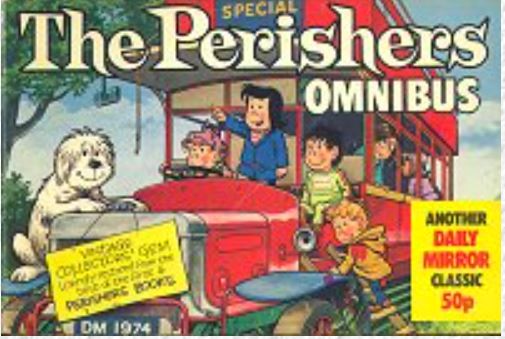
The Perishers Omnibus volume 1


By Maurice Dodd & Dennis Collins (Daily Mirror Books)
ISBN: 0-85939-031-4 (PB)

I plug these little chaps – and the wonderful feature they crafted – every few years because the work is wonderful and quintessentially British. I so wish they were still around to take aim at today’s governments, autocrats, too-common people and general discommodiousness as well as helping us accommodate the impending end of the world with a smile…

Although written almost entirely by Maurice Dodd throughout its 48-year history, the forgotten National Treasure that is The Perishers was actually created in 1957 by artist Dennis Collins, writer Bill Witham (who went on to huge success with uniquely innocent everyman Useless Eustace) and cartoon editor Bill Herbert.

The daily tribulations, ruminations, exploits and misadventures of a bunch of typical kids (for the latter half of the 20th century at least) was first published in the Manchester edition of The Daily Mirror in February 1958. After only a couple of frankly mediocre months the wacky adventures of Maisie & Marlon were withdrawn and retooled.

Jack-of-all-trades, budding artist and advertising whiz-kid Dodd was then approached by ex-paratroop service comrade and drinking buddy Herbert. The freelance designer jumped at the chance to reinvent the characters in what was a meandering but beautifully illustrated, all-ages feature simply stuffed with untapped potential.

Drawing on his own life (he would describe it as “shamelessly pilfering”), Dodd created a plethora of new characters, animal and human – although with this strip distinctions are loose and hard to defend – and rescued an early 1958 casualty in the unkempt and ill-maintained person of laconic orphan and philosophical dilettante Wellington.

This bewildered and ever-anxious symbol of the post-war era was a street urchin living on his wits but still attending school and enduring all the daily trials and indignities of British youth.

Relaunched in October 1959 in London and national editions, the revamped Perishers strip quickly caught on to become a morning mainstay for generations of Brits, blending slapstick and surreal comedy with naive charm, miniaturised modern romantic melodramas (Maisie loves Marlon, Marlon loves fashion and “inventing”, and Wellington loves sausages), liberally laced with sardonic cultural commentary. Particularly rewarding was a continuing and wonderfully twisted faux misperception of contemporary politics and the burgeoning influence of advertising and commercial media.

Even in its earliest days the strip was superbly illustrated, conjuring up in a few judicious lines and cannily applied grey tones a communal urban wonderland we all knew as kids: the familiar post-war melange of shops and streets, building sites and overpasses, alleys and parks and fields where we could get on with our adventures and no adults could interfere or spoil the fun. The unsavoury old git in me still hungers in absentia on behalf of the youth of today who will never experience such freedom without being labelled “neglected”, “at risk” or possibly just “feral”…

Here the primary protagonists are Wellington and Boot, his old English Sheepdog (sort of: the wily, hairy chancer and raconteur considers himself a Manorial Milord “sufferin’ under the curse of a Gypsy Wench”). They are ably unsupported by the formidable Maisie, a thoroughly modern miss torn between self-delusion that the boy of her dreams feels likewise; sweets, an unsurpassed capacity for greed and unrelenting violence, and a tremendous unslaked passion for the aforementioned Marlon, who she thinks is what she wants. And sweets.

Cool, suave and debonair are just three of the many, many words Marlon doesn’t know the meaning of, but lots of girls at school fancy him anyway. If he grows up, he wants to be a brain surgeon or a bloke wot goes down sewers in great big gumboots…

Being on his own and fiercely independent, Wellington takes every opportunity to support himself with sordid scavenging and shoddy schemes – usually involving selling poorly constructed carts and buggies to Marlon who has far more money than sense. To be honest, Marlon has more noses than sense…

Maisie is a shy beautiful maiden waiting for her true beloved to sweep her off her feet – and if he doesn’t, she gives him a thorough bashing up and nicks his sweets…

Other unreasonable regulars introduced here include Baby Grumplin’ – Maisie’s toddler brother and a diabolical force of nature; Plain Jane – a girl who asks too many questions, and the dapper Fiscal Yere: smugly complacent go-getting son of a millionaire and another occasional sucker for Wellington’s automotive inexpertise. Kids like him are what made today’s world what it is…

On the anthropomorphic animal front, extremely erudite Boot regularly encounters stroppy ducks, militant squirrels, socialist revolutionaries Fred the Beetle and his long-suffering wife Ethel, South Asian bloodhound/journalist B.H. Calcutta (Failed) and, latterly, a nicotine-addicted caterpillar who stunted his growth and became Fred’s inseparable comrade in the struggle against canine oppression. The little Trot is also an implacable rival for any food or dog-ends the Bolshevistic bug might find…

Notable moments in this madcap melange include: Wellington gentrifying out of the large concrete pipe he used to live in and taking up residence in an old railway station abandoned after the Beeching Cuts decimated the train infrastructure, and the first couple of kids-only, unaccompanied fortnightly camping holidays to the seaside (oh, such innocent times!).

Here, they encounter sun, surf and the rock-pool crabs who worship the uncannily canine “Eyeballs in the Sky” which annually manifest in their isolated “Pooliverse”…

Utterly English, fabulously fantastical and resoundingly working-class, the strip generated 30 collections between 1963-1990, 4 Big Little Books, 5 novels and 2 annuals as well as an audio record and in 1979 an immensely successful animated TV series.

The tome under review here was released in 1974; the first of a series of extra-sized recapitulations, containing most of the contents of the first four Perishers books (spanning 1959-1965). It superbly sets the scene for newcomers with a glorious extravaganza of enchanting fun and frolics, liberally annotated by Dodd himself. Dennis Collins magnificently and hilariously illustrated the strip until his retirement in 1983, after which Dodd himself took up the pens and brushes. Eventually artist Bill Melvin took over the art chores whilst Dodd scripted until his death in 2006. Once the backlog of material was exhausted The Perishers finished on June 10th of that year.

Soon after, The Mirror began reprinting classic sequences to the general approval of everyone, so perhaps it’s not too much to hope that eventually – or even SOON – all those classic collections will be available…

Quite frankly, it’s what we need and what I deserve…
© 1974 IPC Newspapers Limited.
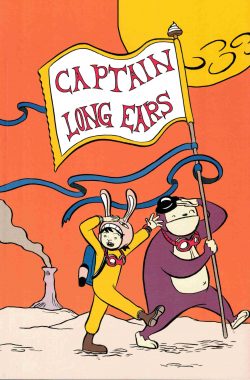
Captain Long Ears


By Diana Thung (SLG Publishing)
ISBN: 978-1-59362-187-2 (TPB)

You might not have noticed – or even care – but every so often we slip in a week or so of themed recommendations. This time it’s “Pesky Kids” in all their picto-literary glory. We’ve seen youthful heroes, classic scallywags and comedically oppressed minors. Today we’re sharing a lost classic of the form which asks and answers just why some kids act like they do all wrapped up in a genial mystery with a hidden edge…

Here’s a odd thing. For a while, some years back, Diana Thung was a glittering name and shining prospect in graphic storytelling, but after two brilliant all-ages fantasy triumphs she dropped out of sight.

I don’t know why – and to be honest have no right to. It is a great shame as her work was groundbreaking and remains superb. I hope she’s well and happy, and I’m not going to stop recommending her delightful creations…

Thung was born in Jakarta, and grew up in Singapore before eventually settling in Australia. She is a natural storyteller, cartoonist and comics creator of sublime wit and imagination with a direct hotline to infinite thoughtscapes of childhood. Every single thing populating her astonishingly unique worlds is honed to razor sharpness and pinpoint logical clarity, no matter how weird or whimsical it might initially seem.

The sentiment is pure and unrefined; scenarios are perfectly constructed and effectively, authentically realised – and when things get tense and scary they are excessively tense and really, really scary… and pretty bloody sad too.

After SLG published debut series Captain Long Ears in 2010, Thung catapulted to (relative comic book) fame and two years later delivered her first original graphic novel August Moon, following up with Splendour in the Snow, before melting away. Prior to all that though she shared a very personal view of loss and bereavement that is both beguiling and hilarious, raw and unpolished and masked by a potent screen of happy manga style.

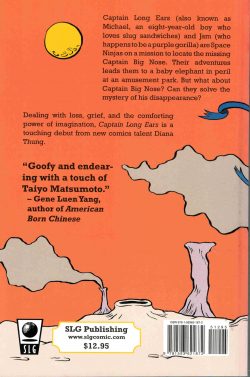
Michael lives in his head a lot. That’s okay though because he’s only eight, and it’s exciting there since that where his best friend lives too. That imaginative interior is packed with fun and thrills and a super-science citadel where Exalted Space Ninja Captain Long Ears and his deputy Captain Jam undertake their cosmic duties and eat peanut butter sandwiches. The situation is tense. All contact has been lost with supreme leader Captain Big Nose who has not answered hails for the longest time. Captain Jam acts like he knows something, but he’s not talking…

After putting themselves to bed, the next day dawns with Mum still – or already – at work. It’s become a habit but Michael can cope. Making breakfast (sugar with cereal), packing snacks and grabbing some cash, he and his cuddly gorilla bear are calling in at Headquarters. Maybe Captain Big Nose is there…

As they get off the bus outside seedy amusement park Happy Land, two overwrought workers are having a very tough time delivering a large wooden packing crate. It’s heavy, smelly, constantly shaking and emitting scary noises.

By the time they’ve dropped it in the enclosure behind the park grounds, Long Ears and Jam have fully failed to find any clues to their missing comrade, been accidentally absorbed by a school party and given a gang of alien predators disguised as bullying older kids a real shock. On the run from unimaginable retaliation, they land at the quiet rear enclosure just as the baby elephant in the box – still traumatised by memories of the poachers who killed the herd adults – loses all control and attacks the labouring oafs…

Lost in his own worlds, Michael spies on the events and resolves to liberate the prisoner in the crate at all costs…

That night, Michael’s mum gets home and quickly pierces the subterfuges her son had constructed to appear to be at home and in bed. Soon the police are searching for a missing child, but shabby old Happy Land is not their first port of call…

Visually inventive and astoundingly vivid – even in monochrome – whilst owing a huge inspirational debt to Winsor McCay’s Little Nemo in Slumberland, the saga unfolds as pirates, sea-monsters, alien invaders and wizards compete with real world rogues and villains and all the powers of unsure memory and unleashed imagination as Michael voyages to an inescapable admission and conclusion over lost Big Nose that almost costs his life…

Funny, scary, thrilling and moving, this is a fabulously enticing young reader’s yarn every lover of comics and storytelling should take to their hearts.
™ & © 2010 Diana Thung. All rights reserved.

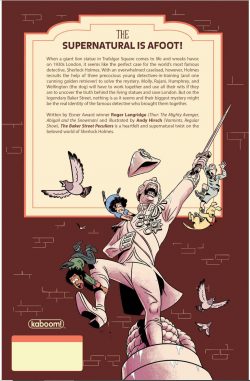
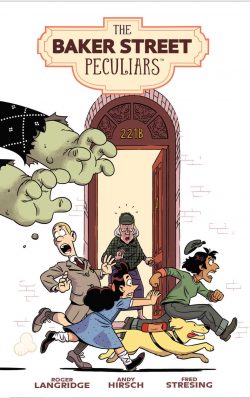
The Baker Street Peculiars


By Roger Langridge, Andrew Hirsh & Fred Stresing (KaBOOM!)
ISBN: 978-1-60886-928-2 (PB) eISBN: 978-1-61398-599-1

Roger Langridge is a very talented gentleman with a uniquely beguiling way of telling stories. He has mastered every aspect of the comics profession from lettering (Dr. Who) to writing (Thor: The Mighty Avenger) to illustration (Knuckles the Malevolent Nun, Zoot!). When combining his gifts – as Fred the Clown, Popeye, Abigail and the Snowman – the approbation, accolades and glittering prizes such as Eisner and Harvey Awards can’t come fast enough.

He is also a bloody genius at making folk laugh…

The Baker Street Peculiars started life as an all-ages comicbook miniseries before being gathered in a titanic detective tome and craftily references a glittering reservoir of cool concepts encompassing the mythology of Sherlock Holmes, 1930s London, cosy crime mysteries, kid gangs and rampaging monster movies. Moreover, thanks to Langridge’s keen ear for idiom and slang, every page resonates with hilarious dialogue any lover of old films or British sitcoms will find themselves helplessly chortling over – if not actually joining in with…

Blimey, Guv’ner!

Illustrated by Andy Hirsch (Science Comics: Dogs, Varmints, Adventure Time, Regular Show) and coloured by the inestimable Fred Stresing, ‘The Case of the Cockney Golem’ opens in foggy old London Town circa 1933, currently enduring an odd spot of bother. Exceedingly odd…

‘A Beast in Baker Street’ reveals that famous landmark statues are going missing. Now, with one of the bronze lions in Trafalgar Square coming to life and bolting away down Charing Cross Road – unlike the crowds rushing about in panic – three wayward tykes (and a dog) chase after it. Soon they are all embroiled in the story of a lifetime… perhaps several lifetimes…

Tailor’s granddaughter Molly Rosenberg, orphan street thief Rajani Malakar and neglected filthy rich posh-boy Humphrey Fforbes-Davenport (and his canine valet Wellington) are all out long after bedtime and keen on a spot of adventure. Having individually chanced upon the commotion, they spontaneously unite to doggedly track the animated absconder to Baker Street where they enjoy a chance encounter with a legendary investigator…

Molly is especially intrigued: she’s read every exploit of the famous consulting detective. When he roundly rubbishes their claim of moving statues – and claims to be too busy with other cases – she angrily suggests that they act as his assistants. The detective quite quickly complies, but only to conceal an incredible secret not even his fanciful new deputies could ever imagine…

As Molly’s grandpa suffers another visit from thugs running an extortion racket for the nefarious Chippy Kipper – “the Pearly King of Brick Lane” – the kids’ bizarre quest continues in ‘The Lion, the Lord and the Landlady’ after the junior sleuths meet up at 221B Baker Street. Although consoled with a fine meal, they are disappointed to find their hoped-for mentor absent.

Receiving further instructions from the great detective’s elderly cook Mrs. Hudson, the youthful team learn that Mr Holmes believes the statues are simply being stolen and that he wishes the dauntless children to post guard on Boadicea at Westminster Bridge and Lord Nelson in Trafalgar Square…

Their sentinel duties bear strange fruit, however, as East End thugs perform a strange and dangerous ritual and the beloved tourist attractions come to menacing life. As the kids follow the ambulatory landmarks back to Kipper’s hideout, Molly strives to recall a story her grandfather used to tell her: a fable about a Rabbi in old Prague who used a scroll to bring a giant avenging clay statue to life…

As the colossal Chippy shares his own unique origins with his cohort of thugs and sculptures, the youngsters sneak in. Swifty captured and stuck in a dungeon, they can only watch in horror as Kipper uses ancient magic to make a new kind of monster. ‘The Old, Hard Cell’ brings the plot to a bubbling boil as the terrified tykes swallow simmering resentments and work together. Even as they escape their current predicament, elsewhere, other, more mature truth-seekers are compelled to change their stubbornly-held opinions…

Someone else with a keen eye and suspicious mind is enterprising lady journalist Hetty Jones of The Mirror. Her own patient, diligent enquiries have brought her to Baker Street in time to collaborate with the aged detective-in-charge. With all eventualities except the impossible exhausted, the grown-ups must accept the truth and soon track down the missing lion. It’s probably too late, however, as an army of animated marble and bronze artefacts rampage through London towards the East End, with only three nippers (and a dog) ready to confront them…

With Chippy Kipper in the vanguard, the chilling regiment invades Molly’s home turf but ‘The Battle of Brick Lane’ is no one-sided affair. One plucky minor has remembered the secret of the Rabbi’s Golem and conceived a daring stratagem to immobilise the monstrous invaders. As for Kipper’s human thugs, they’ve severely underestimated the solidarity of hundreds of poor-but-honest folk pushed just a bit too far, one time too many…

When the dust settles, Sherlock Holmes has one last surprise for his squad of juvenile surrogates…

Adding to the charm and cheer is a cover-&-variants gallery by Hirsch & Hannah Christenson, sketch and design feature ‘Meet the Peculiars’ and a delirious sequence of all-Langridge strips starring his unique interpretation of the Great Detective Himself in ‘The Peculiar Adventures of Sherlock Holmes’.

Reverently refencing and spoofing beloved old films and our oh-so-idiosyncratic manners and parlance with a loving ear for an incongruous laugh, The Baker Street Peculiars is a sheer triumph of spooky whimsy, reinventing what was great about classic British storytelling. Fast, funny, slyly witty and with plenty of twists, it is an absolute delight from start to finish and another sublime example of comics at its most welcoming.
™ & © 2016 Roger Langridge & Andrew Hirsch All rights reserved.

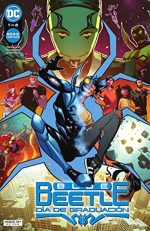
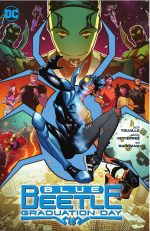
Blue Beetle Graduation Day


By Josh Trujillo & Adrián Gutiérrez, with Wil Quintana, Lucas Gattoni & various (DC Comics)
ISBN: 978-1-7795-2324-2 (TPB/Digital edition)

As the most recent incarnation of the vintage and venerable Blue Beetle brand at last makes the jump from comic book limbo and kids’ animation into live action movie madness, the event sparked a new comics miniseries bridging the teen hero’s old life and new comic book series. Here that is…

The Blue Beetle first appeared in Mystery Men Comics #1, published by Fox Comics and cover-dated August 1939. The eponymous lead character was created by Charles Nicholas (AKA Charles Wojtkowski) as a pulp-styled mystery man and born nomad. Over years and crafted by a Who’s Who of extremely talented creators, the Beetle was also inexplicably popular and hard to kill: surviving the collapse of numerous publishers before ending up as a Charlton Comics property in the mid-1950s.

After a few issues sporadically published, the company shelved him until the superhero revival of the early 1960s when Joe Gill, Roy Thomas, Bill Fraccio & Tony Tallarico revised and revived the character in a 10-issue run (June 1964, February 1966). Cop-turned-adventurer Dan Garrett was reinvented an archaeologist, educator and scientist who gained super-powers whenever he activated a magic scarab with the trigger phrase “Khaji Da!”

Some months later, Steve Ditko (with scripter Gary Friedrich) utterly reimagined the Blue Beetle. Ted Kord was an earnest and brilliant young researcher who had been a student and friend of Professor Garrett and when his mentor seemingly died in action, Kord trained himself to replace him: a purely human inventor/combat acrobat, bolstered by ingenious technology. This latter version joined DC’s pantheon during Crisis on Infinite Earths, earning a solo series and quirky immortality partnered with Booster Gold in Justice League International and beyond…

When Kord was murdered in the run up to Infinite Crisis, it led to all-out war across realities and at the height of the linked catastrophes El Paso high-schooler Jaime Reyes found a weird blue jewel shaped like a bug. That night, as he slept, it invaded him and turned him into a bizarre insectoid warrior. suddenly gifted with great powers, and revealed how some heroes are remade, not born – especially when a sentient scarab jewel affixes itself to your spine and transforms you into an armoured bio-weapon. Almost instantly, he was swept up in the chaos, joining Batman and other heroes in a climactic space battle.

Inexplicably returned home, Jaime revealed his secret to his family and tried to do some good in his hometown but had to rapidly adjust to huge changes. Best bud Paco had joined a gang of super-powered freaks, he learned the local crime mastermind was the foster-mom of his other best bud Brenda, and scary military dude named Christopher Smith (The Peacemaker) started hanging around. He claimed the thing in Jaime was malfunctioning alien tech, not life-affirming Egyptian magic that he also had an unwelcome and involuntary connection to…

That led to a secret war against an alien collective of conquerors called the Reach whose shady dealings and defeat have been covered in Blue Beetle: Jaime Reyes volumes One & Two. You should get those also.

Gathering Blue Beetle: Graduation Day #1-6 (cover-dated January to June 2022), and including an excerpt from the new Blue Beetle series it leads into, this collection is also quite rightly available in a Spanish language edition.

In an effort to maximise your fun and save time let’s briefly hit the high notes here.

Crafted by scripter Josh Trujillo (Adventure Time, Captain America, Rick & Morty), illustrator Adrián Gutiérrez (Batman, The Flash), colourist Wil Quintana and letterer Lucas Gattoni, ‘Graduation Day’ is set following recent DC megaevent Dark Crisis on Infinite Earths with our neophyte champion at long last getting a handle on his other life. He’s even become pals with his sentient passenger bug Khaji Da, allowing them to seamlessly work together.

With school days practically done, as the story opens Jaime is currently wrecking downtown El Paso battling magical thief Fadeaway and worrying about his non-superhero future. After almost missing his own graduation ceremony, Reyes suddenly finds it all going wrong again when he receives a terrifying vision of The Reach and loses control, uncontrollably shifting to his blue battle form…

His family share his secret, but aren’t happy about it and when he returns to his own party hours later, the festivities are long over and his furious mother wants to know what he’s doing with his life. So does Superman, who “just” popped by to see if the alien conquerors had regained control of their greatest weapon…

Intel confirms that The Reach are coming back and the (adult) superhero community feels it might be prudent if Jaime doesn’t use his powers for the foreseeable future…

Benched, grounded, jobless and not destined for college any time soon, the frustrated lad is summarily packed off to toil in his aunts’ diner in Palmera City, but fate has other plans. Repeatedly targeted by extremely Reach-like and savage Beetle-morphs Dynastes and Nitida, BB is forced to fight back until the Justice League shut him down again…

Some salvation comes when mentor Ted and his terrifying older smarter sister Victoria Kord offer him an (unpaid!) internship at Kord Industries. Ted is laid back and cool but Jaime can’t stop thinking how Victoria has the largest collection of alien tech on Earth and keeps looking at him funny…

As Beetle catastrophes keep coming, Reyes and still-on-the-fritz Khaji Da encounter a splinter faction of The Reach. Unable to trust The Horizon, they instead put themselves in the hands of Teen Titans Starfire, Cyborg and their allies. At least they can keep Batman and his private superhero goon squad off their collective shiny blue buggy back. Or Not…

And that’s when Paco and Brenda show up, begging Jaime to help their new best buddy Fadeaway. That does not go well…

With imminent doom encroaching and everybody telling him what” they” should do, Jaime and Khaji Da finally unlock the root problem that’s been jamming them up, consequently evolving into whole new Blue Beetle able and ready to fix their own problems…

And that’s when the aliens all come screaming into Earth’s atmosphere…

An enticing extra offers an extract and sneak peek from the new Blue Beetle #1 (‘Scarab War!’) due for release in September 2023, before a gallery of covers and variants by Cully Hamner, Rafael Albuquerque, David Marquez & Alejandro Sánchez, Ramon Villalobos, Gutiérrez & Quintana, Joe Quinones, Chokoo!, Danny Miki & Ivan Plascencia, Serg Acuña, Ricardo López Ortiz, Baldemar Rivas, Daniel Sampere & Alejandro Sánchez, Bruno Redondo, Jorge Corona & Sarah Stern segue into an extensive and expansive sketch gallery from Gutiérrez.

Here’s another smart, fast and joyous fun ride to delight fans of comics and other, lesser, media forms. So few series combine action and adventure with all-out fun and genuine wit, or can evoke shattering tragedy and poignant loss on command. Now read this even before you wallow in film fun…
© 2022, 2023 DC Comics. All Rights Reserved.

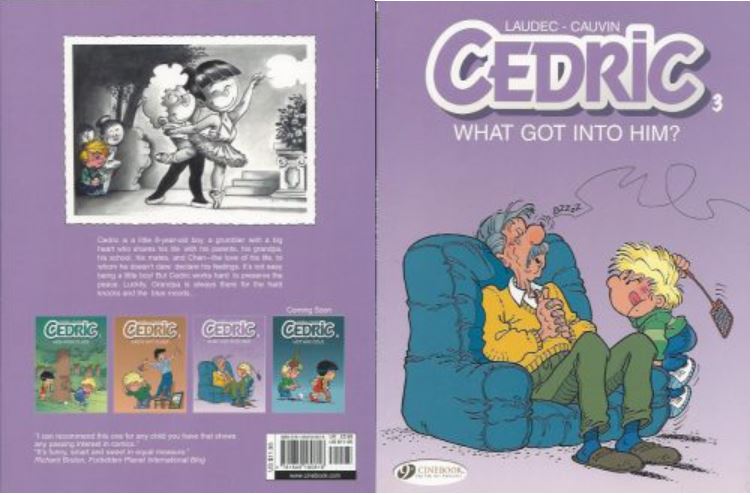
Cedric volume 3: What Got Into Him?


By Laudec & Cauvin with colours by Leonardo & translated by Erica Jeffrey (Cinebook)
ISBN: 978-1-84918-081-8 (Album PB/Digital edition)

Raoul Cauvin (26 September 1938-19 August 2021) was one of Europe’s most successful comics scripters. Born in Antoing, Belgium in 1938, by 1960 he was working in the animation department of publishing giant Dupuis after studying Lithography. Happily, he quickly discovered his true calling was writing funny stories and began a glittering, prolific career at Le Journal de Spirou.

With Salverius, he conceived the astounding successful Bluecoats, and dozens more award-winning series like Sammy, Cupidon, Les Femmes en Blanc, Pauvre, Lampil Boulouloum et Guiliguili, and Agent 212: cumulatively comprising well over 240 separate albums.

His collaborator on superbly witty kid-friendly family strip Cédric was Italian-born, Belgium-raised Tony de Luca, who studied electro-mechanics and toiled as an industrial draughtsman before making his own break into bandes dessinée.

Following fanzine efforts in the late 1970s as “Laudec”, he landed soap-style strip Les Contes de Cure-la-Flute at Le Journal de Spirou in 1979. He traded that for a brace of war-time serials (L’an 40 in 1983 and March Noir et Bottes à Clous in 1985) whilst working his way around the comic’s other strips. In 1987, he joined Cauvin on the first Cédric shorts. From then on it was child’s play…

We have Dennis the Menace (the Americans have their own too, but he’s not the same) whilst the French-speaking world has Cédric: an adorable, lovesick rapscallion with a heart of gold and an irresistible penchant for mischief. He’s also afflicted with raging amour…

Collected albums – 34 thus far – of variable-length strips (ranging from a ½ page to half a dozen) began appearing in 1989, and the lad remains amongst the most popular and best-selling in Europe, as is the animated TV show spun off from the strip.

… A little Word to the Wise: this is not a strip afraid to suspend silly yoks in deference to a little suspense or even near-heartbreak. The bonny boy is crushingly smitten with Chen: a Chinese girl newly arrived in class and so very far out of his league, leading to frequent and painful confrontations and miscommunications.

Harking back to 2011 and first continentally released in 1992 as Cédric 5: Quelle mouche le pique? – this third Cinebook translation opens with ‘A Pebble in the Shoe’: a moving and uplifting generational collaboration as Grandpa tells his daughter’s son stories of a dearly-departed wife that has the eavesdropping household (and you, too, if you have any shred of heart or soul) in emotional tatters…

We return to big laughs as a dose of unwelcome homework results in ‘A Big Fat Zero’ whilst ‘A Lousy Story’ details the pros and cons of a school nit epidemic before pester power is deployed to secure an addition to the household in ‘Man’s Best Friend’.

The crusty elder statesman of the family learns a painful lesson as ‘Grandpa Takes a Turn’ sees the creaky reactionary suckered into chaperoning a school dance, after which little Cedric has a beguiling and potentially life-altering experience when his adored Chen marches through town in the uniform of ‘The Majorettes’

Grandpa and Cedric unite to shame Dad into purchasing ‘The Board that Skates’ but it’s every man for himself when the kid comes cadging cash in ‘You Wouldn’t Have a 20?’, whilst ‘Out of Sight, Out of Mind’ playfully shows that although the boy’s love for Chen is all-abiding and true, it isn’t necessarily reciprocated…

When Chen’s mother accidentally prangs Dad’s car, Cedric goes violently berserk until the families have demonstrably agreed détente and rapprochement is reached via ‘An Amicable Arrangement’  before the pesky pup accidentally boosts his hard-pressed papa’s earning potential through inadvertent confidence trickery in ‘Business is Business’.

‘Jealousy’ rears its ugly head when Chen begins ballet classes and literally jumps into the arms of Cedric’s bitterly despised romantic rival The Right Honourable Alphonse Andre Jones-Tarrington-Dupree – with catastrophic repercussions for all concerned – whilst ‘Short of Breath’ sees the whole family play a mean but hilarious trick involving Dad’s birthday cake…

‘Solemn Communion’ wastes a much-needed opportunity to salve Cedric’s already-tarnished soul when the boy’s first Catholic sacrament ceremony devolves into a drunken debacle for the attending adults, after which we come full circle as amorous memories are tickled and ‘The Quarrel’ resumes after Cedric inquires how Mum and Dad got together. Happily, everything returns to bittersweet tears when the old man is asked for more reminiscences of Grandma Germaine in moving finale ‘Remember, Gramps…’

Rapid-paced, warmly witty, and not afraid to explore sentiment or loss, the exploits of this painfully keen, bemusingly besotted rascal are a charming example of how all little boys are just the same and infinitely unique. Cedric is a superb family strip perfect for youngsters and old folk alike…
© Dupuis 1992 by Cauvin & Laudec. All rights reserved. English translation © 2011 Cinebook Ltd.

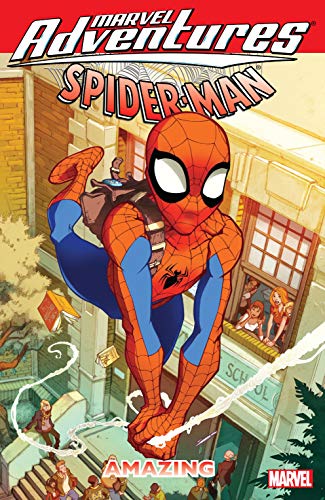
Marvel Adventures Spider-Man volume 1: Amazing


By Paul Tobin, Matteo Lolli, Scott Koblish & various (Marvel)
ISBN: 978-0-7851-4118-1 (Digest PB/Digital edition)

Since its earliest days Marvel always courted the youngest audiences. Whether animated tie-ins such as Terrytoons Comics, Mighty Mouse, Super Rabbit Comics, Duckula, assorted Hanna-Barbera and Disney licenses and a myriad others, or original creations such as Tessie the Typist, Millie the Model, Homer the Happy Ghost, Li’l Kids or Calvin, the House of Ideas always understood the necessity of cultivating the next generation of readers.

These days, however, general kids’ interest titles are on the wane and with Marvel’s proprietary characters all over screens large, small, and even portable, the company prefers to create child-friendly versions of its own pantheon, making an eventual hoped-for transition to more mature comics as painless as possible.

In 2003 the company established a Marvel Age line which updated and retold classic original tales by Stan Lee, Jack Kirby & Steve Ditko all mixed in with remnants of their manga-based Tsunami imprint, also intended for a younger readership. The experiment was tweaked in 2005, becoming Marvel Adventures with the core titles transformed in Marvel Adventures: Fantastic Four and Marvel Adventures: Spider-Man with reconstituted classics replaced by all new stories. Additional series included Marvel Adventures series Super Heroes, The Avengers and Hulk. These ran until 2010 when all were cancelled and replaced by new – continuity-continuing -volumes of Marvel Adventures: Super Heroes and Marvel Adventures: Spider-Man.

This digest-sized collection gathers the first four stories from the 2010 iteration and actually starts in the middle of the action – although writer Paul Tobin and artists Matteo Lolli and Scott Koblish (with inkers Christian Dalla Vecchia, Terry Pallot Koblish & Andrew Hennessy) take great pains to keep the stories as clear as possible.

Sixteen year old Peter Parker has been the mysterious Spider-Man for about six months. In that time he has constantly prowled the streets and skyscrapers of New York, driven to fight injustice. However, as a kid just learning the ropes, he’s pretty much always in over his head…

The opening tale finds him on a crusade against the all-pervasive Torino crime-family, attempting to expose their bought-and-paid-for Judge Clive Baraby, whilst ex-girlfriend and wannabe journalist Gwen dogs his webbed heels and her father Police Captain George Stacy – who knows the boy’s secret but allows him to continue his vigilante antics – picks up all the well-thumped thugs the incensed wall-crawler leaves in his wake.

Even though Spidey can’t touch corrupt Baraby, his campaign of attrition has the Torinos on the ropes, so the Mafioso engage the services of super-assassin Bullseye to kill the Web-spinner. However, the Man who Never Misses is infuriatingly slow to act and soon there’s an open contract on the kid crusader…

Peter’s civilian life is pretty complicated too. Since he and Gwen split, the lad has taken up with schoolmate Sophia Sanduval – an extremely talented lass nicknamed Chat – who also knows Pete’s secret, can communicate with animals and has a part-time job with the Blonde Phantom Detective Agency

She also pays attention in class and suggests how what they learned in history can be used to trap the untouchable Baraby.

The second story opens with a brutal dognapping and leads inexorably to a clash with merciless mercenary Midnight when the villain invades Peter’s school during a martial arts exhibition by Shang Chi, Master of Kung Fu. Along the way, Chat introduces Pete to new buddy Flapper – a very wise owl indeed – and new kid Carter Torino enrols at the school. How does this troubled new boy know the constantly watching Bullseye?

Before the subplots get too intens,e however, Midnight and his ninjas attack Shang-Chi and Spider-Man joins the fracas, subsequently learning some things from the combat expert – including who to return that stolen dog to…

Whilst close-mouthed gang-prince Carter gets closer to Gwen, Wolverine guest-stars in an third untitled tale as Chat asks her bug-boy beau to help hunt down the wild-haired mutant for a client who wants Logan to model their hair gel. Typically, whenever the Clawed Canadian appears trouble isn’t far behind, and when a gang of Torino goons jumps Wolverine, Spidey is forced to join the carnage. And that’s when Bullseye makes his move…

As conflicted Carter Torino confronts his criminal family, the volume concludes with a savage showdown between Bullseye and the sorely outmatched Spider-Man …and sees the death of one of the supporting cast…

Never the success the company hoped, the Marvel Adventures project was superseded in 2012 by specific comics tied to those Disney XD television shows designated as Marvel Universe Cartoons, but these tales are still an intriguing and more culturally accessible means of introducing character and concepts to kids born generations away from the originating events.

Fast-paced and impressive, these Spidey tales are extremely enjoyable yarns but parents should note that some of the themes and certainly the violence might not be what everybody considers “All-Ages Super Hero Action”…
© 2010 Marvel Characters, Inc. All rights reserved.

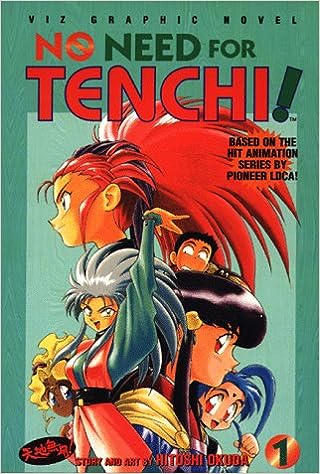
No Need For Tenchi!


By Hitoshi Okuda, translated by Fred Burke (Viz Graphic Novel)
ISBN: 978-1-56931-180-6 (tank?bon PB)

The one real problem with manga is that translated past triumphs seldom stay in print. There are dozens of classic collections that demand rediscovery by a casual rather than otaku audience and many minor masterpieces languish lost when they could be appreciated and adored…

This bright and breezy adventure comedy from 1987 is a rare reversal of the usual state of affairs in that a TV anime came first and the manga serial was its spin-off. Tenchi Muyo! Ryo-Ohki debuted as a 6-part TV show (termed an OVA or Original Video Animation in Japan) that proved so blisteringly popular that even before the original season concluded further specials and episodes were rushed into production. Over the next decade or so two more seasons appeared as well as spin-off shows and features (for a total of 98 episodes all told), plus games, toys, light novels and, of course, a comic book series.

The translation most commonly accepted for the pun-soaked title is No Need For Tenchi, but equally valid interpretations include Useless Tenchi, No Heaven and Earth and This Way Up.

The assorted hi-jinks of the show resulted in three overlapping but non-related continuities, with the Hitoshi Okuda manga serials stemming directly from the first season. Okuda eventually produced two comics sagas in this format: Tenchi Muyo! Ryo-oh-ki which began in 1994 and features here – and follow-up Shin Tenchi Muyo! which I’ll get to one fine day…

The strip debuted in the December 16th 1994 Sh?nen anthology (comics pitched at 10-18 year old males) Comic Dragon Jr. It ran until Jun 9th 2000, generating 12 volumes of classic laughs and thrills. The stories are generally regarded as non-canonical by fans of the various TV versions, but of course we don’t care about that since the printed black and white tales are so much fun and so well illustrated…

This first volume collects the first seven issues of the Viz tome Tales of Tenchi, which did so much to popularise Manga in the English-speaking world, and opens with a thorough and fascinating recap of that first TV season – from which all succeeding manic mirth and mayhem proceeds – before cracking on to bolder and better bewilderments starring the entire copious cast on all new adventures and exploits…

Tenchi Masaki is an ordinary lad living peacefully in the countryside with his father Nobuyuki and grandfather Katsuhito, until one day he breaks opens an ancient shrine and lets a demon out. Hell-fiend Ryoko tries to kill him but a magic “Lightning Eagle Sword” helps him escape. The demon follows though, demanding the sword and things get really crazy when a spaceship arrives, revealing Ryoko is in fact a disgraced alien pirate from the star-spanning Jurai Empire.

Starship Ryo-oh-ki is full of attractive, shameless, immensely powerful warrior-women including Princess Ayeka, her little sister Sasami and supreme scientist Washu. This gaggle of violently disruptive visitors moves in with Tenchi and family, causing nothing but trouble and embarrassment. Soon the boy and his sword are being dragged all over the cosmos in the sentient Ryo-oh-ki (who, when not on duty, prefers the form of a cute rabbit/cat hybrid critter).

Ayeka and Sasami both harbour feelings for hapless Tenchi but things get really complicated when grandfather Katsuhito is revealed to be Yosho, a noble Prince of the Jurai. It appears Tenchi and those darned space girls are all related…

Tales of Tenchi opened with ‘The Geniusas the star, currently studying Jurai warrior training under his grandfather’s diligent tutelage, falls foul of the princesses’ growing boredom. Ryoko attacks again, precipitating a devastating battle that threatens to burn the entire landscape to ashes, but is the aggressor really the demon pirate?

In ‘Double Troublethe other Ryoko tries to take Tenchi’s sword – in actuality a puissant techno-artefact known as the Master Key – before being defeated by the original, but at the cost of shock-induced amnesia. As the refugees all decompress, ‘Under Observationdepicts outrageous and inadvisable potential cures for the distressed Ryoko but when the defeated doppelganger’s master Yakage arrives, the entire extended family are endangered. The terrifying star-warrior challenges Tenchi to a duel…

Part 4 ‘Plunderis one colossal hi-energy clash as the boy valiantly demonstrates all he has learned to drive off the intruder, but only after the villain takes Ayeka hostage, demanding a rematch in 10 days’ time…

Intensifying his training in ‘Practice Makes PerfectTenchi prepares for the upcoming clash whilst Ryoko pursues Yakage into space, unaware that super-scientist Washu has hidden herself aboard the pursing ship…

‘A Good Scoldingreveals intriguing history regarding the assorted super-girls whilst Tenchi trains for the final confrontation before concluding chapter ‘Relationshipsbrings things to a spectacular climax whilst still leaving a cliffhanger to pull you back in for the next addictive instalment…

Blending elements of Star Wars: A New Hope with classic Japanese genre themes (fantasy, action, fighting, embarrassment, loss of conformity and hot chicks inexplicably drawn to nerdy boys), this rousing romp also includes comedy vignettes starring ‘The Cast of No Need For Tenchi’, and fourth-wall-busting asides, to top off a delightfully undemanding fun-fest to satisfy not just manga maniacs but also any lover of fanciful frivolity and sci fi shenanigans.
© 1994 by Hitoshi Okuda/Kadokawa Shoten Publishing Co Ltd., Tokyo. NO NEED FOR TENCHI! is a trademark of Viz Communications Inc.

Pogo: The Complete Syndicated Comics Strips volume 1 – Through the Wild Blue Wonder


By Walt Kelly (Fantagraphics Books)
ISBN: 978-1-56097-869-5 (HB/Digital edition)

Walter Crawford Kelly Jr. was born on August 25th 1913 and started his cartooning career whilst still in High School, as both artist and reporter for the Bridgeport Post. Moving to California in 1935, he joined the Disney Studio, working on shorts and features like Dumbo, Fantasia and Pinocchio… until the infamous animators’ strike in 1941.

Refusing to take a side, Kelly moved back East and began drawing comic books – primarily for Dell Comics, who had the Disney funnybook license. Despite his glorious work on such humanistic classics as the movie tie-in Our Gang, Kelly much preferred anthropomorphic animal and children’s fantasy (like Walt Kelly’s Santa Claus Adventures) and created Albert the Alligator and Pogo Possum for Animal Comics #1 (cover-dated December 1942). He sagaciously retained the copyrights in the ongoing tale of two Bayou critters and their young African-American pal Bumbazine. Although the black kid soon vanished, the animal stars stayed on until 1948 when Kelly became art editor and cartoonist for hard hitting, left-leaning liberal newspaper The New York Star.

On October 4th 1948, Pogo, Albert and an ever-expanding cast began their careers on the funny pages, appearing six days a week until the periodical folded in January 1949.

Although a gently humorous kids feature, by the end of its run – included in full at the rear of this magnificent tome – the first glimmers of the increasingly barbed, boldly satirical masterpiece of velvet-pawed social commentary began to be seen…

This first of 12 volumes tracks the ascent of the scintillating, vastly influential strip; don’t believe me, just listen to Gary Trudeau, Berke Breathed, Bill Watterson, Jeff McNally, Bill Holbrook, Mark O’Hare, Alan Moore, Jeff Smith and even Goscinny & Uderzo and our own Maurice Dodd & Dennis Collins, whose wonderful strip The Perishers owes more than a little to the sublime antics of the Okefenokee Swamp citizenry…

After The Star closed, Pogo was picked up for mass distribution by the Post-Hall Syndicate and launched on May 16th 1949. A colour Sunday page debuted January 29th 1950 and both were produced simultaneously by Kelly until his death on October 18th 1973 (and even beyond, courtesy of his talented wife and family…)

At its peak the strip appeared in 500 papers in 14 countries whilst book collections (which began in 1951) number nearly 50 and have collectively sold 30 million copies. This volume includes every Star strip, the Dailies from inception to December 30th 1950, plus the Sundays – in their own full colour section – from January 29th to December 31st 1950, plus supplementary features including a Foreword from columnist Jimmy Breslin, an Introduction by biographer Steve Thompson, a week-by-week highly detailed contents section, useful guide ‘About the Sundays’ by Mark Evanier and an invaluable context and historical notes feature ‘Swamp Talk’ by the amazing R.C. Harvey.

Kelly’s genius and gift was the ability to beautifully, vivaciously draw comedic, tragic, pompous, sympathetic characters of any shape or breed and make them inescapably human and he used that gift to blend hard-hitting observation of our crimes, foibles and peccadilloes with rampaging whimsy, poesy and sheer exuberant joie de vivre. The hairy, scaly, furry, feathered, slimy folk depicted here are inescapably us, elevated by burlesque, slapstick, absurdism and all the glorious joys of wordplay – from puns to malapropisms to raucous accent humour – into a multi-layered hodgepodge of all-ages accessible delight.

In later volumes Kelly set his bestial cast loose on such timid, defenceless victims as Senator Joe McCarthy, J. Edgar Hoover, the John Birch Society, Richard Nixon and the Ku Klux Clan, but he starts off small here, introducing gently bemused Pogo, boisterous, happily ignorant Albert, dolorous Porkypine, obnoxious turtle Churchy La Femme, lugubrious hound Beauregard Bugleboy, carpet-bagging Seminole Sam Fox, pompous (not) know-it-all Howland Owl and a multitude more in gags and extended epics ranging from assorted fishing trips, building an Adam Bomb, losing and finding other people’s children, electioneering, education, kidnapping, the evil influence of comic books, Baseball season, why folks shouldn’t eat each other, Western cow punchers, cows punching back, New Years Resolutions, public holidays and so much more…

The Sundays also opened with one-off gags but soon evolved into convoluted, mesmeric continued sagas such as the search for the Fountain of Youth, building a school and keeping it filled, Albert elected Queen of the Woodland by elf-like forest fauns – and why that was ultimately a very bad thing indeed…

Timeless and magical, Pogo is a true giant not simply comics, but also of world literature, and this magnificent edition should be the pride of every home’s bookshelf and digital library.
POGO Through the Wild Blue Wonder and all POGO images, including Walt Kelly’s signature © 2011 Okefenokee Glee & Perloo Inc. All other material © 2011 the respective creator and owner. All rights reserved.

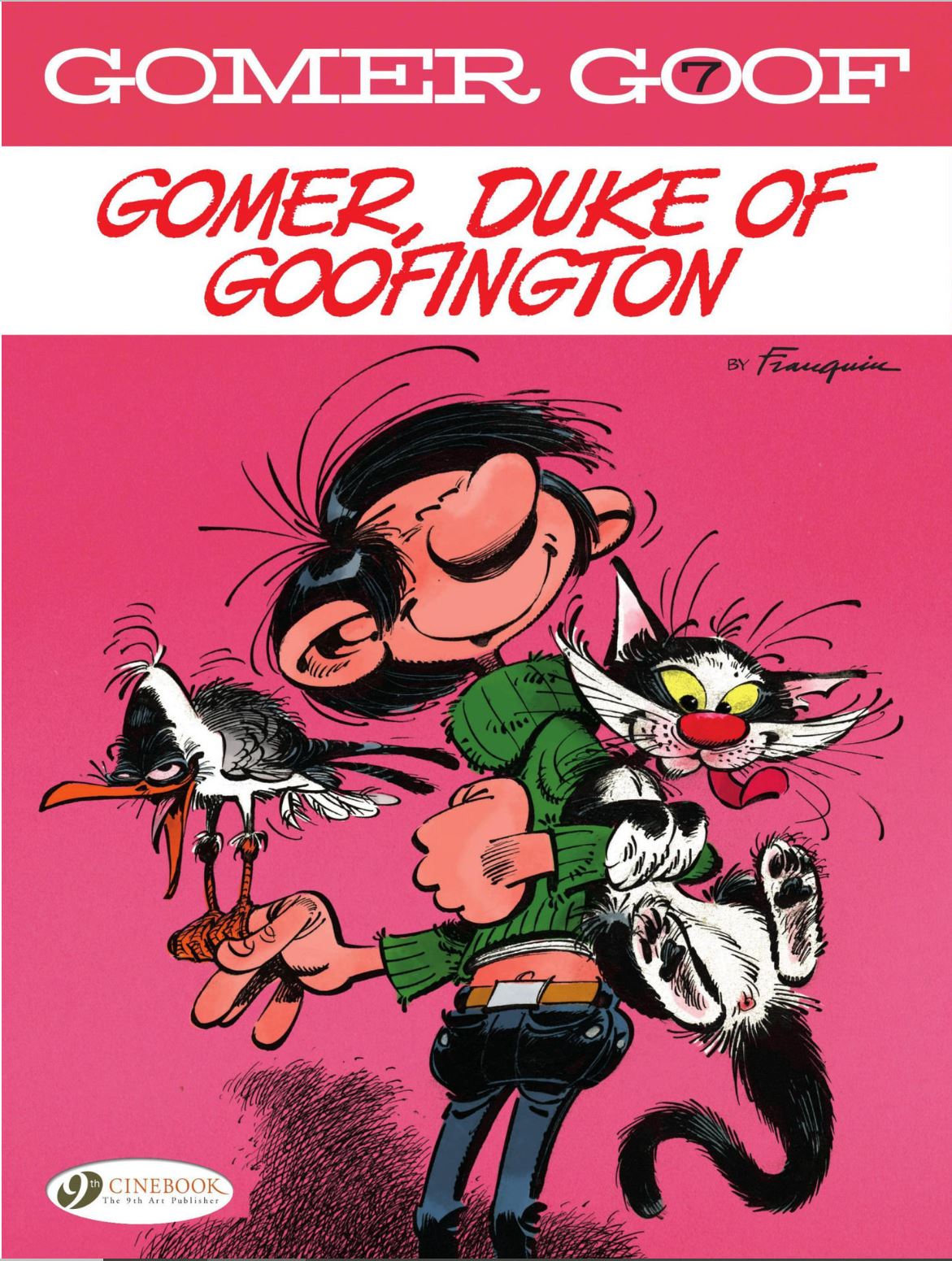
Gomer Goof volume 7: Gomer, Duke of Goofington


By Franquin, with Roba, Bibi and various: translated by Jerome Saincantin (Cinebook)
ISBN: 978-1-84918-590-5 (PB Album/Digital edition)

Like so much in Franco-Belgian comics, it all started with Le Journal de Spirou, which debuted on April 2nd 1938, with its iconic lead strip created by François Robert Velter AKA Rob-Vel. In 1943, publisher Dupuis purchased all rights to the comic and its titular star, and comic-strip prodigy Joseph Gillain (Jijé) took the helm for the redheaded kid’s further exploits as the magazine gradually became a cornerstone of European culture.

In 1946, Jijé’s assistant André Franquin was handed creative control. Graduating from gag vignettes to extended adventure serials, he introduced a broad and engaging supporting cast of regulars as well as phenomenally popular wonder beast The Marsupilami. Debuting in 1952 (in Spirou et les héritiers) that critter eventually became a spin-off star of screen, plush toys, console games and albums in his own right.

Franquin crafted increasingly fantastic and absorbing Spirou sagas until a final resignation in 1969. Over two decades he had enlarged the feature’s scope and horizons, until it became purely his own. In almost every episode, fans met startling and memorable new characters like comrade/rival Fantasio, crackpot inventor Count of Champignac and even supervillains. Spirou & Fantasio evolved into globetrotting journalists visiting exotic places, exposing crimes, exploring the incredible and clashing with bizarre and exotic arch-enemies.

Throughout it all, Fantasio remained a full-fledged – albeit fictional – Le Journal de Spirou reporter who had to pop into the office between cases. Sadly, lurking there was an accident-prone, big-headed junior in charge of minor jobs and dogs-bodying. He was Gaston Lagaffe – Franquin’s other immortal creation…

There’s a long tradition of comics personalising fictitiously mysterious creatives and the arcane processes they indulge in, whether it’s the Marvel Bullpen or DC Thomson’s lugubrious Editor and underlings at The Beano and Dandy – it’s a truly international practise.

Occasional asides on text pages featured well-meaning foul-up/office gofer “Gaston” (who debuted in #985, February 28th 1957). He grew to be one of the most popular and perennial components of the comic, whether as a guest in Spirou’s cases or his own strips and faux reports on editorial pages.

In terms of actual schtick and delivery, older readers will recognise favourite beats and timeless elements of well-intentioned self-delusion as seen in Benny Hill and Jacques Tati and recognise recurring situations from Some Mothers Do Have ’Em or Mr Bean. It’s slapstick, paralysing puns, infernal ingenuity and invention, pomposity lampooned and no good deed going noticed, rewarded or unpunished…

As previously stated, Gaston/Gomer draws a regular pay check (let’s not dignify or mis-categorise what he does as “work”) from Spirou’s editorial offices: reporting to journalist Fantasio, or complicating the lives of office manager Léon Prunelle and other, more diligent staffers, all whilst effectively ignoring those minor jobs he’s paid to handle. These include page paste-up, posting (initially fragile) packages and editing readers’ letters… and that’s the official reason why fans’ requests and suggestions are never answered…

Gomer is lazy, over-opinionated, ever-ravenous, impetuous, underfed, forgetful and eternally hungry, with his most manic moments all stemming from cutting work corners and stashing or consuming contraband nosh in the office. This leads to constant clashes with colleagues and draws in seemingly unaffiliated bystanders like traffic cop Longsnoot and fireman Captain Morwater, as well as simple passers-by who should know by now to keep away from this street.

Through it all our office oaf remains eternally affable, easy-going and incorrigible. Only three questions really matter here: why everyone keeps giving him one last chance, what can gentle, lovelorn, increasingly hot Miss Jeanne possible see in the self-opinionated idiot and will angry capitalist/ever-outraged financier De Mesmaeker ever get his perennial, pestiferous contracts signed?

In 1971, Gaston – Le cas lagaffe was the ninth European compilation and in 2020 became Cinebook’s seventh translated compilation: again focussing on non-stop all-Franquin comics gags in single- page bursts, but regrettably reducing the strip count from the original 54 to 44. Here our well-meaning, overconfident, overly-helpful know-it-all/office hindrance invents more stuff making life unnecessarily dangerous. These include a carrot-shotgun to refresh and fortify rabbits as they evade hunters, personal weather control, a too-fast collapsible bike and jet-powered mail delivery system, but he also accidentally ruins his image and work-avoiding record by providing a scratch solution to keep the studio active and productive during a major power cut…

Despite resolute green credentials and leanings, Gomer is colour-bind to the problems his antiquated automobile cause, even after his attempts to soup up the fuel injection result in the world’s most potent blue dye which constantly escapes from the battered exhaust pipe as an all-consuming cobalt cloud.

Many strips feature his doomed love affair with and manic efforts to modify and mollify the accursed motorised atrocity he calls his car. Sadly, the decrepit, dilapidated Fiat 509 is more in need of a merciful execution than his many well-meant engineering interventions for countering its lethal road pollution and failure to function. Now it also confirms his outlaw status with the gendarmerie – quite literally – with many moments of floating “blue flu”…

As he concentrates of making motoring faster and more fun if not actually safer, Gomer’s big heart swells to encompass more animal pals. He adopts a feral cat and black-headed gull to accompany illicit studio companions Cheese the mouse and goldfish Bubelle, but their hyperactive gluttonous presences generate much chaos, especially whenever benighted business bod De Mesmaeker turns up with more crucial contracts for poor Prunelle to sign. Their residence even triggers a shift in work attire, with safety superseding style as a prerequisite…

Fresh strands of anarchic potential are explored during the organisation of events for Spirou creators like Lambil (Bluecoats) and Roba (Billy & Buddy), with Gomer wearing mascot costumes and paying heavily for it. Then there’s the arrival of Mr. Bacus. He’s an auditor for Dupuis, resolved to find financial fault and cut calamitous costs, but he’s far too curious for an office where the gofer stashes weird science prototypes, arcane chemical concoctions and a manic menagerie able to shred chairs and open sardine tines with a bash of the beak. At least he learns why redecorating costs are so high and frequent…

Gomer’s chum and opposite number Jules-from-Smith’s-across-the-street is a like-minded soul and born accomplice, ever-eager to slope off for a chat and a confirmed devotee of Gomer’s methods of passing the time whilst at work. He is always ready to help, as here when assisting in transporting an out-of-control cactus from Aunt Hortense’s home to the office. It doesn’t fit there either, but at least has plenty of fresh victims to puncture and terrify…

In his spare time Gomer continues his dream of revolutionising kite-flying, but again has trouble with Christmas after the office plays host to the live turkey he rescued last year…

Far better enjoyed than précised or described, these strips allowed Franquin and occasional co-scenarists and idea providers like Roba, Bibi, Michel, Yvan Delporte & Jidéhem (AKA Jean De Mesmaeker: just one of many in-joke analogues who populate the strip) to flex their whimsical muscles and even subversively sneak in some satirical support for their beliefs in pacifism, environmentalism and animal rights. These gags are sublime examples of all-ages comedy: wholesome, barbed, daft and incrementally funnier with every re-reading.

Why haven’t you Goofed off yet?
© Dupuis, Dargaud-Lombard s.a. 2009 by Franquin. All rights reserved. English translation © 2020 Cinebook Ltd.

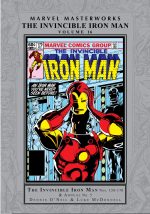
Iron Man Masterworks volume 16


By Denny O’Neil, Roger McKenzie, Peter B. Gillis, Ralph Macchio, Luke McDonnell, Carmine Infantino, Paul Smith, Steve Ditko, Marie Severin, Mike Vosburg, Jerry Bingham, Michael Golden & various (MARVEL)
ISBN: 978-1-3029-4920-4- (HB/Digital edition)

One of Marvel’s biggest global successes thanks to the film franchise, Iron Man celebrated his 60th anniversary in March 2023, so let’s again acknowledge that landmark and all who wear the suits offering more of the same…

Tony Stark is a super-rich supergenius inventor who moonlights as a superhero: wearing a formidable, ever-evolving suit of armour stuffed with his own ingenious creations. The supreme technologist hates to lose and constantly upgrades his gear, making Iron Man one of the most powerful characters in the Marvel Universe. However, in Iron Man #120-128 (March to November 1979), the unrelenting pressure of running a multinational corporation and saving the world on a daily basis resulted in the weary warrior succumbing to the constant temptations of his (originally sham) sybaritic lifestyle. Thus, he helplessly slipped into a glittering world drenched with excessive partying and drinking.

That dereliction was compounded by his armour being usurped by rival Justin Hammer: used to murder an innocent. The ensuing psychological crisis forced Stark to confront the hard fact that he was an alcoholic …and probably an adrenaline junkie too. Landmark story ‘Demon in a Bottle’ saw the traumatised hero plumb the depths of grief and guilt, bury himself in pity, and alienate all his friends and allies before an unlikely intervention forced him to take a long, hard look at his life and actions…

A more cautious, level-headed and wiser man, Stark resumed his high-pressure lives, but he could not let up and the craving never went away. Then in 1982 author/editor Denny O’Neil made him do it again, with the result that Marvel gained another black superhero at long last…

It was the dawn of a period of legacy heroes inheriting mantles, established roles and combat identities from white, mostly male champions, and was certainly a move in the right direction…

This grand and gleaming chronological compendium navigates that transitional period, re-presenting Iron Man #158-170 and material from Iron Man Annual #5 and Marvel Fanfare #4: episodically spanning cover-dates May 1982-May 1983. It’s accompanied by an Introduction from Luke McDonnell at the front and house ads and Direct Sale promo poster by him at the end, as the title experienced many creative personnel shuffles before settling on a stalwart team to tackle the biggest of changes. Also on show are covers by Bob Layton, Smith, Jim Starlin, Ed Hannigan & Al Milgrom, Jerry Bingham & Brett Breeding, McDonnell, Brent Anderson & Steve Mitchell.

Opening with Iron Man #158, O’Neil, Carmine Infantino, Dan Green & Al Milgrom breeze through the motions as a deranged junior genius attacks modern technology from his literal man-cave by tapping the latent psychic power of his ‘Moms’ after which Roger McKenzie, rising art star Paul Smith & inking collective “Diverse Hands” step in to relate what occurs ‘When Strikes Diablo’. Here the Fantastic Four’s alchemical nemesis infiltrates Stark International to steal the techno-wizard’s resources and obsolete suits, only to unleash a mystic menace beyond all control…

With pressure mounting and threats everywhere, the craving for booze painfully manifests in ‘A Cry of Beasts’ – by O’Neil, Steve Ditko, Marie Severin & Green – as Stark’s party-persona collides with hot, willing babes… until an attack on his factory by the sinister Serpent Squad reminds him of his priorities.

Preceding Iron Man Annual #5 – and by O’Neil, McDonnell, Mike Esposito & Steve Mitchell – a brief encounter with new hero Moon Knight sees Stark at odds with rival rich man Steven Grant (one of four people comprising the edgy crusader) in ‘If the Moonman Should Fail!’

Frenemies at first sight, the Golden Avenger and Fist of Khonshu swallow their rich-boy differences to save mutual friends held hostage by Advanced Idea Mechanics, after which the extra-length Annual extravaganza sees Iron Man in Wakanda where The Black Panther must defeat mysteriously resurrected nemesis and determined usurper Eric Killmonger

Crafted by Peter B. Gillis, Ralph Macchio, Jerry & Bingham & Green, the action-packed ‘War and Remembrance!’ exposes an old foe methodically manoeuvring Stark and Iron Man into an inescapable trap, which closes tighter in Iron Man #162 as O’Neil, Mike Vosburg & Mitchell expose ‘The Menace Within!’ when a trusted employee sabotages S.I.…

There seems to be more than one campaign to crush Stark, and – as O’Neil, McDonnell & Mitchell become the regular creative team – ‘Knight’s Errand!’ opens an extended gambit with another hidden plotter turning ruthless capitalism, corporate raiding, advanced weaponry and an obsession with chess into a war for control of the company.

Up first is fast-flying tech terror The Knight who makes short work of Tony’s bodyguard, pilot, friend and confidante James Rhodes, but the real threat comes from a new acquaintance and future companion, covertly hollowing out Stark at close hand. Rising in the rankings after defeating the hovering horseman, Iron Man barely survives ‘Deadly Blessing’ of The Bishop after his security team digs up leads to the plot in Scotland…

In IM #165, the trail leads to Jamie, Laird of Glen Travail and another deadly duel of devices, where the true purpose is to destabilise Stark by abducting Rhodey in an effort to coerce his capitulation. The resultant ‘Endgame’ seemingly goes Stark’s way, but the battle is fought on many levels by a distanced player secretly commanding the Laird: one with a cruel emotional counterpunch long-prepared to destroy the hero from within…

On ‘One of Those Days…’ old foe The Melter attacks Stark’s New York facility whilst Rhodey still recuperates in Scotland. As Stark yet again faces enforced inactivity in the land of sublime alcoholic beverages, he abruptly abandons his friend to jet home to stop the supervillain. He also learns his brilliant security chief Vic Martinelli has uncovered the identity of one of the hidden players attacking the company: chess grandmaster turned armaments entrepreneur Obadiah Stane

As Rhodey goes missing again, the newcomer wants all Stark’s creations and, in the most hostile of takeovers, uses every trick in the book – from honey traps to guided missiles and abduction to intoxication – to seize the advantage. ‘The Empty Shell’ sees that nefarious plan bear evil fruit as Stark finally cracks under interminable pressure and one last betrayal, leading to a crushing fall “off the wagon” and into the gutter in ‘The Iron Scream’.

Permanently drunk and deprived of all judgement, Stark dons his armour to clash with Machine Man, even as far away, Rhodey makes his own life-threatening break for freedom and home…

As chaos ensues at Stark’s plant, a major player debuts in the form of junior employee and minor boffin Morley Erwin: on hand for Stark’s reunion with Rhodey and an aghast witness to one of the smartest men alive crawling into a bottle and trying to drown away his pain…

That process begins in #169 as ‘Blackout!’ sees Stark simply give up when confronted by volcanic B-list villain Magma, and sleep through the moment Jim Rhodes steps up – and into – the role and armour of Iron Man

The new era properly begins in #170’s ‘And Who Shall Clothe Himself in Iron?’ (cover-dated May 1983) as the former military airman promotes Erwin to tech support adviser to help him pilot the most complex weapon he’s ever used to defeat Magma and save a far from grateful Tony Stark…

The Beginning…

Rounding off the wonderment is a short tale by Michael Golden as originally seen in Marvel Fanfare #4 (September 1982) wherein Stark battles his dreams, inner demons and incalculable pride…

As comics companies sought to course correct old attitudes and adapt their wares to a far wider and more diverse readership than they had previously acknowledged, some rash rushed decisions were made that did not suit all the fans. Thankfully, that never stopped the editors and publishers from trying and the wonderful results are here and everywhere in comics because of it. Go read and enjoy and see how it all began to change.
© 2023 MARVEL.