Nick Fury, Agent of S.H.I.E.L.D. Marvel Masterworks volume 1


By Stan Lee, Jack Kirby, Dennis O’Neil, Roy Thomas, John Severin, Joe Sinnott, Don Heck, Howard Purcell, Ogden Whitney, John Buscema, Joe Sinnott, Frank Giacoia, Mike Esposito, Jim Steranko & various (Marvel)
ISBN: 978-0-7851-2686-7 (HB)

This book includes Discriminatory Content produced in less enlightened times.

Veteran war-hero and superspy Nick Fury debuted in Fantastic Four #21 (cover-dated December 1963): a grizzled, world-weary and cunning (but innately Good) CIA Colonel at the periphery of the really big adventures in a fast-changing world.

What was odd about that? Well, the gruff, crudely capable combat everyman was already the star of the reemergent publisher’s only war comic, set twenty years earlier in – depending on whether you were American or European – the beginning or middle of World War II. Sgt. Fury and his Howling Commandos was an improbable, decidedly over-the-top and raucous combat comics series, similar in tone to later movies such as The Wild Bunch or The Dirty Dozen and had launched in May of that year.

Nevertheless, Fury’s latterday self became a big-name star as espionage yarns continued guiding a global zeitgeist in the wake of popular TV sensations like Danger Man and The Man From U.N.C.L.E. and Bond movies (and many imitators) so the contemporary iteration was granted a second series. It began in Strange Tales #135 (cover-dated August 1965).

Nick Fury, Agent of S.H.I.E.L.D. combined Cold War tensions with sinister schemes of World Conquest by a subversive, all-encompassing, hidden enemy organisation. The ever-unfolding saga came with captivating Kirby-designed super-science gadgetry and – eventually – iconic, game-changing imagineering from Jim Steranko, whose visually groundbreaking graphic narratives took the comics art form to a whole new level…

For those few brief years with Steranko in charge, the S.H.I.E.L.D. series was one of the best strips in America (if not the world) but when the writer/artist left just as the global spy-fad was giving way to supernatural mystery and horror stories, the whole concept faded into the fundamental background architecture of the Marvel Universe…

This astounding full-colour compendium (available in hardcover and digital editions) deals with the outrageous, groundbreaking, but still notionally wedded-to-mundane-reality iteration which set the scene.

Here Jack Kirby’s genius for graphic wizardry and gift for dramatic staging mixed with Stan Lee’s manic melodrama to create a tough and tense series which the new writers and veteran artists that followed turned into a non-stop riot of action and suspense, with Steranko’s late arrival only hinting at the magic to come…

These epic early days of spycraft encompass Strange Tales #135-153 and Tales of Suspense #78, collectively covering August 1965 – February 1967 and guaranteeing timeless thrills for lovers of adventure and intrigue. Following a history lesson from Kirby scholar John Morrow in his Introduction, the main event starts in at full pelt in ST #135 as the Human Torch solo feature was summarily replaced by Nick Fury, Agent of S.H.I.E.L.D. (which back then stood for Supreme Headquarters International Espionage Law-enforcement Division). In the rocket-paced first episode, Fury is asked to volunteer for the most dangerous job in the world: leading a new counter-intelligence agency dedicated to stopping secretive subversive super-science organisation Hydra. With assassins dogging his every move, the Take-Charge Guy with the Can-Do Attitude quickly proves he is ‘The Man for the Job!’ in a potent 12-page thriller from Lee, Kirby and inker Dick Ayers.

Even an artist and plotter of Kirby’s calibre couldn’t handle another strip at that busiest of times, so from the next issue “The King” cut back to laying out episodes, allowing a variety of superb draughtsmen to flesh out the adventures. Happily, however, there’s probably a stunning invention or cool concept on almost every page that follows so the Kirby Touch was fully upon the unfolding suspense and intrigue. ‘Find Fury or Die!’ brought veteran draughtsman John Severin back to the company that used to be Atlas. He pencilled and inked Jack’s blueprints as – aided and abetted by full-on patriotic weaponsmith Tony Stark – the new Director of the latest spy-agency becomes the target of incessant assassination attempts as we meet mysterious masked maniac the Supreme Hydra

The tension ramps up for the next instalment as a number of contenders are introduced – any of whom might be the obscured overlord of evil – even as S.H.I.E.L.D. strives mightily but fails to stop Hydra launching its deadly Betatron Bomb in ‘The Prize is… Earth!’ Despite the restrictions of the Comics Code, these early S.H.I.E.L.D. stories were bleakly grim and frequently carried a heavy body count. Four valiant agents died in quick succession in #137 and the next issue underscored the point in ‘Sometimes the Good Guys Lose!’, with further revelations of Hydra’s inner workings.

Fury and fellow WWII era Howling Commando stalwarts Dum-Dum Dugan and Gabe Jones meanwhile played catch-up after Hydra assassins invade S.H.I.E.L.D., almost eliminating Fury and Stark – the only man capable of destroying an atomic sword of Damocles hanging over the world. Although Fury saves the munitions genius, he is captured in the process…

Tortured by Hydra in #139’s ‘The Brave Die Hard!’ (with Joe Sinnott replacing Severin as finisher), Fury latches on to an unlikely ally in Laura Brown, the Supreme Hydra’s daughter and a young woman bitterly opposed to her father’s megalomaniacal madness. Even with only half a comic book per month to tell a tale, creators didn’t hang around in those halcyon days, and #140 promised ‘The End of Hydra!’ (Don Heck & Sinnott over Kirby) as a S.H.I.E.L.D. squad invades the enemy’s inner sanctum to rescue the already-free-&-making-mayhem Fury. In the meantime, Stark travels into space to remove the orbiting Betatron Bomb with his robotic Braino-Saur system. The end result leaves Hydra temporarily headless…

Strange Tales #141 sees Kirby return to full pencils (inked by pseudonymous Frank Giacoia, moonlighting as Frank Ray) for the mop-up, prior to ‘Operation: Brain Blast!’ introducing Mentallo – a mutant and career criminal renegade from S.H.I.E.L.D.’s ESP division. He joins technological savant The Fixer to assail the organisation as their first step in an ambitious scheme to rule Earth. The momentous raid begins in ‘Who Strikes at… S.H.I.E.L.D.?’ (illustrated by Kirby & Mike Demeo – AKA Mike Esposito) with the ruthless rogues hitting hard and fast: seizing and mind-controlling Fury before strapping him to a mini H-bomb. With Howard Purcell & Esposito embellishing Kirby’s layouts, Dum-Dum and the boys come blasting in ‘To Free a Brain Slave’ in #143. A new and deadly threat emerges in #144’s ‘The Day of the Druid!’ as a mystic-seeming charlatan targets Fury and his agents with murderous flying techno-ovoids. Happily, new S.H.I.E.L.D. recruit Jasper Sitwell is on hand to augment the triumphant fightback in ‘Lo! The Eggs Shall Hatch!’ (finished by Heck & Esposito).

As Marvel continuity grew evermore interlinked, ‘Them!’ details a Captain America team-up for Fury in the first of the Star-Spangled Avenger’s many adventures as a (more-or-less) Agent of S.H.I.E.L.D. Taken from Tales of Suspense #78 (June 1966): scripted by Lee with Kirby on full pencils and Giacoia inking, the story depicts the WWII wonders battling an artificial assassin with incredible chemical capabilities, after which Nick seeks the creature’s mysterious makers in ST #146, ‘When the Unliving Strike!’(Kirby, Heck & Esposito).

Proclaiming themselves a technological Special Interests group, Advanced Idea Mechanics courts S.H.I.E.L.D.’s governmental and military masters (and contracts), promising potent and incredible new weapons if only they would sack that barbaric slob Fury. However, the surly supremo is getting close to exposing A.I.M.’s connection to “Them” …and an old enemy thought long gone.

A concerted whispering campaign and briefing-against seemingly sees Fury ousted in ‘The Enemy Within!’, before being put on trial in ‘Death Before Dishonor!’ (scripted by Kirby with Heck & Esposito finishing his layouts), but it’s all part of a cunning counterplan which delivers a shattering conclusion and ‘The End of A.I.M.!’ (ST #149, dialogued by Denny O’Neil with art by Kirby & Ogden Whitney). Then, revealed by Lee, Kirby, John Buscema & Giacoia, a malign, devilishly subtle plan is finally exposed in Strange Tales #150 as Fury’s team compares clues from all the year’s past clashes to come to one terrifying conclusion… ‘Hydra Lives!’

The shocking secret also hints at great events to come as newcomer Steranko assumes the finisher’s role over Lee & Kirby for ‘Overkill!’ with Fury targeted by the new – true – Supreme Hydra who devises a cunning scheme to infiltrate America’s top security agency and use his enemy as the means of triggering global Armageddon…

Although the Good Guys seemingly thwart that scheme, ‘The Power of S.H.I.E.L.D.!’ is actually helpless to discern the villain’s real intent as this initial dossier of doom pauses on a cliffhanger after ‘The Hiding Place!’ (ST #153, scripted by Roy Thomas) closes with the archvillain comfortably ensconced in Fury’s inner circle and ready to destroy the organisation from within.

To Be Continued…

Although the S.H.I.E.L.D. saga stops here, there’s an added bonus still to enjoy: the aforementioned FF #21. This depicted Fury as a wily CIA agent seeking the team’s aid against a sinister demagogue ‘The Hate-Monger’ (Lee & Kirby, inked by George Roussos, under protective nom-de-plume George Bell) just as the 1960s espionage vogue was taking off. Here Fury craftily manipulates Marvel’s First Family into invading a sovereign nation reeling in the throes of revolution in a yarn crackling with tension and action…

Fast, furious and fantastically entertaining, these high-octane vintage yarns from a time when the US were global Good Guys and “World Police” are a superb snapshot of early Marvel Comics at their creative peak and should be part of every fanboy’s shelf of beloved favourites.

Don’t Yield! Back S.H.I.E.L.D.!

© 1965, 1966, 1967, 2018 Marvel Characters, Inc. All rights reserved.

Today in 1907, Belgian artist Jacques Laudy (Le Journal de Tintin) was born, as was occasional Green Lantern scripter Henry Kuttner in 1915 and Canadian cartoonist Jacques Boivin (Melody) in 1952. In 2007, B,C. creator Johnny Hart died.

Today in 1935 Dr. Seuss launched his short lived but influential strip Hejji and, in 1992, Art Spiegelman received a Special Pulitzer Prize for Maus.

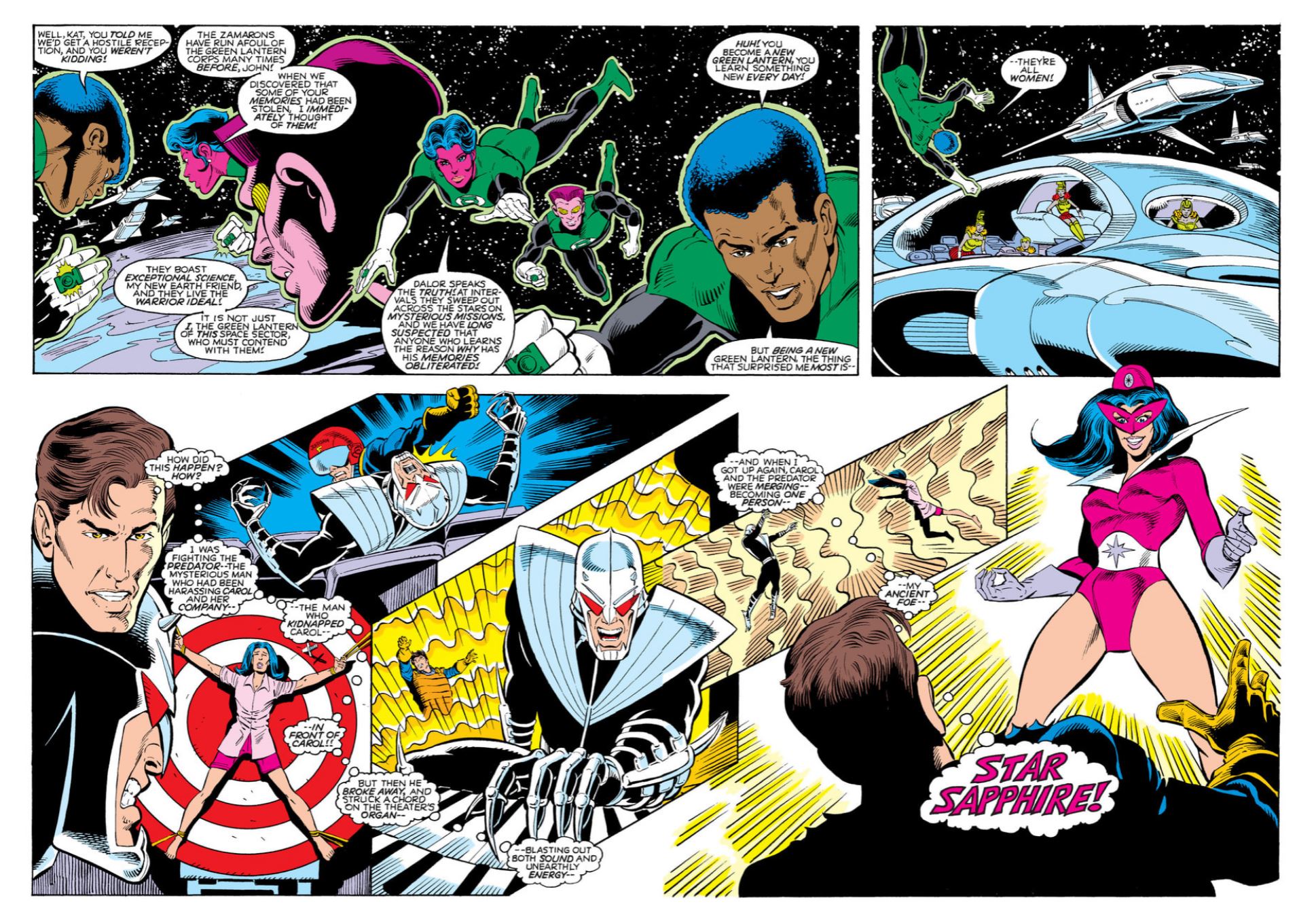
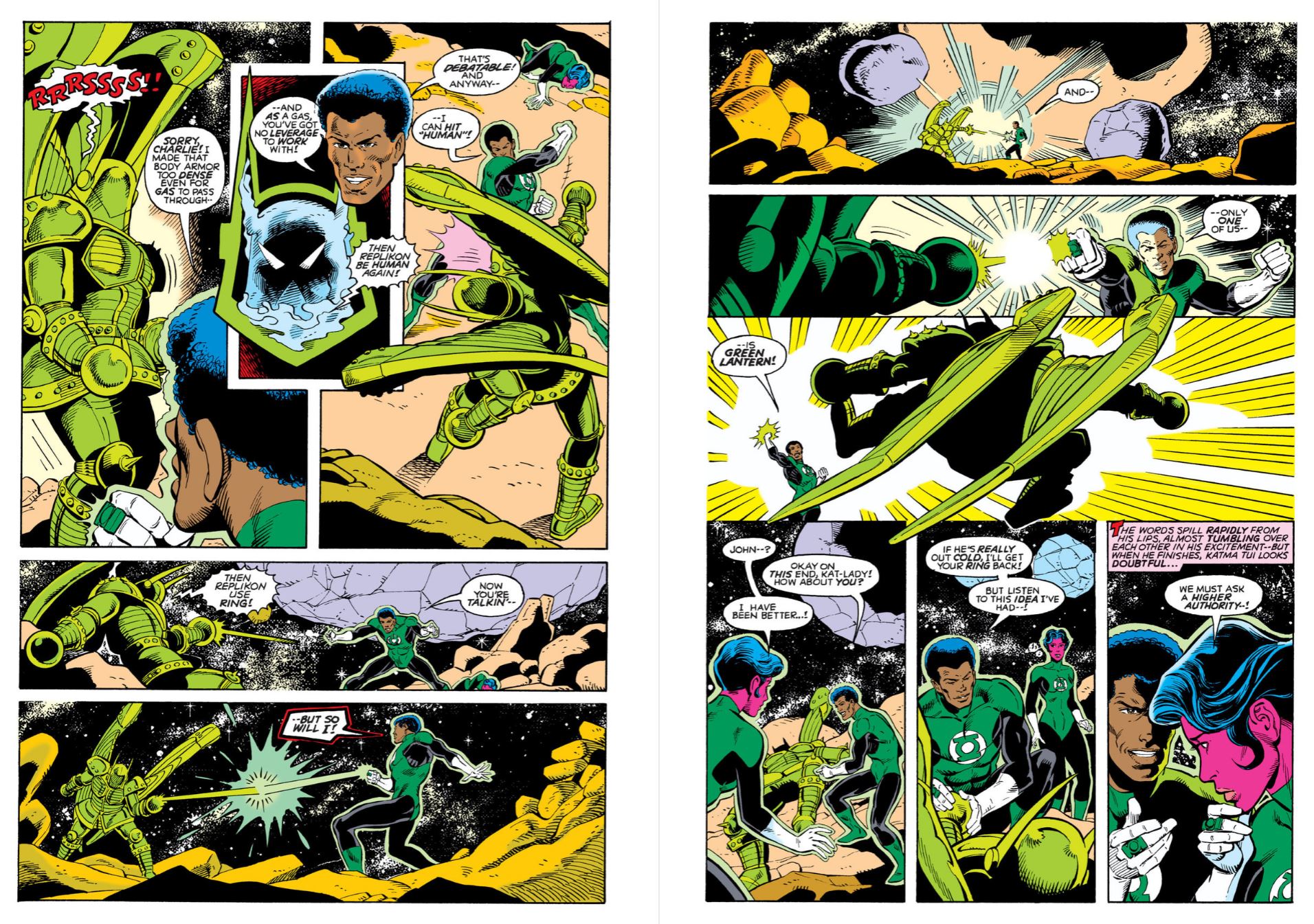
Green Lantern: The Silver Age volume 1


By John Broome, Gardner Fox, Gil Kane, Mike Sekowsky, Carmine Infantino, Ross Andru, Joe Giella, Murphy Anderson & various (DC Comics)
ISBN: 978-1-4012-6348-5 (TPB/Digital edition)

This book includes Discriminatory Content produced in less enlightened times.

Today marks the centenary of Eli Katz, who, as Gil Kane, worked from the Golden Age until his death (on January 31st 2000) to make comics the art form it is today. Diligent, resolute and always challenging himself, Kane was a trendsetting pioneer in style, in form and in comics philosophy. He was also a visual architect of the superhero revival in the Silver Age and a key component in the evolution of the Graphic Novel.

Gil Kane worked as an artist, and an ever-more effective and influential one, drawing – and writing – for many companies since his 1940s debut: on superheroes, action, war, mystery, romance, movie adaptations and, perhaps most importantly, Westerns and Science Fiction tales. In the late 1950s Kane was one of editor Julius Schwartz’s go-to artists for regenerating the superhero. Yet by 1968, at the top of his (admittedly much denigrated) profession, this relentlessly revolutionary and creative man felt so confined by juvenile strictures of the industry that he struck out on new ventures, jettisoning editorial and format bounds of comic books for new visions and media.

His Name Is Savage was an adult-oriented monochrome magazine about a cold and ruthless super-spy in the James Bond/Man Called Flint mould, co-written by friend & collaborator Archie Goodwin. It was very much a precursor in tone, treatment and subject matter to many of today’s adventure titles. The other venture, Blackmark (also with Goodwin), not only ushered in an era of comic book Sword & Sorcery, but became one of the first Graphic Novels. Technically, as the series was commissioned by publisher Ballantine as eight volumes, it was also America’s first comic Limited Series. Volume 1 launched in January 1971, with volume 2 just completed when the publisher killed the project. Albeit a generation Kane’s junior, long term seasoned collaborator Roy Thomas reprinted those tales in Marvel’s Savage Sword of Conan and Marvel Preview, with artwork rejigged to accommodate a different page format.

In comic books Kane’s milieux included Boy Commandos, Young Allies & Newsboy Legion, Johnny Thunder, Jimmy Wakely, Hopalong Cassidy, Rex the Wonder Dog, The Atom, Plastic Man, Robin, Batgirl, Batman, Superman, Flash, Hawk and Dove, Captain Action, T.H.U.N.D.E.R. Agents, U.N.D.E.R.S.E.A. Agent, plus hundreds of genre yarns – romance, war, sci fi, western and horror – before landing at Marvel Comics to reinvent Amazing Spider-Man, Captain America, Thor, Hulk, Ka-Zar and Captain Marvel, co-creating Adam Warlock, Morbius, Iron Fist. He adapted John Carter, Warlord of Mars and other adventure fantasy properties and reinvigorated dozens of horror-hero and superhero stalwarts, all while filling in on seemingly every character and cover going…

Restless and craving what the medium could still achieve, he created newspaper strip Star Hawks (in 1977 with Ron Goulart) and numerous special projects like Jason Drum for Le Journal de Tintin and The Ring of the Nibelung. Also working as Gil Stack, Scott Edward, Stack Til, Stacktil, Pen Star and Phil Martell, Kane was a foundation stone of comics and remains a vivid, vital inspiration to future generations of creators and readers.

With all that in mind let’s revisit a character he co-created and who will be forever associated with Kane: the Silver Age Emerald Gladiator…

After their hugely successful revival and reworking of The Flash, DC (or National Comics as they were) were keen to build on the resurgent superhero trend. Showcase #22 hit the stands at the same time as the fourth issue of the new Flash comic book – #108 – and once again the guiding lights were Editor Julie Schwartz & writer John Broome. Assigned as illustrator was action ace Gil Kane, generally inked by Joe Giella.

This fabulous paperback compilation gathers Showcase #22-24 (September/October 1959 to January/February 1960) and Green Lantern #1-9 (July/August 1960-November 1961) and reveals how a Space Age reconfiguration of the Golden-Age superhero with a magic ring replaced mysticism with super-science.

Hal Jordan was a young test pilot in California when an alien policeman crashed his spaceship on Earth. Mortally wounded, Abin Sur commanded his ring – a device which could materialise thoughts – to seek out a replacement officer, honest and without fear. Scanning the planet it selected Jordan and brought him to the crash-site. The dying alien bequeathed his ring, the lantern-shaped Battery of Power and his profession to the astonished Earthman.

In six pages ‘S.O.S Green Lantern’ established characters, scenario and narrative thrust of a series that would increasingly become the spine of DC continuity, leaving room for another two adventures in that premiere issue. ‘Secret of the Flaming Spear!’ and ‘Menace of the Runaway Missile!’ were both contemporary thrillers set against the backdrop of the aviation industry at a time when the Cold War was at its height. Unlike Flash’s debut, the publishers were now confident of their ground. The next two issues of Showcase carried the new hero into even greater and more fantastic exploits. ‘Summons from Space’ sent Green Lantern to another world: saving an emerging race from a deadly threat at the behest of the as-yet-unnamed leaders of the Green Lantern Corps, whilst ‘The Invisible Destroyer’ pitted the neophyte Emerald Gladiator against earthbound eerie menace – a psychic marauder that lived on atomic radiation.

Showcase #24 (January/February 1960) featured another spy-ring in ‘The Secret of the Black Museum!’ but Jordan’s complex social life took centre-stage in ‘The Creature That Couldn’t Die!’ when the threat of an unstoppable monster paled before the insufferable stress of being his own rival. Hal’s boss Carol Ferris, controversially left in charge of her father’s aviation company (an utterly radical concept in 1960 when most women were still considered fainting-fodder fluff), won’t date an employee, but is deliriously happy for him to set her up with glamorous, mysterious GL…

Six months later Green Lantern #1 was released. All previous tales had been dynamically drawn by Kane & Giella, in a visually arresting and exciting manner, but the lead tale here, ‘Planet of Doomed Men’ was inked by the astoundingly multi-talented Murphy Anderson, and his fine line-work elevated the tale (more emergent humans in need of rescue from another monster) to the status of a minor classic. Giella returned for the second tale, ‘Menace of the Giant Puppet!’, in which GL fought his first – albeit rather lame – supervillain, the Puppet Master.

The next issue originated a concept that would be pivotal to the future of DC continuity. ‘The Secret of the Golden Thunderbolts!’ featured an Antimatter Universe and the diabolical Weaponers of Qward: a twisted race who worshipped Evil, and whose criminals (i.e. people who wouldn’t lie, cheat, steal or kill) wanted asylum on Earth. Also inked by Anderson, this is an early highpoint of tragic melodrama from an era where emotionalism was actively downplayed in comics. The second story ‘Riddle of the Frozen Ghost Town! is a crime thriller highlighting the developing relationship between the hero and his Inuit (then “Eskimo”) mechanic Tom “Pieface”Kalmaku.

The Qwardians returned in the all-Giella-inked #3, leading with ‘The Amazing Theft of the Power Lamp!’ before Jordan’s love life again spun out of control in ‘The Leap Year Menace!’, whilst GL #4 saw the hero trapped in the antimatter universe in ‘The Diabolical Missile from Qward!’ (Anderson inks) nicely balanced by light-&-frothy mistaken-identity caper ‘Secret of Green Lantern’s Mask!’ This last was apparently crafted by a veritable round-robin raft of pencillers including Kane, Giella, Carmine Infantino, Mike Sekowsky and Ross Andru…

Issue #5 was a full-length thriller introducing Hector Hammond, GL’s second official recurring super-foe in ‘The Power Ring that Vanished!’: a saga of romantic intrigue, mistaken identity and evolution gone wild. This was followed by another pure science fiction puzzler ‘The World of Living Phantoms!’ (Kane & Giella), debuting avian Green Lantern Tomar Re and opening up the entire universe to avid readers.

Having shown us other GLs, Broome immediately excelled himself in the next episode. ‘The Day 100,000 People Vanished!’ brought the Guardians of the Universe into the open to warn of their greatest error: renegade Green Lantern Sinestro who, in league with Qwardians, had become a threat to the entire universe. This taut, tense shocker introduced one of the most charismatic and intriguing villains in the DCU, and the issue still had room for a dryly amusing, whimsical drama introducing Tom Kalmaku’s fiancée Terga in ‘Wings of Destiny’.

In the early 1960s DC production wizard Jack Adler devised a process to add enhancing tone to cover illustrations. The finished result was eye-catching and mind-blowing, but sadly, examples such as the cover of #8 here really don’t work with the glossy pages and digitised colour-tints of modern reproduction. Never mind, though, since contents ‘The Challenge from 5700 AD!’ comprise a fantasy tour de force as the Emerald Gladiator is shanghaied through time to save the future from an invasion of mutant lizards…

Sinestro returned in the next issue – the last in this astounding cosmic collection – with his own super-weapon in ‘The Battle of the Power Rings!’ (with Anderson again substituting for Giella) but the real gold is ‘Green Lantern’s Brother Act’, with the revelation of Hal’s two brothers and a snoopy girl reporter convinced young Jim Jordan is secretly the ring-slinging superhero. This wry poke at DC’s house plot-device shows just how sophisticated Schwartz & Broome believed their audiences to be.

In those long ago days costumed villains were always third choice in a writer’s armoury: clever bad-guys and aliens always seemed more believable to creators back then. If you were doing something naughty would you want to call attention to yourself? Nowadays the visual impact of buff men in tights dictates the type of foe more than the crimes committed, which is why these glorious adventures of simpler yet somehow better days are such an unalloyed delight. These Fights ‘n’ Tights romps are in themselves a great read for most ages, but when also considered as the building blocks of all DC continuity they become vital fare for any fan keen to make sense of the modern superhero experience.

Judged solely on their own merit, these are snappy and awe-inspiring; beautifully illustrated by a rapidly evolving graphic narrative superstar in ascendance: captivatingly clever thrillers that amuse, amaze and enthral both new readers and old devotees. This collection is a must-read item for anybody in love with our art-form and especially for anyone just now encountering the hero for the first time through his TV incarnation.
© 1959, 1960, 1961, 2016 DC Comics. All Rights Reserved.

Today in 1882 Spanish creator Salvador Bartolozzi (weekly Pinocchio) was born, with The New Yorker cartoonist Chon Day arriving in 1907, Levi Katz in 1926 and crusading Filipino cartoonist Pol Medina Jr. (Pugad Baboy) in 1960. In 1980 Dash Shaw (Bottomless Belly Button, New School, The Unclothed Man In the 35th Century A.D., Courier) joined that august grouping.

In 1936 Frank Leonard’s Mickey Finn strip debuted, and ran until 10th September 1977.

The Phantom – the complete newspaper dailies: volume Five 1943-1944


By Lee Falk & Wilson McCoy: introduction by Ed Rhoades (Hermes Press)
ISBN: 978-1-61345-030-7 (HB/Digital edition)

This book includes Discriminatory Content produced in less enlightened times.

Born Leon Harrison Gross, Lee Falk created the Ghost Who Walks at the request of his King Features Syndicate employers who were already making history, public headway and loads of money with his first strip sensation Mandrake the Magician. Although technically not the first ever costumed champion in comics, The Phantom became the prototype paladin to wear a skin-tight body-stocking and the first wearing a mask with opaque eye-slits…

The undying, generational champion debuted on February 17th 1936, in an extended sequence pitting him against an ancient global confederation of pirates. Falk wrote and drew the daily strip for the first two weeks before handing over illustration to artist Ray Moore. The equally enthralling, hugely influential Sunday feature began on May 28th 1939. Both are still running.

For such a long-lived, influential series, in terms of compendia or graphic collections, “the Ghost Who Walks” was quite poorly served in the English language market (except in the Antipodes, where he’s always been accorded the status of a pop culture god). Lots of companies have sought to collect strips from one of the longest continually running adventure serials in publishing history, but in no systematic or chronological order and never with any sustained success. That has been mostly rectified recently by archival specialists Hermes Press who launched curated collections in 2010, making nearly all the various canonical iterations accessible to the devoted.

This fifth landscape Dailies edition is currently only available digitally. Released in 2013, its pages are stuffed with sumptuous visual goodies like panel and logo close-ups, covers and lots of original art, and opens with ‘Introduction: Passing the Torch’: a memories-rich text feature stuffed with sumptuous visual goodies from much-missed uber-fan Ed Rhoades, after which we resume the never-ending story in progress…

Previously – and in a volume STILL agonisingly unavailable: a colossal war campaign in the African jungles catapulted the reclusive do-gooder into global headlines as the “masked commander of Bengali” and the triumphant “Hero of The Oolan”: unwanted attention which made The Phantom an unhappy but extremely well known heroic public figure. During the siege his adored Significant Other Diana Palmer was gravely wounded. As she recuperates in the USA, attended by faithful failed-suitor Captain Byron, the Ghost who walks is being flown to the Land of the (currently) Free for pointless military bombast and tedious morale-boosting backslapping. It’s a situation he plans on escaping ASAP …

The vintage blood-&-thunder fun begins with brooding, tension-packed thriller ‘Bent Beak Broder’ (originally running Mondays to Saturdays, January 11th to May 22nd 1943) wherein Phantom – and faithful wonder-wolf companion Devil – duck the escorts and parades to head for Diana’s home and sickbed. It involves a tedious cross country hitchhiking stint and lands the hero-in-mufti in the middle of a prison break. When ruthless rogue Bent Beak kidnaps a young girl and goes on a rampage, our seasoned crimebuster is duty-bound to postpone his romantic reunion and hunt down the monstrous malcontents in a stunning display of psychological warfare and thundering fists, leaving the convicts mentally scarred for life and marked with the Phantom’s signature Death’s Head ring brand…

Neatly segueing into soap opera romance with a side order of comedy, ‘The Phantom’s Engagement’ (24th May – 24th July) at last finds him at her doorstep and bedside just as Byron makes one more play for her heart. Gently rebuffed and at last accepting that she will never be his, the captain prepares to leave. However, pushed by Diana’s family – and especially her Uncle Dave – the uncharacteristically nervous masked marvel girds himself to propose but is briefly distracted by the arrival of terrifying African emissary Prince Karna of the Ismani and a religious rite that cannot be deferred. Renewal rite wrapped up, The Phantom perseveres and pops the question.

Everything seems fine (and funny to all observing) until Diana, who initially accepts his proposal to extend the Phantom line unto a another generation, abruptly changes her mind and turns him down, saying that she is promised to Byron. Baffled and broken, The Phantom is unaware that Diana mistakenly believes herself unable to walk ever again…

Upon learning that her paralysis was temporary, Diana tries to follow The Phantom back to Africa, with the reluctant but big-hearted help of Byron, but by now “Kit Walker” and Devil are far out at sea and facing the opening gambits of epic yarn ‘High Seas Hijackers’ (26th July 1943 – 26th February 1944). Here the Jungle Judge renews his eternal war on pirates against a wicked band employing a diabolical new gimmick…

Across oceans still wary of submarine attacks, glamorous, eye-catching agent provocateur/fifth columnist Suzie is fascinated by enigmatic never-seen fellow passenger Mr. Walker. Not so much her snooty superior Mrs J who isn’t, but won’t let it stop them preparing the freighter conveying them all – the S.S. Harvey – for capture by sea marauders. Not far away, the sinister General has devised a tactic for scaring away crews and taking ships without a struggle, but this stratagem almost founders when a masked maniac is found haunting the current target. Eventually, The Phantom is captured and the General, a pirate to his core, recognizes the undying nemesis of his kind. As he starts to unravel, Suzie interrogates the prisoner and finds her own merciless worldview shifting, but cannot stop her terrified boss throwing the captive overboard tied to tons of machinery…

His escape and subsequent pursuit brings him to a tropical island nation where the villainous General is actually the richest, most respected and second most powerful man there. However with Suzie switching sides The Phantom and Suzie dismantle his powerbase as Governor, before exposing him to the far distant politically isolated President. This involves a sustained struggle employing a war of nerves, guerilla tactics and sheer fortitude after the villain sets the entire military on their trail… all to no avail. In the end justice is served but the cost is shockingly high and deeply personal…

Saddened by his loss, The Ghost Who Walks decides on one last (secret) glimpse of Diana before losing himself in the Jungles of Bengali and returns to America just in time to become embroiled in ‘The Spy Game’ (28th February – 20th May). Byron and Diana are “Just good friends” now, and when the Captain is ordered by Uncle Dave (a big deal in US Military Intelligence) to courier a briefcase of secrets to a specific location at a certain time, Diana adds cover as his wife. Unfortunately the couple are under surveillance already, by a deadly ring of spies: a certain masked hero and his wolf who get the wrong idea. When Kit Walker notices their other shadows, he gets involved behind the scenes, safeguarding them on a spectacular and mindbending Hitchcock-like odyssey of peril and intrigue involving planes, trains and automobiles, and non-stop action, that ends with The Phantom and Diana reunited and engaged again. However Byron, already despatched on another mission, has extracted a promise that she will marry no one else until his return…

It’s back to crime and the public’s growing fascination with gangsterism for closing adventure ‘The Crooner’ (22nd May – 26th August 1944). This felonious mastermind’s grand idea is to frame the Phantom by committing brutal crimes all “signed” with his Death’s Head mark, but soon learns the power of that symbol when the hero dismantles his operation with chilling efficiency…

Short on actual jungle tales but stuffed with chases, cruises, air clashes, assorted fights, torture, action antics, daredevil stunts and many a misapprehension in the-then modern milieu of America and a war-torn contemporary world, this is sheer pulp-era excitement that still packs a breathtaking punch and many sly laughs. Rollercoaster thrills delivered at rocket pace, these pared-down, gripping episodes display artist Wilson McCoy developing his craft and honing skills on every panel, making the strip visually his until his untimely death in 1961, after which Carmine Infantino and Bill Lignante filled in until Sy Barry took over.
© 2013 King Features Syndicate, Inc.: ® Hearst Holdings, Inc.; reprinted with permission. All rights reserved.

Yesterday in 1902 British cartoonist Brian White was born. His greatest contrition to world peace and global morale was Nipper. Just as important – to me at least – are the arrivals of letterer Sam Rosen in 1922, and multitasking comics maestro Joe Orlando in1927. Barely less important, scripter, editor and “DC Answer Man” Bob Rozakis arrived in 1951 as did cover artist Dave Johnson in 1966.

In 1991 we lost legendary EC horror and romance artist Graham Ingels, whilst 1997 saw the passing of trailblazing African American comics creator Billy Graham (Vampirella, Eerie, Creepy, Luke Cage, Black Panther, Sabre).

Today in 1916, writer/artist/editor/publisher Bernard Baily (The Spectre, Hourman, Gilda Gay, Frankenstein) was born, and in 1941 so was Archie Comics mainstay Victor Gorelick. Mangaka Akira Toriyama (Dragon Ball) arrived in 1955; cartoonist Dan Perkins – AKA Tom Tomorrow (This Modern World) – in 1961 and “Legend”-ary creator Art Adams (Longshot, X-Men, Superman, Batman, Monkeyman & O’Brien, Gumby and practically everyone else) in 1963.

And also today in 2005 we lost glass-ceiling shattering cartoonist Dale Messick, first woman to create her own syndicated newspaper strip: Brenda Starr, Reporter.

The Spider’s Syndicate of Crime


By Ted Cowan, Jerry Siegel & Reg Bunn (Rebellion)
ISBN 978-1-78108-905-7 (Album TPB/Digital edition)

This book includes Discriminatory Content produced in less enlightened times.

As religions, faiths and nations all over the world celebrate their apparently God-given right to kill each other in monumental numbers and vile ways, I’m again retreating into childhood days and safely fictional conflicts this Easter.

At least the adventures of the macabre and malevolent Spider and his personal redemption arc are as engrossing and enjoyable as I always recalled and will provide the newest, most contemporary reader with a huge hit of superb artwork, compelling, caper-style cops ‘n’ robbers fantasy, and thrill-a-minute adventure with no threat to soul or sanity.

Part of Rebellion’s Treasury of British Comics strand, The Spider’s Syndicate of Crime was the opening salvo of (hopefully) a full and complete reprinting of arachnid amazements. It gathers material from peerless weekly anthology Lion, spanning June 26th 1965 – June 18th 1966 and that year’s Lion Annual which for laborious reasons is designated 1967.

What’s it all about? The Spider is a mysterious super-scientist whose goal is to be the greatest criminal of all time. As conceived by writer/editor Ted Cowan – who among many venerable triumphs created the much-revered Robot Archie feature and also scripted Ginger Nutt, Paddy Payne, Adam Eterno, and more – the flamboyantly wicked narcissist begins his public career by recruiting crime specialists. With moronic master safecracker Roy Ordini and evil inventor Professor Pelham he then attempts a massive gem-theft from a thinly veiled New York’s World Fair. This introduces Gilmore and Trask, the two crack police detectives cursed with the task of capturing the arrogant archvillain.

A major factor in the eerily eccentric strip’s success and reason for the reverence with which it is held is the captivating – not to say downright creepy – artwork of William Reginald Bunn. His intensely hatched linework was perfect for towering establishing shots, arcane angle views and catastrophic chases… and nobody ever drew moodier webbing or more believable weird weapons and monsters. Bunn was an absolute master of his field and much beloved. His work in comics (such as Robin Hood, Buck Jones, Black Hood, Captain Kid and Clip McCord) spanned 1949 to his death in 1971: once the industry found him, he was never without work. He died on the job and is still much missed. For The Spider there was the ultimate accolade as, after opening on two pages per episode, the feature kept winning a bigger page count. Even so, a lot had to happen in pretty short order and Bunn never stinted or short-changed his audience…

Similarly scripted by Cowan, second adventure ‘The Return of the Spider’ sets the tone for the rest of the strip’s run, as the unbelievably colossal vanity of the Spider is assaulted by a pretender to his title. The Mirror Man is a swaggering arrogant super-criminal who uses lethally credible optical illusions to carry out his crimes, and the Spider must crush him to keep the number one most wanted spot – and to satisfy his own vanity. Moreover, pitifully outmatched Gilmore & Trask return to chase the Spider, but must settle for his defeated rival after weeks of devious plotting, bold banditry and spectacular serialized thrills and chills.

‘Dr. Mysterioso’ is the first adventure penned by Jerry Siegel, who was forced to look elsewhere for work after an infamous falling out with DC Comics over the rights to the Man of Steel.

The aforementioned evil genius/criminal scientist of the title is another contender for the Spider’s crown. Their extended battle – paused repeatedly by a crafty subplot wherein the arachnid mastermind’s treacherous, newly-expanded gang of thugs (The Syndicate of Crime) seek to abscond with his stockpiled loot whenever he appears to have been killed – is a retro/camp masterpiece of arcane dialogue, insane devices and rollercoaster antics.

By the time of the final serialised saga here – ‘The Spider v. The Android Emperor’– the page count was up to 4 a week (and now included occasional cover slots): packed with fabulous fantasy and increasingly surreal exploits as the Arachnid Archvillain battles the super science of a monster-making maniac who might (maybe, perhaps?) have survived the sinking of Atlantis, but somehow gets his fun from baiting and tormenting the self-styled king of crime. Big mistake…

Thos initial curated commemoration concludes with a short yarn from the 1967 Lion Annual. ‘Cobra Island’ gives Bunn a chance to show off his skill with brushes and washes as the piece was originally printed in the double-tone format (in this case black and red on white) that was a hallmark of British annuals. It finds the mighty Spider and Pelham drawn to an exotic island where plantation workers are falling under the spell of a demonic lizard being – but all is not as it seems and the very real danger is more prosaic than paranormal…

With an introduction from Paul Grist and full creator biographies, this collection confirmed that the Lord of modern misrule was back at last and should find a home in every kid’s heart and mind, no matter how young they might be, or threaten to remain. Bizarre, baroque and often simply bonkers, The Spider proves that although crime does not pay, it always provides a huge amount of white-knuckle fun…
© 1965, 1966, 1967 & 2021 Rebellion Publishing IP Ltd. All Rights Reserved.

Today in 1885, Mutt and Jeff originator Bud Fisher was born, just like Dylan Dog author Tiziano Sclavi in 1953; auteur Yves Chaland (Spirou, Freddy Lombard) in 1957 and Jamie Hewlett (Tank Girl) in 1968.

The Little King creator Otto Soglow died on this date in 1975, but the day did give us comics-packed youth supplement ‘t Kapoentje’t in Flemish newspaper Het Volk in 1947 whilst later signalling the end of UK weekly Smash! in 1971.

Acid Box


By Sarah Kenney, James Devlin, Emma Vieceli, Ria Grix, Sophie Dodgson, Hassan Otsmane-Elhaou & various (Avery Hill Publishing)
ISBN: 978-1-917355-05-6 (HB/Digital edition)

The entirety of all worlds and each and every time is readily available to any open-minded comics connoisseur. Here’s a fun extrapolation on an old plot, with plenty of twisty raucous fun fully baked in for anyone with an open mind. A working knowledge of recent history (yes, I know that’s a relative term!) and breadth of musical tastes won’t be wasted if you can lay your hands on that too…

Most importantly, if you can remember the Nineties, you might well have been there, but probably a bit too far from the speaker-stacks…

In that context, the term Acid (noun: PRO: “Ass-SEeeeed”) denotes a popular youth culture movement concerned with music, recreational drugs, dancing and wandering about trying to find where the action was happening. It also had lots to do with a specific bit of clever kit called a Roland TB-303 Bass Line (AKA the “303”) that became instrumental in electronic music movements such as “techno”, “Chicago-house” and “acid house”…

At this moment of now in opening chapter ‘Fully Munted’, it’s 2026 in Glasgow and cleaner/presumed orphan Jade Nyo is hoping to forget the shitty world, crap prospects of survival and especially younger brother Rory’s persistent tortured nightmares of tsunamis and global collapse, as personified in recurring images of a big angry sod he calls “AngryMan” leading the inundations.

There’s not a lot she can use to get out and away – and so much to get away from – but her abiding fascination with dance music history tops the list, so soon she’s necked an “E” at local club Tempus and is living in the beats and sweat and non-stop motion. Rory’s there too but his crutches and callipers aren’t really rave-conducive…

Life gets worse and better all at once when three really weird skanky women drag her and Rory into a rather tacky corner that didn’t used to be there, and make an outrageous request/demand. Apparently, Yemaya, Angie and Tracey are “Liminals” commanding the forces of time, space, matter and energy and they have an urgent job that needs doing: restoring order to the geological continuum… or else…

Soon – while disbelieving every minute of it – Jade is jaunting all over infinity, drawn to key and crucial rave moments and beat history milestones chasing vibrations and saving the universe with the aid of a handy little widget dubbed (sorry! Sorry!!) an Acid Box. This one is missing three dials that Jade just must restore to it… or Earth will shake itself to dust within three days. Moreover, AngryMan is very real and resolved to make that big finish happen…

First stop, once all the “yeah, but”-ing is done with, is Berlin in 1994 (devotees of musical culture will soon comprehend what these key moments in time travel mean, and the rest of us can just revel in the pacy action and extremely effective character-play from here on…) as Jade musters some allies – such as tough local-time operators Fizzy & Rhonda – and faces increasing grief and terror in successive, potentially self-explanatory escalating episodes ‘Make Techno Not Friends’, ‘The Fear’ and ‘Go Hard or Go Home’.

The chase exposes family skeletons, loads of closets and repeatedly lands her in 1994 – somehow simultaneously in Detroit, Bradford, Berlin again, Johannesburg, Mysore and Hyde Park, London – gathering allies for an environmental showdown in at La Palma volcano in 2026, supplanted by ten-yearly confrontations in 2034, 2044 and 2054 all round the imperilled world until the big is done… one way or another…

Packed with and augmented by utterly absorbing sidebar bonus material, this is a sublimely absorbing romp embroidered with true love of the period and source music material that will no doubt make a fabulous and funny film one day. The primary creators are led by Sarah Kenney (Surgeon X, She Could Fly, Planet Divoc-91) who writes socially informed speculative fiction (the other, accurate, term for Science Fiction) and works as a scripter, producer and director for the Games industry and television. Her visual collaborator on  Surgeon X and Planet Divoc-91 is Glasgow-based James Devlin (Tomorrow, LaGuardia) who here joins multidisciplinary performance artist Emma Vieceli (Life is Strange, BREAKS) and illustrator Ria Grix (The Anomalous Adventures of Viola Holm and Kotiin).

This macroscopic, musically-inclined peregrination includes further input and compelling comics fare culled from an international workshop group about comics, music, science culture and planet Earth run by Kenney & Kirsten Murray. That resulted in compelling essays and graphic sorties all packed in here too, all stage-set by an accommodatingly informative ‘Afterword’ by Kenney.

The textual thoughts comprise ‘Happy Place by Sarah Zad’; ‘Fund, Marry, Chill: The Ultimate Guide to Guaranteed Creative Success by Adrian Saredia-Brayley’; ‘Research and Discussion of the potential benefits of MDMA on PTSD sufferers by Bobby Gunasekara’; ‘Reviving Rave Roots Resurgence of Clean Rave Culture by Sevitha ’Vadlamudi’; ‘Fact and Fiction by Sarah Zad’ and ‘The Lens of Life… Storytelling and facilitating change through art by Whitney Love’. These are followed by a selection of ‘Youth Workshop Comics’ beginning with eco-chiller ‘We Can’t Stay Here Any Longer’ by Adrian Saredia-Brayley and followed by Ben Avey-Edwards cyber-thriller ‘Vibe’ (lettered by Rob Jones).

ShyWhy shares the joys of ‘Mind Travel’ and Lara Sloane depicts ‘A Housewives Revolution’ before ‘Dancing On My Own’ – scripted by Nyla Ahmad with art by Adrian Saredia-Brayley – carries us to Lucy Porte’s ‘Bad Trip’ after which Paula Karanja brings ‘A Gift to Share’. Rounding out the jam session, Saredia-Brayley limns Phelisa Sikwata’s ‘Sinking HomeS’ and Hannah Maclennan closes the show with ‘Hurry Up! Our Song is Playing!’
© Wowbagger Productions 2025. All rights reserved.

Today in 1929 US Golden Age artist Joe Gallagher was born, as was James Vance (Kings in Disguise, Omaha the Cat Dancer, Aliens, Predator) in 1953, and Todd Nauck (Young Justice, Spider-Man) in 1971.

In1867 Britain and the world lost pioneering cartoonist/caricaturist/political commentator Charles H. Bennett, and in 2002 Stan Pitt (officially the first Australian artist with original material published US  comic books – The Witching Hour #14 & Boris Karloff – Tales of Mystery # 33!) who ghosted Al Williamson’s Secret Agent Corrigan in 1969 and 1972. Also, in 2009 we lost the great unsung Frank Springer (Secret Six, Nick Fury, Agent of SHIELD, Phoebe Zeit-Geist, The Dazzler, Friday Foster, Rex Morgan M.D., Mary Perkins on Stage, The Incredible Hulk newspaper strip).

In 1958 Goscinny & Uderzo’s Oumpah-pah debuted in Le Journal de Tintin.

Megalomaniacs: The Invasion Begins!


By Jamie Smart, with Sammy Borras, coloured by John Cullen (David Fickling Books)
ISBN: 978-1-78845-384-4 (PB)

Everybody loves rampaging monsters right? So what happens when someone too clever for his own good wants a go at the old traditional yarn-spinning and combines thrills and chills with manic intervention, all-ages cheeky vulgarity and excessive invention?

That’s right, kids – you get Megalomaniacs!

The Next Big Thing (that’s irony there, but you won’t get it yet) from multi award-winning cartoon wizard, comics artist and old-fashioned novelist Jamie Smart (Bunny vs. Monkey, Flember Looshkin – the Adventures of the Maddest Cat in the World!!, Max & Chaffy, Fish Head Steve!, Corporate Skull, Space Raoul, and many brilliant strips for The Beano, Dandy and others) is vividly vibrant, compellingly contagious comics nonsense in the grand manner which feels sublimely nostalgic to old attention-stunted duffers like me, who also demand constant engagement and entertainment… and bright shiny colours…

Yet another magnificent graduate of UK kids periodical The Phoenix, this unsavoury-starred silly saga thematically resembles the wonder years of fantasy yarns: delivering a series of wicked spoofs of Silver Age superhero comics liberally ladled with classic B-movie sci fi schmutter…

In the dark of night over go-getting metropolis Bobbletown, the sky is lit with sinister sky-fire as a rain of asteroids delivers fiercely competitive monsters and mechanoids to menace our already-embattled planet. Constantly-warring rival conquerors irregularly arrive, all intent on making our world theirs. The assorted fiercely combative rivals are fantastically powerful beasts, boggles, robots, devils and worse… but are also unfortunately quite teeny-weeny and have some trouble making themselves feared, obeyed or even noticed… at first…

Rendered as complete insert minicomics – complete with dramatically deceptive covers! – the legend of the Megalomaniacs opens with super special prologue chapter ‘They Came From Outer Spaaace!’ and features an “Idiot Human” and “Some Pigs” who become spectators/victims/participants in the advent of our future overlords. Primary peril is laser-emitting, mesmerising Queen Eyeball arriving mere moments before her despised archfoe Lord Skull and who immediately does battle with the mystical space vampire… until rowdy robot ravager Crusher crashes to Earth and joins the fight.

These marauding terrors from beyond the stars are insanely single-minded and awesomely powerful and just keep coming, as seen in ‘Welcome to the Town of Bobbletown’ wherein catastrophically cute Cyber Kitten joins the ever-expanding melee, but is equally unprepared for the beguiled response of the cretinous colossi stomping about and “aww cu-uuute”…

The witless humans are less sanguine when another meteor delivers bug bloodsucker Mozzz who pillages their plasma in ‘Prangs for the Memory!’ prior to icily animated gruesome gelato taste-treat Mister Scoopy bending minds through the massed morons’ tastebuds in ‘Oh, What a Meltdown!’ after which extraterrestrial oik/bovver boy from beyond The Fist belts Lord Skull and late-arriving literal hottie Sun-Girl in ‘Who Will Escape… the Hand of Fate?’

Tiny tyrants trying to topple Earth, the invaders experience ‘A Bad Case of the Sniffles!’ when ambulatory ambulance-filler The Sickness plagues the already-engaged Megalomaniacs in beleaguered Bobbletown, before the beaches disgorge diminutive diabolist demon of the depths K-Thulu in ‘The Wet Terror!’ after which human resistance is mustered by school nerds the Bobbletown Science Club (Rosie, Debbie & Fibius). They contest Crusher, whose plan to ‘Destroy All Science!’ is proved to be a non-starter…

‘Stay Cool!’ sees star-borne snowball Chillax mutate into a so-far-from-massive marauding  snowman after which the duelling dilemmas detail ‘The (Not So) Great Escape!’ as the already entrenched  old foes meet hirsute newcomer The Hound prior to a petite pause as Bonus comic ‘A Wheel-y Good Idea’ sees Lord Skull find a better way to keep his cumbersome coffin close before we segue into ‘Unicool vs The Fist’ wherein a new pointy headed horsey horror who’s good with rainbows blasts down to kick up a fuss…

‘A Beautiful Day on the Farm!’ introduces spoiled-brat smarty-pants Riley who thinks the invaders are perfect pets… until Grandpa becomes the latest meat-chariot for Queen Eyeball.

As alliances form, shift and inevitably shatter, ‘What a Hot-Head!’ greets explosive new guy Bombybo who scuppers his own bid for stardom by making a fireworks shop his lair even as Cyber Kitten and The Hound endure a rematch in ‘The Fur and the Fury!’ and the mechanical misanthrope gets a bizarre, gender-challenging upgrade into deadly debutante Posh Crusher! in ‘How Delightful!’ whilst ‘Bob, the Invisible Blob!’ debuts and almost bows out when Chillax ambushes him…

Things get nasty in ‘Slime for a Bite!’ as Zombie Mary stumbles into town in search of new – but necessarily living – fwends: an offer Lord Skull and Chillax are delighted to decline, before the star voyagers discover the delights of go karts in ‘Mega Racers’ and the Mayor of Bobbletown gets organised enough to mount a resistance effort…

Things get really dicey in ‘How My Invasion Began by The Goofy Carrot!’ when the smartest vegetable in the universe co-opts the local observatory, whilst ‘Sun-Girl!’ stops humanity’s mass-escape to Croydon but still finds ‘Time to Shine!’ after barbarous oaf Gurf literally hits town and Zombie Mary shambles back still craving ‘Fwends!’ to boss about in the local human school.

Still keen to corner the paralyzing fear concession, Lord Skull overdoes things with his ‘Spooky Scheming!’ and is overwhelmed when the Mayor retaliates in ‘Bobbletown Fights Back!’ With an astronomer doing science-y things with lasers, the advent of astral interloper The Sandwich is missed by most, but not the hairy space horror Terry Beard who determines that ‘Everyone Looks Better… With a Beard!’ His Megalomaniac cohort disagree but what do they know, really?

The closest thing to space Satan surfaces next as corrupting conjuror Shazm-o! goes to birthday party and confirms the sense of the adage ‘Don’t Try This At Home!’

‘The Pigeon’s Barely in the Episode!’ – but Riley is – and observes Eyeball’s elevation to bad beast Oculus (the All-Seeing Eye!) in time to team up with other, lesser alien outcasts, prompting ‘A Brief Recap – Riley, Saviour of the World!’ as the united contestants war against the peepy blinder. Sadly, they soon learn ‘None Shall Escape… the All-Seeing Eye of Oculus!’ and it’s all up to Riley and her favourite heavy kitchen utensil to save the day and the world…

The crisis may have passed but there are still tales to tell such as late-maturing saga ‘If You Cheese!’ as Riley and her chastened new pals meet animated fearsome fromage Stink-o just before Halloween Special ‘What Spooks the Spooksters?’ sees all concerned, very concerned indeed, when deadly drop-in Pumkinella starts marshalling her arcane forces, after which the terrors temporarily terminate in ‘Meanwhile, Back on the Farm!’ as body-hogging Queen Eyeball (nee Oculus) merges with Grandpa again to form the mesmerising Meatbag, but forgets to stay away from the pigs at feeding time…

As always, wrapping up these sidereal shenanigans and cosmic contumely are opportunities to gt involved via activities offered under the aegis of the Phoenix Comics Club. Bring paper, pencils and you to a compact online course in all aspects of comic strip creation supervised by Jamie Smart detailing ‘How to draw Lord Skull’, ‘Zombie Mary’ and ‘The Goofy Carrot’ , before closing with an extensive plug for the aforementioned Phoenix Comics Club website complete with instant access via a QR code, plus previews of other treats and wonders available from M Smart and The Phoenix, to wind down from all that cosmic furore…

Another book for your kids to explain to you, Megalomaniacs is a zany zenith of absurdist all-ages (and species) cage-fighting delight, whacked up on weird wit, brilliant invention and superb cartooning, all crammed into one eccentrically excellent package. Make your move now if you think you’re hard to please enough…
Text and illustrations © Fumboo Ltd. 2026. All rights reserved.

Today in 1917, certified comics genius Sheldon Mayer (Sugar and Spike, all things DC) was born as were Doggyguard creator Michel Rodrigue in 1961, Mark (Northguard) Shainblum and James (London’s Dark, Starman) Robinson in 1963, and Brad (Identity Crisis) Meltzer in 1971.

Reading wise, in 1961 Eric RobertsWinker Watson debuted today in The Dandy, David Sutherland’s Billie the Cat launched in 1967’s weekly Beano, and TV Action (the reboot of Countdown) began in 1972. In 1973, Zach Mosely’s The Adventures of Smilin’ Jack ended today, followed one year later by Go Nagai’s final instalment of robot revenge manga Cutey Honey. In 1997, 46 US strip creators traded places for a day in the unbelievably tricky but cool publishing event Comic Strip Switcheroo (AKA  the Great April Fools’ Day Comics Switcheroonie)…

Was That Normal?


By Alex Potts (Avery Hill)
ISBN: 978-1-917355-25-4 (TPB/Digital edition)

Apparently a vast fraction of humanity do not have an inner monologue. Lucky them. That’s not the case for Philip who abides alone, inherently awkward in a seaside town. He works from his basement flat and spends all his time inside his head. Here that inner adjudicator finds fault, and he cruelly second-guesses himself without let or surcease unless he’s nailed down and tapping his keyboard for his remote working job…

His days are a roundabout of listening, peeking, and seeking to be unseen by his friendly, sweet old landlady/flat mate Caroline. It’s not her… it’s him…

Occasionally, when the walls close in, he breaks and goes for long walks. At the back or in anonymous corners of cafes and pubs he sees strangers then… but they also see Philip. How they react – or don’t – also torments and unsettles…

When not excoriating himself and poking his mind viciously, Philip admits to being lonely and responds like the last puppy in a litter whenever a stranger smiles at him. However, that next step – making contact – seems beyond him. Sometimes he goes to “his” café and listens to others chat and be friends, but its more about staying current than joining a crowd…

However, this solitary introverted existence starts wildly oscillating after Philip finally forces himself out of his comfortable holding pattern and goes to live-music pub The Quagmire. He sees a local band and somehow starts a painfully tenuous relationship with flighty, vivacious singer Gina. Despite himself,  he persists, meets others and trepidatiously extends his social circle.

…And then something happens, and so does another and it’s all out of control, and amidst the shouting in his head, sex and love (sort of) happens, but so does jealousy and bizarre death and he really, really should have stayed indoors…

Or has it all been worth it in the end?

Small, intimately human-scaled and drenched in whimsy, this is a compelling underdog yarn that despite being introspective, deeply ruminative and agonisingly self-exploratory, applies charm, sentiment and empathy to a growing problem and winningly displays the disenchantment and alienation driving the self-inflicted male loneliness epidemic undermining modern human relationships.

If you suffer crushing discomforts, miscommunications, and emotional misfires, but can’t bring yourself to open up – or know someone who is getting to that bad place – you can see what’s what right here and make your own plan guys. So please do…
© Alex Potts, 2026. All rights reserved.

Today in 1907 Chinese manhua pioneer Ye Qianyu (Mr. Wang) was born, followed in 1911 by US Golden Age mainstay Joe Sulman (Biff Bronson). Peruvian all-star Pablo Marcos (Conan, Star Trek: The Next Generation, everything) came along in 1937, and French artist F’Murr/Richard Peyzaret (Le Génie des alpages) in 1946.

We lost Mickey Mouse Sundays stalwart Manuel Gonzales in 1993, Spanish creator José Escobar Saliente (Zipi y Zape) one year later and the game-changing Italian illustrator Massimo Belardinelli (Dan Dare, Steel Claw, Star Trek, Flesh, Meltdown Man, Ace Trucking Co, Sláine, et al) in 2007.

Dick Tracy: The Collins Casefiles volume 1


By Max Allan Collins & Rick Fletcher (Checker Books)
ISBN: 978-0-97416-642-1 (TPB)

This book includes Discriminatory Content included for dramatic effect.

Almost, sort of, Time for another anniversary celebration. Here’s a superb collection crying out for revival in either physical or digital forms. Time to agitate again against the publishing powers-that-be, I think…

Comics have a pretty good track record for creating household names. We could play the game of picking the most well-known fictional characters on Earth – usually topped by Sherlock Holmes, Mickey Mouse, Superman, Batman and Tarzan – and supplement the list with Popeye, Charlie Brown, Tintin, Spider-Man and – not so much now, but once definitely – Dick Tracy

At the height of the Great Depression cartoonist Chester Gould sought fresh strip ideas. The story goes that as a decent guy incensed by the exploits of gangsters like Al Capone – who monopolised the front pages of contemporary newspapers – the callow scribbler settled upon the only way a normal man could fight thugs: Passion and Public Opinion…

Raised in Oklahoma, Gould was a Chicago resident and hated seeing his town in the grip of such wicked men, with far too many honest citizens beguiled by the gangsters’ charisma. He decided to pictorially get it off his chest with a procedural crime thriller that championed the ordinary cops who protected civilisation. He took his proposal – Plainclothes Tracy – to legendary newspaperman and Strips Svengali Captain Joseph Patterson, whose golden touch had already blessed The Gumps, Gasoline Alley, Little Orphan Annie, Winnie Winkle, Smilin’ Jack, Moon Mullins and Terry and the Pirates among others. Casting his gifted eye on the work, Patterson renamed the hero Dick Tracy, also revising his love interest into steady, steadfast girlfriend Tess Truehart.

The series launched on October 4th 1931 (so 95 and counting in mere months as the strip is still running today) as a Sunday addition to the Detroit Mirror, before spreading via Patterson’s Chicago Tribune Syndicate across the USA. It quickly grew into a monumental hit, with all the attendant media and merchandising hoopla that follows. Amidst toys, games, movies, serials, animated features, TV shows et al, the strip soldiered on, influencing generations of creators (like Bill Finger & Bob Kane) and entertaining millions of fans. Gould unfailingly wrote and drew the strip for decades until retirement in 1977.

The legendary lawman was a landmark creation who influenced not simply comics but the entirety of American popular fiction. Its signature use of baroque villains, outrageous crimes and fiendish death-traps pollinated the work of numerous strips (most notably Batman), shows and movies since then, whilst the indomitable Tracy’s studied, measured use – and startlingly accurate predictions – of crimefighting technology and techniques gave the world a taste of cop thrillers, police procedurals and forensic mysteries such as CSI decades before the modern true crime fascination took hold.

As with many creators in it for the long haul, the revolutionary 1960s were a harsh time for established cartoonists. Along with Milton Caniff’s Steve Canyon, Gould’s grizzled gang buster especially foundered in a social climate of radical change where popular slogans included “Never trust anybody over 21” and “Smash the Establishment”.

The strip’s momentum faltered, perhaps as much from the move towards science fiction (Tracy shifted jurisdiction into space and the character Moon Maid was introduced) and even more improbable, Bond-movie style villains as any perceived “old-fashioned” attitudes. Even the introduction of more minority and women characters and hippie cop Groovy Groove couldn’t stop the rot. However, the feature soldiered on regardless…

Max Allen Collins is a hugely prolific and best-selling author of both graphic novels (Road to Perdition, CSI, Batman, Mike Mist, Ms. Tree) and prose thriller series featuring crime-creations Nathan Heller, Quarry, Nolan, Mallory, Krista Larson, Mike Hammer and a veritable pantheon of others. When Gould retired from the Tracy strip, the young author (nearly 30!) won the prestigious role as scripter, and promptly took the series back to its roots for a breathtaking 11-year run, ably assisted by Gould as consultant even as his chief artistic assistant Rick Fletcher was promoted to full illustrator.

This criminally scarce but splendidly enthralling monochrome paperback compilation opens with publisher Mark Thompson’s informative Introduction ‘Flatfoot’, and offers a frankly startling ‘Dick Tracy Timeline’ listing series achievements and innovations from 1931 to 1988 even before the captivating Cops-&-Robbers clashes recommence with Collin’s inaugural adventure.

‘Angeltop’s Last Stand’ (3rd January – March 12th 1978) rapidly sidelined fantastical science fiction trappings (Tracy’s adopted son Junior had previously married aforementioned astral princess Moon Maid) whilst reviving grittily ultra-violent suspense as old friend Vitamin Flintheart is targeted for assassination. With the senior detective’s assistants Sam Catchem and Lizz Worthington on the case, it’s soon clear the assault is part of a scheme to make Tracy suffer. Solid investigation turns up two suspects, relatives of old – and expired – enemies Flattop Jones and The Brow confirming familial revenge is the motive…

Sadly, the Police Department’s resources are inadequate to prevent aggrieved daughter Angeltop Jones and the new Brow from abducting Tracy. Tragically for the vengeful felons, the grizzled crimebuster might be old but is still inventive and indomitable, and a cataclysmic confrontation leads to a fatal conflagration at the place of Flattop’s demise…

The next tale features an original Gould villain making a surprise comeback in the ‘Return of Haf-and-Haf’ (March 13th – June 11th) wherein manic murder-fiend Tulza Tuzon – whose left profile had been hideously scarred with acid – is released from the asylum, seemingly rehabilitated by modern psychology and groundbreaking plastic surgery…

Of course, only his face was fixed and the fiend quickly tries to murder ex-fiancée Zelda – who had betrayed him to the cops a decade previously. Tracy is on hand to save her, but unable to prevent Zelda from enacting grisly retribution on her attacker, leaving Tuzon woefully in need of fresh cosmetic repair. Naturally, the unscrupulous surgeon who fixed him on the State’s dime wants a huge amount of clandestine cash to repeat the procedure and the stage is soon set for doom and tragedy on a Shakespearean scale…

This first Collins collection concludes with an epic minor classic harking back to Tracy’s first published case. ‘Big Boy’s Revenge’ – AKA ‘Big Boy’s Open Contract’ – ran from 12th June 1978 to January 2nd 1979, detailing the unexpected return of the thinly-disguised Al Capone analogue Tracy had sent to prison at the very start of his career.

Decades later Big Boy, still a member of the crime syndicate known as The Apparatus, has been diagnosed with terminal cancer and wants to take with him the copper who first brought him down. Ignoring and indeed eventually warring with other Apparatus chiefs, the dying Don puts a $1,000,000 contract on Tracy’s head and lies back to watch the fireworks as a horde of hitmen and women zero in on the blithely unaware Senior Detective…

The resulting collateral damage costs the hero one of his nearest and dearest, removes most of the strip’s accumulated sci fi trappings and firmly reset the scenario in the grim and gritty world of contemporary crime. The Good Guys triumph in the end, but the cost is shockingly high for a family strip…

Dick Tracy has always been a fantastically readable feature and this potent return to first principles is a terrific way to ease yourself into his stark, no-nonsense, Tough-Love, Hard Justice world. Comics just don’t get better than this…
© Checker Book Publishing Group 2003, an authorized collection of works © Tribune Media Services, 1978, 1979. All characters and distinctive likenesses thereof are trademarks of Tribune Media Services. All rights reserved.

Born today in 1888, Canadian cartoonist J.R. Williams (Out Our Way sharing the natal event with iconic European grand master Edgar P. Jacobs (The U Ray, Blake and Mortimer) in 1904, Tex Blaisdell (Superman, Batman, Little Orphan Annie) in 1920 and Raymond Macherot (Clifton, Chlorophylle, Sibylline) in 1924.

In 2008 we lost the ubiquitous and splendid Jim Mooney (Spider-Man, Tommy Tomorrow, Supergirl, Legion of Super-Heroes) whilst in reading matters, today in 1985 saw the 1555th and final issue of UK weekly Tiger come and forever go, as did comedy comic Whoopee! – a prized UK chuckle choice since 1974.

The Little Prince – A Graphic Novel adapted from the book by Antoine de Saint-Exupéry


By Joann Sfar, with colours by Brigitte Findakly, translated by Sarah Ardizzone (SelfMadeHero)
ISBN: 978-1-914224-46-1 (HB)

This book includes Discriminatory Content included for dramatic effect.

The Little Prince was written by warrior, aeronaut, aristocrat, illustrator and auteur Antoine de Saint-Exupéry, Published in 1943 in the US in French & English, and again posthumously in1946 (as the pilot/writer had been Missing; Presumed Dead for two years), it became a glabally popular classic. You should read it in the language of your choice. It’s been adapted into every form of human expression and never failed to impress or deeply move.

In 2008 Joann Sfar adapted it to his preferred medium, and Le Petit Prince: d’après d’oeuvre d’Antoine de Saint-Exupéry was published by Gallimard Jeunesse. In the 80th anniversary year since the original book took off, SelfMadeHero celebrate the event with a fabulous, augmented edition to simply wallow in.

As well as fully re-presenting Sfar’s bold interpretation this tome also offers a fully updated translation and includes a ‘Timeline’ for Antoine de Saint-Exupéry and his creations, and from Ardizzone herself a concluding ‘Translator’s Note – The Reader Perched on Your Shoulder’ to accompany the now-traditional creators’ biographies as closing ‘Authors’ section.

You’ve heard this before and its’s still utterly true, some things you don’t talk about, you just do, and this mesmerising adaptation is the very epitome of that. Here’s all you get from me…

In the African desert an aviator strives to repair his downed plane. The work is hard, his head hurts and he doesn’t really know what he’s doing. He always wanted to be an artist, not a flier doomed to die of thirst and loneliness in blistering heat…

Abruptly his prospects change as a strange, golden-haired boy asks him to draw a sheep…

Soon the politely engaging lad is keeping him company as he works: telling of the strange small planet he came from, the oddly toxic relationship that compelled him to leave, and the bizarre individuals he met in his travels through space to Earth. Companionship is welcome, even if the shared tales are dolorous and often painful and distressing to hear, but as the aviator adapts to the fact that he probably won’t make it, he increasingly fears for the mournful child. The Little Prince claims to be preparing to return to his small world and lost inamorata, but only seems to be courting the company of the deadly, poisonous reptiles that abound in the arid wastelands…

In a place most folks don’t visit anymore, there’s a secret list of all the books and stories one needs to read to be considered a human being. This is on it (quite near the top, in fact) and, even as radically re-imagined as it was been here by Sfar, demands your attention and consideration.

So go do that then. Vite! Vite!
© Gallimard Jeunesse, 2008. English translation © Sarah Ardizzone, 2010, 2026. All rights reserved.

Yesterday in 1962 Swedish comics maven Joakim Lindgren was born, but in 1957, we lost Jack Butler Yeats, creator of Chublock Holmes in Comic Cuts (arguably the first comic book serial), Underground Commix mega-star Dave Sheridan in 1982, Italian comics stalwart Nicola Del Principe (Le Justicier Masqué, Tom and Jerry) in 2002 and in 2013 Spanish/Argentine artist, cartoonist, animator and publisher Manuel García Ferré.

Yesterday in 1991, iconoclastic UK all-star comic Toxic began: running until October 24 of that year and introducing many cool characters such as Accident Man, The Bogie Man and Marshal Law.

Today in 1901, foundational Croatian comics artist Andrija Maurovi? (Empress of the Netherworld, Beware the Hand from Senj) was born, as was Mark Trail cartoonist Jack Elrod in 1924, and UK scribbler David Austin (Hom Sap) in 1935. Trail-blazing Wayne Howard (first US creator to be cover-credited for a strip series) was born in 1949, Val Mayerik (Howard the Duck co-creator) one year later, Marc Silvestri in 1958 and Jim Mahfood (Clerks, Grrl Scouts, Spider-Man, The Further Adventures of One Page Filler Man, Carl, The Cat That Makes Peanut Butter Sandwiches) in 1975. In 1983, Gene Ahern’s 60-year run on legendary strip Our Boarding House ended with its cancelation. Two years later Kerry Drake creator Alfred Andriola died, followed in 2007 by writer Leslie Waller, co-creator (with Arnold Drake & Matt Baker) of the “first US Original Graphic Novel” It Rhymes with Lust (St John Press Picture Novel, 1950).