The Jack Kirby Omnibus Volume One: Green Arrow and others


By Jack Kirby with Joe Simon, France E. Herron, Dave Wood, Bill Finger, Robert Bernstein, Frank Giacoia, George Roussos, Roz Kirby & various (DC Comics)
ISBN: 978-1-4012-3107-1 (HB)

This book includes Discriminatory Content produced in less enlightened times.

Happy New Year! Let’s look at something old and valued!

Green Arrow is one of DC’s Golden All-Stars. He’s been a fixture of the company – in many instances for no discernible reason – more or less continually since his 1941 debut in More Fun Comics #73, cover dated November but on sale from September 19th 1941. Happy 85th and Many Happy Returns, Emerald Archer!

In those distant heady days, origins weren’t as important as image and storytelling, so creators Mort Weisinger & George Papp never bothered. The first inkling of formative motivations came in More Fun Comics # 89 (March 1943) wherein Joe Samachson & Cliff Young detailed ‘The Birth of the Battling Bowman!’ With the secret revealed, it was promptly ignored for years, leaving later workmen France Herron, Jack Kirby and his wife Roz to fill in the blanks again…

Jack Kirby was – and remains – the most important single influence in the history of US comics. There are millions of words written – such as those here by former Kirby assistant-made-good Mark Evanier in a revelatory. myth-busting Introduction to this gloriously enthralling hardback compilation – about what the King has done and meant, and you should read those too, if you are at all interested in our medium.

Tragically this particular tome is not available digitally, but that will just make it an even more impressive and rewarding once you get a copy. It might even prompt the publisher to reprint and repackage these mini masterpieces…

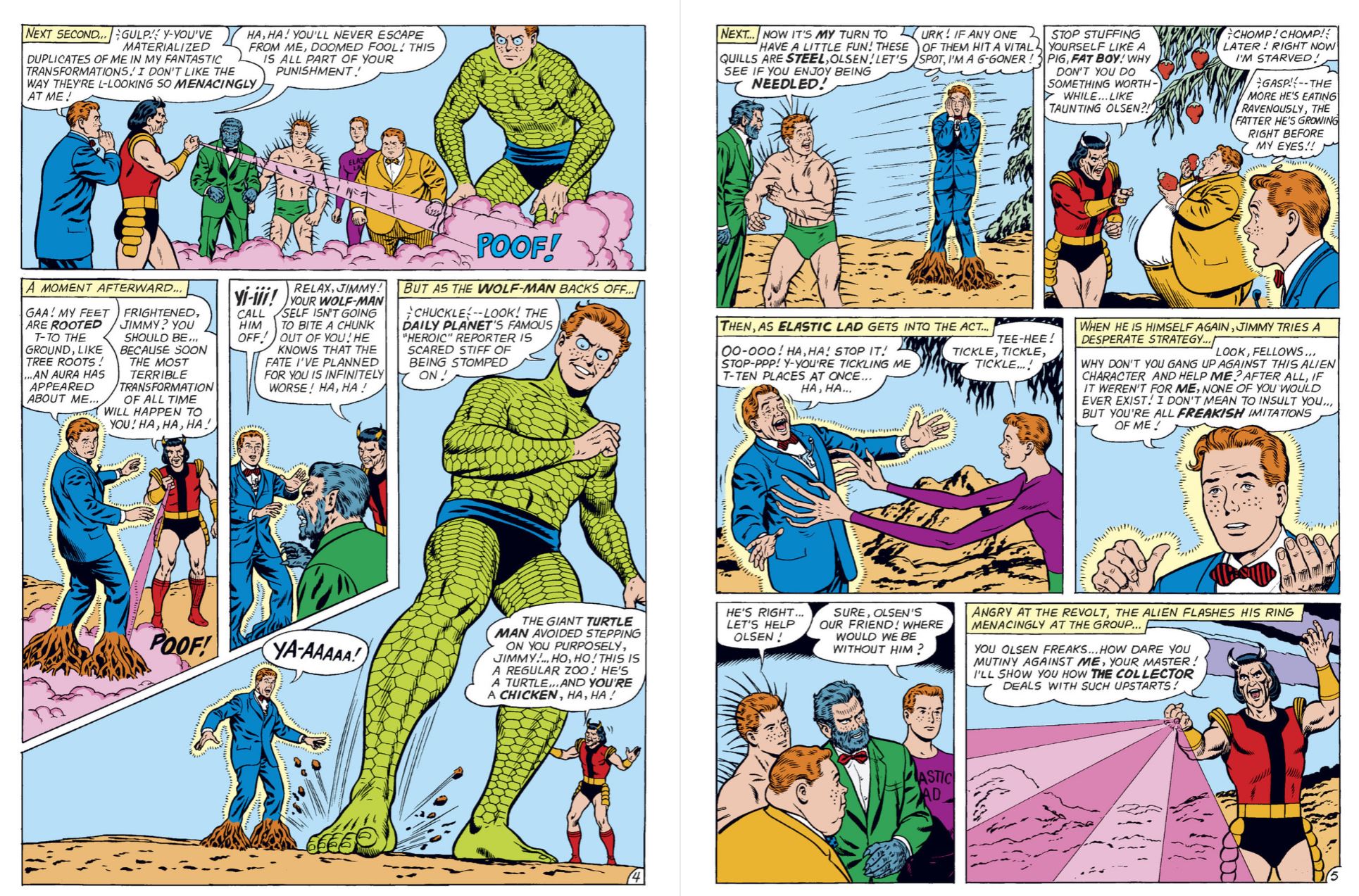
For those of us who grew up with his work, Kirby’s are the images which furnish and clutter our interior mindsets. Close your eyes and think “robot” and the first thing that pops up is a Kirby kreation. Every fantastic, futuristic city in our heads is crammed with his chunky yet towering spires. Because of Jack, we all know what the bodies beneath those stony-head statues on Easter Island look like, and we are all viscerally aware that you can never trust great big aliens parading around in their underpants…

When comic books began, in a remarkably short time Kirby and creative partner Joe Simon became the wonder-kid dream-team of the nascent industry. After generating a year’s worth of the influential monthly Blue Bolt, and dashing off Captain Marvel Adventures (#1) for Fawcett, Martin Goodman nailed them down. He appointed Simon editor at Timely, where “S&K” created a host of iconic stars like Red Raven, the first Marvel Boy, Hurricane, The Vision, The Young Allies, immortal villain The Red Skull and of course million-selling mega-hit Captain America (and Bucky AKA Winter Soldier).

When Goodman failed to make good on his financial obligations, Simon & Kirby quit and were snapped up by National DC, who welcomed them with open arms and a fat chequebook. Bursting with ideas the staid company were never really comfortable with, the pair were initially an uneasy fit, and were given two moribund strips to play with until they found their creative feet: Sandman and Manhunter. They turned both around virtually overnight and, once established and left to their own devices, switched to the “Kid Gang” genre they pioneered at Timely. Joe & Jack created wartime sales sensation The Boy Commandos and Homefront iteration the Newsboy Legion before being called up to serve in the war they had been fighting on comic book pages since 1940. When they returned it was to a very different funnybook business, and soon they left National to create their own little empire.

Simon & Kirby heralded and ushered in the first American age of mature comics – not just by inventing the Romance genre, but with all manner of challenging modern material about real people in extraordinary situations. They saw it all disappear again in less than eight years. Their small stable of magazines – generated for an association of interlinked companies known as Prize/Crestwood/Pines/Essenkay/Mainline Comics – blossomed and as quickly wilted when the industry abruptly contracted throughout the 1950s. After years of working for others, Simon & Kirby had finally established their own publishing house, producing comics for a far more sophisticated audience, only to find themselves in a sales downturn and awash in public hysteria generated by an anti-comicbook pogrom.

Hysterical censorship-fever spearheaded by US Senator Estes Kefauver and opportunistic pop psychologist Dr. Frederic Wertham led to witch-hunting Senate hearings. Caving in, publishers adopted a castrating straitjacket of draconian self-regulation. Horror titles produced under the aegis and emblem of the Comics Code Authority were sanitised and anodyne affairs in terms of Shock & Gore, even though the market’s appetite for suspense and the uncanny was still extremely high. Non superhero Crime comics vanished and mature themes challenging society’s status quo were suppressed…

Simon quit the business for advertising, but Kirby soldiered on, taking his skills and ideas to a number of safer, if less daring, companies. As the panic subsided, Kirby returned briefly to DC where he worked on mystery tales and Green Arrow (a long-lived back-up in Adventure Comics & World’s Finest Comics) whilst concentrating on his long-dreamed-of newspaper strip feature Sky Masters of the Space Force. During that period, Kirby also re-packaged a superteam concept kicking around in his head since he and Joe had closed their innovative, ill-timed ventures. At the end of 1956, Showcase #6 (a try-out title that launched many DC mainstays) premiered Challengers of the Unknown. After 3 more test issues “the Challs” won their own title, with Kirby in command for the first 8. Then a legal dispute with Editor Jack Schiff kicked off and the King was gone…

During that brief 3-year period (cover-dates 1957-1959), Kirby also crafted a plethora of short comics yarns which this fabulous tome re-presents in originally-published order. The roster comprises superhero, mystery and science fiction shorts from Tales of the Unexpected #12, 13, 15-18, 21- 24; House of Mystery #61, 63, 65, 66, 70, 72, 76, 84, 85; House of Secrets #3, 4, 8, 12; My Greatest Adventure #15- 18, 20, 21, 28; Adventure Comics #250-256 and World’s Finest Comics # 96-99: a long-lost gem from All-Star Western #99 plus 3 quirky vignettes by Simon & Kirby from 1946-1947 for Real Fact Comics #1, 2 & 6.

Records from those days when no creator was allowed a by-line are sparse and scanty, so many of these carry no writer’s credit (and besides, Kirby was notorious for rewriting scripts he was unhappy drawing) but Group Editor Schiff’s regular stable of authors included Dave Wood, Bill Finger, Ed Herron, Joe Samachson, George Kashdan, Jack Miller & Otto Binder, so feel free to play the “whodunit” game…

National DC Comics was relatively slow in joining the post-war mystery comics boom, but as 1951 closed they at last launched a gore-free, comparatively straight-laced anthology which nevertheless became one of their longest-running and most influential titles: The House of Mystery (cover-dated December 1951/January 1952). Its success inevitably led to a raft of similar, creature-filled fantasy anthologies including Sensation Mystery, Tales of the Unexpected, My Greatest Adventure and House of Secrets. With the Comics Code in full effect, plot options for mystery and suspense stories were savagely curtailed: limited to ambiguous, anodyne magical artefacts, wholesomely educational mythological themes, science-based miracles and criminal chicanery.

Although marvellously illustrated, stories were rationalistic, fantasy-adventure vehicles and they dominated until the early 1960s when superheroes (reinvigorated after Julius Schwartz reintroduced The Flash in Showcase #4, October 1956) usurped them…

In this compilation, following that aforementioned Introduction – describing Kirby’s 3 tours of duty with DC in very different decades – the vintage wonderment commences with another example of the ingenious versatility of Jack & Joe.

Originating in the wholesome and self-explanatory Real Fact Comics, ‘The Rocket-Lanes of Tomorrow’ (#1, March/April 1946) and ‘A World of Thinking Robots’ from #2 (May/June 1946) are forward-looking, retro-fabulous graphic prognostications of the “World That’s Coming”. A longer piece in #6 (July/August 1947) then details the history and achievements of ‘Backseat Driver’ and road-safety campaigner Mildred McKay. These were amongst the very last strips the duo produced for National before moving to Crestwood/Pines, so we skip ahead a decade and more for Jack’s return in House of Secrets #3 (March/April 1957) where ‘The Three Prophecies’ eerily depicts a spiritualist conman being fleeced by an even more skilful grifter… until Fate takes a hand…

Mythological mysticism informs ‘The Thing in the Box’ (House of Mystery #61, April 1957) wherein a salvage diver is obsessed with a deadly casket his captain is all too eager to dump into the ocean. From the same month, Tales of the Unexpected #12 focuses on ‘The All-Seeing Eye’ as a journalist responsible for many impossible scoops realises the potential dangers of the ancient artefact he employs far outweigh its benefits…

In House of Secrets #4 (May/June 1957) the ‘Master of the Unknown’ seems destined to take the big cash prize on a TV quiz show until the producer deduces his uncanny secret, after which ‘I Found the City under the City’ (My Greatest Adventure #15, from the same month) details how fishermen recover the last testament of a lost oceanographer and read of how he intended to foil an impending invasion by aquatic aliens…

From May 1957, France E. Herron & Kirby investigated ‘The Face Behind the Mask’ (Tales of the Unexpected #13): a gripping crime-caper involving gullible men, a vibrant femme fatale and a quest for eternal youth. There was no fakery to ‘Riddle of the Red Roc’ (House of Mystery #63, June) as a venal explorer hatches and trains the invulnerable bird of legend, creating an unstoppable thief before succumbing to his own greed. My Greatest Adventure #16 (July/August) features a truly fearsome threat as an explorer is sucked into a deadly association, creating death and destruction to learn ‘I Died a Thousand Times’

That month, Unexpected #15 offered ‘Three Wishes to Doom’: a crafty thriller proving that even with a genie’s lamp, crime does not pay, after which weird science transforms a rash scientist into ‘The Human Dragon’ (HoM #65 August, with George Roussos inking his old pal Jack), although his time to repent is brief as a criminal mastermind capitalises on his misfortune…

There’s an understandable frisson of foreshadowing to ‘The Magic Hammer’ (TotU #16 August) as it relates how a prospector finds a magical mallet capable of creating storms and goes into the rainmaking business… until the original owner turns up…

A smart gimmick underscores a tantalising tale of plagiarism and possible telepathy in ‘The Thief of Thoughts’ (HoM #66 September) whilst straight Sci Fi tropes inform the tale of a hotel detective and a most unusual guest in ‘Who is Mr. Ashtar?’ (TotU #17, September) before MGA #17 (September/October 1957) reveals how aliens intent on invasion brainwash a millionaire scientist to eradicate humanity in ‘I Doomed the World’. Happily one glaring error was made…

In Tales of the Unexpected #18 (October), Kirby shows how an astute astronomer saves us all by outwitting an energy being with big appetites in ‘The Man Who Collected Planets’, after which MGA #18 (November/December 1957) ushers in the comic book Atomic Age with ‘I Tracked the Nuclear Creature’, detailing how a hunter sets out to destroy a macabre mineral monster created by uncontrolled fission…

A new year dawned with Roussos inking ‘The Creatures from Nowhere!’ (HoM #70, January 1958) as escaped alien beasts rampage through a quiet town, and HoS #8 (January/February) finds greed, betrayal, murder and supernatural suspense are the watchwords when a killer tries to silence ‘The Cats Who Knew Too Much!’ Tales of the Unexpected #21 (also January) sees a smart investor proving too much for apparent extraterrestrial ‘The Mysterious Mr. Vince’, whilst a month later Unexpected #22 sees an ‘Invasion of the Volcano Men’ start in fiery fury and panicked confrontations before resolving into an alliance against uncontrolled forces of nature.

Kirby never officially worked for National’s prodigious Westerns division, but apparently his old friend and neighbour Frank Giacoia did, and occasionally needed Jack’s legendary pencilling speed to meet deadlines. ‘The Ambush at Smoke Canyon!’ features long-running cavalry hero Foley of the Fighting 5th single-handedly stalking Pawnee renegades in a somewhat standard sagebrush saga scripted by Herron and inked by Giacoia from All-Star Western #99 (February/March 1958).

Meanwhile in House of Mystery #72 (March) a shameless B-Movie Producer seemingly becomes ‘The Man Who Betrayed Earth’ whilst in MGA #20 (March/April), interplanetary bonds of friendship are forged when space pirates kidnap assorted sentients and a canny Earthling saves the day in ‘I Was Big-Game on Neptune’

Inadvertent cosmic catastrophe is narrowly averted in TotU #23 (March) when one man realises how to make contact with ‘The Giants from Outer Space’, after which issue #24 (April) slips into wild whimsy as ‘The Two-Dimensional Man!’ strives desperately to correct his incredible condition before being literally blown away…

When an early space-shot brings back all-consuming horror in MGA #21 (May/June 1958), a brace of boffins realise ‘We Were Doomed by the Metal-Eating Monster’ before ‘The Artificial Twin’ (HoM #76, July) combines mad doctor super-science with deception and fraud, whilst House of Secrets #12 (September) reveals a frantic man struggling to close ‘The Hole in the Sky’ before invading aliens use it to conquer humanity…

Also scattered throughout this extraordinary compendium of the bizarre is a stunning and bombastic Baker’s Dozen of Kirby’s fantastic covers from the period, but for most modern fans the real meat is the short, sharp salvo of superhero shockers that follow…

On his debut, Green Arrow proved quite successful. With boy partner Speedy, he was one of precious few masked stalwarts to survive beyond the Golden Age. A blatant blend of Batman and Robin Hood seemed to have very little going for itself, but the Emerald Archer always managed to keep himself in vogue. He carried on adventuring in the back of other heroes’ comic books, joined the Justice League of America just as their star was rising and later became – courtesy of Denny O’Neil & Neal Adams – the spokes-hero of the anti-establishment generation, during the 1960-70’s “Relevancy Comics” trend.

Later, under Mike Grell’s stewardship and thanks to epic miniseries Green Arrow: the Longbow Hunters, he at last became a headliner: re-imagined as an urban predator dealing with corporate thugs and serial killers rather than costumed goof-balls. This version, more than any other, informs and underpins the TV incarnation seen in Arrow.

After his long career and numerous venue changes, by the time of Schwartz’s resurrection of the Superhero genre the Battling Bowman was a solid second feature in Adventure and World’s Finest Comics where, as part of a wave of retcons, reworkings and spruce-ups DC administered to their remaining costumed old soldiers, a fresh start began in the summer of 1958. Part of that revival happily coincided with Kirby’s return to National Comics.

As revealed in Evanier’s Introduction, after working on anthological stories for Schiff, the King was asked to revise the idling archer and responded by beefing up science fictional aspects. When supervising editor – and creator – Weisinger objected, changes were toned down and Kirby saw the writing on the wall. He lost interest and began quietly looking elsewhere for work…

What resulted was a tantalisingly short run of 11 astounding action-packed, fantasy-filled swashbucklers, the first of which was scripted by Bill Finger as ‘The Green Arrows of the World’ (Adventure Comics #251, July 1958) sees costumed archers from many nations attending a conference in Star City. They are blithely unaware a fugitive criminal with murder in his heart is hiding within their masked midst…

August’s #251 takes a welcome turn to astounding science fiction as Kirby scripted and resolved ‘The Case of the Super-Arrows’ wherein the Amazing Archers take possession of high-tech trick shafts sent from 3000 AD. World’s Finest Comics #96 (writer unknown) then reveals ‘Five Clues to Danger’ – a classic kidnap mystery made even more impressive by Kirby’s lean, raw illustration and wife Roz’s sharp inking. A practically unheard-of continued case spanned Adventure #252 & 253 as Dave Wood, Jack & Roz posed ‘The Mystery of the Giant Arrows’ before GA & Speedy briefly became ‘Prisoners of Dimension Zero’ – a spectacular riot of giant aliens and incredible exotic other worlds, followed in WFC #97 (October 1958) with a grand old-school crime-caper in Herron’s ‘The Mystery of the Mechanical Octopus’. Kirby was having fun and going from strength to strength. Adventure #254 featured ‘The Green Arrow’s Last Stand’ (by Wood): a particularly fine example with the Bold Bowmen crashing into a hidden valley where Sioux warriors thrive unchanged since the time of Custer. The next issue saw the heroes battling a battalion of Japanese soldiers who refused to surrender their island bunker in ‘The War That Never Ended!’ (also by Wood). December’s WFC #98 nearly ended the heroes’ careers in Herron’s ‘The Unmasked Archers’, when a private practical joke caused the pair to inadvertently expose themselves to public scrutiny and deadly danger…

As previous stated, in the heady early days origins weren’t as important as just plain getting on with it. The definitive version was left to later workmen Herron, Jack & Roz (in Kirby’s penultimate tale), filling in the blanks with ‘The Green Arrow’s First Case’ as the superhero revival hit its stride. It appeared in Adventure Comics #256 – cover-dated January 1959 – and this time the story stuck, becoming, with numerous tweaking over successive years, the basis of the modern Amazing Archer of page and screen. Here we learned how wealthy wastrel Oliver Queen was cast away on a deserted island and learned to use a handmade bow and survive. When scurvy mutineers fetched up on his desolate shores, Queen used his newfound skills to defeat them and returned to civilisation with a new career and purpose…

Kirby’s spectacular swansong came in WFC #99 (January 1959) in ‘Crimes under Glass’. Written by Robert Bernstein, it sees GA & Speedy confronting crafty criminals with a canny clutch of optical armaments, before the Archer steadfastly slid back into the sedate, gimmick-heavy rut of pre-Kirby times…

The King had moved on to other enterprises – Archie Comics with Joe Simon and a little outfit which would soon be calling itself Marvel Comics – but his rapid rate of creation had left completed tales in DC’s inventory pile which slowly emerged for months thereafter and neatly wrap up this comprehensive compendium of the uncanny. From My Greatest Adventure #28 (February 1959) ‘We Battled the Microscopic Menace!’ pits brave boffins against a ravening devourer their meddling with unknown forces had unleashed, whilst a month later HoM #84 depicted a terrifying struggle against ‘The Negative Man’ as an embattled researcher fought his own unleashed energy doppelganger.

It all ends in an unforgettable spectacular as House of Mystery #85 (April 1959) awakens ‘The Stone Sentinels of Giant Island’ to rampage across a lost Pacific island and threaten the brave crew of a scientific survey vessel… until one wise man deduces their incredible secret…

Jack was and is unique and uncompromising: his words and pictures are an unparalleled, hearts-and-minds grabbing delight no comics lover could resist. If you’re not a fan or simply not prepared to see for yourself what all the fuss has been about then no words of mine will change your mind.

That doesn’t alter the fact that Kirby’s work from 1937 to his death in 1994 shaped the American comics scene and the entire comics planet: affecting billions of readers and thousands of creators in every arena of artistic endeavour for generations. He still wins new fans and apostles every day, from the young and naive to the most cerebral of intellectuals. His work is instantly accessible, irresistibly visceral, deceptively deep and simultaneously mythic and human. This collection from his transformative middle period exults in sheer escapist wonderment, and no one should miss the graphic exploits of these perfect adventures in that ideal setting of not-so-long-ago in a simpler, better time and place than ours.
© 1946, 1947, 1957, 1958, 1959, 2011 DC Comics. All Rights

Today in 1912 British cartoonist and strip master Tony Weare was born. Where the tarnation is that Matt Marriot compilation? Ten years later in Trenton, New Jersey Sherrill David Robinson followed. You know Jerry for co creating the Joker and his Batman stuff, but try tracking down his Still Life panels…

In 1980, Gary Larson’s The Far Side debuted, only to stop original material on the same day 15 years later. How weird is that? Of course you could ascertain all that by seeing observing There’s a HAIR in My Dirt! – A Worm’s Story please link to November 2nd 2021.

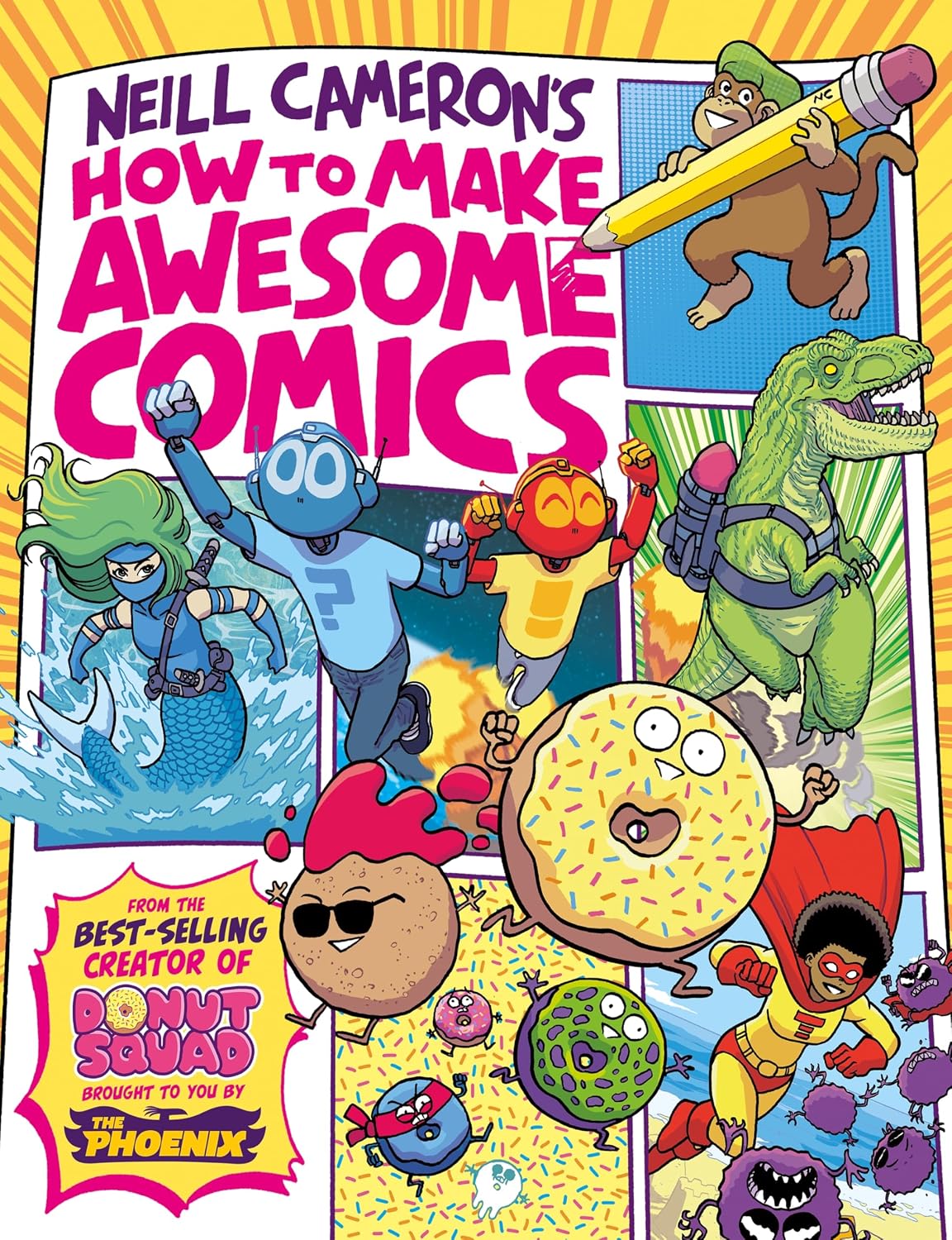
Neill Cameron’s Donut Squad: Make a Mess! (Book 2)


By Neill Cameron & various (David Fickling Books)
ISBN: 978-1-78845-358-5 (Digest TPB Standard edition), 978-1-78845-408-7 (Waterstones edition)

Had enough to eat yet? Do You Like Donuts?

Only you can truly answer that question, but if you’re undecided, and dangerously unaware of the ramifications of indecision, then rowdy raconteur and inestimable art fiend Neill Cameron has another batch of artisanal, edibly-edifying arguments you might want to consider before deciding, all jam-packed into a manic new compendium of strips, activities and artificially-sweetened exploits starring a bargain box of comics champions cherrypicked from modern British periodical treasure trove The Phoenix.

Since debuting in 2012 and just like Beano, Dandy and other perennial childhood treasures, the wonderful weekly has masterfully mixed hilarious comedy with enthralling adventure serials… and frequently in the same scintillating strip. Everybody braced in? Got your snacks? Napkins? Right then, let’s go…

Crafted by Cameron (Mega Robo Bros, Freddy, Tamsin of the Deep, How to Make Awesome Comics, Pirates of Pangea), a unique team of toothsome adventurers reconvene here in world much improved by an absence of bagels. As enny fule kno, bagels are the arch enemy of Donuts and probably all Life…

Moreover, there are fresh additions to the team we met in volume 1 (Donut Squad Take over the World! May 2nd 2025) besides commander-in-chief Sprinkles, accident prone Jammyboi, Chalky (the ghost of a murdered Victorian Donut), violent vigilante Justice Donut, nerve-wracked Anxiety Donut, piratical Caramel Jack! (he’s a little bit salty!), Dadnut & Li’l Timmy, and utterly unknowable and incomprehensible Spronky! who will make themselves known in good time…

First though we indulge in some ‘Fun Times with Sprinkles’ and the rest, prior to a passionately resolute ‘No Bagels.’ Public Service Announcement, leading us all into an extended exploit in ‘The Great Outdoors’ involving camping, campfires and being eaten by bears…

Ruggedly individualistic, the assorted flavourites (said it. Not proud.) generally work in solo vignettes that combine to make a full package but all pitch in for regular features such as the ads for merch like the ‘Official Donut Squad Camping Gear!’ which here include Tents, Backpacks and High-Power Bear Tranquiliser Guns, and are sensibly, accommodatingly backed up by ‘Hot New Donut Flavours for Summer!’ How about Piña Coladonut!, Choco Banana! or Sweat and Suncream! – or even Cool Cool Mango!, Watermellon Baller and Seagull Beaks!?

If you don’t mind me asking, how big are your nuts? Are you man enough to handle Omega Gargantunut, Gargantunut Titan, Extinction Level Gargantunut, Gargantunut: Nemesis? Steve thinks he is but significant other Janet just thinks he’s full of himself…

No matter how rich they might sound they are as nothing compared to Daddy Billions! – The Richest Donut in the World! If you’re not sure we can direct you to ‘Ask your Mother!: with Mumnut & Li’l Timmy’ episodes before meeting the new guys. These ‘Meatynuts!’ include ‘Spicyboi!’, ‘Beefychunks!’, ‘Crazy Mayonnaisey!’ and ‘Ham Alan’, who shares his extensive backstory before we explore ‘Sweet-Meat Fusion Donuts’ like ‘Chocolate-Frosted Beef’, ‘HAMnJAM!’ or ‘Caramel Sausage!’

A barrage of parental queries season ‘Great Moment’s in Donut History’ and ‘Classic of World Donut Cinema’, and intermittent silhouette games commence with ‘Name That Donut’, supported by more merch such as Donut Squad Caps!, Water Bottles!, Plutonium Enrichment Plants!, Hoodies, Cushions and Autonomous Humanoid Robots!, prior to everyone from Beefychunks to the entire afterlife getting a go at answering dear Timmy’s questions…

Regular features like ‘Donut-Related Conspiracy Theories!’ and ‘It’s Spronky!’ vie for attention with new treats like ‘Do You Like Cheese Donuts? Introducing Tasty Bob!, Nordic Helga and Camemboi!’ and ‘The Life of Michael’ plus ‘Donutiquette – DOs and DON’Ts of POLITE DONUT EATING’, ‘Extreme Donut Eating!’ and ‘Great Figures of History Who Were Secretly Donuts’..

Of course all this is fine but – following the lengthy saga of ‘The Totally Normal Humans’ – things get a bit weird and very nasty as all the long-banished Bagel Battalion break free of their extradimensional jail in THE VOID and attempt to take over the book by invading its gutters!

They succeed too…

Having whetted your appetite you’ll need to buy the book to see what happens next, but be warned, the bready brutes broke out by infiltrating the activity section at the rear, with Cameron’s ‘Phoenix Comic Club’ art classes on How to Draw ‘Sprinkles!’, ‘…Anxiety Donut!’, ‘…Justice Donut!’, ‘…Caramel Jack!’, and all the others caught up in the conflict…

Smart, witty, laugh out loud weird and utterly bonkers, this seemingly piecemeal treat cunningly connects a whole bunch of stuff kids love without knowing why, but which totally bewilders us oldsters and keeps us in our place. Devious, eccentric and captivating, the sugar rush is guaranteed and if you get toothache it’s from laughing not quantum confessions…

Moreover, as all the best books and movies say: DONUT SQUAD WILL RETURN…
Text and illustrations © Neill Cameron 2026. All rights reserved.

Neill Cameron’s Donut Squad: Take Over the World! is scheduled for UK release on January 1st 2026 and is available for pre-order now; or wait until next year and get it tomorrow while walking off all those donuts and bagels…

Today in 1956 Nexus co-creator and Kirby fan Steve Rude was born. In 1965 Dirty Plotte auteur Julie Doucet arrived, but the day also commemorates major losses. In 1978 graphic genius Basil Wolverton went to his long-anticipated reward, and in 2005 inimitable Maurice (The Perishers) Dodd told his last joke. While talking of newspaper strips that changed lives, December 31st 1995 also saw Bill Watterson’s final Calvin and Hobbes episode. Sigh.

You know where to look by now, so perhaps do that between all the “auld lang synes” and dry white whines.

Showcase Presents Robin The Boy Wonder


By E. Nelson Bridwell, Ed Hamilton, John Broome, Leo Dorfman, Gardner F. Fox, Cary Bates, Mike Friedrich, Frank Robbins, Denny O’Neil, Bob Haney, Elliot Maggin, Bob Rozakis, Ross Andru, Curt Swan, Sheldon Moldoff, Pete Costanza, Chic Stone, Gil Kane, Irv Novick, Murphy Anderson, Dick Dillin, Rich Buckler, Bob Brown, Mike Grell, A. Martinez Al Milgrom & various (DC Comics)
ISBN: 978-1-4012-1676-4 (TPB)

This book includes Discriminatory Content produced in less enlightened times.

As previously mentioned, there are a lot of comics anniversaries occurring in this otherwise dreadful year. The ultimate and original sidekick is probably the most significant of DC’s representatives, and indeed there have been a few intriguing collections released to celebrate the occasion. This one, however, is probably the best but remains criminally out of print, if not utterly unavailable…

Robin the Boy Wonder debuted in Detective Comics #38 (cover dated April 1940 and on sale from March 6th). Co-created by Bob Kane, Bill Finger & Jerry Robinson, he was a juvenile circus acrobat whose parents were murdered by a mob boss. The story of how Batman took the orphaned Dick Grayson under his scalloped wing and trained him to fight crime has been told, retold and revised many times over the decades and still regularly undergoes tweaking to this day.

Grayson fought beside Batman until 1970 when, as an indicator of those turbulent times, he flew the nest, becoming a Teen Wonder college student. His creation as a junior hero for younger readers to identify with has inspired an incomprehensible number of costumed sidekicks and kid crusaders, and Grayson continued in similar innovative vein for the older, more worldly-wise readership of America’s increasingly rebellious youth culture.

The first Robin even had his own solo series in Star Spangled Comics from 1947 to 1952, a solo spot in the back of Detective Comics from the end of the 1960s – a position he alternated and shared with Batgirl – and a starring feature in anthology comic Batman Family. During the 1980s he led the New Teen Titans, initially in his original costumed identity but eventually in the reinvented guise of Nightwing, all while re-establishing a (somewhat turbulent) working relationship with his masked mentor.

This broad ranging easy on the eye monochrome compilation covers the period from Julie Schwartz’s captivating reinvigoration of the Dynamic Duo in 1964 until 1975 with Robin-related stories and material from Batman #184, 192, 202, 213, 227, 229-231, 234-236, 239-242, 244-246, 248-250, 252, 254 and portions of 217; Detective Comics #342, 386, 390-391, 394-395, 398-403, 445, 447, 450-251; World’s Finest Comics #141, 147, 195, 200; Superman’s Pal Jimmy Olsen #91, 111, 130 and Justice League of America #91-92.

The wonderment begins with the lead story from Batman #213 (July-August 1969) – a 30th Anniversary reprint Giant – which featured an all-new retelling of ‘The Origin of Robin’ courtesy of E. Nelson Bridwell, Ross Andru & Mike Esposito, perfectly reinterpreting that epochal event for the Vietnam generation. After that, the tales proceed in (more or less) chronological order, covering episodes where Robin took centre-stage.

First up is ‘The Olsen-Robin Team versus… the Superman-Batman Team!’ (from World’s Finest #141, May 1964, by Edmond Hamilton, Curt Swan & George Klein). In a stirring blend of science fiction thriller and crime caper, the underappreciated sidekicks fake their own deaths to undertake a secret mission even their adult partners must remain unaware of – for the very best of reasons of course. A sequel from WF #147 (February 1965) delivers an engaging drama of youth-in-revolt as ‘The New Terrific Team!’ quit their assistant roles to strike out on their disgruntled own. Naturally there’s a perfectly reasonable – if incredible – reason here, too…

Detective Comics #342 (August 1965) featured ‘The Midnight Raid of the Robin Gang!’ by John Broome, Sheldon Moldoff & Joe Giella, wherein the Boy Wonder joins a youthful gang of costumed criminals, after which Superman’s Pal Jimmy Olsen #91 (March 1966) delivers ‘The Dragon Delinquent!’ (Leo Dorfman & Pete Costanza) as Robin and the cub reporter, unknown to each other, both infiltrate the same biker gang with potentially fatal consequences.

‘The Boy Wonder’s Boo-Boo Patrol!’ – originally a back-up in Batman #184 (September 1966, Gardner Fox, Chic Stone & Sid Greene), shows the daring lad’s star-potential in a clever tale of thespian skulduggery and classic conundrum solving, before ‘Dick Grayson’s Secret Guardian!’ (Batman #192, June 1967, Fox, Moldoff & Giella) depicts his physical prowess in one of comic books’ first instances of the exo-skeletal augmentation gimmick.

‘Jimmy Olsen, Boy Wonder!’ (SPJO #111, June 1968, by Cary Bates & Costanza) finds the reporter trying to prove his covert skills by convincing the Gotham Guardian that he was actually Robin, whilst that same month in Batman #203 the genuine article tackles the ‘Menace of the Motorcycle Marauders!’ (Mike Friedrich, Stone & Giella) consequently learning a salutary lesson in the price of responsibility…

Cover-dated April 1969, Detective Comics #386 featured the Boy Wonder’s first solo back-up in what was to become his semi-regular spot for years. ‘The Teen-Age Gap!’ (as described by Friedrich, Andru & Esposito) depicts a High School Barn Dance which only narrowly escapes becoming a riot thanks to his diligent intervention, after which Gil Kane & Murphy Anderson assume the art-chores with #390’s ‘Countdown to Chaos!’ (August 1969), bringing the series stunningly alive. Friedrich concocted a canny tale of corruption and kidnapping leading to a paralysing city ‘Strike!’ for the Caped kid to spectacularly expose and foil in the following issue.

Batman #217 (December 1969) was a landmark in the character’s long history as Dick leaves home to attend Hudson University. Only the pertinent portion from ‘One Bullet Too Many!’ by Frank Robbins, Irv Novick & Dick Giordano is included here, closely followed by ‘Strike… Whilst the Campus is Hot’ (Detective #394 from the same month, by Robbins, Kane & Anderson) as the callow freshman stumbles into a campus riot organised by criminals and radical activists, forcing the now Teen Wonder to ‘Drop Out… or Drop Dead!‘ to stop the seditious scheme…

Detective #398-399 (April & May 1970) ran a 2-part spy-thriller with Vince Colletta replacing Anderson as inker. ‘Moon-Struck’ has lunar rock samples borrowed from NASA apparently causing a plague among Hudson’s students until Robin exposes a Soviet scheme to sabotage the Space Program in ‘Panic by Moonglow’. The 400th anniversary issue (June 1970) finally teamed the Teen Wonder with his alternating back-up star in ‘A Burial For Batgirl!’ (Denny O’Neil, Kane & Colletta): a college-based murder mystery which again heavily references the political and social unrest then plaguing US campuses, but which still finds space to be smart and action-packed as well as topical, before chilling conclusion ‘Midnight is the Dying Hour!’ wraps up the saga.

Never afraid to repeat a good idea, Superman’s Pal Jimmy Olsen #130 (July 1970) sees Bob Haney & Murphy Anderson detail the exploits of ‘Olsen the Teen Wonder!’ as the boy reporter again apes Batman’s buddy – this time to infiltrate an underworld newspaper – whilst World’s Finest #195 (August 1970) finds Jimmy & Robin targeted for murder by the Mafia in ‘Dig Now, Die Later!’ by Haney, Andru & Esposito. Simultaneously in DC #402 ‘My Place in the Sun’ (Friedrich, Kane & Colletta), embroils Grayson and fellow Teen Titan Roy Speedy Harper in a crisis of social conscience, before our scarce-bearded hero wraps up his Detective run with corking crime-busting caper ‘Break-Out’ in the September issue.

Robin’s romps transferred to the back of Batman, beginning with #227 (December 1970) and ‘Help Me – I Think I’m Dead!’ (Friedrich, Novick & Esposito) as ecological awareness and penny-pinching Big Business catastrophically collide on the campus, beginning an extended epic seeing the Teen Thunderbolt explore communes, alternative cultures and the burgeoning spiritual New Age fads of the day. Inked by Frank Giacoia ‘Temperature Boiling… and Rising!’ (#229, February 1971) continues the politically-charged drama, albeit uncomfortably interrupted by a trenchant fantasy team-up with Superman sparked when the Man of Steel attempts to halt a violent campus clash between students and National Guard.

Crafted by Friedrich, Dick Dillin & Giella, ‘Prisoners of the Immortal World!’ (WFC #200, February 1971), has brothers on opposite sides of the teen scene abducted with Robin & Superman to a distant planet where undying vampiric aliens wage eternal war on each other. A return to more pedestrian perils in Batman #230 (March 1971) sees ‘Danger Comes A-Looking!’ for our young hero in the form of a gang of right-wing, anti-protester jocks and a deluded friend who prefers bombs to brotherhood, courtesy of Friedrich, Novick & Dick Giordano. ‘Wiped Out!’ (#231, May 1971) then offers an eye-popping end to the jock gang whilst #234 sees a clever road-trip tale in ‘Vengeance for a Cop!’, when a campus guard is gunned down forcing Robin to track the only suspect to a commune. ‘The Outcast Society’ has its own unique system of justice, but eventually the shooter is apprehended in the cataclysmic ‘Rain Fire!’ (#235 & 236 respectively).

The Collective experience blooms into psychedelic and psionic strangeness in #239 as ‘Soul-Pit’ (illustrated by new penciller Rich Buckler) finds Grayson’s would-be girlfriend, “Jesus-freaks” and runaway kids all sucked into a telepathic duel between a father and son, played out in the ‘Theatre of the Mind!’ before exposing the ‘Secret of the Psychic Siren!’ and culminating in a lethal clash with a clandestine cult in ‘Death-Point!’ (Batman#242, June 1972). After that eerie epic we slip back a year to peruse the Teen Wonder’s participation in one of the hallowed JLA/JSA summer team-ups, beginning in Justice League of America #91 (August 1971) and ‘Earth… the Monster-Maker!’, as Supermen, Flashes, Green Lanterns, Atoms and a brace of Hawkmen from two separate Realities simultaneously and ineffectually battle an alien boy and his symbiotically-linked dog (sort of) on almost identical planets a universe apart. There’s still time to painfully patronise the Robins of both until ‘Solomon Grundy… the One and Only!’ gives everyone a brutal but ultimately life-saving lesson on acceptance, togetherness, youthful optimism and lateral thinking…

Elliot Maggin, Novick & Giordano then set ‘The Teen-Age Trap!’ (Batman#244, September 1972), with Grayson mentoring troubled kids – and finding plenty of troublemakers his own age – whilst ‘Who Stole the Gift from Nowhere!’ is a delightful old-fashioned change-of-pace mystery yarn. However, ‘How Many Ways Can a Robin Die?’ by Robbins, Novick, Dillin & Giordano (Batman #246, December 1972) is actually a Dark Knight story with Teen Wonder helpless hostage throughout, whereas #248 opens another run of solo stories with ‘The Immortals of Usen Castle’ (Maggin, Novick & Frank McLaughlin) wherein another deprived-kids day trip turns into an episode of Scooby-Doo, Where are You? The ‘Case of the Kidnapped Crusader!’ (pencilled by Bob Brown) then puts the Student Centurion on the trail of an abducted consumer advocate and ‘Return of the Flying Grayson!’ (Maggin, Novick & McLaughlin from #250) painfully reminds the hero of his Circus past after tracking down pop-art thieves.

Batman #252 (October 1973) sees Maggin, Dillin & Giordano’s light-hearted pairing of Robin with a Danny Kaye pastiche for charming romp ‘The King from Canarsie!’, before ‘The Phenomenal Memory of Luke Graham!’ (#254 January/February 1974 and inked by Anderson) causes nothing but trouble for the hero, his college professors and a gang of robbers…

It was a year before the Teen Wonder’s solo sallies resumed with ‘The Touchdown Trap’ in Detective Comics #445 as new scripter Bob Rozakis and artist Mike Grell catapulted our hero into a 50-year-old college football feud that refused to die, whilst ‘The Puzzle of the Pyramids’ (#447 and illustrated by A. Martinez & Mazzaroli) offers another clever crime conundrum. This eccentrically eclectic monochrome compendium concludes with an action-packed, chase-heavy human drama by Al Milgrom & Terry Austin as ‘The Parking Lot Bandit!’ & ‘The Parking Lot Bandit Strikes Again!’ (DC #450-451, August & September 1975), giving the titanic teen one last chance to strike a bit of terror into the hearts of evil-doers…

These stories span a turbulent and chaotic period for comic books: perfectly encapsulating and describing the vicissitudes of the superhero genre’s premier juvenile lead: complex yet uncomplicated adventures drenched in charm and wit, moody tales of rebellion and self-discovery, and rollercoaster, all-fun romps. Action is always paramount, and angst-free satisfaction is pretty much guaranteed. These cracking yarns are something no fan of old-fashioned Fights ‘n’ Tights fiction should miss.
© 1964-1975, 2008 DC Comics. All Rights Reserved.

Today in 1922, Belgian auteur Marc Sleen was born. We still haven’t seen English versions of his Nero yet, but have slavishly and repeatedly begged you all to tune in to the oeuvre of Ronald Searle, who left us all far less today in 2011.

The Rise and Fall of the Trigan Empire volume 1


By Mike Butterworth & Don Lawrence & various (Rebellion Studios)
ISBN: 978-1-78108-755-8 (TPB/Digital edition)

This book includes Discriminatory Content produced in less enlightened times.

For British – and Dutch – readers of a certain age and prone to debilitating nostalgia, The Trigan Empire (or The Rise and Fall of the Trigan Empire to give it its ponderous full title) was only ever about two things: boyish wish-fulfilment and staggeringly beautiful art.

The strip was created by Senior Group Editor Leonard Matthews and given to the editor of Sun and Comet to develop and continue. A trained artist, Mike Butterworth became writer of many historical strips such as Buffalo Bill, Max Bravo, the Happy Hussar, Battler Britton and Billy the Kid – and latterly a crime and gothic romance novelist with more than 20 books to his pen names.

Based in equal part on cinematic Sword & Sandal/Biblical epics and the space age fascination of a planet counting down to a moonshot, for the saga Butterworth combined his love of the past, a contemporary comics trend for science fiction and that long-established movie genre of manly blockbusters to construct a vast sprawling serial of heroic expansionism, two-fisted warriors, wild beasts, deadly monsters and even occasionally the odd woman.

The other primary influence on the series was the fantasy fiction of Edgar Rice Burroughs (especially John Carter of Mars and Pellucidar) but without his concentration on strong and/or blatantly sexy women – usually as prizes for his heroes to save. In the formative days of the Trigan Empire, ladies dressed decorously, minded their manners and were dutiful wives or nurses… unless they were evil, vindictive or conniving…

The compellingly addictive, all-action thematic precursor to Warhammer, Civilisation and Warcraft might have been a short run venture had it not been for the art. The primary illustrator was Don Lawrence (Marvelman, Wells Fargo, Billy the Kid, Karl the Viking, Fireball XL5, Maroc the Mighty, Olac the Gladiator, The Adventures of Tarzan, adult comedy strip Carrie and his multi-volume Dutch magnum opus Storm), who painted each weekly instalment.

Initially he used watercolours before switching to quicker-drying gouaches, rendered in a formal, hyper-realistic style that still left room for stylistic caricature and wild fantasy, and one that made each lush backdrop and magnificent cityscape a pure treasure. Other, later artists included Ron Embleton, Miguel Quesada, Philip Cork, Gerry Wood and Oliver “Zack” Frey, as the strip notched up 854 weekly instalments, beginning in September 1965 and only ending in 1982. Along the way, it had also appeared in Annuals and Specials and become a sensation in translated syndication across Europe.

Even after it ended – and, thanks to these collections, it has recently resumed! – the adventure continued: in reprint form, appearing in the UK in Vulcan and across the world; in two Dutch radio plays; collected editions sold in numerous languages; a proposed US TV show and numerous collected editions from 1973 onwards. Surely someone must have a movie option in process: if only Kirk Douglas, Burt Lancaster and Tony Curtis were still around, we could completely close the creative circle…

Lawrence (17th November 1928 – 29th December 2003) inspired a host of artists such as Brian Bolland and Dave Gibbons, but as he worked into the 1990s, his eyesight was increasingly hindered by cataracts and he took on and trained apprentices such as Chris Weston and Liam Sharp (who offers his own potent reminiscences in the Introduction to this first archival volume from Rebellion Studios’ Treasury of British Comics). Sharp collaborated with the venerable artist on his last Storm stories…

Inescapably mired in powerful nostalgia, but also standing up remarkably well on its own merits, this first collected volume re-presents the series from its enigmatic opening in high-end tabloid weekly magazine Ranger, combining comics with a large selection of factual features. The fantasy soon began to steal the show and was the most noteworthy offering for the entirety of the publication’s 40 week run, spanning 18th September 1965 to 18th June 1966. It then carried over – with a few other choice strips – into Look and Learn, beginning with #232: remaining until the magazine closed with #1049 (April 1982).

Ranger had been a glossy, photogravure blend of traditional comic anthology strips and educational magazine, and when it folded, the only publication able to continue The Trigan Empire in its full grandeur was Look and Learn

One of our most missed publishing traditions is the educational comic. From science, history and engineering features in the legendary Eagle to a small explosion of factual and socially responsible boys and girls papers in the late 1950s to the heady go-getting heydays of the 1960s & 1970s, Britons always enjoyed a healthy sub-culture of comics that informed, instructed and revealed – and that’s not even counting all the pure sports comics!

Amongst many others Speed & Power, Treasure, World of Wonder, Tell Me Why, and Look and Learn spent decades making things clear, illuminating understanding and bringing the marvels of the changing world to our childish but avid attentions with wit, style and – thanks to the quality of the illustrators involved – astonishing beauty. Look and Learn launched on 20th January 1962: brainchild of Fleetway Publications’ then Director of Juvenile Publications Leonard Matthews. The project was executed by editor David Stone (almost instantly replaced by John Sanders), sub-editor Freddie Lidstone and Art Director Jack Parker.

For 20 years it delighted children, and was one of the country’s most popular children’s weeklies. Naturally there were many spin-off tomes such as The Look and Learn Book of 1001 Questions and Answers, Look and Learn Book of Wonders of Nature, Look and Learn Book of Pets and Look and Learn Young Scientist as well as utterly engrossing Christmas treat tradition The Look and Learn Book and – in 1973 – The Look and Learn Book of the Trigan Empire: the serial’s very first hardback compilation.

Strangely, many, many kids learned stuff they didn’t think they cared about simply because it filled out the rest of that comic that carried the Trigan Empire…

In this tome we review 25th June1966 through 17th May 1968, encompassing Ranger #1-40 and Look and Learn #232-331: subdivided for your convenience into 13 chapter plays of what we oldsters absorbed as one continuous unfolding procession of wonder…

Depicted with sublime conviction and sly wit, it begins with ‘Victory for the Trigans’ (18th September 1965 – 29th January 1966) as fishermen in the Florida swamps witness a spaceship crash. All aboard are dead, and after, the global news cycle wearies of the story, the craft is reduced to a sideshow attraction whilst scholars meticulously investigate its technology, dead voyagers and a huge set of journals written in an indecipherable language. No one succeeds and eventually, no one cares…

All except student Richard Peter Haddon, who spends the next half century looking for the key and – at age 70 – cracks the code, subsequently translating the history of a mighty race of aliens so very like earthmen…

From then on the scene switches to distant twin-sunned world Elekton, where numerous kingdoms and empires-in-waiting jostle for dominance. In many ways it’s like Earth a few thousand years before the birth of Christ… except for all the monsters, skycraft and ray guns…

In the wilds and wastes between the nations of Loka, Tharv, Davelli and Cato, brutish far-ranging tribes of nomadic Vorg hunt and clash and live brief free lives, until three brothers decide existence could be so much more…

Driven, compelling and charismatic, notional leader Trigo has a dream and convinces his siblings Brag and Klud to ask their people to cease following roving herds of beasts and settle by a river where five hills meet. Before long they have raised a city and begun the march to empire. Of course, all those defiant libertarians were initially resistant to becoming civilised, but that ended after the more advanced Lokans began hunting them for sport from their flying ships…

By the time Loka’s King Zorth finally gets around to conquering Tharv and formally annexing the lands of Vorg in his plan to become global dictator, Trigo has begun building his city and invited refugees from Tharv to join him. Amongst the many displaced survivors of Lokan atrocity is Peric – an architect and philosopher generally acclaimed as the smartest man alive. He is cared for by his daughter Salvia. Both will play major roles in the foundation of the Trigan Empire…

When Zorth at last turns to consolidation by taking Vorg, his air, sea and land forces are met by an unbeatable wall of death and history is rewritten. It comes at great cost, most notably to Trigo as victory is almost snatched from him when brother Klud attempts to murder him, seize power and betray their people to the Lokans…

With an empire established, one translated book ends, and Professor Haddon’s life’s work moves on to what we’ll call ‘Crash in the Jungle’ (5th February – 19th February 1966), introducing young warrior/pilot Janno. The son of Brag, he is childless Trigo’s nephew and heir apparent: enjoying many dynamic adventures as an imperial troubleshooter whilst being groomed for rule. Here, still wet behind the ears, the lad crashes in the plush rainforests of Daveli, befriends Keren – son of a formerly antagonistic aboriginal chieftain – and facilitates their alliance with the ever-expanding Trigan Empire. When Janno returns to pilot training, Keren is beside him and will be his constant companion in all further exploits…

Planetary chaos erupts next as ‘The Falling Moon’ (26th February – 28th May 1966) reshapes Elekton’s political map. When Gallas impacts sister moon Seres, the cosmic collision sends the satellite smashing into Loka where – forewarned – Zorth seeks to relocate his power base and entire populace by seeking sanctuary in Trigo’s city. Once admitted and welcomed, the Lokans bite the hand that shelters them by seizing the city. Valiant Brag manages to save wounded Trigo, but they are captured and enslaved by desert raiders of the Citadel…

As Janno and Keren escape to mount a futile resistance to the Lokans, slave worker Trigo foils an assassination and earns the gratitude of the Citadel king, who lends him a band of warriors to retake his own city. When they link up with Janno & Keren, Zorth’s defeat and doom are assured…

Time moves differently on Elekton and many events seem telescoped, but as the strip jumps to a new home, continuity manifests in ‘The Invaders from Gallas’ (4th June – 18th June) in Ranger before continuing in Look and Learn #232-237 from 25th June to 30th July 1966. As the fallen moon cools, aliens dwelling inside emerge to attempt the conquest of their new world via their mind control techniques. With the Trigans crazed and killing each other, only a deaf man holds the key to their survival…

Look and Learn #238-242 (6th August – 3rd September 1966) featured ‘The Land of No Return’ – which sees Janno accidentally sent along the River of Death (a rather cheeky “tribute” to Burroughs’ Mars stories), debunking an insidious religious belief that had for millennia curtailed life for Elekton’s elderly whilst ending a cult of elder-abusing slavers…

‘The Revolt of the Lokans’ (L&L #243-255, 10th September – 3rd December 1966) returns to the exiled former-conquerors who poisoned and deranged Trigo before retaking his city. Thankfully, Keren and Peric find a way to restore order to the city and its ruler, after which #256-264 (10th December 1966 – 4th February 1967) detail ‘War with Hericon’ as Trigo marries Lady Ursa, sister of King Kassar: ruler of the aloof, distant empire (a visual melange of Earth’s Persian and Byzantine kingdoms).

The diplomatic love match is soured by a single sinister malcontent when Yenni – a vengeful criminal outcast of both Hericon and Trigan – foments racial unrest in both realms and lets human nature do its worst…

Janno & Keren took the lead again in ‘Revolution in Zabriz’ (#265-273, 4th February – 8th April 1967), when despatched to survey a distant mountain outpost only to uncover a plot by its governor. He uses captive labour to finance a coup to oust Uncle Trigo and take over the empire, after which ‘The Lokan Invasion’ (L&L #274-279, 15th April – 20th May) sees the brothers-in-arms stumble into a devious scheme by chemist Vannu to destroy the Trigans by contaminating their water with amnesia-inducing potions…

Vengeful retaliation is once more the pivotal factor as ‘The Revenge of Darak’ (#280-290, 27th May – 5th August) reveals how Trigan’s greatest pilot betrays his emperor and is punished with slavery in the mines. After a year, he escapes and uses his insider knowledge to drive a wedge between Trigo and Brag, poison Peric and embroil Hericon in war. Thankfully, brotherly love trumps hurt feelings and justice conquers all…

A taste of horror comes with ‘The Alien Invasion’ L&L #291-297 (13th August – 23rd September) as energy beings land on Elekton. Able to possess organic brains, the intruders work their way up the planet’s food chain until Keren, Kassar and Trigo are fully dominated, but the cerebral tyrants have not reckoned on Peric’s wit or Janno’s cunning…

The first major role for a woman comes in ‘The Reign of Thara’ (L&L #298-316, 30th September 1967 – 3rd February 1968) as the royal family is ousted by deceit and a secret society of soldiers instals the daughter of Klud in Trigo’s place. Vain, haughty and imperious, she is intended to be a puppet of secret manipulators, but proves to possess too much pride and backbone to allow the empire to fall to mismanagement and enemy incursions. Happily, the actual Royal Family have survived their well-planned dooms and returned, leading an army of liberated slaves and a fleet of pirates sworn to Trigo’s service…

During the campaign, Kern & Janno befriend a rural bumpkin, obsessed with flying, and clownish Roffa becomes their third “musketeer”, playing a major role in the concluding tale here.

Spanning Look & Learn #317-331 (10th February – 17th  May 1968), ‘The Invasion of Bolus’ sees the trio captured by rogue scientist Thulla and pressganged into joining his mission to build a ship and conquer Elekton’s inhabited moon. Unable to defy or escape, they become unwilling members in his army, before defecting to the super-advanced but pacifistic Bolans. At least the lads left a warning before lift-off: one that – eventually – reaches Trigo & Peric.

As the Trigans rush to construct a rescue vessel, Thulla brutally seizes the moon people’s city and commences the second part of his plan: building a colossal ray cannon to destroy all life on Elekton. As Trigo’s ship takes off – too late to stop devasting blasts from Bolus – Janno & Keren are forced to desperate measures to save their people from the murderous madman…

Incorporating a tantalising teaser for the next volume and creator biographies, this spectacular visual triumph is a monument to British Comics creativity: one that simultaneously pushes memory buttons for old folk whilst offering a light but beautiful straightforward space opera epic readily accessible to the curious and genre inquisitive alike.

Is that you or someone you know?
The Rise and Fall of the Trigan Empire is ™ Rebellion Publishing IP Ltd. © 1965, 1966, 1967 & 2019 Rebellion Publishing IP Ltd. All Rights Reserved.

Literally born yesterday in 1928 Stanley Lieber – AKA Stan Lee – did a whole lot and appears many times in this blog. You should go look. In 1967 groundbreaking Acme Novelty Library cartoonist Chris Ware arrived, followed two years later by sound fella P.J. Holden (2000 AD, Judge Dredd, Warhammer) who we last covered in Bad Magic – A Skullduggery Pleasant Graphic Novel.

However, TODAY in 1946, Milton Caniff’s last Terry and the Pirates episode appeared. Whilst he rose to even greater heights with Steve Canyon, George Wunder carried Terry, Pat & Co. until 1973.

In 1963 Dave McKean was born, but otherwise today is one for the “loss” column, with Raeburn van Buren dying in 1987, Disney artist Tony Strobl in 1991, Barbarella creator Jean-Claude Forest in 1998 and wonderful Don Lawrence in 2003. As always you can search our engine or find one of your own preference for more…

What are you doing here? Go do something better or at least more healthy. Read a book or say hello to a stranger. If you have any family you can stand, talk to them or at least their cat, dog, chicken or goat.

Still, as you’re here… TODAY in 1921, the incredible and versatile John Severin was born and in 2004 the last episode of Steve Roper and Mike Nomad was published after beginning in 1936, courtesy of Allen Saunders & Elmer Woggon.

While we’re here, TOMORROW – that’s the 27th right? – Disney comics artis Jack Bradbury was born in 1914, followed in 1918 by the astounding John Celardo. You might recall his glorious Tarzan newspaper strip work, but did you know he also drew decades of DC’s Martian Manhunter J’onn J’onzz. You should check out Showcase Presents Martian Manhunter volume 1.

Also pioneering cartoonist. editor and educator Joan Hilty was born in 1966.

The Treasury of British Comics Annual 2026


By Stephen Brotherstone, Dave Lawrence, Scott Goodall, David Roach, Chris Lowder, Keith Richardson, Suyi Davies Okungbowa, James Tomlinson, Ned Hartley, Peter Milligan, Willie Paterson, Martin Baxendale, Edison Neo, Ken Reid, Horatio Altuna, Steve White, Jesús Redondo, Henrik Salhström, Solano Lopez, Eric Bradbury, Carlos Cruz, Francisco Fuentes Man, Juan Arancio, Mervyn Johnston, Frank Langford, Ian Kennedy, Vanyo, Bret Parson, Josep Gual, Staz Johnson, James Harren & various (Rebellion Studios)
Digital only eISBN: 978-1-83786-721-9; 978-1-83786-727-1 (Webshop Exclusive)

This book includes Discriminatory Content produced in less enlightened times.

Win’s Christmas Gift Recommendation: True Brit Comics Class… 9/10
Ooh, look! One more!

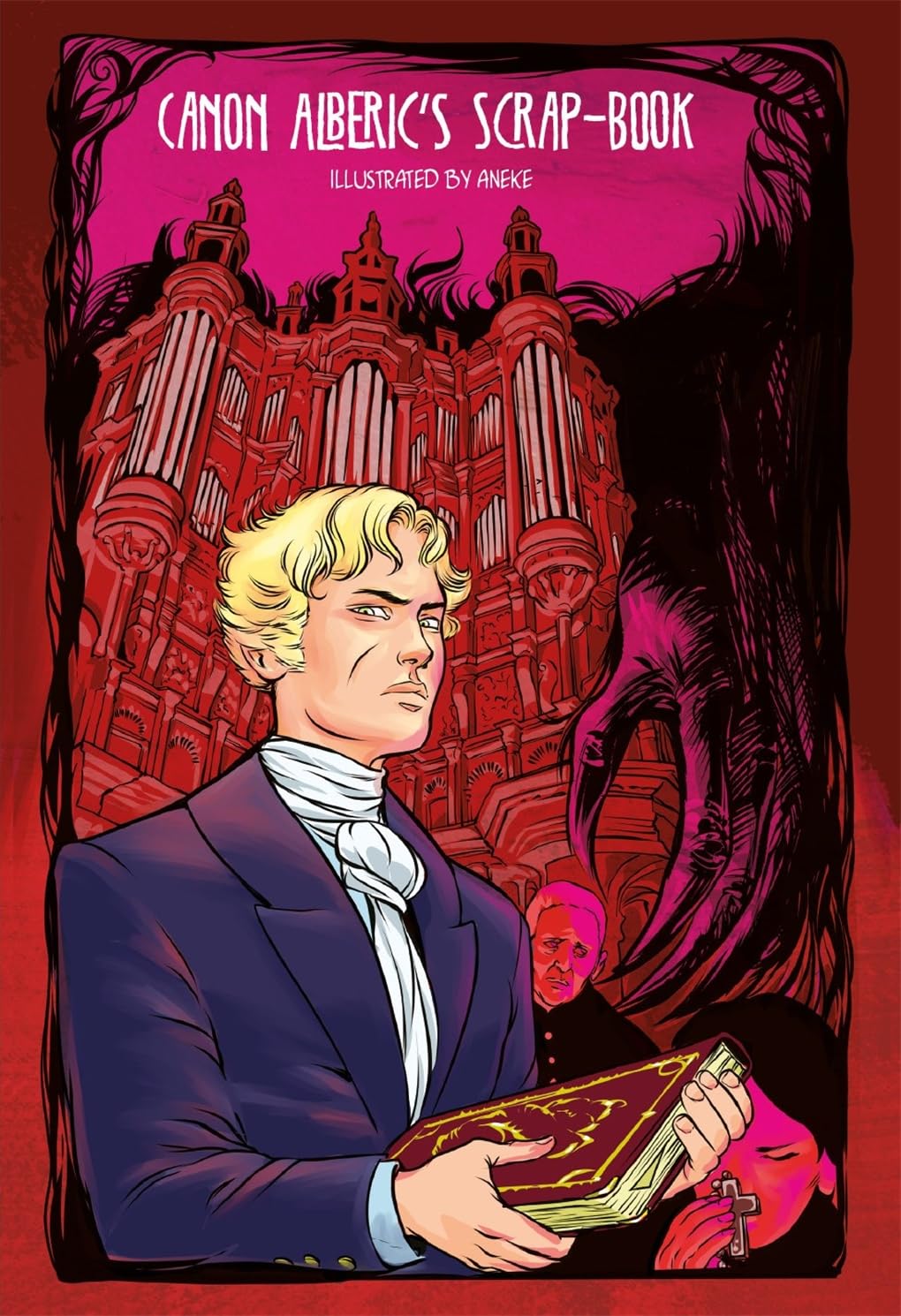
Just like the bumper seasonal hardbacks they celebrate, Treasury of British Comics Annuals blend old classics with all-new material, and although this year’s selection probably won’t last you all through 2026, it is packed with wonderful yarns that you will certainly read over and again. Combining original modern material with strips from Jag Annual 1971; Smash! November 16th 1968; Monster Fun July 5th 1975; Boy’s World February 19th – October 3rd 1964; The Birthday Book For Boys 1972; Misty February 24th 1979; Whizzer & Chips December 20th 1980; Action May 1st 1976; Wildcat Holiday Special 1989; Battle Action Force November 1st 1986; Valiant Annual 1969; Action Annual 1977; Buster December 28th 1991; Wham! Annual 1972 and Monster Fun October 2024, and kicks off with a strange team up tale fresh off the drawing/key boards of Stephen Brotherstone, Dave Lawrence & Henrik Salhström. It was lettered – like all the new material here – by Jonathan Stevenson.

‘Helmet Head & El Mestizo: “On the First day of Christmas…” ’ pairs the aging mercenary with the robot sheriff to save a frontier town – and that aforementioned ROBOT SHERIFF! – from ruthless scavengers, after which a classic tale of murderous child soldiers sees the ‘Mouse Patrol’ (by an unidentified writer and the incredible Eric Bradbury from Jag Annual 1971) still looking for their POW dads on the battlefields of North Africa in 1942. This time the three lads (Blackie Knight, Ginger Nobb & Cyril North) and their chimp chum Cleo ride their stolen tank into a Nazi super weapon test and gleefully turn it on the astounded Afrika Corps!

Presented as Original Art Archive Scans published in Smash! November 16th 1968, ‘A Short Cut Home!’ is limned by Francisco Fuentes Man and details how a nasty Earthman outsmarts himself after blackmailing gentle – but clever – aliens, after which Monster Fun July 5th 1975 supplies a Ken Reid comedy classic scripted by a mystery gagster. ‘Martha’s Monster Make-Up’ allows her to mould faces like putty and, here, get rid of a really obnoxious family guest…

Very much a main attraction, full-colour painted serial ‘John Brody and the Green Men’ ran in Boy’s World from February 19th to October 3rd 1964. Crafted by Willie Paterson & Frank Langford this is an epic African adventure in the manner of She and other fantasy movies, following the eponymous troubleshooter into a fantastic submerged kingdom and civil war against devilish priests, bloodyhanded tyrants a and a lot of undersea beasties…

It’s followed by Ned Hartley, Steve White & Stevenson’s new parody yarn ‘Imagine if Gums Was Published in Action…’ which speaks for itself – albeit rather messily – prior to Tom Tully & Ian Kennedy revealing how colour-changing ‘Kid Chameleon’ (The Birthday Book For Boys 1972) continues searching for his parents’ assassin. If not for those reptiles who had raised him in the Kalahari desert, he would have no chance…

Author unknown & Josep Gual reveal the monster-hunting surprise two girls unleash on ‘The Island’ (from Misty February 24th 1979) after which school spoof ‘Strange Hill’ (by another unknown & Martin Baxendale from Whizzer & Chips December 20th 1980) neatly shuffles us into an all-new yarn from David & Emily Roach pitting stellar sorcery savants in ‘Vanessa From Venus vs. Spellbinder’.

Thanks to another Original Art Archive Scan we get to see superspy ‘Dredger’ (by Chris Lowder & Horatio Altuna from Action May 1st 1976) settle with a KGB hit squad in all his mean, messy glory prior to James Tomlinson & Jesús Redondo Román detail why the undead don’t like space travel. ‘The Wildcat Complete: Vampire!’ was originally seen in Wildcat Holiday Special 1989, and our seasonal session adopts a rather bleak note for ‘The Fighting MaGees’ (Peter Milligan & Solano Lopez from Battle Action Force November 1st 1986) as brothers Jack and Micky endure the hell of the Gallipoli landings and are forever changed…

From Valiant Annual 1969 Carlos Cruz González and that unknown writer provide a vivid adventure for a certain inventor and his robot assistants as ‘The House of Dolmann’ face plundering pop sensations The Spectrums whilst Juan Arancio’s Original Art Archive Scans for Action Annual 1977 pit white explorers against a jungle packed with ‘The Wild Ones’

Mervyn Johnston’s ‘Captain Crucial’ clashes with a very busy Kris Kringle courtesy of Buster December 28th 1991, whilst anonymous & Vanyo detail how ordinary folk finished off ‘The Loch Tregar Terror’ (Wham! Annual 1972). One last new yarn by Suyi Davies Okungbowa, Edison Neo & Barbara Nosenzo reintroduces hairy giant robot ‘Mytek the Mighty’ in a show of brute strength and authorial foreboding before we close the fun & games with a vegan bloodbath triggered by Keith Richardson & Brett Parson’s ‘Count Carrot’ – as previously predigested in Monster Fun October 2024…

That’s all you get here, but remember this is a book you still can buy and receive instantly. The internet probably has others. You should check that out in a bit…
© 1964, 1967, 1968, 1970, 1971, 1975, 1976, 1979, 1980, 1986, 1989, 1991, 2024, 2025 Rebellion Publishing IP Ltd. All Rights Reserved.

The Beano Book 1971


By David Sutherland, Malcolm Judge, Paddy Brennan, Ronald Spencer, Bob McGrath, Robert Nixon, Gordon Bell, Jim Petrie, many & various (DC Thomson & Co., Ltd.)
ISBN: 978-0-8511-6031-3 (HB)

This book includes Discriminatory Content produced in less enlightened times.

For many British fans Christmas means The Beano Book (although Scots worldwide have a pretty fair claim that the season belongs to them with collections of The Broons and Oor Wullie making every December 25th magical) and I’m highlighting this particular edition as another epitome of my personal holiday memories. As usual my knowledge of the creators involved is woefully inadequate but I’m going to hazard a few guesses in the hope that someone with better knowledge will correct me when I err.

In this little cracker are a number of David Sutherland’s Biffo the Bear strips as well as his Bash Street Kids and even a smashing action-adventure of boy super-hero Billy the Cat (I wonder if the editors distributed strips to artists in alphabetical order?). There are whirlwind tales of “fastest boy on Earth” Billy Whizz drawn by Malcolm Judge. Paddy Brennan worked as a dramatic artist for decades on General Jumbo (the heroic boy who radio-controlled an army of robot toys) and the Q-Bikes: a team of young adventurers with technologically advanced push-bikes. In this tome they trade in two wheels for four, to become the Q-Karts for an Australian adventure, whilst the aforementioned General captures a team of safecrackers in his home town.

These annuals were traditionally produced in the wonderful “half-colour” that many British publishers employed to keep costs down while adding a bit of pizazz. This was done by printing sections of the books with only two plates, such as blue/Cyan and red/Magenta. The versatility and palette range this provided was astounding. Even now this technique screams “Holidays” to me and my rapidly dwindling contemporaries.

Some Dennis the Menace strips are possibly drawn by original creator Davy Law, but are most likely the work of his style-chameleon replacement David Sutherland. They all feature his charismatic then-new co-star ‘Gnasher’ too. Woefully dated, culturally suspect but astoundingly funny, the Little Plum strips are by Ronald Spencer, I think, as are The Nibblers: an anarchic gang – and weren’t they all in The Beano? – of mice.

The 3 Bears segments are by Bob McGrath whilst Lord Snooty (one of the longest running strips in the comic’s history – a record only recently overtaken by Dennis) is the work of Robert Nixon, as is the Roger the Dodger Family Album section. There are short romps with Pups Parade (AKA the Bash Street Pups – the unlovely pets of those unlovely kids) by Gordon Bell, and exemplar of Girl Power Minnie the Minx gets her own 16-page mini-book in this annual – and who could stop her? – courtesy of the wonderful Jim Petrie, but I’ll admit to being totally stumped by Swinging Jungle Jim: a frantic boy-Tarzan strip that has sunk without trace since those faraway times.

Topped off with activity and gag-pages, this is a tremendously fun book, and even in the absence of legendary creators such as Dudley Watkins, Leo Baxendale or Ken Reid, and with a small but noticeable decline in the mayhem and anarchy quotas, there’s still so much merriment on offer I can’t believe this book is 55 years old. If ever anything needed to be issued as commemorative collections, it’s DC Thomson annuals. Perhaps as the company pursues digital reprints volumes we could anticipate entire Annual re-releases?…

Divorcing the sheer quality of this brilliant book from nostalgia is a healthy exercise, but I’m perfectly happy to simply wallow – even today – in the magical emotions this ‘almost-colourful’ annual still stirs. It’s a good solid laugh-&-thrill-packed read from a magical time (I was in my final year of primary school and a beloved, spoiled and precocious little snot with not a care in the world), and turning those stiffened two-colour pages remains an unmatchable Christmas experience.
© 1970 DC Thomson & Co., Ltd.

Marvel Comic Annual 1969


By Stan Lee, Larry Lieber, Jack Kirby, Steve Ditko, John Romita, Bill Everett, Don Heck, Chic Stone, Dick Ayers, Mick Anglo Studios & various (World Distributors, Ltd.)
No ISBN ASIN: B001G8UJME

This book includes Discriminatory Content produced in less enlightened times.

When Stan Lee rejuvenated the US comic-book industry in the early 1960s, his biggest advantage wasn’t the small but superb talent pool available, but rather a canny sense of marketing and promotion. DC, Dell/Gold Key and Charlton all had limited overseas licenses (usually in dedicated black-and-white anthologies like the much beloved Alan Class Comics such as Suspense) but Lee – or his business managers – went further, sanctioning Marvel’s revolutionary early efforts in regular British weeklies like Pow!, Wham!, Smash! and even the venerable Eagle. There were two wholly Marvel-ised papers, Fantastic! & Terrific! which ran from 1967 to 1968. These featured a plethora of key Marvel properties, and, appearing every seven days, soon exhausted the back catalogue of the company.

After years being a guest in other publications Marvel finally secured their own UK Annuals through World Distributors’ publishing arm and packaged courtesy of jobbing comics content outfit Mick Anglo Studios. This sparkling collection is one of the very best. Completely absent are the text pieces, quizzes and game pages that filled out British Christmas books, replaced with cover-to-cover superhero action mimicking the emergent House of Ideas at the very peak of their creative powers. It even includes a few almost Golden Age classics. Moreover it’s in full colour throughout – almost unheard of at the time.

A closer look by Marvel scholars would ascertain that all of the strips published here were actually taken from the wonderful 25¢ giants (Marvel Tales, Marvel Collector’s Item Classics and Marvel Superheroes) released during the preceding year, perfectly portioned out to fit into a book intended for a primarily new and young audience.

Behind the delightful painted cover the enchantment commences with a John Romita drawn Captain America tale from 1954, as the Sentinel of Liberty & Bucky lay waste to a scurvy gang of Red Chinese dope smugglers in ‘Cargo of Death’, followed by a spectacular Thor saga from Lee, Jack Kirby & Chic Stone as the Thunder God tackled ‘The Cobra and Mr. Hyde’, complete with cameo from the mighty Avengers.

The first of two Hulk shorts comes next, another Commie-busting classic with sci-fi overtones. Lee, Kirby & Dick Ayers’s ‘The Gladiator from Outer Space’ is a terrific all-action mini-blockbuster, perfectly complimented by Lee & Steve Ditko’s sinister crime shocker wherein Spider-Man is trapped between ‘The Goblin and the Gangsters!’

Unsung genius Bill Everett provided a brace of sublime Sub-Mariner tales, both from the fabulous 1950s. The secret origin saga ‘Wings on his Feet’ is the first and undeniable best of these, his magical line-work wonderfully enhanced by a bold colour palette and the crisp white paper stock of this comfortingly sturdy tome.

He’s followed by a masterful clash of titans as ‘Iron Man Faces Hawkeye the Marksman’ (Lee & Don Heck) before ‘The Hulk Triumphant’ (concluding chapter of the very first appearance wherein the Green Goliath ends the menace of Soviet mutation The Gargoyle)/ The book then closes with another enthralling Everett Sub-Mariner epic as the Prince of Atlantis defeats mad scientists and monsters ‘On a Mission of Vengeance!’

These oft-reprinted tales have never looked better than on the 96 reassuringly stout pages here: bold heroes and dastardly villains running riot and forever changing the sensibilities of a staid nation’s unsuspecting children. Magic, utterly Marvellous Magic!
© 1969 Perfect Film & Chemical Corporation, Marvel Comics Group. All rights reserved.

Today is pretty auspicious for births! In 1893 Robert Ripley (Ripley’s Believe It or Not!) was whelped, as was Red Ryder co-creator Stephen Slesinger in 1907, whilst Tarzan maestro and educational powerhouse Burne Hogarth showed up in 1911. Two years after that, Elliot Caplin (The Heart of Juliet Jones & Abbie an’ Slats) joined the party, whilst in 1920 Letterer Joe Rosen who lettered all the other Marvel classic stories was born.

Season’s Greetings, Boys, Girls and especially those Still Thinking About It!

The Treasury of British Comics Annual 2024


By Simon Furman, Tom Tully, Alec Worley, Alf Wallace, Leo Baxendale, Pat Mills, Mike Brown, Kek-W, Walter Thorburn, E. George Cowan, Derek Cribbling, Leo Baxendale, Ken Armstrong, Mike Collins, David Roach, Enric Badia Romero, Dave Gibbons, Garry Leach, Ken Reid, Brian Bolland, Joe Colquhoun, Steve Dillon, DaNi, Cam Kennedy, Brian Lewis, Mike Western, Staz Johnson, Tom Paterson, Carlos Guirado, Juan Arancio, Henry Flint & various (Rebellion Studios)
Digital only eISBN: 978-1-83786-025-8 (Kindle); 978-183786-133-0 (Webshop Exclusive)

This book includes Discriminatory Content produced in less enlightened times.

Win’s Christmas Gift Recommendation: True Brit Comics Class… 8/10
As I’ve repeated ad infinitum, British comics always enjoyed an extended love affair with unconventional (for which feel free to substitute “weird” or “creepy”) heroes. Many stars and notional role models in our strips might have been outrageous or just plain “off”, but we also handled traditional stuff in a more appropriate manner… one less likely to have outraged parents and censorious moral stickybeaks gunning for editors and publishers

Until the 1980s, UK periodicals employed an anthological model, offering a large variety of genre, theme and characters. Humour comics like The Beano were leavened by action-adventures like The Q-Bikes or General Jumbo whilst dramatic fare papers like Lion, Eagle, Hotspur or Valiant always offered palate-cleansing gagsters… and there was no reason to rock that boat in end-of-year bumper annuals

Prior to game-changers Action, Misty and 2000AD, British comics fell into fairly ironclad categories. Back then, you had genial and/or fantastic preschool fantasy; a large selection of licensed entertainment properties; action; adventure; war; school dramas, sports and conventional comedy strands. Closer examination would confirm there was always a subversive merging, mixing undertone, especially in such antihero series as Dennis the Menace or our rather strained interpretation of superheroes. Just check out The Spider, Kelly’s Eye or early Steel Claw stories…

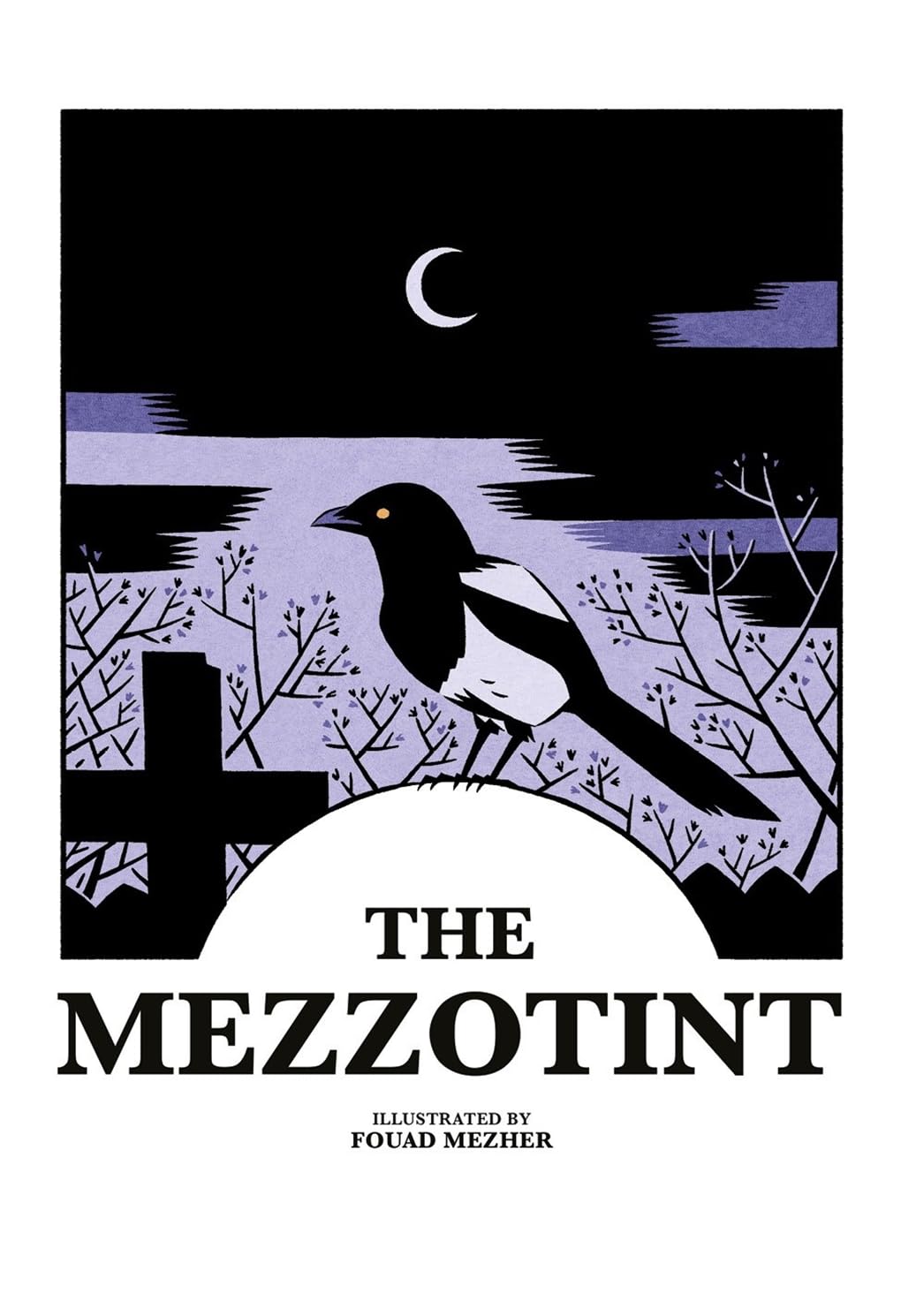
The glory days of Christmas Annuals have ended but thanks to Rebellion and their superb Treasury of British Comics project, a touch of that grand legacy has been delighting old and new readers with modern versions of the good old days for a few years now. A little slice of the future of nostalgia comes with a limited Hardback edition and general-release digital compilations of seasonal comics fun and thrills. Moreover – just like the bonanza hardbacks they celebrate – these Annuals are a blend of all-new material and old classics.

In this first release from November 2023 the recovered, remastered delights stem from Smash! April 2nd – May 14th 1966; Wham! Annual 1966: Wham! November 25th 1967 and January 15th 1968; Lion & Valiant Holiday Extra 1969; Pow! Annual 1971; Buster Book of Scary Stories 1975; Action Summer Special 1976; Valiant Book of Mystery & Magic 1976; Action Annual 1979; Battle Holiday Special 1979; Misty Annual 1980; Starlord Annual 1982; Scream! May 12th 1984 and Monster Fun Halloween Spooktacular 2021 and opens with a modern-day team up clash by Simon Furman, Mike Collins & David Roach, coloured by Gary Caldwell and lettered by Annie Parkhouse.

‘The Spider Vs The Leopard from Lime Street’ pits the wild and wary misunderstood heroes against each other until time-bending true malign manipulators The Infernal Gadgeteer and Dr Mysterioso are exposed and expelled, after which true evil genius Leo Baxendale depicts in full colour how ‘Grimly Feendish’ staged his own Great Train Robbery in Wham! November 25th 1967.

Reproduced from actual artboards as “Original Art Archive Scans – with erasings, white out and all…” and as seen in weekly Smash! from April 2nd – May 14th 1966, ‘Moon Madness’ was written by Alf Wallace and illustrated by Brian Lewis, and revealed how a Russian lunar mission resulted in a bizarre jigsaw monster terrorising Britain…

Another multi-hued Baxendale ‘Grimly Feendish’ (from Wham! January 15th 1968) depicting another banditry bungle segues into a sci fi classic from an unknown author and Garry Leach as seen in Starlord Annual 1982 wherein an all-consuming bio-terror on a cargo freighter demands the expert attention of ‘The Exterminator’, after which an equally anonymous yarn from The Buster Book of Scary Stories 1975 limned by Dave Gibbons sees a keen trainee aviator used by ‘The Ghost Pilot’ to save a person on peril and pay off a debt…

Wham! Annual 1966 provided a wry extended ‘Frankie Stein’ tale by Walter Thorburn & Ken Reid regarding the excesses of the tabloid press before Tom Tully & Brian Bolland detail the terrors and rewards of modern sport sensation ‘Spinball’ as originally covered in Action Annual 1979, prior to another new tale as ‘Black Beth’ faces arcane peril from tarot terrors courtesy of Alec Worley, DaNi & Oz Osbourne. Pat Mills, Derek Cribbling & Joe Colquhoun keep up the mystic menace with a craven cartoonist’s cautionary tale and fate as ‘The Final Victim’ as seen in the Valiant Book of Mystery & Magic 1976 prior to Misty Annual 1980, an unknown author and Carlos Guirado exposing a young heiress to ancient heirloom ‘The Hand of Vengeance!’

Supernatural mystery continues with Furman, Steve Dillon & Jay Cobb’s ‘Beware the Werewolf!’ from Scream! May 12th 1984 before the scene shifts to true horror as Cam Kennedy and the Unknown Scripter deliver a lost episode of ‘Charleys’ War’ first found in Battle Holiday Special 1979, prior to time-travelling ‘Robot Archie’ and pals facing pirates in the Caribbean thanks to E. George Cowan & Mike Western and Lion & Valiant Holiday Extra 1969

‘Esper Commandos’ was published in Pow! Annual 1971, limned by future Modesty Blaise and Axa illustrator Enric Badia Romero and reappears here as another smudges ‘n’ all “Original Art Archive Scan”. It features a future and fascinating psionic super-squad as they infiltrate and eliminate the Britain’s future enemies, and precedes a full colour origin for one of UK comics’ strangest stars. Thanks to Ken Armstrong & Juan Arancio in Action Summer Special 1976,‘Great White Death’ revealed how Shark superstar Hookjaw got his bloody start…

One last original yarn – by Kek-W, Staz Johnson, Barbara Nosnzo & Simon Bowland – maintains the tone but transfers time and place to Leningrad in 1944 for saucy savage combat fable ‘Gustav of the Bearmacht’ before Monster Fun Halloween Spooktacular 2021 revives ‘Gah! The Gobblin’ Goblin’ and his astounding appetite thanks to Keith Richardson, Tom Paterson & Bowland.

Daft, thrilling, beautifully rendered, devastatingly nostalgic and truly fun, these are all you need to complete your Crimbo celebrations and since we’re all messing about with electrons and what-nots, if you want YOU CAN GET IT IMMEDIATELY THANKS TO DIGITAL RUDOLF THE RED BUTTON REINDEER AND THEM INTERWEB TUBES!!

The same applies to the follow up tome…
© 1966, 1967, 1968, 1969, 1971, 1975, 1976, 1979, 1980, 1982, 1984, 2021 & 2023 Rebellion Publishing IP Ltd. All Rights Reserved.

The Treasury of British Comics Annual 2025


By Paul Grist, Simon Furman, Leo Baxendale, Ian Rimmer, Donne Avenell, Tom Tully, Alec Worley, Steve Moore, John Smith, Simon Williams, John M. Burns, Mike Collins, Carlos Ezquerra, Mick McMahon, Mike Western, Frank Langford, Massimo Belardinelli, Anna Morozova, Ian Kennedy, Eric Bradbury, David Roach, Emily Roach, Andreas Butzbach & various (Rebellion Studios)
eISBN: 978-1-83786-498-0 (general edition); 978-183786-501-7 (Webshop Exclusive)
This book includes Discriminatory Content produced in less enlightened times.

Win’s Christmas Gift Recommendation: More True Brit Comics Class… 8/10

What you read up above is just as true for this second Annual Endeavour which emerged at the end of 2024. This time around, the new contributions are augmented by material from Tiger February 13th – May 8th 1965; Wham! February 27th 1965; Lion Annual 1972; The Buster Book of Scary Stories 1975; Valiant 21st August -16th October 1976; Valiant Annual 1976; Battle Annual 1979; Dan Dare Annual 1980; Action Annual 1982; Scream! Holiday Special 1985 and 2000 AD Presents Action!

Kicking things off is a full-colour, all new rematch /grudge match as Paul Grist, Simon Willams, colourist Jason Cardy & letterer Leila Jess detail one more mighty mess up in ‘Robot Archie Vs The Sludge’ prior to that uncredited writer and Carlos Ezquerra revealing how battle-savvy rebel ‘Major Easy’ ferrets out traitors in Nazi-occupied Greec as seen in Battle Annual 1979.

Long ago Scream! Holiday Special 1985 pointed out the problems with ‘New Neighbours’ courtesy of Ian Rimmer & Mike Western whilst anonymous & Mick McMahon expose the domestic stresses of ‘3000 AD The Traveller’, as first debated in Dan Dare Annual 1980 (which is apparently still a 2000 AD Production)…

Leo Baxendale’s anarchic spoof ‘Eagle Eye, Junior Spy – Doomsday School’ (Wham! February 27th 1965) segues into dark and dangerous (no really) football strip ‘Stryker’ (by Tom Tully & Ian Kennedy and running in Valiant 21st August to 16th October 1976) as really good player joins a naff team to discover how his brother died following an ugly on-pitch incident…

John Smith & John M. Burns were on fine form in 2000 AD Presents Action! as ‘Doctor Sin: The Strange Case of the Wyndham Demon’ sees the mystic troubleshooter drawn to a dark and deadly case of diabolical incursions after which Simon Furman, Mike Collins & letterer SquakeZz deliver an all-original adventure as ‘Kelly’s Eye Vs The White Eyes’ sees mystic ghost-breaker Cursitor Doom call in the invulnerable hero to end a threat to the entire multiverse caused by environmental mucking about…

There’s more of the same, if a little earlier set, as anonymous & Frank Langford detail how animal experiments turn a lab chimp into a threat to all humanity after taking over ‘Gorilla Island’ as seen in Tiger from February 13th to May 8th 1965 – predating Planet of the Apes by three years! – after which possibly the same scripter (who can tell?) & Ian Kennedy cover how immortal time traveller ‘Adam Eterno’ exposes a slave-taker at Camelot’s Round Table, as seen in Valiant Annual 1976.

Donne Avenell & Massimo Belardinelli tell a tale of feudal Caped Crusader/Dark (green) Knight) ‘Flame O’ the Forest’ wherein the masked Saxon battles Norman injustice and oppression in a short romp from Lion Annual 1972 before final new addition ‘Black Beth: Vultures of Azotir’ sees Alec Worley, Anna Morozova, & Ozwald reaffirm the Warrior Sorceress’ undying battle against evil magic and wicked people, before Steve Moore & Eric Bradbury close the Christmas curtain with The Knight From Nowhere’: one last bout of sword-waving sagas and supernatural vengeance as originally seen The Buster Book of Scary Stories 1975

And that’s another pretty package of festive future-of-nostalgia fun done. Crucially, all these digital delights could be all yours right now, if not sooner…

Admit it. You’re tempted, right? And don’t YOU deserve some seasonal fun and thrills too?
© 1965, 1972, 1975, 1976, 1979, 1980, 1982, 1985, 1992 & 2024 Rebellion Publishing IP Ltd. All Rights Reserved.

Today in 1946 Vittorio Giardino was born. We just did his Max Fridman stuff so no help from here, just go scrolling. In 1947 Dutch wonder boy Joost Swarte was born and in 1959 Jean Roba’s Boule et Bill began in Le Journal de Spirou, and 10 years later Scottish writer Mark Millar was born.

On the downside, though, in 1986 today was Gardner F. Fox’s last day on Earth-1 and in 1992 Smurf-meister Peyo passed away leaving all far less blue…