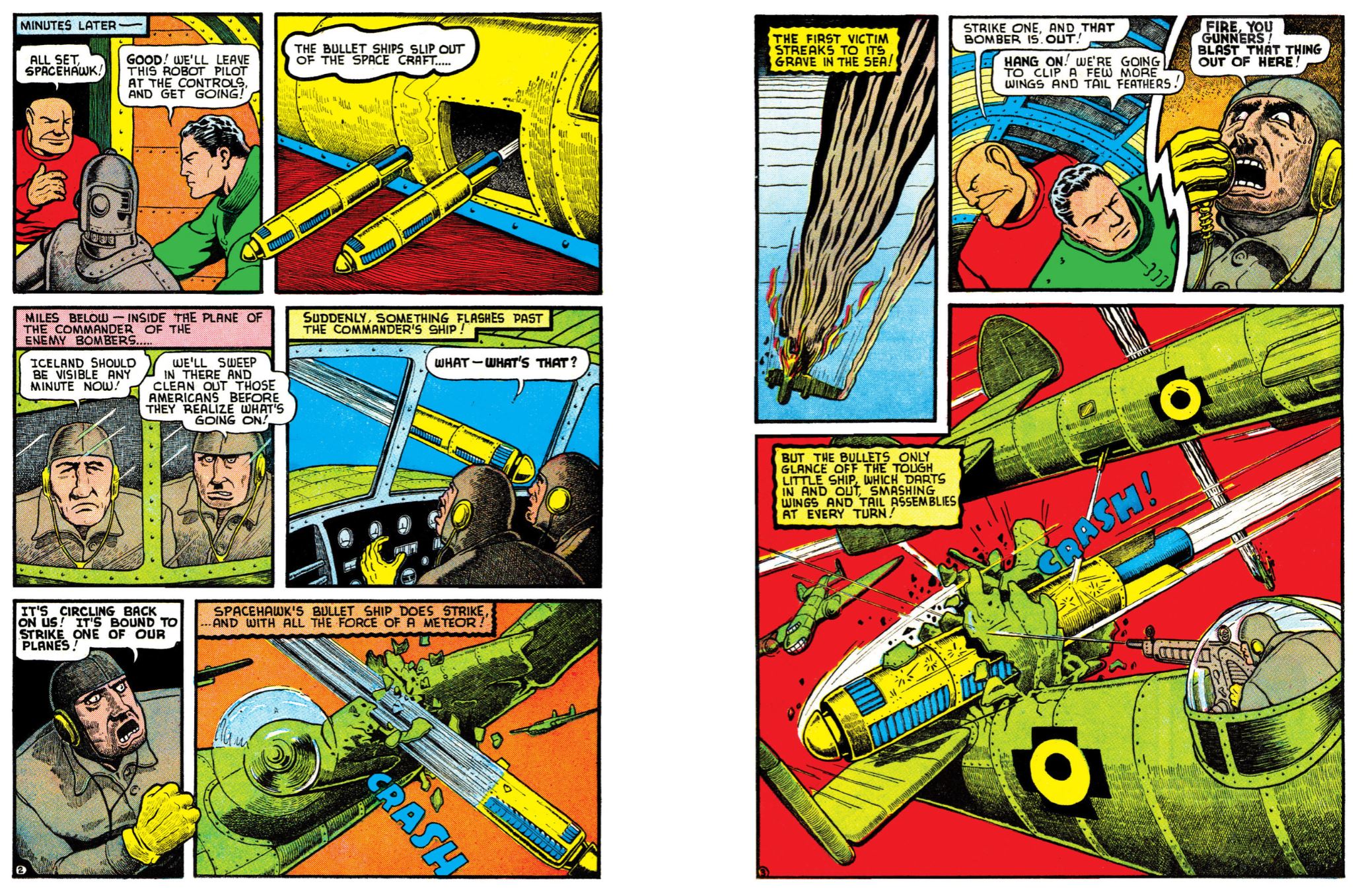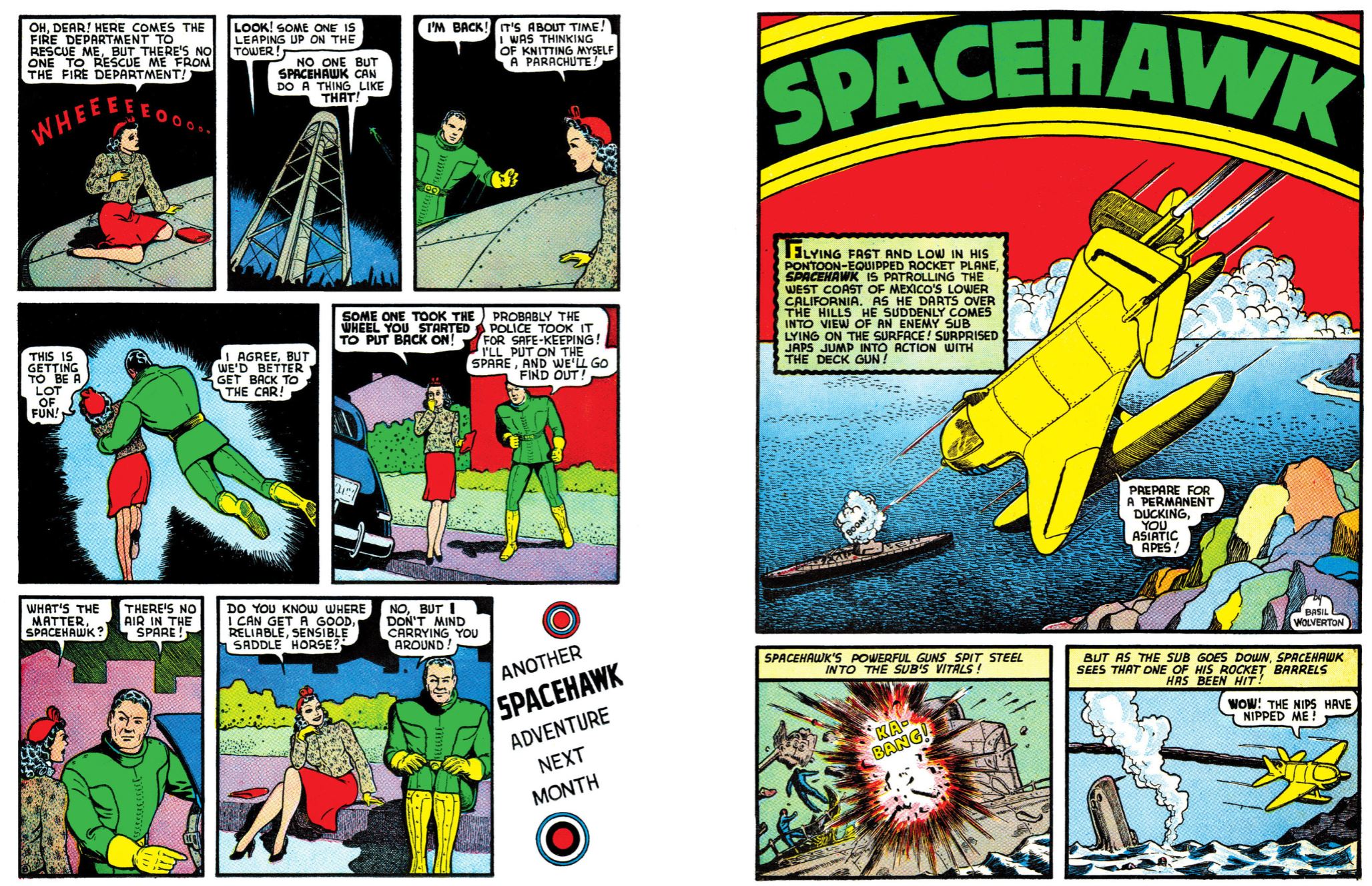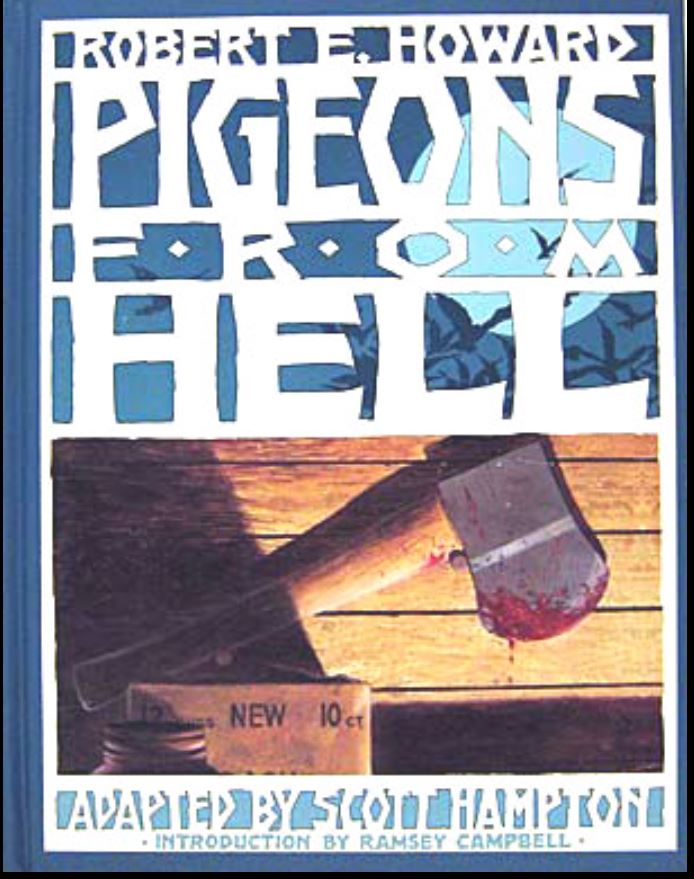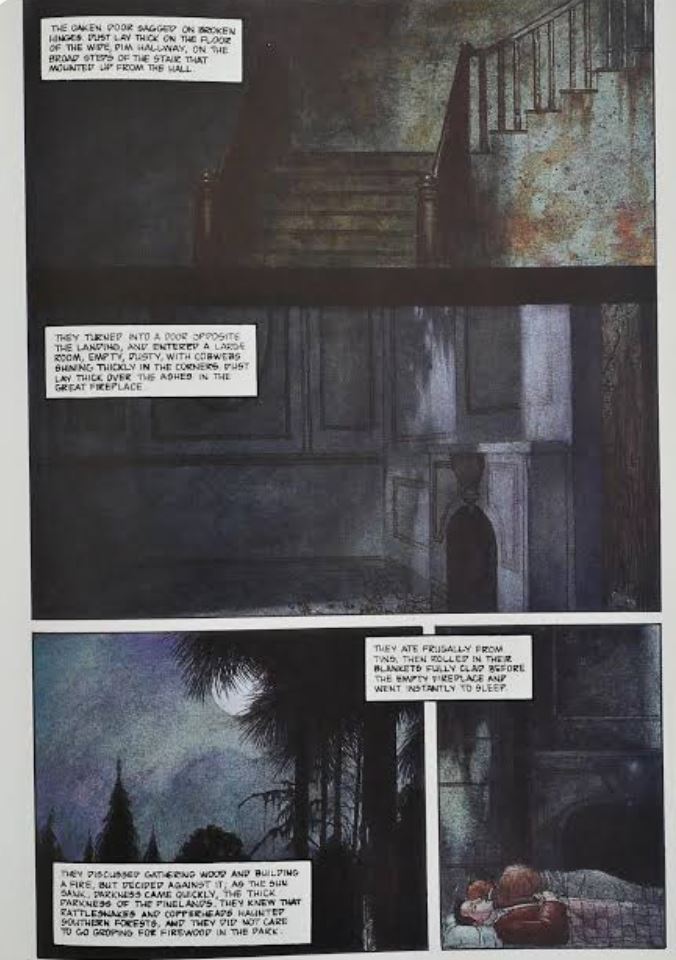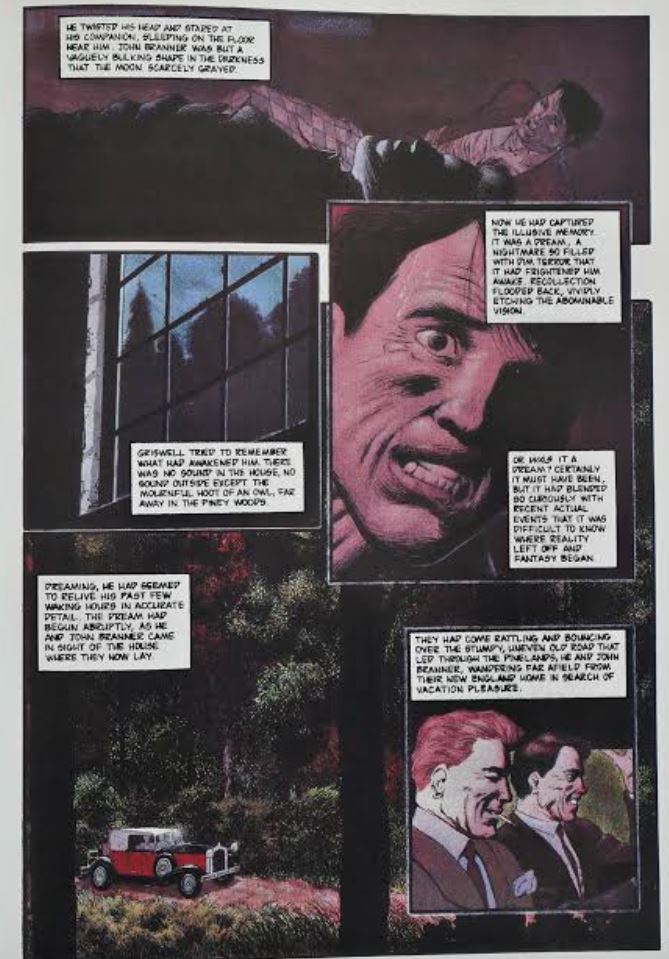
Casey Ruggles – A Saga of the West: King of the Horsemen/the Prophet Julius/Juan Soto (Daily Strips 1951)


By Warren Tufts & various (Western Winds Productions)
No ISBN

This book includes Discriminatory Content produced in less enlightened times.

The newspaper strip Casey Ruggles – A Saga of the West used that genre’s motifs and scenarios to tell a broad range of stories stretching from shoot-’em-up dramas to comedy yarns and even the occasional horror story. The titular hero was a dynamic ex-cavalry sergeant and sometime US Marshal as he made his way to California. He’d been doing that since 1849, hoping to find his fortune, but was frequently distracted and diverted by meeting historical personages like Millard Fillmore, William Fargo, Jean Lafitte and Kit Carson in gripping two-fisted action-adventures. This was the narrative engine of both features until 1950 whereupon daily and Sunday strips divided into separate tales.

Warren Tufts was a phenomenally talented illustrator and storyteller born too late. He is best remembered now – if at all and probably not in English-speaking countries – for creating two of the most beautiful western comics strips of all time: Ruggles and elegiac, iconic Lance.

Sadly, Tufts began his career at a time when the glory days of syndicated newspaper strips were gradually giving way to the television age of ostensibly free family home entertainment. Had he been working scant years earlier in adventure’s Golden Age he would undoubtedly be a household name – at least in comics fans’ homes.

Born on Christmas Day, 1925. Tufts was a superbly meticulous draughtsman with an uncanny grasp of character and a great ear for dialogue. His art was effective and grandiose in the representational manner, favourably compared to both Hal Foster’s Prince Valiant and Alex Raymond. On May 22nd 1949 he began Ruggles as a full-colour Sunday page, and added to it with a black and white daily strip which began on September 19th of that year.

Tufts worked for United Features Syndicate, owners of such popular strips as Fritzi Ritz and L’il Abner, and his lavish, expansive tales were crisply told and highly engaging, but he was a compulsive perfectionist and regularly worked 80-hour weeks at the drawing board… and consequently often missed deadlines. This led him to use many assistants like Al Plastino, Rueben Moreira and Edmund Good. Established veterans Nick Cardy and Alex Toth also spent time working as “ghosts” on the series, with Cardy’s stint reproduced in this volume.

Due to a falling-out with his syndicate, Tufts left this wonderful western creation in 1954 and Al Carreño continued Ruggles until its demise in October 1955. The departure came when TV producers wanted to turn the strip into a weekly television show. Apparently UF baulked, suggesting the show would harm the popularity of the strip!?

Tufts formed his own syndicate for his next and greatest project, Lance (probably the last great full page Sunday strip and another series crying out for a high-quality collection) before moving peripherally into comic-books, working extensively for West Coast outfit Dell/Gold Key, drawing various westerns and TV show tie-ins like Wagon Train, Korak son of Tarzan, The Amazing Chan and the Chan Clan and a long run on the Pink Panther comic book. Eventually, he quit drawing completely, working as an actor, voice-actor and eventually in animation on such shows as Challenge of the Super Friends.

Tufts had a lifelong passion for flying, even building his own planes. In 1982 whilst piloting one he crashed and was killed.

Pacific Comics Club collected many “lost strip classics” at the start of the 1980s, including six volumes (to my knowledge) of Casey Ruggles adventures. This was the fourth stupendous monochrome volume (approximately 15 inches x 10 inches) and contains stories that highlight Tufts’ love of Western history, facility for comedy and innovative willingness to take chances in three tales from the strip’s third year.

The first is a traditional cowboy story featuring the clandestine return of an old foe. ‘King of the Horsemen’ originally ran 14th May to 23rd June 1951, and saw a mysterious “Sonoran” (in actuality Mexican bandit Joaquin Murietta) challenge all the miners in a gold town to test their riding skills against his own.

Bored and cash rich but not stupid, the gambling fools call in Marshal Ruggles to do the rough riding…

This is an engrossing, informative little gem, softly sardonic and luxuriating in the minutiae of the historical west and cowboy mythology. Art lovers will also have the joy of comparing two master realists as Tufts, ever-strapped to meet his punishing deadlines, surrendered the greater part of the tale (all the racing, chasing and action-stunting) to Cardy, keeping only the first and last weeks’ episodes for himself. This was probably to give himself a little leeway on the next adventure ‘The Prophet Julius’; a dark, clever yarn about a greedy flim-flam man and the eerie power he exerted on an isolated outpost.

Running from June 25th to August 11th 1951, the action begins with a shooting star crashing to earth, closely followed by a mesmerising soothsayer terrifying, coercing and ultimately hypnotising miners into handing over their wealth. With even Ruggles helpless, the township pull together to craft a solution no Hollywood hack has ever considered…

The six-gun thrills conclude here with another unsung innovation wherein Tufts adapted the documentary/Film Noir style prevalent in the B-Movie gangster films of the time to create a prototype graphic-novel police procedural that would do Rick Geary proud.

The predominantly Mexican Vasquez Gang terrorized the simple folk of rural California for nearly 15 years, with outlaws captured or killed only to be replaced by ever more bloodthirsty villains. ‘Juan Soto’ was one such and the pursuit of him was perfectly incorporated into a clever tale of organised man-hunting by Tufts. Soto was actually killed in a gunfight with Alameda County Sheriff Harry Morse. Here though the bandit’s increasingly obnoxious depredations draw Ruggles into a posse with five other lawmen who undertake a legendary trek through rugged country, ending in a fearsomely authentic, grimly chilling siege and showdown.

Human intrigue and fallibility, bombastic action and a taste for the bizarre reminiscent of the best John Ford or Raoul Walsh movies make Casey Ruggles the ideal western strip for the discerning modern audience. Westerns are a uniquely perfect vehicle for drama and comedy, and Casey Ruggles is one of the very best produced in America: easily a match for the usually superior European material like Tex Willer or Lieutenant Blueberry.

Surely the beautiful clean-cut lines, chiaroscuric flourishes and sheer artistic imagination and veracity of Warren Tufts can never be truly out of vogue? These great tales are desperately deserving of a wider following, and I’m still praying some canny publisher knows a good thing when he sees it…
© 1950, 1951 United Features Syndicate, Inc. Collection © Western Winds Productions. All Rights Reserved.

Yesterday in 1919 comic book scribe Robert Bernstein (Crime Does Not Pay, Superman, Superboy, Aquaman, Superman’s Girl Friend, Lois Lane, Superman’s Pal Jimmy Olsen, Psychoanalysis, Thor, Iron Man) was born, as was British illustrator and horrorist John Bolton (Marada, X-Men, Shame) in 1951; Brazilian Mike Deodato Jr. (Spider-Man, Dark Avengers, Wonder Woman) in 1963 and Great Briton Mark Buckingham (Fables, Spider-Man, Marvelman) in 1966.

On that date in 1994 we lost pioneering fan/journalist/historian and publisher Don Thompson, and master illustrator John Prentice (Young Romance, Fireman Farrell, Rip Kirby) in 1999.

Today in 1912, strip cartoonist Alfred Andriola (Kerry Drake) was born, followed in 1919 by both Harvey Comics artist Sid Couchey (Ritchie Rich, Little Lotta, Little Dot) and Saturday Evening Post cartoonist Irwin Caplan (Famous Last Words). In 1925 Carmine Infantino was born. Latterly, in 1957 a different world greeted German creator Walter Moers (Das kleine Arschloch) and in 1963 Michael Chabon (Amazing Adventures of Kavalier & Clay)

In 1959 on this date Frank Giacoia’s Johnny Reb and Billy Yank strip ended, whilst in 1992 Japanese collective CLAMP launched groundbreaking manga X. In 1962 US comics illustrator Victor Forsythe (Joe Jinx) died as did Spirou’s veteran art mainstay Pierre Seron (Les Petits hommes, Les Centaures, Les Petites Femmes) in 2017.

DC Finest: Sgt. Rock: The Rock of Easy Co.


By Robert Kanigher, Bob Haney, Joe Kubert, Ross Andru & Mike Esposito, Russ Heath, Jerry Grandenetti, Irv Novick, Mort Drucker, Jack Abel & various
ISBN: 978-1-79950-809-0 (TPB)

This book includes Discriminatory Content produced in less enlightened times.

Sgt Rock and the “combat-happy Joes” of Easy Company are one of the great enduring creations of US comic books. The gritty metarealism of Robert Kanigher’s ordinary guys in life-&-death situations compellingly captured the imaginations of generations of readers, young and old, for decades. So pervasive is this icon of comics combat, that’s it’s hard to grasp that Rock is not an immortal industry prototype like Superman, Batman,Wonder Woman or the original Captain Marvel – with us since the earliest moments of the industry – but was, in fact, a rather late addition to and child of the Silver Age of Comics.

This trade paperback compendium collects the tentative first step and early days in the character’s evolution from G.I. Combat #68 and compiles his subsequent missions in Our Army At War #81-122, covering January 1959 through September 1962: a period wherein the American comic book market was undergoing a staggering revolution in style, theme and quality.

The majority of the stories come courtsey of Kanigher & Joe Kubert at their creative peak, occasionaly supplemented by some of the best artists in the business, and we open after a stunning Jerry Grandenetti cover (first of many) with G.I. Combat #68. There lurked a quiet, moodily unassuming fable of an anonymous boxer who wasn’t particularly skilled but simply refused to be beaten. When ‘The Rock!’ enlisted in the US Army, however, the same Horatian qualities attained mythic proportions as he held back an overwhelming Nazi attack by sheer grit and determination, remaining bloody but unbowed on a field littered with dead and broken men.

Dubbed “Rocky”, the character returned as a sergeant in the April Our Army at War (#81), again facing superior German forces as ‘The Rock of Easy Co.!’ in a brief but telling vignette from Bob Haney, Ross Andru & Mike Esposito before finally winning a personal and extremely individualistic identity as Sgt. Rock in the next issue. This was Haney’s Mort Drucker-illustrated ‘Hold Up Easy!’: another harsh and declarative mini-epic which saw hard-luck heroes Easy Company delayed and then saved by callow replacements who eventually came good…

Firmly entrenched now, Our Army at War #83 (June 1959) saw the true launch of the immortal everyman hero in Kanigher & Kubert’s ‘The Rock and the Wall!’, a tough-love, battlefield tutor shepherding his men to competence and survival amidst the constant perils of war. This time the grizzled nomcom meets a rival for his men’s admiration in the equally impressive Joe Wall

Irv Novick illustrated ‘Laughter on Snakehead Hill!’ as the embattled dogfaces of Easy fight to take a heavily-fortified citadel before OAAW #85 introduces the first continuing cast member in Kubert-limned ‘Ice Cream Soldier!’ Here Rock assuages a fearful replacement’s jangled nerves with tales of another hopeless “green apple” who grew into his job. This ploy of incorporating brief past-action episodes into a baptism of fire scenario would play over and over again, and never got old…

Haney returned in #86 to script ‘Tank 711’ for Kubert as the terse topkick educated another newbie in combat etiquette. Kanigher then described the taking of “No-Return-Hill” and the initiation of four more raw recruits in ‘Calling Easy Co.!’ after which Grandenetti illustrated a brace of tales in #88 and 89: ‘The Hard Way’, in which Rock suffers a shocking crisis of confidence and ‘No Shot from Easy!’ wherein the indomitable sergeant is forced to give his toughest ever order…

OAAW #90 offered classic Kubert as ‘3 Stripes Hill!’ revealed how Rock won his stripes, after which the traditionally anthological Our Army at War offered three complete Sgt. Rock sagas in #91, beginning with ‘No Answer From Sarge!’ as the NCO risks everything to drag a recruit out of a crippling funk; ‘Old Soldiers Never Run!’ where he must weigh an old man’s pride against Easy’s continued existence, and the Haney-scripted tragic fable of a sole-surviving Scottish soldier in ‘The Silent Piper!’

OAAW #92 saw Kanigher & Kubert tackle battlefield superstitions in ‘Luck of Easy!’, before ‘Deliver One Airfield!’ introduces Zack Nolan, a son of privilege who must learn teamwork the hard way whilst #94’s ‘Target… Easy Company’ pits the unit against a German General determined to eradicate the increasingly high-profile heroes. Issue #95 debuted charismatic, ambitious Bulldozer Nichols who wants Rock’s rank and position in ‘Battle of the Stripes!’, after which ‘Last Stand for Easy!’ sees our still-in-charge topkick compelled to relinquish his lead-from-the-front position, after which ‘What Makes a Sergeant Run?’ finds him again sharing his hard-earned war wisdom with the young and the hapless.

Haney penned ‘Soldiers Never Die!’ in #98, with Rock forced to overcome his team’s trauma at losing a beloved comrade, whilst Kanigher described ‘Easy’s Hardest Battle!’ in #99, with the weary warrior recalling instances which all qualified, before once more triumphing over insurmountable odds and adding one more clash to the list. The Stalwart Sergeant risked everything to save a broken replacement in #100’s ‘No Exit for Easy!’ and repeated the task in ‘End of Easy!’ as a parachute drop goes tragically awry, before #102’s ‘The Big Star!’ concedes the consequences of depending on a young man utterly unsuited for combat…

‘Easy’s Had It!’ in #103 was another Haney contribution, exploring what happens when Rock is wounded and the company has to fight without their guiding light and lucky talisman, after which Kanigher assumed regular scripting duties beginning with #104 and ‘A New Kind of War!’ portraying the grizzled vet totally outgunned by a valiant nurse who refuses to retreat and never surrenders. In #105 a ‘TNT Birthday!’ has Rock worried about the underage kid who somehow got past all the instructors to join Easy under terrifying fire, whilst ‘Meet Lt. Rock!’(illustrated by Novick) sees the resolutely dedicated noncom forcibly promoted… until he manages to undo the horrifying prospect, after which #107’s ‘Doom Over Easy!’ again sees the savvy soldiers in his care afflicted by crippling superstition…

Having already contributed a few covers, the superb Russ Heath drew his first Rock strip in OAAW #108 as ‘The Unknown Sergeant!’ sees the squad pass through a French village with a statue of a WWI Yank “doughboy” bearing an uncanny resemblance to their own indomitable leader, and provoking some very uncomfortable historical hallucinations before Kubert’s return in #109’s ‘Roll Call of Heroes!’ This signals a dose of grim reality as Rock recalls his own deadly baptism of fire and lost comrades, after which a green Lieutenant almost provokes mutiny and murder until he learns the rules of Combat Arithmetic in ‘That’s An Order!’

‘What’s the Price of a Dogtag?’ is painfully answered in the occupied streets and on seemingly deserted beaches in #111, before ‘Battle Shadow!’ focuses on the burgeoning supporting cast in a blisteringly explosive extravaganza heralding a bold move. Now African American soldier Jackie Johnson takes centre stage (in a remarkable early example of comic book affirmative action) for a memorable last-stand moment in ‘Eyes of a Blind Gunner’ (#113, cover-dated December 1961).

The incessant toll of lost comrades hits hard in ‘Killer Sergeant!’, whilst civilian survivors and partisans who comprise ‘Rock’s Battle Family!’ help him survive the worst the war can throw at him. This tale features a cameo from French Resistance star Mademoiselle Marie (as usually seen in Star- Spangled War Stories ) – before the ragged warrior finds himself all alone when answering #116’s ‘S.O.S. Sgt. Rock!’ to save lost comrade Ice Cream Soldier…

Next comes a dramatic tale of three hopelessly square pegs who finally find their deep, round holes in #117’s traumatic saga of ‘The Snafu Squad!’ before we see ‘The Tank vs. the Tin Soldier!’ – magnificently illustrated by Heath – wherein movie idol Randy Booth is mustered into Easy Company but spends all his snobbish energies trying to get out again. By the time he learns how to be a real soldier, his moment in the limelight has turned from cinematic melodrama to Greek tragedy…

The artist most closely associated with Rock is Joe Kubert, who illustrated #119’s memorable fable ‘A Bazooka for Babyface!’ wherein another kid who lied about his age makes it to the Front, but doesn’t fool the indomitable noncom. Of course, by the time the fighting dies down enough to send him back, the Babyface is a seasoned combat veteran…

Kubert superbly limned the majority of stories in this volume, such as #120’s ‘Battle Tags for Easy Co.!’, which deployed brief vignettes to illustrate how squad stalwarts Ice Cream Soldier, Bulldozer and Wild Man earned their nicknames, before showing the latest raw recruit why the Sarge was called Rock, after which ‘New Boy in Easy!’ (#121) introduces a chess-obsessed replacement who takes a lot of convincing that war is no hobby and men aren’t mere pawns…

This narrative device of incorporating brief past-action episodes into a baptism of fire scenario played over and over again in Sgt. Rock and never got old. Here it brings us to a natural pause as OAAW #122 reveals the ‘Battle of the Pyjama Commandoes!’, comprising more portmanteau tales as assorted Easy Joes recuperate in a field hospital… until Germans break through and the weary wounded must pick up their weapons again…

Robert Kanigher at his worst was a declarative, heavy-handed and formulaic writer, but when writing his best stuff – as he does here – remains an imaginative, evocative, iconoclastic and heart-rending reporter and observer of the warrior’s way and the unchanging condition of the dedicated and so very human ordinary foot-slogging G.I.

With superb and iconic combat covers from Kubert, Grandenetti, and Heath fronting each episode, this battle-bible is a visually perfect compendium and a certain delight for any jaded comics fan looking for something more than flash and dazzle. A perfect example of true Shock and Awe from an era when US soldiers were welcome almost everywhere; these are stories all comics fan and combat collector must see.
© 1960, 1961, 1962, 2026 DC Comics. All Rights Reserved.

Today in 1907 Belgian graphic god Georges Prosper Remi – “Hergé” was born. In 1915 George (Sad Sack) Baker arrived, as did comics scripter Maxine Fabe (DC genre anthologies, Lois Lane) in 1943, and Colombian inker Carlos Garzon (Star Wars) and Filipino illustrator Steve Gan (Star-Lord, Conan, Dracula, Skull the Slayer) in 1945, with Stephanie Williams popping by in 1988.

Today in 1949 Warren Tufts’ sublime western newspaper strip Casey Ruggles began, and in 1962 we lost Dixie Dugan co-creator John H. Striebel.

Garth: The Cloud of Balthus (volume 1)


By Frank Bellamy & Jim Edgar, with John Allard (Titan Books)
ISBN: 978-0-90761-034-2 (Album TPB)

This book includes Discriminatory Content produced in less enlightened times.

Frank Alfred Bellamy (21st May 1917 – 5th July 1976) is one of British Comics’ greatest comics artists. In the all-too-brief years of his career he produced magnificent, unforgettable visuals for Eagle, TV21, Radio Times (Doctor Who) before taking over The Daily Mirror newspaper strip Garth in 1971. He turned that long-running yet meandering and occasionally lacklustre strip into a magnificent masterpiece of unmissable adventure fantasy, with eye-popping, mind-blowing monochrome art other artists were proud to boast they swiped from. However, after only 17 stories, Bellamy died suddenly in 1976; and it’s absolutely criminal that his work isn’t in galleries, let alone in permanent collected book editions.

Bellamy was born in 1917 but didn’t begin comic strip work until 1953: the Monty Carstairs strip for Mickey Mouse Weekly. From there he moved on to Hulton Press and drew features starring Swiss Family Robinson, Robin Hood and King Arthur for Swift, the “junior companion” to Eagle. In 1957, he moved on to the star title, producing standout, innovative work on a variety of strips, beginning with a biography/hagiography of Winston Churchill. ‘The Happy Warrior’ was followed by ‘Montgomery of Alamein’, ‘The Shepherd King – the story of David’ and ‘The Travels of Marco Polo’, from which Bellamy was promptly pulled only a few months in. As Peter Jackson took over the back page historical adventure, Bellamy was on his way to the front cover and The Near Future.

When Hulton were bought by Odhams Press there soon manifested irreconcilable differences between Frank Hampson and the new management. Dan Dare’s creator left his superstar baby and Bellamy was tapped as replacement – although both Don Harley & Keith Watson were retained as Frank’s assistants. For a year Bellamy produced “The Pilot of the Future”: redesigning the entire look of the strip at management’s request, before joyfully stepping down to fulfil a lifetime’s ambition.

For his entire life Frank Bellamy had been fascinated – almost obsessed – with Africa. When asked if he would like to draw a big game hunter strip he didn’t think twice and Fraser of Africa debuted in August 1960, a single page per week in the prestigious full-colour centre section. Fraser of Africa was an artistic landmark and Bellamy’s techniques of line and hatching, in conjunction with sensitive, atmospheric colours, and even his staging and layout of pages, led to majestic Heros the Spartan and eventually the bravura creativity displayed in Thunderbirds and Captain Scarlet strips for TV21, before he opted for the strictures of monochrome and a single tier of 3-4 panels a day…

British Superman Garth first appeared in The Daily Mirror on Saturday, July 24th 1943, the creation of professional cartoonist Steve Dowling and BBC radio producer Gordon Boshell, at the behest of the editor who wanted an adventure strip to complement their other comic strip features: Buck Ryan, Belinda Blue Eyes, Just Jake and immortal, demi-immoral, morale-boosting Jane.

A blond giant and physical marvel with no memory of who he was, Garth washed up on an island shore and into the arms of a pretty girl… Gala. Nonetheless, he saved the entire populace from a brutal tyrant and a legend began. Boshell never had time to write the series, so Dowling – already producing successful family strip The Ruggles – scripted Garth until a new writer could be found. Don Freeman dumped the amnesia plot in ‘The Seven Ages of Garth’ (which ran from September 18th 1944 until January 20th 1946) by introducing imposing jack-of-all-sciences Professor Lumiere, whose subsequent psychological experiments regressed the burly hero back through some past lives.
In the next tale ‘The Saga of Garth’ (January 22nd 1946 – July 20th 1946) the origin was revealed. As an infant, “Garth” had been found floating in a coracle off the Shetlands and adopted by a kindly old couple. When full grown he became a Navy Captain until he was torpedoed off Tibet in 1943…

Freeman continued as writer until 1952 (‘Flight into the Future’ was his last tale), and was briefly replaced by script editor Hugh McClelland (who only wrote ‘Invasion From Space’) until Peter O’Donnell took over in February 1953 with ‘Warriors of Krull’. O’Donnell penned 28 adventures until resigning in 1966 to devote more time to his own strip: a little something called Modesty Blaise. His place was taken by Jim Edgar; a short-story writer who also scripted such prestigious newspaper strips as Matt Marriott, Wes Slade and Gun Law.

Dowling retired in 1968 and his long-time assistant John Allard took over the strip until a suitable permanent artist could be found. Allard completed ten complete tales until Frank Bellamy began a legendary run with the 13th instalment of ‘Sundance’ (which ran from 28th June to 1 October 11th 1971). Allard remained as background artist and assistant until Bellamy took full control during ‘The Orb of Trimandias’.

One thing Professor Lumiere had discovered and which gave this strip its distinctive appeal even before the fantastic artwork of Bellamy elevated it to dizzying heights of graphic brilliance, was Garth’s involuntary ability to travel through time and re-experience past and future lives. This simple concept lent the strip an unfailing potential for exotic storylines and fantastic exploits, pushing it beyond its humble beginning as a British response to Siegel & Shuster’s American phenomenon Superman.
The tales in this criminally out of print monochrome tome begin with the aforementioned ‘Sundance’ as mighty Garth is drawn back to 1876 to relive his life as an officer of George Custer’s 7th Cavalry on the eve of the Battle of the Little Big Horn.
The time-tossed titan has a brief but passionate love affair with Indian maiden Falling Leaf before dying valiantly for his beliefs and their love. It is an evocative, powerful tale that totally captures the bigotry, arrogance and futility of the White Man and the tragic demise of the Indian way of life…
Then eponymous epic ‘The Cloud of Balthus’ shows the potent but simple elegance of the narrative concept sustaining Garth. Whilst vacationing in the Caribbean our hero becomes embroiled in an espionage plot involving freelance super-spies and a US space station, but even that is mere prelude to fantastic adventure and deadly terrors when he and delectable, double-dealing companion Lee Wan are abruptly abducted by nebulous energy beings in a taut, tension-fraught thriller.

‘The Orb of Trimandias’ plunges Garth back in time to Venice of the Borgias, when/where he becomes again English Soldier-of-Fortune Lord Carthewan: a decent man battling an insane and all-powerful madman for the secret of a supernaturally potent holy relic. This gripping, exotic yarn is replete with flamboyant action, historical celebrities, sexy men and women and magnificently stirring locales. It’s a timeless treasure of adventure that has the added fillip of briefly reuniting Garth with his star-crossed true love, ethereal Space Goddess Astra.

This lovely volume (long overdue for re-issue – at least in digital form if no other way is possible) concludes with a high-octane gothic horror story.

‘The Wolfman of Ausensee’ sees Garth as a rather reluctant companion of movie starlet Gloria Delmar on a shoot at the forbidding Austrian schloss (that’s a big ugly castle to you) of a playboy whose family was once cursed by witches. Despite the title giving some of the game away, this is still a sharp and savvy spook-fest comparing well to the best Hammer Horror films that no doubt inspired it, and just gets better with each rereading.

Garth is the quintessential British Action Hero: strong, smart, fast and good-looking with a big heart and nose for trouble. His back-story granted him all of eternity and every genre to play in, and the magnificent art of Frank Bellamy also made his too-brief tenure a stellar one.

Comic-strips seldom get this good, and even though this book and its sequel are still relatively easy (if not cheap) to come by, it is still a crime and an utter mystery that all these wonderful tales have been out of print for so long.
© 1984 Mirror Group Newspapers. All rights reserved.

Garth: The Women of Galba (volume 2)


By Frank Bellamy & Jim Edgar (Titan Books)
ISBN: 978-0-90761-049-6 (Album TPB)

This book includes Discriminatory Content produced in less enlightened times.

A bold and daring blond giant and physical marvel, Garth was Britain’s answer to the blockbusting sensations of Superman, with the added advantage that the feature was officially aimed at adults rather than kids of all ages.

Originally released in 1985, this second Titan Books collection of Garth’s Frank Bellamy era spans 7th September 1972 to 25th October 1973 with the artist shown at the absolute peak of his powers, and opens with eerie chiller ‘The People of the Abyss’ wherein Garth and subsea explorer Ed Neilson are taken prisoner by staggeringly beautiful (what other kind are there?) naked women who drag their bathyscaphe to a city at the bottom of the Pacific. The undersea houris are at war with horrendous aquatic monstrosities and urgently need outside assistance, but even that incredible situation is merely prelude to a tragic love affair with Cold War implications…

Next up is eponymous space-opera romp ‘The Women of Galba’, wherein an alien tyrant learns to rue the day he abducted a giant Earthman to fight and die as a gladiator. Exotic locations, spectacular action and oodles more astonishingly beautiful females make this an unforgettable adventure for what the editors of the era still believed was a strip only grown men read…

‘Ghost Town’ is another western tale, and a very special one. When Garth, vacationing in Colorado, rides into abandoned mining outpost “Gopherville”, he is irresistibly drawn back to a past life as Marshal Tom Barratt who lived, loved and died when the town was a hotspot of vice and easily-purloined money. When Bellamy died suddenly in 1976 this tale – long acknowledged as his personal favourite – was rerun until Martin Asbury (who painted both Titan Book album covers here) was ready to take over the strip.

The final adventure re-presented here – ‘The Mask of Atacama’ – sees Garth & Lumiere in Mexico City. Whilst sleeping, the blonde colossus is visited by the spirit of Princess Atacama (also beautiful, of course) who escorts him through time to vanished Aztec city Tenochtitlan where, as the Sun God Axatl, Garth attempts to save their civilisation from the voraciously marauding Conquistadores of Hernán Cortés de Monroy y Pizarro Altamirano (as shortened for these brief 3-panel strip episodes to far more manageable Hernan Cortés)…

Tragically, neither Garth nor the Princess have reckoned on the jealousy of the Sun Priests and their High Priestess Tiahuaca

Adding extra value to this volume are a draft synopsis and actual scripts for ‘The Women of Galba’, all liberally illustrated.. There has never been a better comic adventure strip than Garth as drawn by Bellamy: a daily rip-roaring romp combining action, suspense, glamour, mystery and the uncanny in a seamless blend of graphic wonderment. In recent years, the comic strip colossus has fallen from memory as well as favour, but I’m still fervently praying that one day, Garth (and while I’m dreaming, Jeff Hawke too) will make the jump to curated complete archive editions. Go on, make on old man happy why don’t you? There’s certainly a grateful, appreciative and vast audience waiting…
© 1985 Mirror Group Newspapers/Syndication International. All Rights Reserved.

This day in 1915 Henry Sunday page illustrator Don Trachte was born, followed two years later by British legend Frank Bellamy (Fraser of Africa, Dan Dare, Garth, Heros the Spartan, Thunderbirds) and Mancunian émigré Lee Elias (Beyond Mars, Black Cat, Flash, Green Arrow, Eclipso, Luke Cage, Human Fly, Goblin, Rook) in 1920.

In 1943 French writer-artist Jean-Claude Fournier (Spirou and Fantasio, Bizu) was born as was writer/publisher Gary Reed (Sherlock Holmes, Deadworld, Saint Germaine, Baker Street, Caliber Comics) in 1956.

We lost pioneering Canadian cartoonist and animator Vital Achille Raoul Barré in 1932 and in 1977 gained a UK animal icon when Gnasher’s Tale (by David Sutherland) began, launching the manky mutt into his own Beano series detailing his life as a puppy before being adopted by Dennis the Menace

Crisis on Multiple Earths: The Team-Ups


By Gardner Fox, John Broome, Carmine Infantino, Murphy Anderson, Gil Kane, Dick Dillin, Joe Giella, Sid Greene & various (DC Comics)
ISBN: 978-1-4012-0470-9 (TPB)

This book includes Discriminatory Content produced in less enlightened times.

As I’ve interminably mentioned before, I was one of the “Baby Boomer” crowd that grew up with Gardner Fox & John Broome’s tantalisingly slow reintroduction of Golden Age superheroes during the halcyon, eternally summery days of the 1960s. To me those fascinating counterpart crusaders from Earth-Two were never vague and distant memories rubber-stamped by parents or older brothers – they were cool, fascinating and enigmatically new. And for some reason the “proper” heroes of Earth-One held them in high regard and treated them with obvious deference…

It all began, naturally enough, in The Flash, flagship title of the Silver Age Revolution. After ushering in the triumphant return of the costumed superhero concept the Scarlet Speedster, with Fox and Broome at the reins, set an unbelievably high standard for superhero adventure in sharp, witty tales of science and imagination, illustrated with captivating style and clean simplicity by Carmine Infantino.

Gardner Fox didn’t write many Flash scripts at this time, but those few he did were all dynamite. None more so than the full-length epic that literally changed the scope of American comics forever. ‘Flash of Two Worlds’ (The Flash #123, cover-dated September 1961, illustrated by Infantino & Joe Giella) introduced the concept of alternate Earths to a growing continuity and by extension resulted in the multiversal structure of the DCU, Crisis on Infinite Earths and all the succeeding cosmos-shaking crossover sagas that grew from it… And of course where DC led, others followed…

During a benefit gig Flash (police scientist Barry Allen) accidentally slips into another dimension where he finds the comic-book hero he based his own superhero identity upon actually exists. Every adventure he had absorbed as an eager child was grim reality to Jay Garrick and his mystery-men comrades on the controversially named Earth-2. Locating his idol, Barry convinces the elder to come out of retirement just as three Golden Age villains, the Shade, Thinker and Fiddler, make their own wicked comeback…

Thus is history made and above all else, ‘Flash of Two Worlds’ is still a great read that can electrify today’s reader.

Fox revisited Earth-2 nine months later in #129’s ‘Double Danger on Earth!’ (inked by Murphy Anderson) as Garrick ventures to Earth-1 to save his own world from a doom comet, only to fall foul of Captain Cold and The Trickster. Another cracking thriller, as well as double Flash action, this tale teasingly reintroduced Justice Society stalwarts Wonder Woman, Atom, Hawkman, Green Lantern, Dr. Mid-Nite & Black Canary. Clearly Editor Schwartz had something in mind…

‘Vengeance of the Immortal Villain!’ from Flash #137 (June 1963, inked by Giella) was the third incredible Earth-2 crossover, and saw the Flashes unite to defeat 50,000 year old Vandal Savage and save the Justice Society of America: a tale which directly led into the veteran team’s first meeting with the Justice League of America and start of those aforementioned “Crisis” epics.

That landmark epic can be found elsewhere whilst this collection continues with the less well-known ‘Invader from the Dark Dimension!’ (Flash #151, March 1964, by Fox, Infantino & Giella): a full-length shocker wherein the demonic Shade ambitiously attempts to plunder both worlds.

Public approval was decidedly vocal and Editor Julie Schwartz used DC’s try-out magazines to sound out the next step: stories set on Earth-2 with exclusively Golden Age characters. Showcase #55 saw the initial team-up of Doctor Fate and Hourman as the Justice Society stalwarts battled the monster of Slaughter Swamp after ‘Solomon Grundy Goes on a Rampage!’ Produced by Fox & Anderson, this bombastic yarn even had room for a cameo by Earth-2’s Green Lantern, and the original text page featuring the heroes’ origins is also reproduced here.

Showcase #56 also featured “the Super-Team Supreme” (and by the same creative team supreme) in ‘Perils of the Psycho-Pirate!’ wherein ex-con Roger Hayden (cell-mate of the original JSA villain) steals the magical Masks of Medusa to go on an emotion-controlling crime-spree. Fan-historians should note that this tale is a pivotal antecedent of landmark event Crisis on Infinite Earths as well as a superbly engaging adventure in its own right. A text feature on the original Psycho-Pirate accompanies the story.

Although getting in late to the Counterpart Collaborations game, the inevitable first teaming of the Hal Jordan and Alan Scott Green Lanterns is one of the best – and arguably the second-most important – story of the entire decade. ‘Secret Origin of the Guardians!’ (John Broome, Gil Kane & Sid Greene, Green Lantern #40, October 1965) introduced renegade Guardian Krona, revealed the origin of the multiverse, showed how evil entered our universe and described how the immortal Oans took up their self-appointed task of policing the cosmos. It also shows Kane’s paramount ability to stage a superhero fight like no other. This pure comic book perfection should be considered a prologue to the aforementioned Crisis on Infinite Earths.

Still looking for an Earth-2 concept that could support its own series Schwartz, Fox & Anderson debuted the team of Starman & Black Canary in The Brave and the Bold #61 (September/October 1965): pairing the heroes against eerily translucent villain The Mist in ‘Mastermind of Menaces!’ This compelling thriller is augmented here by a text bio of Black Canary.

Although not featured in this volume, Schwartz & Fox did finally achieve their ambition to launch a Golden Age hero into his own title. After three Showcase appearances and many guest-shots The Spectre won his own book at the end of 1967, just as the super-hero craze went into a steep decline. We conclude with a back-up tale from The Spectre #7 (November/ December 1968). Fox, Dick Dillin & Greene’s ‘The Hour Hourman Died!’ is a dark, clever attempted-murder mystery that packs a book’s worth of tension and action into 9 moody pages and serves as a solid thematic reminder that the golden Silver Age of the 1960s was a creative high point that simply ended too soon, because when you start at the top the only way is down…

Still irresistible and compellingly beautiful after all these years, the stories collected here highlight the immense talent and imagination of the creators: gifts which shaped the US comics industry forever after and are still influencing not only today’s funnybooks but also the movies, TV and animated shows and movies that grew from them. These are tales and this is a book you simply must have.
© 1961, 1962, 1963, 1964, 1965, 1968, 2005 DC Comics. All rights reserved.

Today in 1899, Golden Age comic book pioneer Everett M. Busy Arnold (Quality Comics) was born, followed in 1911 by novelist, shared continuity groundbreaker and unparalleled inspirational character creator Gardner F. Fox (Justice Society & League of America, Flash, Zatanna, Sandman, Dr, Fate, Johnny Thunder, Hawkman, Doc Savage, Red Wolf, Adam Strange, The Face, Crom the Barbarian, Skyman, Starman, Spymaster, Batman, Batgirl, and thousands of genre shorts for every company in the US, ad infinitum).

In 1936 Malfunction Junction cartoonist Malcolm Hancock was born.

The Spider’s Syndicate of Crime vs Spider-Boy (volume 4)


By Jerry Siegel & Reg Bunn with John Burns, Geoff Campion and various (Rebellion)
ISBN: 978-1-83786-560-4 (Album TPB/Digital edition), 978-1-83786-685-4 (Webshop Exclusive edition)

This book includes Discriminatory Content produced in less enlightened times.

Another triumph of Rebellion’s Treasury of British Comics line, The Spider’s Syndicate of Crime vs. Spider-Boy is the latest offering in what I pray will be a complete revival of the UK’s most marvellous vintage comics fantasies (bring on Thunderbolt the Avenger, Smoke Man, Tri-Man, Gadget Man & Gimmick Kid and even the Phantom Viking… we can take it!).

Gathering material from peerless weekly anthology Lion, originally spanning May 27th to October 7th 1967 and including material from a later reprinting (Lion December 8th 1973), this collection also includes a prose done-in-one yarn from Lion Annual 1970 to complete another wildly whacky superhero romp as only the cocreator of Superman could envision it…

Mystery criminal genius and eventual superhero The Spider debuted on June 26th 1965 and reigned supreme until April 26th 1969. He has periodically returned in reprints and occasional new stories ever since. As first introduced by Ted Cowan (Paddy Payne, Adam Eterno, Robot Archie) & William Reginald Bunn.

“Reg” was an absolute master of his field and much beloved. His other work in comics (like Robin Hood, Buck Jones, Black Hood, Captain Kid and Clip McCord) spanned 1949 to his death in 1971 as, once the industry found him, he was never without work. Reg died on the job and is still much missed. For The Spider there was the ultimate accolade as, after opening on 2 pages per episode, the feature kept winning a bigger page count. Even so, lots had to happen in short order and Bunn never stinted or short-changed his audience. Played out for months at breakneck rollercoaster pace, each monochrome episode positively bulged with imaginative ingenuity, manic combats and crazy inventions peppering wide-eyed British kids with a bizarre conception of the USA…

Originally The Spider was man of unbelievably colossal vanity: a moody malcontent super-scientist whose goal was to be acclaimed the greatest criminal of all time. A flamboyantly wicked narcissist, he began his public career by recruiting crime specialists – scurvy, skeevy safecracker Roy Ordini and genteelly timid evil genius inventor Professor Pelham – prior to a massive gem-theft from America’s greatest city. He was foiled by cruel luck and resolute cops Gilmore &Trask: crack detectives cursed with the job of catching the arachnid archfiend. Cowan scripted the first two serialised sagas before handing over to comics royalty: Jerry Siegel (Superman, Superboy, The Spectre, Doctor Occult, Slam Bradley, Funnyman, The Mighty Crusaders, Starling), who had been forced to look elsewhere for work after an infamous dispute with DC Comics over the rights to the Man of Steel. His supervision of UK arachnid amazement began just as Britain and the entire, but somehow less fab & groovy, world succumbed to “Batmania”…

In case you’re not old, that term covers a period of global hysteria sparked by the 1966 Batman TV show, when the planet went crazy for superheroes and an era dubbed “camp” saw humour, satire, and fantastic psychedelic whimsy infect all categories of entertainment. It was a time of peace, love, wild music and radical change, and I believe there were lots of drugs being experimented with at the time…

British comics were always especially vulnerable to any passing trend or zeitgeist, and a host of more conventional costumed crusaders sprang up in our traditionally unconventional pages. Scripted by the godfather of the genre – and an inveterate humourist – The Spider remained an utterly arrogant sod even as he skilfully shifted gears without a squeak to become a superhero. Battling in rapid succession The Exterminator, Crime Incorporated, The Silhouette, Dr. Mysterioso, The Android Emperor, The Infernal Gadgeteer, The Crook From Outer Space, an evil Genie, transdimensional monstrogs and immortal Queen Lana of Valley of the Doomed he starts here as global figure of approbation and acceptance, only to see all his glittering glories plucked away…

As previously stated, the strip had grown ever more popular, and by the time of this epic encounter demanded a full 5 pages per episode, in a periodical where 1 or 2 pages a week was the norm. Another masterclass of illustrative wonderment displaying Bunn’s incredible gift for visualisation, the lengthy campaign finds The Spider, Pelham & Ordini targeted by honest greed, dastardly ambition and cruel misunderstanding as the tale in this tome reconnects with normal(ish) Good, Evil and Vengeance. Here The Spider duels a deadly criminal scientist only to find himself distracted and diverted by a young and ferocious deadly doppelganger…
When criminal inventor Sylvester Jenkins (DO NOT call him “Silly”) teams up with Fury Gang boss “Turk” Dobbs, the first results are a wave of super-powered bandits such as The Bolt and insulting defeat by The Spider and his crew. In response Jenkins murders Dobbs (who coined the “Silly” moniker) and frames the hero for it. With the Spider on the run and unable to clear his name, let alone face a rush of mutated mobster/monsters, the situation grows truly complicated as a brilliant but vicious teenager wearing stolen Spider gear hunts and humiliates the great hero time and again.

Outfought, outmanoeuvred and on the run, the prospects are dire after Jenkins recruits Spider-Boy and orchestrates his following forays against the despised fallen hero, until the kid learns a bitter truth and shares a tragic secret that changes everything…

A far darker and more traditionally motivated tale, the delivery still rockets along with wild invention as incidental dangers pile up: horrors such as trigger-happy cops, Jenkins’ relentless monster experiments, naturally-occurring rival bio-terrors, rampaging bug-bots, flying castles, mutated circus and zoo animals and a climactic showdown in a lost city of super technologies, before all the truths come out and justice is served…

The Extras section then offers a rare treat from a later era, as – when the serial was truncated and re-run in 1973 – the editors opted to commission a new final episode and alternate conclusion; scripted by an unknown writer but illustrated by John Burns as seen in Lion December 8th 1973. It’s followed by text thriller ‘The Spider Meets the Fly’. Illustrated and written by hands unknown for Lion Annual 1968 this yarn pits the Spider and Co. against a world-conquering science villain and his volcano-dwelling army of high-tech assassins… with the usual results, and is accompanied by the book’s original full-colour frontispiece highlighting the clash as painted by Geoff (Battler Britton, Captain Condor, Typhoon Tracy, The Spellbinder, D-Day Dawson) Campion.

This titanic tome confirms that the King of crime crushes is still top of the heap and should find a home in every kid’s heart and mind, no matter how young they might be, or threaten to remain. Batty, baroque and often simply bonkers, The Spider proves that although crime does not pay, it can offer a huge amount of white-knuckle fun…
© 1967, 1969, 1973 & 2025 Rebellion Publishing IP Ltd. All Rights Reserved.

Today in 1777 English caricaturist and illustrator Richard Newton was born, followed in 1903 by Jimmy Olsen, Captain Marvel artist Pete Costanza; Ralph Reese (Solomon Kane, Witzend, One Year Affair) in 1949, and Argentine cartoonist Maitena Burundarena (Mujeres Alteradas) in 1962.

In 2017, comic book chameleon Rich Buckler (Deathlok, Fantastic Four, All-Star Squadron, Batman, Superman vs Shazam, Red Circle Comics) died.

Amazing Mysteries: The Bill Everett Archives volume 1


By Bill Everett and others, edited and complied by Blake Bell (Fantagraphics Books)
ISBN: 978-1-60699-488-7 (HB/Digital edition)

This book includes Discriminatory Content produced in less enlightened times.

Thanks solely to modern technology and diligent research by dedicated fans, there is a sublime superabundance of collections featuring the works of too-long ignored founding fathers and lost masters of American comic books these days. A magnificent case in point is these curated chronicles (available in both print and digital formats) revisiting and yet barely touching upon the incredible gifts and achievements of one of the greatest draughtsmen and yarn-spinners our industry has ever seen.

You could save some time and trouble by simply buying them now rather than waste your valuable off-hours reading my preposterous blather and piffle, but since I’m keen to carp on anyway feel free to accompany me as I delineate just why these tomes need to join the books on your “Favourites” shelf.

The star under scrutiny here was a direct descendent and namesake of iconoclastic poet and artist William Blake. Bill was quite possibly the most technically accomplished artist in the US comic book industry and his tragic life and awe-inspiring body of work reveal how a man of privilege and astonishing pedigree was wracked by illness, addictive personality traits (especially alcoholism) and sheer bad luck, but nevertheless shaped an art-form. Bill Everett left twin legacies: an incredible body of superlative stories and art, and, more importantly, he redeemed many broken lives by becoming a dedicated mentor for Alcoholics Anonymous in his later years.

William Blake Everett was born in 1917 into a wealthy and prestigious New England family. Bright and precocious, he contracted tuberculosis at age twelve and was dispatched to arid Arizona to recuperate. This chain of events began a life-long affair with the cowboy lifestyle: a hard-drinking, chain-smoking, tall-tale-telling breed locked in a hard-to-win war against slow self-destruction.

All this and more is far better imparted in a scholarly, fact-filled, picture-packed Introduction by Blake Bell in Amazing Mysteries: The Bill Everett Archives volume 1. This covers the development of the medium in ‘The Golden Age of Comics’; the history of ‘Bill Everett the Man’ and how they came together in ‘Centaur + Funnies Inc. = Marvel Comics #1’. The essay also includes an astounding treasure trove of found images and original art, including samples from 1940s Sub-Mariner, 1960s Daredevil and 1970s Black Widow stories, amongst many others.

Accompanied by the covers (that’s the case for most of the titles that follow: Everett was fast and slick and knew just how to catch a punter’s eye) for Amazing Mystery Funnies vol. 1 #1, 2, 3a, 3b and vol. 2 #2 (August 1938 – February 1939, from Centaur) are a quartet of rousing but muddled interstellar exploits starring sci fi troubleshooter Skyrocket Steele. These are followed by a brace of anarchic outer space shenanigans starring futuristic wild boy Dirk the Demon culled from Amazing Mystery Funnies (vol. 1 #3a and vol. 2 #3; November 1938 & March 1939 respectively).

The undisputed star and big draw at Centaur was always Amazing-Man who was a Tibetan mystic-trained orphan, adventurer and do-gooder named John Aman. After many years of dangerous, painful study that young man was despatched back to civilisation to do good… for a relative given value of “good”…

Aman stole the show in monthly Amazing Mystery Comics (#5-8, spanning September -December 1939) as seen in the four breakneck thrillers re-presented here and opening with ‘Origin of Amazing-Man’ followed by an untitled sequel episode with the champion saving a lady rancher from sadistic criminals; ‘Amazing-Man Loose’ (after being framed for various crimes) and a concluding instalment wherein the nomadic hero abandons his quest to capture his evil arch rival ‘The Great Question’ and instead heads for recently invaded France to combat the scourge of Nazism…

As previously stated, Everett was passionately wedded to western themes and for Novelty Press’ Target Comics he devised an Arizona-set, rootin’ tootin’ cowboy crusader called Bull’s-Eye Bill. Taken from issues #1 & 2 (February & March 1940), ‘On the trail of Travis Trent’ and ‘The Escape of Travis Trent’ has our wholesome yet hard-bitten cowpoke battling the meanest, most determined owlhoot in the territory. Accompanying the strips is an Everett-illustrated prose piece attributed to “Gray Brown” entitled ‘Bullseye Bill Gets his Moniker’.

Thanks to his breakthrough Sub-Mariner sagas, Everett became inextricably linked to water-based action adventures and immensely popular, edgy heroes. That’s why Eastern Comics hired him to create human waterspout Bob Blake, Hydroman for their bimonthly anthology Reg’lar Fellers Heroic Comics.

Here – spanning issues #1-5 and August 1940 to March 1941- are five spectacular, eerily offbeat exploits, encompassing ‘The Origin of Hydroman’ and covering his patriotic mission to make America safe from subversion by “oriental invaders”, German saboteurs and assorted ne’er-do-wells, after which a Polar Paladin rears his frozen head. Sub-Zero Man debuted in Blue Bullet Comics vol. 1 #2 cover-dated July 1940. He was a Venusian scientist stranded on Earth who, through myriad bizarre circumstances, became a chilly champion of justice. Everett is only credited with the episode ‘The Power of Professor X’ (vol. 1 #5, October 1940) but also included here are the cover of vol. 1 #4 and spot illustrations for the prose stories ‘Sub-Zero’s Adventures on Earth’ and ‘Frozen Ice’ (from Blue Bullet Comics vol. 1 #2 and vol. 2 #3).

The Conqueror was another quickly forsaken Everett creation: a Red, White & Blue patriotic costumed champion debuting in August 1941’s Victory Comics #1. Daniel Lyons almost died in a plane crash but was saved by cosmic ray bombardment which granted him astounding mental and physical powers in ‘The Coming of the Conqueror’. He promptly moved to Europe to “rid the world of Adolf Hitler!” with Everett’s only other contribution being the cover of issue #2 (September 1941). Accompanied by a page of original artwork from Reg’lar Fellers Heroic Comics #12 (May 1941), The Music Master then details how dying violinist John Wallace was saved by mystic musical means and becomes a sonic-powered superman righting injustices and crushing evil…

Rounding out this initial cavalcade of forgotten wonders are a selection of covers, illustrations and yarns which can only be described as Miscellaneous (1938-1942). These comprise the cover to the 1938 Uncle Joe’s Funnies #1; procedural crime thriller ‘The C-20 Mystery’ (from Amazing Mystery Funnies vol. 2 #7, June 1939) and ‘The Story of the Red Cross’ from True Comics #2 (June 1938). The cover for 1941’s Dickie Dare #1 is followed by a range of potent images from text tales beginning with three pages for ‘Sheep’s Clothing’ (Funny Pages vol. 2 #11, November 1940); a potent pic for ‘Birth of a Robot Part 2’ (Target Comics vol. 1 #6, July 1940); two pages from ‘Death in a Box’ courtesy of Reg’lar Fellers Heroic Comics #5 (March 1941) and two from ‘Pirate’s Oil’ in RFHC #13 (July 1942), before the unpublished, unfinished 1940 covers for Challenge Comics #1 and Whirlwind Comics #1 bring the potent nostalgia to a close.
© 2011 Fantagraphics Books. Introduction © 2011 Blake Bell. All art © its respective owners and holders. All rights reserved.

Heroic Tales: The Bill Everett Archives volume 2


By Bill Everett and others, edited and complied by Blake Bell (Fantagraphics Books)
ISBN: 978-1-60699-600-3 (HB/Digital edition)

This book includes Discriminatory Content produced in less enlightened times.

The second visit to the works of Bill Everett also opens with a fact-filled, picture-packed Introduction by Blake Bell which covers ‘The Early Years of Comics: 1938-1942’, ‘The Birth of Marvel Comics’ and ‘The Comic Book Production System’, before ‘The Heroes’ precedes a selection of astounding, astonishing prototypical adventure champions accompanied a brief essay on the set-up of Centaur Comics, Novelty Press, Eastern Color Printing, Hillman and Lev Gleason Publications.

Augmented by covers for Centaur’s Amazing Mystery Funnies vol. 2 #3, 5 & 6 (March, May & June 1939) are three outer space exploits of futuristic troubleshooter Skyrocket Steele, whilst Tibetan-trained superhero Amazing-Man offers a transformative triptych of titanic tales spanning war-torn Europe, augmented by covers to Amazing-Man Comics #9-11 (February-April 1940).

Everett’s deeply held sagebrush sentiments are served with another brace of barnstorming Bull’s-Eye Bill from Target Comics #3-4 (Novelty Press, April & May 1940) whilst from #7-9 (August-October 1940), the author smoothly switched to sophisticated suspense as master of disguise The Chameleon cunningly crushed contemporary criminals in scintillating escapades from Target Comics’ answer to The Saint, The Falcon and The Lone Wolf.

Everett’s other aquatic adventurer – Eastern Comics’ human waterspout Bob Blake, Hydroman returns next, as seen in Reg’lar Fellers Heroic Comics # 6-9 (May – November 1941, with Bill’s covers for #6 & 7): four spectacular, eerily, offbeat exploits, covering an extended battle against foreign spies and American Fifth Columnists, after which Red Reed in the Americas! (created by Bob Davis & Fitz) offers the first two chapters in a political thriller wherein a college student and his pals head South of the Border to fight Nazi-backed sedition and tyranny in a stunning tour de force first seen in Lev Gleason’s Silver Streak Comics #20 & 21 (April & May 1942).

A section of Miscellaneous and text illustrations follows, blending Western spot drawings with eye-catching covers from Amazing Mystery Funnies vol. 2 #18; Target Comics #5 & 6; Blue Bolt (vol. 1 #11, vol. 2 #1, 2 &~ 3) and Famous Funnies #85. The Humorous and More then details Everett’s forays into other markets: niche sectors such as licensed comics, comedy and romance, and even  a return to pulp and magazine illustration as he strove to stay one step ahead of a constantly shifting market and his own growing reputation for binges and unreliability.

‘What’s With the Crosbys?’ is a superbly rendered gossip strip from Famous Stars #2 (1950, Ziff-Davis) whilst a stunning monochrome girly-pin-up of ‘Snafu’s Lovely Ladies’ (from Marvel’s Snafu #3, March 1956), and the cover of Adventures of the Big Boy #1 (also Marvel, from the same month) lead into the back cover of Cracked #6 (December 1958, Major Magazines) and other visual features from that Mad magazine mimic, as well as the colour cover to less successful imitator Zany (#3, from March 1959). Everett’s staggering ability to draw beautiful women plays well in the complete romance strip ‘Love Knows No Rules’ (Personal Love #24, November 1953 Eastern Color), before this section concludes with a gritty monochrome title page piece from combat pulp War Stories #1, courtesy of Marvel’s parent company Magazine Management, and cover-dated September 1952.

The Horror concentrates on our post-superhero passion for scary stories: an arena where Bill Everett absolutely shone like a diamond. For more than a decade he brought a sheen of irresistible quality to the generally second-rate chillers Timely/Atlas/Marvel produced in competition with genre frontrunners EC Comics. It’s easy to see how they could compete and even outlive their gritty, gore-soaked competitor, with such lush and lurid examples of covers and chillingly beautiful interior pages…

Following a third informative background essay detailing his life until its cruelly early end in 1973, a choice selection of his lesser known or celebrated efforts opens with tale of terror ‘Hangman’s House’ (Suspense #5, November, 1950),; a grim confrontation with Satanic evil, followed by futuristic Cold War shocker ‘I Deal With Murder!’ and a visit to a dark carnival of purely human wickedness in ‘Felix the Great’(both from Suspense #6, January 1951).

Adventures into Weird Worlds #4 (Spring 1952) offered a laconic, sardonic glimpse into ‘The Face of Death’, whilst from the following issue (April 1952) ‘Don’t Bury Me Deep’ tapped untold depths of tension in a moodily mordant exploration of fear and premature burial. Hard on the heels of the cover to Journey Into Unknown Worlds #14 (December 1952) comes one of its interior shockers as ‘The Scarecrow’ helps an aged couple solve their mortgage problems in a most unusual manner. The Marvel madness concludes with a cautionary tale of ‘That Crazy Car’ from Journey into Mystery #20, December 1954, concluding a far too brief sojourn amidst arguably Everest’s most accomplished works and most professionally adept period.

This magnificent collection ends with a gallery of pages and one complete tale from the end of his career; selected from an even more uninhibited publisher attempting to cash in on the adult horror market opened by Warren Publishing with Eerie, Creepy and Vampirella.

Skywald was formed by industry veteran Israel Waldman and Everett’s old friend Sol Brodsky, tapping into the burgeoning black-&-white, mature-reader market with supernatural flavoured magazines Hell-Rider, Crime Machine, Nightmare, Psycho and Scream. Offered an “in”, Everett produced incredible pin-ups (included here are three from Nightmare (#1, 2 & 4, December 1970-June 1971); ‘A Psycho Scene’ (Psycho #5, November, 1971); a stunning werewolf pinup from Psycho #6 and one of revived Golden Age monstrosity ‘The Heap’ from Psycho #4. Most welcome is a magnificent 10-page monochrome masterpiece of gothic mystery ‘The Man Who Stole Eternity’ from Psycho #3 (May, 1971).

Although telling, even revelatory and concluding in a happy ending of sorts, what these books truly celebrate is not the life but the astounding versatility of Bill Everett. A gifted, driven man, he was a born storyteller with the unparalleled ability to make all his imaginary worlds hyper-real; and for nearly five decades his incredible art and wondrous stories enthralled and enchanted everybody lucky enough to read them.
© 2013 Fantagraphics Books. Text © 2013 Blake Bell. All art © its respective owners and holders. All rights reserved.

Bill Everett was born today in 1917, as was Mad mainstay Don Martin in 1931, foundational Underground Commix publisher/empresario Don Donahue (AKA Apex Novelties) in 1942 and in 1953 both Alan Kupperberg (Blue Devil, Dragonlance) and Arthur Suydam (Cholly and Flytrap, Marvel Zombies).

Today in 2017, Oscar González Guerrero died. The Mexican comic artist, art director and educator had started taletelling in the 1950s and created Zor y Los Invencibles, Hermelinda Linda, Burrerías, Smog, Don Leocadio El Tío Porfirio, Las Aventures de Capulina and run ¡Ka-Boom! Estudio.

Buz Sawyer volume 2: Sultry’s Tiger


By Roy Crane  & various (Fantagraphics Books)
ISBN: 978-1-60699-499-3 (HB)

This book includes Discriminatory Content produced in less enlightened times.

Modern comics evolved from newspaper comic strips, and these pictorial features were, until relatively recently, utterly ubiquitous. Immensely information-efficient, hugely popular with the public and highly valued by publishers who used them as irresistible weapons to guarantee sales and increase circulation, the strips seemed to find their only opposition in the short-sighted local paper editors who often resented the low brow art form, which cut into advertising and frequently drew complaint letters from cranks…

It’s virtually impossible for us today to understand the overwhelming allure and power of the comic strip in America (and the wider world) from the Great Depression to the end of World War II. With no television, broadcast radio far from universal and movie shows at best a weekly treat for most folk, household entertainment was mostly derived from the comics sections of daily – and especially Sunday – newspapers. “The Funnies” were the most universally enjoyed recreation for millions who were well served by a fantastic variety and incredible quality of graphic sagas and humorous episodes over the years.

From the very start comedy was paramount; hence our terms Funnies and Comics, and from these gag-&-stunt beginnings, a blend of silent movie slapstick, outrageous fantasy and the vaudeville shows, came a thoroughly entertaining mutant hybrid: Roy Crane’s Wash Tubbs.

Debuting on April 21st 1924, Washington Tubbs II was a comedic, gag-a-day strip which evolved into a globe-girdling adventure serial. Crane produced pages of stunning, addictive and influential high-quality yarn-spinning for years, until his eventual introduction of moody swashbuckler Captain Easy ushered in the age of adventure strips with the landmark episode for 6th May, 1929. This in turn led to a Sunday colour page for the good captain that was possibly the most compelling and visually imaginative of the entire era (see Roy Crane’s Captain Easy, Soldier of Fortune: The Complete Sunday Newspaper Strips vol 1 ).

Practically improving minute by minute, the Sunday strip benefited from Crane’s relentless quest for perfection his imaginative, fabulous compositional masterpieces achieving a timeless immediacy that made each page a unified piece of sequential art. The influence of those pages can be seen in the works of near-contemporaries such as Hergé, giants-in-waiting like Charles Schulz and comic book masters like Alex Toth and John Severin ever since.

The material was obviously as much fun to create as to read. In fact, the cited reason for Crane surrendering the Sunday strip to his assistant Les Turner in 1937 was NEA/United Features Syndicate’s abrupt and arbitrary demand that all its strips must henceforward be produced in a rigid panel-structure to facilitate their being cut up and re-pasted as local editors dictated.

They just didn’t lift the artist any more, so Crane stopped making them.

At the height of his powers Crane just walked away from the astounding Captain Easy Sunday page to concentrate on the daily feature, and when his contract expired in 1943 he left United Features, lured away by that grandee of strip poachers William Randolph Hearst. The result was a contemporary aviation strip set in still-unfolding World War II: Buz Sawyer.

Where Wash Tubbs was a brave but largely comedic Lothario and his pal Easy a surly, tight-lipped he-man, John Singer “Buz” Sawyer was a joyous and sharp amalgam of the two: a good-looking, popular country-boy who went to war because his country needed him..

Buz was a fun-loving, skirt-chasing, musically-inclined naval aviator daily risking his life with his devoted gunner Rosco Sweeney: a bluff, brave and simply ordinary Joe – and one of the most effective comedy foils ever created. The wartime strip was – and remains – a marvel of authenticity: depicting not just the action and drama of the locale and situation but, more importantly, capturing the quiet, dull hours of training, routine and desperate larks between the serious business of killing and staying alive. However – and crucially – when the war ended the action-loving duo – plus fellow pilot and girl-chasing rival Chili Harrison – all went looking for work that satisfied their penchant for adventure and romance wherever they could find it…

Crane was a master of popular entertainment, blending action and adventure with smart drama and compellingly sophisticated soap opera, all leavened with raucous comedy in a seamless procession of unmissable daily episodes. He and his team of creative assistants – which over the decades comprised co-writer Ed “Doc” Granberry and artists Hank Schlensker, Clark Haas, Al Wenzel, Joel King, Ralph Lane, Dan Heilman, Hi Mankin & Bill Wright – soldiered on under relentless deadline pressure, producing an authentic and exotic funny romantic thriller rendered in the signature monochrome textures of line-art and craftint (a mechanical monochrome patterning effect used to add greys and halftones to the superb drawing for miraculous depths and moods) as well as the prerequisite full-colour Sunday page.

This primarily black-&-white tome contains an impressive but far too meagre selection of those colour strips – although Crane quickly came to regard them only as a necessary evil which plagued him for most of his career…

The eternal dichotomy and narrative/continuity problems of producing Sunday Pages (many client papers would only buy either Dailies or Sunday strips, but not both) meant that most creators had to produce different story-lines for each feature – Milt Caniff’s Steve Canyon being one of the few notable exceptions. Whereas Dailies needed about three weeks lead-in time, hand-separated colour plates for the sabbath sections meant finished artwork and colour guides had be at the engravers and printers a minimum of six weeks before publication. Crane handled the problem with typical aplomb; using Sundays to tell completely unrelated stories.

For Wash Tubbs he created the aforementioned prequel series starring Captain Easy in sagas set before the mismatched pair had met, whilst in Buz Sawyer he turned the slot over to Roscoe Sweeney for lavish gag-a-day exploits, packed with slapstick laughs and situation comedy. During the war years it was set among the common “swabbies” aboard ship: a far more family-oriented feature and probably better suiting the weekend crowd of parents and children than the often chilling or disturbing realistically saucy/sexy sagas that unfolded Mondays to Saturdays. A year before Steve Canyon began, Crane tried telling a seven-days-a-week yarn in Buz Sawyer (with resounding success, to my mind, and you can judge for yourself here) but found the process a logistical nightmare. At the conclusion he returned to weekday continuity whilst Sundays were restored to Roscoe with only occasional guest-shots by the named star.

This second lush, sturdily archival hardback re-presents the tense and turbulent period from October 6th 1945 to July 23rd 1947 wherein de-mobilised adrenaline addict Buz tries to adjust to peacetime life whilst looking for a job and career – just like millions of his fellow former servicemen…

Before getting out, though, he had returned home on leave and ended up accidentally engaged. Buz was the son of the town’s doctor: plain, simple and good-hearted. In that ostensibly egalitarian environment the school sporting star became the sweetheart of ice-cool and stand-offish Tot Winter, the richest girl in town. Now when her upstart nouveau riche parents heard of the decorated hero’s return they hijacked the homecoming and turned it into a publicity carnival. Moreover, the ghastly, snobbish Mrs. Winter conspired with her daughter to trap the lad into a quick and newsworthy marriage.

Class, prejudice, financial greed and social climbing were enemies Buz and Sweeney were ill-equipped to fight, but luckily, annoying tomboy-brat/girl-next-door Christy Jameson had blossomed into a sensible, down-to-earth, practical and clever young woman. She’d scrubbed up real pretty too and showed Buz that his future was rife with possibility. Mercifully soon, the leave ended and he & Sweeney returned to the war. The Sawyer/Winter engagement fizzled and died. When their discharge papers finally arrived (in the episode for September 9th 1945), the period of desperate struggle was over. However, that only meant that the era of globe-girdling adventure was about to begin…

Before the comics wonderment resumes, Jeet Heer and Rick Norwood discuss ‘The Perfectionist and his Team’. Concentrating initially on ‘After the War’, the fascinating explorations also delve deep into detail of the auteur’s troubled and tempestuous relationship with ‘Crane’s Team’ before offering ‘A Word on Comic Strip Formats’ and the censorious iniquities local newspaper editors regularly inflicted upon Crane’s work.

With all the insightful stuff over, cartoon adventure begins anew as civilian Mr. Sawyer returns home to a life of indolence before his own restless nature starts him fretting again. The old town isn’t the same. Tot has inherited her father’s millions and moved to New York and even Christy is gone; she’s away attending his old alma mater…

After a brief interlude wherein he visits the cheery Co-Ed and debates the merits of returning to college on the G.I. Bill, Buz instead opts for fulltime employment and heads to the Big Apple where Chili Harrison has a new job offer and an old flame waiting. As he turns East, Buz chooses to ignore his instincts and the huge mysterious guy who seems to turn up everywhere he goes…

In NYC, aloof, alluring Tot Winter is the cream of polite “arty” society, but her wealth and clingy new fiancé – opera singer Count Franco Confetti – are all but forgotten when “the one who got away” appears again and she finds her interest in her High School beau rekindled. Buz has moved in with Chili, blithely unaware that the strangely ubiquitous giant has inveigled himself into the apartment next door and is now actively spying on him…

Sawyer wants a job flying, but is frankly only one of hundreds of war-hero pilots looking for a position at International Airways. Moreover, his reputation as a hot-shot risk-taker makes him the last person a commercial carrier might consider. Happily, after implausibly well-connected Chili intercedes with a major player in the company, something does come up…

The truth about Buz’s hulking stalker comes out when the Maharani of Batu’s yacht docks in New York. The exotic Asian princess is one of the wealthiest women on Earth and cuts a stunning figure with her tiger on a leash. Yet when Buz first met her she was simply “Sultry”, a ferocious, remorseless resistance fighter helping him kill the occupying Japanese on her Pacific island.

She never forgotten him and will ensure no other woman can have him…

Sultry moves into the penthouse adjoining Tot’s and is witness to the ploys of the Winter woman as she sidelines sleazy sneaky Confetti and makes her play for Buz. She is also a key figure in the tragic heiress’ sudden death…

Just prior to Tot’s gruesome demise, Buz had finally met the unconventional Mr. Wright of International Airways. That doughty executive had no need for pilots but wanted a quick-thinking, capable fighter who could solve problems in the world’s most troubled conflict zones. He even has a spot open for good old Roscoe Sweeney. Buz is all set for his first overseas assignment when the cops decide he’s the other prime suspect in Tot’s murder and, with Sawyer and Count Confetti in jail, Sultry tries to flee America before the truth comes out. Sweeney and the freshly exonerated Buz soon track her down, but Sultry turns the tables on them and shanghaies her erstwhile lover, imprisoning him on her yacht, determined to make him her permanent boytoy, far, far away from American …

Never short of an idea and blessed with the luck of the damned, Buz’s escape results in a terrifying conflagration and the seeming death of his obsessed inamorata… but Sultry’s body isn’t recovered…

It takes a lot of pleading to get Mr. Wright to give him another chance but, soon after, Buz & Sweeney are winging north to Greenland to stop a crazed sniper taking pot-shots at aircraft passing over the “Roof of the World”. This savage, visceral extended saga soon reveals the shooter to be a deranged leftover Nazi and his hapless attendants, but the heroes’ astonishing hunt for and capture of the Teutonic trio is as nothing compared to the harrowing trek to get them back to civilisation, especially since poor Roscoe is putty in the hands of lovely Frieda, devil-daughter of the utterly mad Baron von Schlingle.

Before Buz get the survivors home safely, he loses his plane, must forcibly trek across melting floes, get them all stranded on a iceberg and even has his pretty-boy face marred forever. Worst of all, by the time he gets back to civilisation, his job no longer exists. Mr. Wright has quit and moved on to another company…

It’s not all bad news. Wright has euphemistically become “Personnel Director” for Frontier Oil: a truly colossal conglomerate active all over Earth and now wants Buz to carry on his unique problem-solving career for his new employers.

Despite a large bump in salary, the weary war hero is undecided until he hears Christy is helping her dad in Central American nation Salvaduras in his role as a geologist for Frontier Oil. This happily ties in with an outstanding missing persons case; said vanished victim being Bill Daniels, playboy son of a prominent company executive. It takes very little to convince Wright to despatch Buz & Roscoe south of the border to investigate, opening floodgates to a spectacular epic of light-hearted romantic adventure a world apart from his previous harrowing cases. The story also saw Crane and Co. merging the Daily and Sunday strips into a single storyline (with the Sundays primarily illustrated by Schlensker) as the action boys tried to trace the missing American in a country that seems locked in fear and poverty…

After initially hitting a wattle-and-daub wall, Buz takes time off for a picnic with Christy and, after a close call with a faux Mexican bandit (in actuality a Yankee fugitive from justice with an atrocious fake accent), declares his undying love for her.

He is not rebuffed and there’s the hint of wedding bells in the air…

First, though, he and Sweeney need to finish the mission, and help comes from a brave peon who breaks the regional code of silence to put them on the trail of the mysterious Ranch of the Caves and its American émigré who rules the isolated canton with blood and terror. After romancing the daughter of vicious Don Jaime, Buz and Roscoe infiltrate the desolate fiefdom and the gang boss’ international band of thugs, discovering not only the very much alive missing playboy but an incredible lost Mayan treasure trove!

Mission accomplished, Buz returns to New York to marry Christy, only to find he’s already needed elsewhere. Christy too is having doubts, worried that she will always play second fiddle to her man’s addiction to action, whereas in truth the real problem is that trouble usually comes looking for Buz. Boarding a Frontier plane for the Yukon, Sawyer is merely a collateral casualty when the ship’s other passenger is kidnapped. The mysterious menabducting plastic surgeon Dr. Wing take their helpless hostages all the way to deepest Africa where they expect the medic to change the face of an infamous madman everybody in the world believes died in a Berlin Bunker. Tragically, the fanatics are not prepared for the physician’s dauntless sense of duty and sacrifice nor Buz’s sheer determination to survive…

The latter part of this tale describes Buz’s epic river trek with mercenary turncoat honey-trap Kitty as they flee from vengeful Nazis. However, even after reaching the coast and relative safety, the insidious reach of the war-criminals is not exhausted and one final attack looms…

Eventually, Buz returns to New York alone and wins enough time from slave driving Mr. Wright to settle things with Christy. He follows her to Nantucket Sound, but even their romantic sailboat ride turns into a life-changing adventure…

To be Continued for decades to come…

This splendid collection is the perfect means of discovering – or reconnecting with – Crane’s second magnum opus: spectacular, enthralling, exotically immediate romps that influenced generations of modern cartoonists, illustrators, comics creators and storytellers. Buz Sawyer ranks amongst the very greatest strip cartoon features ever created: rousing, enthralling, thrilling, outrageously funny and deeply moving tale-telling that is irresistible and utterly unforgettable.
Buz Sawyer: Sultry’s Tiger © 2012 Fantagraphics Books, all other material © 2012 the respective copyright holders. All Strips © 2010 King Features Syndicate, Inc All rights reserved.

Today in 1890, landmark British magazine Comic Cuts began publication. See what we started?

This date in 1928 scripter/screen writer George Kashdan (Tomahawk, Congo Bill, Tommy Tomorrow, Mysto, Magician Detective, hundreds of DC genre anthology tales, Superman/ Aquaman Hour of Adventure) as born, with Dutch creator Piet Wijn (Aram, Douwe Dabbert) coming a year later. Dave (Cerebus) Sim popped up in 1956 and Linda Medley (Castle Waiting, Justice League America, Doom Patrol, Galactic Girl Guides) in 1964.

Today saw the loss of Mutt and Jeff ghostwriter Aurthus “Bugs” Baer in 1969, ULTIMATE Batman artist Dick Sprang in 2000 and Mad’s The Lighter Side cartoonist Dave Berg in 2002.

Upside Dawn


By Jason (Fantagraphics Books)
ISBN: 978-1-68396-652-4 (HB/digital edition)

This book includes Discriminatory Content included for dramatic, comedic and ironic effect.

Born in 1965 in Molde, Norway, John Arne Sæterøy is known by enigmatic, utilitarian nom de plume Jason. The shy & retiring auteur first took the path to cartoon superstardom in 1995, once debut graphic novel Lomma full ay regn (Pocket Full of Rain) won Norway’s biggest comics prize: the Sproing Award. From 1987 he had contributed to alternate/indie magazine KonK while studying graphic design and illustration at Oslo’s Art Academy.

From there he took on Norway’s National School of Arts and, on graduating in 1994, founded his own comic book Mjau Mjau. Constantly refining his style into a potent form of meaning-mined anthropomorphic minimalism, Jason has cited Lewis Trondheim, Jim Woodring & Tex Avery as primary influences. He moved to Copenhagen, working at Studio Gimle alongside Ole Comoll Christensen (Excreta, Mar Mysteriet Surn/Mayday Mysteries, Den Anden Praesident, Det Tredje Ojet) and Peter Snejbjerg (Den skjulte protocol/The Hidden Protocol, World War X, Tarzan, Batman: Detective 27).

Jason’s efforts were internationally noticed, making waves in France, The Netherlands, Slovenia, Spain, Germany and other Scandinavian countries as well as the Americas and he won another Sproing in 2001 – for self-published series Mjau Mjau – before in 2002 turning nigh-exclusively to producing graphic novels. He won even more major awards.

Jason’s breadth of interest is wide & deep: comics, movies, animated cartoons, music, literature, art, history and pulp fiction all feature equally with no sense of rank or hierarchy. Jason’s puckish, egalitarian mixing & matching of inspirational sources always and inevitably produces picture-treatises well worth a reader’s time. Over a succession of tales he has built and re-employed a repertory company of stock characters to explore deceptively simplistic milieux based on classic archetypes distilled from movies, childhood yarns, historical and literary favourites. These all role-play in deliciously absurd and surreal sagas centred on his preferred themes of relationships and loneliness. Latterly, Jason returned to such “found” players as he built his own highly esoteric universe, and even has a whole bizarre bunch of them “team-up” or clash…

As always, visual/verbal bon mots unfold in beguiling, sparse-dialogued, or even as here silently pantomimic progressions, with compellingly formal page layouts rendered in a pared back stripped-down interpretation of Hergé’s Claire Ligne style: solid blacks, thick outlines dominating settings of seductive monochrome simplicity augmented by a beguiling palette of stark pastels and muted primary colours.

A master of short-form illustrated tales, many Jason yarns have been released as snappy little albums before later inclusion in longer anthology collections. The majority of tales brim with bleak isolation, swamped by a signature surreality even in the most comedic of moments. They are largely populated with cinematically-inspired, darkly comic, charmingly macabre animal people ruminating on inescapable concerns whilst re-enacting bizarrely cast, bestial movie tributes. That’s a style that has never been more apropos than right here, as the more modern Art Forms bow before the onslaught and tirade of organised anti-art philosophers, socially intellectual terrorists, wandering pop stars and a lost Vulcan…

Here the auteur returns to short individual pieces – or are they? – and fondly dabbles with words, terms and aural meanings whilst opening with an understandable failure to communicate over a meal in ‘Woman, Man, Bird’ before noted cerebral French auteur/filmmaker and playfully adrift word-&-meaning warper Georges Perec is repositioned as a hardboiled gumshoe searching for a missing woman in a yarn laced with omissions, mis-hearings and misapprehensions. Nevertheless, if you’re looking for a truth – any truth – ‘Perec PI’ is on the case…

A rapid pictorial transit to a peregrination through a typical life is recalled at full pelt in ‘I Remember’ after which ‘Vampyros Dyslexicoa’ dips deep into literary hinterlands in a pastiche/homage to Joseph Sheridan Le Fanu’s 1872 Gothic novella Carmilla. However the sordid obsessions of sapphic vampire Mircalla are only the entrée to wilder scriptorial regions and a nasty case of creative anachronism as ‘Seal VII’ takes us deep into modern “Scandi” folklore when a certain Knight and Death meet up for a game in Sweden in 1357 and don’t really cotton to the notion of chess for souls…

The scenes shifts to Prague in 1919 where a certain agent of the crown abruptly quits his job and is renditioned to a strange, picturesque high-tech surveillance Village where he has to wear a blazer as ‘The Prisoner in the Castle’ prior to popping back to St Peterburg in 1865 to gorily relive the trials and tribulations of Great Russian Literature at first hand via some eccentric ‘Crime and Punishment’

As much as Jason has played with visual meaning and manipulated derived imagery-context in his past forays, the later relater is here gripped by the confusing potentials of words and verbal meanings. Such facile surface fascinations are apparent during Leopold Bloom’s rather violent visit with the absolute master of “what did that mean” Dublin in June offers a walk with James Joyce, a leprechaun, Stephen Dedalus and Molly as we ponder stuff and not-nonsense in ‘Ulysses’. Then ‘Ionesco’ introduces random judgement to the final days of avant-garde playwright Eugène Ionesco, as a parade of bizarre celebrities and notables eulogise or defame him before he goes…

Slipping into a partial colour palette (yellow, if you care), ‘What Rhymes with Giallo?’ uses rhyming couplets to detail a sordid stabbing spree before resuming monochromatic mode as the tense future proves too much for one scientific stoic. Stress compels Mr Spock to desert the Enterprise and migrate to Montparnasse, Paris in ‘The City of Light, Forever’. It’s 1925 and he finds contentment as a minor Japanese painter (of cats) until Captain Kirk comes looking for him. If you follow Jason, this is where you start to realise that a lot of his work overlaps and intercepts itself in the strangest places…

Adding red and blue to black & white, ‘Who Will Kill the Spider?’ is a classic child’s nightmare of terror and confusion as Dad uses escalating tools and allies to deal with a bug in the bedroom who just won’t quit, after which words literally fail us in ‘One Million and One Years B.C.’: a silent science spoof of dinosaurs, cave-folk, time-travelling soldiers and stupid assumptions which leads into tribute diptych ‘EC Come…’ (a bloody tale of domestic ghouls and zombies) and ‘…EC Go’ (pointed satire of the comic company’s sublime Ray Bradbury adaptations of interplanetary First Contacts).

Then inevitably it devolves into a spoofing shot at the Sci Fi Fifties care of Curt Siodmak via Ed Wood in alien invasion ‘From Outer Space’ before ‘Etc.’ stages a celebrity-stacked movement-moment that begins in London circa 1972 as immortal musketeer Athos meets David Bowie meets a mummy meets Elvis meets Moses meets Sinatra meets Van Gogh meets Frank Zappa meets Death ad infinitum for a miasmic, abstractly construed big finish…

Visually mesmerising, this cunningly concocted Dadaist picture salad conceals underlying connections you really have to stay untuned for, referring relentlessly to modern icons and ancient shibboleths in equal measure, and perpetually sampling the feeling and furniture of war films, scary stories, true romances gone bad, Monty Python, Star Trek, a million movies, books, tunes and comics and even his own burgeoning “Jason-verse”. Upside Dawn absolutely should not be your first dip into his works, but don’t let that stop you from getting them all and getting all caught up…
All characters, stories, artwork and translation © 2022 Jason.
This edition of Upside Dawn © 2022 Fantagraphics Books, Inc. All rights reserved.

Today in 1892 Scots artist and future Charlie Chaplin comics illustrator Wally Roberson was born, followed in 1912 by John Liney (who limned the Henry strip), and in 1917, Hal Seeger who wrote & drew Betty Boop and later Leave it to Binky. In 1925 eventual East German cartoonist Hannes Hegen (Mosaik) arrived, with US letterer-to be Stan Starkman (Batman, Doom Patrol, Metamorpho) coming along in 1927. 3D comics guy Ray Zone was born in 1947, the same day and year that we lost the astounding Reg Perrott, artist on Roly and Poly the Two Bear Cubs, Land of the Lost People, Whirling Around the World, Wheels of Fortune, Red Ryder, The Young Explorers, The Golden Arrow, Golden Eagle, Sons of the Sword and more, as well as becoming producer/studio manager of UK mainstay Mickey Mouse Weekly.

In 1952 Hägar the Horrible artist Chris Browne was born, as was Chester Brown (Yummy Fur, Louis Riel) in 1960 and John Arne Sæterøy/Jason in 1965.

This date in 1964 Malcom Judge’s Billy Whizz first hurtled into the hearts of Beano readers, and in 2012 marked the passing of comic book workhorse Ernie Chan (Conan, Batman, Dracula Kull, The Hulk).