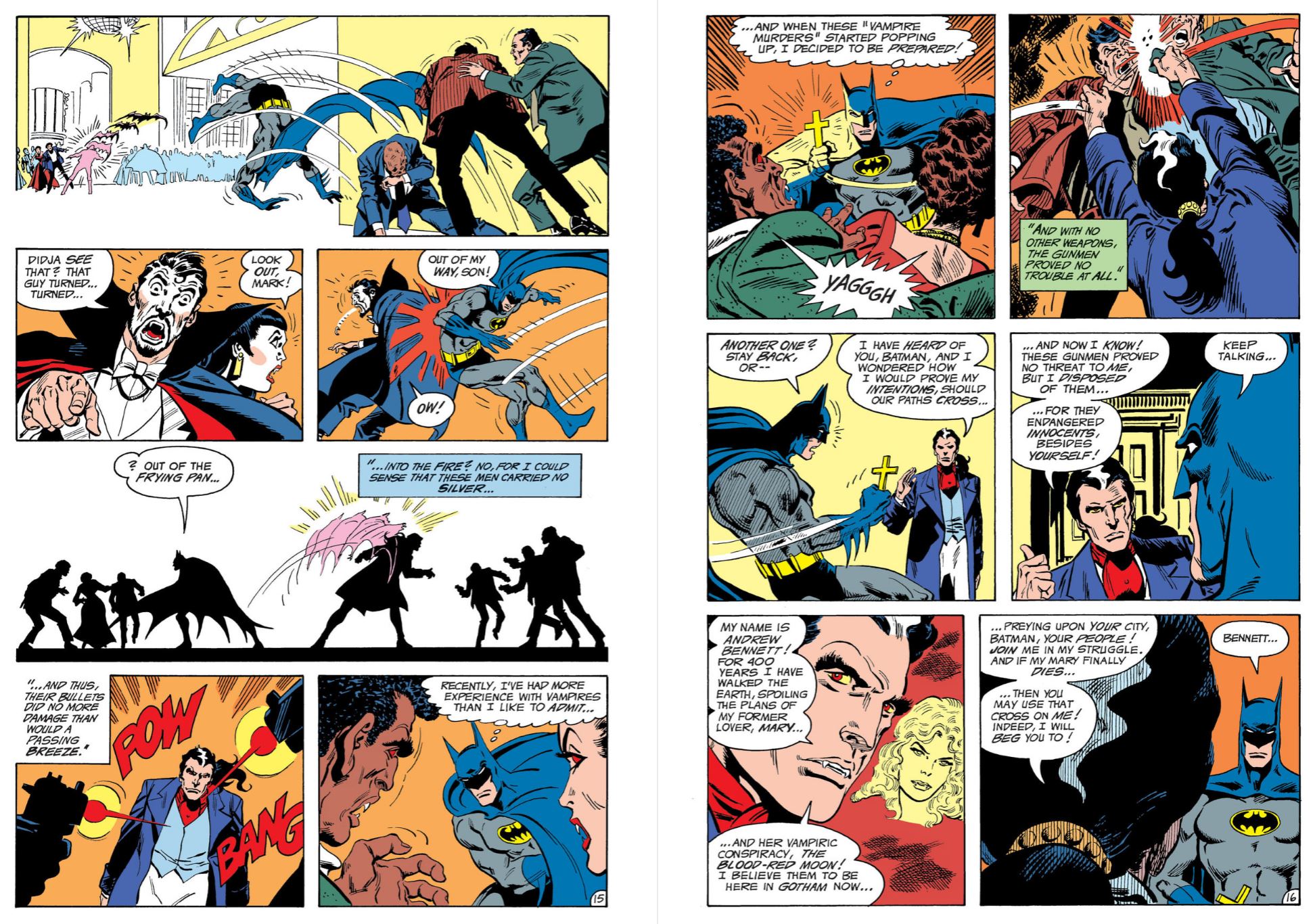
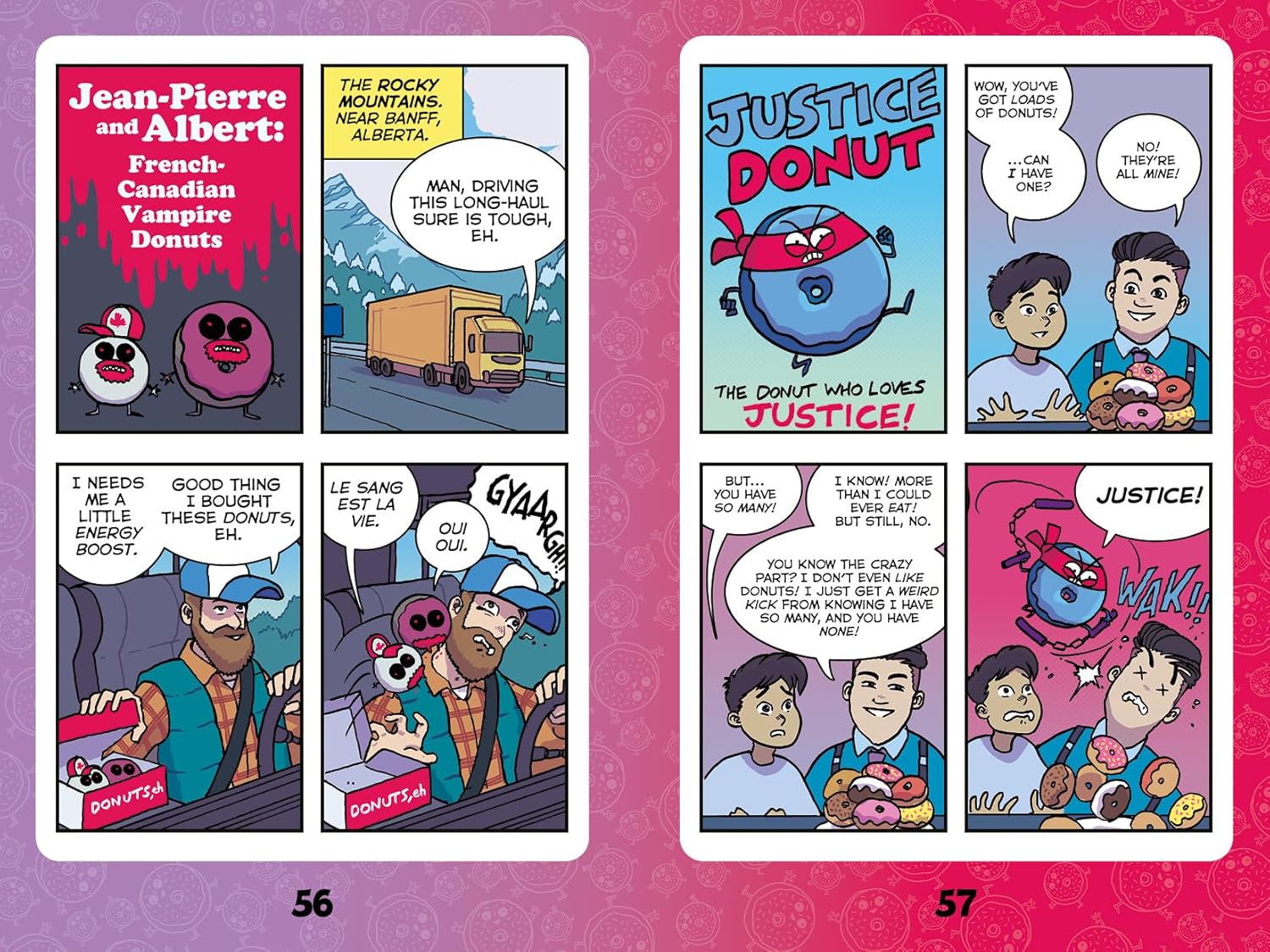
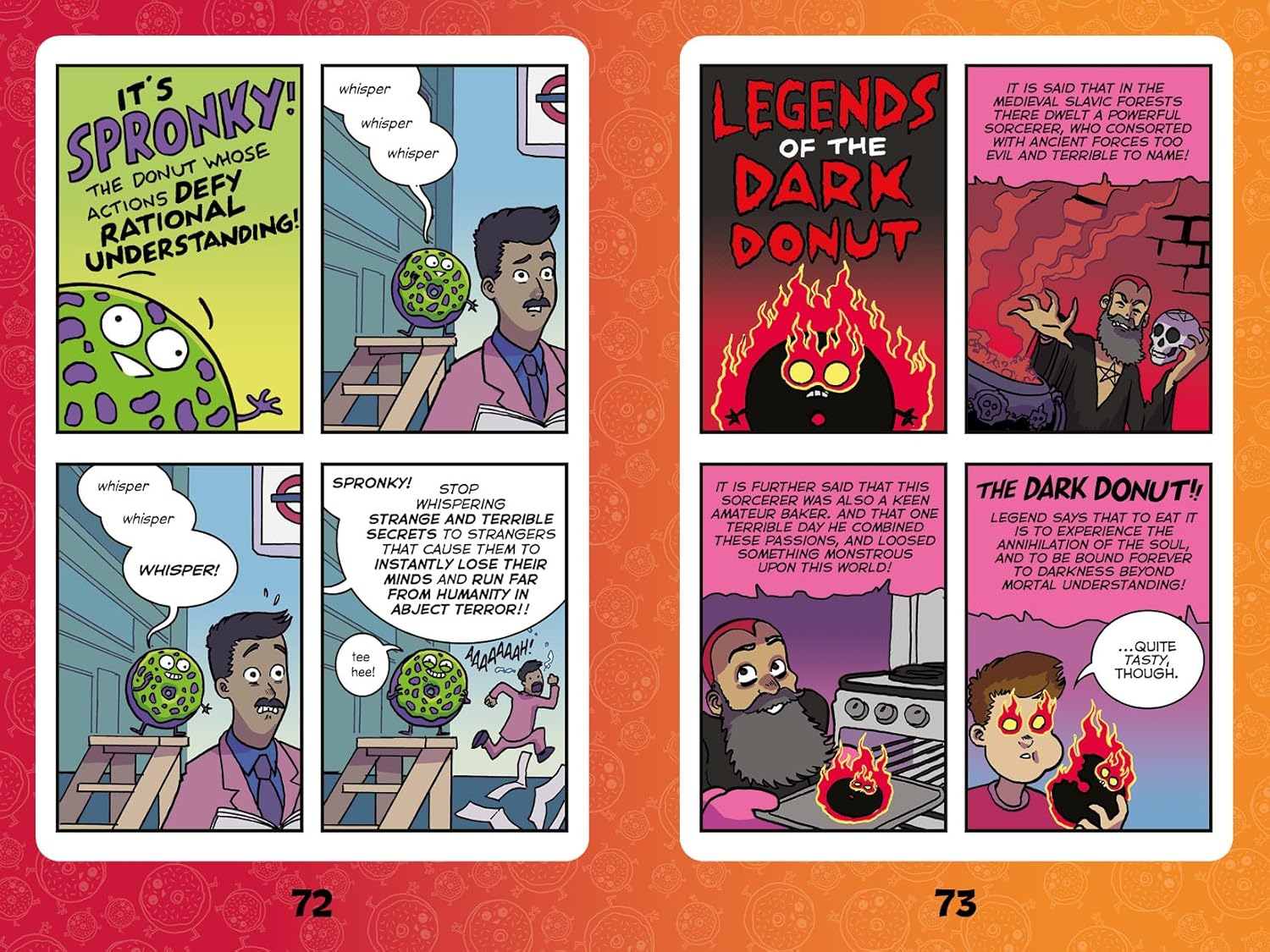
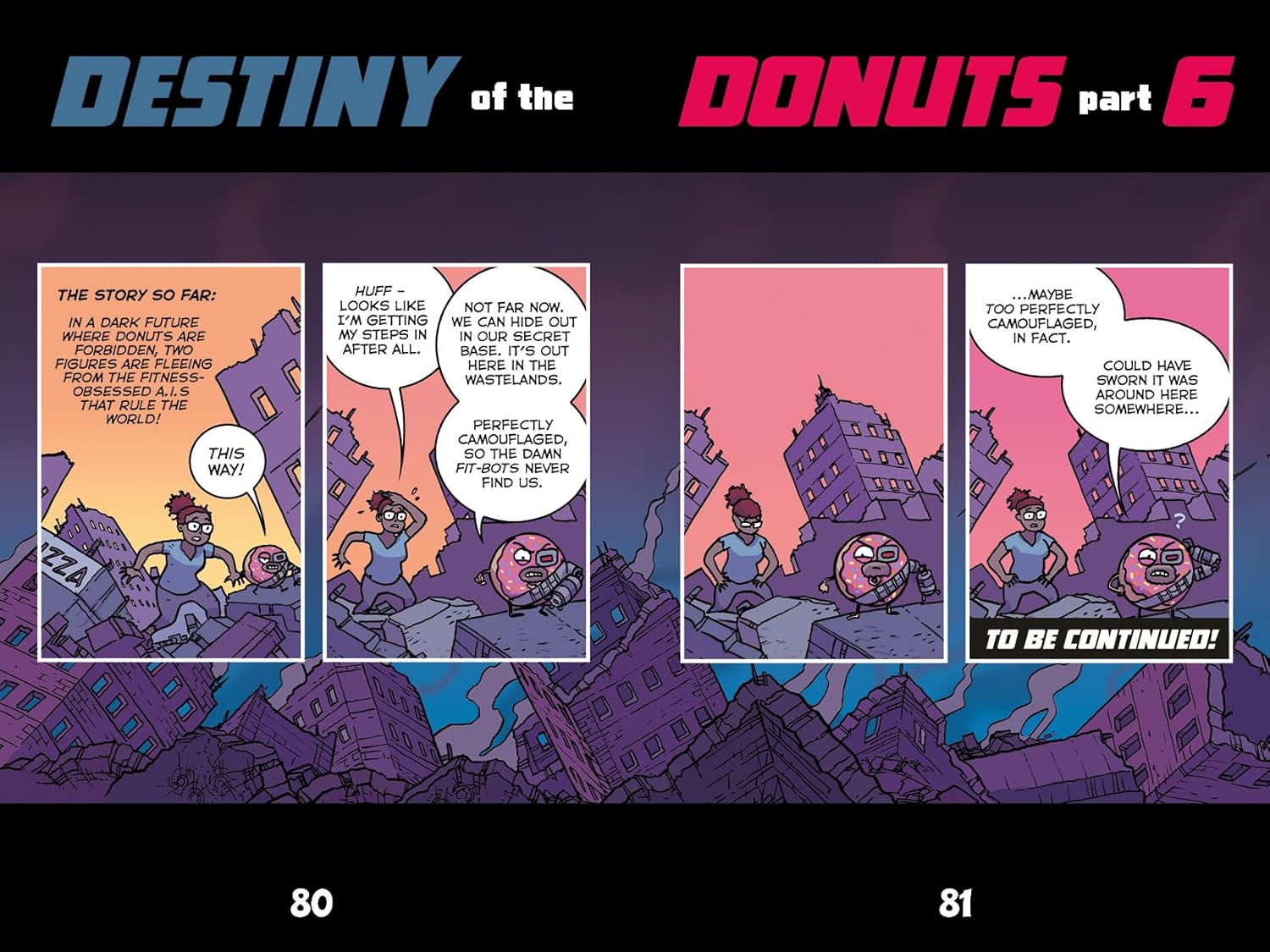
Noisy Valley: The Art of Protest


By Myfanwy Tristram (SelfMadeHero)
ISBN: 978-1-914224-43-0 (THB)

The world has always been hierarchical in nature. Moreover, the ever-expanding, shamefully selfish human portion of it has never missed any opportunity to exploit, impose upon and oppress its own “lower orders”. Historically, those who put themselves above us have systematically entrenched and weaponized wealth, ownership, culture – and weapons too – to suppress those they deem “lesser” in some arbitrarily decided way you were never consulted upon. This is called lawmaking and “keeping public order”.

The other side (the only un-oppressed minority in existence) uses divisive popularism, money-thuggery and lawyers, because they believe most ordinary people don’t give a toss about anything until it affects them in the pocket or impacts their kids and, no matter to what end of the political spectrum one belongs, they can be bought or placated by gestures rather than actual change.

And what can the rest of us do? Grumble, complain and, if all else fails, be disruptive. We unite in protest because all we have going for us is numbers and shared goals…

Having, in my militant radical youth, marched a few miles and punched (far less than) my fair share of neo-Nazi thugs and bovver boys – kids, don’t do this unless you really, truly have to – I still ascribe to old-fashioned ideas which don’t properly fit in a modern society, but I’m still angry and reasonable enough to be willing to listen and entertain new options…

Generally speaking, politics is composed of and utilised mutually by firebrands, coldly calculating grandees and wannabe despots, but in recent years universal failures in leadership large and small have prompted exponential growth in movements of gentle resistance and persuasion. It has to be gentle now, because each increasingly innovative exhibition of concern and dissent has been met with revision of laws already calculated to defang protestors and quash opposing opinions.

That’s what Noisy Valley is all about…

All governments change laws and tinker with norms of social compliance to reduce resistance to the people the elected ones actually serve. This is done in pursuit of a mythic general weal that translates as “me/my donor’s money is more important that your concerns or lives” and “we value your opinion, but keep it to yourselves”…

This compelling graphic report documents a long history of hands-on dissent via local, global and grass roots responses to abuses by those-in-power, gleaned from firsthand witness accounts by those who were involved at the time.  Here they are transformed into rousing modern fables that sprang from an art project celebrating democratic crusading activists and the stirring histories of South Wales’ Rhondda valley.

It was 2022, a time when everybody in Britain – and on Earth – had plenty to protest about. It was around that twenty minutes or so when Liz Truss “led” the nation that assorted ordinary folk were making their way to The Workers Gallery of Ynyshir to view an exhibition of protest drawings by Brighton-based social historian/comics creator Myfanwy Tristram (Draw the Line, Running Out)…

That exhibition and the people she met there became the basis for a graphic catalogue of eyewitness stories focused on when protest evolved, why it is embattled in the UK, and how it is under threat of being legislated out of existence now…

Here in easily-accessible snippets of the past are the observations of those fighting public spending cuts and library closures; Anti-Consumerism, The Greenham Common Peace Camp and Police responses to the question ‘Do we have a right to protest?’

Examination of how laws have been changed and the Courts deployed to suppress societal disruption accompanies scrutiny and testimony on Schoolgirl strikes; The Aldermaston Marches (by on-scene photographer David Hurn); the Miners’ Strikes and Hospital closures (specifically a schoolboy marcher protesting the loss of Llwynpia in South Wales).

More factoids about US/Welsh historical connections, global suppression of dissent, increasing size of protest movements and the apparently not-quite-officially-genocide in Gaza bracket personal reports of Women in the Workplace from the 1960s to today; Politician Jill Evans’ fight to make safe deadly landfill sites of Nantygwyddon and poet Patrick Jones’ battle to save ancient woodlands of Sirhowy Valley before the stories close with climate change protestor Jenny McLelland and an overview of what happened since the Noisy Valley project began in 2022 (…so many Prime Ministers and lawmakers gone since then…!)

Closing the celebration are ‘End Notes’ comprising illustrated mini briefings on all ‘The Protestors’ storied here; a copious section of contacts for further study compiled as ‘References’; Acknowledgements and a pretty impressive biography of auteur Myfanwy Tristram.

The greatest enemy of the impassioned ideologue is apathy. This simple fact forces activists and visionaries to ever-more devious and imaginative stunts and tactics. However, all entrenched Powers-That-Be are ultimately hopeless before one thing: collective unified resistance by the very masses they’re holding down through force of arms; artificial boundaries (class, race, capitalist dogma); forms of mind control like bread, circuses and religion; divisive propagandas or just the insurmountable ennui of grudging acceptance to a status quo flavoured with an orchestrated fear that unknown changes could make things worse.

From its earliest inception, art – and especially cartooning – has been used to sell: initially ideas or values but eventually actual products too. In newspapers, magazines and especially comics the sheer power of narrative – with its ability to create emotional affinities – has been linked to unforgettable images and characters. When those stories affect generations of readers, the force that they can apply in a commercial, social or especially political context is almost irresistible…

The power of graphic narrative to efficiently, potently and evocatively disseminate information and advocate complex issues with great conviction through layered levels has always been most effectively used in works with a political or social component. That’s never been more evident than here…
Text and images © Myfanwy Tristram, 2026. All rights reserved.

Noisy Valley: The Art of Protest will be published on May 14th 2026 and is available for pre-order now.

A national promotional tour is underway and you can meet the creator and exchange all the views you cherish at a number of venues. These include

7th May: GOSH Comics, London launch party for Noisy Valley

16th May: Beyond the Book Festival, Brighton

18th May: Waterstones, Brighton

24th May: BorthFfest, Wales

27th May: Hay Festival, Hay-on-Wye, Wales

29th May: The Worker’s Gallery, Rhondda, Wales celebration event for Noisy Valley

6th June: Leeds Litfest

Please seek further details from them. I just type stuff…

Today in 1919, we welcomed astoundingly versatile Canadian comics all-star James Winslow “Win” Mortimer (Superman, Batman, Robin, Superboy, Stanley and His Monster, Spider-Man, Night Nurse) while in 1940 the Philippines was blessed by the comings of both Cal Sobrepeña (Lovelife Komiks) and the iconic fantasy master Alex Niño (Captain Fear, Thriller, Space Clusters), and Argentina greeted future mega-scripter Carlos Trillo (Cicca Dum Dum, Cybersix, El Negro Blanco, El Loco Chávez, Borderline, Clara de noche). The US struck back in the creative wonder stakes by birthing cartoonist Phil Foglio (Buck Godot, Dynamo Joe, Girl Genius, Angel and the Ape) and illustrator Tim Sale (Billi 99, Batman: The Long Halloween, Spider-Man: Blue) in 1956, and author/painter Christopher Moeller (Iron Empires, Rocketman: King of the Rocketmen, Star Wars, JLA: A League of One) in 1963.

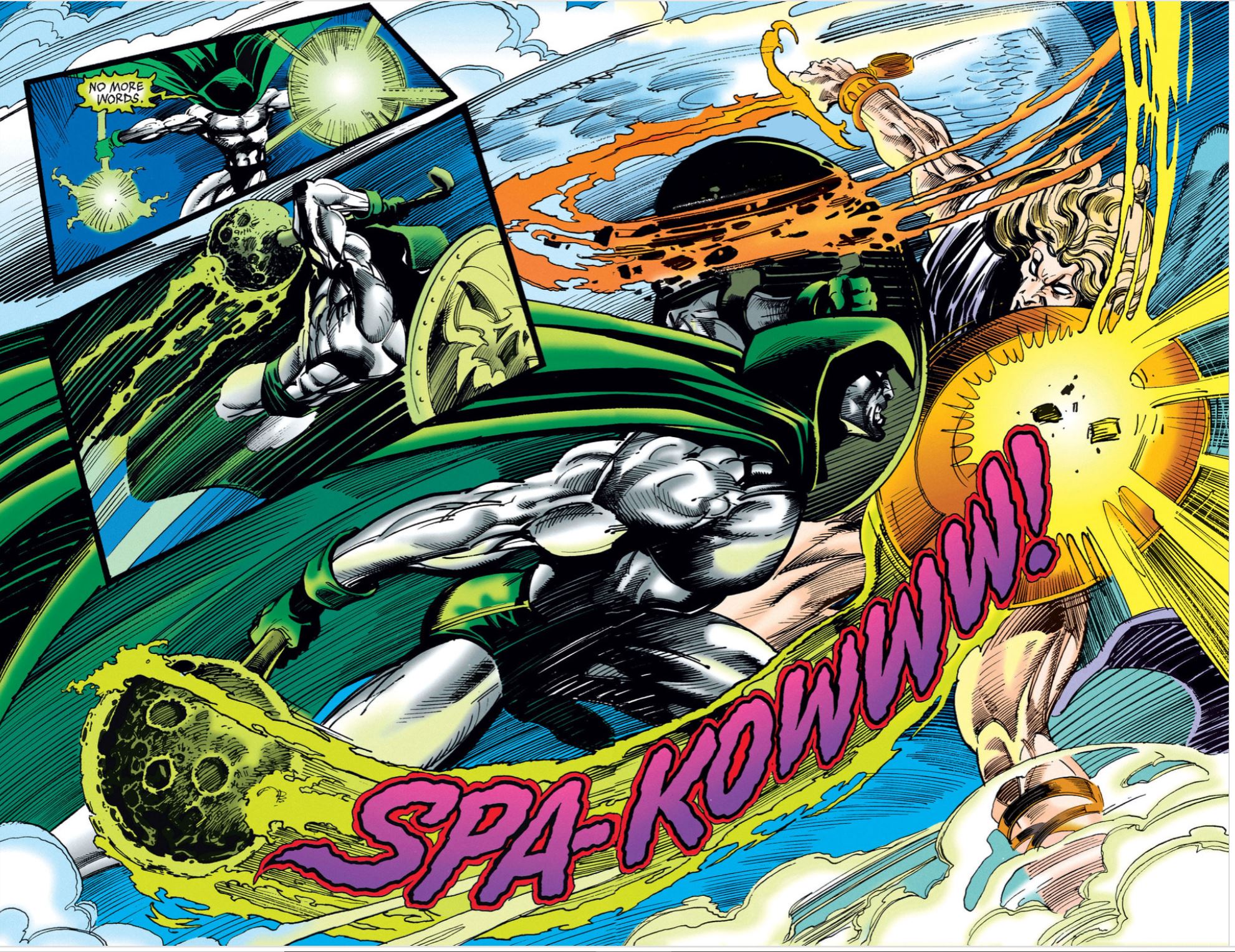
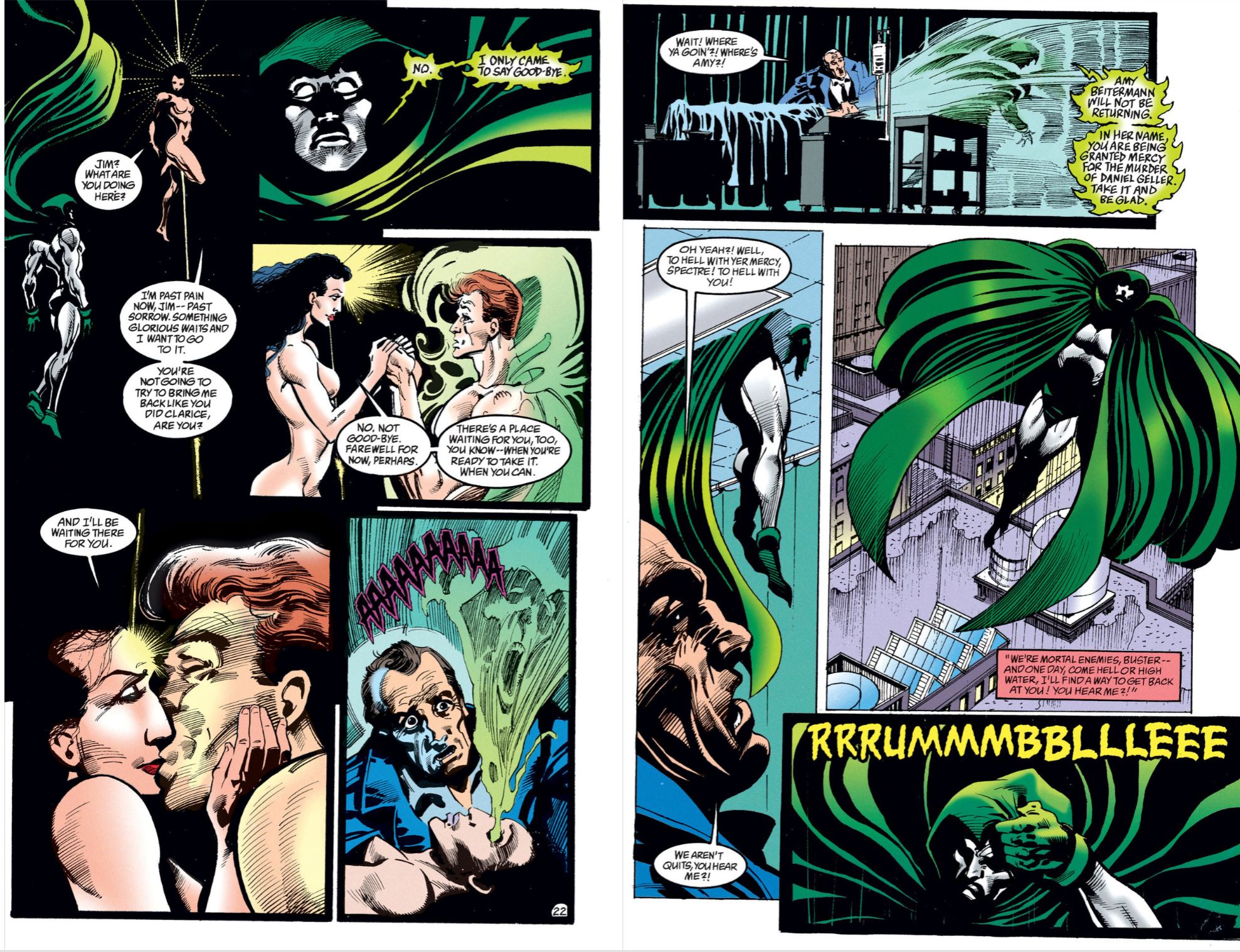
Landmark launches today include Ken Reid’s fantastical Face Ache in 1971; adult French comics magazine L’Écho des savanes in 1972 and Barbara Slate’s boldly groundbreaking Angel Love for DC in 1987, but the date also marks the passing of veteran Belgian writer/artist Sirius AKA Max Mayeu (Les Timour, Niki Lapin, L’Épervier Bleu, Pemberton, Bouldadar) in 1997, and gone-too-soon Tomosina Cawthorne-Artis AKA Tom Artis (Tailgunner Jo, Judge Dredd, Sensational She-Hulk, The Spectre, The Web) in 2007.

Daredevil Marvel Masterworks volume 17


By Frank Miller, Roger McKenzie, Klaus Janson, Terry Austin & various (MARVEL)
ISBN: 978-1-3029-4925-9 (HB/Digital edition)

This book includes Discriminatory Content included for dramatic effect.

Matt Murdock is a lawyer obsessed with saving the innocent. Thanks to a childhood nuclear accident in his Hell’s Kitchen neighbourhood, he lost his sight but discovered his remaining senses were hyper-stimulated to a miraculous degree. This allowed him to become an astonishing acrobat, formidable fighter and living lie-detector. He also developed a kind of biological radar giving him complete awareness of his local environment.

Very much a second-string hero for most of his early years, Daredevil was nonetheless a striking and popular one, due in large part to the captivatingly humanistic art of Gene Colan. DD fought gangsters, super-villains and even the occasional monster or alien invasion (specifically the sight-stealing Queega). He quipped and wise-cracked his way through life and life-threatening combat, but under the auspices of Jim Shooter, Roger McKenzie and finally Frank Miller, the breezy hero morphed into a dark, moody avenger and grim, quasi-religious metaphor of justice and retribution…

This compilation – representing Daredevil #182-191 and spanning May 1982 to February 1983) – sees the Sightless Swashbuckler on top of the comics world as Miller & Klaus Janson continued to reinvent him through increasingly dark, bleakly nihilistic, Noir-stained thrillers, set in an increasingly mythological corner of Manhattan where the streets and towers became part of the tightly woven cast.

Following an Introduction from Ralph Macchio (with a matching one by Janson at the back, taken from 2001’s Daredevil Visionaries: Frank Miller vol. 3) the action opens with ‘She’s Alive’ as bereft, grieving Murdock seeks to prove his delirious belief that first love Elektra Natchios – recently murdered by Bullseye – is not in her grave. As the Devil rampages through Manhattan, at Ryker’s Island penitentiary, new inmate The Punisher is reducing prison overcrowding his way, until a spook with no official connection to law-enforcement offers a deal: liberty in exchange for certain services…

Frank Castle saw his family gunned down in Central Park after witnessing a mob hit. Dedicating his life to eradicating criminals everywhere, his methods are violent and permanent. It’s intriguing to note that unlike most heroes who debuted as villains (Wolverine, Hawkeye or Black Widow, for example), The Punisher actually became more immoral, anti-social and murderous, not less. It was the buying public that shifted a communal perspective; Castle never toned down or cleaned up his act, nor did his moral compass ever deviate…

Comics gossip goes that Marvel were reluctant to give Punisher a starring vehicle in their standard colour comic-book line, feeling the character’s very nature made him a bad guy and not a good one. Debuting as a deluded villain in Amazing Spider-Man #129 (February 1974), he was created by Gerry Conway, John Romita Sr. & Ross Andru, in response to popular prose anti-heroes such as Don Pendleton’s Mack Bolan: the Executioner and other returning Viet Nam vets who all turned their training and talents to take on organised crime.

Maybe that genre’s due for a revival as sandy GI boots hit US soil in the months to come?

The crazed crime-crusher had previously starred in Marvel Preview #2 (1975) and Marvel Super Action #1 (1976) but these were both monochrome magazines aimed at a far more mature audience. However, in the early 1980s, high profile guest shots in Captain America #241, Amazing Spider-Man Annual #15 and the extended epic here convinced the Powers-That-Be to finally risk a miniseries on the maniac vigilante…

As Murdock finally accepts Elektra is gone, ‘Child’s Play’ (#183) sees Castle clandestinely removed from prison to stop a shipment of drugs the authorities can’t touch. Of course, once he’s killed the Kingpin’s mobsters, Castle refuses to go back to jail. This story, concerning school students using drugs, was started by Roger McKenzie & Miller but shelved for a year due to heavy protests by the Comics Code Authority, before being reworked into a stunningly powerful and unsettling tale once Miller & Janson assumed the full creative chores on the title.

It begins as Murdock visits a High School and is a helpless witness to a little girl going berserk, attacking staff and pupils prior to throwing herself out of a third floor window. She was high on Angel Dust and after the appalled hero vows to track down the dealers he encounters her distraught younger brother Billy, determined to exact his own vengeance. The boy then encounters coldly calculating Castle who has the same idea, far more experience and no shred of mercy. The hunt leads Billy, Punisher – and late-coming DD – to a certain street pusher; and they all find their target at the same moment. After a spectacular clash thoroughly beaten Daredevil is left with only a bullet-ridden corpse with Billy holding a smoking gun…

The kid is innocent – and so, this time at least, is Castle – and after Murdock proves it in court, the investigation resumes and focuses on the dead pusher’s boss Hogman. When DD’s super-hearing confirms the scumbag’s claims of innocence, alter ego Murdock successfully defends the vile dealer, only to have the exonerated slimeball gloatingly admit to committing the murder after all. Horrified, shocked, betrayed and determined to have justice, Daredevil eventually finds a connection to a highly-placed member of the school faculty deeply involved with Hogman…

Concluding chapter ‘Good Guys Wear Red’ sees that information come far too late. Castle and Billy have both decided to end the matter Hogman’s way…

Tough, disturbing, beautiful and chillingly plausible, this epic encounter redefined both sides of the heroic coin for decades to come and remains one of the most impressive stories in both character’s canons. It also sparked a wave of reprint mania as the burgeoning comic store explosion supported a wave of expensive archive-trawling reprint collections that publishers were delighted to release for collectors to eagerly scoop up.

Meanwhile back in bread-&-butter periodical publishing, Daredevil #185 hones in on Murdock’s wealthy fiancée Heather Glenn as she battles her own crooked – and potentially murderous – board of directors beside Matt’s best friend Foggy Nelson. When those struggles bring them into contention with the Kingpin, the old reliable DD is on hand to secretly save Heather and ‘Guts’ Nelson – although it does lead to the hero being again exposed to radioactive materials…

An archaic archenemy sort-of steps up in #186 as Stilt-Man is hired to remove Heather. Sadly, what the plotters get is second-rate substitution as ‘Stilts’ sees another sidebar cast member in over his head and utterly unable to deliver, especially after an oddly-off-kilter Man Without Fear joins the party…

DD #187’s ‘Overkill’ reveals how that second radiation bath has amped the Devil’s senses to an uncontrollable, intolerable degree, prompting a desperate hunt for old mentor Stick, just as old flame Natasha Romanoff is facing ninjas who evaporate when defeated. The hunt expands into magical oriental fantasy in #188 wherein ‘Widow’s Bite’ exposes her to mind-altering contamination just as Stick begins the slow laborious process that will rebalance Murdock. The old man is thus exposed as part of ancient warrior sect The Chaste, sworn to contest evil Ninja cult The Hand – sneaky invasive infiltrators with a nasty knack of resurrecting the dead, such as their lethal champion Kirigi – and who are planning something similar with dear departed Elektra…

Thankfully in ‘Siege’, Murdock’s expedited cure allows him to join Stick (and Chaste allies Claw, Stone and Shaft) in a costly fightback to save the Black Widow before all the complex double-dealing is brought to light and (mostly) thwarted in #190’s epic climax. This exposes the missing years of Elektra, who – having impatiently abandoned study with The Chaste – joined The Hand in search of vengeance for her assassinated father. However, her death and ‘Resurrection’ costs all concerned far more than they can afford to lose (such as a unwise , far-reaching alliance with Kingpin) but leaves the reborn warrior woman ready for a fresh start…

We close for now with the Terry Austin inked Daredevil #191, as a recent case involving innocent kids with crooked parents prompts the unpicking of painful childhood memories for Matt Murdock. These he assuages by visiting the bedside of paraplegic paralysed archfoe Bullseye for some therapeutic psychological torture and a little game of Russian ‘Roulette’

A truly monumental bonus section kicks off with Mark Gruenwald-produced pages from The Official Handbook of The Marvel Universe (1983), and info-briefings of Daredevil; his Apartment and Billy Club; Angar the Screamer; The Ani-Men; Black Widow and her Sting/Line; Bullseye; Death-Stalker; Elektra; Kingpin, Frog-Man; Jester; Man-Bull, Mauler; Mister Fear, The Owl; Paladin; The Plunderer; Punisher; Purple Man; Queega; Silver Samurai; Stilt-Man (with schematics of his Battle-Suit) and Torpedo, backed up by dozens of unused/Comics Code rejected pages by Miller, Janson & Austin and published original art, followed by the layouts, breakdowns and colour guides for DD #190.

Also included are covers and editorial page of reprint Spider-Man and Daredevil Special Edition #1 (March 1984) and pertinent Elektra Saga material from Marvel Age #10 which precedes all of the modified, reformatted and new art from partial reprint series The Elektra Saga #1-4 (1984), as well as its wraparound covers, pinups, frontispieces, biographies and introductions by Mike W. Barr, Jo Duffy & Dennis O’Neil.

The covers of Elektra Magazine #1 & 2 from November & December 1996 by Claudio Castellini are followed by Marvel Press Poster #14’ by Miller & Janson and Daredevil and the Punisher: Child’s Play (1988) cover by Geof Darrow and the book provides editorial pages including Forewords by Macchio & Mike Baron; illustrated biographies of Miller & Janson plus Anne Nocenti’s ‘Afterword’ .The bounty concludes with the covers of The Punisher vs. Daredevil #1’ (June 2000) and Marvel Age #127’ (August 1993) by Miller & George Roussos – which became Marvel Press Poster #152’ when painted over by Paul Mounts. Also seen are Miller & Steve Buccellato’s cover to Daredevil Visionaries: Frank Miller vol. 3’ and its ‘Elektra frontispiece by Miller’

This is pure compulsive comics magic that you must see – before… or even after… you die!
© 2023 MARVEL.

Today in 1926 we all greeted future writer/cartoonist William Overgard (Steve Roper and Mike Nomad, Rudy), jobbing artist/sought after inker Sal Trapani (Nukla, Airboy Comics, Metamorpho) in 1927; Dutch comics artist Martin Lodewijk (Agent 327, Minimum Bug) in 1939 and cartoonist Bill Plympton (Plympton) in 1946.

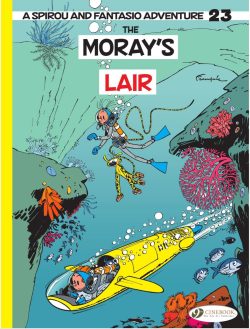
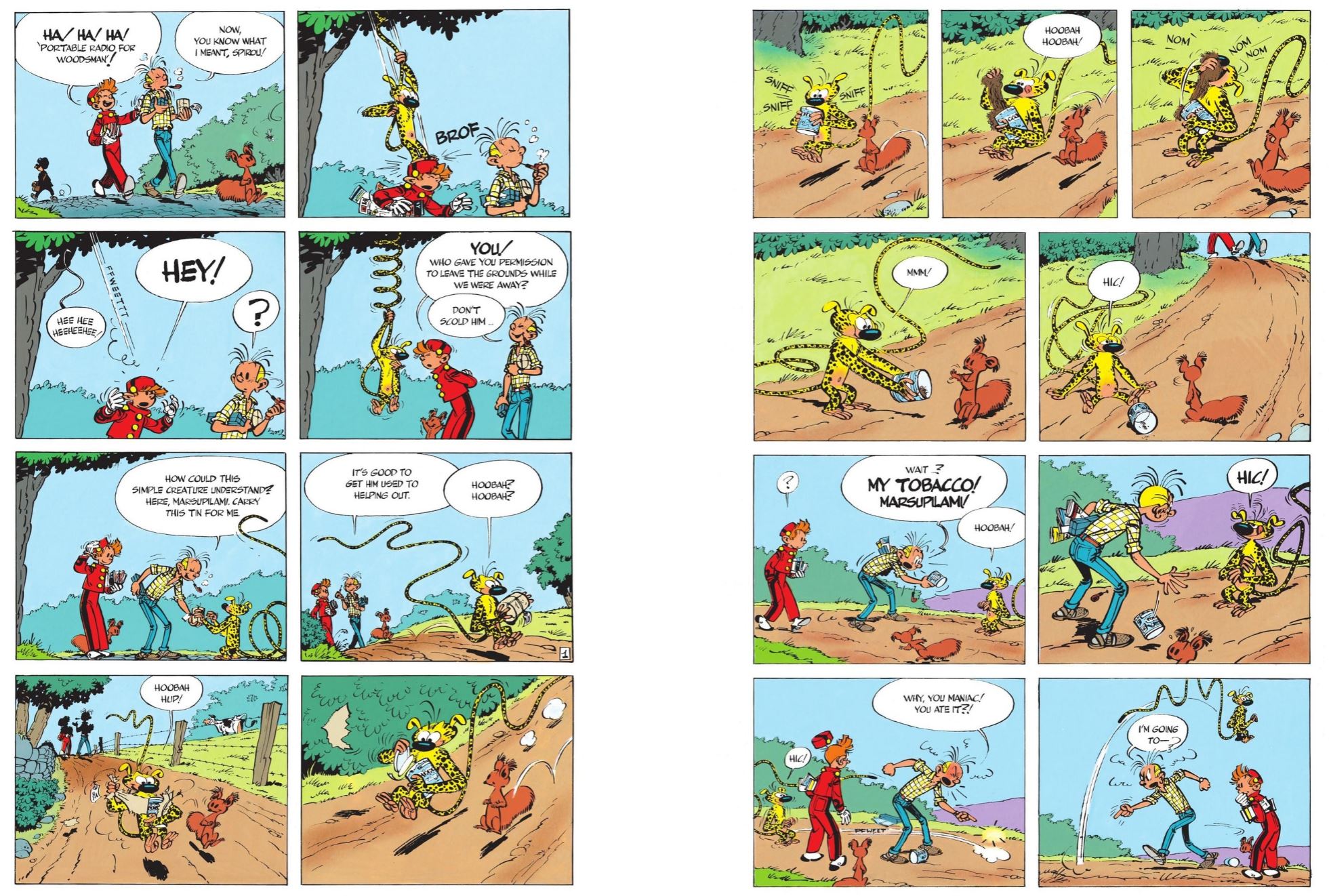
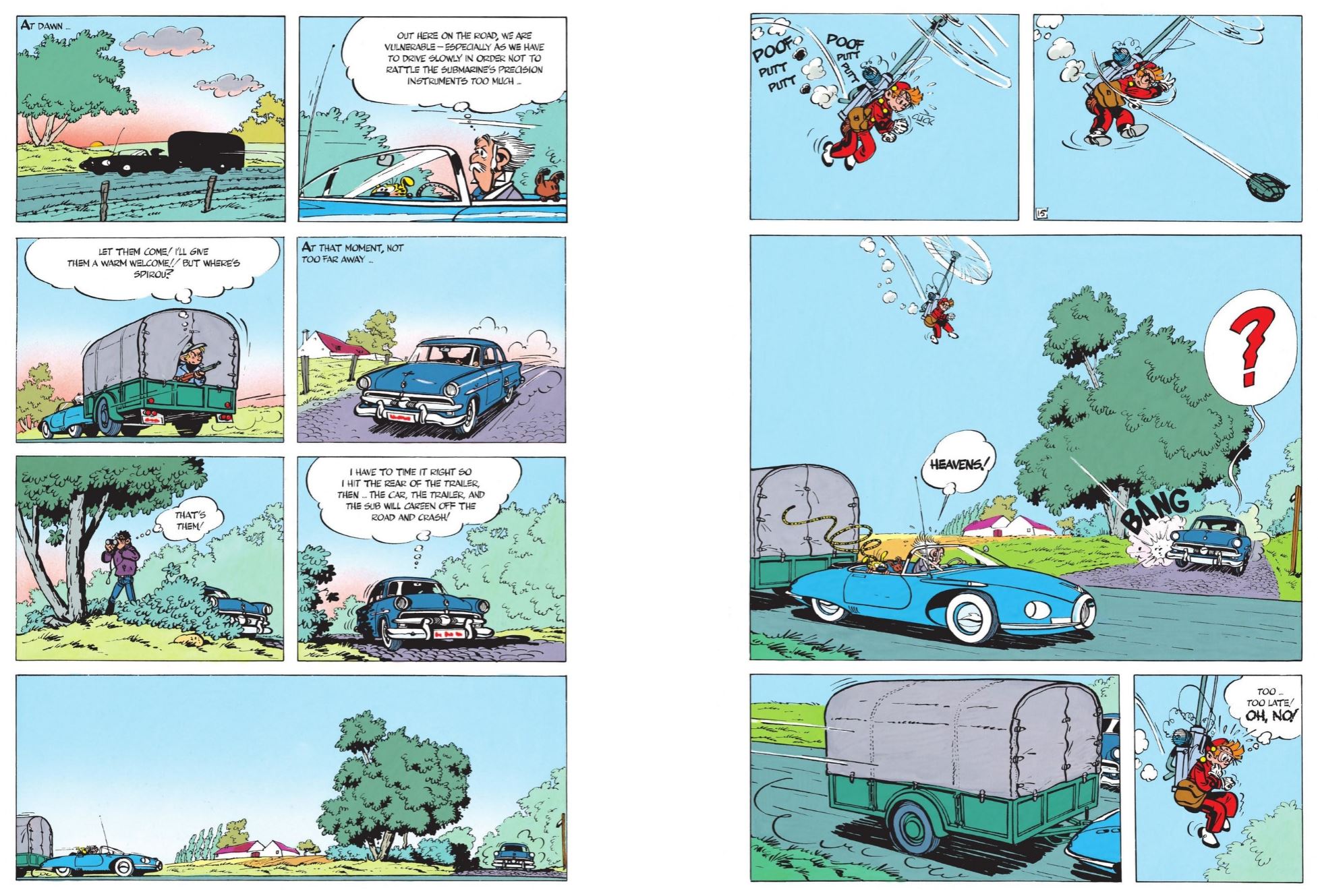
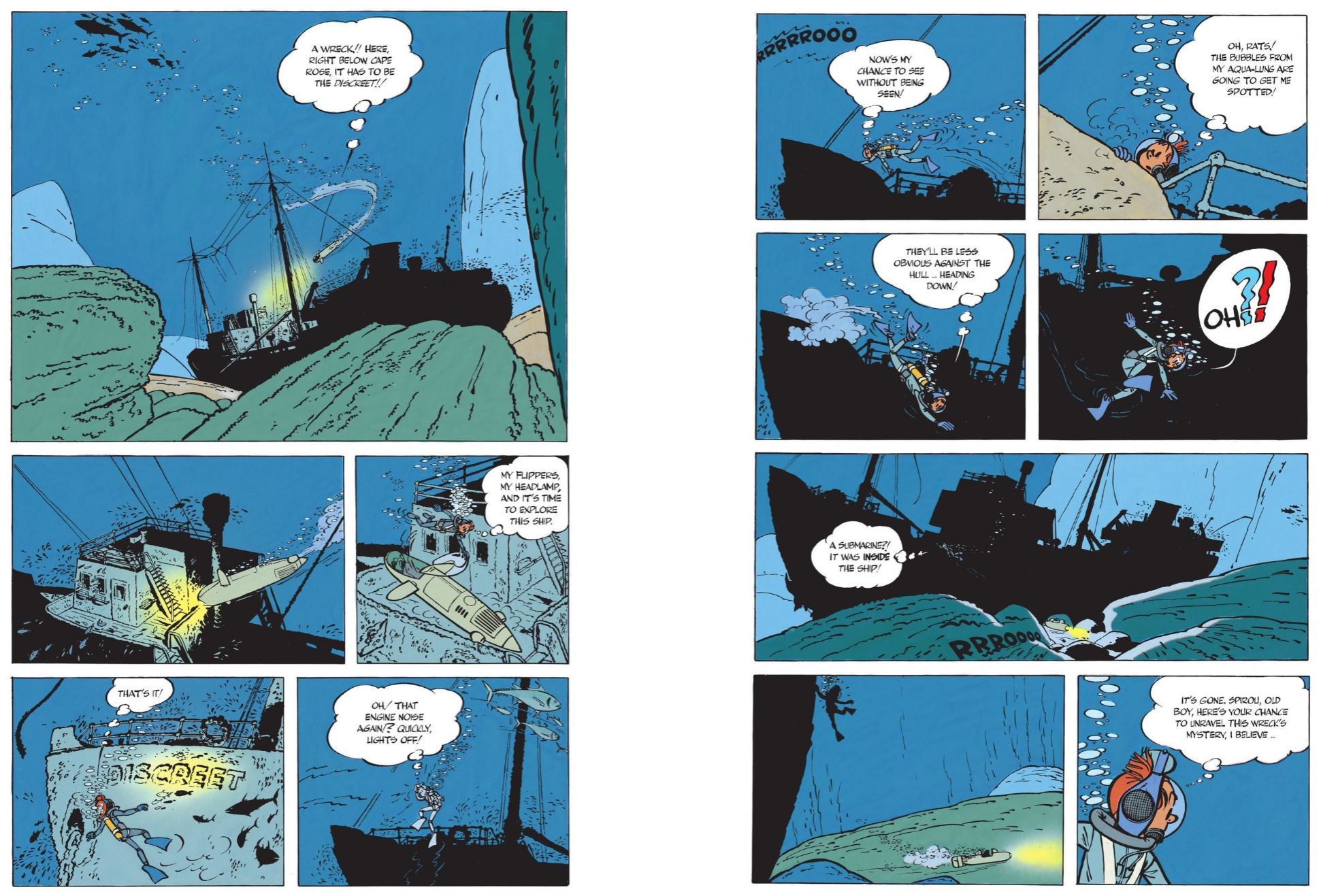
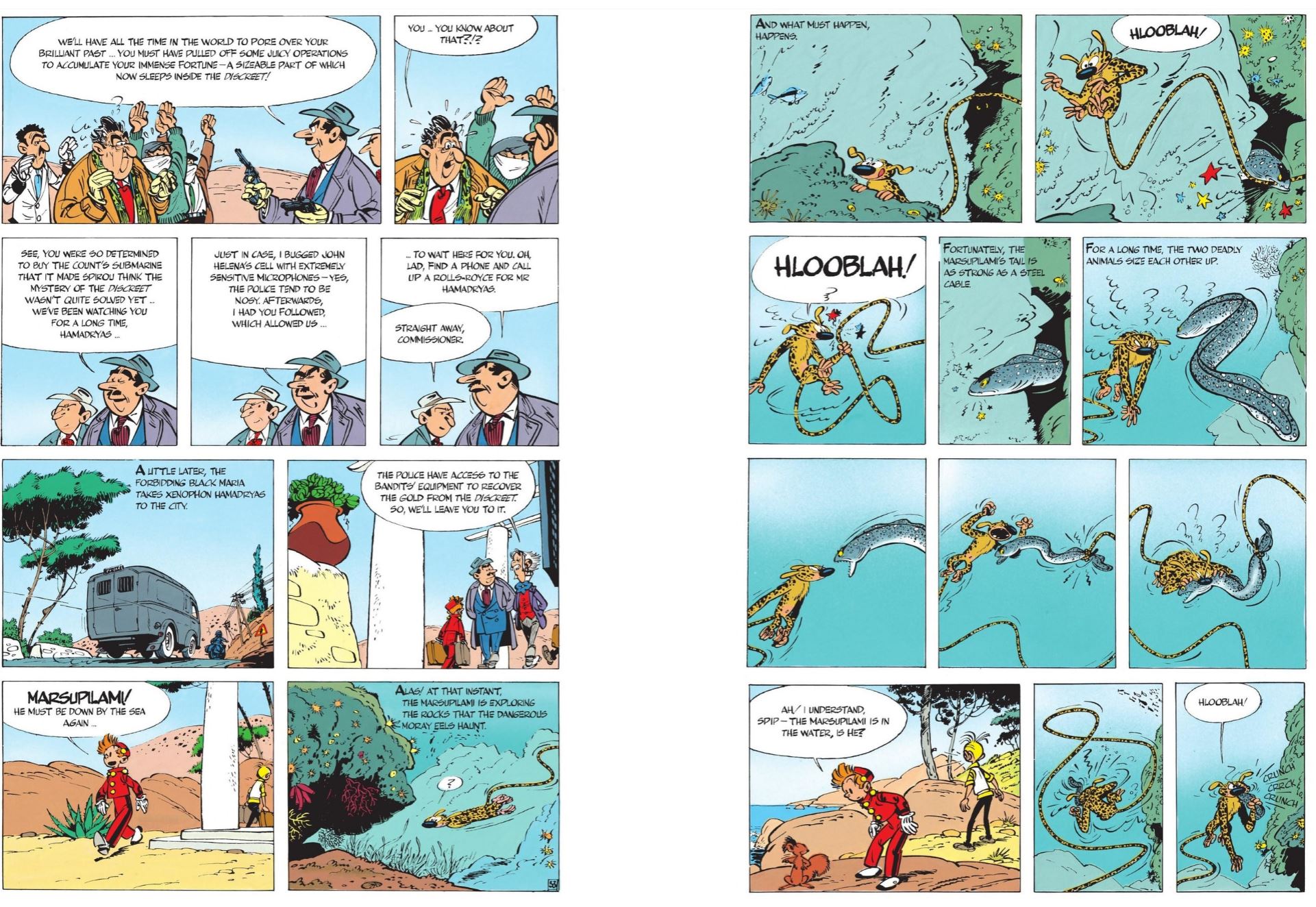
In 1958 Blondie artist Denis Lebrun came along as did Nat Gertler in 1965. However we lost irreplaceable, nigh-metafictional Belgian star Jean De Mesmaeker – AKA Jidéhem (Sophie, Starter, Ginger, Uhu-man, Spirou et Fantasio, Gaston Lagaffe) in 2017.

Doctor Solar, Man of the Atom Archives volume 1


By Paul S. Newman, Matt Murphy, Bob Fujitani, Frank Bolle & various (Dark Horse Books)
ISBN: 978-1-59307-285-8 (HB) 978-1-59582-586-5 (TPB)

This book includes Discriminatory Content produced in less enlightened times.

The comics colossus identified by fans as Dell/Gold Key/Whitman had one of the most complicated publishing set-ups in history, but that didn’t matter one iota to the kids of all ages who consumed their vastly varied product. Based in Racine, Wisconsin, Whitman had been a crucial part of the monolithic Western Publishing and Lithography Company since 1915 and could draw on the commercial resources and industry connections that came with editorial offices on both coasts (and even a subsidiary printing plant in Poughkeepsie, New York).

Another connection was with fellow Western subsidiary K.K. Publications (named for licensing legend Kay Kamen who facilitated extremely lucrative “license to print money” merchandising deals for Walt Disney Studios between 1933 and 1949).

From 1938, Western’s comic book output was released under a partnership deal with a “pulp” periodical publisher under umbrella imprint Dell Comics – and again those creative staff and commercial contacts fed into the line-up of the Big Little, Little Golden and Golden Press books for children. The partnership ended in 1962 and Western had to swiftly reinvent its comics division as Gold Key.

As previously cited, Western Publishing had been a major player since comics’ earliest days, blending a huge tranche of licensed titles comprising newspaper strips, TV and Disney titles, – such as Nancy and Sluggo, Tarzan, or The Lone Ranger – with home-grown hits like Turok, Son of Stone and Space Family Robinson. In the 1960s, during the camp/superhero boom these original adventure titles expanded to include Brain Boy, M.A.R.S. Patrol, Total War (created by Wally Wood), Magnus, Robot Fighter (by the incredible Russ Manning) and – in deference to the atomic age of heroes – Nukla, another brilliantly coolly understated nuclear white knight. Despite supremely high quality and passionate fan-bases, they never really captured the media spotlight like DC and Marvel’s costumed cut-ups. Western eventually (in 1984) shut their comics division, having lost or ceded their licenses to DC Marvel and Charlton.

All this and much more can be found far more clearly explained by the wonderful Mark Evanier in this hardback or trade paperback collection’s Foreword – ‘The Golden Years’ – as well as a fond critical appraisal of the superb comics yarn-spinning that follows…

As a publisher, Gold Key never really “got” the melodramatic, breast-beating, often mock-heroic Sturm und Drang of the 1960s superhero boom – although for many of us, the understated functionality of Silver Age classics like Magnus, Robot Fighter or remarkably radical concepts of atomic crusader Nukla and crime-fighting iterations of classic movie monsters Dracula, Frankenstein and Werewolf were utterly irresistible. The sheer off-the-wall lunacy of features like Neutro or Dr. Spektor I will save for a future occasion…

The company’s most recognisable stab at a pure superhero was an rather sedate and reticent nuclear era star with the unwieldy codename Dr. Solar, Man of the Atom. He debuted in an eponymous title cover-dated October 1962, sporting a captivating painted cover by Richard M. Powers which made the whole deal feel like a grown up book rather than a mere comic.

Solar was devised by prolific writer Paul S. Newman and in-house editor Matt Murphy, and initially illustrated by Bob Fujitani (Flash Gordon, Rip Kirby, Prince Valiant).

Tirelessly creative and seen in many titles across numerous companies, Native New Yorker Newman was crowned “King of Comics”, with the Guiness Book of Records confirming at least 4,100 separate scripts published and 36,000 pages filled. He was Dell/Gold Key’s movie adaptation warhorse, worked on such licensed attractions as Tom Corbett, Space Cadet, Lone Ranger, 77 Sunset Strip, The Beatles – Yellow Submarine, Buck Rogers and dozens more. He crafted countless short tales of anthology genre fare and stars such as Turok, Son of Stone.

Here he, Murphy, and Fujitani deliver terse 2-part origin ‘Solar’s Secret’ and ‘An Atomic Inferno’ detailing how a campaign of sabotage at research base Atom Valley culminates in the death of top boffin Dr. Bentley and accidental transmutation of his lab partner Doctor Solar into a (no longer) human atomic pile, with incredible, impossible and apparently unlimited powers and abilities. Of course, his very presence is lethal to all around him…

The espionage and murder are at the instigation mysterious Bad Actor Nuro, who seeks a total monopoly on atomic science, so when his agent targets Solar’s girlfriend Gail Sanders, our reluctant hero – still learning his potential and limitations – is forced to act fast…

Powers painted a second rousing cover (before handing the job over to Gold Key mainstay George Wilson for the rest of this collection’s inclusions) and #2 (December) opens with Nuro’s latest plot: using radio implants to turn Gail into ‘The Remote-Control Traitor’, before ill-considered, precipitate atomic testing triggers tectonic terror for the entire region on ‘The Night of the Volcano’…

By the time of Dr. Solar, Man of the Atom #3 (March 1963), a solid pattern was in place. Solar continued his researches, aided by his two confidantes, Gail and project leader Dr. Clarkson, consequently facing a wide variety of nefarious challenges and unnatural disasters, generally at a rate of two stories per issue. In ‘The Hidden Hands’ the science hero becomes a clandestine globetrotter to foil a plundering terrorist with the power of invisibility, after which Atom Valley’s own prototype weather satellite triggers atmospheric conditions which split the hero into polar opposites in ‘Solar’s Deadly Double’.

June 1963 brought #4, featuring early eco-concerns as atomic contamination to the Atlantic sees Solar scupper a certain mystery mastermind’s gold extraction engine in ‘The Deadly Sea’ prior to ‘The Treacherous Trap’ finding the Atomic Man – who must regularly absorb lethal amounts of radiation to live – accidentally endangered by fellow scientist Thor Neilsen, whose radical rad poisoning cure presents unanticipated peril. The good-looking swine has also turned poor Gail’s head with silly romantic notions…

A big change came with #5 (September) as the until-now top-secret activities of Solar are first exposed to a ruthless thief trying to steal the Atomic Ace’s latest elemental discovery in ‘The Crystallized Killers’. This, and his advancing mutation, leads to ‘The New Man of the Atom’ wherein Solar adopts a public masked persona and finally dons a costume: all whilst stopping an incipient atom war…

With #6 (November 1963) illustrator Frank Bolle joins Newman & Murphy to detail Solar’s stories, beginning with ‘The Impostor’ as Nuro despatches a face-shifting automaton to infiltrate Atom Valley and discover the masked hero’s true identity: a saga which concludes in spectacular nuclear combat in ‘Android Against the Atom’

This volume’s action concludes with #7 (March 1964), opening with a drastic drop in sea levels. Upon investigation, Solar discovers malevolent extraterrestrials are behind the ‘Vanishing Oceans’ but no sooner does he deal with them than ‘The Guided Comet’ covertly controlled by Nuro simultaneously threatens human existence and acts as a near-foolproof deathtrap for the Man of the Atom. Almost…

Augmented by fulsome Biographies of the creative personnel, this charismatic collection offers potently underplayed and scientifically astute (as far as facts of the day were generally known) adventures blending the best of contemporary movie tropes with the still fresh but burgeoning mythology of the Silver Age super hero boom. Enticingly restrained, these Atom Age action comics offered a compelling counterpoint to the eccentric hyperbole of DC and Marvel and remain some of the most readable thrillers of the era.

These are lost gems from a time when fun was paramount and entertainment a mandatory requirement. This is comics the way they were and really should be again…
DOCTOR SOLAR®, MAN OF THE ATOM ARCHIVES Volume 1 ™ & © 2010 Random House, Inc. Under license to Classic Media, LLC. All rights reserved.

Today in 1877 pioneering US cartoonist Tad Dorgan (Indoor Sports, Judge Rummy) was born, followed in 1885 by future groundbreaking publisher Wilford Fawcett (Captain Billy’s Whiz Bang, Mechanix Illustrated, Captain Marvel et al). Author Jack Willamson (Beyond Mars) arrived in 1908; Paul S. Newman in 1924; Michael Davis of Milestone Media in 1958 and cartoonist Roman Dirge (Lenore, the Cute Little Dead Girl) in 1972.

We lost Golden Age Great Paul Gustavson (Human Bomb, The Angel, The Arrow, Fantom of the Fair, Magno the Magnetic Man, Blackhawk, Uncle Sam and more) in 1977 and ultra-versatile Croatian cartoonist/comics artist Žarko Beker (Koraljka, Neven, Bobo, Špiljko, Magirus) in 2012.

Today in 1906 Lyonel Feininger’s landmark strip The Kin-der-Kids premiered in the Chicago Sunday Tribune.

Lone Wolf and Cub volume 7: Cloud Dragon, Wind Tiger


By Kazuo Koike & Goseki Kojima, translated by Dana Lewis (Dark Horse Manga)
ISBN: 978-1-56971-508-6 (TPB/Digital edition)

This book includes Discriminatory Content produced in less enlightened times.

Best known in the West as Lone Wolf and Cub, the sprawling Samurai saga created by Kazuo Koike & Goseki Kojima is a global classic of comics literature. An example of the popular Chanbara or “sword-fighting” genre of print and screen, Kozure Okami began serialisation in Weekly Manga Action in September 1970 and ran until April 1976. It was an immense and overwhelming Seinen (“Men’s manga”) hit. The tales prompted thematic companion series Kubikiri Asa (Samurai Executioner – which ran from 1972-1976) but the major draw – at home and, increasingly, abroad – was always the nomadic wanderings of doomed feudal noble Ōgami Ittō and his solemn, silent child Daigoro whose clan were framed by ambitious rivals the Yagyū, publicly dishonoured by the Shōgun and condemned to death by his peers. Breaching all etiquette, the court executioner refused to accept suicide quietly, and instead opted to vengefully walk the bloody road to Meifumadō: the hell of Buddhist legend as an assassin for hire…

Revered and influential, Kozure Okami was – after years of supplication by fans and editors – followed by sequel Shin Lone Wolf & Cub (illustrated by Hideki Mori) and even spawned – through Koike’s indirect participation – sci fi homage Lone Wolf 2100 (by Mike Kennedy & Francisco Ruiz Velasco). The original saga has been successfully adapted to most other media, spawning movies, plays, TV series (plural), games and merchandise. The property is infamously still in Hollywood pre-production…

The several thousand pages of enthralling, exotic, intoxicating narrative art produced by these legendary creators eventually filled 28 carefully curated collected volumes, beguiling generations of readers in Japan and, inevitably, the wider world. More importantly, their philosophically nihilistic odyssey – with its timeless themes and iconic visuals – has influenced hordes of other creators. The many manga, comics and movies, TV and animated versions these tales have inspired around the globe are utterly impossible to count. Frank Miller, who illustrated the cover of this edition, referenced the series in Daredevil, his dystopian opus Ronin, The Dark Knight Returns and Sin City. Max Allan Collins’ Road to Perdition is a proudly unashamed tribute to the masterpiece of vengeance-fiction. Stan Sakai has superbly spoofed, pastiched and celebrated the wanderer’s path in his own epic Usagi Yojimbo, and even children’s cartoon shows such as Samurai Jack are direct descendants of this astounding achievement of graphic narrative. The material has become part of a shared global culture.

In the West, we first saw the translated tales in 1987, as 45 Prestige Format editions from First Comics. That innovative trailblazer foundered before getting even a third of the way through the vast canon, after which Dark Horse Comics acquired the rights, systematically reprinting and translating the entire epic into 28 tankōbon-style editions of around 300 pages each. Once the entire epic was translated – between September 2000 and December 2002 – it was all placed online through the Dark Horse Digital project.

Following cautionary warning on stylistic interpretation ‘A Note to Readers’ this moodily mordant, violent, sexually charged monochrome collection gets underway, retaining terms and concepts western readers may find unfamiliar. Happily, on offer at the close is a Glossary providing detail and clarification on what’s used in the stories.

The endless journey resumes with 34th exploit ‘Dragnet’ as frustrated Yagyū arch-plotter Lord Retsudō seeks to placate his impatient relations and vassals over the increasing loss of kinsmen to the Lone Wolf. The threat of public disgrace and being proved an oath-breaker keeps him from arbitrarily murdering Ōgami and Diagoro as long as they stay away from capital city Edo, but a heated conference seems to deliver a foolproof scheme that will allow them to end the shameful situation with no blame pointing to them. It’s a lucky and timely stroke, as their ranks are seriously depleted by the fact that too many arrogant Yagyū swordsmen can’t resist challenging the apparently unbeatable hitman…

Using intermediaries and regional civil servants Retsudō has devised a way to remove the thorn in his side without blemishing the sacrosanct Ura-Yagyū reputation. Arranging for his nemesis to be rounded up in a homeless sweep, the wolf is but one amongst hundreds bundled along by law officers, and must surely die or be condemned as a mining slave. Sadly, the plotters underestimate Ōgami’s cunning, knowledge of the law, suspicion of bureaucrats sheer lethality with bladed weapons and tricked-out, gunpowder-laden baby carriage…

With the plot’s spectacular failure, furious Ura-Yagyū covert observers cannot control themselves and Retsudō’s forces are further depleted by the baby carriage killer…

As the killer-for-hire meets his next client, Daigoro is left at a vast riverside logging camp. Stumbling onto another assassin’s diabolical plan – to kill visiting dignitary/valuable bride-to-be Princess Aya of Zakōji – the boy becomes a collateral target when the schemer seeks to clean up loose ends. A spectacular, frightening chase by ‘Night Stalker’ climaxes in a deserted temple once the boy implicates a trusted courtier as culprit, but is consequently identified as the child of the deadliest killer in Japan. The outlook seems black for the stoic lad… until papa finally finds him. Then it’s just red…

Eponymous and deeply philosophical in celebration of Bushidō ways, ‘Cloud Dragon, Wind Tiger’ slowly unveils the story of dishonoured samurai Makabe Shōgen, who placidly awaits death for failure of duty and spends the days fishing in a stream. His much-anticipated end comes after meeting Ōgami (and Daigoro), but it is not their first encounter. Four years previously they formally crossed swords when – as Kōgi Kaishakunin (imperial executioner) – Ōgami officiated at the death of Shōgen’s master Lord Arima.

Now the Wolf is hired to remove the embarrassing river dweller because a new regional ruler is being pressured by officious, impatient retainers about the living eyesore and monument to failure. They would do it themselves, but the old coot – calling himself Hōzuki (like the flower) – is deadly when provoked and the new Daimyō is rapidly running out of warriors…

Ōgami is hired to take out the shameful reprobate, but also has a uniquely personal interpretation of the tenets of Bushidō…

When the roaming pair pause at the ‘Inn of the Last Chrysanthemum’, they encounter firsthand the horrific treatment of women. Oichi is an araime (foot washer) but reluctant to carry out the other demands of her new job – particularly luring in customers and sleeping with them.

Graced with simple kindness by both father and son, she resolutely tolerates other clients/guests as she awaits a moment long-anticipated. Once she was used by an unsuspected enemy (O-Maki of clan Gotō) to destroy her own noble family. It began with shaming, beggaring and the orchestrated suicide of her brother, a high-ranking samurai of the Fujieda household, and ended with lovely, serene, sophisticated Oichi being repeatedly, punitively “dishonoured” and made valueless (gang-raped to you and me) by order of O-Maki.

A protector-less non-person, Oichi could only find work as a De-Onna (“put-out girl”) used as a living inducement to entice customers to stay in one of the travel waypoint’s many competing inns. Now, her awful life’s continuation finally blossoms with purpose as ruthless, triumphant official mistress O-Maki finally stops there on her way to court.

When the victim finally takes revenge, Oichi learns that she would never have got past the guards except for a stroke of fate. O-Maki’s schemes hurt not only the Fujieda clan. Other innocents caught in her web of ambition also suffered, and a certain sword-for-hire has stalked the ascendant courtesan on behalf of other families who suffered for her greed…

The last furious fable also explores duty and honour – albeit among the lower classes – as three-year-old Daigoro encounters charming pickpocket “Quick-change” Anego O-Chō as she works a crowed street during the New Year’s Go-daishi-biraki festival.

Fleeing city guards, she deftly caches her loot with the unwitting waif but is seen by onlookers and pursuers. Arrested, the silent nipper is threatened with the full weight of law, specifically O-sademegaki. This promises flogging, torture and worse, due to the draconian strictures of ‘Penal Code Article Seventy-Nine.’ The “punishment of offenders fifteen and under” states there is no excuse of age for murder, arson or theft, and means the toddler will be tortured by (frankly unwilling) chief cop Senzō and his officials unless the prisoner admits guilt and testifies against her.

This Daigoro staunchly refuses to do, even after the thief surrenders herself to save the kid. Sadly, the law is unshakable and restitution must be made, and even the increasingly incensed crowd won’t do anything about it. It’s up to the true son of a true samurai to determine his own fate…

Although usually closing with ‘Creator Profiles’ of author Koike Kazuo & illustrator Kojima Goseki , this volume also offers another instalment of contextual/background feature ‘The Ronin Report’ wherein Tim Ervin discusses ‘The Women of Lone Wolf and Cub’: appraising roles, depictions (visual and as contributory narrative actors) and contributions of the many and various female characters to interact with the boy and his father on the path to hell.

From victims and prizes to life-endangering lures, or simply enemies en route to doom, these players are fully realised whether as fighting foils, endangered damsels or working folk adding colour to stories. With the roles of women from all strata of that locked-down culture in a brutally harsh patriarchal society examined and assessed on their own merits, the grit of this article explores, if not mitigates, one inescapable fact. In an era where no female of any age has unassailable intrinsic rights, but only duties and crushing expectations, there is a disturbing amount of rape, abuse and trafficking in so many tales and it’s important to remember that it’s not just there to titillate, but to spark empathy and rattle readers…

Despite its powerful, disturbing content Cloud Dragon, Wind Tiger is another epic selection in the series of Japanese imports that utterly changed the nature of US comics and a saga no lover of historical fiction should be without.
Art and story © 1995, 2001 Kazuo Koike & Goseki Kojima. All other material © 2000 Dark Horse Comics, Inc. Cover art © 2001 Frank Miller. All rights reserved.

Born today in 1887, pioneering Charles A. Voight is most renowned for his flapper strip Betty, and shares the day with the astounding Lee Falk (Mandrake the Magician, The Phantom) in 1911; Dick Ayers (Ghost Rider, Sgt Fury) in 1924; comics historian Bill Blackbeard in 1926 and author, journalist and Squirrel Girl co-creator Will Murray in 1953.

In 1966 we lost the uniquely magnificent Artist Jesse Marsh (Tarzan, John Carter of Mars) and in 2005 Zeke Zekley, assistant to George McManus and inheritor of the long-running strip Bringing Up Father.

Elephant Man


By Greg Houston (NBM)
ISBN: 978-1-56163-588-7 (TPB)

This book includes Discriminatory Content produced for comedic effect.

Cartoonist, caricaturist, designer, educator, actor and major fan of old movies, Greg Houston delights in the baroque and comically grotesque; positively revelling in taking taste-free pot-shots at societal and popular culture icons (see Vatican Hustle for more of his measured, manic musings) and this marvellous and madcap monochrome missal has a go at the very bedrock of our medium by parodying and pastiching the classic superhero scenario.

Baltimore has its own Costumed Crusader and he is the perfect symbol of a city with so little to recommend it. This crusading costumed boy scout doesn’t have any proper powers, but the people love him and on the fifth anniversary of his first appearance the minor metropolis is holding a week of commemorative events…

Local paper The Daily Crab is following events, particularly feisty journo Tracie Bombasso, cub reporter Dud Cawley and mild-mannered, colonically-challenged reporter Jon Merrick (yes, that kind of Elephant Man), despite the rantings of unpopular on-air TV presenter Handsome Dick Denton – but he’s just jealous, right?

Also determined to spoil everything is sinisterly macabre conjoined villain The Priest, the Rabbi and the Duck: twisted victim(s?) of an old joke and a tragic accident involving alcohol and Science…

Can Merrick keep his identity secret from his fellow reporters, foil the machinations of Denton and stop the three-headed Hydra of Pique? Of course he can, but along the way there are bizarre characters old and new (keep your eyes peeled for cameos from Boss Karate Black Guy Jones and other uber-odd Vatican Hustle alumni), cripplingly painful embarrassing moments and enough ugly hilarity to have a very good time indeed.

And lest you think we’re being unkind to the place let me reveal that Houston is Baltimore born-and-bred, and gets a pass on being nigh-litigiously critical…

Beneath the outrageous parody and extreme mock-heroics is a witty and genuinely funny adult romp poking edgy fun at everything from politicians to donuts, and weathermen to beauticians, gleefully making some telling observations about Heroes and how to treat them, all rendered in a busy, buzzy, black-&-white line that appeals and appals in equal amounts.

Warning: this book contains six-foot talking flies and shaved, car-racing monkeys.
© 2010 Greg Houston. All rights reserved.

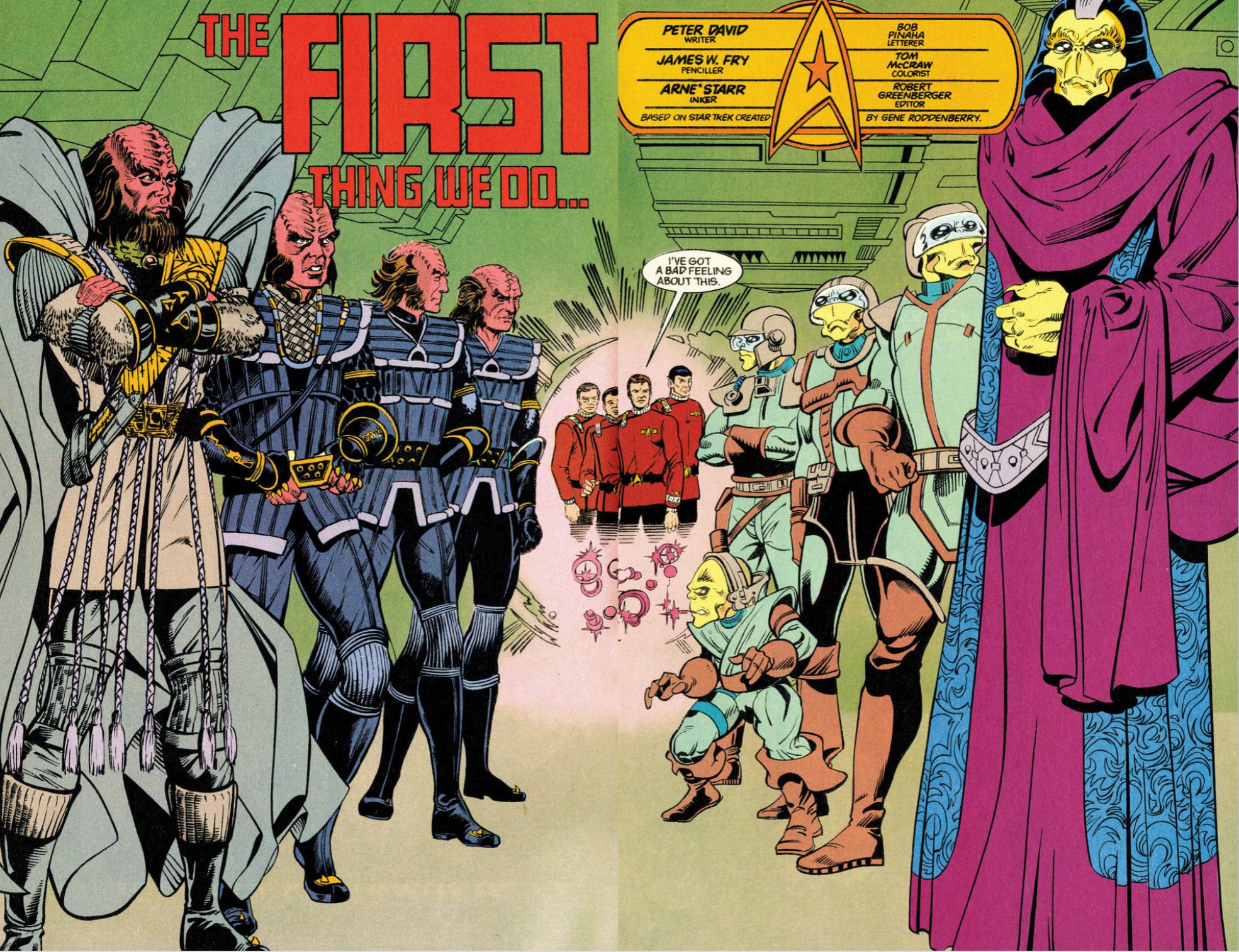
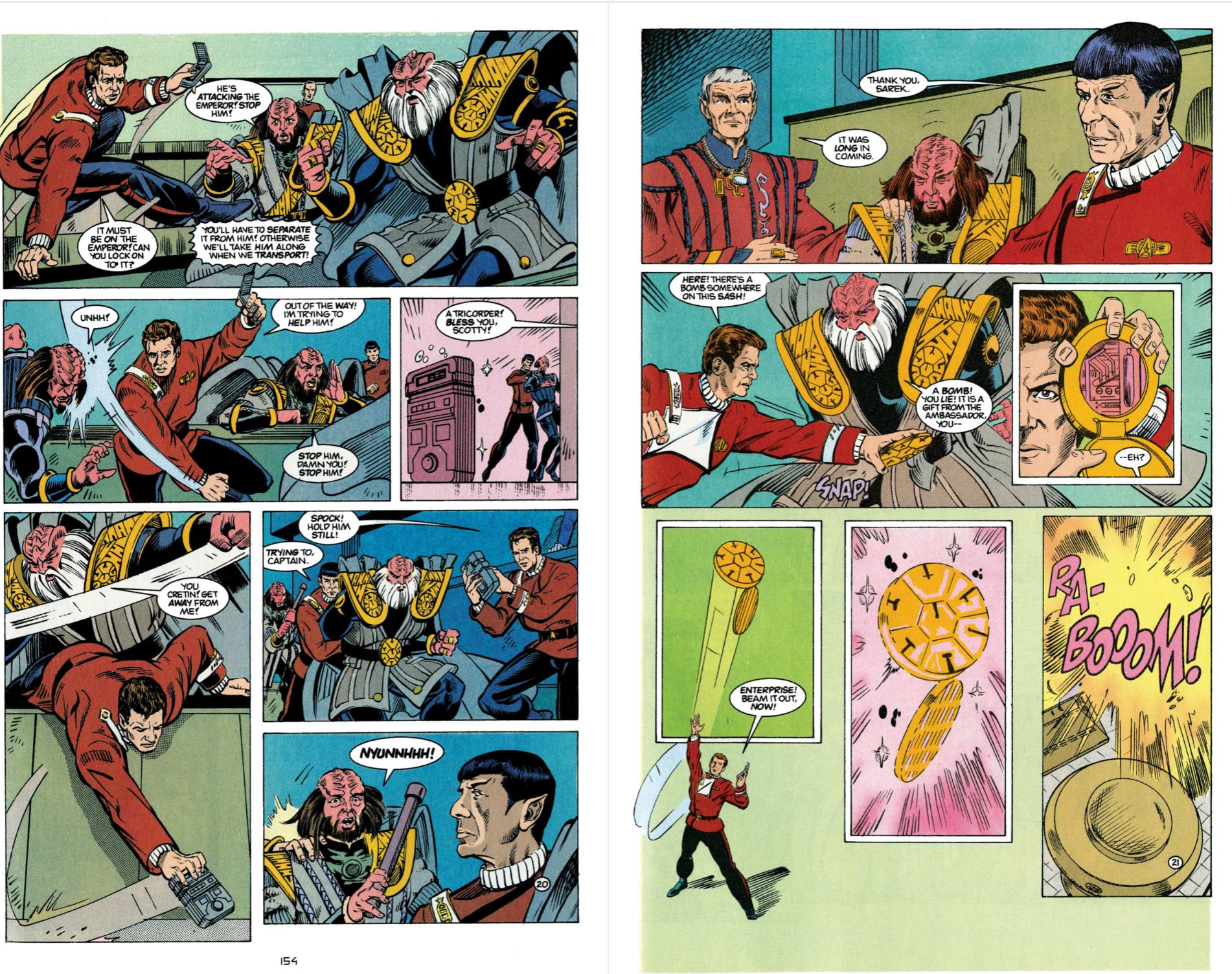
Today in 1952 scriptwriter Hilary Bader (Batman, Superman, Star Trek) was born, followed by Brazilian Rafael Grampá in 1978; Christina Strain in 1981 and Zeb Wells in 1983.

1902 today saw the start of Ed Payne’s strip Professor O. Howe Wise and Professor I.B. Schmart with Stan Lynde’s outrageous comedy western feature Rick O’Shay launching this date in 1958. However in 1991, Spirou’s creator Rob-Vel (François Robert Velter) passed away.

Frank Robbins’ Johnny Hazard volume Two – the Newspaper Dailies 1945-1947


By Frank Robbins with an introduction by Daniel Herman (Hermes Press)
ISBN: 978-1-61345-017-8 (HB/Digital edition)

This book includes Discriminatory Content produced in less enlightened times.

Johnny Hazard was a newspaper strip created in the style and manner of Terry and the Pirates, but in many ways this steely-eyed hero most accurately resembles – and in fact predates – Milton Caniff’s second masterwork Steve Canyon.

Unbelievably, until 2011 this influential, impressively enthralling adventure strip had never been comprehensively collected in archival volumes – at least not in English or even America’s version of it – although selected highlights had appeared in magazines like Pioneer Comics, Dragon Lady Press Presents and the Pacific Comic Club.

Boston born, Franklin Robbins (9th September 1917 – 28th November 1994) was an artistic prodigy who shone from early on. At age nine he was awarded a scholarship to the Boston Museum of Fine Arts and at 15 moved to New York City to attend the National Academy of Design on a Rockefeller grant. Skilled, inventive and prolific as both painter and graphic artist, Robbins freelanced continually, even working with Edward Trumbull on the legendary murals for the NBC building and Radio City Music Hall. He created graphics for RKO Pictures, worked in advertising and magazine illustrations but never stopped painting, with work shown at the Whitney Museum of American Art, Metropolitan Museum of Art, The Corcoran Gallery of Art and Walker Art Gallery, although he found his perfect medium of expression when invited to take over a top comic strip…

Even whilst relentlessly creating a full seven days of newspaper strips, he exhibited work at the Whitney’s Annual show and, after ceasing his comics career, retired to Mexico to end his days with a brush in his hand.

The plain truth is that comics changed Robbins’ life. He was a brilliant natural cartoonist whose unique artistic and lettering styles lent themselves equally to adventure, comedy and superheroic tales, whilst his expansive raconteur’s nature made him one of the industry’s best writers over three generations.

He first found popular fame in 1939 after taking over aviation strip Scorchy Smith from Bert (The Sandman) Christman, when he quit isolationist America to fight with the Flying Tigers in China. Robbins thrived in the role, and created a Sunday page for the strip in 1940. This groundbreaking feature had been originated by John Terry before the astounding Noel Sickles replaced him: revolutionising Scorchy Smith and – with Milton Caniff – inventing a new impressionistic style of narrative art to reshape the way all comics were drawn and perceived.

Robbins remained until 1944 and was then offered high-profile Secret Agent X-9. Instead, he devised his own lantern-jawed, steely-eyed man of action. A tireless and prolific worker, even whilst producing the daily and Sunday Hazard (crafting separate but congruent storylines for each), Robbins continued freelancing as an illustrator for The Saturday Evening Post, Look, Life and other mainstream magazines. He also tried comic books for the first time when Johnny Hazard won his own title in 1948-1949, just as costumed superheroes began losing ground to ordinary he-men, mobsters and monsters…

Robbins returned to funnybooks in 1968, quickly becoming a key contributor as both artist and writer on Superboy, The Flash and The Atom, as well as a regular contributor to humour mag Plop! and DC’s mystery, horror and war anthologies. He particularly shone on Batman, Batgirl and in Detective Comics where, with Neal Adams, he pulled the Caped Crusader out of the TV show-inspired silliness. They created Man-Bat together and Robbins followed Michael Kaluta as artist on The Shadow. Moving to Marvel in the 1970s, Robbins concentrated on drawing a variety of titles including Captain America, Daredevil, Ghost Rider, Morbius, The Man from Atlantis, Human Fly, Power Man and The Invaders – which he co-created with Roy Thomas.

When Johnny Hazard launched on Monday June 5th 1944, he was an aviator in the US Army Air Corps. When hostilities ceased, he briefly became a freelance charter pilot and spy before settling into the life of a globe-girdling, troubleshooting mystery-solver: a modern day Knight Errant. The strip folded in 1977: one more victim of diminishing panel-sizes and the move towards simplified, thrill-free, family-friendly gag-a-day graphic fodder to frame small-ads. In its time it was syndicated in nine different languages in thousands of newspapers across the world, and even scored a residency in 1950s British weekly Rocket.

This fabulous hardcover/digital series – reproduced from original King Features proofs – re-presents the definitive magnum opus in fitting form: a monochrome, landscape format archival collection. This second shot covers serialised daily thrills (spanning November 19th 1945 to August 16th 1947), to resurrect the Amazing Aviator in fans’ hearts and remind them of what we’ve all missed whilst hopefully finding a few new fervent followers.

Fully embracing noir sensibilities of the era but keeping things light, frothy, sexy and funny the globetrotting glee is preceded by Daniel Herman’s Introduction ‘A Look Back at Johnny Hazard before the preflight fun begins…

Previously we met coolly capable flyer Lt. Johnny Hazard who escaped from a German POW camp, broke into a Nazi airfield, stole a bomber and flew home. Liberated and ready-for-duty he met feisty, headstrong, utterly dedicated war photographer Brandy during an air raid and all kinds of sparks flew. A series of spectacular events constantly pushed them together and ultimately impassioned fury and disgust on both sides turned to something else amidst all the deadly missions and exploding ordnance.

The strip could not keep up with the fast-moving events after D-Day (the real world Allies invaded “Fortress Europa” the day after Johnny Hazard debuted) and third story arc ‘Sun Tan and General Mariwana’ – opening on September 11th 1944 – saw the hero’s squadron transferred to the Pacific Theatre of Operations to reinforce the battle against Japan. Brandy inveigled herself into the picture as newly promoted Captain Hazard and his crew undertook a top-secret mission couriering a Chinese resistance leader back to her people. Enigmatic, exotic, staggeringly beautiful and lethally dangerous Sun Tan was a magnet for trouble…

Foiling Japanese assassination plots while dodging Brandy’s jealous displeasure, Hazard faced baroque opponents like disfigured pilot Colonel Mariwana, Colonel Kiri, General Ishigaki and his glamorous French “assistant” Mademoiselle Touché but also found a stalwart new ally and wingman in Captain “The Admiral” Slocum: last in an unbroken line of valiant patriotic mariners, but reduced to defending his country in the skies since his debilitating sea sickness prevents him from serving afloat like a true warrior…

Across Iran, Japan, China, and the Himalayas, Hazard, Slocum and Brandy ducked death over and again and when official hostilities ended, encountered charismatic US underworld émigré, pool-addict and deal-maker Side-Pocket Sam. Debonair, charming and utterly amoral, he led Chinese bandits and vied with our heroes for possession of Japan’s failsafe game plan for World War III…

Now, in ‘Fancy Fluff’ (running from November 19th 1945 to June 15th 1946) finally and officially released from their country’s service, Hazard and Slocum barely have time to adjust to civilian life before desperate Fluff Randall recruits them to help find her missing brother. A former comrade of Hazard, “Bounce” Randall was wounded in action and shipped home, but soon disappeared. The last Fluff heard, despite a head injury that prevented him being a pilot, he was in French Guiana, flying private planes for mystery man “Dr. Fox”

Soon the brothers in arms are on the trail, securing passports, papers and a reconditioned army surplus plane which they cheerfully dub Fancy Fluff in honour of their sponsor and despite the suspicions of suddenly-arriving Brandy. Her latest assignment is investigating a wave of jailbreaks in the penal colonies of that very country and a lift would be nice…

Soon the quartet are far south and negotiating with clearly corrupt cops and customs officers, dodging murder attempts and investigating local saint/Good Samaritan Docteur Reynard. A dramatically delivered letter from brother Bounce begging them to leave does nothing to deter them and before long they have uncovered not only an underground railroad using air transport to spring savage escapees but also murderous drug dealers using terror, mesmerism and narcotics to enslave Fluff’s brother among so many other victims…

It’s as much luck as competence that saves the valiant Americans from death and disaster a dozen times over, but in the end Reynard, his leg breakers Elf and Beeg Ox and all those bribe-taking officials pay for their crimes. Bounce is wounded again but at last healed of his enslavement and debilitating head injuries. However the overall cost is high. Admiral is lost to the world of action after falling for Fluff and that sappily contagious condition almost ensnares Johnny and Brandy too. Thankfully, common sense and sheer bile on both sides brings them to their senses before it’s too late…

Each serial storyline is garnished and bookended by Robbins’ original art designs for advertising the strip and after a comforting close up of Hazard second saga ‘The Flying Freight Mystery’ (June 17th – November 2nd) sees “just friends” Johnny and Brandy heading back to the USA but stalled on take-off when Johnny is conned by deviously mysterious entrepreneur M. Côte’-Poche into delivering to neighbouring nation Estantio a cargo of “typewriters”…

In flight, when Brandy discovers diminutive stowaway Wild Bill Hiccup and that the load is automatic weapons, an aerial ambush by “sky rustlers” leads to a less-than-longed-for reunion with Side-Pocket Sam. He is embroiled in ongoing war with ruthless river pirate Captain Gore who wants the emeralds Sam regularly ships from a mine to the coast. The baroque blubbery buccaneer is obsessed with piratical mythology and alongside fellow plunderers Mistuh Dirk and voluptuous siren Lady Mist opened a bizarre rogues gallery of foes who bedevilled Hazard over the next thirty years.

With Hazard as his air force, Sam has the upper hand until Mist infiltrates his freighter as an shipwrecked innocent: a daunting (and hilarious) job of acting that fools everyone but Brandy and leads to a spectacular display of air versus sea power, a brutal final mano-a-mano duel in the jungle and a surprise twist ending…

Another Canyon pinup segues into a yarn spanning November 4th 1946 to January 18th 1947. Hazard and Brandy arrive in tropical dump Querrero to find her journalistic colleague and Bureau Chief “Timely” Malcolm awaiting the outcome of a clash between government troops and bandit-turned-rebel ‘Major Risk’. Brandy opts to go to the story and with Johnny reluctantly flying her in, arrives at the frontline to find rival reporter “Blitz” (AKA “Loose-Lip”) Martin actively making the story happen.

With natural advantages and no scruples Brandy vamps the Government general for intel before tricking Johnny into delivering her right into the rebels’ hands. Her sharp scheme goes terribly awry and before long she is a hostage and bargaining chip between the sides and needs actual rescuing for a change. Thankfully, Hazard and Martin are willing to try it even if the shiny soldiers are not…

Back in Querrero and hired by Timely Martin as a ferry pilot for his reporters, Hazard faces unlikely danger in penultimate yarn ‘The Stout Man’ (January 20th to March 29th 1947). Repairs and search for spare parts sees the ex-airman as a passenger on a flight to San Tomayo, but the departure is interrupted by rude, rowdy and very bulky Brit Mr. Am and late-arriving Blitz Martin.

Away at last, Johnny befriends fellow traveller and prestigious nuclear boffin Noble Caldwell until Am hijacks the plane and sends it into a death-spin and crash. However, as Am escapes with Caldwell using parachutes hidden under his coat, Hazard manages to crash land the plane. Lost, starving and dying of thirst, the survivors are accidentally saved when Am returns in a helicopter to clear up loose ends and stupidly lets Johnny get the drop on him…

A deadly impasse ensues with both sides holding out against attrition and deprivation, but the balance of power shifts after indigenous tribesmen arrive, pointing their deadly blowpipes indiscriminately at all the unwelcome intruders…

A Vava Lavoum pinup segues into closing yarn ‘Danger À La Carte’ (March 29th – August 16th 1947) as freshly-fired Hazard is stranded in San Ruiz, catching the attention of jewel thieves Gloves Diamond and Mellow as well as their criminal competitors Side-Pocket Sam and Lady Mist. Before long Hazard and Blitz are bemused, befuddled and bamboozled, buffeted between opposing nefarious forces and unable to understand how a gourmet café delivering meals by jet plane can possible be profitable…

Not knowing all the facts doesn’t stop Johnny hiring on as a pilot and becoming an unwittingly accomplice, transporting human contraband to the heart of Casablanca’s wicked underworld. When he seeks to rectify his mistake, the fur, fists, knives and bullets start to fly but in the end justice wins again…

Ending with more advertising pinups – Kitty Hawkes, Sabina Eden, Baroness Flame and Sequinthis is another fast-paced, sharp-tongued and utterly gung-ho roster of romps starring a charming, happy-go-lucky lout, insouciantly ruthless and ever ready to risk his own life and limb to help the little guy and distressed damsels.

Sharp, snappy and devilishly funny repartee in the style of movies like Howard Hawks’ His Girl Friday and Frank Capra’s It Happened One Night are a hallmark of these rapid fire yarns, some of the greatest comic strips in history, but that can present a few problems for modern readers. Contemporary attitudes to sexuality, gender and particularly race are far from what we find acceptable – or should even tolerate – today. We know better now – at least most of us do – but must accept and understand that hurtful and unjust as such terms are, they did exist and we’re doing history and our society a hugely dangerous disservice by ignoring, downplaying or worst of all self-censoring those terms and the attitudes that fed them.

In truth, Johnny Hazard was far less egregious than most: Robbins may have used visual shortcuts and slang but all characters were portrayed fairly and did not unnecessarily suffer from the worst propagandist nonsense used by the Allies to bolster a united war spirit and vilely resurrected by modern populists today.

All ethnicities are treated with the full dignity of different but equal cultures and depicted as competent comrades in arms, not ignorant primitives needing white men’s saving graces. However, arch comedian Robbins clearly couldn’t resist playing mischievous games with accents, names and speech patterns that would do Benny Hill, Hogan’s Heroes or Charlie Chan (the opposite of) proud, so if you don’t think you’re capable of remaining historically detached, best to forgo those delights that have transcended time…

To be continued…

These exotic all-action intrigues and romances perfectly capture the mood and magic of a distant yet incredibly familiar time; with cool heroes, hot dames and exceedingly intemperate baddies encountering exotic locales and stunning scenarios, all peppered with blistering tension, slyly mature humour and vivid, visceral excitement.

Johnny Hazard is a brilliant two-fisted thriller-strip too long forgotten, and this is your chance to remedy that.
© 2013 King Features Syndicate, Inc. ® Hearst Holdings Inc. All rights reserved.

Today in 1914 Aquaman creator Paul Norris was born, followed two years alter by George Tuska (Iron Man, Crime Does Not Pay), Belgian national treasure Victor Hubinon (Buck Danny, Redbeard) in 1924 and Marty Greim in 1942. In 1954 Kerry Gammill joined the party as did Brad W. Foster one year later and François Schuiten (Les Cités Obscures) in 1956, with John Paul Leon checking in in 1972.

Today in 1969 the last issue of the first iteration of Eagle was published.

Comic Therapy – Meditations for Reflection


By Kay Medaglia (SelfMadeHero)
ISBN: 978-1-914224-39-3 (pocket HB)

Author and graphic artist Kay Medaglia moved from Ontario, Canada to wild & woolly Reading in Britain nearly twenty years ago and ever since has sought ways to share their ideas of better living through enhanced wellbeing. In a prodigious outpouring of gently stated, multimedia-delivered suggestions, they have advocated calmer ways to get along and stay stable through such varied avenues as the UK small press scene; self-published sensation Wu Wei, and global arenas like The Huffington Post and Elephant Journal. As well as editing issues-based publications dealing with autism, dementia, mental health and sexual assault, their hugely successful One Year Wiser series has brought those notions to ever-wider audiences. They have even explored modern metaphysics with their bestselling Luna Sol Tarot.

Here drawing together genteel humour, funny animals (and bugs, actually) and traditional philosophical observations lensed through practicality and common sense, Medaglia offers self-contained, image-led emotional pep-talks as Comic Therapy: spiritually enriching reminders of who and where you are – or could be. These graphic epigrams compile and project easily assimilable visual life-coaching and pictorial pick-me-ups, broaching topics from the minute and mundane to the cosmically crushing, or life-changing. As well as encouraging loving others and yourself, the image interludes especially confront themes of rejection, dejection, hopelessness, self-worth, self-compassion, resilience and mindfulness and lack of direction with breezy light humour and whimsy.

Resembling still-running romance homily panel Love Is… (created by New Zealand cartoonist Kim Grove/latterly Kim Casali) and delivered in Japan’s popular Yonkoma manga format, these four panel public service announcements for the soul are personal common sense messages from a global traveller seasoned with flavours of Hindu imagery and basic Buddhist tenets wedded to primal western gag delivery systems.

Employing and urging the deployment of wit, patience, whatever faith or spirituality you can accept, and subtle but constant reminders that you don’t have to wallow alone, this is a book that should perk up most moody buggers and provide a judgement free first nudge to fix whatever ails you from within and because You want to…

If you can’t actually hug a kitten or juggle ducklings in moments of crisis or despondency, dipping unto this handy pocket-sized package might just restore equilibrium and restart your jammed perspective generators…
© Kay Medaglia, 2026. All rights reserved.

Today in 1915 Mort Weisinger was born, with Johnny Craig arriving in 1926 and Asterix co-creator Albert Uderzo coming one year later. In 1952 historian researcher and uberfan Peter Sanderson was born.

In 1940 today Batman #1 went on sale. Four years later the utterly unique George (Krazy Kat) Herriman passed away.

Alone volumes 1 and 2: The Vanishing and The Master of Knives


By Gazzotti & Vehlmann, translated by Jerome Saincantin (Cinebook)
ISBNs: 978-1-849181-96-9 (PB Album/Digital edition vol 1) 978-1-84918-206-5 (PB Album/Digital edition vol 2)

These books include potentially Discriminatory Content produced for dramatic effect.

Fabien Vehlmann was born in 1972 yet his prodigious canon of work (from 1998 to the present) has earned him the soubriquet of “the Goscinny of the 21st Century”. He entered the world in Mont-de-Marsan and grew up in Savoie, growing up to study business management before taking a job with a theatre group. In 1996, after entering a writing contest in Le Journal de Spirou, he caught the comics bug. Two years later with illustrative collaborator Denis Bodart he published a mordantly quirky, sophisticated portmanteau period crime comedy entitled Green Manor. From there on his triumphs grew to include – amongst many others – Célestin Speculoos for Circus, Nicotine Goudron for L’Écho des Savanes, The Marquis of Anaon and major-league property Spirou and Fantasio

Bruno Gazzotti is Belgian, born in 1970 and was a student of Institut Saint Luc in Liège. Another artist addicted to comics from his earliest years, he started being paid to draw them in 1988, after being hired by Le Journal de Spirou editor Patrick Pinchart on the strength of his portfolio alone. Before long he was illustrating Le Petit Spirou with Tome & Janry. In 1989, he and Tome created New York Cop Soda, which kept Gazzotti busy until 2005, when he resigned to co-create award-winning feature Seuls

Alone volume 1: The Vanishing

Released in January 2006, Seuls – La disparition is a superb example of a kids’ thriller suitable for all ages: evoking the eerie atmosphere of TV series Lost, with notes of modern phenomenon Stranger Things and the most disturbing elements of Philip Wylie’s novel The Disappearance and William Golding’s Lord of the Flies.

Translated as The Vanishing, the first chapter show glimpses of an ordinary bustling town, with simple folk going about their business. Our swift peeping settles on a cross section of kids: Ivan, an imaginative child of wealth who wants for nothing but never sees his dad anymore and Leila, a born engineer, inventor and tinkerer. Her poor but honest dad always has time to play and favourably critique her latest gadget…

Camille is studious and over-focussed on exams and achievement and Terry is pretty much still a baby. He certainly acts like one, trying to stay up late, binge watching TV and throwing tantrums if he doesn’t get his way. Sadly, not all the children in town have such typical lives. Dodzi has just been taken into the social care system. His early life has made him tough and resilient but won’t stop other young inmates handing him a beating on this ominous, odd-feeling portentous night…

Morning dawns overcast and forbidding. The city is quiet. Roaming empty streets, Dodzi calls out to anyone who can hear and is met – actually run over – by Leila and Terry on her bike. They are all pretty scared and have seen nobody else at all…

No one else is around. All the adults are gone, and every kid they know. The internet is down, television and radio only roar out static. Above, fearsome ponderous storm clouds gather. Within minutes fear turns to panic and violence before, eventually, Dodzi brutally enforces calm and leads them away, only to stumble into Camille being attacked by a dog. As the tough guy tries to fight it off, the rabid beast senses something in the shadows of an alley and bolts away…

As the youngsters wander, someone watches the shocked, scared waifs, and after they joyously blow off steam in a fountain, they meet final lost boy Ivan. He invites them back to his mansion at the edge of town where they find food while being subjected to his theories on what’s happened… everything from a shared dream to an extinction event to the possibility that they’re dead and in hell…

Needing more information, Dodzi and Leila try to drive one of many cars on the estate while the smaller kids sort out a proper meal. Neither task goes well. The cooking is a disaster while the near-lethal reconnaissance only reveals more empty streets, wrecked shop fronts and wild animals roaming the avenues and alleys. While the motoring minors seek to evade two rhinos, Terry and Camille are nearly eaten by a white tiger that’s got through the estate gates! When Dodzi and Leila return – and following a burst of viciously released tensions – the kids modify and weaponize a 4-by-4 and head back into town. Ivan’s dad owns the tallest building in the city: somewhere stuffed with crucial resources and a place easily fortified and defended…

As the first day alone ends, the kids are bloated with vending machine snacks and playing in the vast office block’s upper reaches, but de facto leader Dodzi is still uneasy. When Leila reports tiny Terry is missing, the notional “man-in-charge” heads out to search, finding to his horror where all those animals came from: a scene of destruction that distracts Dodzi enough that a hidden stalker almost takes him. Naturally, the others have completely ignored his orders and followed, so it isn’t Dodzi who dies…

Thus begins a spooky, powerful and often shocking tale of mystery and imagination with bereft children facing increasingly daunting physical hazards and an escalating series of events which can have no logical or rational explanation…

To Be Continued…

Alone volume 2: The Master of Knives

Debut volume The Vanishing showed an ordinary bustling town rendered an empty mausoleum overnight, with a small cross-section of kids left to survive or die. When it happened, the mystified minors wandered a terrifyingly quiet, suddenly unfamiliar environment until finding each other and the relief of “bad kid” Dodzi who reluctantly took responsibility for their staying alive. Adults were gone, all outside contact severed and wild beasts stalked them so Dodzi brutally enforced calm and lead them away to find a succession of temporary – albeit palatial – refuges to regroup and think. Encounters with escaped circus animals resulted in the little band settling in the towering Majestic Hotel to await whatever came next…

Originally released as Seuls: Le Maître des couteaux in 2007, The Master of Knives opens with Dodzi scouting the vacant metropolis and helping Leila consolidate supplies for a long stay in the lap of luxury. His nervousness remains high as close calls with the liberated beasts in the streets come continually, but the younger children seem to be adapting well. It certainly helps that they are hoarding every toy and treat they find in abandoned shops and houses. Ivan has a plan to occupy him too: systematically calling every telephone number in the phone book. No luck yet, though…

Things start to go south swiftly after he finds his father’s pistol and tempts Leila into a spot of rooftop target practice. When Dodzi furiously confiscates the lethal plaything, he has no idea that he has now become the preferred prey of a mystery stalker. As this masked pursuer enacts a chilling campaign of terror, stressed-out Dodzi agonisingly learns that he is not the only obsession of the terrifying, nebulous cloaked figure draped in blades and daggers…

While the others obliviously fritter away the day, pressure-laden Dodzi is remorselessly hunted over rooftops by the manic killer. When he briefly eludes the hunter, the Master simply doubles back to menace the children in the hotel. Ultimately a shocking confrontation ensues, with the tables turned… but only at the cost of Dodzi’s closely withheld shameful secrets being exposed to all…

In the painful aftermath, the days of innocence are discarded and the orphan family prepares to hit the open road to see if other cities have been emptied too…

To Be Continued…

This spooky, powerful, frequently shocking tale of mystery and imagination sees bereft children facing increasingly daunting physical hazards and an escalating series of events which apparently have no logical or rational explanation. Tension and terror inexorably amplifies with every instalment – just like the real world at the moment.

Alone – running to 12 translated volumes thus far of a projected 14 – was one of the biggest critical and commercial comics hits of the last decade (more than 2 million copies sold!). Seuls even made it to the big screen in 2017, so if you love eerie enigmas and powerful tale-telling, you’ll soon be buying this, you’ll buy these and successive releases to know why…
© Dupuis 2006 and 2007 by Gazzotti & Vehlmann. All rights reserved. English translation © 2014 Cinebook Ltd.

Today in 1912, Terry and the Pirates crafter George Wunder (officially in charge from December 30, 1946 to 1973) was born, followed in 1930 by filmmaker and occasional Superman comics scripter Richard Donner. That same year cartoonist/children’s book illustrator Howie (Eek & Meek) Schneider arrived. In Canada in 1957, small press maven John McLeod (Dishman, Space Kid) joined the party, as did superhero/cover star J.G. Jones in 1962.

This date in 1981 we lost the great Howard Purcell (Sargon the Sorcerer, Green Lantern, Gay Ghost, Mister District Attorney, Enchantress, Sea Devils, Nick Fury, Black Knight, DC mystery and Sci Fi anthologies) and in 2004 comics author and scripter Nat Gertler initiated the first 24-hour comics day.

The Incredible Hulk Marvel Masterworks volume 15


By Roger Stern, John Byrne, Steven Grant, Doug Moench, Sal Buscema, Carmine Infantino, Steve Ditko, Jack Abel, Mike Esposito, Alfredo Alcala, Joe Sinnott, Al Milgrom & various (MARVEL)
ISBN: 978-1-3029-3805-5 (HB/Digital edition)

This book includes Discriminatory Content produced in less enlightened times.

Bruce Banner was a military scientist accidentally caught in a gamma bomb blast of his own devising. As a result, stress and other factors cause him to transform into a giant green monster of unstoppable strength and fury. He was one of Marvel’s earliest innovations and first failure, but after an initially troubled few years finally found his size-700 feet and a format that worked, becoming one of the company’s premiere antiheroes and most popular features.

The Gamma Goliath was always graced with artists who understood the allure of shattering action, the sheer cathartic reader-release rush of mighty “Hulk Smash!” moments, and here – following in the debris-strewn wake of Jack Kirby, Steve Ditko, Marie Severin and Herb Trimpe – Sal Buscema had been showing the world what he could do when inspired and unleashed…

This chronologically complete monster monolithic monster mash-up re-presents Incredible Hulk #234-244 plus Annuals #8 & 9, collectively spanning April 1979 through February 1980, featuring tales and ancillary material generated while the Growling Green Giant utterly dominated global TV screens. Prior to that torrent of tumult, however, we open with another behind-the-scenes reminiscence from writer/editor Roger Stern in his engaging Introduction.

Previously, having failed to end the curse of the Hulk through psychoanalysis, S.H.I.E.L.D. agent Clay Quartermain and gamma-charged psychologist Doc Samson had witnessed the man-monster defeat insidious villains Moonstone and the Leader before Banner and the Hulk were ensnared in the schemes of criminal cabal The Corporation – specifically an internecine power struggle between West Coast Chief Curtiss Jackson and (ultimately ousted) East Coast head/corrupt US Senator Eugene Stivak, operating under the nom-du-crime Kligger.

Now, with Jackson in hiding and Kligger dethroned thanks to the Hulk, S.H.I.E.L.D., Captain America, The Falcon, Marvel Man/Quasar, and – in related operations Torpedo and Machine Man, the aftermath saw the Emerald Titan flee. Linking up with drop-out pal Fred Sloan, their quixotic road trip ended on the campus of the University of California at Los Angeles where the man-monster was reunited with another old friend…

Trish Starr championed an alternative, magic-adjacent lifestyle when The Defenders battled her mad scientist uncle Egghead  and had since moved her peace-&-love message into a student house in Berkeley where laid-back student dudes get a taste of another world when the Hulk moves in with them. However, fear and suspicion are impossible to suppress and when one “drops a dime and calls the fuzz” (or notifies the authorities if you prefer) it results in chaos.

Of course, the authorities informed are not cops but The Corporation, where franticallyrebuilding Jackson sees opportunity to re-ingratiate himself with the fearsome Board of Directors and remove two thorns in his side. Crafted by Stern, Sal Buscema & Jack Abel, Incredible Hulk #234 sees the Gamma Goliath angry and unleashed in ‘Battleground: Berkeley!’ after Jackson frames Machine Man for kidnapping Trish. This lures the Jade Juggernaut (and Fred) to Jackson’s Central City base – The Mid-State Tower – where his forces are ready to end the blockbusting brute…

Meanwhile the real robot hero has been cleared of crimes covertly orchestrated by Kligger and is a free “man” when #235’s ‘The Monster and the Machine’ (inked by Mike Esposito) finds the furious Hulk attacking Machine Man’s human friend and advisor Dr Peter Spaulding. The clash rapidly escalates in ‘Kill or Be Killed!’ with the Hulk now nigh-mindless with rage. His mechanical foe is far more controlled and detects Jackson’s radio communications. Sadly so does the viridian berserker who heads for the Corporation’s secret skyscraper HQ to save Trish and punish Jackson…

The Hulk is beyond all reason and turns his wrath on Jackson with everyone else in sight caught in the carnage. As Machine Man (who went on from this clash into his own revived solo title) valiantly strives but fails to stop the man-brute, the earthshaking battle culminates in the fall of the tower in #237’s ‘When a City Dies!’ (Abel inks). With Jackson done and dusted, emerging from the rubble of the 80-storey shambles, Hulk’s appetite for destruction is still not sated. Thankfully, before collapsing in the robot version of utter exhaustion, Machine Man mesmerises the monster into a coma and employs an anti-gravity push to send the sleeping beast, far, far away…

Incredible Hulk Annual #8 follows as ‘Sasquatch!’ – written by Roger Stern & John Byrne, with art from Sal B & Alfredo Alcala – sees still-surly Hulk waking up in the mostly unoccupied region of British Columbia. Befriended by understandably nervous, self-imposed hermit Maureen Mores Friesen, he gradually calms enough to revert to Banner, but only until the Canadians deploy their own gamma monster – Dr Walter Langowski of government super-squad Alpha Flight – to end the incursion whatever the cost…

The Canadian catastrophe that results sees the Hulk still at large as US President Jimmy Carter, Quartermain and S.H.I.E.L.D. researchers survey what remains of Central City in Incredible Hulk #238’s ‘Post Hulk …Post Holocaust!’ (Stern, Buscema & Abel). Meanwhile, the monster’s peregrinations bring him to the attention of a clandestine cabal who bedevilled heroes for years. Cautiously, “They-Who-Wield-Power” plan their next atrocity…

As seen primarily in Marvel Team-Up, a shadowy trio of observers with an undisclosed agenda had monitored superbeing episodes and provided advanced technologies for monsters and villains like Lava Men, Stegron and The Orb to battle Spider-Man, Hercules, Nova, Ghost Rider, Black Panther, Thor and more. Now they subtly pull strings drawing the Gamma Juggernaut southwards, using bullion bandit Goldbug as their latest instrument…

It comes together in #239’s Esposito-inked ‘All That Glitters…’ as a brief pause on Hulk’s travels sparks a military incident. Taking a nap atop national monument Mount Rushmore, the monster is confronted by a joint military and S.H.I.E.L.D. response. However, instead of more shattering violence, the stand-off ends peacefully when Goldbug slips in, offering escape in his new ship. Sadly, it’s designed to siphon Hulk’s energies to power the vessel all the way to South America where the thief can plunder a literal city of gold in the Andes. Hulk is not happy and escapes, but not before they reach their destination where The Brotherhood of They are waiting.

In #240’s ‘…And Now El Dorado’ (inked by Joe Sinnott) years of scheming come to fruition as a hidden civilisation (last seen as the Forbidden Land in Avengers #31, August 1966) welcomes the outcast and the criminal mastermind to an idyllic paradise covertly controlled by a back-stabbing triumvirate seeking dominion of Earth. Autocrat Prince Rey and cleric Lann, Keeper of the Sacred Flame have warred for decades, but the balance is maintained by aged enigmatic Des who perpetrated They’s campaign to create global tectonic anomalies that fed the Flame. Des also exerts a shocking hold on the Hulk, dangling the prospect of resurrecting his lost love Jarella if the monster behaves and follows orders…

A bitter truth is revealed in the Buscema-inked ‘Partners in Deception!’ when Banner too becomes fuel for the Sacred Flame, with Des stealing that power to eradicate his allies and regenerate himself. Revealed as one of the Hulk’s earliest enemies and with Goldbug forced into playing hero to save his own skin, ‘Sic Temper Tyrannus!’ sees the unlikely outworlder allies saving Earth as their enemy ascends to godhood before inevitably overextending himself… and again underestimating the sheer bloody-mindedness of the Jade Juggernaut…

The end comes courtesy of plotter Stern, scripter Steven Grant & Sal B, in #243’s ‘Death… and Destiny!’ With the world restored, the Hulk resuming his wandering and Goldbug getting just what he deserves, in the wings, the mental collapse of General Thaddeus Ross has left a vacuum the US government fills with his protégé Glenn Talbot, newly promoted to lead America’s anti-Hulk task force…

Written by Doug Moench and illustrated by Steve Ditko & Al Milgrom, Incredible Hulk Annual #9 offers a short diversion as the monster is targeted by chess-obsessed millionaire Charles Reigel, leading fellow members of the Gotham Game Club in a high-tech campaign against the epitome of unreasoning brute force. Sadly, ‘A Game of Monsters and Kings’ is not what the Green Goliath wants and the Hulk does not play well with others…

This titanic tome wraps up its storytelling component with a brief continuity palate cleanser as #244 reintroduces Hollywood special effects wizard Bob O’Bryan who, thanks to alien invaders, can possess and animate a gigantic stone statue. His efforts to keep the mighty It, the Living Colossus from evil Dr. Vault was once the stuff of L A legend, but means nothing to Bruce Banner when he awakes from another Hulk-out in Tinseltown.

Incredible Hulk #244’s ‘It Lives!’ (by Grant, Carmine Infantino  & Esposito) sees coincidence and concatenation conspire to bring all player together for Vault’s last pursuit of the prize, only to learn that gamma beats granite every time…

To Be Hulk-inued…

With covers by Milgrom, Bob Layton, and Ditko the bonus portion of this blockbusting bonanza includes the covers (front & back) of Hulk-starring reprint tabloids  Marvel Treasury Edition #20 and 24 – by Bob Budiansky & Abel and Budiansky & Bob Wiacek respectively. There are also house ads and a gallery of Hulk pinups by Ron Wilson, Frank Giacoia, Dave Hunt & Pablo Marcos created for Marvel UK titles plus a large section of designs by Mark Gruenwald revamping Goldbug, his ship and Tyrannus.

The Incredible Hulk is one of the most well-known comic characters on Earth, and these stories, as much as the movies, cartoons, TV shows, games, toys and action figures are the reason why. For an uncomplicated, earnestly vicarious experience of Might actually being Right, you can’t do better than these exciting episodes, so why not Go Green – even if it’s only in your own delirious head?
© 2021 MARVEL.

Today in 1964 Brazilian artist Sergio (Lone Ranger) Cariello was born, with Stephanie (Harley Quinn, Wonder Woman, Spider-Gwen, Grim) Phillips arriving in 1991. On the debit side this date in 1957 saw the end of Italian comics legend Guido Fantoni (Capitan Walter, Nutor, Flash Gordon, Brick Bradford, The Phantom, Mandrake the Magician); mature content Spanish wizard Alfredo Pons in 2002; Disney mainstay Romano Scarpa in 2005 and our own national treasure Leo Baxendale (Minnie the Minx, The Bash Street Kids, Wham!, Pow!) in 2017.

Marney the Fox


By Scott M. Goodall & John Stokes (Rebellion Studios)
ISBN: 978-1-78108-598-1 (HB/Digital edition)

This book includes Discriminatory Content produced in less enlightened times. This book also contains Discriminatory Content included for dramatic effect.

At first glance British comics prior to the advent of 2000 A.D., Action and Misty seemingly fell into fairly ironclad categories. Back then, you had genial and fantastic preschool fantasy; a prodigious selection of adapted TV and media properties; action; adventure; war and comedy strands. A closer look, though, would confirm that there was always a subversive undertone, especially in such antihero series as Dennis the Menace, The Spider or the early Steel Claw.

…And then there was Marney the Fox.

Created and scripted by prolific Scott Goodall (Captain Hurricane, Kelly’s Eye, Cursitor Doom, Captain Scarlet and dozens more), the series ran in all-purpose anthology Buster from June 22nd 1974 to September 4th 1976 and – even in a weekly periodical notorious for its broad and seemingly mismatched mix of themes and features – stuck out like a sore thumb.

Not for any lack of quality, of course.

Compellingly scripted by Goodall and set in his beloved Devonshire country, the serial was lavishly, almost hauntingly illustrated by frequent collaborator John Stokes (Black Knight, Father Shandor, Maxwell Hawke, L.E.G.I.O.N., Aliens, Star Wars, The Invisibles), with whom the writer had already crafted for Buster seminal classics Fishboy and The War Children.

Marney the Fox was very much a passion project and a creature of its times. If you look at the ordering descriptions online or even revel in the gorgeous and serene cover embellishing this luxurious hardback/digital compilation, you might conclude it’s a natural history strip or animal adventure along the lines of Lassie or Black Beauty.

Don’t be deceived. The books you should be thinking of here are Ring of Bright Water, Tarka the Otter and A Kestrel for a Knave (or Kes, if you don’t read As Much As You Should, but do watch movies). The deftly-constructed atrocities beautifully limned in every 2-page monochrome instalment were – and remain – brilliant nature propaganda and should be mandatory reading for every person who lives in, near or with the natural environment…

For two years the weekly trials and tribulations of barely-weaned orphaned fox cub Marney the Wandering One were a painfully beautiful, frequently harrowing account of the horrors rural folk – from poachers to soldiers on manoeuvres to roadbuilders to landed gentry and their bloody hounds – all casually inflicted on unwelcome wildlife: ones that must have traumatised and successfully indoctrinated a generation of kids.

From his first encounter with and narrow escape from despicable mankind, young Marney endures a ghastly litany of close shaves, bolstered by far too few happy, peaceful moments as he flees from crisis to crisis until mercifully finding refuge and contentment. I had to put that last bit in because this is a sublime piece of comics wonderment that everybody should read, but the seven-day-cliffhanger cycle and sheer mental and physical abuse the little guy barely survives every week would have Batman, Daredevil and Judge Dredd rushing for Valium and comfort blankies in an instant…

So take it from me: the fox lives happily ever after, okay?

Augmented by an Introduction from John Stokes, this is magical and unique comics entertainment, suitably acid-coating the hard, harsh life of British wildlife and the ignorance and cruelty of many – but not all – people. It’s also a story you must see and will never forget…
™ & © 1974, 1975, 1976, & 2017 Rebellion Publishing Ltd. All Rights Reserved.
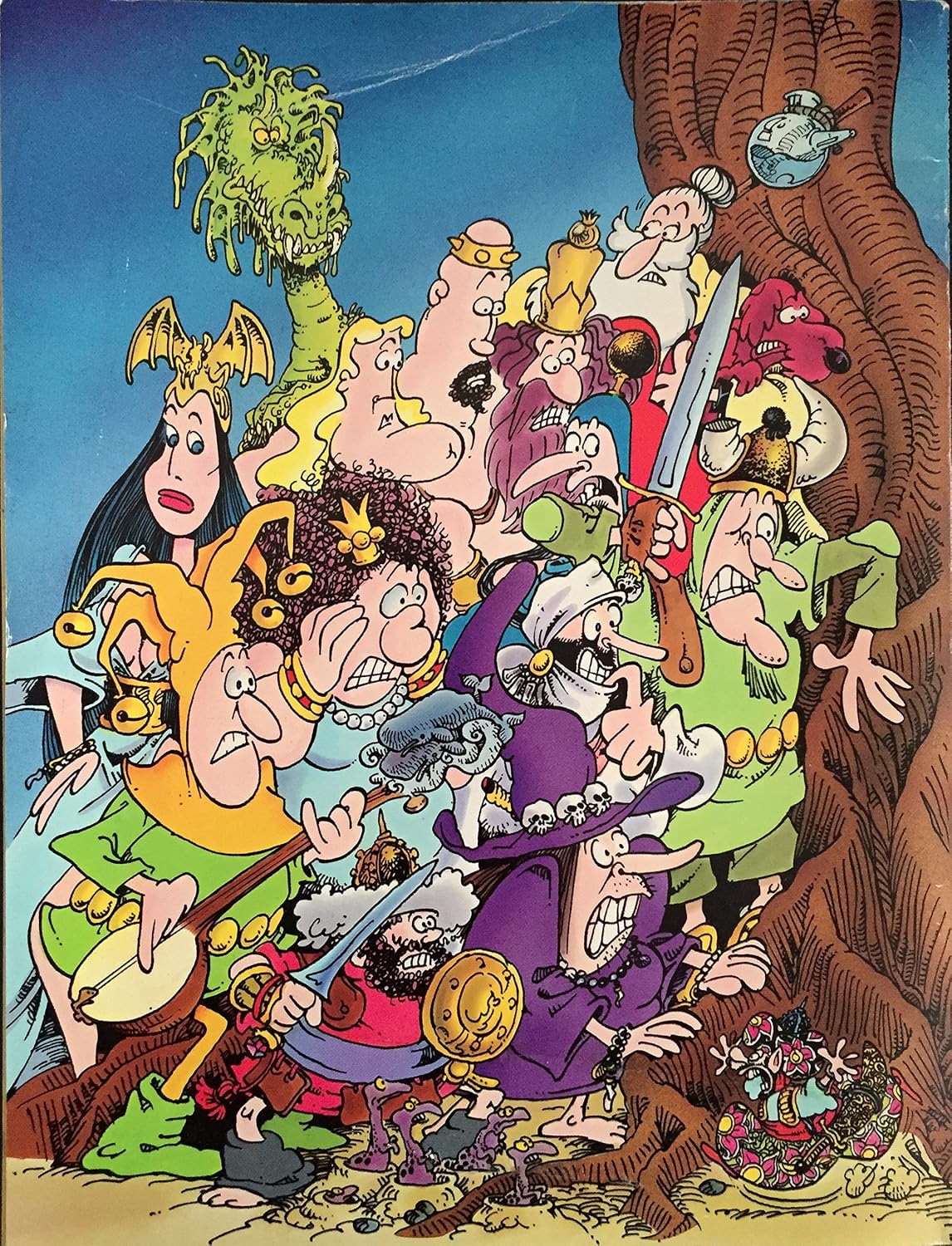
Today in 1923 Marvel’s man behind the curtain Sol Brodsky was born, as was writer Steve Englehart in 1947; editorial whirlwind Marie Javins in 1966; British boys Ian Churchill in 1969 and Bryan Hitch one year later.
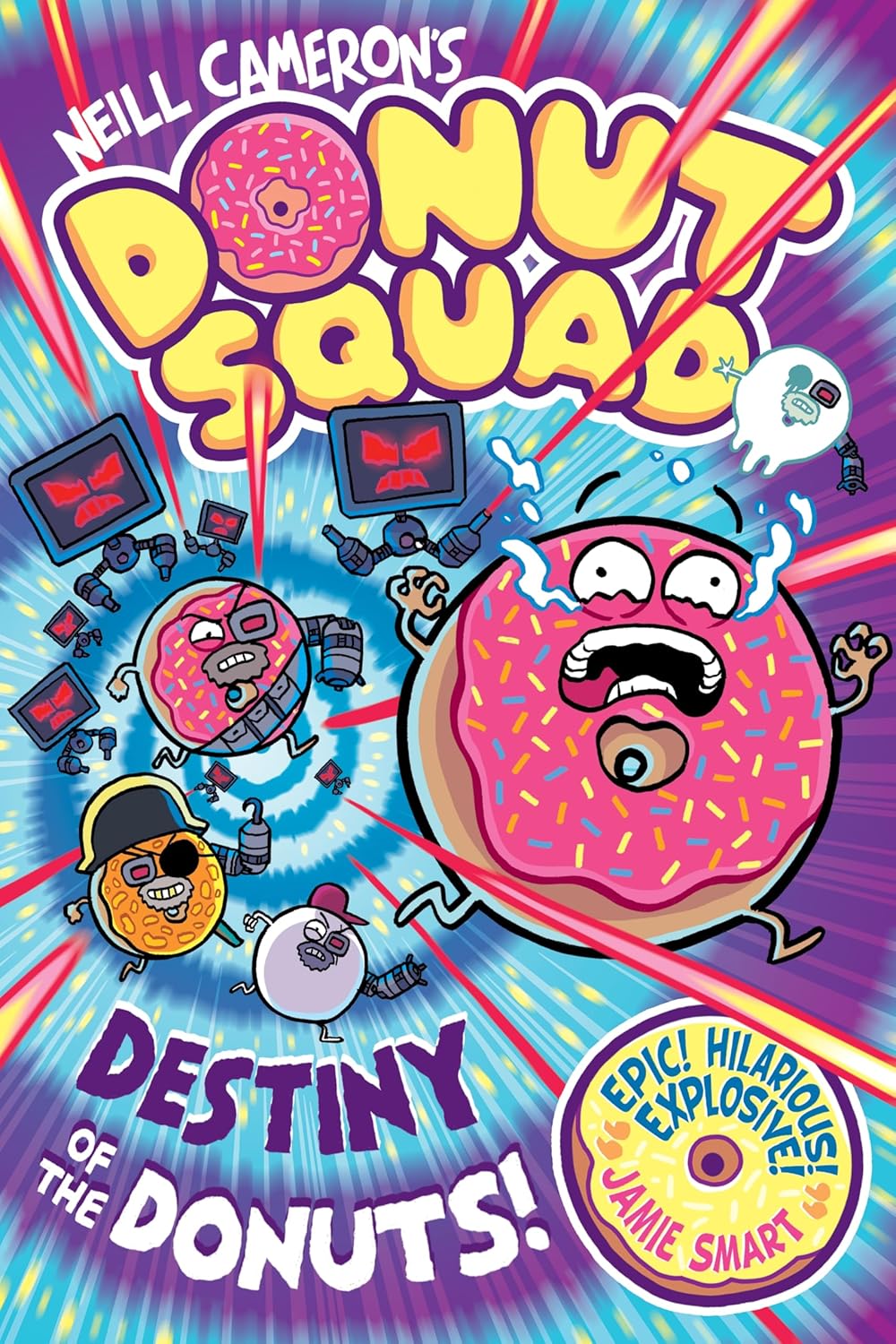
Today long ago, Machiko Hasegawa’s yonkoma manga Sazae-san began its epic 68-volume run (April 22nd 1946 – February 21st 1974) and in 1990, Scott Stantis began the still-running family strip The Buckets. In 2002 we lost British journeyman illustrator Denis (The Shark, Commando, Buffalo Bill, Wizard) McLoughlin.