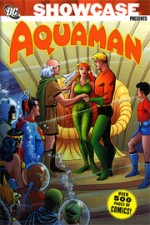
Showcase Presents Aquaman volume 2


By Jack Miller, Bob Haney, Ramona Fradon, Nick Cardy & various (DC Comics)
ISBN: 978-1-4012-1712-9

Aquaman was one of the few superheroes to survive the collapse at the end of the Golden Age, a rather nondescript and generally bland looking guy who solved maritime crimes and mysteries when not rescuing fish and people from sub-sea disasters.

He was created by Mort Weisinger and Paul Norris in the wake of Timely Comics’ Sub-Mariner and debuted in More Fun Comics #73 (1941). Strictly a second stringer for most of his career he nevertheless continued on beyond many stronger features, illustrated by Norris, Louis Cazaneuve and Charles Paris, until young Ramona Fradon took over the art chores in 1954, by which time Aquaman had moved to a regular back-up slot in Adventure Comics. She was to draw every single adventure until 1960.

In 1956 Showcase #4 (See The Flash Archive Edition volume 1 or Showcase Presents the Flash volume 1) rekindled the public’s imagination and zest for costumed crime-fighters and, as well as re-imagining many departed Golden Age stalwarts, DC also updated and remade its isolated survivors, especially Green Arrow and Aquaman. Records are incomplete, sadly, so often we don’t know who wrote what, but after the initial revamp better records survive and this second collection of the King of the Seven Seas has far fewer creative credit conundrums.

Although now the star of his own title, Aquaman still appeared as a back-up feature in World’s Finest Comics until 1964 and this chronological compilation includes those tales (issues #130-133, 135, 137, 139), his Brave and the Bold team-up with Hawkman (# 51) and the contents of Aquaman #7-23, covering the period December 1962 to September-October 1965, a period that led directly into the King of the Seven Seas becoming one of DC’s earliest television stars as part of the animated Superman/Aquaman Hour of Adventure.

The major writers from those years were Jack Miller and Bob Haney and although some records are lost and a few later scripts remain unattributed, recognizing artists is far less troubling. The World’s Finest stories were Fradon’s last; captivatingly clean, economical lines bringing to unique life charming little adventure and mystery vignettes which always were and still are a joy to behold. Thereafter, apart from a memorable and brief return to co-create Metamorpho the Element Man, she left comics until 1972 to raise her daughter.

‘King of the Land Beasts’ (WFC #130, by Haney & Fradon) is a typically high-quality teaser about an alien Aquaman whilst ‘The Sea Beasts from Atlantis’ (Aquaman #7 by Miller & Nick Cardy) pitted the Sea Lord and Aqualad against hideous sub-sea monsters and a plot to overthrow the government of the lost city, abetted if not quite aided by the sea imp Quisp.

‘The Man Who Controlled Water’ (World’s Finest # 131, Miller & Fradon) saw the heroic pair tackle a scientist who could solidify liquids into fearsome weapons whilst in issue #8 of their own magazine, creators Miller and Cardy revealed ‘The Plot to Steal the Seas’ with the oceanic adventurers battling far out of their comfort zone to thwart marauding aliens.

Dave Wood scripted the quirky thriller ‘The Fish in the Iron Mask’ (WFC #132) wherein faithful octopus Topo was possessed by a sinister helmet and ‘The Secret Mission of King Neptune’ (Aquaman #9, Miller & Cardy) seemingly brought the heroes into bombastic contention with the God of the Oceans – but was he all he seemed?

World’s Finest #133 briefly introduced ‘Aquaman’s New Partner – Aqua-Girl’, but Miller and Fradon’s creation was strictly a one shot deal, whereas ‘War of the Water Sprites’ (Aquaman #10, Miller & Cardy) introduced an evil band of Quisp’s fellow imps who eerily presaged a tale of the JSA decades later…

‘The Creatures that Conquered Aquaman’ (from WFC #135, Miller & Fradon) was another alien invasion extravaganza whilst Aquaman #11 featured the landmark introduction of the Sea King’s future wife Mera in the Miller & Cardy extravaganza ‘The Doom from Dimension Aqua’, whilst #12 featured two shorter thrillers from Haney, ‘The Menace of the Land-Sea Beasts’ with mutated jungle animals wreaking sub-sea havoc and ‘The Cosmic Gladiators!’ wherein the seaborne sentinels are press-ganged into an intergalactic gladiatorial contest.

Miller provided the penultimate World’s Finest outing ‘The Day Aquaman Lost his Powers’ for #137 and Haney scripted a manic tale of team-up terror for superb veteran artist Howard Purcell in ‘Fury of the Exiled Creature’ (The Brave and the Bold #51, December 1963-January 1964) in which the fearsome Outcast of Atlantis turned mutative powers against not just Aquaman but also new DC superstars Hawkman and Hawkgirl.

Aquaman #13 then saw Mera return in the Miller-penned ‘Invasion of the Giant Reptiles’ as the tide-crossed lovers joined to defeat criminals from the future. Fradon and Miller ended the Sea King’s World’s Finest tenure in high style with the taut thriller ‘The Doom Hunters’ in #139, leaving Nick Cardy as sole Aquaman artist. His work slowly began to become more representational and realistic, although Miller’s ‘Aquaman’s Secret Powers!’ still held plenty of fantastic fantasy as a dying derelict cursed the Sea King with incredible new abilities, whilst the second tale in #14 ‘The Tyrant Ruler of Atlantis’ found the temporarily deranged hero seizing the throne of the sunken city. Within scant months he would be legitimately offered the crown…

Miller wrote the next four issues beginning with the sinister scientific tragedy ‘Menace of the Man-Fish’, #16’s ‘The Duel of the Sea Queens!’ as Mera battled an alien siren who had set her tentacled cap for Aquaman and #17’s ‘The Man who Vanquished Aquaman’ wherein the god Poseidon stole Mera.

All this romantic tension and concentration was for a purpose. The next issue, #18 featured ‘The Wife of Aquaman’ as the Sea King married his extra-dimensional beloved in one of the first superhero weddings of the Silver Age. Talk about instant responsibilities…

None of the remaining tales have a credited scripter, but that doesn’t affect their wonderful readability nor Cardy’s better-every-panel artwork, beginning with #19’s ‘Atlanteans For Sale’ wherein new bride Mera slowly went bonkers due to her husband’s neglectful super-heroing schedule. Cue the arrival of the merman man-candy Nikkor who insinuated himself into her affections… and the throne!

This surprisingly adult tale is followed by #20’s ‘The Sea King’s Double Doom’ as an old friend and a shape-changing monster both hit Atlantis at the same time. Coincidence? We think not…

Super-villain the Fisherman debuted in #21’s ‘The Fearful Freak from Atlantis’ as the Sea King became a sea monster, whilst ‘The Trap of the Sinister Sea Nymphs’ introduced Mera’s wicked twin sister. This splendidly engaging second volume ends on another groundbreaking high-note with issue #23’s ‘The Birth of Aquababy’ wherein the happy couple’s newborn child displays uncanny powers (and yes, you nit-picking gossips it was nine months later… exactly nine months).

One of the greatest advantages of these big value black-&-white compendiums is the opportunity they provide whilst chronologically collecting a character’s adventures to include crossovers and guest spots from other titles. When the star is as long-lived and incredibly peripatetic as DC’s King of the Seven Seas that’s an awful lot of extra appearances for a fan to find…

DC has a long and comforting history of gentle, innocuous yarn-spinning with quality artwork. Ramona Fradon’s Aquaman is one of the most neglected runs of such accessible material, and it’s a pleasure to discover just how readable they still are. And when the opportunity arises to compare her wonderful work to the exponentially improving superhero work of such a stellar talent as Nick Cardy this book becomes another fan’s must-have item. More so when all the stories are still suitable for kids of all ages, Why not treat yourself and your youngsters to a timeless dose of whimsy and adventure? You won’t regret it.

© 1962, 1963, 1964, 1965, 2008 DC Comics. All Rights Reserved.
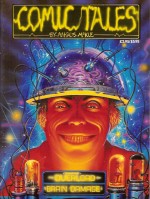
Comic Tales


By Angus McKie and others (Northern Lights Press/Titan Books)
ISBN: 0-946394-00-8

Here’s an intriguing piece of British comics history that also highlights the talents of one of our most gifted illustrators – although you’ll possibly know him as the air-brush guy who worked with Dave Gibbons on such projects as The Dome: Ground Zero, or from his work in 2000AD and the Megazine.

Angus McKie came out of the same Northern do-it-yourself-publishing and underground scene that gave us Bryan Talbot, Hunt Emerson, Alan Craddock and many others (in Britain, the North now starts just the other side of Hemel Hempstead and Watford is simply Greater London…).  He is an extremely adept and adventurous colour artist with a predilection for science fiction.

He studied graphic design at Newcastle College of Art in the 1970s before eventually working for a London agency, painting bookcovers and illustrations whilst producing intriguing strip work for various experimental comics publications such as Psst!

His most notable success was the selling of his seminal fantasy saga ‘So Beautiful, So Dangerous’ to the American adult fantasy magazine Heavy Metal, although he had previously contributed many tales to the original French parent publication Metal Hurlant.  ‘So Beautiful, So Dangerous’ became one of the strips adapted into the 1981 animated Heavy Metal movie.

In recent years he has worked extensively in the video games field.

This slim, full-colour and exceptionally readable tome is still readily available for discerning adults and features a spiffy selection of gloriously tongue-in cheek yarns. Beginning the spectacle is a political fable concocted with the assistance of Dave Huxley and Alan Craddock. ‘Wurtham View 2000’ is a creepy “big science” tale that examines the possible ramifications of a workable time-scanning television camera, and is followed by the sequel ‘Face of the Past’ which reveals its most probable uses, human nature being what it is…

More broadly comedic are the stylish gag strips ‘Tales of the Zen Masters: Nothing Exists’ and ‘Tales of the Sufi Masters’ whilst McKie displays his flair for the dramatic by working with William Shakespeare on ‘The King and I’ (that would be Lear, in case you’re wondering…). ‘The Appointment’ is an effective reinterpretation of the W. Somerset Maugham work Appointment in Samarra, and Craddock again assists on the sci fi gladiatorial spoof ‘Superhero.’

‘The Spirit of 67’ is a barbed and whacky reminiscence of past times that leads to a time travel tribulation whilst the sorry fate of two second-rate wannabe rock stars is scathingly described in ‘The Legend of the Magic Tone Box’ (written by Mike Feeney). The book ends with an extended satirical story of a misguided gang of radical anarchists with a big idea but not much of a clue in ‘Power to the People.’

McKie’s career path has taken him far from his comics roots but these little gems show an admirable disrespect for authority coupled to a highly accessible style of graphic narrative. While we’re all waiting for his next masterpiece why not track down this little gem and do a bit of time travelling of your very own?
© 1988 Junior Print Outfit.

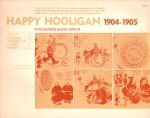
Happy Hooligan 1904-1905


By Frederick Burr Opper (Hyperion Press)
ISBN: 0-88355-658-8

While I eagerly await the arrival of my copy of the recent “Forever Nuts” hardback collection of Happy Hooligan I thought I’d dip again into the first collection of the eternal indigent that I ever saw: long ago whilst still a spotty, mildly angry punk art student…

Frederick Burr Opper was one of the first giants of comics, a hugely imaginative and skilled illustrator who moved into the burgeoning field of newspaper strips just as they were being born, and his pictorial creations (and even more so his dialogue) have forever changed the English language…

Born in 1857 the son of Austrian immigrants, Opper grew up in Madison, Ohio, and at age 14 joined the Madison Gazette as a printer’s apprentice. Two years later he was in New York. Always drawing, he worked briefly in a store whilst studying at Cooper Union (The Cooper Union for the Advancement of Science and Art was and is a magnificent experiment in education and excellence: look it up and be amazed…) before linking up as student and eventually, assistant, to illustration giant Frank Beard.

Opper sold his first cartoon to Wild Oats in 1876, swiftly following up with further sales to Scribbner’s Monthly, St. Nicholas Magazine and Frank Leslie’s Weekly, before joining the prestigious Puck in 1880, drawing everything from spot illustrations, gags, political cartoons and many of the new, full-colour, Chromolithographic covers. He was also a book illustrator of major renown, an incisive humorist, poet and creator of children’s books.

After 18 lucrative, influential – and steady – years, Opper was drawn away to join William Randolph Hearst’s growing stable of comics pioneers in 1899, joining the New York Journal’s Sunday Color Supplement, where Happy Hooligan first appeared on 11th March 1900. Although not a regular feature at the start – many cartoon strippers of the fledgling art form were given great leeway to experiment with a variety of ideas in those early days – before too long the feature became simply too popular to play with and settled into a stable tenure that lasted until 1932 when the artist’s failing eyesight led to his retirement and the tramp’s demise. Opper passed away at the end of August 1937.

Opper never used assistants but his imagination and unsurpassed creativity made Hooligan and other major features Alphonse and Gaston and the astoundingly madcap Mule strip And Her Name was Maud household favourites around the world, appealing equally to Presidents and public alike. As the feature became ever more popular experimental and lesser strips such as Howsan Lott and Our Antediluvian Ancestors had perforce to be abandoned.

Happy Hooligan is an affable, well-meaning but bumbling tramp who wears an old tin-can for a hat. Wishing nobody ill, this gentle vagrant is usually the inadvertent tool of better bred folks who should know better, cops a little too fond of the truncheon and nightstick, and harsh, unforgiving cosmic ill-fortune. It is a strip brimming with invention, pathos, social commentary, delightful wordplay and broad, reckless slapstick. More than one source cites Happy as having a profound influence on Charlie Chaplin’s Little Tramp in both content and tone…

This black and white volume, compiled and edited in 1977 by unsung hero of American comic strips Bill Blackbeard, with a fascinating introduction from historian Rich Marschall, reprints the entire continuity from 1904 and 1905, and follows the simple sad-sack across the USA and, after many abortive and hilarious attempts, across the sea to England. After weeks of raucous calamity trying to see the King and falling foul of the equally high-handed British constabulary, Happy, with brothers Montmorency and Gloomy Gus (yep that’s one of Opper’s…) in tow, the clan Hooligan then proceeded to make themselves unwelcome throughout Europe. These hilarious, rowdy escapades are often exacerbated by occasional visits from the ultra-polite Alphonse and Gaston, Opper’s legendary duo of etiquette elitism…

Crossovers were not Opper’s only innovation. Happy Hooligan is considered to be the first American strip to depend on word balloons rather than supplemental text, and the humble, heartwarming hobo was also the first strip character to jump to the Silver Screen in six movie shorts between 1900-1902. He was also probably the first mass-market merchandising comics star…

Both Opper and his creations become less well-known by the year, but the quality of the work can never fail to amuse and inspire. If I could have only found a way to play bass and keep that tin can on me head back then, you might be buying my comeback album about now rather than reading a recommendation to track down one of the very best cartoon masterpieces of all time…
© 1977 Hyperion Press. All rights reserved.

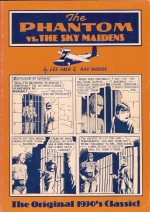
The Phantom vs. the Sky Maidens


By Lee Falk & Ray Moore (Ken Pierce)
No ISBN

In the 17th century a British sailor survived an attack by pirates, and washing ashore in Africa, swore on the skull of his murdered father to dedicate his life and that of all his descendents to destroying pirates and criminals. The Phantom fights crime and injustice from a base deep in the Jungles of Bengali, and throughout Africa he is known as the “Ghost Who Walks”, considered an immortal avenger by the credulous and the wicked. Down the decades one hero after another has fought and died in an unbroken line, and the latest wearer of the mask, indistinguishable from the first, continues the never-ending battle…

For such a successful, long-lived and influential series, in terms of graphic novel collections The Phantom has been very poorly served by the English language market. Various small companies have tries to collect the strips – one of the longest continually running adventure serials in publishing history – but in no systematic or chronological order and never with any sustained success.

This particular edition is a black and white paperback album from the early 1980s and comes courtesy of that pioneer of strip preservation and proliferation Ken Pierce, collecting in almost its entirety the second ever dailies saga (originally published from 9th November 1936 to April 10th 1937) from the annals of “The Ghost Who Walks.”

Lee Falk created Jungle Avenger at the request of his publishers who were already making history and public headway with his first strip sensation Mandrake the Magician. Although technically not the first ever costumed hero in comics, The Phantom was the prototype paladin to wear a skin-tight body-stocking, and the first to have a mask with opaque eye-slits.

He debuted on February 17th 1936 in an extended sequence that pitted him against a global confederation of pirates called the Singh Brotherhood. Falk wrote and drew the daily strip for the first two weeks before artist Ray Moore took over the illustration side. The Sundays feature began in May 1939.

This second rip-snorting adventure-mystery follows directly on from the initial outing (and with the Singh Brotherhood tale forms the basis for the exceptionally watchable 1996 movie staring Billy Zane) and finds the anonymous, indomitable hero blamed for the depredations of a gang of airborne bandits currently raiding passenger planes and airships throughout the orient.

Entitled ‘The Sky Band’ it was a great shock to avid readers of the 1930s to discover that those enigmatic, ruthless aerial brigands were all weak and feeble women – whereas re-titling the book “The Sky Maidens” might have tipped off any later fans…

Escaping from police custody with the aid of his faithful Pygmy warriors the Bandar, The Phantom is soon hot on the trail of the real mastermind…

Stuffed with chases, assorted fights, stunts and many a misapprehension – police and authorities clearly having a hard time believing a pistol-packing masked man with a pet wolf might not be a bad egg – this a gripping blood and thunder tale that still packs a punch and quite a few subtle laughs. Captured by the manic Baroness who runs the all-girl gang, The Phantom eventually turns the tide not by force but by exerting his masculine wiles upon the hot-blooded – if psychopathic – harridan, unaware until too late that his own beloved, true-blue Diana Palmer is watching…

It is truly inexplicable to me that in a marketplace which has rediscovered so many lost and forgotten comics treasures that such an iconic strip as the Phantom (and Mandrake the Magician for that matter) can remain uncollected and ignored, especially as the material is still fresh, entertaining and addictively compelling.

But, even if it were only of historical value (or just printed for Australians – who have long been manic devotees of the implacable champion) surely the Ghost Who Walks is worthy of a definitive chronological compendium series?
© 1982 King Features Syndicate. All rights reserved.

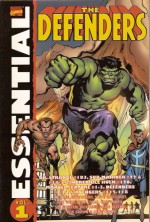
Essential Defenders volume 1


By Roy Thomas, Steve Englehart, Len Wein, Sal Buscema & various (Marvel)
ISBN: 978-0-7851-1547-2

Last of the big star conglomerate super-groups, the Defenders would eventually count amongst its membership almost every hero – and a few villains – in the Marvel Universe. No surprise there then as initially they were composed of the company’s bad-boys: misunderstood, outcast and often actually dangerous to know.

For Marvel, the outsider super-group must have seemed a conceptual inevitability – once they’d finally published it. Apart from Spider-Man and Daredevil all their heroes regularly teamed up in various mob-handed assemblages, and in the wake of the Defenders’ success even more super-teams comprised of pre-existing characters were mustered – such as the Champions, Invaders, New Warriors and so on but never with so many Very Big Guns…

The genesis of the team in fact derived from their status as publicly distrusted “villains”, but before all that later inventive approbation this cheap and cheerful black and white volume (collecting Dr. Strange #183, Sub-Mariner #22, 33-35, Incredible Hulk #126, Marvel Feature #1-3, Avengers #115-118 and Defenders #1-14) re-presents three linked tales that would impact on later issues of the title. Confused yet? You will be…

For kids – of any and all ages – there is a simply primal fascination with brute strength and feeling dangerous, which surely goes some way towards explaining the perennial interest in angry tough guys who break stuff as best exemplified by Prince Namor, the Sub-Mariner and the Incredible Hulk. When you add the mystery and magic of Doctor Strange the recipe for thrills, spills and chills becomes simply irresistible…

The first tale in this volume comes from Dr. Strange #183 (November 1969). In ‘They Walk by Night!’ Roy Thomas, Gene Colan & Tom Palmer introduced a deadly threat in the Undying Ones, an elder race of demons hungry to reconquer the Earth, but as the series unexpectedly ended with that issue the story went nowhere until the February 1970 Sub-Mariner (#22) ‘The Monarch and the Mystic!’ brought the Prince of Atlantis into the mix, as Thomas, Marie Severin & Johnny Craig told a sterling tale of sacrifice in which the Master of the Mystic Arts seemingly died holding the gates of Hell shut with the Undying Ones pent behind them.

The extended saga concluded on an upbeat note with The Incredible Hulk #126 (April 1970) with ‘…Where Stalks the Night-Crawler!’ by Thomas and Herb Trimpe wherein a New England cult dispatched helpless Bruce Banner to the nether realms in an attempt to undo Strange’s sacrifice. Luckily cultist Barbara Norris had last minute second thoughts and her own dire fate freed the mystic, seemingly ending the threat of the Undying Ones forever.

At the end of that issue Strange retired, forsaking magic, although he was back before too long as the fates – and changing reading tastes – called him back to duty. Meanwhile Sub-Mariner had become an early advocate of the ecology movement, and in issues #34-35 of his own title (February and March 1971) he took the next step in the evolution of the Defenders when he recruited Hulk and Silver Surfer to help him destroy an American Nuclear Weather-Control station.

In ‘Titans Three’ and the concluding ‘Confrontation’ (by Thomas, Sal Buscema & Jim Mooney) the always misunderstood trio battled a despotic dictator’s forces, the US Army and the Mighty Avengers to prevent the malfunctioning station from accidentally vaporising half the planet…

With that debacle smoothed over life resumed its usual frenetic pace for the Hulk and Namor until giant sized try-out comic Marvel Feature #1 (December 1971) presented ‘The Day of the Defenders!’ as a mysteriously returned Dr. Strange recruited the Avenging Son and the Jade Giant to help him stop the deathbed doom of crazed super-mind Yandroth.

Determined to not go gently into the dark the Scientist Supreme had built an Omegatron weapon programmed to obliterate the Earth as soon as Yandroth’s heart stopped beating and only the brute strength of the misunderstood misanthropes could possibly stop it…

Naturally the fiend hadn’t told the whole truth but the day was saved – or at least postponed – in a canny classic from Thomas, Ross Andru and Bill Everett. That comic also revealed how Strange regained his mojo in ‘The Return’ by Thomas, Don Heck and Frank Giacoia: a heady ten-page thriller which proved that not all good things come in large packages.

Clearly destined for great things the Defenders returned in Marvel Feature #2 (March 1972) with Sal Buscema replacing Everett as inker for a Halloween treat ‘Nightmare on Bald Mountain!’ Capturing his arch-foe Dr. Strange, extra-dimensional dark lord Dormammu invaded our realm through a portal in Vermont only to be beaten back by the mage’s surly sometimes comrades, whilst in #3 (June 1972) Thomas, Andru and Everett reunited to revive an old Lee/Kirby “furry underpants” monster in ‘A Titan Walks Among Us!’

Xemnu the Titan was an alien super-telepath who wanted to repopulate his desolate homeworld by stealing America’s children until thrashed by the Defenders, but older fans recognised him as the cover-hogging star of Journey into Mystery #62 (November 1960) where he acted as a road-test for a later Marvel star in a short tale entitled I Was a Slave of the Living Hulk!

An assured hit now The Defenders leapt swiftly into their own title (cover-dated August 1972), to begin a bold and offbeat run of reluctant adventures scripted by super-team wunderkind Steve Englehart. As a group of eclectic associates occasionally called together to save the world (albeit on a miraculously monotonous monthly basis) they were billed as a “non-team” – whatever that is – but that didn’t affect the quality of their super-heroic shenanigans.

With Sal Buscema as regular penciller an epic adventure ensued with ‘I Slay by the Stars!’ (inked by Giacoia) as sorcerer Necrodamus attempted to sacrifice Namor and free The Undying Ones, a mission that led to conflict with an old ally in ‘The Secret of the Silver Surfer!’ (inked by John Verpoorten) and the concluding, Jim Mooney inked ‘Four Against the Gods!’ as the Defenders took the war to the dimensional dungeon of the Undying Ones and rescued the long imprisoned and now totally insane Barbara Norris.

Clearly a fan of large casts and extended epics Englehart added a fighting female to the non-team with ‘The New Defender!’ (inks by new regular Frank McLaughlin) as the Asgardians Enchantress and Executioner embroiled the anti-heroes in their long-running love-spat, bringing the Black Knight briefly into the mix, and turning Barbara into the latest incarnation of Feminist Fury (these were far less enlightened days) The Valkyrie.

Issue #5 began a long running plot thread that would have major repercussions for the Marvel Universe. The denouement of the previous tale had left the Black Knight an ensorcelled, immobile stone statue, and as Strange and Co. searched for a cure the long defused Omegatron resumed its countdown to global annihilation in ‘World Without End?’

The Surfer “rejoined” in #6’s ‘The Dreams of Death!’ as new lightweight magic menace Cyrus Black attacked, and, after a spiffy pin-up, issue #7 saw  Len Wein co-script ‘War Below the Waves!’ (inked by Frank Bolle) as tempestuous ex-Avenger Hawkeye climbed aboard to help defeat the undersea threat of Attuma and the soviet renegade Red Ghost; a bombastic battle-tale concluded in ‘…If Atlantis Should Fall!’

Since issue #4 Englehart had been putting players in place for a hugely ambitious cross-over experiment: one that would turn the comics industry on its head, and in a little prologue taken from the end of Avengers #115 he finally set the ball rolling here. Drawn by Bob Brown and Mike Esposito, ‘Alliance Most Foul!’ saw Dormammu and the Asgardian god of Evil Loki unite to search for an ultimate weapon that would give them final victory against their foes. They would trick the Defenders into securing the six component parts by “revealing” that the reconstructed Evil Eye could restore the petrified Black Knight, a plan that began at the end of Defenders #8…

The first chapter in ‘The Avengers/Defenders Clash’ was ‘Deception!’ as a message from the spirit of the Black Knight was intercepted by the twin gods of evil, leading directly to ‘Betrayal!’ wherein the Avengers, hunting for their missing comrade, “discover” that their oldest enemies Hulk and Sub-Mariner may have turned the Black Knight to stone. This and the third chapter ‘Silver Surfer Vs. the Vision and the Scarlet Witch’ comprise the contents of Avengers #116, illustrated by Brown & Esposito, wherein the rival teams split up: one to gather the scattered sections of the Eye and the other to stop them at all costs…

Defenders #9 (Buscema & McLaughlin) began with the tense recap ‘Divide …and Conquer’ before ‘The Invincible Iron Man Vs. Hawkeye the Archer’ and ‘Dr. Strange Vs. the Black Panther and Mantis’ shed more suspicion and doubt on the mystical villain’s subtle master-plan. Avengers #117 ‘Holocaust’, ‘Swordsman Vs. the Valkyrie’ and the turning point ‘Captain America Vs. Sub-Mariner’ by Brown and Esposito, led to the penultimate clash in Defenders #10 (Buscema & Bolle) ‘Breakthrough! The Incredible Hulk Vs. Thor’ and the inevitable joining together of the warring camps in ‘United We Stand!’, but sadly too late as Dormammu seized the reconstructed Evil Eye using its power to merge his monstrous realm with ours.

Avengers #118 provided the cathartic climactic conclusion in ‘To the Death’ (Brown, Esposito & Giacoia) as all the heroes of the Marvel Universe battled the demonic invasion whilst the Avengers and Defenders plunged deep into the Dark Dimension itself to end the threat of the evil gods forever (or at least for the moment…).

With the overwhelming cosmic threat over the victorious Defenders attempted to use the Eye to cure their stony comrade only to find that his spirit had found a new home in the 12th century. In #11’s ‘A Dark and Stormy Knight’ (inked by Frank Bolle), the group battled black magic during the Crusades, failed to retrieve the Knight and went their separate ways – as did departing scripter Englehart.

With issue #12 Len Wein assumed the writer’s role and Sal Buscema & Jack Abel illustrated the return of the mind-bending Xemnu in ‘The Titan Strikes Back!’ as the pared down cast of Strange, Valkyrie and the Hulk began a run of slightly more traditional fights ‘n’ tights capers.

The first of these and the last storyline in this volume was a Saves-the-World struggle against the villainous Squadron Sinister that began with ‘For Sale: One Planet… Slightly Used!’ (with an early inking job from Klaus Janson) and concluded in the Dan Green embellished ‘And Who Shall Inherit the Earth?’ as the Batman-analogue Nighthawk joined the Defenders to defeat his murderous ex-team-mates and the aquatic alien marauder Nebulon, the Celestial Man.

With the next volume the Defenders would become one of the best and weirdest superhero comics in the business, but to get there you really need to observe this unruly, uncomfortable selection of misfit heroes in their salad days here. So the fact that their widespread and far-reaching origins are still so eminently entertaining is both a relief and delight.

Go on, Enjoy, Pilgrim…
© 1969, 1970, 1971, 1972, 1973, 1974, 2005 Marvel Characters, Inc. All Rights Reserved.

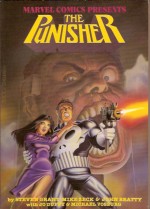
The Punisher


By Steven Grant, Mike Zeck & John Beatty, Jo Duffy & Mike Vosburg (Marvel)
ISBN: 0-87135-394-6

The story goes that Marvel Comics were reluctant to give Frank Castle a starring vehicle in their standard colour comic-book line, feeling that the character’s very nature made him a bad guy and not a good one. Debuting as a villain in Amazing Spider-Man #129 (February 1974), the Punisher was created by Gerry Conway, John Romita Sr. and Ross Andru, a response to such increasingly popular prose anti-heroes as Don Pendleton’s Mack Bolan: the Executioner and other returning Viet Nam vets who all turned their training and talents to wiping out organised crime.

Castle saw his family gunned down in Central Park after witnessing a mob hit, and thence dedicated his life to eradicating criminals everywhere. His methods are violent and permanent. It’s intriguing to note that unlike most heroes who debuted as villains (Wolverine comes to mind) the Punisher actually became more immoral, anti-social and murderous, not less: the buying public shifted its communal perspective – Castle never toned down or cleaned up his act…

As well as his many “hero-or-villain” appearances in other character’s series the crazed crime-crusher had previously starred in Marvel Preview #2 (1975) and Marvel Super Action #1 (1976), but as these were both black and white magazines aimed at a far more mature audience, writer Steven Grant and penciller Mike Zeck apparently had an uphill struggle convincing editors to let the grim, gun-crazed maniac loose in that shiny world where little kids might fixate on a dangerous role model – and their parents might get all over-protective, litigious and shirty…

In 1985 they finally got the green-light and the five issue miniseries turned the industry on its head, although there was indeed plenty of controversy to go around – especially as the series had a “hero” who had lots of illicit sex and killed his enemies in cold blood. Also causing problems for censorious eyes were the suicide of one of the major characters and the murder of innocent children. Doesn’t it make you proud to realise how far we’ve since come…

The company mitigated the potential fall-out with the most lacklustre PR campaign in history, but not telling anybody about The Punisher didn’t stop the series from becoming a runaway, barnstorming success. The rest is history…

Two years later as the graphic novel market was finally getting established and with Frank Castle one of the biggest draws in comics (sorry, I’m such a child sometimes) that contentious series was released as a complete book and it remains one of the very best of all his many exploits.

The action begins in ‘Circle of Blood’ as Frank Castle is locked in Ryker’s Island prison where every inmate is queuing up to kill him. Within hours though he has turned the tables and terrified the General Population, but knows that both old foe Jigsaw and the last of the great mob “Godfathers” have special plans for him…

When a mass breakout frees all the cons Castle brutally steps in. For this he is allowed to escape by the warden, who casually offers him membership in The Trust, an organisation of “Right-minded, law-abiding citizens” who approve of his crusade against crime. Castle also discovers he’s being stalked by Tony Massera, a good man from a bad family.

‘Back to the War’ finds the Punisher back on the streets hunting scum, supplied by the Trust but still not a part of their organisation. After an abortive attempt to blow up The Kingpin, he is saved by the mysterious Angel, and begins a liaison with her. Tony wants to kill him to avenge his father, one of Punisher’s many gory successes – but only after the streets have been swept clean of scum like the rest of his own family…

With everybody believing the master of New York’s underworld dead, a bloody gang-war erupts with greedy sub-bosses all trying to claim the top spot, but by the events of ‘Slaughterday’ Castle realises that too many innocents are getting caught in the crossfires. He also discovers in ‘Final Solution’ that the Trust have their own national agenda as hit men and brainwashed criminals dressed in his costume are out there, executing mobsters and fanning the flames…

All the Trust’s plans for this “Punishment Squad” and the country are uncovered in the blockbusting conclusion ‘Final Solution Part 2’ as all the pieces fall into place and the surviving players reveal their true allegiances. In a classy final chapter mysteriously completed by the highly underrated Jo Duffy and Mike Vosburg, from Grant’s original plot, The Punisher takes charge in his inimitable manner, leaving God to sort out the paperwork….

We can only speculate as to why the originators fell away at the last hurdle, but I’m pretty sure those same reluctant editors played some part in it all…

This superbly gritty, morally ambiguous if not actually ethically challenging drama never ceases to thrill and amaze, and has been reprinted a number of times: in the black and white compilation Essential Punisher volume 1, as Punisher: Circle of Blood, in hardback editions (2006 and 2008) and of course, as the satisfyingly heavy calibre softcover graphic novel (with a new original painted Zeck cover) under review here.

Whichever version suits your inclinations and wallet, if you love action, cherish costumed comics adventure and crave the occasional dose of gratuitous personal justice this one should be at the top of your “Most Wanted” list.
© 1988 Marvel Entertainment Group, Inc. All Rights Reserved.

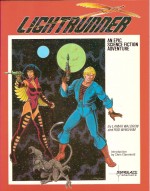
Lightrunner


By Lamar Waldron & Rod Whigham with Susan Barrows (Donning/Starblaze)
ISBN: 0-89865-315-0

During the 1980s a burgeoning science fiction and fantasy book market, bolstered by cinematic and even television blockbusters, fed into the new creative boom in the comicbook market, giving “graphic novels” their first tentative push into the real, bigger world outside established fandom as part of a greater zeitgeist. There was also a very real entrepreneurial creative buzz which led to many European and Japanese works finally breaking into the US market, and most importantly, a lot of attention was paid to new, homegrown material…

Among the important early players was The Donning Company Publishers, a Virginia-based outfit established in the 1970s who briefly blazed a pioneering trail with their Starblaze Graphics imprint.

Probably inspired by the innovative breakthrough work of Byron Preiss (Starfawn, Empire, The Swords of Heaven, The Flowers of Hell) Donning invested in lavish, visually impressive volumes targeting a broad crossover market. The began with a volume collecting the first chapters of Wendy and Richard Pini’s independent comics sensation Elfquest, and produced strip adaptations of popular prose properties such as Robert Asprin’s MythAdventures and the co-operative shared-universe fantasy series Thieves’ World. Along the way they also brought Colleen Doran’s first of A Distant Soil and Phil Foglio’s Buck Godot to a relatively small but crucially mainstream public.

The company’s output was small but highly effective and although the venture ended badly – in court, as many creators sued to regain control of their works – the beautiful, high quality works such as the graphic novel under review here showed that big, bold, expensive high-quality material was the future in an industry and art form that had always cut every corner, paid poorly and worked on miniscule margins…

Lightrunner is very much a product of its time, a riotous intergalactic rollercoaster rocket-ride which began life as a serial in the semi-pro fanzine Visions, and still packs a punch for any fan of brash, flashy space opera.

In the future, capitalism runs the universe in the form of planetary Corprostates held together by a web of trade undertaken by tachyon-driven solar sailing ships plying the perilous routes of the “Star Stream”. The Empyrean Alliance is a tenuous association of Free States, restive, politically insecure and greatly dependent on the trustworthy valour of the apolitical Empyrforce – a Navy-style peacekeeping/police militia.

The tale begins with young Burne Garrett, son of a legendary Empyrforce hero, who failed to make the grade and scrubbed out of his military training. Garrett is a pathetic disappointment to himself and everybody else. Now a lowly PR hack he is filming the initial tests of a radical new type of faster than light starship – The Stream Breaker – when calamity comes calling.

The new super-vessel suddenly comes to eerie life and takes off with him aboard, vanishing into the unknown, and the unwitting fool is suddenly Public Enemy #1! Framed, lost and desperate Garrett is soon plunged deep into the seedy underbelly of civilisation, a pawn of pirates and raiders until he is adopted by the spoiled, rich wild-child Lanie of Abul Sara (think Paris Hilton in lace-up high heel thigh-boots with a ray-gun… and now stop thinking of that because that’s not how she looks but what she’s like…).

The fugitive Garrett joins the tense and tentative crew of her beloved star-craft “Lightrunner.” Along the way he also picks up a pet monkey that might be the mightiest telepath in the galaxy…

As Garrett tries to clear his name, hunted by his own deeply disillusioned galactic-hero father and the true culprits who still want the Stream Breaker prototype he has so providentially hidden, the lad uncovers a clandestine plot of cosmic proportions that might just mean the end of the entire Alliance…

Although there have since been better variations of this plot and set-up, especially in films, this breezy, spectacular romp still reads incredibly well and looks great. Fans of this particular form of chase-based science fiction will be well rewarded for seeking out Lightrunner, and as the book is readily available and quite inexpensive all that fun can even be considered a bargain.
© 1983 Lamar Waldron and Rod Whigham.  All Rights Reserved.

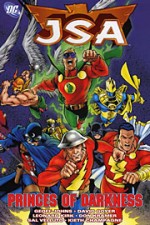
JSA volume 7: Princes of Darkness

New Extended Review

By Geoff Johns, David Goyer & various (DC Comics)
ISBN 1-84576-035-2

As a kid in the 1960s I used to love any appearance of the Justice Society of America, DC’s pioneering and popular crime-busting characters from the 1940s. They seemed full of a resonance that was equal parts Mystery and History. They belonged to the mythical land of “Before I Was Born” and their rare guest-shots always filled me with wonder and joy.

A few years ago they were permanently revived and I found very little to complain of. As superhero sagas go the stories and art were entertaining enough, often even outstanding, but with this compilation (collecting issues #46–55), I finally found myself agreeing with those wise editorial heads of my well-spent youth who felt that less was more and that over-exposure was a real and ever-present danger.

That’s not to say that these tales are in any way less than they need to be nor that the full-on, goodies-vs.-baddies extravaganzas are boring or tired. The problem is much more insidious and, I regret, more to do with me than the material. It finally became clear with this extended, spectacular struggle of valiant heroes against Darkness-wielding villains who black out the entire Earth and let evil reign free that the JSA were back for good.

But they were no longer quite so “special”.

Following on from the cliffhanger revelations of JSA: Savage Times the shadowy saga, written as ever, by David Goyer and Geoff Johns, with art from Sal Velluto, Leonard Kirk, Don Kramer, Bob Almond, Keith Champagne, & Wade von Grawbadger, opens with ‘Into the Valley’ and a blistering attack by the Chaos Lord Mordru, acting in concert with the conflicted ex-JSA-er Obsidian and the demonic spirit of rage, Eclipso.

Apparently dead, the sprit of Hector Hall, the latest Doctor Fate, travels to a distant realm for some sage advice in ‘Eclipse’ whilst on Earth, utter soul-drinking blackness has blanketed the globe unleashing the worst aspects of human nature. ‘Enlightenment’ and ‘Army of Darkness’ see Fate delve deeper into a potential solution whilst on the physical plane all of the World’s heroes – and some villains – are slowly being destroyed by the irresistible wave of Night.

A turning point comes in ‘The Last Light’ as a valiant sacrifice turns one of the dark masters from foe to friend, resulting in stupendous battles and an earth-shattering climax as the heroes save the day in ‘Princes of Darkness Coda: Justice Eternity’ – with which scripter Goyer moves on to fresh pastures.

After all that angsty spectacle and shiny triumph, the team catches a collective breath in ‘Brand New Day’ with a few new members and general recuperation, unaware the Atom Smasher and Black Adam have covertly crossed a moral line which will come back to haunt them all whilst the new heroic Eclipso feels himself drawn to do likewise. The main action of the piece comes in the form of a return for haunted huntress Crimson Avenger; a woman driven by possessed handguns to execute murderers who have escaped justice. To everyone’s astonishment her latest target is veteran hero Wildcat and nothing in the universe can stop or sway her…

The tale concludes in ‘Blinded’ as the relentless Avenger and Wildcat find a unique way to satisfy the curse of her relentless pistols, whilst Black Adam continues to recruit disenchanted heroes for a new kind of super-team, and the book ends on a satisfyingly welcome lighter note with a brace of seasonal tales, beginning with a lovely, lighthearted Thanksgiving bash starring both Justice League and Society.

‘Virtue, Vice & Pumpkin Pie’ is a splendid and jolly change of pace after all the high-octane testosterone which readily displays Geoff John’s comedic flair whilst ‘Be Good for Goodness’ Sake’ finds the surviving WWII heroes (Green Lantern, Wildcat, Hawkman and the Flash) bringing a lump to the throat and a tear to the eye (comic fans being the most soft and sentimental creatures in the universe) with a Christmas present for a long-lost member, not seen since the early days of the Golden Age…

These are characters that everyone in the industry seems to venerate, and I would be churlish to deny new readers and fans a chance to discover them too, but anticipation, delayed gratification and keen imagination once made every appearance of the JSA a source of raging joy to me and a million other kids. It’s such a shame today’s readers can’t experience that unbeatable buzz too. At least the stories are high quality. It would be utterly unbearable if the team were over-exposed and sucked too…

© 2003, 2004 DC Comics. All Rights Reserved.
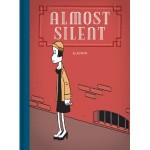
Almost Silent


By Jason, translated by Kim Thompson (Fantagraphics Books)

ISBN: 978-1-606-99315-6

John Arne Saeterrøy, who works under the pen-name Jason, was born in Molde, Norway in 1965, and appeared on the international cartoonists’ scene at age 30 with his first graphic novel Lomma full ay regn (Pocket Full of Rain) which won that year’s Sproing Award (Norway’s biggest comics prize).

He followed with the series Mjau Mjau (winning another Sproing in 2001) and in 2002 turned almost exclusively to producing graphic novels. Now an international star of comics, he has won seven major awards from such disparate regions as France, Slovakia and the USA.

Thankfully the fine folks at Fantagraphics have collected four of his earliest graphic novels in a superb hardback companion to the 2009 classic [Low Moon] which provides more of Jason’s surreal and cinematic, darkly hilarious anthropomorphic ruminations on his favourite themes of relationships and loneliness, viewed as ever through a charmingly macabre cast of silent movie archetypes, cinematic monsters and sad sack chumps.

Told in pantomimic progressions rather than full stories – and often as classical chase scenes reminiscent of Benny Hill – the wonderment begins with breakthrough album ‘Meow, Baby’ wherein a mummy goes walkabout from his museum sarcophagus encountering bums and gamins, vampires, aliens, angels, devils, skeletons and cops – always so many cops – in hot pursuit…

This primarily monochrome collection is called Almost Silent because it mostly is: and what dialogue appears is never informative or instructive, merely colour or window dressing. The artwork is displayed in formalised page layouts rendered in a minimalist evolution of Hergé’s Claire Ligne style, solid blacks, thick lines and settings of seductive simplicity unwinding like an unending, infinite zoetrope show. These early works are collections of gags and situations best experienced rather than read.

A second untitled tale follows the perceived social inadequacies of males hungry for love: a werewolf, caveman – complete with courting cudgel, a Martian, Frankenstein’s monster and even Elvis. All try and die in the modern dating whirl.

The next sequence introduces cannibal ghouls and a movie-buff Travis Bickle/Arnold Schwarzenegger wannabe also starving for acceptance, and continues with the bleakly comedic ‘Return of the Mummy’ and a delightfully tongue in cheek pastiche of Tintin and Blake and Mortimer entitled ‘The Mummy’s Secret’, featuring the entire ghastly cast, before ending with a fascinating selection of three panel gag strips.

The next featured volume is ‘Tell Me Something’ a more ambitiously visual outing that acknowledges its antecedents and influences by using silent movie dialogue cards instead of word balloons and follows a plucky heroine as she searches for affection in all the wrong places with her Harold-Lloyd-like would-be beau. Also in attendance are the usual cast of filmic phenomenons…

‘You Can’t Get There from Here’ concentrates mainly on the Frankenstein cast: the monsters, their equally artificial wives, their lovelorn and covetous creators and even the Igors, misshapen wizened assistants also all seeking that one special person – or thing. Here the art is supplanted by the startling and highly effective addition of bronze inks for a compelling duo-tone effect that sits oddly well with the beast’s bittersweet search for his stolen, bespoke bride.

The collection concludes with a rather riotous adventure romp ‘The Living and the Dead’ wherein the perfect first date is interrupted by the rising of the unquiet dead and the end of civilisation in the rotting teeth of carnivorous zombies on their final march – possibly the funniest and most romantic yarn in the whole book

Jason’s work always jumps directly into the reader’s brain and heart, using the beastly and unnatural to ask gentle questions about basic human needs in a wicked quest for answers. That you don’t ever notice the deep stuff because of the clever gags and safe, familiar “funny-animal” characters should indicate just how good a cartoonist he is.

His comic tales are strictly for adults but allow us all to look at the world through wide-open childish eyes. He is a taste instantly acquired and a creator any fan should move to the top of the “Must-Have” list, so consider this superb hardback your guaranteed entry into his fabulous fun world…

© 2009 Jason. All rights reserved.

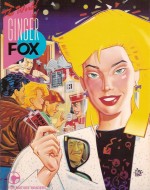
The World of Ginger Fox


By Mike Baron and Mitch O’Connell (Comico)
ISBN: 0-938965-02-6

Let’s all pop back to the ever-so-now 1980s with this stylish and radically different kind of graphic novel that pretty much typified and encapsulated the dichotomies of the age of Big Hair and Brash Money.

Peppertree Studios used to be one of the biggest players in Hollywood, until the somber 1970s saw ill-conceived, big, worthy movies almost bankrupt the company. Now the dissolute boys-club of greedy old men who own the company are so desperate that they hire a woman to save or kill the studio. After all, they have nothing to lose…

Amidst a welter of rumour, innuendo and open hostility, Ginger Fox blows into town and into a storm of trouble as she drags the company kicking and screaming back towards profits and safety. Along the way she encounters psychotic, crazed art-house directors, rowdy martial-arts prima donnas, drugs and thugs and sabotage from within by two-faced back-stabbers who don’t like taking orders from a pretty young woman and especially not a single-mom, Hollywood outsider…

The tale takes a swift side-step into the weird – and lavishly violent – when a Martial Arts secret society threatens to kill anybody connected with the new movie that inadvertently reveals their sacred Negative Kung Fu technique to anybody and everybody with the price of a movie ticket.

Despite warnings from cops and Hong Kong action-star Jason Wu, Ginger refuses to worry – at least until the “accidents” start to happen and the bodies start to pile up. Meanwhile, one of her own directors is trying to oust her and Peppertree’s biggest remaining star is spiraling out of control on addictive binges…

This mélange of glamour, fashion, excess and sheer over-the-top style is an unbelievably heady and enticing brew, especially thanks to the sleek, beautiful, high-end art and design of O’Connell; a canny cultural scavenger whose slick blend of caricature, pop iconography and surreal whimsy elevate this tale to unprecedented heights of verve and dash.

Sexy, cinematically violent and wickedly tongue-in-cheek, this adult comics caper is markedly different from almost anything you’ve ever seen and thoroughly deserves another bite of the graphic novel cherry. If they’re bringing back the ’80s, you’re going to need this to remind you that it wasn’t all dreadful…
Story © 1986 Mike Baron. Artwork © 1986 Mitch O’Connell. All rights reserved.