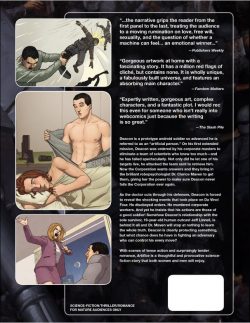

Chicago – A Comix Memoir


By Glenn Head (Fantagraphics Books)
ISBN: 978-1-60699-878-6 (HB)

One of the things comics can do better than almost any other medium is autobiography. Words are immensely potent, but when wed to the images a confessor wants you to see and has devised especially for that purpose, the response is always immediate, visceral and permanent.

Cartoonist, illustrator and editor Glenn Head (Hot Wire, Snake Eyes, Weirdo) studied under Art Spiegelman at the School for Visual Art in the early 1980’s but bided his time in commercial illustration for publications like Advertising Age, Screw, Sports Illustrated and The Wall Street Journal, and with comix such as Guttersnipe and Head Shots before releasing his first graphic novel in 2015.

It was worth the wait…

In monochrome hardback Chicago – available in sturdy hardback and trustworthy digital formats – Head turned a harsh, stark spotlight on his own life, literally baring all and detailing how a troubled teenaged virgin from New Jersey turned his back on the American Dream and his own personal hopes and aspirations before touching bottom and courting madness to reach his current (still tenuous) state.

Following an incisive Introduction from Phoebe Gloeckner, the history lesson begins in a graveyard in the Garden State. “Glen” is nineteen and troubled, but not necessarily unhappy: he’s just painfully aware that he doesn’t fit in.

It’s the summer of 1977 and he’s obsessed with the cartoons and paraphernalia of the hippie Counterculture then experiencing its death-throes. Dad works on Wall Street and desperately wants to understand why his son seems at such a loss. The boy doesn’t even seem happy to be going to Art School in Cleveland, even though he claims that’s what he wants…

What Glenn actually wants most is Sarah: his best friend and a girl appallingly emotionally scarred by the treatment she has received from her Holocaust-Survivor parents. She’s already well down the road to dissolution though: pregnant, a runaway and being used to turn tricks by her latest scumbag boyfriend…

The season turns and Glen reluctantly reports to the Cleveland Institute of Art, his intolerant, abrasive attitude winning him few friends amongst staff or students. There’s something indefinably wrong inside his head and before long he drops out and starts panhandling to survive.

A casual conversation with another student attains the status of a sign from God and Glen – who we’re starting to think might suffer from bipolar disorder – abruptly hitchhikes to Chicago, determined to sell cartoons to Playboy magazine…

And thus begins an intense period of privation, hallucination, harassment by hustlers, constant danger and creeping horror, all punctuated by unexpected kindnesses from strangers, rejections, connections and moments of incomprehensible good fortune as chance meetings with Muhammad Ali and Robert Crumb begin turning the street-meat’s life around…

‘Decompression’ sees Glen in January 1978, back in comfortably suburban Madison, N.J. thanks to his amazingly understanding yet still-uncomprehending father. Although the threat of imminent starvation and murder have faded, the boy is still at risk – from his own actions after a telephone conversation with idealised inamorata Sarah’s manic mother and his own father’s poorly hidden handgun…

The final section of this diary occurs in 2010 as Brooklyn-dwelling single-dad Glen gets an email one morning. Sarah, the one that got away, the great missed opportunity, has tracked him down and wants to meet up. Is this his chance to stop being that painful, pathetic, unresolved 19-year-old virgin at last?

Breathtakingly candid, intoxicatingly forthright and irresistibly visually exhilarating, Chicago is a startling examination of the power of obsessions and memories: a potential roadmap to finding your own identity… as long as you have the nerve and stomach to try…
Chicago © 2015, Glenn Head. This edition © 2015 Fantagraphics Books, Inc.

Can’t Get No


By Rick Veitch (Vertigo)
ISBN: 978-1-4012-1059-5 (TPB)

The terrorist atrocity of September 11th, 2001 changed the world and in our own small corner, generated a number of graphic narrative responses of varying quality, not to mention deep emotional honesty. Rick Veitch’s 2006 entry Can’t Get No was as powerful and heartfelt as any, but benefited greatly from a little time and distance.

Chad Roe‘s company sold the world’s most permanent and indelible marker pen, the “Eter-No-Mark”. Everyone was flying high but then the lawsuits hit all at once. A cheap, utterly irremovable felt-pen is a godsend to street-artists and the most virulent of vandalistic weapons to property owners…

As his universe collapses on him, Chad goes on a bender, picks up two hippie-artist-chicks in a bar and wakes up a human scribble-board, covered literally from head to toe in swirling, organic, totally permanent designs.

Even then he tries so very hard to bounce back. A walking abstract artwork, he is ostracized by mockery, unable to conceal his obvious “otherness”, and neither self-help philosophies, drugs, nor alcohol can make him feel normal again. Defeated, reviled and eventually crushed in spirit, he’s trapped in a downward spiral. He meets the pen-wielding girls again and finds solace and uncomplicated joy in the artist’s world of sex, booze and dope.

Lost to “normal” society, Chad goes on a road-trip with the women, but they haven’t even left the city before they’re all arrested. It is morning on September 11th and as the girls violently resist the cops an airplane flies overhead, straight towards the centre of Manhattan…

With no-one looking at him, just another part of the shocked crowd, he watches for an eternity, and then no longer anything but another stunned mortal, Chad drives away with an Arab family in their mobile home.

And thus begins a psychedelic, introspective argosy through America’s philosophy, symbolism and meta-physicality. With this one act of terrorism forever changing the nation, Chad is forced on a journey of discovery to find an America that is newborn both inside and out. His travels take him through vistas of predictable cruelty and unexpected tolerance, through places both eerily symbolic and terrifyingly plebeian, but by the end of this modern Pilgrim’s Progress, both he and the world have adapted, accommodated and accepted.

Born in 1951, Rick Veitch is a criminally undervalued creator who has lived through post-war(s) America’s many chimeric social revolutions. He has a poet’s sensibilities and a disaffected Flower-Child’s perspectives informing a powerful creative consciousness – and conscience. Can’t Get No is a landmark experiment in both form and content which deserves careful and repeated examination.

Black and white in a landscape format, and eschewing dialogue and personal monologues for ambient text (no word balloons or descriptive captions, just the words that the characters encounter such as signs, newspapers, faxes etc.) this graphic narrative – in paperback and digital editions – screams out its great differences to usual comic strip fare, but the truly magical innovation is the “text-track”, a continual fluid, peroration of poetic statements that supply an evocative counterpoint to the visual component.

Satirical, cynical, strident: Lyricism is employed for examination and introspection, in perhaps occasionally over-florid, but nonetheless moving and heartfelt free verse and epigrams don’t make this an easy read or a simple entertainment. They do make it a piece of work every serious consumer of graphic narrative should attempt.
© 2006 Rick Veitch. All Rights Reserved.

Desolation Jones: Made in England


By Warren Ellis & JH Williams III & various (WildStorm)
ISBN: 978-1-4012-1150-9 (TPB)

Los Angeles is a dump and a dumping ground. Personal opinions aside, that’s the premise of this deep, dark espionage thriller from comics wunderscribe Warren Ellis and graphic illuminator JH Williams III. When MI6 screw-up MichaelJones is no longer capable of doing his job, he’s offered a comfy testing role as his ticket out. No-one in their right mind should ever trust security service types, but that’s the point – the burnt out, alcoholic agent just isn’t all that anymore.

After years of unspeakable atrocities ostensibly intended to create better operatives – up to and including the bizarre and inexplicable Desolation Test, the ravaged remains of Michael Jones are consigned to the reservation provided by the West’s Intelligence Agencies for retired, rejected and discarded agents plus all the experiments that didn’t measure up: Los Angeles, USA.

There they can live out their lives as they see fit, but can never, EVER leave the city. There’s no pension scheme but the dregs can do whatever they need to make a living as long as it’s within city limits.

Jones is a mess, both physically and mentally. He can’t drink, won’t sleep and takes too many drugs. He avoids daylight, regularly hallucinates and is numb to all sensation and emotion. In “the Community” he freelances as a private eye/fixer: sorting out problems that can’t be resolved through legitimate methods.

In this first compilation (available in paperback and digital formats and collecting issues #1-6 of the WildStorm comic book) that problem is a retired NSA spook who’s being blackmailed by new members of the Community who have somehow stolen the Holy Grail of pornography. The ravaged Colonel Nigh wants Adolf Hitler‘s homemade porno back and will do anything to get it. Unfortunately, so will all the other filthy rich deviants who populate Tinseltown.

However, something just isn’t right. Jones may not feel, but something deeper is hiding behind all the subterfuge and depravity…

Sardonic and rather bleak, this caustic, tension-soaked, trauma-packed action caper dwells on the nasty side of the espionage genre: a thriller with plenty of twists and a solid mystery to intrigue the most jaded reader. The content is strictly adults only – and by that, I mean that the subtext of duty, love and honour are assaults on the traditions of the hero-spy in as brutal a manner as the sex and violence underscore the dark side of the American Dream-town.

This is a story for cynical adults, not horny kids with appropriate IDs. Great stuff beautifully conceived and magically limned.
© 2005, 2006 Warren Ellis & JH Williams III. All Rights Reserved.

Necromantic


By Lovern Kindzierski, David Ross, Geof Isherwood, Chris Chuckry & Taylor Esposito (Renegade Arts Entertainment)
ISBN: 978-1-98890-369-9 (TPB) eISBN: 978-1-98890-373-6

Real and fictionalised espionage tales are equally gripping when done well, and modern drama demands a healthy dose of genre cross-fertilisation. A perfect example catering to modern tastes is this opening salvo from Lovern Kindzierski (author of the Shame trilogies, Underworld, VMT and colourist of most of your favourite US superhero comics) and veteran illustrators David Ross (Star Wars; X-Men; Alpha Flight; Rai) and Geof Isherwood (Suicide Squad; Conan the Barbarian; Silver Surfer; Doctor Strange). In case you’re wondering, the crucial backroom boys here are Chris Chuckry on colours, and Taylor Esposito delivering calligraphic sound, captions and dialogue…

This rowdy, raunchy introductory action-fest reveals a critical turning point in the life of top-gun US Special Forces operative Jesse Harris whose latest successful mission in North Africa is forever blighted in ‘Love’s Labour’s Lost’ after she learns that her beloved Blake Williams has been killed in action.

Harris goes to pieces in ‘Much Ado About Nothing’: not simply from grief and anger, but also because she still sees him. It’s the kind of situation she has secretly endured and ignored since childhood, when she first discovered a facility for seeing and talking to people no one else can see…

Dragged out of shattering despondency by fellow ISA agent Rich Boon, she takes a “soft” mission in Afghanistan, only to find herself dragged to the edge of hell and a bittersweet reunion with Blake. In the course of her duties, she realises the local governor/warlord is a mortal agent of infernal demons pressganging recently deceased human souls into a legion intended to oust the devil, and install a new lord of the Damned. To aid the recruitment program, still-breathing Prince Minyar has bolstered his brutal living forces with rampaging zombies and ruthless killer ghosts only Jesse can perceive…

Facing modern arms and ancient devils revelling in another chance to spill blood, her team are swept away in ‘A Midsummer Night’s Dream’, but Harris gains valuable intel from the King’s vizier – an enslaved spirit determined to end the horrific recruitment program – and eventually a blessed ally when Blake escapes the Pit to render assistance and battle beside her to deliver earth and the afterlife from ‘The Tempest’…

Savage, fast-paced and strictly for adult eyes only, Necromantic is a blockbuster thrill-ride for the action-movie generation and a manic joy for those who still crave their cathartic release in print of digital comics form.
© Lovern Kindzierski and Renegade Arts Canmore Ltd. 2020

Connective Tissue


By Bob Fingerman (Fantagraphics Books)
ISBN: 978-1-60699-143-5 (HB)

The always innovative and entertaining Bob Fingerman (Minimum Wage; Recess Pieces; Bottomfeeder; Garbage Pail Kids; Scooby Doo) turned his post-modern attentions to the burgeoning sector of illustrated novellas (picture books for grown-ups) with this classy, sassy and wickedly beguiling blend of Alice in Wonderland, Stranger in a Strange Landand Clerks – with just a dash of Allan Moyle’s hugely underrated 1995 movie Empire Records peppering the mix.

There’s a whole other class of people in the world: eternally young, worldly-wise and yet unaccountably innocent. They dress oddly, know cool but useless things, don’t care about pension plans or job security and work only to live their outside lives. They are the disaffected tribe who work for minimum wage in the odd corners of modern retail: record stores, non-chain book shops, computer games stores, comic shops…

They’re not an underclass, just a different one.

Darla Vogel earns her living at Kwok’s Video rental store. As a cool and rudely healthy chick in a venue that attracts a lot of loners, weirdoes and social no-hopers, she often finds herself the object of fumbling attention and unwanted gifts. One particular night when she gets home she finds herself abducted via a poster on her wall into a disturbing new universe: bleakly undulating, slightly skewed, grossly organic and filled with far too much of the wrong kind of nakedness. Darla wants to go home…

Fingerman takes a classic plot with a much funnier, feistier heroine, adds a dollop of queasy otherworldliness, peppers it all with dry wit and an avalanche of contemporary references – everything from celebrity gossip to comic – before adding his own subversively funny tone-and-wash illustrations (a delightful remembrance of the best Mad Magazine pages) to produce a runaway delight for full-grown childish lovers of the outré and outrageous.

Get it: it’s yummy scrummy!
© 2009 Bob Fingerman. All rights reserved.

The Puma Blues: The Complete Collection in One Volume


By Stephen Murphy & Michael Zulli, with Alan Moore & various (Dover Comics & Graphic Novels)
ISBN: 978-0-846-79813-4 (HB)

Introduction by Dave Sim and Afterword by Stephen R. Bissette

During the 1980s, American comics experienced an astounding proliferation of new titles and companies following the creation of the Direct Sales Market. With publishers now able to firm-sale straight to specialised, dedicated retail outlets – rather than overprint and accept returned copies from general magazine vendors – the industry was able to risk resources on less commercially-driven titles whilst authors, artists and publishers could experiment without losing their shirts.

The huge outpouring of fresh material deriving from the Direct Sales revolution resulted in a plethora of innovative titles and – naturally – a host of appalling, derivative, knocked-off, banged-out trash too. There were even some genuine landmarks and milestones…

The period was an immensely fertile time for English-language comics-creators. Comics shops – run by people in touch with their customers and who actually read and loved at least some of what they sold – sprang up everywhere and a host of new publishers began to experiment with format, genre and content, whilst eager readers celebrated the happy coincidence that everybody seemed to have a bit of extra money to play with.

Consequently, newcomers were soon aggressively competing for the attention and cash of punters who had wearied of getting their sequential art jollies from DC, Marvel, Archie and/or Harvey Comics. European, Japanese and Canadian material began creeping in, and by 1983 companies such as WaRP Graphics, Pacific, Eclipse, Capital, Now, Comico, Dark Horse, First, Renegade and others established themselves and made impressive inroads.

Most importantly, by circumventing traditional family-focussed sales points like newsstands, more mature material could be produced: not just increasingly violent or sexually explicit but also more political and intellectually challenging too. Subsequently, the “kid’s stuff” stigma afflicting comics largely dissipated and America began catching up to the rest of the world, at least partially acknowledging that comics might be a for-real art-form.

New talent, established stars and different takes on old forms all found a thriving forum and marketplace desperate for something a little different. Even tiny companies and foreign outfits had a fair shot at the big time. Lots of great material came – and, almost universally, as quickly went – without getting the attention or success they warranted. One of the most critically acclaimed and enthralling features was published by the Moses of Independent creators, Dave Sim.

Sim started self-publishing Cerebus the Aardvark in 1977 and pretty much trail-blazed the entire phenomenon for the rest of us. Passionately, stridently non-mainstream, he soldiered on in complete control of every aspect of his creation and occasionally published other titles by creators who impressed him or he liked. Eventually, however, Sim ditched a coterie of fine and uniquely different books that were nurtured by his Aardvark-Vanaheim outfit, leaving them with his ex-wife’s new company Renegade, re-concentrating all his efforts on Cerebus once more.

And then in 1985, a couple of casual acquaintances showed Sim the opening instalment of something called The Puma Blues…

The full story – including how that strangely compelling, so-slowly unfolding eco-fable became a helpless hostage and collateral casualty in the one-man publishing house’s lengthy battle with an international distributor determined to dictate how creators did business – is related here in painful, sordid detail in Sim’s Introduction for this impressive archival edition – complete with his equally stunning pin-up of the series’ iconic signature invention…

This monolithic monochrome tome gathers every published issue of The Puma Blues comic (except the non-canonical Benefit Issue #21, which was rushed out in solidarity by incensed fellow creators to generate publicity, support and funds) before, after almost a quarter century, reuniting writer Stephen Murphy & Michael Zulli to finally complete their story…

That aforementioned funnybook hostage was an eerily beautiful, disturbingly pensive oddment which first debuted as a black-&-white title in June 1986 (so Happy Anniversary, folks!); marrying then-escalating ecological concerns and tropes of science fictive paranoia with torturous soul-searching and the eternal quest for place in both family and the world…

The Puma Blues is a tale more about the Why and How of things rather than the usual Who and What of plot and character, so this overview will be brief and short on detail. Trust me, you’ll be grateful for my forbearance when you read this magnum opus yourself…

Accepting the premise that all Science Fiction – whenever it’s created – is always about Right Here, Right Now, the abiding undercurrent of The Puma Blues is an inexorable slide to tragic, unfixable, unwanted change. With the planet either on fire, suddenly underwater, poisoned or choking, it never been more relevant to ponder “what happens next”?

Since the 1970s and proceeding ever more unchecked into the 21st century, nations and human society have been plagued by horrors and disasters exacerbated – if not actually caused – by a world-wide proliferation of lying, greedy, venal, demented and just plain stupid bosses and governments. You could call it retro-futurism now, but Tomorrow, at least in terms of society – as seen from the shaky perch of 1986 – was for many a foredoomed and hopeless place.

Looking at my TV screen or out of a window, I’m not sure that Murphy & Zulli weren’t fundamentally right and doubling as prophets when they set their gentle epic 14 years into the future. 2000 AD and government agent Gavia Immer (look it up, they’re being very clever) is monitoring changes to flora and fauna in the wilderness Reserve around Quabbin Reservoir, Massachusetts on behalf of the US military.

Still a beautiful, idyllic landscape dominated by ancient apex predators like mountain lions, despite perpetual acid rains, ozone layer breaches and radioactive toxins left after White Supremacists nuked the Bronx, the harsh area monitored by the solitary researcher is the site of some radical changes…

Gavia’s job is not simply clerical. His mission is to periodically test fluctuating PH levels of the lake in between the state’s continual chemical readjustments of the body of water and, whenever he discovers a mutant species – whether “animute” or “biomute” – he has to utilise state-of-the-art technology to instantaneously ship specimens to a US-Sino laboratory Reserve somewhere in China.

That hasn’t prevented the hauntingly lovely flying mantas from proliferating and dominating the skies above his head, however…

Gavia’s only contact with the rest of humanity is his TV screen. It delivers reports, interviews and pep talks from his superiors and allows him to talk to his mother: allowing the solitary agent plenty of time to brood about his father’s death and their unresolved issues.

The fanatical film-maker has been gone four years now, but Gavia is still drowning in unresolved conflicts, which is probably what prompts his mum to forward tapes of all the strange documentaries he neglected his wife and son to make…

Is Gavia imagining it or is he actually gradually divining some inner cosmic revelation from his dad’s tapes and theories? Their examination of recent historical events draws solid links between the declining state of the world and a (frankly baffling and seemingly implausible) connection to patterns of UFO sightings. Surely though, his father’s clearly growing obsession with the strange “alien” creatures popularly known as “Greys” must only have his metaphorical way of searching for incontestable Truth?

Nonetheless, they slowly begin to have a similar effect on the thinking of the equally soul-searching son…

There’s certainly plenty of room for new answers: the growing dominance of flying mantas is clearly no longer a secret – as Gavia learns to his regret – after an old soldier and radical “neo-Audubon” called Jack invades the Preserve looking for proof of the flying (former) fish. Despite himself, Gavia lets the affable old coot stay; a decision he soon has cause to regret…

As animals old and new jostle and tussle to find their niche in the new world order, Gavia sinks further into his father’s videotaped philosophies until he has his revelation and takes off into the heart of America to find out how and why things are falling apart…

Proffering an increasingly strong but never strident message of environmental duty and responsibility, The Puma Blues outlined its arguments and questions as a staggeringly beautiful and compelling mystery play which ran for 23 formal issues, a Benefit special designated “Eat or Be Eaten” and a tantalisingly half-sized #24 before the exigencies of publishing made it extinct.

Before it was squeezed out of existence the saga was collected as two trade paperbacks – Watch That Man and Sense of Doubt – but this monumental hardback tome (also and preferentially available in an eco-sustainable digital edition) belatedly completes the story before offering a passionate defence and valiant elegiac testimony in ‘Acts of Faith: a Coda’by devoted follower and occasional contributor Stephen R. Bissette: even finding room to reprint two items from the aforementioned Benefit Issue: a page from ‘Pause’ by Murphy, Zulli & Bissette, plus the eerily erotic ‘Acts of Faith’ by Alan Moore, Bissette & Zulli, exploring the mating habits of those sky-borne Birostris (look that up too, now I’m being clever…)

The long-delayed walk on the wild side concludes with the quasi-theosophical ‘Mobile’: the full contents of Puma Blues #24½ mini-comic by Murphy & Zulli.

Haunting, chilling, beguiling, intensely imposing and never more timely than now, this is a massive accomplishment and enduring triumph in comics narrative. Read it now, before we’re all too busy treading burning water…
© 2015 Stephen Murphy & Michael Zulli. Introduction by Dave Sim © 2015 to be reciprocally owned by both Stephen Murphy & Michael Zulli. Afterword © 2015 by Stephen R. Bissette. All rights reserve.

War Stories Volume Two


By Garth Ennis, with David Lloyd, Cam Kennedy, Carlos Ezquerra, Gary Erskine & various (Avatar Press)
ISBN 978-1-59291-241-4 (TPB)

Garth Ennis understands the point of war stories. He knows they’ve never been about gratification, glorification or even justification. Tales of combat have always been a warning from the sharp end of history to the callow, impressionable and gullible.

Humans have never needed much reason to fight, but when nations do it, it’s usually because our leaders have failed us and need a means to make citizens eager to die and cover up failings of leadership. Stories of conflict recounted by those who have actually dodged bullets and seen comrades die generally have a different flavour to histories or the memoirs of great men, and precious few academics or national leaders have ever been diagnosed with PTSD…

Although never having endured the trials of soldiering, Ennis is an empathetic, imaginative and creative soul whose heart firmly beats in tune with the common man, and a devout aficionado of the (practically anti-war, politically-charged) British combat comics, strip and stories he read as a lad. It’s what distinguishes him as a major writer of mature-audience fiction with a distinct voice and two discrete senses of humour.

In 2004, he began exploiting his lifelong passion for the past and unique viewpoint in an occasional series of WWII one-shots for DC’s Vertigo imprint. The tales were graced by an impressive cast of illustrators assembled to produce some of their finest work.

The first 8 of these were collected in two volumes of War Stories from Vertigo/DC and again in 2015 via Avatar Press in both trade paperback and digital editions. They remain a true highpoint in the history of combat comics.

This second compilation – complete with a heartfelt Ennis Afterword (and commentary, detailing the historical events that formed the basis of these astounding fictionalised encounters), plus a bibliography of sources used to craft them – rounds out the original Vertigo run, prior to later volumes which collect tales crafted since then…

It all opens with the haunting and distressing ‘J for Jenny’, exploring the stresses of a British Bomber crew as they carry out their nightly missions. The plot is carried along via a bitter row between pilot and co-pilot who constantly debate the necessity of their task; one constantly bemoaning the horrendous cost to German civilians whilst the other gloats and glories in the death of each and every woman and child.

As always, nothing is ever what it seems and the finale is a tribute to the creators’ skills and the unpredictable insanity of war itself. David Lloyd’s atmospheric meta-realistic art and colours powerfully underpin a tale few could do justice to.

With Cam Kennedy illustrating and Moose Baumann adding hues, the next yarn focuses on a ramshackle squad of hit-&-run specialists, dashing in under cover of darkness to blow up German airstrips and bases in the deserts of Africa. Apparently, this sort of tactic directly led to today’s Special Ops units and this unruly wild bunch certainly echo modern fiction’s image of beer-swilling, gung-ho nutters ready to fight and die, and always up for a bit of a giggle.

The breakneck action is laced with blackly ironic, slap-stick humour, but never permits the reader to long forget the deadly and permanent nature of the business at hand. Increasingly, conflict mars the relationship between battle-wearied team leader and his second in command: a death-or-glory obsessed Scot who likens the unit to the infallible, mythical bandit warlords his ancestors dubbed ‘The Reivers’…

Baumann also colors ‘Condors’: set during the Spanish Civil war and the war-comic equivalent of a shaggy dog story. During a particularly hectic bout of fighting four combatants crawl into the same smoking crater to wait out the shelling. There’s an Englishman, an Irishman, a Spaniard and a German – two from each side of the conflict…

To pass the time they trade life stories and philosophies. This antisocial gathering feels the most authentic to what one might deem an authorial opinion, as motivation for fighting and killing are scrutinised through eyes and ears that have seen and heard all the explanations and reasons – and still judged them wanting.

Spaniard Carlos Ezquerra perfectly captures the camaraderie and insanity in his powerfully expressive renderings. This is an absolute gem of a story.

Final tale ‘Archangel’ closes the book on a lighter note, although the premise – based on actual missions of the convoy service – is one that hardly lends itself to easy reading.

Until the cracking of the Enigma code, every Trans-Atlantic shipment of materiel – especially to our Soviet allies – was practically defenceless against Axis submarine and bomber assault. One counter-scheme was to station a fighter plane on an accompanying vessel which would be launched to fend off airborne attacks. All well and good on paper…until you realise only obsolete planes could be spared for such service, and that once launched – by rocket catapult, no less – they could not land again, but had to ditch or aim for whatever dry land could be reached on whatever fuel remained.

It should also be noted that not all land was in friendly hands, either. This tale of an RAF misfit and his arctic odyssey is full of the ‘hapless prawn triumphant’ that typified vintage post-war British films and the meticulous artwork of Gary Erskine and colourist Paul Mounts lends credibility to a tale that sheer logic just can’t manage.

Ennis’s war works are always a labour of love, and his co-creators always excel themselves when illustrating them. Combine this with a genre that commands respect most comics just don’t get and you have a masterpiece of graphic fiction to even the most discerning library or bookshelf.
© 2015 Avatar Press. Afterword © 2015 Garth Ennis. WAR STORY: J FOR JENNY © 2015 Garth Ennis & David Lloyd. WAR STORY: THE REIVERS © 2015 Garth Ennis & Cam Kennedy. WAR STORY: CONDORS © 2015 Garth Ennis & Carlos Ezquerra. WAR STORY: ARCHANGEL © 2015 Garth Ennis & Gary Erskine.

My Pretty Vampire


By Katie Skelly (Fantagraphics Books, Inc.)
ISBN: 978-1-68396-020-1 (HB) 978-1-68396-194-9 (PB)

Illustrator Katie Skelly hails from Brooklyn by way of Bethlehem, Pennsylvania and caught the comics bug early, thanks to her newsstand owner dad. Her Barbarella-inspired series Nurse, Nurse began after graduating from Syracuse University with a BA in Art History and becoming a postgrad at City College of New York.

Thanks to her inquisitive insights, striking art style and potent narrative voice, Skelly has been the subject of many gallery shows and is a star on the global lecture circuit.

My Pretty Vampire was her first graphic novel. Released in 2017 it is a psychedelia-tinged, torrid terror tome – again inspired by Jean-Claude Forrest but also horror-meister director Dario Argento – and followed by Operation Margarine, The Agency and 2020’s historical reappraisal of an infamous murder-pact Maids.

All her works ask uncomfortable questions about the role and permitted position of women in society, as seen through exploitation genres of mass entertainment, and that’s never been more effectively seen than in this “semi-autobiographical” tome (available in present-worthy luxury hardback and accessible eBook formats) recounting the story of Clover, who was a spoiled rich brat until she was turned by a vampire. It did nothing for her disposition and four years later she is a prisoner in a gilded cage, forced to subsist on ox blood as her controlling brother Marcel keeps her “safe”.

Clover has other ideas: most significantly, feeding on what vampires are supposed to…

Finally, she makes her move, escaping up into the grimy sordid world of daylight, downtown sleaze and booze, drugs and debauched walking snacks. Innocently slaughtering her way across town, Clover is pursued by a canny mortal cop, who fixes all of Marcel’s mortal world problems, but his dogged pursuit is methodical and far too slow…

As the naively innocent killer luxuriates in her freedom, the world inexorably closes in and she realises she needs to change…

Amusingly raunchy, stunningly psychedelic and deviously asking very pointed questions about personal liberty and the constricting power of love as a tool of control, My Pretty Vampire is a vivid splash of vibrant, gory fun every contemplative connoisseur of sexual politics and social inequity will adore.
© 2017 Katie Skelly. This edition © 2017 Fantagraphics Books, Inc.

O Human Star volume One


By Blue Delliquanti (Blue Delliquanti)
ISBN: 978-0-9909956-0-9 (TPB)

Sexuality and identity appear to be inextricably conjoined. We’re not quite there yet in the disappointingly real world, but fiction and fantasy have extensively explored the potential ramifications and repercussions of the topic, and none more so or as stylishly as self-identified non-binary creator Blue Delliquanti (Meal; Smut Peddler; The Sleep of Reason & Beyond) in compelling voyage of personal discovery O Human Star.

The epic tale launched as a weekly webcomic on January 25th 2012 and ran until 27th August 2020, with the first collection (compiling chapters 1-3 in paperback and digital formats) released in book and digital formats in 2015.

The plot premise is potently simple and delivered through a complex network of enticingly engaging characters, beginning as mystery with ‘His Own Image’ wherein inventor Alastair Sterling dies alone and wakes up 16 years later. In the future, robotic lifeforms are simply part of the world, “Synthetic Beings” who comprise everything from simple manufacturing tools to fully autonomous independent individuals.

Apparently, Sterling’s discoveries changed everything and now his personality has been installed in a fully-artificial replica of his failed body. The creatures who greet him on awakening seem benevolent, and inform that his return has been commissioned by the estate of his former protégé, assistant beneficiary and lover Brendan Pinsky.

Bizarrely, after a fraught reunion with the angry, confused middle-aged guardian and administrator of his legacy, Alastair realises he’s been lied to. Of course, Brendan has tried to revive Sterling in the past, but without success. The who, how and why of the unasked-for true return is a complete – and very suspicious – mystery…

Part of the reason for Brendan’s reticence becomes apparent when a precocious young female synthetic flies into the compound and, with a storm of inexpressible emotions, Alastair realises Sulla is a teenaged girl version of himself…

She didn’t start out that way, though. Originally, the body was a gradually, methodically constructed boy child, but three years previously she chose to become female…

With no place to go, Alastair settles in and attempts to come to terms with an incredible new world, new lives and disappointment and confusion beyond belief…

Chapter Two ‘In the Morning of the Magicians’ finds the aggrieved resurrected man still bewildered as Sulla – desperately seeking his approval – appoints herself his guide and protector. This causes ructions with notional father Brendan who has spent his years trying to restore Alastair, while turning their company – Sterling Inc. – into one of the most powerful organisations on Earth. He also cannot navigate the situation as a flashback draws him back to the day when a shy young MIT graduate first met maverick inventor Alastair Sterling and sparks first flew…

Ostensibly trapped in the big house with his memories and constant unbelievable new experiences, Sterling relives his relationship with Brendan and seeks shards of himself in Sulla until eventually everyone agrees it’s time for him to explore the world his ideas built in concluding chapter ‘Mansions of the Soul’…

When corporate duties call Brendan away, Alastair is left with Sulla who treats his growing future shock with rowdy enthusiasm as they tour the city. Dumbfounded, Sterling thinks back to the moment of his greatest breakthroughs, but still cannot decide if that was opening his protective emotional shell and accepting young Brendan as a lover or finding ways to liberate robotic consciousness.

A possible clue then presents itself when he uncharacteristically convinces Sulla to go and join a group of similarly aged human kids and talk to one who has particularly caught her attention…

After an eventful day all around, human and synthetics head home to the safety of the mansion compound, each profoundly changed by their recent interactions and all terrified that further revelations cannot help but spark further transformations…

Powerfully but subtly gripping, and rendered in a mesmerising, manga-influenced style, O Human Star is fundamentally a love story that explores notions of identity, perception, inclusion, gender and the drive to belong via the comfortably familiar cultural neutral zones of science fiction standards and landscapes. It also powerfully pulverises the concept of what “normal” means: using emotional conflict and the apparent quest for factual knowledge to unearth the spiritual data that makes humanity universal.

The series concluded last year and has been collected in three volumes which – just like this one – also offer story extras; behind-the-scenes notes; commentary and design sketches.

Absolutely one of the best graphic novels you’ll ever read, so don’t let this star pass you by.
© 2015 Blue Delliquanti. All rights reserved.

The System


By Peter Kuper (DC-Vertigo/PM Press)
ISBN: 978-1-60486-811-1 (PMP HB) 978-1-56389-322-3 (Vertigo TPB)

Artist, storyteller and activist Peter Kuper was born in Summit, New Jersey in 1958, before the family moved to Cleveland when he was six. There the youngster met fellow comics fan Seth Tobocman and they progressed through the school system together, catching the bug for self-publishing early.

They then attended Kent State University together. On graduation in 1979, they moved to New York and – whilst both studying at Brooklyn’s Pratt Institute – created groundbreaking political art/comics magazine World War 3 Illustrated.

Both separately and in conjunction, in comics, illustration and through art events, Kuper & Tobocman have championed social causes, highlighted judicial and cultural inequities and spearheaded the use of narrative art as an effective means of political activism.

Many of Kuper’s most impressive works have stemmed from his far-flung travels but at heart he is truly a son of New York, with a huge amount of his work using the city as bit player or star attraction.

In 1993, he created Eye of the BeholderThe New York Times‘ first continuing strip – and adapted such modern literary classics as Franz Kafka’s Give It Up! (1995) and The Metamorphosis (2003) to strip form, whilst always creating his own canon of intriguing graphic novels and visual memoirs.

Amongst the many strings to his bow – and certainly the most high-profile – has been his brilliant stewardship of Mad Magazine‘s beloved Spy Vs. Spy strip which he inherited from creator Antonio Prohias in 1997.

In 1995 he undertook a bold creative challenge for Vertigo (DC’s Mature Reader imprint) by crafting a mute yet fantastically expressive 3-part thriller and swingeing social commentary released under the Vertigo Verité imprint. The System was repackaged and released as a softcover graphic album in 1997 and evolved into a magnificent and lavish hardback edition from PM Press. It now also accessible as an eBook.

Following a moving Preface from the author describing the genesis of the project, Senior News Editor at Publisher’s Weekly, Carl Reid offers an effusive appreciation in ‘Bright Lights, Scary City’ before the truly urban drama begins…

As if relating a beguiling, interlinked portmanteau tale of many lives interweaving and intersecting – and often nastily ending – in the Big City without benefit of word-balloons, captions or sound effects was not challenge enough, Kuper pushed his own storytelling abilities to the limit by constructing his pages and panels from cut stencils, creating the narrative in a form akin to street art.

It is astoundingly immediate, evocative and effective…

A stripper is murdered by a maniac. An old, weary detective ruminates on his failures. A boy and girl from different neighbourhoods find love. A derelict and his dog eke out a precarious daily existence and a beat cop does his rounds, collecting payoffs from the crooked dealers and helpless shopkeepers he’s supposed to protect. Religious zealots harass gay men and an Asian cabbie gets grief from white fares who despise him whilst depending on his services.

The streets rattle with subway trains below and elevated trains above.

Strippers keep dying, children go missing, love keeps going and the airport brings a cruel-faced man with radioactive death in his carry-on luggage…

There are so many million stories in The City and they are all connected through the unceasing urban pulse and incessant, unending forward motion of The System…

Clever, compulsive and breathtakingly engrossing, this delicious exercise in dramatic interconnectivity and carefully constructed symbolism is a brilliant example of how smart and powerful comics can be.
© 2014 Peter Kuper. All rights reserved.