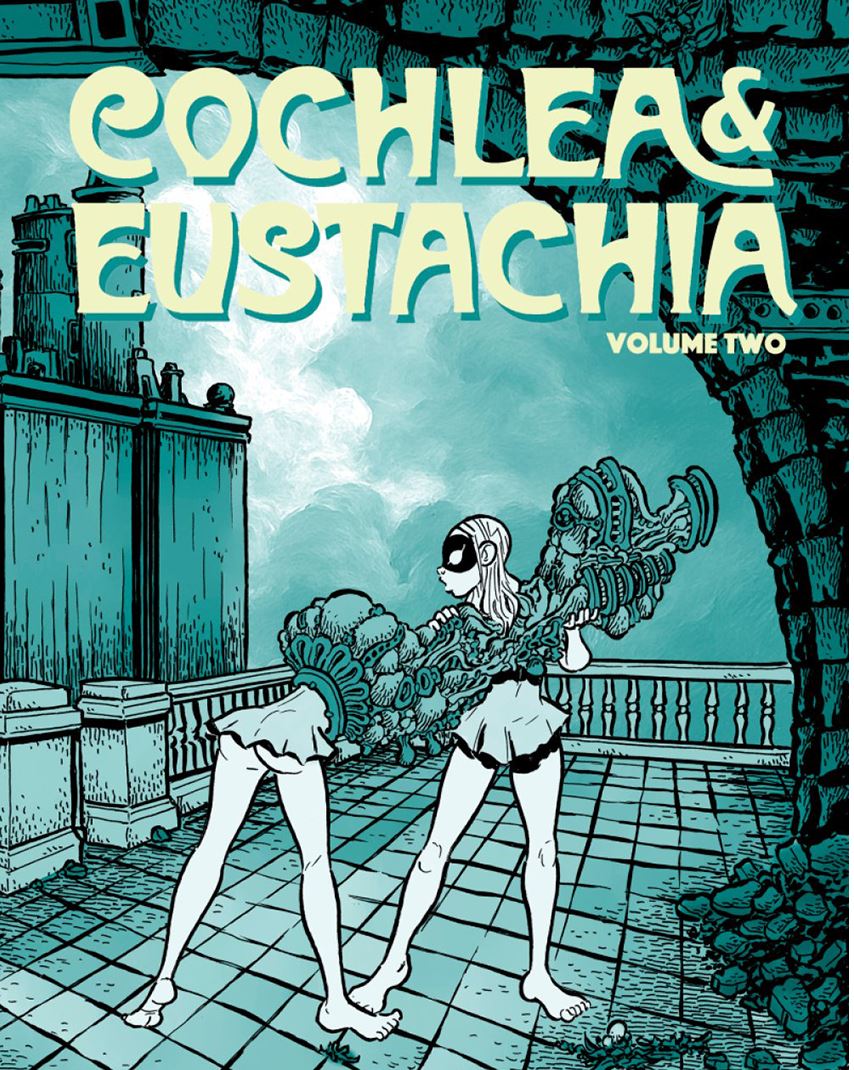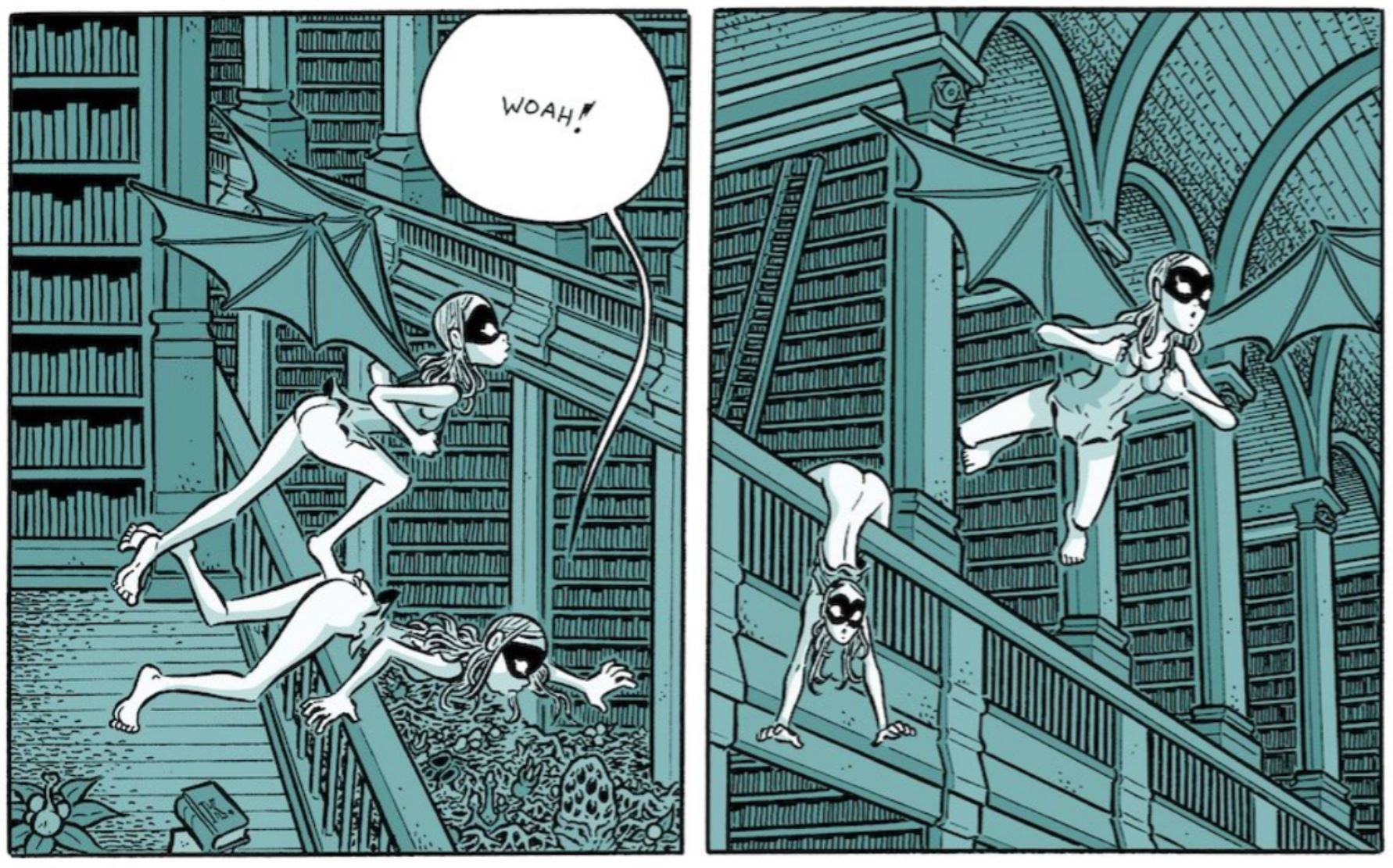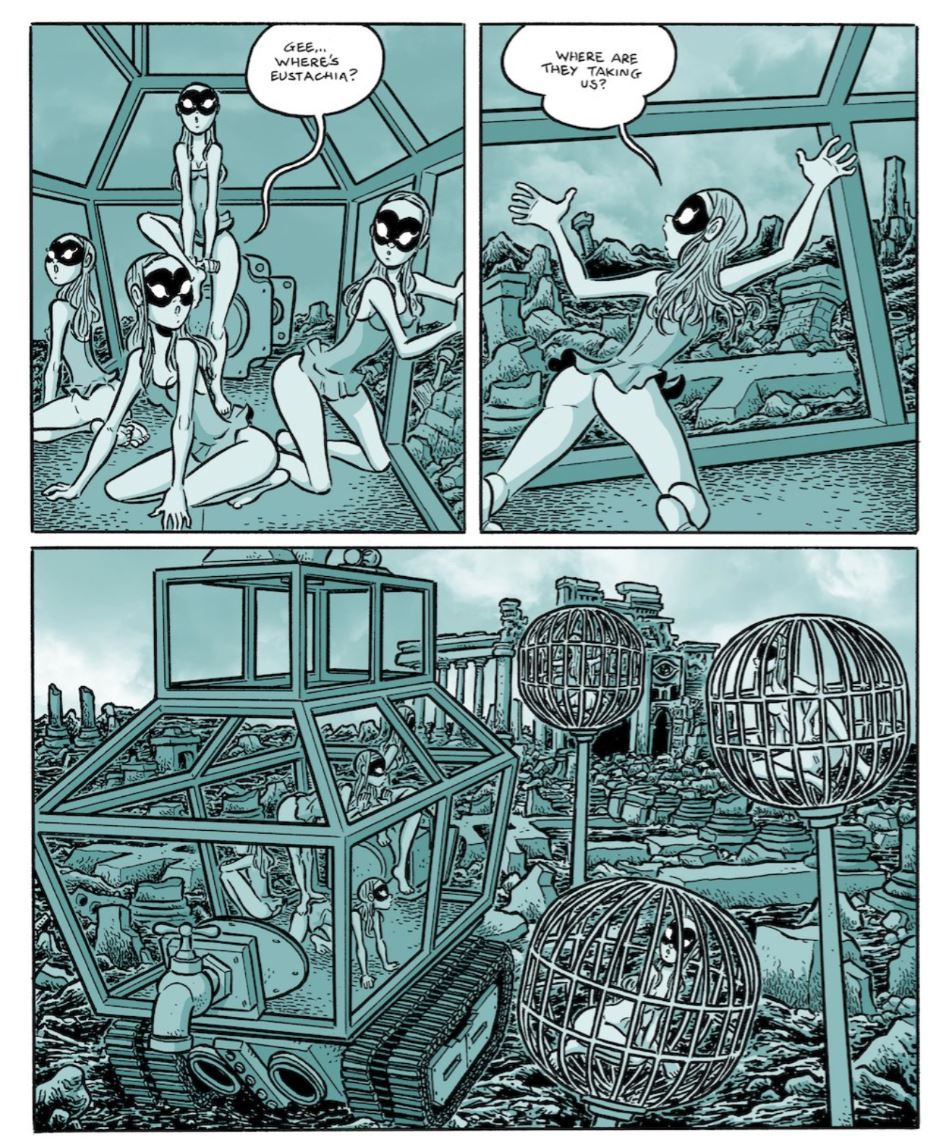
Pandora in Puzzlevale: (volume 2) Call of the Crow


By Paul Duffield, Poqu, Siobhan McKenna & various (DFB/Phoenix)

ISBN: 978-1-78845-3769 (TPB)

These days, kids are more likely to find their formative strip narrative experiences online or in specially tailored graphic novels than the anthological, pick ‘n’ mix of pictorial periodicals that defined my long-dead youth. Such was not always the case, but at least comics like The Phoenix are still plugging away, blending the best of the old days with modern appurtenances of all types, just like this splendid sequel saga, culled from the sagacious periodical’s pages.

Pandora in Puzzlevale: The Secret Town debuted a comic strip mystery that progressed as our plucky protagonist solved assorted tests and conundra to recover the parents who had vanished from her side as they all enjoyed a little road trip.

It began as the aspiring crimebuster and Detective Crow C fan was dragged from her comic long enough to realise the tedious drive to their holiday home had been paused. Although the route to the much-anticipated “secrets-themed” village seemed straightforward, the road was long, winding and confusing. When heavy mists descended and the satnav packed in, Mum & Dad pulled up at a petrol station for directions. Engrossed in reading, Pandora eventually looked up to discover she was all alone. Her parents were gone…

Her catalogue of confusion and casebook of ratiocinative deduction filled up quickly as she was drawn into a schema apparently designed to test her physical and mental abilities. That meant taking up precarious residence in a strange hamlet with all odd cons: somewhere everyone had a secret that they wouldn’t share unless Pandora played their games…

In case you’re still wondering, this book – like its predecessor – is all about active participation. By accessing these pages and selecting an action at a critical moment in each episode, you/Pandora are directed to another page to experience the ramifications of that choice. The final objective is still to find the folks uncover the nested truths of the village… and escape Puzzlevale… but it’s you who will be doing the work.

In-world, seemingly helpful people are plentiful in the mist-shrouded village – like fortune tellers, tea shop staff, rambling bystanders and potential witness/gossip Granny Garnett and enigmatic rhymer Rita Idyll, but most welcoming and useful is a were-wolfly hotel clerk. Max/Monster Max is positively friendly but in truth everyone’s motives and accounts are unverifiable and not to be trusted, so Pandora is ultimately left to fend for herself.

At least in this very strange and mutable place, she increasingly has Magically Real Detective Crow by her side and steering her path, and relative stability in a room at local hotel The Veil. Pandora’s methodology includes clue finding, location identification, map-making, maze-defeating, symbol deciphering, wordsearch weaving, witness statement verifying, code-breaking, rune reading, message translating, riddle-solving, character assessing, crossword completing, key & lock retrieving, object unearthing, back-story compiling and comparison testing as well as frequent odd behaviour explanation, with facts meticulously forming a working hypothesis and dictating her plan of action: all jotted down in her trusty, ever-present notebook. She needs all that and more, this time…

After a moody recap, the next morning sees Pandora and her crow companion reviewing the case and wishing the ever-encroaching mists would let up, before a querulous, decision-loaded morning learning the hotelier’s secrets from Max’s sister ensues. This belatedly occurs in The Grand Gardens of Blatherwick Manor. However, getting to the silent sibling means foiling snooty question master/butler Reeves, and steadfast truth obstacle/fount of knowledge Lord Blatherwick

As unceasing enigmas unfold. Pandora and former fictional detective Crow Boy join new ally (or is she?) Aunty Amethyst in overcoming intellectual and physical challenges, but there are so many! She still hasn’t solved the old ones, like why do the buildings shift, and why do so many wear masks and all-concealing costumes? It isn’t long before she decides “when in Rome…”

Pandora’s quest is divided into 25 sequential ‘Mysteries’ undertaken across four chapters – ‘Trapped in Puzzlevale’, ‘A Family Secret’, ‘Bridging the Divide, and ‘To Raven City’ – each with its own set of tests and challenges contributing to a Big Picture solution, but even after Pandora completes them, she’s left with more to solve and another weird path to follow…

Now with an abrupt hard-earned elevation to official status, magical transformation and the end in clear sight, how can this be anything but To Be Continued…

Pandora in Puzzlevale: Call of the Crow is the second in a serialised sleuth-fest offering a dazzling display of cartoon virtuosity and brain-busting challenges co-composed by writer/art director Paul Duffield, graphic staging scenarist Poqu & illustrator Siobhan McKenna. Their compelling blend of Story! Games! & Action! offers beguiling mystery to be unravelled in the manner of multiple-choice decisions and all there in the irresistible shape of entertaining pictures. How much cooler can a book get?

Well, quite a lot actually, since this tome devotes posterior pages to related activities and features offered under the aegis of the Phoenix Comics Club. Here are tips by Duffield & McKenna on ‘Drawing Crow Boy’, ‘Building blocks’ to ‘Final details’ as well as how to craft puzzles, whilst Poqu shares constructing ‘Secret woodland’, before we conclude with a full list of solutions, clues and hints in closing glimpses at ‘The Final Mystery’ and ‘Pandora’s Notes’

Bring paper, pencils and your intellectual A-game, and have the time of your life…
Text and illustrations © The Phoenix Comic, 2026. All rights reserved.

Today in 1893 Josette Frank was born. Go look her up now. She earned it. In 1901 Carl Barks was born. Absolutely him too.

If you’re not all worthied out, Hy Eisman (who walked in giants’ footsteps on Popeye and Katzenjammer Kids) arrived in 1927 as did writer/entrepreneur/ publisher/agent Mike Friedrich in 1947.

We lost attorney, psychologist and Wonder Woman co-creator Elizabeth Holloway Marston today in 1993 – so look her up too – as well as Dick Giordano who died in 2010. Italian spaghetti westerner Leone Cimpellin AKA “Ghilbert” (Red Carson, Casey Ruggles, Jonny Logan) bit his last bullet in 2017.

In 1982 Eagle relaunched in Britain. It was pretty good, had lots of cool contributors, but just wasn’t the same…

DC Finest: The Demon – Birth of the Demon


By Jack Kirby with Mike Royer, Bob Haney, Bob Rozakis, Len Wein, Gerry Conway, Jim Aparo, John Calnan, Mike Golden, Steve Ditko, José Delbo, Bob McLeod, Dick Giordano, Dave Hunt & various (DC Comics)
ISBN: 978-1799507437 (HB/Digital edition)

This book includes Discriminatory Content produced in less enlightened times.

Jack “King” Kirby shaped the very nature of comics narrative. A compulsive storyteller, Jack was an astute, spiritual man who had lived through poverty, gangsterism, the Depression and World War II. He had seen Post-War optimism, Cold War paranoia, political cynicism and the birth and death of peace-seeking counter-cultures. He was open-minded and utterly wedded to the making of comics stories on every imaginable subject. He began at the top of his game, galvanising the comic book scene from its earliest days with long-term creative partner Joe Simon: creating Blue Bolt, drawing Captain Marvel and adding lustre to Timely comics with creations such as Red Raven, Hurricane, Captain America and The Young Allies.

In 1942 Simon & Kirby moved to National/DC and hit even more stellar highs with The Boy Commandos, Newsboy Legion, Manhunter and The Sandman before the call of duty saw them inducted into the American military.

On returning from World War II, they reunited, forming a studio working primarily for the Crestwood/Prize publishing outfit. Here they invented the entire genre of Romance comics. Amongst that dynamic duo’s other concoctions for Prize was a noir-ish, psychologically underpinned supernatural anthology Black Magic and its short-lived but fascinating companion title Strange World of Your Dreams. All their titles eschewed traditional gory, heavy-handed morality plays and simplistic cautionary tales for deeper, stranger fare. Until the EC comics line hit their peak, S&K’s were far and away the best and most mature titles on the market.

Kirby understood the fundamentals of pleasing his audience and always strived diligently to combat the appalling state of prejudice about the comics medium – especially from industry insiders and professionals who despised the “kiddies world” they felt trapped in. When the 1950s anti-comics comics witch hunt devastated the industry, Simon & Kirby parted ways. Jack went back to DC briefly and created newspaper strip Sky Masters of the Space Force before partnering with Stan Lee at what remained of Timely Comics to create the monolith of stars we know as Marvel. After more than a decade there he felt increasingly stifled and side-lined and in 1970 accepted an offer of complete creative freedom at DC. The jump resulted in a root and branch redefinition of superheroes in his quartet of interlinked Fourth World series.

When those controversial, grandiose, groundbreaking titles were cancelled, Kirby looked for other concepts to stimulate his vast creativity and still appeal to an increasingly fickle and divided market. General interest in the Supernatural was peaking, with books and movies exploring the unknown in gripping and stylish new ways, and the Comics Code Authority had already released its censorious choke-hold on mystery and horror titles, thereby saving the entire industry from implosion when the superhero boom of the 1960s fizzled away.

At DC’s suggestion, Kirby had already briefly returned to his supernatural experimentation in a superb but poorly received and largely undistributed monochrome magazine. Spirit World launched in the summer of 1971, but as before, editorial cowardice and back-sliding scuppered the project before it could get going. You can see what might have been in a collected edition re-presenting the sole published issue and material from a second, unreleased sequel in Jack Kirby’s Spirit World

With most of his ideas misunderstood, ignored or side-lined by the company, Kirby opted for more traditional fare. Never truly defeated though, he cannily blended his belief in the marketability of the mystic unknown with flamboyant super-heroics to create another unique and lasting mainstay for the DC universe: one whom lesser talents would make a pivotal figure of the company’s continuity.

This compilation collects The Demon #1-16 (1972-1973), classic team-ups from The Brave and the Bold #109 & 137 and key appearances from Batman Family #17, Detective Comics #482-485 and Wonder Woman volume 1 #280-282, cumulatively spanning cover dates August/September 1972 through August 1981, providing a comprehensive introduction to one of Kirby’s most broadly reinterpreted and reimagined characters.

Inked by Mike Royer, The Demon #1 introduces a howling, leaping monstrosity (modelled after a 1939 sequence from Hal Foster’s Arthurian epic Prince Valiant) in ‘Unleash the One Who Waits’. This shocking force of un-nature battles beside its master Merlin as Camelot dies in flames, a cataclysmic casualty of the rapacious greed of sorceress Morgaine Le Fey. Out of that apocalyptic destruction, a man arises and wanders off into the mists of history…

In our contemporary world (or at least the last quarter of the 20th century) demonologist and paranormal investigator Jason Blood has a near-death experience with an aged collector of illicit arcana. This culminates in a hideous nightmare about a demonic being and the last stand of Camelot. He has no idea that Le Fey is still alive and has sinister plans for him…

And in distant Moldavia, strange things are stirring in crumbling Castle Branek, wherein lies hidden the lost Tomb of Merlin…

Blood is wealthy, reclusive and partially amnesiac, but one night he agrees to host a small dinner party, entertaining acquaintances Harry Mathews, psychic UN diplomat Randu Singh and his wife Gomali plus their flighty young friend Glenda Mark.

The soiree does not go well. Firstly, there is the painful small talk, and the sorcerous surveillance of Le Fey, but the real problems start when an animated stone giant arrives to “invite” Blood to visit Castle Branek. This shattering voyage leads to Merlin’s last resting place but just as Blood thinks he may find some answers to his enigmatic past, Le Fey pounces. Suddenly he starts to change, transforming into the horrific beast of his dreams…

Issue #2 – ‘My Tomb in Castle Branek!’ – opens with wary villagers observing a terrific battle between a yellow monster and Le Fey’s forces, but when the Demon is defeated and Blood arrested, only the telepathic influence of Randu back in America can help him. Le Fey is old, dying, and needs Merlin’s grimoire, the Eternity Book, to extend her life.

Thus, she manipulates Blood – who has existed for centuries, completely unaware that Merlin’s hellish attack dog the Demon Etrigan is chained inside him – to regain his memories and awaken the slumbering master mage. It looks like the last mistake she will ever make…

Kirby’s tried-&-trusted approach was always to pepper high concepts throughout blazing, breakneck action, and #3 was one of the most imaginative yet. ‘Reincarnators’ finds Blood back in the USA, aware at last of his tormented history, and with a small but devoted circle of friends. Adapting to a less lonely life, he soon encounters a cult able to physically regress people to a prior life… and use those time-lost beings to commit murder. The Demon #4-5 comprise one single exploit, wherein a simple witch and her macabre patron capture the reawakened, semi-divine Merlin. ‘The Creature from Beyond’ and ‘Merlin’s Word’s …Demon’s Wrath!’ introduce cute little monkey Kamara the Fear-Monster (later used with devastating effect by Alan Moore in Saga of the Swamp Thing #26-27) and features another startling “Kirby-Kritter”: Somnambula, the Dream-Beast

It seems odd in these blasé, anything goes modern times but The Demon was a deeply controversial book in its day – cited as providing the first post-Comics Code depiction of Hell, and one where problems were regularly solved with sudden, extreme violence. ‘The Howler!’ in issue #6 is a truly spooky yarn with Blood hunting a primal entity of rage and brutal terror that transforms victims into murderous lycanthropic killers, whilst #7 debuts a spiteful, malevolent young fugitive from a mystical otherplace.

‘A Witchboy!!’’ introduces Klarion and his cat-familiar Teekl – utterly evil little sociopaths in a time where all comic book politicians were honest, cops only shot to wound and “bad” kids were only misunderstood: thus, another Kirby first…

An extended epic, ‘Phantom of the Sewers’ skilfully combines movie and late-night TV horror motifs in the dark and tragic tale of actor Farley Fairfax, cursed by the witch he once spurned. Unfortunately, Glenda is the spitting image of the departed Galatea, and when, decades later, the demented thespian kidnaps her (in ‘Whatever Happened to Farley Fairfax?!!’) to raise the curse, it could only end in a flurry of destruction, death, consumed souls and ‘The Thing That Screams’…

In case you were wondering: the first musical adaption of The Phantom of the Opera (by Ken Hill) was in 1976, and the one you’re thinking of launched in 1986. The King was always ahead of the curve and subtly influential…

This 3-part thriller is followed by another moody, multi-part masterpiece (The Demon #11-13). ‘Baron von Evilstein’, ‘Rebirth of Evil!’ and ‘The Night of the Demon!’ comprise a powerful parable about worth and appearance, featuring the ultimate mad scientist and the tragic, misunderstood monster he so casually builds. It’s a truth that bears repeating: ugly doesn’t equal bad…

An opportunity to widen the horror-hero’s appeal came next in The Brave and the Bold #109: as Bob Haney & Jim Aparo unship superb supernatural thriller ‘Gotham Bay, Be My Grave!’ wherein the Caped Crusader and Kirby’s Kritter Etrigan the Demon fractiously unite to battle an unquiet spirit determined to avenge his own execution after nearly a century…

Despite the King’s best efforts The Demon was not a monster hit – unlike his science-fiction disaster drama Kamandi – and by #14 it’s clear the book was in its last days. Not because the sheer pace of imagination, excitement and passion diminished – far from it – but because the well-considered, mood-drenched stories were suddenly replaced by rocket-fast, eldritch romps populated with returning villains. First back was Klarion in ‘Return of the Witchboy!’ who creates a deadly doppelganger to replace Jason Blood and kill his friends in ‘The One Who Vanished!!’ (#14-15) before the series succumbed to irresistible economic forces with #16 (cover dated January 1974) in a climactic if hasty showdown with ‘Immortal Enemy’ Morgaine Le Fey…

Etrigan and cohort resurfaced in 1977 and B&B #137 (October) as Haney, John Calnan & Bob McLeod subjected Batman, Jason Blood’s friends and The Demon to war with resurrected Chinese wizard Shahn-Zi at ‘The Hour of the Serpent!’ before in a guest shot led to short revival. In Batman Family #17 (cover-dated April/May 1978), the Man-Bat serial saw Bob Rozakis & Mike Golden celebrate a happy event as the Chiropteran Crusader awaited the natal event of his firstborn child only to learn ‘There’s a Demon Born Every Minute!’ with devil babies infesting the maternity ward the hero welcomes the arrival of Etrigan (eventually) before teaming up to again thwart the diabolical schemes of malign Morgaine Le Fey.

Implicit invite accepted, Gotham resident The Demon took up residence in anthological blockbuster Detective Comics beginning with #482 (February/March 1979). Here Len Wein, Golden & Dick Giordano opened a tense quest for ‘The Eternity Book’ of Merlin. As Steve Ditko added his unique vision to the optics, the chase caught Etrigan clashing with mad mystic academic Baron Tyme in DC #483’s ‘Return to Castle Branek!’ before hurtling to a chaotic, cataclysmic conclusion in #484’s ‘Tyme Has No Secrets!’ and furious finish in #485’s ‘The Fatal Finale!’

The riotous revelries conclude with an often overlooked team-up. For Wonder Woman #280 (volume 1, June 1981), Gerry Conway, José Delbo & Dave Hunt detail how Air Force officers Diana Prince and Steve Trevor investigate the prestigious Delphi Foundation after demon Baal-Satyr abducts their friend Etta Candy. They uncover senatorial corruption and insidious infiltration by witchboy Klarion and use arcane connections to link up with Randu Singh, Blood and his infernal alter ego prior to a rescue raid on ‘The Castle Outside Time!’ (WW #281), enduring more hellish treatment prior to #282’s triumphant, resurgent ‘Return and Redemption’

With covers by Kirby, Royer, Tatjana Wood, Aparo, Rich Buckler, Ross Andru & Dick Giordano, this is a sublime slice of Right Place, Wrong Time entertainment: a wondrously economical collection every comics fan of today should have and cannot help but enjoy.
© 1972, 1973, 1977, 1978, 1979, 1981, 2026 DC Comics. All Rights Reserved.

Today comic strip master Sy Barry arrived in 1928, whilst Graham Nolan didn’t turn up until 1962 and much-missed Italian artist Massimiliano Frezzato (I custodi del Maser, Margot) in 1967.

We lost Barney Baxter cartoonist Frank Miller in 1949, and the amazing Arnold (Deadman, Doom Patrol, Guardians of the Galaxy) Drake in 2007 but could enjoy Treasure Chest comics from 1946 and Hank Ketchum’s (US) Dennis the Menace from 1951.

Nuts


By Gahan Wilson (Fantagraphics Books)
ISBN: 978-1-60699-454-2 (HB/Digital edition

This book includes Discriminatory Content produced in less enlightened times.

Born on February 18th 1930 and dying November 21st 2019, Gahan Allen Wilson was an illustrator, cartoonist, essayist and author who always had his eyes and heart set on the future. According to Gary Groth, the artist/author grew up reading comic strips as much as fantasy fiction.

It always showed.

The mordantly macabre, acerbically wry and surreal draughtsman tickled funnybones and twanged nerves with his darkly dry graphic confections from the 1960s onwards; contributing superb spoofs, sparklingly horrific and satirically suspenseful drawings and strips and panels as a celebrated regular contributor in such major magazines as Playboy, Collier’s, The New Yorker and others. He also wrote cutting edge science fiction for Again Dangerous Visions, The Magazine of Fantasy & Science Fiction, The Twilight Zone Magazine and Realms of Fantasy as well as contributing criticism, book and film reviews for them all.

In an extremely broad and long career he wore dozens of creative hats, even embracing the modern digital universe by creating – with Byron Preiss – his own supernatural computer game Gahan Wilson’s the Ultimate Haunted House.

When National Lampoon first began its devastatingly satirical (geez, do modern folk even recognize satire anymore?) all-out attack on the American Dream, Wilson was invited to contribute a regular strip to their comics section. His sublimely semi-autobiographical, darkly hilarious paean to lost childhood ran from 1972 and until 1981 and was collected as Nuts, another superb compilation from this publisher that you should own and share. Few people – me included – knew that during that period he also, apparently more for fun and relaxation than profit, produced his own syndicated Sunday strip feature. For two years – beginning on March 3rd 1974 – Gahan Wilson Sunday Comics appeared in a small cross-section of newspapers from Boston to Los Angeles and, as with all his work, it bucked a trend.

At a time when most cartoonists were seeking a daily continuity strip, building a readership and eking jokes out with sensible parsimony, Wilson let himself go hog-wild, generating a half-dozen or so single-shot gags every Sabbath, blending his signature weird, wild monsters, uncanny aliens and unsavoury scenes with straight family humour, animal crackers, topical themes and cynically socio-politically astute observations.

Looking at them here it’s clear to me that his intent was to have fun and make himself laugh as much or even more than his readership: capturing those moments when an idea or notion gave him pause to giggle whilst going about his day job…

I’m not going to waste time describing individual cartoons: there are just too many and despite being a fascinating snapshot of ancient life, they’re almost all still outrageously funny in the way and manner that Gary Larson’s Far Side was a scant six years later.

I will say that even whilst generating a storm of humorous, apparently unconnected one-offs, consummate professional Wilson couldn’t restrain himself and eventually the jokes achieved an underlying shape and tone with recurring motifs (clocks, beasts, wallpaper, etc), and features-within-the-feature such as The Creep and Future Funnies

Here, generally a single-page complete graphic epigram “star” a grotty little chubby homunculus dubbed The Kid. This fabulous monochrome (and occasionally colour) collection gathers that complete serial for collectors and potential addicts in a perfect package that readers will dip into over and over again.

Taking his lead from popular sickly-sweet strips about or starring little children and the brilliant but definitely not jejune Peanuts (which was populated, to all intents and purposes, with teeny-weeny neurotic middle-aged midgets), Wilson sought to do the exact opposite and attempt to access the fear, frustration, confusion and unalloyed joy of being a young, impressionable, powerless, curious and demanding…

… and magnificently succeeded.

Dense, claustrophobic, intense and trenchantly funny, these self-contained strips range from satire to slapstick to agonising irony, linking up over the years to form a fascinating catalogue of growing older in the USA: a fearfully faithful alternate view of childhood and most importantly, of how we adults choose to recall and process those distant days…

Each strip begins with the question “Remember how…?” or “One of the…” or some equally folksy enquiry before unveiling bafflement, bewilderment, night-terrors or a deeply-scarring embarrassment which haunts us till doomsday, all wrapped in a comradely band-of-brothers, shared-coping-mechanism whimsy that is both moving and quintessentially nostalgic.

Topics include the unremitting horror of germs; sudden death; being ill; inappropriate movies; forced visits; grandparents; things adults do that they don’t want you to see; unexplained noises; the butcher’s shop; accidents and rusty nails; things in closets; doctors and needles; dying pets; Santa Claus; seasonal disappointments; summer camp; sleep; bodily functions; school and lessons (two completely different things); fungus; bikes and toys; haircuts; comic books; deaths of relatives; hot weather; candy; overhearing things you shouldn’t; stranger danger; hobby-kits and glue; daydreaming; babies and so many other incomprehensible daily pitfalls on the treacherous path to maturity…

Peppered also with full page, hilariously annotated diagrams of such places of enduring childhood fascination as ‘The Alley’, ‘The Kit for Camp Tall Lone Tree’, ‘Mr. Schultz’s Cigar Store’, ‘The Movie Theater Seat’, ‘Table Set Up For Making Models’, ‘The Doctor’s Waiting Room’, ‘The Closet’, ‘The Sick Bed’ and ‘The Private Drawer’, this glorious procession also covers occasions of heartbreaking poignancy and those stunning, blue moon moments of serendipity and triumph when everything is oh-so-briefly perfect…

Complete with a 3-D strip and ‘Nuts to You’ – a comprehensive appreciation and history by Gary Groth – this funny, sad, chilling and sublimely true picture-passport to growing up is unmissable cartoon gold.
© Fantagraphics Books. All Nuts strips © 2011 Gahan Wilson. All rights reserved.

Today in 1917, Golden Age writer/editor Ruth Roche was born, followed by forgotten genius Joe Maneely in 1926, Gahan Wilson in 1930, Johnny Hart in 1931 and both comic book artist Doug Mahnke and cartoonist Mark Bodé in 1963.
We lost Belgian megastar and Marcinelle School founder Willy Maltaite (“Will”) in 2000 and lifelong multi-style achiever Bob Oksner in 2007.

Comics wise, UK standby Radio Fun (published since 1938) folded today in 1961 and Power Comic Fantastic launched today in 1967.

Chimera


By Lorenzo Mattotti (Fantagraphics Books and Coconino Press)
ISBN-13: 978-1-56097-763-6 (TPB)

The sixth release – I hesitate to call it a volume, as the format, though bold and wonderful, is far more than a magazine but not quite a book – from the eclectic European publications imprint designated The Ignatz Collection, this fabulous item features an uncharacteristic and unforgettable look at the monochrome work of one of the world’s most talented colour artists.

Today in 1954, Lorenzo Mattotti was born in Brescia, Italy. He grew up and studied at the Faculty for Architecture in Venice before beginning a career as a comics storyteller in 1975 in French magazine Circus. Whether alone or with long-time collaborator Fabrizio Ostani (AKA Jerry Kramsky – they often used the single pen-name “Kleidebistro”) Mattotti’s incredible, nigh-abstract designs and pictorial narratives rapidly won him a huge following, with work appearing in Métal Hurlant, L’Écho des Savanes (France), Rumbo Sur (Spain), Frigidaire, Secondamano and Alter Alter (Italy), Raw (USA) and The Face (UK) among many others.

In 2002 Mattotti and Kramsky produced Docteur Jekyll & Mister Hyde (based on the Robert Louis Stevenson classic) for Casterman, and the English translation won Mattotti an Eisner Award the following year. As an illustrator, Mattotti has worked for Vanity Fair, The New Yorker, Cosmopolitan, Vogue and Le Monde, and has produced a number of startling and beautiful children’s books. His absolute masterpiece thus far is – to my mind at least – Fires.

Behind a deeply unsettling gate-fold wraparound cover, but printed throughout on reassuringly solid cream-coloured card-stock, lurks a startling journey from idyllic cloud-gazing through vaguely erotic musings on gods and giants to the depths of a terrifying and oppressive forested hell. Rendered in bravura line-and-dry-brush style that ranges from seductive and cajoling, through airy tumult to raw, fierce, bestial rage and horror, Mattotti uses the reader’s eyes to pull the viewer on a chaotic descent reminiscent of Mussorgsky’s “A Night on Bald Mountain” (in the manner of Disney’s Fantasia version, with just a shade of Watership Down thrown in).

Comics aficionados might also recognize a touch of the panning-in technique used by the great André Barbe where small pictorial changes lead to a total transformation, not only to the graphic representations but also to the mental or spiritual state of the object and observer. But where Barbe wanted to languidly surprise and seduce you, Mattotti is here to make you squirm…

Even if the “how” isn’t your major concern, the whole pictorial experience of Chimera is one headlong rush, and a supreme lesson in the power and virtuosity of dark lines against the light. This is probably the only white-knuckle ride you can put on a bookshelf… so why don’t you?

Story and art © 2005 Lorenzo Mattotti. Book edition © 2005 Fantagraphics Books and Coconino Press.

Also Today but in 1910, Noel (Scorchy Smith) Sickles was born. He shares the day with Mattotti, inker Bruce D, Berry (1924), and John Romita Senior in 1930.

In 1943 morale-boosting Miss Lace debuted in Milt Caniff’s Male Call strip, and in Britain once the shooting stopped in 1948, The Beano unleashed Biffo the Bear for the first time.

In 1977 we lost the wonderful John Rosenberger (The Fly, The Jaguar, Young Dr Masters, Lady Cop, Supergirl, Lois Lane) and in 2002, sublime Kurt Schaffenberger (Captain Marvel, Shazam, Lois Lane, Superboy, Supergirl, Superman, Super Friends). All of these stars are worth your time and attention whether here or best yet in their actual collected works, so go do that.

The Legend Testers 60th Anniversary Edition


By Graham Baker, Jordi Bernet, with Alf Wallace & various (Rebellon Studios/ treasury of British Comics)
ISBN: 978-1-83786-654-0 (TPB/Digital edition), 978-1-83786-681-6 (Webshop edition)

This book includes Discriminatory Content produced in less enlightened times.

British comics always enjoyed an extended love affair with what can only be described as “unconventional” (for which substitute “bizarre” or “creepy”) stars. So many notional role models we grew up reading were outrageous or just plain “off”: self-righteous voyeur / vigilantes like Jason Hyde, sinister foreign masterminds like The Dwarf or Black Max, affable criminals such as Charley Peace, arrogant ex-criminals like The Spider or outright racist Overmen like manic white ideologue Captain Hurricane

Prior to game changers Action, 2000AD and Misty, our comics fell into fairly ironclad categories. Back then, you had genial and/or fantastic preschool fantasy; many, many licensed entertainment properties; action; adventure; war (especially ones “We” were in or had started); school dramas; sports; and straight comedy strands. Closer examination could confirm that there was always a subversive merging, mixing undertone, especially anarchic antiheroes like Dennis the Menace or our rather strained interpretation of costumed crime-busters. Just check out Phantom Viking, Kelly’s Eye or early Steel Claw stories…

Over and again British oddness would combine with or react to long-standing familiarity with soft oppression, leading to sagas of overwhelming, imminent conquest and worse. With our benighted shores existentially threatened, entertainment sources responded with a procession of doughty resistors facing down doom from the deepest depths of perfidy and menace… especially as churned up by the scary results of foolish modern SCIENCE!

That’s not to say we didn’t appreciate less outrageous adventurers as with this notional precursor (or synchronistic zeitgeist?) to TV’s Time Tunnel, with a brace of straightlaced but tough-as-nails He-Men heroes Rollo Stones and Danny Charters who dared the unknown weekly in the name of SCIENCE! – and history of course…

Cover-dated February 5th 1966, Smash! launched as just another standard Odhams anthology weekly until abruptly re-badged as a “Power Comic” at the end of the year. It combined homegrown funnies and British originated thrillers with resized US strips to capitalise on the superhero bubble created by the Batman TV series. Power Comics was a sub-brand used by Odhams to differentiate those periodicals which contained reprinted American superhero material from the company’s regular blend of sports, war, western, adventure and funny strips – like Buster, Valiant, Lion or Tiger. During the Swinging Sixties, Power weeklies did much to popularise budding Marvel Universe characters in this country, which were still poorly served by distribution of the original US imports.

The increasingly expensive American reprints were dropped in 1969 and Smash! was radically retooled with the traditional mix of action, sport and humour strips. Undergoing a full redesign, it was relaunched on March 15th 1969 with all-UK material (mostly drawn by overseas artists) and finally disappeared into Valiant in April 1971 after 257 issues. Seasonal specials remained a draw until October 1975 when Smash Annual 1976 properly ended the era. From then on, the new Fleetway brand had no room for the old guard – except as re-conditioned reprints in cooler, more modern books…

Thanks to economic vagaries and spiralling costs in publishing, the mid 1960s and early 1970s were particularly wild and desperate for comics: inspiring a wave of innovation most fondly remembered for more of those aforementioned darkly off-kilter heroes, beguiling monsters and charismatic villains.

Gathering serialised episodes from Smash! 2nd April 1966 to 8th July 1967, this complete compilation delivers fantastic threats and menaces in a traditional weekly manner, as a pair of dedicated and competent white blokes diligently push back the boundaries of ignorance. As was usual for these times, what was popular on screens large & small affected what arrived on the picture-packed pages Probably committee created with majority input from supervising editor Alf Wallace (Missing Link, Johnny Future) and sub-editor/scripter Graham Baker with new kid Jordi Bernet involved from the get-go, this series is one of many lost delights crafted by world stars in waiting and the observant will see Bernet improving and pushing himself on every page…

Jordi Bernet Cussó was born in Barcelona in 1944, son of a prominent, successful humour cartoonist. When his dad died suddenly 15-year-old Jordi took over his strip Doña Urraca (Mrs. Magpie). A huge fan of Alex Raymond, Hal Foster and especially Milton Caniff, Jordi yearned for less restrictive horizons and left Spain in the early 1960s and moved into dramatic storytelling.

He worked for Belgium’s Le Journal de Spirou, and Germany’s Pip and Primo, before finding a home in British weeklies. Bernet worked for UK publishers between 1964 and 1967, and as well as Odhams/Fleetway/IPC anthologies Smash!, Tiger and War Picture Library, produced superb pages for DC Thomson’s Victor and Hornet. He even illustrated a Gardner Fox horror short for Marvel’s Vampire Tales #1 (1973), but mainstream America was generally denied his mastery (other than translated Torpedo volumes and a Batman short story) until the 21st century reincarnation of Jonah Hex… which he truly made his own.

His most famous strips include thrillers Dan Lacombe (written by his uncle Miguel Cussó), Paul Foran (scripted by José Larraz) the saucy Wat 69 plus spectacular post-apocalyptic barbarian epic Andrax (both with uncle Cussó again). When fascist dictator Franco died, Bernet returned to Spain and began working for Cimoc, Creepy and Metropol, collaborating with Antonio Segura on adult fantasy Sarvan and dystopian SF black comedy Kraken, as well as with Enrique Sánchez Abuli on the gangster and adult themed tales that made him one of the world’s most honoured artists. These culminated with the incredibly successful crime saga Torpedo 1936.

For now though and way back then, following a heartwarming reminiscence and proud career resume from the series illustrator himself, we launch at full pelt with inaugural serial ‘Death Castle’ which ran from 2nd April (Smash! #9) to 25th June 1966.

In that wild innovative era, the creators were looking to be fresh and new so here logos and layout and even the narrative tone changed from week to week as the storytellers shuffled to make something fresh instantly compelling out of old themes and plots. That even included on-again, off-again individual chapter titles like ‘Man into Monster’ and ‘The 5 Faces of Evil!’ before settling down and just opting to tell tense, gripping yarns…

The premise is simple: in the 40th century the Central Knowledge Museum is a vast research and storage repository of all things historical. Now top investigators Rollo Stones and Danny Charters have used its time machine to confirm the veracity of the last artefact and corrected (by first person observation) the mistaken data that has come down with it, their boss Marcson has a new mission for them. It’s June 7th 3900 AD and with no more history mysteries, he asks them to start testing the large collection of unknown and myth-based items in their cupboard.

Apart from the potential death and danger, it’s practically foolproof. The machine only works if the objects the newly-appointed Legend Testers are holding are in some way authentic, as with the supposed werewolf skull that catapults them both back to feudal Europe and an encounter with a magical coalition of diabolical monsters.

In short order Rollo & Danny survive on wits and fists against a citadel of devils comprising sorcerer Necro, vampire Draca, sadistic torturer/inventor Love, Balbin, Prince of Trolls. bodyguard brute Happy (the werewolf in question) and notional leader Count Cadavo. Each in turns tries to break the strangers with their personalised hordes of monster minions but in the end the myths are confirmed at the cost of the vile villains’ unlives…

One of the most complex and trippy exploits of the era, ‘Eterno’ ran in issues between 2nd July and 20th August. This time the suspect object pulled our investigators back beyond humankind to a previous civilisation that was destroyed by a vampiric alien that consumed their planetary life energies. Millions of years later, humankind evolved and developed a very similar existence which drew Eterna back to Earth and the Testers on his heels to that time and place. As the monster and his robots began preparing to absorb a second course of earthlings Rollo & Danny were in the right place and time to end the terror forever…

Channelling the contemporary cinematic trend for Grecian myths and heroes, the boys spend half a year authenticating ‘The Crown of Zeus’ (27th August – 24th December), enduring an avalanche of peril and near-death escapes to categorically verify their chunk of diadem – and by extension the ancient lives of gods and monsters. After facing cyclopes, centaurs, gorgons, Cerberus, the Minotaur, Lernaean ghosts and hydras, man-eating horses, Pegasus, Poseidon, Proteus, Janus, sky-propping Atlas, petty-minded Bacchus, satyrs and earth-shaking Titans the lads learn just how the gods died…

At least demi-gods Hercules and Hermes (AKA “Quicksilver”) were on their side until it was all over and the time machine called them home…

The days of Camelot called when the Testers touched fragments of ‘The Crystal Orb of Merlin’ (December 31st 1966 to 4th March 1967) but sparked chronal catastrophe as the wise wizard’s talisman was stolen by anti-Arthurian despot Black Shield, who used it to arm his troops with 20th century weapons from pistols and hand grenades to tanks and an atomic bomb. The conclusion left everyone gasping and still does today…

Published from 11th March to 15th April, ‘The King of the Beasts’ saw Rollo & Danny divine how an idyllic land of talking animals living in harmony and seclusion was destroyed by greed and ambition, after which aliens are the order of the day when Marcson hands the investigators a piece of metal not of this Earth. A simple touch then takes them to 12th century Europe where ‘The Metal Men’ (22nd April – 3rd June) are seeking to strip-mine the world for life-generating minerals. The Testers’ interference only results in their rendition to embattled, civil war-torn planet Meturn, but too late to do any good as the metalloids descend into mutually assured destruction. Thankfully, the confusion allows the boys to frantically steal the last space bus out of town…

The temporal turbulence terminates rather timidly with ‘The Crown of Kebi’ (10th June to 8th July 1967) as Marcson sends his gone-to guys to an utterly unknown destination where again greed and ambition trigger the end of a fabulous civilisation. Rollo & Danny’s very conspicuous arrival makes them unwitting tools of shady priest Walu on the island kingdom of Kebi, but their scruples mean he soon prefers them dead to alive. After tricking them into a voyage into “the underworld” beneath a mountain, the boys battle beastly apes, demon dwarves and worse, but their refusal to be suitably sainted and sent to heaven ultimately stymies the witch doctor and sinks the island nation…

Closing this epic outing of spookily spectacular saga is a compelling ‘Covers gallery’ of thrilling (albeit limited-colour) clashes courtesy of Bernet and the editorial paste up squad, plus the now traditional creator briefings.

For British, Commonwealth and European readers of a certain age and prone to debilitating nostalgia, the comic works gathered in this titanic tribute gig are an exciting, engaging, done-in-one delight that’s undemanding and rewarding; and a rare treat these days.

If that appeals, go hit this book, it’s how history – and SCIENCE! – should be made.
© 1966, 1967, & 2026 Rebellion Publishing IP Ltd. All Rights reserved.

Today in 1883, French artist, printmaker, illustrator, painter, caricaturist, sculptor and comic dabbler Gustave Doré died. However, one year later comics strip genius George (Jiggs & Maggie, Bringing Up Father) McManus was born. In 1952 Klaus (Daredevil, Batman) Janson joined the party, but probably missed the 1930 debut of Hergé’s Quick & Flupke in Le Petit Vingtième and launch of UK weekly Sparky in 1965.

In 1988, UK icon Battle Picture Weekly shut up shop and in 2001 Makoto Yukimura’s manga masterpiece Planetes began.

Popeye Classics volume 1


By Bud Sagendorf, edited and designed by Craig Yoe (Yoe Books/IDW)
ISBN: 978-1-61377-557-8 (HB) eISBN: 978-1-62302-264-8

This book includes Discriminatory Content produced in less enlightened times.

There are few comic characters that have entered communal world consciousness, but a grizzled, bluff, uneducated, visually impaired old sailor with a speech impediment is possibly the most well-known of that select bunch.

Elzie Segar had been producing Thimble Theatre since December 19th 1919, but when he introduced a coarse, brusque “sailor man” into the saga of Ham Gravy and Castor Oyl on January 17th 1929, nobody suspected the giddy heights that walk-on would reach…

Happy birthday, Sailor Man!

In 1924 Segar created a second daily strip The 5:15: a surreal domestic comedy featuring weedy commuter and would-be inventor John Sappo and his formidable wife Myrtle which endured – in one form or another – as a topper/footer-feature accompanying the main Sunday page throughout the author’s career. It survived his untimely death, eventually becoming the trainee-playground of Popeye’s second great stylist Bud Sagendorf.

After Segar’s tragic, far too premature death in 1938, Doc Winner, Tom Sims, Ralph Stein and Bela Zambouly all worked on the strip even as animated features brought Popeye to the entire world. Sadly, none of them had the eccentric flair and raw inventiveness that had put Thimble Theatre at the forefront of cartoon entertainments. Nonetheless, the strip continues to this day, with new Sunday episodes written and drawn by R. K. Milholland, whilst daily episodes are reprints by that man Sagendorf.

Born in 1915, Forrest “Bud” Sagendorf was barely 17 when his sister – who worked in the Santa Monica art store where Segar bought his supplies – introduced the kid to the master. Segar became his teacher and employer as well as a father-figure and, in 1958, Sagendorf took over the strip and all merchandise design duties, becoming Popeye’s prime originator…

When Sagendorf took over, his loose, rangy style and breezy inspired scripts brought the strip back to the forefront of popularity. Bud made reading it cool and fun all over again. He wrote and drew Popeye in every graphic arena for 24 years. Sagendorf died in 1994 after which Underground cartoonist Bobby London took over.

Bud had been Segar’s assistant and apprentice, and from 1948 onwards he wrote and drew Popeye’s comic book adventures in a regular monthly title published by America’s king of licensed periodicals, Dell Comics. When Popeye first appeared, he was a rude, crude brawler: a gambling, cheating, uncivilised ne’er-do-well. He was soon exposed as the ultimate working class hero: raw and rough-hewn, practical, but with an innate, unshakable sense of what’s fair and what’s not, a joker who wanted kids to be themselves – but not necessarily Good – and someone who took no guff from anyone. Naturally, as his popularity grew, Popeye mellowed somewhat. He was still ready to defend the weak and had absolutely no pretensions or aspirations to rise above his fellows, but time and popularity eroded that power.

Such was not the case in Sagendorf’s comic book yarns…

Collected in their entirety in this beguiling full-colour hardback or digital edition are the first four 52-page quarterly funnybooks produced by the Young Master, spanning February/April 1948 to November 1948/January 1949.

These stunning, seemingly stream-of-consciousness stories are preceded by an effusively appreciative Introduction‘Society of Sagendorks’ – by inspired aficionado, historian and publisher Craig Yoe accompanied by a fabulous collation of candid photos and letters, plus strip proofs, original comicbook art and commissioned paintings, an Activity Book cover and greetings card designs contained in ‘A Bud Sagendorf Scrapbook’.

Popeye‘s fantastic first issue launched in February 1948 with no ads and duo-coloured (black & red) single page strips on the inside front and back covers. The initial instant episode finds mighty muscled, irrepressible “infink” Swee’ Pea enquiring ‘Were There Ever Any Pirates Around Here?’ before doing a bit of digging, after which full-coloured extended fun begins with ‘Shame on You! or Gentlemen Do Not Fight! or You’re a Ruffian, Sir!’

As everyone knows, the salty swab earns a lucrative living as an occasional prizefighter and here upcoming contender Kid Kabagge and his cunning manager Mr. Tillbox use a barrage of psychological tricks to put Popeye off his game. The key component is electing Olive Oyl President of the deeply bogus Anti-Fisticuff Society to convince her man to stop being a beastly ruffian and abandon violence. That only works until the fiery frail learns she’s been gulled…

Swee’ Pea then stars in ‘Map Back! Or Back Map!’ as sinister unprincipled villain Sam Snagg tattoos an invisible secret diagram onto the baby’s body(!) before falling foul of the boy’s garrulous guardian when trying to reclaim the kid and divine the location of Spinachovia’s hidden treasures. Wrapping up the full-length action is ‘Spinach Revolt’ as Popeye’s perfidious pater Poopdeck Pappy kicks up a fuss about constantly having to eat healthy food…

As the first Superman of comics, Popeye was not a comfortable hero to idolise. A brute who thought with his fists and had no respect for authority, he was uneducated, short-tempered, fickle (when hot tomatoes batted their eyelashes – or thereabouts – at him); an aggressive troublemaker, who wasn’t welcome in polite society… and wouldn’t want to be. Time changed Popeye and made him tamer but the shocking sense of unpredictability, danger and anarchy he initially provided was sorely missed… so in 1936 Segar brought it back again…

A memorable and riotous sequence of Dailies introduced ancient, antisocial crusty reprobate Poopdeck Pappy. The elder mariner was a hard-bitten, grumpy lout quite prepared – even happy – to cheat, steal or smack a woman around if she stepped out of line. He was Popeye’s prodigal dad and once the old goat was firmly established, Segar set Olive and her Sailor Man the Herculean task of “Civilizing Poppa”. Even at the time of this tale that’s still very much a work in progress…

Fed up with eating spinach, Pappy hides his meals and steals the wherewithal to secretly subsist on a diet of candy, cakes and sodas. He even inveigles the lad next door into being the mule in his scurrilous scheme, but cannot evade the digestive consequences of his actions…

The premiere outing ends with a brace of single pagers detailing how Swee’ Pea deals with persistent salesmen and a day’s fishing before issue #2 commences…

Master moocher Wellington J. Wimpy again has cause to declare ‘Sir! You are a cheapskate!’ before Swee’ Pea & Popeye are swept up in a controversial debate. In ‘That’s What I Yam! or ‘I Yam! I Yam’, the sailor believes his baby boy tough enough to wander around town unsupervised but has reasons to revise his opinion after the kid vanishes. Moreover, when he does resurface, the titanic tyke is subject to strange transformations and behaviours. It’s as if a class of trainee hypnotists have all been using the kid as a practise subject but forgot to bring him out of his trance afterward…

Pappy stars in ‘Easy Money’, with the greedy reprobate realising how much cash his sterling son earns for each boxing bout. Determined to get on the gravy train too, the oldster shaves off his beard and impersonates Popeye. By the time his boy catches wise, Pappy has conned Olive and Wimpy into his scheme and set up a punishing bout with a huge purse, so somebody is going to have to fight…

The issue ends with a two-tone short showing the hazards of bathing Swee’Pea and another full colour back cover gag as a bullying neighbour realises the folly of trying to spank Popeye’s boy…

Popeye #3 leads with an epic 32-page spooky maritime epic as the superstitious sailor reluctantly agrees to transport 250 “ghosk” traps to ghastly, radish – and phantom – infested ‘Ghost Island’: a cunning yarn of mystery and over-zealous imagination starring many cast regulars and preceded by a hilarious map of the route replacing the inside-front-cover gag…

Following up is an implausible account of Popeye apparently becoming a violent bully, beating up ordinary citizens in ‘Smash! or You Can Tell She’s My Girl, Because She’s Wearing Two Black Eyes!’ Happily, a doctor at the sailor’s trial is able to diagnose the incredible truth before things go too far, after which Swee’Pea indulges in too much sugar in the red & black bit and learns the manly way to play with dolls on the colour back cover…

The fourth and final inclusion in this outrageous, timelessly wonderful compilation begins with Wimpy up to his old tricks whilst Popeye hunts ducks, before another extended odyssey finds the Sailor Man and hangers-on Swee’Pea, Olive & Wimpy heading West on safari to capture a rare Ipomoea from sagebrush hellhole ‘Dead Valley’

It’s a grim wilderness Popeye has endured before: an arid inferno no sane man would want to revisit unless a scientist hired him to. Sadly, that’s not the opinion of local bandit boss Dead Valley Joe who assigns all his scurvy gang the task of dissuading or despatching the uppity easterners before they uncover the region’s incredible secret…

Back home again, Olive Oyl receives a surprise ‘Gift from Uncle Ben!’ Sadly, the strange flying beast called a Zoop prefers Swee’Pea’s company, and her warm generosity in donating the beast takes a hard knock when a stranger offers a million bucks for it…

One final brace of Swee’ Pea shorts then sees the wily kid orchestrate free baseball views for his pals before indulging in food politics to win over a stray cat and wrap up in amiable style these jolly, captivating cartoon capers.

There is more than one Popeye. If your first thought on hearing the name is an unintelligible, indomitable white-clad sailor always fighting a great big beardy bloke and mainlining tinned spinach, that’s okay: the animated features have a brilliance and energy of their own (even the later, watered-down anodyne TV versions have some merit) and they are indeed based on the grizzled, crusty, foul-mouthed, bulletproof, golden-hearted old swab who shambled his way into Thimble Theatre and wouldn’t leave. But they are really only the tip of an incredible iceberg of satire, slapstick, virtue, vice and mind-boggling adventure…

There is more than one Popeye. Most of them are pretty good, and some are truly excellent. This book is definitely one of the latter and if you love lunacy, laughter and rollicking adventure you must now read this.
Popeye Classics volume 1 © 2013 Gussoni-Yoe Studio, Inc. All Rights Reserved. Popeye © 2013 King Features Syndicate. ™ & © Heart Holdings Inc.

Today in 1851 pioneering US illustrator A/B. Frost (Br’er Rabbit) was born, and in 1877 Australian artist Cecilia May Gibbs (Gumnut Babies/Bush Babies/Bush Fairies, Bib and Bub, Snugglepot and Cuddlepie, Tiggy Touchwood).

In 1920 epic UK weekly comic Film Fun began with the first of its 2225 issues. Never appearing therein was erotic cartoonist Georges (Blanche Épiphanie) Pichard who was born in the same year.

One year later Cuban Spy vs Spy/Mad magazine mastermind Antonio Prohias was born. As was Spanish artist Alfonso Azpiri (Black Hawk [UK Tornado], Bethlehem Steele, Lorna) in 1947 and Ann Nocenti in 1957 and the astonishing Genndy Tartakovsky in 1970.

Sadly we lost Belgian Pascal Garray in 2017, a quiet star who worked for years largely unheralded on The Smurfs, and Benoît Brisefer/Steven Sterk/Benny Breakiron.

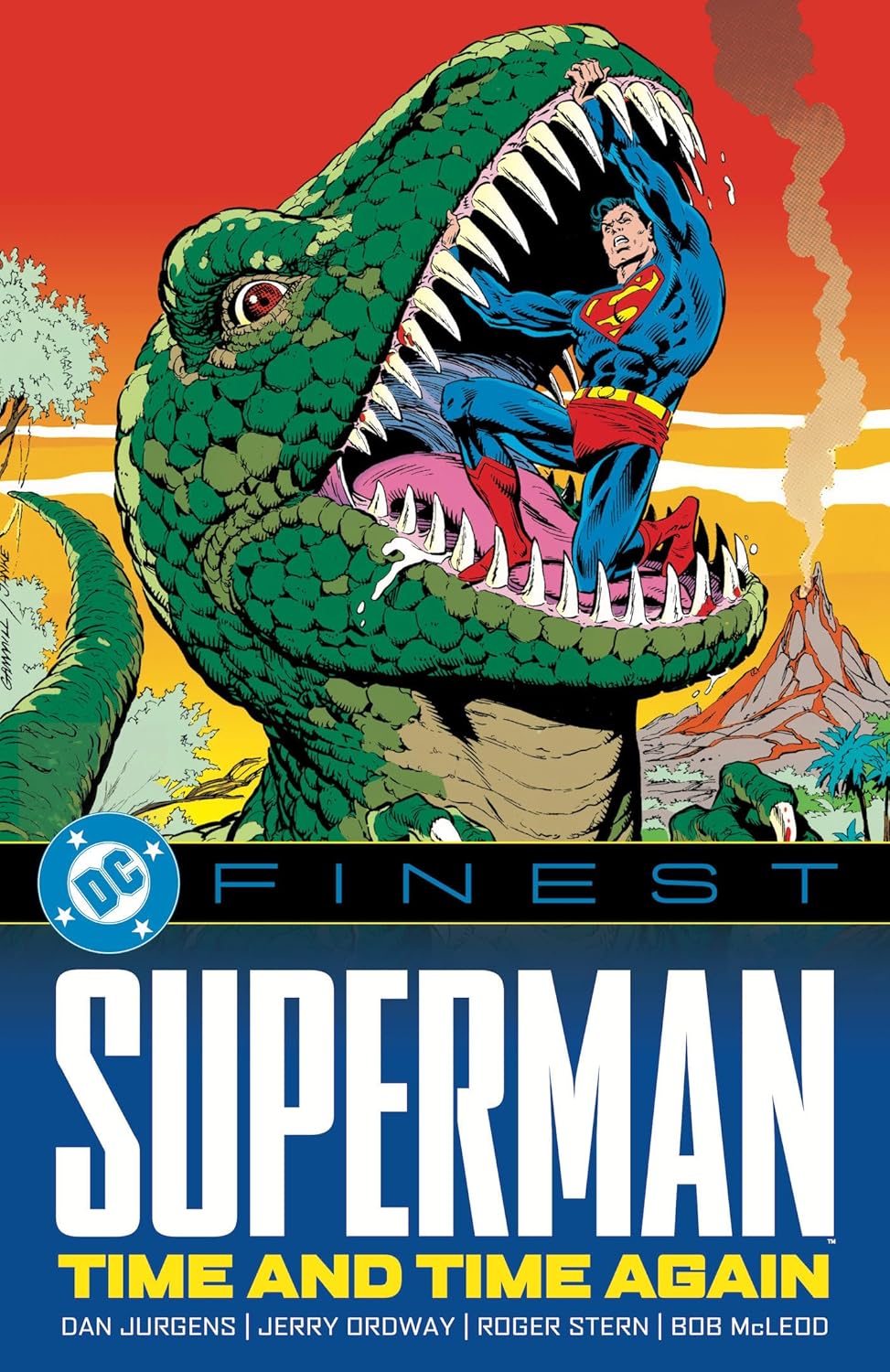
DC Finest: Superman – The Invisible Luthor


By Jerry Siegel & Joe Shuster, Jack Burnley, Paul Lauretta, Wayne Boring, Jack Burnley, Paul Cassidy, Ed Dobrotka, Leo Nowak, Fred Ray, John Sikela, Dennis Neville, Don Komisarow, lettered by Frank Shuster, Betty Burnley Bentley, the Superman Studio & various (DC Comics)
ISBN: 978-1-77950-332-3 (TPB)

This book includes Discriminatory Content produced in less enlightened times

Nearly 90 years ago, Superman rebooted planetary mythology and kickstarted the entire genre of modern fantasy heroes. Outlandish, flamboyant, indomitable, infallible and unconquerable, he also saved a foundering industry by birthing an entirely new genre of storytelling: the Super Hero. Since April 18th 1938 (the generally agreed day copies of Action Comics #1 first went on sale) he has grown into a mighty presence in all aspects of art, culture and commerce, even as his natal comic book universe organically grew and expanded. Within three years of that debut, the intoxicating blend of eye-popping action and social wish-fulfilment that had hallmarked the early exploits of the Man of Tomorrow had grown: encompassing crime-busting, reforming dramas, science fiction, fantasy and even whimsical comedy. However, once the war in Europe and the East captured America’s communal consciousness, combat themes and patriotic imagery dominated most comic book covers, if not interiors.

In comic book terms alone Superman was soon a true master of the world, utterly changing the shape of the fledgling industry as easily as he could a mighty river. There was a popular newspaper strip, a thrice-weekly radio serial, games, toys, foreign and overseas syndication and as the decade turned, the Fleischer studio’s astounding animated cartoons.

Moreover, the quality of the source material was increasing with every four-colour release as the energy and enthusiasm of originators Jerry Siegel & Joe Shuster went on to inform and infect the burgeoning studio which grew around them to cope with the relentless demand.

These tales have been reprinted many times, but this latest compilation might arguably be the best yet, offering the original stories in reading – if not strictly chronological publishing – order and spanning cover-dates July 1940 to September 1941. It features landmark sagas from Action Comics #26-40 and Superman #6-11, plus pivotal appearances in New York’s World Fair No. 2, World’s Best Comics #1 and World’s Finest Comics #2 & 3 (all with eye-catching groundbreaking covers by Jack Burnley). Although most early tales were untitled, here, for everyone’s convenience, they have been given descriptive appellations by the editors, and I should also advise that as far as we know it’s written entirely by Seigel, with the majority of covers by Fred Ray (unless I say otherwise!).

This incredible panorama of torrid tales opens with gangsters attempting to plunder jewels from exhibits at the biggest show on earth. Taken from premium package New York World’s Fair #2, ‘Superman at the 1940 World’s Fair’ is credited to Siegel & Schuster, but actually illustrated by Burnley who also provided the first ever pairing of the Man of Tomorrow with Dynamic Duo Batman and Robin on the cover to drag readers in…

Siegel & Shuster had created a true phenomenon and were struggling to cope with it. As well as monthly and bimonthly comics a new quarterly publication, initially World’s Best and ultimately World’s Finest Comics – springing from the success of the publisher’s New York World’s Fair comic-book tie-ins – would soon debut with their indefatigable hero featuring prominently in it. Superman’s daily newspaper strip began on 16th January 1939 (Yes! Today but back then!), with a separate Sunday strip following from November 5th: garnering millions of new devotees. The need for new material and creators was constant and oppressive, so expansion was the watchword at the Superman and Shuster studios.

On the primary pages though, Action Comics#26 (July 1940) introduced ‘Professor Cobalt’s Clinic’ (limned by Pauls Lauretta & Cassidy with Siegel inking and Frank Shuster lettering) wherein Clark Kent & Lois Lane expose a murderous sham Health Facility with a little Kryptonian help, whilst the following month dealt a similar blow to corrupt orphanage the ‘Brentwood Home for Wayward Youth’. September’s issue found Superman at the circus, solving the mystery of ‘The Strongarm Assaults’, a fast-paced thriller beautifully illustrated by the astonishingly talented and versatile Burnley. Whilst thrilling to all that, kids of the time could also have picked up the sixth issue of Superman (cover-dated September/October 1940). Produced by Siegel and the Superman Studio, with Shuster increasingly overseeing and only drawing key figures and faces, this contained four more lengthy adventures. Behind its Shuster & Cassidy cover, ‘Lois Lane, Murderer’, and ‘Racketeer Terror in Gateston’ by Cassidy had the Man of Action saving his plucky co-worker from a dastardly frame up and rescuing a small town from a mob invasion. An infomercial for the Supermen of America club and the secrets of attaining ‘Super Strength’ as shared by Burnley, Shuster & Cassidy follows. These lead to more adventure and action from Lauretta & Cassidy as ‘Terror Stalks San Caluma’ and ‘The Construction Scam’ sees the Man of Tomorrow foil a blackmailer who’s discovered his secret identity before spectacularly fixing a corrupt company’s shoddy, death-trap buildings.

Action Comics #29 (October 1940) again features Burnley art in a gripping tale of murder for profit. Human drama in ‘The Life Insurance Con’ was followed by deadly super-science as the mastermind Zolar created ‘The Midsummer Snowstorm’, allowing Burnley a rare opportunity to display his fantastic imagination as well as his representational acumen and dexterity. Then Superman #7 (November/December1940) marked a creative sea-change as occasional cover artist Wayne Boring became Schuster’s regular inker, whilst seeing the Man of Steel embroiled in local politics when he confronts ‘Metropolis’ Most Savage Racketeers’; quells manmade disasters in ‘The Exploding Citizens’; stamps out City Hall corruption in ‘Superman’s Clean-Up Campaign’ (illustrated fully by Boring) and puts villainous high society bandits ‘The Black Gang’ where they belong… behind iron bars.

For Action # 31 Burnley draws another high-tech crime caper as crooks put an entire city to sleep and only Clark Kent isn’t ‘In the Grip of Morpheus’ after which ‘The Gambling Rackets of Metropolis’ (AC #32) finds Lois almost institutionalised until the Big Guy steps up to crush an illicit High Society operation that has wormed its nefarious way into the loftiest echelons of Government, a typical Siegel social drama magnificently illustrated.

Cover-dated January/February 1941, Superman #8 was another spectacular and wildly varied compendium containing four big adventures ranging from fantastic fantasy in ‘The Giants of Professor Zee’ (Cassidy & Boring); topical suspense in spotlighting ‘The Fifth Column’ (Boring & Komisarow) and common criminality in ‘The Carnival Crooks’ (Cassidy) before concluding with cover-featured ‘Parrone and the Drug Gang’ (Boring), wherein the Metropolis Marvel duels doped-up thugs and corrupt lawyers controlling them.

Action Comics #33 & 34 are both Burnley extravaganzas wherein Superman goes north to discover ‘Something Amiss at the Lumber Camp’, before heading to coal country to save ‘The Beautiful Young Heiress’; both superbly enticing character-plays with plenty of scope for super-stunts to thrill the gasping fans.

Superman #9 (March/April 1941) was another four-star thriller with all art credited to Cassidy. ‘The Phony Pacifists’ is an espionage thriller capitalising on increasing US tensions over “the European War” whilst ‘Joe Gatson, Racketeer’ recounts the sorry end of a hot-shot blackmailer and kidnapper. ‘Mystery in Swasey Swamp’ combines eerie rural events with ruthless spies whilst the self-explanatory ‘Jackson’s Murder Ring’ pits the Caped Kryptonian against an ingenious gang of commercial assassins. The issue also improves health and well-being with another Shuster & Cassidy ‘Supermen of America’ update and exercise feature ‘Super-Strength’ by Shuster.

The success of the annual World’s Fair premium comic books had convinced editors that an over-sized anthology of their characters, with Superman and Batman prominently featured, would be a worthwhile proposition even at the exorbitant price of 15¢ (most 64-page titles retailed for 10¢ and would do so until the 1960s). At 96 pages, World’s Best Comics #1 debuted with a Spring 1941 cover-date and Fred Ray frontage, before transforming into the soon-to-be-venerable World’s Finest Comics from issue #2 onwards. From that landmark one-&-only edition comes gripping disaster thriller ‘Superman vs. the Rainmaker’, illustrated by Boring & Komisarow, after which Action Comics #35 headlines a human-interest tale with startling repercussions in Boring & Leo Nowak’s ‘The Guybart Gold Mine’, before even Superman is mightily stretched to cope with the awesome threat of ‘The Enemy Invasion’ rendered by Boring & Shuster: a canny, foreboding taste of things to come if – or rather, when – America entered World War II.

Superman #10 (May/June 1941) opens with eponymous mystery ‘The Invisible Luthor’ (Nowak), follows with ‘The Talent Agency Fraud’ (Cassidy, Nowak, Siegel & the Studio), steps on the gas in ‘The Spy Ring of Righab Bey’ and closes with ‘The Dukalia Spy Ring’ (both by Boring, Siegel & the Studio): topical and exotic themes of suspense as America was still at this time still officially neutral in the “European War”. Conversely, Action Comics #37 (June 1941) returned to tales of graft, crime and social injustice in ‘Commissioner Kent’ (Cassidy) as the Man of Steel’s timid alter-ego is forced to run for the job of Metropolis’ top cop, before World’s Finest Comics #2 (Summer 1941) unleashes Cassidy & Nowak’s ‘The Unknown X’ – a fast-paced mystery of sinister murder-masterminds, before AC #38 (and Nowak & Ed Dobrotka) provide a spectacular battle bout against a sinister hypnotist committing crimes through ‘Radio Control’

Other than a Cassidy pinup, Superman #11 (July/August 1941) was an all Nowak affair, beginning with ‘Zimba’s Gold Badge Terrorists’ wherein thinly disguised Nazis “Blitzkrieg” America, after which “giant animals” go on a rampage in ‘The Corinthville Caper’. Seeking a cure for ‘The Yellow Plague’ then takes Superman to the ends of the Earth whilst ‘The Plot of Count Bergac’ brings him back home to crush High Society gangsters. All by Nowak but accompanied by a Cassidy pinup.

Horrific mad science creates ‘The Radioactive Man’ in Action #39 (Nowak & Shuster Studios), whilst #40 featured ‘The Billionaire’s Daughter’ (by John Sikela) wherein the mighty Man of Tomorrow needs all his wits to set straight a spoiled debutante before we closing with ‘The Case of the Death Express’: a tense thriller about train-wreckers illustrated by Nowak from the Fall issue of World’s Finest (#3).

Stories of corruption and social injustice were gradually moving aside for more spectacular fare, and with war in the news and clearly on the horizon, the tone and content of Superman’s adventures changed too: the scale and scope of the stunts became more important than the motive. The raw passion and sly wit still shone through in Siegel’s stories but as the world grew more dangerous the Man of Tomorrow simply had to become stronger and more flamboyant to deal with it all, with Shuster and his team consequently stretching and expanding the iconography for all imitators and successors to follow.

These Golden Age tales are priceless enjoyment at an absurdly affordable price. My admiration for the stripped-down purity and power of these stories is boundless. Nothing has ever come near them for joyous, child-like perfection. You really should make them part of your life. In fact, how can you possibly resist them?
© 1940, 1941, 2025 DC Comics. All Rights Reserved.

Today in 1939 Jean Van Hamme (XIII, Thorgal, Largo Winch) was born, which you now know was the same moment – allowing for time zone differentials – that the Superman newspaper strip launched. It ended in 1966 but Van Hamme’s still going…

In 1960 UK comic Judy debuted, and ten years later so did Garth Ennis.

The Jack Kirby Omnibus Volume One: Green Arrow and others


By Jack Kirby with Joe Simon, France E. Herron, Dave Wood, Bill Finger, Robert Bernstein, Frank Giacoia, George Roussos, Roz Kirby & various (DC Comics)
ISBN: 978-1-4012-3107-1 (HB)

This book includes Discriminatory Content produced in less enlightened times.

Happy New Year! Let’s look at something old and valued!

Green Arrow is one of DC’s Golden All-Stars. He’s been a fixture of the company – in many instances for no discernible reason – more or less continually since his 1941 debut in More Fun Comics #73, cover dated November but on sale from September 19th 1941. Happy 85th and Many Happy Returns, Emerald Archer!

In those distant heady days, origins weren’t as important as image and storytelling, so creators Mort Weisinger & George Papp never bothered. The first inkling of formative motivations came in More Fun Comics # 89 (March 1943) wherein Joe Samachson & Cliff Young detailed ‘The Birth of the Battling Bowman!’ With the secret revealed, it was promptly ignored for years, leaving later workmen France Herron, Jack Kirby and his wife Roz to fill in the blanks again…

Jack Kirby was – and remains – the most important single influence in the history of US comics. There are millions of words written – such as those here by former Kirby assistant-made-good Mark Evanier in a revelatory. myth-busting Introduction to this gloriously enthralling hardback compilation – about what the King has done and meant, and you should read those too, if you are at all interested in our medium.

Tragically this particular tome is not available digitally, but that will just make it an even more impressive and rewarding once you get a copy. It might even prompt the publisher to reprint and repackage these mini masterpieces…

For those of us who grew up with his work, Kirby’s are the images which furnish and clutter our interior mindsets. Close your eyes and think “robot” and the first thing that pops up is a Kirby kreation. Every fantastic, futuristic city in our heads is crammed with his chunky yet towering spires. Because of Jack, we all know what the bodies beneath those stony-head statues on Easter Island look like, and we are all viscerally aware that you can never trust great big aliens parading around in their underpants…

When comic books began, in a remarkably short time Kirby and creative partner Joe Simon became the wonder-kid dream-team of the nascent industry. After generating a year’s worth of the influential monthly Blue Bolt, and dashing off Captain Marvel Adventures (#1) for Fawcett, Martin Goodman nailed them down. He appointed Simon editor at Timely, where “S&K” created a host of iconic stars like Red Raven, the first Marvel Boy, Hurricane, The Vision, The Young Allies, immortal villain The Red Skull and of course million-selling mega-hit Captain America (and Bucky AKA Winter Soldier).

When Goodman failed to make good on his financial obligations, Simon & Kirby quit and were snapped up by National DC, who welcomed them with open arms and a fat chequebook. Bursting with ideas the staid company were never really comfortable with, the pair were initially an uneasy fit, and were given two moribund strips to play with until they found their creative feet: Sandman and Manhunter. They turned both around virtually overnight and, once established and left to their own devices, switched to the “Kid Gang” genre they pioneered at Timely. Joe & Jack created wartime sales sensation The Boy Commandos and Homefront iteration the Newsboy Legion before being called up to serve in the war they had been fighting on comic book pages since 1940. When they returned it was to a very different funnybook business, and soon they left National to create their own little empire.

Simon & Kirby heralded and ushered in the first American age of mature comics – not just by inventing the Romance genre, but with all manner of challenging modern material about real people in extraordinary situations. They saw it all disappear again in less than eight years. Their small stable of magazines – generated for an association of interlinked companies known as Prize/Crestwood/Pines/Essenkay/Mainline Comics – blossomed and as quickly wilted when the industry abruptly contracted throughout the 1950s. After years of working for others, Simon & Kirby had finally established their own publishing house, producing comics for a far more sophisticated audience, only to find themselves in a sales downturn and awash in public hysteria generated by an anti-comicbook pogrom.

Hysterical censorship-fever spearheaded by US Senator Estes Kefauver and opportunistic pop psychologist Dr. Frederic Wertham led to witch-hunting Senate hearings. Caving in, publishers adopted a castrating straitjacket of draconian self-regulation. Horror titles produced under the aegis and emblem of the Comics Code Authority were sanitised and anodyne affairs in terms of Shock & Gore, even though the market’s appetite for suspense and the uncanny was still extremely high. Non superhero Crime comics vanished and mature themes challenging society’s status quo were suppressed…

Simon quit the business for advertising, but Kirby soldiered on, taking his skills and ideas to a number of safer, if less daring, companies. As the panic subsided, Kirby returned briefly to DC where he worked on mystery tales and Green Arrow (a long-lived back-up in Adventure Comics & World’s Finest Comics) whilst concentrating on his long-dreamed-of newspaper strip feature Sky Masters of the Space Force. During that period, Kirby also re-packaged a superteam concept kicking around in his head since he and Joe had closed their innovative, ill-timed ventures. At the end of 1956, Showcase #6 (a try-out title that launched many DC mainstays) premiered Challengers of the Unknown. After 3 more test issues “the Challs” won their own title, with Kirby in command for the first 8. Then a legal dispute with Editor Jack Schiff kicked off and the King was gone…

During that brief 3-year period (cover-dates 1957-1959), Kirby also crafted a plethora of short comics yarns which this fabulous tome re-presents in originally-published order. The roster comprises superhero, mystery and science fiction shorts from Tales of the Unexpected #12, 13, 15-18, 21- 24; House of Mystery #61, 63, 65, 66, 70, 72, 76, 84, 85; House of Secrets #3, 4, 8, 12; My Greatest Adventure #15- 18, 20, 21, 28; Adventure Comics #250-256 and World’s Finest Comics # 96-99: a long-lost gem from All-Star Western #99 plus 3 quirky vignettes by Simon & Kirby from 1946-1947 for Real Fact Comics #1, 2 & 6.

Records from those days when no creator was allowed a by-line are sparse and scanty, so many of these carry no writer’s credit (and besides, Kirby was notorious for rewriting scripts he was unhappy drawing) but Group Editor Schiff’s regular stable of authors included Dave Wood, Bill Finger, Ed Herron, Joe Samachson, George Kashdan, Jack Miller & Otto Binder, so feel free to play the “whodunit” game…

National DC Comics was relatively slow in joining the post-war mystery comics boom, but as 1951 closed they at last launched a gore-free, comparatively straight-laced anthology which nevertheless became one of their longest-running and most influential titles: The House of Mystery (cover-dated December 1951/January 1952). Its success inevitably led to a raft of similar, creature-filled fantasy anthologies including Sensation Mystery, Tales of the Unexpected, My Greatest Adventure and House of Secrets. With the Comics Code in full effect, plot options for mystery and suspense stories were savagely curtailed: limited to ambiguous, anodyne magical artefacts, wholesomely educational mythological themes, science-based miracles and criminal chicanery.

Although marvellously illustrated, stories were rationalistic, fantasy-adventure vehicles and they dominated until the early 1960s when superheroes (reinvigorated after Julius Schwartz reintroduced The Flash in Showcase #4, October 1956) usurped them…

In this compilation, following that aforementioned Introduction – describing Kirby’s 3 tours of duty with DC in very different decades – the vintage wonderment commences with another example of the ingenious versatility of Jack & Joe.

Originating in the wholesome and self-explanatory Real Fact Comics, ‘The Rocket-Lanes of Tomorrow’ (#1, March/April 1946) and ‘A World of Thinking Robots’ from #2 (May/June 1946) are forward-looking, retro-fabulous graphic prognostications of the “World That’s Coming”. A longer piece in #6 (July/August 1947) then details the history and achievements of ‘Backseat Driver’ and road-safety campaigner Mildred McKay. These were amongst the very last strips the duo produced for National before moving to Crestwood/Pines, so we skip ahead a decade and more for Jack’s return in House of Secrets #3 (March/April 1957) where ‘The Three Prophecies’ eerily depicts a spiritualist conman being fleeced by an even more skilful grifter… until Fate takes a hand…

Mythological mysticism informs ‘The Thing in the Box’ (House of Mystery #61, April 1957) wherein a salvage diver is obsessed with a deadly casket his captain is all too eager to dump into the ocean. From the same month, Tales of the Unexpected #12 focuses on ‘The All-Seeing Eye’ as a journalist responsible for many impossible scoops realises the potential dangers of the ancient artefact he employs far outweigh its benefits…

In House of Secrets #4 (May/June 1957) the ‘Master of the Unknown’ seems destined to take the big cash prize on a TV quiz show until the producer deduces his uncanny secret, after which ‘I Found the City under the City’ (My Greatest Adventure #15, from the same month) details how fishermen recover the last testament of a lost oceanographer and read of how he intended to foil an impending invasion by aquatic aliens…

From May 1957, France E. Herron & Kirby investigated ‘The Face Behind the Mask’ (Tales of the Unexpected #13): a gripping crime-caper involving gullible men, a vibrant femme fatale and a quest for eternal youth. There was no fakery to ‘Riddle of the Red Roc’ (House of Mystery #63, June) as a venal explorer hatches and trains the invulnerable bird of legend, creating an unstoppable thief before succumbing to his own greed. My Greatest Adventure #16 (July/August) features a truly fearsome threat as an explorer is sucked into a deadly association, creating death and destruction to learn ‘I Died a Thousand Times’

That month, Unexpected #15 offered ‘Three Wishes to Doom’: a crafty thriller proving that even with a genie’s lamp, crime does not pay, after which weird science transforms a rash scientist into ‘The Human Dragon’ (HoM #65 August, with George Roussos inking his old pal Jack), although his time to repent is brief as a criminal mastermind capitalises on his misfortune…

There’s an understandable frisson of foreshadowing to ‘The Magic Hammer’ (TotU #16 August) as it relates how a prospector finds a magical mallet capable of creating storms and goes into the rainmaking business… until the original owner turns up…

A smart gimmick underscores a tantalising tale of plagiarism and possible telepathy in ‘The Thief of Thoughts’ (HoM #66 September) whilst straight Sci Fi tropes inform the tale of a hotel detective and a most unusual guest in ‘Who is Mr. Ashtar?’ (TotU #17, September) before MGA #17 (September/October 1957) reveals how aliens intent on invasion brainwash a millionaire scientist to eradicate humanity in ‘I Doomed the World’. Happily one glaring error was made…

In Tales of the Unexpected #18 (October), Kirby shows how an astute astronomer saves us all by outwitting an energy being with big appetites in ‘The Man Who Collected Planets’, after which MGA #18 (November/December 1957) ushers in the comic book Atomic Age with ‘I Tracked the Nuclear Creature’, detailing how a hunter sets out to destroy a macabre mineral monster created by uncontrolled fission…

A new year dawned with Roussos inking ‘The Creatures from Nowhere!’ (HoM #70, January 1958) as escaped alien beasts rampage through a quiet town, and HoS #8 (January/February) finds greed, betrayal, murder and supernatural suspense are the watchwords when a killer tries to silence ‘The Cats Who Knew Too Much!’ Tales of the Unexpected #21 (also January) sees a smart investor proving too much for apparent extraterrestrial ‘The Mysterious Mr. Vince’, whilst a month later Unexpected #22 sees an ‘Invasion of the Volcano Men’ start in fiery fury and panicked confrontations before resolving into an alliance against uncontrolled forces of nature.

Kirby never officially worked for National’s prodigious Westerns division, but apparently his old friend and neighbour Frank Giacoia did, and occasionally needed Jack’s legendary pencilling speed to meet deadlines. ‘The Ambush at Smoke Canyon!’ features long-running cavalry hero Foley of the Fighting 5th single-handedly stalking Pawnee renegades in a somewhat standard sagebrush saga scripted by Herron and inked by Giacoia from All-Star Western #99 (February/March 1958).

Meanwhile in House of Mystery #72 (March) a shameless B-Movie Producer seemingly becomes ‘The Man Who Betrayed Earth’ whilst in MGA #20 (March/April), interplanetary bonds of friendship are forged when space pirates kidnap assorted sentients and a canny Earthling saves the day in ‘I Was Big-Game on Neptune’

Inadvertent cosmic catastrophe is narrowly averted in TotU #23 (March) when one man realises how to make contact with ‘The Giants from Outer Space’, after which issue #24 (April) slips into wild whimsy as ‘The Two-Dimensional Man!’ strives desperately to correct his incredible condition before being literally blown away…

When an early space-shot brings back all-consuming horror in MGA #21 (May/June 1958), a brace of boffins realise ‘We Were Doomed by the Metal-Eating Monster’ before ‘The Artificial Twin’ (HoM #76, July) combines mad doctor super-science with deception and fraud, whilst House of Secrets #12 (September) reveals a frantic man struggling to close ‘The Hole in the Sky’ before invading aliens use it to conquer humanity…

Also scattered throughout this extraordinary compendium of the bizarre is a stunning and bombastic Baker’s Dozen of Kirby’s fantastic covers from the period, but for most modern fans the real meat is the short, sharp salvo of superhero shockers that follow…

On his debut, Green Arrow proved quite successful. With boy partner Speedy, he was one of precious few masked stalwarts to survive beyond the Golden Age. A blatant blend of Batman and Robin Hood seemed to have very little going for itself, but the Emerald Archer always managed to keep himself in vogue. He carried on adventuring in the back of other heroes’ comic books, joined the Justice League of America just as their star was rising and later became – courtesy of Denny O’Neil & Neal Adams – the spokes-hero of the anti-establishment generation, during the 1960-70’s “Relevancy Comics” trend.

Later, under Mike Grell’s stewardship and thanks to epic miniseries Green Arrow: the Longbow Hunters, he at last became a headliner: re-imagined as an urban predator dealing with corporate thugs and serial killers rather than costumed goof-balls. This version, more than any other, informs and underpins the TV incarnation seen in Arrow.

After his long career and numerous venue changes, by the time of Schwartz’s resurrection of the Superhero genre the Battling Bowman was a solid second feature in Adventure and World’s Finest Comics where, as part of a wave of retcons, reworkings and spruce-ups DC administered to their remaining costumed old soldiers, a fresh start began in the summer of 1958. Part of that revival happily coincided with Kirby’s return to National Comics.

As revealed in Evanier’s Introduction, after working on anthological stories for Schiff, the King was asked to revise the idling archer and responded by beefing up science fictional aspects. When supervising editor – and creator – Weisinger objected, changes were toned down and Kirby saw the writing on the wall. He lost interest and began quietly looking elsewhere for work…

What resulted was a tantalisingly short run of 11 astounding action-packed, fantasy-filled swashbucklers, the first of which was scripted by Bill Finger as ‘The Green Arrows of the World’ (Adventure Comics #251, July 1958) sees costumed archers from many nations attending a conference in Star City. They are blithely unaware a fugitive criminal with murder in his heart is hiding within their masked midst…

August’s #251 takes a welcome turn to astounding science fiction as Kirby scripted and resolved ‘The Case of the Super-Arrows’ wherein the Amazing Archers take possession of high-tech trick shafts sent from 3000 AD. World’s Finest Comics #96 (writer unknown) then reveals ‘Five Clues to Danger’ – a classic kidnap mystery made even more impressive by Kirby’s lean, raw illustration and wife Roz’s sharp inking. A practically unheard-of continued case spanned Adventure #252 & 253 as Dave Wood, Jack & Roz posed ‘The Mystery of the Giant Arrows’ before GA & Speedy briefly became ‘Prisoners of Dimension Zero’ – a spectacular riot of giant aliens and incredible exotic other worlds, followed in WFC #97 (October 1958) with a grand old-school crime-caper in Herron’s ‘The Mystery of the Mechanical Octopus’. Kirby was having fun and going from strength to strength. Adventure #254 featured ‘The Green Arrow’s Last Stand’ (by Wood): a particularly fine example with the Bold Bowmen crashing into a hidden valley where Sioux warriors thrive unchanged since the time of Custer. The next issue saw the heroes battling a battalion of Japanese soldiers who refused to surrender their island bunker in ‘The War That Never Ended!’ (also by Wood). December’s WFC #98 nearly ended the heroes’ careers in Herron’s ‘The Unmasked Archers’, when a private practical joke caused the pair to inadvertently expose themselves to public scrutiny and deadly danger…

As previous stated, in the heady early days origins weren’t as important as just plain getting on with it. The definitive version was left to later workmen Herron, Jack & Roz (in Kirby’s penultimate tale), filling in the blanks with ‘The Green Arrow’s First Case’ as the superhero revival hit its stride. It appeared in Adventure Comics #256 – cover-dated January 1959 – and this time the story stuck, becoming, with numerous tweaking over successive years, the basis of the modern Amazing Archer of page and screen. Here we learned how wealthy wastrel Oliver Queen was cast away on a deserted island and learned to use a handmade bow and survive. When scurvy mutineers fetched up on his desolate shores, Queen used his newfound skills to defeat them and returned to civilisation with a new career and purpose…

Kirby’s spectacular swansong came in WFC #99 (January 1959) in ‘Crimes under Glass’. Written by Robert Bernstein, it sees GA & Speedy confronting crafty criminals with a canny clutch of optical armaments, before the Archer steadfastly slid back into the sedate, gimmick-heavy rut of pre-Kirby times…

The King had moved on to other enterprises – Archie Comics with Joe Simon and a little outfit which would soon be calling itself Marvel Comics – but his rapid rate of creation had left completed tales in DC’s inventory pile which slowly emerged for months thereafter and neatly wrap up this comprehensive compendium of the uncanny. From My Greatest Adventure #28 (February 1959) ‘We Battled the Microscopic Menace!’ pits brave boffins against a ravening devourer their meddling with unknown forces had unleashed, whilst a month later HoM #84 depicted a terrifying struggle against ‘The Negative Man’ as an embattled researcher fought his own unleashed energy doppelganger.

It all ends in an unforgettable spectacular as House of Mystery #85 (April 1959) awakens ‘The Stone Sentinels of Giant Island’ to rampage across a lost Pacific island and threaten the brave crew of a scientific survey vessel… until one wise man deduces their incredible secret…

Jack was and is unique and uncompromising: his words and pictures are an unparalleled, hearts-and-minds grabbing delight no comics lover could resist. If you’re not a fan or simply not prepared to see for yourself what all the fuss has been about then no words of mine will change your mind.

That doesn’t alter the fact that Kirby’s work from 1937 to his death in 1994 shaped the American comics scene and the entire comics planet: affecting billions of readers and thousands of creators in every arena of artistic endeavour for generations. He still wins new fans and apostles every day, from the young and naive to the most cerebral of intellectuals. His work is instantly accessible, irresistibly visceral, deceptively deep and simultaneously mythic and human. This collection from his transformative middle period exults in sheer escapist wonderment, and no one should miss the graphic exploits of these perfect adventures in that ideal setting of not-so-long-ago in a simpler, better time and place than ours.
© 1946, 1947, 1957, 1958, 1959, 2011 DC Comics. All Rights

Today in 1912 British cartoonist and strip master Tony Weare was born. Where the tarnation is that Matt Marriot compilation? Ten years later in Trenton, New Jersey Sherrill David Robinson followed. You know Jerry for co creating the Joker and his Batman stuff, but try tracking down his Still Life panels…

In 1980, Gary Larson’s The Far Side debuted, only to stop original material on the same day 15 years later. How weird is that? Of course you could ascertain all that by seeing observing There’s a HAIR in My Dirt! – A Worm’s Story please link to November 2nd 2021.

The Treasury of British Comics Annual 2026


By Stephen Brotherstone, Dave Lawrence, Scott Goodall, David Roach, Chris Lowder, Keith Richardson, Suyi Davies Okungbowa, James Tomlinson, Ned Hartley, Peter Milligan, Willie Paterson, Martin Baxendale, Edison Neo, Ken Reid, Horatio Altuna, Steve White, Jesús Redondo, Henrik Salhström, Solano Lopez, Eric Bradbury, Carlos Cruz, Francisco Fuentes Man, Juan Arancio, Mervyn Johnston, Frank Langford, Ian Kennedy, Vanyo, Bret Parson, Josep Gual, Staz Johnson, James Harren & various (Rebellion Studios)
Digital only eISBN: 978-1-83786-721-9; 978-1-83786-727-1 (Webshop Exclusive)

This book includes Discriminatory Content produced in less enlightened times.

Win’s Christmas Gift Recommendation: True Brit Comics Class… 9/10

Ooh, look! One more!

Just like the bumper seasonal hardbacks they celebrate, Treasury of British Comics Annuals blend old classics with all-new material, and although this year’s selection probably won’t last you all through 2026, it is packed with wonderful yarns that you will certainly read over and again. Combining original modern material with strips from Jag Annual 1971; Smash! November 16th 1968; Monster Fun July 5th 1975; Boy’s World February 19th – October 3rd 1964; The Birthday Book For Boys 1972; Misty February 24th 1979; Whizzer & Chips December 20th 1980; Action May 1st 1976; Wildcat Holiday Special 1989; Battle Action Force November 1st 1986; Valiant Annual 1969; Action Annual 1977; Buster December 28th 1991; Wham! Annual 1972 and Monster Fun October 2024, and kicks off with a strange team up tale fresh off the drawing/key boards of Stephen Brotherstone, Dave Lawrence & Henrik Salhström. It was lettered – like all the new material here – by Jonathan Stevenson.

‘Helmet Head & El Mestizo: “On the First day of Christmas…” ’ pairs the aging mercenary with the robot sheriff to save a frontier town – and that aforementioned ROBOT SHERIFF! – from ruthless scavengers, after which a classic tale of murderous child soldiers sees the ‘Mouse Patrol’ (by an unidentified writer and the incredible Eric Bradbury from Jag Annual 1971) still looking for their POW dads on the battlefields of North Africa in 1942. This time the three lads (Blackie Knight, Ginger Nobb & Cyril North) and their chimp chum Cleo ride their stolen tank into a Nazi super weapon test and gleefully turn it on the astounded Afrika Corps!

Presented as Original Art Archive Scans published in Smash! November 16th 1968, ‘A Short Cut Home!’ is limned by Francisco Fuentes Man and details how a nasty Earthman outsmarts himself after blackmailing gentle – but clever – aliens, after which Monster Fun July 5th 1975 supplies a Ken Reid comedy classic scripted by a mystery gagster. ‘Martha’s Monster Make-Up’ allows her to mould faces like putty and, here, get rid of a really obnoxious family guest…

Very much a main attraction, full-colour painted serial ‘John Brody and the Green Men’ ran in Boy’s World from February 19th to October 3rd 1964. Crafted by Willie Paterson & Frank Langford this is an epic African adventure in the manner of She and other fantasy movies, following the eponymous troubleshooter into a fantastic submerged kingdom and civil war against devilish priests, bloodyhanded tyrants a and a lot of undersea beasties…

It’s followed by Ned Hartley, Steve White & Stevenson’s new parody yarn ‘Imagine if Gums Was Published in Action…’ which speaks for itself – albeit rather messily – prior to Tom Tully & Ian Kennedy revealing how colour-changing ‘Kid Chameleon’ (The Birthday Book For Boys 1972) continues searching for his parents’ assassin. If not for those reptiles who had raised him in the Kalahari desert, he would have no chance…

Author unknown & Josep Gual reveal the monster-hunting surprise two girls unleash on ‘The Island’ (from Misty February 24th 1979) after which school spoof ‘Strange Hill’ (by another unknown & Martin Baxendale from Whizzer & Chips December 20th 1980) neatly shuffles us into an all-new yarn from David & Emily Roach pitting stellar sorcery savants in ‘Vanessa From Venus vs. Spellbinder’.

Thanks to another Original Art Archive Scan we get to see superspy ‘Dredger’ (by Chris Lowder & Horatio Altuna from Action May 1st 1976) settle with a KGB hit squad in all his mean, messy glory prior to James Tomlinson & Jesús Redondo Román detail why the undead don’t like space travel. ‘The Wildcat Complete: Vampire!’ was originally seen in Wildcat Holiday Special 1989, and our seasonal session adopts a rather bleak note for ‘The Fighting MaGees’ (Peter Milligan & Solano Lopez from Battle Action Force November 1st 1986) as brothers Jack and Micky endure the hell of the Gallipoli landings and are forever changed…

From Valiant Annual 1969 Carlos Cruz González and that unknown writer provide a vivid adventure for a certain inventor and his robot assistants as ‘The House of Dolmann’ face plundering pop sensations The Spectrums whilst Juan Arancio’s Original Art Archive Scans for Action Annual 1977 pit white explorers against a jungle packed with ‘The Wild Ones’

Mervyn Johnston’s ‘Captain Crucial’ clashes with a very busy Kris Kringle courtesy of Buster December 28th 1991, whilst anonymous & Vanyo detail how ordinary folk finished off ‘The Loch Tregar Terror’ (Wham! Annual 1972). One last new yarn by Suyi Davies Okungbowa, Edison Neo & Barbara Nosenzo reintroduces hairy giant robot ‘Mytek the Mighty’ in a show of brute strength and authorial foreboding before we close the fun & games with a vegan bloodbath triggered by Keith Richardson & Brett Parson’s ‘Count Carrot’ – as previously predigested in Monster Fun October 2024…

That’s all you get here, but remember this is a book you still can buy and receive instantly. The internet probably has others. You should check that out in a bit…
© 1964, 1967, 1968, 1970, 1971, 1975, 1976, 1979, 1980, 1986, 1989, 1991, 2024, 2025 Rebellion Publishing IP Ltd. All Rights Reserved.

The Treasury of British Comics Annual 2024


By Simon Furman, Tom Tully, Alec Worley, Alf Wallace, Leo Baxendale, Pat Mills, Mike Brown, Kek-W, Walter Thorburn, E. George Cowan, Derek Cribbling, Leo Baxendale, Ken Armstrong, Mike Collins, David Roach, Enric Badia Romero, Dave Gibbons, Garry Leach, Ken Reid, Brian Bolland, Joe Colquhoun, Steve Dillon, DaNi, Cam Kennedy, Brian Lewis, Mike Western, Staz Johnson, Tom Paterson, Carlos Guirado, Juan Arancio, Henry Flint & various (Rebellion Studios)
Digital only eISBN: 978-1-83786-025-8 (Kindle); 978-183786-133-0 (Webshop Exclusive)

This book includes Discriminatory Content produced in less enlightened times.

Win’s Christmas Gift Recommendation: True Brit Comics Class… 8/10

As I’ve repeated ad infinitum, British comics always enjoyed an extended love affair with unconventional (for which feel free to substitute “weird” or “creepy”) heroes. Many stars and notional role models in our strips might have been outrageous or just plain “off”, but we also handled traditional stuff in a more appropriate manner… one less likely to have outraged parents and censorious moral stickybeaks gunning for editors and publishers

Until the 1980s, UK periodicals employed an anthological model, offering a large variety of genre, theme and characters. Humour comics like The Beano were leavened by action-adventures like The Q-Bikes or General Jumbo whilst dramatic fare papers like Lion, Eagle, Hotspur or Valiant always offered palate-cleansing gagsters… and there was no reason to rock that boat in end-of-year bumper annuals

Prior to game-changers Action, Misty and 2000AD, British comics fell into fairly ironclad categories. Back then, you had genial and/or fantastic preschool fantasy; a large selection of licensed entertainment properties; action; adventure; war; school dramas, sports and conventional comedy strands. Closer examination would confirm there was always a subversive merging, mixing undertone, especially in such antihero series as Dennis the Menace or our rather strained interpretation of superheroes. Just check out The Spider, Kelly’s Eye or early Steel Claw stories…

The glory days of Christmas Annuals have ended but thanks to Rebellion and their superb Treasury of British Comics project, a touch of that grand legacy has been delighting old and new readers with modern versions of the good old days for a few years now. A little slice of the future of nostalgia comes with a limited Hardback edition and general-release digital compilations of seasonal comics fun and thrills. Moreover – just like the bonanza hardbacks they celebrate – these Annuals are a blend of all-new material and old classics.

In this first release from November 2023 the recovered, remastered delights stem from Smash! April 2nd – May 14th 1966; Wham! Annual 1966: Wham! November 25th 1967 and January 15th 1968; Lion & Valiant Holiday Extra 1969; Pow! Annual 1971; Buster Book of Scary Stories 1975; Action Summer Special 1976; Valiant Book of Mystery & Magic 1976; Action Annual 1979; Battle Holiday Special 1979; Misty Annual 1980; Starlord Annual 1982; Scream! May 12th 1984 and Monster Fun Halloween Spooktacular 2021 and opens with a modern-day team up clash by Simon Furman, Mike Collins & David Roach, coloured by Gary Caldwell and lettered by Annie Parkhouse.

‘The Spider Vs The Leopard from Lime Street’ pits the wild and wary misunderstood heroes against each other until time-bending true malign manipulators The Infernal Gadgeteer and Dr Mysterioso are exposed and expelled, after which true evil genius Leo Baxendale depicts in full colour how ‘Grimly Feendish’ staged his own Great Train Robbery in Wham! November 25th 1967.

Reproduced from actual artboards as “Original Art Archive Scans – with erasings, white out and all…” and as seen in weekly Smash! from April 2nd – May 14th 1966, ‘Moon Madness’ was written by Alf Wallace and illustrated by Brian Lewis, and revealed how a Russian lunar mission resulted in a bizarre jigsaw monster terrorising Britain…

Another multi-hued Baxendale ‘Grimly Feendish’ (from Wham! January 15th 1968) depicting another banditry bungle segues into a sci fi classic from an unknown author and Garry Leach as seen in Starlord Annual 1982 wherein an all-consuming bio-terror on a cargo freighter demands the expert attention of ‘The Exterminator’, after which an equally anonymous yarn from The Buster Book of Scary Stories 1975 limned by Dave Gibbons sees a keen trainee aviator used by ‘The Ghost Pilot’ to save a person on peril and pay off a debt…

Wham! Annual 1966 provided a wry extended ‘Frankie Stein’ tale by Walter Thorburn & Ken Reid regarding the excesses of the tabloid press before Tom Tully & Brian Bolland detail the terrors and rewards of modern sport sensation ‘Spinball’ as originally covered in Action Annual 1979, prior to another new tale as ‘Black Beth’ faces arcane peril from tarot terrors courtesy of Alec Worley, DaNi & Oz Osbourne. Pat Mills, Derek Cribbling & Joe Colquhoun keep up the mystic menace with a craven cartoonist’s cautionary tale and fate as ‘The Final Victim’ as seen in the Valiant Book of Mystery & Magic 1976 prior to Misty Annual 1980, an unknown author and Carlos Guirado exposing a young heiress to ancient heirloom ‘The Hand of Vengeance!’

Supernatural mystery continues with Furman, Steve Dillon & Jay Cobb’s ‘Beware the Werewolf!’ from Scream! May 12th 1984 before the scene shifts to true horror as Cam Kennedy and the Unknown Scripter deliver a lost episode of ‘Charleys’ War’ first found in Battle Holiday Special 1979, prior to time-travelling ‘Robot Archie’ and pals facing pirates in the Caribbean thanks to E. George Cowan & Mike Western and Lion & Valiant Holiday Extra 1969

‘Esper Commandos’ was published in Pow! Annual 1971, limned by future Modesty Blaise and Axa illustrator Enric Badia Romero and reappears here as another smudges ‘n’ all “Original Art Archive Scan”. It features a future and fascinating psionic super-squad as they infiltrate and eliminate the Britain’s future enemies, and precedes a full colour origin for one of UK comics’ strangest stars. Thanks to Ken Armstrong & Juan Arancio in Action Summer Special 1976,‘Great White Death’ revealed how Shark superstar Hookjaw got his bloody start…

One last original yarn – by Kek-W, Staz Johnson, Barbara Nosnzo & Simon Bowland – maintains the tone but transfers time and place to Leningrad in 1944 for saucy savage combat fable ‘Gustav of the Bearmacht’ before Monster Fun Halloween Spooktacular 2021 revives ‘Gah! The Gobblin’ Goblin’ and his astounding appetite thanks to Keith Richardson, Tom Paterson & Bowland.

Daft, thrilling, beautifully rendered, devastatingly nostalgic and truly fun, these are all you need to complete your Crimbo celebrations and since we’re all messing about with electrons and what-nots, if you want YOU CAN GET IT IMMEDIATELY THANKS TO DIGITAL RUDOLF THE RED BUTTON REINDEER AND THEM INTERWEB TUBES!!

The same applies to the follow up tome…
© 1966, 1967, 1968, 1969, 1971, 1975, 1976, 1979, 1980, 1982, 1984, 2021 & 2023 Rebellion Publishing IP Ltd. All Rights Reserved.