
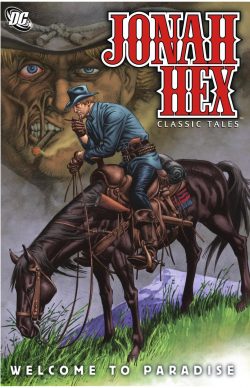
By John Albano, Michael Fleischer, Tony DeZuñiga, Doug Wildey, Noly Panaligan, George Moliterni, José Luis García-López & various (DC Comics)
ISBN: 978-1-4012-2757-9 (TPB/Digital edition)
This book includes Discriminatory Content produced in less enlightened times.
Western stories are shaped by an odd duality. The genre can almost be sub-divided into two discrete halves: the sparkly, shiny version that dominated kids’ books, comics and television for decades, as typified by Zane Grey stories and heroes such as Roy Rogers and Gene Autry… and the other stuff. That kind of cowboy tale – grimy, gritty, excessively dark – was done best for years by Europeans in such strips as Jean-Michel Charlier’s Lieutenant Blueberry or Bonelli & Galleppini’s Tex Willer which gradually made their way into US culture through the films of Sam Peckinpah and Sergio Leone. Jonah Hex is the USA’s greatest example of the latter sort…
DC (or National Periodicals as it then was) had generated a stable of clean-cut gunslingers since the collapse of the super-hero genre in 1949, with such dashing – and highly readable – luminaries as Johnny Thunder, The Trigger Twins, Nighthawk, Matt Savage and dozens of others in a marketplace that seemed insatiable in its voracious hunger for chaps in chaps. However, all things end, and by the early sixties, sagebrush stalwarts had dwindled to a few venerable properties. As the 1960s closed, thematic changes in the cinematic Cowboy filtered through to a comics industry suffering its second superhero sundown in twenty years. Although a critical success, the light-hearted Western series Bat Lash couldn’t garner a solid following, but DC, urgently pursuing a genre readers would warm to, retrenched and revived an old title, gambling once again on heroes who were no longer simply boy scouts with sixguns.
All-Star Western #1 was released with an August/September 1970 cover date, packed with Pow-Wow Smith reprints. It became an all-new anthology with the second bi-monthly issue. The magazine was allocated a large number of creative all-stars, including Robert Kanigher, Neal Adams, Gray Morrow, Al Williamson, Gil Kane, Angelo Torres and Dick Giordano, all working on such strips as Outlaw!, Billy the Kid and cult sleeper hit El Diablo, combining shoot-’em-up shenanigans with supernatural chills, in deference to the real hit genre that saved comics in those dark days: horror comics.
It wasn’t until the tenth issue and introduction of a grotesquely disfigured, irascible bounty hunter created by writer John Albano & Tony DeZuñiga that the company found its greatest and most enduring Western warrior.
This superb collection of the garish gunman’s early appearances has been around for a few years, with no apparent sign of a sequel yet, so consider this another heartfelt attempt to generate a few sales and more interest – especially as the company has recently released a collection of those aforementioned 70s western treats in its DC Finest range…
Our star is the very model of the modern anti-hero. Jonah Hex first appeared in All-Star Comics #10, a coarse and callous bounty hunter clad in shabbily battered Confederate Grey tunic and hat, half his face lost to some hideous past injury; a brutal thug little better than the scum he hunted – and certainly a man to avoid…
Collecting key stories from All-Star Western #10, Weird Western Tales #14, 17, 22, 26, 29, 30 and Jonah Hex #2 & 4 (ranging from March 1972 to September 1977), the grisly gunplay begins with Albano & DeZuñiga’s ‘Welcome to Paradise’ which introduced the character and his world in a powerful action thriller, with a subtle sting of sentimentality that anyone who has seen the classic western Shane cannot fail to appreciate.
From the first bullets blazing, blistering set-up Albano was constantly hinting at the tortured depths hidden behind Hex’s hellishly scarred visage and deadly proficiency. With the next issue the comic had been re-titled Weird Western Tales (aligning it with the company’s highly successful horror/mystery books) and adventures continually plumbed the depths of human malice and depravity…
Even at the very start the series sought to redress some of the most unpalatable motifs of old style cowboy literature and any fan of films like Soldier Blue or Little Big Man or familiar with Dee Brown’s iconoclastic book Bury My Heart at Wounded Knee will feel a grim sense of vicarious satisfaction and redress at most of the stories here. There’s also a huge degree of world-weary cynicism that wasn’t to be found in other comics until well past the Watergate Scandal, when America as nation lost its social and political innocence…
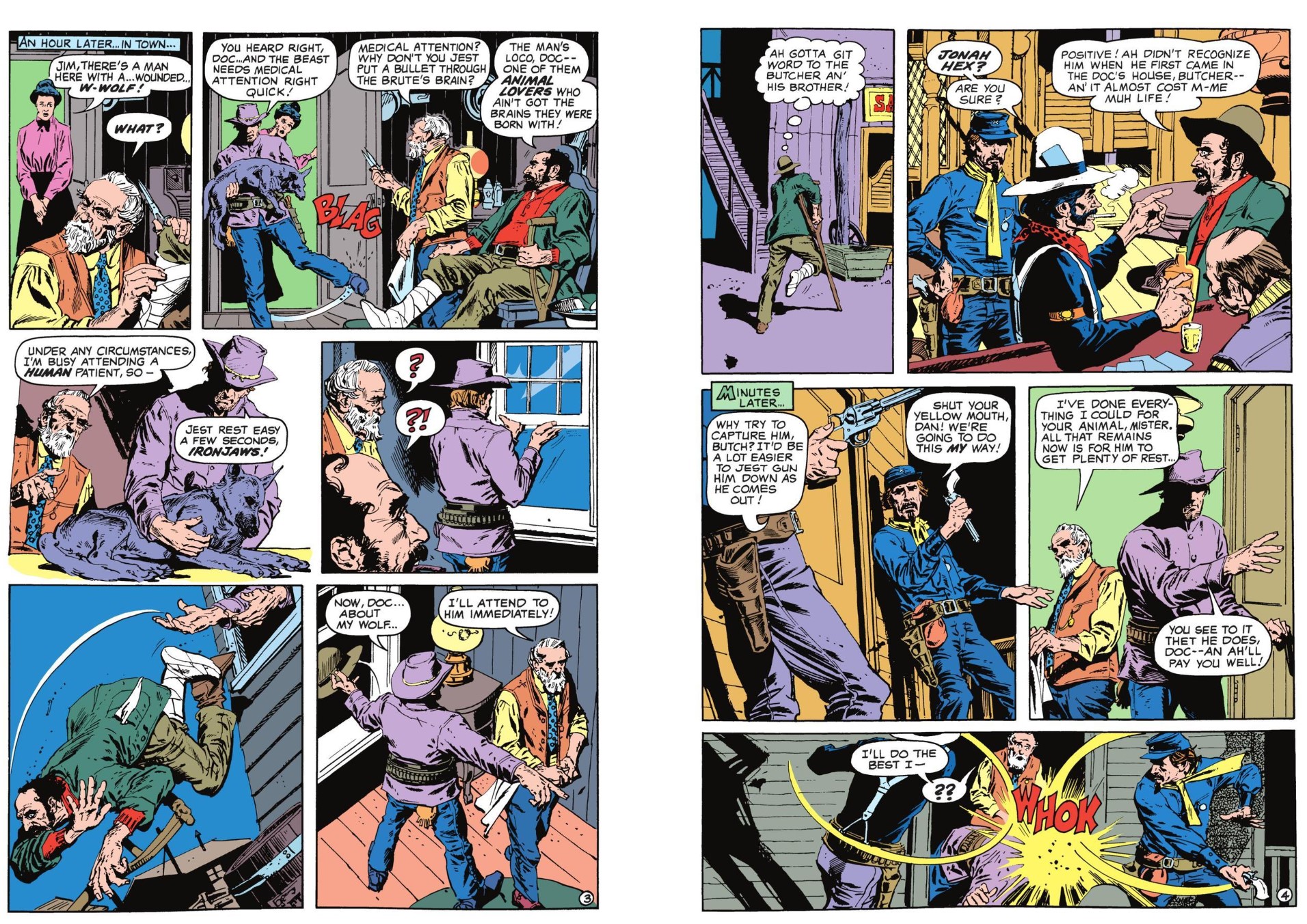
From Weird Western #14, ‘Killers Die Alone!’ (Albano & DeZuñiga) is a vicious tear jerker of a tale where Hex’s only friend valiantly dies to save him from the vengeance of killers who blame the bounty hunter for their brother’s death. Then comes a reckoning that is the stuff of nightmares. ‘The Hangin’ Woman’ (WWT #17) is a classy, gripping thriller wherein Hex runs afoul of a sadistic harridan ruling her hometown with hemp and hot lead before meeting an ending both ironic and much-deserved…
It was left to incoming writer Michael Fleisher (assisted at first by Russell Carley) to reveal Hex’s secrets, beginning with Weird Western Tales #22’s ‘Showdown at Hard Times’. A chance meeting in a stagecoach put a cabal of ex-Confederate soldiers on the trail of their ex-comrade for some unspecified earlier betrayal and it inevitably ended in a sixgun bloodbath, whilst creating an ominous returning nemesis for the grizzled gunslinger.
Train-robbers were the bad guys in the superb traditionally-informed caper ‘Face-Off with the Gallagher Boys!’ – scripted by Fleischer and illustrated by the inimitable Doug Wildey – after which further details of Jonah’s chequered past are revealed in #29’s ‘Breakout at Fort Charlotte’, limned by Noly Panaligan. It was the first chapter of a 2-part extravaganza that gorily concluded in #30 with ‘The Trial’ (illustrated by George Moliterni) as a battalion of Confederate veterans and former comrades-in-arms pass judgement on the man they believed to be the worst traitor in the history of the South…
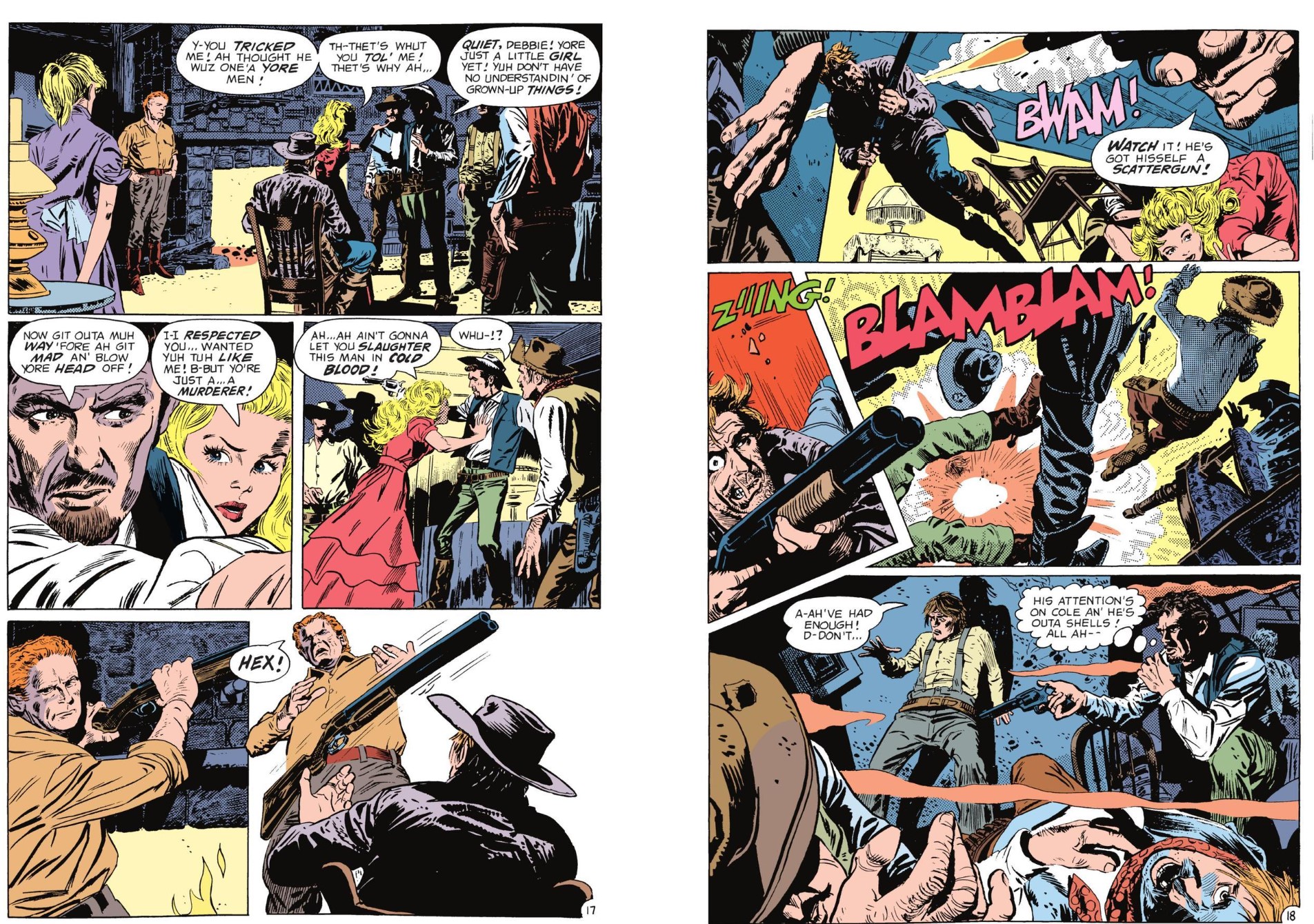
Inevitably, Hex graduated from Weird Western Tales into his own solo title and the final brace of tales in this primal primer are both drawn by the magnificent José Luis García-López. In ‘The Lair of the Parrot!’, Fleischer has the doom-drenched demon-faced desperado sucked into a scheme designed by US Secret Service agent Ned Landon to infiltrate the gang of flamboyant Mexican bandit and border raider El Papagayo. Hex is none too happy when he finally realises Landon is playing both sides for personal gain, leaving the bounty hunter to the brigand’s tender mercies after framing him for murder in Texas…
The tale continues and concludes in ‘The Day of the Chameleon!’ as a disguise artist steals Hex’s identity to perpetrate even more brazen crimes at the behest of a rich and powerful man determined to destroy the bounty hunter at all costs…
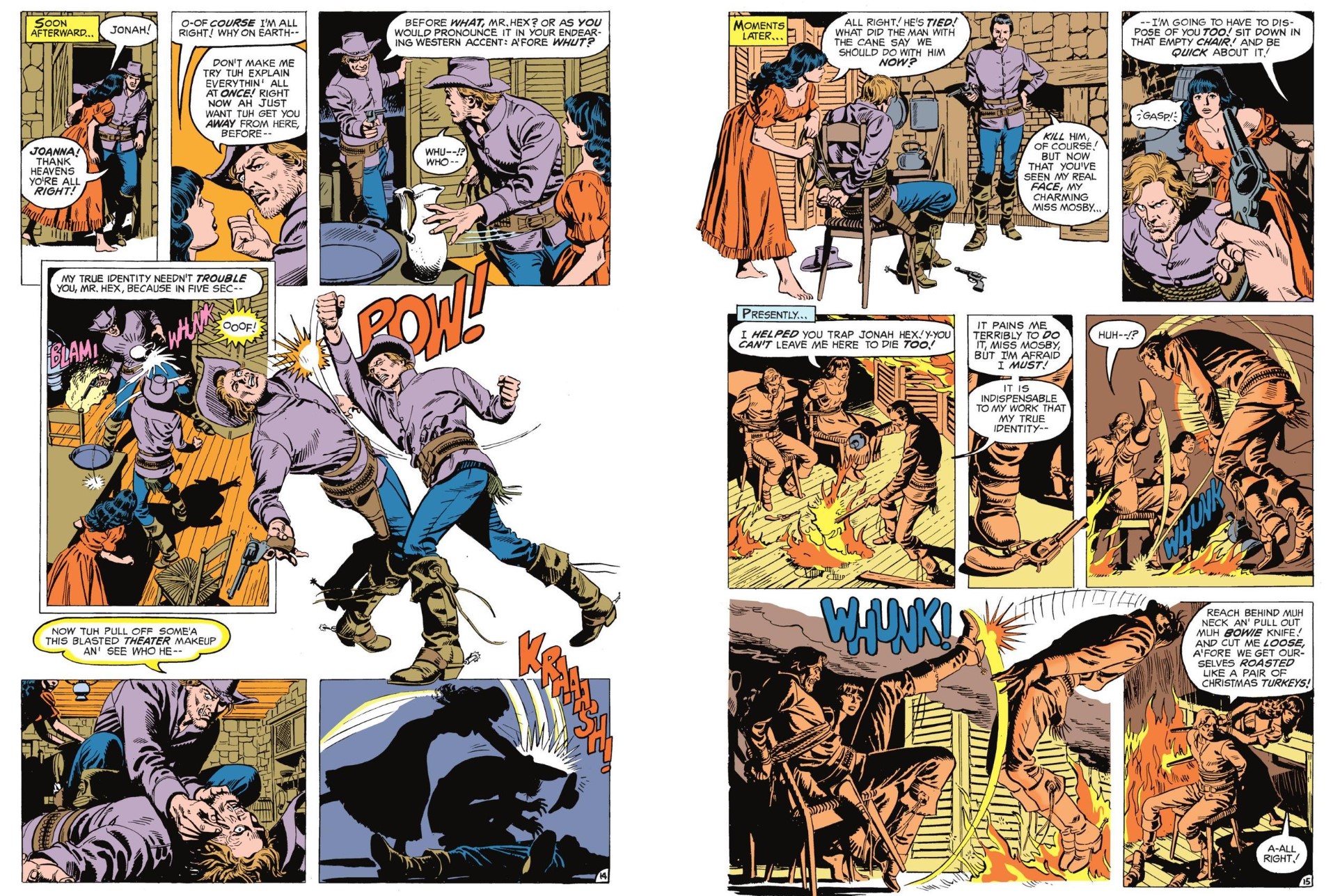
Happily, Jonah has unsuspected allies determined to save him from the villain and his own prideful, stubborn nature…
With a cover gallery by DeZuñiga, Luis Dominguez and García-López, this outrageous assemblage of uncanny exploits proves Jonah Hex is the most unique character in cowboy comics: darkly comedic, riotously rowdy, chilling and cathartically satisfying. His saga is a Western for those who despise the form whilst being the perfect modern interpretation of a great storytelling tradition. No matter what your reading preference, this is a collection you don’t want to miss.
© 1972-1975, 1977, 2010 DC Comics. All Rights Reserved.
Today in 1886 Bud Fisher’s Mutt and Jeff “ghost” Arthur “Bugs” Baer was born, as was Blondie’s originator Chic Young in 1901. In 1908 picture story pioneer Wilhelm Busch, creator of Max and Moritz died. In 1915 the inimitable Dick Breifer was born – and you should go look at Frankenstein: The Mad Science of Dick Briefer – for what you need to know there. Writer-Artist for The Heap, GI Joe and other Golden Age standards, Ernie Schroeder was born in 1916 and in 1938 Raggedy Ann & Raggedy Andy and Mr Twee Deedle creator Johnny Gruelle died.
In 1953, Hugo Pratt & Héctor Germán Oesterheld’s Sergeant Kirk debuted in Argentinian weekly comic Misterix #225.