
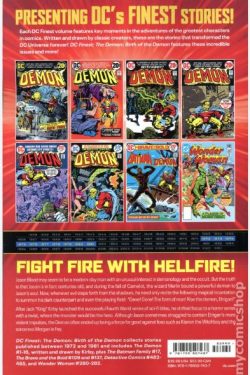
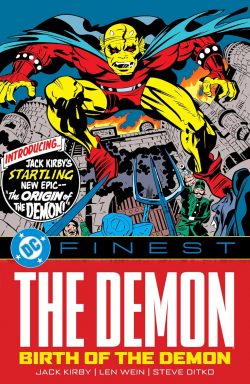
By Jack Kirby with Mike Royer, Bob Haney, Bob Rozakis, Len Wein, Gerry Conway, Jim Aparo, John Calnan, Mike Golden, Steve Ditko, José Delbo, Bob McLeod, Dick Giordano, Dave Hunt & various (DC Comics)
ISBN: 978-1799507437 (HB/Digital edition)
This book includes Discriminatory Content produced in less enlightened times.
Jack “King” Kirby shaped the very nature of comics narrative. A compulsive storyteller, Jack was an astute, spiritual man who had lived through poverty, gangsterism, the Depression and World War II. He had seen Post-War optimism, Cold War paranoia, political cynicism and the birth and death of peace-seeking counter-cultures. He was open-minded and utterly wedded to the making of comics stories on every imaginable subject. He began at the top of his game, galvanising the comic book scene from its earliest days with long-term creative partner Joe Simon: creating Blue Bolt, drawing Captain Marvel and adding lustre to Timely comics with creations such as Red Raven, Hurricane, Captain America and The Young Allies.
In 1942 Simon & Kirby moved to National/DC and hit even more stellar highs with The Boy Commandos, Newsboy Legion, Manhunter and The Sandman before the call of duty saw them inducted into the American military.
On returning from World War II, they reunited, forming a studio working primarily for the Crestwood/Prize publishing outfit. Here they invented the entire genre of Romance comics. Amongst that dynamic duo’s other concoctions for Prize was a noir-ish, psychologically underpinned supernatural anthology Black Magic and its short-lived but fascinating companion title Strange World of Your Dreams. All their titles eschewed traditional gory, heavy-handed morality plays and simplistic cautionary tales for deeper, stranger fare. Until the EC comics line hit their peak, S&K’s were far and away the best and most mature titles on the market.
Kirby understood the fundamentals of pleasing his audience and always strived diligently to combat the appalling state of prejudice about the comics medium – especially from industry insiders and professionals who despised the “kiddies world” they felt trapped in. When the 1950s anti-comics comics witch hunt devastated the industry, Simon & Kirby parted ways. Jack went back to DC briefly and created newspaper strip Sky Masters of the Space Force before partnering with Stan Lee at what remained of Timely Comics to create the monolith of stars we know as Marvel. After more than a decade there he felt increasingly stifled and side-lined and in 1970 accepted an offer of complete creative freedom at DC. The jump resulted in a root and branch redefinition of superheroes in his quartet of interlinked Fourth World series.
When those controversial, grandiose, groundbreaking titles were cancelled, Kirby looked for other concepts to stimulate his vast creativity and still appeal to an increasingly fickle and divided market. General interest in the Supernatural was peaking, with books and movies exploring the unknown in gripping and stylish new ways, and the Comics Code Authority had already released its censorious choke-hold on mystery and horror titles, thereby saving the entire industry from implosion when the superhero boom of the 1960s fizzled away.
At DC’s suggestion, Kirby had already briefly returned to his supernatural experimentation in a superb but poorly received and largely undistributed monochrome magazine. Spirit World launched in the summer of 1971, but as before, editorial cowardice and back-sliding scuppered the project before it could get going. You can see what might have been in a collected edition re-presenting the sole published issue and material from a second, unreleased sequel in Jack Kirby’s Spirit World…
With most of his ideas misunderstood, ignored or side-lined by the company, Kirby opted for more traditional fare. Never truly defeated though, he cannily blended his belief in the marketability of the mystic unknown with flamboyant super-heroics to create another unique and lasting mainstay for the DC universe: one whom lesser talents would make a pivotal figure of the company’s continuity.
This compilation collects The Demon #1-16 (1972-1973), classic team-ups from The Brave and the Bold #109 & 137 and key appearances from Batman Family #17, Detective Comics #482-485 and Wonder Woman volume 1 #280-282, cumulatively spanning cover dates August/September 1972 through August 1981, providing a comprehensive introduction to one of Kirby’s most broadly reinterpreted and reimagined characters.
Inked by Mike Royer, The Demon #1 introduces a howling, leaping monstrosity (modelled after a 1939 sequence from Hal Foster’s Arthurian epic Prince Valiant) in ‘Unleash the One Who Waits’. This shocking force of un-nature battles beside its master Merlin as Camelot dies in flames, a cataclysmic casualty of the rapacious greed of sorceress Morgaine Le Fey. Out of that apocalyptic destruction, a man arises and wanders off into the mists of history…
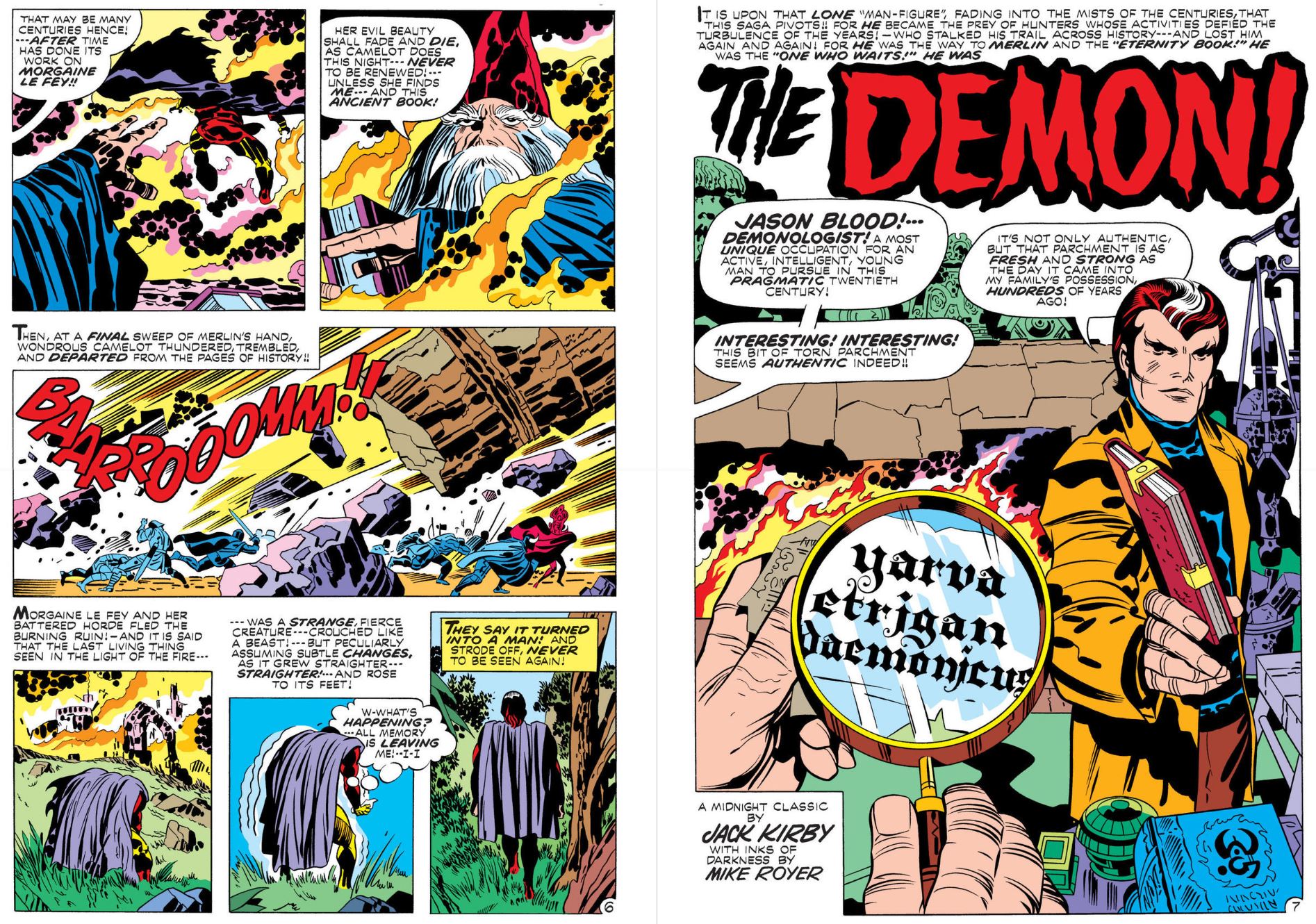
In our contemporary world (or at least the last quarter of the 20th century) demonologist and paranormal investigator Jason Blood has a near-death experience with an aged collector of illicit arcana. This culminates in a hideous nightmare about a demonic being and the last stand of Camelot. He has no idea that Le Fey is still alive and has sinister plans for him…
And in distant Moldavia, strange things are stirring in crumbling Castle Branek, wherein lies hidden the lost Tomb of Merlin…
Blood is wealthy, reclusive and partially amnesiac, but one night he agrees to host a small dinner party, entertaining acquaintances Harry Mathews, psychic UN diplomat Randu Singh and his wife Gomali plus their flighty young friend Glenda Mark.
The soiree does not go well. Firstly, there is the painful small talk, and the sorcerous surveillance of Le Fey, but the real problems start when an animated stone giant arrives to “invite” Blood to visit Castle Branek. This shattering voyage leads to Merlin’s last resting place but just as Blood thinks he may find some answers to his enigmatic past, Le Fey pounces. Suddenly he starts to change, transforming into the horrific beast of his dreams…
Issue #2 – ‘My Tomb in Castle Branek!’ – opens with wary villagers observing a terrific battle between a yellow monster and Le Fey’s forces, but when the Demon is defeated and Blood arrested, only the telepathic influence of Randu back in America can help him. Le Fey is old, dying, and needs Merlin’s grimoire, the Eternity Book, to extend her life.
Thus, she manipulates Blood – who has existed for centuries, completely unaware that Merlin’s hellish attack dog the Demon Etrigan is chained inside him – to regain his memories and awaken the slumbering master mage. It looks like the last mistake she will ever make…
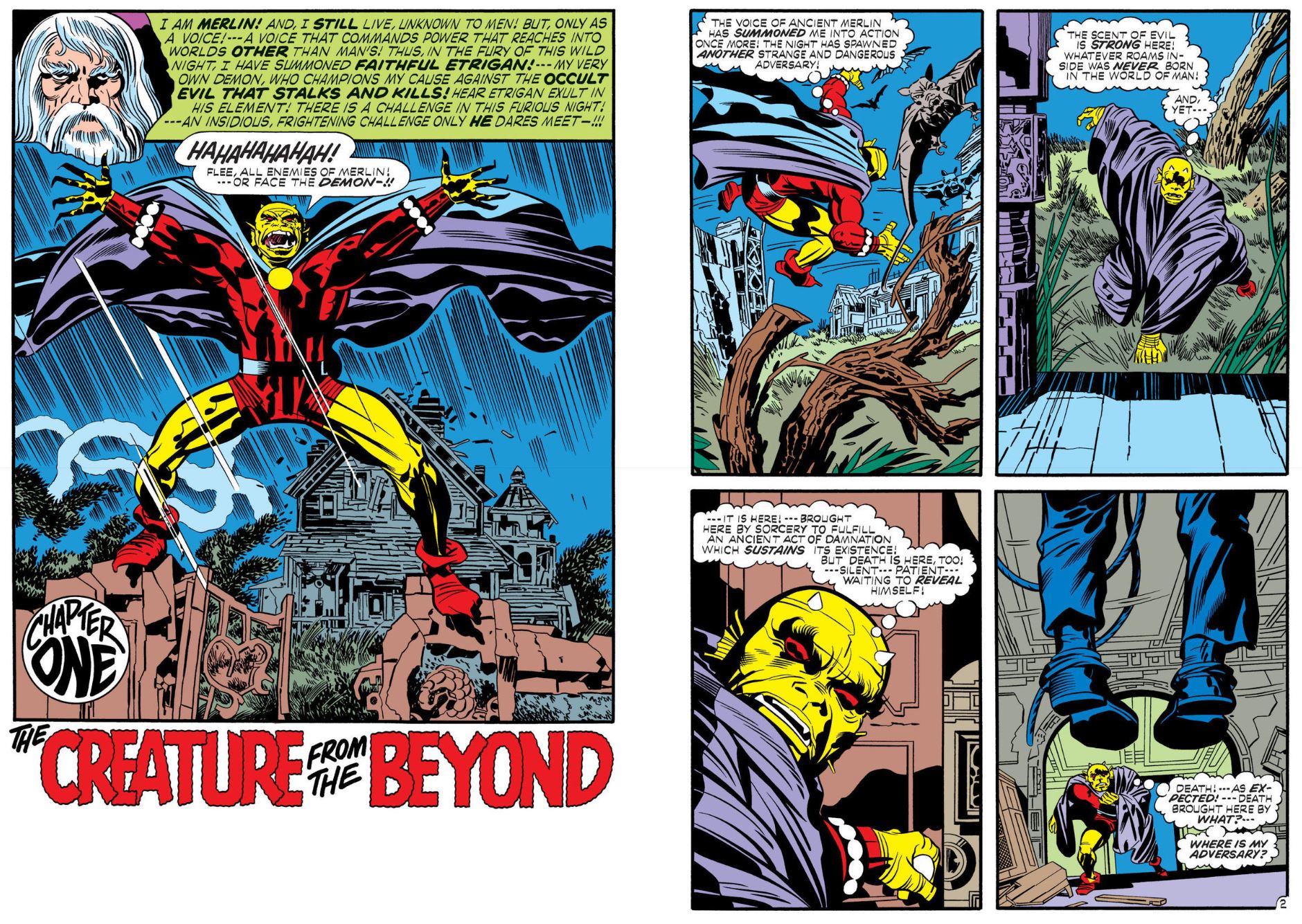
Kirby’s tried-&-trusted approach was always to pepper high concepts throughout blazing, breakneck action, and #3 was one of the most imaginative yet. ‘Reincarnators’ finds Blood back in the USA, aware at last of his tormented history, and with a small but devoted circle of friends. Adapting to a less lonely life, he soon encounters a cult able to physically regress people to a prior life… and use those time-lost beings to commit murder. The Demon #4-5 comprise one single exploit, wherein a simple witch and her macabre patron capture the reawakened, semi-divine Merlin. ‘The Creature from Beyond’ and ‘Merlin’s Word’s …Demon’s Wrath!’ introduce cute little monkey Kamara the Fear-Monster (later used with devastating effect by Alan Moore in Saga of the Swamp Thing #26-27) and features another startling “Kirby-Kritter”: Somnambula, the Dream-Beast…
It seems odd in these blasé, anything goes modern times but The Demon was a deeply controversial book in its day – cited as providing the first post-Comics Code depiction of Hell, and one where problems were regularly solved with sudden, extreme violence. ‘The Howler!’ in issue #6 is a truly spooky yarn with Blood hunting a primal entity of rage and brutal terror that transforms victims into murderous lycanthropic killers, whilst #7 debuts a spiteful, malevolent young fugitive from a mystical otherplace.
‘A Witchboy!!’’ introduces Klarion and his cat-familiar Teekl – utterly evil little sociopaths in a time where all comic book politicians were honest, cops only shot to wound and “bad” kids were only misunderstood: thus, another Kirby first…
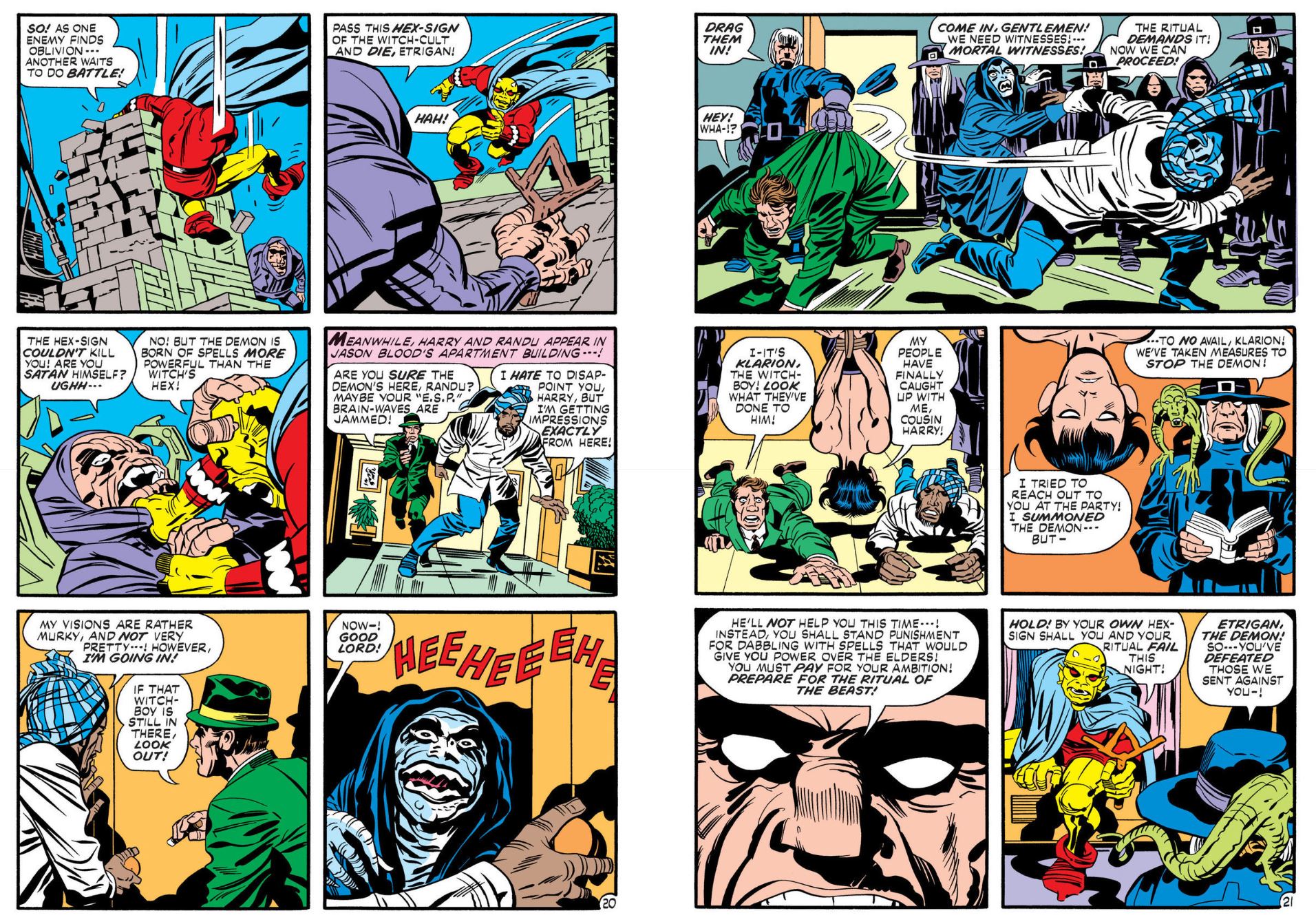
An extended epic, ‘Phantom of the Sewers’ skilfully combines movie and late-night TV horror motifs in the dark and tragic tale of actor Farley Fairfax, cursed by the witch he once spurned. Unfortunately, Glenda is the spitting image of the departed Galatea, and when, decades later, the demented thespian kidnaps her (in ‘Whatever Happened to Farley Fairfax?!!’) to raise the curse, it could only end in a flurry of destruction, death, consumed souls and ‘The Thing That Screams’…
In case you were wondering: the first musical adaption of The Phantom of the Opera (by Ken Hill) was in 1976, and the one you’re thinking of launched in 1986. The King was always ahead of the curve and subtly influential…
This 3-part thriller is followed by another moody, multi-part masterpiece (The Demon #11-13). ‘Baron von Evilstein’, ‘Rebirth of Evil!’ and ‘The Night of the Demon!’ comprise a powerful parable about worth and appearance, featuring the ultimate mad scientist and the tragic, misunderstood monster he so casually builds. It’s a truth that bears repeating: ugly doesn’t equal bad…
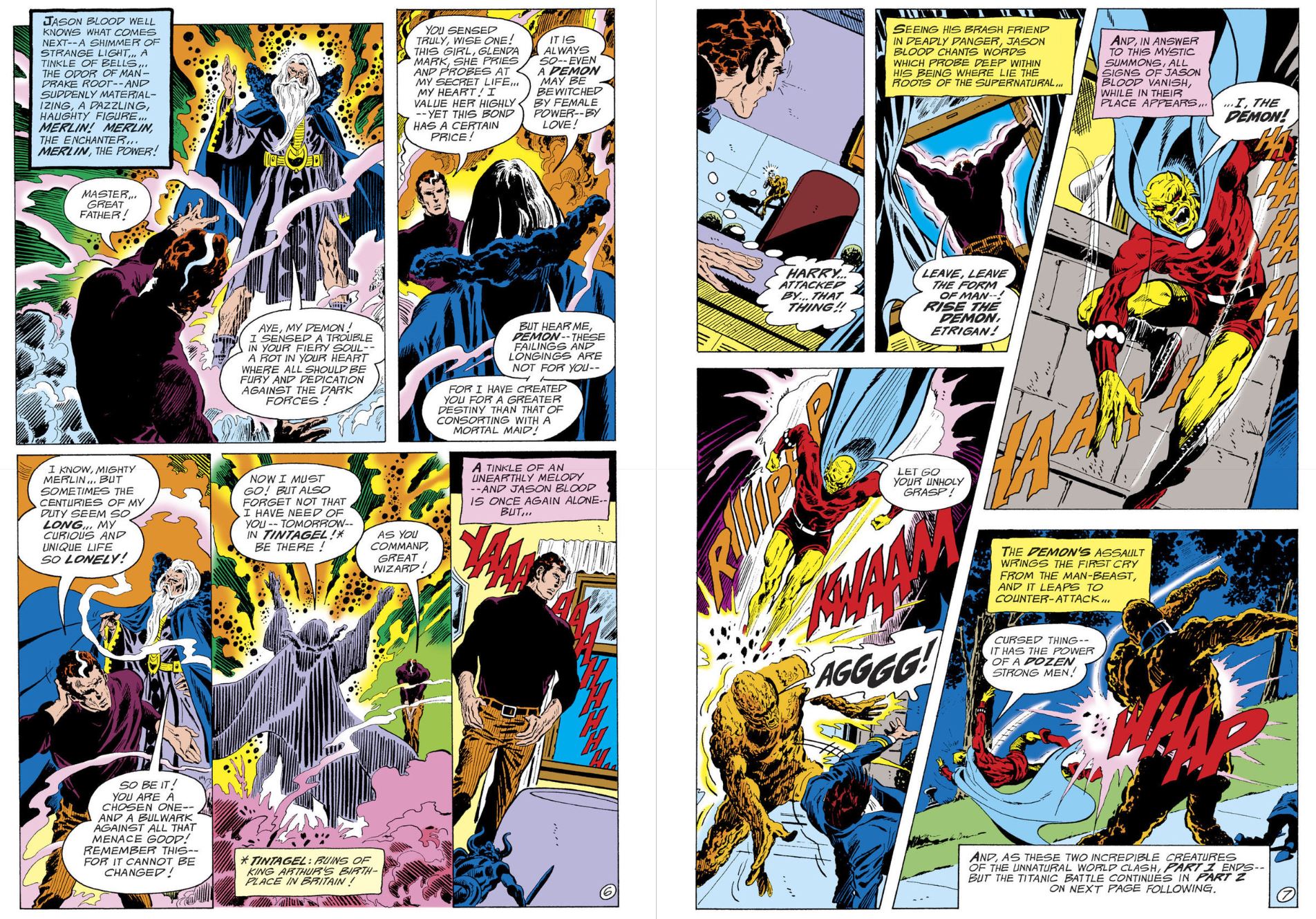
An opportunity to widen the horror-hero’s appeal came next in The Brave and the Bold #109: as Bob Haney & Jim Aparo unship superb supernatural thriller ‘Gotham Bay, Be My Grave!’ wherein the Caped Crusader and Kirby’s Kritter Etrigan the Demon fractiously unite to battle an unquiet spirit determined to avenge his own execution after nearly a century…
Despite the King’s best efforts The Demon was not a monster hit – unlike his science-fiction disaster drama Kamandi – and by #14 it’s clear the book was in its last days. Not because the sheer pace of imagination, excitement and passion diminished – far from it – but because the well-considered, mood-drenched stories were suddenly replaced by rocket-fast, eldritch romps populated with returning villains. First back was Klarion in ‘Return of the Witchboy!’ who creates a deadly doppelganger to replace Jason Blood and kill his friends in ‘The One Who Vanished!!’ (#14-15) before the series succumbed to irresistible economic forces with #16 (cover dated January 1974) in a climactic if hasty showdown with ‘Immortal Enemy’ Morgaine Le Fey…
Etrigan and cohort resurfaced in 1977 and B&B #137 (October) as Haney, John Calnan & Bob McLeod subjected Batman, Jason Blood’s friends and The Demon to war with resurrected Chinese wizard Shahn-Zi at ‘The Hour of the Serpent!’ before in a guest shot led to short revival. In Batman Family #17 (cover-dated April/May 1978), the Man-Bat serial saw Bob Rozakis & Mike Golden celebrate a happy event as the Chiropteran Crusader awaited the natal event of his firstborn child only to learn ‘There’s a Demon Born Every Minute!’ with devil babies infesting the maternity ward the hero welcomes the arrival of Etrigan (eventually) before teaming up to again thwart the diabolical schemes of malign Morgaine Le Fey.
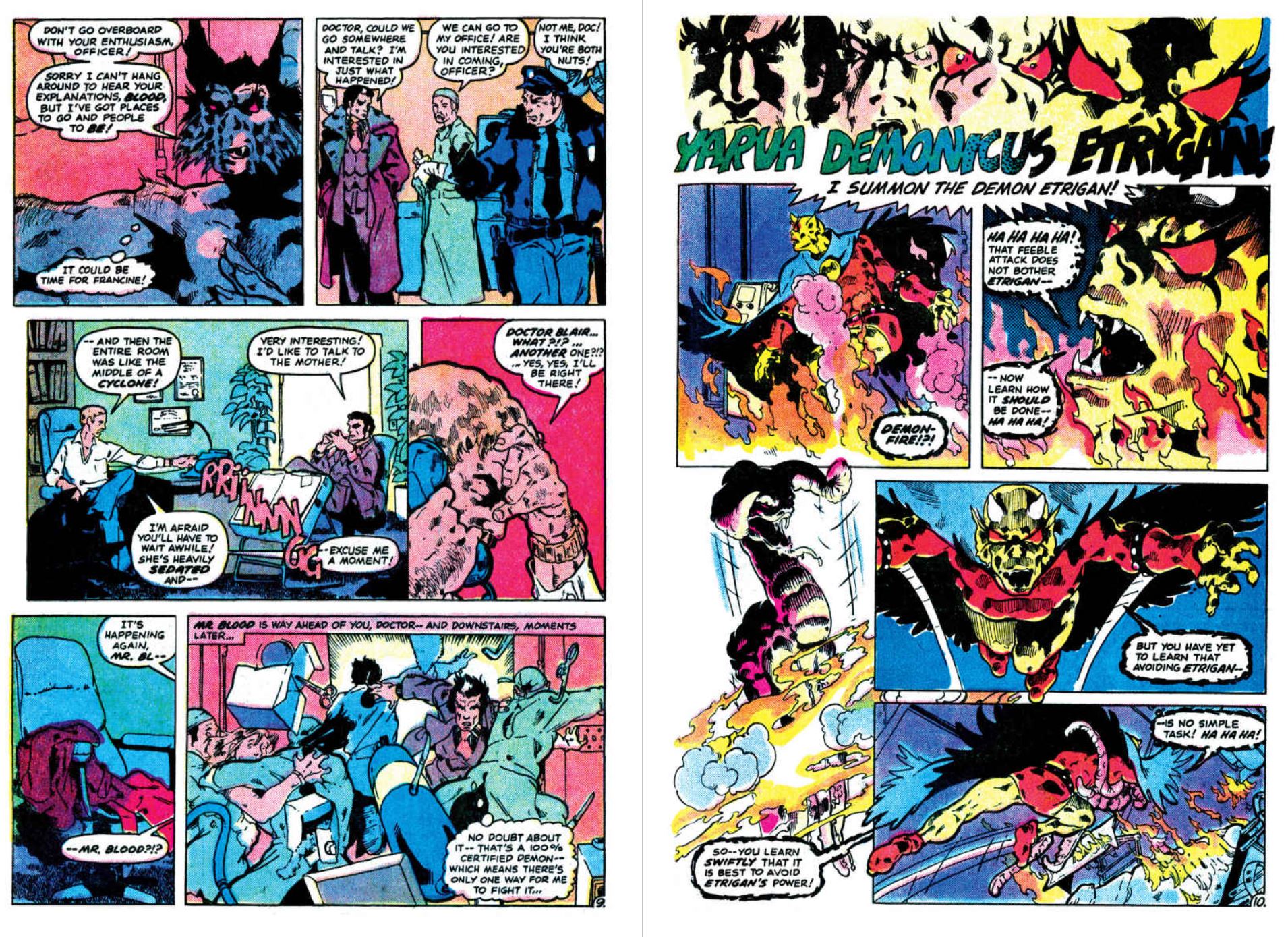
Implicit invite accepted, Gotham resident The Demon took up residence in anthological blockbuster Detective Comics beginning with #482 (February/March 1979). Here Len Wein, Golden & Dick Giordano opened a tense quest for ‘The Eternity Book’ of Merlin. As Steve Ditko added his unique vision to the optics, the chase caught Etrigan clashing with mad mystic academic Baron Tyme in DC #483’s ‘Return to Castle Branek!’ before hurtling to a chaotic, cataclysmic conclusion in #484’s ‘Tyme Has No Secrets!’ and furious finish in #485’s ‘The Fatal Finale!’
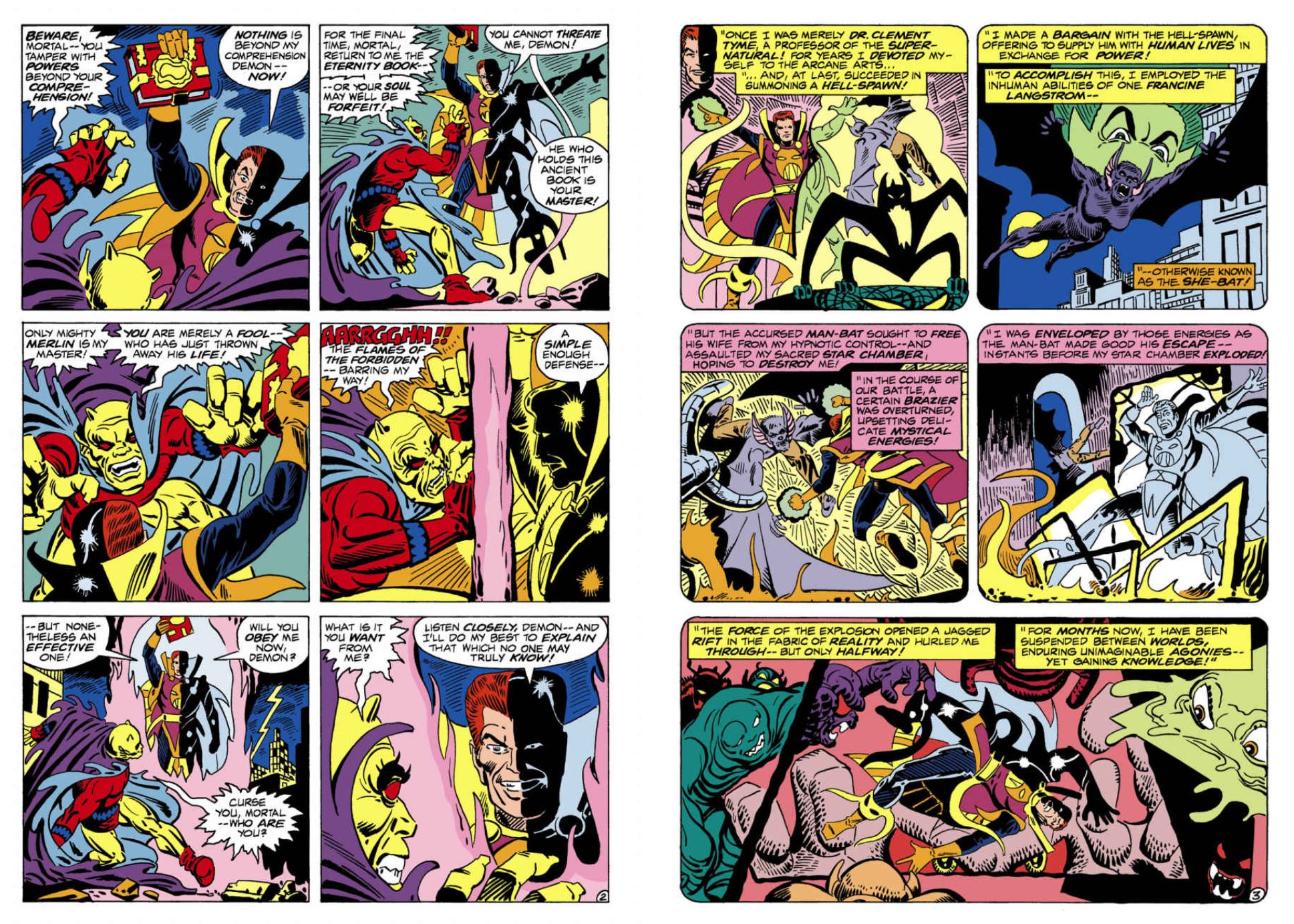
The riotous revelries conclude with an often overlooked team-up. For Wonder Woman #280 (volume 1, June 1981), Gerry Conway, José Delbo & Dave Hunt detail how Air Force officers Diana Prince and Steve Trevor investigate the prestigious Delphi Foundation after demon Baal-Satyr abducts their friend Etta Candy. They uncover senatorial corruption and insidious infiltration by witchboy Klarion and use arcane connections to link up with Randu Singh, Blood and his infernal alter ego prior to a rescue raid on ‘The Castle Outside Time!’ (WW #281), enduring more hellish treatment prior to #282’s triumphant, resurgent ‘Return and Redemption’…
With covers by Kirby, Royer, Tatjana Wood, Aparo, Rich Buckler, Ross Andru & Dick Giordano, this is a sublime slice of Right Place, Wrong Time entertainment: a wondrously economical collection every comics fan of today should have and cannot help but enjoy.
© 1972, 1973, 1977, 1978, 1979, 1981, 2026 DC Comics. All Rights Reserved.
Today comic strip master Sy Barry arrived in 1928, whilst Graham Nolan didn’t turn up until 1962 and much-missed Italian artist Massimiliano Frezzato (I custodi del Maser, Margot) in 1967.
We lost Barney Baxter cartoonist Frank Miller in 1949, and the amazing Arnold (Deadman, Doom Patrol, Guardians of the Galaxy) Drake in 2007 but could enjoy Treasure Chest comics from 1946 and Hank Ketchum’s (US) Dennis the Menace from 1951.