
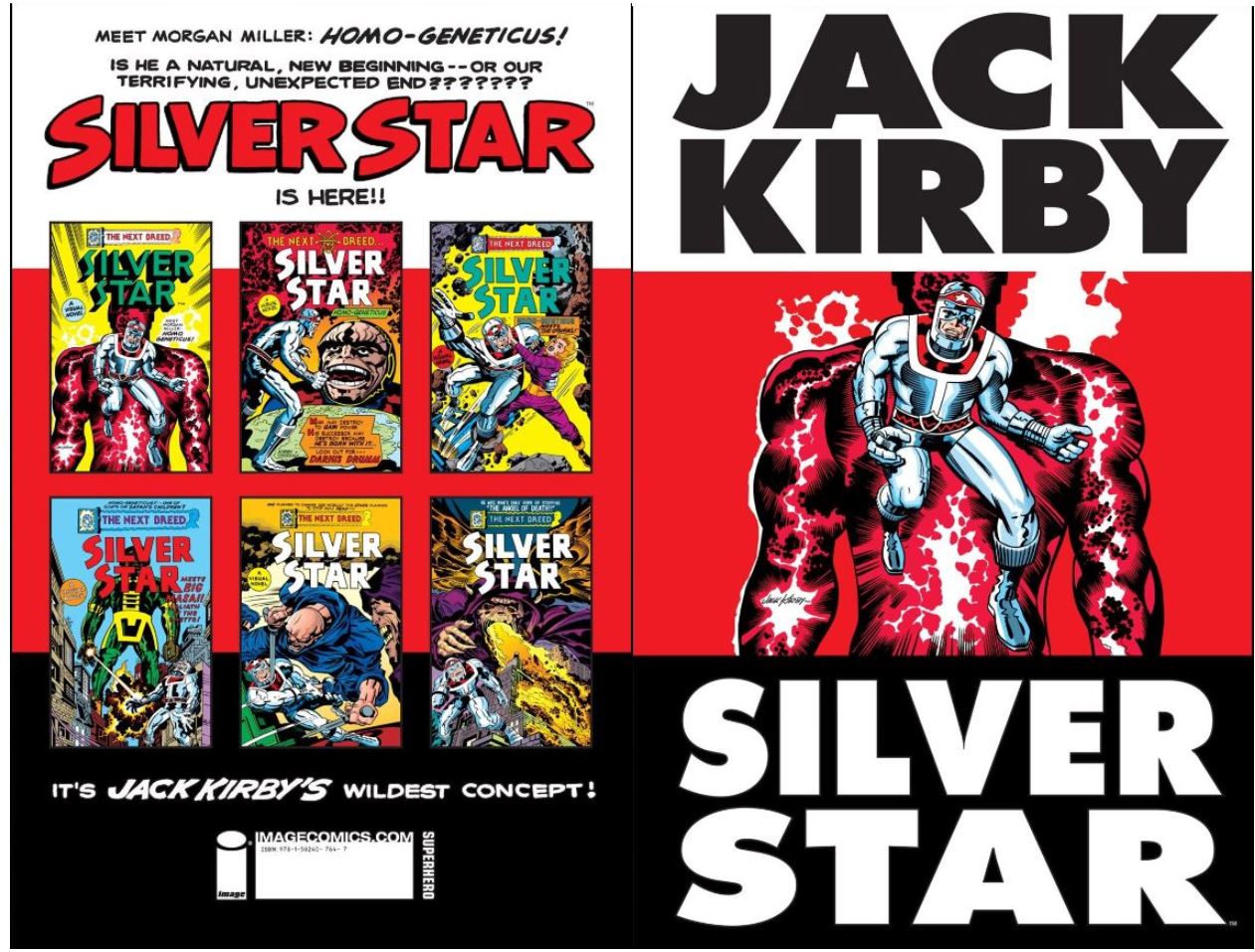
By Jack Kirby, with Mike Royer, D. Bruce Berry, Janice Cohen, Erik Larsen & Eric Stephenson, Jim Lee, Joe Sinnott & various (Image)
ISBN: 978-1-58240-764-7 (HB/Digital edition)
Jack Kirby was – and remains – the most important single influence in the history of US comics. There are millions of words about what the man has done and meant, and you should read those if you are at all interested in our medium. Kirby was a man of vast imagination who translated big concepts into astoundingly potent and accessible symbols for generations of fantasy fans. If you were exposed to Kirby as an impressionable kid you were his for life. To be honest, the same probably applies whatever age you jump aboard the “Kirby Express”…
For those of us who grew up with Jack, his are the designs and images furnishing our interior mindsets. Close your eyes and think “robot” and the first thing that pops up is a Kirby creation. Every fantastic, futuristic city in our heads is crammed with his chunky, towering spires. Because of Jack, we all know what the bodies beneath those stony-head statues on Easter Island look like, we are all viscerally aware that you can never trust great big aliens parading around in their underpants and, most importantly, we know how cavemen dressed and carnosaurs clashed. His creations are magical; they inspire successive generations of creators to pick up the ball and keep running with it…
In the late 1930s, it took a remarkably short time for Kirby and creative partner Joe Simon to become the wonderkid dream team of the newborn comic book industry. Together they produced a year’s worth of pioneering influential monthly Blue Bolt; dashed off Captain Marvel Adventures (#1) for overstretched Fawcett and, after Martin Goodman appointed Simon editor at Timely Comics, co-created a host of iconic characters like Red Raven, the original Marvel Boy, Mercury, Hurricane, The Vision, Young Allies and million-selling mega-hit Captain America.
When Goodman failed to make good on his financial obligations, Simon & Kirby were snapped up by National/DC, who welcomed them with open arms and a fat chequebook. Bursting with ideas that cautious company were never really comfortable with, the Dynamism Duo were initially an uneasy fit, and were given two moribund strips to play with until they found their creative feet. They turned both Sandman and Manhunter around virtually overnight and, once established and left to their own devices, switched to the “Kid Gang” genre they had pioneered at Timely. Joe & Jack created wartime sales sensation Boy Commandos and Homefront iteration The Newsboy Legion before being called up to serve in the war they had been fighting on comic book pages since 1940. Once safely back and demobbed, they returned to a very different funnybook business and soon left National to create their own little empire.
Simon & Kirby heralded and ushered in the first American age of mature comics – not just by inventing the Romance comics genre, but with all manner of challenging modern material about real people in extraordinary situations – before seeing it all disappear again in less than eight years. Their small stable of magazines – generated for the association of companies known as Prize, Crestwood, Pines, Essenkay and/or Mainline Comics – blossomed and as quickly wilted when the industry abruptly contracted throughout the 1950s. After years of working for others, Simon & Kirby established their own publishing house, producing comics for a far more sophisticated audience, only to find themselves in a sales downturn and awash in public hysteria generated by an anti-comic book pogrom.
Hysterical censorship-fever spearheaded by US Senator Estes Kefauver and opportunistic pop psychologist Dr. Frederic Wertham led to witch-hunting Senate hearings. Caving in, publishers adopted a castrating straitjacket of draconian self-regulatory rules. Horror titles produced under the aegis and emblem of the Comics Code Authority were sanitised and anodyne affairs in terms of Shock and Gore, even though the market’s appetite for suspense and the uncanny was still high. Crime comics vanished and mature themes challenging an increasingly stratified and oppressive society were suppressed…
Simon quit comics for advertising, but Jack soldiered on, taking his skills and ideas to a many safer, if less experimental, companies. As the panic abated, Kirby returned briefly to DC where he worked on mystery tales and Green Arrow (at that time a back-up page-filler in Adventure Comics and World’s Finest Comics) whilst concentrating on his long-dreamed-of newspaper strip please link to Sky Masters of the Space Force: The Complete Dailies August 6th 2023. During that period Kirby also re-packaged an original superteam concept that had been kicking around in his head since he and Simon had closed their innovative, ill-timed ventures. At the end of 1956 Showcase #6 premiered the groundbreaking Challengers of the Unknown. After three further test issues the “Challs” won their own title with Kirby in command for the first eight issues. Then a legal dispute with Editor Jack Schiff exploded and the King was gone…
He found fresh fields and an equally hungry-for-change new partner in Stan Lee at ailing Atlas Comics (which had once been mighty Timely). There they created a revolution in superhero comics storytelling…
After just over a decade of never-ending innovation and wonderment, Kirby felt increasingly stifled. His efforts had transformed the dying publisher into industry-pioneer Marvel but now he felt trapped in a rut. Thus, he gambled on a move back to DC for another burst of sheer imagination and pure invention. Jack always understood the fundamentals of pleasing his audience and strived diligently to combat the appalling prejudice against the comics medium – especially from industry insiders and professionals who despised the “kiddies’ world” they were timidly trapped in. After his controversial, grandiose Fourth World titles were cancelled, Kirby looked for other concepts which would stimulate his own vast creativity and still appeal to a market growing evermore fickle. Follow-ups included science fiction themed heroes Kamandi and OMAC, supernatural star The Demon, war stories starring The Losers, and even a new Sandman co-created with Joe Simon. However, although ideas kept coming (Atlas, Kobra, Dingbats of Danger Street, and proposed adult titles In the Days of The Mob, Spirit World and True-Life Divorce) yet again editorial disputes ended up with him leaving for promises of more creative freedom elsewhere…
Kirby’s return to Marvel in 1976 was much hyped at the time but again turned out to be controversial. His new creations (2001: A Space Odyssey, The Eternals, Devil Dinosaur, Machine Man) found friends rapidly, but his return to earlier creations Captain America and Black Panther divided an increasingly voluble and transient fanbase. Jack was never slavishly wedded to tight continuity, and preferred to treat his stints on titles as another “Day One”: a policy increasingly at odds with close-continuity demanded by a strident faction of the readership…
They were apparently blind to the unfettered, joyous freedom of imagination run wild, the majesty of pulse-pounding thrills and galvanising BIG ART channelling BIG IDEAS! The end of the 1970s saw Kirby move back into animation: designing characters and scenarios for shows like Turbo-Teen, Thundarr the Barbarian and even The New Fantastic Four. His comics efforts included Original Graphic Novel The Hunger Dogs and miniseries Super Powers for DC, and an adaptation of movie The Black Hole for syndicated strip Walt Disney’s Treasury of Classic Tales.
However, his most memorable move was to validate the newly-minted Independent Comics and Direct Sale Market sectors where he launched bombastic sci fi shocker Captain Victory and the Galactic Rangers for distributor-turned-publisher Pacific Comics. For Eclipse, he co-created with Steve Gerber industry-excoriating symbol of creative rebellion Destroyer Duck (part of a grass-roots campaign that ultimately vanquished an iniquitous work-for-hire business model that had made creators little more than indentured servants since the business began). Also for Pacific at that time, Kirby crafted a 6-issue miniseries revisiting his cherished themes of human advancement and perfection. The lure of these projects was that after decades of toil and unleashed genius, now he owned his stuff, with complete editorial control.
That’s paid off in this dynamic yarn celebrating the sheer power and exuberance of The King’s gifts. Kirby never threw away a notion or design, and from his copious “Maybe Later/Maybe One Day” file in 1983, he crafted this frenzied, frenetic superhero-espionage doomsday thriller based on an unsuccessful screenplay he and then-assistant Steve Sherman had put together in the 1970s. Accompanied by an early concept drawing, the origins and impact of the original Silver Star miniseries – which ran from February 1983 to January 1984 – are discussed by Pacific’s editorial director Dave Scroggy in his Introduction before we meet Morgan Miller: Homo Geneticus! in premiere outing ‘Silver Star is here!!’
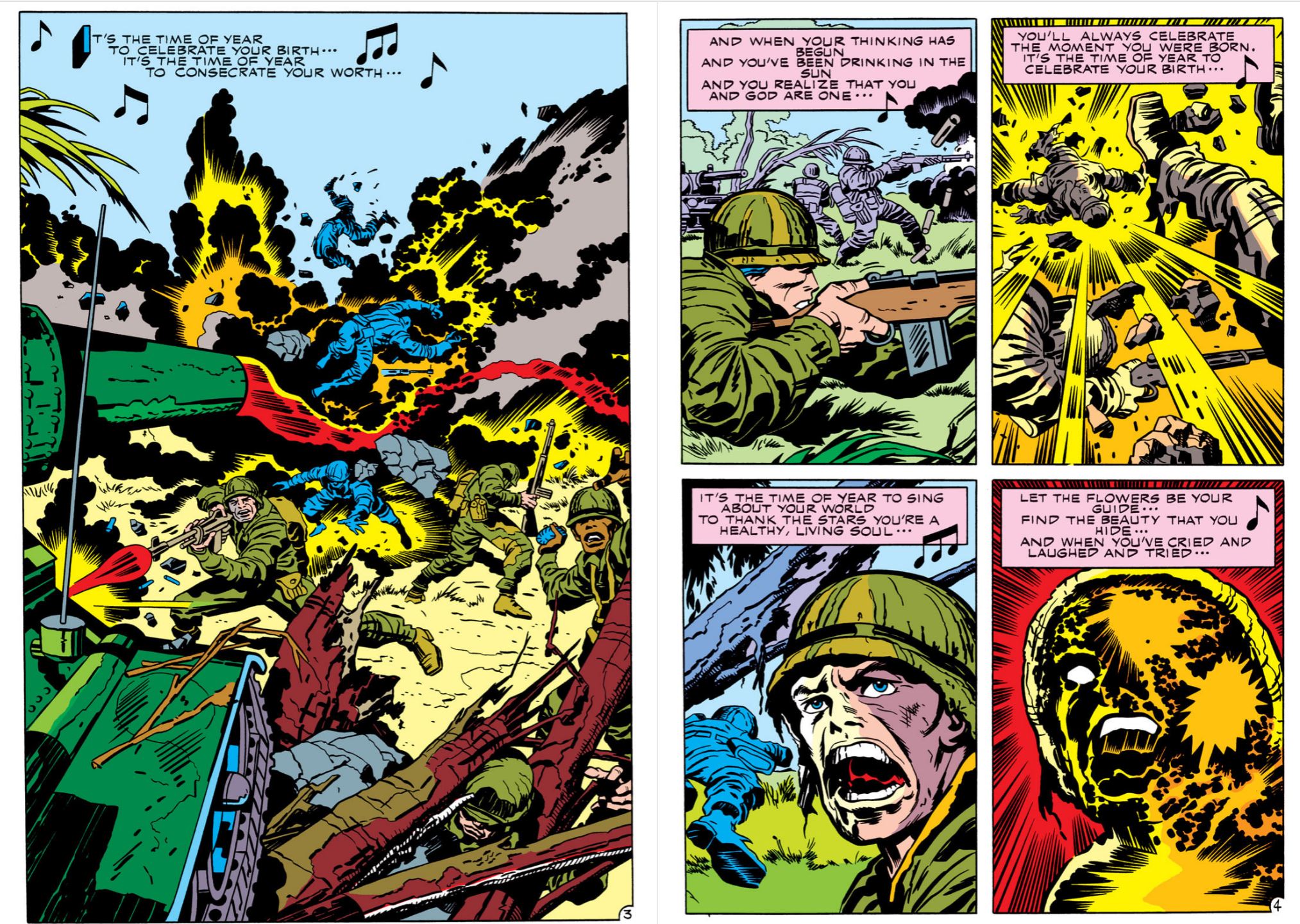
Via a communal psychic network, the next stage in human evolution reveals his secrets, disclosing that Morgan’s incredible powers come from prenatal genetic tampering by his father Dr. Bradford Miller. He was seeking to offset repercussions of prospective atomic war, and the son is apparently not the only one of this “Next Breed”.
He soon might be though, since earlier prototype Darius Drumm is methodically and ruthlessly exterminating them whenever he tracks them down…
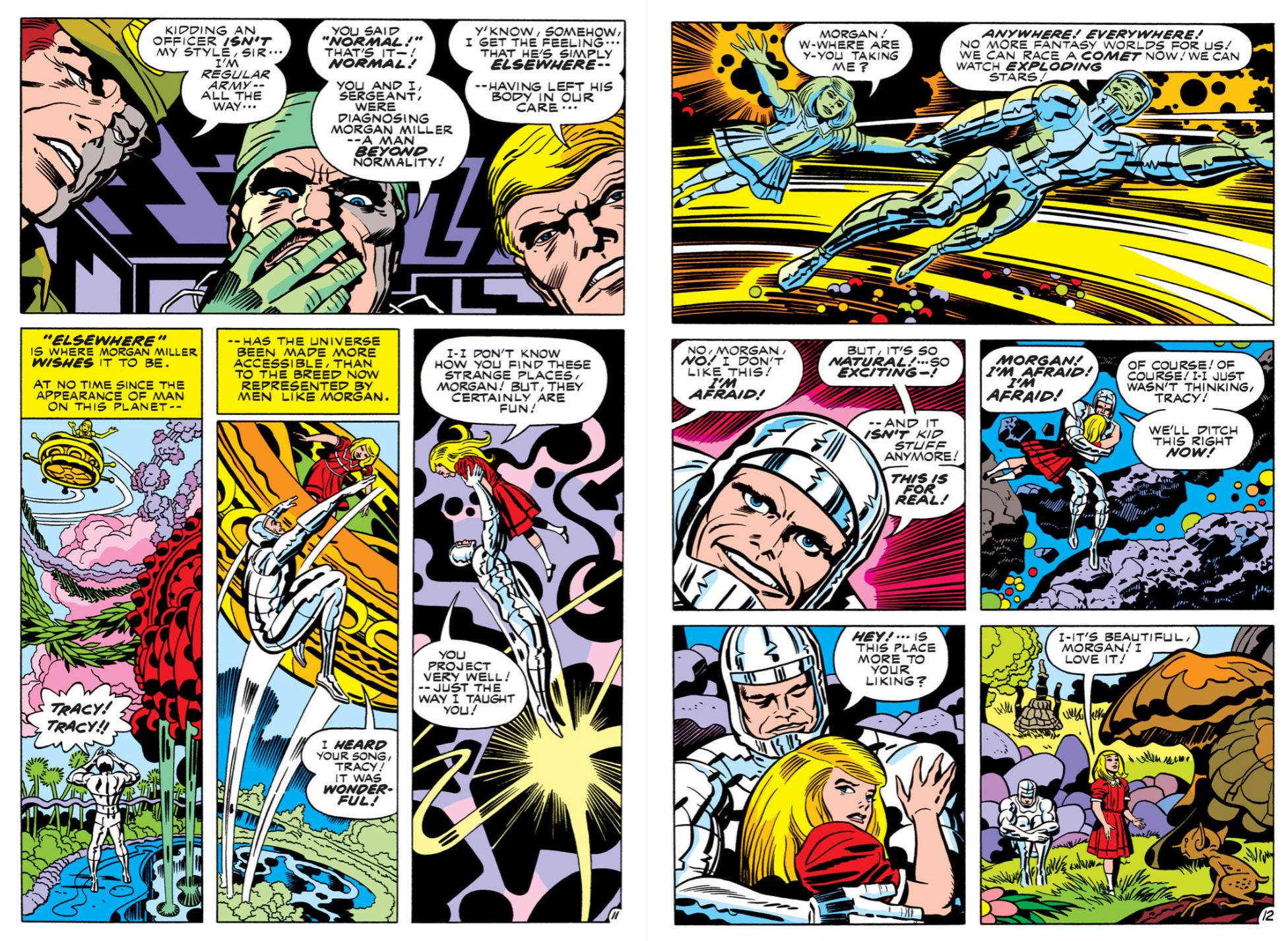
Morgan’s powers manifest when he comes under heavy fire as a good soldier fighting in another US overseas war. After an extremely public debut, he’s quickly co-opted by Secret Service agent Floyd Custer to protect The Land of the Free, even though Drumm’s campaign of terror against ‘The Others’ continues, not just with uncanny powers in the all-too-frail physical world, but also in torment-fuelled sorties into a communal astral plane where Morgan seeks to preserve the life and sanity of mysterious gamin Tracy Coleman…
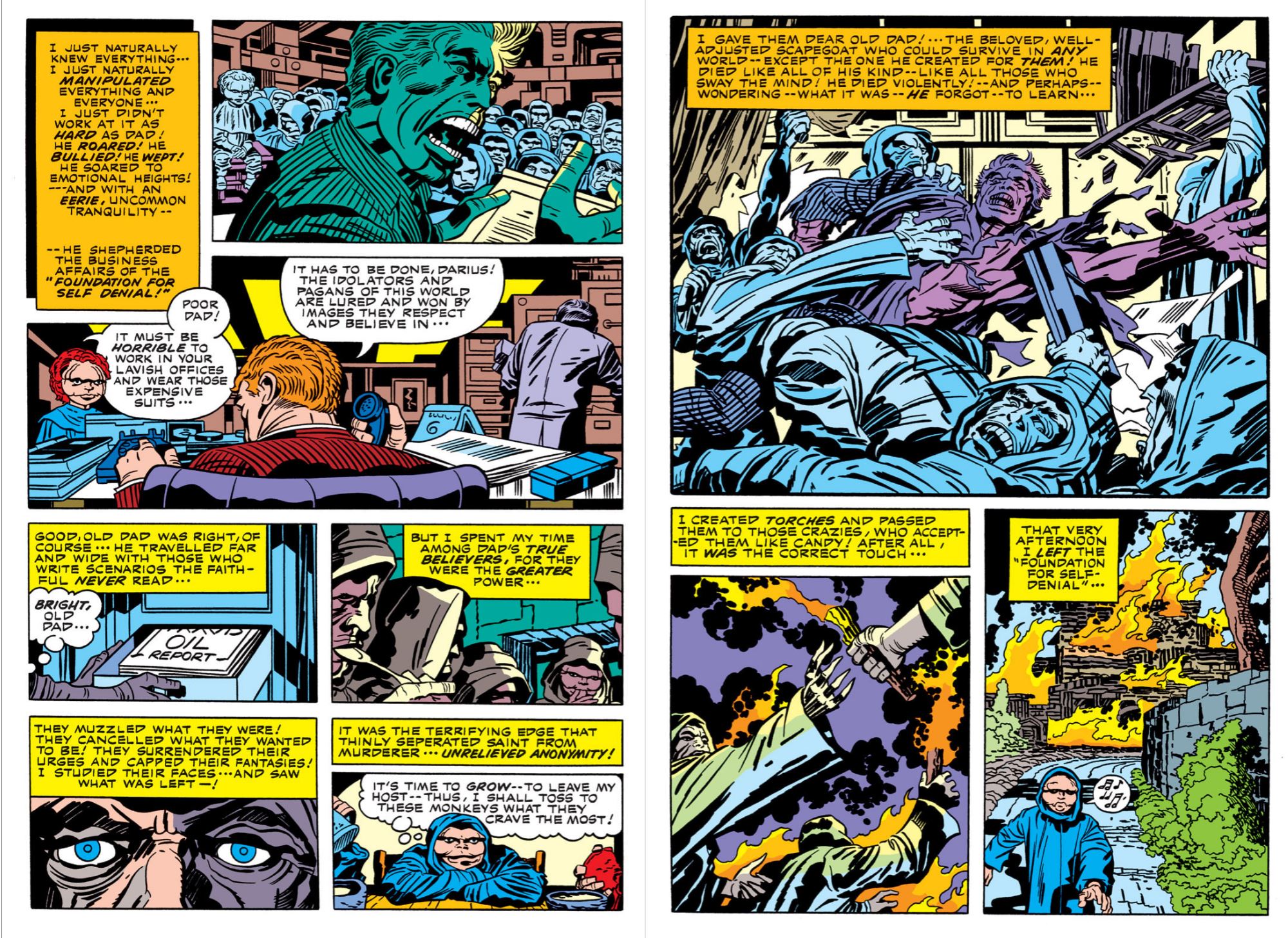
Sadly, the hero’s success rate is pretty abysmal, and Drumm’s twisted religious mania gives him an advantage in the war, as seen in ‘The Super-Normals: Are they God’s or Satan’s Children?’ It seems the tireless demagogue is also charismatic leader of a vast, anti-happiness and wellbeing cult…
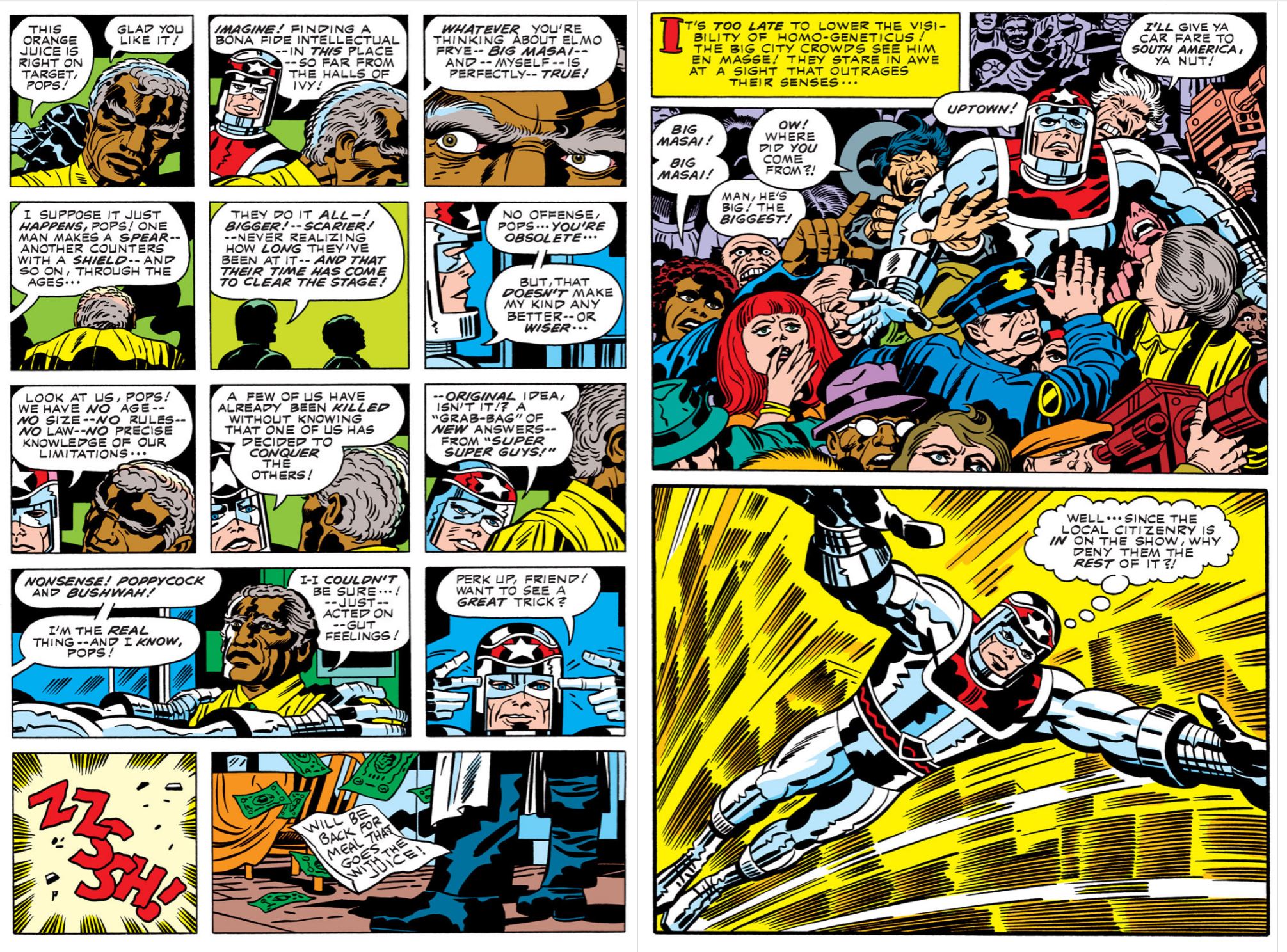
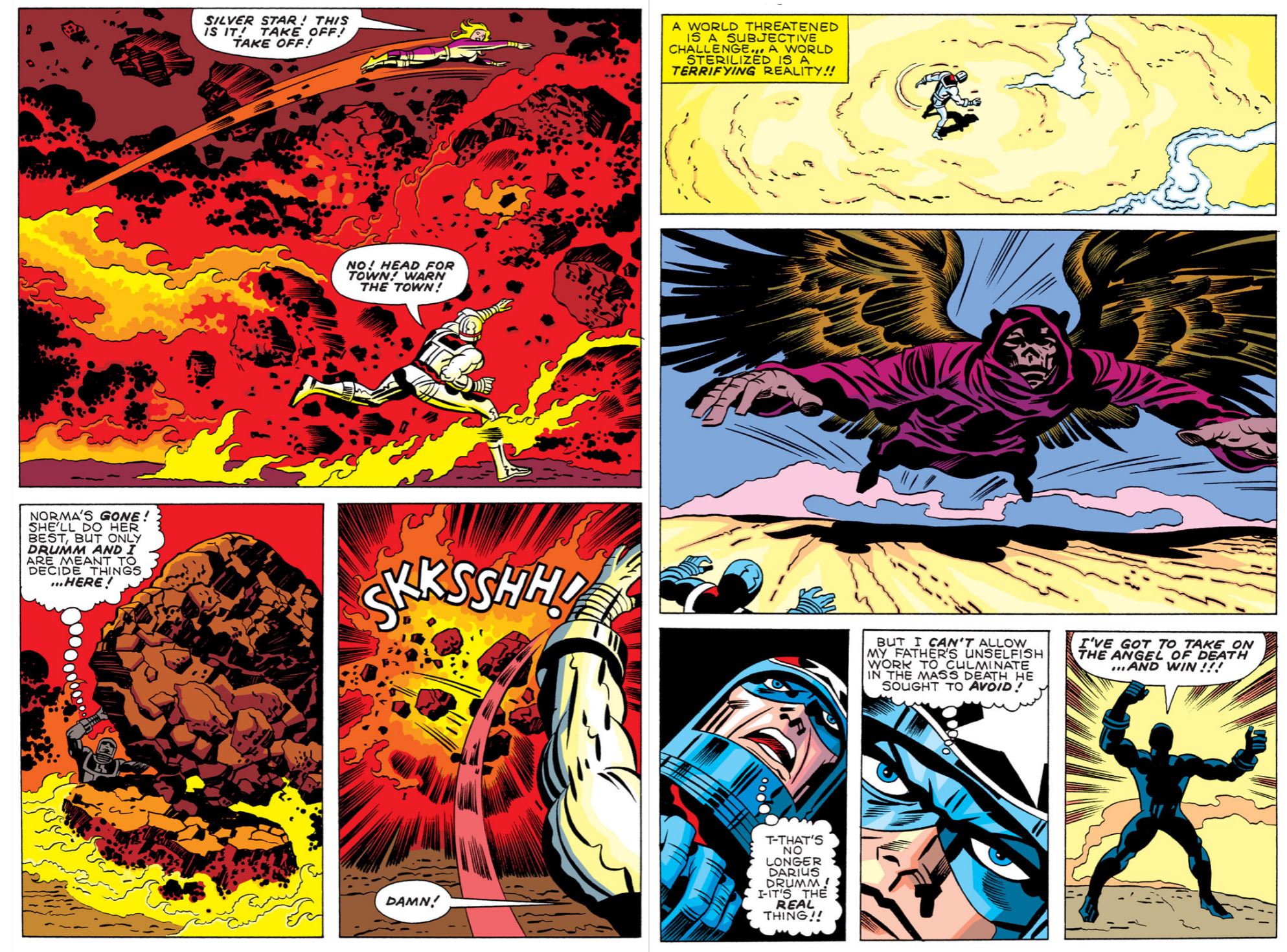
The first four issues were inked & lettered by Mike Royer with colours from Janice Cohen, but the remaining two chapters – which coincided in the 1980s with Pacific moving to more experimental print processes and paper stock (with a noticeable loss of reproduction quality) – are graced by the pens & brushes of D. Bruce Berry. They’re re-coloured for this edition by Erik Larsen & Eric Stephenson, who usher in a climactic showdown and moment of global revelation as ‘The World According to Drumm!’ sees hard-pressed hero Silver Star and his surviving species-mates zeroing in on the killer. Their foe, however, has expanded his remit to encompass all of Earth, forcing the hero to battle a science-spawned ‘Angel of Death!’…
Peppered throughout with concept and developmental sketches, unused artwork, covers, pinups and designs inked by the likes of Jim Lee & Joe Sinnott, Kirby’s self-described and long-awaited Visual Novel also offers a lavishly illustrated look at his & Steve Sherman’s Silver Star Original Screenplay.
Kirby’s commitment to wholesome adventure, breakneck action and breathless wonderment combined with an absolute mastery of the comic page and unceasing quest for the Next Big Thrill always made for a captivating read. His comics should be compulsory for all and found in every home…
© 2007 the Jack Kirby Estate. All rights reserved.
Born today in 1929 was real life Wonder Woman Marie Severin (EC comics, Hulk, Doctor Strange, Sub-Mariner, Kull the Conqueror, Not Brand Echh, Superman Adventures); sharing festivities with Gary Friedrich (Monster of Frankenstein, Captain Atom, Hulk, Captain Britain, Captain America, Ghost Rider, Sgt. Fury, Capt. Savage and His Leatherneck Raiders, Hell-Rider) in 1943 and Spanish artist Juan José Ryp (Wolverine, Frank Miller’s Robocop, Clone) in 1971.
In 1984 we lost distributor and founder of comic conventions Phil Seuling, and on this day in 1993 British tabloid weekly The Topper closed its oversized doors for good after a sterling and mostly manic run that began on January 21st 1956.