
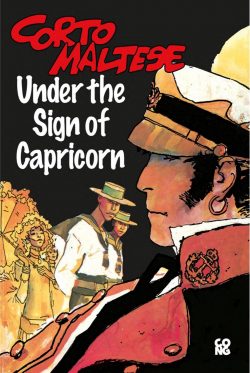
By Hugo Pratt, translated by Dean Mullaney & Simone Castaldi (CONG SA)
ISBN: 978-2-940552-42-9 (Digital edition), ASIN: B0BZ4YY5BK
This book include Discriminatory Content included for dramatic effect.
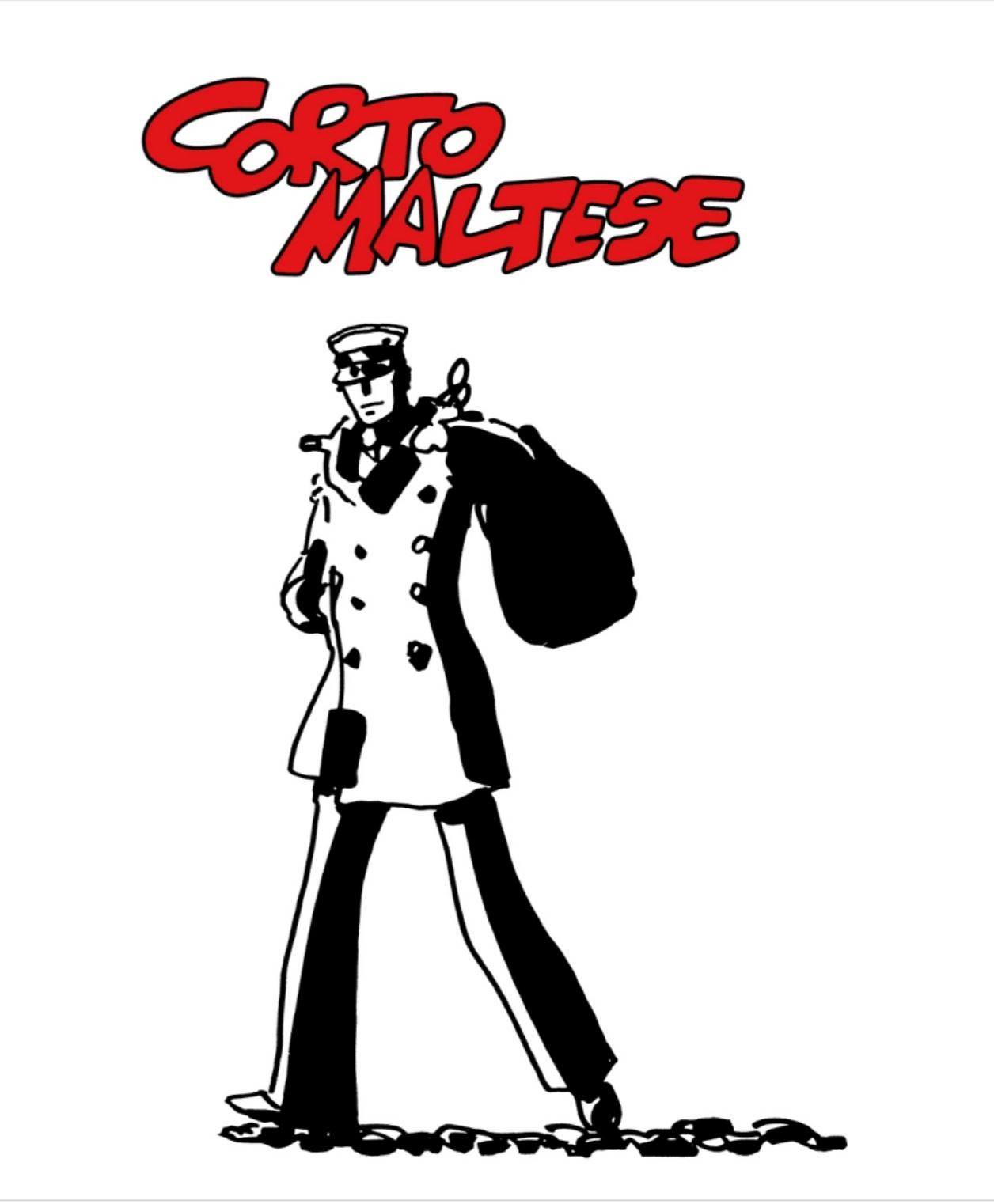
Born in Rimini on June 15th 1927, Ugo Eugenio Prat, AKA Hugo Pratt, wandered the world in his early life, and became one of its paramount comics creators. His enthralling pictorial inventions since Ace of Spades (whilst still a student at the Venice Academy of Fine Arts in 1945) were many and varied. His signature character – based in large part on his own exotic formative years – is mercurial soldier (perhaps sailor is more accurate) of fortune Corto Maltese who will be celebrating 60 inglorious years of disservice in July 2027.
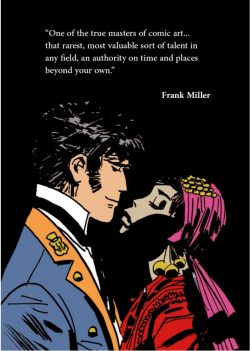
Pratt was a consummate storyteller with a unique voice and starkly refined graphic style that should not work, but so wonderfully does. Usually and preferably viewed in stark monochrome, his tales blended pared-down, relentlessly modernistic narrative stylism with complex and memorable characters, often bordering on pure archetypes.
By placing a modern, morally ambivalent antihero in an era where his actions and responses to old-world duties and attitudes should make him a scoundrel and villain, yet keeping him true to an utterly personal, ironclad yet chimerical ethical integrity that went beyond considerations of race, class or gender, Pratt created an adventurer yardstick against which we cannot help but measure all other heroes. There and then, as empires faded and colonies fell, itinerant Corto Maltese dealt with and was moved by people, not money, national concepts and institutions or traditions. He was ever a whimsical man of action and a faithful humanist with a gift for being in the wrong place at the right time. We’ll return to him momentarily…
After working in both Argentinean and, from 1959, on English comics and true blue characters like Battler Briton, Hugo Pratt made a name for himself. In the UK he produced weekly serial fare and especially complete stories for our (extremely popular) digest graphic novel lines including Super Picture Library, Air Ace Picture Library, Action Picture Library and Thriller Picture Library. These were half-sized, 64-page monochrome booklets with glossy soft-paper painted covers presenting complete stories in 1-4 panels per page. This was a luxury of layout and page design he would return to in his later years. Particularly suited to combat titles, Pratt worked on exotic jungle yarns for War Picture Library, Battle Picture Library, War at Sea Picture Library and more. In the mid-1960s Pratt resettled in Italy and (in 1967) produced with Florenzo Ivaldi a number of features for monthly comic anthology Sgt. Kirk. In addition to the titular Western star, Pratt created pirate strip Capitan Cormorand; detective Lucky Star O’Hara, and a moody South Seas saga called Una Ballata del Mare Salato (A Ballad of the Salty Sea) and now regarded as the first official adventure of the insalubrious mariner. When the anthology folded in 1970, Pratt moved to France and took Una Ballata’s breakout character to French weekly Pif Gadget before eventually settling in at legendary Belgian periodical Le Journal de Tintin. Corto Maltese proved as much a Wild Rover in reality as in his historic and eventful career…
The sailor was soon seen all over Europe, filling a dozen multi-translated albums. His peripatetic exploits (both short-form tales and extended sagas in black-&-white yarns) were shared in no particular order and spanned 1967 to 1989, covering the old rogue’s wanderings between the turn of the 20th century and the 1930s. Corto won international awards and his own eponymous title, running between October 1983 and July 1993. Hugo Pratt died on August 20th 1995.
In 2014, current rights owner CONG SA regenerated the dormant property with new Corto albums created by writer Juan Díaz Canales (Blacksad) & illustrator Rubén Pellejero (El silencio de Malka) generating 5 new albums thus far. A year later, US publisher IDW began releasing English language translations (repaginated & “colorized”) of prime Pratt to mixed reviews, and in 2022 Spanish parent company CONG: Hugo Pratt Art Properties started a line of curated collections as eBooks, of which Under the Sign of Capricorn is the first. It’s still in color – but sensitively done – so if you’re a graphic purist who can’t abide the hues, you might prefer to track down the mid-1980s Corto Maltese volumes from NBM that we covered way back in 2007…
Chronologically, Under the Sign of Capricorn was the third captain’s log of salty seadog sagas. It’s 1916 – one year after the events of Ballad of the Salty Sea – as we open with ‘The Secret of Tristram Bantam’ wherein Corto broods, smokes, drinks and ponders at the Java Inn, Paramaribo, in the debilitating heat of Dutch Guyana. A magnet for trouble and sucker for sob stories, despite his hostess’s warnings he adopts drunken wretch and target of bullies Professor Jeremiah Steiner and is simultaneously sought out by a runaway English schoolboy beset with dreams and premonitions…
Current possessor of certain valuable papers indicating the location of the fabled lost kingdom of Mû, young Tristram’s father was an “associate” of worldly knife-throwing Madame Java and has sought her out as a possible means of meeting his disreputable half-sister Miss Morganna Dias do Santos Bantam of San Salvador de Bahia. All this has made Tristan the unwitting subject of nefarious scrutiny from his own lawyer Milner in London, the firm’s Javanese representative Kerster, locals like voodoo queen Ogun Ferraille and assorted murderous thugs. This results in a succession of murder attempts and the sinking of Maltese’s beloved boat…
Captain Maltese has heard many ridiculous and unprofitable fables in his time but is compelled in this instance by just how many rogues and killers are trying to take the papers from his new pint-sized admirer, and with Steiner and the kid in tow sets off to solve the mystery and find Mu…
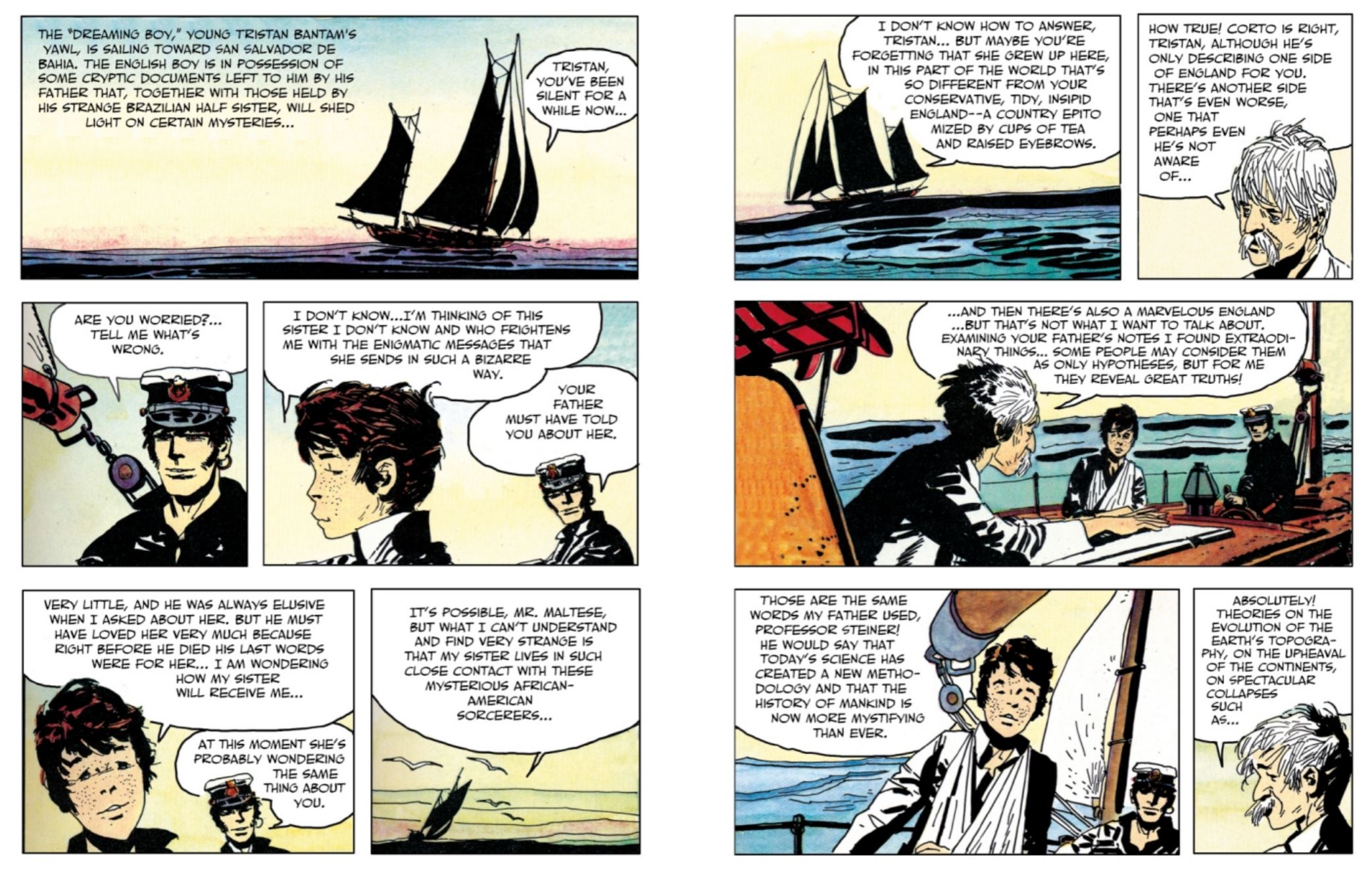
The mystery deepens in ‘Rendez-Vous in Bahia’ as Bantam’s yawl The Dreaming Boy sails for Bahia to find Morgana. She has their father’s notes about the lost continent, documents Tristan has only tantalisingly glimpsed in dreams, These are getting more compelling and engrossing as the voyagers arrive meet a native shaman and accidentally expose a convict trafficking scheme. Recently arrived big boss Milner tries to save himself by killing Tristan but instead loses his own life thanks to Corto’s skill with cards and weapons, leaving the trail apparently clear sailing from now on…
‘Chapter Three: Sureshot Samba’ sees the seekers reach Itapoa, where Corto, Tristan and Steiner meet Bocca Dorata AKA Gold Mouth: a great sorceress who raised Morgana and taught her black and white magic. The enigmatic sage somehow knows far too much about Corto’s past and origins for comfort, but nevertheless he accepts her proposal to ferry weapons and cash to Cangaceiros. There, rebel natives led by local legend Sureshot fight in the Brazilian Sertão against landholding European tycoons, murderous mercenaries, corrupted Federal Colonel Gonçalves and his requisitioned river gunboat. After all, £1000 is not to sneezed at…
Corto deals with his opponents and competes his mission with startling violences and efficiency and assures a swift brutal change in political fortunes…
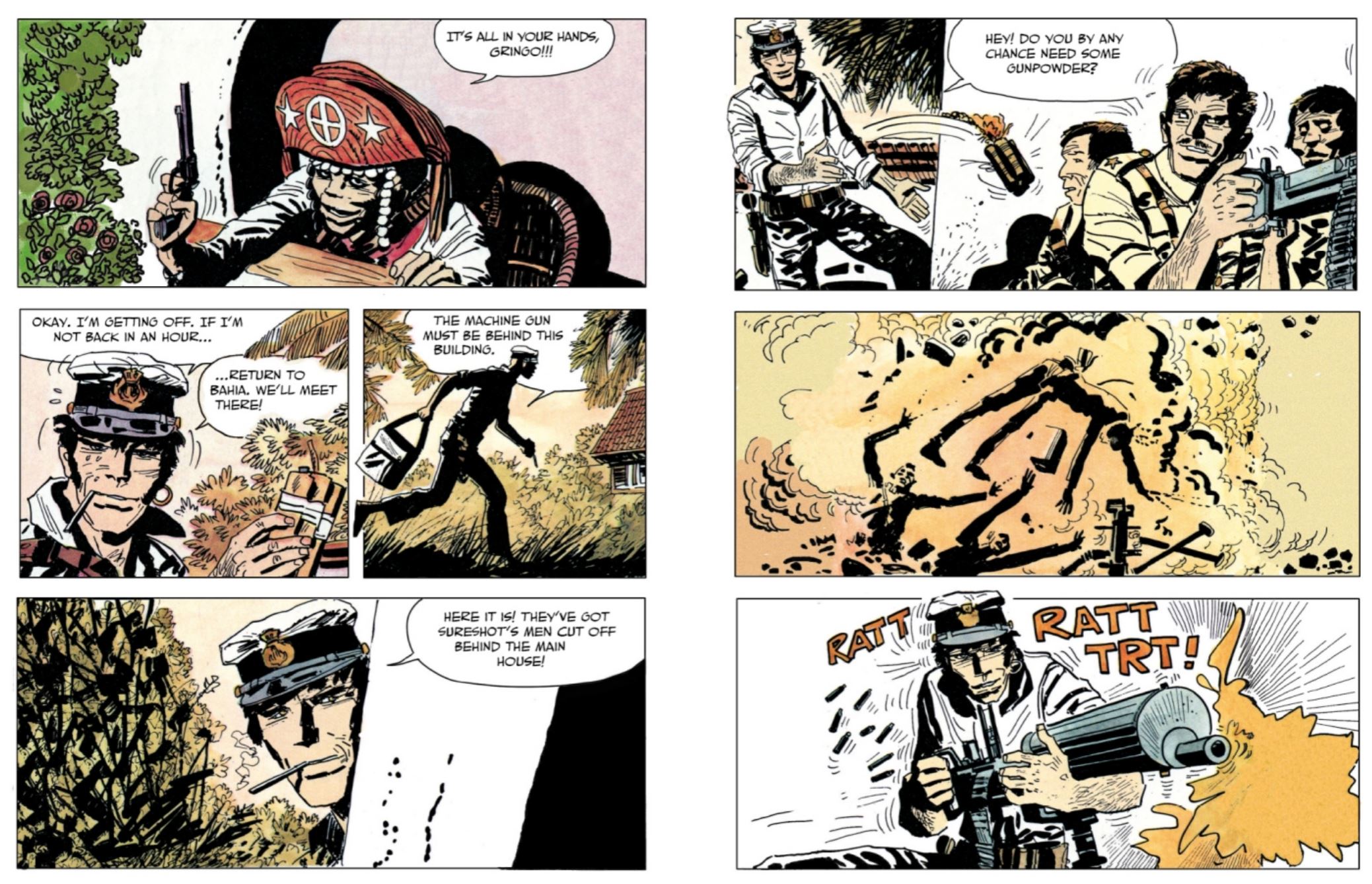
Still houseguests of Gold Mouth, in ‘The Basilian Eagle’ reluctant slave liberators/freedom fighters Corto, Tristan & Steiner are caught in the backwash of the Great War. As they sail the coast seeking a wrecked Spanish galleon loaded with gold – it supposedly foundered near Marajò Island, at the mouth of the Amazon – they are trapped by global politics and international intrigue as colonial powers Great Britain and Germany square off in Brazil. Wallowing in innocent avarice, our derelict adventurers become unwitting competitors with a German Baron and apparent naval “deserters”. Enfolded in the byzantine scheme hatched by Bocca Dorata, Corto’s fate comes down to actions of rogue operatives, a double/triple agent dubbed “Jawbreaker”, overwhelming greed and gunboat diplomacy…
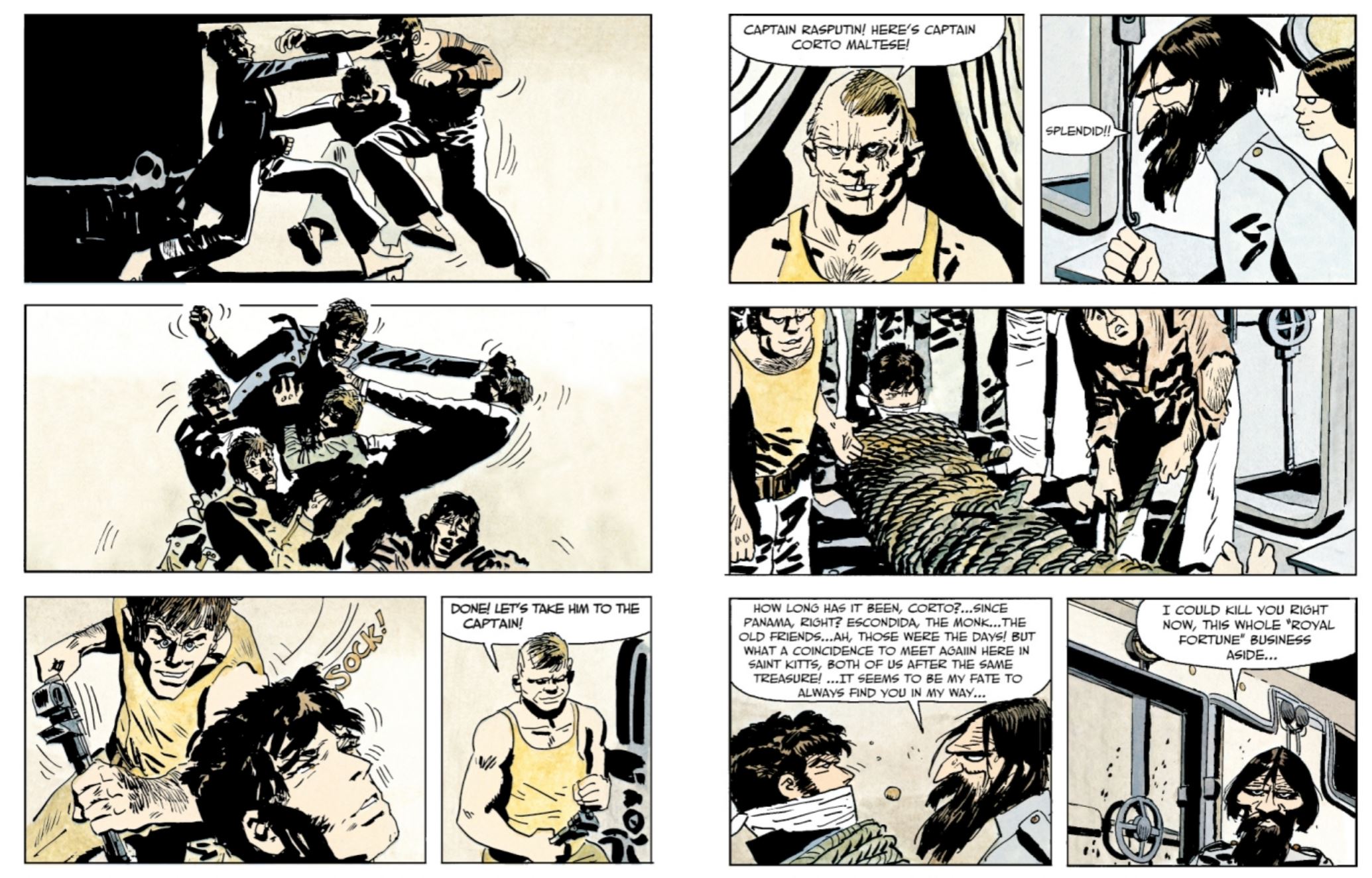
In earlier-set tales, Corto Maltese visited Russia and made an enemy for life of wild rogue/ spiritual anthesis Rasputin (no relation). Now that ferocious frenemy shows up in ‘So Much for Gentlemen of Fortune’ in an adventure centred on the search for fabulous pirate treasure, set in Saint Kitts in the Antilles. Still reading and rereading those papers brought by Tristam, Corto & Steiner happen upon a singular grave and a clue leading to confrontations and untenable alliances with contemporary freebooters Rasputin and Ambiguity di Poincy, all similarly in search of the amalgamated hoard of creole corsair Prying Barracuda, Calico Rackman, Agonia La Bella of Rochelle and Blackbeard Teach…
The game of double dealing leads to vast wealth and huge surprises, but in the end such friendships are doomed and savage bloodletting leaves everyone dead broke or both and Corto counting the cost of what and who he’s lost…
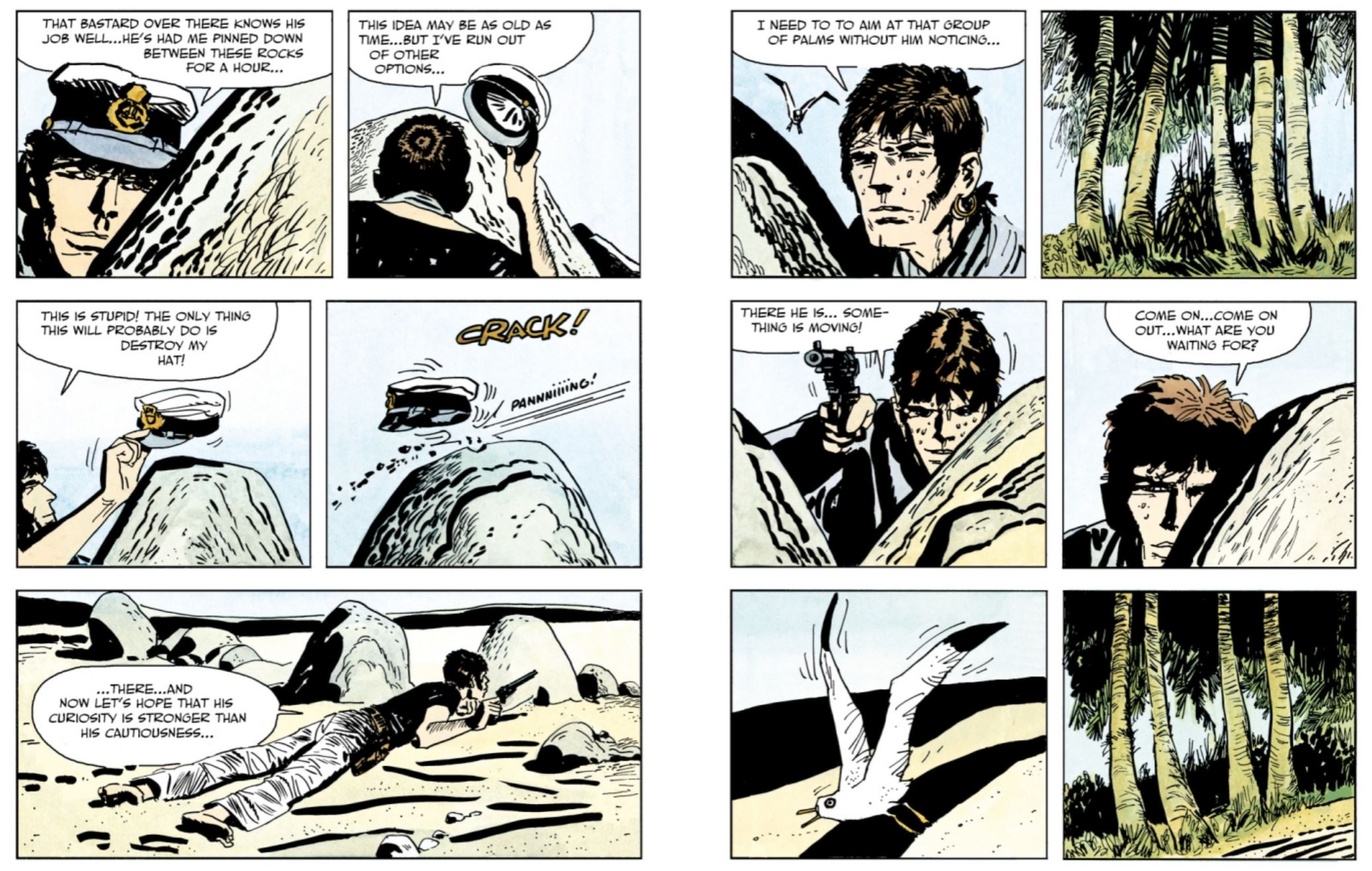
Concluding episode ‘The Seagull’s Fault’ lays the groundwork for more tales in a bizarre murder-mystery set on an island near British Honduras. Wounded and amnesiac, our Not-a-Hero reels on a bloody beach as his life ebbs away. As he blankly watches his totem animal fly, peck and probe, “John Smith’s” memories lie just beyond reach. Maybe it wouldn’t be so bad if the stranger he can’t see would stop shooting at him…
It gets no clearer when lovely angel Soledad and her brutish Caribi minder arrive, as their tender ministrations in the gothic pile they call home soon prove to be barbed and double edged. If only he could remember what all this has to do with legendary pirate and merciless “Evangelist” Judas Lokäarth. Surely, though, that long-missing maniac is dead and gone?
Compelling, enticing and invitingly addictive, these bleak but witty, darkly romantic, captivatingly cosmopolitan stories will grip you and never let go. These are treasures you must unearth and cherish forever.
© 1971 Cong S.A., Switzerland. Corto Maltese® and Hugo Pratt™ © Cong S.A. Translation © 2019 Dean Mullaney and Simone Castaldi, All rights reserved.
Today in 1915 artist, inker, letterer & colourist George Roussos (Batman, Johnny Quick, Airwave, Vigilante, Superman, Starman, CrimeSuspensStories, Flash Gordon, The Phantom, Sgt Fury, Fantastic Four, Avengers et al) was born, followed in 1930 by cartoonist Bill Rechin (Out of Bounds, Crock), and in 1968 artist Jeff Johnson (Wonder Man, Amazing Spider-Man, Way of the Rat, Weapon X, Greem Lantern) and writer/filmmaker Greg Pak (City Boy, John Wick, Eternal Warrior, World War Hulk, Incredible Hercules, Firefly, Agents of Atlas).
This day marks the passing of three giants: inventor of comic books Max Gaines in 1947; British legend Dudley. D. Watkins in 1969 and Hugo Pratt in 1995.