Gomer Goof volume 10: Gomers Goons


By Franquin, translated byJerome Saincantin (Cinebook)
ISBN: 978-1-80044-092-0 (PB Album/Digital edition)

This book includes Discriminatory Content produced in less enlightened times.

André Franquin was born in Etterbeek, Belgium on January 3rd 1924 and began his astonishing comics career in a golden age of European cartooning. Beginning as assistant to Joseph “Jijé” Gillain on the strip Spirou, he inherited sole control of the keynote feature in 1946, and went on to create countless unforgettable new characters like Fantasio and The Marsupilami.

Franquin – with Jijé, Morris (Lucky Luke) and Willy “Will” (Tif et Tondu) Maltaite – was co-founder of creative powerhouse La bande des quatre: “the Gang of Four” who reshaped and revolutionised Belgian comics and all European cartooning with their prolific and engaging “Marcinelle school” graphic style.

Over two decades Franquin made the strip purely his, expanding Spirou & Fantasio’s scope and horizons, as they became globetrotting journalists who visited exotic places, exposed crimes, explored the incredible and clashed with bizarre, exotic arch-enemies. Throughout, Fantasio remained a full-fledged – albeit entirely fictional – reporter for Le Journal de Spirou, popping back to base between assignments. Sadly, ensconced there was an arrogant, accident-prone office junior tasked with minor jobs and general dogs-bodying. This was Gaston Lagaffe – Franquin’s second immortal invention…

There’s a long tradition of comics personalising fictitiously back-office creatives and the arcane processes they indulge in, whether it’s Marvel’s Bullpen or DC Thomson’s lugubrious Editor and underlings at The Beano and Dandy – it’s a truly international practise. Somehow though after debuting in Le Journal de Spirou #985 (February 28th 1957), the affable dimwit grew beyond control to become one of the most popular and ubiquitous components of the comic, whether as a guest in Spirou’s adventures or his own comedy strips and/or faux reports on the editorial pages he was supposed to paste up. Initial cameos in Spirou yarns or occasional asides on text pages featured well-meaning foul-up and ostensible gofer Gaston lurking and lounging amidst a crowd of diligent toilers: a workshy slacker employed as a general assistant at Le Journal de Spirou’s head office. The scruffy bit-player eventually and inevitably shambled into his own star feature…

In terms of schtick and delivery, older readers will recognise favourite beats and elements of well-intentioned helpfulness wedded to irrepressible self-delusion as seen in Benny Hill or Jacques Tati vehicles and recognise recurring riffs from Some Mothers Do Have ’Em and Mr Bean. It’s all blunt-force slapstick, paralysing puns, fantastic ingenuity and inspired invention, compiled to mug smugness, puncture pomposity, lampoon the status quoi? (that there’s some British punning, see?) and ensure no good deed goes noticed, rewarded or unpunished…

As previously stated, Gaston/Gomer obtains a regular salary – let’s not dignify what he does as “earning” a living – from Spirou’s editorial offices: initially reporting to top journalist Fantasio, and latterly complicating the lives of office manager Léon Prunelle and the other staffers, all whilst effectively ignoring any tasks he’s paid to actually handle. These include page paste-up, posting packages, filing, clean-up, collecting stuff inbound from off-site and editing readers’ letters (the real reason fans requests and suggestions are never acknowledged or answered)…

Gomer is lazy, hyperkinetic, over-opinionated, ever-ravenous, impetuous, underfed, forgetful and eternally hungry: a passionate sports fan and animal lover with his most manic moments all stemming from cutting work corners, stashing or consuming contraband nosh in the office or inventing the Next Big Thing. It leads to constant clashes with colleagues and draws in notionally unaffiliated bystanders like traffic cop Longsnoot and fireman Captain Morwater, as well as ordinary passers-by who should know by now to keep away from this street.

Through it all the office oaf remains affable, easy-going and incorrigible. Only three questions really matter: why everyone keeps giving him one last chance, what does gentle, lovelorn Miss Jeanne see in the self-opinionated idiot and will perpetually-outraged capitalist financier De Mesmaeker ever get his perennial, pestiferous contracts signed?

In 1974 Gaston – Le gang des gaffeurs was the 12th collected album and in 2023 became Cinebook’s 10th translated compilation, offering single page bursts and some half-page sight gags: non-stop all-Franquin comics jabs and japes, with a few ideas and contributions from colleagues Joop, Degotte and Yvan (The Smurfs, Steve Severin, Idées noires) Delporte.

The assistants were necessary as Franquin’s mental health was increasingly being affected by stress. After this album the frequency of Gaston collections reduced by 50%…

Here an increased spotlight falls upon distressed in-house staff artist Yves (occasionally called Yvon) Lebrac who often acted as unwilling, inadvertent beta tester for our well-meaning, overly-helpful, know-it-all office hindrance. This tome is packed with innovations that make Lebrac’s life increasingly annoying and unnecessarily hazardous, such as super-amped central heating so workers can make toast on radiators, a retractable, ceiling-mounted eraser, assorted games, further experiments with (light-repelling) aerosol air-fresheners and paste-up adhesives that just should not be allowed under the Geneva Convention…

Crucially, Gomer’s pets regard Lebrac’s desk and drawing board as their playground but are always ready to have him join in their games…

Whilst concentrating on avoiding his job, The Goof always seeks to improve life for his animal pals. The adopted feral cat and black-headed gull still accompany illicit studio companions Cheese the mouse in many destructive romps but it’s studio goldfish Bubelle who really benefits this time as Gomer installs several solutions to improve mobility and grant the water-dweller FULL access to the building…

When not pursuing illicit culinary dreams – like lighter-than-air pancakes made on a desktop crêpe fryer – Gomer is quick to solve pressing problems such as a cat very stridently trapped in a bass tuba, but even that paralysing din is as nothing to the near-lethal advent of ultrasonic violin tuning, A.I. cup-&-ball machine, casual/office-wear robot suits, self-emptying pedal bins, recycling Soviet components for airplane models, the most wonderful couch on Earth, Inter-Office ski-lift systems and accidentally perfecting the most volatile motion-sensitive explosive ever to grace an art kit…

The installation of roller towels in the toilets sparks a wave of (dangerous) inspiration and innovation and when Gomer’s like-minded chum, opposite number and born accomplice Jules-from-Smith’s-across-the-street joins him in moonlighting as advertising prop makers, the resulting giant shoe fiasco sets the entire city panicking. Ever-eager to slope off for a chat, Jules is also a confirmed devotee of Gomer’s sporting methods for passing the time at work and complicit in seducing the office redecorators: turning hard-working diligent toilers to their laggardly ways, and introducing them to the joys of adventure cooking, citizen chemistry and colossally big bangs…

Semi-regular burglar Freddy falls foul of Gomer’s lethal filing system – something Prunelle also suffers from often – but both are mercifully absent when the inventor’s inquiries into aural animal attractant whistles (affecting owls, mosquitos, moles, and a certain (uniformed) species of “Pig”) make an extended camping trip to “Gus’s farm” a weird nightmare…

Also on view are more skirmishes in the ongoing car-parking war with Longsnoot and a succession of sporting gags including a clash with a karate master, snow paddleball and swamp football, but in the end even our recumbent genius has no cure for peasouper fog – although his quick work-around does get the city moving… in the wrong direction…

Far better enjoyed than précised or described, these strips allowed Franquin and his occasional co-scenarists to flex whimsical muscles, subversively sneak in satirical support for their beliefs in pacifism, environmentalism and animal rights and sometimes even appear in person…

These are sublime examples of all-ages comedy: wholesome, barbed, daft and incrementally funnier with every re-reading. Why haven’t you got your Goof on yet?
© Dupuis, Dargaud-Lombard s.a. 2009 by Franquin. All rights reserved. English translation © 2023 Cinebook Ltd.

Astonishing X-Men volume 1: Gifted


By Joss Whedon, John Cassaday & various (MARVEL)
ISBN: 978-0785146957 (HB/Digital Edition)

The loss of John Cassaday is sudden and shocking but at least we have his wonderful work to console ourselves with. Here’s one of his best, that you should see or revisit…

Joss Whedon turned his inimitable skills with choreographing ensemble casts to the ultimate team-book when he started writing the high-profile Astonishing X-Men (the first six issues of which are collected in this volume). With the supremely talented John Cassaday (Hellboy, Just Imagine, Lone Ranger, Flash) as artist the comic was always going to look great and sell well, but the ease with which Whedon slips into the characters and lifts them out of the mire of decades of convoluted clichés and continuity was a joy to behold.

You’re either aware or not of mutant continuity, so I’ll forego the usual précis and simply state that new readers can jump on with the minimum of confusion, and – aided by a skilful use of banter – be brought up to speed as the team of Cyclops, EmmaWhite QueenFrost, Wolverine, Kitty Pryde and The Beast re-unite as proactive mutant do-gooders, but with a new and rather subversive mission statement.

In a world that hates and fears mutants, these heroes have traditionally fought secretive, furtive battles to save the day, with humanity despising them all the while. Their new agenda is simple: do the battling and saving, but in a public-relations savvy society, do it in such a way that the entire world knows who to thank. They will become public heroes and saviours, changing public opinion by doing good publicly.

The plan to alter those perceptions begins by ending a hostage situation where anti-mutant terrorists led by an alien named Ord of the Breakworld crash a swanky High Society function. Even as hungry paparazzi are mobbing the victorious heroes, however, word comes that the media blitz may be unnecessary. An announcement has been made that science has found a cure for the mutant gene…

That news divides not just the mutant community, but even the team itself. Is “mutant-ness” even a disease? Is it better to conform or be unique? Where did the cure come from and who actually benefits? What role does Ord play in these earth-shattering events and is he working alone? None of these deep issues get in the way of a rollercoaster-ride of action and genuine suspense that’s been missing since the earliest days of these characters.

Combining breathtaking illustration and stunning action with superb characterisation in a mystery/conspiracy tale is a Whedon trademark. Adding alienation metaphors that have been such a strong part of the X-Men mystique and fan psychology made this a powerful yet entertaining read that appealed to almost everybody. Having it rendered shockingly realistic and authentic-seeming by a modern comics master made it unmissable.
© 2004 Marvel Characters, Inc. All rights reserved.

The Batman Adventures volume 3


By Kelley Puckett, Paul Dini, Mike Parobeck & Rick Burchett, Michael Reaves, Bruce Timm, Matt Wagner, Klaus Janson, Dan DeCarlo, John Byrne & various (DC Comics)
ISBN: 978-1-4012-5872-6 (TPB/Digital edition)

With Batman: Caped Crusader storming the air waves in this anniversary year and making old farts like me tremble all over again, let’s take a peek back at the bonanza of great comics that came out of the last animated noir fest courtesy of Bruce Timm & Co…

The brainchild of Bruce Timm, Eric Radomski & Paul Dini, Batman: The Animated Series aired in the US from September 5th 1992 to September 15th 1995. Ostensibly for kids the TV cartoon revolutionised everybody’s image of the Dark Knight and inevitably fed back into print iterations, leading to some of the absolute best comic book tales in the hero’s many decades of existence. And it’s still true today…

Employing a timeless visual style dubbed “Dark Deco”, the show mixed elements from all eras of the character and, without diluting the power, tone or mood of the premise, re-honed the grim Bat and his team into a wholly accessible, thematically memorable form.

It entranced young fans whilst adding shades of exuberance and panache that only the most devout and obsessive Batmaniac could possibly object to. A faithful comic book translation was prime material for collection in the newly-emergent trade paperback market but only the first year was ever released, plus miniseries such as Batman: Gotham Adventures and Batman Adventures: the Lost Years. Nowadays, however, we’re much more evolved and reprint collections have established a solid niche amongst cognoscenti and young readers.

This third inclusive compendium gathers issues #21-27 of The Batman Adventures, originally published between June to December 1994  plus that year’s Batman Adventures Annual: a scintillating, no-nonsense frenzy of family-friendly Fights ‘n’ Tights fantasy from Kelly Puckett, Mike Parobeck & Rick Burchett and a few fellow-pros-turned-fans…

Puckett is a writer who truly grasps the visual nature of the medium and his stories are always fast-paced, action packed and stripped down to the barest of essential dialogue. This skill has never been better exploited than by Parobeck who was at that time a rising star, especially when graced by Burchett’s slick, clean inking.

Although his professional career was tragically short (1989 to 1996 when he died, aged 31, from complications of Type 1 Diabetes) Parobeck’s gracefully fluid, exuberantly kinetic, frenetically fun-fuelled, animation-inspired style revolutionised superhero action drawing and sparked a renaissance in kid-friendly material and merchandise at DC – and everywhere else in the comics publishing business.

The wall to wall wonderment begins with the compulsive contents of Batman Adventures Annual #1: a giant-sized gathering of industry stars illustrating Paul Dini’s episodic, interlinked saga ‘Going Straight’.

Illustrators Timm & Burchett set the ball rolling as jet-propelled bandit Roxy Rocket is released from prison, prompting Batman and faithful retainer Alfred to discuss whether any villains ever reform.

Apparently one who almost made it is Arnold Wesker, who played mute Ventriloquist to his malign dummy Scarface. Tragically in ‘Puppet Show’ (art by Parobeck & Matt Wagner) we see how even a good job and the best of intentions are no defence when Arnold’s new boss wants to exploit his criminal past…

Harley Quinn is insanely devoted to killer clown The Joker as Dan DeCarlo & Timm wordlessly expose her profound weakness for that bad boy as she’s released from Arkham Asylum, only to be seduced back into committing crazy crimes in just ’24 Hours’

The Scarecrow’s return to terrorising the helpless resulted from his genuine desire to help a girl assaulted by her would-be boyfriend in the chilling, poignant ‘Study Hall’ (with art by Klaus Janson), after which ‘Going Straight’ concludes with Timm detailing how Roxy Rocket is framed by Catwoman, and Batman has to separate the warring female furies…

The melange of mayhem even came with its own enthralling encore with The Joker solo-starring in ‘Laughter After Midnight’ as the Mountebank of Mirth goes on a spree in Gotham, courtesy of artists John Byrne & Burchett…

The Batman Adventures #21 then saw Michael Reaves join Puckett to script tense thriller ‘House of Dorian’ for Parobeck & Burchett as deranged geneticist Emile Dorian escapes from Arkham and immediately turns Kirk Langstrom back into the marauding Man-Bat.

Moreover, although the Mad Doctor’s freedom is bad news for Gotham, Langstrom and Dorian’s previous beast-man Tygrus; for a desperate fugitive afflicted with lycanthropy, the insane physician is his last chance at a cure for his curse…

Dorian couldn’t care less. All he wants is revenge on Batman and Selina Kyle

Like the show, most stories were crafted as a 3-act plays and the conceit resumes with #22 as Puckett, Parobeck & Burchett settle in for the long haul. ‘Good Face Bad Face’ sees Two-Face return; also busting out of Arkham in ‘Harvey Doesn’t Live Here Anymore’ set to settle scores with Gotham’s top mobster Rupert Thorne. His first move is to free his gang in ‘Nor Iron Bars a Cage’, but this time Batman is waiting…

Poison Ivy is back in #23, spreading ‘Toxic Shock’ and teaming up with the Dark Knight in ‘Strange Bedfellows’ to save a famed botanist/ecologist dying from a mystery toxin. ‘Fighting Poison with Poison’, she and Batman hunt for a cure, forcing the mystery assassin into more prosaic methods in ‘How Deadly Was my Valley’

‘Grave Obligations’ sees the Gotham Guardian’s past come back to haunt him when a ninja clan invade the city. They seem more concerned with fighting each other in ‘Brother’s Keeper’ but a little digging reveals how one has come ‘From Tokyo, With Death’ in mind for Batman, and it takes a much higher authority to halt the chaos in ‘Cancelled Debts’

An inevitable team-up graces Batman Adventures #25 as Puckett, Parobeck & Burchett reintroduce legendary ‘Super Friends’. With Lex Luthor in town and bidding against Waynetech for a military contract, a mystery bombing campaign begins in ‘Tik, Tik, Tik…

Even as unwelcome guest Superman horns in, Batman realises his old foe Maxie Zeus might be taking the credit but is certainly not to blame for the ‘Sinners in the Hands of an Angry Zeus!’ A little deduction and a grudging alliance with the Caped Kryptonian results in the true scheme unravelling in ‘The Gods Must be Crazy’ with Batman rejoicing in having made a powerful friend and a remorseless and resourceful new enemy…

‘Tree of Knowledge’ focuses on college students Dick Grayson and Babs Gordon as they score top marks in a criminology course. ‘Pop Gun Quiz’ sees them singled out for special study by impressed Professor Morton and on hand in ‘Careful What You Wish For’ to experience an impossible crime in the University Library. Despite all their investigations, it’s only as Robin and Batgirl that a devilish plot is exposed and crucial ‘Lessons Learned’

The last tale in this terrific tome revisits the tragedy of Batman’s origins as ‘Survivor Syndrome’ sees an impostor risking his life on Gotham’s streets in search of justice or possibly his own death.

‘Brother, Brother’ reveals how athlete Tom Dalton’s wife was murdered and how he surrenders to a ‘Call to Vengeance’. Everything changes once the real Dark Knight takes charge of Tom and trains him to regain ‘The Upper Hand’

With a full complement of covers by Timm, Parobeck & Burchett, plus a ‘Pin-Up Gallery’ with stunning images by Alex Toth, Dave Gibbons, Kelley Jones, Kevin Nowlan, Mark Chiarello, Mike Mignola, Matt Wagner, Chuck Dixon & Burchett – all coloured by the astounding Rick Taylor – this is another stunning treat for superhero lovers of every age and vintage.
© 1994, 2015 DC Comics. All Rights Reserved.

Batman: Silver Age Dailies and Sundays 1968 – 1969


By Whitney Ellsworth, Joe Giella, Al Plastino & various (IDW)
ISBN: 987-1-63140-121-3 (HB)

This book includes Discriminatory Content produced in less enlightened times.

For more than seven decades in America the newspaper comic strip was the Holy Grail cartoonists and graphic-narrative storytellers hungered for. Syndicated across the country and often the planet, winning millions of readers and accepted (in most places) as a more mature and sophisticated form of literature than comic-books, it also paid better, with the greatest rewards and accolades being reserved for the full-colour Sunday page. So it was always something of a poisoned chalice when a comic book character became so popular that it swam against the tide (after all weren’t the funny-books invented just to reprint strips in cheap, accessible form?) and became a syndicated serial strip. Superman, Wonder Woman and Archie Andrews made the jump soon after their debuts and many features have done so since.

Due to war-time complications, the first newspaper Batman and Robin strip was slow getting its shot, but when the Dynamic Duo finally hit the Funny Pages the feature quickly proved to be one of the best-regarded, highest quality examples of the trend, both in Daily and Sunday formats. Yet somehow the strip never achieved the circulation it deserved, even though the Sundays were eventually given a new lease of life when DC began issuing vintage stories in the 1960s for Batman 80-page Giants and Annuals. The exceedingly high-quality all-purpose adventures were ideal short stories and added an extra cachet of exoticism for young readers already captivated by simply seeing tales of their heroes that were positively ancient and redolent of History with a capital “H”.

Such was not the case in the mid-1960s when, for a relatively brief moment, mankind went bananas for superheroes in general and most especially went “Bat-Mad”…

The Silver Age of comic books revolutionised a creatively moribund medium cosily snoozing in unchallenging complacency, bringing a modicum of sophistication to the returning genre of masked mystery men. For quite some time changes instigated by Julius Schwartz in Showcase #4 (October 1956) had rippled out in the last years of that decade, affecting all of National/DC Comics’ superhero characters but had generally bypassed The Gotham Gangbuster. Fans buying Batman, Detective Comics, World’s Finest Comics and latterly Justice League of America would read adventures that in look and tone were largely unchanged from the safely anodyne fantasies that had transformed a Dark Knight Detective into a mystery-solving, alien-fighting costumed Boy Scout just as the 1940s turned into the 1950s.

By the end of 1963, however, Schwartz having, either personally or by example, revived and revitalised the majority of DC’s line (and by extension and imitation, the entire industry) with his reinvention of the Superhero, was asked to work his magic with the creatively stalled and near-cancellation Caped Crusaders. Installing his go-to team of creators, the Editor stripped down the accumulated luggage and rebooted the core-concept. Down – and usually out – went the outlandish villains, aliens and weird-transformation tales in favour of a coolly modern concentration on crime and detection.

Even the art-style underwent a sleek streamlining and rationalisation. The most apparent change to us kids was a yellow circle around the Bat-symbol but, far more importantly, the stories had changed. A subtle aura of genuine menace had crept back in.

At the same time Hollywood was in production of a television series based on Batman and, through the sheer karmic insanity that permeates the universe, the studio executives were basing their interpretation not upon the “New Look Batman” currently enthralling readers but the rather the addictively daft material DC was emphatically turning its editorial back on.

The Batman TV show premiered on January 12th 1966 and ran for three seasons of 120 episodes, usually airing twice weekly in the first two. It was a monumental, world-wide hit and sparked a wave of trendy imitation. Resulting media hysteria and fan frenzy generated an insane amount of Bat-awareness, no end of spin-offs and merchandise – including a movie – and introduced us all to the phenomenon of overkill. No matter how much we might squeal and froth about it, to a huge portion of this planet’s population Batman is always going to be that “Zap! Biff! Pow!” buffoonish costumed Boy Scout…

“Batmania” exploded across Earth and – almost as quickly – became toxic and vanished, but at its height led to the creation of a fresh newspaper strip incarnation. That strip was a huge syndication success and even reached fuddy-duddy Britain, not in our papers and journals but as the cover feature of weekly comic Smash! (from issue #20 onwards).

The TV show ended in March, 1968. As it foundered and faded away, global fascination with “camp” superheroes – and no, the term had nothing to do with sexual orientation no matter what you and Mel Brooks might think – burst as quickly as it had boomed. The Caped Crusader was left with a hard core of dedicated fans and followers who now wanted their hero back…

However, from the time when the Gotham Guardians could do no wrong comes a second superb compilation re-presenting the bright and breezy, sometimes zany cartoon classics of Batman with Robin the Boy Wonder, augmented by a wealth of background material, topped up with oodles of unseen scenes and background detail to delight the most ardent Baby-boomer nostalgia-freak. The fun-fest opens with more informative, picture-packed, candidly cool revelations from comics historian Joe Desris in ‘A History of the Batman and Robin Newspaper Strip: Part 2’: stuffed with behind-the-scenes set photos, communications between principal players like Bob Kane and the Producers, clippings, glorious unpublished pencils from strip illustrator Joe Giella as well as newspaper promotional materials, followed by pictorial essays on ‘Newspaper Strip Trivia’ and ‘Batman/Superman Crossovers’, more unpublished or censored strips and a note on the eclectic sources used to compile this collection before the comics cavorting continue…

Dailies and Sundays were scripted by former DC editor (and the company’s Hollywood liaison) Whitney Ellsworth and initially illustrated by Kane’s long-term art collaborator Sheldon Moldoff, before inker Giella was tapped by the studio to produce a slicker, streamlined modern look – usually as penciller but ALWAYS as embellisher. Since the feature was a 7-day-a-week job, Giella often called in comic book buddies to help lay-out and draw the strip; luminaries like Carmine Infantino, Bob Powell, Werner Roth, Curt Swan and others.

In those days, monochrome Dailies and full-colour Sundays were mostly offered as separate packages and continuity strips often ran different stories for each. For Batman the strip started out that way, but by the time of the stories in this volume had switched to unified 7-day storylines.

Riding a wave and feeling ambitious, Ellsworth & Giella had started their longest saga yet in July 1967, combining the tales of ‘Shivering Blue Max’ with ‘“Pretty Boy” Floy and Flo’, wherein a perpetually hypothermic criminal pilot accidentally downed the Batcopter and erroneously claimed the underworld’s million dollar bounty on Batman and Robin.

Our heroes were not dead, but the crash caused the Batman to lose his memory and, whilst Robin and faithful manservant Alfred sought to remedy his affliction, Max had collected his prize and jetted off for sunnier climes. With Batman missing, neophyte crimebuster Batgirl then tracked down the heroes – incidentally learning their secret identities – and was instrumental in restoring him to action… if not quite his fully-functioning faculties.

However, when underworld paymaster BG (Big) Trubble heard the heroes had returned, he quite understandably wanted his money back, forcing already-broke Max back to Gotham where he gullibly fell foul of Pretty Boy whilst that hip young gunsel and twin sister Flo were enacting a murderous scam to fleece a horoscope-addicted millionaire…

The tale picks up here on January 1st 1968 with Batman held at gunpoint, patiently trying to convince supremely suggestible, wealthy whale Tyrone Koom he is not there to assassinate him as the tycoon’s new astrologer Madame Zodiac (AKA Flo Floy) was insisting she had foreseen. When her minted dupe proves incapable of murder, Flo/Zodiac takes matters into her own hands by knocking out the mighty manhunter, but despite all her and her brother’s arguments, the millionaire cannot be convinced to pull the trigger…

Instead, befuddled Koom – still thinking the masked marvel wants him dead – has Batman bundled off to an isolated island where a fully-automated, exotic palace of wonders will act as the Caped Crusader’s impregnable prison for the remainder of his life. With the hero as good as dead Pretty Boy & Flo plan to claim BG’s million dollar bounty, but have not reckoned on Blue Max horning in…

When the pilot collides with Robin (tracking his senior partner by Bat-Radio) the erstwhile enemies reluctantly join forces but cannot prevent Batman’s banishment. Moreover, in the frantic melee, the Boy Wonder suffers a broken leg. Meanwhile, lost in an endless ocean, Batman slowly adjusts to life of enforced luxury on palatial penitentiary island Xanadu, unaware that life at home has become vastly more complicated for Robin and Alfred. Not only do they believe the Cowled Crimebuster dead but Max has ferreted out their secret identities and blackmailed them into cooperating in his vengeance scheme against Pretty Boy. Max plans to prevent the young thug collecting the reward by impersonating Batman…

Events spiral to a grim climax when Max finally confronts his criminal enemies and Koom realises he’s been played for a fool. The dupe’s guilt-fuelled final vengeance ends all the villains at once, but not before Pretty Boy presses a destruct button that will cause Xanadu to obliterate itself in an atomic explosion.

Thankfully Superman and especially Sea King Aquaman have been mobilised to help find the missing Masked Manhunter but the countdown – although slow – is unstoppable…

During this sequence the severely overworked Giella bowed out and a veteran Superman illustrator took over the pitiless illustration schedule. Alfred John “Al” Plastino was a prodigious artist with a stellar career. He had been active in the early days of comic books, with credits including Captain America and Dynamic Man before serving in the US Army. His design talents were quickly recognised and he was seconded to Grumman Aerospace, The National Inventors Council and latterly The Pentagon, to design war posters and field manuals for the Adjutant General’s office.

In 1948 Plastino joined DC and quickly became one of Superman’s key artists. He drew many landmark stories and – with writer Otto Binder – created Brainiac, Supergirl and The Legion of Super-Heroes. From 1960-1969 he ghosted the syndicated Superman newspaper strip and whilst still drawing Batman, also took over Ferd’nand in 1970, drawing it until his retirement in 1989. He was extremely versatile and apparently tireless. In 1982-1983 he drew Nancy Sundays after creator Ernie Bushmiller passed away and was controversially hired by United Media to produce fill-in episodes of Peanuts when Charles Schulz was in dispute with the company. Al Plastino died in 2013.

With a new policy of introducing guest stars from DC’s pantheon, Plastino was the ideal artist successor and as the assembled champions desperately sought to find and save their missing comrade, a new tone of straight dramatic adventure largely superseded the campy comedy shenanigans of the TV series.

The search for Batman had been continually hampered by the Man of Steel’s strange weakness and loss of powers, but now that the Gotham Gangbusters were reunited they concentrated their efforts on finding out why. The deductive trail soon led to bone fide mad scientist ‘Diabolical Professor Zinkk’ (originally running March 19th to August 6th) and saw the Dynamic Duo tracking down a mercenary maniac who had found a way to broadcast Kryptonite waves and was oh-so-slowly killing Superman for a big payout from Metropolis’ mobsters…

This is a cunningly convoluted, beautifully realised and supremely suspenseful tale with the clock ticking down on a deranged and dying Metropolis Marvel as Batman & Robin hunt rogue radio-physicist Zoltan Zinkk to divine the method by which he brings low Earth’s greatest defender. It culminates in a savage, spectacular and truly explosive showdown before the World’s Finest heroes finally triumph…

Another tense thriller then sees Aquaman return to share the spotlight, beginning with determined “dolly-bird” Penelope Candy perpetually plaguing news outlets and even pestering the Gotham Police Department in a tireless quest to be put in touch with Batman. The man in question is blithely unaware: Bruce Wayne is dealing with a small personal problem. In his infinite wisdom he intends for Robin to temporarily retire whilst young Dick Grayson completes a proper education! To that end has engaged a new tutor for the strongly-protesting Boy Wonder…

With that all acrimoniously settled, the Caped Crimebuster roars out into the night and is filmed falling to his doom in a river trying to save apparently suicidal Penny Candy…

At first the heartbroken sidekick doesn’t know Batman is still alive but has actually been drawn into a Byzantine scheme devised by Penny to find her missing father. Oceanographer Archimedes Candy disappeared after working with Aquaman on a serum allowing humans to live beneath the sea. Penny is certain someone has abducted the researcher and, after Batman contacts Robin, they have the junior crimebuster send out a radio alert for the Sea King, before impatiently trying the potion together. ‘Breathing Underwater’ (August 7th – December 15th), they set off on a sub-sea search for the missing sea scientist…

Of course Penny’s fears of foul play are justified and before long she and Batman are reunited with Dr. Candy. Sadly, that’s as captives of nefarious international smuggler Cap’n Wolf and they are nearly done to death by being abandoned on a mountain in the airy atmosphere they can no longer breathe before Aquaman arrives to settle matters.

Even as Batman makes his way home, the next adventure has started. Gangster fugitive Killer Killey devised the world’s most perfect hiding place and in ‘I Want Bruce Wayne’s Identity!’ (December 15th 1968 – May 30th 1969) abducts the mild-mannered millionaire so a crooked plastic surgeon can swap their faces and fingerprints. The scheme is hugely helped by the fact that Dick has been packed off on a world cruise with tutor Mr. Murphy and his daughter Gazelle whilst Alfred has used accumulated vacation time for an extended visit to England.

When Killer captures Bruce and discovers he also has Batman, the mobster is truly exultant. However the plan goes awry as the victim escapes the death-trap which should have resulted in the authorities finding “Killey’s” drowned body, and the subsequent relocation into Wayne Manor becomes a fraught affair.

Perhaps the villain would be less troubled if he knew that although alive, the real Wayne has once again lost his memory…

Moreover, unbeknownst to anyone, neophyte crimebuster Batgirl already knows Batman’s other identity, and her suspicions are aroused by the state of the mansion and behaviour of Bruce and his new girlfriend…

As events escalate and spiral out of control, Killer – still safely hidden behind Wayne’s face – starts to crack: stupidly antagonising the one person he thought he could always rely on…

This volume’s comics cavortings end with the opening shots of ‘My Campaign to Ruin Bruce Wayne’ (which ran from May 31st – December 25th 1969) but as only seven days of that tale unfold in this volume I think we’ll leave that for the next volume and simply say…

To Be Continued, Bat-Fans…

The stories in this compendium reveal how gentler, stranger times and an editorial policy focusing as much on broad humour as Batman’s reputation as a crime-fighter swiftly returned to all-out action/adventure once Batmania gave way to global overload and ennui. That was bad for the strip at the time but happily resulted in some truly wonderful yarns for die-hard fans of the comic book Caped Crusader. If you’re of a certain age or open to timeless thrills, spills & chills this a truly stunning collection well worth your attention.

Batman: Silver Age Dailies and Sundays 1968-1969 was the second in a set of huge (305 x 236 mm) lavish, high-end hardback collections starring the Dynamic Duo/Trio (and pals!), and a welcome addition to the superb commemorative series of Library of American Comics which has preserved and re-presented in luxurious splendour such landmark strips as Li’l Abner, Tarzan, Little Orphan Annie, Terry and the Pirates, Bringing Up Father, Rip Kirby, Polly and her Pals and many other immortal cartoon icons.

If you love the era, the medium or even just graphic narrative, these are great comics reading, and this is a book you simply must have.

… And maybe one day the compilers will get around to making them all available in digital edition too…
© 2014 DC Comics. All rights reserved. Batman and all related characters and elements ™ & © DC Comics.

Invincible Iron Man Marvel Masterworks volume 13


By Bill Mantlo, David Michelinie, Bob Layton, Jim Shooter, John Romita Jr., Herb Trimpe, Keith Pollard, Keith Giffen, John Byrne, Carmine Infantino, Josef Rubinstein, Bruce Patterson, Dan Green & various (Marvel)
ISBN: 978-1-3029-2232-0 (HB/Digital edition)

This book includes Discriminatory Content produced in less enlightened times.

Arch-technocrat and supreme survivor Tony Stark has changed profile many times since debuting in Tales of Suspense #39 (March 1963) when, as a VIP visitor to Vietnam assessing the efficacy of munitions he had designed, the inventor was critically wounded and captured by sinister, savage Communists. Put to work building weapons with the dubious promise of medical assistance upon completion, Stark instead created the first of innumerable technologically-augmented protective suits to keep himself alive and deliver him from his oppressors. From there it was a simple – transistor-powered – jump to full time superheroics as a modern Knight in Shining Armour…

Conceived after the Cuban Missile Crisis at a time when Western economies were booming and “Commie-bashing” was America’s obsession, a dashing new Thomas Edison employing Yankee ingenuity, wealth and invention to safeguard the Land of the Free and better the World, seemed an obvious development. Combining then-sacrosanct faith that technology and business in unison could solve any problem, with the universal imagery of noble knights battling evil, Stark – the Invincible Iron Man – seemed an infallibly successful proposition.

Of course, whilst he was the acceptable face of 1960s Capitalism – a glamorous, benevolent, rich, technocratic and an all-conquering hero when clad in super-scientific armour – the turbulent tone of the 1970s soon relegated his suave, “can-do” image to the dustbin of history. With ecological disaster and social catastrophe from myriad big business abuses new zeitgeists of the young, the Golden Avenger and Stark International were soon confronting some tricky questions from an increasingly politically savvy readership.

Stark is a millionaire inventor who moonlights as a superhero. The supreme technologist hates to lose and constantly upgrades his gear, making Iron Man one of the most powerful characters in the Marvel Universe. However, at the time of these tales (re-presenting Iron Man #113-128, spanning cover-dates 1978 to November 1979), the unrelenting pressure of running a multinational corporation and saving the world daily has started to show itself in the subtle increase in Stark’s life: particularly an emphasis on his partying… and drinking.

With glamour, money and fancy gadgetry not quite so cool anymore the questing voices of a new generation of writers started posing uncomfortable questions in the pages of a series that was once a bulwark and bastion of militarised America. This captivating chronological compendium completes that transitional period leading to new perspectives as the 1980s dawned and opens here with an informative, insightful measure of historical context courtesy of scripter David Michelinie in his Introduction ‘Iron Man? What’s an Iron Man?’

With Bill Mantlo scripting, Keith Pollard layout pages and Herb Trimpe’s pencilling for inker Josef Rubinstein, Iron Man #113 trumpeted a fresh beginning for Stark International after defeating the bloody takeover bid of Mr Midas. However, as the new complex opened for business, an old enemy was already infiltrating the company whilst a more brazen assault came after a dying foe was manipulated into attacking the complex using ‘The Horn of the Unicorn!’

Seeking help for the beaten-and-at-death’s door Unicorn, the Metal Marvel consults The Avengers and inadvertently triggers a second assault by the villain who also activates a long-interred robotic threat that seems agonisingly familiar in ‘The Menace of… Arsenal!’ (Mantlo, Keith Giffen & Bruce D. Patterson) which leads to a turning point moment in ‘Betrayal!’ Here, future second generation superstar John Romita Jr. takes over as illustrator joining Mantlo & inker Dan Green in detailing how Stark’s current romantic flame Madame Masque chooses her dying father (Count Nefaria) over him, allowing the savage Ani-Men to invade the secure facility just as the Unicorn’s hidden controller also attacks…

The taut plot threads are all tied up by incoming co-plotters David Michelinie & Bob Layton – also the new inker-in-residence – who shake things up in tragic conclusion ‘Anguish, Once Removed!’ as the thrashed technocrat strikes back hard, defeating his obvious enemies but losing his latest love; and faith in humanity in the process…

Iron Man #117 exposes ‘The Spy Who Killed Me!’ as sinister saboteur-for-hire Spymaster makes his long-deferred move, assassinating (the wrong) Tony Stark and instigating a covert intrusion whilst Stark is attending a swish embassy soiree. As he drinks too much and charms soon-to-be cast regular Bethany Cabe, the factory assault results in super-brawl and the shocking exposure of who is paying Spymaster to undermine SI…

With layouts in #118 by John Byrne and the debut of Stark’s personal pilot James “Rhodey” Rhodes, ‘At the Mercy of My Foes! Friends!’ sees Stark confront his secret tormentors and learn exactly why a rogue S.H.I.E.L.D. group have been seeking to take control of his company.

After they also take Nick Fury hostage and attempt to murder Stark, the Helicarrier flies into Soviet airspace and with ‘No S.H.I.E.L.D. to Protect Me!’ (Michelinie, Romita Jr. & Layton) the metal gloves come off and it’s all over bar the shooting and cleaning up wreckage…

A long, carefully considered storyline moved into second gear with #120’s ‘The Old Man and the Sea Prince!’ as the Armoured Avenger clashed with amphibian superman/sometime ally Sub-Mariner before uniting against officious military martinets intent on dislodging aged hermit Hiram Cross from the strategically useful island he lived on.

Unsuspected in the background, financial predator Justin Hammer continued his anonymous preparations to destroy Iron Man and break Stark’s financial empire. His first strike was to briefly override Stark’s armour in the middle of an underwater duel in ‘A Ruse by Any Other Name…’ but even with that momentary upset, he and allies Bethany and Rhodey manage to expose unscrupulous conglomerate Roxxon as the cause of all Hiram’s woes… not that it does them any good…

Carmine Infantino pencils a refitted recap of Iron Man’s origins in ‘Journey’ before Hammer steps up his campaign in #123’s ‘Casino Fatale!’ (Michelinie, Romita Jr. & Layton) as an army of hired minor villains attack our hero in Atlantic City just when the Iron Man gear is at its most gremlin-afflicted…

The assault escalates in ‘Pieces of Hate!’ (with “Layton & Friend” sharing inking duties) but even after scoring an incredible, improbable victory Stark is left reeling when Hammer plays his ace. Taking full control of the armour, the evil plutocrat makes Stark an unwilling accomplice and murder weapon in a monstrous crime, pushing the hero over the edge and into a spiral of despair…

After his super-sophisticated suit “malfunctions” again, killing a foreign ambassador at a major diplomatic function, disgraced and grieving Stark surrenders the armour to the authorities. However, undaunted and finally aware of what’s been going on, he enlists new Ant-Man Scott Lang to his band of allies, going undercover to find his hidden enemy in #125’s ‘The Monaco Prelude’.

Nonetheless, the villain seems triumphant when ‘The Hammer Strikes!’, abducting his opponents and gloatingly revealing his dastardly scheme. However, the smirking monster has grievously underestimated his rival’s capabilities and the power of Iron Man, leading to a spectacular final clash ‘…A Man’s Home is His Battlefield!’

Tragically, when the dust settles and the bad guys are all disposed of, Stark has time to brood. Obsessing over the lives lost, he turns to the booze that has increasingly been his only solace in the past months…

The fall and rise of a hero is a classic plot, and it’s seldom been better used in the graphic narrative medium and still never bettered in the super-hero field than in ‘Demon in a Bottle.’ As the traumatised hero plumbs depths of grief and guilt, buries himself in pity and alienates all his friends and allies, only an unlikely intervention forces him to take a long, hard look at his life and actions. The results of the soul-searching and his future actions will reshape the Marvel Universe.

To Be Continued…

As an added extra also included here is the one-shot try-out of Stark’s former apprentice, as originally seen in Marvel Premiere #44 (October 1978 by Mantlo, Giffen & Rudy Nebres). ‘The Jack of Hearts!’ reexamines the origin of trust fund brat Jack Hart, who was inundated in the experimental “zero fluid” invented by his murdered father. Seemingly resurrected and imbued with incredible energy and computational powers, Jack hunts The Corporation who ordered the hit and here – thanks to his new connection in S.H.I.E.L.D. – inconclusively clashes with their chief hitman Hemlock

Added attractions include a selection of Marvel Bullpen Bulletins which in turn announced and introduced Michelinie, Romita Jr., the new Iron Man team and Jack of Hearts (complete with Dave Cockrum model sheets), as well as house ads, 16 pages of original art and covers by Romita Jr., Green, Layton, Infantino and Byrne, including some pre editorial modification.

Further candid treats involve the secret behind Edwin Jarvis’ in-story “resignation letter”; an unused Layton cover for #128, Stan Lee’s Introduction for first GN Compilation The Power of Iron Man (1984), that book’s painted cover by Bill Sienkiewicz and a sequence of Marvel Super-Heroes Megazine covers (#1-3, October-December 1994) by Darick Robertson, Mark Farmer, Frank Miller, Michael Golden & Jung Choi. Wrapping up the bonuses are Michelinie’s Introduction (‘Heart of Iron, Feet of Clay’) to 2008’s Demon in a Bottle collection beside that volume’s cover from Romita Jr., Layton, & Ian Hannin, as well as Iron Man by Michelinie, Layton & Layton, & Romita Jr. vol. 1’s cover, as drafted by the mature artist in 2013, with inks by Mark Morales and coloured by Frank D’Amata.

This contains some of the best mainstream super-hero sagas of the 1980s but is also regarded as one of the most remarkable, transformative and powerfully redemptive tales of the period. Iron Man: Demon in a Bottle is a complex, extremely mature tale for kids of all ages, and an unforgettable instance of Triumph and Tragedy perfectly told. Seen in conjunction with the year of ever-improving yarns that preceded it grants the reader privileged access to a renaissance in quality signalling the return to glory of one of Comics’ most scintillating stars.

If you have let these tales of suspense pass you by, you are the poorer for it and should amend the situation as soon as possible.
© 2021 MARVEL.

Showcase Presents Batman volume 6


By Dennis O’Neil, Frank Robbins, Robert Kanigher, Len Wein, Marv Wolfman, Neal Adams, Irv Novick, Bob Brown, Dick Giordano & various (DC Comics)
ISBN: 978-1-4012-5153-6 (TPB)

This book includes Discriminatory Content produced in less enlightened times.

After three seasons the overwhelmingly successful Batman TV show ended in March, 1968. It had clocked up 120 episodes plus a theatrical-release movie since its premiere on January 12, 1966; triggering a global furore of “Batmania” and causing hysteria for all things costumed, zany and mystery-mannish.

Once the series foundered and crashed, humanity’s fascination with “camp” superheroes burst as quickly as it had boomed, and the Caped Crusader was left to a hard core of dedicated fans and followers who hoped they might now have Their hero back.

For comic book editor Julius Schwartz – who had tried to keep the most ludicrous excesses of the show out whilst still cashing in on his global popularity – the solution was simple: ditch the tired shtick, gimmicks and gaudy paraphernalia and get Batman back to basics; solving baffling mysteries and facing life-threatening perils.

That also meant phasing out the boy sidekick…

Although the college freshman Teen Wonder would still pop back for the occasional guest-shot yarn, this 6th astoundingly economical monochrome monument to comics ingenuity and narrative brilliance features him only sporadically. Robin had finally spread his wings and flown the nest: for a solo back-up slot in Detective Comics, alternating with Batgirl.

Chronologically collecting Batman’s cases from cover-dates February 1971 to September 1972, in issues #229-244 of his own title and the front halves of Detective Comics #408-426, the 33 tales gathered here (some Batman issues were giant reprint editions, so only their covers are reproduced within these pages) were written and illustrated by forward-thinking creators determined make the hero relevant and interesting on his own terms once more.

One huge factor aiding the transition was the fact that the publishers now finally acknowledged that a large proportion of their faithful readership were discerning teens or even adults, not just kids looking for a quick, cheap, disposable entertainment fix. Working through other contemporary tropes – most notably a renewed global fascination in all things supernatural and gothic – the creative staff reshaped Batman into a champion capable of working within the new “big things” in comics: realism, organised crime, social issues, suspense and even supernatural horror…

During this period the long road to our modern obsessive, scarily dark Knight gradually produced a harder-edged, grimly serious caped crimebuster whilst carefully expanding the milieu and scope of Batman’s universe. That especially meant re-assessing his fearsome foes, who ceased to be harmless buffoons and inexorably metamorphosed back into the macabre Grand Guignol murder-fiends which typified the villains of the early 1940s.

This mini-renaissance also resulted in a groundbreaking experiment now lauded as one of the first great extended Batman epics…

The moody mayhem begins with ‘Asylum of the Futurians’ (Batman #229, by Robert Kanigher, Irv Novick & Frank Giacoia) pitting the astounded hero against a sect of self-proclaimed mutants who might simply have been the craziest, most self-deluding killers he had ever faced. Almost simultaneously, Detective Comics #408 offered a short sharp shocker by neophyte scripters Len Wein & Marv Wolfman. Limned by Neal Adams & Dick Giordano ‘The House That Haunted Batman’ showcased spectral apparitions, the apparent death of Robin and a devilish mystery callously perpetrated by one of the Gotham Guardian’s most sinister enemies. Frank Robbins, Novick & Giordano then addressed the ongoing social revolution as our hero stopped a juvenile delinquent gang-war. When the now united kids occupied a palatial new building the ‘Take-Over of Paradise’ (Batman #230) provoked a vicious murder. Luckily the Caped Crimebuster was on hand to solve the case before a renewed bloodbath began…

Detective #409 saw Batman face a disfigured lunatic slashing portraits and killing their subjects in ‘Man in the Eternal Mask’ (Robbins, Bob Brown & Giacoia) whilst next issue proved to be another chillingly memorable murder-mystery from the most celebrated creative team of the decade. ‘A Vow from the Grave!’ by Denny O’Neil, Adams & Giordano at their spectacular best featured an exhausted Batman hunting one ruthless killer and inadvertently stumbling into another murder amidst an enclave of retired circus freaks…

Multi-talented Dick Giordano was inker of choice for the Darknight Detective at this time: his slick, lush line and brushwork lending a veneer of continuity to every penciller. Unless I say otherwise, please assume it’s him on every cited story from now on…

The Dark Knight was lured to Vietnam to save an airliner full of hostages in Batman #231 (Robbins with Novick pencils), barely surviving a vicious vengeance scheme triggered by the ‘Blind Rage of the Ten-Eyed Man’. Then the first subtle plot-strands of a breathtakingly ambitious saga unlike anything seen in comics before were woven in Detective Comics #411. Still in the East, undercover and hunting Dr. Darrk (leader of lethally clandestine League of Assassins introduced in #405), Batman’s pursuit led ‘Into the Den of the Death-Dealers’ (O’Neil & Brown) where a climactic struggle resulted in the death monger’s demise and freedom for an exotic hostage he was holding. Her name was Talia

We learned more of her in Batman #232 where O’Neil & Adams introduced her father – immortal eco-terrorist Ra’s Al Ghul – in a whirlwind adventure which became a signature high-point of the entire Batman canon. ‘Daughter of the Demon’ is a timeless globe-girdling pulp mystery yarn drawing the increasingly dark detective from Gotham’s concrete canyons to the Himalayas in search of Robin and Talia: hostages purportedly captured by forces inimical to both Batman and the mysterious figure who claims to working in secret to save the world…

Ra’s was a contemporary, hopefully more acceptable embodiment of the classic inscrutable ultimate foreign devil (typified in a less forgiving age as the “Yellow Peril” or Dr. Fu Manchu). This kind of alien archetype permeates popular fiction and is still an astonishingly powerful villain-symbol, although the character’s Arabic origins – neutral at that time – seem to uncomfortably embody a different kind of ethnic bogeyman in today’s world.

The concept of a villain who has the best interests of the planet at heart is also not new, but Ra’s Al Ghul – whose avowed intent is to reduce teeming humanity to viable levels and save the world from our poison – hit a chord in the 1970s, a period where ecological issues first came to the attention of the young. It was a rare kid who didn’t find a note of sense in what “the Demon’s Head” planned.

The spectacular tale ended with a shocking pronouncement of what Ra’s intended for Batman…

A return to relative normality came in ‘Legacy of Hate!’ (Detective Comics #412 by Robbins, Brown) as Bruce Wayne heads to Northern England for a convocation of kin gathered to settle the ownership and disposition of ancient Waynemoor Castle. Sadly, even Batman couldn’t separate the spate of attempted murders which followed into purely human perpetrators and the fault of the manor’s vengeful ghost knight…

DC #413 blended the spooky tone of the times with a healthy dose of social inclusion as ‘Freak-Out at Phantom Hollow!’ (Robbins & Brown) sees Batman saving two abused hippie kids being picked on by folk in a rural hamlet, only to become embroiled in a witch’s curse and mad bomber’s plot. Batman #233 was an all-reprint edition, after which #234 featured the stellar return of one of the hero’s most tragic foes. As comics became increasingly more anodyne in the 1950s, psychologically warped actualised schizophrenic Two-Face slipped from Batman’s roster of rogues, but with ‘Half an Evil’ (O’Neil, Adams & Giordano) he resurfaced at the forefront of grimmer, grittier stories. When a string of bizarre and brutal robberies afflicts Gotham, the baffled Batman must use all his ingenuity to discern the reasoning and discover the identity of a ruthless hidden mastermind in time to thwart a diabolical scheme…

An aura of Film Noir redemption colours O’Neil & Novick’s ‘Legend of the Key Hook Lighthouse!’ (Detective #414), as Batman tracks gunrunners to a haunted coastal bastion in Florida. However, only supernatural intervention enables him to save bystanders who, whilst not exactly innocent, certainly don’t deserve the fate psychotic banana republic despot General Ruizo planned for them…

In Batman #235’s ‘Swamp Sinister!’ (O’Neil & Novick) early insights into the true character of Talia and her ruthless sire manifest when the Dark Knight races to recover a stolen bio-weapon, whilst in Detective #415 Robbins & Brown’s ‘Challenge of the Consumer Crusader’ sees the Gotham Gangbuster uncover an extortion ring inside the nation’s most respected product-testing organisation.

Detective Comics #400 had introduced a dark twisted doppelganger to Gotham’s Guardian when driven scientist Kirk Langstrom created a serum to make him superior to Batman… and paid a heavy price. Over two further tales Langstrom and his fiancée Francine endured his monstrous transformations until Batman found a cure. Now that trilogy expanded in DC #416 as Robbins illustrated his own script in ‘Man-Bat Madness!’ Here Kirk seemingly slips back into his mutative madness. Luckily, Batman has the faith to look beyond appearances and discerns a hidden factor in the scientist’s inexplicable recidivism…

In Batman #236, Robbins & Novick blend mysticism with a solid murder-plot, cover-up and blistering action in ‘Wail of the Ghost-Bride!’ after which a journalist tries to become ‘Batman for a Night’ (Detective #417, Robbins, Brown & Giordano) but only succeeds after experiencing a similar crime-created loss…

‘Night of the Reaper!’ – by O’Neil, Adams & Giordano from Batman #237 – is another of the era’s most revered tales: a harrowing Halloween epic finding Robin working with his former mentor to solve a string of barbarous killings, only to uncover a pitifully deranged perpetrator as much sinned-against as sinner…

Following the cover of reprint giant Batman #238, Detective Comics #418 delivers a (temporary) finish to the short-lived career of The Creeper as ‘…And Be a Villain!’ (O’Neil & Novick) pits the Gotham Guardian against a former hero being simultaneously killed and driven crazy by his own powers. At the heart of the problem is a criminal scientist forcing The Creeper to steal in return for a promised cure, but that’s no help as Batman battles a foe faster, stronger, more agile and far scarier than he…

A corpse weighed down with Batman figurines leads our hero into an underworld imbroglio packed with shameful family freaks, a ruthless master smuggler and the pitiful ‘Secret of the Slaying Statues!’ (Detective #419 by O’Neil & Novick) before Christmas classic ‘Silent Night, Deadly Night!’ (O’Neil & Novick in Batman #239) sees the masked manhunter striving to save a desperate, poverty-struck single parent from making the worst decision of his life – with a little seasonal help from a Jolly higher power…

Robbins again solos for Detective Comics #420’s ‘Forecast for Tonight… Murder!’ as a radioactive dead man stalks one of Gotham’s greatest philanthropists, easily outwitting Batman’s every preventative measure. It only gets tougher when the hero discovers he might be safeguarding the wrong injured party…

The long-brewing war between Batman and Ra’s Al Ghul goes to Def Con 3 in Batman #240 when O’Neil, Novick & Giordano set the scene for a groundbreaking “series-within-a-series” soon to follow. After Batman uncovers one of his opponent’s less worthy and far more grisly projects, he is forced to compromise his principles and deliver ‘Vengeance for a Dead Man!’ The end result will be open war between Batman and the Demon’s Head…

Batman has to break a blackmailer who knows all Gotham’s dirty secrets out of prison during a full-scale riot in ‘Blind Justice… Blind Fear!’ (another all-Robbins affair from DC #421) whilst in the following issue O’Neil, Brown & Giordano have the Dark Knight expose a cunning hijacking ring using radical methodology for corporate reasons in ‘Highway to Nowhere!’ Another sociopathic killer then debuts in Batman #241 as the hero hunts freelance spy Colonel Sulphur, whose extortion scheme revolves around his threat to kill a Pentagon officer’s wife.

‘At Dawn Dies Mary McGuffin!’ by O’Neil & Novick sees Batman scouring Gotham in a tense race against the clock in direct counterpoint to Detective #423’s ‘The Most Dangerous Twenty Miles in Gotham City’ (Robbins, Brown) wherein the masked manhunter’s cognitive skills are tested trying to slip a Russian agent past a gang of ultra-patriots. The killers don’t care that he’s being exchanged for a captive American, they just want to kill a commie and send a message…

Batman #242-244 (and an epilogue from #245 not included in this volume) formed a single extended saga taken out of normal DC continuity. It promised the final confrontation between two opposing ideals. O’Neil, Novick & Giordano opened the campaign in Batman #242 with ‘Bruce Wayne – Rest in Peace!’ as – his civilian identity taken off the board – Batman gathers a small team of specialist allies. These comprise criminal alternate-identity Matches Malone, scientific advisor Dr. Harris Blaine and Ra’s’ top assassin Ling all coerced and sworn to destroy the Demon forever.

Meanwhile it was business as usual in Detective #424 where Double-Cross-Fire!’ by Robbins & Brown played out an astoundingly cunning murder plot with Batman challenging Commissioner Gordon (and us readers) to spot a telltale clue giving the game away. O’Neil & Novick then get all Shakespearean in #425 where ‘The Stage is Set… for Murder!’ and Batman carefully seeks to glean which thespian is plotting a big, bloody finish before the curtain comes down forever…

O’Neil, Adams & Giordano returned with the second chapter of their landmark epic in Batman #243 as the team – plus latecomer Molly Post – bombastically invade Ra’s’ Swiss citadel moments after their intended target passes away. Nobody suspects the ageless villain’s resources include ‘The Lazarus Pit’ which can revive the dead…

In Detective #426, a spate of inexplicable suicides amongst the wealthy leads Batman to suave gambler Conway Treach: a man who just can’t lose. Soon, however, the huckster learns his grim opponent has his own system for winning ‘Killer’s Roulette!’ in another suspenseful all-Robbins gem leading chronologically and conclusively to Batman #244 and the fateful finale wherein ‘The Demon Lives Again!’ Sadly, despite all his supernal gifts and forces, Ra’s cannot escape the climactic vengeance of his implacable foe in dream-team O’Neil, Adams & Giordano’s compulsive climax.

With the game-changing classics in this volume, Batman finally and fully returned to the commercial and critical top flight he had enjoyed in the 1940s, reviving and expanding upon his original conception as a remorseless, relentless avenger of injustice. The next few years would see the hero rise to unparalleled heights of quality so stay tuned: the very best is just around the corner …that dark, dark corner…
© 1971, 1972, 2015 DC Comics. All rights reserved.

Ant-Man/Giant-Man Epic Collection volume 2: Ant-Man No More (1964-1979)


By Stan Lee, Leon Lazarus, Al Hartley, Roy Thomas, Mike Friedrich, Chris Claremont, Bill Mantlo, Tony Isabella, David Micheline, Dick Ayers, Joe Orlando, Steve Ditko, Carl Burgos, Bob Powell, Ross Andru, Herb Trimpe, P. Craig Russell, Jim Starlin, Jimmy Janes, George Tuska, Ron Wilson, John Byrne, Rich Buckler, Keith Pollard & various (MARVEL)
ISBN: 978-1-3029-4965-5 (TPB/Digital edition)

This book includes Discriminatory Content produced in less enlightened times.

Marvel Comics built its fervent fan base through strong and contemporarily relevant stories and striking art, but most importantly by creating a shared continuity that closely followed the characters through not just their own titles but also through many guest appearances in other comics. Such an interweaving meant that even today completists and fans seek out extraneous stories to get a fuller picture of their favourite’s adventures.

In such an environment, archival series like this one are a priceless resource approaching the status of a public service for collectors, especially when you can now purchase and peruse them electronically from the comfort of your own couch, or the lesser luxury of your parents’ basement, garage or attic…

If you’re of a particularly picky nature – and what comic book superhero fan isn’t? – you may consider the Astonishing Ant-Man to be the second star of the Marvel Age of Comics. The unlikeliest of titans first appeared in Tales to Astonish #27 (cover-dated January 1962, on sale in the last months of 1961) in one of the splendidly addictive men-vs-monsters anthology titles that dominated in the heady days of Science Fiction Double-Feature B-Movies.

It was intended as nothing more than another here-today, gone-tomorrow filler in one of the company’s madly engaging pre-superhero “monster-mags”. However, the character struck a chord with someone, and as the DC Comics-inspired superhero boom blossomed, and Lee sprung The Hulk, Thor and Spider-Man on the unsuspecting kids of America, Henry Pym was economically retooled as a fully-fledged costumed do-gooder for TtA #35 (September 1962). You can read about his extremely eccentric career elsewhere, but suffice it to say Pym was never settled in his persona: changing name and modus operandi many times before junking his Ant-Man/Giant-Man identities for the reasonably more stable and more imposing role of Yellowjacket

This episodic, eclectic and entomologically edifying compendium gathers the last initial outings of the original Ant-Man, plus the legacy of science adventurer Dr. Hank Pym as his size-shifting discoveries were employed by other champions. Contained herein are pertinent portions of Tales to Astonish #60-69, Marvel Feature #4-10; Invincible Iron Man #44; Power Man #24-25; Black Goliath #1-5, The Champions #11-13 and Marvel Premiere #47-48, convolutedly spanning cover-dates October 1964 to June 1979.

The first tale in this collection follows the beginning of the end after The Incredible Hulk became Giant-Man’s co-dependent in #59. With the next issue, the jade juggernaut began his second solo series and even featured on the covers whilst Giant-Man’s adventures shrank back to a dozen or so pages. Ten issues later Hank and partner Janet (The Wasp) Van Dyne retired, making way for amphibian antihero Namor, the Sub-Mariner. (Gi-)Ant-Man & the Wasp did not die, but instead joined the vast cast of characters which Marvel kept in relatively constant play through team books, via guest shots and in occasional re-launches and mini-series… just like the Hulk had.

Here, however, Tales to Astonish #60 delivers the first half-sized yarn. Stan Lee, Dick Ayers & Paul Reinman’s ‘The Beasts of Berlin!’ is a throwback to the daft old days, as the diminutive duo smuggle themselves over the infamous (then brand-new) Wall and into the Russian Sector to battle Commie primates (no, really!) behind the Iron Curtain.

The writing was on the wall by issue #61. With The Hulk already the most prominent on covers, hastily-executed stories and a rapid rotation of artists, it was obvious the appeal of the Masters of Many Sizes was waning. ‘Now Walks the Android’ was a fill-in rather rapidly illustrated by Steve Ditko & George (“Bell”) Roussos, featuring archnemesis Egghead and his latest technological terror-weapon, after which ‘Versus the Wonderful Wasp’ (by Golden Age icon Carl Burgos & Ayers) recycled an ancient plot wherein a thief steals Giant-Man’s costume and equipment, leaving the “mere girl” to save the day…

‘The Gangsters and the Giant’ by Lee, Burgos & Chic Stone in TtA #63 channelled the plot of #37 with the gem-stealing Protector here re-imagined as The Wrecker, but at least it came with a Marvel Masterwork pin-up of the Diminutive Duo by Chic Stone, after which ‘When Attuma Strikes’ – by Leon Lazarus, Burgos & Reinman – conjured up a happy crumb of imagination and wit as Hank & Jan split up! The heartbroken lass was then abducted with a plane full of air passengers by the undersea tyrant and was reunited with her man when he came to the rescue. This uncharacteristically mature-for-its-time romp was scripted by incredibly under-appreciated and nigh-anonymous comics veteran Leon Lazarus whose Pre-Marvel Age credits included genre stars like Black Rider, Arizona Kid and Kid Colt, Outlaw

One last sustained attempt to resuscitate the series came with the addition of more Golden-Age greats beginning with Bob Powell (Cave Girl, Blackhawk, Jet Powers) who signed on as artist for issue #65’s ‘Presenting the New Giant-Man’ (scripted by Lee, inked by Don Heck) wherein the frustrated, uncomfortable hero built a better costume and greater powers, but almost died at in attacks by a spider and his own cat, accidentally enlarged in the testing process.

With a fresh new look, the last five tales were actually some of the best tales in the run, but it was too late. Frankie (Giacoia) Ray inked Powell on ‘The Menace of Madam Macabre’ with a murderous “oriental” seductress attempting to steal Pym’s secrets, with Chic Stone applying the brushes for ‘The Mystery of the Hidden Man and his Rays of Doom!’ – wherein a power-stealing alien removes Pym’s ability to shrink – before the series concluded with a powerfully impressive 2-parter in Tales to Astonish #68 and 69. ‘Peril from the Long-Dead Past! and ‘Oh, Wasp, Where is Thy Sting?’ were inked by Vince Colletta and John Giunta respectively. So far along was the decline that Al Hartley had to finish what Stan started: concisely concluding a tense, thrilling tale of the Wasp’s abduction by the Human Top and abrupt retirement of the weary, shell-shocked heroes at saga’s end.

Despite variable quality and treatment, the eclectic, eccentric and always fun exploits of Marvel’s premier “odd couple” these tales remain an intriguing, engaging reminder that the House of Ideas didn’t always get it right, but generally gave their all to entertaining the fans.

By turns superb, stupid, exciting and appalling this tome and these tales epitomise the best and worst of Early Marvel (with the delightful far outweighing the duff) and certainly won’t appeal to everybody, but if you’re a Fights ‘n’ Tights fan with a forgiving nature the good stuff here will charm, amaze and enthral you whilst the rest could just be considered as a garish garnish to provide added flavour…

In-world, those aforementioned guest shots from Limbo led to a lengthy stint as Avengers and a convoluted transformation from Giant-Man to Goliath to Yellowjacket, before retiring again. However, after a key role in the legendary Kree-Skrull war (yet not reprinted here!) he returned to his roots and got a second start…

The ball starts re-rolling here with a brief back-up vignette from Invincible Iron Man #44 with Roy Thomas, Ross Andru & Mike Esposito light-heartedly depicting ‘Armageddon on Avenue ‘A”, as Ant-Man Pym clashes again with the sinister creepy crawly the Scarlet Beetle. The evil arthropod stills seeks to eradicate humanity, but is kept too busy battling Pym to notice his secret citadel catching alight as part of a seedy insurance scam. Bah! Biped scum!

Marvel Feature #4 then opens a new series with ‘The Incredible Shrinking Doom!’ (by Mike Friedrich & Herb Trimpe) as a hero history recap segues into ‘The Beginning’ with Peter Parker interviewing Dr Pym before they team up to rescue a kidnapped boy. The son of Curt Conners (The Lizard) has been snatched to force the surrender of a valuable formula. However, whilst cleaning up M’Sieu Téte’s vicious underlings, Pym is injected with a bacterial enzyme that traps him at the size of an insect… and not even Spider-Man can help him…

Tension builds in #5’s ‘Fear’s the Way He Dies!’ as Egghead returns even as Ant-Man loses all that precious technology bolstering his powers. Deprived of his insect-controlling helmet, Pym is helpless until the maniac’s niece Trixie Starr makes him new duds and gear. It’s not quite enough to defeat the villain, but at least the shattering explosion of his mobile HQ seems to drive the killer away…

Janet Pym (née Van Dyne) resurfaces in Marvel Feature #6’s ‘Hellstorm!’ (inked by Mike Trimpe) as the beleaguered hero – thanks to trusty pet hound Orkie the dog – finally reaches his own home, only to be attacked by another old foe: Whirlwind. As a result the house is totally destroyed and Mr & Mrs Pym are officially declared dead. P. Craig Russell, Dan Adkins & Mark Kersey illustrate ‘Paranoia is the Para-Man!’ in MF #7 as a new android enemy captures Hank and Jan. Escape and the mechanoid’s inevitable defeat mutates the Wasp into a true insectoid predator for #8’s deadline-wracked ‘Prelude to Disaster!’

Russell, Jim Starlin & Jimmy Janes’ framing sequence here originally supported a Lee, Kirby & Don Heck origin flashback but you can just consult the first volume in this series if you’re feeling a little completist…

Here and now, however, Marvel Feature #9 revealed ‘…The Killer is My Wife!’ – limned by Russell & Frank Bolle, finally finding Hank battling his mutated. mindless spouse as Pym’s lab partner Bill Foster and Iron Man investigate their “deaths”. Tragically, not so far from them, the tiny terror is overwhelmed and temporarily cured by her husband just in time for both to fall victim to new nutcase Doctor Nemesis, before the saga and the series hastily wrapped up in Friedrich, Russell & Frank Chiaramonte’s concluding chapter ‘Ant-Man No More!’. With that Ant-Man faded from view, eventually replaced by Yellowjacket again, and one among many in The Avengers. Years passed and a new writer decided it was time to try size-shifting sagas again. It began as so often, with a try-out in an already established title…

While hiding in plain sight as a Hero for Hire in Times Square, escaped convict Luke Cage fell in love with doctor Claire Temple. When she abruptly vanished, Cage and buddy D.W. Griffiths scoured America looking for her. The trek fed directly into a 2-part premier for another African American superhero as the trail led to the Ringmaster’s Circus of Crime in Power Man #24 (January 1975, by Tony Isabella, George Tuska & Dave Hunt) for ‘Among Us Walks… a Black Goliath!’.

One of the earliest returning black characters in Marvel’s comics, the above-mentioned Bill Foster was a highly educated biochemist working for Tony Stark and with Henry Pym. Foster first appeared in The Avengers #32 (September 1966), working to find a cure when – as Goliath – Pym was trapped at a 10-foot height. Foster faded from view when Hank regained size-changing abilities. Having continued his own experiments in size-shifting, Foster was trapped as a freakish colossus, unable to shrink back to human proportions. Cage painfully learned he was also Claire’s former husband and when he too became trapped as a giant, she had rushed back to Foster’s substantial side to help find a cure.

When Luke shows up, passions are stoked, causing another classic heroes-clash moment until the mesmeric Ringmaster hypnotises all combatants, intent on using their strength to feather his own 3-ring nest. ‘Crime and Circuses’ (Isabella, Bill Mantlo, Ron Wilson & Fred Kida) sees the heroes helpless until Claire comes to the rescue, before making her choice and returning to New York with Luke. Foster gravitated to his own short-run series, becoming Marvel’s fourth African American costumed hero under a heavy-handed and rather uninspired sobriquet…

Cover-dated February 1976 and courtesy of Isabella, Tuska & Colletta, Black Goliath #1 reintroduced a far better hero. Foster was now in complete control of his powers and leading an exotic, eccentric Stark International Think Tank in Los Angeles. Sadly, his arrival coincides with high tech burglaries proving how out-of-depth ‘Black Goliath!’ was when the gang’s leader was exposed as living nuclear nightmare Atom-Smasher! He doled out ‘White Fire, Atomic Death!’ in #2 as scripter Chris Claremont joined Tuska & Colletta.

Barely surviving the first meeting, Foster brought in his team of maverick geniuses for the decisive second round, blissfully unaware the thermonuclear thug was working for a hidden mastermind. ‘Dance to the Murder!’ offers partial explanations as mystery man Vulcan leads multiple attacks on the Think Tank in his effort to secure an enigmatic alien artefact. The result is chaos and catastrophe, exacerbated in BG #4 when ‘Enter Stilt-Man… Exit Black Goliath!’ – with art from Rich Buckler & Heck – depicts the hero distracted by a supervillain hungry to upgrade his powers and status, whilst the mystery box is swiped from the rubble by a common looter…

The series came to an abrupt halt with #5 (November 1976), with Keith Pollard illustrating a tale of ‘Survival!’ as Foster and two bystanders are transported to a deadly alien world. Meanwhile on Earth, the Box begins to awaken…

The storyline was completed in LA-based team title The Champions (#11, February 1977 by Bill Mantlo, John Byrne & Bob Layton) as ‘The Shadow from the Stars’ saw Foster returned without explanation and building tech for the team (consisting then of Black Widow, Angel, Iceman, Hercules, Ghost Rider and soviet superhero Dark Star) as a side bar to the main event wherein Hawkeye and Two Gun Kid call for help in repelling an alien incursion by vintage villain/sentient shadow Warlord Kaa

Back at the plot in #12, ‘Did Someone say… the Stranger?’ sees Black Goliath ambushed by Stilt-Man as that long-contested Box begins to activate. When universal Elder The Stranger comes to reclaim his planet-destroying Null-Life Bomb, he deems it too late once the device warps reality and dumps The Champions in the realm of former Thor foe Kamo Tharnn, leaving Foster on Earth to prevent ‘The Doom That Went on Forever!’

Arter the fireworks ended, the Big Guy again faded from sight until revived for 1980s classic the Project Pegasus Saga, where he reclaimed the name Giant-Man, but this collection concludes with arguably the most successful size-shifting centurion: solo superhero, security consultant single dad, Avenger, entrepreneur, comedy turn and screen superstar Scott Lang: a true legacy hero made good.

Comics creators are six parts meddler and five parts chronic nostalgia buff so eventually somebody convinced somebody else that the concept and properties of Ant-Man could be viable again, and thus we end here with the introduction of reformed thief Lang from his debut in Marvel Premiere #47 & 48 (cover-dated April & June 1979).

Those first somebodies were David Michelinie, John Byrne & Bob Layton who produced ‘To Steal an Ant-Man!’: disclosing how a former electronics engineer had turned to crime – more out of boredom than necessity – and, after being caught and serving his time, joined Stark International as a resolutely reformed character. Tragically, when his little daughter Cassie developed a heart condition that wiped out his savings, Scott reverted to his old methods to save her…

Desperate to find the wherewithal to hire experimental surgeon Dr. Erica Sondheim, he cases likely prospects, but is crushed when Sondheim is abducted by psychotic industrialist Darren Cross. The magnate is already using all the resources – legal and otherwise – of his mega-corporation Cross Technological Enterprises to keep himself alive. Needing cash just to broach the CTE complex, Lang goes back to Plan A, burgling the lab of retired superhero Henry Pym. The intruder discovers mothballed Ant-Man gear and size-changing gases and in a moment of madness, decides not to sell the stolen tech as planned but instead use it to break into Cross’ citadel and rescue Sondheim…

That plan doesn’t go so great either, as Lang discovers the dying billionaire – in his attempts to stay alive – has been harvesting the hearts of homeless people to power an experimental device which has subsequently mutated him into a monstrous brute. After learning with horror ‘The Price of a Heart!’ Lang eventually triumphs, unaware until the very last that Pym had allowed him to take the suit and was backstopping him every inch of the way. With Cassie saved, Yellowjacket then invites Lang to continue as the new Ant-Man. And so it begins. Again.

With rousing covers throughout by Jack Kirby, Gil Kane, Giacoia, Joe Sinnott, Trimpe, Starlin, John Romita & Sal Buscema, Russell & Adkins, Wilson, Rich Buckler, Lieber, Al Milgrom, Layton, Dave Cockrum and Bob McLeod, this triptych treat includes extras such as original art pages by Powell & Giacoia, Larry Lieber and Trimpe; lost art samples by mainstream illustrator Dick Rockwell; the unused ending to Marvel Feature #10 by Russell (compared in situ with what actually got published) and a brace of unused Layton covers to Marvel Premiere #48.

Seen here are three of the earliest heroes from a size shifting dynasty every true ant-ficionado (yes. I said that, and I’m not sorry!) will be delighted to see. These itty-bitty sagas range from lost oddities to true classics to dazzle Marvel Movie buffs as well as the redoubtable ranks of dedicated comic book readers all cheerfully celebrating this truly Astonishing phenomenon.
© 2023 MARVEL.

Fantastic Four Omnibus volume 2


By Stan Lee & Jack Kirby with Chic Stone, Frank Giacoia, Vince Colletta, Sam Rosen, Art Simek & various (MARVEL)
ISBN: ?978-0-7851-8567-3 (HB/Digital edition)

It’s not an international public holiday yet but August 28th is the birthday of Comics’ Greatest Imagineer…

Jacob Kurtzberg AKA Jack Curtiss, Curt Davis, Lance Kirby, Ted Grey, Charles Nicholas, Fred Sande, Teddy The King and others was born on this day in 1917 in New York City, U.S.A. Before dying on February 6th 1994 he did lots of stuff and inspired millions of people. This is some of the most inspirational stuff he did…

In my opinion Fantastic Four #1 is the third most important Silver Age comic book ever, behind Action Comics #1 – introducing Superman – and All Star Comics  #3, which invented superhero teams with the debut of The Justice Society of America. Feel free to disagree…

After a troubled period at DC Comics (National Periodicals as it then was) and a creatively productive but disheartening time on the poisoned chalice of the Sky Masters newspaper strip (see Complete Sky Masters of the Space Force), Jack Kirby settled into his job at a small outfit that used to be publishing powerhouse Timely/Marvel/Atlas Comics. He churned out high quality mystery, monster, romance and western material in a market he feared to be ultimately doomed, as always doing the best job possible. That generic fare is now considered some of the best of its kind ever seen. However, his fertile imagination couldn’t be suppressed for long and when the Justice League of America caught readers’ attention it gave him and writer/editor Stan Lee an opportunity to change our industry forever.

According to popular myth, a golfing afternoon led to ever-opportunistic publisher Martin Goodman ordering his nephew Stan to do a title about a group of super-characters like the DC crowd then dominating the marketplace.

The resultant team took those same fans by storm. It wasn’t the powers: they’d all been seen since the beginning of the medium. It wasn’t the costumes: they didn’t have any until the third issue. It was Kirby’s compelling art and the fact that these characters weren’t anodyne cardboard cut-outs. In a real and recognizable location – New York City – imperfect, raw-nerved, touchy outsider people banded together out of tragedy, disaster and necessity to face the incredible. In many ways, The Challengers of the Unknown (Jack’s prototype partners-in-peril for National/DC) had already laid all the groundwork for the wonders to come, but staid, nigh-hidebound editorial strictures of the market leader would never have allowed the undiluted energy of the concept to run all-but-unregulated.

Concocted by “Lee & Kirby”, with inks by George Klein & Christopher Rule, Fantastic Four #1 (bi-monthly and cover-dated November 1961) saw maverick scientist Dr. Reed Richards summon his fiancée Sue Storm, their close friend Ben Grimm and Sue’s teenaged brother before heading off on their first mission. They are all survivors of a private space-shot that went horribly wrong when Cosmic Rays penetrated their ship’s inadequate shielding and mutated them all.

Richards’ body became elastic, Sue gained the power to turn invisible, Johnny Storm could turn into living flame and tragic Ben devolved into a shambling, rocky freak. It was crude, rough, passionate and uncontrolled excitement unlike anything young fans had ever seen before. Thrill-hungry kids pounced on it and the raw storytelling caught a wave of change starting to build in America. It and succeeding issues changed comic books forever.

This second omnibus compendium collects Fantastic Four #31-60, double-sized Annuals #2-4 and and a tale from parody vehicle Not Brand Echh #1 (spanning September 1964 to August1967): issues of progressive landmarks cannily building on that early energy to consolidate the Fantastic Four as the leading title and most innovative series of the era.

Following typically effusive “found footage”, Foreword: A Universal Favorite from Stan – with two more to follow as these many pages turn – precedes the contents of Fantastic Four Annual #2 (September 1964) with Chic Stone inking ‘The Fantastic Origin of Doctor Doom!’ A short (12 page) scene-setter, it momentously details how brilliant Roma (called “gypsy” back then) boy Victor Von Doom remakes himself into the most deadly villain in creation. Ruthlessly surmounting obstacles such as ethnic oppression, crushing poverty and the shocking stigma of a sorceress mother, he rises to national dominance and global status…

Following a batch of villains in ‘A Gallery of the Fantastic Four’s Most Famous Foes!’ (Super-Skrull, Rama-Tut, Molecule Man, Hate-Monger, The Infant Terrible and Diablo) plus pin-ups of Johnny, Sue, Ben, Alicia Masters and Reed, Past informs Present as the ultimate villain believes he has achieved ‘The Final Victory of Dr. Doom!’ through guile, subterfuge and mind-control whereas he has in fact suffered his most ignominious defeat…

Monthly wonderment resumes with #31’s ‘The Mad Menace of the Macabre Mole Man!’ which precariously balances a loopy plan by the subterranean satrap to steal entire streets of New York City with a portentous subplot featuring a mysterious man from Sue’s past, as well as renewing the quartet’s somewhat fractious relationship with The Mighty Avengers

After the first of every Fantastic 4 Fan Page letter column included for your delectation, the mystery man’s secret is revealed in ‘Death of a Hero!’: a powerful tale of tragedy and regret spanning two galaxies starring the uniquely villainous Invincible Man – who is not at all what he seems…

Supplemented by a glorious Kirby & Stone ‘Prince Namor Pin-up’ and adorned with an experimental photo montage cover from Kirby, FF #33’s ‘Side-by-Side with Sub-Mariner!’ follows, bringing the aquatic antihero one step closer to his own series as the quarrelsome quartet lend surreptitious aid to the embattled undersea monarch against deadly debuting barbarian Attuma after which ‘A House Divided!’ sees the team almost destroyed by power-hungry Mr. Gregory Hungerford Gideon, a Richest Man in the World who still can’t get all he wants…

Following a wry ‘Yancy Street Pin-Up’, #35’s ‘Calamity on the Campus!’ sees the fighting family visit Reed’s old Alma Mater in a tale designed to pander to a burgeoning college fan-base Marvel was then cultivating. Incorporating a cameo role for then-prospective college student Peter Parker, the rousing yarn brings back demon alchemist Diablo and introduces monstrous misunderstood homunculus Dragon Man.

Fantastic Four #36 premiered the team’s theoretical nemeses ‘The Frightful Four’: a group of villains comprising The Wizard, Sandman, Trapster (he was still Paste Pot-Pete here, but not for much longer) plus enigmatic new character Madame Medusa, whose origins were to have a huge impact on the heroes in months to come…

Most notable in this auspicious, action-packed, guest-star-stuffed (all the Avengers and X-Men) but inconclusive duel is the official announcement after so many months of Reed & Sue’s engagement – in itself a rare event in the realm of comic books at that time.

The team spectacularly travel to the homeworld of the shapeshifting Skrulls in #37, seeking justice or vengeance for Sue & Johnny’s recently-murdered father in ‘Behold! A Distant Star!’ They return only to be ‘Defeated by the Frightful Four!’ in #38: a sinister sneak attack and catastrophic clash of opposing forces with a startling cliffhanger that marked Chic Stone’s departure in suitably epic manner.

Frank Giacoia – under the pseudonym Frank Ray – stepped in to ink #39’s ‘A Blind Man Shall Lead Them!’ wherein a suddenly-powerless FF are targeted by an enraged and humiliated Doctor Doom, with only sightless vigilante Daredevil offering a chance to keep them alive.

The saga concludes in ‘The Battle of the Baxter Building’ as Vince Colletta assumes inking duties for a bombastic conclusion dramatically displaying the undeniable power, overwhelming pathos and indomitable heroism of the brutish Thing.

Pausing for another Lee Introduction – ‘When Inspiration Struck’ – a new era of fantastic suspense begins with the first chapter of a tensely traumatic trilogy in which the other (EVIL) FF brainwash the despondent and increasingly isolated Thing: turning him against his former team-mates. It starts with ‘The Brutal Betrayal of Ben Grimm!’, continues in rip-roaring fashion as ‘To Save You, Why Must I Kill You?’ pits the monster’s baffled former comrades against their best friend and the world’s most insidious villains, before concluding in bombastic glory with #44’s ‘Lo! There Shall be an Ending!’

After that Colletta signed off by inking the most crowded Marvel story yet conceived. Cover-dated November 1965, Fantastic Four Annual #3 famously features every hero, most of the villains and lots of ancillary characters from the company pantheon (such as teen-romance stars Patsy Walker & Hedy Wolf and even Stan & Jack themselves). ‘Bedlam at the Baxter Building!’ spectacularly celebrates the Richards-Storm nuptials, despite a massed attack by an army of baddies mesmerised by diabolical Doctor Doom. In its classical simplicity it signalled the end of one era and the start of another…

FF #44 was also a landmark in so many ways. Firstly, it saw the arrival of Joe Sinnott as regular inker: a skilled brush-man with a deft line and a superb grasp of anatomy and facial expression, and an artist prepared to match Kirby’s greatest efforts with his own. Some inkers had problems with just how much detail the King would pencil in; Sinnott relished it and the effort showed. What was wonderful now became incomparable…

‘The Gentleman’s Name is Gorgon!’ premieres a mysterious powerhouse with ponderous metal hooves instead of feet: a hunter implacably stalking Medusa. She then entangles the Human Torch – and thus the whole team – in her frantic bid to escape, and that’s before tmonstrous android Dragon Man shows up to complicate matters. All this is mere prelude, however: with the next issue we meet a hidden race of super-beings secretly sharing Earth for millennia. ‘Among Us Hide… The Inhumans’ reveals Medusa to be part of the Royal Family of Attilan, paranormal aristocrats on the run ever since a coup deposed the true king.

Black Bolt, Triton, Karnak and the rest would quickly become mainstays of the ever-expanding Marvel Universe, but their bewitching young cousin Crystal with her faithful giant teleporting dog Lockjaw (“who’s a Guh-hood chunky Boh-oy?”) were the real stars here. For young Johnny it is love at first sight, and Crystal’s eventual fate would finally season and mature his character, giving him a hint of angst-ridden tragedy to resonate greatly with the generation of young readers who were growing up with the comic…

‘Those Who Would Destroy Us!’ and ‘Beware the Hidden Land!’ (#46 – 47) see the team join the Inhumans as Black Bolt struggles to take back the throne from his bonkers brother Maximus the Mad, only to stumble into the usurper’s plan to wipe “inferior” humanity from the Earth.

Ideas just seem to explode from Kirby at this time. Despite being only halfway through one storyline, FF #48 trumpeted ‘The Coming of Galactus!’ so the Inhumans saga was swiftly but satisfyingly wrapped up (by page 6!) with the entire clandestine race sealed behind an impenetrable dome called the Negative Zone (later retitled Negative Barrier to avoid confusion with the sub-space gateway Reed worked on for years). Meanwhile, a cosmic entity approaches Earth, preceded by a gleaming herald on a board of pure cosmic energy…

I suspect this experimental – and vaguely uncomfortable – approach to narrative mechanics was calculated and deliberate, mirroring the way TV soap operas increasingly delivered their interwoven overlapped storylines, and used here as a means to keep readers glued to the series.

They needn’t have bothered. The stories and concepts were more than enough…

‘If this be Doomsday!’ sees planet-eating Galactus setting up shop over the Baxter Building despite the FF’s best efforts, whilst his coldly gleaming herald has his humanity accidentally rekindled by simply conversing with The Thing’s blind girlfriend Alicia. Issue #50’s ‘The Startling Saga of the Silver Surfer!’ concludes the epic in grand manner as the reawakened ethical core of the Surfer and heroism of the FF buy enough time for Richards to literally save the world with a boldly-borrowed Deus ex Machina gadget…

Once again, the tale ends in the middle of the issue, with the remaining half concentrating on the team getting back to “normal”. To that extent, Johnny finally enrols at Metro College, desperate to forget lost love Crystal and his unnerving jaunts to the ends of the universe. On his first day, the lad meets imposing and enigmatic Native American Wyatt Wingfoot, who is destined to become his greatest friend…

That would be a great place to stop but its only a final pause and third Lee Introduction ‘A Combo That’s Hard to Beat’ before moving on to a tale many fans consider the greatest single FF story ever. Illustrated by Kirby and inked by Sinnott, ‘This Man… This Monster!’ finds Ben’s grotesque body usurped and stolen by a vengeful, petty-minded scientist harbouring a grudge against Reed. The anonymous boffin subsequently discovers the true measure of his unsuspecting intellectual rival and willingly pays a fateful price for his envy…

By now the FF had become the most consistently groundbreaking and indisputable core title and series of Marvel’s ever-unfolding web of cosmic creation: a forge for new concepts and characters at a time when Kirby was in his conceptual prime and continually unleashing his vast imagination on plot after spectacular plot as Lee scripted some of the most passionate superhero sagas that Marvel – or any publisher for that matter – has ever seen.

Both were on an unstoppable roll, at the height of their creative powers, and full of the confidence that only success brings, with The King particularly eager to see how far the genre and the medium and even society could be pushed…

Without preamble the wonderment recommenced with an actual cultural revolution as a new unforgettable character debuted. ‘The Black Panther!’ (#52, cover-dated July 1966) was an enigmatic African monarch whose secretive kingdom was the only source of a vibration-absorbing alien metal. Mineral riches had enabled him to turn his country into a technological wonderland and – bold and confident – he lured the quartet into his savage super-scientific kingdom as part of an extended plan to gain vengeance on the murderer of his father. He was the first black superhero in American comics.

After battling the team to a standstill, King T’Challa reveals his tragic origin in ‘The Way it Began..!’, therby also introducing sonic supervillain Klaw. In the aftermath Johnny and tag-along college roommate Wyatt embark on a quest to rescue Crystal (still imprisoned with her people behind an impenetrable energy barrier in the Himalayas). The journey is paused when they discover the lost tomb of Prester John in #54’s‘Whosoever Finds the Evil Eye…!’ and almost perish in devastating, misguided combat…

For aiding the FF against Galactus, the Silver Surfer was imprisoned on Earth by the vengeful space-god. The brooding, perpetually moralising former herald had quickly become a fan-favourite and his regular appearances were always a guarantee of something special. ‘When Strikes the Silver Surfer!’ sees him in uncomprehending, brutal battle with Ben Grimm, whose insecurities over his sightless girlfriend explode into searing jealousy when the gleaming skyglider comes calling, before business as unusual resumes when ‘Klaw, the Murderous Master of Sound!’ ambushes the team in their own home in #56.

Throughout all the stories since their imprisonment, a running sub-plot with The Inhumans had been slowly building, with Johnny & Wyatt stuck on the other side of the Great Barrier: wandering the Himalayan wilds whilst seeking a way to liberate the Hidden City.

Their quest led directly into spectacular battle yarn ‘The Torch that Was!’: lead feature in the fourth FF Annual (November 1966) wherein The Mad Thinker recovers and resurrects the original Human Torch (in actuality world’s first android and a major star of Timely/Marvel’s Golden Age). The reawakened revanant is soon reprogrammed to destroy the flaming teenager who succeeded him and the blistering battle briefly reunites the entire team, leading into an epic clash with their greatest foe…

Fantastic Four #57-60 is Lee & Kirby at their sublime best, with unbearable tension, breathtaking drama and shattering action on all fronts as the most dangerous man on Earth steals and empowers himself with the Silver Surfer’s cosmic forces, even as The Inhumans at last win their freedom and we learn the tragic secret of mute Black Bolt in all its awesome fury.

It begins with a jailbreak by Sandman in #57’s ‘Enter… Dr. Doom!’, escalates in ‘The Dismal Dregs of Defeat!’ as Doom tests his limitless stolen power and crushes all earthly resistance; builds to a crescendo in ‘Doomsday’ with the heroes’ utter defeat and humiliation before culminating in brains and valour saving the day – and all humanity – in truly magnificent manner in ‘The Peril and the Power!’

After all the heartstopping action and suspense the affair ends for the present on a comedic note, with a pertinent parody from spoof title Not Brand Echh, opening with #1 (August 1967) and Lee, Kirby & Giacoia’s reassessment of Doom’s theft of the Power Cosmic in ‘The Silver Burper!’

Art lovers and history buffs can also enjoy a boundless hidden bounty at the end of this volume as we close with fascinating freebies in the form of essays ‘Fantastic Four’s Golden Year’ by Roy Thomas, ‘From This Day Forward: How Marriage Changes Everything (Even for the FF)’ by Jon B. Cooke, ‘Wonderment Aplenty’ by Mark Evanier, ‘What’s in a Name’ by John Morrow and ‘The Start of a Revolution’ by Reginald Hudlin, all supported by visual treats including numerous house ads, initial designs for Coal Tiger (who evolved into the Black Panther), Kirby & Sinnott’s unused first cover for FF #52, an unmodified version of the cover for #38, bolstered by the covers for FF reprint titles Marvel Collectors’ Item Classics/Marvel’s Greatest Comics #1-43 and Marvel Triple Action #1-4 by Kirby, Gil Kane, John Buscema, Sal Buscema, Jim Starlin and Kirby augmented by original art pages and Ladrönn’s cover for the 2007 FF Omnibus #2 edition.

Epic, revolutionary and unutterably unmissable, these are the stories which made Marvel the unassailable leaders in comics fantasy entertainment and they remain some of the most important superhero stories ever crafted. The verve, conceptual scope and sheer enthusiasm shines through on every page and the wonder is there for you to share. If you’ve never thrilled to these spectacular sagas then this book of marvels is the perfect key to another – far brighter – world and time.
© 2022 MARVEL.
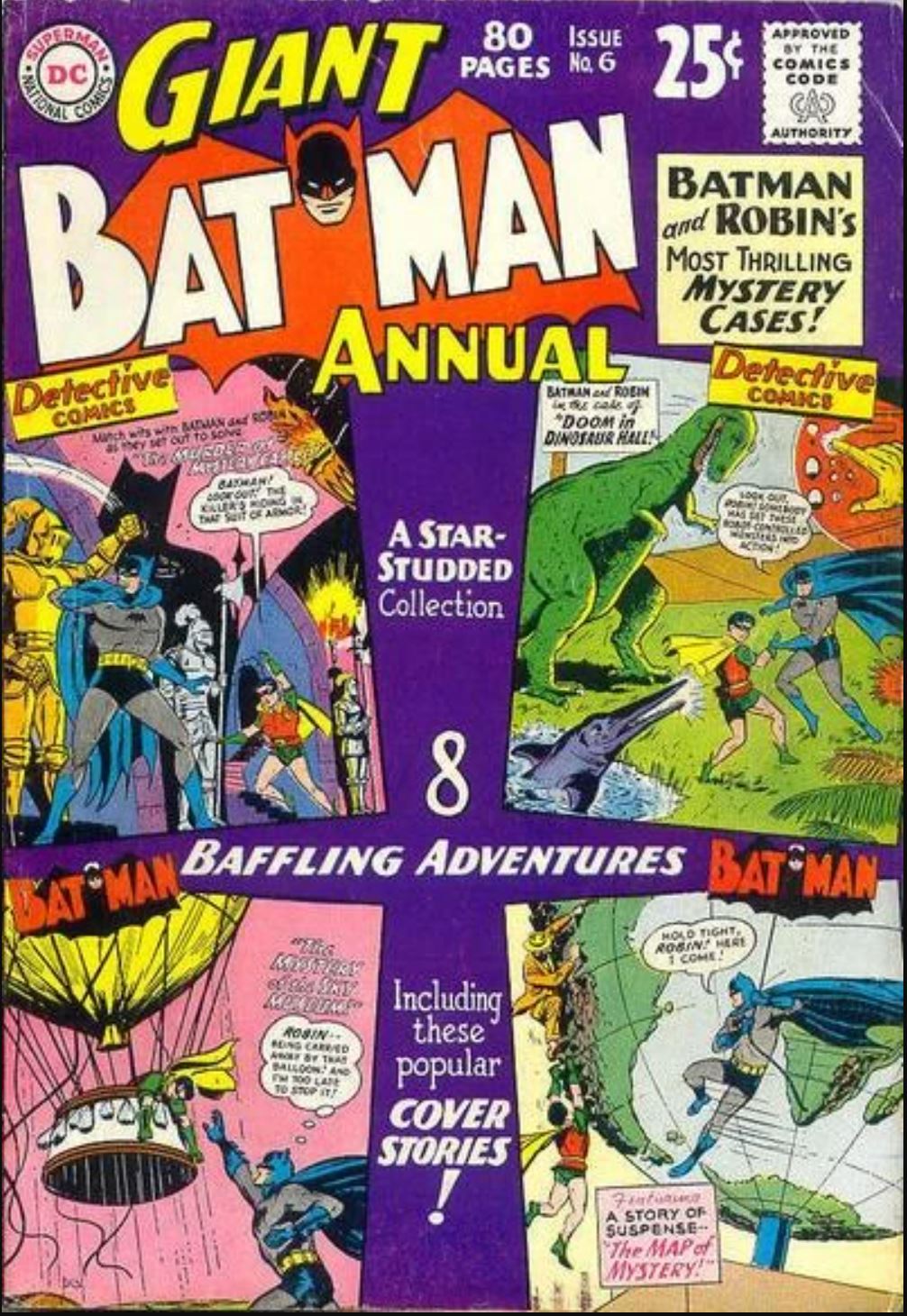
And since So Many Others are already talking of Yule fuel…
Win’s Christmas Gift Recommendation: Total Entertainment Perfection… 10/10

Invincible Iron Man Marvel Masterworks volume 12


By Bill Mantlo, Gerry Conway, George Tuska, Keith Pollard, Carmine Infantino, Don Perlin, Jack Abel, Mike Esposito, Fred Kida, Pablo Marcos, Bob Wiacek, Alfredo Alcala & various (MARVEL)
ISBN: 978-1-3029-1716-6 (HB/Digital edition)

This book includes Discriminatory Content produced in less enlightened times.

Arch-technocrat and supreme survivor Tony Stark has changed profile many times since his debut in Tales of Suspense #39 (March 1963) when, whilst a VIP visitor in Vietnam observing the efficacy of the munitions he had designed, the inventor was critically wounded and captured by sinister, savage Communists.

Put to work building weapons with the dubious promise of medical assistance on completion, Stark instead created the first of many technologically augmented suits to keep himself alive and deliver him from his oppressors. From there it was a simple – transistor-powered – jump to full time superheroics as a modern Knight in Shining Armour…

Conceived in the wake of the Cuban Missile Crisis at a time when Western economies were booming and “Commie-bashing” was an American obsession, the emergence of a new young Thomas Edison, employing Yankee ingenuity, wealth and invention to safeguard the Land of the Free and better the World, seemed an obvious development. Combining then-sacrosanct faith that technology and business in unison could solve any problem, with the universal imagery of noble knights battling evil, Stark – the Invincible Iron Man – seemed an infallibly successful proposition.

Of course, whilst he was the acceptable face of 1960s Capitalism – a glamorous millionaire industrialist/scientist and a benevolent all-conquering hero when clad in the super-scientific armour of his alter-ego – the turbulent tone of the 1970s soon relegated his suave, “can-do” image to the dustbin of history. With ecological disaster and social catastrophe from the myriad abuses of big business the new zeitgeists of the young, the Golden Avenger and Stark International were soon confronting some tricky questions from an increasingly politically savvy readership.

With glamour, money and fancy gadgetry not quite so cool anymore the questing voices of a new generation of writers began posing uncomfortable questions in the pages of a series that was once the bastion of militarised America. This twelfth chronological compendium completes that transitional period, reprinting Iron Man #95 – 112 (February 1977 to July 1978) as Bill Mantlo’s passionate writing triggers a minor renaissance in the Steel Sentinel’s chrome-plated chronicles that will result in some of the best stories of the Eighties era and return Iron Ma to the top-rank of Marvel stars. If you’re a fan thanks to the movie interpretation, that iteration starts right here, right now…

Aided and abetted by Kurt Busiek’s informative, insightful Introduction offering historical overview and behind-the-scenes revelations, the climb to reclaimed pole position resumes with veteran Iron Man artist George Tuska joining plotter Gerry Conway, scripter Mantlo and inker Don Perlin in unleashing giant android ‘Ultimo!’ (IM #95, cover-dated February 1977) against Washington DC.

Clad in newly-updated armour and in the Capitol to answer congressional questions about his company, Stark is targeted by a vengeful hidden nemesis who activates the mountainous monster for a classic B-Movie sci fi rampage in the streets, with the Golden Avenger supplementing hard pressed Army and National Guard units… before falling in ignominious defeat due to sabotage…

Mantlo, Tuska & Jack Abel prove you can’t keep a good Iron Man down as the embattled hero rallies and retaliates in ‘Only a Friend Can Save Him’ when former close ally and dutiful S.H.I.E.L.D. agent Jasper Sitwell joins the counterattack. Meanwhile a long-simmering plotline advanced as NYPD detective Michael O’Brien – who holds Stark responsible and accountable for the death of his brother Kevin (see Iron Man Masterworks volume 11) – finally allows his obsession with a cover-up to pull him across the legal line and into collusion with shady PI Harry Key, whose latest client also has nasty plans for the playboy inventor…

Thanks to ingenuity and sheer guts, Stillwell and Iron Man seemingly destroy Ultimo deep below DC, but their triumph is short lived as a return to Stark’s Long Island factory provokes a ‘Showdown with the Guardsman!’ (Conway, Mantlo, Tuska & Perlin). When Mike takes PA Krissy Longfellow hostage, steals the armour suit that drove his brother insane and ambushes the Golden Avenger wearing it, the clash is swift and brutal, but thankfully this time, blockbusting battle ends before another good man dies…

Whilst subsequently treating O’Brian, another distraction comes when an old frenemy attacks the facility and American interventionist economic practises. ‘Sunfire Strikes Again!’ sees the Japanese ultra-nationalist mutant warrior again seek to derail progress, unaware that he is a pawn of the lurking presence gunning for Stark, but the harried hero’s problems start with the fact his greatest weapon is offline and he’s fighting in borrowed Guardsman armour. When the conflict frees imprisoned Michael O’Brian, the cop seeks to make amends by joining the battle in an obsolete Iron Man outfit, but – even with Mike Esposito inking – the new allies rapidly find themselves ‘At the Mercy of the Mandarin!’

During the melee, Key tries his luck in the Stark vaults once too often and encounters an unexpected problem thanks to another insidious infiltrator planted by a different plotting mastermind. However, having freed himself, Tony is too now busy rushing to a far-distant, potentially world-ending final battle in anniversary issue #100. Invading China, Iron Man faces horrors, homunculi Death Squads, nuclear armageddon and his most obsessive enemy whose ‘Ten Rings to Rule the World!’ ultimately prove insufficient to the task…

With the tyrant’s countless plots to discredit Stark all exposed, our hero starts a long journey home even as in Long Island, Harry Key, Jasper Sitwell and one of the traitors in Stark’s midst begin a cautious espionage dance…

Iron Man’s trip stalls when he is shot down over Yugoslavia (just google it) and wakens in a creepy old castle filled with freaks and outcasts safeguarded by a familiar – to dedicated Marvelites at least – huge and daunting figure. Recovering in ‘Then Came the Monster!’ our weary voyager views Castle Frankenstein and panics: clashing with the gentle “Modern Prometheus” before the real menace emerges. Inked by Esposito & Pablo Marcos, ‘Dreadknight and the Daughter of Creation!’ channels old Marvel horror tales as a brutal and brutalised escaped experiment of Doctor Doom’s laboratories seeks to compel the great granddaughter of Victor Frankenstein to share with him the secrets of creating life…

This ruthless high-tech paladin’s sadistic efforts are eventually thwarted by Iron Man and the original good Monster, after which the Steel Shod Sentinel at last arrives home in #103’s ‘Run for the Money!’ by Mantlo, Tuska & Esposito. Sadly, it’s just in time for the next domestic crisis as Sitwell exposes the traitor only to be captured by revolting corporate villain Midas, who – patience exhausted – launches a hostile takeover using tanks, mercenaries, lawyers and the Stock Market…

He is temporarily checked by itinerant junior hero/innocent bystander Jack of Hearts who – as per standard Marvel protocol – is attacked by the weary, late arriving Iron Man who has misconstrued events and attacked the well-meaning stranger. Shock follows shock as Midas’ legal chicanery forces Iron Man’s surrender, ceding control of Stark International to his enemy, even as the villain’s agent Madame Masque quits to ally herself with the defeated hero and his ousted, outmanoeuvred alter ego Tony Stark. In the aftermath, repercussions of the takeover ripple outwards. With Stark no longer paying her bill, deeply disturbed super-telepath (and former Stark inamorata) Marianne Rodgers is kicked out of the sanatorium that has been keeping her psionic deadly tendencies in check…

The fightback begins in ‘Triad!’ (Mantlo, Tuska & Esposito) after Stark initially refuses the help of Masque. Thus she instead allies with former lover/patsy Sitwell whilst elsewhere, interested parties Michael O’Brian and Jack of Hearts also seek to stop Midas converting Stark’s purloined resources into a world-conquering armed force. Also heading slowly towards a showdown, Marianne graduates towards Long Island, leaving a trail of bodies in her wake…

With ‘Every Hand Against Him!’ and despite the stakes being so high, Tony has quit forever, preferring to hide in his father’s old house with Madame Masque. Less sanguine over the crisis and threat to National Security, many of Iron Man’s allies join a volunteer force recruited by psychic superhero The Wraith and eventually consisting of Police Captain Jean de Wolf, former Iron Man Eddie March, The Guardsman and Jack of Hearts, covertly backed up by Sitwell and (the first) Nick Fury

Still short of power, they co-opt through blackmail, Masque’s lethal skills and Tony’s last remaining armour suit to take down Midas. ‘Then There Came a War!’ (#106) sees the desperate squad invade SI and face a legion of automated Iron Men. At the height of battle Marianne Rodgers – in a fugue state – finally reaches her destination. As Keith Pollard & Fred Kida step in to illustrate the catastrophic conclusion, ‘And, in the End…’ sees her power tip the scales, uncovering even more treachery in Tony’s inner circle and inspiring the despondent hero to take back his heritage, his company and his honour…

With most of his allies apparently dead, Iron Man calls in Avenging ally Yellowjacket (AKA original Ant-Man Henry Pym) to help whip up a miracle cure in #108 (Mantlo, Carmine Infantino & Bob Wiacek). This incurs some ‘Growing Pains!’ and a palate-cleansing action-filled monster-bash as the clear-up somehow reactivates Kang the Conqueror’s devastating Growing Man android to add to the wreckage and rubble…

Once the fighting is finished, the rebuilding of Stark International begins, with Mantlo, Infantino & Kida dictating the pace prior to another crisis after Jack of Hearts traces the Growing Man’s programming orders as emanating from Luna. Thus Iron Man and his superhero apprentice board a Quinjet and experiences a very painful ‘Moonrise!’ when their mission intersects a secret sortie by Soviet Super-soldiers Darkstar, Vanguard and Crimson Dynamo. The Communist cosmonauts are only investigating a bizarre alien artefact, but entrenched political and personal animosities spark a savage fight. Both sides are preoccupied when the silver egg activates, transporting those closest to it – the Americans – to somewhere far, far away…

Mantlo, Pollard & Kida stretch their fantasy muscles for an astral epic as the heroes materialise aboard a vast ship bearing Colonizers of Rigel to their next conquest. Sadly, these ‘Sojourners Through Space!’ have targeted Wundagore II – used by animal-enhancing manmade deity the High Evolutionary to store former experiments – and are soon caught up in a battle against formidable space Knights of Wundagore and two devastating late-arriving, quickly escaping human captives within their colossal Commandship…

When an alliance of humans and hyper-evolved Earth beasts proves too costly, the Rigellian venture is called off in ‘The Man, the Metal, and the Mayhem!’ but in turn leads to renegade Colonizer subcommander Arcturus spitefully targeting Earth with a robot stolen from Galactus (the original Punisher from Fantastic Four #48-50). Upon its despatch, closing inclusion ‘Moon Wars!’ (Iron Man #112,  July 1978 by Mantlo, Pollard & Alfredo Alcala) sees a swift, unauthorised Colonizer strike lead to a desperate dash back to Luna and shattering descent to Detroit, Earth, for Iron Man, resulting in blistering battle with the cosmic weapon of chastisement and a whole new definition of the word “invincible” for the triumphant Golden Avenger…

To Be Continued…

With covers throughout by Jack Kirby, Al Milgrom, Abel, Ron Wilson, Dan Adkins, Gil Kane, Dave Cockrum, Sal Buscema, Jim Starlin, Val Mayerik, George Pérez, Terry Austin, Frank Giacoia, Joe Sinnott, Joe Rubinstein, John Byrne, Wiacek & Pollard, the extras include cartoon fan letter ‘Printed Circuits’ (by Fred Hembeck from #112) and original art consisting of covers, plus splash and story pages by Milgrom, Abel, Starlin, Mayerik, Cockrum, Tuska & Esposito.

These epic yarns are the bread & butter of superhero comic storytelling, combining action, spectacle, intrigue, drama and even soap opera elements to keep readers coming back issue after issue. These as much as every cosmic landmark and style breakthrough are what keep comics companies alive and deserve your full attention. Suit up and read on…
© 2019 MARVEL.

Batman: The Sunday Classics 1943-1946


By Don Cameron, Bill Finger, Joe Samachson, Alvin Schwartz, Bob Kane, Jack Burnley, Fred Ray & various (Barnes & Noble/DC Comics/Kitchen Sink Press)
ISBN: 978-1-1402-4718-2 (Album HB) 978-0-87816-148-1 (PB)

This book includes Discriminatory Content produced in less enlightened times.

If the newspaper comic strip was the 20th century’s Holy Grail, the Holiest of Holies was a full-colour Sunday page. These stunningly produced showcases for talent were delivered to families all across America and the wider world and inescapably formed part of the fabric of the mass entertainment society: demanding and generating the best of the best. Such was absolutely the case of the 1940s Batman and Robin strip: coming late to the party but developing into arguably the highest quality comics-to-strips offering of all.

Although a highpoint in strip cartooning, both iterations of the Batman feature were cursed by ill-timing. After years of dickering the daily debuted at a time when newspaper publishing was hampered by wartime rationing, and a changing marketplace meaning these strips never achieved the circulation they deserved. However, Sundays were given a new lease of life in the 1960s when DC began reprinting vintage stories in 80-Page Giants and Annuals.

The superior quality adventures were ideal action-mystery short stories, adding an extra cachet of exoticism for young readers already captivated by enjoying tales of their heroes that were positively ancient and redolent of History with a capital “H”.

The stories themselves are broken down into complete single page instalments building into short tales averaging between 4 to 6 pages per adventure. Mandatory esoteric foes include such regulars as The Penguin (twice), Joker, Catwoman and Two-Face and all-original themed villains like The Gopher, The Sparrow and Falstaff, but the bulk of the yarns offer more prosaic criminals, if indeed there is any antagonist at all. However, a policy of shorter individual story sequences means that there were 26 complete adventures for modern fans to enjoy now. especially if DC ever reprint and produce a digital edition of these classic romps…

A huge benefit of work produced for an audience deemed “more mature” is the freedom to explore human interest stories such as exonerating wrongly convicted men, fighting forest fires or discovering the identity of an amnesia victim. There are even jolly seasonal yarns…

The writers included comic book veterans Don Cameron, Bill Finger, Joe Samachson and Alvin Schwartz with art by Bob Kane, Jack Burnley and Fred Ray and inking by Win Mortimer and Charles Paris. The letterer was tireless, invisible calligraphic master Ira Schnapp and the strips were all coloured by Raymond Perry.

As with the companion Dailies collection this compendium is packed with info features and a wealth of extra features such as biographical notes, a history of the strip, promotional features and artefacts, behind-the-scenes artwork and sketches, and much more: offering history, context, appraisals, appreciations and a wealth of merchandising material courtesy of Joe Desris. These are divided into ‘Getting the Job Done’, ‘A History of the Batman and Robin Sundays’, ‘Biographies’, ‘Bubble Gum Similarities’, ‘Previous Reprintings’, ‘The McClure Syndicate’s Promotional Book’, ‘Jack Burnley’s Pencils’ plus contemporaneous article ‘Batman – Backward Looking and Forward Leaning’ by scripter Alvin Schwartz.

With far more emphasis on fun and thrills and less of murder and sinister extended-by-design skulduggery, the masked manhunters launch the Sunday sessions with Cameron – or possibly Samachson – Kane & Paris depicting ‘The Penguin’s Crime-Thunderstorms’ (weeks 1-6, November 7th – December 12th 1943). This brief introductory sally sees the Dynamic Duo thwarting the bird-based bandit’s cunning scheme to use bad weather and his patented uniquely weaponised bumbershoots to pluck penniless the most infamous miser in Gotham.

Weeks 7-10 (December 19th 1943 – January 9th 1944 by Finger, Kane & Paris) set a nautical themes as ‘The Secret of Cap’n Plankton’s Ghost’ finds our playboy heroes fishing in their civilian identities when the resort of Pirate’s Cove is raided by an ancient vessel packing very modern artillery. The robbed rich folk all believe it the last descendent of an infamous old buccaneer, but Batman and Robin find that’s not the case at all when they lower the boom on the true culprits…

Finger, Burnley & Paris produced the next dozen delights beginning with western teaser ‘Jesse James Rides Again!’ (weeks 11-15, January 16th – February 13th 1944) as a train robbery reenactment is hijacked by opportunistic modern bandits with a degree of panache after which ‘The Undersea Bank Bandits’ (16-20 February 20th – March 19th 1944) employ mining and diving techniques to plunder from below Gotham’s streets whilst ‘Liquid Gold!’ (21-26, March 26th – April 30th) finds our heroes out west helping prospector’s daughter Ruth Parker bring in her first oil well despite the machinations of a cunning property speculator…

Comedy loomed large in ‘Cap’n Alfred’ (weeks 27-31, May 7th – June 4th) as the faithful manservant dabbles in nautical lore and celebrates his family’s maritime heritage by taking a part-time job skippering the Gotham Ferry. His tenure begins in the middle of a major hijacking spree but – happily for all concerned – his usual employers had come aboard to see him shine… or not…

A truly crafty, twisty tale of cross and double-cross follows as the Dynamic Duo rush to prove the innocence of a man who claims to be ‘Death Row’s Innocent Resident’ (32-39, June 11th – July 30th) after which Jack Burnley joined Finger and Paris for a season of superb thrillers starting with ‘The Mardi Gras Mystery’ (40-46, August 6th – September 17th) as Bruce and Dick head to the Big Easy and stumble into a deadly con game turned lethal treasure hunt led by a genially murderous giant dubbed Falstaff

Back home and enjoying the bucolic delights of an upstate County Fair, the off-duty Duo discover that ‘An Attic Full of Art’ (weeks 47-53, September 17th – November 5th) left to a couple of innocent hicks is plenty of reason for city slicker art dealer Maxwell to connive, cheat and even commit murder to corner the market. Time for the other suits, lads…

The year turned with a beguiling fantasy fable as ‘There Was a Crooked Man…’ (54-61, November 12th– December 31st 1944) saw our heroes drawn into a seemingly sinister chase across the seediest sectors of Gotham in pursuit of a villain out of a nursery rhyme. There was however, a solid sensible explanation for the rollercoaster rush & tumble…

Things turn deadly serious during a visit to timber country as ‘Holy Smoke!’ (62-68, January 7th – February 18th 1945) sees a recovering pyromaniac scapegoated for a series of deliberate fires, until Batman deduces the real reason and exposes the true culprit after which humour and pathos return in ‘An English Sassiety Skoit’, (69-72, February 25th – March 18th). When a pretty con-artist impersonates Alfred’s never-seen Australian niece and looks to cash in on the Wayne fortune, Batman and Robin must intervene with breaking the old soul’s heart, but severely underestimate their manservant’s detective skills, after which the heroes head out west again and find ‘Rustling on a Reservation’ (73-78, March 25th – April 29th) whilst helping “Pueblo Indians” stop a systematic plunder spree designed to starve them out and steal their ancestral lands…

Another spate of subsurface capers signal the debut of an engineering super-criminal as ‘The Gopher: King of the Underworld!’ (79-85, May 6th – June 17th) has bandits use tunnels and building works in their thefts, leading the Caped Crusaders a merry dance down below before good old detective digging unearths the mystery mastermind.

Bob Kane returned in 15th tale ‘The Tale of the Tinker Diamond’ (weeks 86-90, June 24th – July 22nd) as a gem cutter’s son is kidnapped to force his collusion in a massive jewel heist – until Batman intervenes – after which Schwartz, Burnley & Paris open the first of eight consecutive adventures with ‘A Pretty Amnesiac’ (91-97 July 29th – September 9th). When the Gotham Gangbusters save a young woman from brutal abductors they discover she has no memory and no identifying property, marks or characteristics. With the victim still hunted by her kidnappers, the World’s Greatest Detectives must identify her and stop an unimaginable injustice from occurring…

‘Devil’s Reef’ (98-103, September 16th– October 21st) details how Batman’s cross-continental manhunt for modern-day pirates The Miller Gang coincides with and converges on Alfred’s new hobby of treasure hunting, leading to a deadly entombment and spectacular escape before The Joker breaks jail to clash with new rival The Sparrow who constantly proves herself to be ‘Gotham’s Cleverest Criminal’ (104-110, October 28th – December 9th)… until the Dynamic Duo capture them both.

A fortnight of festive fun and sugar-candy sentiment follows the faithful butler playing ‘Alfred Claus’ (weeks 111-112, December 16th – 23rd) to a group of dead-end kids before a new year beckons and begins the final newspaper cases in ‘Twelvetoes’ (113-118, December 30th 1945-February 3rd 1946). Here an underweight, under-paid beat cop is – somehow! – set to marry a millionairess, but only if an old bankrupt roué with eyes on her bank figures can be stopped from “removing” his rival in blue. Happily, Batman and Robin are on hand to aid and save the connubial underdog, before we enjoy the most influential strip story of all as ‘Oswald Who?’ (February 10th – March 10th) sees the Dynamic Duo enjoying themselves immensely escorting The Penguin around Gotham as the Wily Old Bird seeks to impress his dowager Aunt Miranda. Of course, his best efforts end with him hunted by other hoods for collaborating with the enemy and behind bars once the old lady is safely off home, but at least Batman and all of us now know the villain’s real identity… Oswald Chesterfield Cobblepot: a one-off gag that has become a confirmed snippet of Bat-Lore…

‘Hotel Grandeur’ (124-129, March 17th – April 21st) set a missing person mystery in a resort building housing the population and resources of a small city, with Bruce and Batman both hunting an abducted finance minister from Europe through its labyrinthine corridors and tunnels before ‘Catwoman’s Grasshopper Chase’ (130-137, April 28th – June 16th) sees Fred Ray (Superman, Tomahawk, Congo Bill) alternating pencilling with Burnley and Win Mortimer inking Schwartz’s tale of the hunted felon going on the offensive and trying to trash Batman’s reputation for infallibility by making him a laughing stock… yet another time the Dark Knight’s strategy demands Robin dress up as girl…

Finger, Burnley & Mortimer remodelled the story of Two-Face in ‘Half Man – Half Monster’ (138-146, June 23rd – August 18th) as actor Harvey Apollo is driven mad after an acid attack whilst on the witness stand. In the newspaper strip, his subsequent crime and killing spree has no cure or happy ending after Batman is forced to stop him…

When seer and mystic Jandor is murdered live on air by robbers ‘The Curse of the Four Fates!’ (147-154, August 25 – October 13th by Finger, Burnley & Paris) that he gasps out inexorably punishes the perpetrators despite every effort of the Caped Crimebusters to catch and/or save them. The Sunday ventures conclude with Schwartz, Burnley & Paris’ brief bout of ‘Tire Tread Deathtrap’ (weeks 155-156, October 20th & 27th 1946) as a set of tracks lead to the heroes entering and escaping a cunning ambush and getting their man one last time…

This amazing compilation ends with tantalising lost treats beginning with some unattributed Batman strips from an abortive revival in ‘Later Newspaper Strips: 1953’, backed up by ‘Later Newspaper Strips: 1966’: offering Dailies from that successful venture which you can find fully collected in 3 volumes of Batman: Silver Age Dailies and Sundays.

Also on view are ‘Later Newspaper Strips: 1978’ by Martin Pasko, George Tuska & Vince Colletta featuring Superman and Wonder Woman from Justice League based feature The World’s Greatest Superheroes plus ‘The Superman Sunday Special’ activity page by José Luis García-López and examples of the Batman strip revival engendered by the first Tim Burton movie. ‘Later Newspaper Strips: 1989’ offers segments by Max Allan Collins, Bill Messner-Loebs, Carmine Infantino (as “Cinfa”) Marshal Rogers & John Nyberg with the entire celebration closing with a discussion of (Dick) ‘Tracy’s Influence’: comparing names, locales and especially the pioneering strip’s preponderance of grotesque villains…

This lovely oversized (241 x 318 mm) full colour hardback and softcover tome was originally published in conjunction by DC Comics & Kitchen Sink Press in 1991, and is filled with death traps, daring escapes, canny ratiocination, moving melodrama, stirring sentiment and lots and lots of astounding action: in fact a perfect Batman book. It’s long past time it was back in print – and eBooked too – as it’s a must for both Bat-fans and lovers of the artform.
© 1991, 2007 DC Comics. All Rights Reserved.