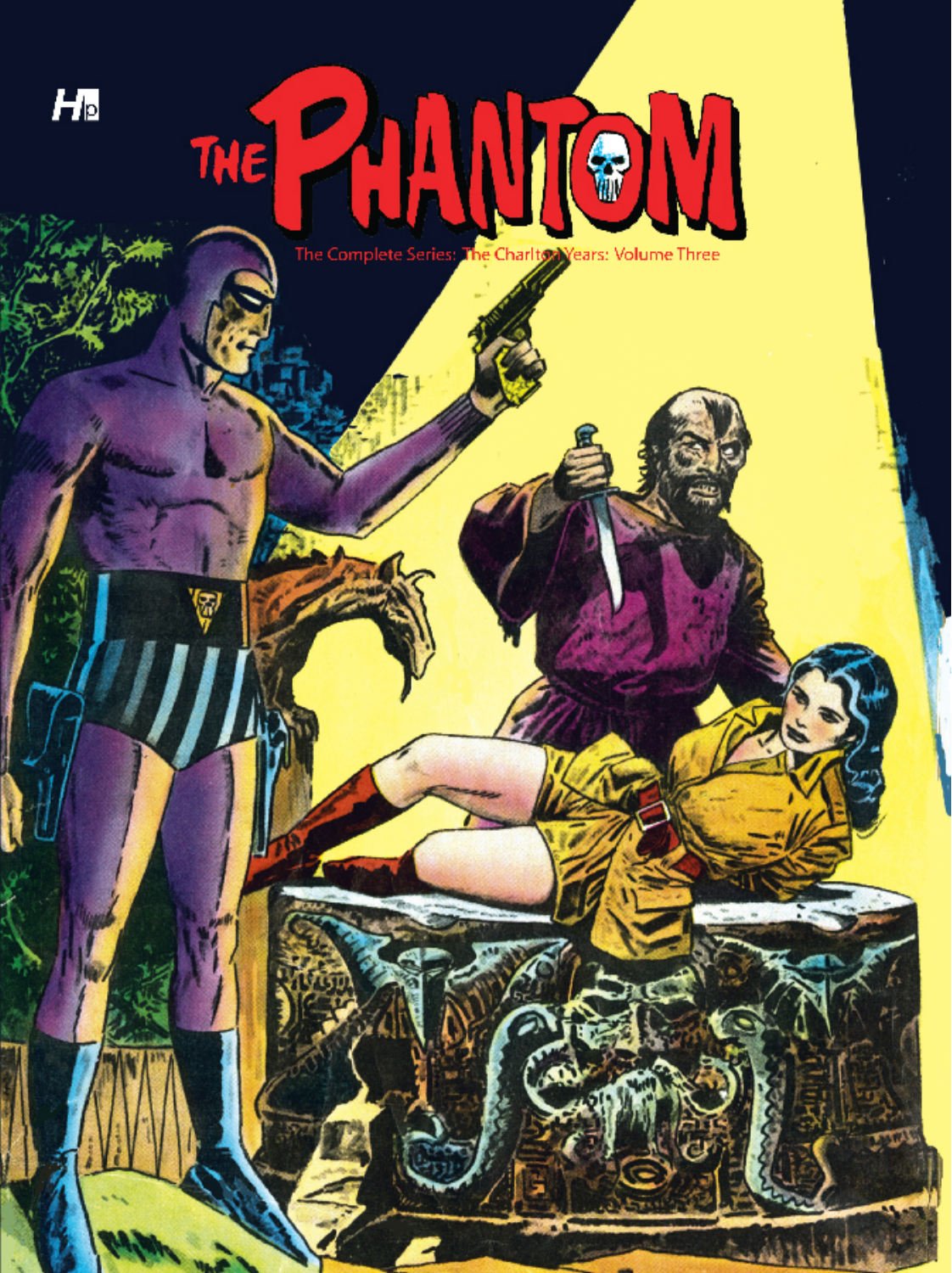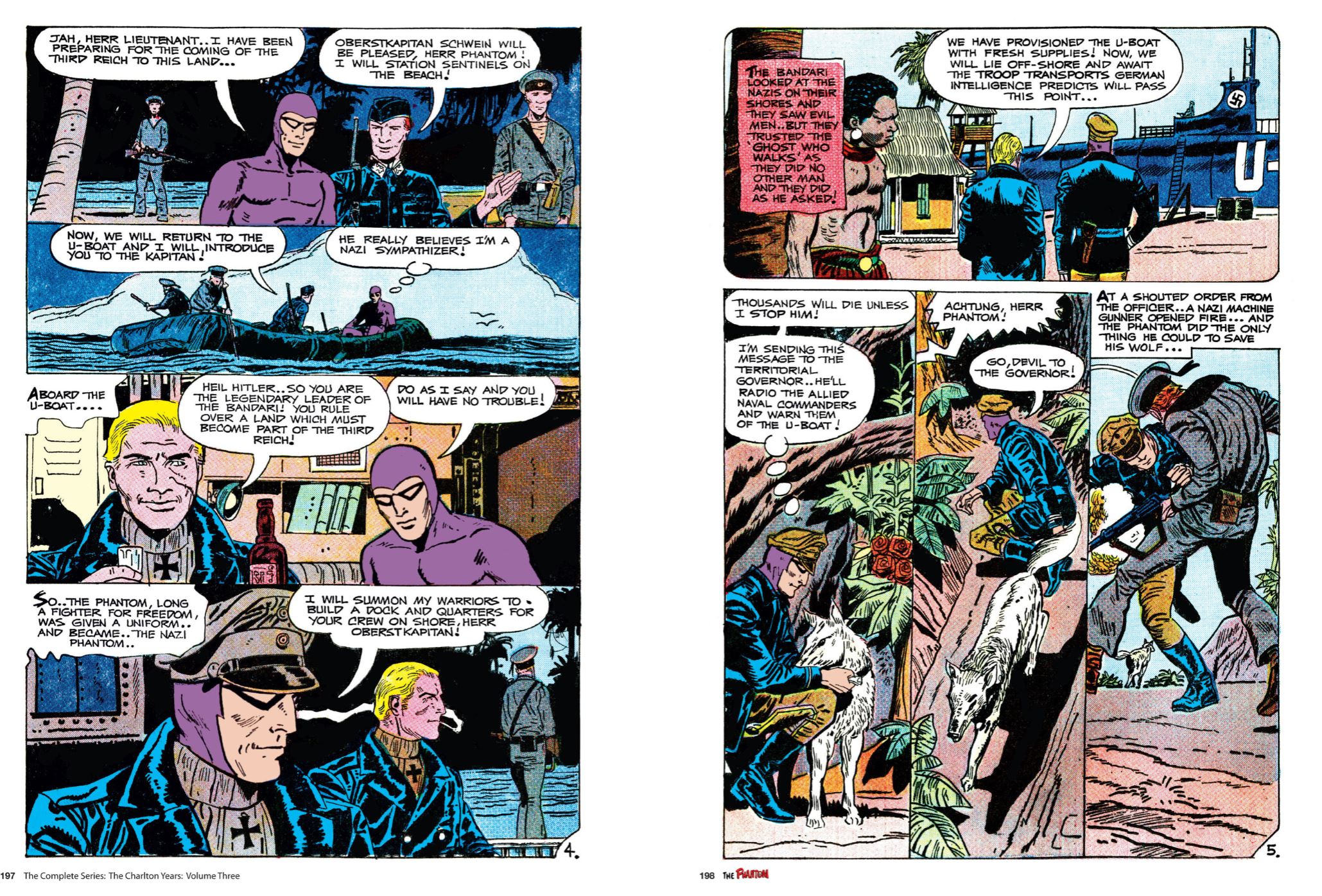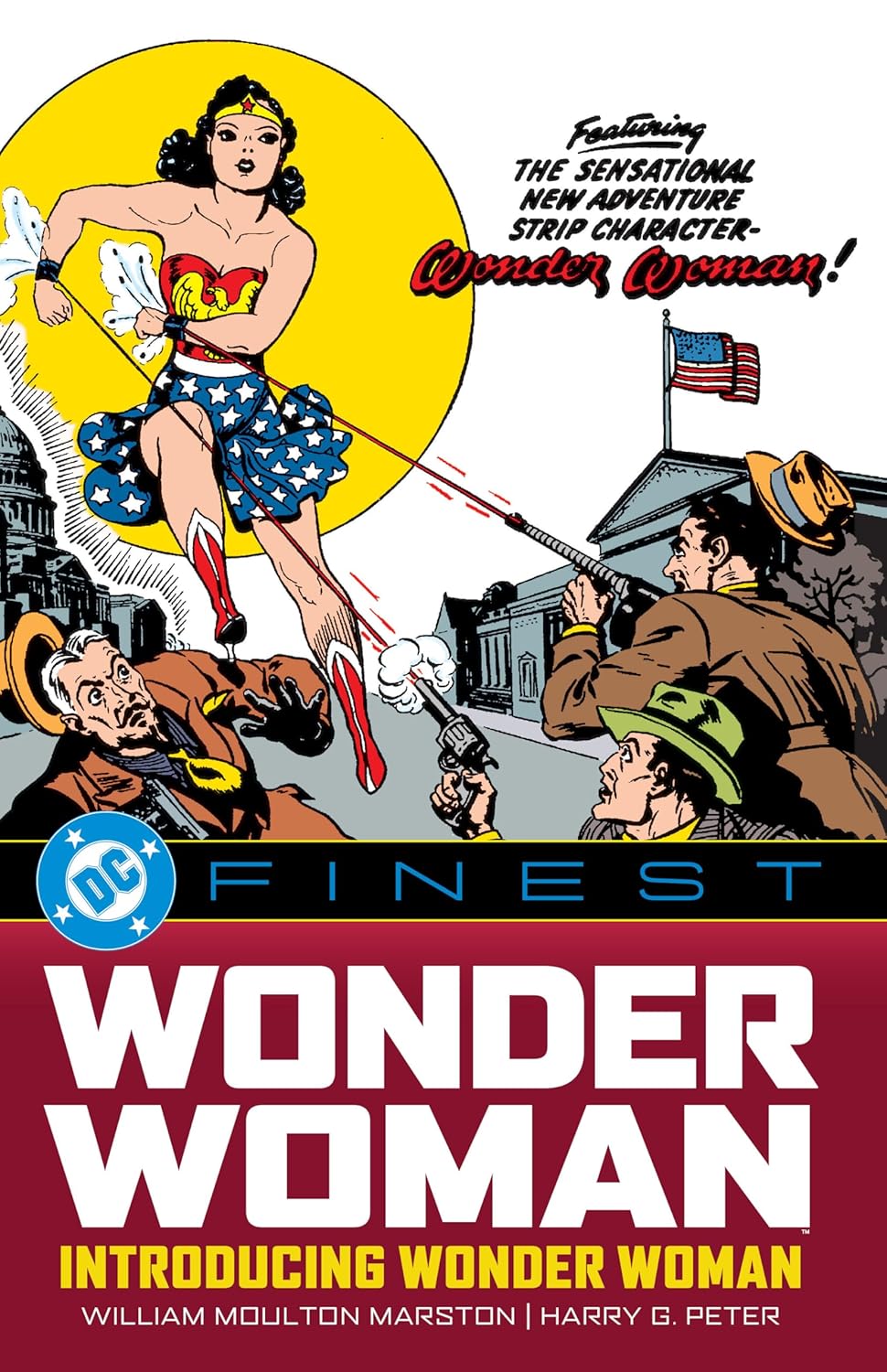
Heroic Tales: The Bill Everett Archives volume 2


By Bill Everett and others, edited and complied by Blake Bell (Fantagraphics Books)
ISBN: 978-1-60699-600-3 (HB/Digital edition)

This book includes Discriminatory Content produced in less enlightened times.

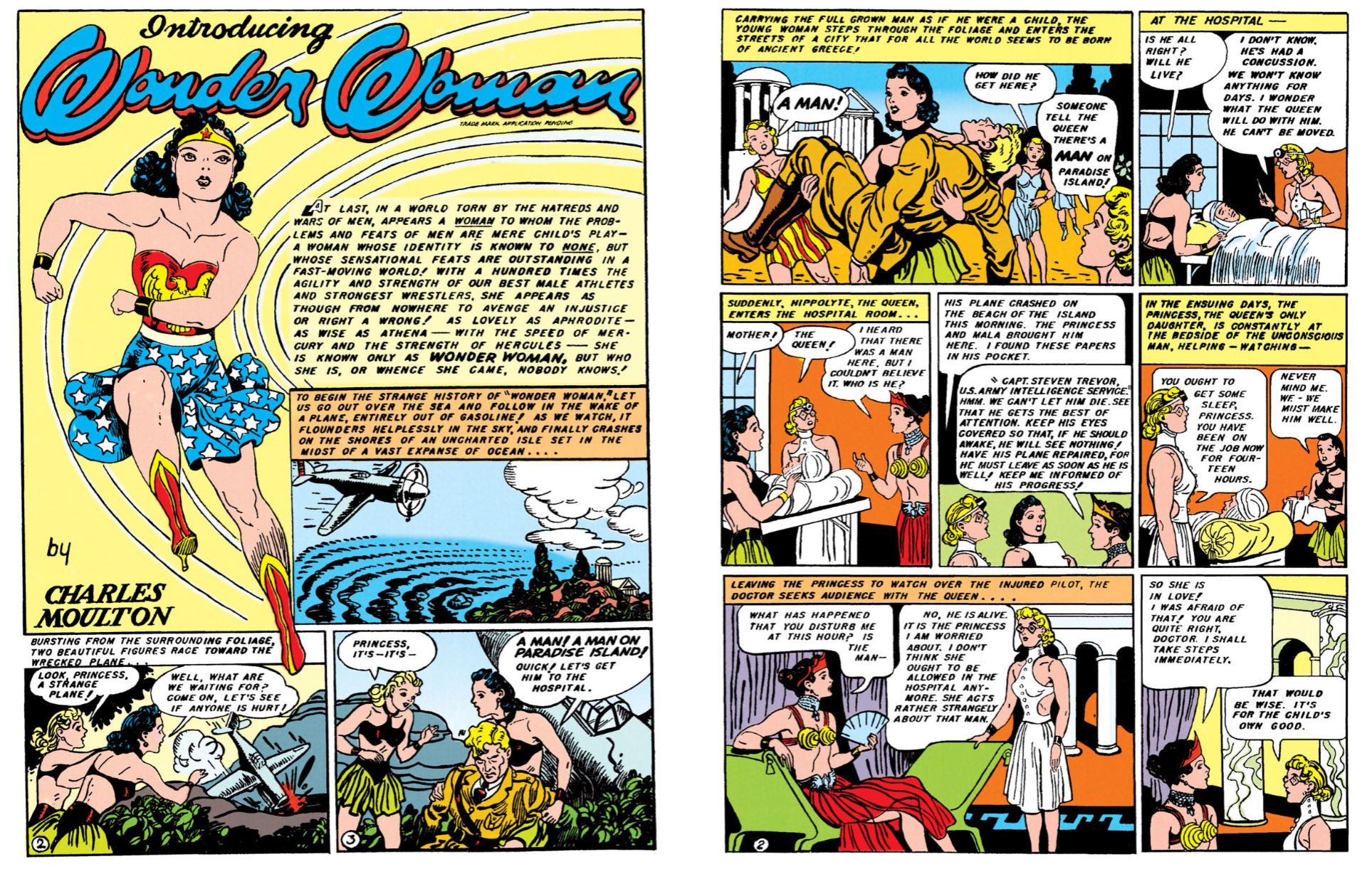
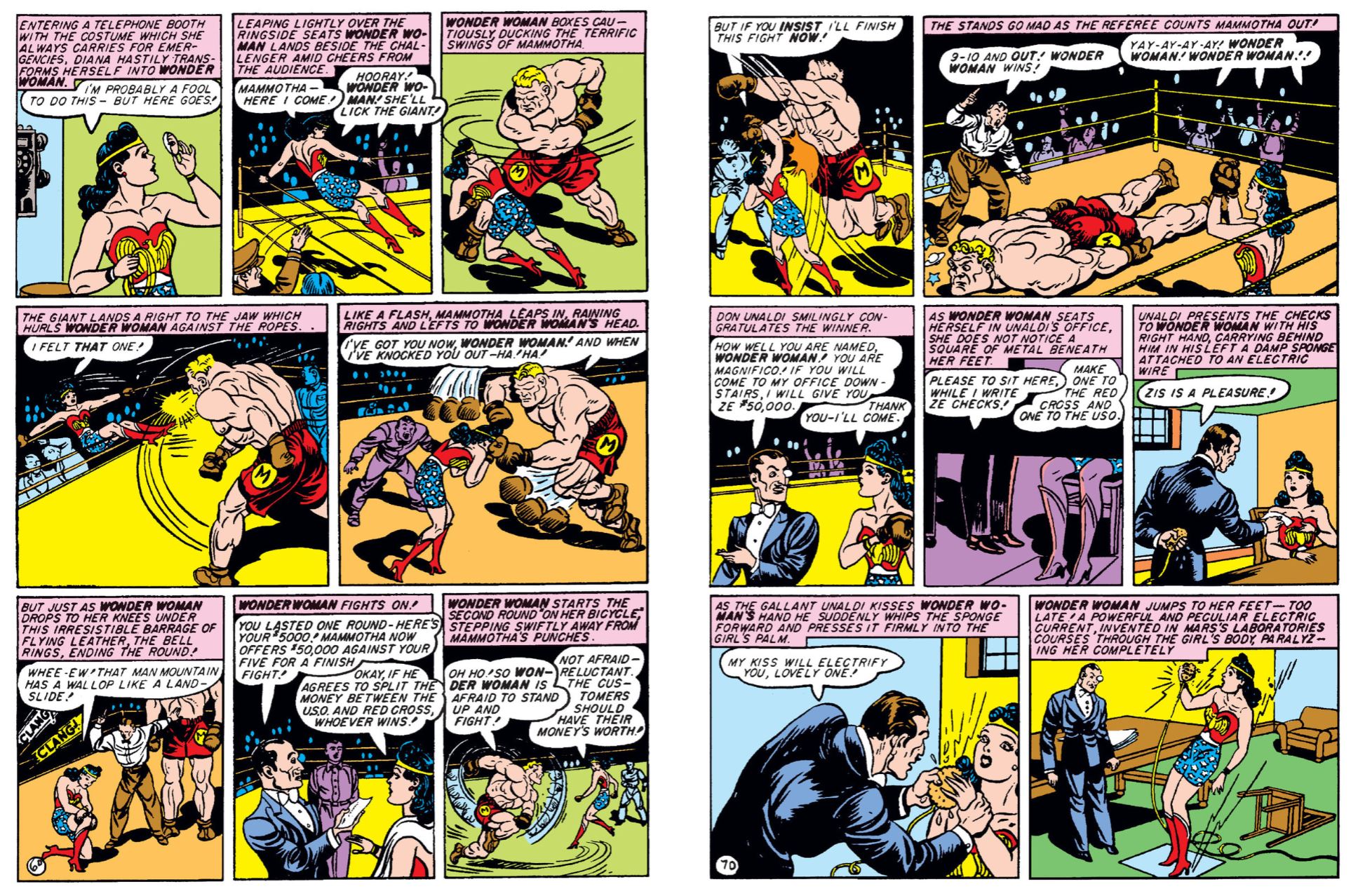
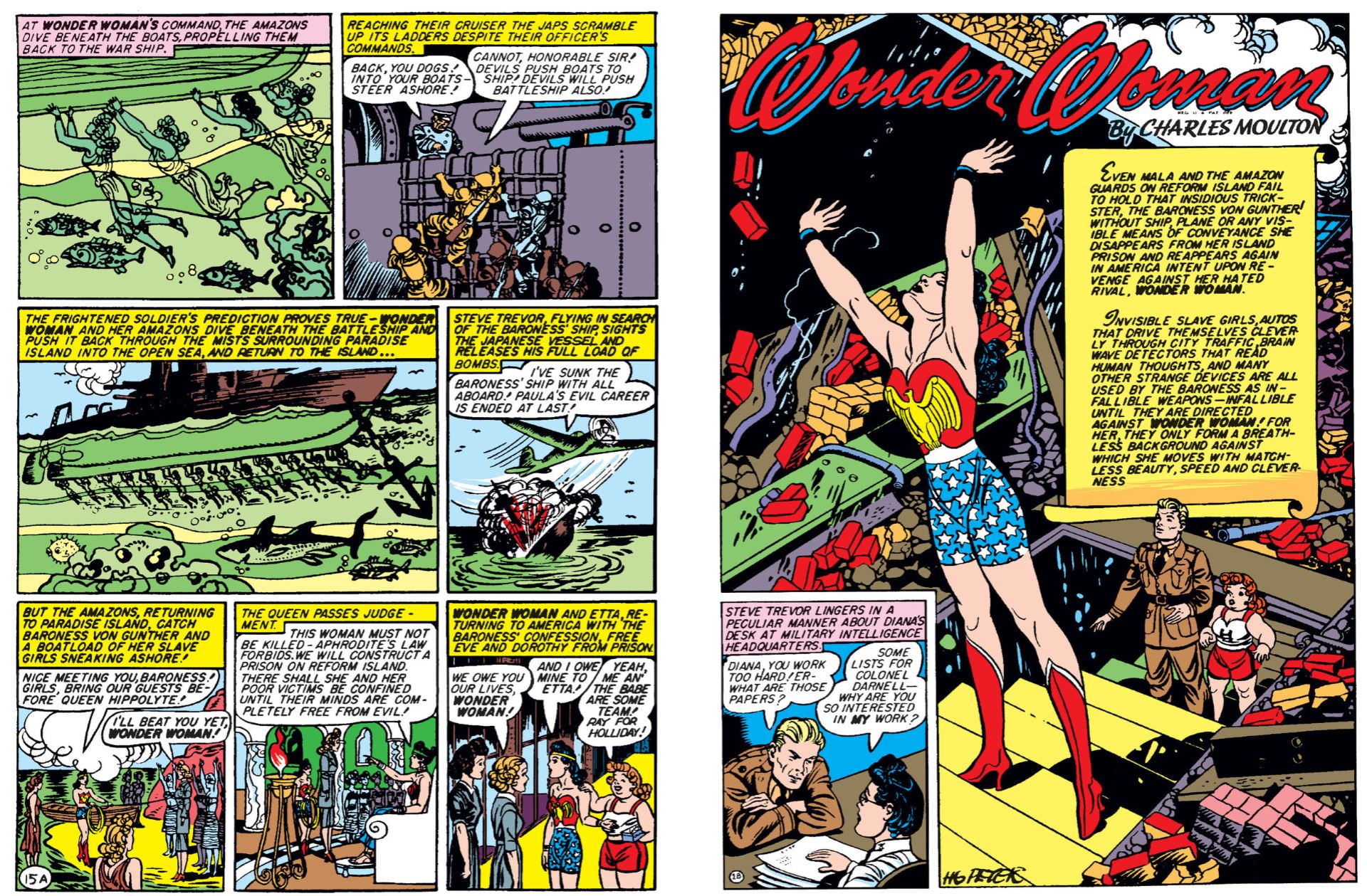
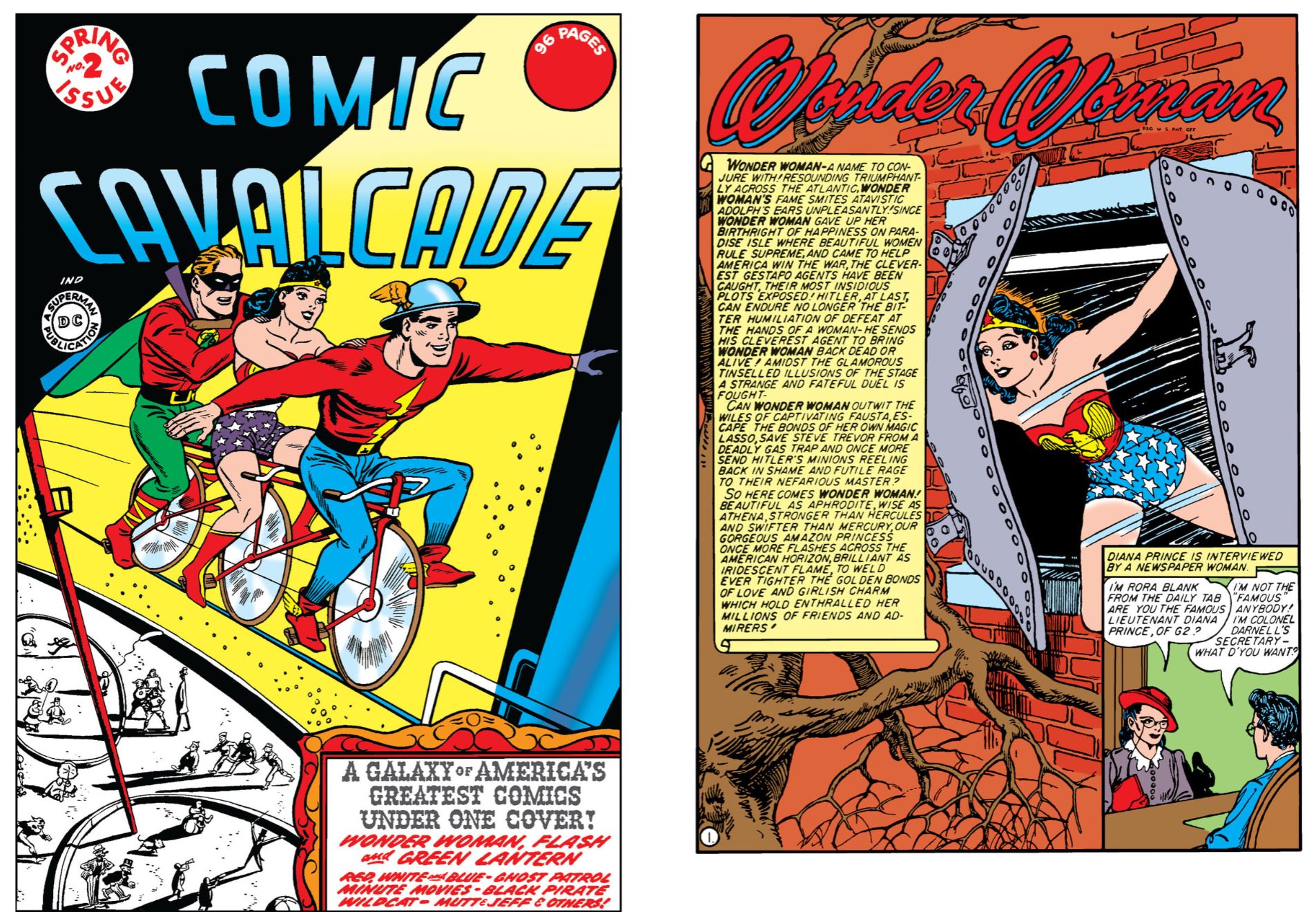
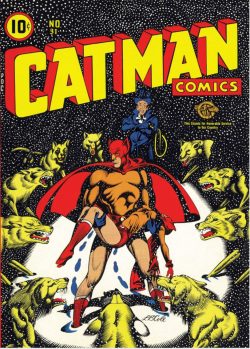
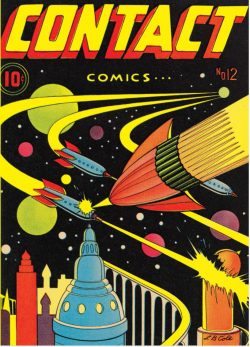
The second visit to the works of Bill Everett also opens with a fact-filled, picture-packed Introduction by Blake Bell which covers ‘The Early Years of Comics: 1938-1942’, ‘The Birth of Marvel Comics’ and ‘The Comic Book Production System’, before ‘The Heroes’ precedes a selection of astounding, astonishing prototypical adventure champions accompanied a brief essay on the set-up of Centaur Comics, Novelty Press, Eastern Color Printing, Hillman and Lev Gleason Publications.

Augmented by covers for Centaur’s Amazing Mystery Funnies vol. 2 #3, 5 & 6 (March, May & June 1939) are three outer space exploits of futuristic troubleshooter Skyrocket Steele, whilst Tibetan-trained superhero Amazing-Man offers a transformative triptych of titanic tales spanning war-torn Europe, augmented by covers to Amazing-Man Comics #9-11 (February-April 1940).

Everett’s deeply held sagebrush sentiments are served with another brace of barnstorming Bull’s-Eye Bill from Target Comics #3-4 (Novelty Press, April & May 1940) whilst from #7-9 (August-October 1940), the author smoothly switched to sophisticated suspense as master of disguise The Chameleon cunningly crushed contemporary criminals in scintillating escapades from Target Comics’ answer to The Saint, The Falcon and The Lone Wolf.

Everett’s other aquatic adventurer – Eastern Comics’ human waterspout Bob Blake, Hydroman returns next, as seen in Reg’lar Fellers Heroic Comics # 6-9 (May – November 1941, with Bill’s covers for #6 & 7): four spectacular, eerily, offbeat exploits, covering an extended battle against foreign spies and American Fifth Columnists, after which Red Reed in the Americas! (created by Bob Davis & Fitz) offers the first two chapters in a political thriller wherein a college student and his pals head South of the Border to fight Nazi-backed sedition and tyranny in a stunning tour de force first seen in Lev Gleason’s Silver Streak Comics #20 & 21 (April & May 1942).

A section of Miscellaneous and text illustrations follows, blending Western spot drawings with eye-catching covers from Amazing Mystery Funnies vol. 2 #18; Target Comics #5 & 6; Blue Bolt (vol. 1 #11, vol. 2 #1, 2 &~ 3) and Famous Funnies #85. The Humorous and More then details Everett’s forays into other markets: niche sectors such as licensed comics, comedy and romance, and even  a return to pulp and magazine illustration as he strove to stay one step ahead of a constantly shifting market and his own growing reputation for binges and unreliability.

‘What’s With the Crosbys?’ is a superbly rendered gossip strip from Famous Stars #2 (1950, Ziff-Davis) whilst a stunning monochrome girly-pin-up of ‘Snafu’s Lovely Ladies’ (from Marvel’s Snafu #3, March 1956), and the cover of Adventures of the Big Boy #1 (also Marvel, from the same month) lead into the back cover of Cracked #6 (December 1958, Major Magazines) and other visual features from that Mad magazine mimic, as well as the colour cover to less successful imitator Zany (#3, from March 1959). Everett’s staggering ability to draw beautiful women plays well in the complete romance strip ‘Love Knows No Rules’ (Personal Love #24, November 1953 Eastern Color), before this section concludes with a gritty monochrome title page piece from combat pulp War Stories #1, courtesy of Marvel’s parent company Magazine Management, and cover-dated September 1952.

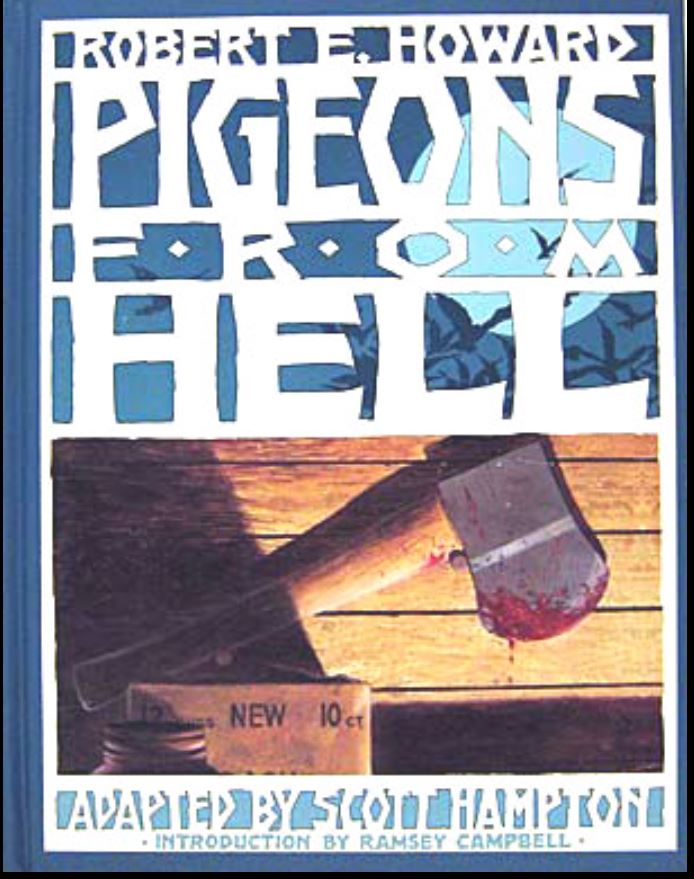
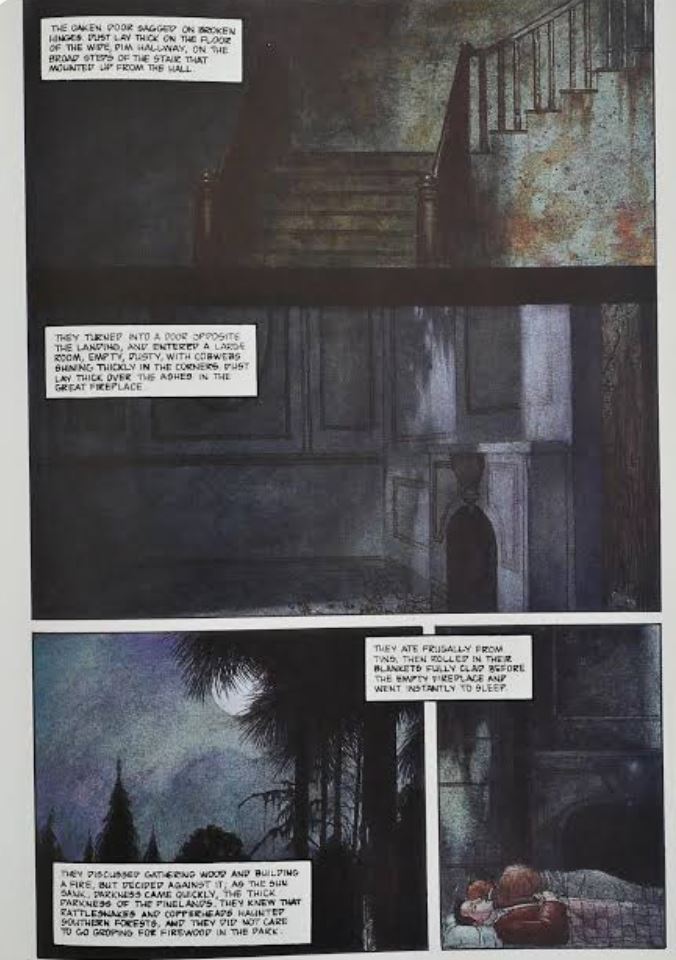
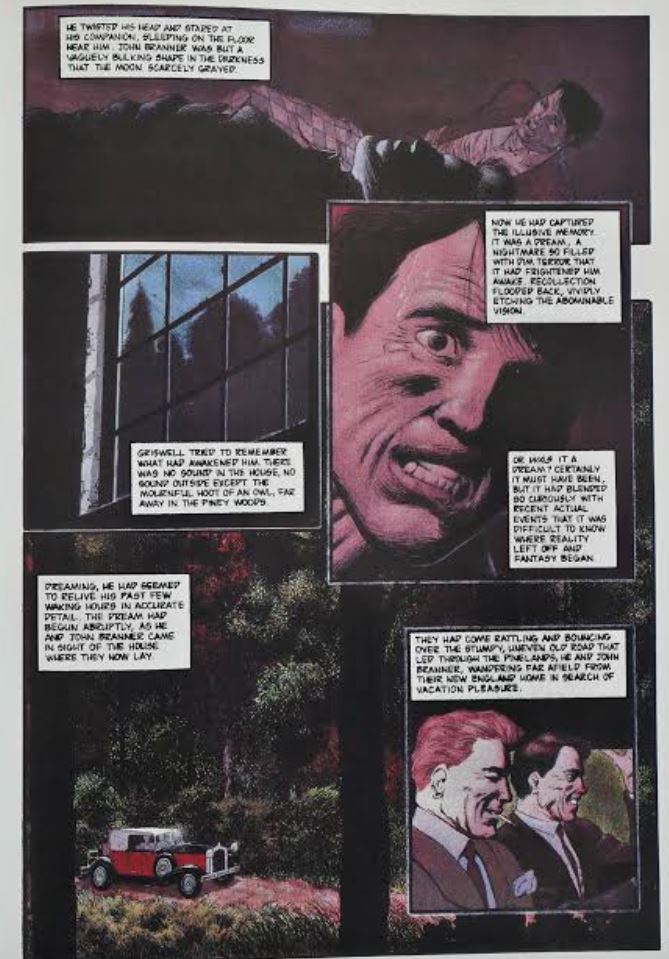
The Horror concentrates on our post-superhero passion for scary stories: an arena where Bill Everett absolutely shone like a diamond. For more than a decade he brought a sheen of irresistible quality to the generally second-rate chillers Timely/Atlas/Marvel produced in competition with genre frontrunners EC Comics. It’s easy to see how they could compete and even outlive their gritty, gore-soaked competitor, with such lush and lurid examples of covers and chillingly beautiful interior pages…

Following a third informative background essay detailing his life until its cruelly early end in 1973, a choice selection of his lesser known or celebrated efforts opens with tale of terror ‘Hangman’s House’ (Suspense #5, November, 1950),; a grim confrontation with Satanic evil, followed by futuristic Cold War shocker ‘I Deal With Murder!’ and a visit to a dark carnival of purely human wickedness in ‘Felix the Great’(both from Suspense #6, January 1951).

Adventures into Weird Worlds #4 (Spring 1952) offered a laconic, sardonic glimpse into ‘The Face of Death’, whilst from the following issue (April 1952) ‘Don’t Bury Me Deep’ tapped untold depths of tension in a moodily mordant exploration of fear and premature burial. Hard on the heels of the cover to Journey Into Unknown Worlds #14 (December 1952) comes one of its interior shockers as ‘The Scarecrow’ helps an aged couple solve their mortgage problems in a most unusual manner. The Marvel madness concludes with a cautionary tale of ‘That Crazy Car’ from Journey into Mystery #20, December 1954, concluding a far too brief sojourn amidst arguably Everest’s most accomplished works and most professionally adept period.

This magnificent collection ends with a gallery of pages and one complete tale from the end of his career; selected from an even more uninhibited publisher attempting to cash in on the adult horror market opened by Warren Publishing with Eerie, Creepy and Vampirella.

Skywald was formed by industry veteran Israel Waldman and Everett’s old friend Sol Brodsky, tapping into the burgeoning black-&-white, mature-reader market with supernatural flavoured magazines Hell-Rider, Crime Machine, Nightmare, Psycho and Scream. Offered an “in”, Everett produced incredible pin-ups (included here are three from Nightmare (#1, 2 & 4, December 1970-June 1971); ‘A Psycho Scene’ (Psycho #5, November, 1971); a stunning werewolf pinup from Psycho #6 and one of revived Golden Age monstrosity ‘The Heap’ from Psycho #4. Most welcome is a magnificent 10-page monochrome masterpiece of gothic mystery ‘The Man Who Stole Eternity’ from Psycho #3 (May, 1971).

Although telling, even revelatory and concluding in a happy ending of sorts, what these books truly celebrate is not the life but the astounding versatility of Bill Everett. A gifted, driven man, he was a born storyteller with the unparalleled ability to make all his imaginary worlds hyper-real; and for nearly five decades his incredible art and wondrous stories enthralled and enchanted everybody lucky enough to read them.
© 2013 Fantagraphics Books. Text © 2013 Blake Bell. All art © its respective owners and holders. All rights reserved.

Bill Everett was born today in 1917, as was Mad mainstay Don Martin in 1931, foundational Underground Commix publisher/empresario Don Donahue (AKA Apex Novelties) in 1942 and in 1953 both Alan Kupperberg (Blue Devil, Dragonlance) and Arthur Suydam (Cholly and Flytrap, Marvel Zombies).
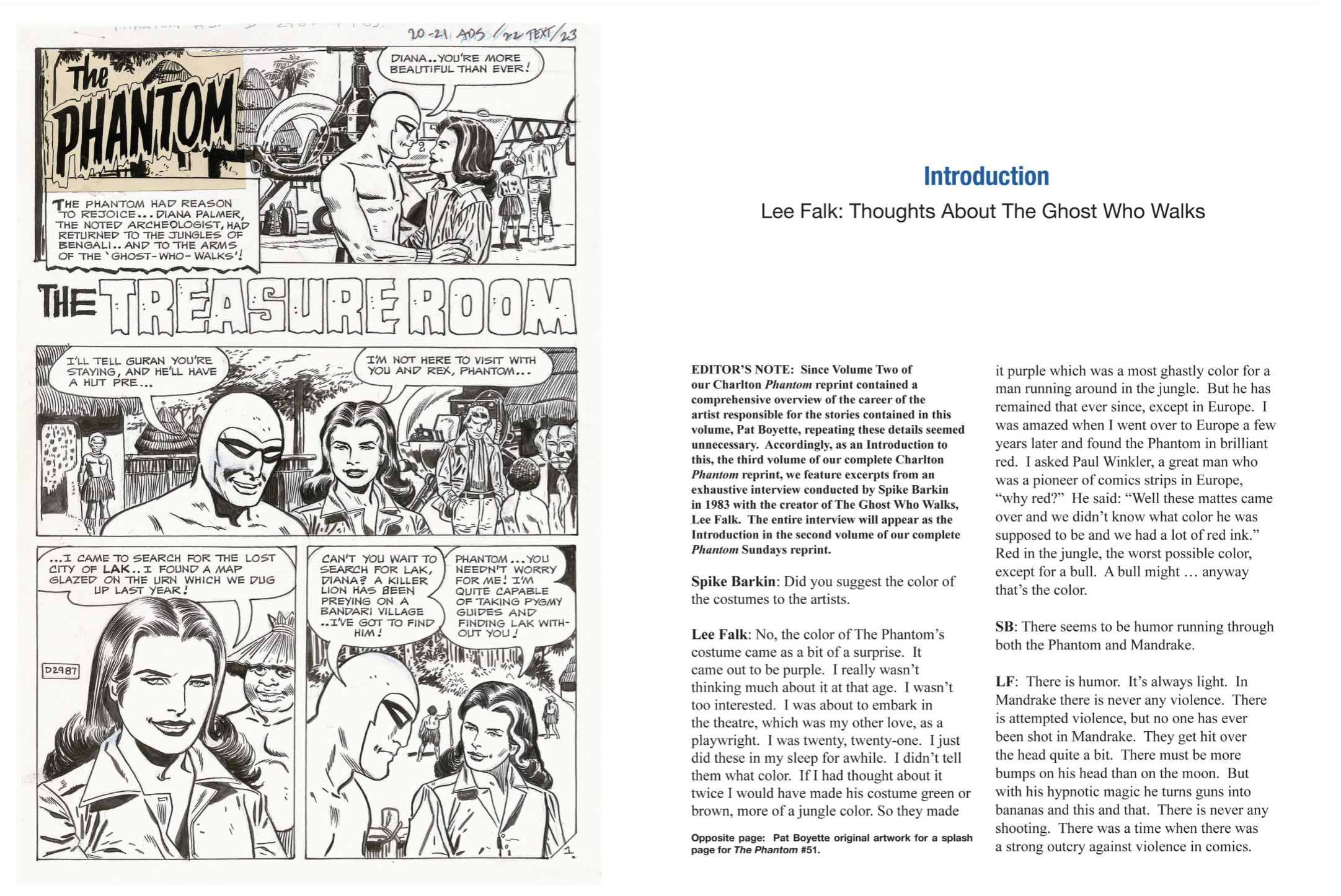
Today in 2017, Oscar González Guerrero died. The Mexican comic artist, art director and educator had started taletelling in the 1950s and created Zor y Los Invencibles, Hermelinda Linda, Burrerías, Smog, Don Leocadio El Tío Porfirio, Las Aventures de Capulina and run ¡Ka-Boom! Estudio.

Upside Dawn


By Jason (Fantagraphics Books)
ISBN: 978-1-68396-652-4 (HB/digital edition)

This book includes Discriminatory Content included for dramatic, comedic and ironic effect.

Born in 1965 in Molde, Norway, John Arne Sæterøy is known by enigmatic, utilitarian nom de plume Jason. The shy & retiring auteur first took the path to cartoon superstardom in 1995, once debut graphic novel Lomma full ay regn (Pocket Full of Rain) won Norway’s biggest comics prize: the Sproing Award. From 1987 he had contributed to alternate/indie magazine KonK while studying graphic design and illustration at Oslo’s Art Academy.

From there he took on Norway’s National School of Arts and, on graduating in 1994, founded his own comic book Mjau Mjau. Constantly refining his style into a potent form of meaning-mined anthropomorphic minimalism, Jason has cited Lewis Trondheim, Jim Woodring & Tex Avery as primary influences. He moved to Copenhagen, working at Studio Gimle alongside Ole Comoll Christensen (Excreta, Mar Mysteriet Surn/Mayday Mysteries, Den Anden Praesident, Det Tredje Ojet) and Peter Snejbjerg (Den skjulte protocol/The Hidden Protocol, World War X, Tarzan, Batman: Detective 27).
Jason’s efforts were internationally noticed, making waves in France, The Netherlands, Slovenia, Spain, Germany and other Scandinavian countries as well as the Americas and he won another Sproing in 2001 – for self-published series Mjau Mjau – before in 2002 turning nigh-exclusively to producing graphic novels. He won even more major awards.
Jason’s breadth of interest is wide & deep: comics, movies, animated cartoons, music, literature, art, history and pulp fiction all feature equally with no sense of rank or hierarchy. Jason’s puckish, egalitarian mixing & matching of inspirational sources always and inevitably produces picture-treatises well worth a reader’s time. Over a succession of tales he has built and re-employed a repertory company of stock characters to explore deceptively simplistic milieux based on classic archetypes distilled from movies, childhood yarns, historical and literary favourites. These all role-play in deliciously absurd and surreal sagas centred on his preferred themes of relationships and loneliness. Latterly, Jason returned to such “found” players as he built his own highly esoteric universe, and even has a whole bizarre bunch of them “team-up” or clash…

As always, visual/verbal bon mots unfold in beguiling, sparse-dialogued, or even as here silently pantomimic progressions, with compellingly formal page layouts rendered in a pared back stripped-down interpretation of Hergé’s Claire Ligne style: solid blacks, thick outlines dominating settings of seductive monochrome simplicity augmented by a beguiling palette of stark pastels and muted primary colours.

A master of short-form illustrated tales, many Jason yarns have been released as snappy little albums before later inclusion in longer anthology collections. The majority of tales brim with bleak isolation, swamped by a signature surreality even in the most comedic of moments. They are largely populated with cinematically-inspired, darkly comic, charmingly macabre animal people ruminating on inescapable concerns whilst re-enacting bizarrely cast, bestial movie tributes. That’s a style that has never been more apropos than right here, as the more modern Art Forms bow before the onslaught and tirade of organised anti-art philosophers, socially intellectual terrorists, wandering pop stars and a lost Vulcan…

Here the auteur returns to short individual pieces – or are they? – and fondly dabbles with words, terms and aural meanings whilst opening with an understandable failure to communicate over a meal in ‘Woman, Man, Bird’ before noted cerebral French auteur/filmmaker and playfully adrift word-&-meaning warper Georges Perec is repositioned as a hardboiled gumshoe searching for a missing woman in a yarn laced with omissions, mis-hearings and misapprehensions. Nevertheless, if you’re looking for a truth – any truth – ‘Perec PI’ is on the case…

A rapid pictorial transit to a peregrination through a typical life is recalled at full pelt in ‘I Remember’ after which ‘Vampyros Dyslexicoa’ dips deep into literary hinterlands in a pastiche/homage to Joseph Sheridan Le Fanu’s 1872 Gothic novella Carmilla. However the sordid obsessions of sapphic vampire Mircalla are only the entrée to wilder scriptorial regions and a nasty case of creative anachronism as ‘Seal VII’ takes us deep into modern “Scandi” folklore when a certain Knight and Death meet up for a game in Sweden in 1357 and don’t really cotton to the notion of chess for souls…

The scenes shifts to Prague in 1919 where a certain agent of the crown abruptly quits his job and is renditioned to a strange, picturesque high-tech surveillance Village where he has to wear a blazer as ‘The Prisoner in the Castle’ prior to popping back to St Peterburg in 1865 to gorily relive the trials and tribulations of Great Russian Literature at first hand via some eccentric ‘Crime and Punishment’

As much as Jason has played with visual meaning and manipulated derived imagery-context in his past forays, the later relater is here gripped by the confusing potentials of words and verbal meanings. Such facile surface fascinations are apparent during Leopold Bloom’s rather violent visit with the absolute master of “what did that mean” Dublin in June offers a walk with James Joyce, a leprechaun, Stephen Dedalus and Molly as we ponder stuff and not-nonsense in ‘Ulysses’. Then ‘Ionesco’ introduces random judgement to the final days of avant-garde playwright Eugène Ionesco, as a parade of bizarre celebrities and notables eulogise or defame him before he goes…

Slipping into a partial colour palette (yellow, if you care), ‘What Rhymes with Giallo?’ uses rhyming couplets to detail a sordid stabbing spree before resuming monochromatic mode as the tense future proves too much for one scientific stoic. Stress compels Mr Spock to desert the Enterprise and migrate to Montparnasse, Paris in ‘The City of Light, Forever’. It’s 1925 and he finds contentment as a minor Japanese painter (of cats) until Captain Kirk comes looking for him. If you follow Jason, this is where you start to realise that a lot of his work overlaps and intercepts itself in the strangest places…

Adding red and blue to black & white, ‘Who Will Kill the Spider?’ is a classic child’s nightmare of terror and confusion as Dad uses escalating tools and allies to deal with a bug in the bedroom who just won’t quit, after which words literally fail us in ‘One Million and One Years B.C.’: a silent science spoof of dinosaurs, cave-folk, time-travelling soldiers and stupid assumptions which leads into tribute diptych ‘EC Come…’ (a bloody tale of domestic ghouls and zombies) and ‘…EC Go’ (pointed satire of the comic company’s sublime Ray Bradbury adaptations of interplanetary First Contacts).

Then inevitably it devolves into a spoofing shot at the Sci Fi Fifties care of Curt Siodmak via Ed Wood in alien invasion ‘From Outer Space’ before ‘Etc.’ stages a celebrity-stacked movement-moment that begins in London circa 1972 as immortal musketeer Athos meets David Bowie meets a mummy meets Elvis meets Moses meets Sinatra meets Van Gogh meets Frank Zappa meets Death ad infinitum for a miasmic, abstractly construed big finish…

Visually mesmerising, this cunningly concocted Dadaist picture salad conceals underlying connections you really have to stay untuned for, referring relentlessly to modern icons and ancient shibboleths in equal measure, and perpetually sampling the feeling and furniture of war films, scary stories, true romances gone bad, Monty Python, Star Trek, a million movies, books, tunes and comics and even his own burgeoning “Jason-verse”. Upside Dawn absolutely should not be your first dip into his works, but don’t let that stop you from getting them all and getting all caught up…
All characters, stories, artwork and translation © 2022 Jason.
This edition of Upside Dawn © 2022 Fantagraphics Books, Inc. All rights reserved.

Today in 1892 Scots artist and future Charlie Chaplin comics illustrator Wally Roberson was born, followed in 1912 by John Liney (who limned the Henry strip), and in 1917, Hal Seeger who wrote & drew Betty Boop and later Leave it to Binky. In 1925 eventual East German cartoonist Hannes Hegen (Mosaik) arrived, with US letterer-to be Stan Starkman (Batman, Doom Patrol, Metamorpho) coming along in 1927. 3D comics guy Ray Zone was born in 1947, the same day and year that we lost the astounding Reg Perrott, artist on Roly and Poly the Two Bear Cubs, Land of the Lost People, Whirling Around the World, Wheels of Fortune, Red Ryder, The Young Explorers, The Golden Arrow, Golden Eagle, Sons of the Sword and more, as well as becoming producer/studio manager of UK mainstay Mickey Mouse Weekly.

In 1952 Hägar the Horrible artist Chris Browne was born, as was Chester Brown (Yummy Fur, Louis Riel) in 1960 and John Arne Sæterøy/Jason in 1965.

This date in 1964 Malcom Judge’s Billy Whizz first hurtled into the hearts of Beano readers, and in 2012 marked the passing of comic book workhorse Ernie Chan (Conan, Batman, Dracula Kull, The Hulk).

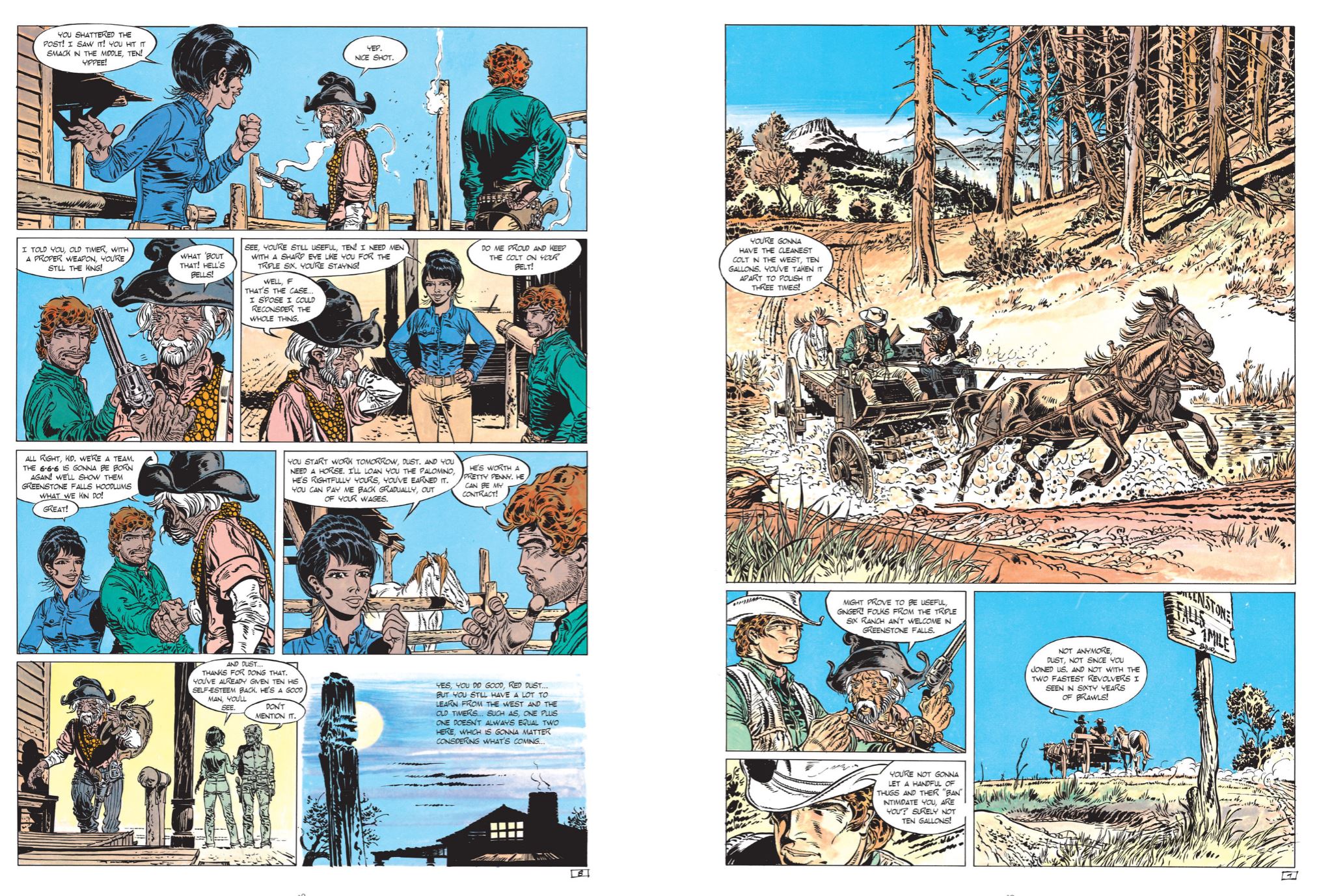
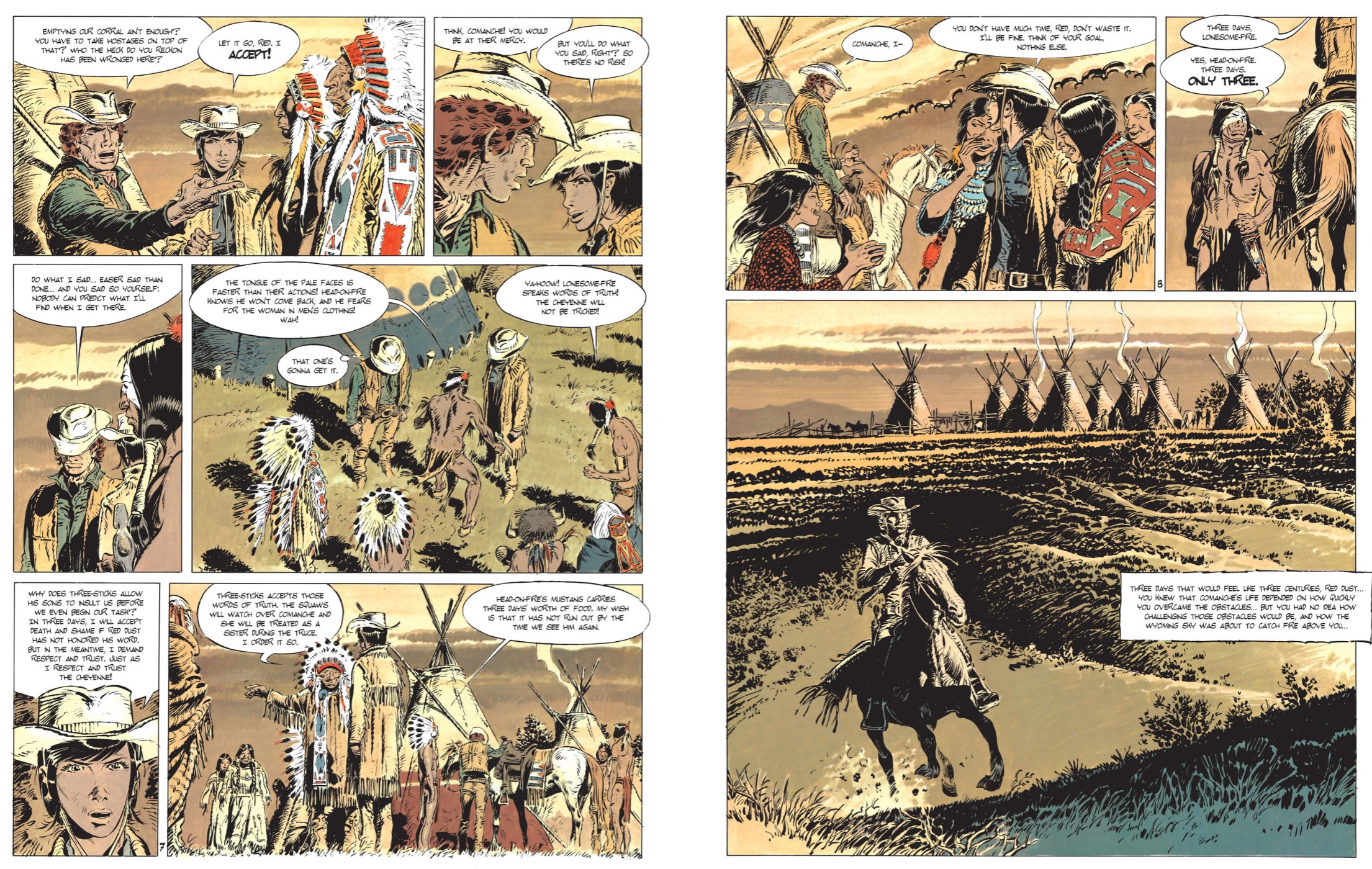
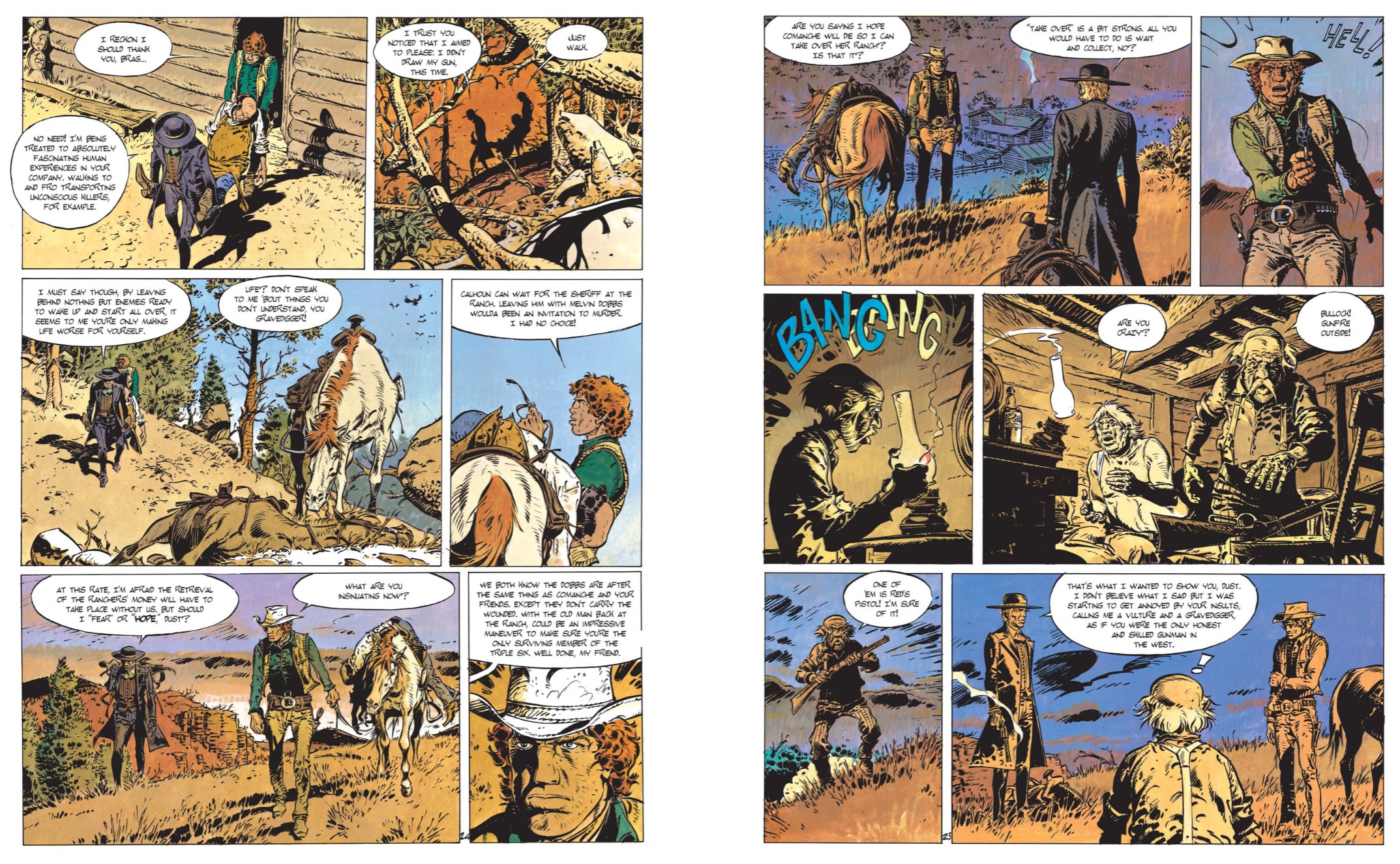
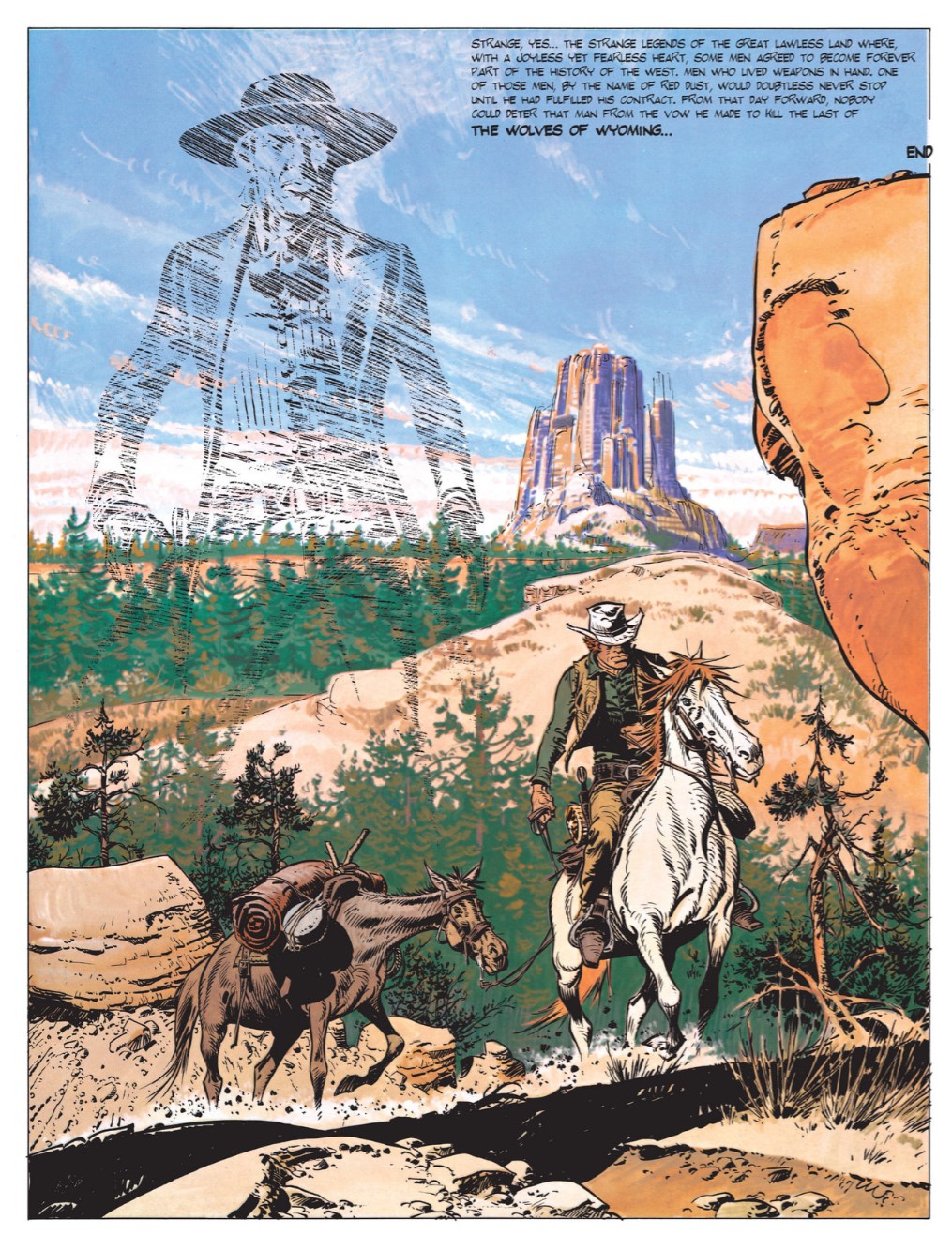
Lucky Luke volume 25: The Stagecoach


By Morris & Goscinny, translated by Luke Spear (Cinebook)
ISBN: 978-1-84918-052-8 (Album PB), 978-1-84918-519-6 (Digital edition)

This book includes Discriminatory Content produced in less enlightened times. This book also includes Discriminatory Content added for comedic effect.

Lucky Luke debuted in 1946, created by Belgian animator, illustrator and cartoonist Maurice de Bévère (AKA “Morris”), initially riding out in Le Journal de Spirou that summer sans title or banner, and only in the French-language edition. The Lone Rider’s official launch came in Christmas Annual L’Almanach Spirou 1947, before beginning his first official serial – ‘Arizona 1880’ – in December 7th 1946’s multinational weekly issue.

Doughty, dashing, dependable cowboy “good guy” Lucky is a rangy, implacably even-tempered do-gooder able to “draw faster than his own shadow”. He amiably ambles around the mythic Old West, having light-hearted adventures on his petulant and rather sarcastic wonder-horse Jolly Jumper. For 80 years (Joyeux anniversaire, Mon Brave!), his exploits have made him a top-ranking global comic character, filling more than 90 individual albums and spin-off series like Kid Lucky and Ran-Tan-Plan, with sales upwards of 300 million copies in 30 languages. That renown translated into a mountain of merchandise, toys, games, animated cartoons, TV shows and live-action movies and even commemorative exhibitions. No theme park yet, but you never know…

Lucky’s global dominance resulted from a decades-long, 45 volume collaboration with superstar scripter René Goscinny, spanning Des rails sur la Prairie/Rails on the Prairie beginning August 25th 1955 to La Ballade des Dalton et autres histoires/The Ballad Of The Daltons And Other Stories in 1986. On Goscinny’s death, Morris worked alone again and with others, forming a posse of legacy creators including Lo Hartog van Banda, Achdé & Laurent Gerra, Xavier Fauche, Benacquista & Pennac, Jean Léturgie, Jacques Pessis and more, all taking their own shots at the venerable vigilante. Morris soldiered on singly and with these successors before his own passing in 2001, having drawn fully 70 adventures, plus numerous sidebar and spin-off sagebrush sagas.

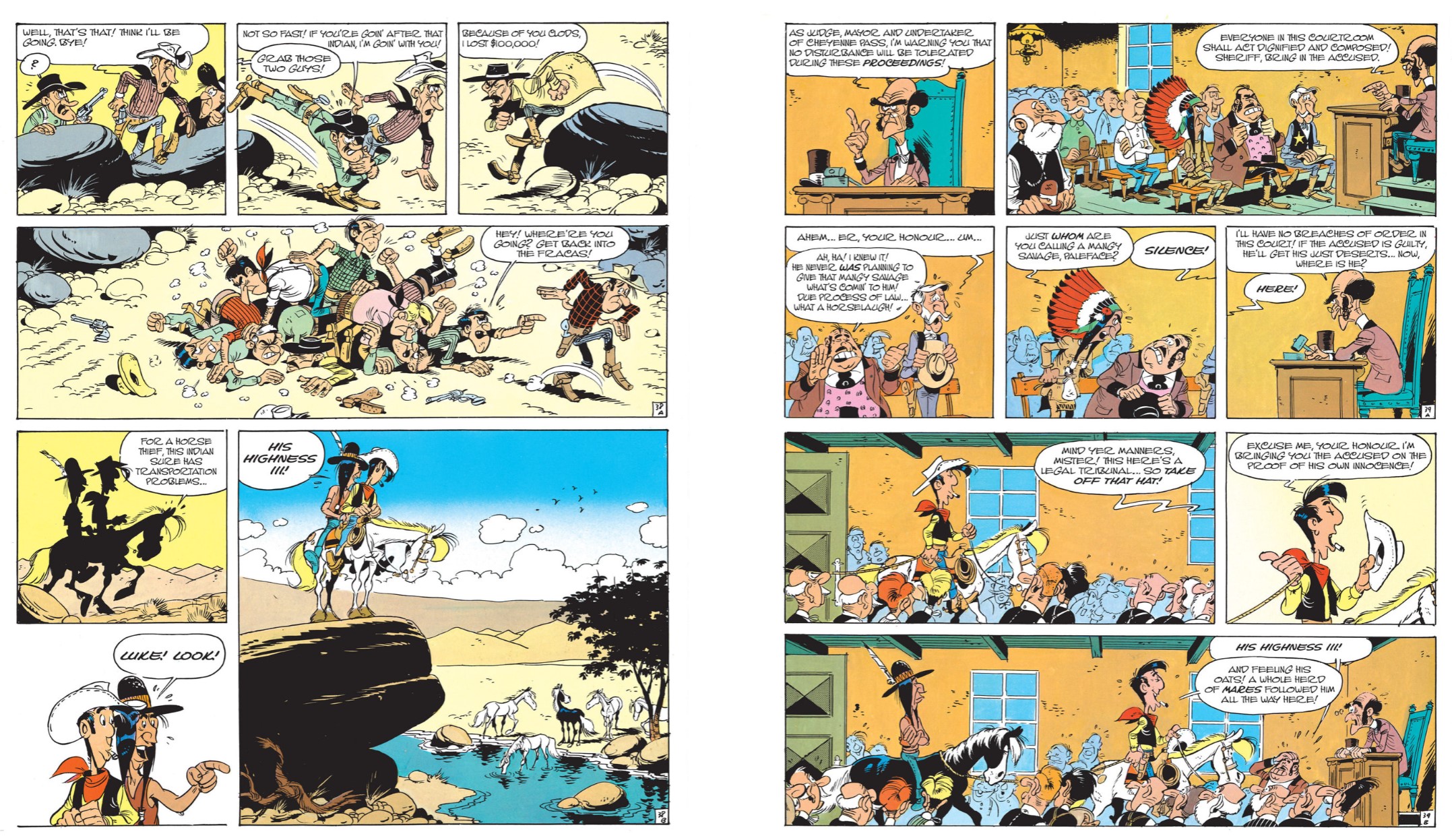
Our taciturn trailblazer draws on western history as much as movie mythology, regularly meeting historical figures as well as even odder fictional folk in tales drawn from key themes of classic cowboy mythology – as well as some uniquely European notions or interpretations. As previously hinted, our sixgun star is not averse to being a figure of political change and Weapon of Mass Satire, but here spoofs his own antecedents and venerated movie schtick for a delicious drive down memory lane…

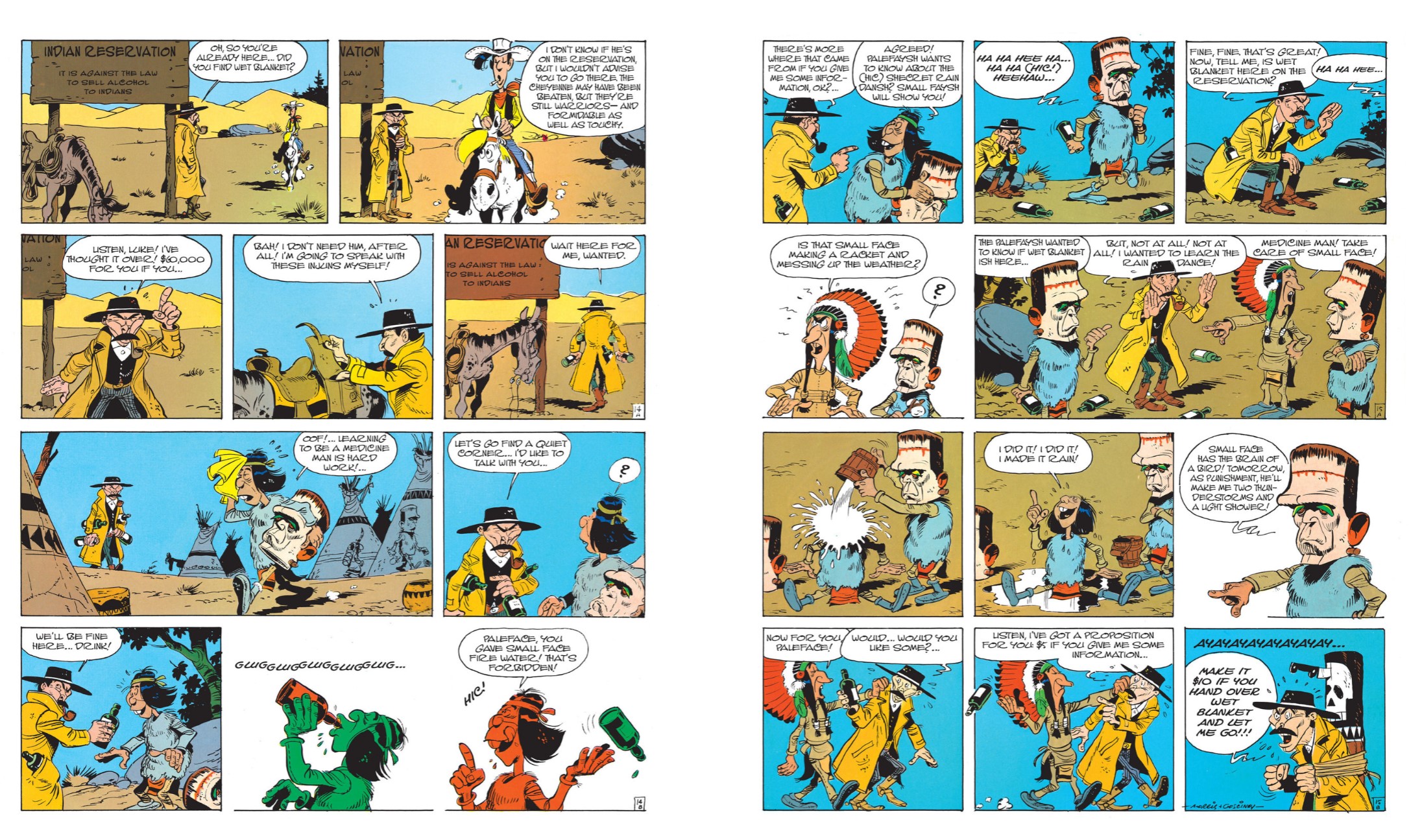
Inspired by John Ford’s 1939 classic movie Stagecoach, La diligence was first serialised in weekly Le Journal de Spirou #1504 – 1525  (February 9th – July 6th 1967) – before becoming Morris & Goscinny’s 32nd album and the 47th chronological Lucky Luke album in 1968. The saga blends the usual sagebrush silliness and crop of daft characters with another actual historical figure – gentleman bandit Charles E. Boles AKA Black Bart, who robbed stage coaches really politely and left little poems to console the recently impoverished…

Preceded with a small fact feature on Boles (here called Charles E. Bolton), the comic roars along rapidly. The plot is short and sweet as Lucky is hired by Mr. Oakleaf of the Denver office of Wells Fargo & Co. to counter a transport credibility crisis. With all the firm’s trips to San Francisco falling foul of thieves and robbers, they need to prove the service is still worth using and therefore want Luke to escort a tantalising gold shipment to the west coast…

He won’t be alone. They have their best driver – Hank Bully – riding “whip” on the trip and, since every little bit helps, there will even be a few brave and/or desperate paying passengers aboard. These include prospector Digger Stubble (whose gold the coach is transporting), charming card-sharp Cat Thumbs, aspiring photographer Jeremiah Fallings, preacher Sinclair Rawler and diminutive accountant Oliver Flimsy and his truly terrifying wife Annabella.

However, the people aren’t the real worry for Lucky. As the thing is a promotional stunt to assuage public doubts, the whole fiasco has been heavily advertised and every owlhoot and gun-toting chancer knows what they are carrying and the route they’ll be taking…

After foiling the first few dozen robbery attempts and getting fed up with Wells Fargo food at the numerous staging posts en route, Lucky decides that it’s time to alter the travel plans and start doing things his way if they are all going to make it to San Francisco. It might even have worked if all the crooks had been outside the vehicle waiting for them and not actually in the coach itself…

Packed with wry digs at beloved old films and loaded with visual guest shots of esteemed stars and directors, the tale sees the rapidly-bonding voyagers overcome hostile terrain, marauding savages (not actually that savage, really), the temptations of sin and even each other to complete the trip, but that merely presents one last mystery to bedevil them. Of course, as always Lucky has it covered…

These youthful forays of an indomitable hero offer grand joys in the wry tradition of Destry Rides Again and Support Your Local Sheriff, superbly executed by a master storyteller: a wonderful introduction to a unique genre for modern kids who might well have missed the romantic allure of the Wild West that never was…

© Dargaud Editeur Paris 1968 by Goscinny and Morris. © Lucky Comics. English translation © 2010 Cinebook Ltd.

Today in 1926 comics empresario/artist/co-originator of 3D comics Norm Maurer (Three Stooges, Mighty Mouse) was born, as was writer Marv Wolfman (New Teen Titans, Spider-Woman, Tomb of Dracula) in 1946; cartoonist Margeaux – neé Andrew Pepoy (Little Orphan Annie, Batman, Superman, Dick Tracy) in 1969.

This date in 1955 saw the last episode of Jack Williamson & Lee EliasBeyond Mars strip published, whereas Jim Toomey’s Sherman Lagoon launched today in 1991 and is still going strong…

Fight the Power – A Visual History of Protest Among the English-Speaking Peoples


By Sean Michael Wilson, Benjamin Dickson, Hunt Emerson, John Spelling, Adam Pasion with additional cartoons by Polyp (New Internationalist)
ISBN: 978-1-78026-122-5 (PB)

Politics is composed of and utilised equally by firebrands and coldly calculating grandees, and that’s probably the only guiding maxim you can trust. Most normal people don’t give a toss about all that until it affects them in the pocket or impacts their kids and, no matter to what end of the political spectrum one belongs, the greatest enemy of the impassioned ideologue is apathy. This simple fact forces activists and visionaries to ever-more devious and imaginative stunts and tactics…

However, all entrenched Powers-That-Be are ultimately hopeless before one thing: collective unified resistance by the very masses they’re holding down through force of arms, artificial boundaries of class or race, capitalist dogmas, various forms of mind control like bread, circuses and religion, divisive propagandas or just the insurmountable ennui of grudging acceptance to a status quo and orchestrated fear that unknown change might make things worse.

Perhaps you can see how such musings might be of relevance in these current unforgettable days?

From its earliest inception, cartooning has been used to sell: initially ideas or values but eventually actual products too. In newspapers, magazines and especially comic books the sheer power of narrative – with its ability to create emotional affinities – has been linked to the creation of unforgettable images and characters. When those stories affect the lives of generations of readers, the force that they can apply in a commercial, social or especially political arena is almost irresistible…

The compelling power of graphic narrative to efficiently, potently, evocatively disseminate vast amounts of information and seductively advocate complex issues with great conviction through layered levels has always been most effectively used in works with a political or social component. That’s never been more evident than in this stunning and scholarly graphic anthology detailing infamous and effective instances of popular protest.

In Britain the cartoonist has always occupied a perilously precarious position of power: with deftly designed bombastic broadsides or savagely surgical satirical slices ridiculing, exposing and always deflating the powerfully elevated and apparently untouchable with a simple shaped charge of scandalous wit and crushingly clear, universally comprehensible visual metaphor… or sometimes just the plain and simple facts of the matter.

For this universal and welcomingly basic method of concept transmission, levels of literacy or lack of education are no barrier. As the Catholic Church proved millennia ago with the Stations of the Cross, stained glass windows and a pantheon of idealised, sanitised saints, a picture is absolutely worth a thousand words, and as William the Conqueror saw with the triumphalist Bayeux Tapestry, picture narratives are worth a few million more…

Following a fabulously thought-provoking Introduction by author, journalist and filmmaker Tariq Ali, this march through the history of dissent as compiled and scripted by Sean Michael Wilson & Benjamin Dickson begins with an agenda-setting ‘Prologue’ illustrated by Adam Pasion, best described (without giving the game away) as Uncle Sam, John Bull and the Statue of Liberty (AKA ‘Liberty Enlightening the World’) walk into a bar…

Their heated discussion on the value and need of people using their right to dissent is then captivatingly illustrated through a series of erudite, fascinating, shocking and deliciously funny tutorial episodes, beginning with a compelling account of ‘The Luddites and the Swing Riots, 1811-1832’ written by Wilson and rendered both palatable and mesmerising by comics legend Hunt Emerson.

The artist then turns to recreating the horrific events and aftermath of ‘The Battle of Peterloo, 1819’ via Dickson’s script before, with Wilson, cataloguing a wave of ‘Colonial Rebellions, 1836-1865’ which the British Empire dealt with in its traditional even-handed, temperate manner (and in case you were wondering, that’s me doing sarcasm). Wilson & Pasion then detail the global impact of the ‘Irish Rebellions, 1791-1922’ whilst Dickson & Emerson’s account of ‘The Suffragettes, 1903-1918’ follows the story of Votes for Women right up to the present. Practically forgotten and brutally savage, ‘The Australian General Strike, 1917’ (by Wilson & Pasion) and the equally appalling landmark events of ‘The Boston Police Strike, 1919’ – as told by Dickson & John Spelling – reveal a pattern to modern labour conflicts, with working folk ranged against intransigent and greedy commercial interests.

The age-old struggle escalated during the ‘UK General Strike and the Battle of George Square, 1918-1926’ (Wilson & Spelling) and reached an intolerable strike-busting peak in Ohio during ‘The Battle of Toledo, 1934’ (Wilson & Spelling): a struggle which cemented management and labour into the intractable ideologically opposed positions they still inhabit today in the aforementioned English-speaking world…

Championing of Human Rights is commemorated by Dickson & Pasion in ‘Rosa Parks and the Bus Boycott, 1955-1956’ followed by a deeply moving account of ‘The Trial of Nelson Mandela, 1964’, whilst the modern American soldier’s method of combating unwelcome or insane orders is reviewed in brilliantly trenchant Wilson & Emerson’s ‘Fragging’

Back home and still etched in so many peoples’ memories, Dickson & Spelling’s ‘The Poll Tax Riots, 1989-1991’ offers a surprisingly even-handed rundown of Margaret Thatcher’s greatest political blunder, before hitting more recent headlines with the origins and outcomes of ‘Occupy, 2011’

Returning to that bar and Lady Liberty, Dickson, Wilson & Pasion draw some telling Conclusions to close our cartoon course in mass resistance, after which the writers discuss their process in Authors Notes: Why This Book? before then listing the truly phenomenal rewards of all those campaigns and protests with a long list of Rights Won. These range from Women’s Suffrage to the universal formal acknowledgement of the Human Right to Protest that our current global leaders and assorted billionaires are so keen on taking away again…

Understanding the value of a strategically targeted chuckle, this fabulous monochrome chronicle concludes with one last strip as Dickson & Emerson hilariously reveal ‘The Four Stages of Protest’ courtesy of Mohandas “Mahatma” Gandhi…

More so than work, sport, religion, fighting or even sex, politics has always been the very grist that feeds the pictorial gadfly’s mill. Of course, cartooning can only accomplish so much, and whilst Fight the Power! recounts a number of instances where physical and intellectual action were necessary to achieve or maintain justice, at least comics can still galvanise the unconvinced into action and help in the useful dissemination of knowledge about protest: the Who, Where, When, and How.

If you don’t understand What or Why then you’re probably already on the other side of the barricades – and complaining about who gets what vaccine or can be allowed to shout in the streets at all…
© 2013 Sean Michael Wilson and Benjamin Dickson. Illustrations © 2013 Hunt Emerson, John Spelling and Adam Pasion. Cartoons © 2013 Polyp. All rights reserved.

Today in 1909, Golden Age legend Howard Sherman (Dr. Fate, Tommy Tomorrow, Congorilla) was born, as was David Micheline (Iron Man, Spider-Man, Venom, Swamp Thing, Aquaman, Magnus – Robot Fighter) in1948, inkers Dennis Jensen in 1952, John Beatty in 1961 and John Lucas in 1968. France greeted Emmanuel Larcenet (Dungeon, Le combat ordinaire) in 1969, with the US response being Nunzio DeFilippis (Three Strikes, Dragon Age) in 1970, and Bryan Edward Hill (American Carnage, Blade) in 1977.

This date in 2002, Robert Kanigher died.

Noisy Valley: The Art of Protest


By Myfanwy Tristram (SelfMadeHero)
ISBN: 978-1-914224-43-0 (THB)

The world has always been hierarchical in nature. Moreover, the ever-expanding, shamefully selfish human portion of it has never missed any opportunity to exploit, impose upon and oppress its own “lower orders”. Historically, those who put themselves above us have systematically entrenched and weaponized wealth, ownership, culture – and weapons too – to suppress those they deem “lesser” in some arbitrarily decided way you were never consulted upon. This is called lawmaking and “keeping public order”.

The other side (the only un-oppressed minority in existence) uses divisive popularism, money-thuggery and lawyers, because they believe most ordinary people don’t give a toss about anything until it affects them in the pocket or impacts their kids and, no matter to what end of the political spectrum one belongs, they can be bought or placated by gestures rather than actual change.

And what can the rest of us do? Grumble, complain and, if all else fails, be disruptive. We unite in protest because all we have going for us is numbers and shared goals…

Having, in my militant radical youth, marched a few miles and punched (far less than) my fair share of neo-Nazi thugs and bovver boys – kids, don’t do this unless you really, truly have to – I still ascribe to old-fashioned ideas which don’t properly fit in a modern society, but I’m still angry and reasonable enough to be willing to listen and entertain new options…

Generally speaking, politics is composed of and utilised mutually by firebrands, coldly calculating grandees and wannabe despots, but in recent years universal failures in leadership large and small have prompted exponential growth in movements of gentle resistance and persuasion. It has to be gentle now, because each increasingly innovative exhibition of concern and dissent has been met with revision of laws already calculated to defang protestors and quash opposing opinions.

That’s what Noisy Valley is all about…

All governments change laws and tinker with norms of social compliance to reduce resistance to the people the elected ones actually serve. This is done in pursuit of a mythic general weal that translates as “me/my donor’s money is more important that your concerns or lives” and “we value your opinion, but keep it to yourselves”…

This compelling graphic report documents a long history of hands-on dissent via local, global and grass roots responses to abuses by those-in-power, gleaned from firsthand witness accounts by those who were involved at the time.  Here they are transformed into rousing modern fables that sprang from an art project celebrating democratic crusading activists and the stirring histories of South Wales’ Rhondda valley.

It was 2022, a time when everybody in Britain – and on Earth – had plenty to protest about. It was around that twenty minutes or so when Liz Truss “led” the nation that assorted ordinary folk were making their way to The Workers Gallery of Ynyshir to view an exhibition of protest drawings by Brighton-based social historian/comics creator Myfanwy Tristram (Draw the Line, Running Out)…

That exhibition and the people she met there became the basis for a graphic catalogue of eyewitness stories focused on when protest evolved, why it is embattled in the UK, and how it is under threat of being legislated out of existence now…

Here in easily-accessible snippets of the past are the observations of those fighting public spending cuts and library closures; Anti-Consumerism, The Greenham Common Peace Camp and Police responses to the question ‘Do we have a right to protest?’

Examination of how laws have been changed and the Courts deployed to suppress societal disruption accompanies scrutiny and testimony on Schoolgirl strikes; The Aldermaston Marches (by on-scene photographer David Hurn); the Miners’ Strikes and Hospital closures (specifically a schoolboy marcher protesting the loss of Llwynpia in South Wales).

More factoids about US/Welsh historical connections, global suppression of dissent, increasing size of protest movements and the apparently not-quite-officially-genocide in Gaza bracket personal reports of Women in the Workplace from the 1960s to today; Politician Jill Evans’ fight to make safe deadly landfill sites of Nantygwyddon and poet Patrick Jones’ battle to save ancient woodlands of Sirhowy Valley before the stories close with climate change protestor Jenny McLelland and an overview of what happened since the Noisy Valley project began in 2022 (…so many Prime Ministers and lawmakers gone since then…!)

Closing the celebration are ‘End Notes’ comprising illustrated mini briefings on all ‘The Protestors’ storied here; a copious section of contacts for further study compiled as ‘References’; Acknowledgements and a pretty impressive biography of auteur Myfanwy Tristram.

The greatest enemy of the impassioned ideologue is apathy. This simple fact forces activists and visionaries to ever-more devious and imaginative stunts and tactics. However, all entrenched Powers-That-Be are ultimately hopeless before one thing: collective unified resistance by the very masses they’re holding down through force of arms; artificial boundaries (class, race, capitalist dogma); forms of mind control like bread, circuses and religion; divisive propagandas or just the insurmountable ennui of grudging acceptance to a status quo flavoured with an orchestrated fear that unknown changes could make things worse.

From its earliest inception, art – and especially cartooning – has been used to sell: initially ideas or values but eventually actual products too. In newspapers, magazines and especially comics the sheer power of narrative – with its ability to create emotional affinities – has been linked to unforgettable images and characters. When those stories affect generations of readers, the force that they can apply in a commercial, social or especially political context is almost irresistible…

The power of graphic narrative to efficiently, potently and evocatively disseminate information and advocate complex issues with great conviction through layered levels has always been most effectively used in works with a political or social component. That’s never been more evident than here…
Text and images © Myfanwy Tristram, 2026. All rights reserved.

Noisy Valley: The Art of Protest will be published on May 14th 2026 and is available for pre-order now.

A national promotional tour is underway and you can meet the creator and exchange all the views you cherish at a number of venues. These include

7th May: GOSH Comics, London launch party for Noisy Valley

16th May: Beyond the Book Festival, Brighton

18th May: Waterstones, Brighton

24th May: BorthFfest, Wales

27th May: Hay Festival, Hay-on-Wye, Wales

29th May: The Worker’s Gallery, Rhondda, Wales celebration event for Noisy Valley

6th June: Leeds Litfest

Please seek further details from them. I just type stuff…

Today in 1919, we welcomed astoundingly versatile Canadian comics all-star James Winslow “Win” Mortimer (Superman, Batman, Robin, Superboy, Stanley and His Monster, Spider-Man, Night Nurse) while in 1940 the Philippines was blessed by the comings of both Cal Sobrepeña (Lovelife Komiks) and the iconic fantasy master Alex Niño (Captain Fear, Thriller, Space Clusters), and Argentina greeted future mega-scripter Carlos Trillo (Cicca Dum Dum, Cybersix, El Negro Blanco, El Loco Chávez, Borderline, Clara de noche). The US struck back in the creative wonder stakes by birthing cartoonist Phil Foglio (Buck Godot, Dynamo Joe, Girl Genius, Angel and the Ape) and illustrator Tim Sale (Billi 99, Batman: The Long Halloween, Spider-Man: Blue) in 1956, and author/painter Christopher Moeller (Iron Empires, Rocketman: King of the Rocketmen, Star Wars, JLA: A League of One) in 1963.

Landmark launches today include Ken Reid’s fantastical Face Ache in 1971; adult French comics magazine L’Écho des savanes in 1972 and Barbara Slate’s boldly groundbreaking Angel Love for DC in 1987, but the date also marks the passing of veteran Belgian writer/artist Sirius AKA Max Mayeu (Les Timour, Niki Lapin, L’Épervier Bleu, Pemberton, Bouldadar) in 1997, and gone-too-soon Tomosina Cawthorne-Artis AKA Tom Artis (Tailgunner Jo, Judge Dredd, Sensational She-Hulk, The Spectre, The Web) in 2007.

Lone Wolf and Cub volume 7: Cloud Dragon, Wind Tiger


By Kazuo Koike & Goseki Kojima, translated by Dana Lewis (Dark Horse Manga)
ISBN: 978-1-56971-508-6 (TPB/Digital edition)

This book includes Discriminatory Content produced in less enlightened times.

Best known in the West as Lone Wolf and Cub, the sprawling Samurai saga created by Kazuo Koike & Goseki Kojima is a global classic of comics literature. An example of the popular Chanbara or “sword-fighting” genre of print and screen, Kozure Okami began serialisation in Weekly Manga Action in September 1970 and ran until April 1976. It was an immense and overwhelming Seinen (“Men’s manga”) hit. The tales prompted thematic companion series Kubikiri Asa (Samurai Executioner – which ran from 1972-1976) but the major draw – at home and, increasingly, abroad – was always the nomadic wanderings of doomed feudal noble Ōgami Ittō and his solemn, silent child Daigoro whose clan were framed by ambitious rivals the Yagyū, publicly dishonoured by the Shōgun and condemned to death by his peers. Breaching all etiquette, the court executioner refused to accept suicide quietly, and instead opted to vengefully walk the bloody road to Meifumadō: the hell of Buddhist legend as an assassin for hire…

Revered and influential, Kozure Okami was – after years of supplication by fans and editors – followed by sequel Shin Lone Wolf & Cub (illustrated by Hideki Mori) and even spawned – through Koike’s indirect participation – sci fi homage Lone Wolf 2100 (by Mike Kennedy & Francisco Ruiz Velasco). The original saga has been successfully adapted to most other media, spawning movies, plays, TV series (plural), games and merchandise. The property is infamously still in Hollywood pre-production…

The several thousand pages of enthralling, exotic, intoxicating narrative art produced by these legendary creators eventually filled 28 carefully curated collected volumes, beguiling generations of readers in Japan and, inevitably, the wider world. More importantly, their philosophically nihilistic odyssey – with its timeless themes and iconic visuals – has influenced hordes of other creators. The many manga, comics and movies, TV and animated versions these tales have inspired around the globe are utterly impossible to count. Frank Miller, who illustrated the cover of this edition, referenced the series in Daredevil, his dystopian opus Ronin, The Dark Knight Returns and Sin City. Max Allan Collins’ Road to Perdition is a proudly unashamed tribute to the masterpiece of vengeance-fiction. Stan Sakai has superbly spoofed, pastiched and celebrated the wanderer’s path in his own epic Usagi Yojimbo, and even children’s cartoon shows such as Samurai Jack are direct descendants of this astounding achievement of graphic narrative. The material has become part of a shared global culture.

In the West, we first saw the translated tales in 1987, as 45 Prestige Format editions from First Comics. That innovative trailblazer foundered before getting even a third of the way through the vast canon, after which Dark Horse Comics acquired the rights, systematically reprinting and translating the entire epic into 28 tankōbon-style editions of around 300 pages each. Once the entire epic was translated – between September 2000 and December 2002 – it was all placed online through the Dark Horse Digital project.

Following cautionary warning on stylistic interpretation ‘A Note to Readers’ this moodily mordant, violent, sexually charged monochrome collection gets underway, retaining terms and concepts western readers may find unfamiliar. Happily, on offer at the close is a Glossary providing detail and clarification on what’s used in the stories.

The endless journey resumes with 34th exploit ‘Dragnet’ as frustrated Yagyū arch-plotter Lord Retsudō seeks to placate his impatient relations and vassals over the increasing loss of kinsmen to the Lone Wolf. The threat of public disgrace and being proved an oath-breaker keeps him from arbitrarily murdering Ōgami and Diagoro as long as they stay away from capital city Edo, but a heated conference seems to deliver a foolproof scheme that will allow them to end the shameful situation with no blame pointing to them. It’s a lucky and timely stroke, as their ranks are seriously depleted by the fact that too many arrogant Yagyū swordsmen can’t resist challenging the apparently unbeatable hitman…

Using intermediaries and regional civil servants Retsudō has devised a way to remove the thorn in his side without blemishing the sacrosanct Ura-Yagyū reputation. Arranging for his nemesis to be rounded up in a homeless sweep, the wolf is but one amongst hundreds bundled along by law officers, and must surely die or be condemned as a mining slave. Sadly, the plotters underestimate Ōgami’s cunning, knowledge of the law, suspicion of bureaucrats sheer lethality with bladed weapons and tricked-out, gunpowder-laden baby carriage…

With the plot’s spectacular failure, furious Ura-Yagyū covert observers cannot control themselves and Retsudō’s forces are further depleted by the baby carriage killer…

As the killer-for-hire meets his next client, Daigoro is left at a vast riverside logging camp. Stumbling onto another assassin’s diabolical plan – to kill visiting dignitary/valuable bride-to-be Princess Aya of Zakōji – the boy becomes a collateral target when the schemer seeks to clean up loose ends. A spectacular, frightening chase by ‘Night Stalker’ climaxes in a deserted temple once the boy implicates a trusted courtier as culprit, but is consequently identified as the child of the deadliest killer in Japan. The outlook seems black for the stoic lad… until papa finally finds him. Then it’s just red…

Eponymous and deeply philosophical in celebration of Bushidō ways, ‘Cloud Dragon, Wind Tiger’ slowly unveils the story of dishonoured samurai Makabe Shōgen, who placidly awaits death for failure of duty and spends the days fishing in a stream. His much-anticipated end comes after meeting Ōgami (and Daigoro), but it is not their first encounter. Four years previously they formally crossed swords when – as Kōgi Kaishakunin (imperial executioner) – Ōgami officiated at the death of Shōgen’s master Lord Arima.

Now the Wolf is hired to remove the embarrassing river dweller because a new regional ruler is being pressured by officious, impatient retainers about the living eyesore and monument to failure. They would do it themselves, but the old coot – calling himself Hōzuki (like the flower) – is deadly when provoked and the new Daimyō is rapidly running out of warriors…

Ōgami is hired to take out the shameful reprobate, but also has a uniquely personal interpretation of the tenets of Bushidō…

When the roaming pair pause at the ‘Inn of the Last Chrysanthemum’, they encounter firsthand the horrific treatment of women. Oichi is an araime (foot washer) but reluctant to carry out the other demands of her new job – particularly luring in customers and sleeping with them.

Graced with simple kindness by both father and son, she resolutely tolerates other clients/guests as she awaits a moment long-anticipated. Once she was used by an unsuspected enemy (O-Maki of clan Gotō) to destroy her own noble family. It began with shaming, beggaring and the orchestrated suicide of her brother, a high-ranking samurai of the Fujieda household, and ended with lovely, serene, sophisticated Oichi being repeatedly, punitively “dishonoured” and made valueless (gang-raped to you and me) by order of O-Maki.

A protector-less non-person, Oichi could only find work as a De-Onna (“put-out girl”) used as a living inducement to entice customers to stay in one of the travel waypoint’s many competing inns. Now, her awful life’s continuation finally blossoms with purpose as ruthless, triumphant official mistress O-Maki finally stops there on her way to court.

When the victim finally takes revenge, Oichi learns that she would never have got past the guards except for a stroke of fate. O-Maki’s schemes hurt not only the Fujieda clan. Other innocents caught in her web of ambition also suffered, and a certain sword-for-hire has stalked the ascendant courtesan on behalf of other families who suffered for her greed…

The last furious fable also explores duty and honour – albeit among the lower classes – as three-year-old Daigoro encounters charming pickpocket “Quick-change” Anego O-Chō as she works a crowed street during the New Year’s Go-daishi-biraki festival.

Fleeing city guards, she deftly caches her loot with the unwitting waif but is seen by onlookers and pursuers. Arrested, the silent nipper is threatened with the full weight of law, specifically O-sademegaki. This promises flogging, torture and worse, due to the draconian strictures of ‘Penal Code Article Seventy-Nine.’ The “punishment of offenders fifteen and under” states there is no excuse of age for murder, arson or theft, and means the toddler will be tortured by (frankly unwilling) chief cop Senzō and his officials unless the prisoner admits guilt and testifies against her.

This Daigoro staunchly refuses to do, even after the thief surrenders herself to save the kid. Sadly, the law is unshakable and restitution must be made, and even the increasingly incensed crowd won’t do anything about it. It’s up to the true son of a true samurai to determine his own fate…

Although usually closing with ‘Creator Profiles’ of author Koike Kazuo & illustrator Kojima Goseki , this volume also offers another instalment of contextual/background feature ‘The Ronin Report’ wherein Tim Ervin discusses ‘The Women of Lone Wolf and Cub’: appraising roles, depictions (visual and as contributory narrative actors) and contributions of the many and various female characters to interact with the boy and his father on the path to hell.

From victims and prizes to life-endangering lures, or simply enemies en route to doom, these players are fully realised whether as fighting foils, endangered damsels or working folk adding colour to stories. With the roles of women from all strata of that locked-down culture in a brutally harsh patriarchal society examined and assessed on their own merits, the grit of this article explores, if not mitigates, one inescapable fact. In an era where no female of any age has unassailable intrinsic rights, but only duties and crushing expectations, there is a disturbing amount of rape, abuse and trafficking in so many tales and it’s important to remember that it’s not just there to titillate, but to spark empathy and rattle readers…

Despite its powerful, disturbing content Cloud Dragon, Wind Tiger is another epic selection in the series of Japanese imports that utterly changed the nature of US comics and a saga no lover of historical fiction should be without.
Art and story © 1995, 2001 Kazuo Koike & Goseki Kojima. All other material © 2000 Dark Horse Comics, Inc. Cover art © 2001 Frank Miller. All rights reserved.

Born today in 1887, pioneering Charles A. Voight is most renowned for his flapper strip Betty, and shares the day with the astounding Lee Falk (Mandrake the Magician, The Phantom) in 1911; Dick Ayers (Ghost Rider, Sgt Fury) in 1924; comics historian Bill Blackbeard in 1926 and author, journalist and Squirrel Girl co-creator Will Murray in 1953.

In 1966 we lost the uniquely magnificent Artist Jesse Marsh (Tarzan, John Carter of Mars) and in 2005 Zeke Zekley, assistant to George McManus and inheritor of the long-running strip Bringing Up Father.

Max and Moritz – translated from the German by Mark Ledsom


By Heinrich Christian Wilhelm Busch translated /adapted by Mark Ledsom (Puskin Children’s)
ISBN: 978-1-78269-254-6 (HB/Digital edition)

This book includes Discriminatory Content produced in less enlightened times.

Do you remember when exhausted adults would say something – such as a favoured book – was just “for the children”?

For over a century today’s subject was the quintessential tome those grownups were talking about, but just like so many beloved bygone fairy tales, it probably should not have been. Its well-meaning creator was a gentle, witty family guy whose carefully crafted child’s amusement (along with successive pictorial essays and yarns) become a cornerstone of comics development, as well as one of the earliest and most popular graphic narratives of all time…

Naturally, as child-rearing fashions and notions evolved over decades, so too did the go-to exemplars and visually-aided fairy tale-fuelled social primers that helped form succeeding generation. Nevertheless, when you go back and actually read those old reliable kindergarten standbys, you might be able to grasp why so much of our history turned out the way it did…

Joking aside, so much of traditional western childhood behaviour-shaping salutary fare is Germanic in origins but creepy as £@$#!*! As a staunch pedagogue (no, go look that up before you make a fool of yourself) of Teutonic origins I cannot express how inversely proud that makes me feel…

Heinrich Christian Wilhelm Busch was born in Wiedensahl, Germany today in 1832. The eldest of seven surviving children, he led a remarkable, eventful but ultimately tragic life. At his prime, despite poor health he became a successful and acclaimed artist and writer, professional painter and poet, sought after humourist and pioneer of comic strips and children’s publishing…

In an era of burgeoning literacy and ironclad views on morality and propriety, books made to traumatise kids into being good began with Heinrich Hoffman’s 1845 release Struwwelpeter and could be found in most middle class homes across the western world. Thus as part of a welter of articles and commentaries churned out at a time of financial need, jobbing writer/artist Busch added his own with the October 1865 launch of Max und Moritz – Eine Bubengeschichte in sieben Streichen.

It should have been released through Ludwig Richter Press – a producer of children’s books and “Christian Devotional Literature” – but when they rejected it, the manuscript passed to the artist’s previous publisher Kaspar Braun. A slow seller, Max and Moritz – A Story of Seven Boyish Pranks picked up traction in 1868 with a second edition, and by Busch’s death in 1908 had sold nearly 450,000 copies. It wasn’t hurt by teachers attacking it, declaring it “frivolous and an undesirable influence on the moral development of young people.”

None of his later comics prototypes were as successful. At the time of Busch’s death it was translated into English, Danish, Hebrew, Japanese, Polish, Hungarian, Portuguese, Russian, Swedish, Latin and Walloonian, but also banned in many countries or barred to readers under 18. By 1997, there were another 281 dialect and language translations available.

Beautifully illustrated and a hugely popular yet controversial addition to the genre of cautionary tales for the instruction and correction of wayward youth, this edition enjoys a careful and liberal re-translation by Mark Ledsom. However, like most kids’ stories from the latter centuries of the last millennium it comes with terrifying warnings, admonitory notes and a moral message baked in (on this occasion, quite literally).

Rendered in stunning pen-& ink linework and described in snappy rhyming couplets we meet a pair of ghastly oiks very reminiscent of Young Tory hopefuls in the ‘Introduction’ prior to the jolly japesters launching their ‘First Prank’ against Old Widow Palmer and her poor poultry…

The ‘Second Prank’ expands the lads’ animal cruelty into framing the widow’s dog for theft before a ‘Third Prank’ targets and endangers harmless tailor Mr. Bock whilst teacher Lampel is nigh assassinated in the ‘Fourth Prank’

The terrorism encompasses Grandpa Fritz in the ‘Fifth Prank’ as the twisted tots unleash insect hell, after which the ‘Sixth Prank’ sees them burgle, vandalise and pay a stiff price for breaking into the Bakery, before reaping what they sowed after targeting a farmer in their ‘Final Prank’. With justice ferociously served, all that’s left is a sinister summing up, courtesy of a relatively recondite ‘Conclusion’

Also included here for scholars and show-offs is a foreign language addition of ‘Max und Moritz (Original German Text)’ as well as a fulsome ‘Translator’s Note’ from Ledsom. Noteworthy, remarkable, influential and rather hard to take for many modern readers, Max and Moritz marked a key point in the development of comics… and quite possibly passed a minor Rubicon in human taste. If you need to see how we got here, this is definitely the place to start…

Although the book is in public domain now this version enjoys some proprietary rights.
English translation © 2019 Mark Ledson. All rights reserved.

Today in 1832, German picture story pioneer Wilhelm Busch was born, as was cartoonist Billy De Beck (Barney Google) in 1890; David Breger (Mr Breger, Private Breger, G.I. Joe) in 1908; and Britain’s legendary Denis McLoughin (Roy Carson, Swift Morgan, Buffalo Bill) in 1918 and Argentine line wizard Alberto Breccia (Mort Cinder) one year later.

Good penmanship is crucial in our game but isn’t always apparent, which is why we’re wishing all-star Jerry Grandenetti a posthumous “happy birthday” for today in either 1925 or 1927. Ten years later, unsung giant Tom Sutton (Vampirella, Captain Marvel, Not Brand Echh, Werewolf by Night, Planet of the Apes, The Hacker Files) arrived, complemented by Sara Pichelli (Spider-Man, X-Men, Girl Comics) in 1983.

Ed Dodd’s Mark Trail launched today in 1946, as did UK comic Terrific in 1967 but the date also marks the loss of internationally-acclaimed illustrator Alberto Giolitti (Star Trek, Turok, King Kong, Tarzan, Cisco Kid, Lone Ranger, Cinque anni dopo, Tex Willer ) in 1993; Brant (Wizard of Id) Parker in 2007 and Marty Greim (Thunderbunny, The Shield, Black Terror, Atomic Mouse, Disney characters) in 2017.

Romo the WolfBoy by ILYA


By ILYA (SelfMadeHero)
ISBN: 978-1-914224-44-7 (HB)

This book includes Discriminatory Content included for comedic and dramatic effect.

ILYA is a multi-award winning comic book writer and artist whose work has been published by Marvel, DC, Dark Horse, Kodansha and independent companies all over the world. Previous prose and/or pictorial accomplishments include the Manga Drawing Kit; Time Warp: The Future’s Now …and it’s a Riot; BIC; The End of the Century Club sequence; Room for Love; The Clay Dreaming and modern drama Skidmarks. Commercial clients comprise the BBC, Royal Academy of Arts, newspapers The Times, Guardian, East End Life and legendary stripzine Deadline. ILYA has worked with Eddie Campbell on Deadface and Bacchus, edits the Mammoth Book of Best New Manga series, and like all comics creators has a secret identity, sometimes answering to the soubriquet Ed Hillyer…

This latest venture combines his obvious love of British mythologies, whimsies and historical micro-cultures, all cunningly interwoven with cheeky comics lore from across the world. A genre-mixing mystery saga of the strange and (potentially) paranormal, the potent pastiche debut yarn introduces a brace of old-fashioned odd fellows evolving into emergent crime-solving associates…

The unfolding imbroglio is delivered primarily in welcoming pencil hues and traditional block-text & image format with the occasional modern graphic narrative tweak, all premiering a fresh pantheon of eclectic wonders, as we peep into the closeted lives of a troupe of travelling entertainers in Victorian England. Revelations are seen through the learning experiences and rapid advancement of a secretive neophyte recently enrolled as a stage hand, and the bizarrely enigmatic living attraction who befriends and adopts the secretive newcomer…

Romo the Wolfboy (…in Strange Case of Cackle and Hide) heaps tragedy upon mystery as tight-lipped “Francis X” – who ran away to the circus for reasons of their own – develops transformative friendships (and some foe-making) after being accepted into the closed family circuit of Blimey O’Riley’s Travelling Circus. The serried hierarchical ranks of outsiders have their own ways, cherished observances and even unique language – and also hard-held misconceptions and prejudices – but Francis is smiled upon by Ringmaster O’Riley himself. It’s an attraction and fascination shared by the weird, non-verbal freak attraction who is said to have been raised by wild animals…

As Francis and Romo spar and bond, they come to grips with this odd enclosed world in miniature that encompasses love and hate, fear and acceptance and all the broad panoply of human life in between. However, everything takes an unpleasant and even uncanny turn after the big top is set up in the next village. Here, despite the gob-smacked anticipation of the locals, sabotage, unwarranted assaults and ultimately murder-attempts start chipping away at the wandering clan’s solidarity, Soon a monstrous uncannily giggling villain is recognised if not actually identified, and Romo and Francis X are catapulted into the role of guardians and problem-solvers. The hunt for the obsessed village elite determined to destroy them all… or at least banish the players from the region… is hard, baffling work, and most disturbingly, many incidents defy logic or reason while somehow connecting past sins to future threats. …And what role do the chickens play in all this?

Bracketed by context-creating preludes ‘The Carny Code’ and ‘Introducing…’ the hilarious, uproarious and outrageous events are balanced by further extras at the end. Enhancing enjoyment with education and elucidation we ‘Roll up Roll up’ to explain historical carny argot “Ciazarn” – readily deployed through the tale to enhance the experience – in a fascinating briefing that seamlessly segues into teasing tweaks of meta-reality moments as the author offers a list of devious ‘Easter Eggs’ buried within the sawdust saga before ending the entertainment with extracts from his ‘Romo the WolfBoy Production Blog’

Wry, anachronistically bold, and breezily beguiling, Romo the WolfBoy began as online episodes on ILYA’s Substack, playing out over a year, Thus this unmissable day out delight and jolly jaunt concludes with an acknowledgement of the Kickstarter contributors who helped its transition to the thick comforting pages here with big thank you ‘Made Possible by Public Funds’

All the fun of the fair plus every additional chill and thrill you could possibly stand besides, the wonderment here is but a teaser of more and greater marvels to come, so read this now and writhe in anticipation for forthcoming encore Romo the WolfBoy and Francis X (Investigators of the Paranormal) in The Fall and Rise of Springheeled Tom
© & ™ Ed Hillyer / ILYA. All rights reserved.

Today in 1924, Roy Crane’s epic, trailblazing strip Wash Tubbs began a run that would carry the little wonder all the way to 1988 and spawn tough guy prototype Captain Easy. In 1950 Eagle launched, bringing thrills glamour and Dan Dare to the benighted comics-deprived children of Britain.

Prior to all that, in 1920 Golden Age Great Sheldon Moldoff (Hawkman, Black Pirate, Kid Eternity, Batman, Gangbusters) was born, followed in 1949 by Dave Gibbons (Dan Dare, Rogue Trooper, Watchmen, Give Me Liberty, The Originals); Chuck Dixon (Batman, Robin, Nightwing, Punisher) and Katsuhiro Otomo (Akira) in 1954; Daniel Clowes (Eightball, Ghost World, Like a Velvet Glove Cast in Iron) in 1961 and Korean manhwa star Hyung Min-woo (Priest) in 1974.

On this date in 1957 we lost British veteran cartoonist and poster-maker Will Owen (Lux, Bovril, The Bisto Kids) and New Zealand satirist John (Varoomshka) Kent in 2003.

Daily Mail Nipper Annual, 1940 Facsimile Edition


ISBN: 978-0-90080-431-1 (TPB)

This book includes Discriminatory Content produced in less enlightened times.

As we apparently stumble into another global conflagration sparked by hatred and steered by greedy, needy raving lunatics, why not return with me again to the early days of World War II and experience the charm and creativity of the English in the face of impending disaster and unfolding calamity? Or perhaps I should say try and find this wonderful reproduction of one of those war years’ most popular strips, now all but forgotten…

Cartoonist, comics creator and celebrated animator Brian White first created this roguish charmer of a toddler in 1933 and he outlasted the Nazis by a good margin, only putting down his toys in 1947. However the bonny lad’s pantomimic antics – most strips were slapstick gags without dialogue – were loved by children and adults in equal measure. The feature ran in The Daily Mail and even with wartime restrictions, seasonal annuals were a foregone conclusion. The public demanded it.

Brian “H.B.” White was born in Dunstable in 1902 and divided his artistic gifts between moving pictures and cartooning for comics and papers. His other strip success included Dare-a-Day Danny and Little Tough Guy in Knockout; Keyhole Kate in Sparky; Plum Duffy in The Topper and Double Trouble for the London Evening Standard.

His film work was as impressive and far-reaching, beginning with cartoon short Jerry the Troublesome Tyke in 1925 and ending with the Halas & Batchelor team that created the landmark animated film Animal Farm in 1954.

HB died in 1984, but his work is timelessly accessible and deserves to be re-discovered.

Bold, vivid and ingenious, The Nipper Annuals were a part of British life for almost two generations, but in this splendid revived and resurrected edition topics of Wartime utility played the foremost part of the morale-boosting process in strips and features actually produced in the earliest weeks of the war.

As well as the superb bold line artwork, there are plenty of fascinating advertisements of the period for the grown-ups; dedicated pages for the kids to draw their own strips (ready-ruled with panels and borders – always the worst job, as any cartoonist will tell you!) and a handy calendar for 1940. Please recall, British Annuals were released around autumn to be on sale during Christmas time and were always forward-dated for the following year.

And to top it off the entire package also doubles as a colouring book! What Larks!

Kidding aside, this was a wonderful look back offering insight into our comic strip past from a master craftsman. That it has such entertainment and socio-historical value is a blessed bonus, but the real treasure is the work itself. All credit to those responsible for re-releasing it, and I fervently wish more companies would make similar efforts to keep our cultural history accessible.
© 1995 B&H Publications/White Crescent Press Ltd. (I presume.)

Today in 1927 Spanish comics master Victor de la Fuente (Haggarth, Los gringos, Tex Willer, et al) was born, followed by Portuguese star Carlos Roque (Wladimyr) in 1936; Cuban raconteur Eduardo Muñoz Bachs (El Cuento); Kirby-trained US journeyman Steve Sherman in 1949 and controversial Italian megastar Tanino (RanXerox) Libertore in 1953.

Latterday leading lights include US Manga trailblazer Toren Smith of Studio Proteus, arriving today in 1960; amazing Amanda Conner (Batgirl, Power Girl, Harley Quinn) in 1967; J. Scott Campbell (Gen 13, Danger Girl) in 1973 and Rafael Albuquerque (Blue Beetle) in 1981. In 1999, Argentine scripting powerhouse Ricardo Barreiro (Bárbara, Slot Barr, As de Pique, Ciudad, Estrella Negra, Parque Chas, El Eternauta: Odio cósmico) died today.

Emmie Arbel: The Colour of Memory


By Barbara Yelin: translated by Helge R. Dascher & edited by Charlotte Schallié and Alexander Korb (SelfMadeHero)
ISBN: 978-1-91422-442-3 (HB)

With the world once again on the brink of extinction and hate, and what looks to me and so many others like actual clinical madness gripping every pious yet greedy soul alive, what better time than right now to explore the memories and postwar experiences of a Shoah survivor?

Released in February (and produced thanks to the assistance of the  Survivor-Centred Visual Narratives Project, funded by the Social Sciences and Humanities Research Council of Canada) this epic tome is an engrossing expansion of 2022’s visual essay in But I Live: Three Stories of Child Survivors of the Holocaust. Through gentle conversations and via thoughtful consideration it pictorially processes the memories of a remarkable, and remarkably tight-lipped, woman who survived the last breakout of extermination madness in the 1930s and 1940s, She kept on living against crushing odds and circumstances, making a life for herself and with her remaining family. Of course, that was only the beginning of the story. Here, in beautiful languid episodes framed in mood-altering hues and tones, is some of what she did once the actual shooting had stopped…

One of three acknowledged survivors of a Dutch family handed over to Nazis when they conquered Holland, a four-year old girl and her mother were despatched to Eastern European death camps. Seven-year old Emmie Arbel was finally orphaned at Ravensbruck and Bergen-Belsen, but “saved” by the Allies when the camp was liberated. Clerically decreed a Displaced Person, she was soon reunited with her brothers, but suffered appalling betrayal, sexual abuse, illness-induced isolation and benign neglect from those entrusted with her care and rearing. Even being bounced across newly-liberated Europe before being bundled off to new homeland Israel only reinforced the conviction that Promised Lands came with conditions and were not for everybody…

Deeply traumatized, but fortified by selective recall and an indomitable poker face, Emmie grew up and turned inward, living life at a distance until making friends with a German artist and storyteller who wanted to show a different truth…

As much about getting a reluctant hostile witness to open up and share sights and scares of the life lived, The Colour of Memories unfolds in slices and snippets: a deft, non-linear, emotionally turbulent potpourri sparked by recollection, rather than chronologically steered or directed. This softly shocking, wandering ramble shows how the mass-produced, institutionalised terrors of war and pogrom were only prelude to the rest of Emmie Arbel’s life, and that the bad times were not over just because no one was actively trying to kill her…

The tale is as much about a growing friendship and mutually acceptable narrative, with graphic novelist Barbara Yelin injecting much of her process into the compelling mix. Born in 1977 Munich, Yelin studied illustration at Hamburg University of Applied Sciences before breaking into France’s Bande Dessinée market in 2004 with Le Visiteur. Successive works include Le Retard; Gift; Riekes Notizen (in daily newspaper Frankfurter Rundschau); The Summer of Her Life and, in 2016, Eisner Award-nominated graphic novel Irmina.

A feast of revelatory growth and paean to adaptability, this dossier on survival comes with supplemental materials including a list of ‘The People in This Book’; a ‘Glossary of Hebrew Words’; a timeline ‘About Emmie Arbel’; documentarian Yelin’s incisive afterword and process deconstruction ‘This is Her Story’ and Alexander Korb & Dienke Hondius’ statement of intent ‘The Aftermath of Survival: Emmie Arbel’s Experiences After the Holocaust’. These are supported by photos, maps, diagrams and closing addendum ‘Wartime and Postwar Routes of the Arbel Family’ before editors Charlotte Schallié & Korb’s ethical dilemmas and the solutions needed to facilitate a non-harmful processing of the unthinkable are discussed in essay ‘About this Book’.
Text and images © Barbara Yelin and Reprodukt. All Rights Reserved.

Today in 1843 pioneering Brazilian cartoonist and comics artist Angelo Agostini was born and we lost French cartoonist comic star Jean Cézard (Arthur le fantôme justicier) in 1977, legendary Lee Elias (Green Arrow, Beyond Mars, The Rook, Luke Cage) in 1998 and the magnificent Alfredo Alcala (Voltar, Batman, Man-Thing, Planet of the Apes, Swamp Thing, Arak, Son of Thunder, Kong the Untamed, Conan) in 2000.