Suicide Squad: The Silver Age


By Robert Kanigher, Howard Liss, Ross Andru & Mike Esposito, Gene Colan, Joe Kubert & various (DC Comics)
ISBN: 978-1-4012-6343-0 (HB/Digital edition) 978-1-4012-7516-7 (TPB)

This book includes Discriminatory Content produced in less enlightened times.

The War that Time Forgot was a strange series which saw paratroopers and tanks of the “Question Mark Patrol” dropped on Mystery Island from whence no American soldiers ever returned. Assorted crack GIs discovered why when the operation was suddenly overrun by pterosaurs, tyrannosaurs and worse. However, the combat-&-carnosaur creation was actually a spin-off of an earlier concept which hadn’t quite caught on with the comics-buying public. That wasn’t a problem for writer/editor Robert Kanigher: a man well-versed in judicious recycling and reinvention…

Back in 1955 he had devised and written anthology adventure comic The Brave and the Bold, which featured short complete tales starring a variety of period heroes in a format mirroring the era’s filmic fascination with historical dramas. Issue #1 led with Roman swords-&-sandals epic Golden Gladiator, medieval mystery-man The Silent Knight and Joe Kubert’ Viking Prince. Soon, the Gladiator was sidelined by the company’s iteration of Robin Hood, but the high adventure theme carried the title until the end of the decade when a burgeoning superhero revival saw B&B transform into a try-out vehicle in the manner of the astounding successful Showcase. Used to launch enterprising concepts and characters like Cave Carson, Strange Sports Stories, Hawkman and the epochal Justice League of America, the title began these test runs with #25 (August/September 1959) with the fate-tempting Suicide Squad – codenamed Task Force X by the US government to investigate uncanny mysteries and tackle unnatural threats.

The light-scary tales were all illustrated by Kanigher’s go-to team for fantastic fantasy (Ross Andru & Mike Esposito) who clearly revelled at the chance to cut loose and show what they could do outside the staid whimsy of Wonder Woman or gritty realism of the war titles they usually handled…

Following the February 1957 launch of Jack Kirby’s Challengers of the Unknown, landmark premiere The Brave and the Bold #25 was cover-dated September 1959 and on sale from 28th August 1959 (nearly two years before Fantastic Four #1 went on sale). The “novel-length” yarn introduced a quartet of highly trained but merely human specialists – air ace war hero Colonel Rick Flag, combat medic Karin Grace and big-brained boffins Hugh Evans and Jess Price – all officially convened as a unit whose purpose was to tackle threats beyond conventional comprehension, such as the interstellar phenomenon dubbed ‘The Three Waves of Doom!’ The quartet were built on a very shaky premise. All three men loved Karin. She only loved Rick (and who wouldn’t?), but agreed to conceal her inclinations and sublimate her passions so Hugh and Jess would stay on the team of scientific death-cheaters…

In their first published exploit, a cloud from outer space impacts Earth, creating a super-heated tsunami which threatens to broil America. With dashing derring-do, the patriotic troubleshooters quench the ambulatory heat wave only to have it spawn a colossal alien dragon emanating super-cold rays that could trigger a new ice age. The only solution is to banish the beast back into space on a handy rocket headed for the sun, but tragically, the ship has to be piloted…

Having heroically and categorically ended the invader, the team redeployed two months later as B&B #26 opened with immediate continuation ‘The Sun Curse’ seeing our stranded astronauts struggle – in scenes eerily prescient and reminiscent of the Apollo 13 crisis a decade later – to return the ship to Earth. Uncannily, the trip bathes them in radiation that causes them to shrink to insect size. Back on terra firma, but now imperilled by everything around them, the team nonetheless manage to scuttle a proposed attack by a hostile totalitarian nation before regaining their regular stature. A second, shorter follow-up tale finds the foursome enjoying downtime in Paris before the Metro is wrecked by an awakened dinosaur. Of course, our tough tourists are ready and able to stop the ‘Serpent in the Subway!’

In an entertainment era dominated by monsters and aliens, with superheroes only tentatively resurfacing, Task Force X were at the forefront of bombastic beastie-battles. Their third and final try-out issue found them facing evolutionary nightmare as a scientist vanishes and the region around his lab is suddenly besieged by gigantic insects and a colossal reptilian humanoid the team dubbed ‘The Creature of Ghost Lake!’ (December 1959/January 1960). They readily destroy the monster but never find the professor…

A rare misfire for those excitingly experimental days, the Suicide Squad vanished after the triple try-out, only to resurface months later for a second bite of the cherry. I’m sure it’s just coincidence, but Fantastic Four #1 went on sale on August 8th 1961, pipped again as The Brave and the Bold #37 (August/September 1961 and on sale from June 22nd) saw DC’s decidedly different quirky quartet resume operations with Karin displaying heretofore unsuspected psychic gifts and predicting an alien ‘Raid of the Dinosaurs!’

This pitted Task Force X against hyper-intelligent saurians whilst ‘Threat of the Giant Eye!’ focussed on the retrieval of a downed military plane and lost super-weapon. The mission brought the Squad to an island of mythological mien where a living monocular monolith hunted people…

For #38 (October/November 1961) the team tackled the ‘Master of the Dinosaurs’ – an alien using Pteranodons to hunt as Earthlings employed falcons – after which the fabulous four fell afoul of extradimensional would-be conquerors, yet still had enough presence of mind and determination to defeat the ‘Menace of the Mirage People!’

B&B #39 (December 1961/January 1962) called “time!” on Task Force X after ‘Prisoners of the Dinosaur Zoo!’ saw the team uncover an ancient extraterrestrial ark caching antediluvian flora and fauna, after which a ‘Rain of Fire!’ found them crushing a macabre criminal who had entombed many other crime-busters in liquid metal.

That was it for the Squad until 1986 when a new iteration of the concept was launched in the wake of Crisis on Infinite Earths.

Or was it? Superhero fans are notoriously clannish and insular so they might not have noticed how one creative powerhouse refused to take “no thanks” for an answer…

Robert Kanigher (1915-2002) was one of the most distinctive authorial voices in American comics, blending rugged realism with fantastic fantasy in signature war comics, westerns, horror stories, romance and superhero titles including Wonder Woman, Teen Titans, Metal Men, Batman and other genres too numerous to cite here. He scripted ‘Mystery of the Human Thunderbolt’, the very first story of the Silver Age, introducing Barry Allen AKA the second Flash to hero-hungry kids in 1956.

Kanigher sold his first stories and poetry in 1932 and wrote for the theatre, film and radio before joining the Fox Features shop where he created The Bouncer, Steel Sterling and The Web whilst also providing scripts for Blue Beetle and the original Captain Marvel. In 1945, he settled at All-American Comics as both writer and editor, staying on when the company amalgamated with National Comics to become the forerunner of today’s DC. He wrote the original Flash and Hawkman, created Black Canary and Dr. Pat, plus many memorable villainous femme fatales like Harlequin and Rose and Thorn. This last he reconstructed during the relevancy era of the early 1970s into a schizophrenic crimebusting female superhero.

Mystery-men faded away as the 1940s closed, and Kanigher easily switched to espionage, adventure, westerns and war stories, becoming in 1952 writer/editor of the company’s combat titles: All-American War Stories, Star Spangled War Stories and Our Army at War.

He created Our Fighting Forces in 1954 and added G.I. Combat to his burgeoning portfolio when Quality Comics sold their line of titles to DC in 1956, all the while helming/writing Wonder Woman, Johnny Thunder, Rex the Wonder Dog, Silent Knight, Sea Devils, Viking Prince and a host of others. Among his numerous game-changing war series were Sgt. Rock, Enemy Ace, Haunted Tank and The Losers as well as the visually addictive, irresistibly astonishing “Dogfaces & Dinosaurs” dramas sampled and filling out the back of this stunning collection. Kanigher was a restlessly creative writer and even used the uncanny but formulaic adventure arena of The War that Time Forgot as a personal proving ground for potential series concepts. The Flying Boots, G.I. Robot and many more teams and characters first appeared in the manic Pacific hellhole with wall-to-wall danger. Indisputably, the big beasts were the stars, but occasionally (extra)ordinary G.I .Joes made enough of an impression to secure return engagements, too.

The War that Time Forgot debuted in Star Spangled War Stories #90 (April-May 1960), running until #137 (May 1968). It skipped only three issues: #91, 93 & #126 (the last of which starred United States Marine Corps simian Sergeant Gorilla… go on. Look it up. I’m neither kidding nor being metaphorical…

Simply too good a concept to ignore, this seamless, shameless blend of Sir Arthur Conan Doyle’s Lost World and Edgar Rice Burroughs’ Caprona stories (known alternatively as the Caspak Trilogy or The Land That Time Forgot) provided everything baby-boomer boys could dream of: giant lizards, humongous insects, fantastic adventures and two-fisted heroes with lots of guns. The only thing mostly missing was cave-girls in fur bikinis…

In the summer of 1963, a fresh Suicide Squad debuted in Star Spangled War Stories #110 to investigate a ‘Tunnel of Terror’ into the lost land of giant monsters. This time though, a giant albino gorilla decided that us mammals should stick together…

The huge hairy beast was also the star of ‘Return of the Dinosaur Killer!’ in #111, as the unnamed Squad leader and a wily boffin (visually based on Kanigher’s office associate Julie Schwartz) struggled to survive on a reptile-ridden atoll. SSWS #116 (August/September 1964) depicted a duo of dedicated soldiers facing ice-bound beasts in ‘The Suicide Squad!’ – the big difference being that Morgan and Mace were more determined to kill each other than accomplish their mission…

‘Medal for a Dinosaur!’ (#117) bowed to the inevitable: introducing a (relatively) friendly and extremely cute baby pterodactyl to balance out Mace & Morgan’s barely suppressed animosity, after which ‘The Plane-Eater!’ in #118 saw the army odd couple adrift in the Pacific and in deep danger until the leather-winged little guy turned up once more…

The Suicide Squad were getting equal billing by the time of #119’s ‘Gun Duel on Dinosaur Hill!’ (February/March 1965), as yet another band of men-without-hope battled leathery horrors – and each other – to the death, before apparently unkillable Morgan & Mace returned with Dino, the flying ptero-tot, who found a new companion in handy hominid Caveboy before the entire unlikely ensemble struggled to survive against increasingly outlandish creatures in ‘The Tank Eater!’

SSWS #121 presented a diving drama when a UDT (Underwater Demolitions Team) frogman won his Suicide Squad rep as a formidable fighter and ‘The Killer of Dinosaur Alley!’ Increasingly now, G.I. hardware and ordnance trumped bulk, fang and claw and undisputed master of gritty fantasy art Joe Kubert added his pencil-&-brush magic to a tense, manic thriller featuring a returning G.I. Robot for battle bonanza ‘Titbit for a Tyrannosaurus!’ (#125, February/March 1965), after which Andru & Esposito covered another Suicide Squad sea-saga in #127’s ‘The Monster Who Sank a Navy!’ This eclectic collection tumultuously terminates in scripter Howard Liss and visual veteran Gene Colan’s masterfully crafted, moving human drama from #128, which was astoundingly improved by the inclusion of ravening reptiles in ‘The Million Dollar Medal!’

Throughout this calamitous compilation of dark dilemmas, light-hearted romps and battle blockbusters, the emphasis is always on foibles and fallibility, with human heroes unable to put aside grudges, swallow pride or forgive trespasses even amidst the strangest and most terrifying moments of their lives. This edgy humanity informs and elevates even the daftest of these wonderfully imaginative adventure yarns.

Classy, intense, insanely addictive and Just Plain Fun, the original Suicide Squad offers a kind of easy, no-commitment entertainment seldom seen these days and is a deliciously guilty pleasure for one and all. Surely, this is a movie we would all watch…
© 1959, 1960, 1961, 1962, 1963, 1964, 1965, 1966, 2016 DC Comics. All Rights Reserved.

This date in 1942 political cartoonist/children’s book illustrator Tony Auth was born, with Underground Commix creator Joel Beck (Lenny of Laredo) arriving one year later, and Michael T. Gilbert (Doc Stearn – Mr. Monster, Elric) joining the party in 1951. That same year, multitalented Rick Veitch (Swamp Thing, Army@Love, Can’t Get No, Bratpack, Abraxas and the Earthman, Miracleman) with Belgian craftsman Philippe Geluck (Le Chat) popping by in 1954; writer/editor Joey Cavalieri (Wonder Woman, Huntress, Bugs Bunny) in 1957 and artist Jon Bogdanove (Power Pack, Superman, Steel) born in 1958.

Colourist Paul Mounts was born in 1964; Spanish artist Angel (Star Wars, Titans, Flash) Unzueta in 1969 and colourist Beth Sotelo in 1974.

Robert Kaniger (Sgt Rock, Metal Men, Black Canary, G.I. Robot, The Private Diary of Mary Robin R.N., Sea Devils, Haunted Tank, The Losers, Lady Cop, Wonder Woman, Lois Lane, Batman, Atom & Hawkman, Iron Man and all the rest) was so great he is also listed as having died today in 2002 as well as yesterday!

Fight the Power – A Visual History of Protest Among the English-Speaking Peoples


By Sean Michael Wilson, Benjamin Dickson, Hunt Emerson, John Spelling, Adam Pasion with additional cartoons by Polyp (New Internationalist)
ISBN: 978-1-78026-122-5 (PB)

Politics is composed of and utilised equally by firebrands and coldly calculating grandees, and that’s probably the only guiding maxim you can trust. Most normal people don’t give a toss about all that until it affects them in the pocket or impacts their kids and, no matter to what end of the political spectrum one belongs, the greatest enemy of the impassioned ideologue is apathy. This simple fact forces activists and visionaries to ever-more devious and imaginative stunts and tactics…

However, all entrenched Powers-That-Be are ultimately hopeless before one thing: collective unified resistance by the very masses they’re holding down through force of arms, artificial boundaries of class or race, capitalist dogmas, various forms of mind control like bread, circuses and religion, divisive propagandas or just the insurmountable ennui of grudging acceptance to a status quo and orchestrated fear that unknown change might make things worse.

Perhaps you can see how such musings might be of relevance in these current unforgettable days?

From its earliest inception, cartooning has been used to sell: initially ideas or values but eventually actual products too. In newspapers, magazines and especially comic books the sheer power of narrative – with its ability to create emotional affinities – has been linked to the creation of unforgettable images and characters. When those stories affect the lives of generations of readers, the force that they can apply in a commercial, social or especially political arena is almost irresistible…

The compelling power of graphic narrative to efficiently, potently, evocatively disseminate vast amounts of information and seductively advocate complex issues with great conviction through layered levels has always been most effectively used in works with a political or social component. That’s never been more evident than in this stunning and scholarly graphic anthology detailing infamous and effective instances of popular protest.

In Britain the cartoonist has always occupied a perilously precarious position of power: with deftly designed bombastic broadsides or savagely surgical satirical slices ridiculing, exposing and always deflating the powerfully elevated and apparently untouchable with a simple shaped charge of scandalous wit and crushingly clear, universally comprehensible visual metaphor… or sometimes just the plain and simple facts of the matter.

For this universal and welcomingly basic method of concept transmission, levels of literacy or lack of education are no barrier. As the Catholic Church proved millennia ago with the Stations of the Cross, stained glass windows and a pantheon of idealised, sanitised saints, a picture is absolutely worth a thousand words, and as William the Conqueror saw with the triumphalist Bayeux Tapestry, picture narratives are worth a few million more…

Following a fabulously thought-provoking Introduction by author, journalist and filmmaker Tariq Ali, this march through the history of dissent as compiled and scripted by Sean Michael Wilson & Benjamin Dickson begins with an agenda-setting ‘Prologue’ illustrated by Adam Pasion, best described (without giving the game away) as Uncle Sam, John Bull and the Statue of Liberty (AKA ‘Liberty Enlightening the World’) walk into a bar…

Their heated discussion on the value and need of people using their right to dissent is then captivatingly illustrated through a series of erudite, fascinating, shocking and deliciously funny tutorial episodes, beginning with a compelling account of ‘The Luddites and the Swing Riots, 1811-1832’ written by Wilson and rendered both palatable and mesmerising by comics legend Hunt Emerson.

The artist then turns to recreating the horrific events and aftermath of ‘The Battle of Peterloo, 1819’ via Dickson’s script before, with Wilson, cataloguing a wave of ‘Colonial Rebellions, 1836-1865’ which the British Empire dealt with in its traditional even-handed, temperate manner (and in case you were wondering, that’s me doing sarcasm). Wilson & Pasion then detail the global impact of the ‘Irish Rebellions, 1791-1922’ whilst Dickson & Emerson’s account of ‘The Suffragettes, 1903-1918’ follows the story of Votes for Women right up to the present. Practically forgotten and brutally savage, ‘The Australian General Strike, 1917’ (by Wilson & Pasion) and the equally appalling landmark events of ‘The Boston Police Strike, 1919’ – as told by Dickson & John Spelling – reveal a pattern to modern labour conflicts, with working folk ranged against intransigent and greedy commercial interests.

The age-old struggle escalated during the ‘UK General Strike and the Battle of George Square, 1918-1926’ (Wilson & Spelling) and reached an intolerable strike-busting peak in Ohio during ‘The Battle of Toledo, 1934’ (Wilson & Spelling): a struggle which cemented management and labour into the intractable ideologically opposed positions they still inhabit today in the aforementioned English-speaking world…

Championing of Human Rights is commemorated by Dickson & Pasion in ‘Rosa Parks and the Bus Boycott, 1955-1956’ followed by a deeply moving account of ‘The Trial of Nelson Mandela, 1964’, whilst the modern American soldier’s method of combating unwelcome or insane orders is reviewed in brilliantly trenchant Wilson & Emerson’s ‘Fragging’

Back home and still etched in so many peoples’ memories, Dickson & Spelling’s ‘The Poll Tax Riots, 1989-1991’ offers a surprisingly even-handed rundown of Margaret Thatcher’s greatest political blunder, before hitting more recent headlines with the origins and outcomes of ‘Occupy, 2011’

Returning to that bar and Lady Liberty, Dickson, Wilson & Pasion draw some telling Conclusions to close our cartoon course in mass resistance, after which the writers discuss their process in Authors Notes: Why This Book? before then listing the truly phenomenal rewards of all those campaigns and protests with a long list of Rights Won. These range from Women’s Suffrage to the universal formal acknowledgement of the Human Right to Protest that our current global leaders and assorted billionaires are so keen on taking away again…

Understanding the value of a strategically targeted chuckle, this fabulous monochrome chronicle concludes with one last strip as Dickson & Emerson hilariously reveal ‘The Four Stages of Protest’ courtesy of Mohandas “Mahatma” Gandhi…

More so than work, sport, religion, fighting or even sex, politics has always been the very grist that feeds the pictorial gadfly’s mill. Of course, cartooning can only accomplish so much, and whilst Fight the Power! recounts a number of instances where physical and intellectual action were necessary to achieve or maintain justice, at least comics can still galvanise the unconvinced into action and help in the useful dissemination of knowledge about protest: the Who, Where, When, and How.

If you don’t understand What or Why then you’re probably already on the other side of the barricades – and complaining about who gets what vaccine or can be allowed to shout in the streets at all…
© 2013 Sean Michael Wilson and Benjamin Dickson. Illustrations © 2013 Hunt Emerson, John Spelling and Adam Pasion. Cartoons © 2013 Polyp. All rights reserved.
Today in 1909, Golden Age legend Howard Sherman (Dr. Fate, Tommy Tomorrow, Congorilla) was born, as was David Micheline (Iron Man, Spider-Man, Venom, Swamp Thing, Aquaman, Magnus – Robot Fighter) in1948, inkers Dennis Jensen in 1952, John Beatty in 1961 and John Lucas in 1968. France greeted Emmanuel Larcenet (Dungeon, Le combat ordinaire) in 1969, with the US response being Nunzio DeFilippis (Three Strikes, Dragon Age) in 1970, and Bryan Edward Hill (American Carnage, Blade) in 1977.

This date in 2002, Robert Kanigher died.

(Walt Disney’s) Mickey Mouse: The Greatest Adventures


By Floyd Gottfredson, with Walt Disney, Bill Walsh, Merrill de Maris, Bill Wright, Win Smith, Jack King, Roy Nelson, Hardie Gramatky, Ted Thwaites, Daan Jippes, David Gerstein & various (Fantagraphics Books)
ISBN: 978-1-68396-122-2 (HB) eISBN: 978-1-68396-225-0

This book includes Discriminatory Content produced in less enlightened times.

Created by Walt Disney and Ub Iwerks, Mickey Mouse was first seen – if not heard – in the silent cartoon Plane Crazy. The animated short fared poorly in a May 1928 test screening and was promptly shelved. That’s why most people who care cite Steamboat Willie – the fourth completed Mickey feature – as the debut of the mascot mouse and his co-star and paramour Minnie Mouse as it was the first to be nationally distributed, as well as the first animated feature with synchronised sound.

The film’s astounding success led to the subsequent rapid release of its fully completed predecessors Plane Crazy, The Gallopin’ Gaucho and The Barn Dance, once they too had been given new-fangled soundtracks. From those timid beginnings grew an immense fantasy empire, but film was not the only way Disney conquered hearts and minds. With Mickey a certified solid gold sensation, the mighty mouse was considered a hot property and soon invaded America’s most powerful and pervasive entertainment medium: comic strips…

Floyd Gottfredson was a cartooning pathfinder who started out as just another warm body in the Disney Studio animation factory who slipped sideways into graphic narrative and evolved into a pictorial narrative ground-breaker as influential as George Herriman, Winsor McCay or Elzie Segar. Gottfredson’s Mickey Mouse entertained millions of eagerly enthralled readers across the entire planet and shaped the very way comics worked. He took a wildly anarchic animated rodent from slapstick beginnings, via some of the earliest adventure continuities in comics history, and transforming a feisty everyman underdog – yes, okay, mouse – into a crimebuster, detective, explorer, lover/romantic lead, aviator or cowboy, and the quintessential two-fisted hero whenever necessity demanded.

In later years, as tastes and syndicate policy shifted, Gottfredson steered that self-same wandering warrior into a more sedate, gently suburbanised lifestyle via crafty sitcom gags suited to a newly middle-class America: a fifty-year career generating some of the most engrossing continuities the comics industry has ever enjoyed.

Arthur Floyd Gottfredson was born today in 1905 in Kaysville, Utah; one of eight siblings in a Mormon family of Danish extraction. Injured in a youthful hunting accident, Floyd whiled away a long recuperation drawing and studying cartoon correspondence courses. By the 1920s he had turned professional, selling cartoons and commercial art to local trade magazines and Big City newspaper the Salt Lake City Telegram. In 1928 he and his (apparently nameless) wife moved to California where, after a shaky start, he found work in April 1929: an in-betweener at the burgeoning Walt Disney Studios. Just as the Great Depression hit, Floyd was personally asked by Disney to take over the newborn yet ailing Mickey Mouse newspaper strip. Gottfredson would plot, draw and frequently script the strip for the next five decades: an incredible accomplishment by of one of comics’ most gifted exponents.

Veteran animator Ub Iwerks had initiated the print feature with Disney himself contributing, before artist Win Smith was brought in. The nascent strip was plagued with problems and young Gottfredson was only supposed to pitch in until a regular creator could be found.

Floyd’s first effort saw print on May 5th 1930 (his 25th birthday) and he just kept going in an uninterrupted run over the next half century. On January 17th 1932, Gottfredson created the first colour Sunday page, which he also handled until his retirement.

In the beginning he did everything, but in 1934 Gottfredson relinquished scripting, preferring plotting and illustrating adventures to playing about with dialogue. His eventual collaborating wordsmiths included Ted Osborne, Merrill De Maris, Dick Shaw, Bill Walsh, Roy Williams and Del Connell. At the start and in the manner of a filmic studio system, Floyd briefly used inkers such as Ted Thwaites, Earl Duvall and Al Taliaferro, but by 1943 had taken on full art chores.

This tremendous archival hardback compendium (185 x 282 mm and also available digitally) gathers and remasters in full colour a sublime selection of those daily delights, stuffed with thrills, spills and chills, whacky races, bizarre situations, fantastic fights and a glorious superabundance of rapid fire sight-gags peppered with verbal by-play: an unmissable journey of fabulous cartoon fun.

And I don’t need to remind you that this stuff can be deemed “dated or discriminatory content” created in times when casual violence, smoking, drinking and ethnic stereotyping were everyday occurrences, so please read this with that in mind or not at all…

The manner in which Mickey became a syndicated star is covered by editor/savant, devoted fan David Gerstein in bookend articles at front and back of this timely tome, namely Floyd Gottfredson: Walt Disney’s Mouse Man and Mickey Mouse: The Hero. In between the comic capers commence with legendary yarn ‘Mickey Mouse in Death Valley’ which ran from April 1st – September 22nd 1930. Initially the strip was treated like an animated feature, with diverse hands working under a “director”. Each day was viewed as a full gag with set-up, delivery and a punchline, usually all in service to an umbrella story or theme. Such was the format Gottfredson inherited from Walt Disney for his first full yarn.

The saga was further complicated by an urgent “request” from controlling syndicate King Features that the strip be immediately made more adventure-oriented to compete with the latest trend in comics – action-packed continuities…

Also roped in to provide additional art and inking to the raucous, rambunctious rambling saga were Win Smith, Jack King, Roy Nelson & Hardie Gramatky. The resulting saga – coloured here by Scott Rockwell & Susan Daigle-Leach – involved a picaresque and frequently deadly journey way out west to save Minnie’s inheritance (a lost mine) from conniving lawyer Sylvester Shyster and his vile and violent crony Pegleg Pete, whom Mickey and his aggrieved companion chased across America by every conveyance imaginable. In this pursuit they were aided by masked mystery man The Fox, while facing every possible peril as immortalised by silent movie westerns, melodramas and comedies…

With cameos throughout from Horace Horsecollar, Clarabelle Cow, goat-horned Mr. Butt and a prototype Goofy who used to answer – if he felt like it – to Dippy Dog, we pause to share specially commissioned Illustrations by Gottfredson (a promotional pic and photos of tough guy pal Butch) before moving on to ‘The Picnic’ (crafted by Gottfredson, Earl Duvall & Travis Seitler (coloured by Rick Keane). It originally ran from January 5th to 10th 1931): a hopefully bucolic moment plagued by natural catastrophe, after which bold deeds are a requisite for exploring the ‘Island in the Sky’ (November 30th 1936 – April 3rd 1937, by Gottfredson, Ted Thwaites, Michel Nadorp, Erik Rosengarten, & Disney Italia).

Having secured a cash reward for capturing a band of smugglers, Mickey& Goofy buy an airplane and become working aviators: a plot device affording plenty of daily gags before one flight brings them into aerial contact with the flying automobile of a mystery scientist. After much detecting and pursuit, they find the floating fortress of reclusive super-genius Doctor Einmug, learning that he’s also being approached – if not outright menaced – by vile Pegleg Pete. The dyed-in-the-wool thug is acting as agent of a foreign power, seeking the astonishing secret and unlimited power of “aligned atoms” fuelling Einmug’s aerial miracles: trying everything from bribery to coercion to feigned reformation. When those fail, good old reliable theft and violence follow, but naturally, none of that means anything to the indomitable Mouse…

Appended by Gottfredson’s painting Mickey Mouse on Sky Island and a mini-feature on personalised birthday and anniversary commissions, the cloud-busting crime-caper is followed by a baffling mystery as ‘The Gleam’ (January 19th – May 2nd 1942, by Gottfredson, Merrill de Maris, Bill Wright, Daan Jippes, Seitler, Gerstein & Daigle-Leach) sees Mickey, Minnie & Goofy plagued by a diabolical hypnotist who plunders Mouseton’s High Society elite at will. The bandit even embroils Minnie’s unwelcome visiting parents in his crimes before our heroes finally bring him to justice. It’s followed by the cover of 1949’s Big Little Book #1464: a modified version of this tale behind a cover by an artist unknown.

Gottfredson, Bill Walsh, Wright, Gerstein & Disney Italia then detail a string of interlinked gags comprising a burst of DIY invention resulting in ‘Mickey Mouse and Goofy’s Rocket’ (September 9th – 21st 1946), before Gottfredson, Walsh, Pierre Nicolas, Gerstein & Digikore Studios resort to full on sci fi as The Atombrella and the Rhyming Man’ (April 30th – October 9th 1948) finds Eega Beeva (an occasional visitor from 2447 AD) popping back for fun and a spot of inventing. Most of his whacky gadgets are generally harmless, but when he tinkers up a handheld defence against physical attack which repels everything from pie to nuclear weapons, word gets around fast and some very shifty characters invite themselves in. When juvenile genius Dr. Koppenhooper, an unlovely femme fatale and a poetic superspy get involved, things go from bad to calamitous…

The friendly future-man appeared in many commercial commissions. After a brace of monochrome samples reprinted here courtesy of Gottfredson, the manic menu of Mouse Masterpieces concludes with ‘Mickey’s Dangerous Double’ (March 2nd – June 20th 1953 by Gottfredson, Walsh, Jippes, Paul Baresh, Gerstein & Disney Italia) as a devious “evil twin” trashes our hero’s reputation and destroys all his friendships before scapegoating him for a string of crimes in a gleeful but paranoia-inducing tale.

Of course, in the end the ingenuity of the original and genuine article wins through but only after a truly spectacular battle…

Gottfredson’s influence on not just the Disney canon but sequential graphic narrative itself is inestimable: he was among the first to produce long continuities and straight adventures; he pioneered team-ups and invented some of the first super-villains in the business.

Disney killed their continuities in 1955, dictating that henceforth strips would only contain one-off gags. Gottfredson adapted seamlessly, working on until retirement in 1975. His last daily appeared on November 15th and the final Sunday on September 19th 1976.

Like all Disney creators Gottfredson worked in utter anonymity, but in the 1960s his identity was revealed and the voluble appreciation of his previously unsuspected horde of devotees led to interviews, overviews and public appearances, with effect that subsequent reprinting in books, comics and albums carried a credit for the quiet, reserved master. Floyd Gottfredson died in July 1986. Thankfully we have this wealth of his works to enjoy and inspire us and hopefully a whole new generation of inveterate tale-tellers…
Mickey Mouse: The Greatest Adventures © 2018 Disney Enterprises, Inc. All contents © 2018 Disney Enterprises, Inc. unless otherwise noted. “Floyd Gottfredson: Walt Disney’s Mouse Man” and “Mickey Mouse: The Hero” texts © 2018 David Gerstein. All rights reserved.
Oh what a date this is!

In 1905 Floyd Gottfredson was born and 25 years later his first Mickey Mouse daily appeared on his birthday.

In 1913 animator/ author Frank Tashlin (Looney Tunes, Merrie Melodies) was born, with Golden Age workhorse Dan Zolnerowich (Dollman, Blackhawk, Super American, Suicide Smith, Kaanga, Kayo Kirby, The Hawk, Captain Terry Thunder, Captain Wings) arriving in 1915; Belgian superstar Michel Régnier AKA Greg (Luc Orient, Bruno Brazil, Bernard Prince, Zig et Puce, Achille Talon) in 1931 and Cartoonist Supreme Stan Goldberg in 1932.

The wonderful compelling David Lloyd (V for Vendetta, Night Raven, Wasteland, Aces Weekly, Kickback) joined us in 1950 – as did Juan Ortiz – with true Brits Peter Hogan (Robo-Hunter, Resident Alien) in 1954 and Mike Collins (Doctor Who, Judge Dredd, X-Men, Superman) in 1961, whilst cover star Adam Hughes (Maze Agency, Ghost, Legion of Super-Heroes) only arrived in 1967, the same year and date that Robert Crumb’s Mr. Natural debuted…

In 1975 Sad Sack creator George Baker died.

DC Finest: The Joker – The Last Ha-Ha


By Dennis O’Neil, Elliot S! Maggin, Bob Haney, Martin Pasko, David V. Reed, Steve Englehart, Len Wein, Paul Levitz, Dick Dillin, Neal Adams, Irv Novick, Jim Aparo, Ernie Chan, José Luis García-López, John Calnan, Marshall Rogers, Walter Simonson, Don Newton, Joe Staton, Joe Giella, Dick Giordano, Vince Colletta, Tex Blaisdell, Frank McLaughlin, Bob Wiacek, Terry Austin, Steve Mitchell & various (DC Comics)
ISBN: 978-1-79951-025-3 (TPB)

This book includes Discriminatory Content produced in less enlightened times.

HEY! WHO LET THAT CLOWN IN? IS THERE A PARTY SOMEWHERE?

An old adage says that you can judge someone by the calibre of their enemies, and that’s never been more ably demonstrated than with Batman. For most of his near century of existence, but most especially ever since the 1970s, the position of paramount antagonist has been indisputably filled by Clown Prince of Crime The Joker! He first hit newsstands in Batman #1 (cover-dated Spring and officially on sale from April 25th 1940). That’s 86 exploding candles and poisoned cakes and he’s still totally, lethally crazy after all these years…

Spanning cover-dates December 1969 to September 1981, this compilation collects stories from Justice League of America #77; Batman # 251, 260, 286, 291-294 & 321; Detective Comics #475-476 & 504; eccentric team-ups from The Brave and the Bold #111, 118, 129-130 & 141: The Joker volume 1 #1-10 and Earth-Two appearances from Wonder Woman volume 1 #280-283, a comprehensive but by no means complete carry on of one of the most conflicted and confusing characters in comics.

In the late 1960s superheroes experienced a rapid decline in popularity – presumably reaction to global media’s crass and crushing overexposure. When that bubble burst, Batman’s comic franchise sought to escape the zany, “camp” image by methodically re-branding the hero and returning to the original 1930s concept of a grim, driven Dark Avenger. Although hugely popular, TV’s sappy buffoon/thieving villain version of The Joker was almost fatal to the character on the printed page. However, a deftly calculated return to his Golden Age, eerie cheery killer persona began almost immediately. Thus this collection which kicks off with the Mountebank of Mirth manically upping his game and expanding his pool of enemies…

In Justice League of America #77 (cover-dated December 1969), the smugly complacent confidence and cheery worldview of the World’s Greatest Superheroes is shattered after enigmatic political populist Joe Dough suborns and compromises their beloved teen mascot in ‘Snapper Carr… Super-Traitor!’ This revelatory rite of passage comes from Denny O’Neil, Dick Dillin & Joe Giella: a coming-of-age yarn that saw the team lose public support and even their secret HQ, as the comfy, cosy superhero game changes forever… and no guesses for who Joe Dough really is!

The dark transformation of the Crime Clown was fully accomplished in Batman #251 (September 1973 by O’Neil & Neal Adams). ‘The Joker’s Five-Way Revenge!’ reinstated the psychotic, diabolically unpredictable Killer Clown who scared the short pants off readers of the 1940s. A true milestone utterly redefining the hero’s nemesis for the modern age, the frantic moody yarn sees the Mirthful Maniac stalking his old gang, seeking to eradicate them all, with a hard-pressed Gotham Guardian desperately playing catch-up. As crooks die in all manner of byzantine and bizarre ways, Batman realises his archfoe has gone irrevocably off the deep end. Terrifying and beautiful, for many fans this is the definitive Batman/Joker story.

Cover-dated February/March 1974, The Brave and the Bold #111 boasted “the strangest team-up in history” as writer Bob Haney & artist on fire Jim Aparo had the Gotham Guardian join forces with the Harlequin of Hate for a brilliantly twisty tale of cross-&-double-cross in ‘Death has the Last Laugh!’ Complex and compelling, this murder-spree yarn possibly led to the Crime Clown’s own short-run series a year later.

Meanwhile, from Batman #260 (January/February 1975 by O’Neil, Irv Novick & Dick Giordano), ‘This One’ll Kill You Batman!’ finds the grim, po-faced Darknight Detective racing to save his own life after being poisoned by Joker Toxin that acts like irresistibly lethal laughing gas, after which B&B #118 (April) sees Wildcat and Batman forced to brutally battle each other in ‘May the Best Man Die!’ after being sucked into Joker’s scheme to poison boxers (and anyone else in range) with a deadly, blood-borne virus…

Within 18 months of the breakthrough revision in Batman #251, The Joker won his own series. Titles starring villains were exceedingly rare back then and provided quite a few problems for writers and editors still labouring under the edicts of the Comics Code Authority. The outré experiment ended after 9 issues – spanning May 1975 to October 1976, (plus one formerly unpublished digital issue in 2019) – and had utilised some of the most talented creators in DC’s employ. It remained a peculiar historical oddity for decades. Now, in these less doctrinaire times those strange tales of the Smirking Slaughterman have an appreciative audience…

The murderous merriment commences with ‘The Joker’s Double Jeopardy!’ Here fellow Arkham Asylum inmate Two-Face arrogantly escapes, pinking the Felonious Funnyman’s pride and compelling the giggling ghoul to similarly break out to prove he’s the greater criminal maniac. Their extended duel of wits and body-counts only lands them both back inside. That “revolving door” security at Arkham eventually leads to the firing of much-harassed guards Marvin Fargo & Benny Khiss in #2’s ‘The Sad Saga of Willie the Weeper!’ However, as the again-at-liberty Lethal Loon attempts to boost the confidence of a lachrymose minor-league larcenist for his own purposes, those defrocked jailers determine to restore their honour and fortunes and astoundingly, they succeed.

Written by O’Neil with art by Ernie Chan (nee Chua) & José Luis García-López, ‘The Last Ha Ha’ in #3 details a burglary and kidnapping of superstar cartoonist Sandy Saturn by a green-haired, cackling crazy. Witness accounts lead the cops to the ludicrous conclusion that The Creeper is the culprit. Cue lots and lots of eerie chortling, mistaken identity shenanigans and murderously manic explosive action…

The ethical dilemma of a star who’s arguably the world’s worst villain is further explored in ‘A Gold Star for the Joker!’ (Elliot S! Maggin, García-López & Vince Colletta) wherein our Perfidious Pagliacci inexplicably develops a crush on Black Canary’s alter-ego Dinah Lance and resolves to possess her or kill her. Typically, even though she’s perfectly capable of saving herself, Dinah’s beau Green Arrow (see what I did there?) is also the possessive aggressive kind of consort…

‘The Joker Goes Wilde!’ (Martin Pasko, Irv Novick & Tex Blaisdell) finds the Clown Prince in bombastic competition with similarly playing-card themed super-bandits The Royal Flush Gang. Everyone wants to secure a lost masterpiece, but even as he’s winning that weird war, the Mountebank of Menace is already after a hidden prize.

More force of nature than mortal miscreant, the Pallid Punchinello meets his match after assaulting actor Clive Sigerson in #6. Famed for stage portrayals of a certain literary detective, Sigerson sustains a nasty blow to the bonce which befuddles his wits and soon ‘Sherlock Stalks the Joker!’ (O’Neil, Novick & Blaisdell), foiling a flood of crazy schemes and apprehending the maniac before his concussion is cured…

We learn surprising facts about the Clown Prince of Carnage when he steals the calm, logical intellect of Earth’s most brilliant evil scientist. Naturally, psychic transference in ‘Luthor… You’re Driving Me Sane!’ (Maggin, Novick & Frank McLaughlin) is two-way and, whilst the newly cognizant Clown becomes ineffably intelligent, Lex Luthor is reduced to a risk-taking maniac unphased by potential consequences and determined to have fun no matter who dies. The Joker’s eighth outing covered a clash with Gotham’s self-acclaimed Master of Terror as ‘The Scarecrow’s Fearsome Face-Off!’ (Maggin, Novick & Blaisdell) saw the top contenders for scariest guy in town (not counting Batman!) steal each other’s thunder whilst vying for that macabre top spot, before the villainous vignettes conclude with a claws-out clash as ‘The Cat and the Clown!’ (Maggin, Novick & Blaisdell) sees an aged comedian and his million-dollar kitty targeted by rival rogues Catwoman and Joker. Unhappily for the crooks they had both underestimated the grizzled guile of their octogenarian victim…

In Fall of 2019 the unpublished tenth issue was released digitally and appeared in monolithic, print-only, rather inaccessibly expensive The Joker: The Bronze Age Omnibus (Collected). There – and here – Pasko & Novick’s tale ‘99 and 99/100% Dead!’ involves a deal with the Devil (AKA “Lou Cipher”) and scheme to murder Earth’s greatest heroes – The JLA – that doesn’t quite come about and ends on a cliffhanger…

Here, however, we resume with a rare two-parter from The Brave and the Bold #129 & 130: a jam-packed action-romp with ‘Claws of the Emperor Eagle’ pitting Batman, Green Arrow and The Atom against Joker, Two-Face and hordes of bandits in a manic race to possess a statue that had doomed every great conqueror in history. The epic, globe-trotting saga concluded with an ironic bang in ‘Death at Rainbow’s End’

In Batman #286,‘The Joker’s Playground of Peril!’ (April 1977 by O’Neil, Novick & Bob Wiacek) sees The Clown escape Arkham Asylum prompting panic in the lawyer who failed get him off and the fence who cheated the loon when selling his ill-gotten gains. The fugitives make it easy for the manic by hiding in the same Amusement park but the Dynamoc Duo are clued in and waiting…

Next is an extended saga from Batman #291-294 (cover dates September through December 1977) written by author David V. Reed and illustrated by John Calnan & Tex Blaisdell. Over four deviously clever issues ‘Where Were You the Night Batman Was Killed?’ sees hordes of costumed foes the Caped Crimebuster has crushed assemble to verify the stories of various felons claiming to have done the deed. This thematic partial inspiration for Neil Gaiman’s “Last Batman Story” kicks off with ‘The Testimony of the Catwoman’ followed by ‘The testimony of…’ The Riddler, Lex Luthor and The Joker before satisfactorily concluding with a twist in a spectacular grand manner.

The only real contenders for the plaudits of being the best Joker yarn ever follows: a two-part saga from Detective Comics #475-476 (February & April 1978) concluding a breathtaking, signature run of retro tales by Steve Englehart, Marshall Rogers & Terry Austin. The absolute zenith in a short but stellar sequence resurrecting old foes naturally peaked with the Dark Knight’s nemesis at his most chaotic, and began with ‘The Laughing Fish!’ and culminating in ‘The Sign of the Joker!’, comprising one of the most reprinted Bat-tales ever concocted. It was even adapted as an episode of the award-winning Batman: The Animated Adventures TV show in the 1990s. In fact, you’ve probably already read it. But if you haven’t… what a treat awaits you!

As seafood sporting the Joker’s horrific smile began turning up in sea-catches all over the Eastern Seaboard, the Clown Prince attempts to trademark them. When patent officials foolishly tell him it can’t be done, they start dying – publicly, impossibly and incredibly painfully…

The story concluded in a spectacular apocalyptic clash which shaped, informed and redefined the Batman mythos for decades to come…

The best was saved for last, with continuity altering sub-plots concerning Bruce Wayne’s current inamorata Silver St. Cloud, crooked politico “Boss” Rupert Thorne and the Gotham City Council who had outlawed the hero, and even the recurring ghost of Hugo Strange culminating in THE classic confrontation with The Joker.

B&B #141 (May/June 1978) offers another Batman team-up with Black Canary as ‘Pay – or Die!’ (by Haney & Aparo) finds Dinah Lance looking at a modelling career but pausing to help Batman and Alfred quash the Joker’s bizarrely byzantine extortion/loan sharking/crooked mortician scheme in ‘Pay – Or Die!’

The gleeful terror continues with ‘Dreadful Birthday, Dear Joker…!’ by Len Wein, Walt Simonson & Giordano (from Batman #321 March 1980), wherein the Malevolent Mummer planned to celebrate his anniversary in grand style: kidnapping a bunch of old chums like Robin, Jim Gordon, Alfred Pennyworth, Catwoman and others to be the exploding candles on his giant birthday cake…

The Joker has the rare distinction of being perhaps the most iconic villain in comics and can claim that title in whatever era you choose to concentrate on; Noir-ish Golden Age, sanitised Silver Age or malignant modern and Post-Modern milieus. This book captures just a fraction of all those superb stories and with the benefit of another two and a half decades of material since the release of this compendium, just think of what a couple of equally well-considered sequels might offer…

Cover-dated July 1981, Detective #504 – by Gerry Conway, Don Newton & Dan Adkins – details ‘The Joker’s Rumpus Room Revenge!’ Closing the Batman related portion of the book, here the Murderous Mummer again slips out of Arkham and murders an old puppet-maker to lure the Dark Knight into a killzone packed with killer toys and robots…

During the late Seventies and early Eighties Helena Wayne was the daughter of the deceased Earth-2 Batman and Catwoman Selina Kyle. As The Huntress, the immensely popular character sprang from a then-current Justice Society of America series in All Star Comics into her own relatively long-running back-up feature initially in Batman family and then in Wonder Woman (#271 September 1980 through #321, November 1984). She died in but notionally survived the Crisis on Infinite Earths by being retooled as mob-orphan Helena Bertinelli to become a post-Crisis Dark Knight adjunct.

From Wonder Woman #280 – 283 (vol. 1, June to September 1981) and crafted by Paul Levitz, Joe Staton & Steve Michell ‘Lion at Bay’ sees Huntress crush her mother’s old nemesis Lionmane, but not before his mass jailbreak allows a declining but still demented and deadly Harlequin of Hate to escape Gull’s island prison. Refusing to believe Batman is dead, elderly Joker proceeds to poison old foes like Commissioner O’Hara to draw out his enemy. Stalked by Huntress in ‘Always Leave ‘em Laughing’ before recruiting another old Crazy Clown combatant to help trick and trap the madman, the end comes in ‘First Laugh…’ and final encore ‘…Last Laugh!’

With covers by Murphy Anderson, Adams, Tatjana Wood, Nick Cardy, Aparo, Giordano, Ross Andru, Chan, García-López, Drew Moore, Rogers & Austin, Simonson, Jim Starlin, Rich Buckler, and George Pérez, this quirky oddment offers slick plotting and startling visuals as madcap misdemeanours are soundly upstaged and shoved aside by lunatic larks, malign malice and a more mounting degree of murderous mayhem than most classical fans might be comfortable with, but always sustained and supported by strong storytelling and stunning art to delight fans of traditional Fights ‘n’ Tights sagas.
© 1969, 1973, 1974, 1975, 1976, 1977, 1978, 1980, 1981, 2026 DC Comics. All Rights Reserved.

Today in 1913 author and groundbreaking comics scripter John Broome (aka John Osgood & Edgar Ray Meritt) was born, followed in 1928 by Filipino art maestro Nestor Rendondo (Darna, Rima the Jungle Girl, The Bible, Swamp Thing); Belgian cartoonist Joseph Loeckx/“Jo-El Azara” (Taka Takata, Clifton) in1937, and our own astounding John Ridgway (Commando Picture Library, Famous Five, Young Marvelman, Judge Dredd, Bozz Chronicles, Hellblazer) in 1940.

This date in 1953 welcomed US cartoonist/book illustrator Doug Cushman (Aunt Eater, Holiday Mice!); Canadian Underground artist Patrick Henley AKA Henriette Valium in 1959; Mad magazine illustrator Tom Richmond in 1966; Scott Kolins in 1968 and Ale Garza in 1977.

We lost today editor Lou Stathis in 1997, and Henry Sunday page artist Don Trachte in 2005 but the day did give us Richard F. Outcaul’s Buster Brown which launched in 1902, Ivy the Terrible’s debut in The Beano, courtesy of Roy Nixon in 1985 and the very first Free Comic Book Day today in 2002.

The James Bond Omnibus volume 001


By Ian Fleming; adapted by Anthony Hern, Peter O’Donnell, Henry Gammidge & John McLusky (Titan Books)
ISBN: 987-1-84856-364-3 (TPB)

This book includes Discriminatory Content produced in less enlightened times.

It’s sad to admit but there are very few British newspaper strips to challenge the influence and impact of classic daily and Sunday “funnies” from America, especially in the febrile but slowly expiring the field of adventure picture-fiction.

The 1930’s and 1940’s were rich in popular, not to say iconic, creations. You would be hard-pressed to come up with homegrown household names to rival Popeye, Dick Tracy, Buck Rogers or Flash Gordon, let alone Terry and the Pirates, Steve Canyon, or the likes of Little Lulu, Blondie, Li’l Abner, Little Orphan Annie or Popeye and yes, I know I said him twice, but Elzie Segars’s Thimble Theatre was funny as well as thrilling, constantly innovative, and really, really good.

What strips can you recall to equal simple popularity let alone longevity or quality in Britain? Rupert Bear? Absolutely. Giles? Technically, yes. Nipper? Jane? The Perishers? Garth? Judge Dredd? Scorer?

I’d like to hope so, but I doubt it. The Empire didn’t quite get it until it wasn’t an empire any more. There were certainly very many wonderful strips being produced: well-written and beautifully drawn, but that stubborn British reserve plus a completely different editorial view of the marketplace (which just didn’t consider strips infallible, readership-attracting magnets, as American did) never seemed to be in the business of creating household names – until the 1950’s. Something happened in ‘50s Britain, but I’m not going to waste any space here discussing it. It just did.

In a new egalitarian spirit that seemingly craved excitement and accepted previously disregarded, comics (as well as all tawdry “entertainment” media from radio serials to paperback novels) got carried along on the wave. Just like television, periodicals such as Eagle, the regenerated Dandy and Beano and girls’ comics in general all shifted into creative high gear… and so at last did newspapers.

And that means that I can properly extol the virtues of a graphic collection with proven crossover appeal for once. Debut 007 novel Casino Royale was published in 1953 and was subsequently serialised – after much dithering and nervousness on behalf of author Fleming – as a strip in The Daily Express from 1958. It was the start of a beguiling run of novel and short story adaptations scripted by Anthony Hern, Henry Gammidge, Peter O’Donnell and Kingsley Amis, before Jim Lawrence, a jobbing writer of US features (and who’d previously scripted the aforementioned Buck Rogers) came aboard for The Man With the Golden Gun, completing the transfer of the Fleming canon to strip format. Thereafter Lawrence was invited to create new adventures, which he did until the strip’s demise in 1983.

The art on the feature was always of the highest standard. Initially John McLusky handled the illustration until 1966’s conclusion of You Only Live Twice and, although perhaps lacking in flash or verve, the workmanlike clarity of his drawing easily coped with a daunting array of locales, technical set-ups and sheer immensity of cast members, whilst satisfying the then-novel directive of advancing a plot daily whilst ending each episode on a cliff-hanging hook every time.

McLusky was succeeded by Yaroslav Horak, who debuted on Man with the Golden Gun, offering a looser, edgier style, at once more cinematic and with a closer attention to camera angle and frenzied action that seemed to typify the high-octane 1960’s. Horak limned 26 complete adventures until 1977 when The Daily Express axed the Bond feature with a still-running adventure suddenly switching to The Sunday Express from January 30th until conclusion on May 22nd. Later adventures had no UK presence at all, and only appeared in syndication in European papers. This state of affairs continued until 1981 when British paper The Daily Star restored the feature to Britons with ‘Doomcrack’.

Titan Books re-assembled those scarce-seen tales – a heady brew of adventure, sex, intrigue and death – into addictively accessible monochrome Omnibus Editions, (sadly not available digitally at present) with a dedicated band of creators on top form proving how the world’s greatest agent never rests in his mission to keep us all free, safe, shaken (if not stirred) and thoroughly entertained…

This premier no-nonsense paperback gem adapting 11 of Fleming’s best, frantic derring-do and dark, deadly diplomacy commences with ‘Casino Royale’ as British operative Bond is ordered to gamble with and bankrupt Le Chiffre: a communist agent who has insanely embezzled away his Soviet masters’ operating capital.

The moodily compelling tale of tension that results depicts torture and violent death as well as oppressively suspenseful scenes of graphic gambling, heady stuff for newspaper readers of 1958, when it first ran.

Without pausing for breath or a fresh martini, the Bond briefing segues straight into ‘Live and Let Die’ which sees 007 and US agent Felix Leiter tackle Mr. Big, another scurrilous commie agent/devious genius who rules the Harlem underworld through superstition, voodoo and brutal force. Then, ‘Moonraker’ details the attempt by ex-Nazi officer Hugo Drax to drop a guided missile on London, a task made far simpler since the maniac has infiltrated the British aristocracy…

These newspaper strips come from a period when dependable John McLusky was developing a less formal approach, before going on to produce some of his best work. ‘Casino Royale’ was the opening strip in a near 25-year run, and the somewhat muted artwork shows an artist still not completely comfortable with his task. It was adapted and scripted by Anthony Hern, who had won the author’s approval after writing condensed prose versions of the novels for the Daily Express. Live and Let Die and Moonraker were both adapted by Henry Gammidge.

As McLusky settled in for the long haul, he warmed to the potentialities of the job with cracking tales of Cold-War intrigue and fast, dangerous living set in a multitude of exotic locales, and provides here a welcome return to public gaze of some of the most influential – and exciting – comic strips in British history.

The adaptation of ‘Diamonds are Forever’ pits Bond against an insidious diamond smuggling criminals, in an explosive if uncomplicated all-action romp before shifting into terse, low-key thriller ‘From Russia With Love’ (both courtesy of Gammidge & McLusky). The artist hit a creative peak with ‘Dr No’ – perhaps because of the sparkling script from Peter O’Donnell before he sloped off to create the amazing Modesty Blaise. As Bond returns to Jamaica and investigates the disappearance of two operatives he stumbles upon a plot to sabotage the US rocketry program. These stories come from an age at once less jaded but more worldly; a place and time where readers lived daily with the very real threat of instant annihilation. As such, the easy approachability of the material is a credit to the creators.

‘Goldfinger’ faithfully adapts Fleming’s novel of the world’s most ambitious bullion robbery, so if you’re only familiar with the film version there will be some things you’ve not seen before. The action fairly rockets along and tense suspense is maintained throughout this signature tale. Following that is ‘Risico’ as 007 is tasked with stopping heroin smugglers whose motive is not profit but social destabilisation. Next is ‘From a View to a Kill’: a traditional, low-key Cold War thriller with Bond trailing gangsters stealing state secrets by ambushing military dispatch riders…

In the Roger Moore film incarnation Risico was folded into ‘For Your Eyes Only’ but here you get the real deal with a faithful adaptation of Fleming’s short story, wherein Bond is given a mission of revenge and assassination. Set in Jamaica with Nazi war-criminal Von Hammerstein as culprit and target for the man licenced to kill, it’s a solid piece of dramatic fiction that again bears little similarity to the celluloid adventure.

The volume concludes with the then-controversial ‘Thunderball’ adaptation. That particular tale was savagely censored and curtailed at the behest of Daily Express owner Lord Beaverbrook. Five days of continuity were excised but what remains is still pretty engrossing comic fare and at least some effort was made to wrap up the storyline before the strip ended. In case you don’t recall: When Bond is sent on enforced medical leave, he stumbles into a deadly plot to steal nuclear weapons by a subversive organisation calling itself Spectre

These grand stories are a must for not only aficionados of Bond but for all thriller fans, as an example of truly gripping adventure uncluttered by superficial razzamatazz. Get back to basics, and remember that classic style is never out of fashion.
All strips are © Ian Fleming Publications Ltd/Express Newspapers Ltd 1987. James Bond and 007 are ™ & © Danjaq LLC used under license from Ian Fleming Publications Ltd. All rights reserved.
In 1915 prolific scripter Hank Chapman was born, with artistic maestro John Cullen Murphy (Prince Valiant) coming along four years later. Miss Pearl and Momma creator Mel Lazarus popped up in 1927, and Belgian Sammy draughtsman Berck (Arthur Berckmans) in 1928. Comic book legend Denny O’Neil was born in 1939 and Bill Sienkiewicz in 1958. German cartoonist Jan-Michael Richter – of Jamiri fame – came along in 1966 as did Nina Paley in 1968, and Mexican Gerardo Sandoval (Tomb Raider, Venom), and the date saw the first appearance of Zig et Puce (by Alain Saint-Ogan) in 1925; the premiere of Donald Duck (a bit player in Silly Symphony: The Wise Little Hen) in 1934; the launch of Dutch silent comic Fred’nand in 1937and the debut of Tiger by Bud Blake in 1965.

Milton Caniff died today in 1988.

Legacy: The Shadow Rises (volume 1 of 3)


By The Fickling Brothers & Zak Simmonds-Hurn, with additional colours by Lou Ashworth, Alice Leclert & Ellie Wright (DFB/Phoenix)
ISBN: 978-1-78845-198-7 (TPB)

The Phoenix has been the shining saving grace of British kids’ comics since 2012, regaling rabid readers with anthology comics for girls, boys and all points between, offering humour, adventure, quizzes, puzzles and educational material in a joyous parade of cartoon fun and fantasy. Although probably best known for its award-winning comedy stylings, the comic has always been pretty strong in its action and mystery yarns too, and this latest offering – by writers “The Fickling Brothers” (Tom & Will) and illustrator Zak Simmonds-Hurn (Dragon Guard, Know Your Monsters) – delivers the first full-on, all-action fantasy tome in a prospective trilogy aimed at the growing market for juniors-based magical adventure.

Flavoured with hints and notes of Star Wars and The Lord of the Rings franchises and the glorious classic movie Willow, this cunningly contrived confection takes us to the embattled lands of the Jindari Empire, laying ground rules for a war of conquest by malign forces lurking beyond the Edge of the Great Void and craving control of all that lives free. The cruelly avaricious observer is Obaga, Queen of Shadows and as her minions constantly confirm, “the Shadow rises”…

With ebon emissaries sowing terror and discord, the crisis begins when blithely unaware ruler of Hightown Lord Edar of House Thawn, his sons Tarik and Lorban and faithful warrior mage Kal Jotan are ambushed by marauding dark raiders. Thankfully, before his defeat, Kal sends a magical message to Heaven’s Blade, the fortress-citadel that is home to all arcane knowledge and the current boarding school of Edar’s mystically-gifted daughter Scarlett Thawn.

When her studies are interrupted by tidings that she is now last surviving Thawn and ruler of Hightown, she accepts that she must leave. Her potent but daunting tutor Lord Igon soon despatches Scarlett (and her beastly familiar Rumpus) on the long journey home, and offers sage advice and an ancient scroll that is far from what it seems…

The scholar has long anticipated trouble and knows the world’s governing Council of Flowers is not up to confronting the forces of evil; The Shadow has contingency plans of her own. Most critical of these is having an impostor already in place governing Hightown by the time Scarlett arrives to take up the onerous responsibilities of command…

Thus begins a rousing quest saga as Scarlett treks across a weird, wild world to find bizarre animal allies, face incomprehensible threats and forsake her dreams of magical study for the duties of rulership, and discovers that friends and foes are impossible to distinguish and that “her” problems affect far more than just her subjects…

Also drafted and crafted by Zak and the Fickling lads is a fulsome supplementary section detailing background lore under the aegis and escutcheon of ‘A Compendium of the Creatures, Customs and Culture of Jindar and Other Curious Miscellany by Penadot Shrewd’. These context-compliant complimentary case histories include all you need to know now regarding ‘The Ancients’, ‘The Shadow’, ‘The Council of Flowers’, and all you might want about ‘Magic’ including ‘A Brief Lesson in Magic for Novices’ concentrating on ‘Fire, Ice and Acid Magic’.

If epic adventure and growing pains in the depths of the dark are your taste, this is an epic you’ll want to follow from the first step to the last gasp…
Text  and Illustrations © The Phoenix Comic  2026.

Legacy: The Shadow Rises will be published on May 7th 2026 and is available for pre-order now.

Today in 1912 groundbreaking Dutch comics god Marten Toonder (Tom Puss, Panda, Oliver B. Bumble) was born, followed in 1922 by legendary raconteur Dog Wildey (Tarzan, Outlaw Kid, Jonny Quest, Rio); Howard Cruse (Wendel, Stuck Rubber Baby, Barefootz) in1944; multi-syndicated strip cartoonist Jerry Scott (Zits, Baby Blues) in 1955 and modern comic book mavens Liam Sharp (Deaths Head II, Wonder Woman, Testament) in 1968 and Simon Spurrier (Harry Kipling, X-Men, Ghost Rider) in 1981.

Today in 1912, US political cartoonist Homer Davenport died, with later losses including Wonder Woman co-creator William Moulton Marston in 1947; John Forte (Legion of Super-Heroes, Tales of the Bizarro World) in 1966 and anthological comics horror-meister Jay Disbrow (Captain Electron, Valgar Gunnar of Gyro, Aroc of Zenith) in 2017.

Primal landmark Dutch newspaper strip Bulletje en Boonestaak debuted today in 1922.

Noisy Valley: The Art of Protest


By Myfanwy Tristram (SelfMadeHero)
ISBN: 978-1-914224-43-0 (THB)

The world has always been hierarchical in nature. Moreover, the ever-expanding, shamefully selfish human portion of it has never missed any opportunity to exploit, impose upon and oppress its own “lower orders”. Historically, those who put themselves above us have systematically entrenched and weaponized wealth, ownership, culture – and weapons too – to suppress those they deem “lesser” in some arbitrarily decided way you were never consulted upon. This is called lawmaking and “keeping public order”.

The other side (the only un-oppressed minority in existence) uses divisive popularism, money-thuggery and lawyers, because they believe most ordinary people don’t give a toss about anything until it affects them in the pocket or impacts their kids and, no matter to what end of the political spectrum one belongs, they can be bought or placated by gestures rather than actual change.

And what can the rest of us do? Grumble, complain and, if all else fails, be disruptive. We unite in protest because all we have going for us is numbers and shared goals…

Having, in my militant radical youth, marched a few miles and punched (far less than) my fair share of neo-Nazi thugs and bovver boys – kids, don’t do this unless you really, truly have to – I still ascribe to old-fashioned ideas which don’t properly fit in a modern society, but I’m still angry and reasonable enough to be willing to listen and entertain new options…

Generally speaking, politics is composed of and utilised mutually by firebrands, coldly calculating grandees and wannabe despots, but in recent years universal failures in leadership large and small have prompted exponential growth in movements of gentle resistance and persuasion. It has to be gentle now, because each increasingly innovative exhibition of concern and dissent has been met with revision of laws already calculated to defang protestors and quash opposing opinions.

That’s what Noisy Valley is all about…

All governments change laws and tinker with norms of social compliance to reduce resistance to the people the elected ones actually serve. This is done in pursuit of a mythic general weal that translates as “me/my donor’s money is more important that your concerns or lives” and “we value your opinion, but keep it to yourselves”…

This compelling graphic report documents a long history of hands-on dissent via local, global and grass roots responses to abuses by those-in-power, gleaned from firsthand witness accounts by those who were involved at the time.  Here they are transformed into rousing modern fables that sprang from an art project celebrating democratic crusading activists and the stirring histories of South Wales’ Rhondda valley.

It was 2022, a time when everybody in Britain – and on Earth – had plenty to protest about. It was around that twenty minutes or so when Liz Truss “led” the nation that assorted ordinary folk were making their way to The Workers Gallery of Ynyshir to view an exhibition of protest drawings by Brighton-based social historian/comics creator Myfanwy Tristram (Draw the Line, Running Out)…

That exhibition and the people she met there became the basis for a graphic catalogue of eyewitness stories focused on when protest evolved, why it is embattled in the UK, and how it is under threat of being legislated out of existence now…

Here in easily-accessible snippets of the past are the observations of those fighting public spending cuts and library closures; Anti-Consumerism, The Greenham Common Peace Camp and Police responses to the question ‘Do we have a right to protest?’

Examination of how laws have been changed and the Courts deployed to suppress societal disruption accompanies scrutiny and testimony on Schoolgirl strikes; The Aldermaston Marches (by on-scene photographer David Hurn); the Miners’ Strikes and Hospital closures (specifically a schoolboy marcher protesting the loss of Llwynpia in South Wales).

More factoids about US/Welsh historical connections, global suppression of dissent, increasing size of protest movements and the apparently not-quite-officially-genocide in Gaza bracket personal reports of Women in the Workplace from the 1960s to today; Politician Jill Evans’ fight to make safe deadly landfill sites of Nantygwyddon and poet Patrick Jones’ battle to save ancient woodlands of Sirhowy Valley before the stories close with climate change protestor Jenny McLelland and an overview of what happened since the Noisy Valley project began in 2022 (…so many Prime Ministers and lawmakers gone since then…!)

Closing the celebration are ‘End Notes’ comprising illustrated mini briefings on all ‘The Protestors’ storied here; a copious section of contacts for further study compiled as ‘References’; Acknowledgements and a pretty impressive biography of auteur Myfanwy Tristram.

The greatest enemy of the impassioned ideologue is apathy. This simple fact forces activists and visionaries to ever-more devious and imaginative stunts and tactics. However, all entrenched Powers-That-Be are ultimately hopeless before one thing: collective unified resistance by the very masses they’re holding down through force of arms; artificial boundaries (class, race, capitalist dogma); forms of mind control like bread, circuses and religion; divisive propagandas or just the insurmountable ennui of grudging acceptance to a status quo flavoured with an orchestrated fear that unknown changes could make things worse.

From its earliest inception, art – and especially cartooning – has been used to sell: initially ideas or values but eventually actual products too. In newspapers, magazines and especially comics the sheer power of narrative – with its ability to create emotional affinities – has been linked to unforgettable images and characters. When those stories affect generations of readers, the force that they can apply in a commercial, social or especially political context is almost irresistible…

The power of graphic narrative to efficiently, potently and evocatively disseminate information and advocate complex issues with great conviction through layered levels has always been most effectively used in works with a political or social component. That’s never been more evident than here…
Text and images © Myfanwy Tristram, 2026. All rights reserved.
Noisy Valley: The Art of Protest will be published on May 14th 2026 and is available for pre-order now.

A national promotional tour is underway and you can meet the creator and exchange all the views you cherish at a number of venues. These include

7th May: GOSH Comics, London launch party for Noisy Valley

16th May: Beyond the Book Festival, Brighton

18th May: Waterstones, Brighton

24th May: BorthFfest, Wales

27th May: Hay Festival, Hay-on-Wye, Wales

29th May: The Worker’s Gallery, Rhondda, Wales celebration event for Noisy Valley

6th June: Leeds Litfest

Please seek further details from them. I just type stuff…

Today in 1919, we welcomed astoundingly versatile Canadian comics all-star James Winslow “Win” Mortimer (Superman, Batman, Robin, Superboy, Stanley and His Monster, Spider-Man, Night Nurse) while in 1940 the Philippines was blessed by the comings of both Cal Sobrepeña (Lovelife Komiks) and the iconic fantasy master Alex Niño (Captain Fear, Thriller, Space Clusters), and Argentina greeted future mega-scripter Carlos Trillo (Cicca Dum Dum, Cybersix, El Negro Blanco, El Loco Chávez, Borderline, Clara de noche). The US struck back in the creative wonder stakes by birthing cartoonist Phil Foglio (Buck Godot, Dynamo Joe, Girl Genius, Angel and the Ape) and illustrator Tim Sale (Billi 99, Batman: The Long Halloween, Spider-Man: Blue) in 1956, and author/painter Christopher Moeller (Iron Empires, Rocketman: King of the Rocketmen, Star Wars, JLA: A League of One) in 1963.

Landmark launches today include Ken Reid’s fantastical Face Ache in 1971; adult French comics magazine L’Écho des savanes in 1972 and Barbara Slate’s boldly groundbreaking Angel Love for DC in 1987, but the date also marks the passing of veteran Belgian writer/artist Sirius AKA Max Mayeu (Les Timour, Niki Lapin, L’Épervier Bleu, Pemberton, Bouldadar) in 1997, and gone-too-soon Tomosina Cawthorne-Artis AKA Tom Artis (Tailgunner Jo, Judge Dredd, Sensational She-Hulk, The Spectre, The Web) in 2007.

Daredevil Marvel Masterworks volume 17


By Frank Miller, Roger McKenzie, Klaus Janson, Terry Austin & various (MARVEL)
ISBN: 978-1-3029-4925-9 (HB/Digital edition)

This book includes Discriminatory Content included for dramatic effect.

Matt Murdock is a lawyer obsessed with saving the innocent. Thanks to a childhood nuclear accident in his Hell’s Kitchen neighbourhood, he lost his sight but discovered his remaining senses were hyper-stimulated to a miraculous degree. This allowed him to become an astonishing acrobat, formidable fighter and living lie-detector. He also developed a kind of biological radar giving him complete awareness of his local environment.

Very much a second-string hero for most of his early years, Daredevil was nonetheless a striking and popular one, due in large part to the captivatingly humanistic art of Gene Colan. DD fought gangsters, super-villains and even the occasional monster or alien invasion (specifically the sight-stealing Queega). He quipped and wise-cracked his way through life and life-threatening combat, but under the auspices of Jim Shooter, Roger McKenzie and finally Frank Miller, the breezy hero morphed into a dark, moody avenger and grim, quasi-religious metaphor of justice and retribution…

This compilation – representing Daredevil #182-191 and spanning May 1982 to February 1983) – sees the Sightless Swashbuckler on top of the comics world as Miller & Klaus Janson continued to reinvent him through increasingly dark, bleakly nihilistic, Noir-stained thrillers, set in an increasingly mythological corner of Manhattan where the streets and towers became part of the tightly woven cast.

Following an Introduction from Ralph Macchio (with a matching one by Janson at the back, taken from 2001’s Daredevil Visionaries: Frank Miller vol. 3) the action opens with ‘She’s Alive’ as bereft, grieving Murdock seeks to prove his delirious belief that first love Elektra Natchios – recently murdered by Bullseye – is not in her grave. As the Devil rampages through Manhattan, at Ryker’s Island penitentiary, new inmate The Punisher is reducing prison overcrowding his way, until a spook with no official connection to law-enforcement offers a deal: liberty in exchange for certain services…

Frank Castle saw his family gunned down in Central Park after witnessing a mob hit. Dedicating his life to eradicating criminals everywhere, his methods are violent and permanent. It’s intriguing to note that unlike most heroes who debuted as villains (Wolverine, Hawkeye or Black Widow, for example), The Punisher actually became more immoral, anti-social and murderous, not less. It was the buying public that shifted a communal perspective; Castle never toned down or cleaned up his act, nor did his moral compass ever deviate…

Comics gossip goes that Marvel were reluctant to give Punisher a starring vehicle in their standard colour comic-book line, feeling the character’s very nature made him a bad guy and not a good one. Debuting as a deluded villain in Amazing Spider-Man #129 (February 1974), he was created by Gerry Conway, John Romita Sr. & Ross Andru, in response to popular prose anti-heroes such as Don Pendleton’s Mack Bolan: the Executioner and other returning Viet Nam vets who all turned their training and talents to take on organised crime.

Maybe that genre’s due for a revival as sandy GI boots hit US soil in the months to come?

The crazed crime-crusher had previously starred in Marvel Preview #2 (1975) and Marvel Super Action #1 (1976) but these were both monochrome magazines aimed at a far more mature audience. However, in the early 1980s, high profile guest shots in Captain America #241, Amazing Spider-Man Annual #15 and the extended epic here convinced the Powers-That-Be to finally risk a miniseries on the maniac vigilante…

As Murdock finally accepts Elektra is gone, ‘Child’s Play’ (#183) sees Castle clandestinely removed from prison to stop a shipment of drugs the authorities can’t touch. Of course, once he’s killed the Kingpin’s mobsters, Castle refuses to go back to jail. This story, concerning school students using drugs, was started by Roger McKenzie & Miller but shelved for a year due to heavy protests by the Comics Code Authority, before being reworked into a stunningly powerful and unsettling tale once Miller & Janson assumed the full creative chores on the title.

It begins as Murdock visits a High School and is a helpless witness to a little girl going berserk, attacking staff and pupils prior to throwing herself out of a third floor window. She was high on Angel Dust and after the appalled hero vows to track down the dealers he encounters her distraught younger brother Billy, determined to exact his own vengeance. The boy then encounters coldly calculating Castle who has the same idea, far more experience and no shred of mercy. The hunt leads Billy, Punisher – and late-coming DD – to a certain street pusher; and they all find their target at the same moment. After a spectacular clash thoroughly beaten Daredevil is left with only a bullet-ridden corpse with Billy holding a smoking gun…

The kid is innocent – and so, this time at least, is Castle – and after Murdock proves it in court, the investigation resumes and focuses on the dead pusher’s boss Hogman. When DD’s super-hearing confirms the scumbag’s claims of innocence, alter ego Murdock successfully defends the vile dealer, only to have the exonerated slimeball gloatingly admit to committing the murder after all. Horrified, shocked, betrayed and determined to have justice, Daredevil eventually finds a connection to a highly-placed member of the school faculty deeply involved with Hogman…

Concluding chapter ‘Good Guys Wear Red’ sees that information come far too late. Castle and Billy have both decided to end the matter Hogman’s way…

Tough, disturbing, beautiful and chillingly plausible, this epic encounter redefined both sides of the heroic coin for decades to come and remains one of the most impressive stories in both character’s canons. It also sparked a wave of reprint mania as the burgeoning comic store explosion supported a wave of expensive archive-trawling reprint collections that publishers were delighted to release for collectors to eagerly scoop up.

Meanwhile back in bread-&-butter periodical publishing, Daredevil #185 hones in on Murdock’s wealthy fiancée Heather Glenn as she battles her own crooked – and potentially murderous – board of directors beside Matt’s best friend Foggy Nelson. When those struggles bring them into contention with the Kingpin, the old reliable DD is on hand to secretly save Heather and ‘Guts’ Nelson – although it does lead to the hero being again exposed to radioactive materials…

An archaic archenemy sort-of steps up in #186 as Stilt-Man is hired to remove Heather. Sadly, what the plotters get is second-rate substitution as ‘Stilts’ sees another sidebar cast member in over his head and utterly unable to deliver, especially after an oddly-off-kilter Man Without Fear joins the party…

DD #187’s ‘Overkill’ reveals how that second radiation bath has amped the Devil’s senses to an uncontrollable, intolerable degree, prompting a desperate hunt for old mentor Stick, just as old flame Natasha Romanoff is facing ninjas who evaporate when defeated. The hunt expands into magical oriental fantasy in #188 wherein ‘Widow’s Bite’ exposes her to mind-altering contamination just as Stick begins the slow laborious process that will rebalance Murdock. The old man is thus exposed as part of ancient warrior sect The Chaste, sworn to contest evil Ninja cult The Hand – sneaky invasive infiltrators with a nasty knack of resurrecting the dead, such as their lethal champion Kirigi – and who are planning something similar with dear departed Elektra…

Thankfully in ‘Siege’, Murdock’s expedited cure allows him to join Stick (and Chaste allies Claw, Stone and Shaft) in a costly fightback to save the Black Widow before all the complex double-dealing is brought to light and (mostly) thwarted in #190’s epic climax. This exposes the missing years of Elektra, who – having impatiently abandoned study with The Chaste – joined The Hand in search of vengeance for her assassinated father. However, her death and ‘Resurrection’ costs all concerned far more than they can afford to lose (such as a unwise , far-reaching alliance with Kingpin) but leaves the reborn warrior woman ready for a fresh start…

We close for now with the Terry Austin inked Daredevil #191, as a recent case involving innocent kids with crooked parents prompts the unpicking of painful childhood memories for Matt Murdock. These he assuages by visiting the bedside of paraplegic paralysed archfoe Bullseye for some therapeutic psychological torture and a little game of Russian ‘Roulette’

A truly monumental bonus section kicks off with Mark Gruenwald-produced pages from The Official Handbook of The Marvel Universe (1983), and info-briefings of Daredevil; his Apartment and Billy Club; Angar the Screamer; The Ani-Men; Black Widow and her Sting/Line; Bullseye; Death-Stalker; Elektra; Kingpin, Frog-Man; Jester; Man-Bull, Mauler; Mister Fear, The Owl; Paladin; The Plunderer; Punisher; Purple Man; Queega; Silver Samurai; Stilt-Man (with schematics of his Battle-Suit) and Torpedo, backed up by dozens of unused/Comics Code rejected pages by Miller, Janson & Austin and published original art, followed by the layouts, breakdowns and colour guides for DD #190.

Also included are covers and editorial page of reprint Spider-Man and Daredevil Special Edition #1 (March 1984) and pertinent Elektra Saga material from Marvel Age #10 which precedes all of the modified, reformatted and new art from partial reprint series The Elektra Saga #1-4 (1984), as well as its wraparound covers, pinups, frontispieces, biographies and introductions by Mike W. Barr, Jo Duffy & Dennis O’Neil.

The covers of Elektra Magazine #1 & 2 from November & December 1996 by Claudio Castellini are followed by Marvel Press Poster #14’ by Miller & Janson and Daredevil and the Punisher: Child’s Play (1988) cover by Geof Darrow and the book provides editorial pages including Forewords by Macchio & Mike Baron; illustrated biographies of Miller & Janson plus Anne Nocenti’s ‘Afterword’ .The bounty concludes with the covers of The Punisher vs. Daredevil #1’ (June 2000) and Marvel Age #127’ (August 1993) by Miller & George Roussos – which became Marvel Press Poster #152’ when painted over by Paul Mounts. Also seen are Miller & Steve Buccellato’s cover to Daredevil Visionaries: Frank Miller vol. 3’ and its ‘Elektra frontispiece by Miller’

This is pure compulsive comics magic that you must see – before… or even after… you die!
© 2023 MARVEL.

Today in 1926 we all greeted future writer/cartoonist William Overgard (Steve Roper and Mike Nomad, Rudy), jobbing artist/sought after inker Sal Trapani (Nukla, Airboy Comics, Metamorpho) in 1927; Dutch comics artist Martin Lodewijk (Agent 327, Minimum Bug) in 1939 and cartoonist Bill Plympton (Plympton) in 1946.

In 1958 Blondie artist Denis Lebrun came along as did Nat Gertler in 1965. However we lost irreplaceable, nigh-metafictional Belgian star Jean De Mesmaeker – AKA Jidéhem (Sophie, Starter, Ginger, Uhu-man, Spirou et Fantasio, Gaston Lagaffe) in 2017.

Doctor Solar, Man of the Atom Archives volume 1


By Paul S. Newman, Matt Murphy, Bob Fujitani, Frank Bolle & various (Dark Horse Books)
ISBN: 978-1-59307-285-8 (HB) 978-1-59582-586-5 (TPB)

This book includes Discriminatory Content produced in less enlightened times.

The comics colossus identified by fans as Dell/Gold Key/Whitman had one of the most complicated publishing set-ups in history, but that didn’t matter one iota to the kids of all ages who consumed their vastly varied product. Based in Racine, Wisconsin, Whitman had been a crucial part of the monolithic Western Publishing and Lithography Company since 1915 and could draw on the commercial resources and industry connections that came with editorial offices on both coasts (and even a subsidiary printing plant in Poughkeepsie, New York).

Another connection was with fellow Western subsidiary K.K. Publications (named for licensing legend Kay Kamen who facilitated extremely lucrative “license to print money” merchandising deals for Walt Disney Studios between 1933 and 1949).

From 1938, Western’s comic book output was released under a partnership deal with a “pulp” periodical publisher under umbrella imprint Dell Comics – and again those creative staff and commercial contacts fed into the line-up of the Big Little, Little Golden and Golden Press books for children. The partnership ended in 1962 and Western had to swiftly reinvent its comics division as Gold Key.

As previously cited, Western Publishing had been a major player since comics’ earliest days, blending a huge tranche of licensed titles comprising newspaper strips, TV and Disney titles, – such as Nancy and Sluggo, Tarzan, or The Lone Ranger – with home-grown hits like Turok, Son of Stone and Space Family Robinson. In the 1960s, during the camp/superhero boom these original adventure titles expanded to include Brain Boy, M.A.R.S. Patrol, Total War (created by Wally Wood), Magnus, Robot Fighter (by the incredible Russ Manning) and – in deference to the atomic age of heroes – Nukla, another brilliantly coolly understated nuclear white knight. Despite supremely high quality and passionate fan-bases, they never really captured the media spotlight like DC and Marvel’s costumed cut-ups. Western eventually (in 1984) shut their comics division, having lost or ceded their licenses to DC Marvel and Charlton.

All this and much more can be found far more clearly explained by the wonderful Mark Evanier in this hardback or trade paperback collection’s Foreword – ‘The Golden Years’ – as well as a fond critical appraisal of the superb comics yarn-spinning that follows…

As a publisher, Gold Key never really “got” the melodramatic, breast-beating, often mock-heroic Sturm und Drang of the 1960s superhero boom – although for many of us, the understated functionality of Silver Age classics like Magnus, Robot Fighter or remarkably radical concepts of atomic crusader Nukla and crime-fighting iterations of classic movie monsters Dracula, Frankenstein and Werewolf were utterly irresistible. The sheer off-the-wall lunacy of features like Neutro or Dr. Spektor I will save for a future occasion…

The company’s most recognisable stab at a pure superhero was an rather sedate and reticent nuclear era star with the unwieldy codename Dr. Solar, Man of the Atom. He debuted in an eponymous title cover-dated October 1962, sporting a captivating painted cover by Richard M. Powers which made the whole deal feel like a grown up book rather than a mere comic.

Solar was devised by prolific writer Paul S. Newman and in-house editor Matt Murphy, and initially illustrated by Bob Fujitani (Flash Gordon, Rip Kirby, Prince Valiant).

Tirelessly creative and seen in many titles across numerous companies, Native New Yorker Newman was crowned “King of Comics”, with the Guiness Book of Records confirming at least 4,100 separate scripts published and 36,000 pages filled. He was Dell/Gold Key’s movie adaptation warhorse, worked on such licensed attractions as Tom Corbett, Space Cadet, Lone Ranger, 77 Sunset Strip, The Beatles – Yellow Submarine, Buck Rogers and dozens more. He crafted countless short tales of anthology genre fare and stars such as Turok, Son of Stone.

Here he, Murphy, and Fujitani deliver terse 2-part origin ‘Solar’s Secret’ and ‘An Atomic Inferno’ detailing how a campaign of sabotage at research base Atom Valley culminates in the death of top boffin Dr. Bentley and accidental transmutation of his lab partner Doctor Solar into a (no longer) human atomic pile, with incredible, impossible and apparently unlimited powers and abilities. Of course, his very presence is lethal to all around him…

The espionage and murder are at the instigation mysterious Bad Actor Nuro, who seeks a total monopoly on atomic science, so when his agent targets Solar’s girlfriend Gail Sanders, our reluctant hero – still learning his potential and limitations – is forced to act fast…

Powers painted a second rousing cover (before handing the job over to Gold Key mainstay George Wilson for the rest of this collection’s inclusions) and #2 (December) opens with Nuro’s latest plot: using radio implants to turn Gail into ‘The Remote-Control Traitor’, before ill-considered, precipitate atomic testing triggers tectonic terror for the entire region on ‘The Night of the Volcano’…

By the time of Dr. Solar, Man of the Atom #3 (March 1963), a solid pattern was in place. Solar continued his researches, aided by his two confidantes, Gail and project leader Dr. Clarkson, consequently facing a wide variety of nefarious challenges and unnatural disasters, generally at a rate of two stories per issue. In ‘The Hidden Hands’ the science hero becomes a clandestine globetrotter to foil a plundering terrorist with the power of invisibility, after which Atom Valley’s own prototype weather satellite triggers atmospheric conditions which split the hero into polar opposites in ‘Solar’s Deadly Double’.

June 1963 brought #4, featuring early eco-concerns as atomic contamination to the Atlantic sees Solar scupper a certain mystery mastermind’s gold extraction engine in ‘The Deadly Sea’ prior to ‘The Treacherous Trap’ finding the Atomic Man – who must regularly absorb lethal amounts of radiation to live – accidentally endangered by fellow scientist Thor Neilsen, whose radical rad poisoning cure presents unanticipated peril. The good-looking swine has also turned poor Gail’s head with silly romantic notions…

A big change came with #5 (September) as the until-now top-secret activities of Solar are first exposed to a ruthless thief trying to steal the Atomic Ace’s latest elemental discovery in ‘The Crystallized Killers’. This, and his advancing mutation, leads to ‘The New Man of the Atom’ wherein Solar adopts a public masked persona and finally dons a costume: all whilst stopping an incipient atom war…

With #6 (November 1963) illustrator Frank Bolle joins Newman & Murphy to detail Solar’s stories, beginning with ‘The Impostor’ as Nuro despatches a face-shifting automaton to infiltrate Atom Valley and discover the masked hero’s true identity: a saga which concludes in spectacular nuclear combat in ‘Android Against the Atom’

This volume’s action concludes with #7 (March 1964), opening with a drastic drop in sea levels. Upon investigation, Solar discovers malevolent extraterrestrials are behind the ‘Vanishing Oceans’ but no sooner does he deal with them than ‘The Guided Comet’ covertly controlled by Nuro simultaneously threatens human existence and acts as a near-foolproof deathtrap for the Man of the Atom. Almost…

Augmented by fulsome Biographies of the creative personnel, this charismatic collection offers potently underplayed and scientifically astute (as far as facts of the day were generally known) adventures blending the best of contemporary movie tropes with the still fresh but burgeoning mythology of the Silver Age super hero boom. Enticingly restrained, these Atom Age action comics offered a compelling counterpoint to the eccentric hyperbole of DC and Marvel and remain some of the most readable thrillers of the era.

These are lost gems from a time when fun was paramount and entertainment a mandatory requirement. This is comics the way they were and really should be again…
DOCTOR SOLAR®, MAN OF THE ATOM ARCHIVES Volume 1 ™ & © 2010 Random House, Inc. Under license to Classic Media, LLC. All rights reserved.
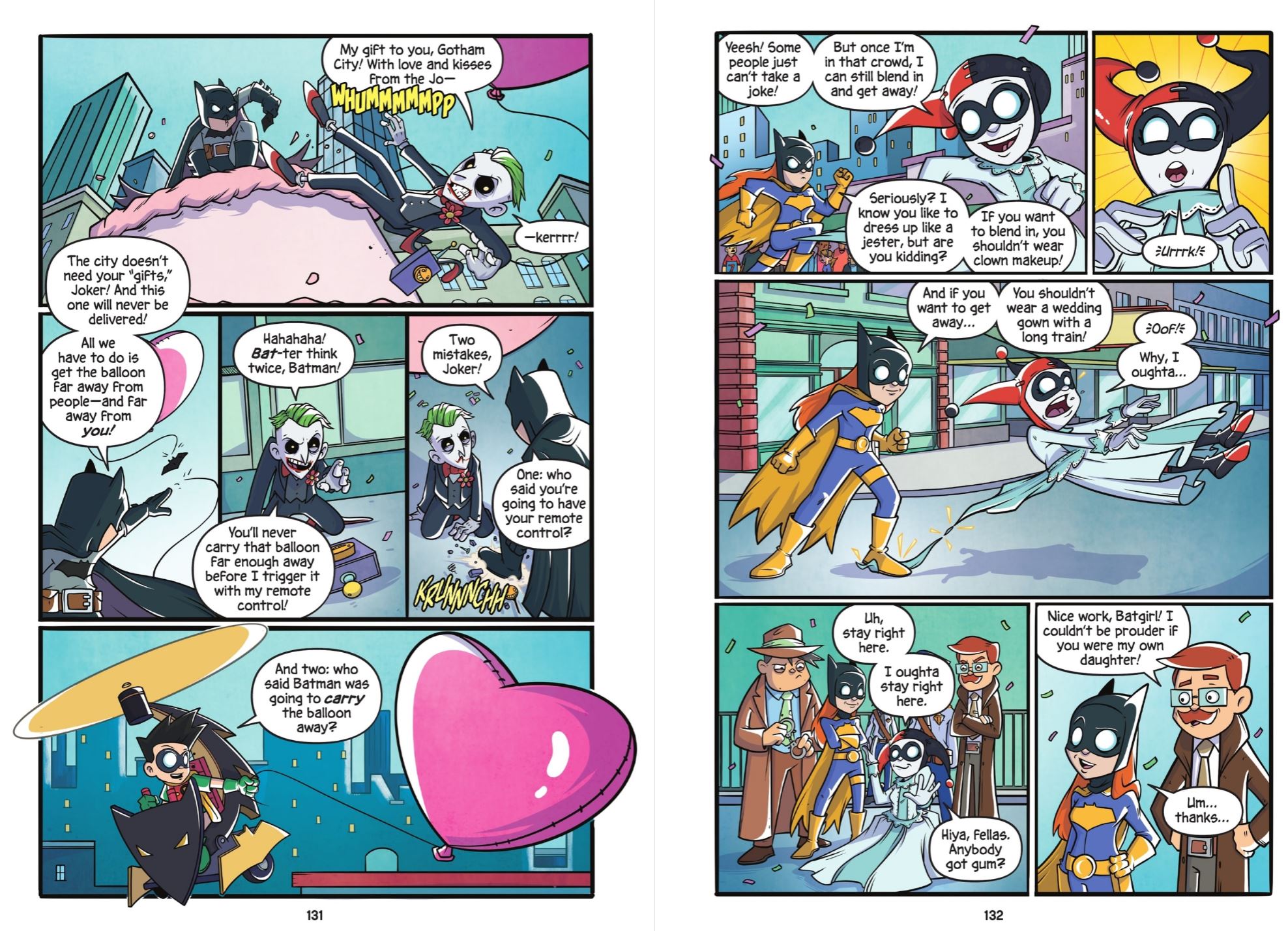
Today in 1877 pioneering US cartoonist Tad Dorgan (Indoor Sports, Judge Rummy) was born, followed in 1885 by future groundbreaking publisher Wilford Fawcett (Captain Billy’s Whiz Bang, Mechanix Illustrated, Captain Marvel et al). Author Jack Willamson (Beyond Mars) arrived in 1908; Paul S. Newman in 1924; Michael Davis of Milestone Media in 1958 and cartoonist Roman Dirge (Lenore, the Cute Little Dead Girl) in 1972.

We lost Golden Age Great Paul Gustavson (Human Bomb, The Angel, The Arrow, Fantom of the Fair, Magno the Magnetic Man, Blackhawk, Uncle Sam and more) in 1977 and ultra-versatile Croatian cartoonist/comics artist Žarko Beker (Koraljka, Neven, Bobo, Špiljko, Magirus) in 2012.

Today in 1906 Lyonel Feininger’s landmark strip The Kin-der-Kids premiered in the Chicago Sunday Tribune.

Lone Wolf and Cub volume 7: Cloud Dragon, Wind Tiger


By Kazuo Koike & Goseki Kojima, translated by Dana Lewis (Dark Horse Manga)
ISBN: 978-1-56971-508-6 (TPB/Digital edition)

This book includes Discriminatory Content produced in less enlightened times.

Best known in the West as Lone Wolf and Cub, the sprawling Samurai saga created by Kazuo Koike & Goseki Kojima is a global classic of comics literature. An example of the popular Chanbara or “sword-fighting” genre of print and screen, Kozure Okami began serialisation in Weekly Manga Action in September 1970 and ran until April 1976. It was an immense and overwhelming Seinen (“Men’s manga”) hit. The tales prompted thematic companion series Kubikiri Asa (Samurai Executioner – which ran from 1972-1976) but the major draw – at home and, increasingly, abroad – was always the nomadic wanderings of doomed feudal noble Ōgami Ittō and his solemn, silent child Daigoro whose clan were framed by ambitious rivals the Yagyū, publicly dishonoured by the Shōgun and condemned to death by his peers. Breaching all etiquette, the court executioner refused to accept suicide quietly, and instead opted to vengefully walk the bloody road to Meifumadō: the hell of Buddhist legend as an assassin for hire…

Revered and influential, Kozure Okami was – after years of supplication by fans and editors – followed by sequel Shin Lone Wolf & Cub (illustrated by Hideki Mori) and even spawned – through Koike’s indirect participation – sci fi homage Lone Wolf 2100 (by Mike Kennedy & Francisco Ruiz Velasco). The original saga has been successfully adapted to most other media, spawning movies, plays, TV series (plural), games and merchandise. The property is infamously still in Hollywood pre-production…

The several thousand pages of enthralling, exotic, intoxicating narrative art produced by these legendary creators eventually filled 28 carefully curated collected volumes, beguiling generations of readers in Japan and, inevitably, the wider world. More importantly, their philosophically nihilistic odyssey – with its timeless themes and iconic visuals – has influenced hordes of other creators. The many manga, comics and movies, TV and animated versions these tales have inspired around the globe are utterly impossible to count. Frank Miller, who illustrated the cover of this edition, referenced the series in Daredevil, his dystopian opus Ronin, The Dark Knight Returns and Sin City. Max Allan Collins’ Road to Perdition is a proudly unashamed tribute to the masterpiece of vengeance-fiction. Stan Sakai has superbly spoofed, pastiched and celebrated the wanderer’s path in his own epic Usagi Yojimbo, and even children’s cartoon shows such as Samurai Jack are direct descendants of this astounding achievement of graphic narrative. The material has become part of a shared global culture.

In the West, we first saw the translated tales in 1987, as 45 Prestige Format editions from First Comics. That innovative trailblazer foundered before getting even a third of the way through the vast canon, after which Dark Horse Comics acquired the rights, systematically reprinting and translating the entire epic into 28 tankōbon-style editions of around 300 pages each. Once the entire epic was translated – between September 2000 and December 2002 – it was all placed online through the Dark Horse Digital project.

Following cautionary warning on stylistic interpretation ‘A Note to Readers’ this moodily mordant, violent, sexually charged monochrome collection gets underway, retaining terms and concepts western readers may find unfamiliar. Happily, on offer at the close is a Glossary providing detail and clarification on what’s used in the stories.

The endless journey resumes with 34th exploit ‘Dragnet’ as frustrated Yagyū arch-plotter Lord Retsudō seeks to placate his impatient relations and vassals over the increasing loss of kinsmen to the Lone Wolf. The threat of public disgrace and being proved an oath-breaker keeps him from arbitrarily murdering Ōgami and Diagoro as long as they stay away from capital city Edo, but a heated conference seems to deliver a foolproof scheme that will allow them to end the shameful situation with no blame pointing to them. It’s a lucky and timely stroke, as their ranks are seriously depleted by the fact that too many arrogant Yagyū swordsmen can’t resist challenging the apparently unbeatable hitman…

Using intermediaries and regional civil servants Retsudō has devised a way to remove the thorn in his side without blemishing the sacrosanct Ura-Yagyū reputation. Arranging for his nemesis to be rounded up in a homeless sweep, the wolf is but one amongst hundreds bundled along by law officers, and must surely die or be condemned as a mining slave. Sadly, the plotters underestimate Ōgami’s cunning, knowledge of the law, suspicion of bureaucrats sheer lethality with bladed weapons and tricked-out, gunpowder-laden baby carriage…

With the plot’s spectacular failure, furious Ura-Yagyū covert observers cannot control themselves and Retsudō’s forces are further depleted by the baby carriage killer…

As the killer-for-hire meets his next client, Daigoro is left at a vast riverside logging camp. Stumbling onto another assassin’s diabolical plan – to kill visiting dignitary/valuable bride-to-be Princess Aya of Zakōji – the boy becomes a collateral target when the schemer seeks to clean up loose ends. A spectacular, frightening chase by ‘Night Stalker’ climaxes in a deserted temple once the boy implicates a trusted courtier as culprit, but is consequently identified as the child of the deadliest killer in Japan. The outlook seems black for the stoic lad… until papa finally finds him. Then it’s just red…

Eponymous and deeply philosophical in celebration of Bushidō ways, ‘Cloud Dragon, Wind Tiger’ slowly unveils the story of dishonoured samurai Makabe Shōgen, who placidly awaits death for failure of duty and spends the days fishing in a stream. His much-anticipated end comes after meeting Ōgami (and Daigoro), but it is not their first encounter. Four years previously they formally crossed swords when – as Kōgi Kaishakunin (imperial executioner) – Ōgami officiated at the death of Shōgen’s master Lord Arima.

Now the Wolf is hired to remove the embarrassing river dweller because a new regional ruler is being pressured by officious, impatient retainers about the living eyesore and monument to failure. They would do it themselves, but the old coot – calling himself Hōzuki (like the flower) – is deadly when provoked and the new Daimyō is rapidly running out of warriors…

Ōgami is hired to take out the shameful reprobate, but also has a uniquely personal interpretation of the tenets of Bushidō…

When the roaming pair pause at the ‘Inn of the Last Chrysanthemum’, they encounter firsthand the horrific treatment of women. Oichi is an araime (foot washer) but reluctant to carry out the other demands of her new job – particularly luring in customers and sleeping with them.

Graced with simple kindness by both father and son, she resolutely tolerates other clients/guests as she awaits a moment long-anticipated. Once she was used by an unsuspected enemy (O-Maki of clan Gotō) to destroy her own noble family. It began with shaming, beggaring and the orchestrated suicide of her brother, a high-ranking samurai of the Fujieda household, and ended with lovely, serene, sophisticated Oichi being repeatedly, punitively “dishonoured” and made valueless (gang-raped to you and me) by order of O-Maki.

A protector-less non-person, Oichi could only find work as a De-Onna (“put-out girl”) used as a living inducement to entice customers to stay in one of the travel waypoint’s many competing inns. Now, her awful life’s continuation finally blossoms with purpose as ruthless, triumphant official mistress O-Maki finally stops there on her way to court.

When the victim finally takes revenge, Oichi learns that she would never have got past the guards except for a stroke of fate. O-Maki’s schemes hurt not only the Fujieda clan. Other innocents caught in her web of ambition also suffered, and a certain sword-for-hire has stalked the ascendant courtesan on behalf of other families who suffered for her greed…

The last furious fable also explores duty and honour – albeit among the lower classes – as three-year-old Daigoro encounters charming pickpocket “Quick-change” Anego O-Chō as she works a crowed street during the New Year’s Go-daishi-biraki festival.

Fleeing city guards, she deftly caches her loot with the unwitting waif but is seen by onlookers and pursuers. Arrested, the silent nipper is threatened with the full weight of law, specifically O-sademegaki. This promises flogging, torture and worse, due to the draconian strictures of ‘Penal Code Article Seventy-Nine.’ The “punishment of offenders fifteen and under” states there is no excuse of age for murder, arson or theft, and means the toddler will be tortured by (frankly unwilling) chief cop Senzō and his officials unless the prisoner admits guilt and testifies against her.

This Daigoro staunchly refuses to do, even after the thief surrenders herself to save the kid. Sadly, the law is unshakable and restitution must be made, and even the increasingly incensed crowd won’t do anything about it. It’s up to the true son of a true samurai to determine his own fate…

Although usually closing with ‘Creator Profiles’ of author Koike Kazuo & illustrator Kojima Goseki , this volume also offers another instalment of contextual/background feature ‘The Ronin Report’ wherein Tim Ervin discusses ‘The Women of Lone Wolf and Cub’: appraising roles, depictions (visual and as contributory narrative actors) and contributions of the many and various female characters to interact with the boy and his father on the path to hell.

From victims and prizes to life-endangering lures, or simply enemies en route to doom, these players are fully realised whether as fighting foils, endangered damsels or working folk adding colour to stories. With the roles of women from all strata of that locked-down culture in a brutally harsh patriarchal society examined and assessed on their own merits, the grit of this article explores, if not mitigates, one inescapable fact. In an era where no female of any age has unassailable intrinsic rights, but only duties and crushing expectations, there is a disturbing amount of rape, abuse and trafficking in so many tales and it’s important to remember that it’s not just there to titillate, but to spark empathy and rattle readers…

Despite its powerful, disturbing content Cloud Dragon, Wind Tiger is another epic selection in the series of Japanese imports that utterly changed the nature of US comics and a saga no lover of historical fiction should be without.
Art and story © 1995, 2001 Kazuo Koike & Goseki Kojima. All other material © 2000 Dark Horse Comics, Inc. Cover art © 2001 Frank Miller. All rights reserved.

Born today in 1887, pioneering Charles A. Voight is most renowned for his flapper strip Betty, and shares the day with the astounding Lee Falk (Mandrake the Magician, The Phantom) in 1911; Dick Ayers (Ghost Rider, Sgt Fury) in 1924; comics historian Bill Blackbeard in 1926 and author, journalist and Squirrel Girl co-creator Will Murray in 1953.
In 1966 we lost the uniquely magnificent Artist Jesse Marsh (Tarzan, John Carter of Mars) and in 2005 Zeke Zekley, assistant to George McManus and inheritor of the long-running strip Bringing Up Father.