
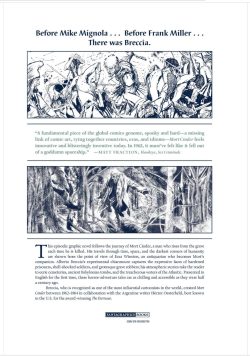
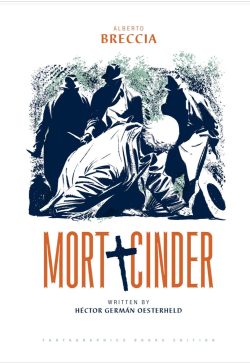
By Héctor Germán Oesterheld & Alberto Breccia, translated by Andrea Rosenberg and re-lettered by Antonio Moreno (Fantagraphics)
ISBN: 978-1-683960-79-9 (HB/Digital edition)
This book includes Discriminatory Content produced in less enlightened times.
Win’s Christmas Gift Recommendation: Eerily Eternal Entertainment… 10/10
Long-regarded as one of the best comic strips ever produced in Argentina and rightly hailed as one of the greatest horror fantasy sagas in the history of the medium Mort Cinder was a serial series created by Héctor Germán Oesterheld & Alberto Breccia and published between August 17th 1962 and February 28th 1964 in legendary Argentinian anthology comic Misterix (after it was taken over from Abril publishing by Editorial Yago)…
Scripter Oesterheld (AKA “HGO”: born 23rd July 1919, presumed dead 1977) was a prolific and passionate writer and a skilled editor who had worked with Hugo Pratt on Ernie Pike, Ticonderoga & Sergeant Kirk, Paul Campani on Bull Rocket, Dino Battaglia on Capitán Caribe and Francisco Solano López on Uma-Uma, Marvo Luna and El Eternanauta as well as so many others on so much more. His leftist politics and strident anti-colonial, anti-fascist, anti-junta opinions (constantly expressed in print, comics and other media) led to his being “disappeared” by the military dictatorship in 1977. Except for his wife Elsa Sánchez de Oesterheld, the same fate befell the entire family.
He had worked with master illustrator Alberto Breccia on Sherlock Time (1958 in Hora Cero Extra) and again on Dr. Morgue (1959, in Frontera Extra) and together they rebooted The Eternaut 1969 before collaborating on their unparalleled masterpiece of fantasy and suspense…
Breccia (15th April 15 1919 – 10th November 1993 and founder of a comics dynasty that so far includes his son Enrique and daughters Patricia and Cristina) was born in Montevideo, Uruguay before the family migrated to Buenos Aires in 1924. On leaving school, the young artist worked at a tripe-packing plant until 1938, when he joined magazine El Resero, writing feature articles and illustrating covers for it and Phenomene and Berretin. A year later he was at publishing house Manuel Láinez, contributing to magazines like Tit-Bits, Rataplán and El Gorrión, adapting novels to comics form and creating strips including Mariquita Terremoto, Kid Río Grande and El Vengador. By the 1950s Alberto was a major player in the country’s huge comics industry: inducted into the “Group of Venice” association, comprising expat Italian comics creators like Pratt, Horacio Lalia, Ivo Pavone, Faustinelli and Ongaro. The select band soon expanded to include home-grown masters Francisco Solano López, Carlo Cruz & Arturo Perez del Castillo.
In 1957 Pratt & Breccia founded Buenos Aires’ Pan-American School of Art, with the latter also signing up with publisher Editorial Frontera, under editor Oesterheld, where they co-created several Ernie Pike stories. By the 1960s Breccia had joined artists working for British & European publishers via Spain’s Bardon agency in Madrid. He drew for Fleetway; westerns and war stories, plus lengthy episodes of the Spy 13 and John Steel series for Thriller Picture Library as well as Kit Carson for the Cowboy Picture Library and Lone Rider in Wild West Picture Library. During this period, son Enrique – fresh from working with Alberto on Oesterheld’s legendary (and possibly life-ending) graphic biography of Che Guevara Vida del Che – also made the jump to British comics, doing more of the same to launch his own stunning graphic career.
Somehow avoiding the extreme sanctions visited upon Oesterheld, Alberto carried on experimenting through the 1970s, in series like Un tal Daneri and Carlos Trillo’s Chi ha paura delle fiabe?, departing from commercially-comfortable depictions to test textures by mixing materials. His work in ink, watercolours/acrylics and with collage developed visual narrative techniques that shaped artists as groundbreaking as Bill Sienkiewicz, Dave McKean and others. Later inspirational questing tales included Cthulhu Mythos; Buscavidas (again with Trillo); Historia grafica del Chile and Perramus, inspired by the work of poet Juan Sasturain in a pamphlet against the dictatorship in Argentina.
Alberto Breccia died in Buenos Aires in 1993.
All of which is a mightily longwinded way of saying that I’m not kidding when I say that even before their prime, Breccia & Oesterheld collaborated to produce one of the most important and rewarding strips in comics history…
Long out of print but still available digitally, this collection gathers every exploit of the sublime spooky saga beginning with ‘Prologue: Ezra Winston, Antiquarian in “The Gift of the Pharoah”’ as presented in Misterix #715 (August 1962). In the tradition of Steve Canyon, the titular star didn’t appear in the initial weekly instalment, which instead served to introduce the living enigma’s sidekick and Boswell. This worthy aged savant runs a poky Chelsea antique shop where – just like Bagpuss – strange and uncanny objets d’art, bizarre bric-a-brac and arcane artefacts tend to gravitate…
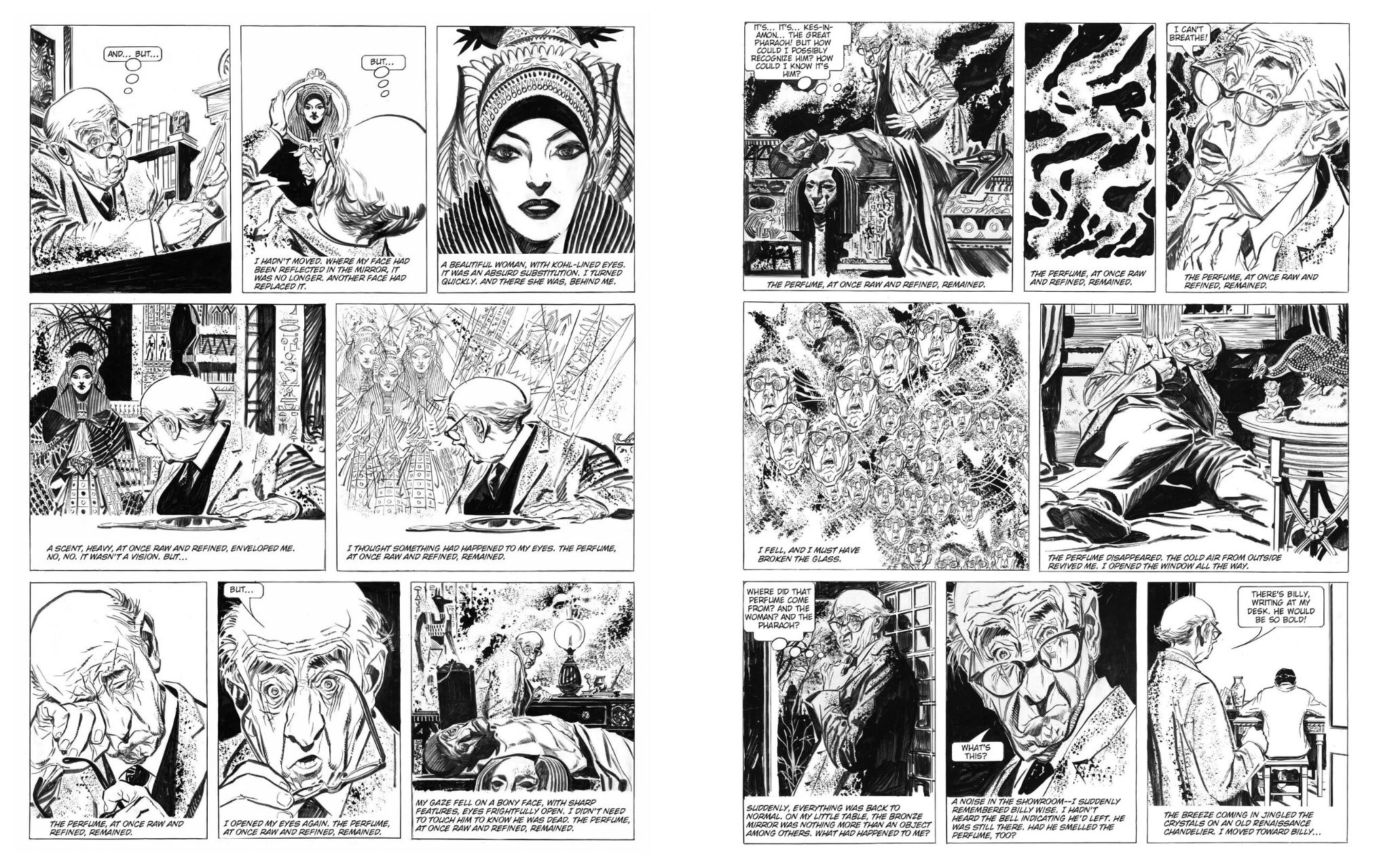
Basing the old geezer on what he assumed he would like in his own dotage, Breccia beguilingly limned a moment proving Ezra always had One Foot in the Weird, as here an Egyptian oddment bought from a widow opens a lethal door to the past and costs the life of his assistant Billy…
The main event is an extended epic introducing the enigmatic lead and detailing a deadly war with a monstrous supervillain. Spanning Misterix #716-735 (July 20th – December 14th 1962), ‘Lead Eyes’ sees Mort Cinder as a murderer who survived his own execution…
The tale begins after Ezra buys an odd amulet that burns, brands and increasingly obsesses him. Finding the brand encroaching on his formerly quiet life, Ezra traces its origins and encounters numerous individuals scarily surrounding home. They all possess dead eyes (like lead) and inexorably push the elderly sage towards a certain grave.
Disinterring the fresh corpse he’s horrified when the cadaver introduces himself as Mort Cinder. The thing in the coffin is in fact a man who cannot die and has lived most of the history that the antiquarian so loves…
The imposing, erudite immortal (visually patterned on Breccia’s assistant Horacio Lalia) explains nothing but instead enlists Ezra in his ongoing war with brain surgeon Professor Angus who is resolved on becoming the central guiding mind of humanity through medical atrocity and needs a brain that won’t stay dead to complete his plans…
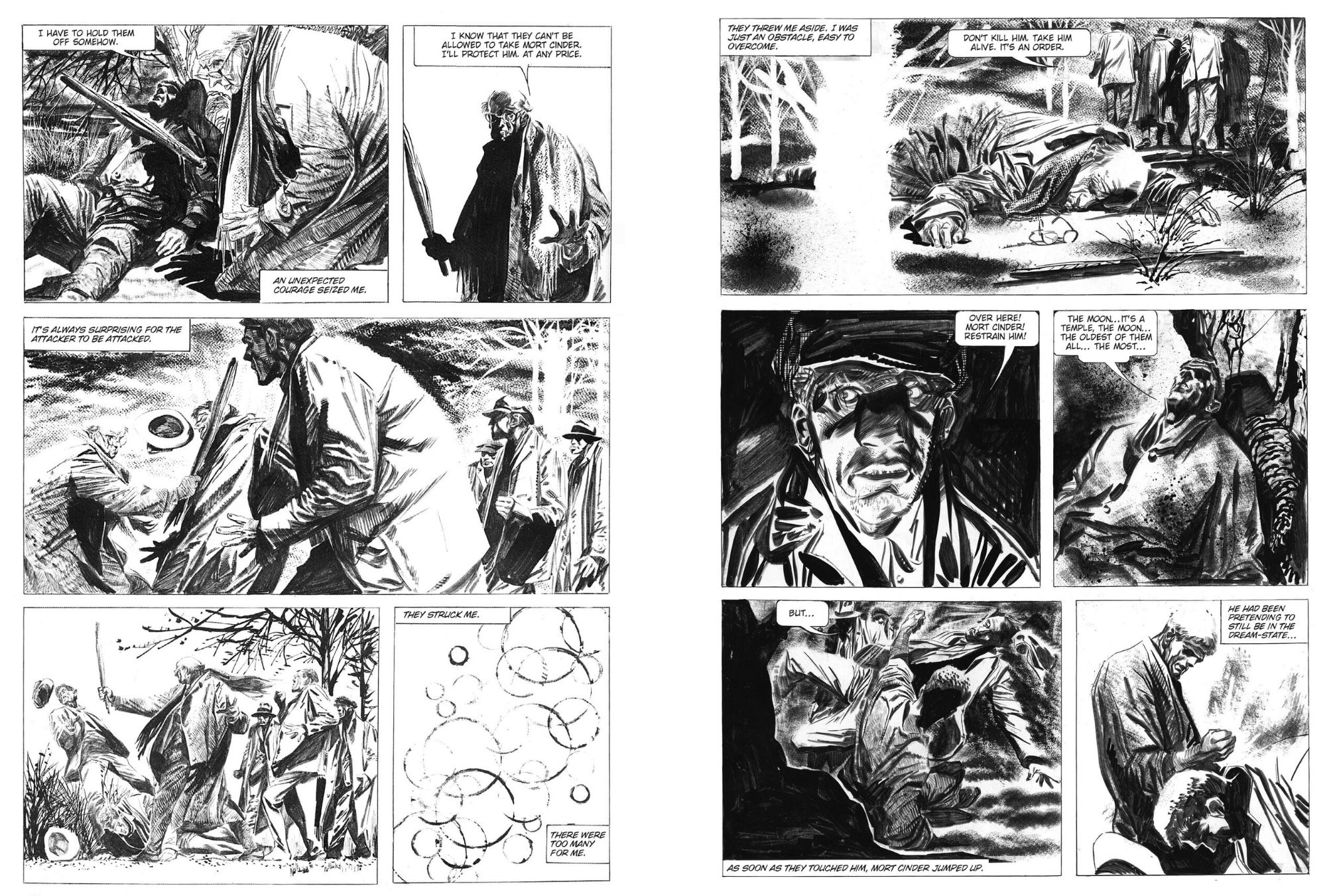
Their battle to the death (repeatedly in Cinder’s case) eventually resulted in a slick piece of treachery that saved the world, advanced surgical science and left Ezra with a bored but grateful new assistant who could answer almost every unanswered question in history. The fact that the shopkeeper seemed locked into a supernatural warning system only intensified the anticipated adventures to come…
A study in oppression and paranoia, the tale could only have come from channelling the tone, themes and concerns of creative spirits living in police states. As much about isolation and companionship as wonder, atrocity and necessity, later tales would hone in on periods of history for character development, recounted by one who was there…
Such was the case with ‘Charlie’s Mother’ (#736-739, December 21st 1962 – January 11th 1963) as an encounter with a widow at a railway station triggers Cinder’s memories of a despised deserter during the last war. So intense is the moment that poor Ezra is absorbed into the phenomenon and experiences the bloody debacle too, with worse to come when long-gone Johnny suddenly materialises…
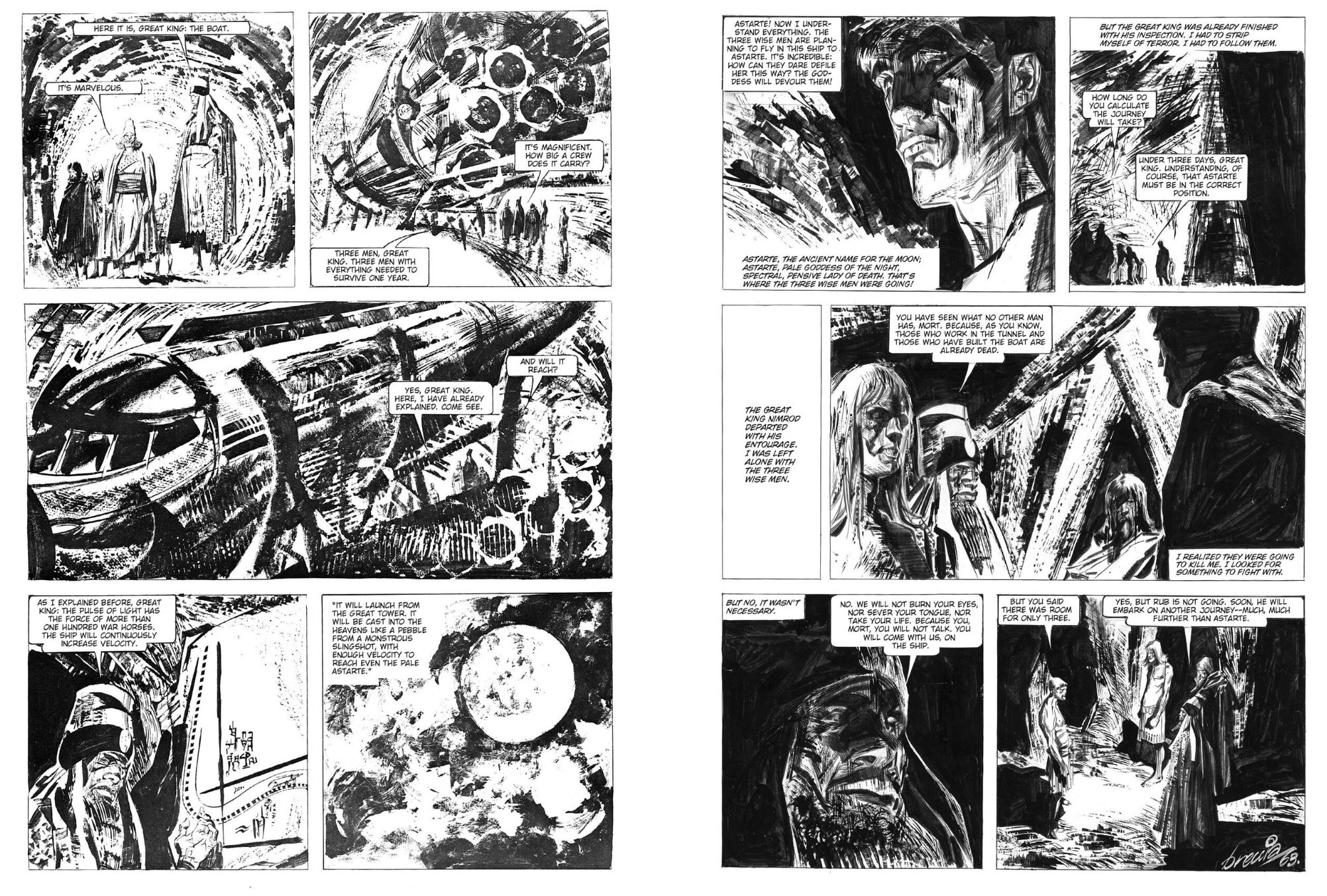
Mystery and history become full-on fantasy in ‘The Tower of Babel’ (#740-746, January 18th – February 22nd 1963) as Ezra’s latest shop find sparks memories of when Mort was a slave: one of thousands constructing an edifice to touch the sky. As the past unfolds again in his head, Cinder shares the tale of King Nimrod and his technologically-inspired inner circle who were set on building a means of returning to the stars…
Gritty moodiness and dark brutality permeate a two-part prison saga set in 1925 Oklahoma, as ‘In the Penitentiary: Marlin’ (#748-751, March 15th – April 5th ) finds Mort Cinder doing time and trying to keep his fellow inmates alive under murderous conditions. The problem magnifies when a scheming inmate puts forward a plan to escape, before ‘In the Penitentiary: Friar’ (#752-755, April 5th – May 3rd ) devolves into a catalogue of tragedy, betrayal and death…
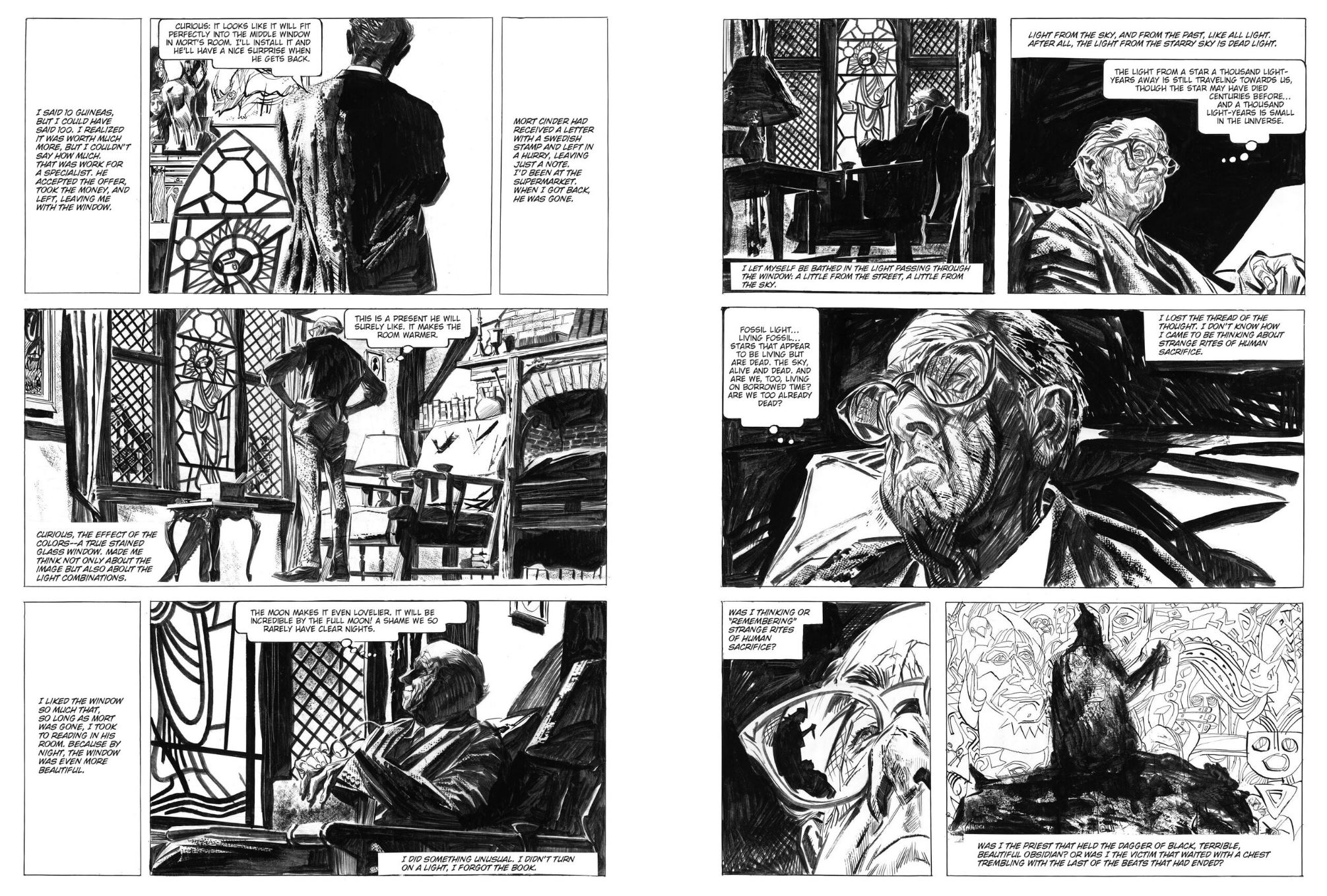
When Ezra makes an unlikely financial killing on a ‘Stained Glass Window’ (#756-758, May 10th – May 24th), the fascinating piece ends up in his own rooms instead of the open market. Falling asleep in front of it, the historian is transported to a time of blood sacrifice in meso-American Peru – an experience he quickly becomes addicted to and repeats at every opportunity. When Mort Cinder returns from one of his mysterious missions, he too is swallowed by the phenomenon and is almost sacrificed by Ezra before destroying the window. Later, probing his own memories he finds an astounding answer to the chilling experience…
Despite being syndicated all over the world, translated into English, German, French, Italian, Spanish, Yugoslavian, Polish and more the stories were appearing with less frequency. Mysterix began pausing the series with ‘The Slave Ship’ running #760-763 (June 7th – 28th 1963) wherein a model of slave trader The Moonlight sparks a painful memory of how Cinder could save only one of hundreds of captured Africans when the vessel was sunk by a righteous Coast Guard frigate determined to stamp out the vile business no matter who suffered in the process…
A month later #769 to 772 (August 9th – 30th) found our historical troubleshooters start as mere observers when an amnesiac Cambridge historian blessed with startling insights – if not revolutionary convictions – regarding ancient Egyptian mysteries went missing on a dig. Whilst Mort rushed them to the site of the lost expedition, he revealed how he had been one of the slaves building ‘The Tomb of Lisis’ but was too late to prevent her hibernating form reuniting with the other long-lost alien who had possessed Professor Noah Stellus…
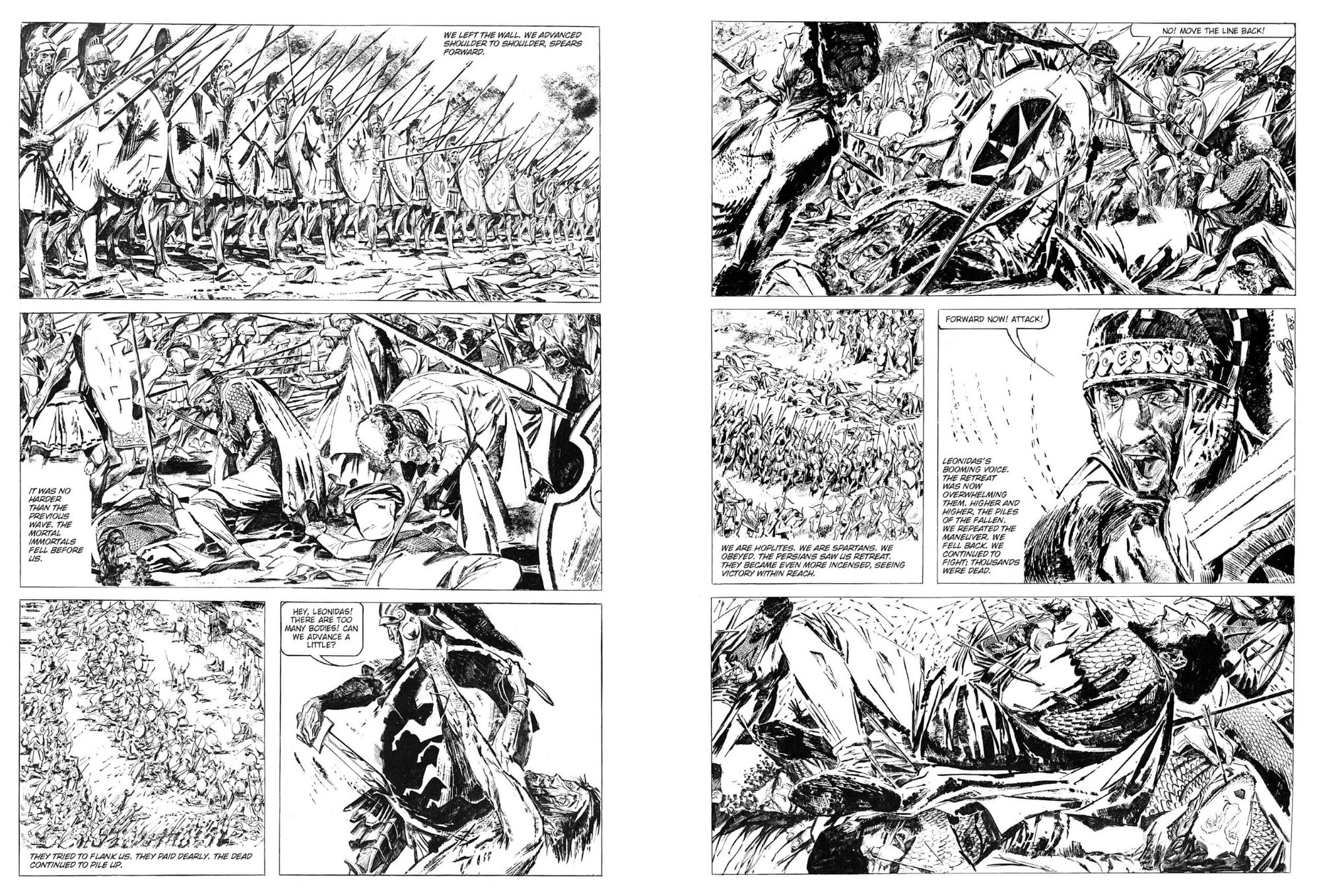
The wonders end on a spectacular high as ‘Battle of Thermopylae’ (#794-800, January 31st 1963 – March 13th 1964) relays without fantastic adornment the final stand of the noblest of Spartans. Frank Miller is a huge fan and admirer of Breccia, and if you though 300 was something wait until you see what he as aspiring to match…
Following the breathtaking comics delights, Janis Breckenridge provides a fact-filled ‘Afterword’, supplemented by script excerpts of unfinished Mort Cinder tale ‘Stagecoach to Cuchillo’ before Ezequiel Garcia provides Biographies of Breccia, Oesterheld as well as editorial contributors Erica Mena, Breckenridge & Garcia.
Alessio Lega described Mort Cinder as “an unquiet conscience of humanity, a witness, sometimes sorrowfully torpid, of the great and small events of the Man, though often a rebellious one who never surrendered to those trying to silence him”. He’s also a comics icon no serious reader can remain ignorant of.
Mort Cinder (Vol. 1 of the Alberto Breccia Library) © 2018 Alberto Breccia, Heirs of H.G. Oesterheld. This edition © 2018 Fantagraphics Books, Inc. Translation © 2018 Erica Mena. Afterword © 2018 Janis Breckenridge. Biographies © 2018 Ezequiel Garcia. All text and images are © their respective copyright owners. All rights reserved.