
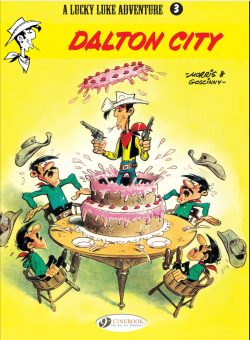
By Morris & Goscinny, translated by Frederick W. Nolan (Cinebook)
ISBN: 978-1-905460-13-7 (Album PB), 978-1-849189-34-7 (Digital edition)
This book includes Discriminatory Content produced in less enlightened times. It also contains Discriminatory Content added for comedic effect.
Time for another Anniversary shindig, non? I’d hoped to have a few more Lucky reviews ready by this juncture but I’m apparently old, sick and still plugging away long past my bedtime. Thus here’s an old standby that at least offers a bit of celebratory cake for now and perhaps I’ll finish a few more before the year – or the world – ends…
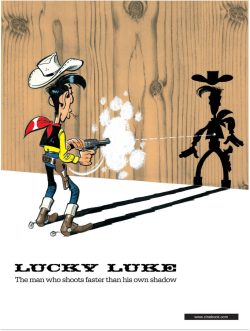
Lucky Luke is a rangy, good-natured, “lonesome cowboy” able to “draw faster than his own shadow”. Doughty, dashing, dependable Lucky is an implacably placid do-gooder roaming the mythical Old West, having light-hearted adventures with his wonder horse Jolly Jumper whilst interacting with a host of historical and/or fictionally famous figures of the genre.
It’s Jolly & Lucky’s 80th birthday this year and their continued exploits have made the gentle gunslinger one of the bestselling comic characters in Europe, encompassing 84 albums, with numerous spin-off books and series comprising more than 300 million albums in at least 31 languages thus far. That has also generated a mega-mesa of merchandise: posters, toys, games, apparel, animated cartoons, TV shows and live-action movies.
Lucky was dreamed up by western-loving Belgian-born animator, illustrator and cartoonist Maurice de Bévère AKA “Morris”. His sagebrush star debuted in the summer of 1946, initially in mid-summer issues of Le Journal de Spirou sans title or banner logo, and only in French-language editions of the multinational kids comic. The Lone Rider’s official launch was the autumn of that year in Christmas Annual L’Almanach Spirou 1947, before opening his first official serial in the pan-regional, multilingual weekly edition cover-dated December 7th 1946.
After a relatively slow start for such a fast gun, Lucky’s global dominance came via Morris’ decades-long collaboration with superstar scripter René Goscinny. The official partnership spanned Rails on the Prairie (August 25th 1955) to The Ballad Of The Daltons And Other Stories in 1986, during which time the sixgun straight-shooter switched teams, transferring to Goscinny’s own magazine Pilote with The Stagecoach in 1967, augmented by many guest appearances all over the European publishing scene after that.
Goscinny co-crafted 45 albums before his death in 1977, after which Morris continued singly and with new literary pardners, ultimately founding a posse of legacy creators including Lo Hartog van Banda, Achdé & Laurent Gerra, Xavier Fauche, Jean Léturgie, Benacquista & Pennac, Jacques Pessis and more, all taking their own shots at the venerable vigilante. Morris continued in declining degrees until his own death in 2001, having drawn fully 70 adventures, plus numerous sidebar and spin-off whimsical western tales.
His grande idée draws less on western history than movie mythology, but our hero regularly met actual historical figures as well as famous fictional folk in tales culled from classic cowboy lore and lensed through uniquely European notions and interpretations. Our star is never averse to being a figure of political change and Weapon of Mass Satire, as well as spoofing his own antecedents whilst wallowing in movie schtick to trigger delicious drives down memory lane in the eternal game of cowberks and imbeciles…
Dalton City was the 34th comic cowboy chronicle and Goscinny’s 25th collaboration with Morris, originally appearing in Pilote #441-462 (April 4th – September 12th 1968) before being published as the 49th collected album in 1969. It infamously featured the first appearance of the most stupid of all do-gooding doggy sidekicks Rantanplan. You have been warned…
The saga commences in Fenton Town, a city of utter depravity and villainy run by and for crooks, badmen and owlhoots by cunning mastermind Dean Fenton; a mean man with the unsavoury hobby of collecting Sheriff’s stars… generally from their bullet-riddled bodies…
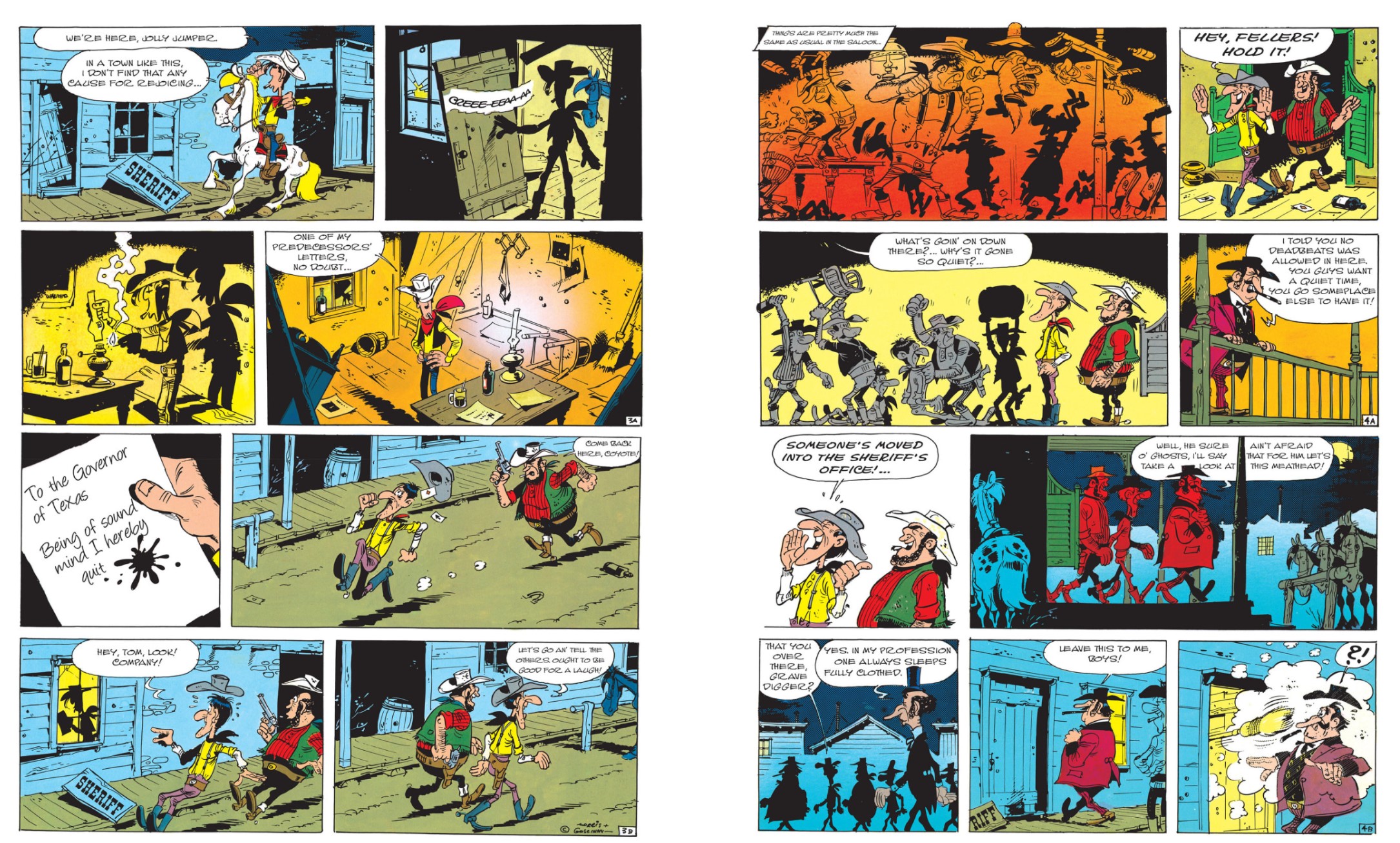
The murderous gambler’s fortunes changed forever the night a lean, laconic lone rider ambled into town. When Luke spectacularly delivered the gang boss to justice, Fenton got 1223 years hard labour at Texas penitentiary, an imposing edifice already crammed with dozens of other varmints who failed to take Lucky Luke seriously.
And that’s where the current trouble really starts…
Amongst those inmates are stupid sandbagging scallywags Averell, Jack & William Dalton as well as their smart, psychotic, bossy and extremely short brother Joe, who had made things hot for our hero in the past. As they all crack rocks together, the Dalton Gang are particularly influenced by Fenton’s tales of his little kingdom.
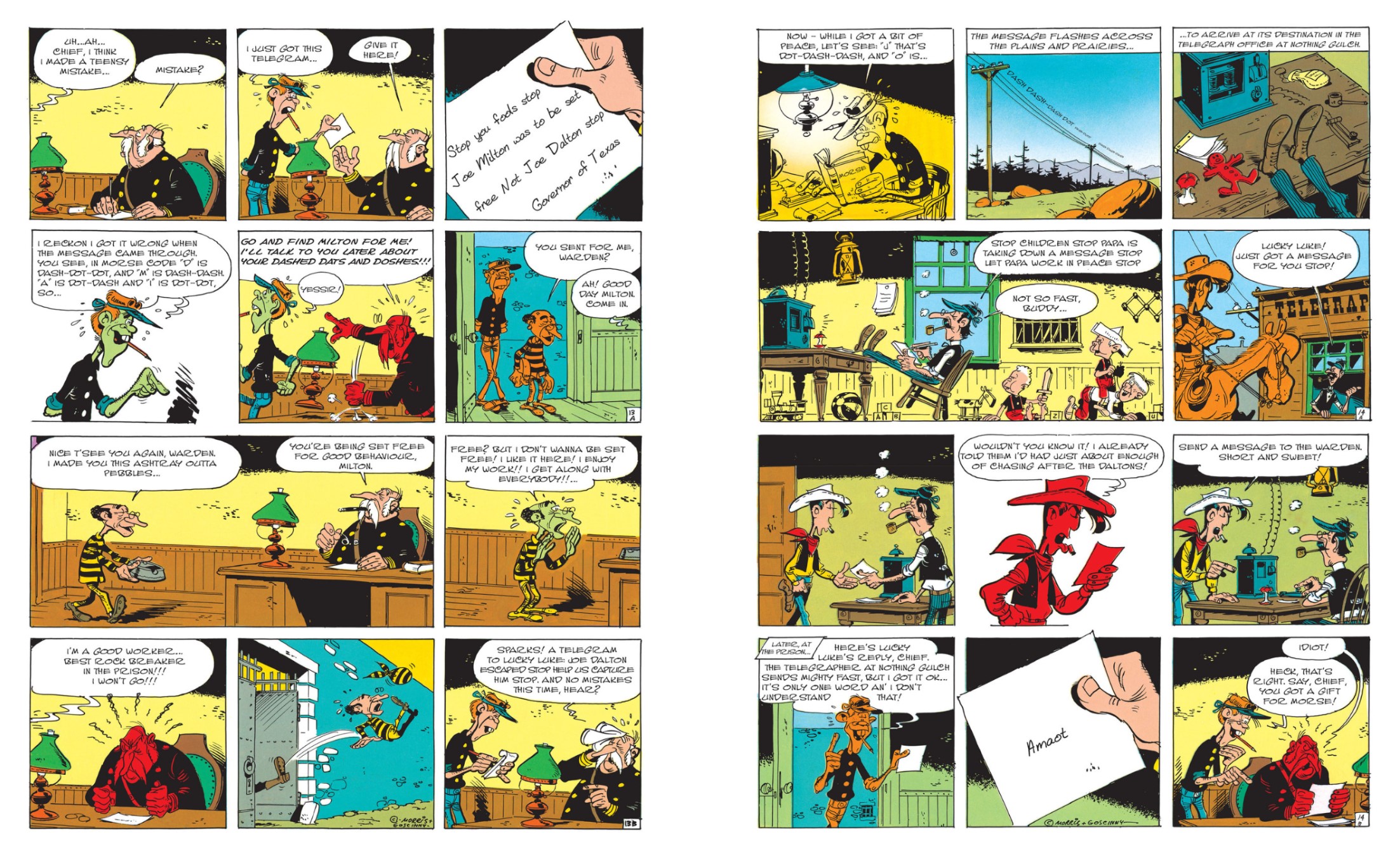
Contentedly ambling away from the prison, Luke & Jolly Jumper have no idea that an idiotic, incompetent telegraph operator is about to make their lives impossibly difficult. Handed a mis-transcribed message from the Governor to free inmate Joe Milton for Good Behaviour, the baffled Warden forcibly ejects the furiously insulted Dalton head honcho. Eventually calming down – at least as much as Joe Dalton ever can – the wily skunk promptly blows up an outer wall to liberate his scurrilous simpleton siblings and they all make fast tracks for the now-deserted Fenton Town. Of course search parties trail them, but when vain, friendly exceedingly dim prison hound Rin Tin Can absently-mindedly forgets himself and joins his quarry, the shame-faced guards must return empty-handed…
Regretfully resigned, the Warden sends a telegram to Lucky Luke – again appallingly garbled in transit – and our normally unflappable gunhawk is less than amused. It takes the pleadings of the Governor of Texas (probably a Democrat!) himself to convince the frazzled manhunter to go after his old enemies…
In freshly renamed Dalton City, Joe and the boys have big plans. They’re going to operate a Mecca for all the criminals in the state: a safe place for badmen to hide and spend their stolen loot. Joe will be in charge, Jack will operate the hotel, William the stables and Averell will run the restaurant. The big goof even has faithful, omnivorous Rin Tin Can to test all his recipes on…
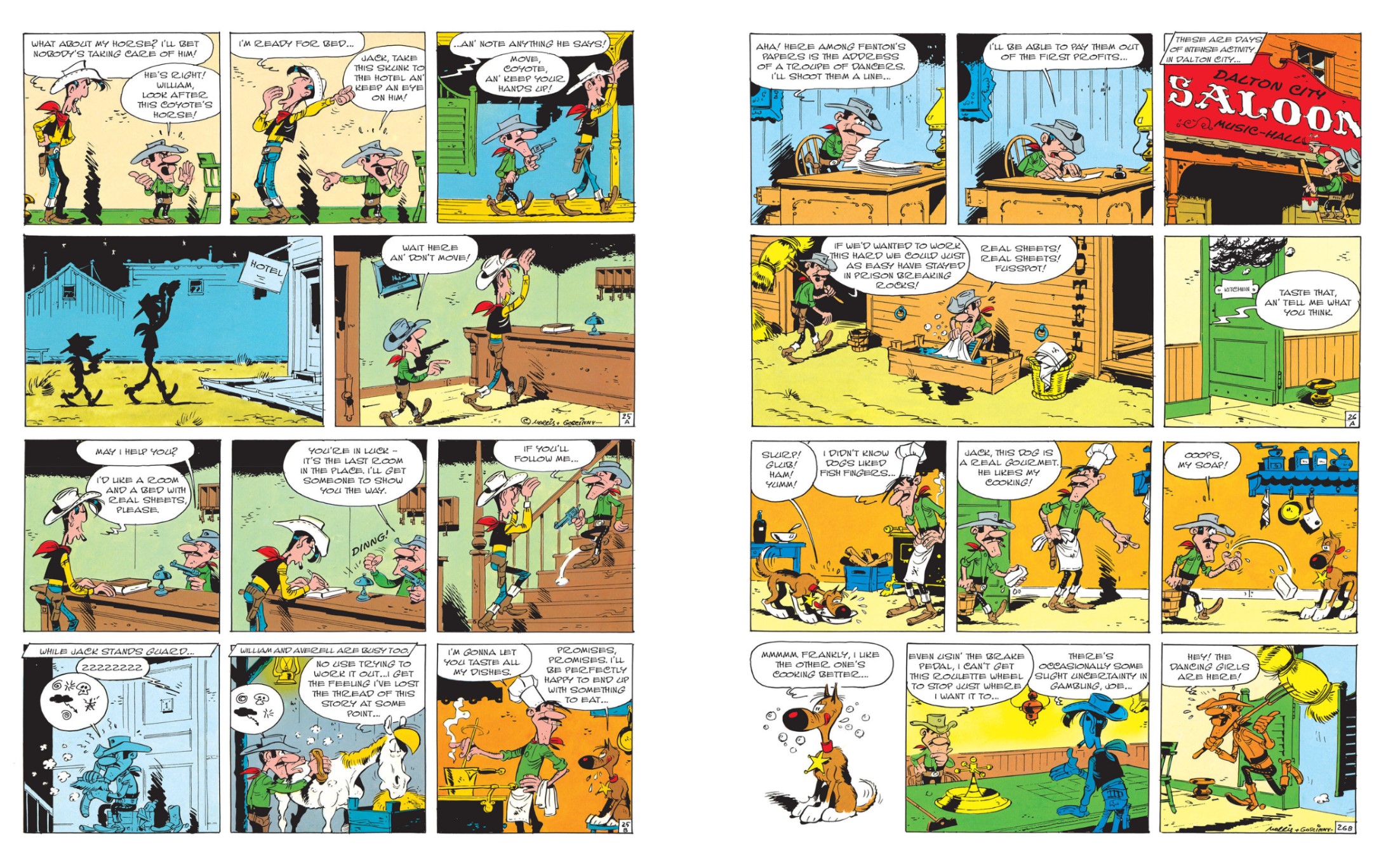
After much unlikely and utterly unaccustomed hard work the place is starting to come together when they get an even bigger boost by capturing despised nemesis Lucky Luke as he spies on them. The hero had forgotten how stupid Rin Tin Can could be…
The hapless prisoner is put to work testing their wares: surely if the service is good enough for Luke it will be perfect for the scum of the West? However, the boys make the foolish mistake of listening to their enemy’s suggestions for improvement…
The beginning of the end comes after Joe writes off to hire a singer and troupe of dancing girls. When bombastic virago Lulu Breechloader and her associates Belle, Sugar Linda & Pearl arrive, Lucky has all he needs to drive an amorous wedge into the solidarity of the felonious fellowship and, as an army of bandits and killers steadily roll into town looking for sanctuary and entertainment, they are all invited to the wedding of the century. The only persons unaware of the impending and hard-fought for nuptials of Joe Dalton and Lulu are the bride herself and her current, blithely unaware, piano-playing husband…
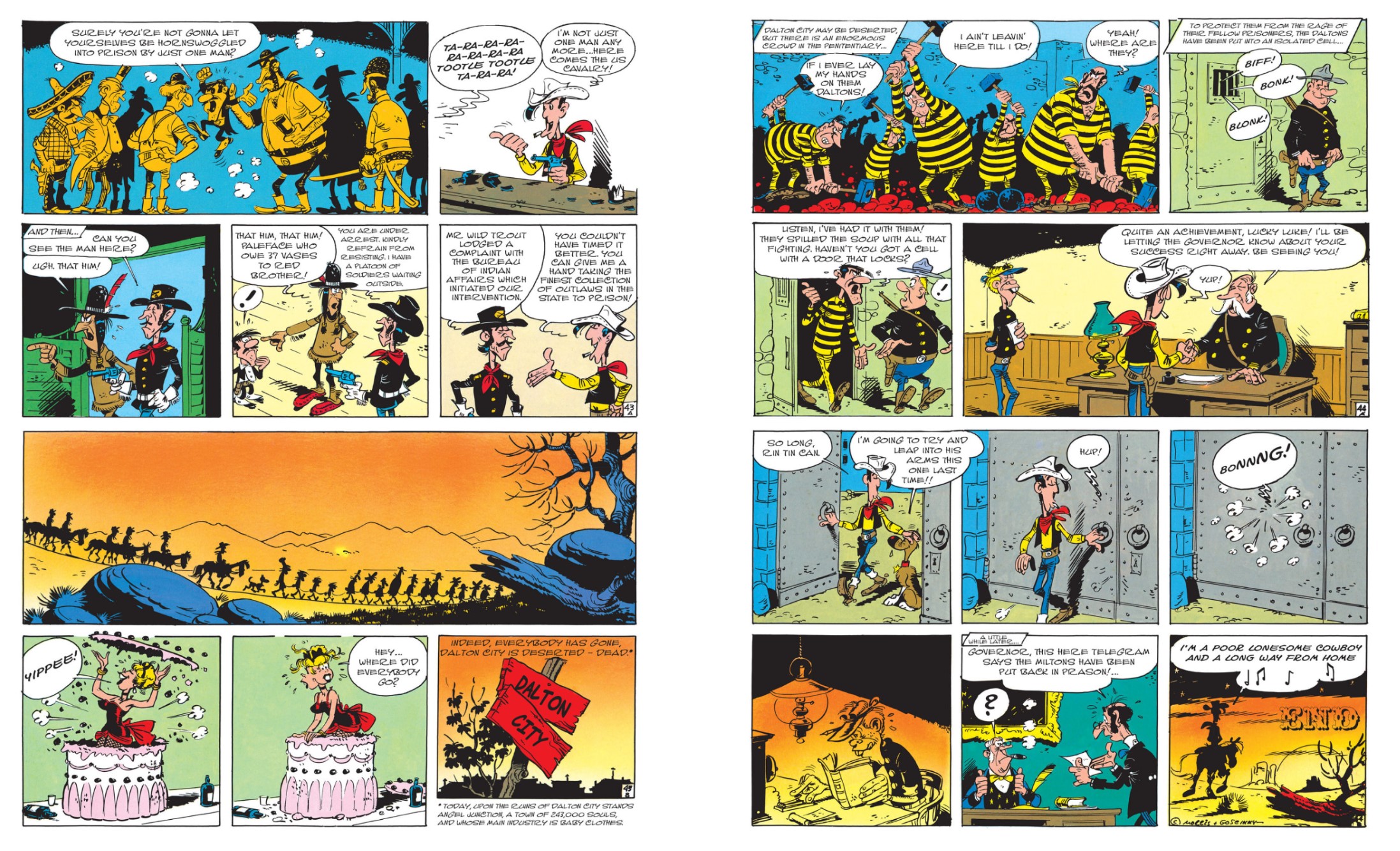
In the ensuing chaos and explosive gunplay it isn’t hard for a smart cowboy crusader to make the biggest capture of wanted criminals in Texas’ history and ride off into the sunset with a new four-footed canine companion…
Once again the masterful wit and wicked deviousness of the indomitable hero triumphs in a splendidly intoxicating blend of all-ages action, seductive slapstick and wryly cynical humour. This grand old hoot sits in the tradition of Destry Rides Again, Evil Roy Slade and Support Your Local Sheriff, superbly executed by master storytellers, and a wonderful introduction to a unique genre for modern kids who might well have missed the romantic allure of the Wild West that never was…
© Dargaud Editeur Paris 1969 by Goscinny & Morris. © Lucky Comics. English translation © 2006 Cinebook Ltd.