
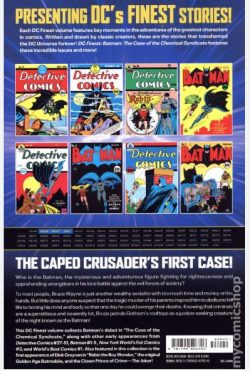
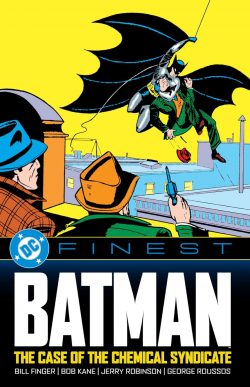
By Bob Kane, Bill Finger, Gardner F. Fox, Whitney Ellsworth, Sheldon Moldoff, Jerry Robinson, George Roussos & various (DC Comics)
ISBN: 978-1-79950-670-6 (TPB/Digital edition)
This book includes Discriminatory Content produced in less enlightened times.
Although already much reprinted, archived and curated, here’s another sound and stunning collection of the Gotham Guardian’s earliest exploits in original chronological order, forgoing glossy, high-definition paper and reproduction techniques in favour of a newsprint-adjacent feel and the same flat, bright-yet-muted colour palette which graced the originals. There’s no fuss, fiddle or Foreword, and the book steams straight into the meat of the matter with the accumulated first two years of material featuring the masked mystery-man, as well as all those stunning covers (by Kane, Robinson, Roussos, Fred Gurdineer, Creig Flessel, Jack Burnley, Fred Ray and The Strauss Engraving Company). These span Detective Comics #27-51; Batman #1-5; the Dynamic Duo’s endeavours in New York World’s Fair Comics 1940 and World’s Best Comics #1, cumulatively encompassing every groundbreaking escapade from May 1939 to May 1941.
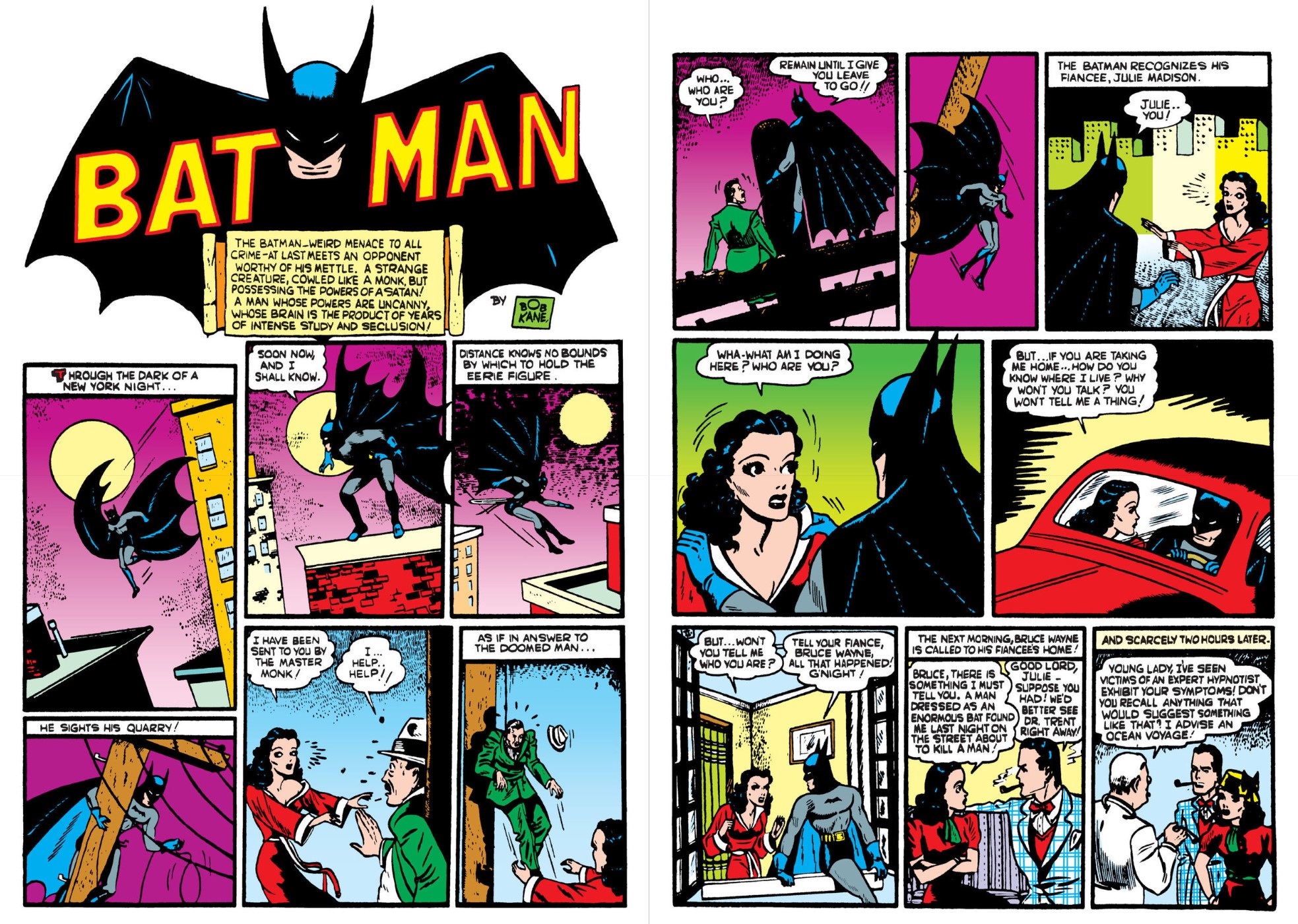
As Evri Fule Kno, Detective Comics #27 featured the Darknight Detective’s debut in the ‘Case of the Chemical Syndicate!’ by Bob Kane and as yet still anonymous close collaborator/co-originator Bill Finger. A spartan, understated yarn introduced dilettante playboy criminologist Bruce Wayne, drawn into a straightforward crime-caper as a cabal of industrialists were successively murdered. The killings stop when an eerie figure dubbed “The Bat-Man” intrudes on Police Commissioner Gordon’s stalled investigation to ruthlessly expose and deal with the hidden killer.
The following issue saw our fugitive vigilante return to crush ‘Frenchy Blake’s Jewel Gang’ before encountering his very first psychopathic killer/returning villain in Detective #29. Gardner Fox scripted these next few adventures beginning with ‘The Batman Meets Doctor Death’, in a deadly duel of wits with deranged, greedy general practitioner Karl Hellfern and his assorted instruments of murder: the most destructive and diabolical of which was sinister “Asiatic” manservant Jabah…
This is my cue to again remind all interested parties that these stories were created in far less tolerant times with numerous narrative shortcuts and institutionalised social certainties expressed in all media that most today will find offensive. If that’s a deal-breaker, please pass on this book… and most literature, pop songs and films created before the 1960s…
Confident of their new villain’s potential, Kane, Fox and inker Sheldon Mayer encored the mad medic for the next instalment and ‘The Return of Doctor Death’, before Fox & Finger co-scripted a 2-part shocker debuting the very first bat-plane, Bruce’s girlfriend Julie Madison and undead horror The Monk in expansive, globe-girdling spooky saga ‘Batman Versus the Vampire (part one)’. It all concluded in part two with an epic chase across Eastern Europe and spectacular climax in a monster-filled castle in #32.
DC #33 featured Fox & Kane’s ‘The Batman Wars Against the Dirigible of Doom’: a blockbusting disaster thriller which just casually slips in the secret origin of the grim avenger, as mere prelude to intoxicating air-pirate action, before Euro-trash dastard Duc D’Orterre finds his uncanny SCIENCE! and unsavoury appetites no match for the mighty Batman in ‘Peril in Paris’. Bill Finger returned as lead scripter in #35, pitting the Cowled Crusader against crazed cultists murdering everyone who had seen their sacred jewel in ‘The Case of the Ruby Idol’ … although the many deaths were actually caused by a far more prosaic villain. Inked by new kid Jerry Robinson, grotesque crime genius ‘Professor Hugo Strange’ debuted with his murderous manmade fog and lightning machine in #36, after which all-pervasive enemy agents lodged in ‘The Screaming House’ prove no match for a vengeful Masked Manhunter in #37.
Detective Comics #38 (April 1940) changed the landscape of comic books forever with the introduction of ‘Robin, The Boy Wonder’ as child trapeze artist Dick Grayson – whose parents are murdered before his eyes – thereafter joins Batman in a lifelong quest after bringing to justice mobster mad dog Boss Zucco…
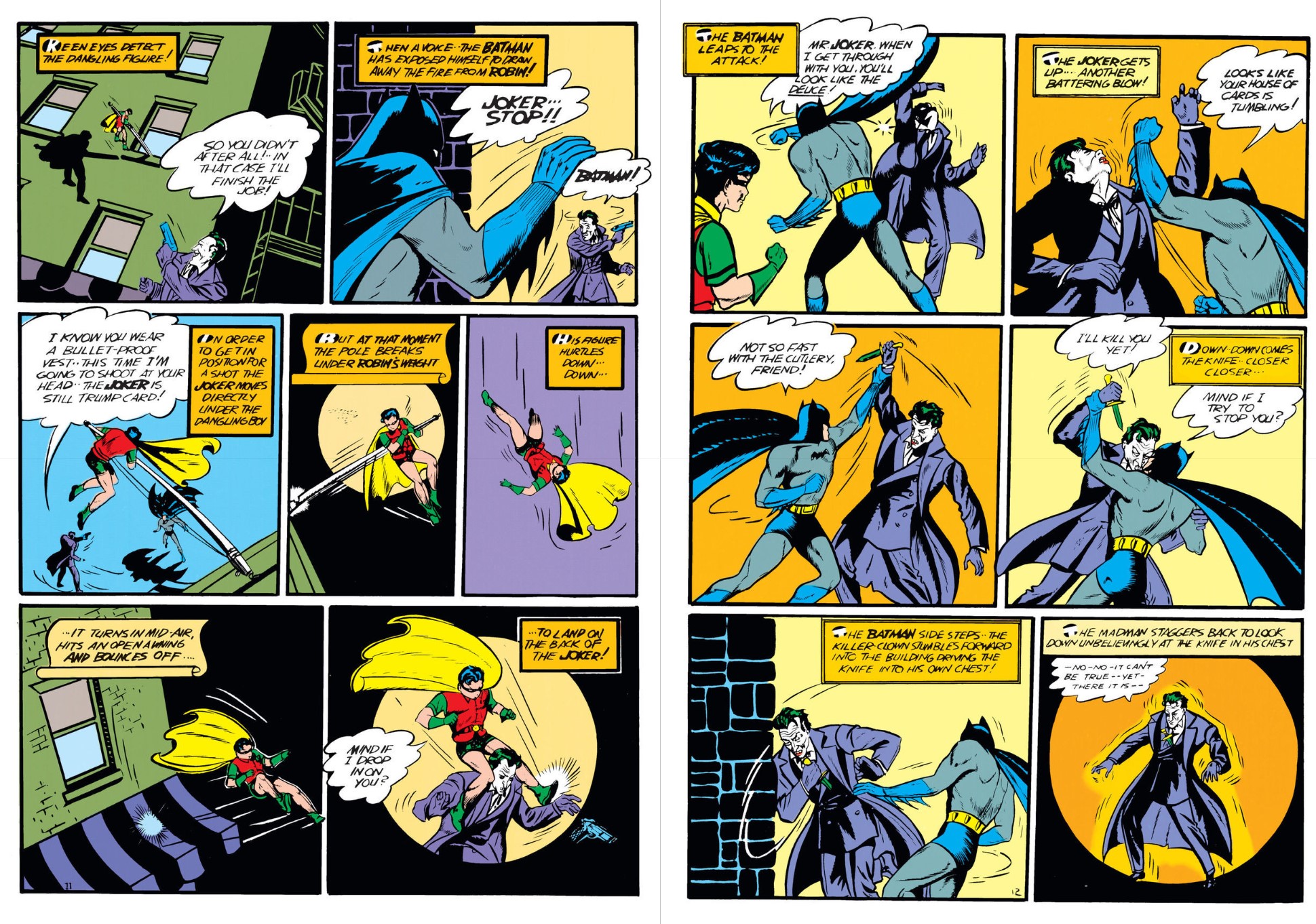
With the Flying Graysons’ killers captured, all-out action continued in #39 with Finger, Kane & Robinson’s ‘The Horde of the Green Dragon’ – “oriental” Tong killers in Chinatown – Batman #1 (Spring 1940) opened proceedings with a recycled origin culled from portions of Detective #33 & 34. ‘The Legend of the Batman – Who He Is and How He Came to Be!’ by Fox, Kane & Moldoff delivers in two perfect pages what is still the best ever origin of the character. ‘The Joker’ (Finger, Kane & Robinson – who also produced all the remaining tales in this astonishing premiere issue) then launches the greatest villain in DC’s pantheon via a macabre tale of extortion and wilful wanton murder.
‘Professor Hugo Strange and the Monsters’ follows as an old adversary returns, unleashing laboratory-grown hyperthyroid horrors to rampage through the terrified city, before ‘The Cat’ – who later added the suffix “Woman” to her name to avoid any possible doubt or confusion – plies her felonious trade of jewel theft aboard the wrong cruise-liner, thereby falling foul for the first time of the dashing Dynamic Duo. Then comics end with the ‘The Joker Returns’ as the sinister clown breaks jail to resume his terrifying campaign of murder for fun and profit before “dying” in mortal combat with the Gotham Guardians. pulse pounding premier package fun folds with Whitney Elsworth’s text piece ‘Meet the Artist’ and a superb Kane pin-up (originally the back cover of that premier issue) of the Dynamic Duo.
Tense suspense and eerie evil is also on show in DC #40 as ‘The Murders of Clayface’ sees the Dynamic Duo solving a string of murders on a film set which almost sees Julie Madison the latest victim of a monstrous movie maniac…
Batman & Robin solve the baffling mystery of a kidnapped pupil in Detective #41’s ‘The Masked Menace of the Boys’ School’ before enjoying a busman’s holiday in ‘Batman and Robin Visit the 1940 New York World’s Fair’ as seen in the second New York World’s Fair Comics. Here Finger, Kane & Roussos follow the vacationing troubleshooters as they track down a maniac mastermind with a metal-dissolving ray, before Detective Comics #42 again finds our heroes ending another murderous maniac’s rampage in ‘The Case of the Prophetic Pictures!’
The heroes’ second solo outing produced another quartet of comics classics in Batman #2 (Summer 1940). It begins with ‘Joker Meets Cat-Woman’ (Finger, Kane, Robinson & new find George Roussos) wherein svelte thief, homicidal jester and a crime syndicate all tussle for the same treasure, with our Caped Crusaders caught in the middle. ‘Wolf, the Crime Master’ then offers a fascinating take on the classic tragedy of Jekyll & Hyde prior to an insidious and ingenious mystery in ‘The Case of the Clubfoot Murderers’. Ultimately Batman & Robin confront uncanny savages and ruthless showbiz promoters in poignant monster yarn ‘The Case of the Missing Link’.
By now an unparalleled hit, Batman stories never rested on their laurels. The creators always sought to expand their parameters, as Detective #43 saw our heroes clash with a corrupt mayor in #43’s ‘The Case of the City of Terror!’ before rather jumping the shark with #44’s nightmarish fantasy of giants and goblins ‘The Land Behind the Light!’, in advance of returning to bizarre baroque basics in #45’s horrific Joker jape ‘The Case of the Laughing Death!’ wherein the Harlequin of Hate undertakes a campaign of macabre murder against everyone who has ever defied or offended him…
Batman #3 (Fall 1940) has Finger, Kane, Robinson & Roussos rise to even greater heights, beginning with ‘The Strange Case of the Diabolical Puppet Master’: an eerie episode of uncanny mesmerism and infamous espionage…
A grisly scheme unfolds next as innocent citizens are mysteriously transformed into specimens of horror, and artworks destroyed by the spiteful commands of ‘The Ugliest Man in the World’ before ‘The Crime School for Boys!’ registers Robin, allowing infiltration of a gang who have a cruel and cunning recruitment plan for dead-end kids, whilst ‘The Batman vs. the Cat-Woman’ lastly reveals the larcenous lady in well over her head when she steals for – and from – the wrong people…
The issue also offered a worthy Special Feature from Ellsworth & Burnley as ‘The Batman Says’ presents an illustrated prose Law & Order pep-talk…
Plunging right into perilous procedures, Detective #46 (Kane, Robinson & Roussos) features the return of Batman’s most formidable fringe scientific adversary as our heroes must counteract the awesome effects of ‘Professor Strange’s Fear Dust’, after which #47 delivers drama on a more human scale by proving ‘Money Can’t Buy Happiness’. This action-packed homily of parental expectation and the folly of greed leads into Detective Comics #48, finding the lads defending America’s bullion reserves in ‘The Secret Cavern’, and is followed by Batman #4 (Winter 1941) which opens with a spiffy catch-all visual resume.
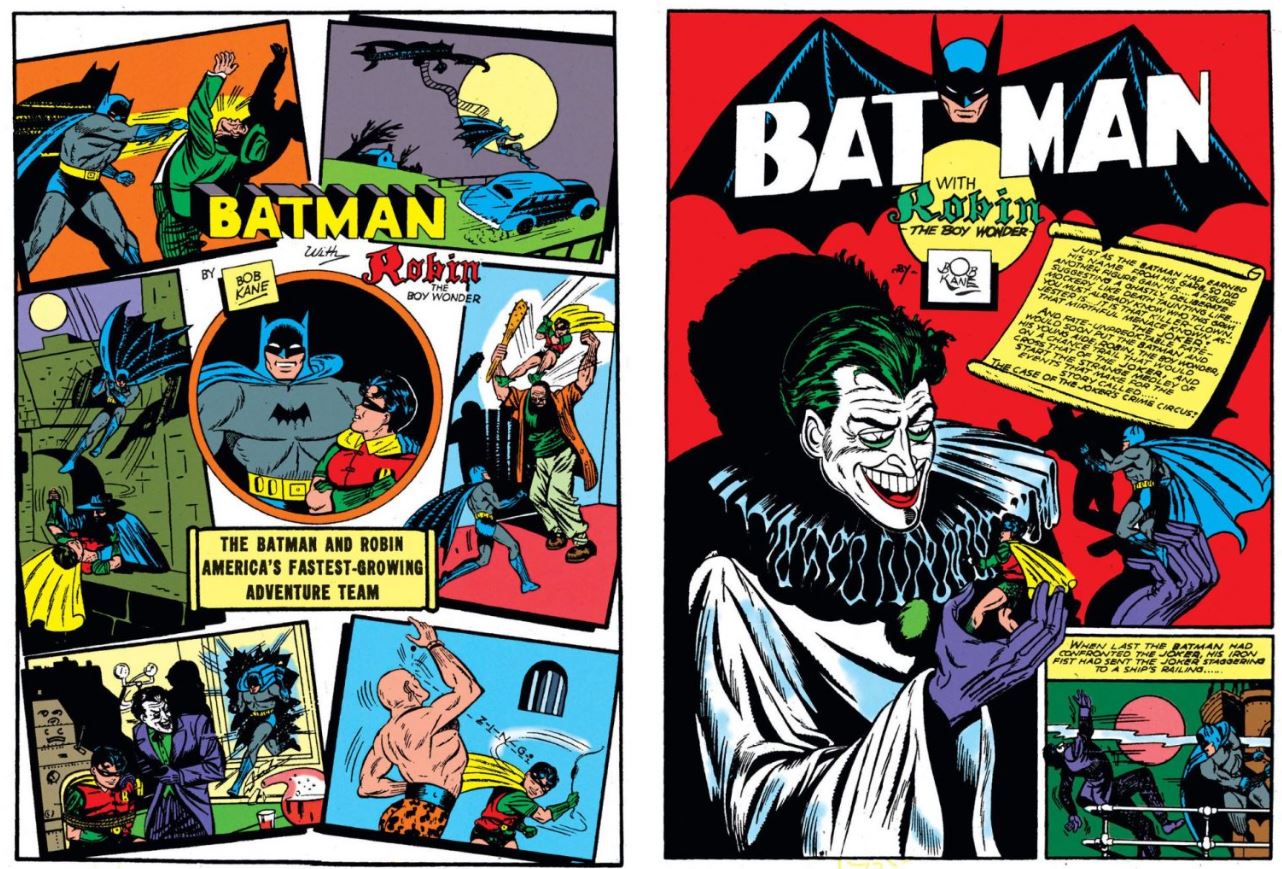
Then its all-out razzle-dazzle as the Gotham Guardians visit and vanquish ‘The Joker’s Crime Circus’, prior to pulling the plug on the piratical plundering of ‘Blackbeard’s Crew and the Yacht Society!’. Immediately after, ‘Public Enemy No.1’ tells a gangster fable in the manner of Jimmy Cagney’s Angels With Dirty Faces, before ‘Victory For the Dynamic Duo!’ involves the pair in the treacherous world of sports gambling.
Detective Comics #49 (March 1941), finds them confronting another old foe when ‘Clayface Walks Again!’ with the deranged actor resuming his passion for murder by re-attempting to kill Bruce Wayne’s old girlfriend Julie before World’s Best Comics #1 (Spring 1941 and destined to become World’s Finest Comics with its second issue) offers an eerie murder mystery concerning ‘The Witch and the Manuscript of Doom!’.
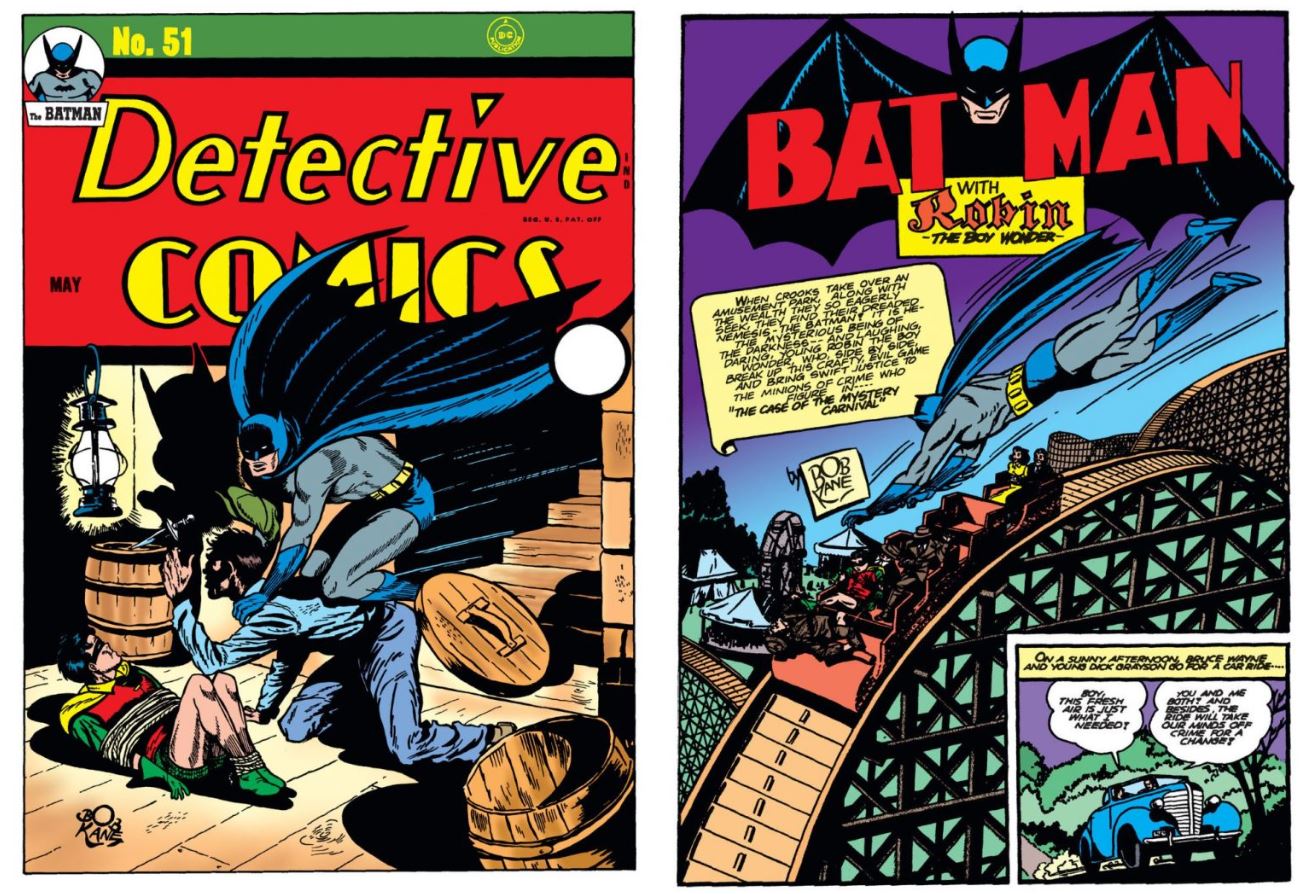
DC #50 pits Batman & Robin against acrobatic burglars in ‘The Case of the Three Devils’, whilst sordid human scaled wickedness informs #51’s ‘The Case of the Mystery Carnival!’: a mood-soaked crimebusting set-piece featuring fairly run-of-the mill thugs, but serving as a perfect palate-cleansers for big bold Batman #5 (Spring 1941). Once again, The Joker plays lead villain in ‘The Riddle of the Missing Card!’, before the heroes prove their versatility by solving a quixotic crime in Fairy Land via ‘Book of Enchantment’.
‘The Case of the Honest Crook!’ follows: one of the key stories of Batman’s early canon. When a mugger steals only $6 from a victim, leaving much more behind, his trail leads to a vicious gang who almost beat Robin to death. The vengeance-crazed Dark Knight goes on a rampage of terrible violence that still resonates in the character to this day. The last story from Batman #5 – ‘Crime does Not Pay’ – once again deals with kids going bad and their potential for redemption, and surely that’s what heroic mythmaking is all about?
Kane, Robinson and their compatriots created a visual iconography which carried Batman well beyond his allotted lifespan until later creators could re-invigorate the concept. They added a new dimension to children’s reading… and their work is still captivatingly accessible. Moreover, these early stories laced with Fingers’ mood-soaked macabre madness set the standard for comic superheroes. Whatever you like now, you owe it to these stories. Superman gave us the idea, but inspired and inspirational writers like Finger & Fox refined and defined the meta-structure of the costumed crime-fighter. Where the Man of Steel was as much Social Force and juvenile wish-fulfilment as hero, Batman and Robin did what we ordinary mortals wanted to do most: teach bad people the lessons they richly deserved…
These are tales of elemental power and joyful exuberance, brimming with deep mood and addictive action. Comic book heroics simply don’t come any better.
© 1939, 1940, 1941, 2025 DC Comics. All Rights Reserved.
Today in 1914 All American editor Ted Udall was born, but we had to wait until 1953 for Richard Bruning, 1956 for animator, director and funnybook renaissance man Bob Camp and 1958 for astounding letterer and sublime illustrator Kevin Nowlan as well as Archie Comics writer/editor Paul Castiglia in 1966.
In the meantime, UK weekly mainstay The Topper began its 37-year run today in 1953, thereby launching Davey Law’s Beryl the Peril unto an unsuspecting world.