
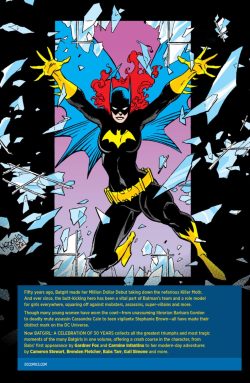
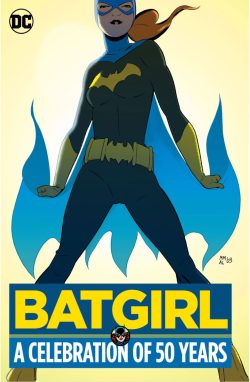
By Bill Finger, Gardner F. Fox, Scott Beatty, Chuck Dixon, Frank Robbins, Bob Rozakis, Barbara Randall, John Ostrander & Kim Yale, Greg Rucka, Kelley Puckett, Dylan Horrocks, Bryan Q. Miller, Gail Simone, Cameron Stewart & Brendan Fletcher, Sheldon Moldoff, Charles Paris, Carmine Infantino, Sid Greene, Marcos Martin, Alvaro Lopez, Gil Kane, Don Heck, Irv Novick, Vince Colletta, Trevor von Eeden, Rodin Rodriguez, Barry Kitson, Bruce Patterson, Brian Stelfreeze, Karl Story, Greg Land, Drew Geraci, Mike Deodato, Sean Parsons, Damion Scott & Robert Campanella, Rick Leonardi, Jesse Delperdang, Tim Levins & Lee Garbett, Don Davis, Aaron Sowd & Trevor Scott, Pere Perez, Ed Benes, Babs Tarr & various (DC Comics)
ISBN: 978-1-4012-6816-9 (HB), 978-1-4012-7629-4 (Digital edition)
This book includes Discriminatory Content produced during less enlightened times.
Win’s Christmas Gift Recommendation: Brilliant Baubles for a Bat-Family Tree… 8/10
There are many comics anniversaries this year. Some of the most significant were rightly celebrated, while others were unjustly ignored. Here’s a character concepts too resilient to sideline… and this book’s still on sale in physical and digital incarnations…
Modern comics readers are pretty used to a vast battalion of Bat-themed bravos infesting Gotham City and its troubled outer environs, but for the longest time it was just boys club Bruce, Dick & Alfred – and occasionally their borrowed dog Ace – keeping crime on the run. However, in Detective Comics #233 (July 1956 and three months before the debut of the Flash officially ushered in the Silver Age of American comic books) the editorial powers-that-be introduced circus trapeze performer/heiress Kathy Kane, who sporadically suited-up in oh-so-chiropteran red-&-yellow for the next eight years. You can read all about her elsewhere. This turbulent tome targets and celebrates her notional replacement – by way of her sidekick! – and what that throwaway concept developed into…
DC’s Celebration imprint comprises glorious hardback/digital collections designed to offer a taste of history via a swatch of carefully curated stories that encapsulated specific characters and their often lengthy and far-ranging careers: perfect primers and ideal introductions to some of the greatest tales and daftest idea of a near-century old publisher always at the forefront of comics innovation. They were and remain the absolute best present a new or nostalgic reader could imagine…
This one tapped into a milestone moment whilst concentrating on the many righteous, rebellious and resolute women who have also used the code name Batgirl. This beefy bat book offers an all-too-brief sequence of snapshots detailing how one of the most robust role models in comics came to be, and to be and be again…
Re-presenting material from Batman #139; Detective Comics #359, 371, 422-424, 518-519;
Batgirl: Year One – Part 4; Batman Family #9; Batgirl Special #1; Batman Chronicles #5; Birds of Prey #8; Legends of the Dark Knight #120; Batgirl (volume 1) #8 & 45; Batgirl (vol. 2) #4 & #13; Batgirl (vol. 3) #0 & #35, this compelling compilation highlights many heroes who have worn the mantle. Moreover, these landmark moments are preceded by brief critical and contextual essays, outlining the significant stages in their development.
We start with Part One (1967-1999): A Million Dollar Debut which finds us in increasingly important, ever-growing arenas of the “teenager” phenomenon, as the youth of the world was recognised as a significant cultural and economic force. Thus in Batman #139 (cover-dated April 1961 and on sale from 23rd February 23rd), Bill Finger, Sheldon Moldoff & Charles Paris debuted a ‘Bat-Girl!’ She was Kathy Kane’s teenaged niece Betty: a professional tennis star who discovered her aunt’s secret life and started dressing up and acting out as her assistant Batgirl.
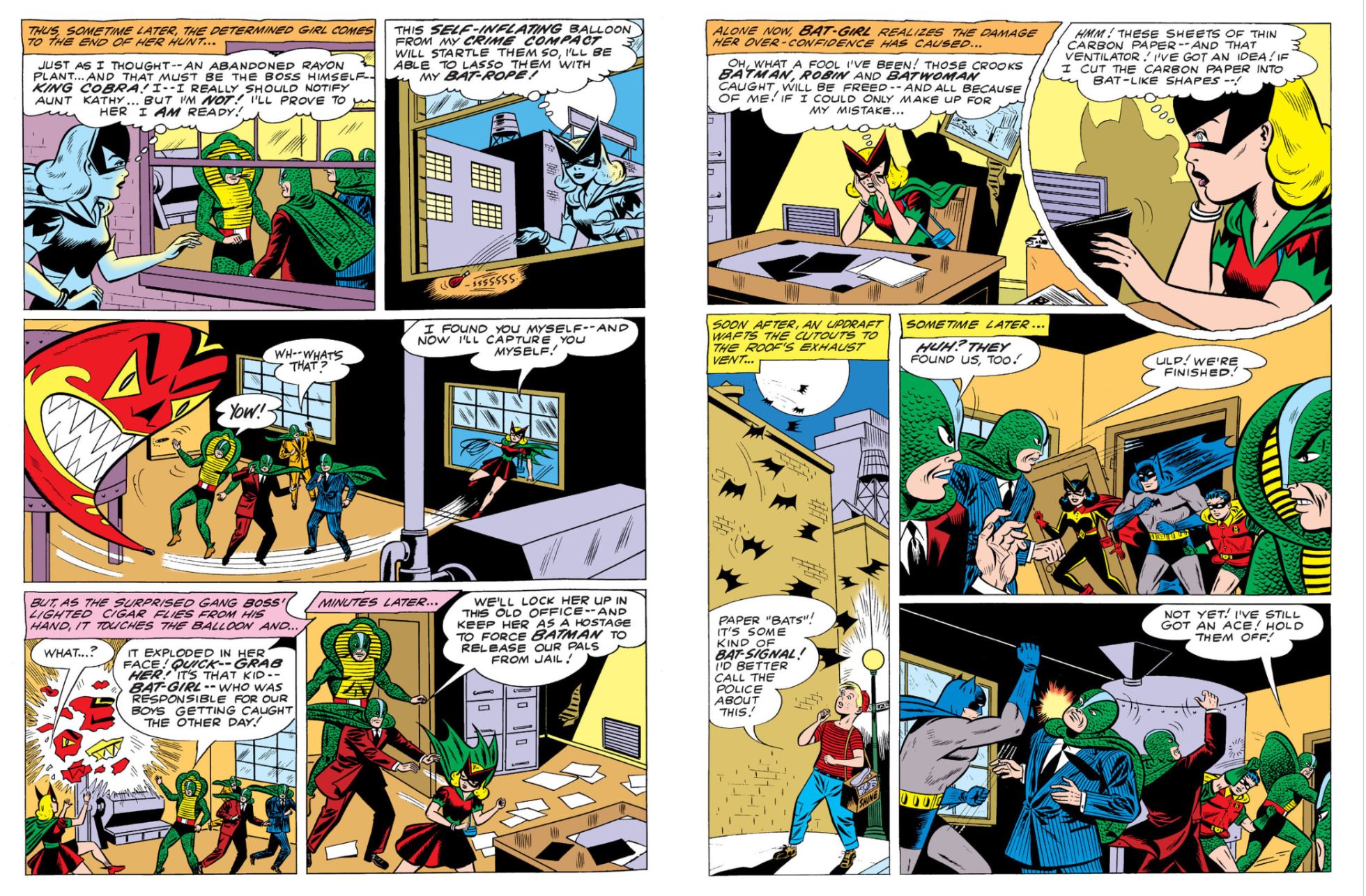
Betty only appeared a couple of times before being dropped as a potential love interest for Robin, but in this debut yarn more than holds her own against deadly King Cobra and the Cobra Gang that have run the Dynamic Duo and Batwoman ragged…
When editor Julie Schwartz took over the Bat-titles in 1964 both Kathy & Betty Kane unceremoniously disappeared in his root-&-branch overhaul. However as the “New Look” Caped Crusaders abandoned silliness and championed a more rational and dangerous style, television nabobs were conspiring to end all that progress. On January 12th 1966 the Batman TV series took over the planet…
Its second season closed with a marked downturn however, and after 94 episodes producers saw the commercial sense of adding a glamorous female crimefighter in the tradition of Emma Peel, Honey West and The Girl From U.N.C.L.E., especially when clad in a cute cape, shiny skin-tight bodystocking and go-go boots. Season 3 (26 episodes running from September 14th 1967 to March 14th 1968) featured new Bat-hero Barbara Gordon, daughter of the Gotham City Police Commissioner. However, this launch was complicated by a similar but other Batgirl who appeared for the first time in the totally unrelated Batman and Robin newspaper strip (in ‘Batgirl Ain’t your Sister’ – May 1st to July 9th 1967 as seen in Batman: Silver Age Dailies and Sundays volume 1: 1966-1967). Let’s not worry about her here, though…
The in-continuity DC universe version already had debuted – albeit without build-up or warning – in Detective Comics #359 (cover-dated January 1967, but on sale from November 29th 1966) and she stuck around for decades. This compilation concentrates on her actions and achievements as both sidekick and headliner in her own series, beginning with her four-colour premiere.
In ‘The Million Dollar Debut of Batgirl’ writer Gardner Fox and art team supreme Carmine Infantino & Sid Greene introduced a mousy librarian who was daughter of Commissioner James Gordon, so by the time the third Batman season began, she was relatively well-established. For her small screen premiere she pummelled The Penguin, but Batgirl’s on-page origin featured the no-less-ludicrous but at least visually forbidding Killer Moth in a clever, fast-paced yarn involving extortion and murder that still stands up today and which properly opens in fine style this massive compendium dedicated to the many faces and fighters calling themselves Batgirl… arguably the most successful distaff spin-offs in the business.
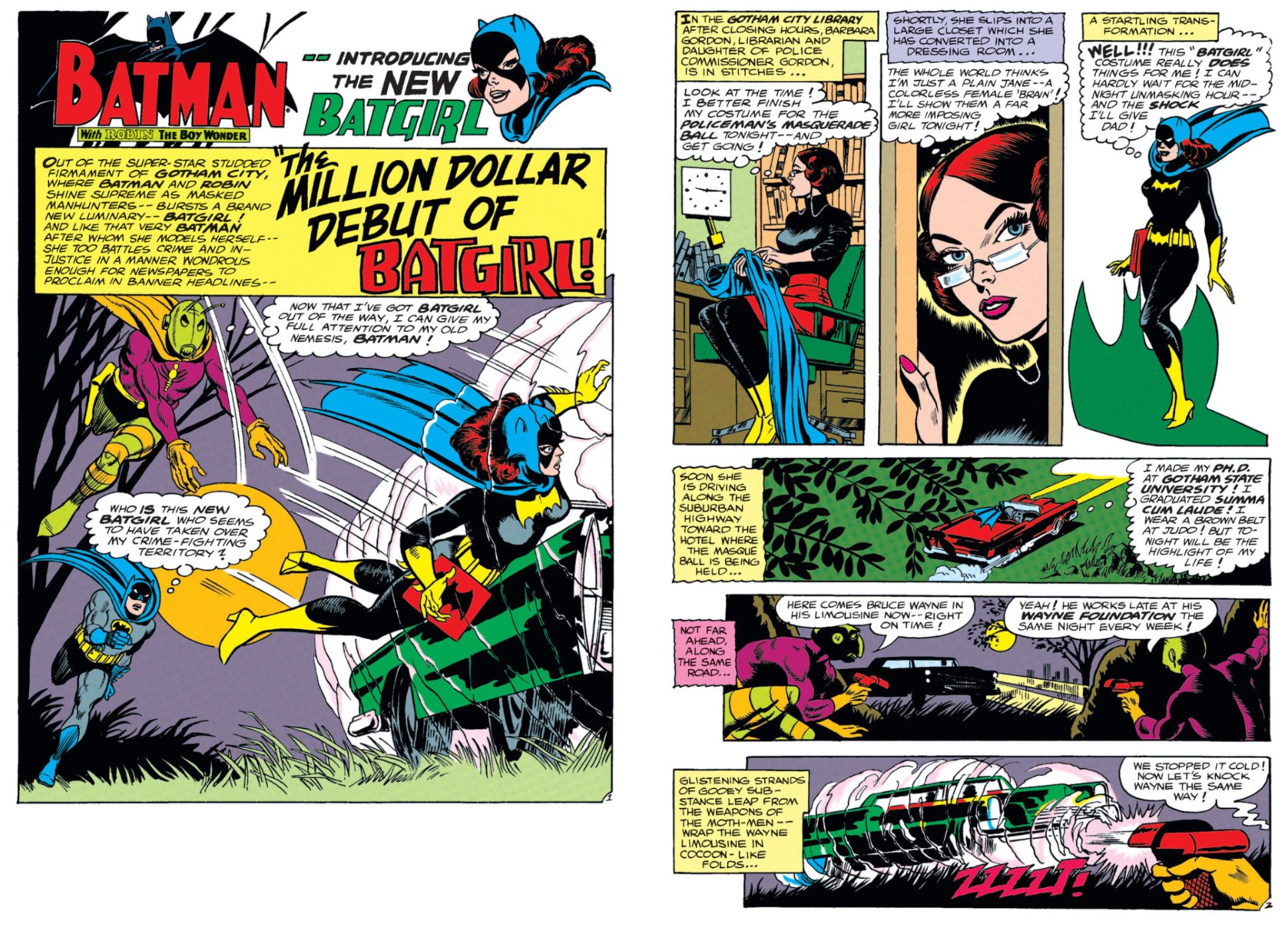
As with all origin stories, it has been expanded and refined continuously. In 2003 that led to 4-part prestige miniseries Batgirl: Year One modernising the myth and developing her relationship with Dick Grayson and the terrifying Batman. Here that’s represented by final chapter ‘Batgirl – Year One Part 4: Cave Dwellers’ by Scott Beatty & Chuck Dixons and illustrated by Marcos Martin & Alvaro Lopez wherein the Dark Knight having tested the youthful wannabe to near destruction, allows her to begin seriously defending His city…
Gil Kane made his debut on the Dominoed Daredoll (did they really call her that? – yes they did, from page 2 onwards!) in Detective #371’s ‘Batgirl’s Costumed Cut-ups’: a masterpiece of comic dynamism inker Sid Greene could be proud of, but which proffered some hoary outdated and just plain uncomfortable assertions about female vanity that scripter Fox probably preferred to forget…
Her appearances came thick and fast after that initial tale. As well as further Detective dalliances there were team-ups with Supergirl, Wonder Woman and the Justice League of America as well as clashes with Catwoman and others. Eventually, having finally disproved the accepted wisdom that boys didn’t want to read about girl crimefighters, Batgirl was awarded her own feature: alternating with Robin at the back of Detective Comics (beginning in #384, February 1969). Here she quietly carved out her own niche, until 1972 when Frank Robbins & Don Heck, addressing the turbulent times, delivered a 3-part saga that effectively ended her career…
Spanning Detective #422-424 (April – June 1972) the series took a landmark turn as ‘The Unmasking of Batgirl’ sees a (what we know as a coercive controller) “charmer” break her heart and Babs decides to chuck it all in. Rapidly rallying she instead runs for Congress in ‘Candidate For Danger!’ and hopes to end clean by closing ‘Batgirl’s Last Case’ with “Battlin’ Babs” exposing and overturning a corrupt political machine before triumphantly shuffling off the hero scene…
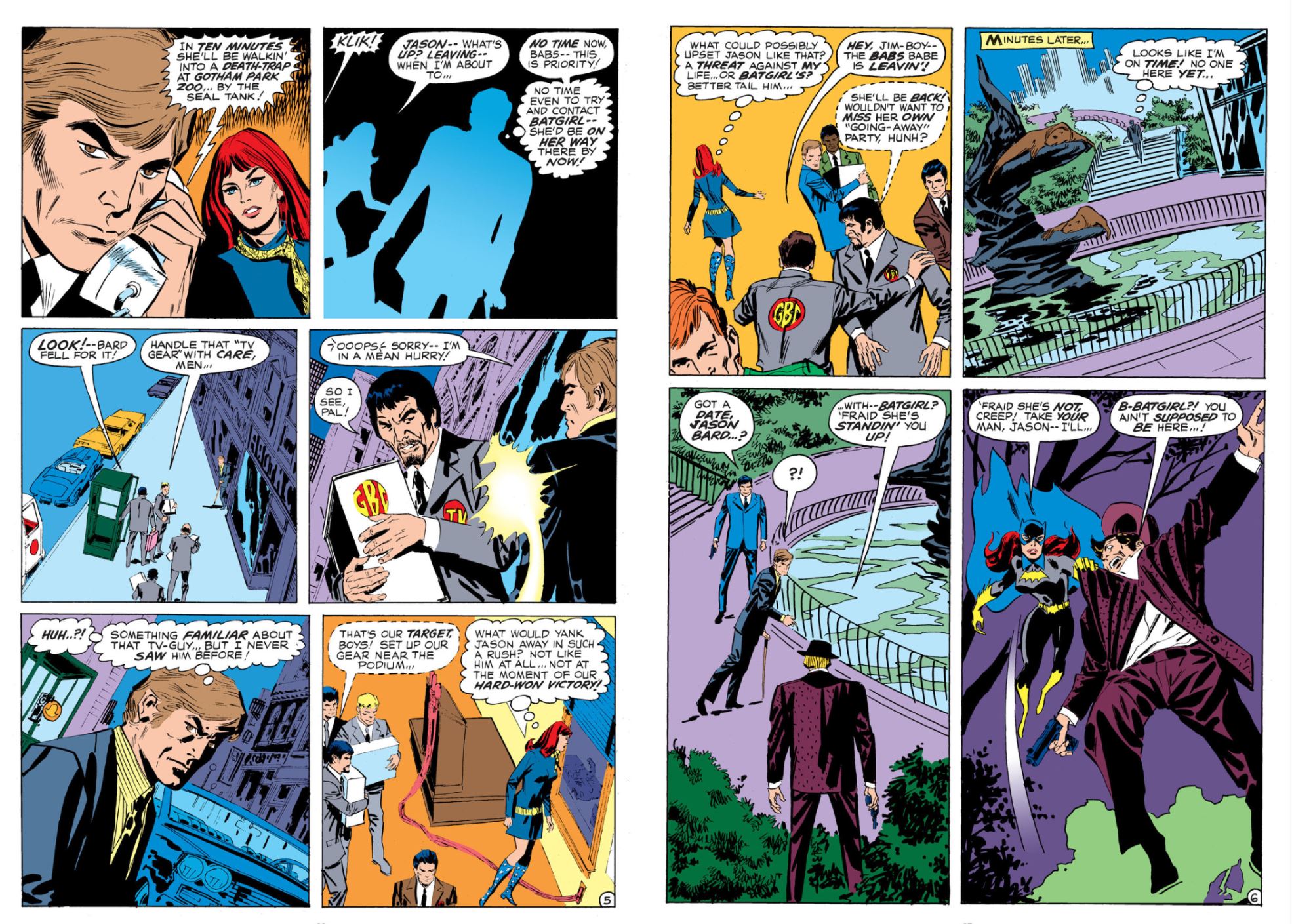
Batgirl “retired” to Washington DC as a junior Congresswoman, but was busier than ever in her costumed identity. She even began a “close work relationship” with undergrad student Dick Grayson. They had both fully fledged into their own solo series in new title Batman Family, and team ups were frequent as in this case from BF #9 (January/February 1977. Crafted by Bob Rozakis, Irv Novick & Vince Colletta ‘Startling Secret of the Devilish Daughters’ sees Batgirl & Robin united to unmask a would-be Teen Titan systematically disguising herself as the daughter of The Penguin, Riddler, Scarecrow and The Joker, before being finally unmasked as someone thematically similar but entirely different…
Babs/Batgirl eventually quit politics and returned to Gotham. Here we jump to Detective Comics #518-519 (September & October 1982) where Barbara Randall, Trevor von Eden & Rodin Rodriguez set up a big change for Babs and seek to introduce a signature archvillain in ‘He with Secrets Fears the Sound’ and ‘When Velvet Paws Caress the Ground…’ Getting deeper into the burgeoning emergent fields of computers and data-wrangling, the unsuspected computer savant meets Ward Gilbert, a genius programmer whose sister is up-&coming supervillain Velvet Tiger, eager to use his new master hack to control all Gotham’s computers… especially the banking ones…
After stopping her, Batgirl returned to piecemeal appearances until a prelude of big changes came with Batgirl Special #1 (June 1988) where Randall, Barry Kitson & Bruce Patterson deliver ‘The Last Batgirl Story’ Semi-retired, Babs lives with spiralling psychological damage left by an almost successful assassination attempt. Plagued by nightmares of hitman Cormorant, she almost cracks when he returns to kill again in her city. Depending more on her computer skills than superheroics, Babs goes after her nemesis after another body drops at the library where she works. Research soon uncovers a conspiracy – and Cormorant’s client back then (and now?) as well as his attitude towards all women…
As Babs steels herself to tackle the monster, another killer emerges. However, “Slash” only kills abusers of women…
Stressed, confused and hungry for revenge, Batgirl follows leads to Cormorant and his family. The misogynistic mass-murderer is prepping for his next target – Slash – unaware that a mystery player has already induced the “defender of women” to add Cormorant to their hitlist…
The horror that ensues is all too much and Batgirl quits. However, before she can rest, she must stop both Slash and Cormorant once and for all…
Batgirl seemingly ended forever in 1988, following events in Batman: The Killing Joke. You can read that in so many places and we’re covering the latest re-release quite soon so please take as read that after being shot in the spine by the Harlequin of Hate Barbara Gordon vanished around the time a digital information broker began providing critical intel for superheroes…
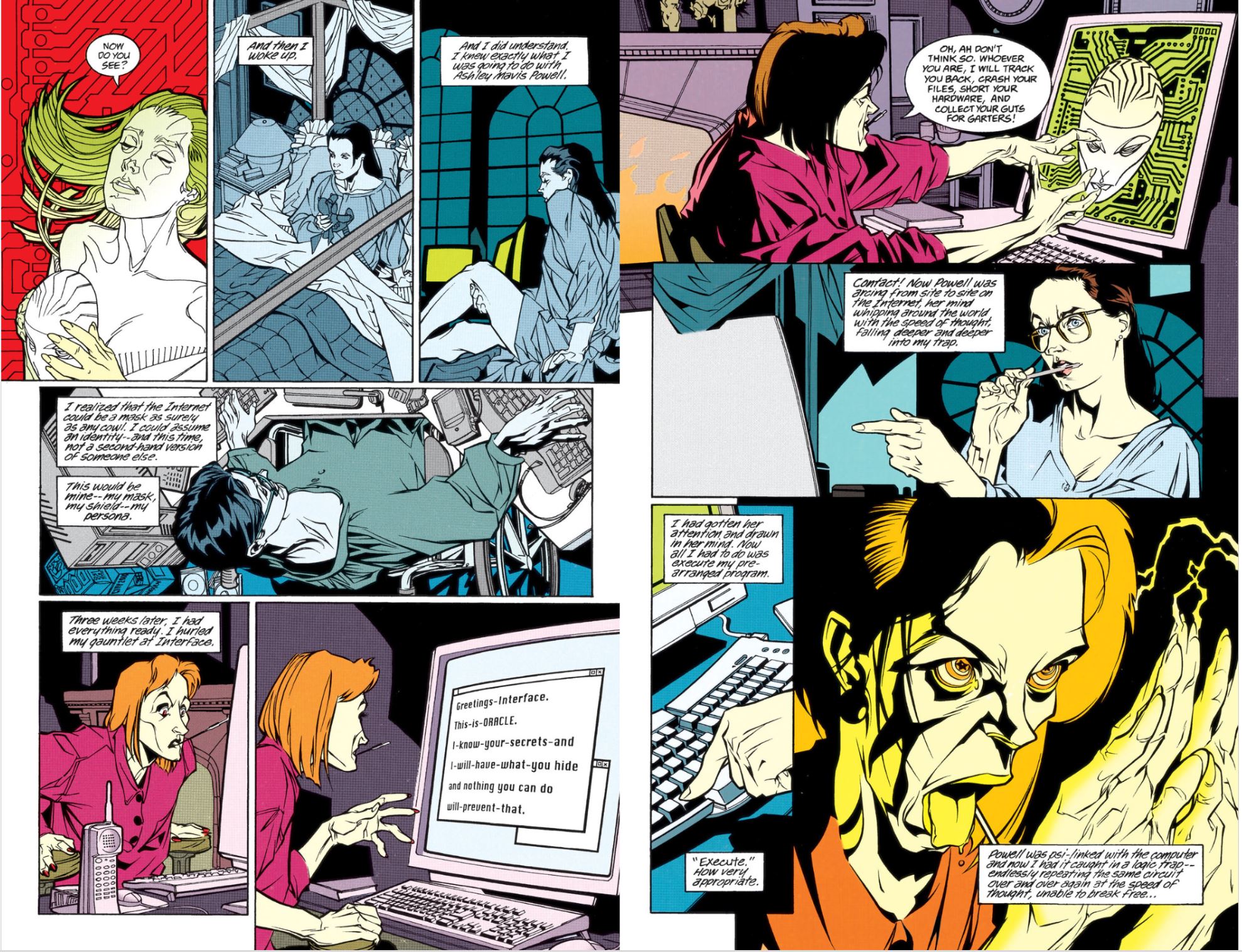
Cover-dated June 1996, Batman Chronicles #5 saw John Ostrander & Kim Yale, and artists Brian Stelfreeze & Karl Story, reveal what a difference 12-months could make as ‘Oracle – Year One: Born of Hope’ sees the “victim” redirect her life and become a unique hero in a changing world: powerful, self-reliant and devastatingly effective against a new and evolving criminal world…
‘On Wings’ in Birds of Prey #8 (August 1999) allows Chuck Dixon, Greg Land & Drew Geraci to peek into the softer side of the fallen but unbowed hero as she renews her acquaintance with Dick (Nightwing) Grayson but stays on her new path…
With her new role established Gordon made way for someone else to be Batgirl and Part II: Raiding Cain details the how and why.
When Gotham City was shattered in a massive earthquake (see Batman: Cataclysm and Batman: No Man’s Land in 2000) it was written off: abandoned by the US government in a spookily prescient foretaste of what happened to New Orleans after Hurricane Katrina hit in August 2005. Amidst the rubble, many heroes struggled to protect the innocent. One of these was a brand-new incarnation of Batgirl.
As the crisis ended and a semblance of normality returned to the battered metropolis, the new heroine got her own series and a mentor in Babs Gordon, AKA wheelchair-bound Oracle. The new operative was an enigmatic problem. Raised in utter isolation as an experiment by martial arts super-assassin David Cain, she could not communicate. Part of the process producing Cassandra Cain was depriving and overriding her language centres to make combat her only communication tool. An apparent runaway, she reached Gotham as the quake struck and briefly adopted by the Batman: another weapon in his never-ending battle, before humane Oracle became her guardian and teacher.
How that happened is seen in terse war-conference ‘Assembly’ (Legends of the Dark Knight #120, August 1999 by Greg Rucka, Mike Deodato Jr. & Sean Parsons) which sees Batman marshal his disciples and allies to police the Darwinian hell Gotham is reduced to. Here, after Batman fires fill-in Batgirl Helena Bertinelli/Huntress, Cassandra Cain wears the mantle of the Bat for the first time…
When she won her own title, it was as radical and experimental as its star. Carefully crafted by Scott Peterson, Kelly Puckett, Damion Scott & Robert Campanella the new Batgirl sought to find her way, bereft even of the ability to learn, whilst revelling in the role of defender of the helpless. However, her development as a human being threatened to diminish her edge as a human weapon, and the mystery of her past indicated that she was possibly a two-edged sword in Batman’s arsenal.
Bravely experimenting, the writers eschewed the standard format of individually titled stories to craft a continuous string of high action, deeply moving episodes with the neophyte street warrior duelling the dregs of Gotham and attempting to adapt to a life where not every person was her enemy. Fast, furious, frenetic, visually expressive incidents were interspersed with flashbacks to her lethally cruel formative years, with Cain pitting her against assassins and worse, while keeping a stunning secret of her natal origins all for himself…
Cassandra prowls the streets determined to honour her saviour Batman and sole friend Babs, battling thieves, thugs, rapists and the worst human predators the city can throw at her. All too soon, her first failure – to preserve an innocent life – leaves her emotionally wounded and susceptible to metahuman attack, even as Batman discovers his new operative may have blood on her own hands. Complicating the crisis, a telepath Cassandra rescues boosts her ability to speak, but inadvertently destroys her gift to read body language leaving her helpless against ordinarily easy opposition.
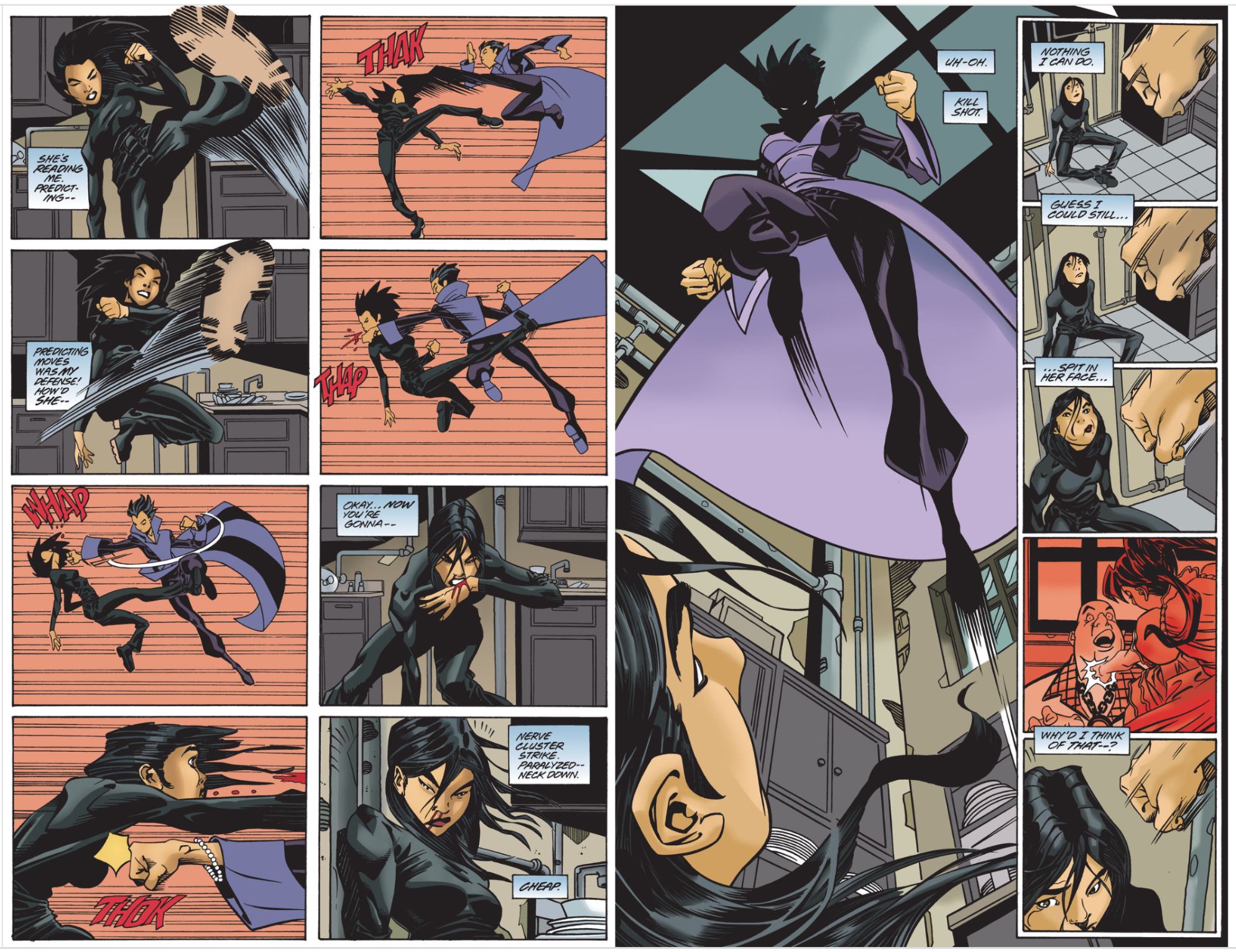
Here that is seen in untitled Batgirl #8 (November 2000) as Batman hunts and confronts Cain to clear Batgirl’s reputation, the embattled, dauntless wild child continues risking her life: going rogue and defying the Dark Knight to patrol the streets until she is targeted by Lady Shiva Woosan. The world’s deadliest assassin has personal reasons for testing herself against Cassandra, and provides a cure for her lost battle assessment sense, but only to further her own insane agenda…
As years passed Cassandra learned to be an effective hero, but never accepted her humanity. Thus in ‘Soul’ (Batgirl #45, December 2003 by Dylan Horrocks, Rick Leonardi & Jesse Delperdang) she borrows Babs’ old costume and quizzes allies including Alfred and Tim Drake in her quest for knowledge before returning to simple crimefighting…
As Part III: Spoiling For a Fight attests, time passed and Cain joined Oracle’s Birds of Prey, as the constant churn left a vacant position for former teen villain Stephanie Brown (Spoiler, Robin) to graduate to…
Mentored by Babs Gordon and clad in a state-of-the-art cyber suit, Brown seeks to redeem herself and atone for her father (supervillain Cluemaster) but in Batgirl #4 (vol. 3, January 2010)’s ‘Batgirl Rising: Field Test’ by Bryan Q. Miller, Tim Levins, Lee Garbett, Dan Davis, Aaron Sowd, & Trevor Scott, she is forced to go old school when electrical menace Livewire blacks the city and all tech in it.
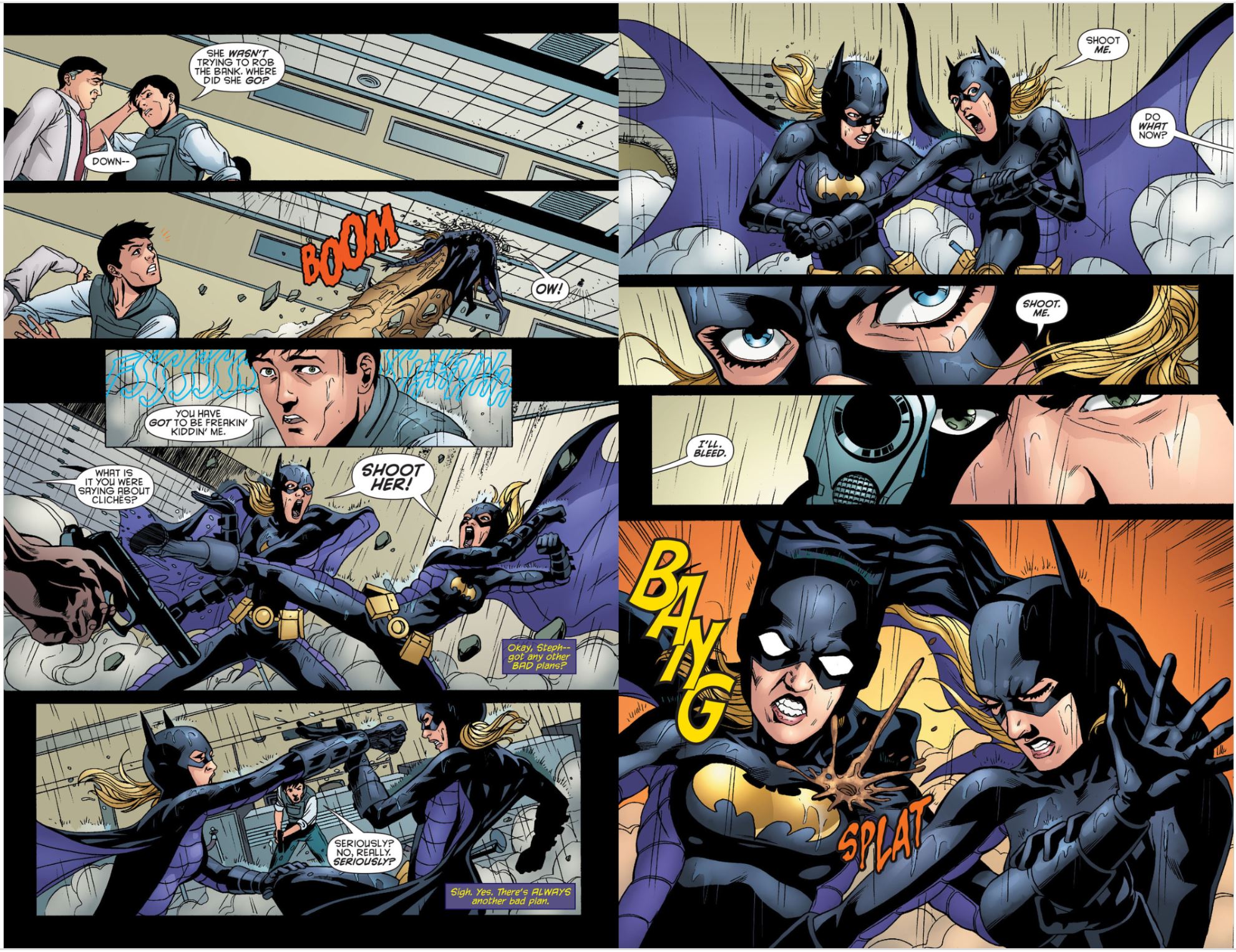
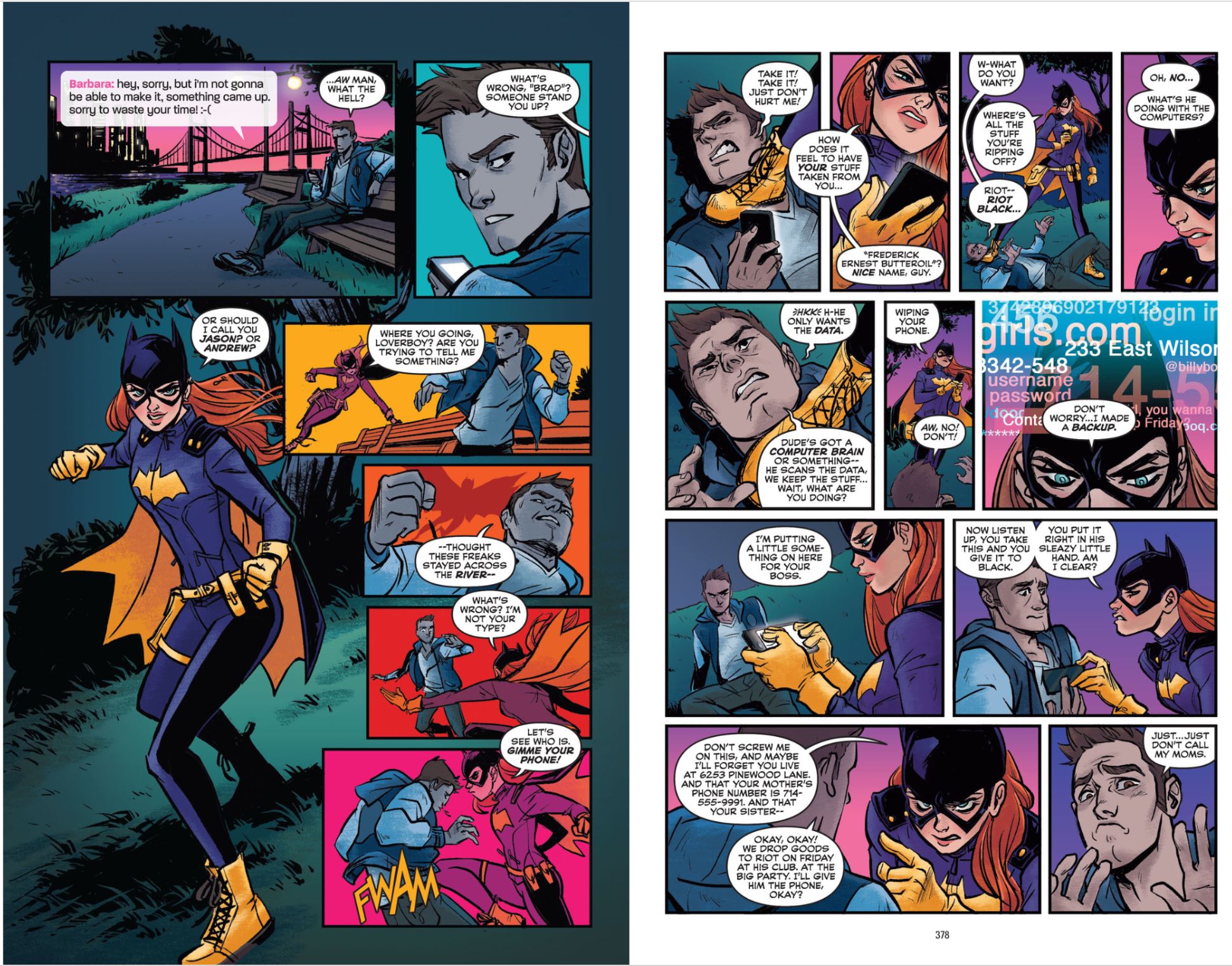
The hero’s dreams then falter as Clayface impersonates her to rob banks leading to loss of hard-won ‘Trust’ (#13, October 2010, by Miller, Pere Perez Levins, Garbett, Davis, Sowd & Scott). Stephanie’s career was cut short and erased when DC rebooted the continuity for the New 52 event, but as Part IV: Babs is Back reveals, that simply meant the restoration of a younger, fitter, smarter, hipper Barbara Gordon in the role, here introduced and re-origined in Gail Simone & Ed Benes’ ‘A Fire in the Heavens’ (Batgirl vol. 4 #0, December 2012) which detailed what really happened the first time she dressed up as a bat, after which the recollections conclude with ‘Burned’ from Batgirl #35 (December 2014 by Cameron Stewart, Brendan Fletcher & Babbs Tarr) as Babs is victimised by metahuman online extortionist Riot Black whose attempts to steal her online life and make it his next revenue stream prove be a big mistake and costly for all involved…
With covers by Moldoff, Infantino, Murphy Anderson, Martin & Lopez, Ernie Chan & Colletta, Mike Mignola & Karl Kesel, Howard Chaykin & Tommy Lee Edwards, Greg Land & Stelfreeze, Dale Eaglesham & Sean Parsons, Scott & Campanella, James Jean, Phil Noto, Stanley “Artgerm” Lau, Benes and Stewart this voyage through Batgirl’s early exploits and many iterations came from and indeed partially shaped an era where women in popular fiction finally emerged from marriage-obsessed, ankle-twisting, deferential fainting hostage-fodder mode that had been their ignoble lot in all media for ever. Feminism wasn’t a dirty word or a joke then for the generation of girls who at last got some independent and effective role-models with (metaphorically, at least) balls.
Complex yet uncomplicated, the adventures of Batgirl grew beyond crassly commercial origins to make a real difference. However, these tales are not only significant but drenched in charm and wit; rendered with a gloriously captivating style and panache that still delights and enthrals. This is no girly comic but a full-on thrill ride you can’t afford to ignore and which deserves to be revived and revised with the bells, whistles and respect these characters and stories rightfully command…
© 1961, 1967, 1972, 1977, 1982, 1988, 1996, 1999, 2000, 203, 2009 2010, 2012, 2014, 2017 DC Comics. All Rights Reserved.